



Abstract
The aim of this study was to determine differences in body proportions and measurements of basketball players and an untrained group of the general population, as well as the impact of physical differences on garment fit through the Croatian sizing system for labeling men's clothing based on the European standard EN 13402. It was hypothesized that clothes made according to the system for labeling men's clothing are not appropriate for the population of basketball players. Differences in morphological properties of the basketball players, as a result of many years of active sport playing, were found both by conventional anthropometric measurement method and three-dimensional (3D) body scanning. Anthropometric measurements were taken for the needs of the clothing industry according to ISO 3635, ISO 8559 and ISO 20685. The study was conducted on a sample of 189 male test subjects, aged between 15 and 25 years, who are professional basketball players and sample of a 189 test subjects for the untrained group of the general population of the same age. Statistical data results included factor and discriminate analysis. Differences in the body measurements of basketball players and the untrained group of the general population were analyzed through an independent samples t-test.
Considering that differences in the upper body part have a large impact on garment fit, compared to the average body measurements, that is, the existing clothing sizing system, a proposal for the amendment of the sizing system for basketball players, with average body measurements by size, was made. In addition, for the purposes of the study, 20 anthropometric variables related to the upper body part and required for the clothing construction were analyzed. In order to test the garment fit, two men's shirt prototypes of the same garment size, one based on the existing sizing systems and one based on the proposed amendment for basketball players, were developed using a two-dimensional/3D computer-aided design system. Computer simulations performed on the average basketball player body model showed the unsuitable fit of a men's shirt constructed according to the existing sizing system and the satisfying fit of a men's shirt constructed according to measurements of the proposed amendment for basketball players, confirming the possible application of the conducted research results and the proposed sizing amendment.
Garment fit is defined by certain parameters related to garment construction and proper joining of the garment. The garment should be appropriate in size, without tightening any part of the body. The wearer should move normally, unrestricted and feel comfortable. 1 Subjective garment fit assessment considers the following aspects: appropriate sizing, garment shape and the feel of comfort and fit. 2 Body proportions and physique affect the garment shape, which must meet high standards regarding garment fit.3–5 Anthropometric studies are conducted to collect data on the body measurements of a representative population sample. They are used to determine and improve data sets such as garment sizing systems and standard and proportional measurements, as well as the share of individual clothing sizes.6,7 In addition to the conventional measurement method, which is applicable for field study, the contactless computer determination of body measurements using a three-dimensional (3D) body scanner can also be applied.8–12
Determination of human body measurements according to precisely defined anthropometric points is the basis for the garment construction.13,14 The conventional method of taking body measurements, using a tape measure, enables accurate determination of body dimensions only if performed by a trained measurer, who will always take measurements in the same way. The conventional measurement was performed according to standards HR ISO 3635 and HR ISO 8559.15,16 The application of modern technologies, such as different kinds of 3D body scanners, enables contactless computer-based measuring, where a large number of measurements can be precisely determined in a short period of time. 17 The application of 3D scanners enables the visualization of body shape and the assessment of body posture. It also provides an insight into the muscle mass distribution as well as the distribution of subcutaneous fat tissue over the body, which is a significant source of information for garment construction.3,9,18 Three-dimensional body scanners enable collection and data analysis in a new way that can contribute to the improvement of the clothing sizing system. A scanned 3D body model is a precise representation of body shape and can be used as a starting point for garment construction or for virtual simulation and visualization of computer prototypes.19,20 However, despite the benefits of 3D body scanners, the application of such technology is still unavailable to most manufacturers and this is the reason why garments are still mostly manufactured according to the different garment sizing systems. In order to satisfy market requirements and end-consumers, that is, customers, it is necessary to provide adequate garment sizing systems so that a person with average body proportions can find an adequate garment size. Most countries determine standards for garment sizing according to their particular criteria. Thereof, the sizing systems set up and developed in individual European countries are different from each other. Sizing systems are based on anthropometric survey data that are grouped according to the three main body dimensions, that is, chest girth, waist girth and body height, with a defined value of inter size interval for each of the main dimensions. Based on the measurement groups, the mean values of other (secondary) dimensions can be obtained from main body dimensions according to size.21,22
Body statures and main body dimensions according to the Croatian sizing system for men's underwear

Previous studies of the morphological characteristics of basketball players are based on anthropometric variables according to the instructions and regulations of the International Biological Program (IBP). 25 Anthropometric variables related to garment construction and the needs of garment manufacturing were analyzed for the purposes of this study.
Based on previous scientific research it was found that the body height of basketball players is increasing. Heimer et al. 26 concluded that the average body height and mass of basketball players is above the average value of the male untrained population of the same age. Norton et al. 27 analyzed professional NBA basketball players and noted that the average increase in body height was 2.25 cm per decade, which is higher than in the average population. According to the Milanovic et al.'s (1989) study, 28 the average body height of the Croatia men's national basketball team in 1989 amounted to 210.7 cm. Đuroci and Vučetić 29 studied the morphological characteristics of basketball players on a sample of 70 Croatian basketball players aged between 18 and 36 years. According to the study results, the arithmetic mean of body height was 196.22 ± 9.89 cm. I. Fattorini 30 describes the measurement of 14 anthropometric variables according to the IBP on a sample of 15 Croatian basketball players aged 18.7 ± 0.6 years on average. The mean value of body height was 198.4 cm. Avdić et al. 31 measured a sample of 50 basketball players and 50 test subjects of the untrained population to find differences in the anthropometric values (body height, body mass and BMI) and concluded that the average body height of basketball players (184.5 cm) is well above the average body height of the untrained population (167.2 cm).
One of the main goals of this study is to investigate deviations in certain body measurements and differences in body constitution of an athletic population (basketball players) compared to an untrained group of the general population. Since garment patterns are mostly developed according to the sizing standards based on average measurements of the general population, they usually do not fit specific population groups, such as basketball players. Considering the differences in body morphology there is always a need for partial alteration of garment design and construction in order to achieve better garment fit, esthetics and functionality. 3
Experimental details
Test subjects
The structure of the basketball player sample and the untrained group of the general population by age

Methods
The conventional anthropometric measurement method was used to determine 54 anthropometric variables, in accordance with ISO 3635 and ISO 8559,15,16 on a total sample of 378 test subjects. According to the conventional method, measurements are taken using basic anthropometric instruments, such as a measuring tape, a one-arm and/or two-arm anthropometer and a caliper.
4
In addition, a sample of 30 basketball players was measured using the 3D body scanner Vitus Smart (Human Solutions, Germany) according to ISO standard 20685.
32
Three-dimensional body scanning was performed in order to provide insight into body morphology and to determine body shape and posture characteristics. Besides the main body measurements, (neck girth, chest girth, waist girth, hip girth and body height), other proportional and supplementary body measurements of the upper body part, relevant for garment construction, were analyzed. An additional 20 anthropometric variables are shown in Figure 1.
Presentation of the analyzed anthropometric variables. Bh: body height; Cg: chest girth; Wg: waist girth; Hg: hip girth; Ng: neck girth; Sd: scye depth; Bl: back length; Bw: back width; Ss: shoulder slope; Shl: shoulder length; Sw: shoulder width; Uag: upper arm girth; Eg: elbow girth; Wc: wrist girth; Fph: front part height (without neckline); Fph7: front part height (from the seventh cervical vertebra); Sg: shoulder girth; Sll: sleeve length; Sll7: sleeve length from the seventh cervical vertebra; Isl: inside sleeve length.
Factor and discriminant analysis were used to process the obtained data within the statistical analysis conducted in the SPSS program. Differences in the body measurements of basketball players and the untrained group of the general population were analyzed with an independent samples t-test. 33 A multivariate analysis of covariance was performed because a number of the observed body measurements significantly correlate with the age of the test subjects. Since the univariate results of two independent groups by individual measurements and independent samples t-test showed similar results to the multivariate analysis of covariance, a t-test with the Bonferroni correction was performed to document the possible differences between the two groups. The main body measurements of basketball players were defined for each individual garment size based on the statistical data results. Measurements were compared with the main body measurements of the clothing size system for men's clothing.
Analysis of body cross-sections was performed in order the provide more detailed insight into the morphological physique of basketball players, originated as a consequence of active playing and intense training over many years, and to determine specific shape differences on particular body parts between basketball players and the untrained group of the general population, which have a great impact on garment fit. To that end, computer parametric body models were customized according to the average body measurements for a particular garment size. The first customized body model corresponds to a size 39 in existing clothing size system and the second customized body model corresponds to a size 39 in the proposed amendment for a clothing size system for basketball players. According to HR EN 13402, the size of men's shirts is based on measurement of neck girth, meaning that size 39 corresponds to a neck girth of 39 cm. Since the 3D scanning of test subjects enables detailed visualization of the body surface, both computer models were initially adjusted based on visualization of the figure shape and muscle mass distribution over the body and then according to average values of 20 analyzed measurements. Both customized 3D body models were imported and overlapped into the Anthroscan software and a comparational analysis of upper body cross-sections was performed.
In order to test the set hypothesis regarding garment fit, two block pattern of men's shirts of size 39 were constructed, one according to the existing clothing size system and the other according to the proposal for the amendment of the clothing size system for basketball players. Computer simulations of the constructed block patterns were performed, enabling the visualization of garments on customized 3D body models and fit analysis of the developed computer prototypes. Subjective visual assessment of garment fit was conducted based on nine defined variables, evaluated by a two-step scale (fit or misfit) and objective assessment was conducted based on ease allowance values, determined by cross-section simulated garment prototypes on characteristic body circumferences.
Results and discussion
Descriptive statistical analysis and comparison of average body measurements obtained from basketball players and the untrained group of the general population
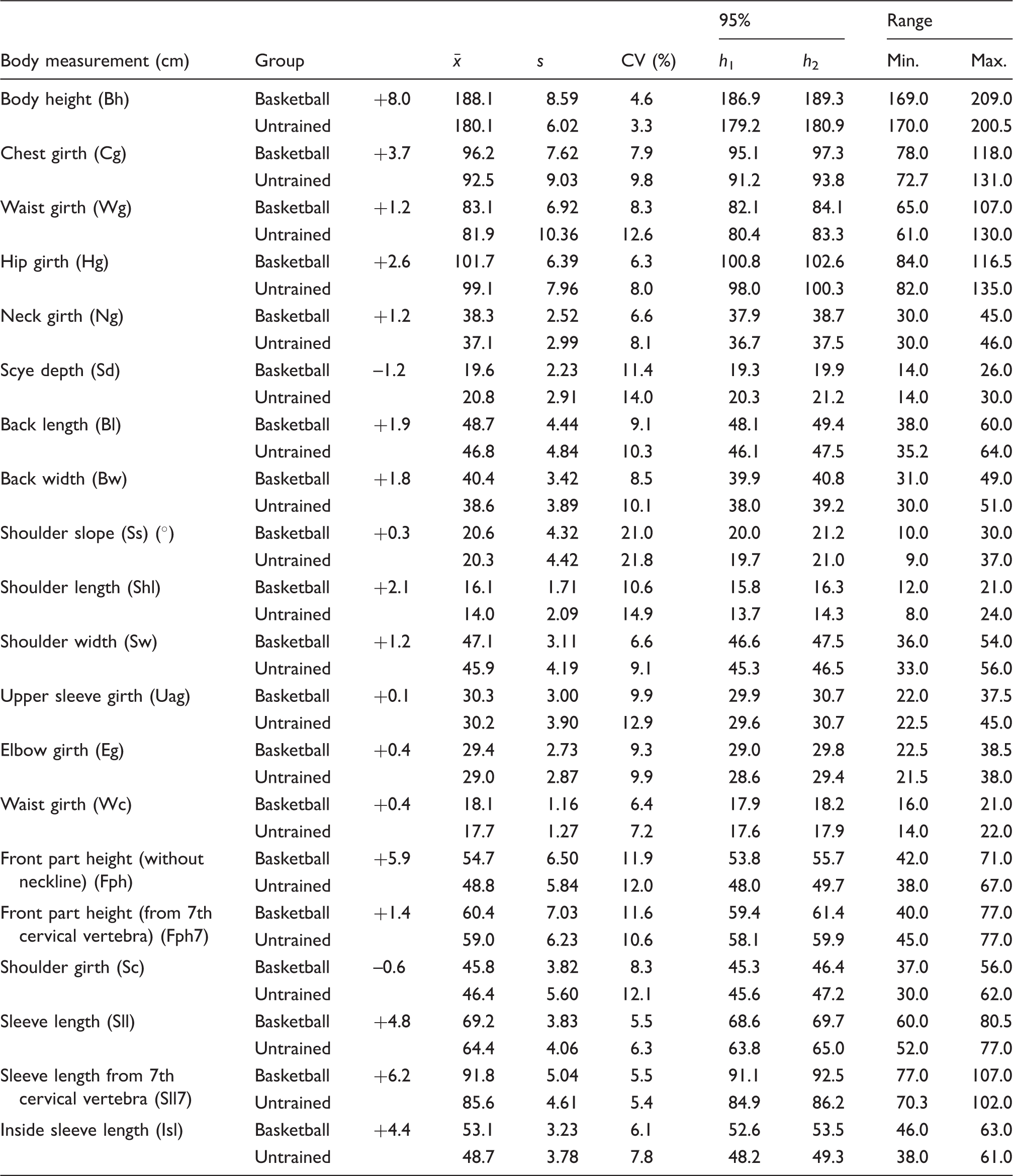
Based on the discriminant analysis, it is possible to predict subject classification to individual groups. The distribution of discriminant scores shows that the group of basketball players is positioned on the right-hand side in relation to the untrained group of the general population (Figure 2). The applied model of discriminant analysis correctly classified 89.7% of all subjects. In this process, 91% of basketball players remained in their original group, while 9% of them were more similar to the subjects in the untrained group of the general population. Among the control group, there were 11.6% potential basketball players, while the other 88.4% remained in their original group.
Distribution of discriminant scores of basketball players and the untrained group of the general population.
Rotated matrix of body measurement factor loadings for the group of basketball players

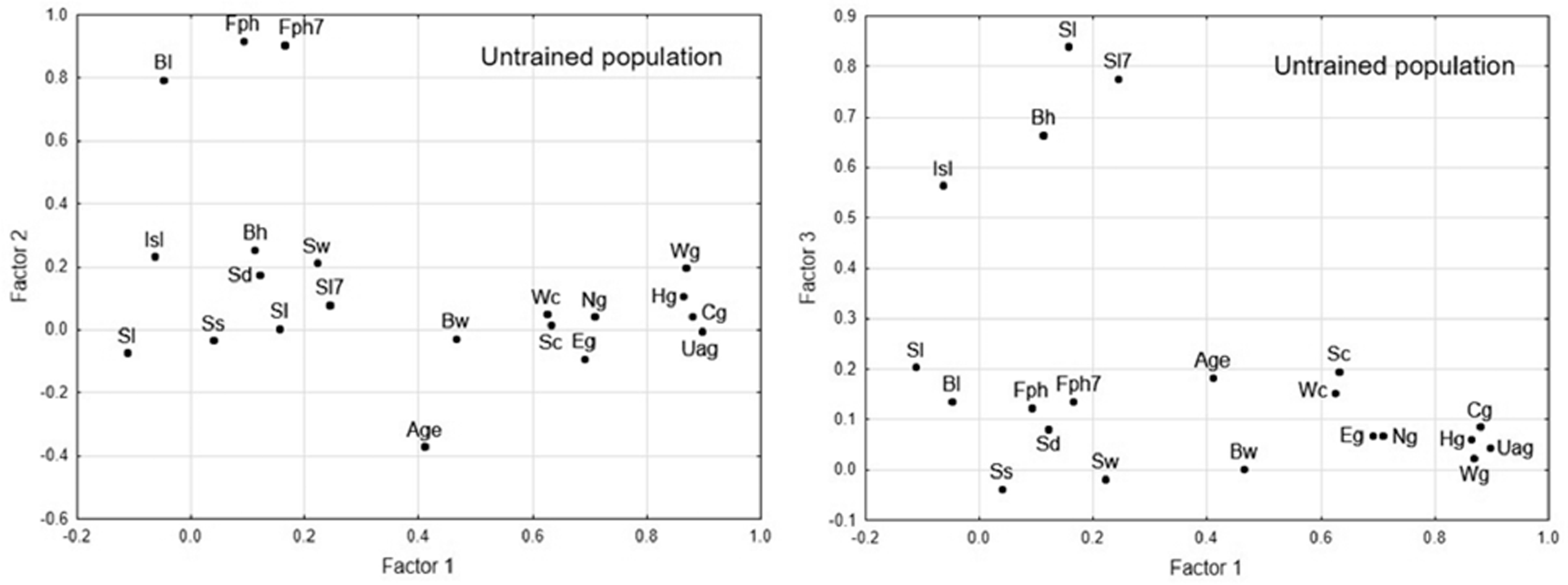
Factor loadings for the group of basketball players showed that the first factor (F1) is composed of chest girth, hip girth, neck girth, back width, upper arm girth, elbow girth, wrist circumference and shoulder circumference, accounting for 28.7% of the variability of all manifest variables. Measurements highly correlating with the second factor (F2) are armscye depth, back length, shoulder length on the right-hand side, shoulder width, wrist girth, front height without neckline and front height from the seventh cervical vertebra, accounting for 20.5% of the variability of all manifest variables. Body height, sleeve length, sleeve length from the seventh cervical vertebra and inside sleeve length compose the content of the third factor (F3), accounting for 13.5% of the total variability. Shoulder slope and partial back width and shoulder width of the fourth (last significant) factor (F4) account for 6.4% of the variability of all manifest variables. Factor loadings for the untrained group of the general population showed that the first factor (F1') is composed of chest, waist, neck, upper arm, elbow, wrists and shoulders, explaining 25.9% of the variability of the all manifest variables. Back length, front height without the neckline and front height to the seventh cervical vertebrae represent the content of the second factor (F2'), explaining 12.9% of the variability of the manifest variables. The third factor (F3') is determined by body height, sleeve length, sleeve length from the seventh cervical vertebrae and inner sleeve length, with 10.9% of the explained variance of all manifest variables. The fourth factor (F4') is composed of back width, shoulder length and shoulder width, explaining 8.6% of the variability of all manifest variables. The fifth factor (F5') is composed only of the sleeve depth circumference, explaining 6.2% of the variability of the manifest variables, and the last significant factor (F6') is the shoulder slope, which explains 5.2% of the variability of the manifest variables. Figure 3 presents the position of the body measurements of the basketball group and Figure 4 presents the position of the body measurements of the untrained group of the general population, all in the space of the first three factors.
Average body measurement positions in the space of the first three factors – basketball players. Average body measurement positions in the space of the first three factors – untrained group of the general population.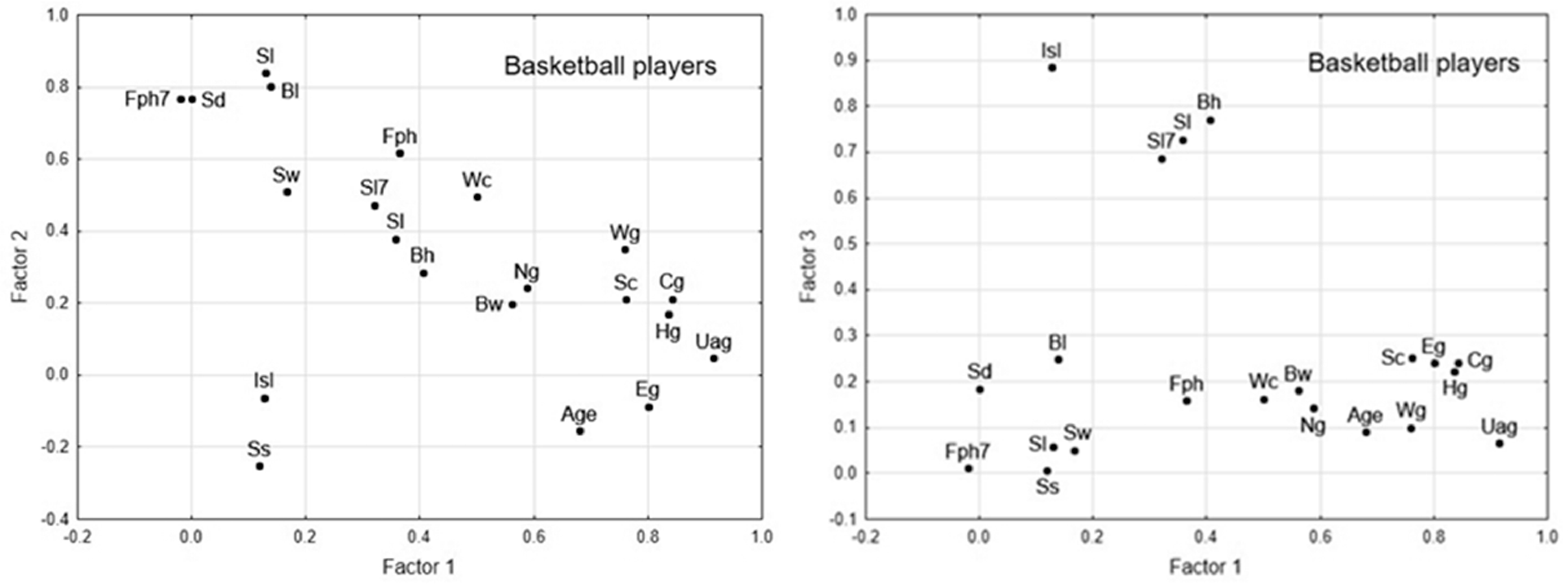
Average body measurements of basketball players according to the clothing size system for men's underwear

Parametric body models customized to be representatives of basketball players and the untrained group of the general population, based on a defined set of measurements for size 39 (Table 5), enabled the visualization of average body figures, forming a complete idea about the body shapes of basketball players and the untrained group of the general population. Customized models showed significant differences in shapes between bodies that are, according to existing standard, referring to the same size of a men's shirt.
The frontal longitudinal section of overlapped models aligned through the acromion point showed great differences in the shoulder and upper arms area (Figure 5). Thus, seven transversal cross-section planes were defined for further analysis: the plane crossing through the seventh cervical vertebra; the plane crossing the acromion point; the plane positioned 5 cm above the acromion; the plane positioned 5 cm below the acromion; the plane positioned 10 cm below the acromion; the chest plane; and the plane positioned 3 cm below the chest plane.
Customized computer body models of a basketball player and an untrained male for clothing size 39, with the longitudinal cross-section of overlapped models aligned through the acromion point.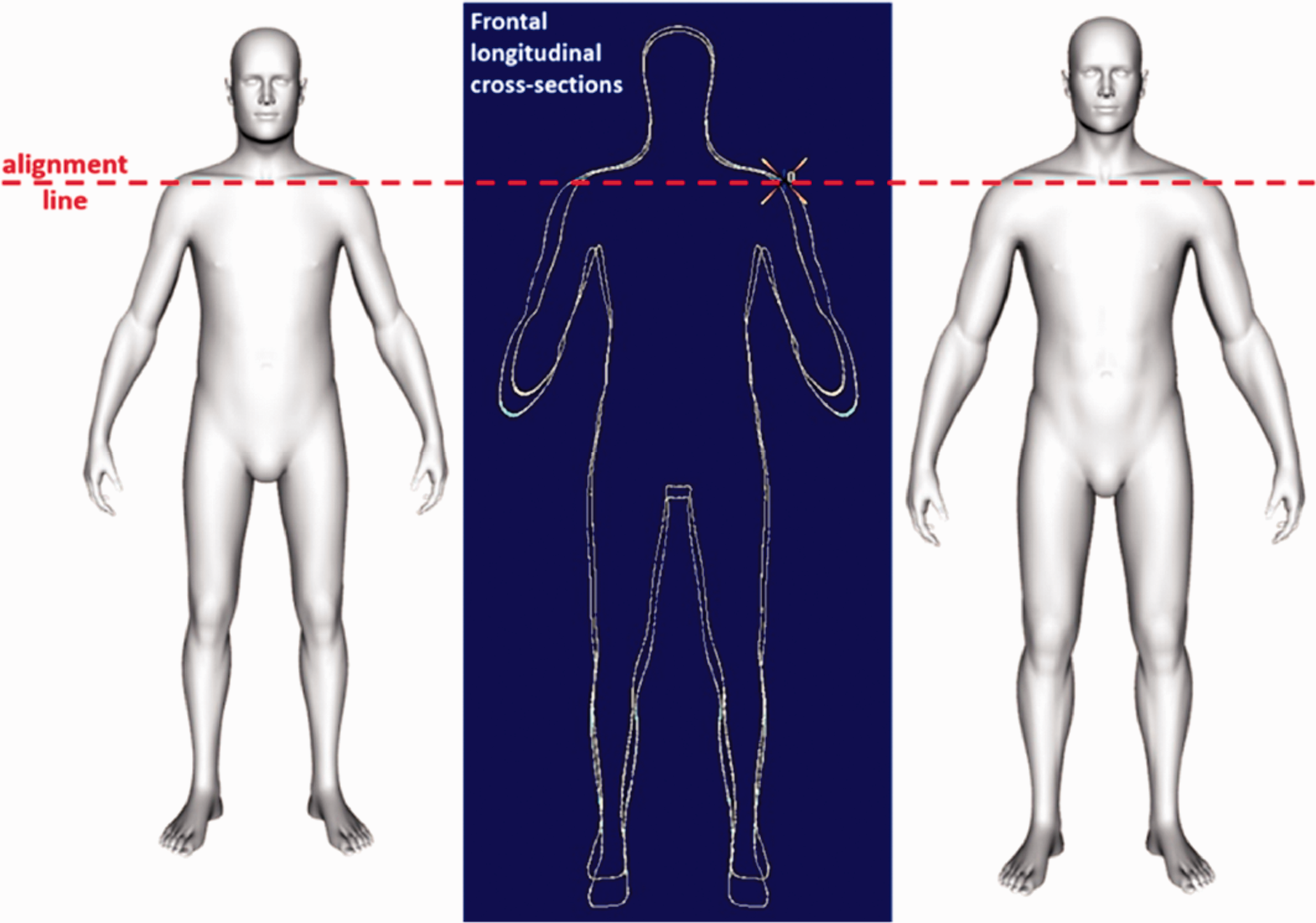
The frontal longitudinal section of the overlapped customized models, through the acromion point, showed that the shape differences are related to the increased muscle tissue of basketball players in the shoulder and upper arm areas (Figure 2). Given that these differences significantly affect the garment fit, additional transversal cross-section analysis was carried out to determine the exact differences in girth measurements on the neck, shoulder and chest areas. Seven transversal cross-sections were defined and analyzed: the section through the seventh cervical vertebra (CSC7); the section through the acromion point (CSA); the section positioned 5 cm above the acromion (CSA+5); the section positioned 5 cm below the acromion (CSA-5); the section positioned 10 cm below the acromion (CSA-10); the section through the chest point (CSC); and the section positioned 3 cm below the chest plane (CSC-3) (Figure 6).
Transversal cross-section analysis of the overlapped body models in Anthroscan software.
Differences between transversal cross-section measurements on the neck, shoulders and chest areas

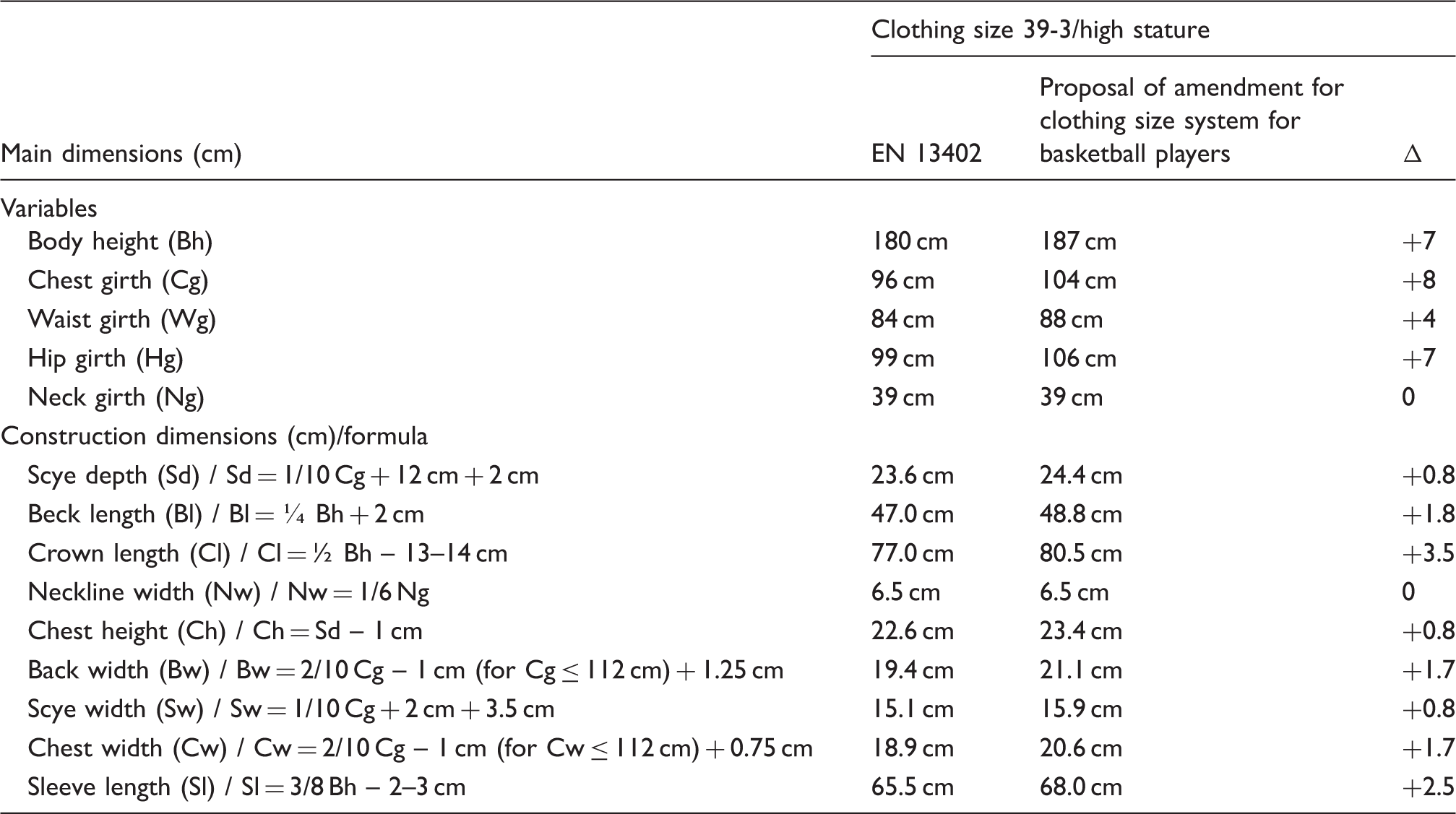
The obtained results confirmed the hypothesis that the basketball population does not correspond to a standard clothing size system for men's shirts and, because of significant differences in upper body size and shape, this population have great difficulties with finding clothes that fit. In order to test the hypothesis regarding garment fit and to evaluate the performed statistics and the proposal of the amendment for the clothing size system for the basketball population, complete computer development and testing of garment models was performed. Table 7 presents the measurements for the construction of a men's shirt obtained based on the existing clothing size system and based on the proposal of the amendment for the clothing size system for basketball players.
34
Expressions used for the calculation of construction dimensions are referring to the construction method according to Ujević et al.,
34
which is our official faculty literature. The method refers to the construction according to Muller and Son. Construction dimensions (formulas) are obtained using regression equations with an added amount of ease allowance. The results of a garment construction and the comparison of block patterns are shown in Figure 7.
Comparison of men's shirt block patterns obtained using the standard clothing size system and proposal of the amendment for the clothing size system for basketball players. Main and construction dimensions for the block pattern of a men′s shirt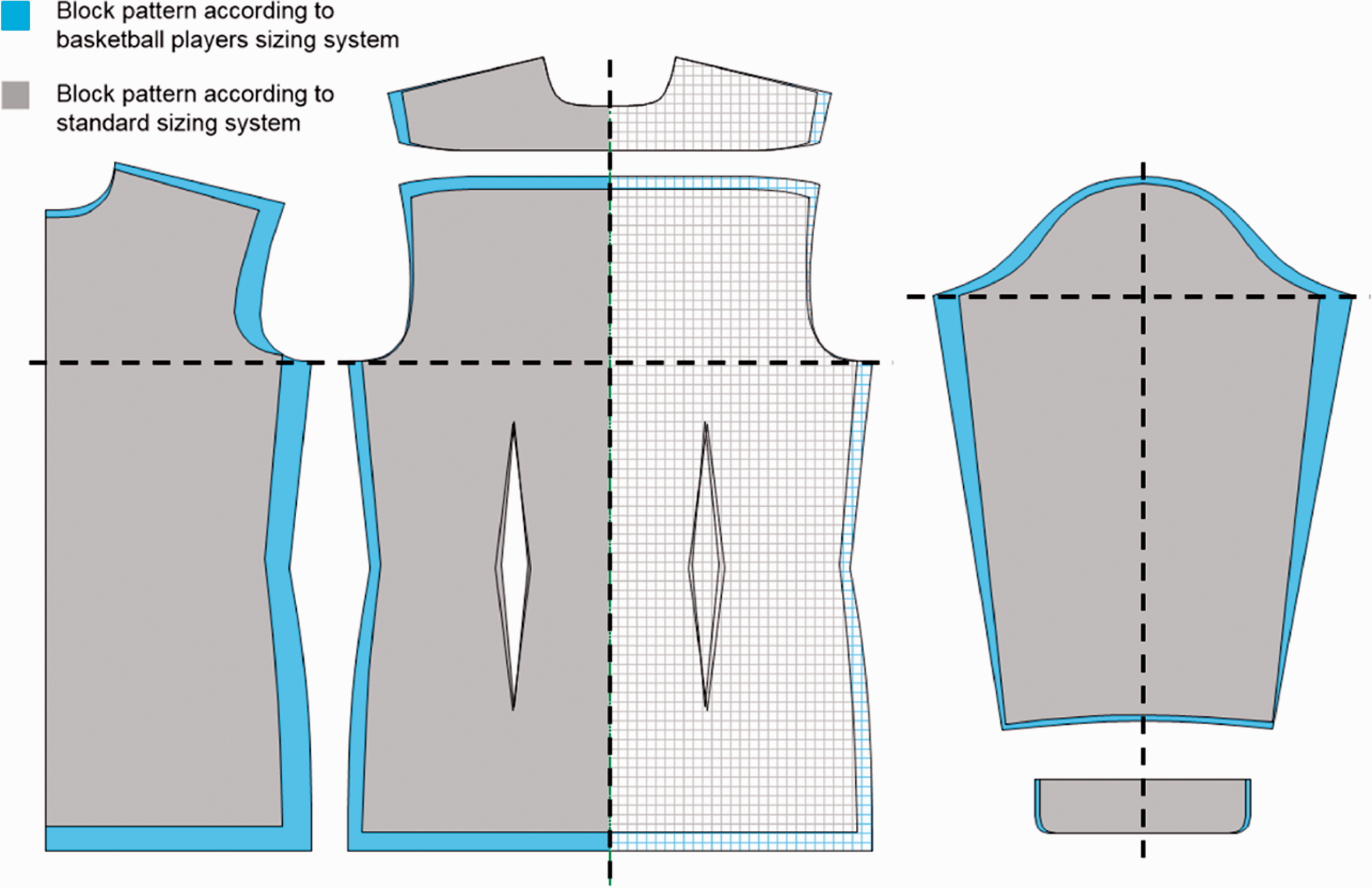
Subjective visual evaluation of virtual prototypes was performed based on nine variables, evaluated with a two-degree scale as fit (+) or misfit (-) (Figure 8). Evaluation was conducted by a team of 12 experts from the field of anthropometry and garment construction and modeling, with a statistical concordance of expert degrees of greater than 97%. Men's shirt size 39, constructed according to the existing clothing size system and simulated on the body model of a basketball player with a neck girth of 39 cm (size 39), showed a great misfit in total, thus confirming the garment fit hypothesis.
Three-dimensional simulations and subjective fit evaluation of men's shirt virtual prototypes constructed according to two clothing size systems on the body models of an untrained group of the general population and a basketball player, size 39-3 (high stature).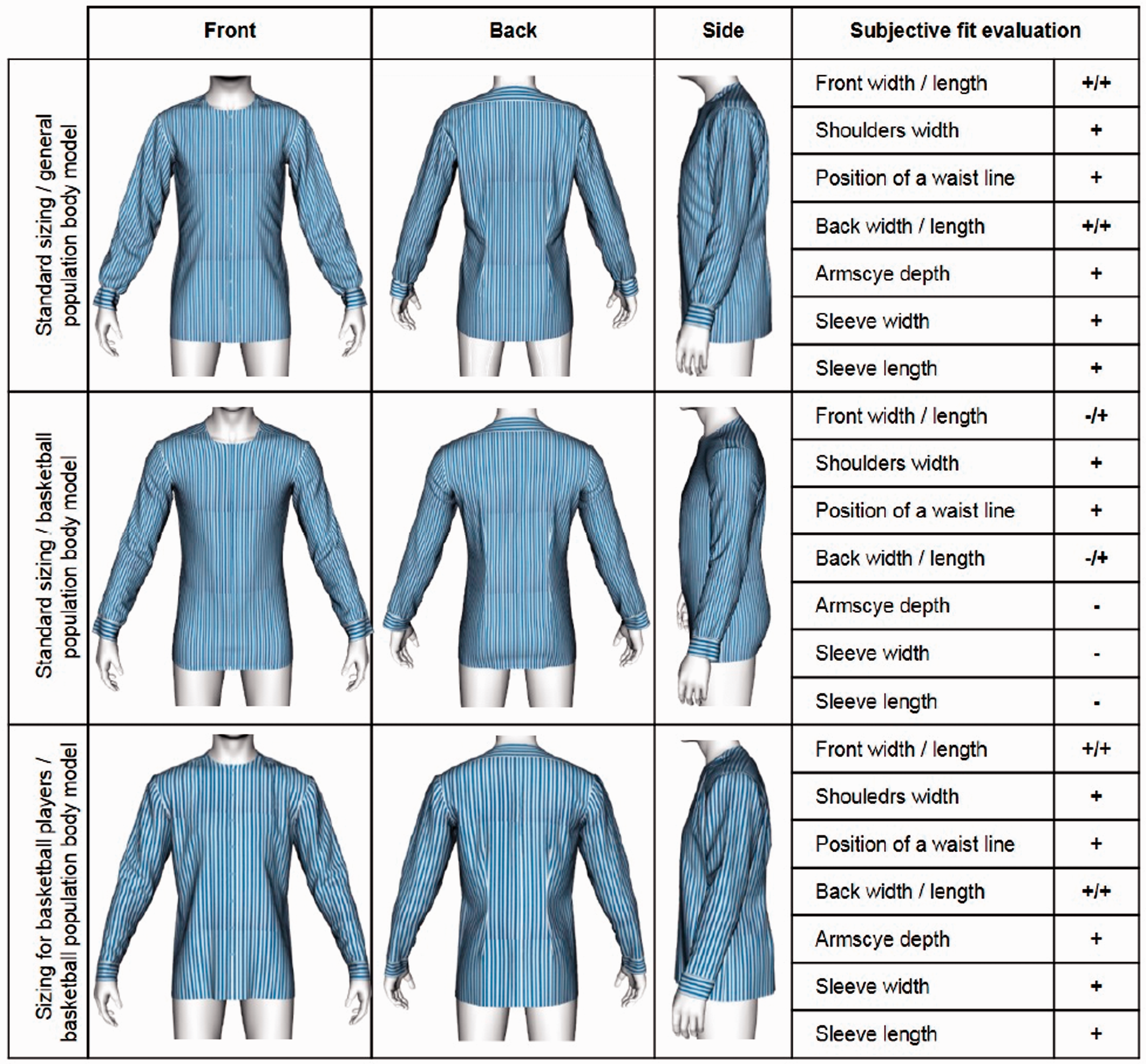
A computer prototype constructed according to the proposed amendment for the clothing size system for basketball players showed a satisfying fit in all observed areas, thus confirming the possible application of the conducted research results. Objective assessment was performed based on ease allowance values obtained by measuring transversal cross-sections on the characteristic girths of the simulated garments and body models (Figure 9). Measured values of a standard shirt simulated on the basketball player model showed very small values of ease allowance, confirming that the existing sizing does not provide appropriate garment fit for the basketball player (Figure 9(c)). The garment developed according to measurements of basketball players (Figure 9(b)) showed greater measured values and an appropriate amount of ease allowance in comparison with the standard, represented with the simulation of a standard garment on an untrained population body model, size 39 (Figure 9(a)) (Table 8).
Transversal cross-sections of virtual prototypes simulated on customized body models: (a) garment constructed according to the standard simulated on an untrained population model; (b) garment constructed according to the proposal of the amendment for the clothing size system for basketball players simulated on a basketball player model; (c) garment constructed to standard simulated on a basketball player model. Ease allowance calculations based on transversal cross-sections of virtual prototypes simulated on customized body models .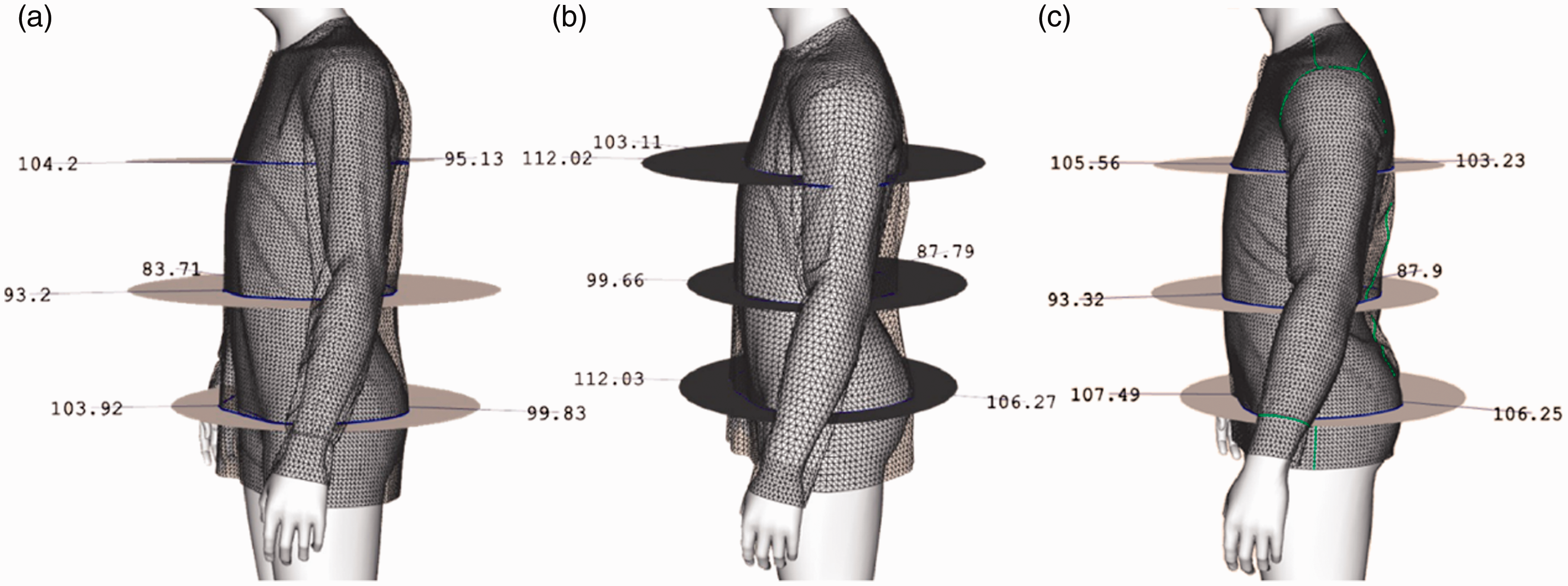

Conclusions
Differences in body measurements and in body shape between basketball players and the untrained group of the general population of test subjects have been proven. The analyzed body measurements of the upper body showed higher values in the basketball player population compared to the untrained group of the general population. Three-dimensional body scanning turned out to be very significant for the purposes of anthropometric measurements and clothing construction, because conventional measurement method does not give real insight into the shapes of individual body parts. By studying the body model of a basketball player compared to an untrained population body model, an increase in muscle tissue was found in the neck–shoulder region, which is very important for garment construction and fit. Because of the shape differences, it is necessary to modify the front and back block pattern parts as well as the sleeves, in order to ensure additional ease allowance on increased areas and optimal garment fit.
Based on the 3D simulation results and analysis of computer prototypes it can be concluded that garments made according to the existing Croatian sizing system do not meet the criteria of garment fit for the target group of athletes (basketball players). Analysis of computer prototypes, developed according to measurements of the proposed amendment for basketball player sizing, showed a satisfying fit, confirming the need for additional sizing standard amendments introducing new sizes for particular athlete groups and particular clothing. Anthropometric body characteristics of other athlete groups will be the focus of further research.
Footnotes
Declaration of conflicting interests
The authors declared no potential conflicts of interest with respect to the research, authorship and/or publication of this article.
Funding
The authors received no financial support for the research, authorship and/or publication of this article.