



Abstract
Adhesives, such as hot-melt adhesives (HMAs), are widely used in the textile industry for bonding layers of materials and have replaced traditional sewing methods. The block copolymer is a common type of HMA that provides excellent physical features and mechanical properties compared with others. Acrylate-based monomers, methyl methacrylate (MMA), and 2-ethylhexyl acrylate (2-EHA) were used as ingredients to form a linear block copolymer using atom transfer radical polymerization. MMA provides excellent cohesive strength, while 2-EHA provides good adhesion properties. An end-brominated poly(methyl methacrylate) (PMMA-Br) macroinitiator was synthesized from a MMA monomer and initiator, with the best composition obtained by the addition of a 0.6 mol initiator. The macroinitiator had the lowest molecular weight with highest conversion (97%). The addition of a 0.3 mol macroinitiator showed the lowest molecular weight with the highest conversion of acrylic copolymer PMMA-b-poly(2-ethylhexyl acrylate) (PEHA). The glass transition temperature increased with the addition of the macroinitiator concentration, from −43.7℃ to −37.6℃. The thermal stability was reduced with the addition of macroinitiator content, from 332.37℃ to 286.81℃. The shear strength and peel strength of the PMMA-b-PEHA HMAs on nylon fabrics were enhanced from 11.24 to 16.92 kg cm−2 and from 0.29 to 0.61 kg cm−1, respectively, and did not change significantly after being washed 50 times and then kept in low-temperature storage, with the addition of the macroinitiator concentration. The block copolymer PMMA-b-PEHA prepared in this study could be used as a HMA for nylon fabric bonding systems.
Keywords
Regarding future developments in industrial technology, as well as the improvement of living standards, the demand for the best quality of fabrics is constantly increasing. Silk, wool, velvet, linen, etc., are epitomized as high-quality fabrics that are also high-priced. Nowadays, cheaper fabrics are often combined or bonded to obtain a higher quality. Typically, joining fabrics uses artificial sewing techniques; however, this causes general problems, such as detachment, time-consuming production, and high labor costs. As seamless bonding can reduce the work of machine sewing, the development of seamless textiles has become an interest of many researchers in recent years. 1 Seamless bonding allows the elimination of sewing for several applications, such as zippers, pockets, patches, etc., thereby bringing both aesthetic and economic benefits. 2
Adhesives are widely used in the textile industry for bonding layers of materials, applying lining cloth, and decorative finishes. 3 Hot-melt adhesives (HMAs) are typically used for fabric bonding systems. Utilizing HMAs as lining cloth provides reinforcement and a shaping effect on the fabric, which also reduces costs and increases production efficiency; thus, it is an indispensable auxiliary material for high value for textile production. HMAs are solvent-free thermoplastic solid materials that are characteristically solid at low temperatures, low-viscosity fluids at high temperatures, and rapidly set upon cooling. In comparison with other adhesives, HMAs show excellent physical features and mechanical properties. They form a strong bond simply by cooling, are compatible with most materials, and are clean and easy to handle. 4 Since HMAs do not need to evaporate a solvent during use, they will not contaminate the environment. Block copolymers are a common type of HMA and include styrene-isoprene-styrene (SIS) and styrene-butadiene-styrene (SBS).5,6 SIS and SBS have thermoplasticity and rubbery elasticity, as well as excellent creepage properties. However, as the molecular polarity of SIS and SBS block copolymers is small, an unsaturated double bond exists in the molecule. This will lead to poor adhesive strength to polar materials, as well as poor oil resistance, solvent resistance, oxidation resistance, and weatherability.7–9 Moreover, common synthesis methods, such as anionic and cationic polymerization, lead to high-molecular-weight polymers that are not processible as typical HMAs.10,11 The development of new material and synthesis methods is required to obtain a better quality of HMA.
In dealing with the above issues, several methods have been introduced to get better HMAs. In order to obtain the controllable structure and molecular weight of a block copolymer, living radical polymerization was introduced.10–12 Atom transfer radical polymerization (ATRP) has the advantages of free radical polymerization and living polymerization, a wide applicable range for the monomers, and mild polymerization conditions, and it can easily achieve industrialization.13,14 Acrylate monomers have been used to develop acrylate block copolymer adhesives. They have adjustable and inherent adhesion power characteristics that result in better durability, resistance to photodegradation, heat resistance, tack, and moisture vapor transmission rates.4,15 Acrylate block copolymers have unique characteristics that can be manipulated by combining different acrylate monomers with variated block lengths. 12 The synthesis of acrylate polymers and block copolymers using ATRP has become an interest of some researchers. Yu et al. 16 synthesize poly(methyl methacrylate) (PMMA) using ATRP to obtain a controlled molecular weight and low polydispersity index values using a nitrogen-based ligand, CuBr2, as a catalyst and 2-bromoisobutyrate as an initiator. Mupalla et al. 17 reported well-controlled synthesis of a novel tri-component [polyisobutylene (PIB), poly(n-butyl acrylate) (PnBA) and PMMA] pentablock copolymer (PMMA-b-PnBA-b-PIB-b-PnBA-b-PMMA) by ATRP using PIB as a macroinitiator. The copolymer exhibited good mechanical properties, oxidative stability, and cytocompatibility. Mandal et al. 18 investigated the preparation of an ABA triblock copolymer that consisted of 2-ethylhexyl acrylate (2-EHA) and dicyclopentenyloxyethyl methacrylate via ATRP. An evaluation of its properties showed that the copolymer had much better adhesion strength and controlled molecular weight. Based on previous research, the ATRP method could be a promising method for producing block copolymers. Previous studies have focused on the physical properties of the product but have not directly focused on the application, especially in regards to HMAs on fabric bonding systems.
This study developed an acrylate block copolymer using the ATRP method for HMA nylon fabric bonding. Nylon is a synthetic fabric that has numerous advantages, such as strength, a light weight, moisture resistance, and ease of handling, and it is often used for swimwear, activewear, and hosiery. However, nylon has low durability and weather resistance (damage by sunlight). Even though it is usually long-lasting, nylon fabric must be washed in cold water and air dried. The more it is washed and dried, the more likely it is to pill and become worn out. Methyl methacrylate (MMA) and 2-EHA has been used as an acrylate monomer. The MMA side chain has polar groups that support it to form intermolecular hydrogen bonds, which results in better cohesion strength, heat resistance, and weatherability. 19 The viscous 2-EHA monomer has a long molecular chain with a large side group that increases the molecular weight of the adhesive. The incorporation of 2-EHA in the adhesive increases the peel strength, shear strength, and wettability on the substrate. 20 ATRP was used in this study to synthesize macroinitiator end-brominated PMMA (PMMA-Br) and reacted with 2-EHA to form a diblock structure (PMMA-b-poly(2-ethylhexyl acrylate) (PEHA)) in order to obtain a linear acrylate block copolymer for HMAs. The shear strength and peel strength was used to evaluate the adhesion performance of the HMAs on nylon fabrics and to observe the durability properties after washing and low-temperature storage tests.
Experimental details
Materials
Industrial-grade ethyl methacrylate (MMA) was acquired from First Chemical Co., Ltd, Taiwan. Industrial-grade 2-EHA was acquired from Keeneyes Industrial Co., Ltd, Taiwan. Reagent-grade ethyl α-bromoisobutyrate (EBiB), N,N,N′,N″,N″-pentamethyldiethylenetriamine (PMDETA), and copper(I) chloride (CuCl) were purchased from Sigma-Aldrich, USA. Toluene and methanol solvent were purchased from Trans Chief Chemical Industry Co., Ltd, Taiwan.
Synthesis route of the PMMA-Br macroinitiator
Effect of synthesis parameter content on the conversion and molecular weight of end-brominated poly(methyl methacrylate)
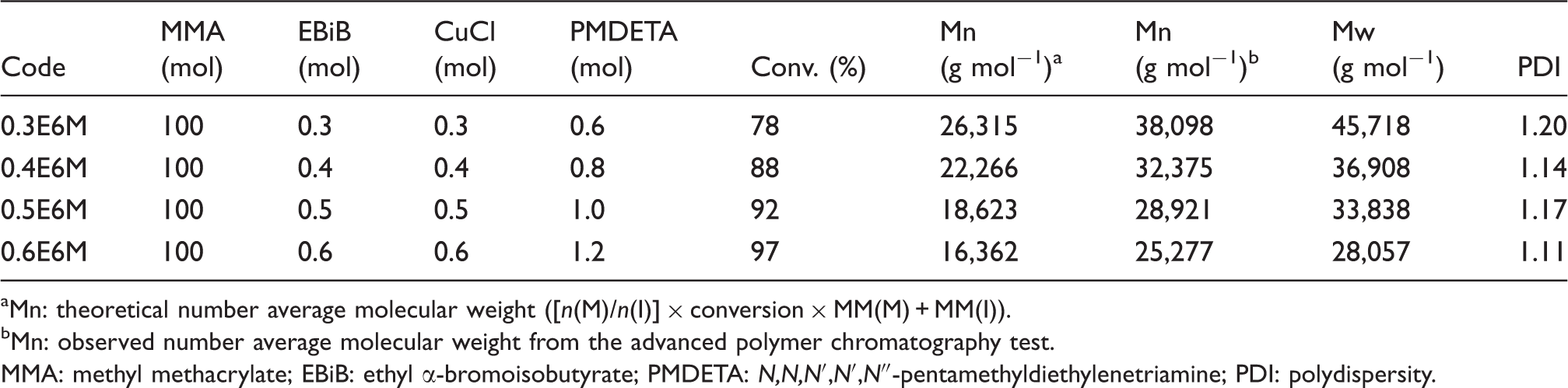
Mn: theoretical number average molecular weight ([n(M)/n(I)] × conversion × MM(M) + MM(I)).
Mn: observed number average molecular weight from the advanced polymer chromatography test.
MMA: methyl methacrylate; EBiB: ethyl α-bromoisobutyrate; PMDETA: N,N,N′,N′,N″-pentamethyldiethylenetriamine; PDI: polydispersity.
Synthesis route of the PMMA-b-PEHA block copolymer
Effect of synthesis parameter content on the conversion and molecular weight of poly(methyl methacrylate)-b-poly(2-ethylhexyl acrylate) hot-melt adhesives

Mn: theoretical number average molecular weight ([n(M)/n(I)] × conversion × MM(M) + MM(I)).
Mn: observed number average molecular weight from the advanced polymer chromatography test.
2-EHA: 2-ethylhexyl acrylate; PMMA-Br: end-brominated poly(methyl methacrylate); PMDETA: N,N,N′,N″,N″-pentamethyldiethylenetriamine; PDI: polydispersity.
ATRP reaction mechanism of PMMA-b-PEHA HMAs
The ATRP reaction mechanism of PMMA-b-PEHA HMAs is shown in Scheme 1. As shown in Scheme 1, the MMA reacted with an initiator containing the bromine group to obtain the macroinitiator using ATRP synthesis. Next, the 2-EHA monomer was introduced to carry out block copolymerization for the HMA application. As shown in Scheme 1-(1), the initiator EBiB and the catalytic system CuCl/PMDETA16,21 were used to synthesize the macroinitiator PMMA-Br. In Scheme 1-(2), the macroinitiator PMMA-Br, which contained the C-Br band in the chain end, reacted with the viscous monomer 2-EHA to form a PMMA-b-PEHA HMA linear structure diblock copolymer.
Schematic reaction mechanism of poly(methyl methacrylate)-b-poly(2-ethylhexyl acrylate) hot-melt adhesive HMA synthesis. MMA: methyl methacrylate; EBiB: ethyl α-bromoisobutyrate; PMDETA: N,N,N′,N″,N″-pentamethyldiethylenetriamine; PMMA-Br: end-brominated poly(methyl methacrylate); 2-EHA: 2-ethylhexyl acrylate.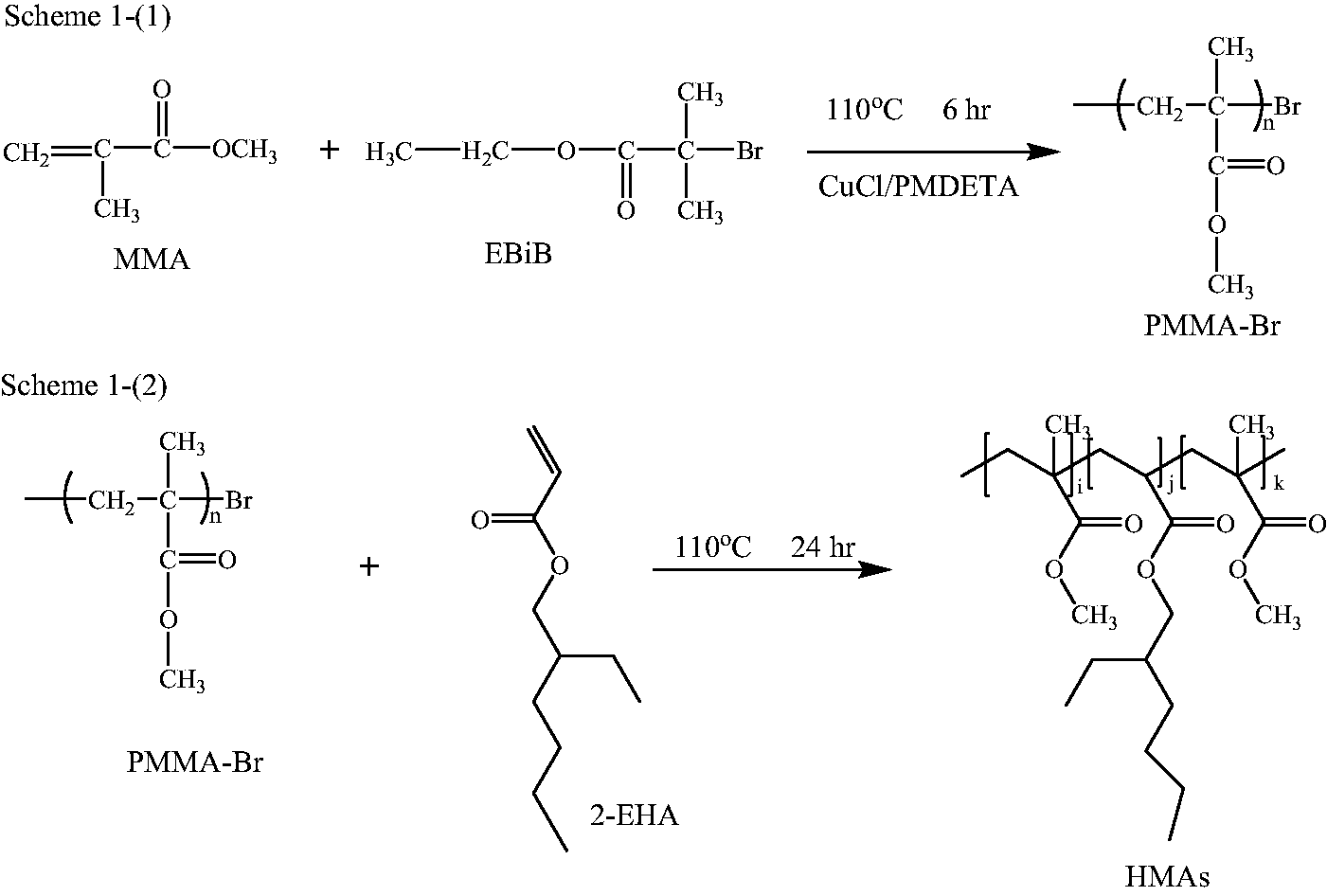
Preparation of PMMA-b-PEHA HMAs onto nylon fabrics
PMMA-b-PEHA was applied to the poly(ethylene terephthalate) release surface using an applicator at room temperature and the solvent was removed by being placed in an oven at 80℃ to form HMAs. The samples were prepared with a length of 1 inch. Using an electric hot-pressing machine, the HMA adhered to the nylon fabric at a pressure of 1 kg cm−2 for 30 s at 150℃.
Material characterization
The chemical structure of the HMAs was confirmed using Fourier transform infrared (FTIR) spectroscopy (FTS-1000 spectrometer, Digilab Co., Ltd, USA) equipped with an attenuated total reflectance (ATR) accessory using a transmittance range of about 600–4000 cm−1. Proton nuclear magnetic resonance (
1
H-NMR), using a Bruker Avance 600 NMR spectrometer with solvent CDCl3, was also used to support the FTIR results. Monomer conversion (x) was defined as the weight ratio of the HMAs formed to the initial monomers. After the addition of an inhibitor, the samples were taken directly from the reactor and dried in a vacuum oven and the conversion was calculated, as follows

Gel permeation chromatography (GPC) was performed to determine the molecular weight of the HMAs using ACQUITY Advanced Polymer Chromatography from Waters Co., Ltd, USA. The samples were dissolved with tetrahydrofuran and the measurement was taken at 45℃ with a flow rate of 0.8 ml/min. The number average molecular weight (Mn) and weight average molecular weight (Mw) were determined using the standard calibration curve of polystyrene. The pyrolysis temperatures of the HMAs were measured using thermogravimetric analysis (TGA; TGA Q500, TA Instruments, USA) at a temperature range of 30–600 ºC and the heating rate of 10℃/min under a dry nitrogen flow at 20 ml/min. The glass transition temperature of the sample was measured by differential scanning calorimetry (DSC; DSC Q2000, TA Instruments, USA) with a heating/cooling rate of 10℃/min. The second heating curve was analyzed and the middle point of the glass transition range was chosen as the glass transition temperature. The shear strength and peel strength were measured using a testing machine (HT9501, Hung-Ta Instrument, Taiwan) in accordance with ASTM D365422 and PSTC-1. 23 Regarding the determination of the adhesive properties of the prepared HMAs, the nylon fabrics were subjected to a durability adhesive test in a different environment after 50 washes and were left at –30℃ for 24 h. Wash testing was conducted according to AATCC61. 24 Each test was performed five times.
Results and discussion
Chemical structure, conversion, and molecular weight analysis of the macroinitiator
PMMA-Br was used as a macroinitiator for block copolymerization using the ATRP synthesis technique. The chemical structure of the 0.6E6M PMMA-Br macroinitiator was validated by 1H-NMR instrumentation, as shown in Figure 1, in which it can be seen that the increased chemical shift of methyl hydrogen at point c was due to the electron-withdrawing effect of the bromine atom at the end of the macromolecule.
25
The triplet in 7.2 ppm was attributed to the CDCl3 from the solvent. The NMR spectrum results indicated the existence of the C-Br bond in the main chain of the synthesized macroinitiator, which was similar to Yu et al.
16
and Chuang et al.,
21
thus proving the success of the synthesis reaction.
Proton nuclear magnetic resonance spectrum of the end-brominated poly(methyl methacrylate) (PMMA-Br) macroinitiator.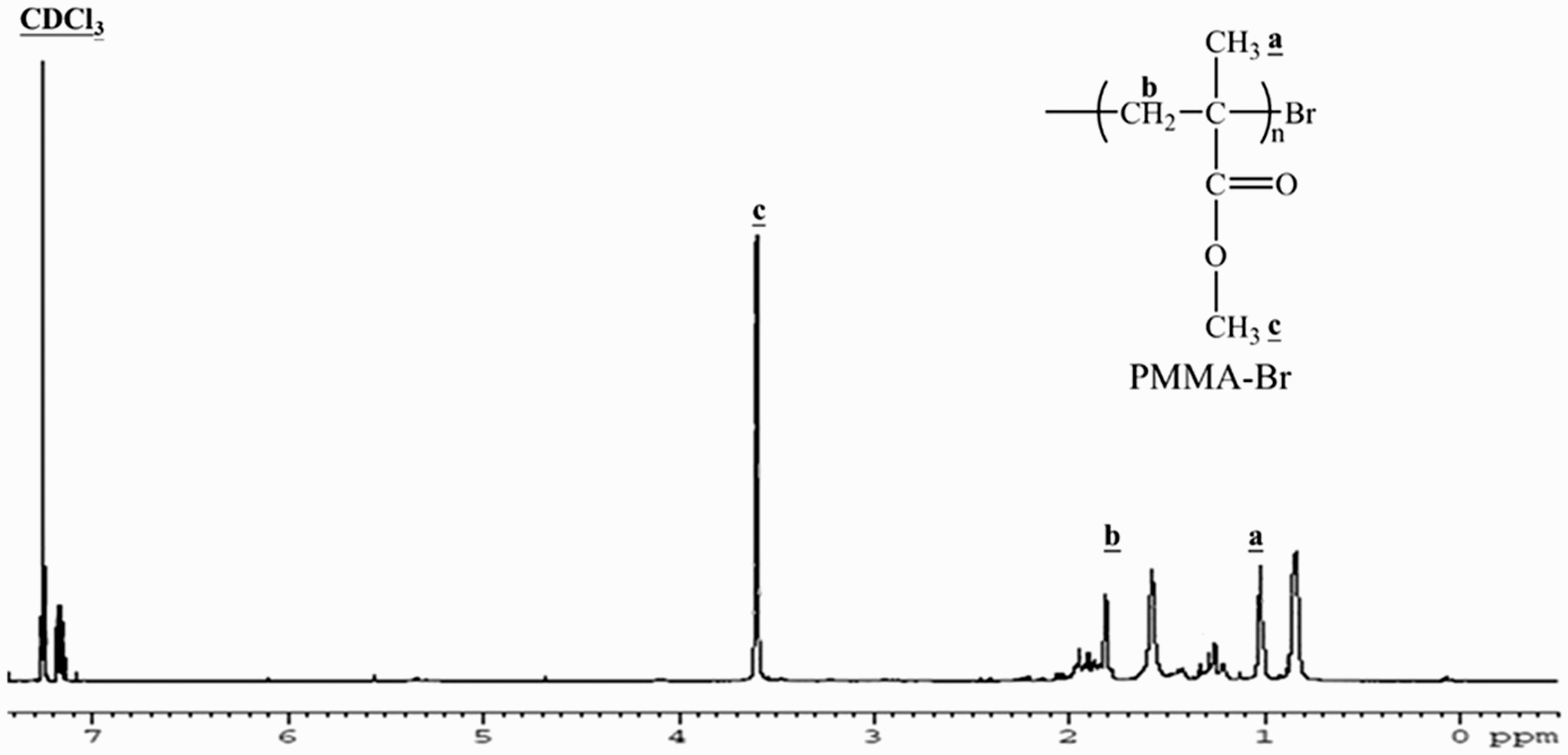
The molecular weight analysis of the PMMA-Br macroinitiator is shown in Figure 2. The synthesis parameters of the PMMA-Br, the conversion, and the molecular weight data are shown in Table 1. From the results, it could be seen that the monomer conversion improved with the increase of the initiator content;
26
however, the molecular weight (Mn and Mw) was reduced, which was similar to the theoretical molecular weight results. When the EBiB content increased from 0.3 to 0.6 mol, the Mw value was reduced from 45,718 to 28,057 g mol−1 and the Mn value decreased from 38,098 to 25,277 g mol−1, showing the trend of a unimodal distribution without residue. This result was due to the large number of active free radicals that were generated in the system. The polymerization reaction of the monomer was promptly initiated to obtain a polymer with a clear structure and narrow molecular weight distribution (PDI). However, if the concentration of the initiator was too high, a large number of active free radicals generated in the initiation stage would undergo termination and disproportionation and would lose the characteristic of active polymerization, thus narrowing the molecular weight distribution of the polymer to be broadened and affecting the activation–deactivation cycles. With a large number of free radicals, the activation–deactivation polymerization was higher, resulting in a short polymer chain. Therefore, reasonable control of the initiator concentration could increase the polymerization rate and reduce the production of side reactions during the polymerization process.27–29
Gel permeation chromatography curve of the end-brominated poly(methyl methacrylate) macroinitiator.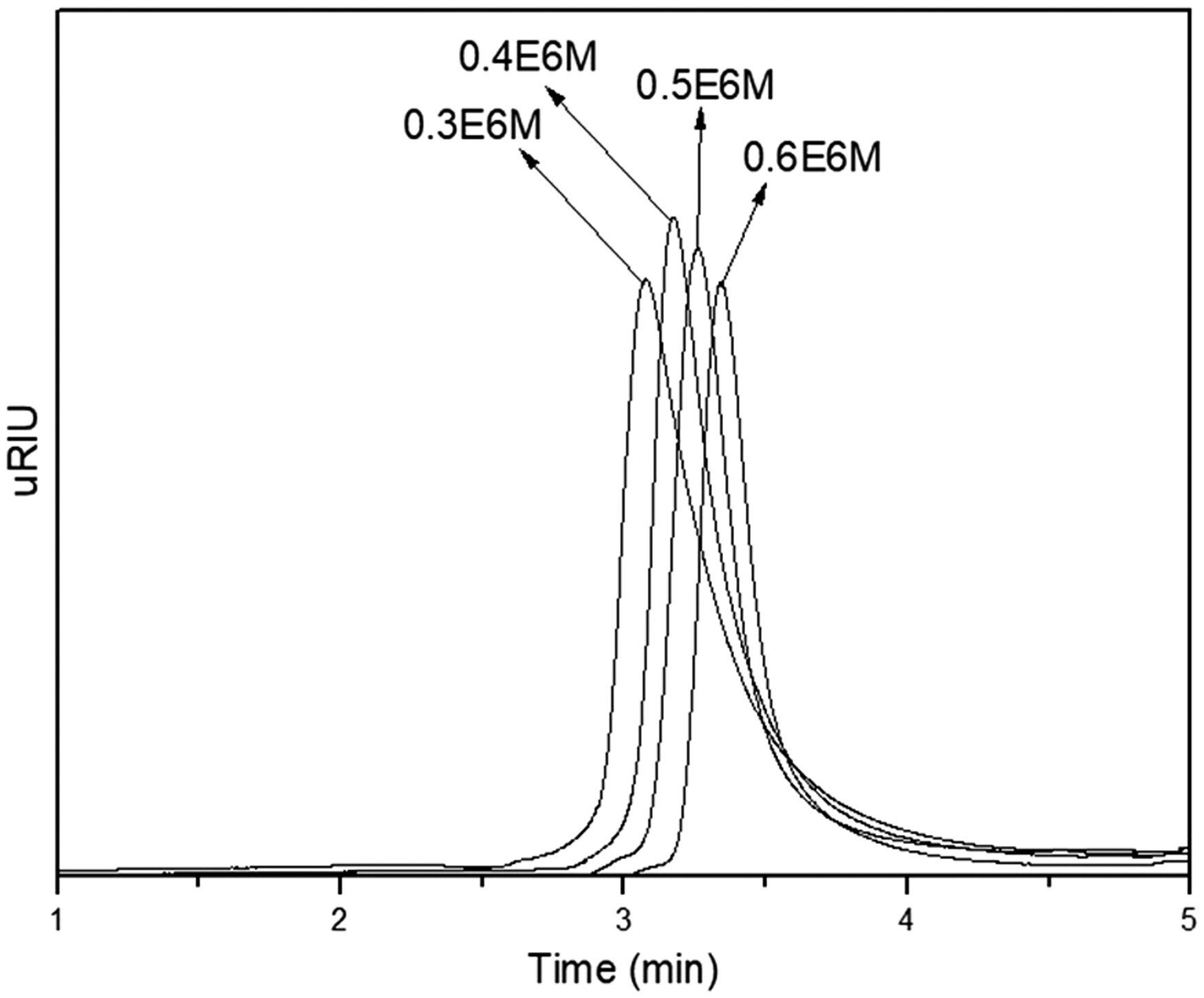
Chemical structure, conversion, and molecular weight analysis of the HMAs
The PMMA-Br macroinitiator reacted with viscous 2-EHA to form PMMA-b-PEHA HMAs. The chemical structure of the PMMA-b-PEHA HMAs was validated by FTIR instrumentation, as shown in Figure 3, which shows a comparison of the infrared (IR) spectrum between the 2-EHA, the macroinitiator (0.6E6M), and the HMAs. The characteristic peaks at 2955, 1730, and 1450 cm−1 were indicated as the C-H stretching vibration peak on the methyl group, the C=O stretching vibrational absorption peak on the ester carbonyl group, and the C-H bending vibration peak in the methylene group, respectively. The disappearance of the peak at 1645 cm−1 indicated a double bond C=C, and the obvious increasing peak at 1160 cm−1 indicated a C-O bond. The HMA samples proved the successful synthesis of PMMA-b-PEHA triggered by a macroinitiator prepared with use of ATRP.30,31 The FTIR results were also validated using 1H-NMR characterization. The NMR results of the 3.0EHA24 PMMA-b-PEHA HMAs are shown in Figure 4. The resonance at 3.93 (point a), 2.30 (point b), 1.27 (point c), 2.00–1.61 (point d), and 0.90–0.83 (point e) were attributed to the (-OCH2) proton of 2-EHA, the main methine proton of 2-EHA, the proton of methylene (CH2), two types of 2-EHA protons, and the methyl proton of 2-EHA, respectively. The existence of some characteristic bonds for 2-EHA in the main chain of the HMAs proved the successful synthesis of PMMA-b-PEHA.
Fourier transform infrared spectra of 2-ethylhexyl acrylate (2-EHA), the end-brominated poly(methyl methacrylate) macroinitiator, and the poly(methyl methacrylate)-b-poly(2-ethylhexyl acrylate) hot-melt adhesives. Proton nuclear magnetic resonance spectrum of the poly(methyl methacrylate)-b-poly(2-ethylhexyl acrylate) hot-melt adhesives.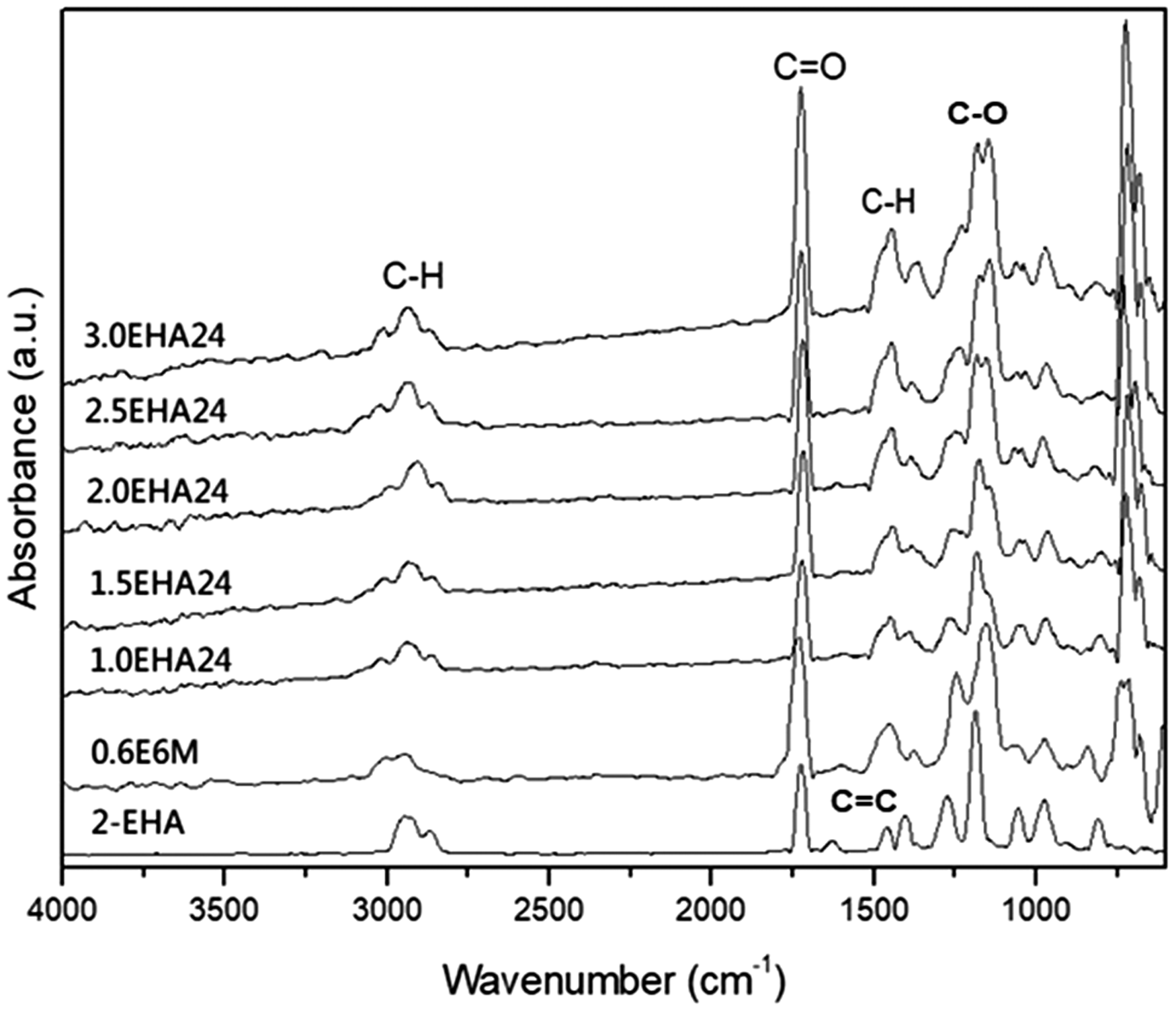

The molecular weight analysis of the PMMA-b-PEHA HMAs is shown in Figure 5, and the synthesis parameters, conversion, and molecular weight are shown in Table 2. Synthesis of the PMMA-b-PEHA HMAs linearly increased the macroinitiator concentration with respect to 2-EHA from 1.0:100 to 3.0:100 (as shown in Table 2) with the comparable PDI values. Based on the results, it could be seen that when the PMMA-Br macroinitiator molar content increased from 1.0 to 3.0, the Mw value was reduced from 54,032 to 36,250 g mol−1 and the Mn value decreased from 40,934 to 29,472 g mol−1, showing a good trend. This result was similar to the theoretical value, indicating that the macroinitiator completely initiated the ATRP of monomer 2-EHA and proving that no homopolymer was formed except for the expected block copolymer PMMA-b-PEHA.
32
From the results, it could be seen that the PDI was in the range of 1.32–1.26, which was still narrower compared with the block copolymer that was obtained from conventional copolymer MMA-2-EHA using radical polymerization, in which the PDI varied from 1.8–3.4.
33
Gel permeation chromatography curve of the poly(methyl methacrylate)-b-poly(2-ethylhexyl acrylate) hot-melt adhesives.
Thermal properties of the HMAs
Two glass transition temperatures are observed in Figure 6, which was consistent with the discontinuous separation of the microphase behavior in the diblock copolymer,
34
and which respectively corresponded to the glass transition temperatures of 2-EHA and PMMA. The glass transition temperature of the 2-EHA soft segment was observed to be in the range from −43.7℃ to −37.6℃, while the glass transition temperature corresponding to the PMMA hard segment was 112℃. In Figure 6, it can be seen that each glass transition temperature of the 2-EHA soft segment in the copolymer was higher than the pristine 2-EHA glass transition temperature (−70℃) due to the introduction of the rigid PMMA hard segment. With the increasing PMMA-Br macroinitiator content, the glass transition temperature of the soft segment was enhanced gradually, which was consistent with the molecular weight results.34,35
Differential scanning calorimetry curve of the poly(methyl methacrylate)-b-poly(2-ethylhexyl acrylate) hot-melt adhesives.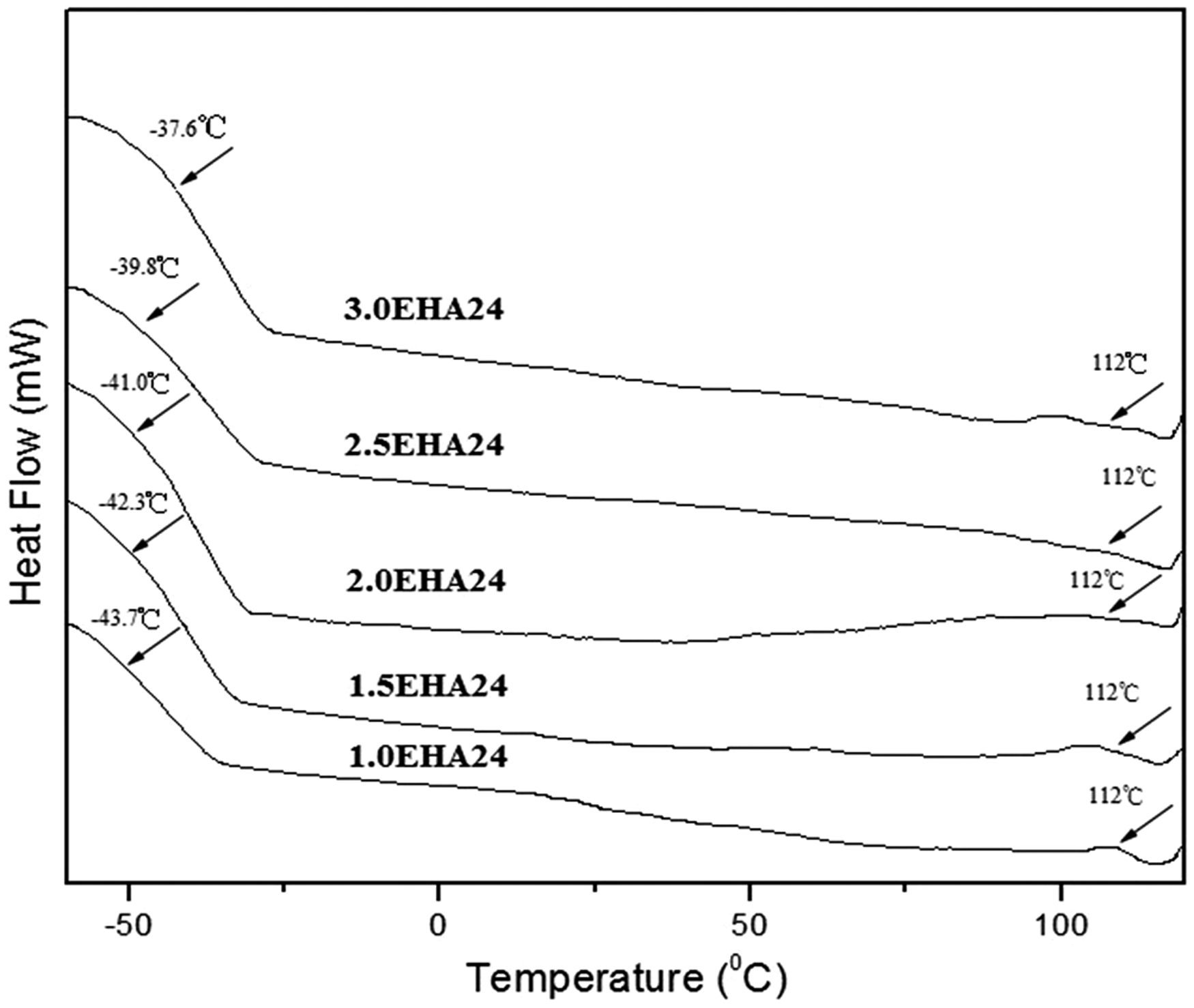
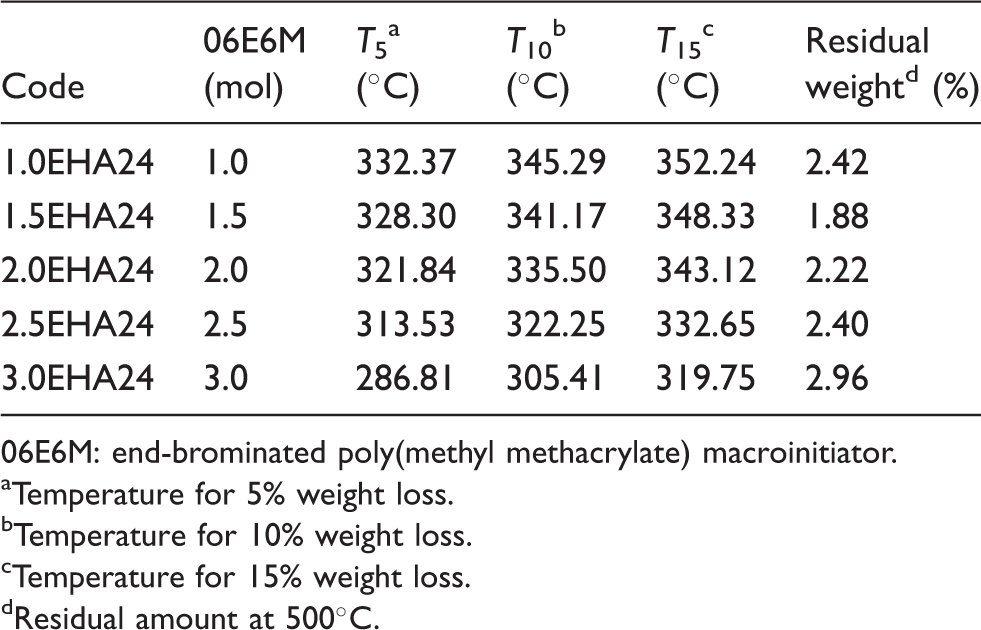
In order to investigate the thermal cracking performance of the PMMA-b-PEHA HMAs, TGA measurements were performed. The TGA results, measured under an inert gas, are shown in Figure 7, while the data are shown in Table 3. From the results, when the PMMA-Br macroinitiator molar content increased from 1.0 to 3.0, the thermal cracking temperatures T5, T10, and T15 decreased and produced a residue at 500℃ of about 2%. The reduction was attributed to the introduction of the rigid PMMA hard segment into the copolymer structure.36,37
Thermogravimetric analysis curve of the poly(methyl methacrylate)-b-poly(2-ethylhexyl acrylate) hot-melt adhesives. Thermal performance and the residual amount of poly(methyl methacrylate)-b-poly(2-ethylhexyl acrylate) hot-melt adhesives 06E6M: end-brominated poly(methyl methacrylate) macroinitiator. Temperature for 5% weight loss. Temperature for 10% weight loss. Temperature for 15% weight loss. Residual amount at 500℃.
Performance of the HMAs on nylon fabrics
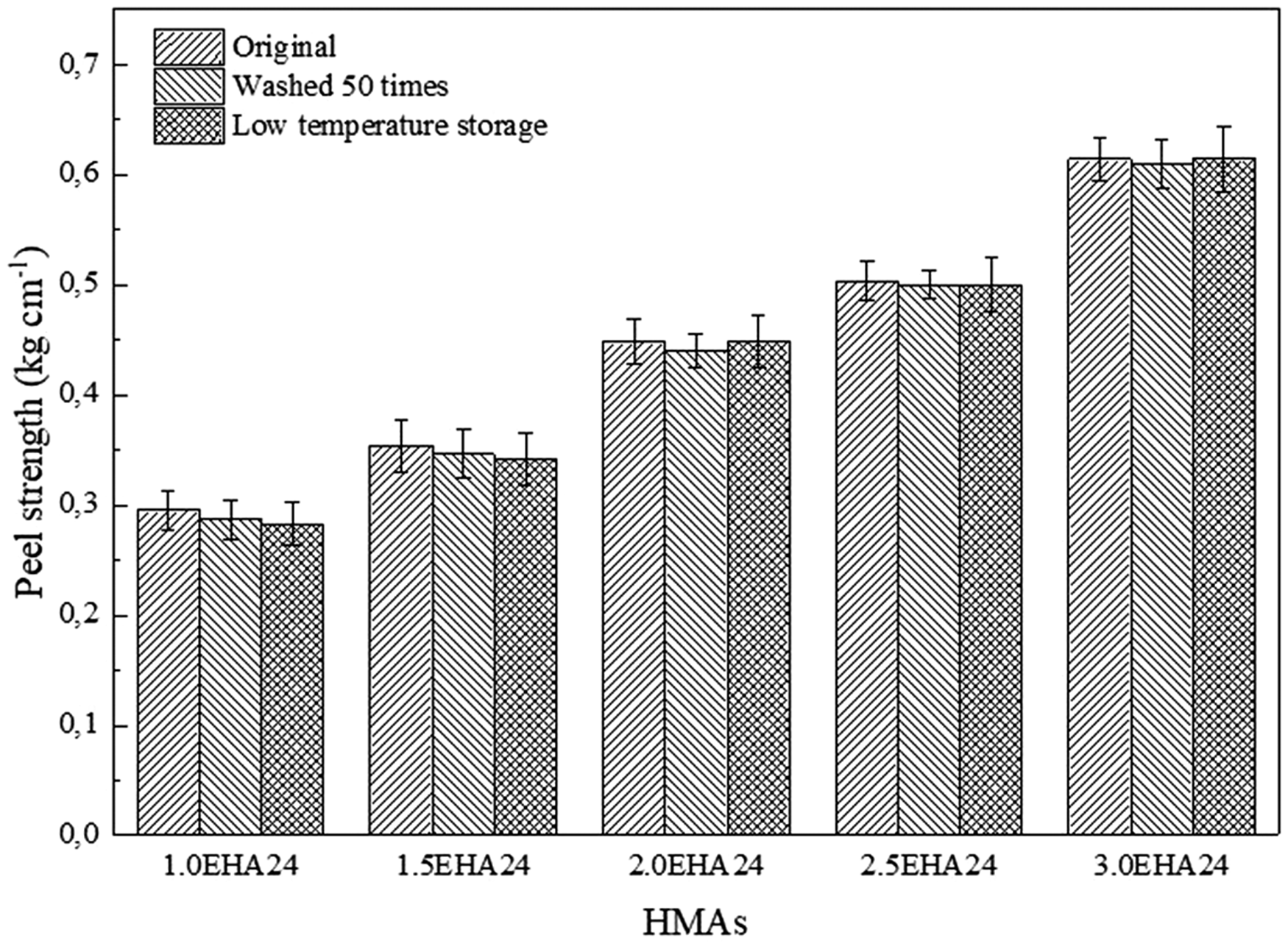
The shear strength, peel strength, and durability performance are shown in Figures 8 and 9. The shear strength and peel strength showed increasing trends. The enhancement of shear strength could be mainly attributed to its high molecular weight, which increased the cohesion properties. The shear strength of the HMAs induced a concomitant increase in the peel strength.
38
It could be observed that when the HMAs were applied to nylon fabrics, with the increasing PMMA-Br macroinitiator content, the shear strength was enhanced from 11.27 to 16.92 kg cm−2 and the peel strength was enhanced from 0.29 to 0.61 kg cm−1. The nylon fabric washability testing was conducted according to AATCC61 specifications. After washing 50 times, the shear strength and peel strength were not reduced significantly. The shear strength was in the range from 11.24 to 16.90 kg cm−2, while the peel strength was in the range from 0.28 to 0.61 kg cm−1 and increased with the increase of the macroinitiator content. A low-temperature storage test was performed at −30℃ for 24 h to investigate the HMA storage performance. After storage, the shear strength and peel strength were not reduced significantly. The shear strength was in the range from 11.24 to 16.91 kg cm−2, while the peel strength was in the range from 0.28 to 0.61 kg cm−1 and increased with the increase of the macroinitiator content. From the results, it could be seen that the HMAs prepared in this study had good adhesive and durability performance.
Shear strength of hot-melt adhesives (HMAs) glued to nylon fabrics. Peel strength of hot-melt adhesives (HMAs) glued to nylon fabrics.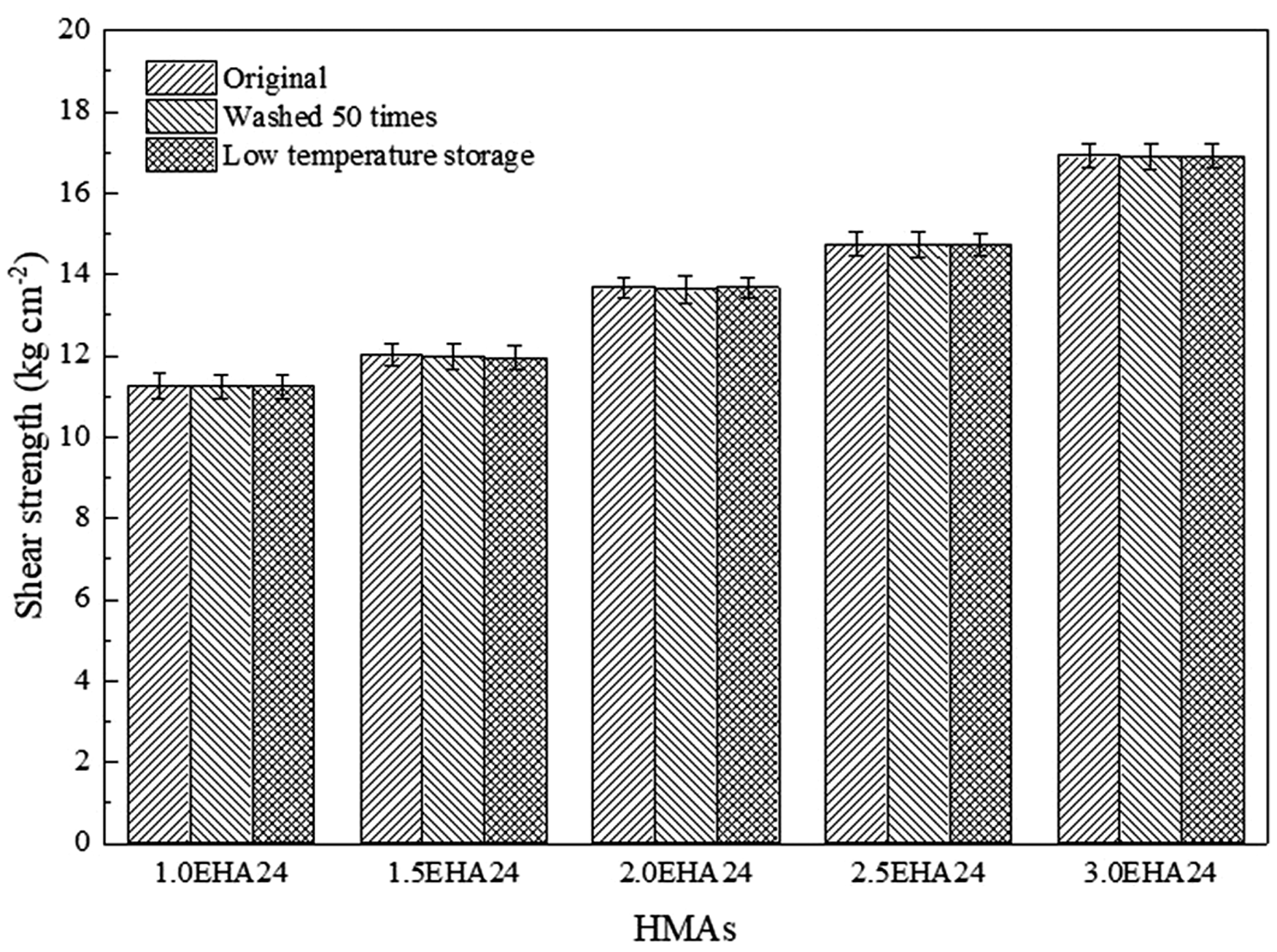
Conclusion
This research focused on the development of HMAs using the ATRP synthesis method for a fabric bonding system. The acrylate-based monomers MMA and 2-EHA were used as the ingredients to form a linear block copolymer. MMA provides excellent cohesive strength and weatherability, while 2-EHA provides good adhesion properties, such as shear strength and peel strength. PMMA-Br was synthesized and introduced as a macroinitiator, using EBiB as an initiator and CuCl/PMDETA as a catalytic system. Finally, PMMA-b-PEHA HMA was synthesized using the ATRP method with PMMA-Br as a macroinitiator and CuCl/PMDETA as a catalytic system. The chemical structure of the PMMA-Br macroinitiator and PMMA-b-PEHA HMAs were validated using FTIR and 1H-NMR. The disappearance of the peak indicating a C=C bond (1645 cm−1) in the HMAs revealed that the ATRP method had been successfully performed. The molecular weight of the macroinitiator was reduced from 45,718 to 28,057 g mol−1 with the increase of the EBiB content from 0.3 to 0.6 mol. 0.6E6M was chosen as the microinitiator due to it having the lowest molecular weight and a narrow polydispersity index. The molecular weight of the HMAs decreased from 54,032 to 36,250 g mol−1 with the increase of the 0.6E6M content from 1.0 to 3.0 mol. A 3.0EHA24 block copolymer was chosen for the HMAs. The T g of the HMAs increased from –43.7℃ to –37.6℃ with the addition of the 0.6E6M content, due to the existence of the PMMA hard segment. The thermal cracking temperature also showed a reducing trend due to the lower molecular weight. The adhesive performance was also evaluated using shear strength and peel strength measurements in both normal and post-treatment conditions using washing and low-temperature storage. The shear strength and peel strength of the HMAs increased with the increase of the 0.6E6M content, from 11.27 to 16.92 kg cm−2 and from 0.29 to 0.61 kg cm−1, respectively. After being washed 50 times and placed in low-temperature storage, the shear strength and peel strength were not changed significantly. The results indicated that the HMAs obtained in this research had an excellent performance.
Footnotes
Declaration of conflicting interests
The authors declared no potential conflicts of interest with respect to the research, authorship, and/or publication of this article.
Funding
The authors disclosed receipt of the following financial support for the research, authorship, and/or publication of this article: The research was supported by the Ministry of Science and Technology of the Republic of China under Grant Number 106-2221-E-011-137-MY2.