



Abstract
In this paper, a series of upward flame spreading experiments were conducted on thin flax fabric with various widths ranging from 3.0 to 8.0 cm and length of 1.6 m. Symmetric ignition at the entire bottom edge of samples led to two-sided upward flame growth initially. A very interesting behavior of flame blown off was observed in upward flame spreading and an explanation was provided based on the increased buoyancy-induced velocity at the flame base. When the sample width is 6 cm or less, the flame length increases to a critical value and, correspondingly, the buoyancy-induced velocity reaches the blow off velocity, which results in a flame being blown off on one side. The remaining flame on the other side would shrink in length and propagate to the end of the sample with an asymptotically constant length and steady spread rate. For samples wider than 6 cm, the two-sided flame continues to spread to the end of samples and the self-induced blow off phenomenon is not observed. Moreover, the width effects on the flame height, flame thickness and flame spread rate are analyzed and explained in this paper. The results of this study may help advance better understanding of flame blow off behaviors over solid surfaces and have implications concerning fire control of flame spread over solid fuels.
Flame spread over solid fuels during fire is one of the key process resulting in the initiation, spread and grow of fires. Due to the concurrent direction of flame propagation and induced air flow, the upward flame spread over solid fuels has been identified as one of the most hazardous fire scenarios, which has been investigated extensively over the years.1–11
To the best of our knowledge, the upward flame spread during fire is affected by many factors, of which the width of the sample fuels is one the most important. Tsai et al.4,6–8 experimentally and numerically studied the width effects for polymethyl methacrylate (PMMA) slabs with and without sidewalls with various widths, and proved the significant width effects on upward flame spread. Rangwala et al. 5 performed experiments to revisit the width effects on upward flame spread using PMMA with widths varying from 2.5 to 15 cm. They provided a theory that the width effects were caused by a fraction of fuel escaping the sides unburned and, consequently, the amount of fuel available to participate in flame spreading would decrease. Pizzo et al. 9 carried out experiments to study the width effects on upward flame spreading over PMMA with different widths of 0.025, 0.05, 0.10, 0.15 and 0.2 m. They found that the flame height and flame spread rate were width-dependent for widths narrower than 0.1 m, whereas they were width-independent for wider samples. More recently, experiments by Zhao et al. 12 using a thermal insulating material with varied widths from 10 to 25 cm found that the upward flame spread showed an increase with increasing width. Jiang et al. 13 investigated the upward flame spread behavior using PMMA slabs with different sample thicknesses and widths, and demonstrated that the flame spread rate decreased with increasing thickness, while the width effects did not influence flame spread rate a great deal.
In this work, upward flame spread tests were conducted in normal gravity and oxygen concentration using a flax fabric fuel with several sample widths of 3, 4, 5, 6, 7 and 8 cm. An unexpected but interesting phenomenon, that is, self-induced blow off extinction, was observed when the sample width was narrower than 6 cm. Over the years, there has been significant progress in our understanding of flame spread and blow off extinction over solid fuels. The flame spread and extinction experiments in air steam with a velocity change by Sato et al. 14 proved that the extinction mechanism could be discussed by Damkohler number, which was defined as the ratio of the residence time and chemical time. Ferkul and T'Ien 15 numerically examined flame spread and extinction over a thin solid fuel under conditions of varying concurrent flow velocities and oxygen percentages. During the flame spreading tests, both quenching and blow off extinction were observed. They stated that the quenching extinction was mainly caused by radiative heat loss, while the extinction mechanism of blow off differed from that of quenching, which was due to instability of the flame base. Ito et al. 16 experimentally and theoretically studied the combined effects of sample orientation and opposed flow on flame propagation and blow off extinction over a thick PMMA slab. When the Damkohler number reached a critical value, flame blow off extinction occurred. Zhao and T’ien 17 established a transient three-dimensional model for the study of both flame spread and extinction in forced or buoyant flows. They provided two extinction models, namely quenching due to radiation heat loss and blow off due to reduced Damkohler number. Hu et al. 18 performed experiments to investigate the extinction limits for upward flame spread over polyethylene (PE)-insulated nichrome (NiCr)-core electrical wires in various opposed flows and oxygen concentrations. Actually, the blow off extinction was observed, which was mainly caused by relatively high opposed-flow rate. Although the blow off phenomenon is well-known, there are relatively few published results of self-induced blow off for normal gravity and oxygen concentration. Johnston et al. 19 conducted upward flame spread experiments using composite fuels consisting of fiberglass and cotton with various widths between 2 and 8.8 cm. They reported that the flame blow off on one side was due to the instability of the flame base and because the remaining flame on the other side would spread all the way with a constant spread rate. Therefore, it seems very important to explore a better understanding of upward flame spread and the self-induced blow off mechanism over a thermally thin solid fuel.
In this paper, the main emphasis is to explain the width effects on the self-induced blow off process in upward flame spreading configurations. A series of comparison experiments were conducted on untreated flax fabric with widths of 3, 4, 5, 6, 7 and 8 cm. Measurements obtained include flame structure, flame height, pyrolysis height and pyrolysis spread rate.
Experimental setup
Figure 1(a) schematically illustrates the experimental support frames. The test flax fabric samples were clamped between two identical aluminum sheet holders with evenly distributed screws. The sheet holders were mounted onto the horizontal frames, which were designed to vary the width from 2 to 10 cm with increments of 1 cm. The data acquisition system consisted of a high-definition (HD) video camera and a thermal infrared (IR) imager, as shown in Figure 1(b). The HD video camera with frequency of 25 frames per second was set at the side of the samples to monitor the flame shape and flame front position. The flame height was obtained by analyzing the camera videos frame by frame.4,19–22 The IR imager (MAGNITY-MAG32HF) set perpendicular to the sample surface was used to obtain the surface temperature field. An 8–12 µm bandpass filter was applied to minimize the band emissions and continuous emissions to obtain the true surface temperature.23–26 The pyrolysis front was determined by reading the surface temperature under the assumption that the characteristic temperature for the pyrolysis process was 310℃. The IR thermography technique with a bandpass filter was proved by previous work7,27,28 to enable surface temperature measurements. This experimental arrangement permitted simultaneous measurement of the flame height, pyrolysis height and flame spread rate.
Schematic of the experimental setup (a) support frames and (b) experimental arrangement.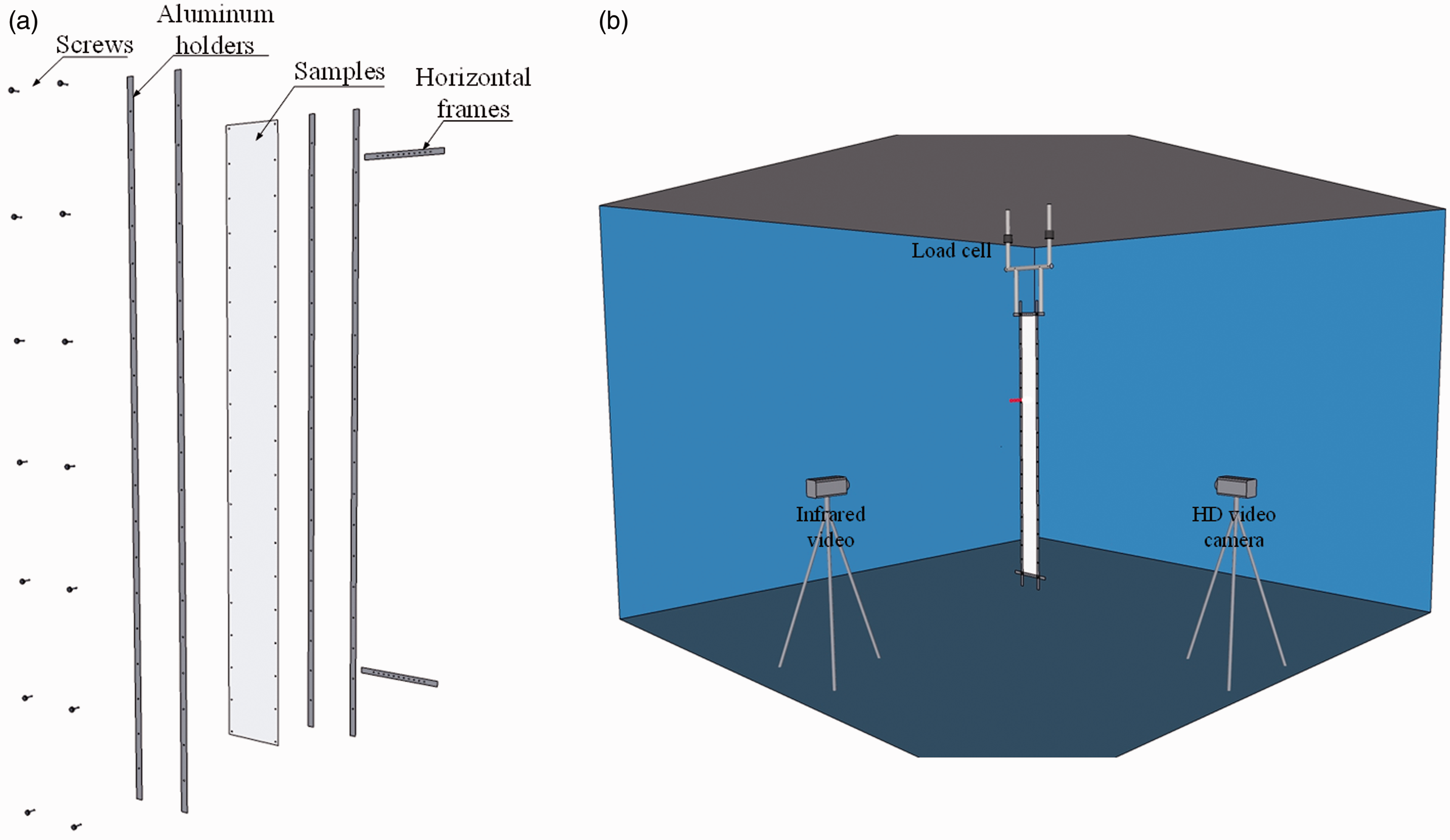
Flax fabric is a material commonly used in buildings, which can be ignited by a relatively faint heating source. The flame would propagate rapidly over the entire length, which may lead to an uncontrollable fire. Therefore, flax fabric was used as test samples, and was sandwiched between sample holders with adjustable sample widths of 3∼8 cm and heights of up to 1.6 m. The flax fabric is of the same production batch with uniform characteristics, which is composed of 100% flax. As we know, the moisture content can affect the burning process,29–32 and thus the test samples were preconditioned in the combustion chamber for about 24 h until the weight remained constant.
The test samples were ignited uniformly and simultaneously at the entire horizontal lower edge of the fabric by means of electrically heated nichrome wire. It has been proved that the forced ignition only remained for a short initial period and did not affect the subsequent major flame spreading process. 1 At the beginning, all samples experienced an approximately 2.0 cm pyrolysis zone, where the pyrolysis gases are released to participate in the flame. 33 Each test at the same condition was repeated at least four times to reduce experimental uncertainty. All the experiments were performed under controlled conditions at 25 ± 2℃ and 42 ± 3% relative humidity within a combustion chamber.
Results and discussion
Behaviors of flame spread
Figure 2 shows the typical behaviors of ignition, growth, one-sided self-induced blow off and flame spread for 4 cm wide samples, which are discussed as a representative case. The self-induced blow off phenomenon can be observed in samples with a width narrower than 6 cm, but not in samples with a width wider than 6 cm.
Typical behaviors of ignition, growth, one-sided self-induced blow off and flame spread for 4 cm wide samples.
After ignition, a stabilized flame was initiated on both sides of the test samples. Subsequently, the flame starts to advance downstream and the flame length begins to increase, as shown in Figure 2(a). It can be seen from Figure 2(b) that the right-hand side flame base begins to retreat downstream and a small amount of yellow smoke occurs. Figure 2(c) shows that the flame base on the right-hand side continues to retreat but unburned fuel pyrolyzate continues to enter the gas phase. In Figure 2(d), the self-induced blow off occurs on the right-hand side and a large amount of smoke continues to leave the fuel surface. The heat feedback from flame is reduced due to one-sided blow off, resulting in a decrease in flame length on the remaining side, as shown in Figure 2(e). Ultimately, the remaining flame on the other side steadily spread over the entire length of the sample, as shown in Figures 2(f) and (g).
Flame positions and flame height
Flame spread is a natural consequence of heat and mass transfer from flame to the virgin fuels, and therefore the analysis of flame positions and height is important in studying flame spread over solid fuels. Figure 3 shows the variations of flame positions and height as a function of time for 4 and 8 cm wide samples.
Flame positions and height as a function of time for (a) a 4 cm wide sample and (b) an 8 cm wide sample.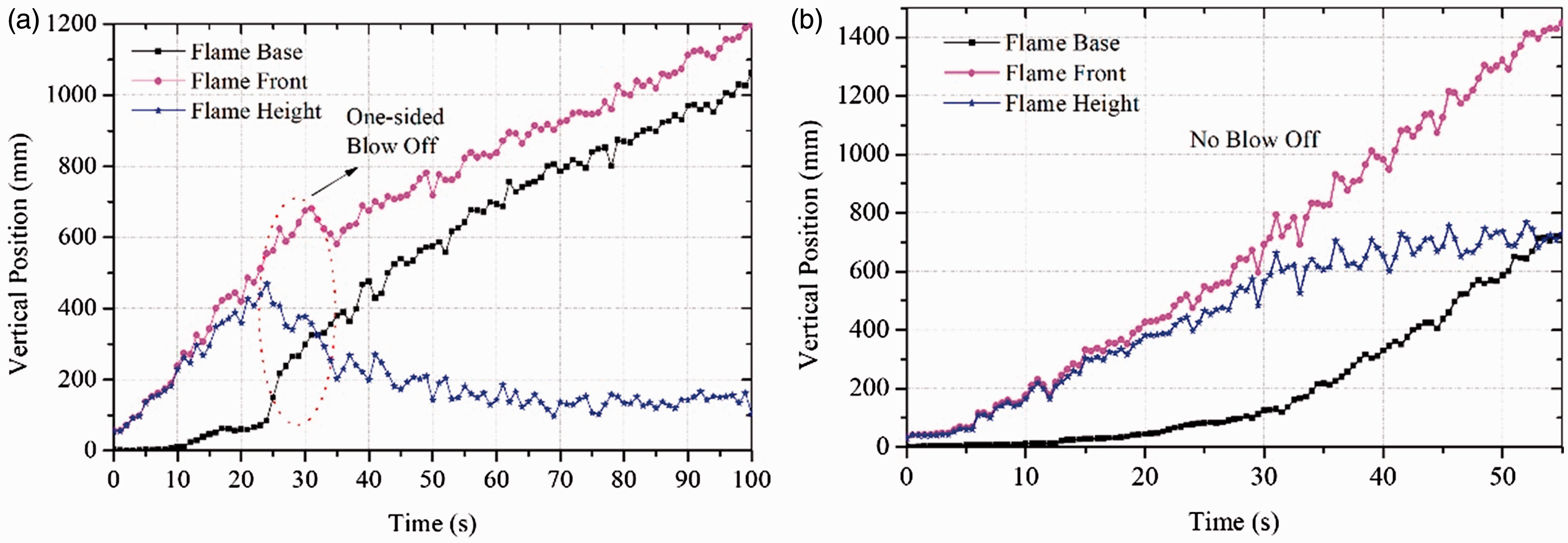
Figure 3(a) shows a typical case of flame ignition, growth and upward flame spreading for 4 cm wide samples. Actually, a similar phenomenon can be observed for
The maximum flame height-blow off Flame height as a function of sample width.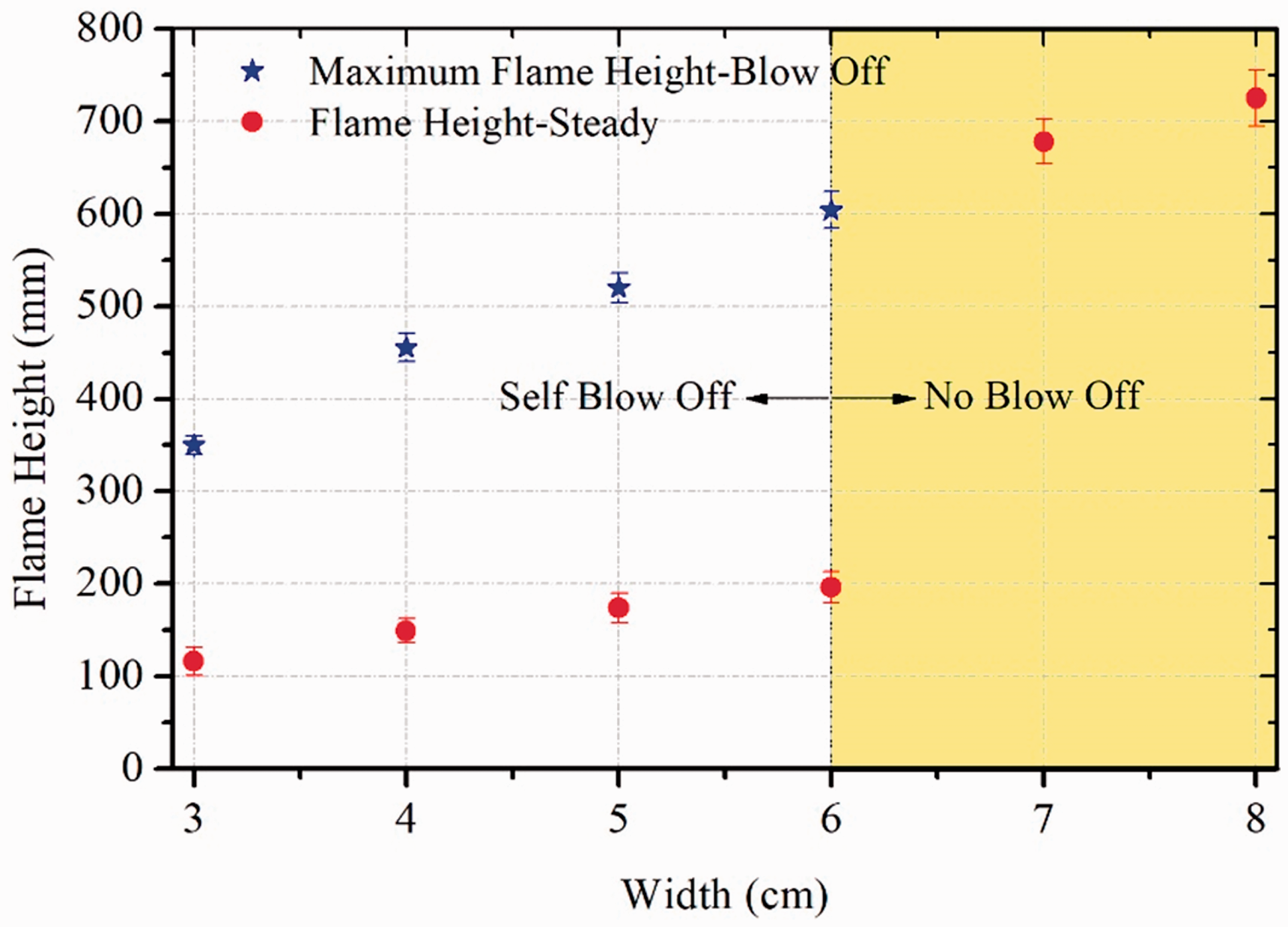
To the best of our knowledge, the diffusion flame height is determined by the interaction of the buoyancy with inertia force. Actually, a dimensionless number, the Froude number, was introduced to describe the relative intensity of these two forces.11,12 The Froude number is defined as



As can be seen from Figure 5, the dimensionless values of Dimensionless flame height as a function of sample width.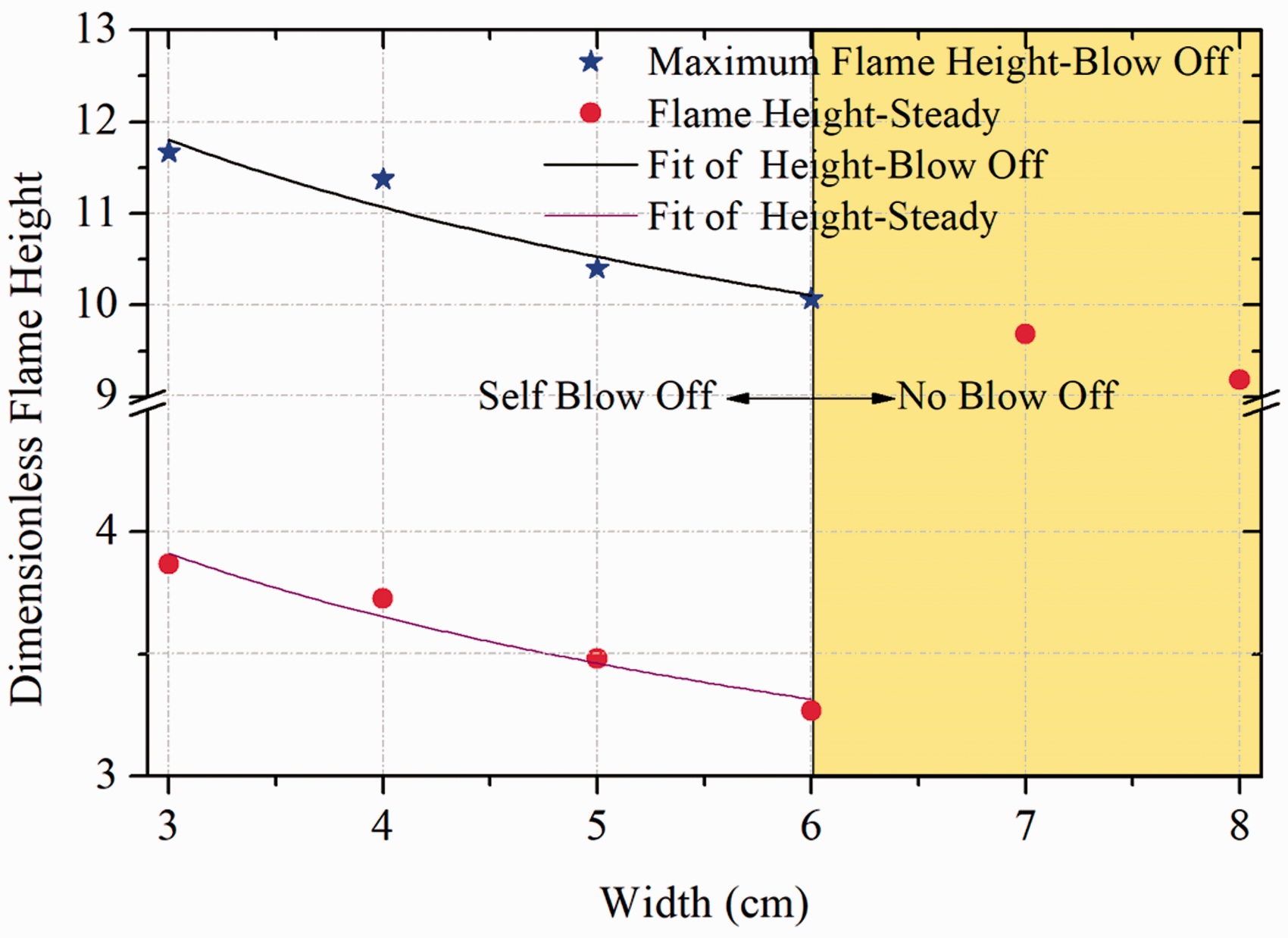


Note that the coefficient n is about 0.22–0.23, which agrees well with the results in some previous studies. 34 The R-square values of the fitted equations are all over 0.96, which demonstrates that Equation (3) can be in fairly good agreement with the experimental results. Moreover, below a dimensionless flame height of 10, the one-sided self-induced blow off phenomenon cannot be observed during flame spreading, whereas with a dimensionless flame height beyond 10, the self-induced blow off behavior occurs.
Flame thickness
The flame thickness L is defined as the vertical distance between the flame sheet and the fuel surface,35,36 which is one of the most important parameters characterizing the flame spread behavior. Figure 6 shows the time evolutions of flame thickness for 4 and 8 cm wide samples, respectively.
Flame thickness as a function of time for (a) a 4 cm wide sample and (b) an 8 cm wide sample.
As can be seen from Figure 6(a), L shows an initially sharp rise until the self-induced blow off occurs. Subsequently, L exhibits a decrease, gradually evolving into an approximately steady state. As Figure 6(b) shows, a very different behavior is found in L for 8 cm wide samples from that for 4 cm wide samples. The decreasing stage is not observed in L for 8 cm wide samples, whereas L increases sharply and then shows a small increase until L approximately reaches a steady state.
The maximum flame thickness Flame thickness as a function of sample width.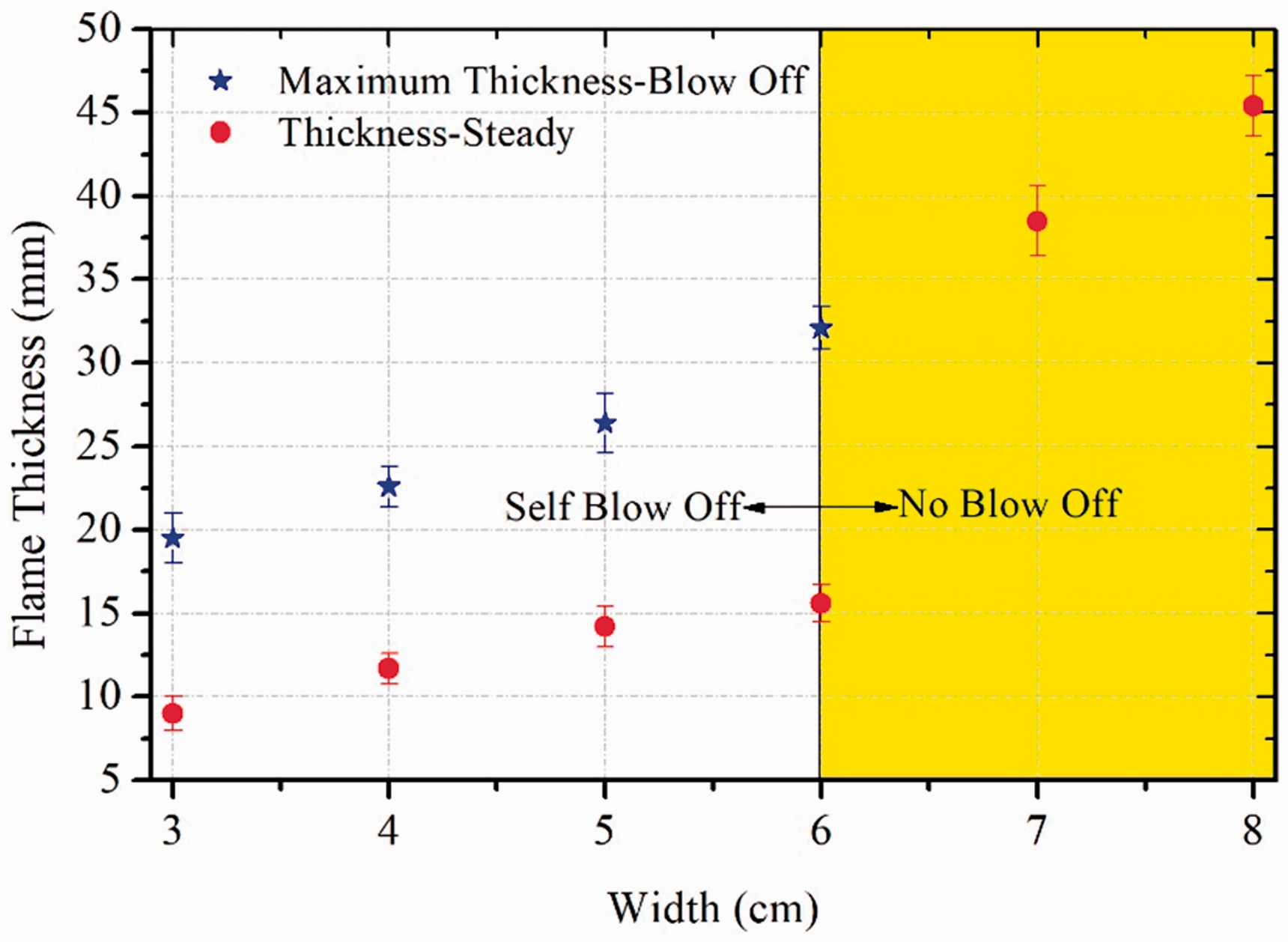
Flame spread rate
The flame spread rate Vf is normally defined as the rate of movement of the flame front, which is obtained from readings of video images frame by frame. Although the upward flame spread is typically acceleratory, the change in spread rate over the relatively small distance is poor.
35
Therefore, the maximum spread rate-blow off
The variations in Flame spread rate as a function of sample width.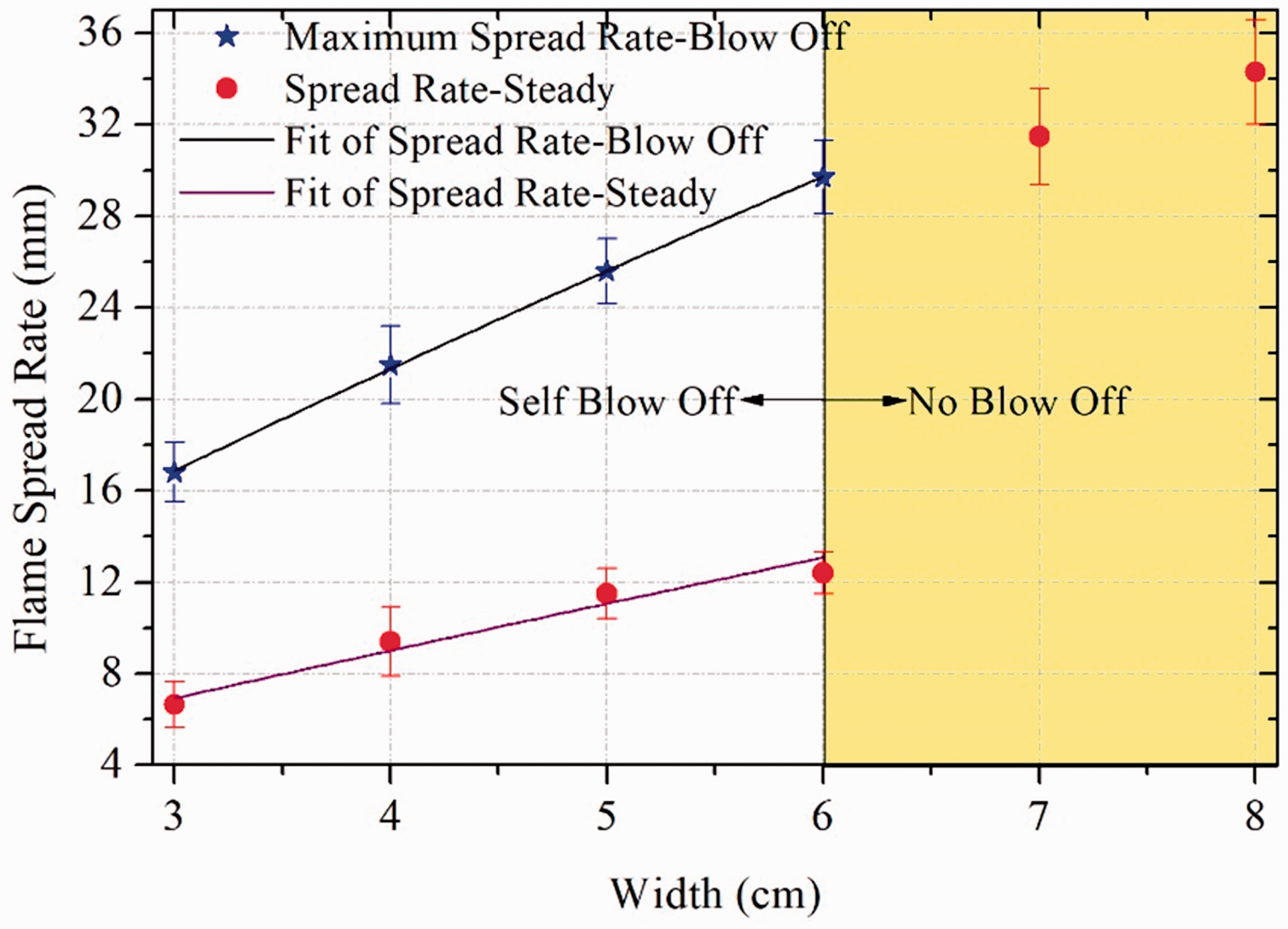
Moreover, the relationship between the flame spread rate and sample width can be described by the following equation6,7,38

The fitted results are summarized as follows


The R-square values of fitted equations are all over 0.95, which indicates that the experimental results are in general in good agreement with the previous work.6,7,38 However, the values of power 0.82–0.91 in this paper are larger than that obtained using PMMA6,7 and fabric. 38 This discrepancy probably is due to the differences in configurations or thermal properties of materials, which requires investigation for a better understanding.
To our knowledge, the flame spread over thermally thin materials is dominated by net heat flux to the unburned surface, which consists of a convective component and a radiative component.2,3,39 The energy conservation can be expressed by the following equation



Mechanism of self-induced blow off
Generally, the diffusion flame extinction can be divided into two regions: the quenching region and the blow off region.15,17,19,40 Quenching occurs as a weak low-intensity flame when the flame temperature is reduced as a result of heat losses, corresponding to the quenching region, whereas blow off occurs normally in high-intensity flame when its stability cannot be maintained, corresponding to the blow off region. Figure 9 illustrates the qualitative flammability boundaries for different width samples using induced characteristic velocity at the flame base as the abscissa and oxygen percentage as the ordinate.
19
Qualitative flammability boundaries for different width samples.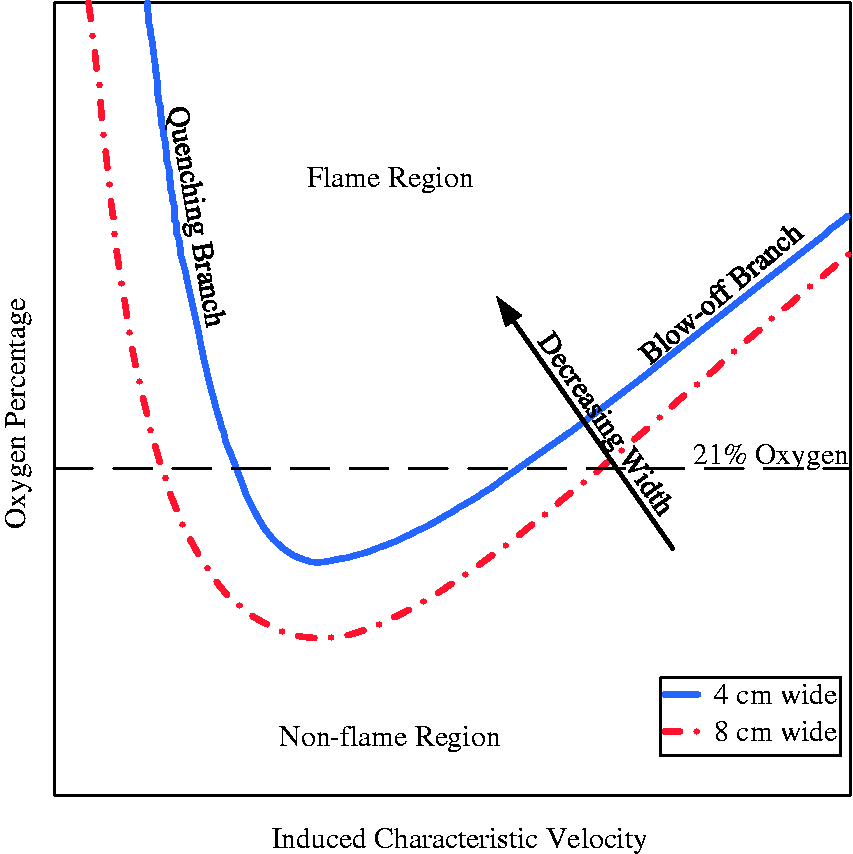
It is expected that the wider samples would have a larger flammability domain, which has been explained by Rangwala et al.,
5
Tsai,
6
Pizzo et al.
9
and Johnston et al.
19
Note that in a fixed oxygen percentage environment, quenching occurs when the oxygen supply rate is too low and the weak flame loses a large percentage of energy due to radiation and convection. In contrast, when the induced characteristic velocity at the flame base becomes too large, the stabilization zone of the flame becomes too small until the blow off extinction occurs. It can be seen from Figure 2 that a one-sided flame base is unstable and retreats until extinction occurs, which demonstrates that the flame extinction over thin material is determined by the blow off region and not the quenching region. Therefore, a nondimensional term, the Damkohler number, is introduced to physically describe the flame extinction near the blow off limit

Moreover, for upward flame spread, the air velocity at the flame base is induced by gravity acting upon the entire flame and thermal plume. Classically, the induced velocity at the base can be expressed by the following equation
19

The qualitative induced velocity Qualitative-induced velocity as a function of time for (a) a 4 cm wide sample and (b) an 8 cm wide sample.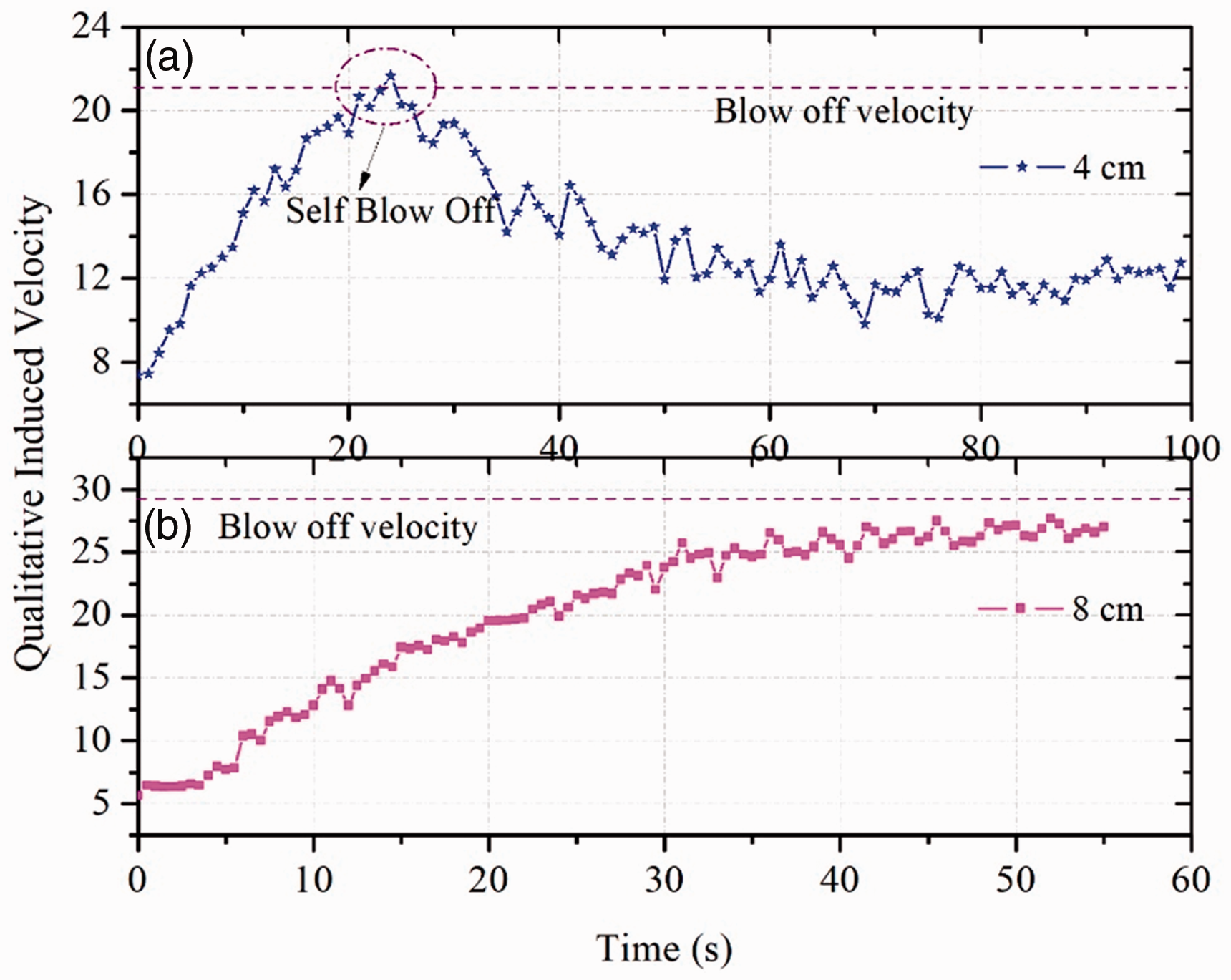
Based on the analysis above, a hypothesis is provided that when the sample is narrower than a critical width, the self-induced blow off can be observed during the upward flame spreading process. For upward flame spreading over flax fabric, the critical width is experimentally proved to be 6 cm. When samples are narrower than 6 cm, the induced velocity at the flame base starts with a small value and then increases until the blow off velocity is reached, at which time the flame on one side is blown off. The flame on the remaining side shrinks in length and then reaches a constant length for steady upward spread. For a sample with a width wider than 6 cm, the induced velocity increases until the steady state is asymptotically reached. However, the maximum induced velocity of the steady state is smaller than the blow off velocity. Thus, the two-sided flame continues to grow until spreading to the end of samples. Moreover, a series of experiments were conducted using flax fabric with different porosities to eliminate the experimental contingency. Nevertheless, the self-induced blow off phenomenon is also investigated in the upward spreading process. Therefore, it is believed that the flame blow off is a true physical phenomenon in upward flame spread over flax fabric.
Conclusions
A series of comparison experiments were conducted on thin flax fabric with various widths between 3.0 and 8.0 cm to explore the width effects and self-induced blow off mechanism in upward flame spreading. The quantitative trends of the key characteristic parameters of flame spread, such as the flame height, flame thickness and flame spread rate, were observed simultaneously. When samples are 6 cm or less, there is a very interesting phenomenon that self-induced blow off occurs on one side of the flame, whereas this phenomenon cannot be observed during upward flame spreading for samples wider than 6 cm. The mechanism for this interesting phenomenon can be proposed based on the increased buoyancy-induced velocity with increasing flame length. Moreover, the width effects on the flame height, flame thickness and flame spread rate are analyzed and explained in this paper.
In the present paper, the width effects and self-induced blow off mechanism in upward flame spreading over flax fabric were evaluated experimentally and theoretically, which is of important significance for the fire control of flame spread over solid fuels. Based on the above results, one-sided flame self-induced blow off occurs for narrow samples and the increase in sample width has a positive effect on upward flame spreading. Therefore, when flax fabric is arranged in buildings, the sample width should be limited to reduce the potential fire hazard. Moreover, flame blow off is a special and real fire behavior in flame spreading over solid fuels, which is arguably of more importance for the development of flame spread theory. However, the experiments are carried out on test samples with a width of 3–8 cm, and therefore the present results are only capable of predicting the upward flame spread behaviors over narrow flax fabric fuels. A further study is in progress to explore whether self-induced blow off can occur in different configurations for other different materials.
Footnotes
Declaration of conflicting interests
The authors declared no potential conflicts of interest with respect to the research, authorship and/or publication of this article.
Funding
The authors disclosed receipt of the following financial support for the research, authorship, and/or publication of this article: This work was supported by the National Key Research and Development Plan (Project No. 2016YFC0802900), the Fire Fighting and Rescue Technology Key Laboratory of the MPS Open Project (No. KF201802), the Sichuan Science and Technology Project (No. 2018JY0429), the National Natural Science Foundation of China (No. 51606215), the Natural Science Foundation of Jiangsu Province (No. SBK2016041452) and a project funded by the Priority Academic Program Development of Jiangsu Higher Education Institutions (PAPD).