



Abstract
With the rapid development of digital technology, many consumers increasingly prefer to buy their clothes online. In order to improve the quality of online services and enrich the consumer experience of apparel e-customization, this paper develops item scales that measure positive emotion, visual perception, and haptic perception. It also evaluates the relationships between the item scales, attitude, and intention. It is an exploratory study on consumers’ multisensory perception and positive emotion mixed item scale (MPPEMIS), collected by experts. Supported by factor analysis and correlation analysis, both laboratory and online studies were conducted to test the reliability and validity between item scales, attitude, and intention. Visual factors (e.g., transparency, brightness, dimness), haptic factors (e.g., comfort, coarseness, softness), and positive emotion (e.g., excitement, attractive, pleasantness) are proved in the MPPEMIS, which positively correlates with the factors of attitude and intention in apparel e-customization. As such, the MPPEMIS may help to assist brand managers, marketers, and retailers by recommending easily understood information and providing item scales for apparel e-customization that can also be adopted in online service strategies and system modularization.
In apparel e-customization, online shopping experiences and personalized services are recommended to consumers. Many customers report benefitting from the perceived usefulness and ease of operation of online apparel customization. 1 For instance, an apparel e-customization system has been developed and operated by the Cotte Yolan brand that recommends the physical attributes of textiles to consumers so as to support their textile selection and matching behaviors. However, it remains difficult for consumers to know the physical attributes of the textile. The quality of recommended information and online services needs to be enhanced. In sensory marketing, consumers’ perceptions and emotions are becoming increasingly important to brand managers. According to the research, the latter should consider these factors in their marketing strategies.2–4
Several studies have highlighted the importance of apparel e-customization systems using interactions, mathematic models, and modularizations,5,6 but, as yet, these studies have not identified the items (e.g., semantic words) that are suitable for a mixed scale measurement. Researchers have largely ignored the mixed effects of different levels between factors and items, such as visual perception, haptic perception, and positive emotion. On the other hand, the main foci of e-customization and online shopping behavior tend to be attitudes, purchasing behavior, emotions, and repurchase intentions.7–10 In reality, people often use multiple senses to evaluate the attributes of texture. 11 As yet, however, very few researchers have conducted exploratory studies on apparel e-customization measurement scales.
In order to understand consumers’ requirements and collect useful information for product design, researchers have developed sensory perception item sets for visual, acoustic, haptic, olfactory, and gustatory perception individually, 12 and the item sets are thus limited to the effect on each single sense (i.e., the approach is unisensory). The existing item sets are specific to the perception of textiles (e.g., comfort, thickness) or emotions (e.g., pleasure). Furthermore, in order to increase their competitiveness, online shopping outlets need to enhance customer satisfaction regarding their multisensory shopping experiences. 13 The multisensory perception of objects (and events) is based on multiple sensory inputs. 14 In this study, multisensory perception is restricted to visual and haptic perception using mixed item scales in an apparel e-customization system. Considering consumers’ requirements in online shopping, the authors introduce a mixed item multisensory perception and positive emotion scale (MPPEMIS) to offer easily understood words in apparel e-customization.
The purpose of this study was to develop the MPPEMIS for apparel e-customization systems and to contribute to marketing services. We propose a novel scale that is designed to fill the gap in the research on apparel e-customization systems, to investigate multisensory (visual, haptic) perception and positive emotion on mixed item sets. We also test the relationships between the item scales, attitude, and intention, in order to contribute to the literature on apparel e-customization. In the following sections, we first briefly review the literature on multisensory perception, emotions, and measurement. Next, the MPPEMIS is developed in four steps. First, items are generated and refined. Second, the items and scale are cleaned. Third, experiments are conducted to test the items, and fourth, correlation analysis is conducted to test the relationships between the item scales, attitude, and intention. Note that the first three steps help confirm and explore items and test the validity of the cleaned items.
Review of multisensory perception, emotions, and measurement
Multisensory perception
People’s perception/evaluation of the pleasantness and quality of a product are typically based on (multi-)sensory cues. 15 For instance, the shape and texture of the packaging may influence consumers’ affective response, behavior, and evaluation of the product.16,17 Meanwhile, consumers tend to judge the perceived experience in its entirety rather than one sense at a time. 18 In a study by Xiao et al., participants rated the properties of 34 different textile samples that they experienced via vision and touch. Intriguingly, the visual and haptic perceptions of textile properties were correlated. 11 Consumers’ perceptions of product attributes or packages are typically influenced by crossmodal interactions between visual, haptic, auditory, and olfactory cues.16,17,19 Furthermore, it has been reported that touching a product or surface can also give rise to and/or be associated with specific emotions and affection.20–23 It has been suggested that ambient odors primarily evoke emotions via cognitive associations.24,25 Based on the suggestions put forward by Heilig in 1992, 26 Gallace et al. 18 summarized the putative percentage of attentional capture by different senses (70% vision, 20% audition, 5% smell, 4% touch, and 1% taste). As in many other situations, product evaluation tends to be more accurate/precise in the case multisensory perception than with unisensory perception. 27 Numerous studies have also looked at the visual and tactile perception of textiles, such as the perception of fabric roughness,28,29 the visual and tactile evaluation of thickness and thinness,30,31 the naturalness of textile products, 32 the visual and haptic perception of fabrics,11,33,34 and the multisensory perception of textiles28,29,35 (and for a review).
In the field of sensory marketing research, consumers’ affective responses and preferences are affected by perceptions of the color and shape of products, or their packaging. 36 Different images of the material (color, textures) affect the judgment and prediction of its haptic properties. 11 The use of congruent and/or incongruent scents especially influences people’s perceptions of material attributes as well as their emotional responses.37,38 People’s perceptions of cross-sensory congruency/incongruency should also be considered when considering brand strategy.39,40 Crossmodal congruency is preferred when the products were judged as more liked and exciting by consumers. 16
Rough set theory and the Kansei engineering system have been conducted in order to explore the evaluation of products based on color and form. 36 Furthermore, the sense of touch mediates interaction in human-machine interfaces that affect people’s attention. 19 People feel emotion via multisensory combinations of stimuli, such as the integration of auditory and visual channels.41,42 After testing a range of textured materials, researchers found that hedonics is related to the surface properties of tactile stimuli; 43 for example, unpleasant emotion has been associated with people touching rough surfaces. There is a close relationship between multisensory perception and emotions, such as a negative evaluation being made while touching poor-quality linen, for example. 44 The exact nature of the relationship between positive emotion and multisensory perception remains unclear.
Emotions
There can be little doubt that the emotions that are elicited while shopping online affect purchasing behavior, and that consumers’ experiences directly influence their mood and affective responses to products.45,46 Consumers’ selections are informed by both information processing and emotional motives. 7 Both emotions and purchase behavior are influenced by multisensory perception while shopping.4,47 For example, when buying clothes online, we likely look at the color and surface texture, and judge their informative material properties. Researchers have found that “attitudes toward emotion” scales can be adopted to measure people’s attitudes via joy, sadness, anger, fear, and disgust. 48
Emotions mediate the effects of product experiences and perceived sensations. 15 Positive emotions are important in business and contribute to human well-being and positive business management. 49 For example, when consumers experience personalized services, the associated positive emotions tend to increase their purchasing intent. They also mediate the effect of personalized services on the purchasing process to influence online shopping behavior positively.50,51 Positive emotions are presumed to be the driver of behavior and activities that are linked to self-regulation. 52 In this study, positive emotion is defined as perceived happiness, affect, and pleasure in the consumers’ experience of apparel e-customization. Meanwhile, sensory attributes and hedonic emotion ratings are adopted to evaluate products and to understand consumers’ likings for products such as, for example, certain foods. 53 Positive emotions tend to increase consumers’ purchase intention, and this enhances personalized services in the purchasing process. 54
Measurements
Measurements from the literature review

To measure consumers’ emotions and sensory, items and scales have been adopted as measurement tools for food products and packaging development in a commercial environment.60,61 To support the development of sensory marketing, previous researchers have demonstrated the importance of multisensory effects via visual, haptic, acoustic, olfactory, and gustatory perception on item sets.12,62 Based on the scale exploration findings reported by Churchill (1979) and Devellis (1991),63,64 the items of multisensory perception and positive emotion apparel on e-customization are explored here.
Development of multisensory perception and positive emotion item set
This study provides an initial method for capturing a multisensory perception and positive emotion mixed scale for textiles in apparel e-customization. The item set was developed on the basis of previous research studies,12,63,64 and the process involved item development and correlation testing. The steps development of MPPEMIS are shown in Figure 1.
Steps in the development of MPPEMIS.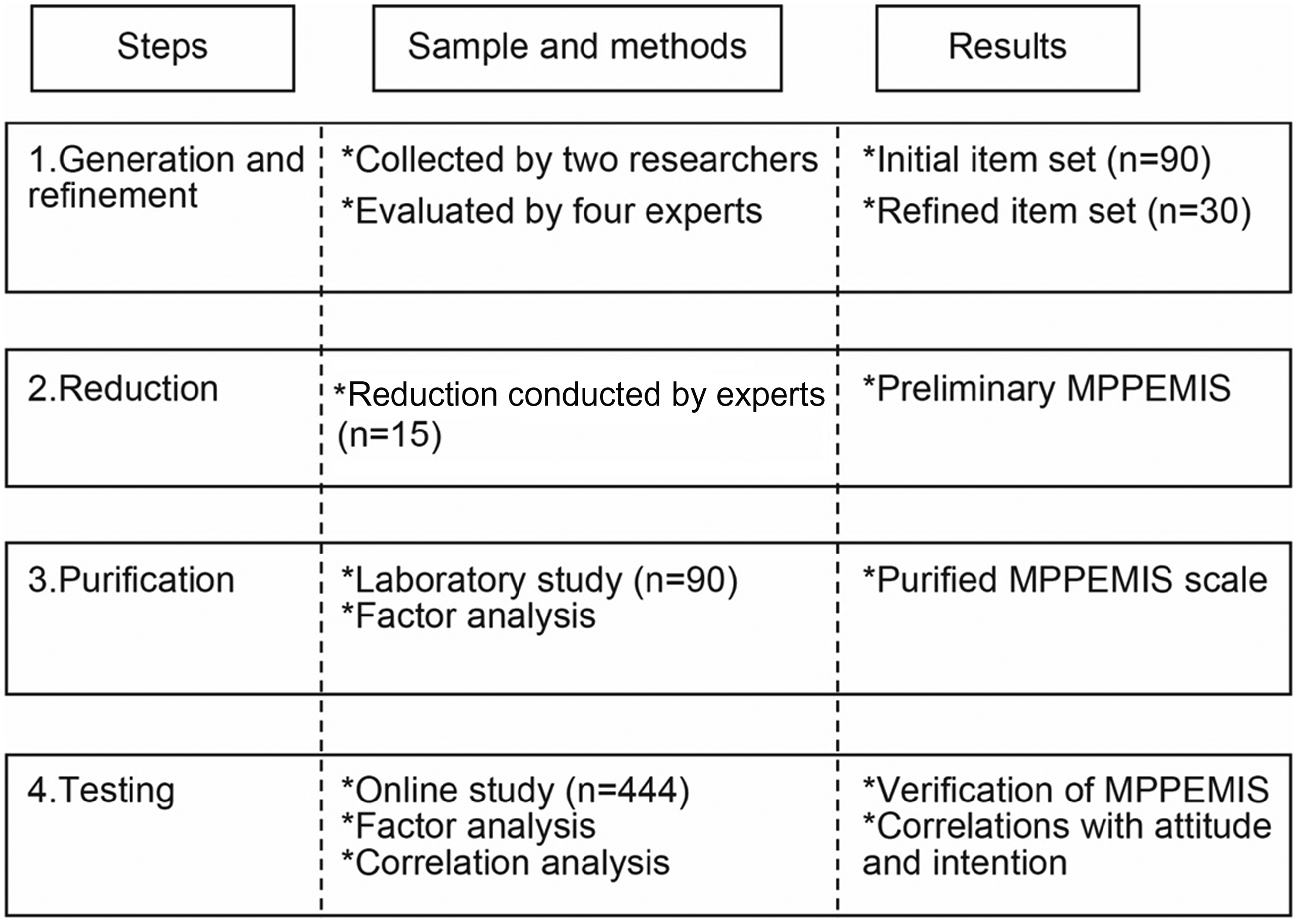
Step 1. Item generation and refinement
Human-technology interaction creates a web environment that increases the consumers’ emotion engagement. 65 The words adopted to describe the physical attributes of apparel, such as weave, stitch, blends, fiber, fiber density etc. may not be easily understood by consumers. In previous research, adjective words were obtained to describe attributes and capture consumers’ emotion in four scenarios (giving a presentation, going to a nightclub, a workout at the gym, attending a banquet). 57 The possible word pool was collected from dictionaries, books, and English journal papers.12,19,36,66–68 The word items were then collected to develop the exploration of item scales.
In this study, 90 words were collected (see Appendix 1), and four experts (3 females, 1 male) in fashion marketing were asked to rate the words. The criteria were: (a) easily understood; (b) clearly positive; and (c) unambiguous meaning. Two-rating scales were adopted to rate each item (1 = qualified, 2 = unqualified). After rating, 30 of the words were rated as qualified and were adopted in the current study (see Appendix 2).
Step 2. Item reduction and scale purification
In order to demonstrate the correlation between preferences and affective quality, an analytical hierarchy process was adopted in the determination of criteria. 69 In this study, semi-structured expert interviews were conducted with 10 people working in fashion design and 10 people working in marketing departments to reduce and clean the 30-item pool. First, a list of items was presented. The participants were asked to assess the words from easily understood words in apparel e-customization. Second, the participants had to select 10 items in order to describe the multisensory perception of textiles and five to describe positive emotion. Finally, their demographic characteristics were collected. There were 30% male and 70% female participants. The age range was from 20 to 50 years, there were four participants (20%) aged from 20 to 30, 14 participants (70%) aged from 31 to 40, and two participants (10%) aged from 41 to 50.
To determine the valid items, an analytic hierarchy process and fuzzy logic were used to select the top five items on each scale.
70
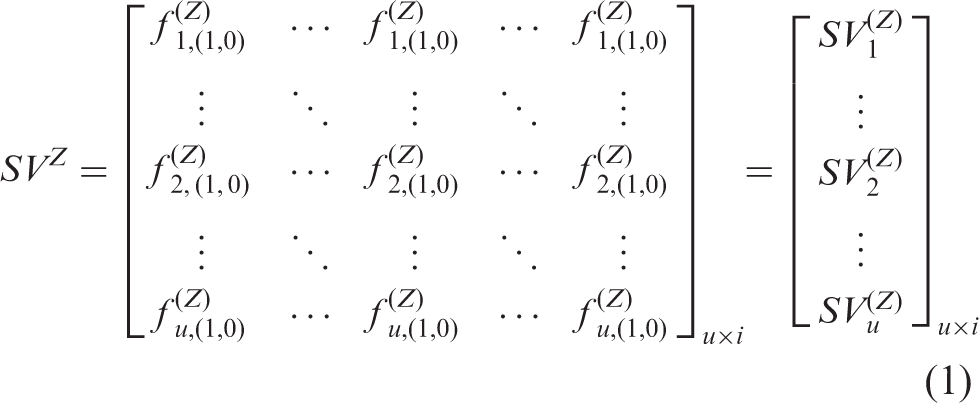
Cleaned items on MPPEMIS

Step 3. Laboratory study
Methods
To maintain the quality and validity of the items, the first study was conducted in a laboratory consisting of a quiet and clean room. Two fashion marketing experts were invited to select three stimuli for each variable from everyday apparel textiles (e.g., linen for haptic perception, a paisley pattern for visual perception, and organza for positive emotion). The textiles were presented to participants who were asked to rate their perceptions and positive emotions regarding the items. The stimuli for visual perception (e.g., paisley pattern, Morris motif, Optical art), haptic perception (e.g., linen, polyester, cotton), and positive emotion (e.g., organza, canvas, chiffon) were provided to participants in random order.
Ninety participants took part in the study, with each variable assessed by 30 participants. 72 Thirty participants took part in the visual perception test and completed the questionnaire regarding transparency, brightness, dimness, thickness, and hardness of the stimuli textiles. Before the experiment, the participants were informed that they could not touch the textiles and could only assess them visually. In the experiment proper, the first part was introduction of exploratory steps. The second part involved the collection of demographic data. The third part involved three textiles being provided randomly to the participants. The participants had an unlimited amount of time in which to make their assessment and were then asked to associate the perception/emotion and rate the three stimuli on the related MPPEMIS items. The items were presented randomly and measured by five-point Likert scales ranging from “1 = strongly disagree” to “5 = strongly agree.”
Results
The participants (N = 90; 68.3% female) were aged 19–20 years (33.3%), 21–22 years (55.6%), and over 22 years (11.1%), and participated in the experiment to gain a 0.5 credit on their course. All of the participants had good color vision. The study followed the college’s ethics committee guidelines.
Reliability and validity testing

Extraction method: principal component analysis; rotation method: varimax with Kaiser normalization; Eigenvalues ≥1.0.
The factors and items were extracted in the first step. Based on the validity and reliability of the scales, the items were then reduced. During the purification process, the invalid items were removed to improve the reliability: hardness (α = 0.428), thickness (α = 0.135), smoothness (α = 0.152), gentleness (α = 0.292), passionate (α = 0.435), and delightfulness (α = 0.340). The threshold was met for the valid items, at least at p < 0.05, and Cronbach’s alpha >0.70. All of the factor loadings were above 0.65, and KMO >0.55.
Step 4. Online study
Methods
To test the reliability of multisensory perception and positive emotion, the same items were measured. The main aim was to investigate the sensory perception (visual, haptic) and positive emotion of textiles in apparel e-customization. Data collection was performed on cleaned MPPEMIS scales for visual perception (e.g., transparency, brightness, dimness), haptic perception (e.g., comfortable, coarseness, softness), and positive emotion (e.g., excitement, attractive, pleasantness). Additionally, the MPPEMIS scale was adopted to test the relationship between the factors, attitude, and intention. Factor analysis and correlation analysis were adopted in the data analysis.
In online shopping, perceived aesthetics (e.g., colors, graphics, images) contribute to the perception of look and feel, which influences the measurement of perceived information quality and consumer satisfaction. 75 To measure attitude, the variables were adopted from San-Martin and Lopez-Catalan (2013) and Veljko and Zoran (2017).10,76 To measure the consumer’s intention to continue using an e-customization system, the authors relied on previous research.77–79 The item constructs are presented in Appendix 3. The items were rated according to a five-point Likert scale ranging from “1 = strongly disagree” to “5 = strongly agree.” The participants were asked to operate the apparel e-customization system prior to taking part in the online study. They were asked to select and adopt more than two different textiles in the e-customization system. There was no time limitation on their experience. Once the participants had finished their e-customization experiences, they were asked to complete the online questionnaire.
Demographic characteristics of participants
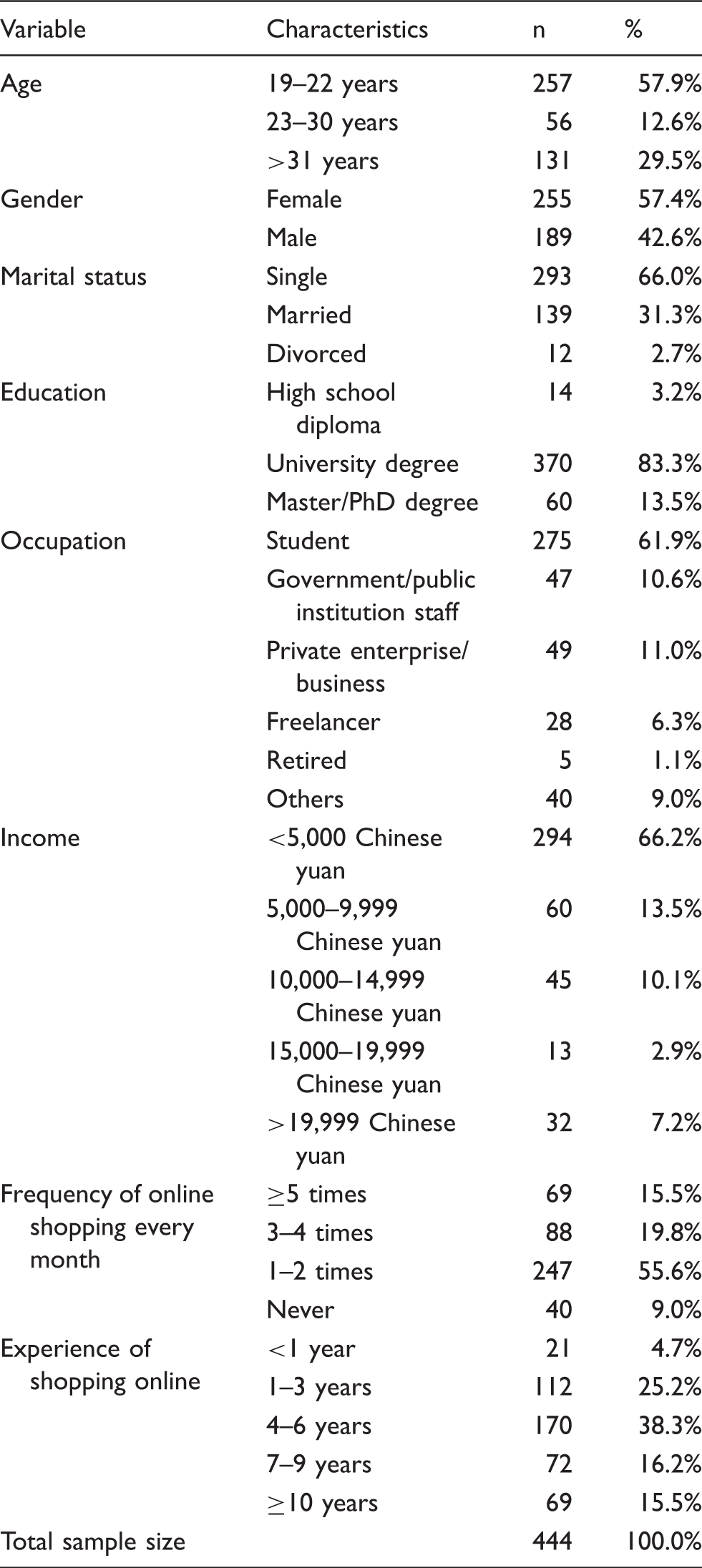
Results
Reliability and validity testing of the online study
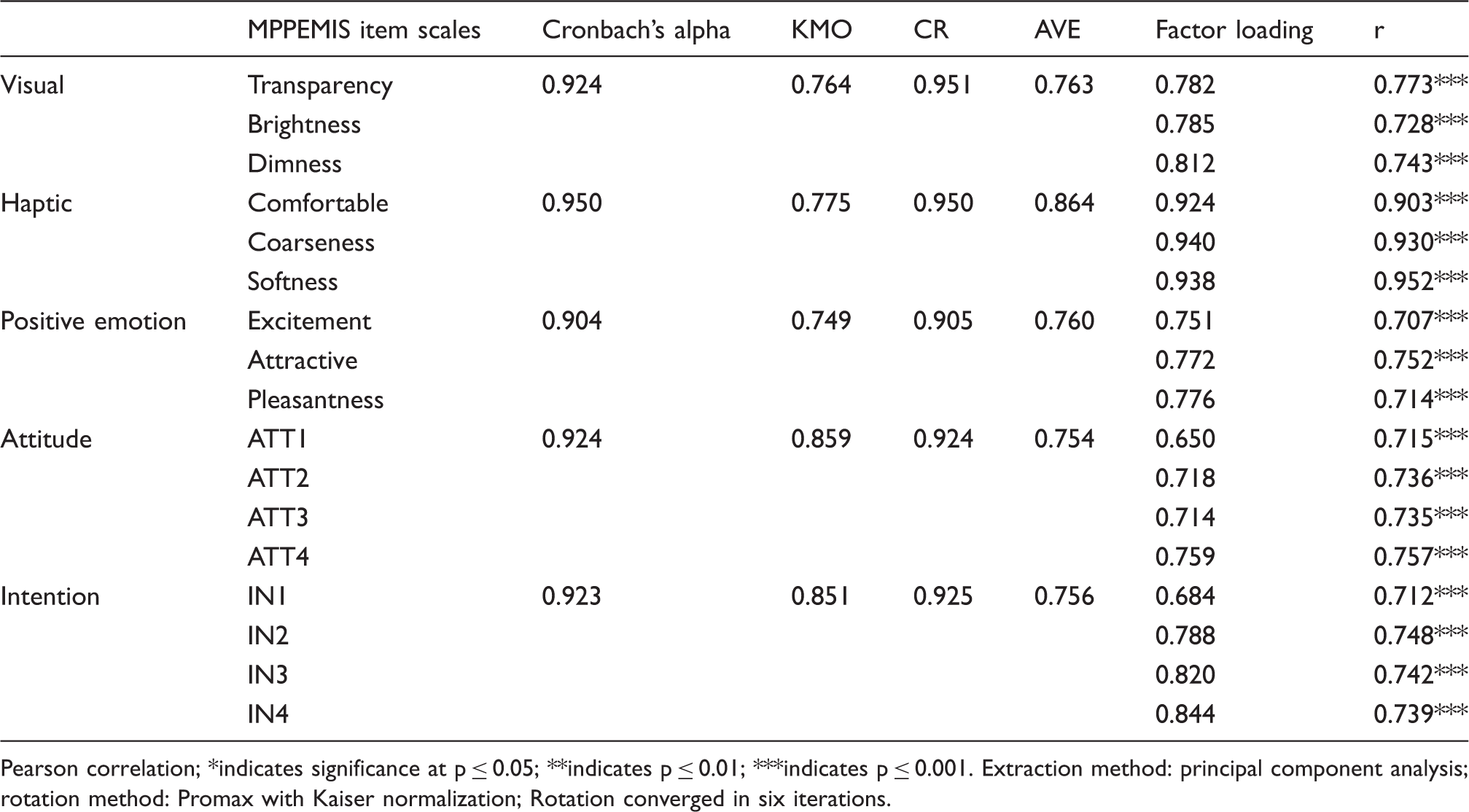
Pearson correlation; *indicates significance at p ≤ 0.05; **indicates p ≤ 0.01; ***indicates p ≤ 0.001. Extraction method: principal component analysis; rotation method: Promax with Kaiser normalization; Rotation converged in six iterations.
Correlations between variables
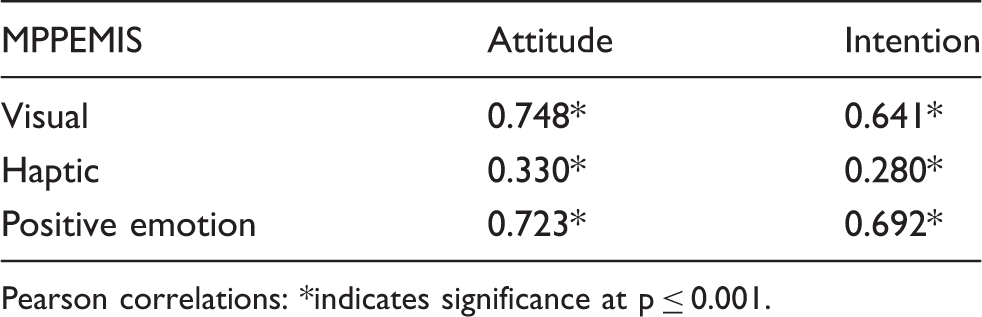
Pearson correlations: *indicates significance at p ≤ 0.001.
Discussion and conclusion
The MPPEMIS was developed and explored in the field, in the laboratory, and in an online study. In the field study, 30 words qualified for the three scales, however, after reduction and scale cleaning, 15 items were kept. In the laboratory study, nine items were proved and kept for the three factor scales (visual, haptic, and positive emotion). In the online study, there was a positive relationship between the factors and attitude and the factors and intention.
Contribution
In the present study, semantic perception words (visual, haptic) and positive emotion words were collected and cleaned to ensure that they could be easily understood by consumers. This study proposes that multisensory perception (visual and haptic) and positive emotion mixed scales can be adopted in apparel e-customization to improve recommendation information and online service quality. The quality of personalized services leads to positive attitudes and presumably increased purchase intention among consumers. Of particular interest is the role of the MPPEMIS as a core construct in attitude and intention. The findings also showed that both haptic and visual perception are important when shaping consumers’ attitudes and intentions, supporting the findings of Vries et al. 80
With regard to positive emotion, the results show that when easily understood items are provided to consumers, their attitudes and intentions tend to be positively influenced. This suggests that consumers with positive emotion will display purchase behavior. It is evident that strong positive emotion and multisensory perception are likely to exist in this case because of the e-customization experience. Therefore, the MPPEMIS helps to examine marketing activities and to assess positive emotion and multisensory perception in apparel e-customization experiences.
Theoretical and managerial implications
Previous studies have explained modularization in apparel e-customization systems and information flow approaches,5,6 thus neglecting the validity of recommended information and item scales. In line with Haase and Wiedmann, 12 findings indicate that perceived positive emotion and perception positively influence shopping attitude and purchasing intention. Additionally, although personalized information is recommended in e-customization, 81 consumers’ acceptance may be influenced by other factors as well, such as their acceptance of the recommending information.82,83 This study also supports and develops the findings of Gussen et al., 84 who suggested that development of perception scales may be appropriate for perceived quality in robot-supported systems. The findings enrich the literature on apparel e-customization and online shopping via exploring and testing mixed item sets of multisensory perception and positive emotion.
The findings of this study can be adopted by marketers and managers in order to support their online services and so enhance the quality of personalized customization, and hopefully increase purchase behavior. The items of visual perception, haptic perception, positive emotion are supported by easily understood words that can recommend more valid information to consumers than description of the purely physical attributes of apparel. Consequently, retailers and managers need to consider the acceptance of item scales. A mixed item scale is of the utmost importance in the modularization of e-customization systems to enrich the informative quality and interactive effects. The results may provide useful information regarding the recommended approaches for marketers and managers who should adopt easily understood words to maintain consumers’ interest and to give them pleasure during e-customization.
Limitations and further research
Due to the limitations of this paper, future studies should consider the following suggestions. First, this paper was limited by the mixed item sets of multisensory perception and positive emotion. Further research should be carried out both the perceptions and multiple emotions of textiles and/or scenarios, and also on the mixed items of characteristics and styles of apparel. Second, the paper was limited by the number of item scales. Multisensory perception (e.g., visual, haptic, auditory) and emotions (e.g., positive, negative) can be explored in order to enrich the item scales for the apparel e-customization system. Third, the participants in this study were similar to each other in age and other characteristics. Further research should be extended to different countries or areas. Other languages should be considered in the development of item scales to contribute to e-marketing around the world. Finally, this study provided an insight into multisensory perception and positive emotions in e-customization and marketing strategies and how these relate to attitudes and intentions. Further research could be conducted to test the relationship between multisensory perception, repurchase intention, negative emotions, perceived risk, and e-trust so as to contribute to e-marketing services.
Footnotes
Acknowledgements
The authors thank their colleagues: Jingru Xie, Jie Shen, and Si Shen.
Declaration of conflicting interests
The authors declared no potential conflicts of interest with respect to the research, authorship, and/or publication of this article.
Funding
The authors received the following financial support for the research, authorship, and/or publication of this article. This work was supported by the Fundamental Research Funds for the Central Universities (No. 107-10-0108027) and sponsored by Shanghai Pujiang Program.
