



Abstract
The aim of the study was to investigate the anti-ultraviolet properties of β-cyclodextrin-grafted cotton fabrics dyed with broadleaf holly leaf extract. Flavonoids were extracted from broadleaf holly leaf by maceration and a stoichiometry of 1:1 inclusion complex with β-cyclodextrin was formed. Characterized by the fluorescence spectrum and ultraviolet spectrophotometry, the fluorescence intensities and ultraviolet absorption of the macerated extract were enhanced by increasing the amount of cyclodextrin. Cotton fabrics were grafted with β-cyclodextrin through a crosslinking reaction based on citric acid in the presence of sodium hypophosphite then dyed with the macerated extract of broadleaf holly leaf used as a natural ultraviolet absorbent. The anti-ultraviolet property of fabrics dyed by a macerated extract was characterized in terms of the ultraviolet protection factor. It was noted that the cotton fabrics grafted with β-cyclodextrin exhibit enhanced anti-ultraviolet and wrinkle recovery properties compared to the unmodified samples and show an excellent durability against 30 washing cycles, accompanied by a loss of tensile strength.
Keywords
The ultraviolet (UV) radiation emitted by the sun is divided into long wavelength UVA (320–400 nm), medium wavelength UVB (280–320 nm), and short wavelength UVC (200–280 nm). UVC is strongly absorbed by the Earth's atmosphere, which provides some shielding to the UVA and UVB that reach the biosphere.1,2 Therefore, harmful responses are induced by UVA and UVB. More than 90% of the total UV radiation reaching us is UVA, which can penetrate deeper into skin, playing a crucial role in photoaging and causing a series of adverse effects on the skin. 3 Meanwhile, UVB is 1000 times more capable of causing sunburn than UVA and causes direct and indirect adverse biological effects including sunburn, sun tanning, pigmented spots, and wrinkles and accelerates skin aging. 4
Production of melanin, which absorbs dangerous UV rays, is the first defense against the sun as it protects the skin from the detrimental effects of UV exposure. However, the amount of melanin produced is not enough to protect the skin. The use of photoprotective clothing complemented with the use of broad-spectrum sunscreens as a photoprotection choice is increasing in demand. The anti-UV properties of textiles depends on the textile fiber composition, fabric construction, and wet processing history, such as dyeing,5,6 printing,7,8 and chemical finishing9,10 using different colorants and textile auxiliaries that can significantly absorb UV radiation themselves, thereby enhancing the anti-UV properties of a textile. At present, synthetic and mineral sunscreens are used to achieve protection properties. In providing anti-UV properties for textiles there is a growing demand for new non-toxic and ecofriendly agents from natural products that do not have the possible harmful effects of synthetic ones. 11 In this regard, various herbal extracts, lichens, and plant-origin molecules have been utilized for their UV protection capabilities, including synergic effects or enhanced photo stability. 12
Flavonoids are a class of plant phenolic with significant photoprotection effects, including UV absorption and antioxidant and chelating properties. There are thousands of flavonoids that are divided into six subclasses (flavones, flavanols, flavanonols, isoflavones, flavanols, and anthocyanidins).13,14 In the flavanol subclass, quercetin and its glycoside rutin show a non-negligible level of photoprotection properties.
15
Broadleaf holly leaf is a common plant rich in rutin, quercetin, and other flavonoids as shown in Figure 1.
16
There has been much research reported on detoxification, bactericidal anti-inflammation, and antioxidation effects of broadleaf holly leaf.
17
However, researchers have paid little attention to the UV absorption properties of broadleaf holly leaf extract and even less attention to its use as a textile colorant or auxiliary to enhance the anti-UV properties of textiles.

Concerning the limited water solubility of flavonoids, a less toxic organic solvent ethanol is often adopted to extract all polar flavonoids in broadleaf holly leaf. 18 To preserve the bioactive molecules' structural integrity and deliver to the targets without losing any bioactivity, flavonoids need to be protected by formation of an inclusion complex. Cyclodextrins (CDs) have the capacity to enhance solubility, stability, and antioxidant activity. The emission of fluorescence by flavonoids is attributed to the formation of a 1:1 inclusion complex, which means each molecule of CD is capable of interacting with one molecule of flavonoid.15,19–21 The inclusion complex can also protect flavonoids from thermal and UV degradation and enhances the phenolic antioxidant capacity. 22
In general, to prepare a functional textile that combines the adsorption and wettability of natural fibers with the capacity of CDs to form inclusion complexes, natural fabrics such as cotton cellulose were usually modified by different types of CD with a permanent finishing effect. A variety of chemical and physical processes exist for the modification of textile fibers with CDs, through spraying, padding, surface coating, and impregnation to bind the CDs to cotton fabrics. Original CDs showed they cannot form a direct covalent bond with fibers but the fixation of β-CDs on fibers is possible using crosslinking agents containing dimethyl dihydroxyvinyl urea, 23 butane tetracarboxylic acid, 24 citric acid (CA),25,26 maleic anhydrides, 27 polyaminocarboxylic acids, 28 glyoxal, 29 epichlorohydrin, 30 and even bifunctional reactive dyes.31,32 As CA is inexpensive, commercially available, and ecofriendly, it is used as crosslinking agent to provide the cotton fabrics' functional properties.33–35
In the following research, flavonoids were extracted from broadleaf holly leaf using maceration then purification before the total amount of flavonoids was examined. The inclusion complex of flavonoids and β-CD were prepared and measured to analyze the effect of β-CD on fluorescence intensities and UV absorption of flavonoids. To achieve an enhanced anti-UV properties, cotton fabrics were first grafted with β-CD by a pad-dry-cure process using CA as the crosslinking agent in the presence of sodium hypophosphite then dyed by flavonoid extraction with broadleaf holly leaf used as the natural UV absorbent. In addition, the functional cotton fabric properties such as anti-UV, wrinkle recovery, tensile strength, and washing durability were studied.
Materials and methods
Materials
Broadleaf holly leaf was provided by Lian Yue Herb Technology Co. Ltd (Guilin, China). β-CDs (MW = 1134) and rutin were purchased from the Sinopharm Chemical Reagent Co. Ltd. (Shanghai, China). The desized, scoured, and bleached cotton woven fabric (100%, count of warp and weft yarns: 40 × 40, density of warp and weft: 133 × 72, 57/58”) was kindly supplied by Hua Feng Textile Co. Ltd. (Shijiazhuang, China). All other reagents used in this study were of analytical grade.
Methods
Macerated extraction of broadleaf holly leaf
Maceration in a jar with a stopper (250 mL) was performed on a reciprocating shaker bath kettle (SHA-C, Yi Neng, China) at an ambient temperature. The experiments were performed under selected conditions for a macerated extract of broadleaf holly leaf. Samples of broadleaf holly leaf were first pulverized into a coarse powder and separated using sieves into a 0.5 mm particle size. The powder was digested by 50% ethanol with 1:20 solid-solvent ratio for 90 min. After filtration, the filtrate was concentrated, and the crude extract was obtained. Next, the impurities were removed by adding distilled water to the crude extract. Chitosan was then used as a flocculant to purify the intermediates. Finally, the total flavonoid extract of broadleaf holly leaf was obtained by freeze drying.
Determination of total flavonoid extract of broadleaf holly leaf
The ultraviolet-visible (UV-VIS) spectra of the total flavonoid extract of broadleaf holly leaf were measured as follows.18,36 Flavonoid extracts of broadleaf holly leaf and the rutin reference substance were placed in a 10 mL volumetric flask. Then 0.3 mL of sodium nitrite solution at a concentration of 5% (w/v) was added, shaken, and incubated for 6 min. Next 0.3 mL of aluminum nitrate solution at a concentration of 10% (w/v) was added, shaken, and incubated for 6 min, before adding 4 mL of sodium hydroxide solution at a concentration of 4% (w/v) and 30% ethanol. The solution was shaken and incubated for 15 min. Then the UV-VIS spectra of the solution were scanned using UV-VIS spectrophotometer (UV1800PC, MAPADA, China).
Solutions for testing the rutin standard curve were prepared at concentrations of 10, 20, 30, 40, 50, and 60 mg/mL. The rutin standard curves were then prepared and the content determination of the total flavonoids of the broadleaf holly leaf was measured.
Effect of β-CD on fluorescence intensities and UV absorption of macerated extract
An appropriate amount of β-CD was added directly to the macerated extract of broadleaf holly leaf. After being thoroughly shaken, the mixture was stirred for 8 h at 25℃. Then the fluorescence spectra were measured using a fluorescence spectrophotometer (LS 55, PERKINELMER, USA), with an excitation of 440 nm and emission 530 nm. The UV spectra of the inclusion complexes were also measured and compared with the flavonoid extracts to demonstrate the enhanced effect of β-CD on the UV absorption of broadleaf holly leaf extract.
Natural flavonoid application on cotton fabrics grafted with β-CD
Cotton fabrics were grafted with β-CD based on a pad-dry-cure process as previously reported. 37 Cotton fabrics were impregnated in a bath containing β-CD, citric acid, and sodium hypophosphite. Then samples were padded, roll-squeezed, dried, and thermofixed followed by washing to remove the unreacted chemicals. The samples were dried to a constant weight then cooled to room temperature for 30 min before being weighed.
The grafting degree (%) of the fabric was reported as the weight gain of sample on treatment with β-CDs, calculated by equation (1):

Where M i and M f denote the sample weight before and after treatment, measured with a precision balance.
The factor levels used in 33 full factorial design

β-CD: β-cyclodextrin; CA: citric acid.
Wrinkle recovery property
According to AATCC-66-2006 method, the wrinkle recovery angle of different samples was measured for assessing the performance of the durable-press finished cotton fabrics.
Tensile strength
Tensile tests were carried out on control samples and grafted cotton fabrics according to ASTM D5035-95. The impact of grafting modification with β-CD on the tensile strength of cotton fabrics was assessed. All samples were preconditioned at 25℃ and 80% relative humidity (RH) for 24 h before tests.
UV measurement
The UV protection factor (UPF), UVA transmittance (T
UVA
), UVB transmittance (T
UVB
), and UVC transmittance (T
UVC
) of the dyed fabrics were measured to characterize the anti-UV properties of different cotton fabrics, and the results were the average of six tests. The UPF of different cotton fabrics was calculated using equation (2).
38

Where λ denotes the wavelength, E λ represents the solar UV radiation spectral irradiance, S λ is the spectral solar radiation, T λ denotes the transmission of the item, and d λ is the bandwidth.
Washing durability
The durability of dyed cotton fabrics against repeated laundering was evaluated according to AATCC-61-2013. Detergent without optical brightener (WOB) was used in this test method. The samples were washed 30 times.
Results and discussion
Determination of total flavonoids in broadleaf holly leaf
Figure 2 shows the UV-VIS scanning spectra of the rutin reference substance and the extract of total flavonoids in broadleaf holly leaf. Due to the formation of red stable complex between the flavonoids and nitrite in the presence of nitrite alkaline, the maximum UV absorption peak of rutin reference substance and the broadleaf holly leaf flavonoid extract was 510 nm.
36
(a) Ultraviolet-visible (UV-VIS) scanning spectrum of rutin reference substance. (b) Ultraviolet-visible (UV-VIS) scanning spectrum of extract of total flavonoids in broadleaf holly leaf.
As shown in Figure 3, the linear regression equation of the measured rutin standard curve is A = 0.01020C + 0.0017, and the correlation coefficient was r = 0.9998, which indicates that rutin presents good linearity. At 510 nm, the measured absorbance A of the broadleaf holly leaf extract was 0.4191, the calculated flavonoid content was 39.1569%, and relative standard deviation was 0.12%.
Rutin standard curve.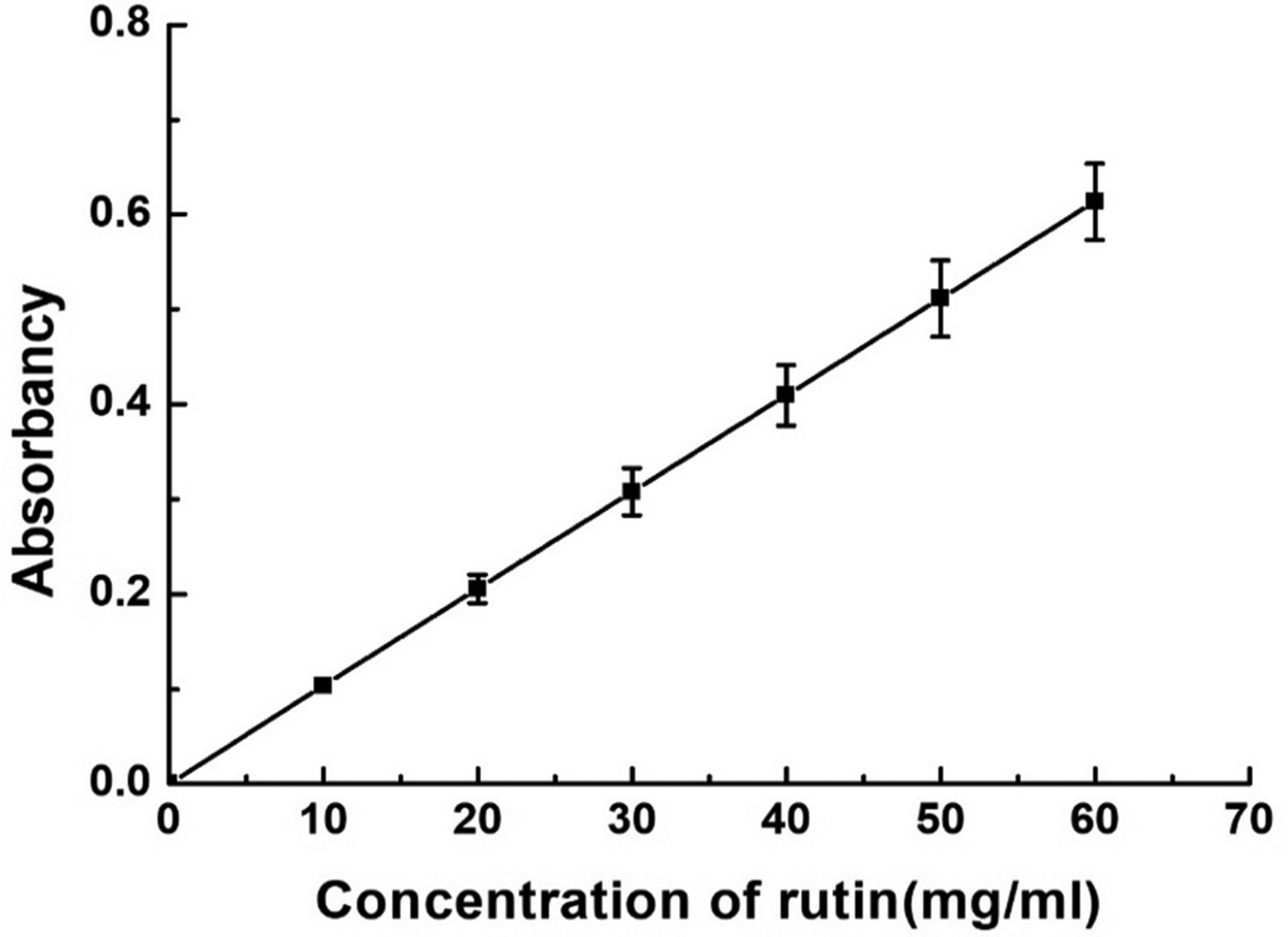
Effect of β-CD on fluorescence intensities and UV absorption of macerated extract
As shown in Figure 4 and Figure 6, the fluorescence and UV absorption spectra of the macerated extract were measured in various concentrations of β-CD to determine the stoichiometric ratio and binding constant of the inclusion complex.
The fluorescence spectrum of maceration extraction in the presence of different concentration of β-cyclodextrin (β-CD): (a) 0 mol·L−1; (b) 0.0005 mol·L−1; (c) 0.001 mol·L−1; (d) 0.002 mol·L−1; (e) 0.004 mol·L−1; (f) 0.006 mol·L−1. Ultraviolet (UV) scanning spectrum of macerated extract in the presence of different concentrations of β-cyclodextrin (β-CD): (a) 0 mol·L−1; (b) 0.0005 mol·L−1; (c) 0.001 mol·L−1; (d) 0.002 mol·L−1; (e) 0.004 mol·L−1; (f) 0.006 mol·L−1.

As shown in Figure 4, the fluorescence intensities of the macerated extract were enhanced by increasing the concentration of β-CD. The results demonstrated the formation of the inclusion complex between β-CD and total flavonoids in maceration extraction. Flavonoids were incorporated inside the cavity of β-CD and, due to the rigidity of the medium, the flavonoid molecules were protected from the quenching caused by the aqueous solution through the hydrophobic cavity of β-CD, thus the fluorescent emission of flavonoids was enhanced. The binding constant of the inclusion complex can be obtained from the fluorescence intensity by Benesi-Hildebrand equation
39
as seen in equation (3):

Where I and I0 represent the fluorescence intensity of flavonoids in the presence and absence of β-CD; [G]0 and [CD]0 represent the initial concentration of flavonoids and CD; α is a constant; and K is the formation constant of the complex.
Reported values
40
for the cavity diameters of β-CD was 6.0–6.5 Å, whereas cavity volumes were 262 Å3. Flavonoid molecules could be encapsulated within the cavity through hydrogen bonding.
22
The double reciprocal plots 1/(I–I0) versus 1/[CD]0 for flavonoids to β-CD is shown in Figure 5. The plots exhibit good linearity, which implies the formation of 1:1 (flavonoids: β-CD) inclusion complexes.
21
The binding constant K was 126 M−1.
Double reciprocal plot for flavonoids incorporated with β-cyclodextrin (β-CD).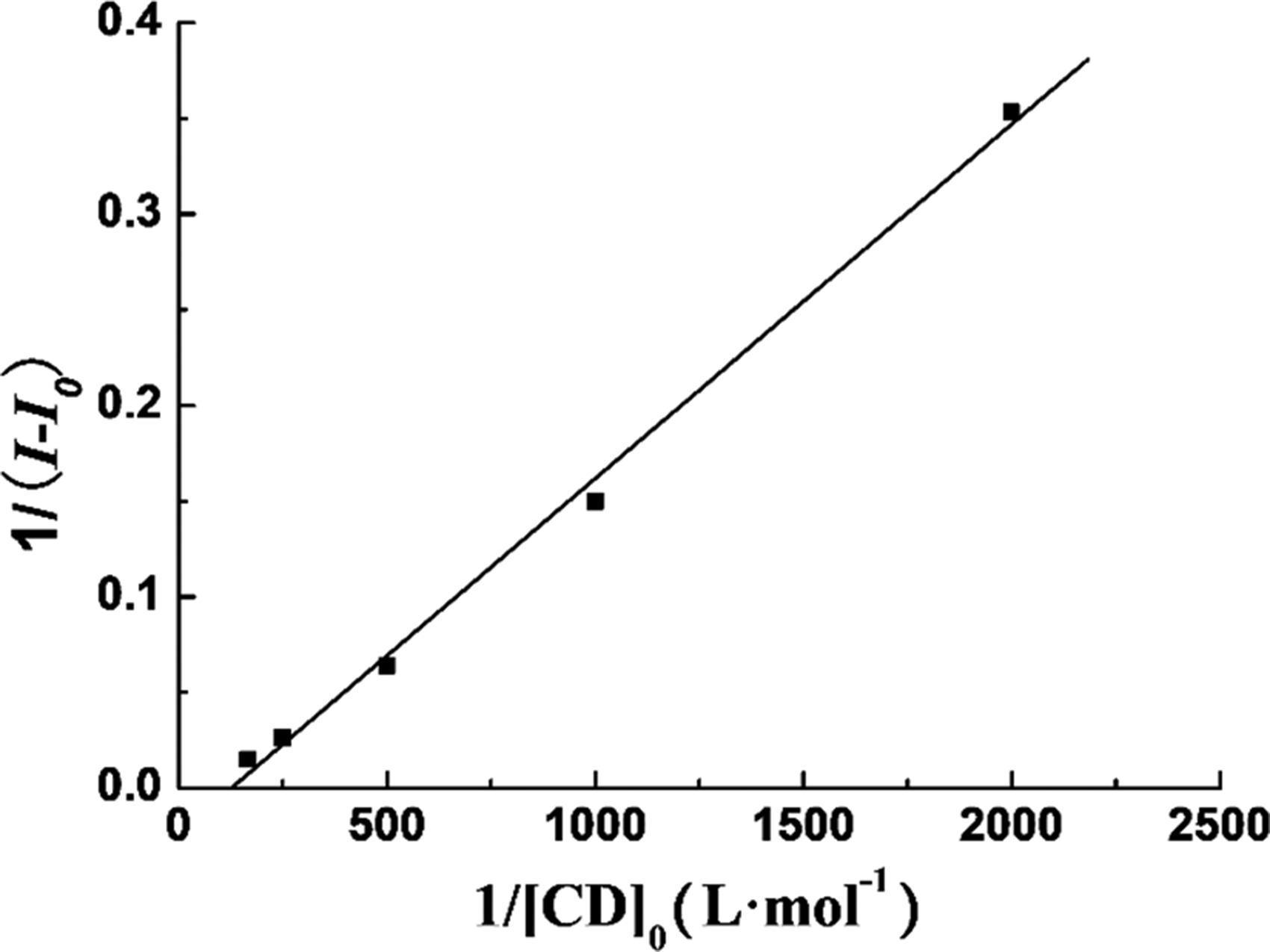
The UV spectrums of pure macerated extract that blend with different content of CD are shown in Figure 6. The UV absorption of macerated extract was increased up to 50% with an increase in the amount of CD.
Effect of β-CD grafting modification on anti-UV of modified cotton fabrics
Chemical crosslinking methods that involve the use of native CDs and crosslinkers suitable to bind the hydroxyl groups of CDs with those of natural fibers have been developed, rendering high yields of grafting. As an inexpensive, commercially available, and eco-friendly crosslinking agent, CA can form a 5-membered cyclic anhydride intermediate in the presence of sodium hypophosphite, then form an ester bond with the alcoholic group of CD and cotton fibers. 25 The cotton fabrics grafted with β-CD could exhibit anti-UV properties after being dyed in macerated extract containing flavonoids, which can form an inclusion complex with β-CD.
Experimental design for screening of factor influence on anti-ultraviolet properties of β-CD-grafted cotton fabrics followed by macerated extract dyeing
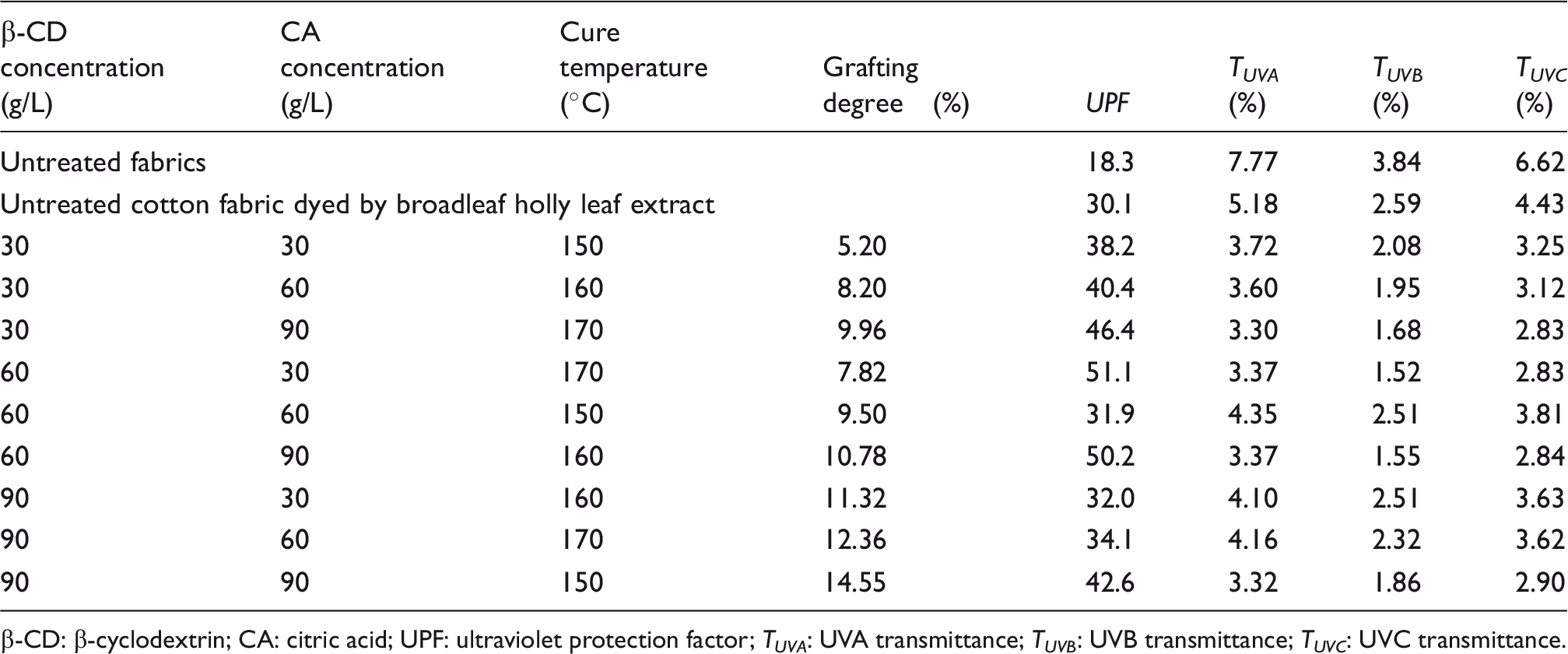
β-CD: β-cyclodextrin; CA: citric acid; UPF: ultraviolet protection factor; T UVA : UVA transmittance; T UVB : UVB transmittance; T UVC : UVC transmittance.
Statistical analysis of grafting optimization using 33 factorial design
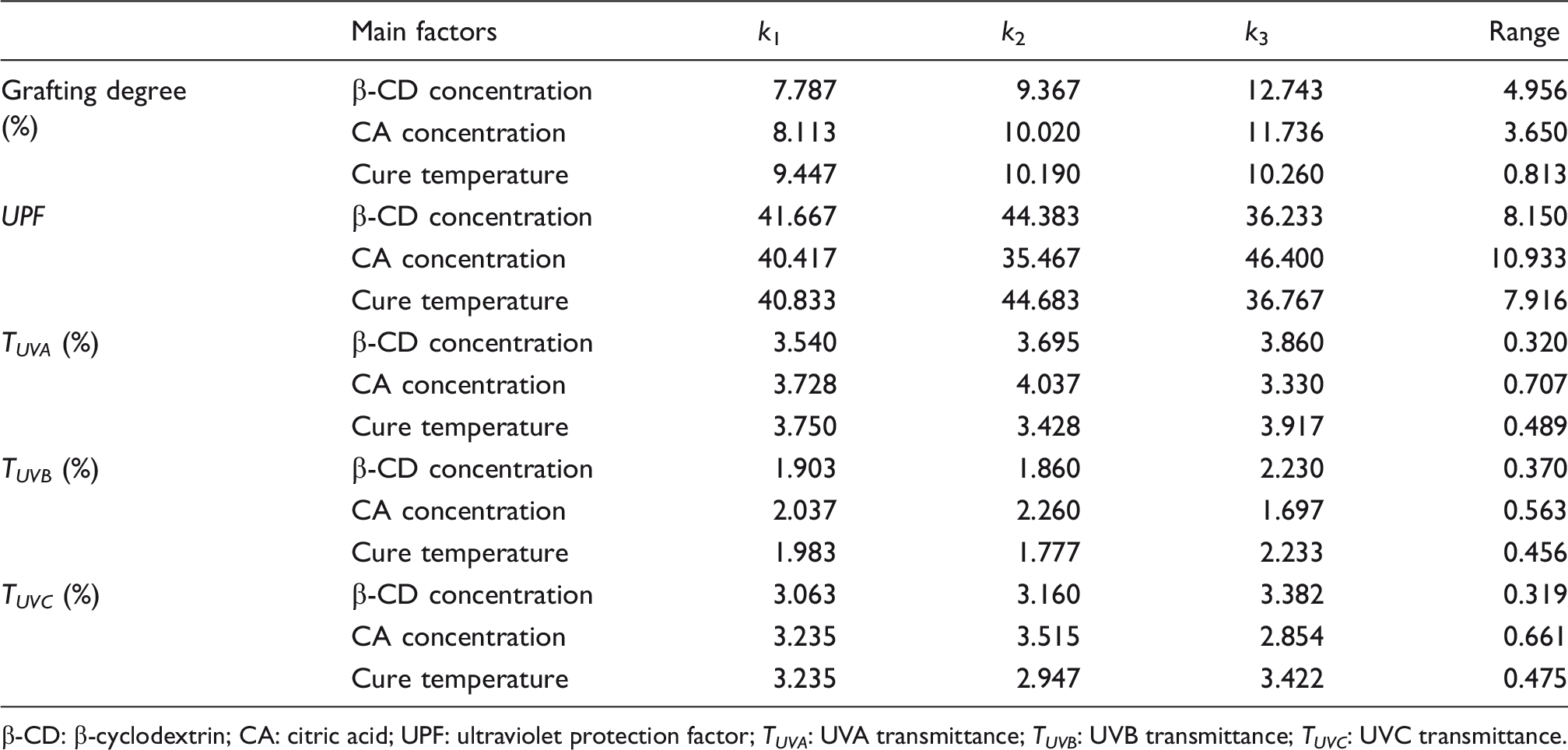
β-CD: β-cyclodextrin; CA: citric acid; UPF: ultraviolet protection factor; T UVA : UVA transmittance; T UVB : UVB transmittance; T UVC : UVC transmittance.
As shown in Tables 2 and 3, β-CD concentration was the most relevant factor concerning the grafting degree. The second-most important factor for obtaining a high grafting degree was CA concentration. The effect of cure temperature on the grafting degree was not significant. For anti-UV properties, in terms of UPF, T UVA , T UVB , and T UVC , the results indicated that CA concentration was the most significant factor. Cure temperature was also significant factor for obtaining lower transmittance.
The effect of variation in the concentration of β-CD and CA on grafting behavior is shown in Table 3.
As shown in Table 3, the significance of factors influencing the grafting rate and anti-UV properties (represented by UPF, T UVA , T UVB , and T UVC ) were demonstrated by the range value and respectively sorted as follows: β-CD concentration > CA concentration > cure temperature, CA concentration > β-CD concentration > cure temperature. It is clear an increase in the concentration of β-CD and CA and treatment temperatures result in an enhancement in the grafting degree, which may simply be explained on the basis of the scheme of polymerization mentioned as follows. The availability and accessibility of β-CD and CA in the moiety of the fabric were improved with the increase in amount of the two molecules and treatment temperature, which means a reaction between the hydroxyls of cellulose and β-CD with carboxy group of CA becomes easier, resulting in more product.26,37
Tables 2 and 3 also show the effect of the concentration of β-CD and CA in the finishing bath on the anti-UV properties of fabric dyed in macerated extract. Table 2 shows the UPF values increased with a rise in β-CD concentration and reached a maximum of 60 g/L; above this concentration UPF show no further increase. Based on the result of the effect of β-CD on fluorescence intensities and UV absorption of the macerated extract, the β-CD molecules could host one molecule of flavonoids. As the amount of β-CD in the bath increased, the β-CD grafted on the fabrics increased and was able to form more complex with the flavonoid molecules during dyeing by macerated extract. A higher concentration of CA led to an increased grafting degree as mentioned above and had the same effect on the anti-UV properties of the treated fabrics as a higher concentration of β-CD, leading to much more β-CD grafted on the fabrics. These results were consistent with the range of significance values for the concentrations of β-CD and CA in the finishing bath influencing the anti-UV properties shown in Table 3.
The curing temperature plays an important role in determining the efficiency of polycarboxylic acid as a crosslinking agent to the cotton fabric. It is observed that the grafting efficiency becomes better when treatment temperature increases. An increase in the curing temperature results in an increase in UPF values for the treated fabrics, which is attributed to the fabrics' higher crosslinking efficiency. However, a temperature exceeding 160℃ causes a certain degree of yellowing.
Although the optimum UPF value (51.1) was obtained when the cotton fabric was treated with β-CD (60 g/L) and CA (30 g/L) at a temperature of 170℃, the optimum grafted process was chosen as follows: β-CD (60 g/L), CA (90 g/L), and treatment temperature (160℃) due to the little difference of UPF value (50.2) but a higher grafting degree, which is beneficial in improving durability. The treated cotton fabrics showed marginal increments in the UPF values (50.2) when compared to the untreated fabric (18.3) and untreated cotton fabric dyed by broadleaf holly leaf extract (30.1) as shown in Table 2.
Effect of flavonoid concentration on anti-UV properties of modified cotton fabrics
In Figure 7, it is observed that a remarkable improvement in the anti-UV properties of the dyed fabrics was achieved by increasing the flavonoid concentration up to 6% owf. The availability and accessibility of the flavonoid molecules in the immobilized hydrophobic cavities of β-CD grafted on the cotton fabrics was enhanced by the increase in flavonoid concentration, thus increasing the extent of the inclusion complex. The inclusion complex formed on the fabrics tends to be saturated when the concentration of flavonoids exceeds 6% owf. With an increase in van der Waals force and hydrogen bond formation between β-CD and flavonoid molecules, water molecules were displaced from the cavity of β-CD by the more hydrophobic flavonoids.
41
Although they are adsorbed on the non-modified site of fiber based on the hydrogen bond and the Van der Waals force, excess flavonoids desorb during washing cycles with no further positive effect on the anti-UV properties.
Influence of flavonoid concentration on anti-ultraviolet (UV) properties of dyed cotton fabrics: (a) UV protection factor (UPF), (b) UVA transmittance (T
UVA
), (c) UVB transmittance (T
UVB
), (d) UVC transmittance (T
UVC
); (a) one wash, (b) 30 washes.
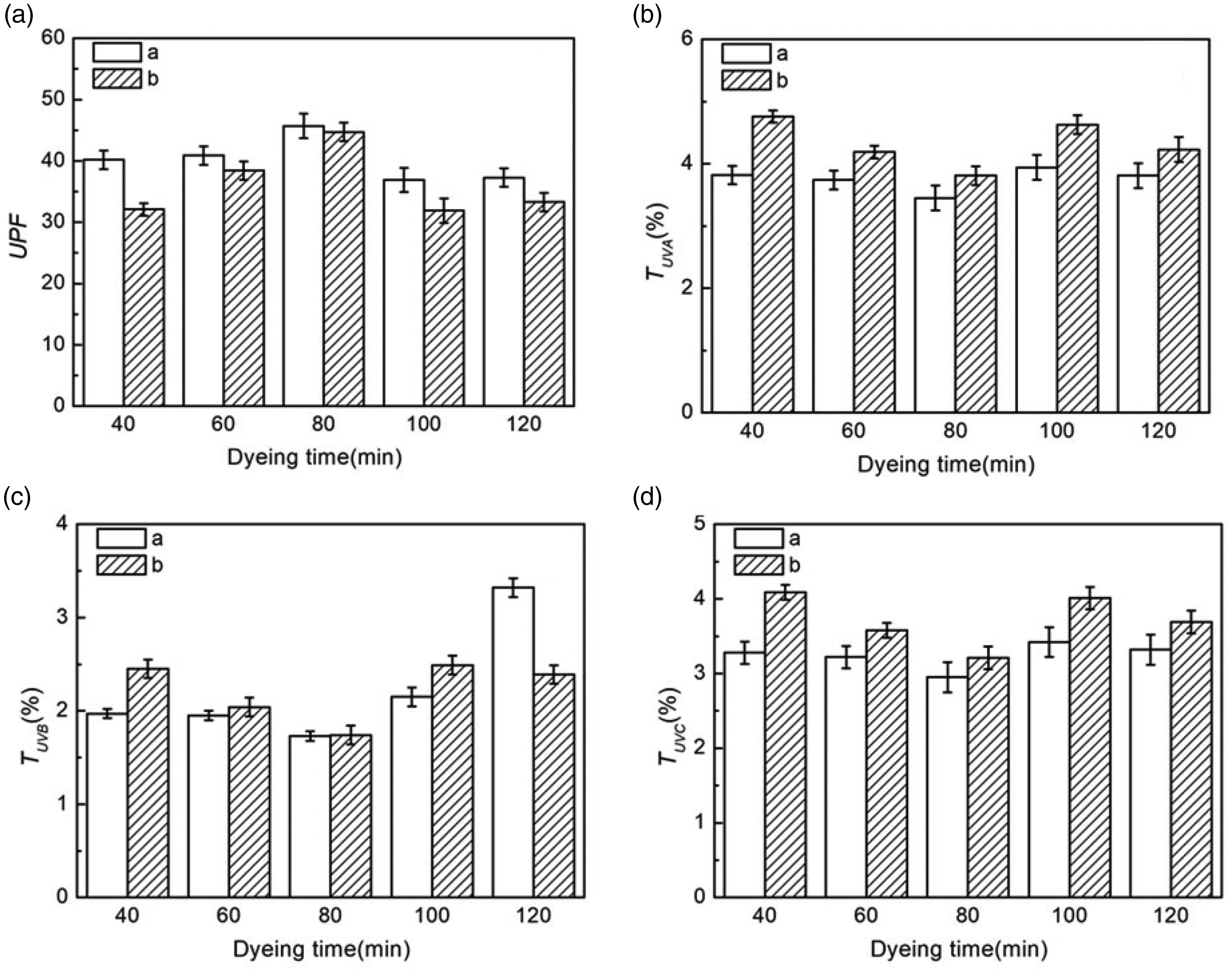
Effect of dyeing temperature and time
The procedure for studying the effect of dyeing temperature and time on the anti-UV properties of β-CD-grafted cotton fabrics was similar to that of the effect of grafting modification on anti-UV properties. Figures 8 and 9 show the effect of dyeing temperature and time on anti-UV properties. Although the aqueous solubility of flavonoids increased alongside temperature, the inclusion of flavonoids in β-CD was an exothermic process similar to other inclusion complexes based on β-CD.22,42 Due to much easier swelling of cotton fibers and more flavonoid adsorption at higher temperatures, the anti-UV properties of cotton fabrics after one washing cycle were enhanced with temperature increasing. However, raising the temperature showed a net effect on the anti-UV properties of cotton fabrics after 30 washing cycles. However, the flavonoids easily formed an inclusion complex with β-CD grafted on cotton fabrics at higher temperatures, leading to less space resistance and better diffusion performance. The ultra-equivalent flavonoids failed to form a complex with β-CD were adsorbed on the fabric by weaker secondary valence bond forces and easily washed away after repeat washing. β-CD modified cotton fabrics were dyed at the same temperature for longer periods to guarantee the adequate diffusion and absorption of flavonoids, increasing the formation of an inclusion complex. As shown in Figure 9, extending the dyeing time to more than 80 min showed an adverse effect on the formation of an inclusion complex due to exothermic processes.
Influence of dyeing temperature on anti-ultraviolet (UV) properties of dyed cotton fabrics: (a) UV protection factor (UPF), (b) UVA transmittance (T
UVA
), (c) UVB transmittance (T
UVB
), (d) UVC transmittance (T
UVC
); (a) one wash, (b) 30 washes. Influence of dyeing time on anti-ultraviolet (UV) properties of dyed cotton fabrics: (a) UV protection factor (UPF), (b) UVA transmittance (T
UVA
), (c) UVB transmittance (T
UVB
), (d) UVC transmittance (T
UVC
); (a) one wash, (b) 30 washes.
Performance properties of different cotton fabrics

β-CD: β-cyclodextrin; CA: citric acid; UPF: ultraviolet protection factor; T UVA : UVA transmittance; T UVB : UVB transmittance; T UVC : UVC transmittance.
Finished fabric I: cotton fabric dyed by broadleaf holly leaf extract (flavonoid concentration: 6% owf, dyeing at 45℃ for 80 min).
Finished fabric II: β-CD modified cotton fabric dyed by broadleaf holly leaf extract (β-CD: 60 g/L, CA: 90 g/L, cure temperature: 160℃, flavonoid concentration: 6% owf, dyeing at 45℃ for 80 min).
An increase in the wrinkle recovery angle of β-CD-modified cotton fabric is attributed to the CA molecule that crosslinked two cellulosic chains during β-CD graft modification. A decrease in the tensile strength for the treated fabrics was caused by the hydrolysis reaction of cellulosic chains being degraded by CA at a high curing temperature. 43
A schematic representation of UV protection of different cotton samples offered by natural agents derived from broadleaf holly leaf is shown in Figure 10.
Schematic representation of ultraviolet (UV) protection offered by natural agents derived from broadleaf holly leaf; (a) finished fabric I (cotton fabric dyed with broadleaf holly leaf extract) after one and 30 washing cycles; (b) finished fabric II (β-cyclodextrin (β-CD) modified cotton fabric dyed with broadleaf holly leaf extract) after one and 30 washing cycles.
44

Figure 11 shows the morphologies of control samples, finished fabric I, and finished fabric II after different washing cycles. Compared with control samples after one washing cycle, the surface microstructure of finished fabric I and finished fabric II after one washing cycle clearly changed, especially fabric II. Adhesion was clearly observed on the surface of finished fabrics I and II, which may be attributed to the adsorption of broadleaf holly leaf extract and graft fixation of β-CD on the cotton fabrics. After 30 washing cycles, the surface of finished fabric I became smoother and similar to the control sample, but the adhesion layer on the surface of finished fabric II was still visible and continuous with a few cracks, which demonstrated the efficiency of the crosslinking agent and the washing durability.
The morphologies of control samples ((a) one wash cycle, (b) 30 wash cycles), finished fabric I ((c) one wash cycle, (d) 30 wash cycles), finished fabric II ((e) one wash cycle, (f) 30 wash cycles).
Conclusions
The evidence presented in this paper shows flavonoids can be extracted from broadleaf holly leaf by maceration with a calculated flavonoid content of 39.1569%, forming a 1:1 stoichiometric inclusion complex with β-CD. The formation of the inclusion complex can protect the flavonoid molecules from the quenching caused in an aqueous solution by the hydrophobic cavity of β-CD, thus enhancing the fluorescence emission and UV absorption of flavonoids with the increase in the amount of CD. β-CDs were grafted to cotton fabrics through a crosslinking reaction and formed an inclusion complex with flavonoids during dyeing with macerated extract. The optimum UPF value and excellent durability to successive washing was obtained when the cotton fabric was treated with β-CD (60 g/L), CA (90 g/L) at a temperature of 160℃, and dyed with flavonoids (6%, owf) at 45℃ for 80 min. Compared with untreated fabric (UPF = 18.3) and untreated cotton fabric dyed by broadleaf holly leaf extract (UPF = 30.1), β-CD-modified cotton fabric dyed by broadleaf holly leaf extract showed enhanced anti-UV properties (UPF > 40) and washing durability after 30 washing cycles, accompanied by a significant increase in the wrinkle recovery angle and a decrease in the tensile strength.
Footnotes
Declaration of conflicting interests
The authors declared no potential conflicts of interest with respect to the research, authorship, and/or publication of this article.
Funding
The authors disclosed receipt of the following financial support for the research, authorship, and/or publication of this article: This work was supported by the Natural Science Foundation of Shaanxi Provincial Department of Education (Grant 19JK0362), Science and Technology Guidance Project of China National Textile and Apparel Council (Grant 2019040) and the PhD Research Funds of Xi'an Polytechnic University (Grant Number BS1721).
