




Abstract
The builder is an important ingredient in detergents. Sodium oxalate is a good non-phosphate detergent builder, which has good calcium-removing properties and good wash performance in detergents. However, sodium oxalate-based detergent formulations face a tricky problem of “incrustation” on fabrics due to calcium oxalate deposition. If sodium oxalate is used in commercial detergents, then “incrustation” must be solved. In this study, we examined the effect of fabric type, anionic surfactant, polymer, and temperature on incrustation and soil redeposition (“secondary” washing effect) of a sodium oxalate-based detergent. The results showed that both the anionic surfactant and polymer influenced the deposition of calcium oxalate on fabrics. Overall, the amount of calcium oxalate deposition followed the order polyamide < polyester < cotton with the same formulation. Finally, good secondary washing effects (low ash deposition and high whiteness retention) formulations were selected by cumulative washing. The formulation of methyl ester sulfonate (MES)-sodium carboxymethyl cellulose (CMC), MES-polyvinyl pyrrolidone, and alcohol ether sulfate (AES)-CMC had better secondary effects, and the optimal combination of the 12 formulations was AES-CMC.
The main property of a laundry detergent is not only “primary performance” but also “secondary performance.” 1 “Primary” performance is visible after a single washing and mainly concerns soil removal. “Secondary” performance is observable after cumulative washings, and it concerns soil redeposition and ash deposition. 2
Sodium oxalate is an excellent non-phosphate detergent builder with high calcium-removing capacity, high calcium-removing rate, and good detersive performance. 3 However, sodium oxalate softens water by forming a precipitant, and so it easily causes insoluble oxalates to adhere onto the textile surface. This phenomenon, called incrustation, not only causes washed fabrics to become harsh, gray, and wear out more quickly, but it also provides a breeding ground for bacteria.4,5 Therefore, a sodium oxalate-based detergent has good “primary performance,” but it faces a severe challenge in controlling the fabric incrustation in “secondary performance.”
Detergent formulations are finely balanced. The practical performance of a detergent during washing depends on the design of formulations. To improve the secondary washing effect, water-soluble polymers are often added to the detergent formulations. The polymers can interact with anionic surfactants and reduce the deposition of impurities during washing. 6 The common polymers used in laundry detergents include cellulose derivatives, polyacrylates (PAAs), polyvinyl pyrrolidone (PVP), and polyvinyl alcohol (PVA).5,7–10
The possible mechanisms of incrustation inhibition are as follows11–13: (1) the additives can prevent or affect nucleation of crystals; (2) the additives (such as polycarboxylates) can prevent or affect crystal growth; (3) the additives can stabilize the crystals or their precursors that have formed as colloids; and (4) the additives adsorbed on the growing crystal face reduce the zeta potential and increase steric hindrance, thus suspending the crystal in the washing bath.
For a sodium oxalate-based detergent, the ash mainly comes from calcium oxalate crystals. Both anionic surfactants and polymers can control the morphology and phase of the calcium oxalate crystal.14–18 The shape of particles is an important factor affecting their physicochemical properties, such as zeta potential, conductivity, pore structure, and specific properties.19–21 These properties may influence calcium oxalate deposition on fabrics.
In the present work, we studied the secondary washing effect of sodium oxalate-based detergents by measuring the ash deposition and whiteness retention after cumulative washings. We evaluated three types of fabrics (cotton, polyamide, and polyester) by changing the anionic surfactants linear alkyl benzene sulfonate (LAS), methyl ester sulfonate (MES), and alcohol ether sulfate (AES), and the polymers sodium carboxymethyl cellulose (CMC), PVP, sodium PAA, and PVA of the basic detergent formulation to optimize the secondary washing effect ingredients. In order to study the deposition of the calcium oxalates on the fabrics, the washed fabrics were characterized by scanning electron microscopy (SEM) and X-ray diffraction (XRD), and scorched at 800℃ to obtain the mass of ash. To study the relationship between the morphology formed in different formulations and the deposition of calcium oxalates, the solid particles were collected from the washing waters and characterized by SEM. Finally, six different formulations were used to evaluate the influence of temperatures on calcium oxalate deposition on cotton.
Experimental details
Materials
Cotton was purchased from the China Research Institute of Daily Industry. Polyamide (JIS L0803) and polyester (JIS L0803) were purchased from Xiangda Instrument Operation Department. The fabric swatches were cut into 80 × 80 mm2 pieces.
CaCl2 and MgCl2·6H2O were analytical reagents purchased from Accelerating Scientific and Industrial Development. Na2C2O4 and Na2CO3, of analytical grade, LAS with active matter content of 95%, CMC with viscosity of 300–800 mPa·s, and PVA (0588) were obtained from Shanghai Aladdin Bio-Chem Technology Co., Ltd. Na2SO4 and PVP (K-30) were from Sinopharm Chemical Reagent Co., Ltd. Sodium silicate (Qingdao Paohua Jian Co., Ltd.) was of industrial grade. The China Research Institute of Daily Chemical Industry supplied MES, AES, and AEO9 (alcohol ethoxylated containing 9EO), and their active contents were 85%, 70%, and 99%, respectively. Sodium PAA with 45% active content (PAA 445N) was supplied by Akzonobel.
Cycle washing trials
Cycle washing trials were carried out following the Chinese National Standard GB/T 13174-2008. Each of the detergent samples was evaluated by 20 washing cycles in a vertical cleaner (RHLQ-III, China Research Institute of Daily Chemical Industry). A washing cycle included a 20 min wash of fabric swatches in a detergent bath, two rinse cycles, manual dehydration after each rinse cycle, and drying at room temperature. The washing was performed in 250 mg/kg hard water (calculated as calcium carbonate) for 20 min at 120 rpm stirring rate at 30℃. The hard water contained MgCl2 and CaCl2 at a mole ratio of 2:3. The method of manual dehydration is that washed fabrics were put into a rinser (Figure 3 in the Chinese Standard GB/T13174-2008) and then the handle was turned at about 1800 r/min for 30 s. At the beginning of the cycle, 3 mL of artificial liquid soil (the soil preparation method is shown in the Supplementary Material Paragraph 1), 2 g of detergent, and six uncontaminated fabric swatches (80 × 80 mm2) were added. After every five performed cycles, the degree of whiteness and a SEM image of the samples were obtained.
Detergents used
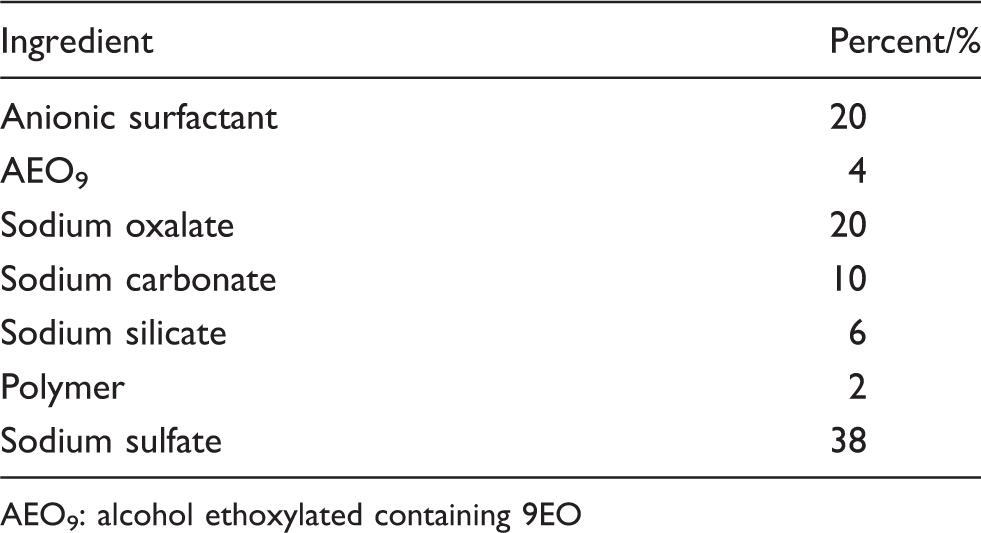
AEO9: alcohol ethoxylated containing 9EO
Characterization of the washed fabrics and solid samples
The solid particles in wash baths were obtained by filtering through membrane filters (0.45 μm, Millipore). The fabric and crystal samples were dried at room temperature. To observe the fabric and crystal samples for SEM, a thin layer of gold was coated on the surface prior to examination by a Hitachi TM-3000 or SU 8010 with a field emission source and working at an accelerating voltage of 15 kV. Powder XRD patterns of the crystals were collected on an X-ray diffractometer (MiniFlex II, Rigaku) using Cu Kα radiation (λ = 1.5418 Å).
Examination of the ash content
The ash content of the cycle-washed fabric samples was evaluated by the gravimetric method. The fabrics were dried at 105℃ in an electrical heat drum wind-drying oven and cooled to room temperature in a desiccator. When weighing, the fabrics were put in a weighed clean plastic bag to prevent the dried fabrics from absorbing water from the environment. The dry washed fabrics were pre-burned by free combustion in an empty crucible and then subjected to final combustion at 800℃ in a furnace to constant weight. After the scorching procedure, the mass of the crucible with the ash could be obtained. The ash deposition (R) can be calculated through the following formula

Whiteness retention
The value of whiteness retention of fabrics is used as a measure of the anti-redeposition of the soil. The fabric sample was exposed to the effects of light of CIE standard D65 by using an SC-80 colorimeter (Beijing Kangguang Optical Instrument Co., Ltd). The reflectance values were measured before (F0) and after washing (F). The whiteness retention (T) could be obtained by the equation

Results and discussion
Characterization of the fabrics after cycle washing
The deposition on the fabrics during the laundering process depends on the physical nature and composition of deposits, substrate composition, components of the detergent, and the laundering procedures. 22 For sodium oxalate-based detergents, the oxalate and hardness ions (e.g., Ca2+) may form oxalate particles deposited on the fabrics. The solid particles were collected from each washing solutions, and their phase were proved by the XRD pattern, as shown in Figure S1. The solids forming in the detergent solution were calcium oxalate dihydrate or a mixture of calcium oxalate dihydrate and calcium oxalate monohydrate.
Therefore, in this study, three types of fabrics (cotton, polyamide, and polyester), were used to study the secondary washing effects at 12 different sodium oxalate-based detergent formulations. The SEM images of fabrics after washing 20 times using the 12 different formulations are shown in Figures 1–3.
Scanning electron microscopy images (magnification = 1.0k) of cotton fabrics after 20 cycles of washing tests. CMC: sodium carboxymethyl cellulose; PVP: polyvinyl pyrrolidone; PAA: polyacrylate; PVA: polyvinyl alcohol; LAS: linear alkyl benzene sulfonate; MES: methyl ester sulfonate; AES: alcohol ether sulfate.
In Figure 1, we can see that the 12 formulations had very different deposition behaviors on cotton; the worst behavior was for the formulation using LAS as the anionic surfactant or PAA as the polymer. The fabrics washed by formulations of MES-CMC, MES-PVP, MES-PVA, and AES-CMC have the least deposition, and those washed by AES-PVP and AES-PVA have intermediate deposition. We also found that the heavily deposited cotton fiber structure was not damaged over 20 cycle washing tests 23 (compared with unwashed cotton fabrics, shown in Figure S2).
Figure 2 shows SEM images of polyamide fabrics after 20 cycles of washing. The results showed that the particles deposited on the polyamide fabrics were much fewer than those on the cotton fabrics for the same washing formulation. The fabrics washed with formulations of MES-PAA, MES-PVA, and AES-PAA showed a small amount of deposition, and there were few deposited particles on the polyamide fabrics washed with the other formulations.
Scanning electron microscopy images (magnification = 1.0k) of polyamide fabrics after 20 cycles of washing tests. CMC: sodium carboxymethyl cellulose; PVP: polyvinyl pyrrolidone; PAA: polyacrylate; PVA: polyvinyl alcohol; LAS: linear alkyl benzene sulfonate; MES: methyl ester sulfonate; AES: alcohol ether sulfate. Scanning electron microscopy images (magnification = 1.0k) of polyester fabrics after 20 cycles of washing tests. CMC: sodium carboxymethyl cellulose; PVP: polyvinyl pyrrolidone; PAA: polyacrylate; PVA: polyvinyl alcohol; LAS: linear alkyl benzene sulfonate; MES: methyl ester sulfonate; AES: alcohol ether sulfate.
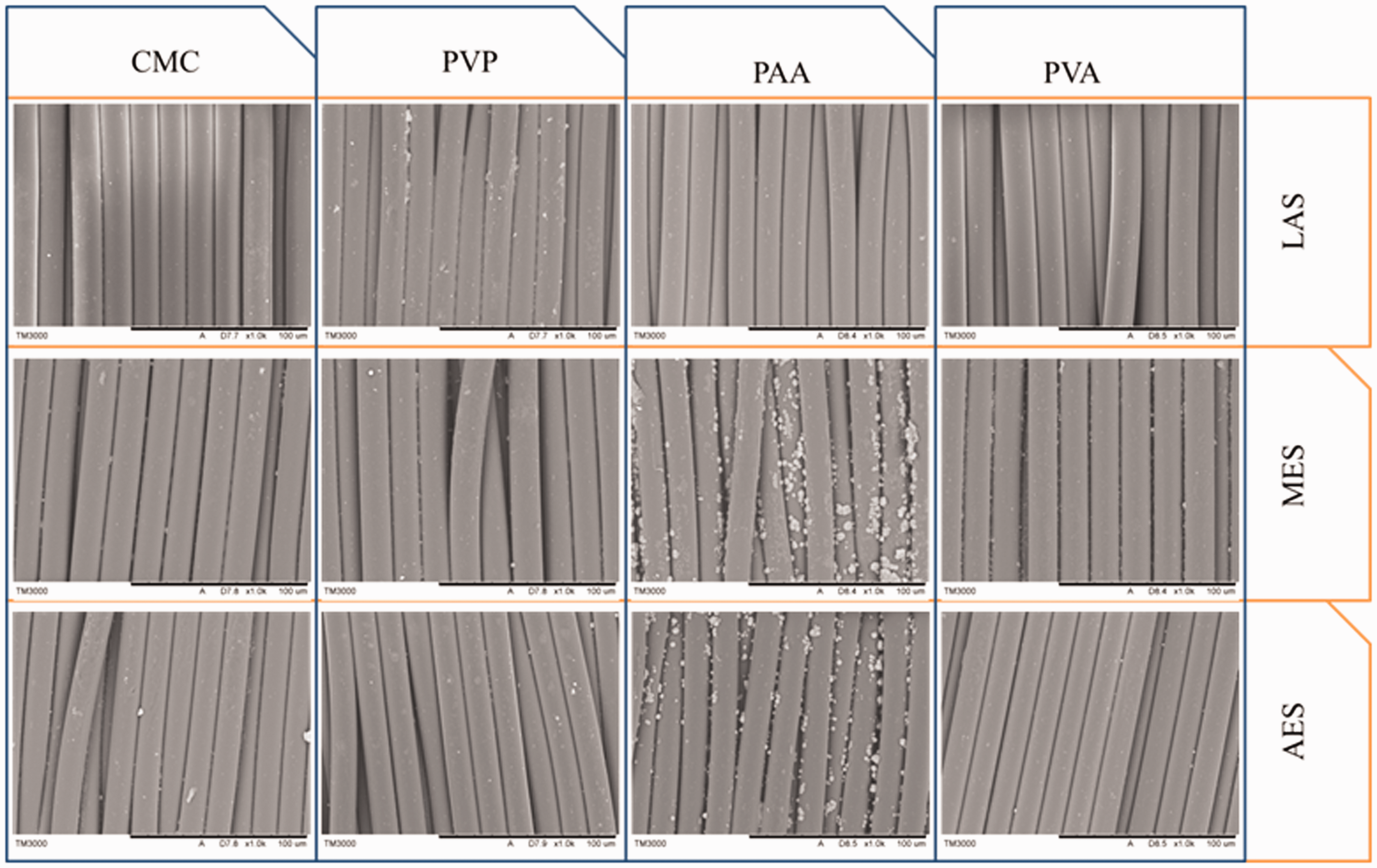
Figure 3 shows SEM images of polyester fabric after 20 cycles of washing. The deposition behavior for polyester fabrics was between those of cotton and polyamide fabrics. Obvious deposition of calcium oxalates occurred in the case of using formulations of LAS-PVP, MES-PAA, and AES-PAA.
From the above results, it was found that calcium oxalates were deposited more easily on cotton than on polyamide and polyester for the same formulation. There were three possible reasons24,25: (1) cotton fibers fixed divalent cations such as calcium by the ion-exchange mechanism and were thus prone to the phenomenon called built-up incrustation; (2) cotton fibers showed a zeta potential more negative than that of synthetic fibers in the detergent bath; and (3) cotton fabric had a surface rougher than that of the synthetic fabric.
For the same fabric, different formulations can lead to different deposition results. The reason may be that different surfactants and polymers have different adsorption abilities on fabrics and calcium oxalate, which causes different interactions between calcium oxalate and fabrics in washing solutions. From the SEM images of washed fabrics, the optimized detergent formulations were MES-CMC, MES-PVP, MES-PVA, and AES-CMC, which had good anti-deposition properties for the three types of fabrics.
The ash content of the different fabrics under different formulations
Although SEM images of the fabrics can be used to visualize calcium oxalate deposition on the fabrics, it is a general result. For a detailed investigation, quantitative analysis of ash deposition on the fabrics was carried out by scorching the washed fabrics at 800℃ to constant weight, and then the formula was used to calculate ash deposition. The ash content of the three types fabrics under different formulations is shown in Figure 4. The ash deposition mass from high to low was of the order cotton, polyester, and polyamide. The formulations of MES-CMC, MES-PVP, MES-PVA, and AES-CMC had low ash depositions for the three types of fabrics. This result was consistent with the SEM images.
Ash deposition on the different fabrics after 20 cycles of washing tests. CMC: sodium carboxymethyl cellulose; PVP: polyvinyl pyrrolidone; PAA: polyacrylate; PVA: polyvinyl alcohol; LAS: linear alkyl benzene sulfonate; MES: methyl ester sulfonate; AES: alcohol ether sulfate.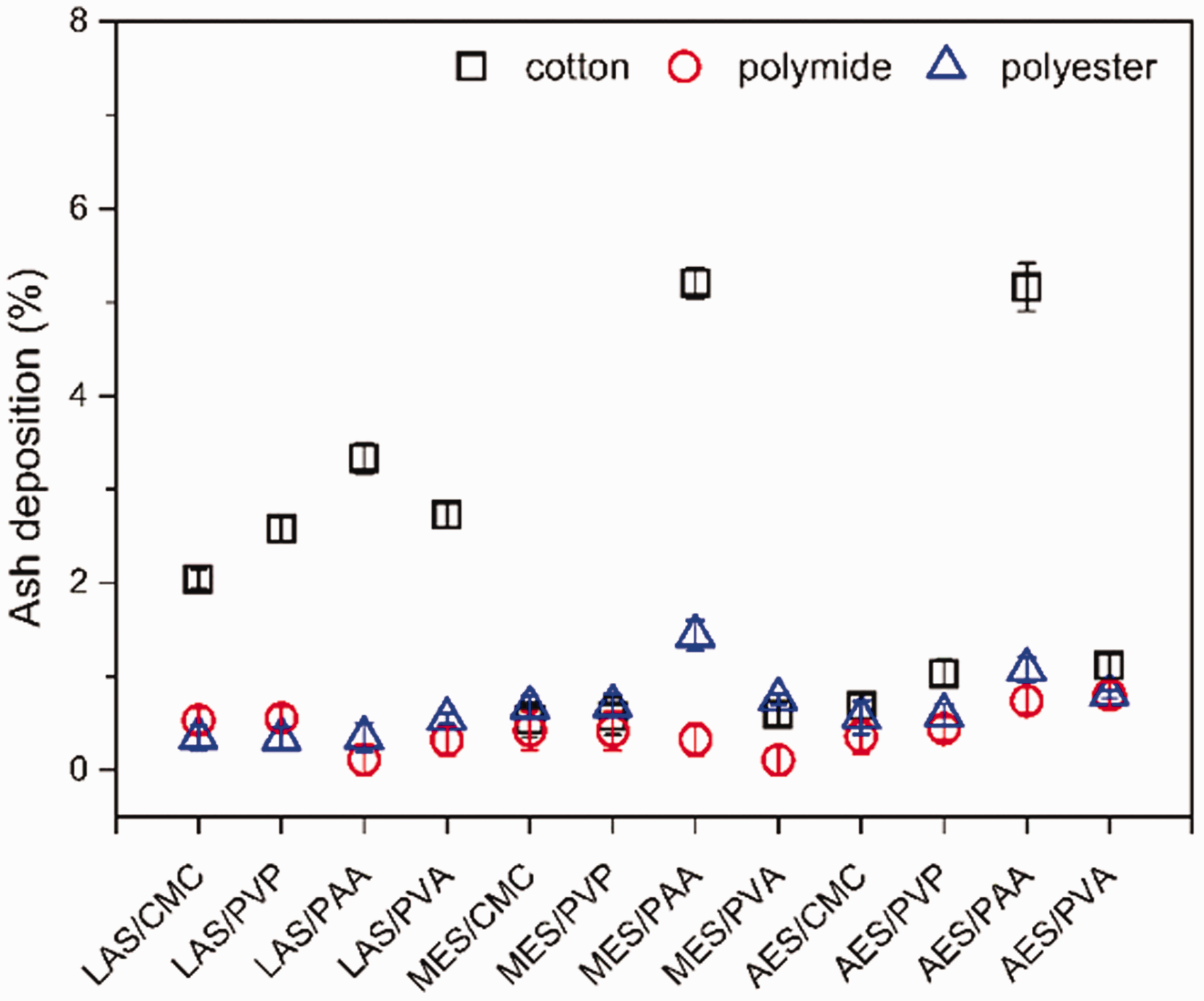
Whiteness retention
Whiteness retention is also an important parameter of “secondary performance” for a laundry detergent, which is a measure of the soil anti-redeposition during laundering. Good values of whiteness retention signify a good anti-redeposition effect. The whiteness retention values for the three types of fabrics after 20 cycles of washing are shown in Figure 5.
The whiteness retention values of the three types fabrics after 20 cycles of washing tests. CMC: sodium carboxymethyl cellulose; PVP: polyvinyl pyrrolidone; PAA: polyacrylate; PVA: polyvinyl alcohol; LAS: linear alkyl benzene sulfonate; MES: methyl ester sulfonate; AES: alcohol ether sulfate.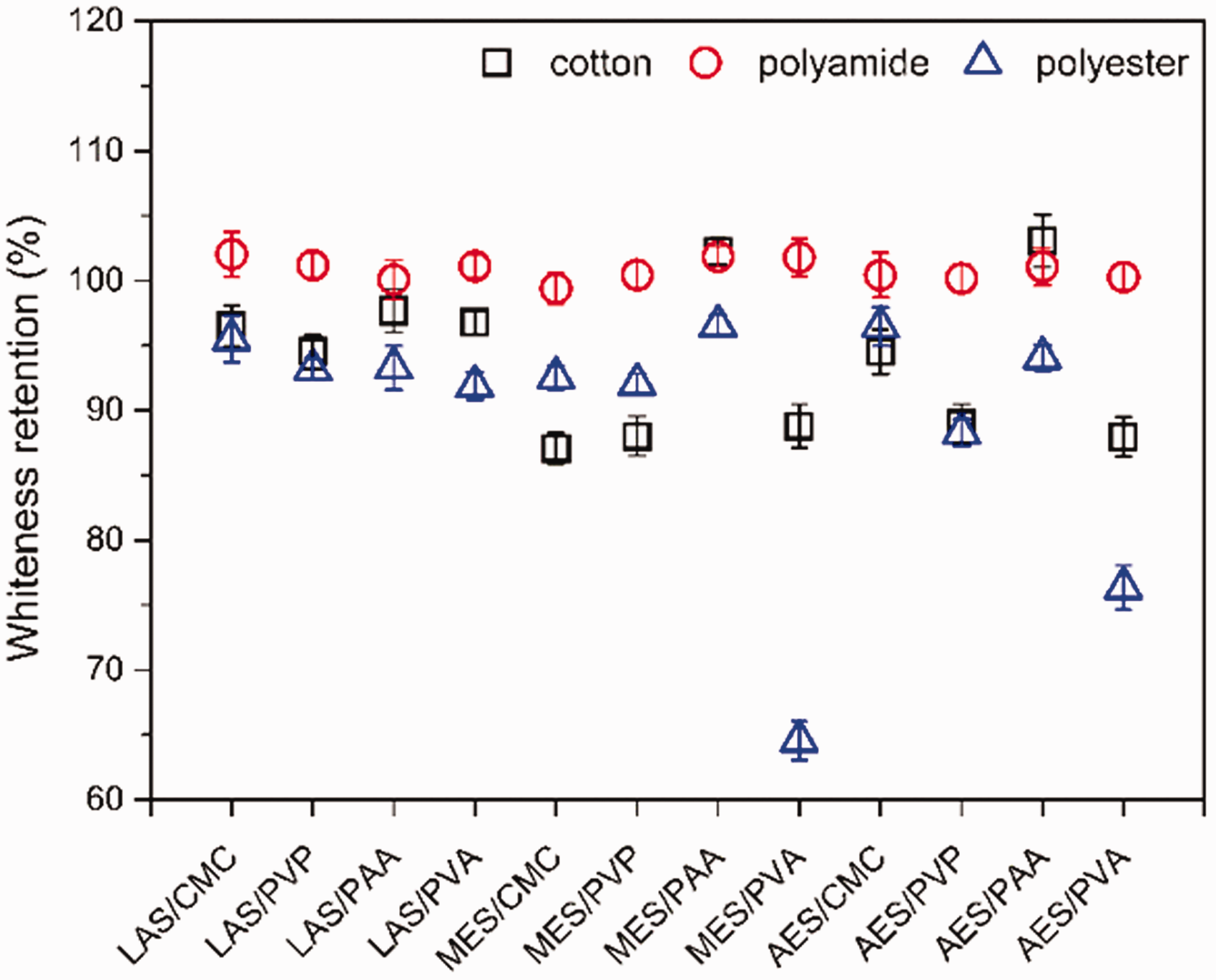
Overall, most formulations had a good whiteness retention value, and whiteness retention of polyamide is better than that of polyester and cotton. However, there were some abnormal data. A high whiteness retention for cotton fabrics may be caused by the deposition of white calcium oxalates. For polyester fabrics, the two formulations MES-PVA and AES-PVA had a rather poor anti-redeposition behavior. This was probably because PVA did not easily adsorb on polyester in the MES-PVA and AES-PVA formulation washing baths.26–30
The relationship between the morphology of calcium oxalate and deposition
The morphology of calcium oxalate may influence the deposition on fabrics. Many works have shown that the anionic surfactant and polymer can affect the morphology and size of calcium oxalates.
31
To study the relationship between the morphology or size of calcium oxalates and deposition, we collected and characterized by SEM the solid particles from the detergent baths. Figure 6 shows the SEM images of solid particles collected from baths that were used to wash cotton fabric.
Scanning electron microscopy images (magnification = 5.0k) of calcium oxalates collected from the washing baths (cotton). CMC: sodium carboxymethyl cellulose; PVP: polyvinyl pyrrolidone; PAA: polyacrylate; PVA: polyvinyl alcohol; LAS: linear alkyl benzene sulfonate; MES: methyl ester sulfonate; AES: alcohol ether sulfate.
From these pictures, we can see that the crystals of calcium oxalates from different formulations had different morphologies. It was obvious that the morphology of calcium oxalates was influenced by both the anionic surfactant and the polymer. The morphology of calcium oxalate crystals collected from different detergent baths was divided into two kinds: spherical and tetragonal bipyramidal shapes. When LAS or PAA were used as a component, the shape of the crystal was a sphere, which may be caused by a high interaction between LAS or PAA and Ca2+ 18,32 In other formulations, the crystal shape was a bipyramid. Similar results were obtained with polyamide and polyester (Figure S3 and S4). The SEM images showed that there was no marked change in the morphology and size of particles. The shape of the obtained crystals was a sphere with LAS or PAA used as a component in the formulation, while that of the others was a bipyramid.
From the above results, we found that the fabrics washed by formulations that formed smaller-size spherical particles have the most ash deposition (see SEM images of fabrics, Figures 1–3).
State of the calcium oxalate particles deposited
To further understand the deposition mechanism, we selected heavily deposited samples to closely monitor. By comparing SEM images of the three types of fabrics after one cycle and 20 cycles of washing (Figures 7 and S5–S7), we found that the calcium oxalate particles had deposited on the fabric after the first washing and then continued to grow on these existing crystals in the next washing process rather than depositing on the fabric all one at a time. The initial deposited particles acted as seed crystals for crystal growth in the next laundering procedure. More SEM images of the fabrics after one and 20 cycles of washing (Figures S8–S16) also supported this view.
Scanning electron microscopy images of the cotton fabric after one and 20 cycles of washing with the formulation of the linear alkyl benzene sulfonate-carboxymethyl cellulose detergent bath.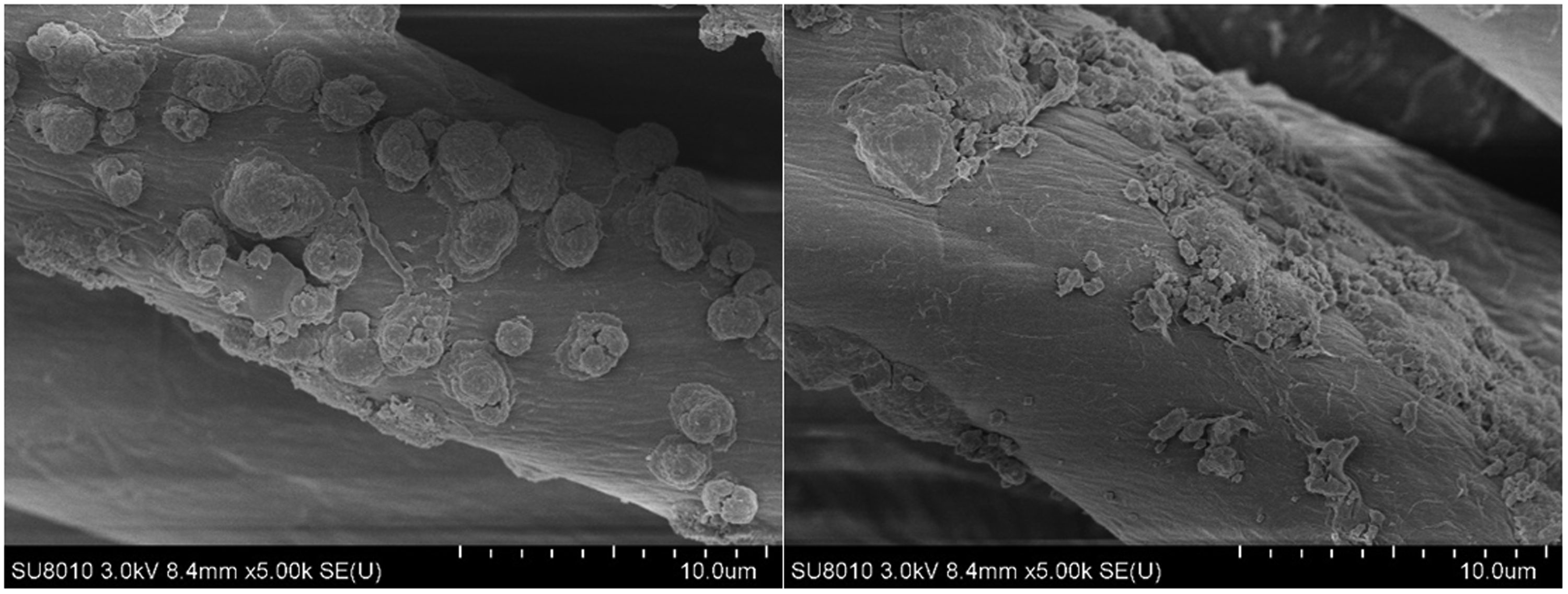
The influence of temperature on calcium oxalate deposition
Temperature is also an important factor for laundry. The results showed that it was very difficult to achieve satisfactory “secondary washing” results with cotton fabric. Here, cotton was chosen to explore the influence of temperatures on the deposition under six different formulations (LAS-CMC, MES-CMC, AES-CMC, AES-PVP, AES-PAA, and AES-PVA). The six formulations can reflect the effect of different anionic surfactants and polymers on the “secondary performance.” We chose 10℃, 30℃, and 50℃ as the washing temperatures. The values of ash deposition at different temperatures are shown in Figure 8.
Ash deposition on cotton fabrics after 20 cycles of washing at different temperatures. CMC: sodium carboxymethyl cellulose; PVP: polyvinyl pyrrolidone; PAA: polyacrylate; PVA: polyvinyl alcohol; LAS: linear alkyl benzene sulfonate; MES: methyl ester sulfonate; AES: alcohol ether sulfate.
The results showed that temperatures had a different effect on ash deposition with different formulations. The formulations of MES-CMC and AES-CMC were less affected by the temperature. However, the ash deposition increased as the temperature increased with the formulations of AES-PVP and AES-PVA; the ash deposition was highest at 50℃ and lowest at 10℃. However, the ash deposition for LAS-CMC and AES-PAA formulations was highest at 30℃ and lowest at 10℃. The results may relate to the different balance of adsorption and dispersion. The stronger adsorption of the surfactant and polymer on fabric and calcium oxalates increased the repulsive force between them, and stronger dispersion led to less deposition. The increased temperature led to weaker adsorption but stronger dispersion. Because of the different qualities of the surfactant and polymer, a different effect was shown in different formulations. The whiteness retention was less influenced by the temperatures (see Figure S8).
Conclusions
With the calcium oxalate deposition and whiteness retention evaluated using the three types fabrics with 12 different formulations, the conclusions drawn were as follows.
Both anionic the surfactant and polymer in sodium oxalate-based detergents influenced the deposition of calcium oxalate on fabrics. The calcium oxalates were easier to deposit on cotton than on synthetic fabrics when washed with sodium oxalate-based detergents. Overall, the amount of calcium oxalate deposition followed the order polyamide < polyester < cotton with the same formulation. From the morphology and size of calcium oxalate formed in washing solutions, we can find that the fabrics washed by formulations that formed spherical particles in washing solutions had more ash deposition, and that these formed tetragonal bipyramidal shapes. The initial deposited particles acted as seed crystals for crystal growth in the next laundering procedure. The temperature for cotton was also an important factor for “secondary washing,” and temperatures had different effects under different formulations. For LAS-CMC and AES-PAA formulations, the worst deposition occurred at 30℃. For other formulations, the deposition amount increased as the temperature increased. We achieved satisfactory formulations for both “primary performance” and “secondary performance” by adjusting the components of the detergent. In this work, the MES-CMC, MES-PVP, and AES-CMC formulations of sodium oxalate-based detergent achieved a satisfactory effect on both calcium oxalate deposition and whiteness retention for all three types of fabrics.
Footnotes
Declaration of conflicting interests
The authors declared no potential conflicts of interest with respect to the research, authorship, and/or publication of this article.
Funding
The authors disclosed receipt of the following financial support for the research, authorship, and/or publication of this article: This work was supported by the Program for Sanjin Scholars of Shanxi Province of China and Ten Thousand Talents Program: Millions of Leading Engineering Talents.

Supplemental material
Supplemental material is available online for this article.