



Abstract
Spot color is widely applied to printing and packing in modern industry, which can satisfy the individualization requirements and express the emotion of products. Color prediction is the core technique for spot color restoration. In this paper, a method that combines the least squares method and gravitation search algorithm is proposed to address the color prediction by using the absorption spectrum. Firstly, the spectral transmittance of the thin film with high transmission and low reflectance characteristics is researched to find the absorbance. Secondly, the least squares method is used to ascertain the primary colors of the spot color. Thirdly, an enhanced quantum gravitation search algorithm is designed to predict the spot color. The predicted results on the 30 spot colors show that the proposed method has higher accuracy in comparison with the three existed methods. The color differences between the prepared spot colors and the reproduced spot colors are all less than 3, in which 75% of the color differences are less 1 and 35% of the color differences are less 0.1. All the results confirm that the proposed method can predict the spot color accurately.
Spot color is a growing concern in the printing industry due to increased requirements. With the development of intelligent manufacturing, the printing color can be tailored to personalized demands. Spot color is generally prepared by mixing multiple primary colors. Currently, Cyan, Magenta, Yellow, Orange, Blue and Red (C, M, Y, O, B, R) are defined as the primary colors. Compared with traditional tricolor, the added primary colors have higher saturation, which can extend the color gamut and create better spot color. 1 Meanwhile, the use of multiple primary colors makes the spot color difficult to reproduce. In order to obtain an accurate recipe for the spot color, an effective method for color prediction should be developed.
As the core technique for spot color restoration, many researches are committed to color prediction. The reflection spectrum is the marked characteristic of products, from which many color prediction models are built, such as the Kubelka–Munk theory-based color matching model, Stearns–Noechel theory-based color matching model and Friele theory-based color matching model. 2 The Tristimulus values-based method has been widely applied to color matching by using the reflectance curves of the spot color. 3 Besides, the density-based color prediction method was effective to determine the recipes according to the theory of the Munsell color system. 4 However, these researches are concentrated on opaque materials, which are not suitable for film printing with high transparency optical properties.
Resulting from its excellent material properties, polyethylene terephthalate (PET) film has become the major substrate for soft packaging printing. The measurement accuracy of ink spectral transmittance will be greatly affected by the reflection of the PET film, which makes the spot color difficult to identify. Hence, an effective manner to eliminate the impact should be addressed for further realizing color prediction.
The least squares method is useful for parameter identification. 5 In terms of color prediction, Pesal et al. 6 built a prediction model based on the Kubelka–Munk theory and assessed the pigment concentration by employing the least squares method. Li et al. 7 adopted the least squares method to estimate the reflectance parameters through saturated spectral images. Recently, many studies have employed the evolutionary algorithm to realize color matching, due to the excellent performance in programming and the optimization domain. Kandi and Tehran 8 used the spectrophotometric matching error and colorimetric matching error to build the fitness function and adopted the genetic algorithm to predict the color recipes. Regarding reproducing the spot color, Sabrine et al. 9 adopted ant colony optimization to estimate the color recipes. Despite the successes of color prediction, it still has some defects. For instance, to predict the recipe accurately, a suitable range for the spectrum and the optimal features should be selected by manual work before color prediction. 10 In addition, the prediction results remain unstable in some cases due to the premature convergence and local optimum of the evolutionary algorithm. 11 Therefore, this paper is devoted to developing an intelligent method to address these defects and realize accurate color prediction.
Quantum computing is a special operation based on quantum theory. Quantum computing brings new concepts to the evolutionary algorithm, which can describe the individual search process in a probabilistic fashion and can increase the population diversity. Based on the quantum theory, quantum particle swarm optimization (QPSO), the quantum cuckoo search and quantum ant colony optimization are proposed, showing excellent performance. 12 Studies have shown that the gravitational search algorithm (GSA) has a relatively ideal convergence efficiency and precision in comparison with the existed evolutionary algorithms, such as particle swarm optimization (PSO) and ant colony optimization. 13 As a result, quantum theory can overcome the defect of the premature convergence and improve the performance of the GSA.
This paper concentrates on the color prediction of thin film prints. In order to eliminate the impact of reflection, the absorbance is selected as the feature and is obtained by using the spectral transmittance according to the light propagation principle and the multiple reflection principle. To improve the color prediction performance and speed up the search efficiency, the least squares method is utilized to analyze the composition of spot color. Then, an enhanced quantum-inspired GSA is proposed to predict the spot color.
The remainder of this paper is organized as follows. In the second section, a color matching model is established based on the absorption spectrum. In the third section, the GSA is briefly introduced. The quantum GSA is designed and the proposed method is detailed. In the fourth section, the proposed method is applied to the actual data. The experiments and results are discussed in detail. Some conclusions are summarized in the fifth section.
Absorption spectrum-based color matching model
Absorption and reflection are the essential reasons for the color on the surface of the substance. The theoretical explanation of absorbance has been studied for many years. The Lambert–Beer law built a relationship between the absorbance and transmittance under the condition that parallel monochromatic light vertically passes through an absorbing substance with uniform and non-scattering characteristics.14,15 According to the Lambert–Beer law,
16
the absorbance can be calculated as follows


Then, the absorbance of mixed ink can be easily obtained using the following function
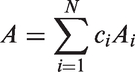
In order to predict the spot color accurately, the absorption spectra of the primary colors and the spot color should be acquired firstly. In terms of a printing product whose transmission media consist of ink and substrate, the reflectance and transmission can be acquired under the parallel beam.
17
Part of the incident light will be reflected on the ink surface. The other part of the incident light will pass through the ink and be reflected on the substrate surface. The propagation of the incident light is shown in Figure 1.
The propagation of the incident light.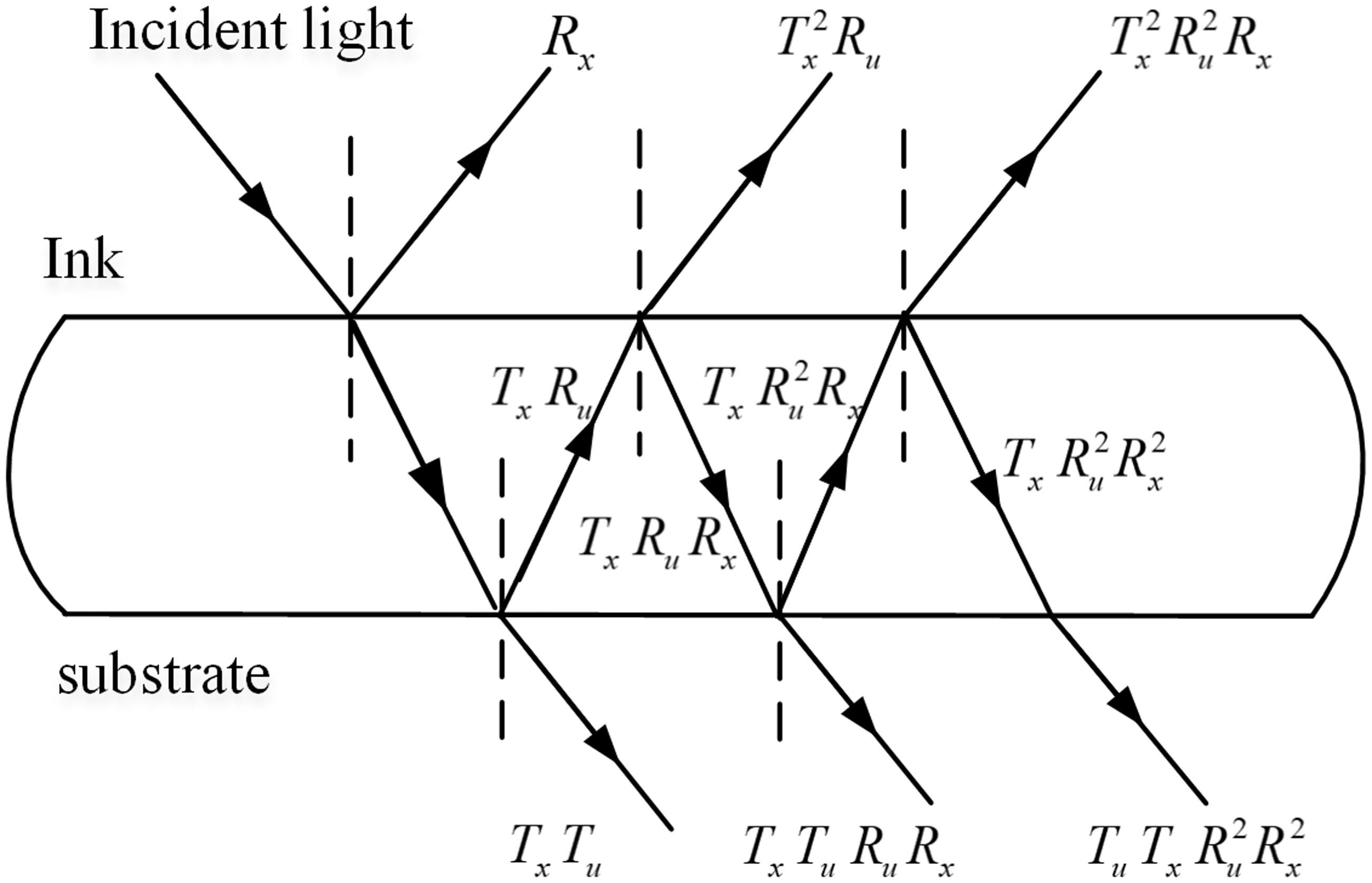
As Figure 1 shows, Rx is the reflectance spectrum of the ink, Tx is the transmittance spectrum of the ink and Ru and Tu denote the reflectance spectrum and transmittance spectrum of the substrate, respectively. Then, the total reflectance spectrum

The total transmittance spectrum

Accordingly, the reflectance spectrum and transmittance spectrum of the ink can be calculated using the following functions
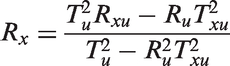
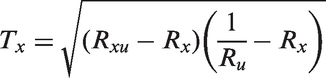
To find Rx and Tx, the ink should be printed on a white substrate and a black substrate, respectively. The reflectance spectrum of the white substrate is defined as
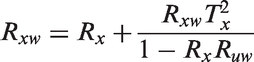

Based on the above functions, the reflectance spectrum Rx is formulated as follows

The transmittance spectrum Tx can be calculated as follows

Although ink is a translucent substance, the reflectance spectrum and transmittance spectrum of the ink can be found by using the reflectance spectrum of the ink on white and black substrates. Finally, the absorption spectrum of the ink can be obtained in accordance with the Lambert–Beer law.
The proposed method
Gravitational search algorithm
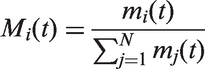
The GSA was first proposed by Esmat Rashedi in 2009, and has attracted great attention from scholars.18–20 Based on the law of universal gravitation and the interaction between particles, the GSA estimates the global optimum of the given search space. 21 In the GSA, agents attract each other by the gravity force, and the positions of the agents represent the candidate solution to the search problem.
Considering a gravitational system with N agents, the position of the ith agent can be defined as

In the light of the law of universal gravitation, the forces between the agent Xi and agent Xj can be calculated as follows
23


The resultant force for agent Xi in the dth dimension is the randomly weighted sum of forces from
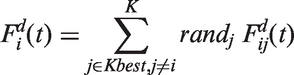
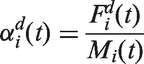
The velocity
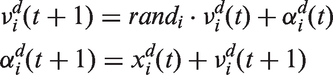
In the GSA, the agents will explore the search space and gain a better fitness value over iterations. 25 The best agent has the least motivation, and the worst agent has fast moving velocity, enabling the GSA to obtain a good search performance.
Enhanced quantum-inspired gravitational search algorithm
In light of quantum theory, the position and velocity of a particle cannot be determined simultaneously.26,27 The uncertainty principle denotes that the agents can move according to the quantum mechanism rather than the classical Newtonian law. Inspired by the quantum theory, a quantum-behaved PSO was proposed, showing significant benefits.28–30 Although the GSA shows superior performance as compared with existed conventional evolutionary algorithms, the agents still cannot be ensured to traverse the whole feasible space. Since the GSA is easy to be trapped in the local optimum, this paper proposes an enhanced quantum-inspired gravitational search algorithm (EQIGSA) to overcome the defect as well as improve the exploration and exploitation capability. According to the Schrödinger equation, the movement of an agent can be formulated as follows


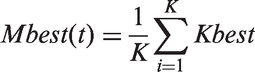
The updating function shows that the change of position Xi mainly depends on the statistical best positions of the
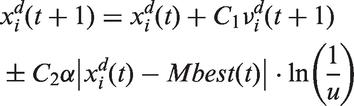
In the present study, the learning factors C1 and C2 are adjusted simultaneously by using a quantum rotation gate.
33
The quantum state

Color prediction method
In this paper, Cyan, Magenta, Yellow, Orange, Blue and Red are defined as the primary colors. Compared with basic four-color printing, six primary colors can effectively extend the color gamut. 34 As the core technique of the color restoration, color prediction directly determines the accuracy of the reproduced color. An effective method to ascertain the constitution of the spot color is one of the important steps for the improvement of the color prediction performance.
This paper proposes a color prediction method containing two steps. In the first step, the least squares method is adopted to analyze the primary colors of the spot color. The absorption spectra of six primary colors are defined as

The Molar concentration has the constraint
In the second step, the absorption spectra of the selected primary colors and the spot color are collected. The proposed EQIGSA is employed to predict the recipe of the spot color by determining the Molar concentration C. The dimension of the search space is equal to the number of selected basic colors. The objective function and the constraint are designed to calculate the fitness value as follows
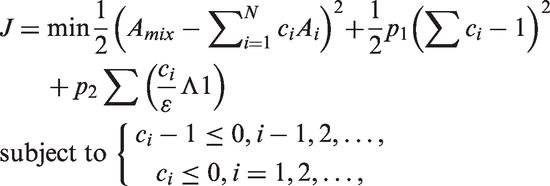
The proposed color prediction method has a fast search speed as compared with the basic GSA, because the proposed color prediction method can effectively reduce the search space by primary color selection. The procedure of the proposed color prediction method is shown in Figure 2.
The procedure of the proposed color prediction method. EQIGSA: enhanced quantum-inspired gravitational search algorithm.
Experiments and results
In the present study, an RK gravure printing machine is employed for proofing experiments on 0.15 millimeter transparent film. A Mettle Toledo Me204 electronic balance is adopted to weigh the inks of primary colors according to the color recipe. A Shimadzu ultraviolet-visible spectrophotometer is used to measure the transmission spectrum and absorption spectrum. The absorption spectra of six primary colors in the wavelength range of 200–900 nanometers are measured. The wavelength range of the calculated absorption spectra is 400–700 nanometers, since the visible spectrophotometer is generally applied to measure the reflection spectrum in the printing field. The actual spectra and calculated absorption spectra are shown in Figure 3.
The absorption spectra of the six primary colors.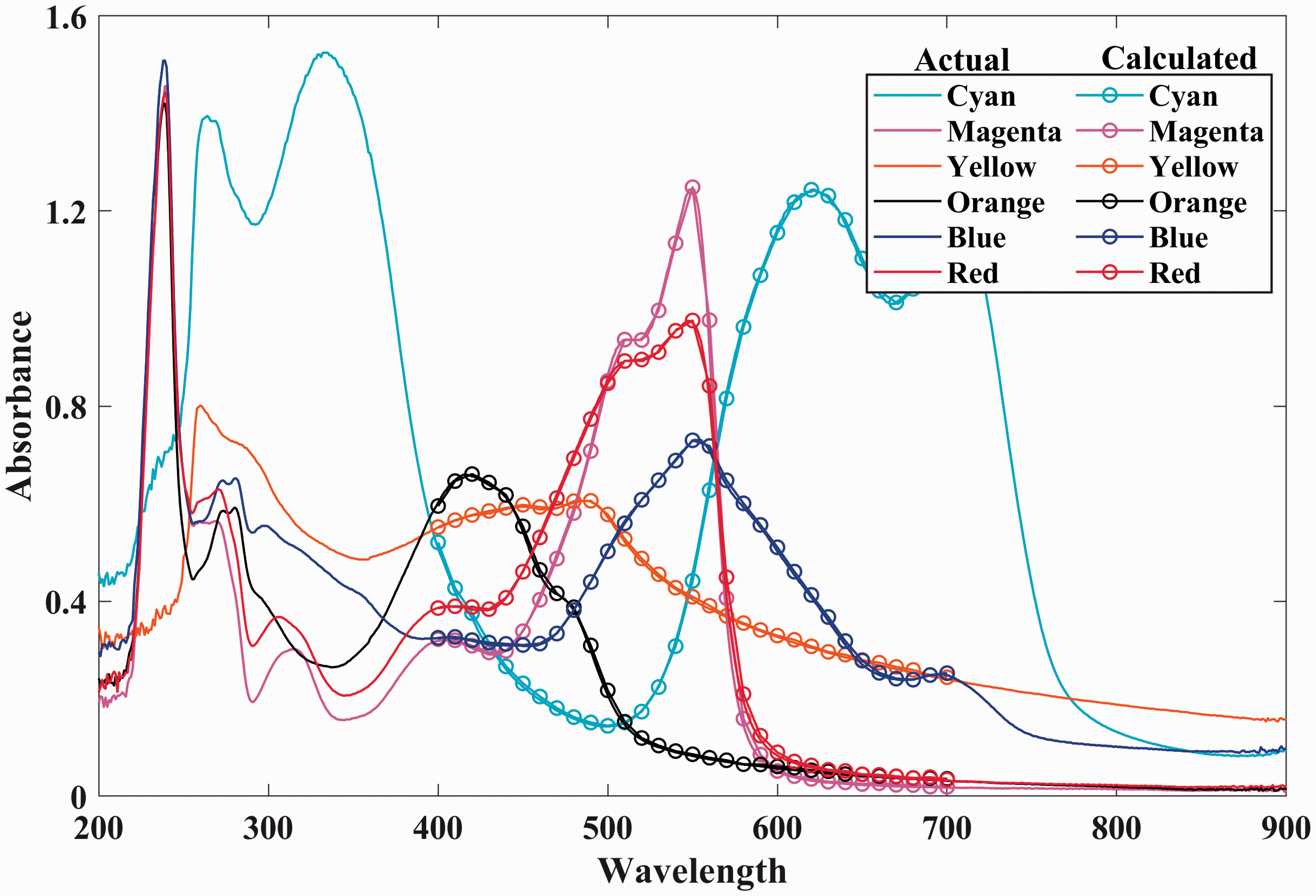
As presented in Figure 3, there is very little difference between the actual absorption spectra and the calculated absorption spectra, demonstrating the effectiveness of the color matching model. Hence, the absorption spectra can be used to predict the spot color.
In this paper, the experiments are conducted on two kinds of color recipes. The spot colors are printed on transparent film, and the absorption spectra of the spot colors are acquired using the Shimadzu ultraviolet-visible spectrophotometer. To validate the performance, the proposed color prediction method is compared with the GSA, basic PSO and QPSO. Four methods are performed in a MATLAB 2018b environment running on a desktop with CPU 3.20 GHz and 8 GB RAM. According to the measured absorption spectra, it can be found that the MSE is less than 0.3. Hence, the penalty factors p1 and p2 of the objective function should be set to less than 0.1. Otherwise, the saturated concentration constraint and regularization term will affect the MSE term severely. To balance the MSE term and obtain an accurate recipe, this paper sets the penalty factors p1 and p2 as 0.003 and 0.001, respectively.
Recipes with two primary colors
The recipes with two primary colors
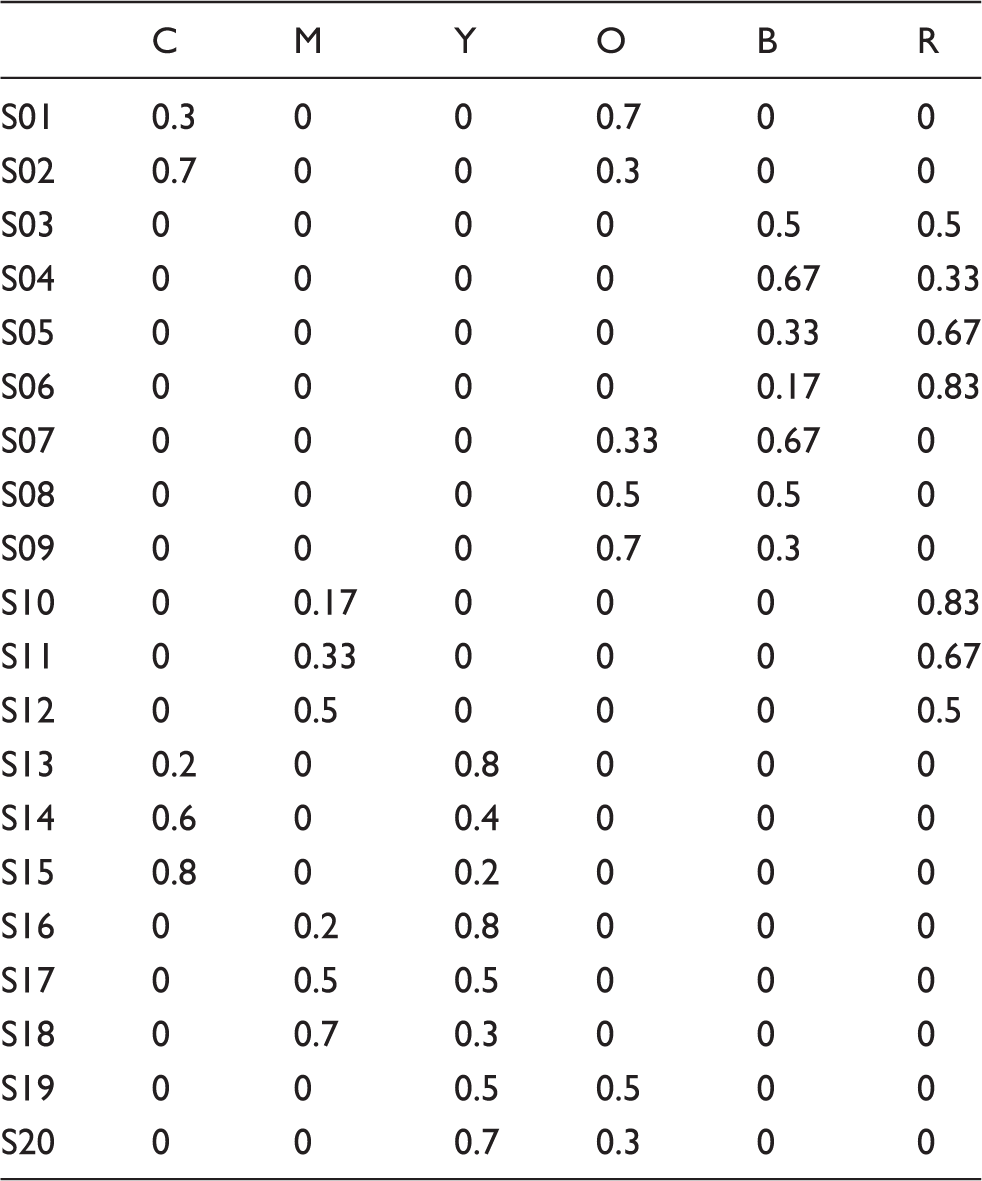
Predicted recipes (X01–X20)

GSA: gravitational search algorithm; PSO: particle swarm optimization; QPSO: quantum particle swarm optimization.
Mean square error (MSE) and standard deviation (Std) of the predicted results (X01–X20)
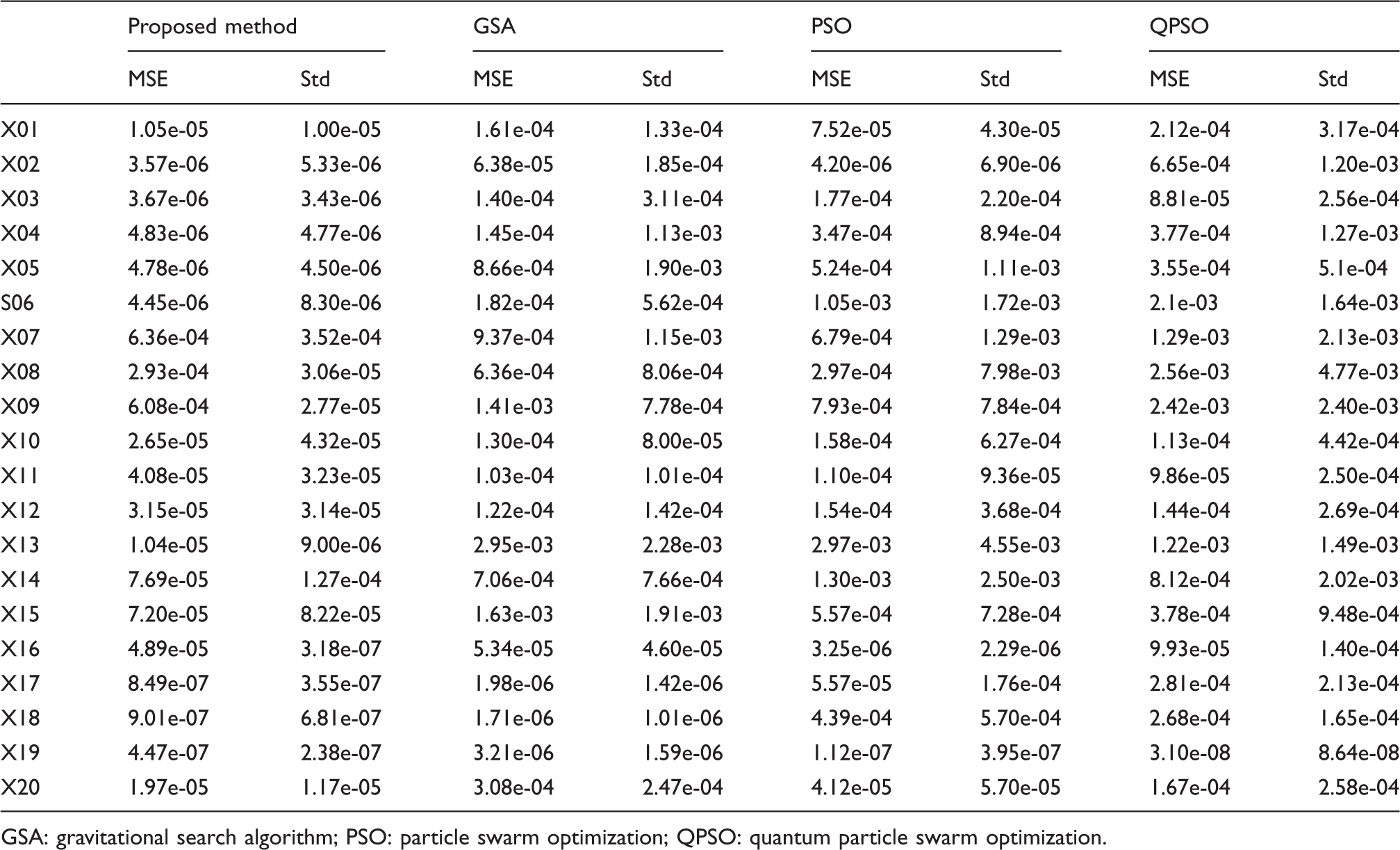
GSA: gravitational search algorithm; PSO: particle swarm optimization; QPSO: quantum particle swarm optimization.
Figure 4 shows the mean absolute error (MAE) of predicted results X01–X20 and The mean absolute errors of the predicted results (X01–X20). GSA: gravitational search algorithm; PSO: particle swarm optimization; QPSO: quantum particle swarm optimization.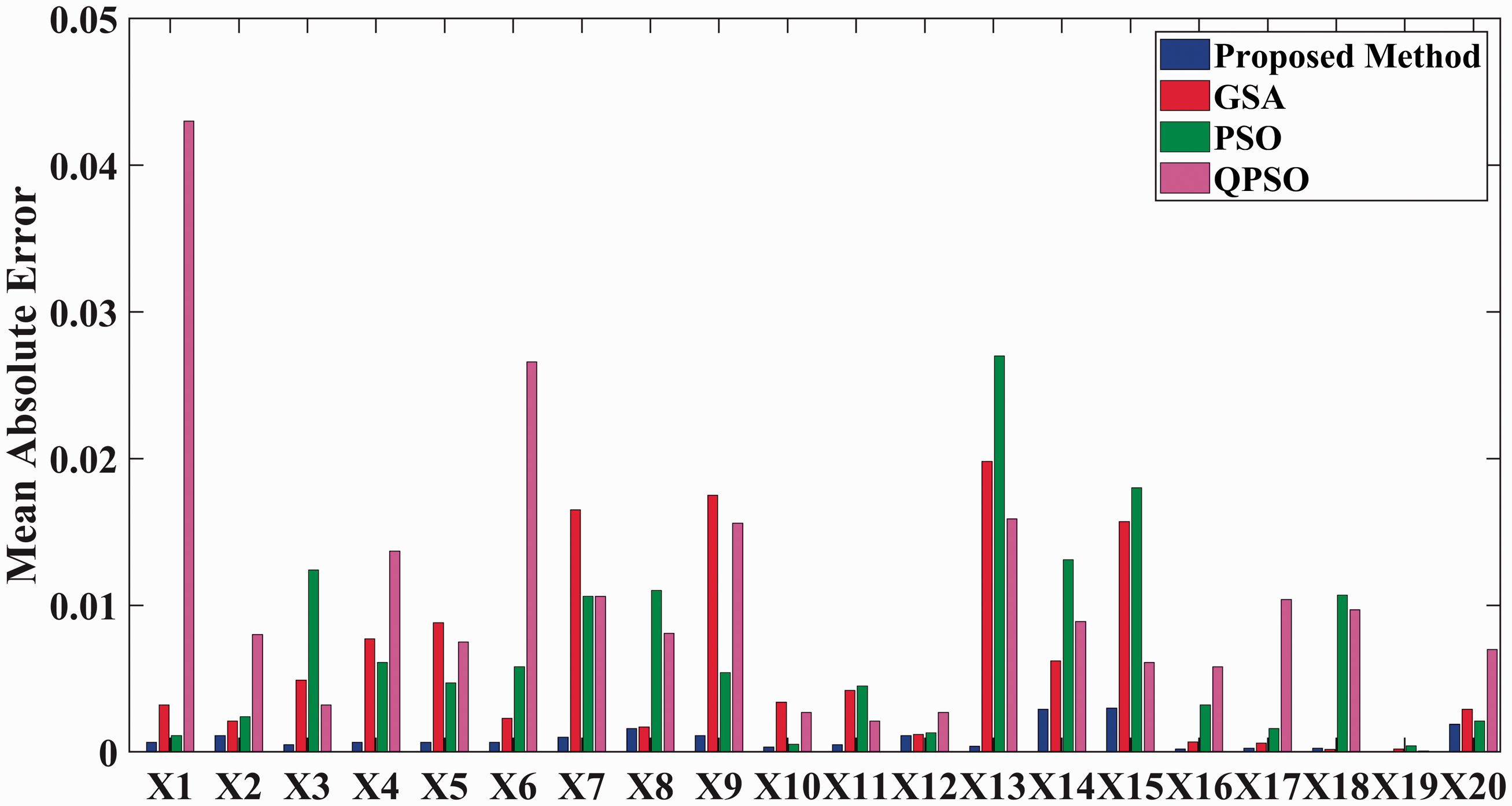
As Table 2 shows, all the predicted recipes of the proposed method only contain two primary colors, which are the same as the defined recipes. In most cases, the predicted recipes of the other three algorithms contain extra primary colors, although the proportion of the extra primary is very small. Obviously, the least squares method, which is adopted for primary color selection, can effectively enhance the color prediction accuracy of the proposed method. According to Table 3 and Figure 4, the basic GSA and PSO have similar performances. In comparison with PSO, the quantum behavior enables QPSO to obtain a smaller MSE and a smaller MAE in many cases. Meanwhile, QPSO shows high standard deviations and unstable performance due to the quantum behavior. The proposed method has smaller MSE, MAE and standard deviations when compared with the other three methods, which indicates that the proposed method has the best prediction capability and stability.
The MSE illustrates the similarity between the absorption spectrum of the predicted color and the absorption spectrum of the spot color. Since cosine similarity can usefully measure the differences of a vector with multiple scales, this paper adopts cosine similarity to measure the differences between the predicted recipes and the defined recipes. The function of cosine similarity 
To make the results clear, Figure 5 shows the differences between the predicted recipes and the defined recipes by using cosine similarity. For simplicity, Figure 6 shows the convergence curves of the four color prediction methods on the spot colors S02, S06, S10 and S14.
The cosine similarity (X01–X20). GSA: gravitational search algorithm; PSO: particle swarm optimization; QPSO: quantum particle swarm optimization.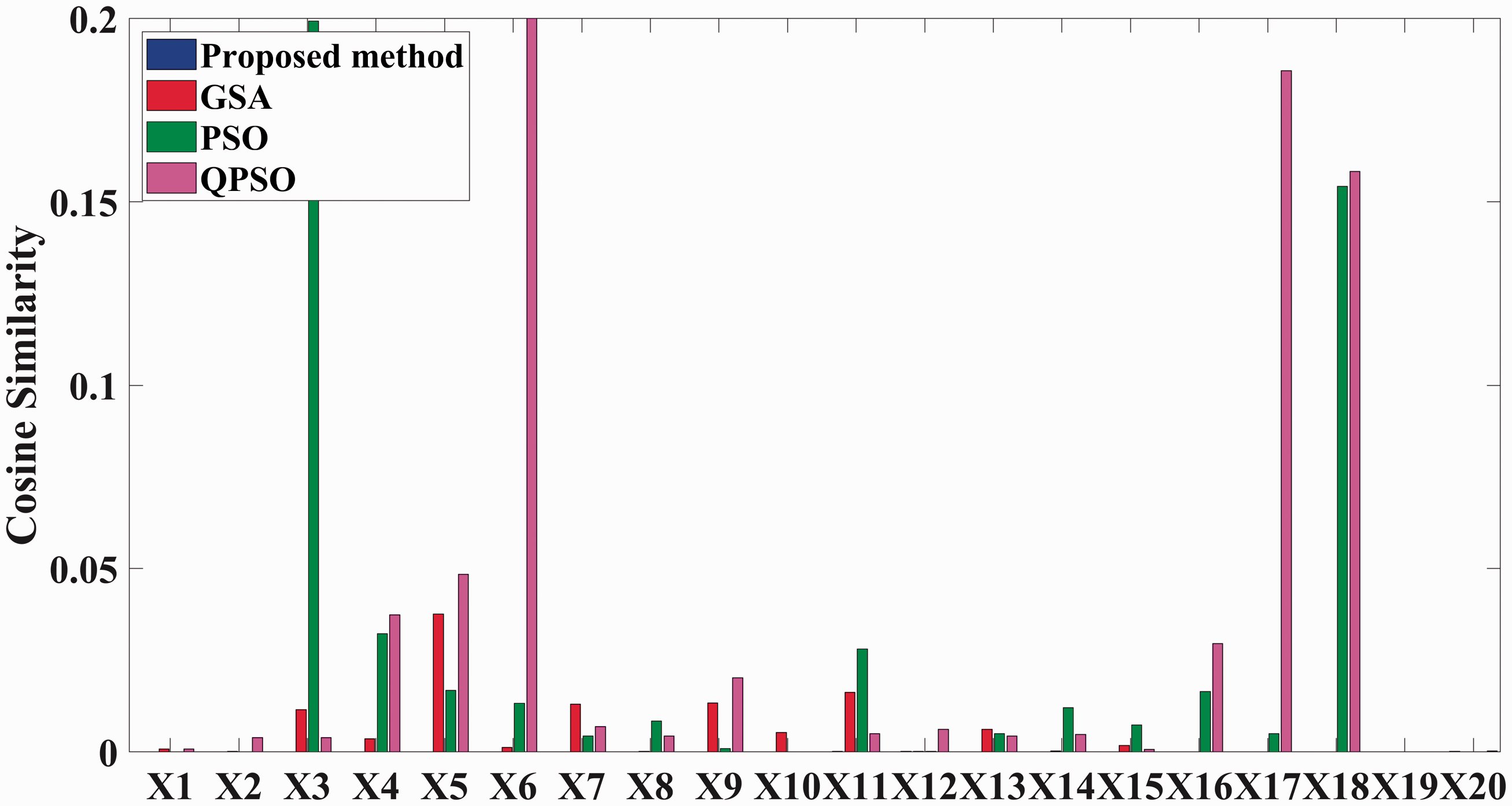
As shown in Figure 5, PSO and QPSO have large differences in terms of X03 and X06, since the predicted recipes contain an extra primary color with large proportion. The predicted recipes of the proposed method are approximated to the defined recipes on all the spot colors. As Figure 6 shows, the proposed method requires fewer iterations to find the optimal solution as compared with the other three methods. Although PSO obtains the optimal solution on X14 after 400 iterations, the proposed method still has a fast convergence rate and achieves the predicted result. In this paper, the proposed method adopts quantum theory to improve the exploration capability and retains the velocity term to improve the exploitation capability. Meanwhile, the exploration and exploitation capability are adjusted to enhance the stability of the proposed method by updating the learning factors. All these factors enable the proposed method to achieve excellent capability in color prediction.
The convergence curves (S02, S06, S10, S14). GSA: gravitational search algorithm; PSO: particle swarm optimization; QPSO: quantum particle swarm optimization.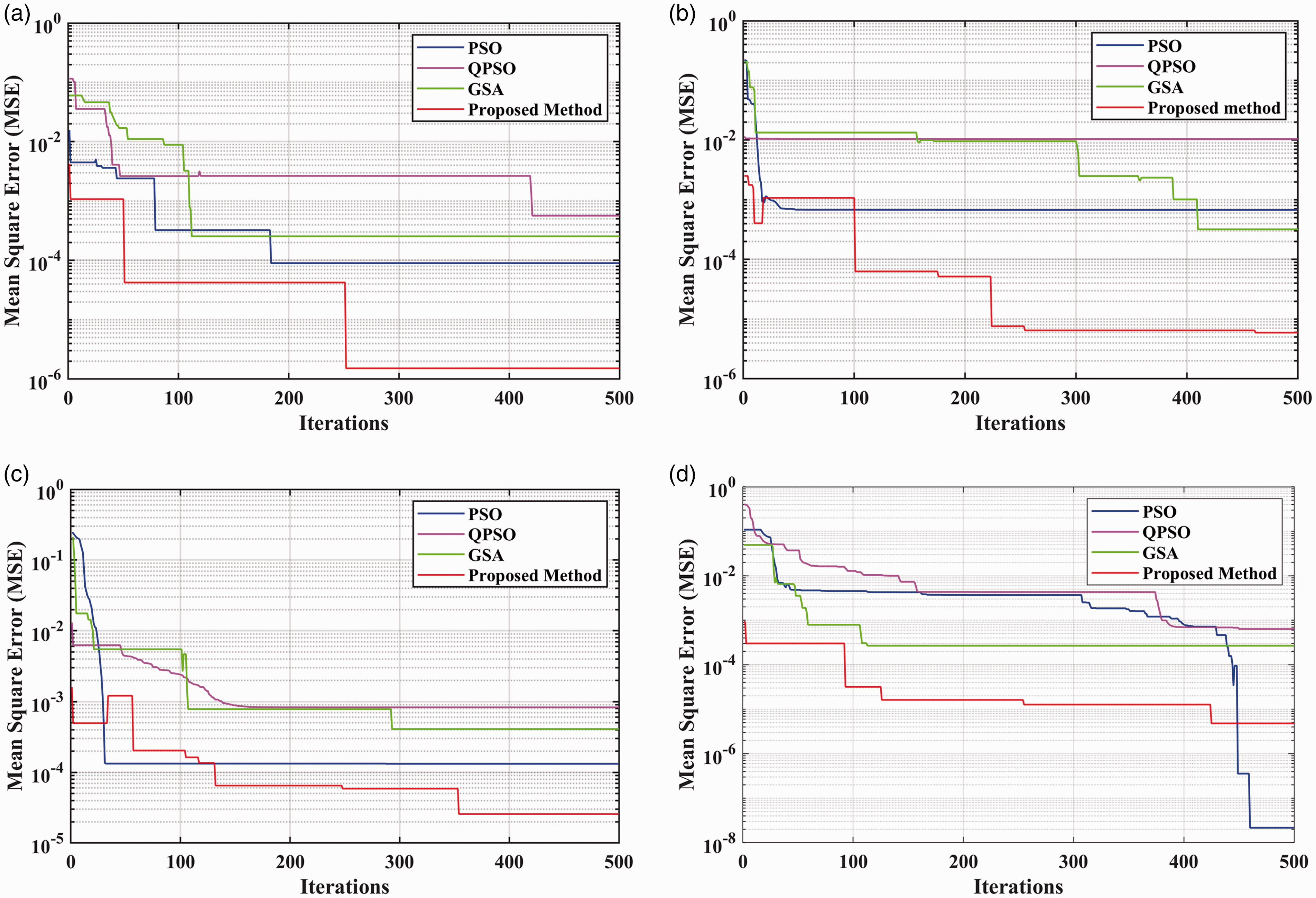
Recipes with three and more primary colors
The recipes with three primary colors
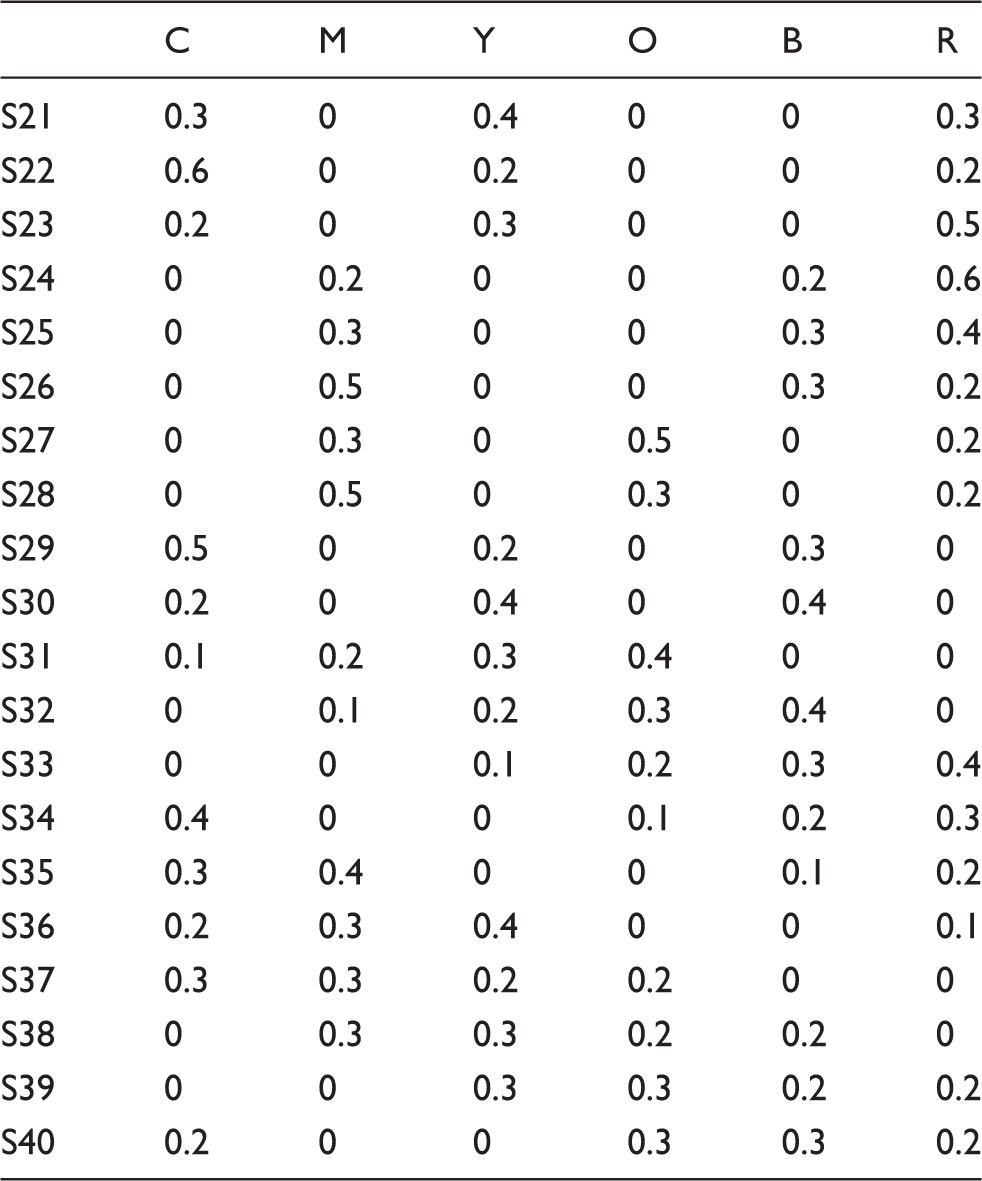
Four algorithms are executed 20 times to find the color prediction results. Table 5 lists the average values of the predicted recipes. The statistical MSE and standard deviations of the predicted results are listed in Table 6. The MAEs of the predicted results of the predicted results X21–X40 are shown in Figure 7.
The mean absolute errors of the predicted results (X21–X40). GSA: gravitational search algorithm; PSO: particle swarm optimization; QPSO: quantum particle swarm optimization. The predicted recipes (X21–X40) GSA: gravitational search algorithm; PSO: particle swarm optimization; QPSO: quantum particle swarm optimization. Mean square error (MSE) and standard deviation (Std) of the color predicted results (X21–X40) GSA: gravitational search algorithm; PSO: particle swarm optimization; QPSO: quantum particle swarm optimization.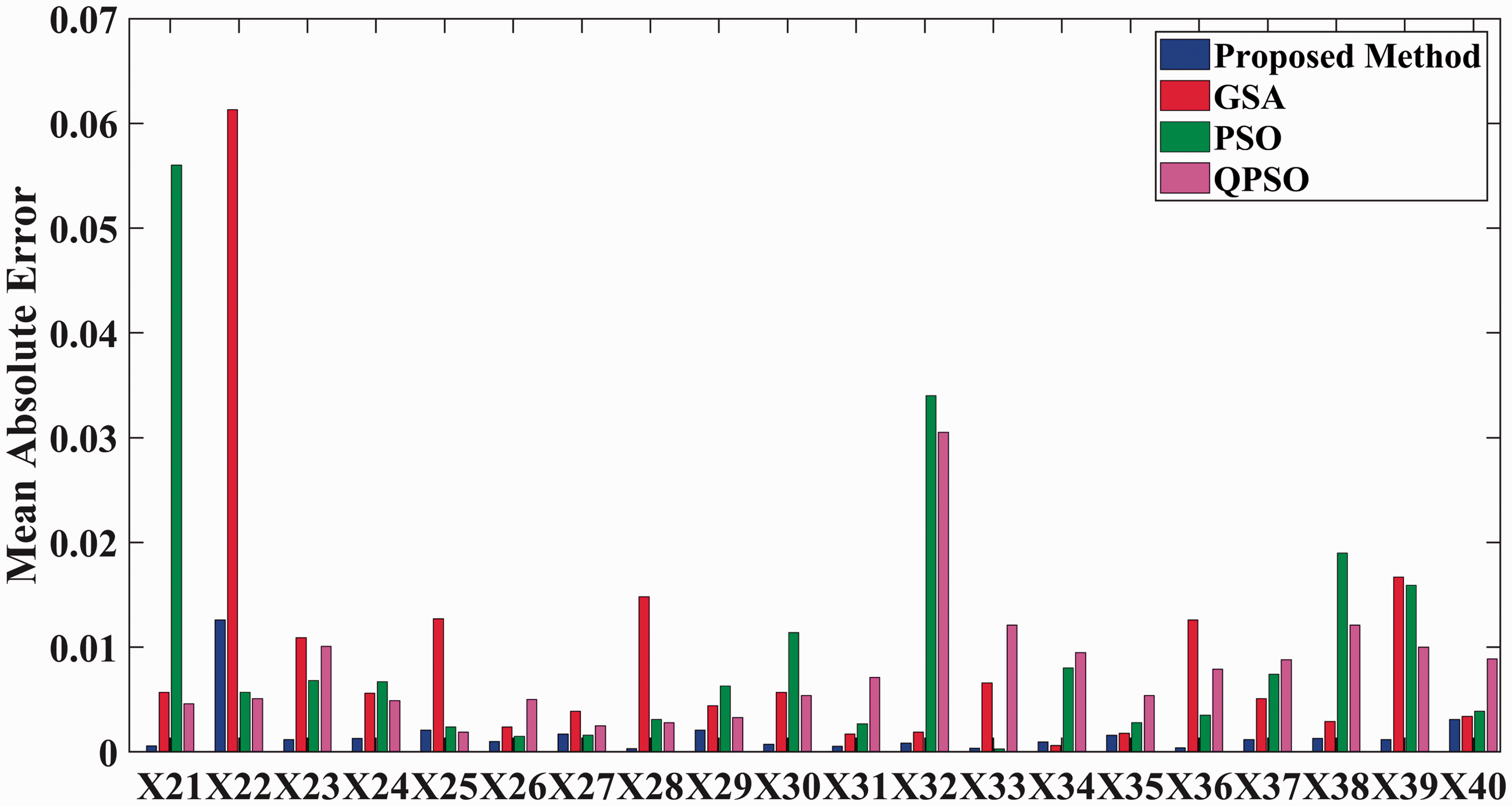
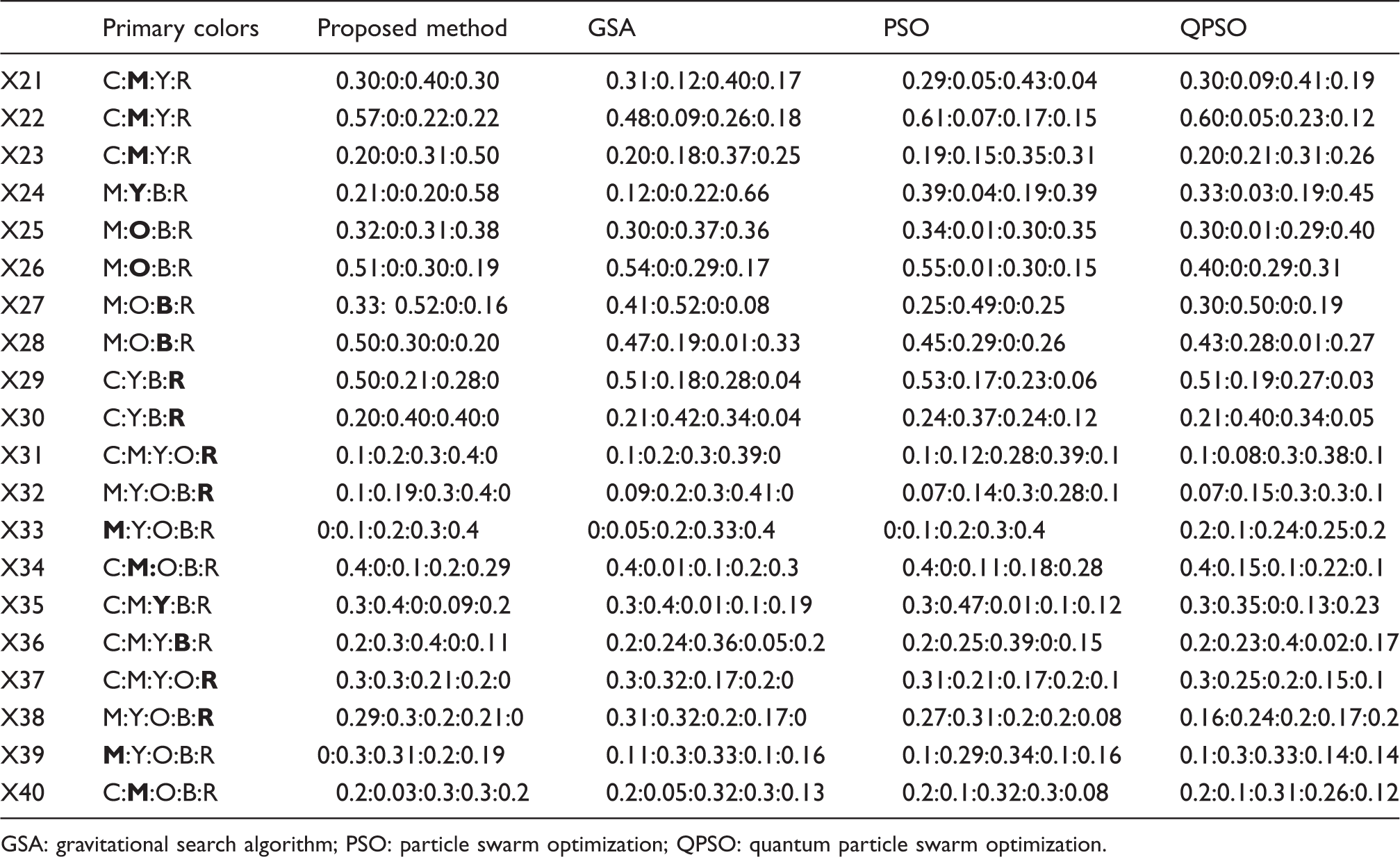

Different from the proposed method, the predicted recipes of the other three methods have the extra primary color in most cases, as shown in Table 5. The primary colors of the predicted recipes are the same as the primary colors of defined recipes, which demonstrates the effectiveness of primary color selection by using the least squares method. Resulting from primary color selection, the proposed method can obtain a more accurate predicted recipe in comparison with the other three methods. As shown in Table 6 and Figure 7, the proposed color prediction method outperforms the other three methods in most cases. Among the four color prediction methods, the proposed method has the smallest MSE and MAE, which indicates that the proposed method can accurately predict spot colors. Different from QPSO, the proposed method has the smallest standard deviations, since the learning factors and velocity are added to enhance the exploration and exploitation capability. The GSA, PSO and QPSO still can gain small MSEs in some cases, but the predicted recipes have an extra primary color with high proportion. In other words, the prepared spot color can be reproduced using different recipes, since the extra primary color can promote its similar primary color. However, using more primary colors to reproduce the spot color still cannot achieve superior results in comparison with using predicted recipes of the proposed method.
To clearly express the predicted recipes, the differences between the predicted recipes and the defined recipes are calculated by using cosine similarity, as shown in Figure 8. For the sake of simplicity, Figure 9 shows the convergence curves of four color prediction methods on the spot colors S22, S24, S30 and S33.
The cosine similarity (X21–X40). GSA: gravitational search algorithm; PSO: particle swarm optimization; QPSO: quantum particle swarm optimization. The convergence curves (S22, S24, S30, S33). GSA: gravitational search algorithm; PSO: particle swarm optimization; QPSO: quantum particle swarm optimization.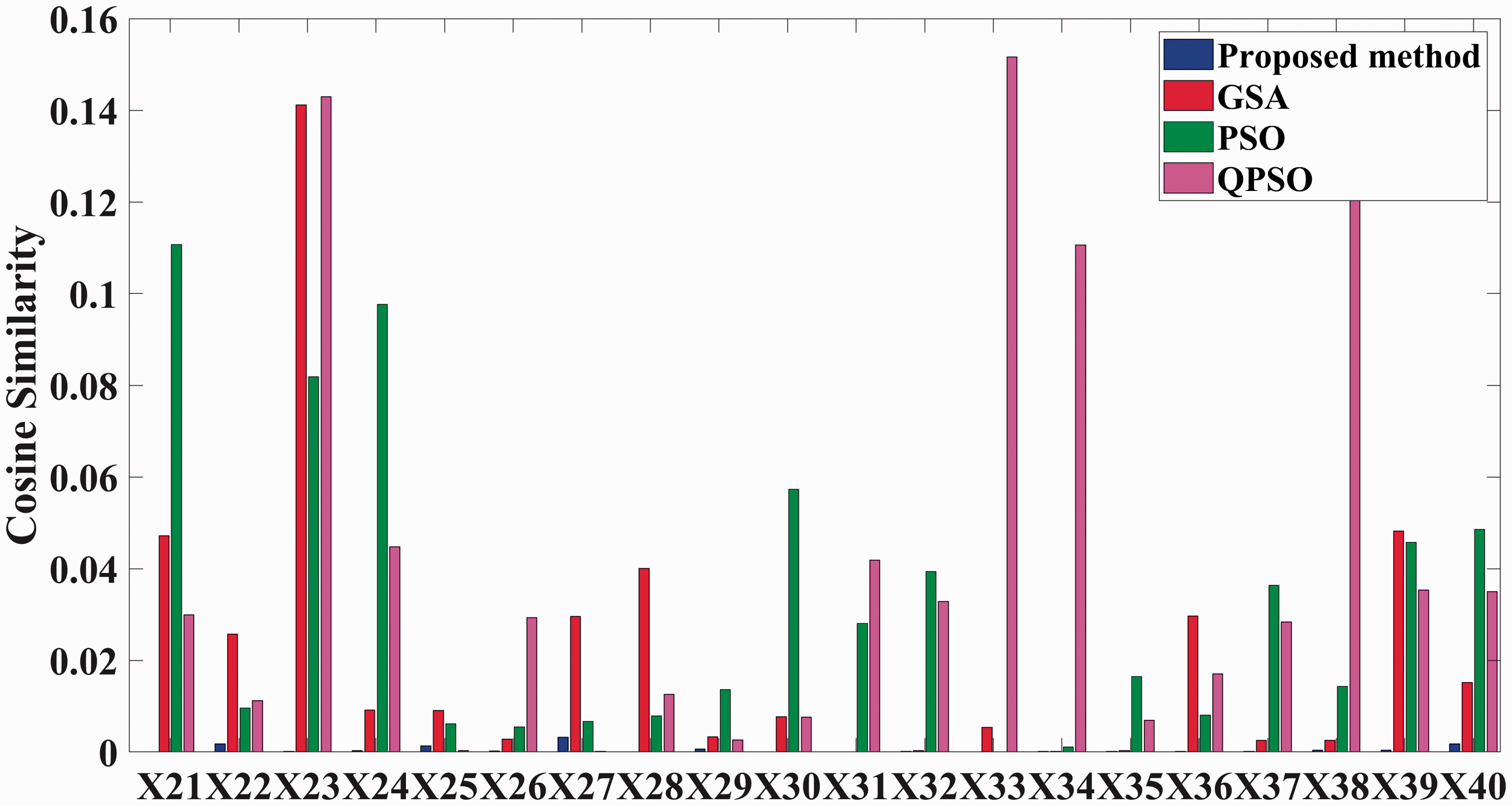
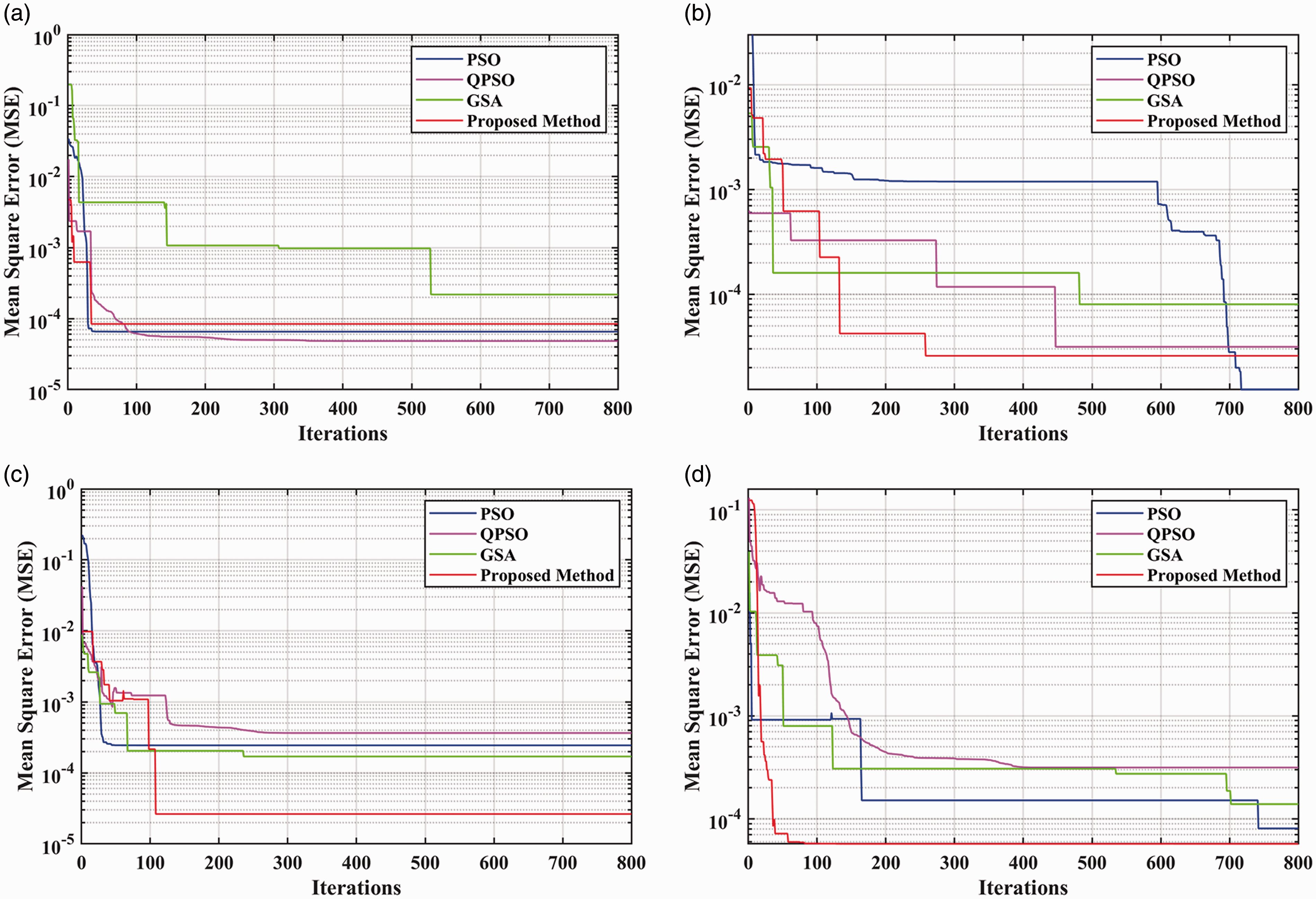
According to Figure 8, the predicted recipes of the proposed method have very few differences from the defined recipes in most cases. The predicted recipes of the GSA, PSO and QPSO show salient differences due to the extra primary color. As Figure 9 shows, the proposed method can search the optimal solution within fewer iterations. PSO requires more iterations to find a better solution on X24 in comparison with the proposed method. The proposed method outperforms the basic GSA in all the experiments, proving the effectiveness and superiority of the proposed method.
All the 40 predicted recipes of the proposed method are used for color proofing. Figure 10 shows the spot colors (S) and the predicted colors (X).
The spot colors (S) and the predicted colors (X).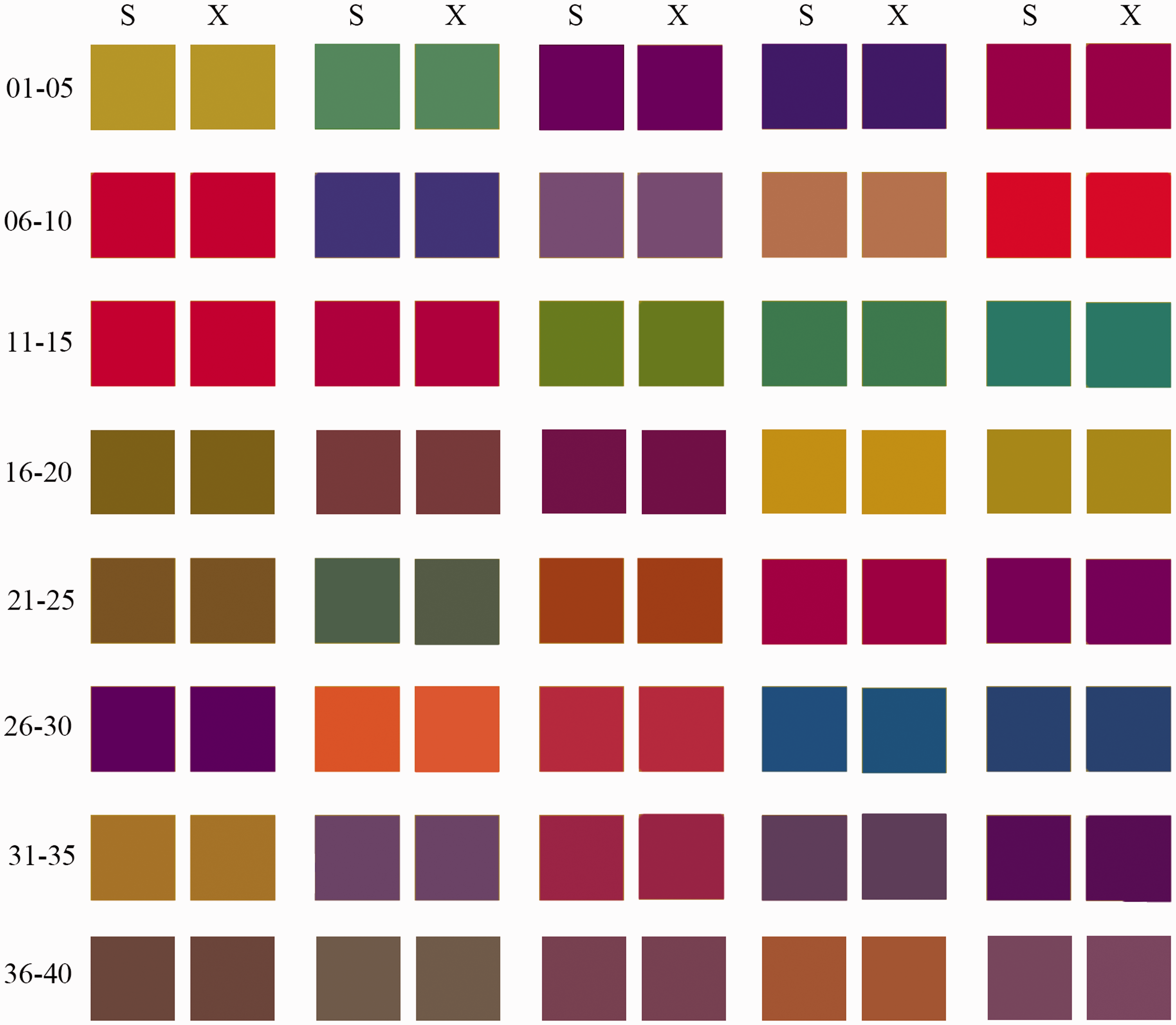
To find the color differences, the spot color should be covered to standard red, blue and green (sRGB) color values.
37
Then the CIE XYZ value can be calculated by using the sRGB values according to the following equation
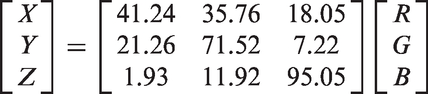
Finally, the CIE Lab color value can be obtained by a nonlinear transformation of the CIE XYZ color value, as shown in the following equation


The color difference 
The color differences
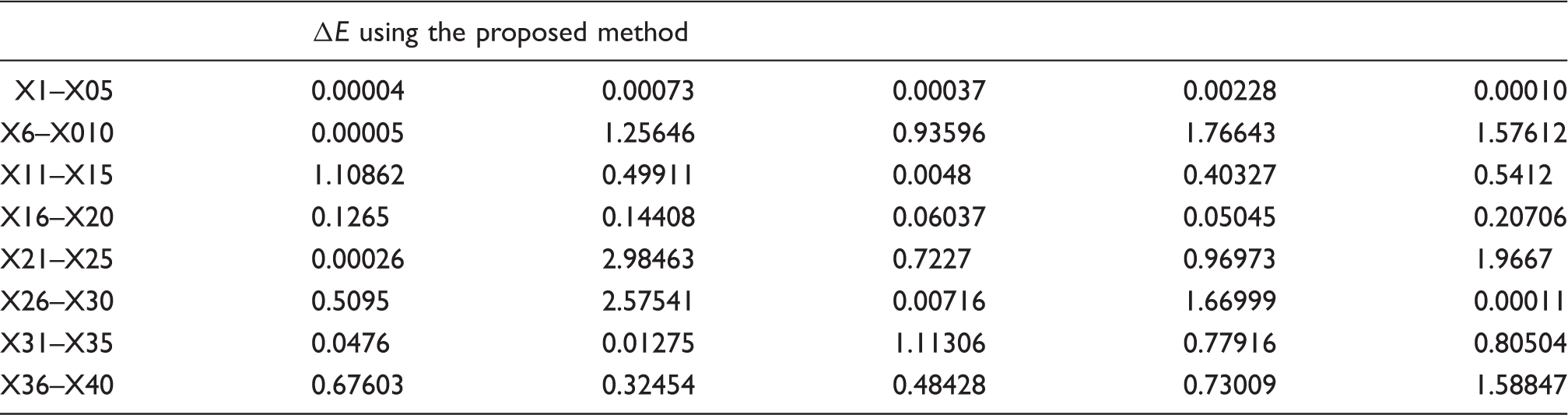
As Table 7 shows, there are no salient color differences between the defined spot colors and the predicted colors for all cases. The color differences between S22 and X22, S27 and X27 are large than 2, which is known from Table 6. As Table 5 shows, the Molar concentration Ci of the predicted recipes X22 and X27 has the relationship
From all the results, it can be found that the proposed method has the best color prediction performance among the four methods. The color differences further confirm that the proposed method can obtain accurate recipes, as presented in Figure 10 and Table 7. According to the results of the recipes with two primary colors and the results of the recipes with three and more primary colors, it can be known that the proposed method can predict the spot color accurately.
Conclusion
To conclude, in this paper, a color prediction method is proposed to find the recipe of the spot color. Firstly, an absorption spectrum-based color matching model is proposed to describe the relationship between the primary colors and the mixed color. Secondly, the least squares method is employed to select the primary colors. Thirdly, quantum theory is adopted to enhance the performance of the basic GSA so as to predict the recipe accurately. To further improve the exploration and exploitation capability, the velocity and learning factors are added to the updating functions.
The effectiveness and superiority of the proposed color prediction method are validated in comparison with the basic GSA, PSO and QPSO on 40 spot colors. The results demonstrate that the predicted recipes will not contain any extra primary color using the proposed method. Meanwhile, the proposed method has a fast convergence speed in comparison with other three methods. Using the proposed method, all the color differences between the predicted colors and the spot colors are less than 3. Meanwhile, 75% of the color differences are less than 1 and 35% of the color differences are less than 0.1. All the results confirm that the proposed color prediction method has a fast convergence speed and can predict the recipes accurately.
Since the present study focuses on PET film, future research should study on-the-spot color printed on other kinds of substrates. Moreover, it would be significant to conduct a research for improving the prediction performance and further reducing the color difference.
