



Abstract
Down jacket fabric is greatly important in determining the quality of a down jacket. In order to enrich the research on fabric handle, subjective and objective evaluations were made for down jacket fabrics that were less studied. The comprehensive handle evaluation system for fabrics and yarns (CHES-FY) can be used to evaluate the tactile handle of the fabric by accurately and efficiently measuring the basic mechanical properties of the fabric. Therefore, the CHES-FY was used to link the objective evaluation with the subjective handle, so as to effectively estimate the total handle value of the down jacket fabric. Fifty-two kinds of down jacket fabrics were objectively tested through measuring 17 extracted parameters, and principal component analysis was adopted to establish the five main handle characteristics of fullness, softness, stiffness, smoothness, looseness and tightness to characterize basic style of the down jacket fabrics. The results showed that the subjective and objective results were in good agreement. These characteristics can be used as indicators to characterize fabric performance, and the principal component expression to characterize fabric handle can better predict the handle characteristics of down jacket fabrics. This also proves that the CHES-FY can quickly and accurately obtain the fabric handle value, and can also evaluate the fabric quality level.
One always evaluates the quality of fabrics by handle. Tactile handle is used to judge the performance of the fabric by human touch, which is a narrow sense of fabric handle. In 1925, Binns1,2 first raised the issue of fabric handle. In 1930, Peirce 3 used the cantilever beam method to measure the bending length and bending stiffness of a specimen to express the fabric handle. The research of fabric handle has gradually become a hot spot. In 1951, Hoffman et al. 4 proposed that the denier, elastic modulus and cross-sectional shape of fiber were three important factors that affect the fabric handle. They researched the effects of various physical and mechanical factors on the fabric handle, and found 13 factors that would affect fabric handle. In 1958, Howorth and Oliver 5 used the mathematical statistics method to find the relationship between the physical characteristic value and the amount of hand feeling. The proposal of the Kawabata evaluation system (KES) in the 1970s and the fabric assurance by simple testing (FAST)-style instrument in the 1990s pushed the objective assessment of fabric handle to a higher level.
Subjective evaluation of fabrics is the traditional tactile handle test. But it cannot rule out subjective arbitrariness. Subjective evaluation requires highly skilled testers. The results vary from person to person and from time to time. It is very limited, lacking quantitative description and has poor data comparability. The fabric handle evaluation system objectively measures the physical and mechanical quantities related to the fabric through the instrument, then relates it to the handle evaluation. It can calculate the characteristics and grades of fabric styles based on measuring the physical and mechanical quantities of fabrics. The Kawabata evaluation system for fabrics (KES-F)6,7 is a set of fabric handle testers developed in the 1970s to test the basic mechanical behavior of fabric under low load. The FAST system 8 is a set of test systems developed in the early 1990s to test the basic mechanical behavior and the dimensional stability under low load. The above two test systems use multiple instruments to carry out multiple measurements to comprehensively evaluate the fabric handle. However, they are expensive as they require more instruments and space. Therefore, it is necessary to establish a measurement method that uses a single instrument to evaluate the texture of the fabric.
The PhabrOmeter system for fabric feel evaluation is an intelligent-style instrument developed on the basis of the nozzle extraction style instrument.9,10 The system features three fabric touch characteristics, namely stiffness, smoothness and softness, 11 and the total touch value is obtained based on the Karhunen–Loeve transformation and weighted Euclidean distance. 12 The handle indexes and total handle value just give the relative feel value compared with the standard sample. The Fabric Touch Tester (FTT) 13 and Wool HandleMeter 14 are also simple and effective testers to predict the feel of the fabric. The FTT is developed by SDL Atlas, using different measuring components to test various mechanical properties of the fabric. It is essentially an instrument system that measures multiple indicators on a single machine. Wool HandleMeter uses a ring test to obtain the pushing force and the corresponding force–displacement curve. 15 It focuses on the measurement of wool fabrics, and combines objective evaluation with subjective evaluation. However, the Wool HandleMeter has not been applied to the characterization of woven fabrics, and no research has been published in this regard. These methods are mainly limited to laboratory research.
The comprehensive handle evaluation system for fabrics and yarns (CHES-FY) is a current fabric handle instrument, which is derived from the comprehensive evaluation system of fabric yarn feel.16–18 The CHES-FY is based on the principle of three-point beam bending,19–21 and the performance of compression, bending, friction, tension and shear of the fabric can be obtained by a single measurement through the force–displacement curve.22–28 It realizes the in situ combination to characterize the stiffness of the fabric and other styles.29,30 The CHES-FY, based on the three-point bending method, simulates the thumb, index finger and middle finger of a human hand, and performs a series of tests on the sample, which is closer to the subjective tactile handle.
Down jackets are needed in the cold winter and have increasingly become a necessity in winter. Down jackets are composed of fabrics and internal fillings. Down jacket fabric is an important part of down jackets, but there are few relevant studies up to now. Therefore, this paper uses the CHES-FY to test the down jacket fabrics, analyzes the experimental force–displacement curve and selects the effective evaluation index of fabric handle to express handle characteristics. Through subjective and objective evaluation, the fabric handle of the down jacket fabrics is accurately scored, and the feasibility of evaluating fabric handle is verified.
Experimental samples
Fifty-two kinds of typical down jacket fabrics from textile mills and markets were purchased, which were divided into two parts. Ten down jacket fabrics were randomly selected for verifying the theoretical model, and the remaining 42 fabrics were used to build the model. The fabrics were mainly polyester and polyester blended fabrics, and they were all woven fabrics. A YG141 thickness gauge was used to measure the thickness of the fabric, and the average value of the five measurements of different areas of the same sample was used as the final result of the thickness. The mass of fabric per unit area was measured by five samples of 100 cm 2 using an electronic balance with an accuracy of ±0.1 mg. The thicknesses of the fabrics were between 0.03 and 0.48 mm (the standard deviation is 0.09 mm), and the masses per unit area were between 28 and 220 g/m2 (the standard deviation is 51 g/m2). The cut samples were balanced for 24 hours under standard conditions of (20 ± 2)℃ and (65 ± 3)% relative humidity (RH), and all tests were conducted under the above standard conditions.
Objective measurement of the comprehensive handle evaluation system for fabrics and yarns
Fabric samples were cut with three directions, namely warp (J), weft (W) and 45° directions to the warp direction. The cutting size was 500 mm × 55 mm. The side yarns on both sides were removed to set the size at 500 mm × 50 mm, as shown in Figure 1.
Fabric sample size.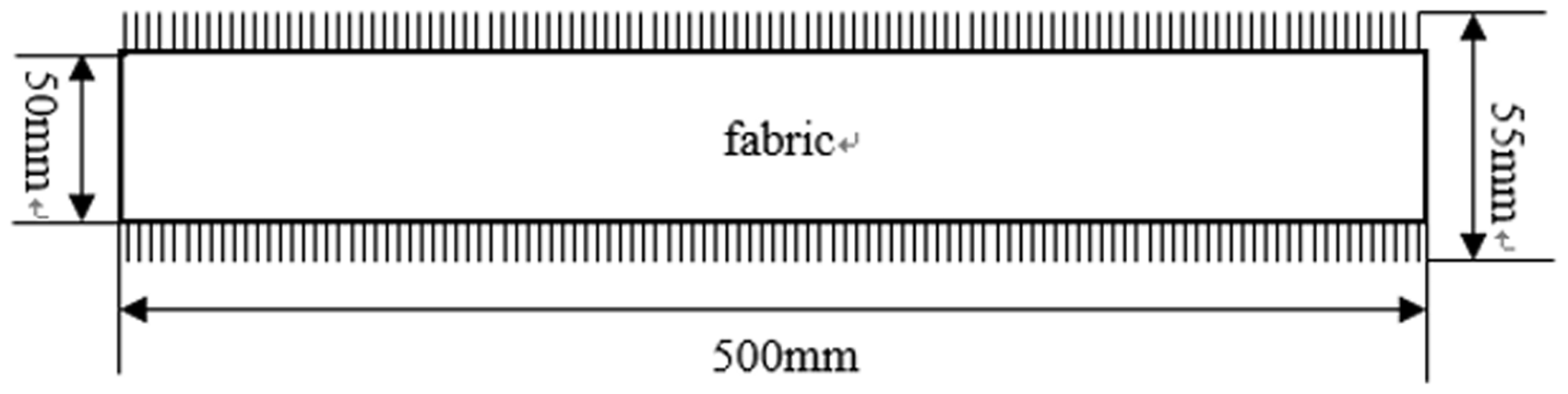
The test procedure of the CHES-FY can be divided into five steps, as shown in Figure 2. The first step is the thickness measurement, that is, step I. Before placing the sample in the test area, the left-hand pressure roller in Figure 2 will drop and rise once. Then the left-hand pressure roller will touch the fabric sample. The thickness is obtained by the drop difference between the two contacts. In step II, called compression, the pressure rollers slowly move down to the set value of compression force. Then the pressure rollers move up, and we enter step III, called bending. The pressure plate slowly moves down to the set values, which causes the fabric sample to bend and deform. Step IV is friction. The pressure rollers move down slowly with a certain pressure value at both ends of the sample when the pressure plate keeps the position where it stayed in step III. If the force of the pressure rollers reaches the set value, the pressure plate will continue to move downward to the set displacement. When the force of the pressure rollers on both sides increases to prevent the fabric from sliding, then the pressure plate continues to move until the stretching displacement or force reaches the limit to complete step V, called stretching. All these steps vividly imitate the subjective evaluation process when people hold the fabric between their fingers to press, bend, rub and stretch.
Device and schematic diagram of the comprehensive handle evaluation system for fabrics and yarns (CHES-FY): (a) CHES-FY; (b) schematic diagram.
The system parameters are set as follows. The initial pressure value for thickness measurement is 10 cN, the maximum compression force is 200 cN and the maximum bending displacement of the pressure plate is 200 mm. The force of the pressure rollers during step IV is 50 cN, and the maximum friction displacement is 300 mm. In step V, the force of the left-hand pressure roller is 900 cN, the maximum force of the right-hand pressing roll is 400 cN and the maximum stretching displacement is 250 mm.
Typical curve and index of the CHES-FY
The typical force–displacement curve obtained by taking sample Y11 as an example by the CHES-FY is shown in Figure 3. According to the shape characteristics of the curve, it is divided into the following stages, thickness and compression, bending, friction and stretch. Through the analysis of sample deformation and mechanical characteristics, objective mechanical and physical performance indexes can be extracted from the force–displacement curve, as shown in Table 1.
Force–displacement curve (sample Y11). Objective mechanical and physical properties of fabric by the comprehensive handle evaluation system for fabrics and yarns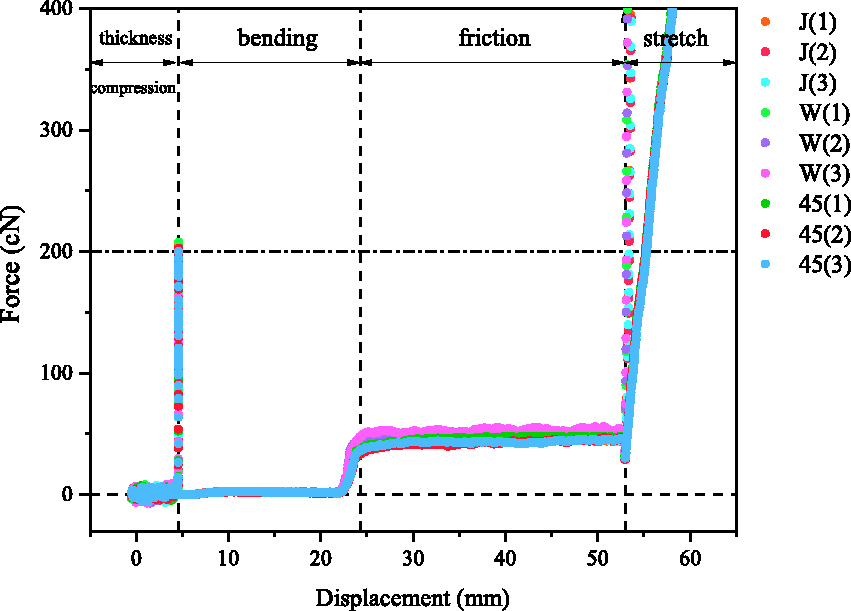

Subjective evaluation
Subjective measurement items and style description
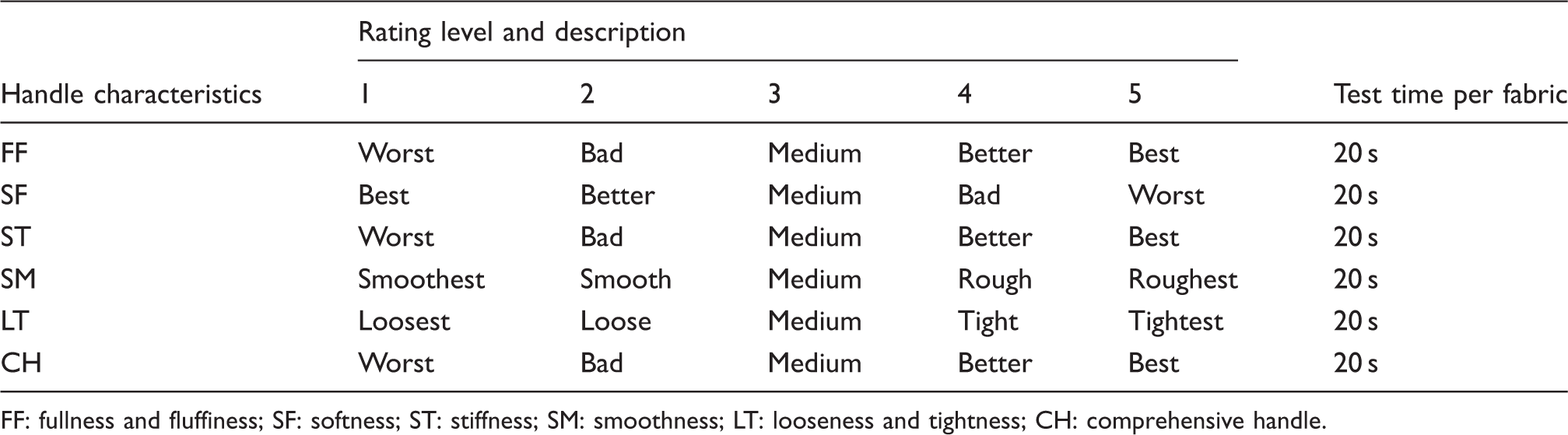
FF: fullness and fluffiness; SF: softness; ST: stiffness; SM: smoothness; LT: looseness and tightness; CH: comprehensive handle.
Before the test, the subjects should wash their hands with the same soap and dry them with the same towel, and then stay in the standard condition room for 30 minutes. The subjects were asked to perform six finger contact methods on the sample, namely initial contact, press, fold, touch, clamp and pull, squeeze. According to the description of the touch methods, the samples were distributed to the subjects to perform six judgment processes, as follows. (1) Initial contact: lightly touch the sample with the fingertip. (2) Press: drag the sample with the middle finger or the index finger and press the sample with the thumb down. (3) Fold: press the sample in half, observing the degree of bending. (4) Touch: hold the fabric with one hand, touch with the other hand. (5) Clamp and pull: hold and pull both sides of the sample with both hands. (6) Squeeze: squeeze the sample with your thumb, fingers and palm to form a fist, as shown in Figure 4.
The touch gestures in the subjective evaluation process: (a) initial contact; (b) press; (c) fold; (d) touch; (e) clamping; (f) squeezing.
Results and discussion
Subjective evaluation analysis


Kendall consistency coefficient (W) and χ 2 test results

FF: fullness and fluffiness; SF: softness; ST: stiffness; SM: smoothness; LT: looseness and tightness; CH: comprehensive handle.
Statistical results of the subjective evaluation by the five judges
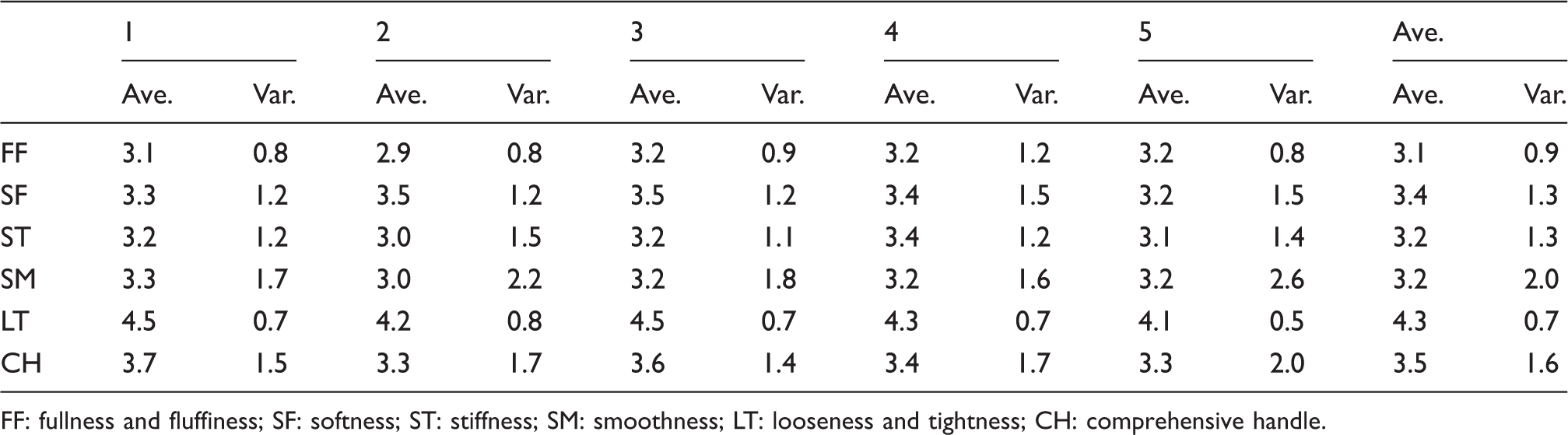
FF: fullness and fluffiness; SF: softness; ST: stiffness; SM: smoothness; LT: looseness and tightness; CH: comprehensive handle.
Correlation coefficients of the six fabric touch characteristics

Correlation is significant at the 0.01 level (two-tailed). *Correlation is significant at the 0.05 level (two-tailed).
FF: fullness and fluffiness; SF: softness; ST: stiffness; SM: smoothness; LT: looseness and tightness; CH: comprehensive handle.
Objective test analysis
Using the CHES-FY to test the warp, weft and 45° directions of 52 down jacket fabric samples, the resulting force–displacement curve is shown in Figure 5. It can be seen from Figure 5 that the force–displacement curve had the same trend as the typical curve. It can be seen from the curves of the 52 kinds of down jacket fabrics that different fabric samples had different sizes at each stage. The curves of all tested down jacket fabrics in the stages of thickness, compression and bending had very little difference in the warp, weft and 45° directions. It showed that these properties of the samples had little to do with direction. The difference between the fabrics in the friction stage was obvious, but the results in the three directions were relatively consistent, indicating that this performance can be used to distinguish different down jacket fabrics. The difference in the three directions of the stretch phase of the down jacket fabric was the most obvious, especially in the 45° direction, where the stretch slope changed greatly. Not only was there a difference in the 45° direction between different down jacket fabrics during the stretching stage, but also the slope of the same down jacket fabric in the 45° direction was smaller than that in the warp and weft directions. In addition, the slope of the curve and the area of the four stages of compression, bending, friction and stretching were very sensitive to changes in fabric properties, which can reflect the corresponding main feel characteristics of the fabric.
Force–displacement curves of the 52 kinds of fabrics. (a) Warp; (b) Weft; (c) 45° direction.
Kaiser–Meyer–Olkin (KMO) and Bartlett inspection
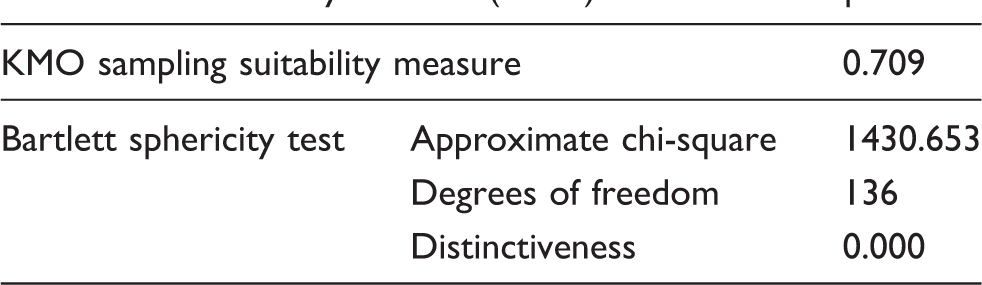
Analysis of total variance
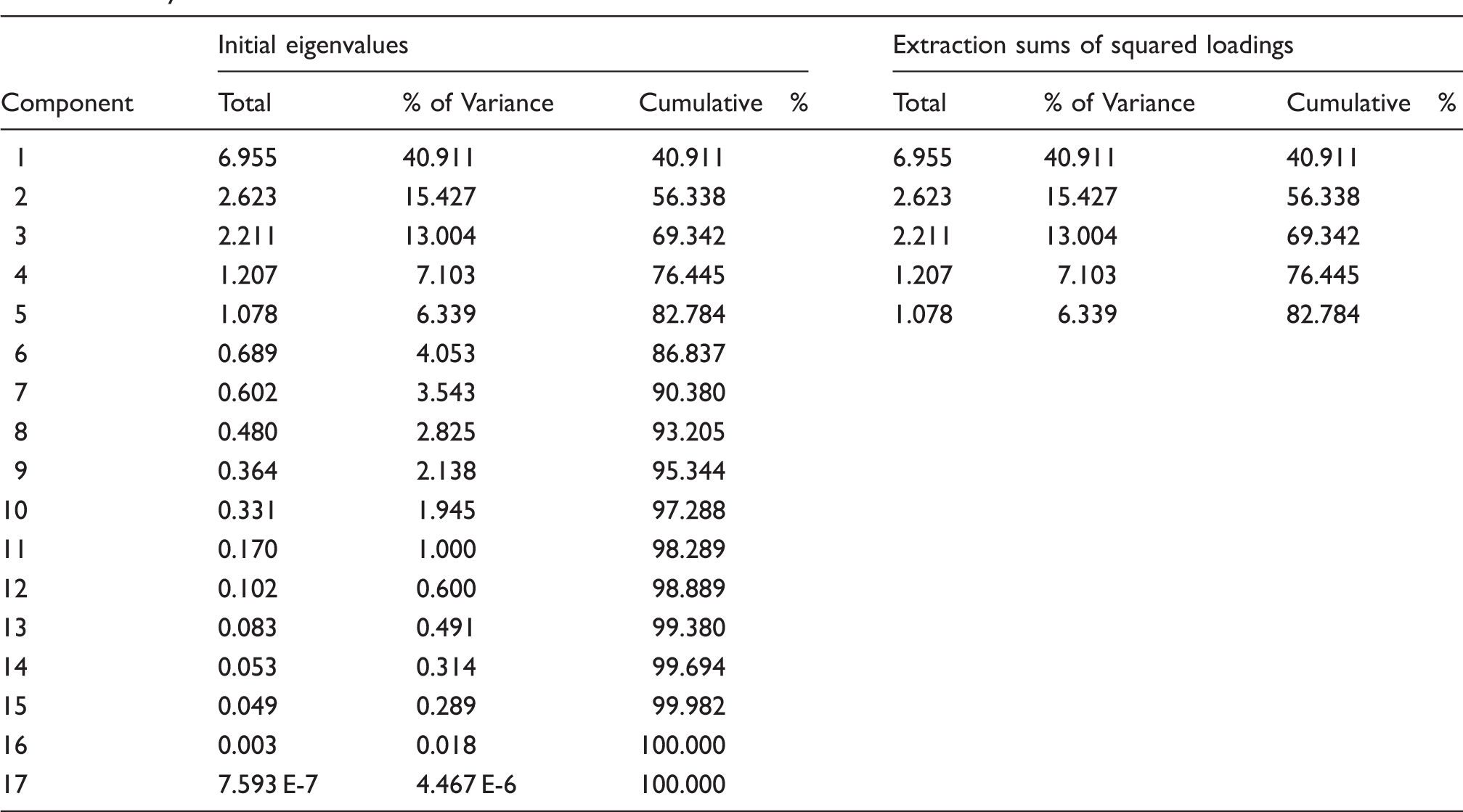
Extraction method: principal component analysis
Composition matrix after rotation
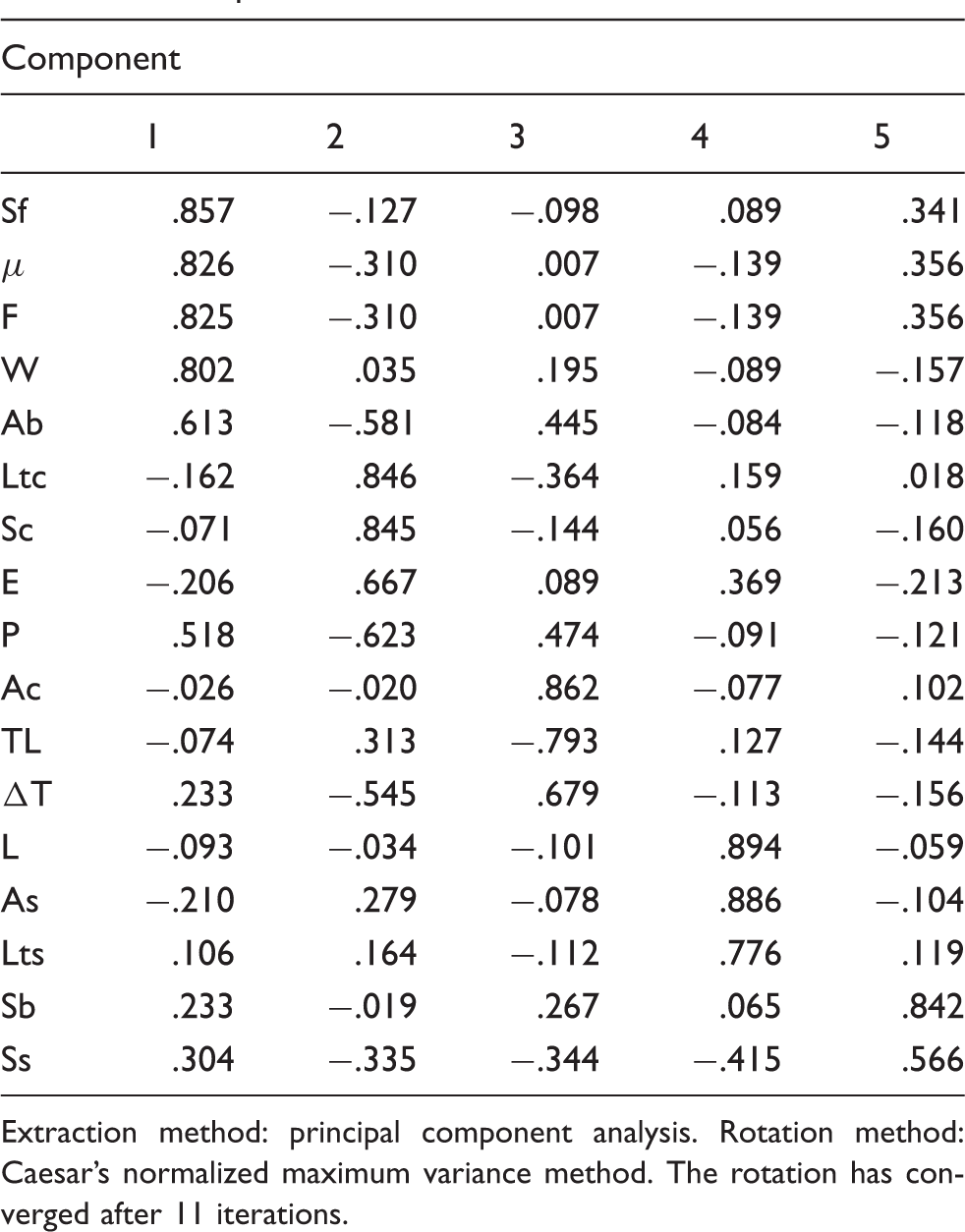
Extraction method: principal component analysis. Rotation method: Caesar's normalized maximum variance method. The rotation has converged after 11 iterations.
Characterization of fabric handle
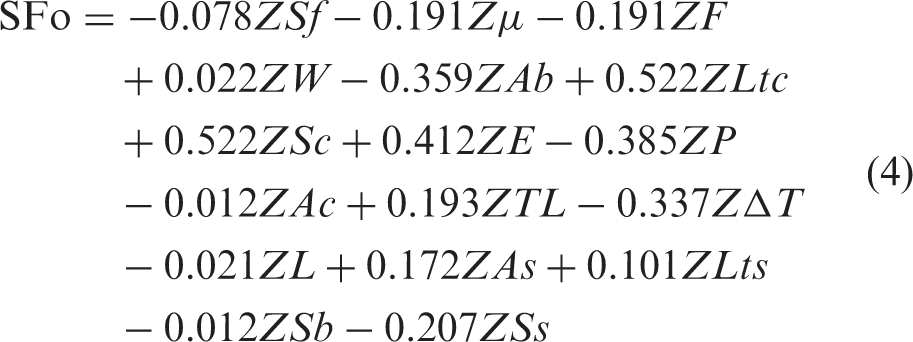
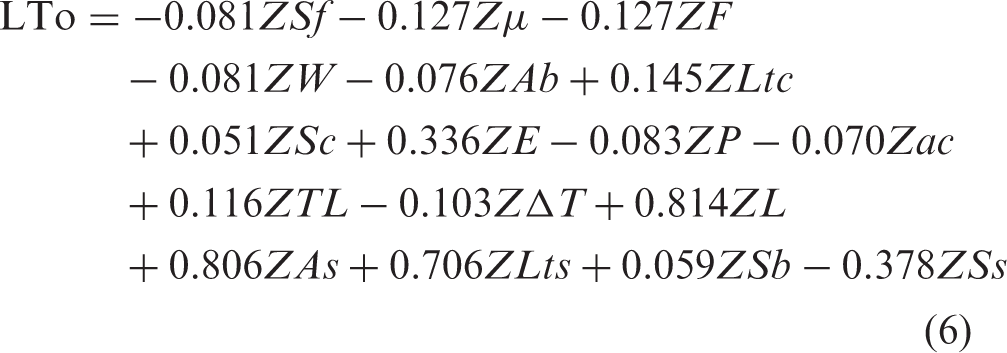
The five principal components obtained by objective evaluation were comprehensive variables obtained by dimensionality reduction from the 17 indicators of the original data, and correspond to the five handle characteristics in the subjective evaluation. By standardization of the 17 indicators, the relationships between each group of main factors and their related indicators by studying the relevant component matrix were found. Then, the data was divided in the Factor Load Matrix by the square root of the eigenvalues corresponding to the principal components to get the coefficients corresponding to each of the five principal components. Finally, the obtained coefficient with the normalized data (the normalized data is recorded as ZSf, Zμ, ZF, ZW…) was multiplied to get the principal component expression, namely



Handle characteristics and characteristic parameters
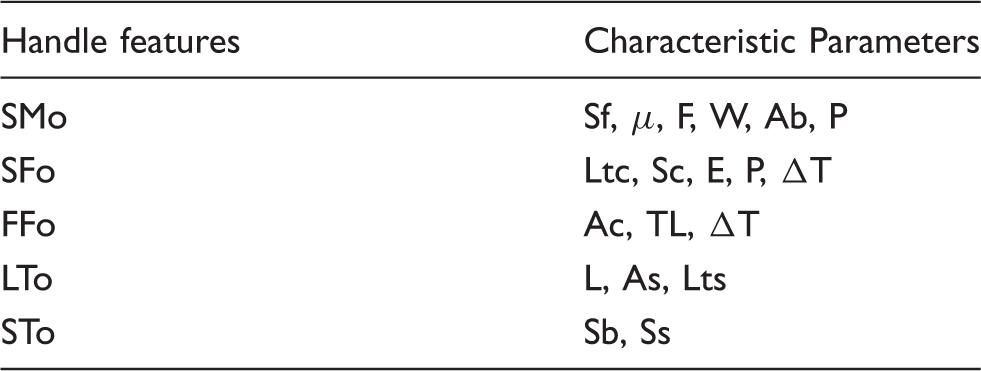
By testing a sample, the values of the five components can be acquired. By comparing the values with the subjective evaluation values, information for the sample was extracted. The 17 index values obtained by 42 down jacket fabrics through the CHES-FY test were respectively brought into the above five principal component expressions, and five handle characteristic values were obtained. Correlation analysis was made between this and the five subjective evaluation results in the subjective evaluation, except the comprehensive handle. The five corresponding handle characteristics in the subjective and objective evaluations were all significantly correlated at the 0.01 level, and the correlation coefficients were all above 0.800. We believed that the subjective and objective evaluations of these 42 down jacket fabrics had a good consistency.
In order to further verify the reliability and validity of the five principal component relationship models of fabrics, 10 down jacket fabrics were randomly selected among the 52 down jacket fabrics for the CHES-FY, 17 indicators were obtained and standardized indicators were substituted into the above principal component expression, then compared with the subjective evaluation test results. The prediction results of SM0, SF0, FF0, LT0 and ST0 and subjective evaluation are compared in Figure 6. It can be seen that the prediction result had a high linear correlation with the subjective scoring result. The Pearson coefficients of the five hand feel features were 0.842–0.944, and the adjusted coefficients (R2) ranged from 0.709 to 0.890.
Comparisons between subjective handle evaluation and model prediction: (a) smoothness; (b) softness; (c) fullness and fluffiness; (d) looseness and tightness; (e) stiffness.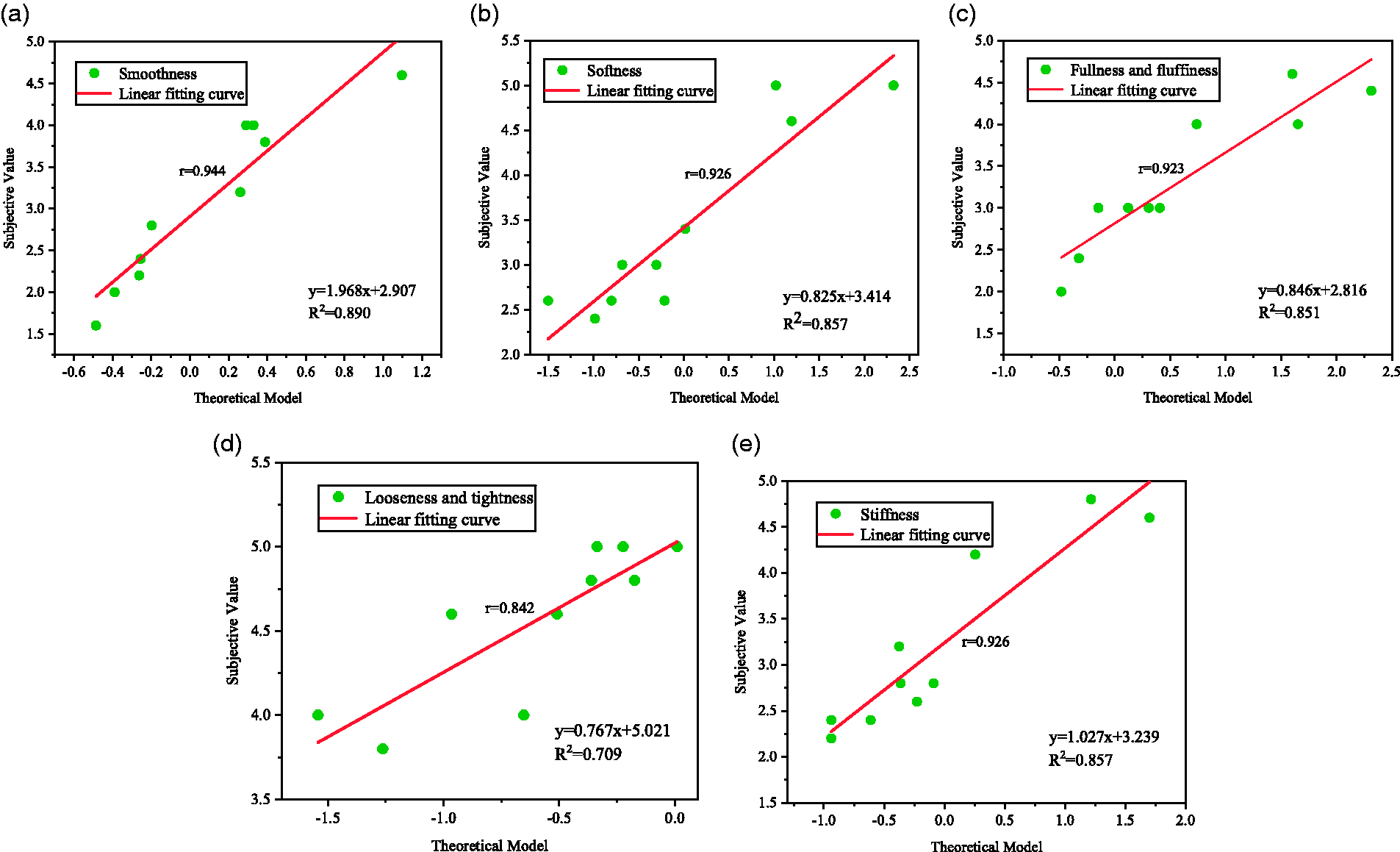
To further determine the relationship between the comprehensive handle and the five main hand characteristics, the principal component synthesis model according to the weighting method of the five principal component eigenvalues in the selected principal component total eigenvalues was calculated, wherein the comprehensive handle (CH0) had following equation

The resulting comprehensive style value expression is as follows

The SM0, SF0, FF0, LT0 and ST0 values were brought into the integrated style value expression, and the comprehensive handle value theory model based on the CHES-FY and subjective hand feel in Figure 7 to explain relationship between the CHES-FY and the subjective test. It can be seen from Figure 7 that they had a good effect with a Pearson coefficient of 0.908 and an adjusted R2 of 0.824. These results indicated that the theoretical model was highly linearly correlated with the subjectively tested CH. These results also indicated that the principal component expression can better predict the hand feel characteristics of down jacket fabrics. The objective test of the CHES-FY can evaluate the hand feel of fabrics.
The relationship of comprehensive handle between the objective test and the subjective test.
Conclusion
This paper discussed the principle of the CHES-FY, the subjective test results and comprehensive evaluation results based on the five main hand feel characteristics of down jacket fabrics, and the correlation between the objective test and subjective evaluation. Through the statistical analysis of the subjective handle evaluation results, the effectiveness of using the average values of the subjective evaluation results to rank the fabric's feel characteristics was confirmed. By analyzing 17 parameters extracted from the force and distance curve by the CHES-FY, the main component analysis of 42 down jacket fabrics can be divided into five handle characteristics, namely fullness, softness, stiffness, smoothness and elasticity, which were similar to the subjective five handle characteristics correspondingly. Through the subjective and objective evaluation results, we have respectively established five principal component expressions and a comprehensive handle prediction model. We believed that the great impacts on the evaluation of the handle for the down jacket fabric were the smoothness and stiffness, and the effect of the tightness was small. The results showed that the established models can reliably predict the fabric handle characteristics. For different down jacket fabrics, the five handle characteristics can be better distinguished. At the same time, the CHES-FY is an effective method to evaluate down jacket fabric’s handle characteristics. The CHES-FY together with the developed regression models provided an efficient method to evaluate the handle characteristics of down jacket fabrics.
Footnotes
Declaration of conflicting interests
The authors declared no potential conflicts of interest with respect to the research, authorship, and/or publication of this article.
Funding
The authors received no financial support for the research, authorship and/or publication of this article.

References
 AATCC Evaluation Procedure 5. Fabric hand: Guidelines for the subjective evaluation of. Research Triangle Park: American Association of Textile Chemists and Colorists, 2011