



Abstract
To develop a fluorine-free material of acidproof and breathable fabric, styrene–butadiene–styrene (SBS) blended with pitch was directly deposited on polyester/cotton blended fabric through electrospinning to fabricate a nanofibrous membrane composite fabric. Acrylic acid (AA) and methyl methacrylate (MMA) were used to graft SBS to improve compatibility between SBS and pitch, and the modified temperatures were set at 40°C, 60°C and 80°C. The effects of different grafting monomers and temperatures on the properties of SBS/pitch membrane composite fabrics were explored by Fourier transform infrared spectral analysis; morphological structures, acid-resistant properties and breathability (vapor permeability and air permeability) were also examined. The results showed that modified SBS/pitch membrane composite fabrics possessed good acid resistance and modest breathability. SBS-g-MMA/pitch (means SBS grafted by MMA) exhibited the highest acid resistance due to more evenly distributed beads than original SBS/pitch membrane composite fabrics and higher roughness than SBS-g-AA/pitch (means SBS grafted by AA) membrane composite fabrics. By systematically changing the grafting temperature, SBS-g-MMA/pitch membrane composite fabrics for which SBS was grafted by MMA at 80°C presented appropriate air permeability (120.5 mm/s), modest water vapor transport rate (13,656.45 g/(m2·d)), good tensile strength (1203 N) and bursting strength (616 N), and the best acid resistance (143°); meanwhile the acid penetration level reached level 3, which was attributed to the low surface energy caused by the fused ring from the pitch and the rough surface caused by the micro-beads in the nanofibers. The obtained modified SBS/pitch membrane composite fabric could be potentially applied in acidproof fabrics.
Nowadays, acid-resistant fabrics are mostly prepared by coating hydrocarbon resins or rubber which can block the gap between fibers. 1 , 2 These fabrics cannot provide comfortable performance for workers during high-intensity working because of poor breathability. 3 Electrospinning is an effective technique to produce porous nanofiber membranes which can control the pore diameter of the acidproof layer between the diameter of water vapor and liquid, hence improving the anti-penetration property. The development of acid-resistant fabrics has received considerable interest from researchers.4–6
Pitch is an attractive raw material to fabricate nanofibers and is composed primarily of polycyclic aromatic hydrocarbons, and it possesses desirable properties of anti-corrosion due to its stable chemical structure and low surface energy attributed to the presence of long-chain alkanes.7–9 Nevertheless, the asphaltene molecules in pitch nanofibers are combined by the conjugation between its aromatic rings and the van der Waals forces on the side chains of the aromatic rings, so the mechanical properties of pitch nanofibers are relatively hard and brittle. Styrene–butadiene–styrene (SBS) as a thermoplastic elastomer is a block copolymer of styrene and butadiene. Accordingly it possesses a range of desirable properties such as outstanding elasticity due to the physical crosslinks of polystyrene (PS) blocks among the soft polybutadiene (PB) blocks, 10 , 11 resistance to corrosion 12 and excellent hydrolytic stability attributed to styrene. 13 Herein, SBS/pitch membrane composite fabrics fabricated through electrospinning can exhibit good acid resistance and mechanical properties. Nevertheless, there is no cross-linking or chemical reaction between SBS and pitch, and phase separation will occur in SBS–pitch blends owing to the difference in the physical and thermodynamic parameters of SBS and pitch.14–16 According to Wenzel and Cassie models, a rough surface contributes to waterproofness as well as acidproofness. Phase separation and incompatibility of SBS and pitch will form a special structure through electrospinning, which can improve the effect of acid resistance to some extent. However, severe phase separation has negative effects on acidproofness.
To solve this problem, SBS can be modified by chemical grafting with polar monomers because the C=C double bond or its ortho α-H in PB blocks is relatively reactive and the new monomers are connected on SBS. 17 In this way, it can not only increase the polarity of the SBS molecule, but also reduce the surface tension between SBS and pitch, and promote the integration of SBS and pitch molecules. 18 Furthermore, the monomers used for SBS grafting ought to satisfy the following three conditions: reactive groups, high polarity and double bonds. 19 It is considered that the functional groups of different monomers, such as carboxy group, ester group and anhydride groups, amongst others, differ in the properties of the composite membrane. In addition, reaction temperature also plays an important role in the grafting rate, which has an impact on the compatibility of SBS and pitch. 18 , 20
In this study, our goal is to design and fabricate a fluorine-free electrospun fibrous membrane composite fabric with acidproof and breathable performance which can be used as anacid-resistant fabric. The composite fabric consists of polyester-cotton fabric as a substrate layer and modified SBS/pitch nanofiber membrane as an anti-acid layer. Herein, SBS was modified by solution polymerization at different temperatures as it is an effective method to explore the best combination of SBS and pitch. In our previous work, we have explored other parameters such as electrospinning parameters and concentration of samples, whereas here we focused on how different graft monomers and graft temperatures can influence the performance of SBS/pitch composite fabrics and we fixed other parameters such as electrospinning parameters to acquire the functional fabrics with both acid resistance and breathability. Finally, we explored the acid-resistant and breathable mechanism of different SBS/pitch membrane composite fabrics modified by different monomers and reaction temperatures.
Materials and methods
Materials
SBS (linear, PB/PS = 60/40, Mw=18200 g/mol, YH-792) was purchased from Yueyang Chemical Industry Company, Ltd, China. Isotropic pitch (petroleum-derived isotropic pitch) was acquired from Dalian Mingqiang Chemical Industry Material Co. Ltd, China. Acrylic acid (AA), methyl methacrylate (MMA), toluene, tetrahydrofuran (THF) (>99.7%), N,N-dimethylformamide (DMF) (>99.7%), benzoyl peroxide (BPO) and methanol were supplied by Shanghai Sinopharm Chemical Reagent Co. Ltd, China. Sulfuric acid (H2SO4, 95–98%) was purchased from Aladdin Reagent Co. Ltd, Shanghai, China. Aerosol adhesive was obtained from 3M Co., USA. Polyester-cotton fabrics (plain, 16 × 11 per inch) were bought from XinJiang Yida Apparel Co. Ltd, China. All chemicals were used as received without further purification.
Preparation of modified SBS
Firstly, 10 g SBS and 2 g graft monomer were completely dissolved in 50 g toluene solvent in a three-neck flask. Then, 1.5 g BPO was added to the flask with continuous stirring at a speed of 800 rpm for 2 h. In our previous work, a higher temperature such as 100°C was used and the experimental results showed that the performance of modified SBS/pitch membrane composite fabrics was not satisfactory. Therefore, the reaction temperatures were set at 40°C, 60°C and 80°C to synthesize modified SBS with different graft rate. After reaction, excessive methanol was added to the flask to precipitate modified SBS. The remaining elastomer was washed by methanol and then dried in a vacuum oven at 50°C for 12 h. SBS grafted by AA was named as SBS-g-AA and SBS grafted by MMA was denoted as SBS-g-MMA.
Preparation of modified SBS/pitch nanofibrous membranes
The modified SBS (10 wt%) and pitch powders (8 wt%) were dissolved in the mixture solvent of DMF/THF (1/4, w/w) with strong stirring for 12 h at 60°C until completely dissolved.
The electrospinning process was operated with a feed rate of 0.8 mL/h, an applied voltage of 25 kV, and a distance between spinneret and collector of 15 cm. Fibers were deposited directly on pristine fabric after spraying with aerosol to manufactured composite fabric. The original SBS/pitch membrane was denoted as S0P; SBS-g-AA/pitch membranes for which SBS was grafted by AA at temperatures of 40, 60 and 80°C were denoted as S1P, S2P and S3P, respectively; and SBS-g-MMA/pitch membranes for which SBS was grafted by MMA at 40, 60 and 80°C were similarly defined as S4P, S5P and S6P.
Characterizations
Fourier transform infrared (FTIR) spectra were recorded for the solid samples with a Thermo Scientific Nicolet iS10 FTIR spectrometer (PittCon, Inc., USA), in the range of 500–4000 cm–1. FTIR spectra were collected with 32 scans and a resolution of 4 cm–1. The morphologies of composite fabrics were characterized by using a field emission scanning electron microscope (SEM) (SU8000, Hitachi, Japan). The samples were gold-sputtered (sputtering system K575X Turbo Sputter Coater, Emitech) prior to SEM inspection. Water contact angle and acid contact angle measurements were performed by a contact angle analyzer (DCAT 21, DataPhysics Instrument GmbH, Germany). The acid permeation times were tested according to GB 24540-2009. A water vapor transmission tester (YG601, Ningbo Textile Instruments Co., Ltd, China) was used to determine the water vapor transmission rate of composite fabrics according to ASTM E96 standard desiccant method of GB/T 12704.1-2009, under constant temperature of 38°C and relative humidity of 90%. The air permeability of composite fabrics was measured according to ASTM D 737-2004 standard test method by using a digital air permeability tester (YG(B) 461E), Wenzhou Darong Textile Instruments Co. Ltd, China) according to GB/T 5453-1997. The mechanical properties (tensile strength and bursting strength) of the composite fabrics were inspected by a mechanical testing machine (DR028, Wenzhou Darong Textile Instruments Co. Ltd, China) according to GB 3923.1-2013 standard and GB 19976-2005 standard, respectively.
Results and discussion
FTIR analysis
The FTIR spectra of SBS/pitch membranes grafted with AA and MMA are shown in Figure 1. The FTIR spectra of SBS-g-AA/pitch membranes at 40, 60 and 80°C (S1P, S2P and S3P) are presented in Figure 1(a) and the FTIR spectra of SBS-g-MMA/pitch membranes at 40, 60 and 80°C (S4P, S5P and S6P) are presented in Figure 1(b). The FTIR spectra of pristine SBS/pitch membrane (S0P) were also included for comparison. Figure 1(a) and (b) both exhibited C=C stretching vibrations of alkene at 3056 cm−1, and peaks at 1491, 1450 and 1597 cm−1 were assigned to the vibrations of the aromatic ring skeleton from SBS and pitch. The peak at 964 cm−1 belonged to trans disubstituted of C=C, and five adjacent hydrogen atoms out of aromatic plane vibration were formed at 697 cm−1. However, compared with pristine SBS/pitch membrane, Figure 1(a) shows new peaks at 1940 cm−1 and 1728 cm−1, which were attributed to the overtone bands of aromatic ring and C=O vibration, respectively. The new peak at 1940 cm−1 proved that SBS-g-AA was chemically cross-linked to the pitch. In addition, as illustrated in Figure 2, it was considered that graft copolymerization was actually initiated by the removal of an allylic hydrogen atom from the butadiene portion of the copolymer, and subsequently the monomer double bond polymerized at the graft point. 18 Therefore, the carbonyl vibration at 1728 cm−1 proved AA had been successfully grafted on SBS. The same peaks at 1940 cm−1 and 1728 cm−1 shown in Figure 1(b) confirmed that the successful grafting of MMA and SBS-g-MMA had chemically cross-linked to the pitch, respectively. In addition, it presented typical C-O-C stretching vibration of ester bond at 1187 and 1176 cm−1, which confirmed MMA had been successfully grafted on SBS. Furthermore, the intensity of those peaks increased with the graft reaction temperature rising from 40 to 80°C. According to the Lambert-Beer law, peak intensity is proportional to the concentration and thickness of the sample. Through controlling the volume to obtain the same thickness of membrane, the relative intensity in spectra could prove changes in the grafting ratio. This suggests that grafting ratio was positively correlated with grafting reaction temperature, and SBS modified at 80°C exhibited the highest grafting ratio.
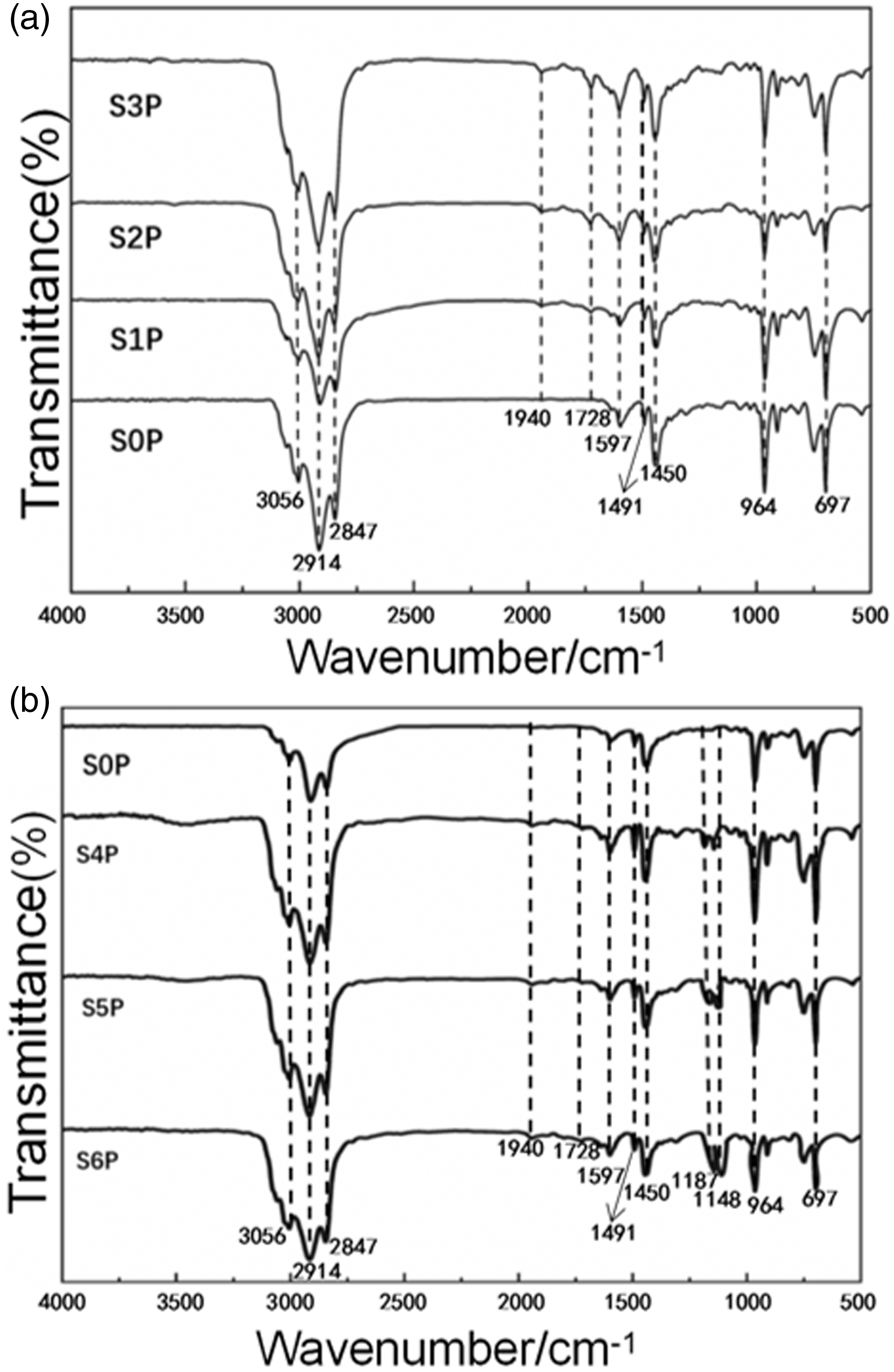
Fourier transform infrared spectra of SBS/pitch nanofibrous membrane composite fabrics: (a) S0P and S1P to S3P; (b) S0P and S4P to S6P.

Chemical structural formula of (a) SBS, (b) AA, (c) MMA; and synthesis of grafted SBS: (d) SBS-g-AA, (e) SBS-g-MMA.
Morphologies and structure
Figure 3 shows the morphologies of the SBS/pitch membrane composite fabrics. Three-dimensional (3D) microscope images displayed the morphology of the rough surface, and SEM images exhibited the details of the surface structure more clearly. Figure 3(a) shows images of S0P composite fabrics, Figure 3(b) to (d) show the surface morphology of S1P, S2P and S3P composite fabrics, respectively, and Figure 3(e) to (g) show the surface morphology of S4P, S5P and S6P composite fabrics, respectively. As can be seen in the 3D microscope images, all composite fabrics were of special structure composed of nanofibers and irregular beads; however, the differences in the membranes were also clearly revealed. The height and volume of beads in S0P varied greatly because of the incompatibility between SBS and pitch, whereas beads in SBS-g-AA/pitch (S1P, S2P and S3P) and SBS-g-MMA/pitch (S4P, S5P and S6P) deposited evenly. In addition, the bead sizes and numbers in SBS-g-MMA/pitch (S4P, S5P and S6P) were smaller and fewer than the original SBS/pitch (S0P) ones but were bigger and many more than the SBS-g-AA/pitch (S1P, S2P and S3P) ones. With the increase in the grafting temperature, the number of beads also increased. As shown in the SEM images, they demonstrated the roughness of the surface more clearly. The grooves were mounted on the surface of these irregular beads and, to some extent, improved the surface roughness. Moreover, beads in S0P were big and numerous but there were few beads in S1P, S2P and S3P, and beads in S4P, S5P and S6P were smaller than beads in S0P.

Morphological image of SBS/pitch nanofibrous membrane composite fabrics: (a) S0P; (b) S1P; (c) S2P; (d) S3P; (e) S4P; (f) S5P; (g) S6P.
Figure 4 displays the average fiber diameter of all membranes. It can be seen that the average fiber diameter of SBS/pitch membranes decreased when the reaction temperature increased from 40 to 80°C. The average diameter of S0P was 771 ± 241 nm indicating that the original SBS/pitch nanofibers were the thickest. The values of S1P, S2P and S3P were 661 ± 216, 419 ± 212 and 410 ± 155 nm, respectively, whereas the values of S4P, S5P and S6P were 489 ± 179, 421 ± 247 and 397 ± 119 nm, respectively. Obviously, the average diameter of both SBS-g-AA/pitch nanofibers and SBS-g-MMA/pitch nanofibers demonstrated a similar downward trend when the grafting reaction temperature increased from 40 to 80°C.
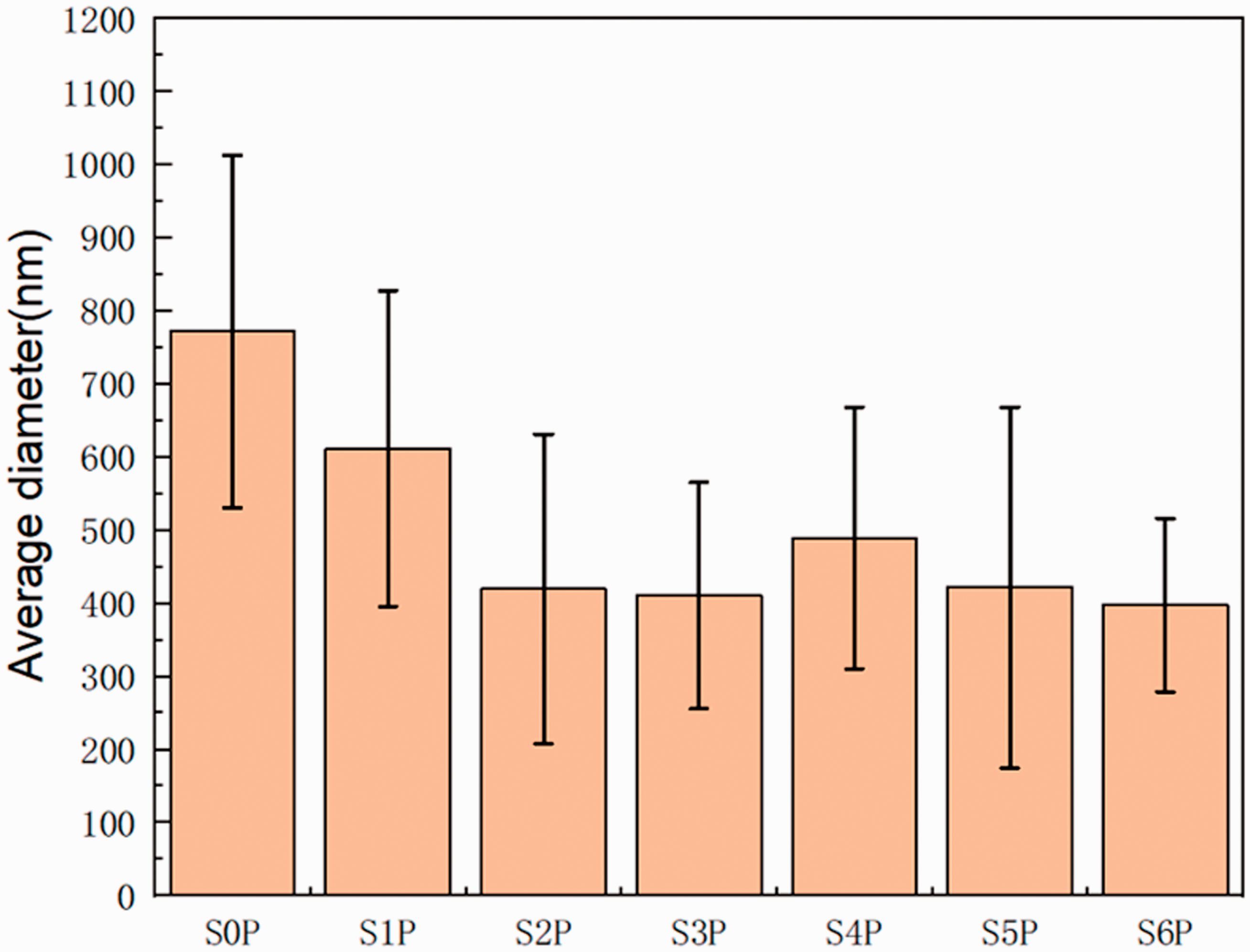
Average fiber diameter of SBS/pitch nanofibrous membrane composite fabrics.
Analyzing the reason for the changes in morphologies, these beads were actually formed by the interaction of the van der Waals force between the aromatic rings and the spatial repulsion force between the alkanes of side chain in pitch polymer. Firstly, as to S0P, the asphaltene molecular polymer broke through the surface tension and deposited on the fabric because of the serious self-aggregation of pitch in solution and the incompatibility between pitch and SBS. Secondly, as to modified SBS/pitch membranes, modified SBS were chemically cross-linked with pitch and the compatibility of SBS and pitch improved. Hence, beads in modified SBS/pitch membranes were less and deposited evenly. In addition, AA belongs to the acid whereas MMA belongs to the ester, and this suggests that AA exhibited higher polarity than MMA. Accordingly, beads in S1P to S3P were smaller and less than beads in S4P to S6P. Moreover, with the reaction temperature rising from 40 to 80°C, more grafting monomers, which attracted more asphaltene molecules, were introduced in SBS, resulting in more beads. The number of beads played an important role in the surface roughness, indicating that the surface roughness was positively correlated with the grafting temperature. The grooves on the surface of the beads could be attributed to incomplete evaporation of the solvent and unentanglement of biopolymer chains which made the unsolidified part liable to deformation when hitting the collector. 21 The polar monomers, which improved the conductivity and increased the entanglement of the molecules, eliminated some grooves on the beads. Thirdly, the average diameter of SBS/pitch decreased because more polar molecules were introduced when the grafting temperature was increased; hence the conductivity of the solution was increased and finally resulted in a stronger electric field force to draw thinner fibers out.
Breathability of water vapor and air
Breathability of composite fabrics was investigated by measuring the water vapor transport (WVT) rate and air permeability. Figure 5 shows a plot of the WVT rates obtained for all composite fabrics. The value of the S0P composite fabrics was 14,602.12 g/(m2·d). After grafting monomer, the values of the S1P, S2P and S3P composite fabrics were 14,352.43, 14,002.32 and 13,808.94 g/(m2·d), respectively, whereas the values of the S4P, S5P and S6P composite fabrics were 14,402.21, 13,897.24 and 13,656.45 g/(m2·d), respectively. They all presented high moisture permeability which were significantly higher than 2500 g/(m2·d) according to GB/T 12704-1991. Besides that, SBS-g-MMA membrane composite fabrics had relatively lower WVT rates than SBS-g-AA membrane composite fabrics, and the WVT rate showed a decreasing trend when the reaction temperature increased.
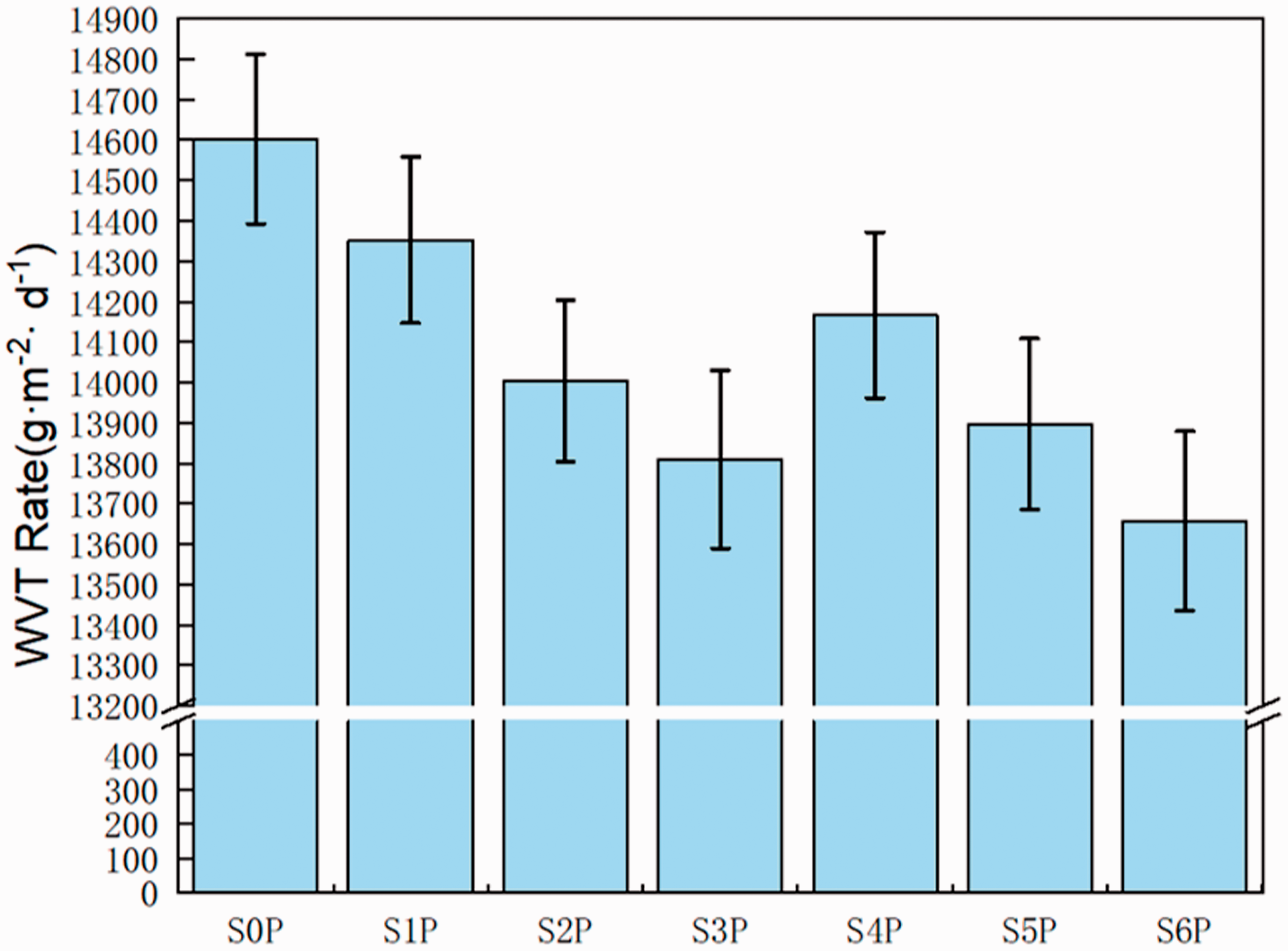
Water vapor transport rate of SBS/pitch nanofibrous membrane composite fabrics.
The variations in air permeability of all composite fabrics are presented in Figure 6. The value of S0P composite fabrics was 230.6 mm/s; the values of S1P to S3P composite fabrics decreased from 170.5 to 129.6 mm/s, whereas the values of S4P to S6P composite fabrics decreased from 144.3 to 120.5 mm/s. SBS-g-AA/pitch membrane composite fabrics demonstrated higher air permeability than SBS-g-MMA/pitch membrane composite fabrics.

Air permeability of SBS/pitch nanofibrous membrane composite fabrics.
To explore the reason for these trends, the porosity of all membranes was tested as shown in Figure 7. The values of S1P to S6P were 58%, 50%, 43%, 57%, 44% and 42%, respectively, confirming that the porosity had the same tendency to decline as that trend in breathability (WVT rate and air permeability). This is because all composite fabrics were composed of the same substrate fabrics, and the pores of the membranes, which could allow water vapor to diffuse through, were much smaller than that of the substrate fabrics. Moreover, the pores between the fibers in the membranes were different from the pores which were not through holes in substrate fabrics. Thus, the breathability of the composite fabrics was determined by the porosity of the membranes.
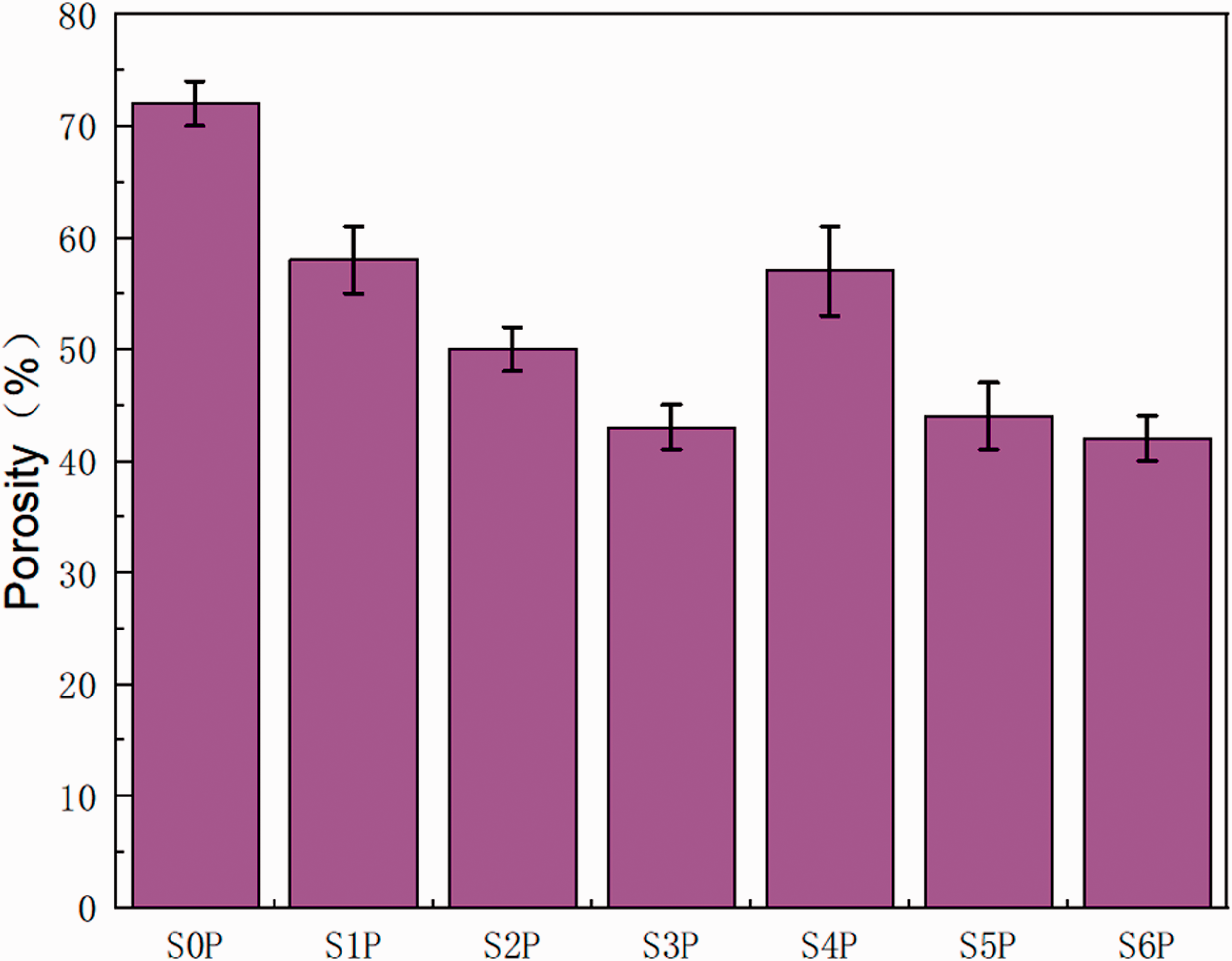
Porosity of SBS/pitch nanofibrous membrane composite fabrics.
According to Darcy’s law, 23 porosity played an important role in breathability; in other words, every single pore provided a consistent amount of water vapor and air permeability. Moreover, the existence of micro-beads would prevent water vapor and air from passing through the pore, which resulted in lower breathability, indicating that the breathability was inversely related to grafting temperature. Therefore, SBS-g-AA/pitch membrane composite fabrics with higher porosity and less beads presented better breathability.
Acid resistance of analysis
The contact angle is one of the main indicators to characterize acid resistance, which is mainly related to the surface energy and surface roughness. The static acid contact angles of SBS/pitch membrane composite fabrics with different grafting monomer at 40, 60 and 80°C are shown in Figure 8. We just chose one kind of acid (80% H2SO4) instead of choosing three of them (80% H2SO4, 60% HNO3 and 30% HCl) to test acid resistance, because 80% H2SO4 exhibited the most acidic and corrosive performance of the three acids. The acid contact angle of S0P composite fabrics was 133 ± 3.8°; the acid contact angles of S1P, S2P and S3P composite fabrics were 138 ± 2.6°, 141 ± 3.2°, 142 ± 3.5°, respectively, whereas the acid contact angles of S4P, S5P and S6P composite fabrics were 139 ± 3.5°, 140 ± 3°, 143 ± 3.2°, respectively, indicating that SBS-g-MMA/pitch membrane composite fabrics exhibited a better acid resistance than SBS-g-AA/pitch membrane composite fabrics, and S6P composite fabrics demonstrated the best acid resistance. Additionally, acid resistance improved as grafting temperature increased. All membrane composite fabrics exhibited excellent acidproof properties because of the stable molecular structure and the low surface energy of pitch.
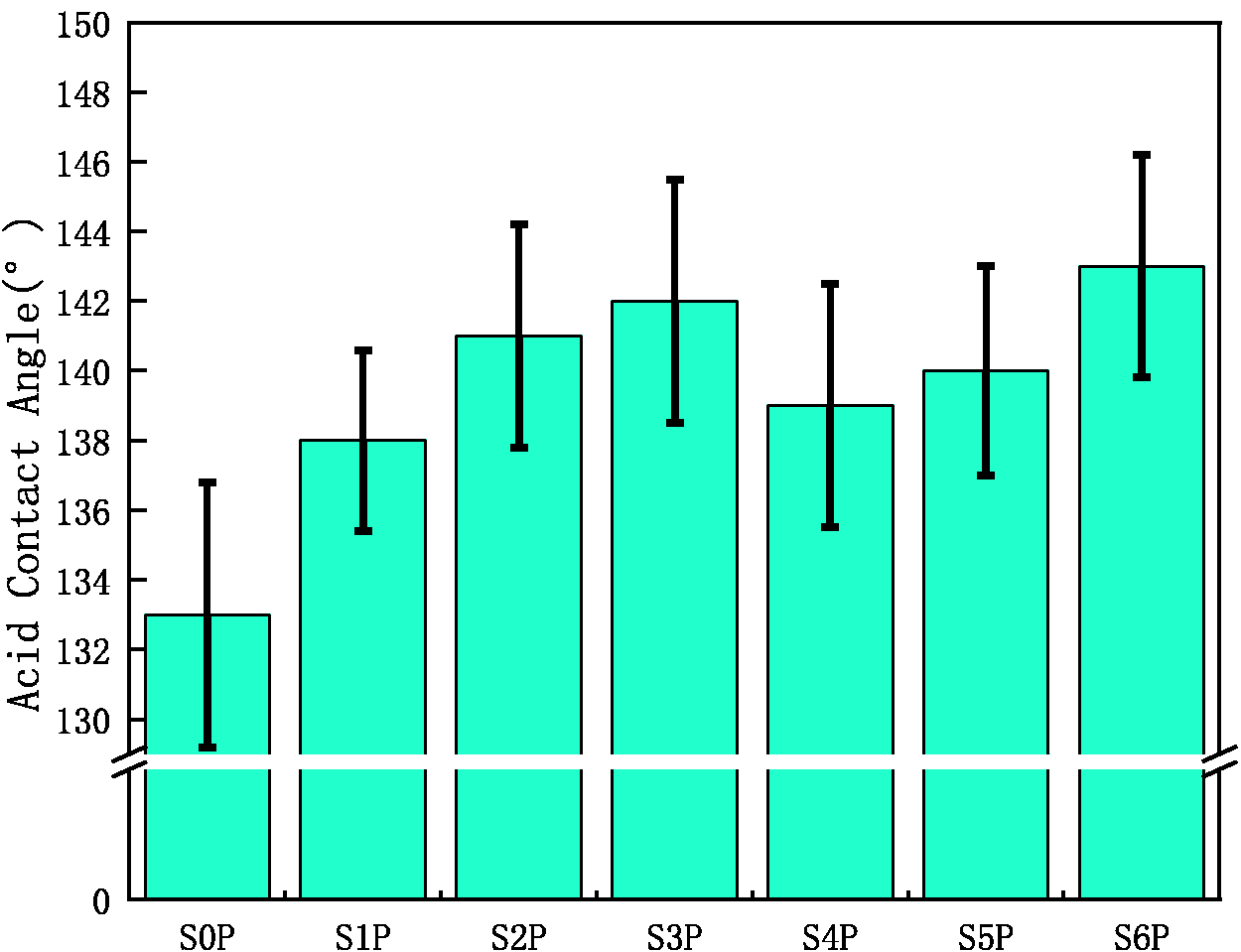
Acid contact angle of SBS/pitch nanofibrous membrane composite fabrics.
According to Wenzel and Cassie models, 21 , 22 the roughness and low surface energy of the solid surface would improve the hydrophobic performance of the solid. This is because the increase in graft reaction temperature affected the surface roughness, indicating that the contact angles were proportional to the graft reaction temperature. It was worth noting that S0P composite fabrics with the roughest surface, however, exhibited the worst acid resistance, and is ascribed to the great difference in bead height and volume, which made it easy for fabrics to be infiltrated, hence adversely affecting its acid resistance.
In addition, the penetration time is also one of the anti-acid indicators. Taking morphology, breathability and acid resistance into account, the acid permeation time of S6P composite fabrics was chosen to test for exploring whether modified SBS/pitch membrane composite fabrics could be suitable to use as an acid-resistant layer. As shown in Table 1, the acid penetration level of SBS-g-MMA membrane composite fabrics had reached level 3 which confirmed it can be able to use as an acid-resistant layer.
Acid penetration time of SBS-g-MMA/pitch composite fabrics

Mechanical properties analysis
Taking the practical applications into consideration, mechanical properties (tensile strength and bursting strength) of composite fabrics were also studied. As shown in Figure 9, the tensile strengths of S0P to S6P were 1259 N, 1062 N, 1114 N, 1119 N, 1147 N, 1164 N and 1203 N, respectively and the values of bursting strength were 664 N, 554 N, 574 N, 596 N, 537 N, 585 N and 616 N, respectively. Compared with substrate fabric which produced a tensile strength of 929 N and bursting strength of 513 N, all composite fabrics exhibited better mechanical properties than the raw fabric due to composite structure. This improvement suggested that aerosol bound the substrate fabrics and electrospun membranes tightly together, imparting composite fabrics with higher mechanical properties. Interestingly, this variation tendency of tensile strength and bursting strength coincided with the change of beads as the function of grafting temperature and monomer. The reasons could be attributed to the beads, fixing nanofibers, limiting the relative slip between the fibers and leading to stress transfer. Moreover, the friction between beads and fibers also enlarged the strength of composite fabrics to some extent. So S6P composite fabrics with the most beads among the modified SBS/pitch membrane composite fabrics exhibited the best mechanical properties.
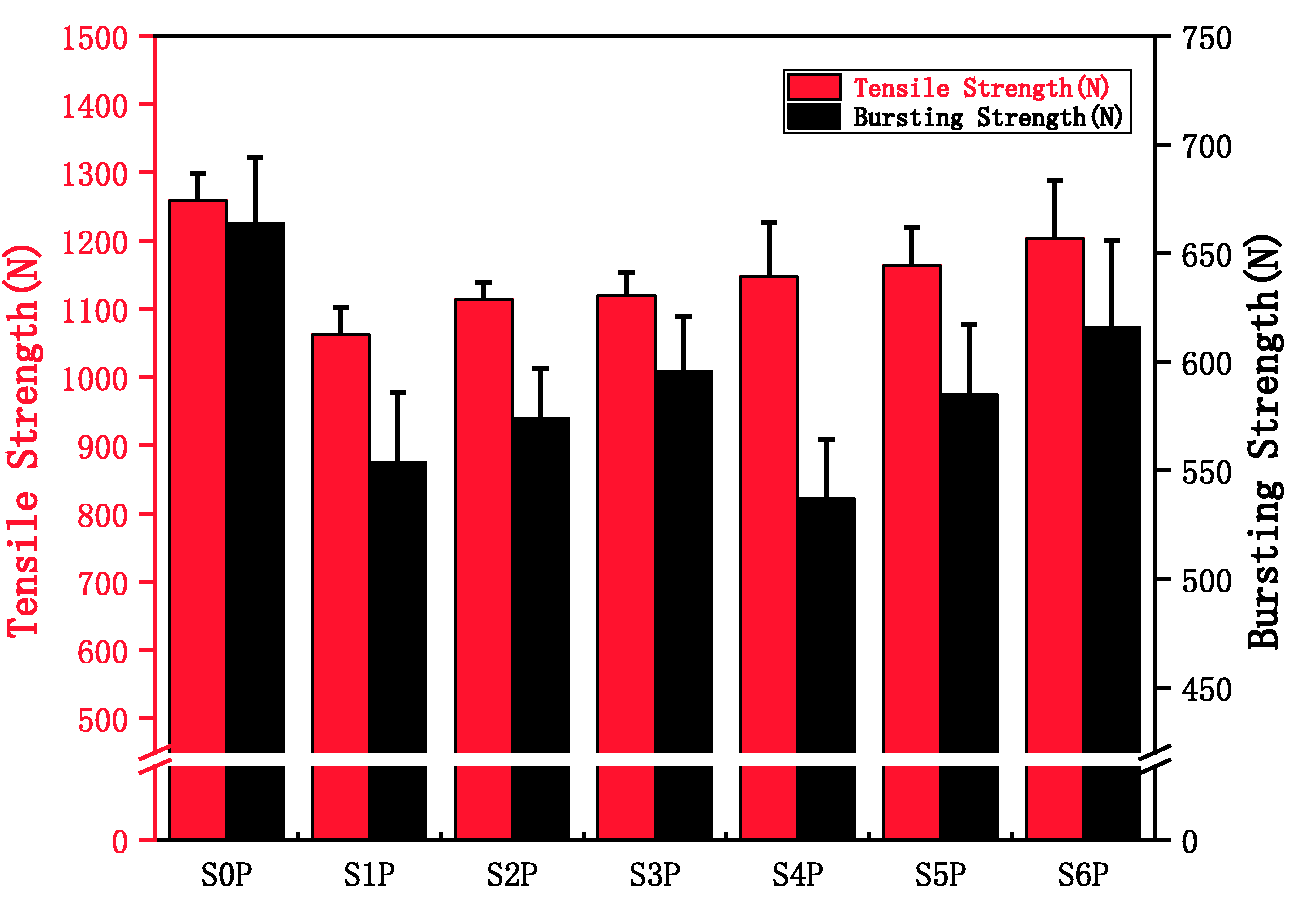
Mechanical properties of SBS/pitch nanofibrous membrane composite fabrics.
Furthermore, the bonding strength between substrate fabrics and electrospun membranes (S6P) is shown in Figure 10. The membrane was peeled from the composite fabric by tweezers. In comparison with original S6P composite fabric, Figure 10(b) demonstrates that the membrane still adhered to the fabric when the edge of the composite fabric had been damaged. This suggests that composite fabrics exhibited good properties of debonding resistance due to aerosol adhesive.
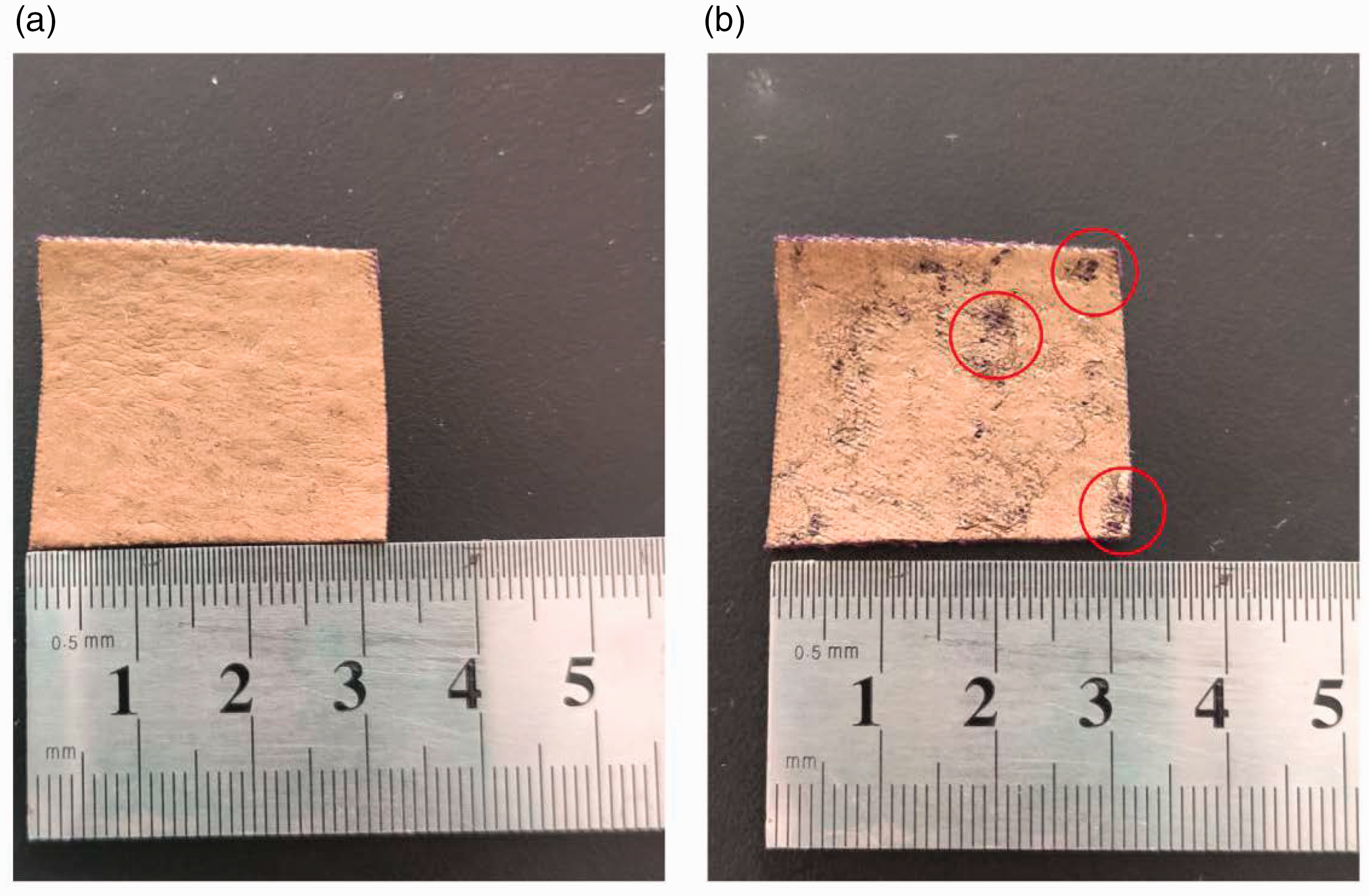
Photographs of S6P composite fabrics: (a) original; (b) after peeling.
Conclusion
In this study, the novel fluorine-free anti-acid and breathable composite fabrics were successfully prepared via electrospinning modified SBS and pitch nanofibers onto fabrics. Original SBS/pitch membrane composite fabrics demonstrated the worst acid resistance due to the great difference in bead height and volume, which made it easy for fabrics to be infiltrated. Compared with original SBS/pitch membrane composite fabrics, modified SBS/pitch membrane composite fabrics exhibited better acid resistance due to the grafting polymerization of AA or MMA on SBS, which improved the compatibility between SBS and pitch. The results indicated that a rougher surface of SBS-g-MMA/pitch membrane composite fabrics brought a better acid resistance than SBS-g-AA/pitch membrane composite fabrics.
It was also demonstrated that the porosity had a tendency to decline and more beads were produced to form a rougher surface with the increase in grafting temperature. Hence, the breathability was inversely related to the grafting temperature, but the acid resistance was proportional to the grafting temperature.
Besides, all the composite fabrics exhibited modest WVT rates (significantly higher than 2500 g/(m2·d) according to GB/T 12704-1991), good air permeability and good mechanical properties.
Moreover, acid resistance is the most important property in this study as we design and fabricate composite fabrics used in the field of acid-resistant textiles. So SBS-g-MMA/pitch membrane composite fabrics for which SBS was grafted by MMA at 80°C (S6P) exhibited the best performance. It not only displayed a modest WVT rate (13,656.45 g/(m2·d)), appropriate air permeability (120.5 mm/s), good tensile strength (1203 N) and bursting strength (616 N) but also exhibited the best acid resistance as its contact angle could reach to 143° and the acid penetration level reached level 3. This work provided an innovative strategy for further design and development of acidproof breathable composite fabrics.
Footnotes
Declaration of conflicting interests
The authors declared no potential conflicts of interest with respect to the research, authorship, and/or publication of this article.
Funding
The authors disclosed receipt of the following financial support for the research, authorship, and/or publication of this article: This work was supported by Xinjiang Autonomous Region Graduate Education and Teaching Reform Project (No. XJ2019GY10), development and application innovation team of Xinjiang special textile materials, University Research Program (No. XJEDU2018Y006).
