



Abstract
This paper proposes a probabilistic neural network-based model for predicting and controlling garment fit levels from garment ease allowances, digital pressures, and fabric mechanical properties measured in a three-dimensional (3D) virtual environment. The predicted fit levels include both comprehensive and local fit levels. The model was set up by learning from data measured during a series of virtual (input data) and real try-on (output data) experiments and then simulated to predict different garment styles, for example, loose and tight fits. Finally, the performance of the proposed model was compared with the Linear Regression model, the Support Vector Machine model, the Radial Basis Function Artificial Neural Network model, and the Back Propagation Artificial Neural Network model. The results of the comparison revealed that the prediction accuracy of the proposed model was superior to those of the other models. Furthermore, we put forward a new interactive garment design process in a 3D virtual environment based on the proposed model. Based on interactions between real pattern adjustments and virtual garment demonstrations, this new design process will enable designers to rapidly, accurately, and automatically predict relevant garment fit levels without undertaking expensive and time-consuming real try-ons.
Keywords
In the context of fierce international competition in the textile/clothing industry, adaptation and development of innovative technologies (internet of things, big data, artificial intelligence (AI), etc.) have become key to the success of most industrial companies. One important trend for textile/apparel innovations is mass customization, permitting the delivery of relevant, small-series garment products that meet consumers’ personalized fashion and functional requirements and their body shapes. Moreover, instead of brick-and-mortar stores, people in all countries have become increasingly familiar with online purchasing of garments in e-shops, due to several advantages such as convenience, variety, good discounts, and time-savings.1 E-shopping transactions accounted for 14.1% of all retails transactions in 2019, and this figure is expected to rise to 22% in 2023.2 In this context, providing data-based intelligent services to help professional designers to interact with online consumers for their personalized design will be significant for enhancing the quality of e-shopping platforms and creating a “business to business to consumer” business model, as well as supporting and affecting consumers’ purchase decisions. One of the fundamental factors influencing purchase decisions is garment fit. No matter how amazing the appearance of the garment, if the garment fit is poor, this will not lead to a purchase.
In the clothing industry, fit is defined as how the garment conforms to the body and how it appears on the body.3 Compared with other design attributes, such as fashion styles, silhouettes, fabrics, and colors, fit is one of the most significant purchasing criteria for consumers. Unfortunately, the return rate (close to 30%) due to poor garment fit remains high in garment e-shopping.4,5 This situation requires companies to process the returned garments, incurring additional time and cost.6 A report highlighted that over 50% of consumers admitted that finding the correct size is one of the biggest challenges when shopping for apparel.7
When shopping at brick-and-mortar stores, the majority of consumers aim to find well-fitting garments through multiple actual try-ons. However, in an e-shop, finding the garment that best fits a specific consumer is very difficult due to the inability to try on a garment. Consumers can estimate fit using their previous experiences, however, this is not reliable because different brands typically design apparel to meet the needs of their respective target populations, potentially using different sizing systems, which may lead to a poor-fitting garment. To address this issue, over the last few years, commercially available three-dimensional (3D) virtual try-on software systems, such as Lectra 3D prototype, Clo 3D, 3D Runway Creator, VStitcher, and Vidya, have been developed for garment design and fit evaluation.8-9 These systems allow the simulation of real garment designs and the creation of new 3D garment products by integrating two-dimensional (2D) pattern design, 3D parametric mannequin modeling, 3D virtual sewing, and fabric properties, based on sophisticated geometric and mechanical modeling and simulation techniques. They provide the opportunity for remote consumers or professionals to visualize, communicate, and evaluate virtual garments through a web platform by showing both static and dynamic draping and fitting effects on a specific 3D digital mannequin and selected fabrics.10,11 Therefore, efficient evaluation of the fitting effects of 3D garment virtual try-on is a crucial and challenging issue to be solved. This will enable optimization of the design process by predicting and controlling garment fit levels precisely and automatically.
Currently, the usual approach for garment fit evaluation is visual analysis implemented by expert know-how based on photographs or videos.12-14 However, the limitations in relation to accuracy and reliability of this subjective method are obvious. Thus, several researchers have attempted to utilize advanced technologies in this regard, such as 3D human body scanning.5 First, scans of body shapes with and without garments are constructed. These are then superimposed on the same coordinate system. Sequentially, the 2D and 3D parameters, such as linear distance, contact area, and volume of the air gaps between the body and clothed scan are calculated precisely. Therefore, garment fit can be analyzed quantitatively using these objective indicators. However, this method has three main shortcomings. The first is cost, due to the requirement for expensive equipment; the second is the complexity of operation; the third is that the process is time-consuming. These three factors have hindered its application in online apparel shopping. In e-shopping scenarios, consumers commonly make purchase decisions from numerous garments in a short time. Thus, it is essential to develop an approach that can predict garment fit level rapidly, precisely, and automatically. Liu et al. proposed a method of automatic garment fit evaluation via learning the digital pressure data.15 This work enabled prediction of garment fit based on virtual try-on for e-shopping. However, the indicator, namely digital clothing pressure, used for fit evaluation could not accurately predict the fit level of loose garments, as some parts of a loose garment are not in contact with the human body and the clothing pressure may be close to zero.15 Aside from digital clothing pressure, fashion designers conventionally evaluate garment fit based on ease allowance, which refers to a metric indicating the dimensional difference between the human body and garment.16 However, typical ease allowances may not reflect the fit levels produced by different fabrics. Furthermore, garment styles are diverse and ever-changing: neither digital pressure nor typical ease allowance are suitable for assessing the fit levels across all kinds of garments. In this context, we propose a machine learning (ML)-based garment fit level prediction model (see Figure 1) aimed at predicting and controlling garment local and comprehensive fit levels via learning data from garment ease allowance, digital pressure, and the mechanical properties of fabric measured in a 3D virtual environment.

Machine learning-based garment fit level prediction model.
Currently, AI-based ML techniques, such as artificial neural networks (ANN), fuzzy logic, and genetic algorithms, have been intensively applied in the fashion industry17-19 in fashion product design,8-9,20 garment and fabric product evaluation,21-25 fashion forecasting,26 garment comfort estimation,27,28 apparel manufacturing,29-31 fashion retailing,32-34 and garment supply chain management.35,36 However, little attention has been paid to predicting garment fit level based on the virtual try-on using an ANN technique.
The probabilistic neural network (PNN), originally proposed by Specht, is a particular type of ANN model based on the well-known Bayesian decision rules.37,38 PNN is acknowledged to be a powerful tool for tackling pattern recognition and classification problems in the textile and apparel sector,39 including textile classification and evaluation,40-42 textile defect detection,43,44 fabric color grading,45 pattern simulation,46 machine fault diagnosis,47 human body shape recognition,48 garment recommendation systems,49 and manufacturing plant location selection.50 The advantages of PNN are as follows: 1. the PNN model has an inherently parallel structure, which guarantees convergence to an optimal classifier with increasing size of representative training dataset; 2. the number of parameters for constructing and optimizing a PNN model are relatively few; 3. the PNN is not trained iteratively, which can shorten the learning process dramatically; 4. the learning dataset for a PNN can be supplemented and removed without extensive retraining; and 5. the PNN is less sensitive to noisy data from outliers, which can harm several other types of ANN. Contributing to these advantages, we adopted PNN to predict garment fit level in this work.
The sections of this paper are organized as follows. In Section 2, the general research scheme and implementation procedure are introduced. In Section 3, we describe how to procure the learning data for constructing the garment fit level model in detail. In Section 4, we discuss how to establish a garment fit level prediction model for both loose- and tight-fitting garments. In Section 5, we analyze and evaluate the performance of the proposed model. Finally, the conclusions are presented in Section 6.
General research scheme and formalization
General research scheme
The process for garment fit level prediction is composed of four sequential phases (see Figure 2). In Phase I, we collected the output learning data (i.e., sensory evaluations on garment fit) by performing a series of real try-on experiments, as well as human body data. In Phase II, we acquired the input learning data, including the garment ease allowance values, digital pressures, and fabric properties measured in a 3D virtual environment by performing a series of virtual garment try-ons. In Phase III, a PNN-based garment fit level prediction model was set up and trained using the input and output learning data. In Phase IV, we applied and verified the proposed model to predict garment fit level.
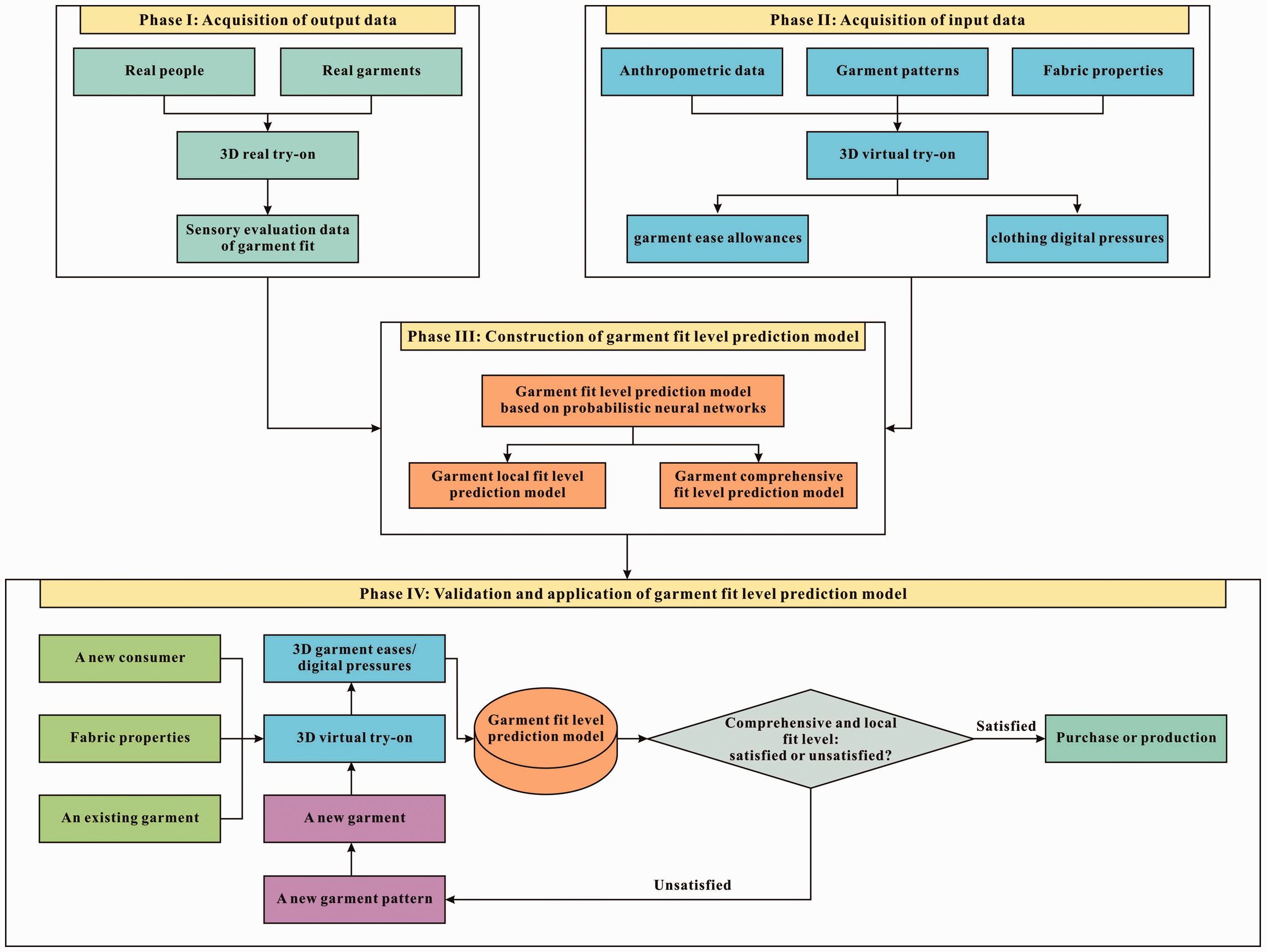
General scheme.
Formalization
The concepts and data involved in this paper were formalized as follows:
Let
Let
Let
Let
Let
Let
Let
Let
Let
Let
Let

Let
Let
Let
Let
Let
Acquisition of the learning data
The main objective of this study was to put forward a garment fit level prediction model. This work was supported by The European Horizon 2020 (H2020) research program. The international fashion brand company involved in this program is oriented to the Chinese market. Thus, we have described our approach in a scenario of consumers in China. However, the general principles of our proposed method would be suitable for consumers in different countries and regions.
Experiment preparation
Subject recruitment
In this study, a sensory experiment based on real try-on was undertaken to quantitatively characterize the garment fit level according to different garment positions. Considering the requirements of the fashion brand company involved in H2020, such as their target markets, populations, regional distribution, and job distribution, we initially recruited 200 males aged 18–35 randomly. Then, 17 male subjects with the representative figure types were selected and invited to join this experiment. Their body sizes were 155/76A, 155/80A, 155/84A, 160/80A, 160/84A, 160/88A, 165/84A, 165/88A, 165/92A, 170/84A, 170/88A, 170/92A, 175/84A, 175/88A, 175/92A, 180/88A, and 185/92A, respectively. The notation “170/88A” indicates that the figure type is A, and the height and bust girth are 170 cm and 88 cm, respectively. These sizes account for the vast majority of the population of China, according to the China National Standard (GB/T 1335.1-2008).51
To guarantee precision, we performed the experiments as follows. Firstly, we invited a professional with over 20 years’ experience studying and developing sizing systems to participate in our research. With her in-depth knowledge and rich experience, we were able to guarantee precision of the 17 male subjects, following the China National Standard.
Secondly, considering the target population of the fashion brand company, based on this standard, we chose Type A as our research focus due to its high prevalence in Chinese society.
Thirdly, having searched for the national standard, we determined height and bust girth ranges. Height ranged from 155 to 185, and the bust girth ranged from 76 to 92. The height and bust girth intervals were 5 and 4 cm, respectively. Based on these data, we determined the sizes and the combinations involved in our research.
Fourthly, we strictly excluded subjects with the specific body size, by comparing the detailed body measurements (such as neck girth, arm length, back length, height of the cervical point when standing, and the height of cervical point when sitting, and so forth) with the corresponding body measurements defined by the China National Standard.
Therefore, the body dimensions of the selected subjects were exactly in line with the China National Standard as far as possible.
Anthropometric measurement and 3D mannequin construction
To measure the anthropometric data precisely and expeditiously, we collected the anthropometric measurements of the subjects using Vitus Bodyscan (VITRONIC Corp, Wiesbaden, Germany). Next, the 3D mannequins (see Figure 3) corresponding to the subjects were generated using CLO 3D software.
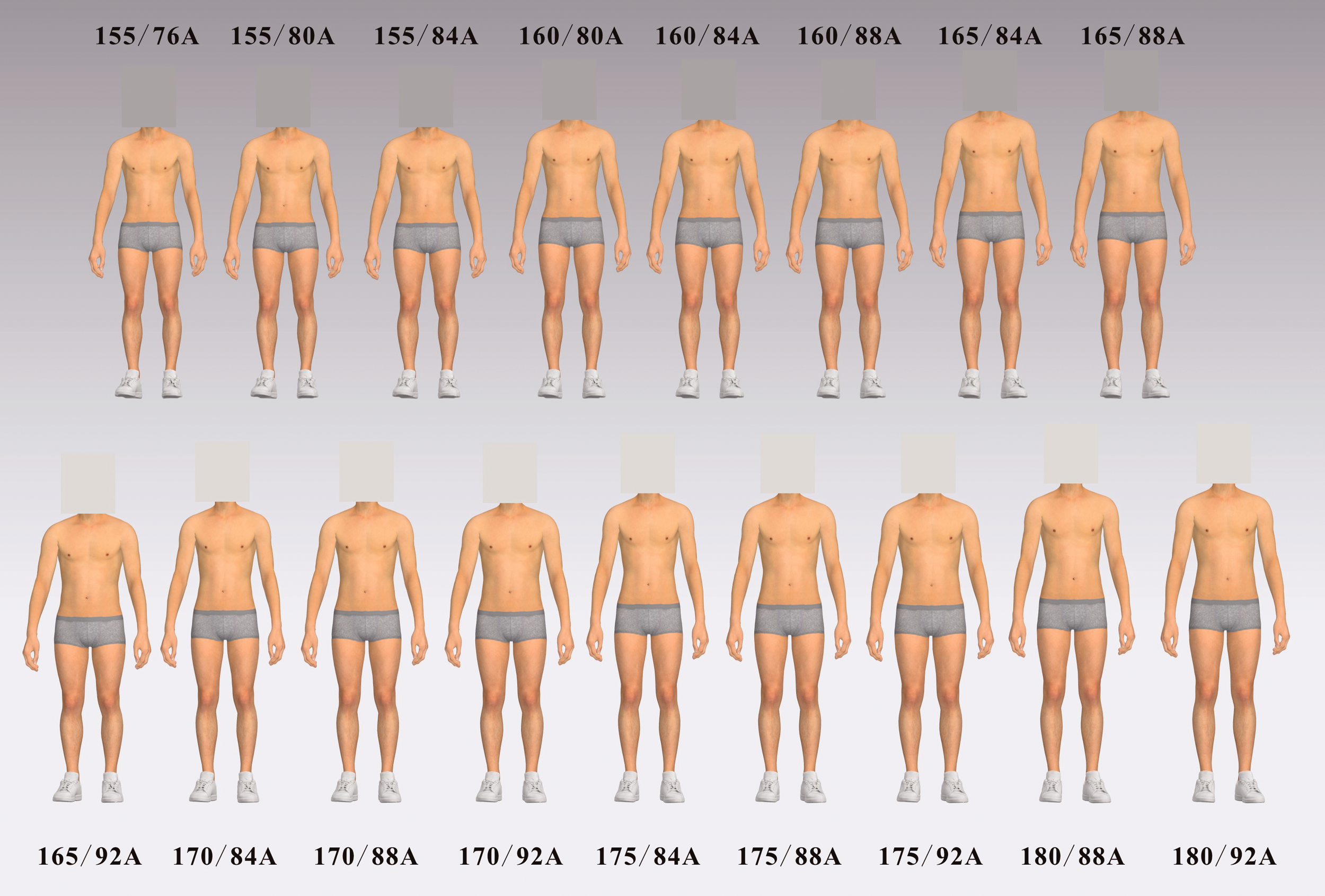
The mannequins used for virtual try-on created from the 17 subjects.
Key pattern parameters of shirts (cm)

Key pattern parameters of leggings (cm)

Fabric information

The meaning of the fabric properties measured in the 3D virtual environment

Experimental garments
Both loose- and tight-fitting garments were taken into account. The shirt is a classic, indispensable garment in men’s daily life, which can be matched with a wide range of garments from formal to leisure wear, such as suits, vests, and jeans. Staying healthy and active has recently increasingly become a concern for public all over the world. The constantly rising number of people engaging in sports activities has driven the growth in consumer demand for activewear. Due to their versatility for use in a wide range of sports, such as jogging, hiking, and cycling, leggings have gained great popularity among consumers. The shirts and leggings used in the research were provided by the international fashion brand company involved in this program. With these products, business validation in the market will be easier. For the above-mentioned reasons, shirts and leggings were selected as representative of loose- and tight-fitting garments respectively in our study. Furthermore, considering the influence of fabric properties on garment fit, we selected five types of fabric with five sizes of each type of experimental garment. Tables 1 to 3 present the key pattern parameters of the shirts and leggings, and the fabric properties, respectively. The meaning of the measured fabric properties in 3D virtual environment is present in Table 4.
Evaluation value scale and semantic description for fit level
K sensory descriptors were chosen to evaluate the garment fit levels on the k feature positions of the garment in both static and dynamic scenarios. The descriptors were evaluated using a semantic differential scale, including five evaluation scores represented by
Acquisition of the sensory evaluation data on garment fit level
A real try-on-based sensory experiment was carried out to collect the sensory data on garment fit. To reiterate, the objective of this experiment was to acquire sensory evaluation data on garment fit using real try-on. We began the experiment once all the subjects had agreed to participate. The detailed procedure is given in the following.
Acquisition of the indicator data for predicting garment fit level
Acquisition of the garment ease allowance in 3D virtual environment
A virtual try-on experiment was realized to procure the feature line measurements of the garments in a 3D virtual environment. Due to its cutting-edge simulation techniques and high accuracy rate (>95%) for real garments and fabrics, the software CLO 3D was employed in this experiment. The exact details of the experiment are described in the following text.
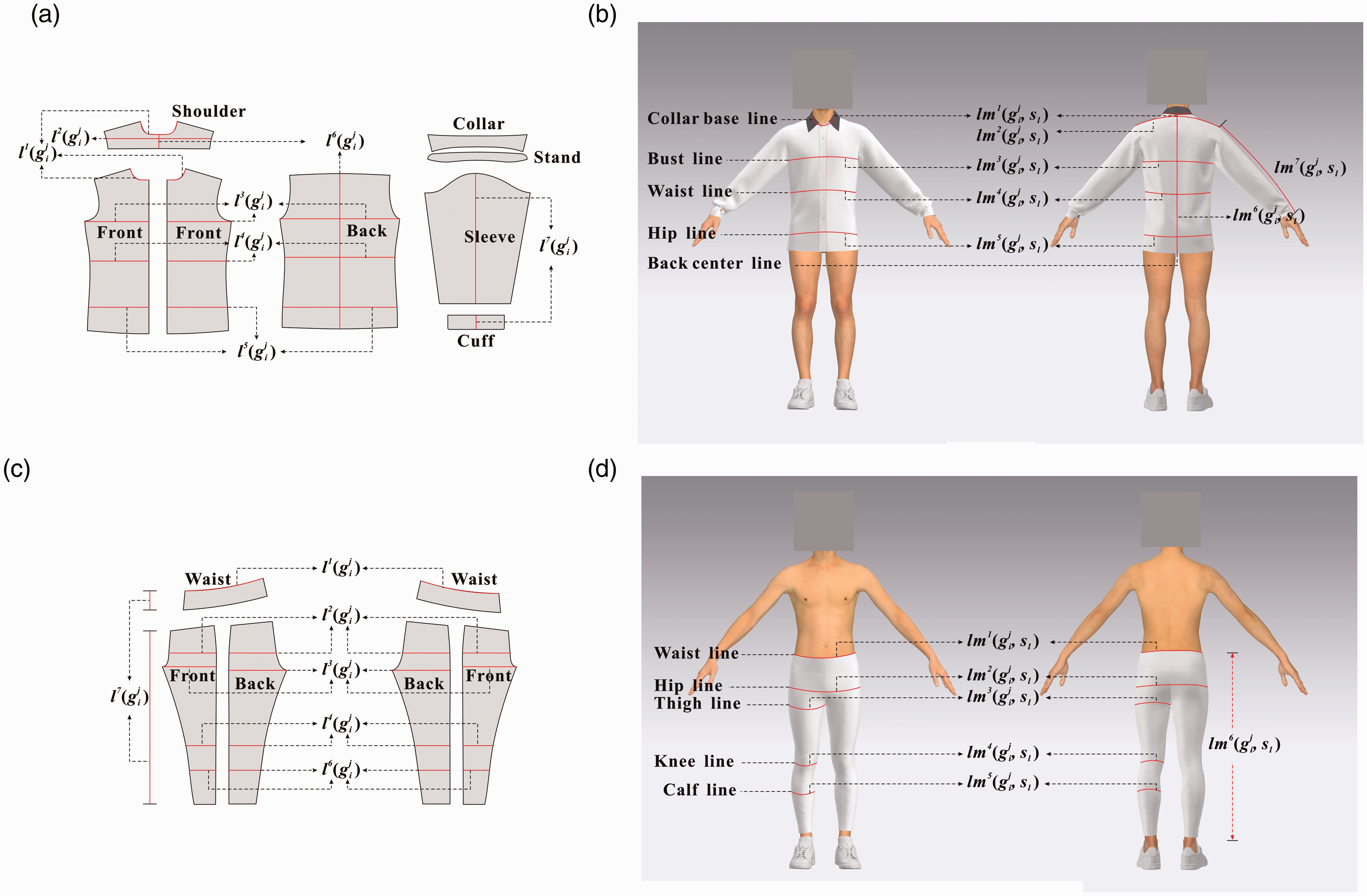
Ease allowances measurement in the 3D digital environment.
Acquisition of garment digital pressure data in the 3D virtual environment
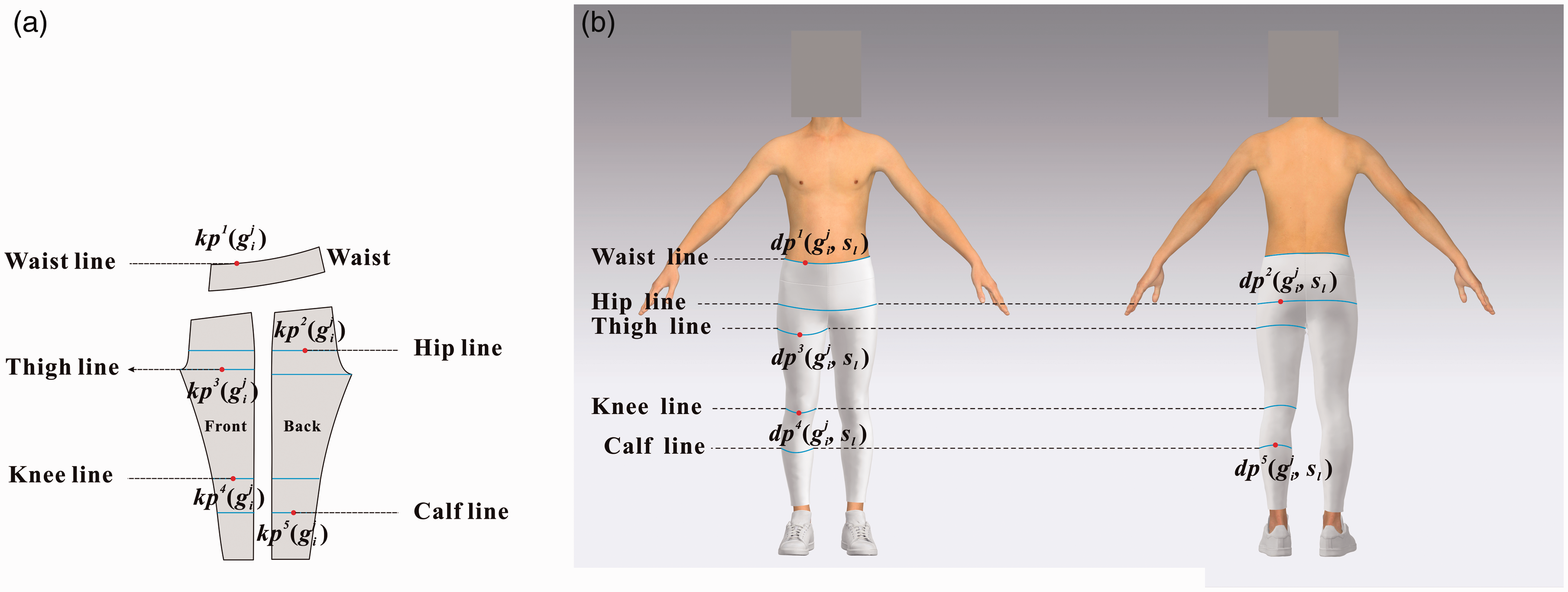
The measurement of digital pressure of leggings in the 3D digital environment.
Finally, the garment ease allowances and the digital pressures measured in the 3D virtual environment were taken as elements of the input learning dataset to establish the proposed model.
Construction of the garment fit level prediction model
Framework of the garment fit level prediction model
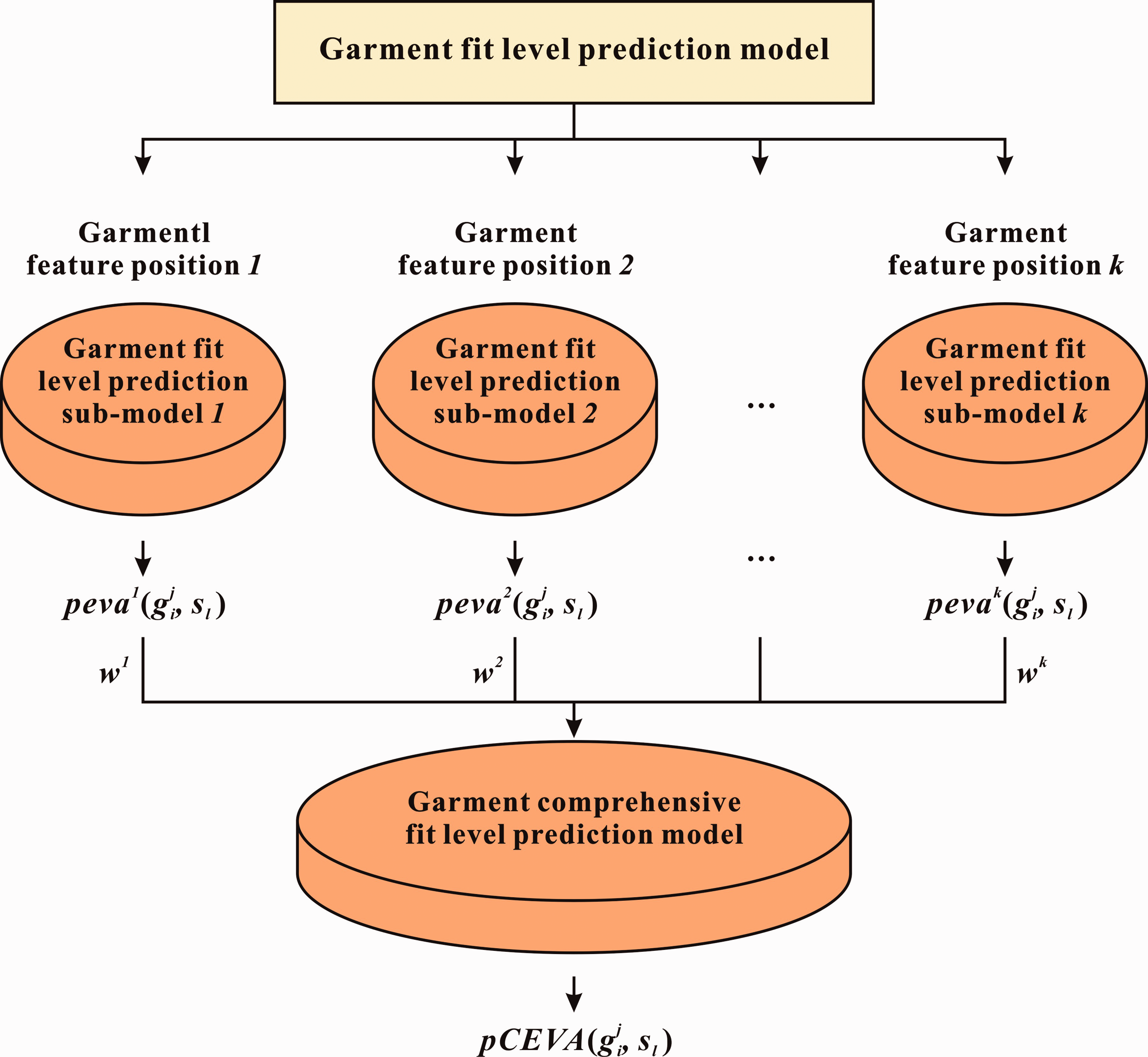
The proposed model (see Figure 6) is constituted by k sub-models and one comprehensive model. First, the local fit levels were predicted by the k sub-models. The comprehensive level was subsequently aggregated following equation (2),
The general framework of the garment fit level prediction model.
The sub-model based on PNN is a four-layer feed-forward network (see Figure 7) that was constructed using MATLAB software. The garment fit level prediction procedures for feature positions using the PNN model are given in the following steps.
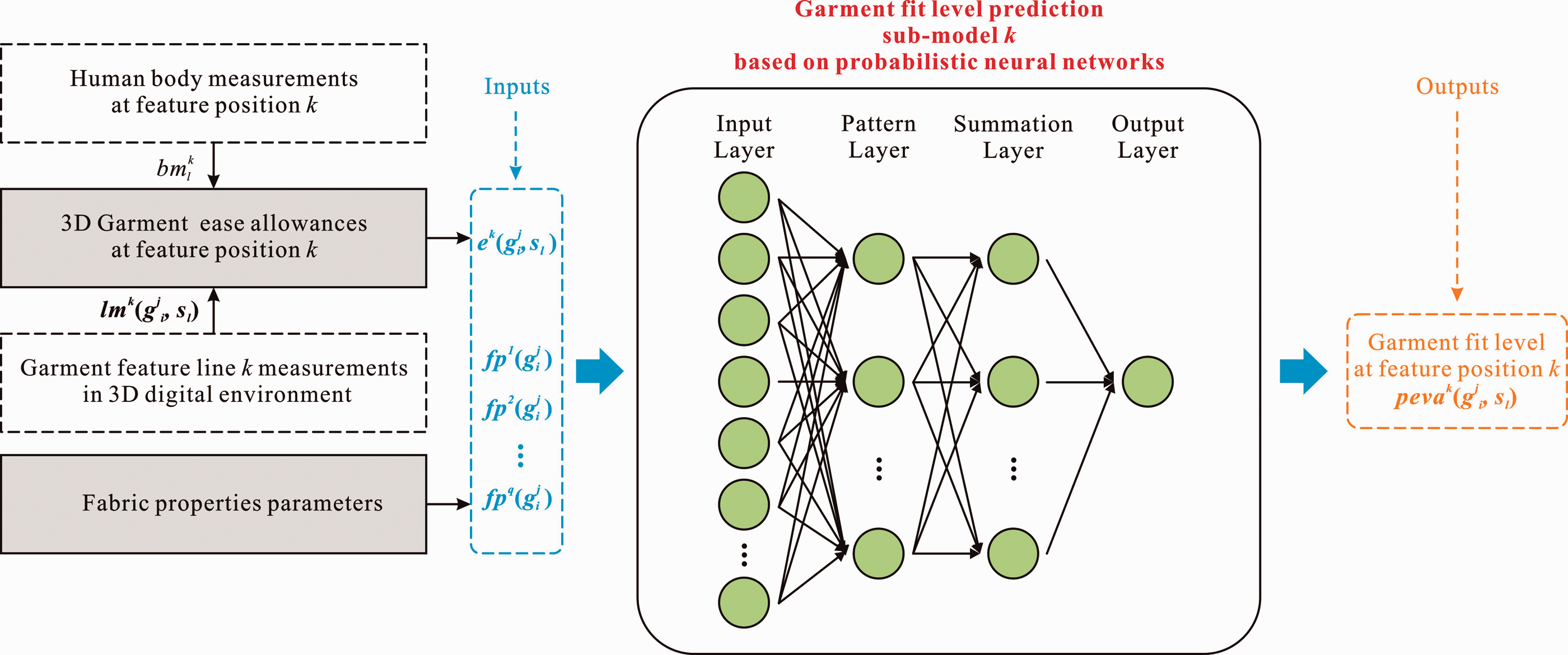
Architecture of the garment fit level prediction sub-model for loose garments.

If we need to predict the fit level of the same garment in other body measurements, we only need to change the collar ease data into the corresponding ease data of the required body measurement. If we need to evaluate the fit levels of the garments in other fabrics, we can alter the fabric parameters to those of the specified fabric.



Since the probability density function (PDF) of the fit level, 

Construction of the garment fit level prediction model for loose garments
Construction of the sub-models for predicting the local fit level
Step 1: Determining the indicators of predicting the garment fit level for loose garments
The garment ease allowances were utilized as the indicators for predicting the garment fit level of the loose garments. The collected shirts’ ease allowances are shown in Table 5, in which a negative value means the garment measurement is smaller than the corresponding body measurements.
Shirts’ ease allowances collected in the 3D virtual environment (cm)

Note: SN: sample number. Due to the length limitation of the article, Table 5 present parts of the shirts' ease allowances, while others were denoted by the symbol of three dots.
Step 2: Determination of the input learning data and the output learning data
The inputs of the proposed model are constituted by the garment ease allowances combined with the specific fabric mechanical properties measured in the 3D virtual environment (see Table 3), while the outputs are the predicted fit levels (see Figure 7).
In this section, we take the construction of the sub-model for predicting collar fit levels as an example. The general principles of creating the sub-model can be applied to set up other sub-models for predicting local fit levels.
For the collar fit levels prediction model, the input layer was composed of one ease datum integrated with 11 fabric properties data, which were collar ease (see Table 5) and fabric parameters TH, SW1, SW2, SH, BW1, BW2, BR1, BR2, BS1, BS2, and DE (see Table 3). The output layer was the predicted collar fit level.
To evaluate the proposed model close to reality, avoid the problem of over-fitting, and guarantee the prediction accuracy of the proposed model, we utilized the k-fold (K = 10) cross-validation approach in building the collar fit level prediction model. Specifically, the learning dataset was initially randomly split into
Meanwhile,
Construction of the model for predicting the comprehensive fit level
After the local fit levels are obtained, the weights for every feature position should be determined. In this study, we performed principal components analysis (PCA) on the ease of allowances to decide the weights using SPSS 25 (IBM Corp, Armonk, NY, USA). The general calculation procedure is introduced as follows:
Let 
First, we calculated the standardized matrix, 
Second, we formed the covariance matrix as
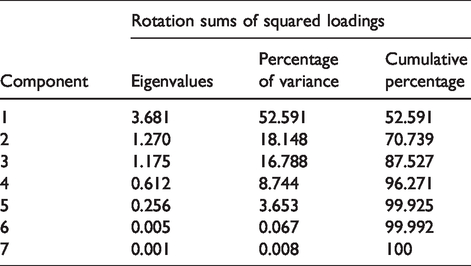
Table 6 gives the results of the PCA. The factor loadings were rotated using the Varimax method. In our study, the components whose eigenvalues were larger than 1 were selected. From Table 6, the first three components whose cumulative contribution rate was 87.527% meet the criterion. Thus, they were extracted for further research, and the corresponding eigenvalues
Total variance explained
Let 
Let 
Let 
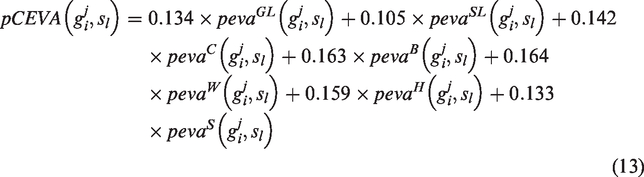
Based on equations (10) to (12), we obtained a set of weights for the shirt's feature positions (see Table 7).
The weights of the feature position of the shirts

Therefore, we can now obtain the comprehensive fit level of the shirt using equation (13):
Construction of the garment fit level prediction model for tight garments
We established two types of fit level prediction model for tight-fitting garments. One model is based on the ease allowances only. The other is based on both the digital pressures and ease allowances.
Construction of the garment fit level prediction model for tight garments based on ease allowances
Since one sub-model corresponds to one feature position, and there are six feature positions that are highly related to the leggings fit: waist, hip, thigh, knee, calf, and the legging length; the leggings’ fit level prediction model is therefore composed of six sub-models.
First, the collected dataset (see Table 8) is split into the learning dataset and the testing dataset at a ratio of approximately 9:1. Next, the ease allowances (see Table 8) and the specific fabric properties (see Table 3) are utilized as the inputs of each sub-model, and the local fit level of the leggings is used as the output. Afterward, we established and trained the PNN-based leggings fit level prediction model using the 10-fold cross-validation approach described in section “Construction of the sub-models for predicting the local fit level.”
Leggings’ ease allowances collected in the 3D virtual environment (cm)
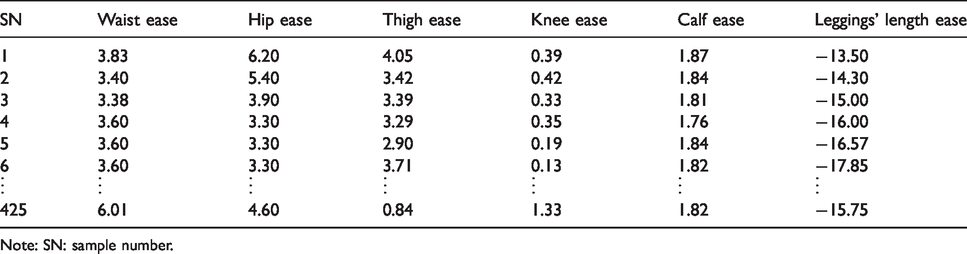
Note: SN: sample number.
The weights of the leggings’ feature positions were computed by PCA, as shown in Table 9.
The weights of feature position of the leggings

The comprehensive fit level of the leggings can be acquired following equation (14):

Construction of the garment fit level prediction model for tight garments based on digital pressures and ease allowances
The inputs of each sub-model were the digital pressures (see Table 10), the ease allowances of the legging length (see Table 7), and the fabric properties (see Table 3). The outputs also included the local fit of the leggings. We then established and trained a PNN-based model to predict local fit level.
Digital pressures for leggings collected in the 3D virtual environment (kpa)
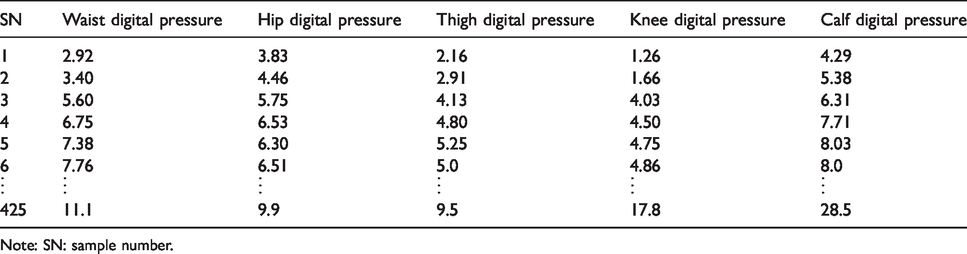
Note: SN: sample number.
Based on the weights of the leggings’ feature positions (shown in Table 11), the comprehensive fit level can be aggregated by equation (15):

Weights of the feature positions of the leggings based on garment eases and digital pressures

Fit level-driven interactive garment design process in the 3D virtual environment
Having established the garment fit level prediction model, we put forward a new interactive garment design process in the 3D virtual environment based on the proposed garment fit level prediction model (see Figure 8). The overall garment design process involves the indispensable, sequential phases and one optional phase. The essential phases include consumer requirements acquisition, garment recommendation, virtual try-on and display, and garment fit assessment (see the left-hand side of Figure 8). After the apparel fit assessment phase and communication with the consumer, if the consumer is dissatisfied with the fit level at any local position, the garment pattern adjustment phase activates (see the right-hand side of Figure 8). The procedures of garment pattern adjustment are generally as follows. First, according to the outputs of the proposed model, fashion designers will discriminate the target positions of the garments that are unfitted. Next, the most relevant structure lines and points in the original garment patterns will be modified to meet the consumer’s requirements. The fashion designers will then check all the structure lines and points of the patterns to guarantee that only the target structure lines have been adjusted. Finally, a set of new patterns will be generated.
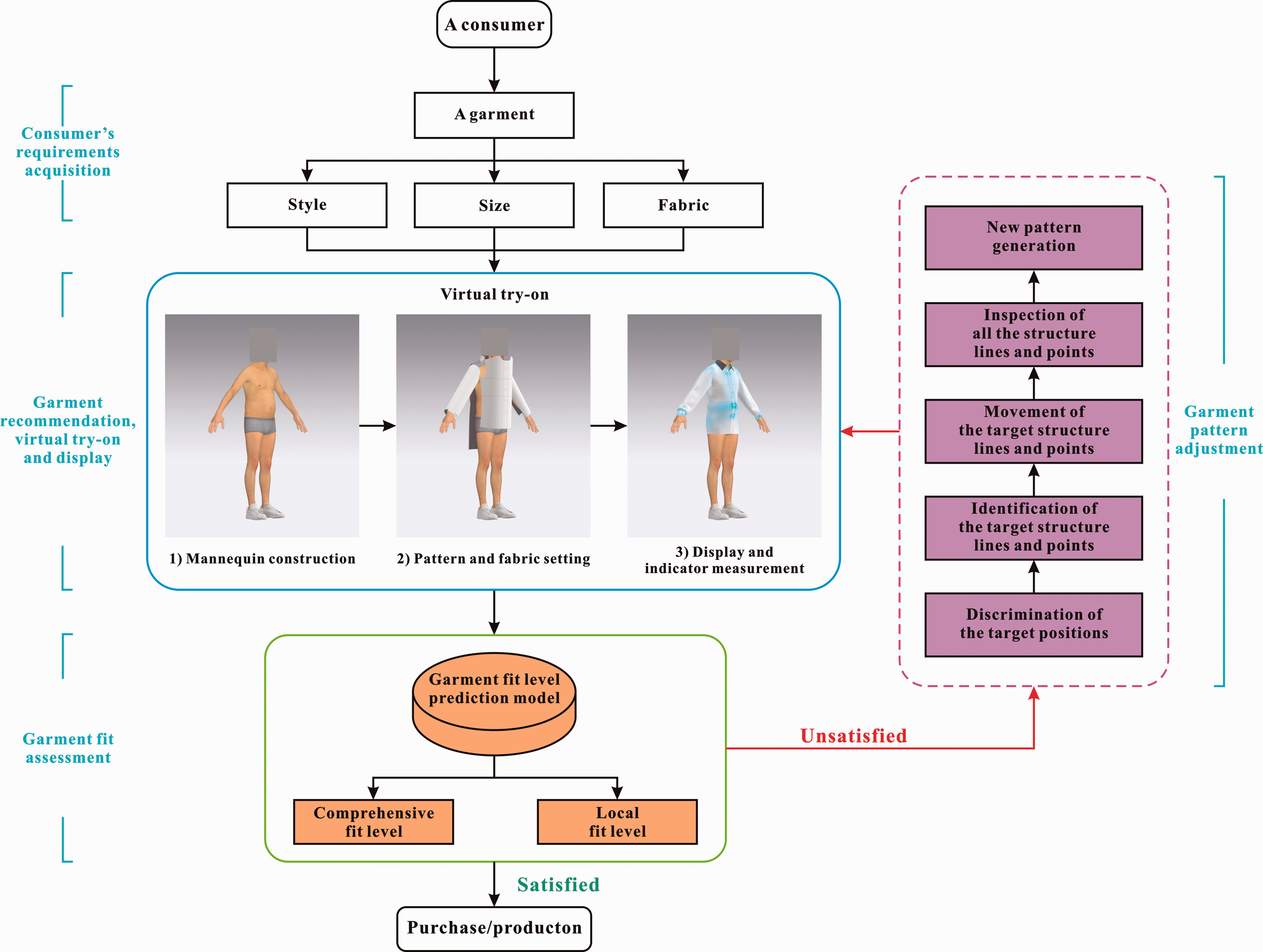
Flowchart of the fit level prediction-based interactive garment design process in the 3D virtual environment.
For example, if the predictive output of the fit level of collar equals 2, indicating that the collar is a little tight, and the consumer’s target fit level is 3, then the garment pattern adjustment will activate. First, the most relevant structure lines and corresponding control points are identified, that is, the necklines in the front and back panels, the shoulder–neck points, and so forth. Second, the necklines will be lengthened by moving the shoulder–neck points accordingly. All the structure lines in the patterns will subsequently be checked to ensure the accuracy of the adjustment. Finally, a new set of patterns will be generated and recommended and displayed to the consumer for fit evaluation.
Through performing this iterative process of “recommendation–display–assessment–adjustment,” the consumer’s garment product requirements can ultimately be met.
Validation and application of the garment fit level prediction model
Comparison of the performance of the proposed garment fit level prediction model
The performance of the proposed PNN model was compared with other typical classifiers, including the linear regression (LR) model, the Support Vector Machine (SVM) model, the Radial Basis Function Artificial Neural Network (RBF_ANN) model, and the Back Propagation Artificial Neural Network (BP_ANN) model. The comparison experiment was performed as follows. First, the fit level prediction model was created based on the different algorithms, and trained using the 10-fold cross-validation approach. For each fold, all the models were trained using the same training dataset and the validation dataset. For each kind of algorithm, the final model was obtained after 10-fold cross-validation.
Second, the performances of the different models were tested and compared using an identical testing dataset that was independent of the learning dataset. Taking the collar fit level prediction model as an example, performance was compared using the same testing dataset, shown in Table 12.
The testing dataset for the collar fit level prediction model

Note: SN: sample number; CE: collar ease.
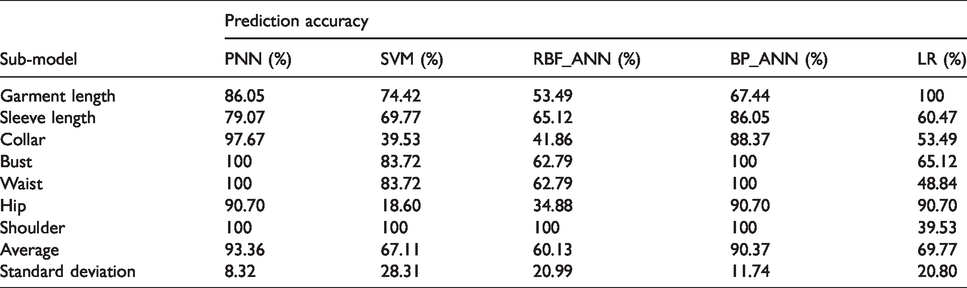
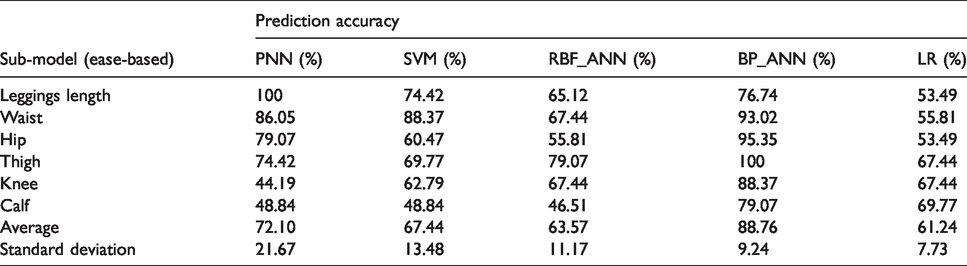
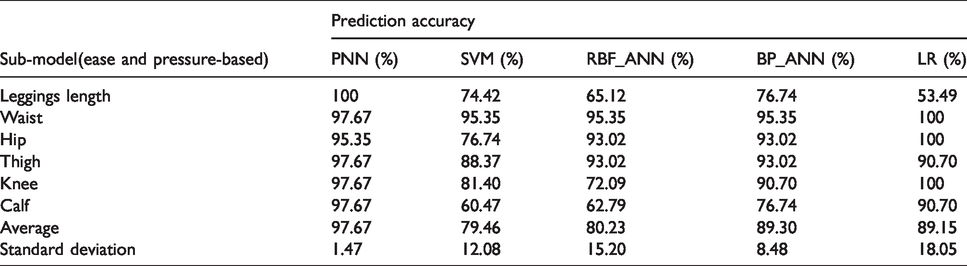
Tables 13 to 15 show the results of the comparison among the different models. For shirt fit level prediction (see Table 13), in relation to average prediction accuracy, the proposed PNN model had the highest value (93.36%), followed by the BP_ANN (90.37%), the LR (69.77%), the SVM (67.11%), and the RBF_ANN (60.13%), which indicates that the prediction performance of the proposed model was superior to other classifiers. What can also be seen from Table 13 is that the prediction accuracy of each kind of the model fluctuates at different feature positions. For example, the standard deviation (SD) of the proposed PNN model (8.32%) was the lowest among all the classifiers, indicating that the prediction accuracy fluctuations of the PNN-based model were minimal. Therefore, the PNN model had the optimal performance in predicting shirt fit level among the four classifiers. For legging fit level prediction, based on ease allowances only (see Table 14), the BP_ANN model had the highest average prediction accuracy (88.76%) and the lowest SD (9.24%). The prediction accuracy of the PNN model was 72.10%, closed to that of the BP_ANN model. However, the SD of the PNN-based model rose to 21.67% for leggings fit level, which was the maximal SD of the five models. Thus, it can be concluded that the comprehensive performance of the BP_ANN model was optimal for ease-based legging fit level estimation. For legging fit level prediction based on clothing digital pressures combined with ease allowance (see Table 15), the average prediction accuracy and SD of the PNN model were 97.67% and 1.47%, respectively, which demonstrates that the overall performance of the PNN model was outstanding among five predictive models.
Performance comparison for shirt fit level
Performance comparison of the ease-based model for leggings fit level
Performance comparison of ease and pressure-based models for leggings fit level
Influence of the indicators on prediction accuracy for predicting the fit level of tight garments
For legging fit level prediction, it can be seen that the average prediction accuracy of the PNN model based on the ease and pressure was over 95.0% (see Table 15), while the average prediction accuracy of the PNN model based on ease was only 72.10% (see Table 14). Moreover, the SD value of the ease and pressure-based model was only 1.47%, which was dramatically lower than that of the ease-based model (21.67%). Therefore, this indicates that multiple indicators contribute to prediction performance for the fit level of tight garments.
Application of the garment fit level prediction model
To validate the proposed garment fit level prediction model, we applied it to the fit level prediction of a real shirt case for a specific male consumer. The application process of this case was as follows:






From the results, the
Interactive garment design based on the proposed garment fit level prediction model
A new garment design process for a 3D virtual environment can be developed by integrating the proposed fit level prediction model into commercial 3D clothing design software. The process for a specific consumer is as follows. First, the mannequin of the consumer, whose abdomen was convex (see Figure 9(a)) was created in a 3D design environment. We then designed, recommended, and demonstrated the garment using virtual try-on, as well as the garment fit levels predicted by the proposed model (see Figure 9(b) and (c)). From the results of the fit assessment, we found that the waist elements of the shirt and leggings were tight. To resolve this, we identified and adjusted the most relevant structure lines and the corresponding control points on the real patterns, such as the waist lines in the front and back panels. We subsequently recommended and displayed the new garment to the consumer based on virtual try-on technology. Finally, the optimized garment (see Figure 9(d)) product that met the consumer’s requirements was obtained through performing an interaction between real garment pattern adjustment and the virtual try-on display. This way, we were able to realize the development of individualized garments accurately and rapidly. In addition, we will be able to promote mass customization by comprehensively taking into account the influences of factors like individualization, productivity, and cost.
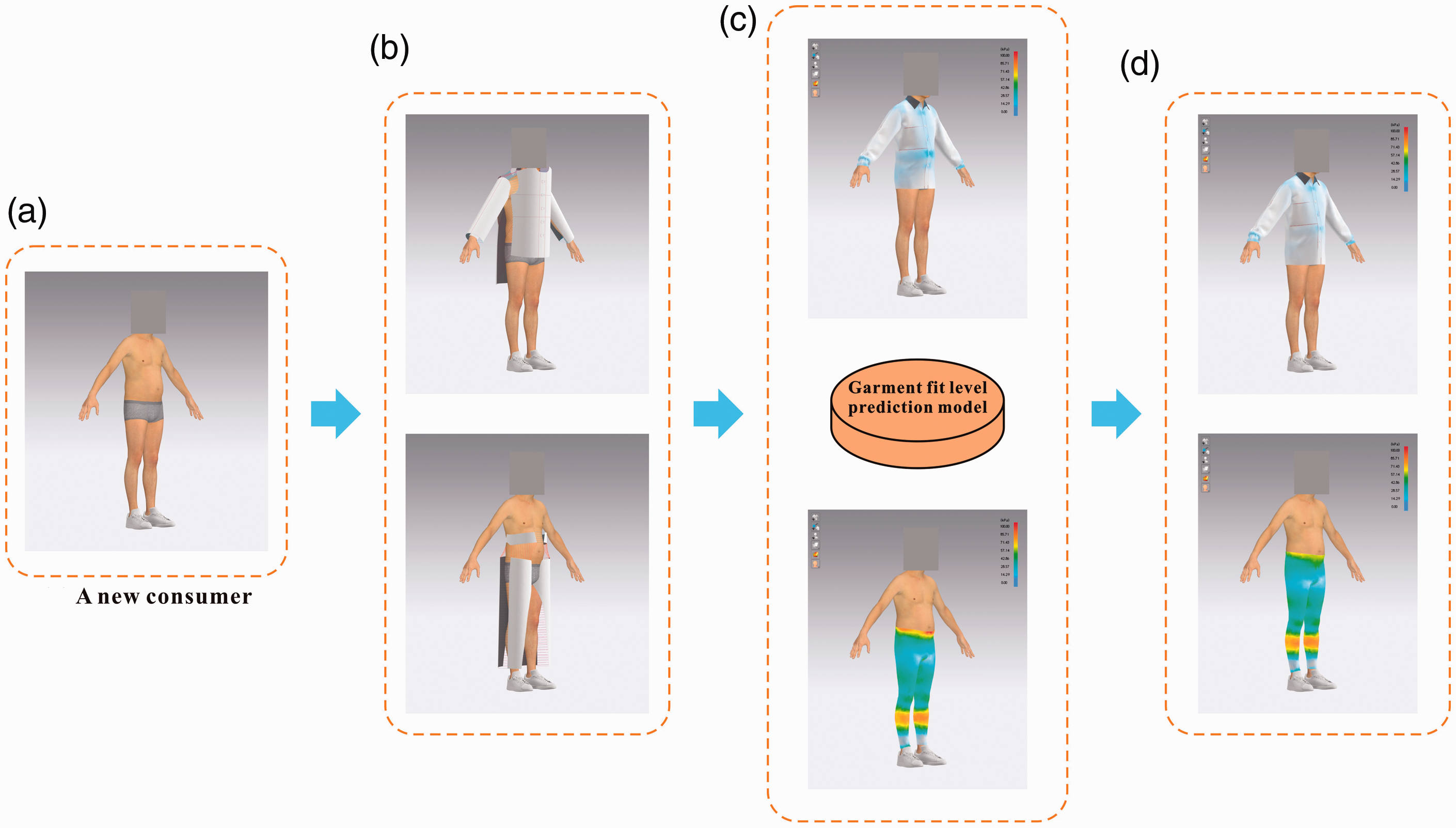
Interactive garment design using the proposed garment fit prediction model.
Extension of the proposed garment fit level prediction approach
The general ideas and principles can be extended to various target markets and populations, as well as diverse garment styles. The process is as follows:
According to the characteristics of the target market and population, as well as the specific garment styles, corresponding representative subjects must be recruited and the corresponding learning data collated following the experimental steps described in this paper. Based on the learning data, the corresponding garment fit level prediction model based on the method proposed in this study must be developed. Through the above-mentioned steps, the garment fit level prediction model for various target markets, populations, and garment styles can be realized and applied.
Conclusions
In this study, we put forward a new garment fit level prediction approach based on the PNN, as well as a new interactive garment design process in a 3D virtual environment by combining the proposed fit level prediction model and classic 3D clothing design software. From the results, we can conclude that (a) the garment ease allowances in the 3D virtual environment were good indicators for loose garment fit level recognition; (b) for the tight garments, multiple indicators that combined digital pressures with ease allowances were superior to the single indicator of ease allowance in predicting fit level; (c) the PNN model performed better than the LR, the SVM, RBF_ANN, and BP_ANN models in prediction of garment fit level for both loose- and tight-fitting garments. The model proposed in this study had the following advantages: (1) the proposed model can not only predict comprehensive fit levels, but also the local fit levels of the garments rapidly, precisely, and automatically; (2) the model provides a feasible and efficient solution for perceiving garment fit levels without real try-on, which can be utilized in both online and in-store shopping to enhance consumer satisfaction; (3) the performance of the proposed model can be continuously enhanced via learning new datasets. The proposed model can be further improved and extended in the future. A personalized garment design system can be developed to offer consumers accurate garments for each specific fit level. From an industrial application viewpoint , more datasets should be considered and acquired in future research.
Footnotes
Declaration of conflicting interests
The authors declared no potential conflicts of interest with respect to the research, authorship, and/or publication of this article.
Funding
The authors disclosed receipt of the following financial support for the research, authorship, and/or publication of this article: The Fundamental Research Funds for the Central Universities and Graduate Student Innovation Fund of Donghua University (grant no. CUSF-DH-D-2020091); Dong Hua University’s excellent PhD international visit program; the Fundamental Research Funds for the Central Universities (grant no. 2232020G-08); the Open Project Program of Key Laboratory of Silk Culture Heritage and Products Design Digital Technology of Ministry of Culture and Tourism of China (grant no. 2020WLB07); the European Horizon 2020 Research Program (Project: FBD_BModel, No. 761122); the Social Science Planning Project in Anhui (grant no. AHSKQ2019D085); the Scientific Research Project of Anhui Polytechnic University (grant no. Xjky2020055); the Key Research Project of Humanities and Social Sciences in Anhui Province College (grant nos. SK2016A0116 and SK2017A0119); the Open Project Program of Anhui Province College Key Laboratory of Textile Fabrics, Anhui Engineering and Technology Research Center of Textile (grant no. 2018AKLTF15); and the National Key Research and Development Program of China (grant no. 2019YFF0302100).
