




Abstract
The extraction and consequent application of natural colorants obtained from mahogany (Swietenia mahagoni) seed pod powder is described here. The colored solution was extracted by facile boiling in an acidic medium. Fourier-transform infrared spectroscopy indicated that the mahogany seed pod extract contained lignocellulosic substances. The typical strong broad band for -OH stretching vibration appeared at around the 3400 cm−1 region in the spectra indicating the presence of alcoholic groups in the substance. The acidic boiling of the mahogany seed pod extract showed the color bearing character at λmax 400–480 nm in the visible range of the ultra-violet spectrum. Subsequently, commercial single jersey-knitted nylon fabric was dyed with the mahogany seed pod extract. The effects of temperature, pH, and time were investigated meticulously for the above dyeing. The optimum conditions for nylon fabric dyeing with the mahogany seed pod extract were selected as the temperature of 100°C, dyeing time of 60 min, and dyebath pH 4.5. The results were interpreted in terms of color strength and fastness properties. The color fastness to wash and perspiration of nylon fabric dyed with mahogany seed pod extract was found to be moderate to good in the grey scale rating 3–4 to 4 grade in the case of optimum dyeing condition whereas color fastness to light was observed to be poor in the blue wool scale rating 2 grade. It was observed that dyeing time, temperature, and pH had profound influences on the color strength of the dyed material. The color strength was increased with the increase of dyeing period and dyebath temperature. The acidic dye liquor produced the darker hues while the alkaline condition had no effect on color yielding. The fabric was dyed uniformly, confirming the evenness of dyeing which is very important for successful commercial dyeing.
Introduction
Coloration is an art of human civilization from time immemorial. The excellence of color in clothes is the reflection of our artistic mind and is often considered as the aristocratic element in the society. Our ancestors, the Neanderthals, used colorants more than 180,000 years ago. 1 The first organic colorant, indigo blue, was found on mummies' wrappings in Egypt nearly 4000 years ago. 2 Natural colorants dominantly existed in ancient human society till the late nineteenth century 3 and the colorants were extracted from natural sources like plants, insects, and mollusks on a small scale. As human civilization stepped into the industrialization era, the application of natural colorants was superseded by synthetic dyes. 4 The rapid industrialization and excellent properties of synthetic dyes such as color matching, better serviceability, high purity, availability, and ease of processing defeated the natural colorants to a great extent. 5
However, due to the growing concern about the organic value of sustainable products and waste management, environmentally benign practices of dye application 6 have attracted much attention including in the textile industry which has the most significant impact on environmental pollution.7,8 It is estimated that, globally, 280,000 tons of textile dyes are discharged as industrial effluent. 5 This high volume of synthetic dyes is difficult to neutralize in the environment as most of the dyes are persistent and non-biodegradable.9,10 Moreover, the synthetic dyes have been proved as health hazards for both adults and children. 11 In order to address these issues, global research interest has moved towards the natural colorants once again.12,13 Furthermore, modern technologies are engaged with natural dyes for further functional development as the demand for natural dyed products is rising. 14 There are more than 500 natural-color-yielding plants in our flora and mahogany is one of them. 15 It is a reddish-brown timber of tropical hardwood species tree and a member of the Meliaceae family. There are mainly two species, namely Honduran (Swietenia macrophylla) and Cuban or West Indian (Swietenia mahagoni) mahogany. In Bangladesh, the West Indian mahogany trees are common. 16 These trees produce plenty of seeds every year. The seed pods are woody, soft lignocellulosic substances with a pale brownish-golden color. Several studies have explored the possibility of dyeing textile fiber with the bark, heartwood, and leaves of mahogany trees.17,18 However, the application of the mahogany seed pod (MSP) as a colorant has been completely unexplored till now.
Nylon is a generic name of a very important synthetic textile fiber of polyamide composed of recurring amide chains. The enormous amide side chains in the fiber facilitate the dyeing with ionic synthetic acid dyes. However, there are few examples of nylon fiber dyeing with natural colorants. 19 The pioneer work reported by Gulrajani et al. of dyeing nylon fibers with the chromophoric groups of carotenoid, naphthoquinone, purpurin, and nordamncanthal from annatto, ratanjot, and Indian madder have been reported in different studies.20,21 Other natural extracts, including emodin, anthraquinones, and dermocybin, were reported to dye nylon fiber with the help of mordant.22–24 In a different study, Son et al. has reported on the cationic natural colorants for dyeing nylon fiber. 25 In addition, Tang et al. and Ebrahimi et al. have studied the application of polyphenolic dyes onto nylon fibers extracted from henna, pomegranate rind, and Pterocarya fraxinifolia.19,26 In the previous studies, different types of metallic or non-metallic mordants were applied in order to dye the nylon fiber with natural colorants which is an additional hazard for the environment in terms of sustainability. To the authors’ best knowledge, this is the first approach to apply the MSP extract as colorants for nylon fabric without any mordant. Consequently, the extraction and characterization of dye liquor are described and subsequently applied on knitted nylon fabric and various dyeing characteristics such as color strength and fastness properties are studied. Thus the application of MSP as dye liquor can be an effective and economical approach for the coloration of nylon fabric.
Experimental details
Collection of raw materials
MSPs were collected from Mawlana Bhashani Science and Technology University Campus, Santosh, Tangail, Bangladesh. Hydrochloric acid (37%), sodium carbonate were purchased from Merck, Germany and were of analytical grade. Commercial knitted single jersey nylon fabric GSM 180 was procured from the local textile industry in Bangladesh.
Extraction of colorants from MSPs
MSPs were washed with water and dried in air. A kitchen blender was used to produce fine powder after cutting into pieces. In a typical experiment, 20 g MSP powder was taken in 1 l of 0.1 (v/v) % HCl acid solution and boiled at 100°C for 30 min in a stainless steel pot of wash fastness tester (Gyrowash, James H Heal, England). The solution was then filtered with nylon strainer several times. This filtered solution was used as dye solution for dyeing. Figure 1 presents the colorant extraction process from MSPs. Additionally, in order to extract the colorants with methanol 40 g MSP powder and 800 ml methanol were taken in a one-litre beaker. The beaker was placed on a magnetic stirrer and kept under rotation for 24 h. The MSP powder was then separated by filtration and methanol was evaporated by the rotary evaporator.

Schematic of colorant extraction from mahogany seed pod (MSP) and subsequent dyeing of nylon fabric.
Characterization of MSP extract and dyed nylon fabric
Ultraviolet (UV)-visible absorption spectra of MSP extracts were measured using a UV-vis absorption spectrophotometer (UV-1800, SHIMADZU, Japan). The characteristics of MSP extracts and dyed nylon fabric were investigated with fourier-transform infrared spectroscopy (FT-IR) (IR Prastaige21 by SHIMADZU, Japan). FT-IR absorption spectra were measured at a spectral resolution of 4 cm−1 with Potassium bromide (KBr) pellets within the range of 4000–400 cm−1. Each spectrum was taken from 64 scans and the detector was InGaAs.
Dyeing and performance evaluation of nylon fabric
Typically, a 3.5 g pretreated (ready to dye state) nylon fabric was directly added in 100 ml of extracted dye solution in a laboratory dyeing machine (IR Dyer, Rapid, China). The temperature of the dye bath was gradually (3°C/min) raised to 100° C. The dyeing was continued at 100°C for 60 min. The dyeing cycle was terminated by cooling the system at 50°C. The dyed fabric was neutralized with 2 g/l soda ash at 50°C for 10 min. The unfixed dyes were removed by washing with 2 g/l ISO standard detergent (phosphate detergent without optical brightening agent) at 95°C for 15 min. Furthermore, in order to study the effect of different parameters on dyeing different temperature ranges 30–130°C, pH (1–13), and dyeing period (10–120 min) were also investigated. The different pH levels were adjusted with either acids (acetic or hydrochloric acid) or alkalis (sodium carbonate or sodium hydroxide).
The color depth of the dyed fabric was analyzed by measuring the color strength (K/S value) at 400 nm wavelength with a spectrophotometer (Data Color-650, USA) in D65 illuminant and 10° observer (specular included). Color fastness to wash, rubbing, perspiration, and light were measured according to BS EN ISO 105-C06, 105-X12, 105-E04, and 105-B02, respectively.27–30
Results and discussion
Characterization of colorants from MSPs
The acidic extract of MSP was characterized by UV-visible and FT-IR spectroscopy. Figure 2(a) shows the visible spectra of different concentration of MSP. The highest absorption was obtained in the range of 400–480 nm resulting in a complementary color bluish orange hue. The acidic colored solution was suitably applied into the nylon fiber keeping the dyebath in the acidic range which is similar to conventional dyeing of nylon fiber. The concentration of the extracted color can be varied by the variation of the concentration of MSP powders. Higher yield of the color was noticed in cases of higher amounts of MSP powder (Figure 2(a)). The absorption intensity of the extracted color demonstrated linear progress (Figure 2(a) inset) with the concentration of MSP powder. Therefore, the depth of the shade or color strength can be tuned simply by varying the amount of MSP powder. This phenomenon is displayed in Figure 2(b) indicating the linear relationship of increasing color strength with the MSP powder. As we observed, the color strength of the dyed sample was increased as the higher amount of MSP powder was added to the dye bath.
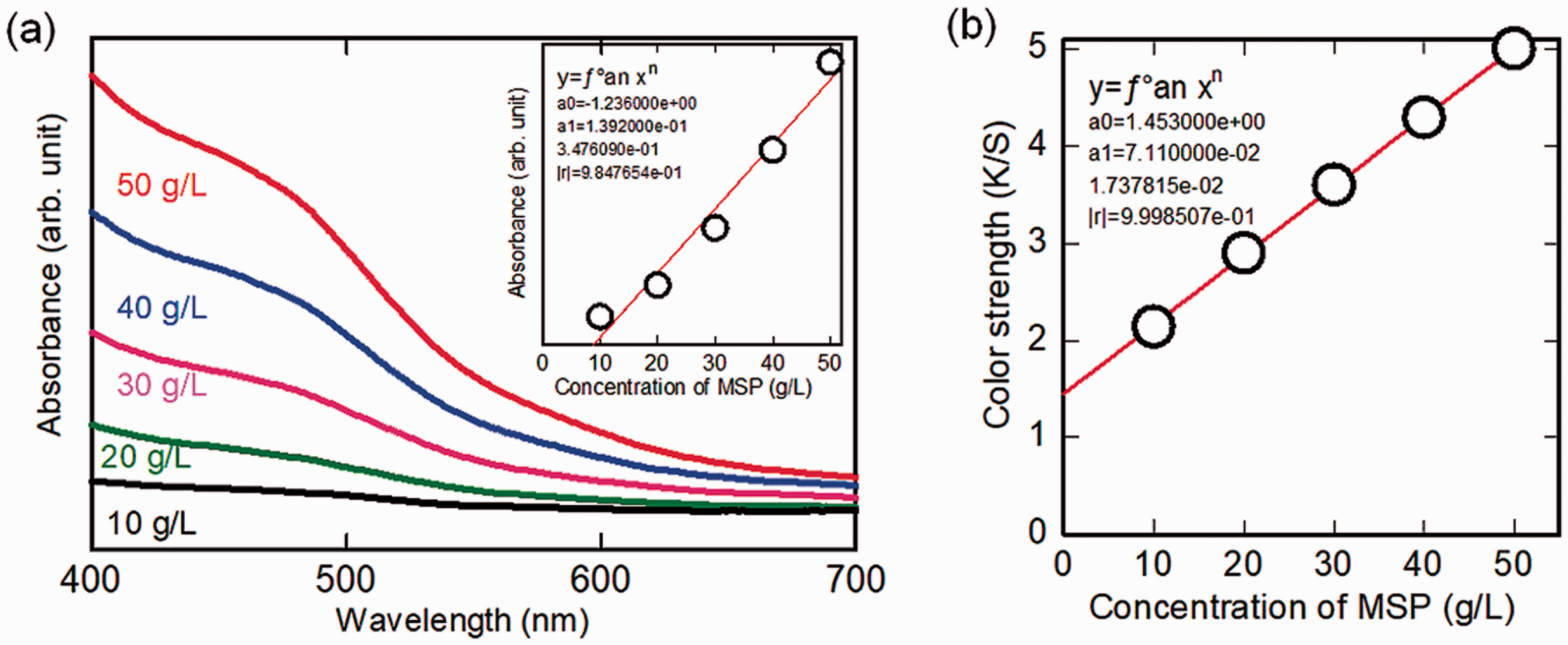
(a) Visible absorbance of mahogany seed pod (MSP) extracts for different concentration with linear progress (inset); (b) linear increase of color strength of dyed nylon fabric with different concentration MSP extracts.
The MSP extracts were further investigated with FT-IR spectroscopy. The FT-IR studies indicated that MSP is a lignocellulosic substance. Figure 3 represents the FT-IR spectra of MSP extracted with methanol and hydrochloric acid. Both the spectrums contain similar major peaks with slight shifting in the case of acidic extraction. The typical strong broad band for -OH stretching appeared at around the 3400 cm−1 region in the spectra indicating the presence of alcoholic groups in the substance. The methanol extract exhibited a distinguished peak at 1734 cm−1 arising for C=O carbonyl stretching due the presence of acetyl and carboxyl moieties originating from hemicellulose and the peak at 1520 cm−1 was observed in both methanol and aqueous extracts suggesting the presence of ligneous substances in MSP extract. 31 Additionally, the asymmetric and symmetric CH2 stretching vibrations were observed at 2958 and 2945 cm−1 respectively. 32 In contrast, the acidic extract did not show any peak at 1734 cm−1 suggesting the removal of carbonyl moieties from the MSP extract due the action of HCl acid. 32 Consequently, the decrease of CH2 chain was also observed as the acidic extract exhibited a very weak peak at 2920 cm−1 region. The other peaks at the 1380 and 1448 cm−1 regions appeared due to the C-O stretching and C-H bending vibrations of the cellulosic backbone accompanied with moderately strong water absorption peak at 1620 cm−1 region.33,34

Fourier-transform infrared spectroscopy (FT-IR) spectra of mahogany seed pod (MSP) with (a) methanol and (b) HCl extracts.
Characterization of dyed and undyed fabrics
The dyed and undyed nylon fabrics were characterized by FT-IR spectroscopy in order to find the interaction of MSP colorant with the nylon fiber presented in Figure 4. The undyed nylon in Figure 4(1) showed the characteristic band at 3306 cm−1 arising for stretching vibration of -NH bond. Besides, a band appeared at 3080 cm−1 indicated the aromatic C-H bond in nylon chain backbone. A distinguished absorption at 1653 cm−1 is due to C=O present in the amide group. Furthermore, -NH deformation was observed at 1543 cm−1. In addition, a couple of characteristic bands appeared at 2926 and 2858 cm−1, respectively, for aliphatic C-H as asymmetric and symmetric stretching (CH2). These data are consistent with the previous studies.35,36 On the other hand, the dyed nylon in Figure 4(2) exhibited similar signals. The important thing is that the NH group of nylon overlapped with the -OH group of MSP extract. The stretching vibration of -OH group in undyed nylon fiber ranges from 3132–3460 cm−1 whereas in the case of dyed nylon fiber that was from 3132–3554 cm−1. So, the net -OH group broadening occurred 94 cm−1 in dyed nylon fiber which is indicative for H-bonding interaction. Along with H-bonding other non-covalent weak bonds might also associated with dye and fiber during dyeing. 37 Moreover, the relative intensities of the 1650 cm−1 and 3300 cm−1 bands were decreased in the case of the dyed nylon fiber spectrum. Consequently, the lowering of relative intensity of the absorption bands for both -OH and -C=O groups was observed in the dyed nylon fiber compared to the absorption bands of the corresponding groups of the undyed nylon fiber which further suggested the conception of H-bond formation.37,38

Fourier-transform infrared spectroscopy (FT-IR) spectra of (a) nylon fiber and (b) nylon fiber dyed with mahogany seed pod (MSP) extract.
Effect of dyeing parameters
Dyeing is a complex phenomenon in a heterogeneous system interacting with several chemicals, colorants, and textile fibers. The system is largely affected by reaction temperature, dyebath pH, time, etc. Dyeing parameters have apparent influence on the color strength of the dyed fabric. In this study, color strength was increased with the increase of dyeing temperature but the temperature above 100°C is not easily attainable. There is also a chance of strength loss of nylon fabric at higher temperature. Similarly, an acidic dye bath produced darker hues on nylon fabric but it requires strong acid for maintaining lower dyebath pH which might also reduce the strength of the fabric. Likewise, the color strength was also increased with the increase of dyeing period but prolonged dyeing time is not economical. Considering the above factors, the optimum condition for nylon fabric dyeing with MSP extract was selected as the temperature 100°C, dyeing time 60 min, and dyebath pH 4.5.
In spite of this, different dyeing parameters have been investigated in this study in order to observe the impact of different dyeing conditions. Figure 5 illustrates the influence of temperature, time, and dyebath pH of dyeing nylon fabric with MSP extract. The effect of dyebath temperature on color strength was studied at pH 4.5 and keeping the dyeing time to 60 min. The color strength of the nylon fabric was increased almost exponentially while increasing the temperature (Figure 5(a)). Initially, the color strength was not significantly increased. After exceeding the temperature 50°C the color yield was augmented. This phenomenon was due to the glass transition (Tg) temperature of the nylon fiber. Once the temperature of the dyebath was increased up to or higher than Tg, the fiber became soft which facilitated the generation of large free volume in the fiber molecules. As a result, the dye uptake of nylon fiber was observed to be very high at 130°C. The temperature was not further increased as the synthetic fibers such as polyester, nylon, or acrylic do not usually adopt the dyeing temperature above 130°C. The reason behind this is that at the elevated temperature the bulk properties of fibers drastically decrease. The effect of dyeing period on color strength was investigated at 100°C temperature and dyebath pH 4.5 mentioned in Figure 5(b). As the dyeing time was increased, the color yield was increased gradually up to 80 min and the color strength pattern became a plateau and the further prolongation of the dyeing system indicated a decrease in color strength. Furthermore, the impact of dyebath pH was studied at 100°C for 60 min which is presented in Figure 5(c). The dyeing of nylon fabric with MSP extract is very pH sensitive. Likewise with acid dye, it exposed the high color yield at acidic dyebath pH (2–5). As the dyebath pH passed to the alkaline range the color strength was gradually diminished. In fact, at pH 10–12 the fabric did not take any color (supporting document in Figure 1). The photographs of the dyed fabric clearly revealed that the hue was altered as the dye bath pH was changed suggesting that the color bearing component of MSP extract might be deactivated in extremely alkaline conditions which ultimately caused the no-color yield in the dyed fabric.
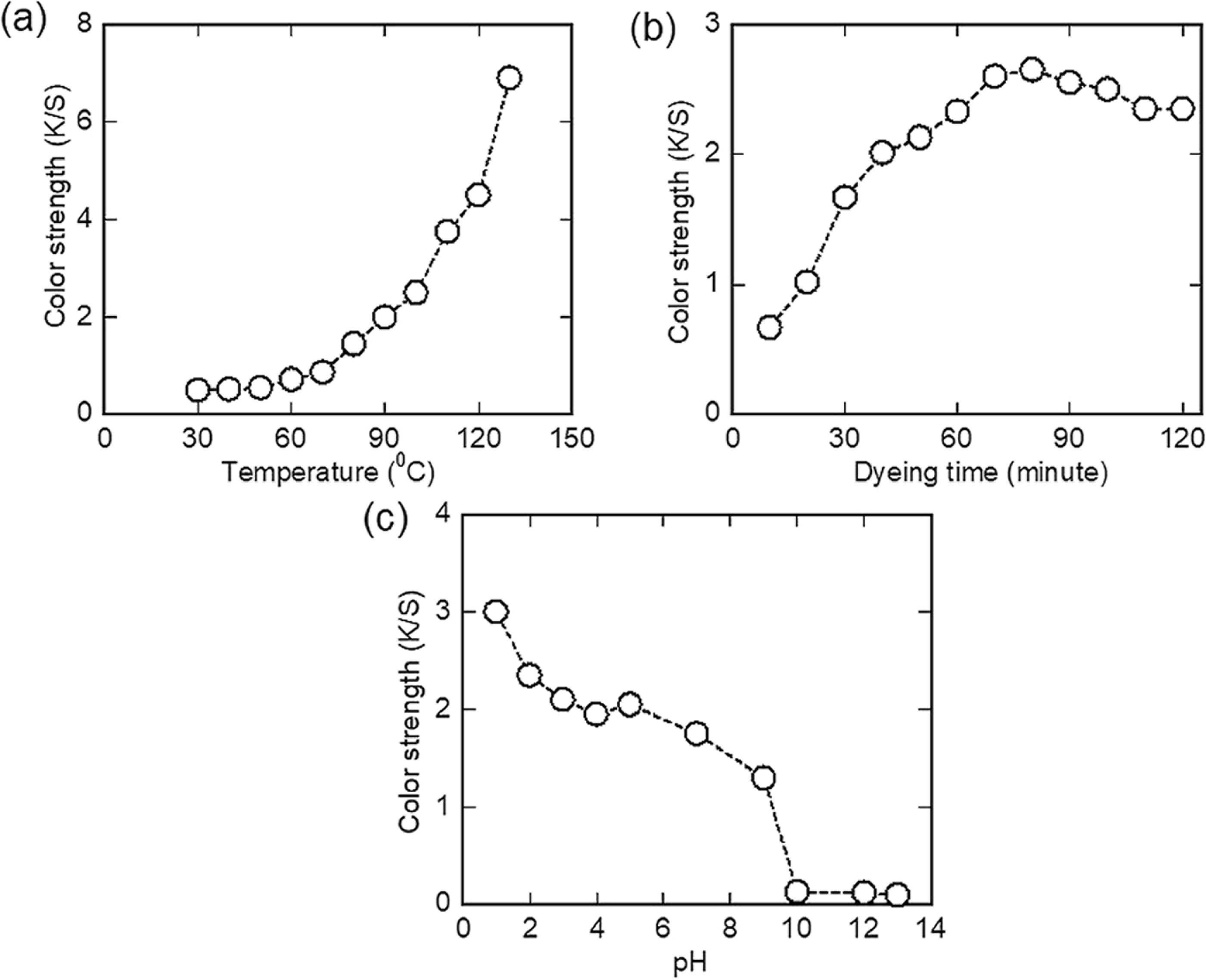
Effect of dyebath (a) temperature, (b) time, and (c) pH of dyeing nylon fabric with mahogany seed pod (MSP) extract.
CIELAB color specification and levelness of the dyed materials
The colors of the dyed materials were specified using CIELAB (International Commission on Illumination) color space. The value of L* in the CIELAB system, recommended by CIE in 1976 gives a measure of the lightness of the color. The L* value varies between 0 (perfect black) and 100 (perfect white). 39 The higher value of L* denotes the lighter hue and lower values refer to the darker hue of a dyed material. From the present study it was found that dyeing parameters (time, temperature, and pH) changed the lightness of the dyed fabric in different manner. Lightness of the dyed samples decreases with the increase of time and temperature, whereas higher pH produced higher lightness values representing production of lighter hues. The chroma is the attribute of color used to indicate the degree of depth of the color from the grey of the same lightness. 40 It can be termed as the colorfulness of an object. The higher chroma indicates more colorfulness on an object. The dyeing parameters changed the chromaticity of the dyed samples differently. The higher dyebath temperature and the lower pH produced more colorful samples with higher chromaticity values whereas dyeing period changed the chromaticity in dissimilar manner. Every color on an object is expressed by an angle ranging from 0–360° in CIELAB color space. 39 Figure 6 denotes the spectral reflectance of nylon fabric dyed with MSP extract at 100°C for 60 min maintaining the dyebath at pH 4.5.

The spectral reflectance of nylon fabric dyed with mahogany seed pod (MSP) extract at 100°C for 60 min at dyebath pH 4.5. The inset of the figure shows spectral values and image of the dyed fabric.
Likewise, the dyed nylon fabric showed a good extent of level dyeing. The levelness property of the dyed samples was evaluated in terms of CIELAB color difference (ΔE* value) among four places of each sample. The ΔE* is calculated from ΔL*, ΔC*, ΔH* values

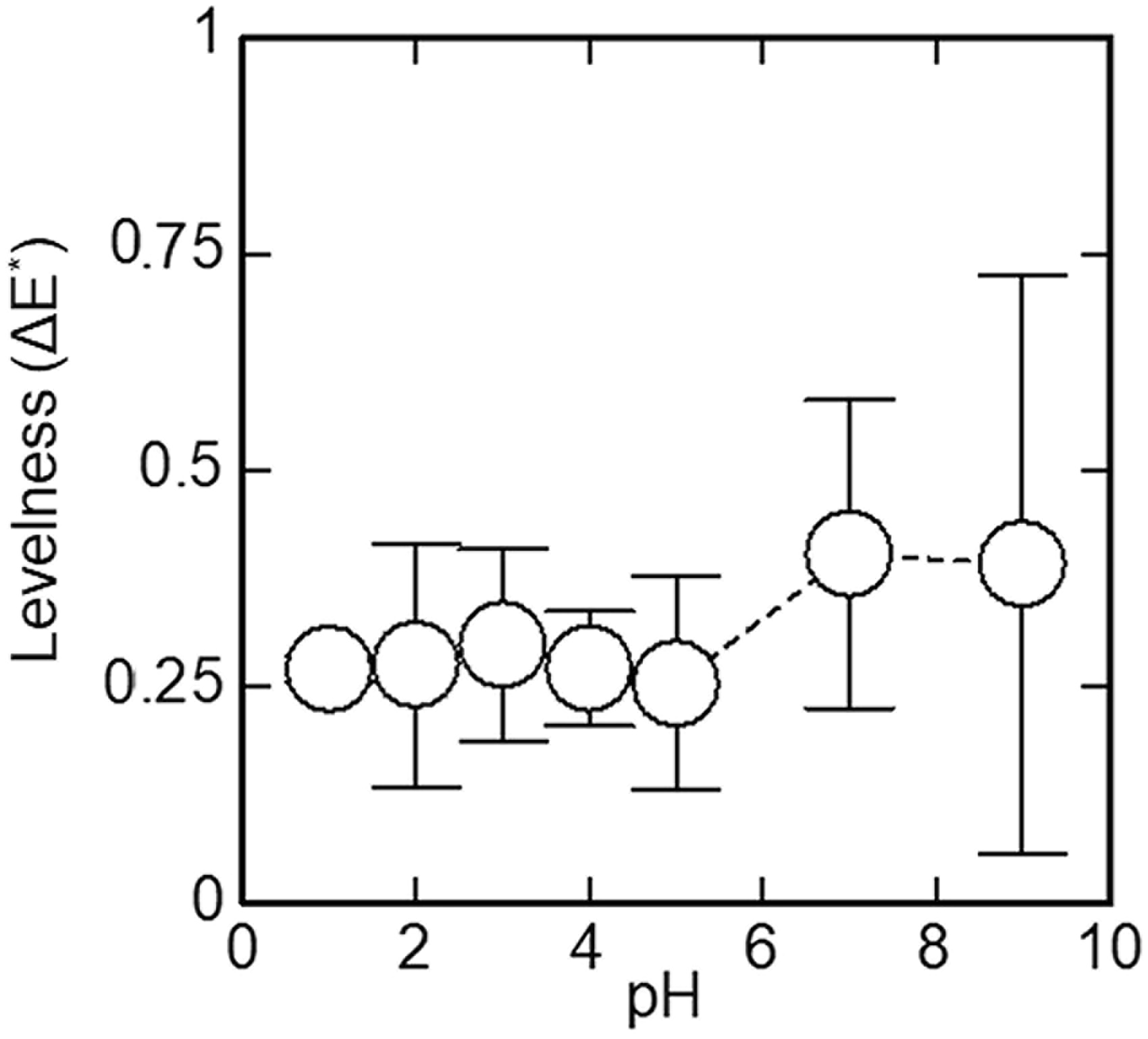
Levelness (ΔE*) value of nylon fabric dyed with mahogany seed pod (MSP) extract in different pH conditions.
Evaluation of color fastness of dyed fabric
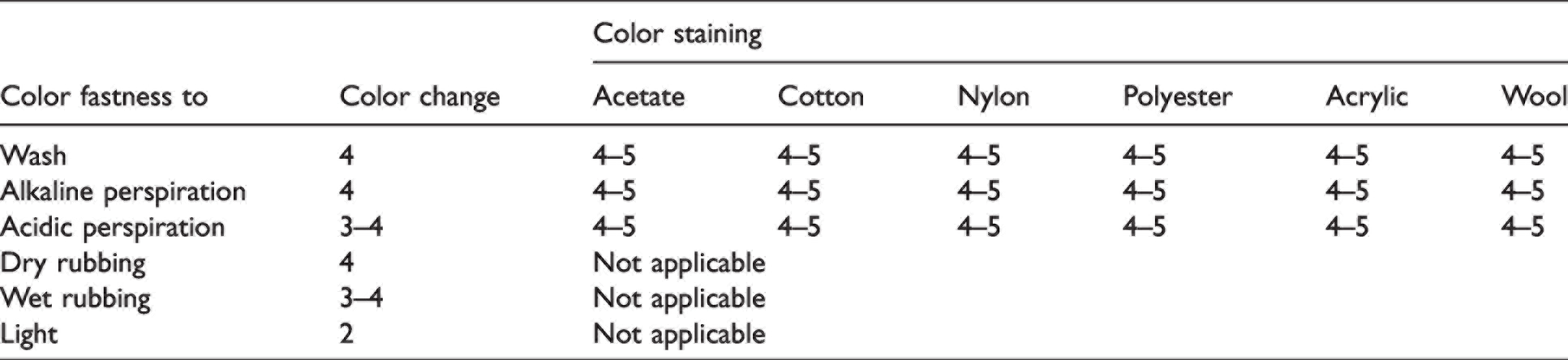
The color fastness of a dyed fabric is the most important property which determines the performance level of particular dyes or colorants for textile application. In order to be conversant with the performance the colorfastness to washing, perspiration, rubbing and light were determined of nylon fabric dyed with MSP extract. Table 1 represents the grey scale rating of dyed fabric in terms of color change and color staining. The color change grading of dyed fabric for wash, alkaline perspiration, and dry rubbing was found to be 4 and for acidic perspiration and wet rubbing was recorded 3–4 out of 5 on grey scale grading. The color staining for wash and alkaline and acidic perspiration were observed 4–5 out of 5 on grey scale rating indicating a very excellent performance of dyed nylon fabric with MSP extract comparable with that of commercial synthetic dyes. On the contrary, color fastness to light was observed 2 in the blue wool scale out 8 rating sequence suggesting a poor performance against the photo-irradiation of dyed nylon fabric. The reason might be that the chromophore responsible for bearing color in MSP extract exhibited less resistance to photo irradiation.
Color fastness properties of nylon fabric dyed with 100 ml mahogany seed pod (MSP) extract at 100°C with dyebath pH 4.5 for 1 h
Conclusions
An environmentally benign colorant from MSPs was extracted and subsequently applied in coloring the nylon knitted fabric. The MSP extract was mainly lignocellulosic substances with light absorption capacity in the visible wavelength of 400–480 nm. The H-bonding interaction of the MSP extract was plausible which was supported by the good wet fastness properties of the dyed nylon fabric. The dyebath was very sensitive to pH and acidic conditions favored the highest color value. The dyeing was carried out in a very wide range of temperature (30–130°C) and the new colorant could be possible to apply on nylon fabric successfully at 100°C using conventional dyeing equipment. The colorfastness to wash, rubbing, and perspiration were moderate to good, attesting to the competitiveness with commercial synthetic dyes for nylon, though the color fastness to light was poor with comparison with the other fastness parameters which can be employed in those areas where sunlight exposure is not mandatory. Since the dyes were extracted in aqueous medium in crude form in this study, it was not possible to measure the color yield of the dye solution accurately, rather it was evaluated in terms of MSP concentration. In the future, the main focus will be the extraction of dye in powder form by a solvent extraction method and its subsequent purification by column chromatography. Thus the information regarding the chromophore groups present in the MSP extract would be explored which would facilitate the study of the dyeing mechanism of MSP colorant. Finally, the knowledge achieved through this study could provide for development of a sustainable dyeing example of nylon fabric.
Supplemental Material
sj-pdf-1-trj-10.1177_00405175211050526 - Supplemental material for Mordant-free dyeing of nylon fabric with mahogany (Swietenia mahagoni) seed pods: A cleaner approach of synthetic fabric coloration
Supplemental material, sj-pdf-1-trj-10.1177_00405175211050526 for Mordant-free dyeing of nylon fabric with mahogany (Swietenia mahagoni) seed pods: A cleaner approach of synthetic fabric coloration by Abdullah Al Mamun, M Mahbubul Bashar, Sumaiya Khan, Manindra N Roy, Mohammad M Hossain and Mubarak A Khan in Textile Research Journal
Footnotes
Declaration of conflicting interests
The author(s) declared no potential conflicts of interest with respect to the research, authorship, and/or publication of this article.
Funding
The author(s) received no financial support for the research, authorship, and/or publication of this article.

Supplemental material
Supplemental material for this article is available online.
References
Supplementary Material
Please find the following supplemental material available below.
For Open Access articles published under a Creative Commons License, all supplemental material carries the same license as the article it is associated with.
For non-Open Access articles published, all supplemental material carries a non-exclusive license, and permission requests for re-use of supplemental material or any part of supplemental material shall be sent directly to the copyright owner as specified in the copyright notice associated with the article.
