



Abstract
Commercial dull polyethylene terephthalate (PET) fabric treated by radio frequency (13.56 MHz) plasma and further coated with perfluoroalkyl methacrylate copolymer C6 displays much highly durable hydrophobicity and oleophobicity. The as-prepared fabric exhibited a water contact angle above 170°, a water spray rating of 80 (ISO 3), and oil resistance ratings of B and C separately for different oil composition grades after 10 washing cycles, which were two levels higher than the untreated and C6-coated PET[TiO2] fabric. The organic component PET was more prone to etching than TiO2, which created a waviness structure and exposed prominent TiO2 nanoparticles on the PET fiber surface. The relative atom ratio O and Ti increased through energy-dispersive X-ray spectroscopy spectra and X-ray photoelectron spectroscopy analysis. This result indicates that the exposure of TiO2 and the introduction of reactive polar groups such as O=C-O on the fiber surface contributed to react with C6 and improved the washing durability. In general, such coating technology may provide a simple benign technique for constructing materials with physicochemical properties.
Keywords
Superhydrophobic surfaces have attracted significant attention ever since the lotus phenomenon in nature has been detected. 1 , 2 Superhydrophobic surfaces with a high-water contact angle, low surface energy, and increasing surface roughness are important factors influencing the wettability.3–5 Generally, a direct fluorination fluorine treatment on different materials or coating with low surface energy C8 or C6 is the primary strategy to endow them with omniphobicity.6–8 C6 or free-fluorine hydrophobic agents have less ecological and environmental problems, although the hydrophobicity and coating adhesion on the fabric surfaces is not as perfect as C8 coating. 9 However, the superhydrophobic coating on fabric surfaces is inherently fragile to mechanical forces, and the fabric has to suffer repeated laundering during the fabric’s existence. Therefore, considerable efforts are made to prevent the coating’s mechanical damage and improve its washing durability.10–12 It is recognized that the combination of hierarchical micro-/nanostructures or the surface roughness with the low surface energy coating is an operative procedure to construct superhydrophobic surfaces. 13 , 14
Based on these principles, many techniques have been proposed and applied to create micro-/nanostructures on materials to fabricate super-antiwetting surfaces.15–19 Plasma is favorable for many surface modifications because it is dry, clean, and environmentally benign. On the surface during plasma treatment, dissociated polymer molecular chains and polar feature groups (-OH, C-O, and -COOH) are created based on plasma discharge parameters such as gases, intensity, density, frequency, and treatment duration. 20 , 21 The fiber surface topography changes by oxidized etching of the polymer chain and increases surface roughness. Combining with nanoparticle dip-coating or crosslinking, multifunctional superhydrophobic surfaces have been prepared. 22 Park et al. 23 fabricated a superhydrophobic wool fabric with dual-scale roughness via anisotropic etching and plasma-enhanced chemical vapor deposition of hexamethyldisiloxane. Huang et al. 24 reported a super-antiwetting TiO2@cotton by a one-pot hydrothermal reaction and fluoroalkylsilane hydrolytic coating for anti-ultraviolet (UV) transmittance, self-cleaning against water and dust. Nguyen-Tri et al. 25 prepared a superhydrophobic cotton fabric using silica nanoparticles and water-repellent agents combined with etching pretreatment of alkali and plasma approaches. These studies offered new insights by modifying the topographical structure with nanoparticles and surface chemistry to improve wettability and adhesion.26–30 In the synthetic fiber industry, inorganic nanoparticles such as TiO2, ZnO, or Mg2O3 are usually added into the synthetic fibers to endow them with some unique functionality.31–33 For example, TiO2 nanoparticles are mixed and incorporated into polyethylene terephthalate (PET) fibers in minimal (<5%) amounts to deluster or to whiten or to improve UV protection function or are proposed as a photocatalytic agent in PET fabric.34–36
In this work, we prepared a newly developed environmentally benign approach to endow the dull PET [TiO2] fabric with highly durable hydrophobicity. Using low-pressure plasma treatment, firstly we activated and etched away some of the organic polymer components. In this way, TiO2 nanoparticles inside the dull PET were exposed on the surface of the PET[TiO2]E fabric matrix. A new dual roughness surface was created with exposed TiO2 nanoparticle submicrostructure and with etched PET fiber microstructure. After reactive coating with the C6 fluorine agent, the C6-coated PET[TiO2]E had an improved coating adhesion and a highly durable hydrophobic surface. We expect that the selective plasma etching of PET organic components and the exposed TiO2 nanoparticles on the PET[TiO2]E surface will provide a simple controllable and environmental design process to innovate synthetic polymer fabrics’ physicochemical properties related to anti-microbes, photocatalysis, self-cleaning, conducting, and water–oil separation, amongst others.
Experimental methods
Materials
Commercial dull PET fabrics (PET[TiO2]; <2% mineral amount) were washed, dried, and cut into 25 cm × 25 cm squares. The discharge gases were oxygen (O2) and argon (Ar) (99.99%) provided from Shanghai Cheng Gong Gas Industry Co., Ltd, and the coating sol was perfluoroalkyl methacrylate copolymer (fluorine C6) supplied by Precision Chemical Technology (Shanghai) Co., Ltd.
Plasma-exposed TiO2 nanoparticles on PET[TiO2]E surface
A vacuum state capacitor coupled radio frequency (13.56 MHz) power (Nordson MARCH AP-600/300), shown in our previous work, 37 was utilized for the plasma treatment of PET[TiO2] fabric. The samples were placed in a 5-cm gap between the two parallel power electrodes and ground electrodes, as shown in Figure 1(a). First, the plasma chamber, evacuated to the lowest pressure, about 35 mTorr, was subsequently loaded with a mixture of gases: Ar (10 cm³/min) and O2 (90 cm³/min). Then the vacuum base pressure was increased to 265 mTorr. The radio frequency power was 400 W with a treatment time of 360 s. The selective etching parameters were consistent with experimental work to cause significant roughness due to the plasma etching mechanisms.
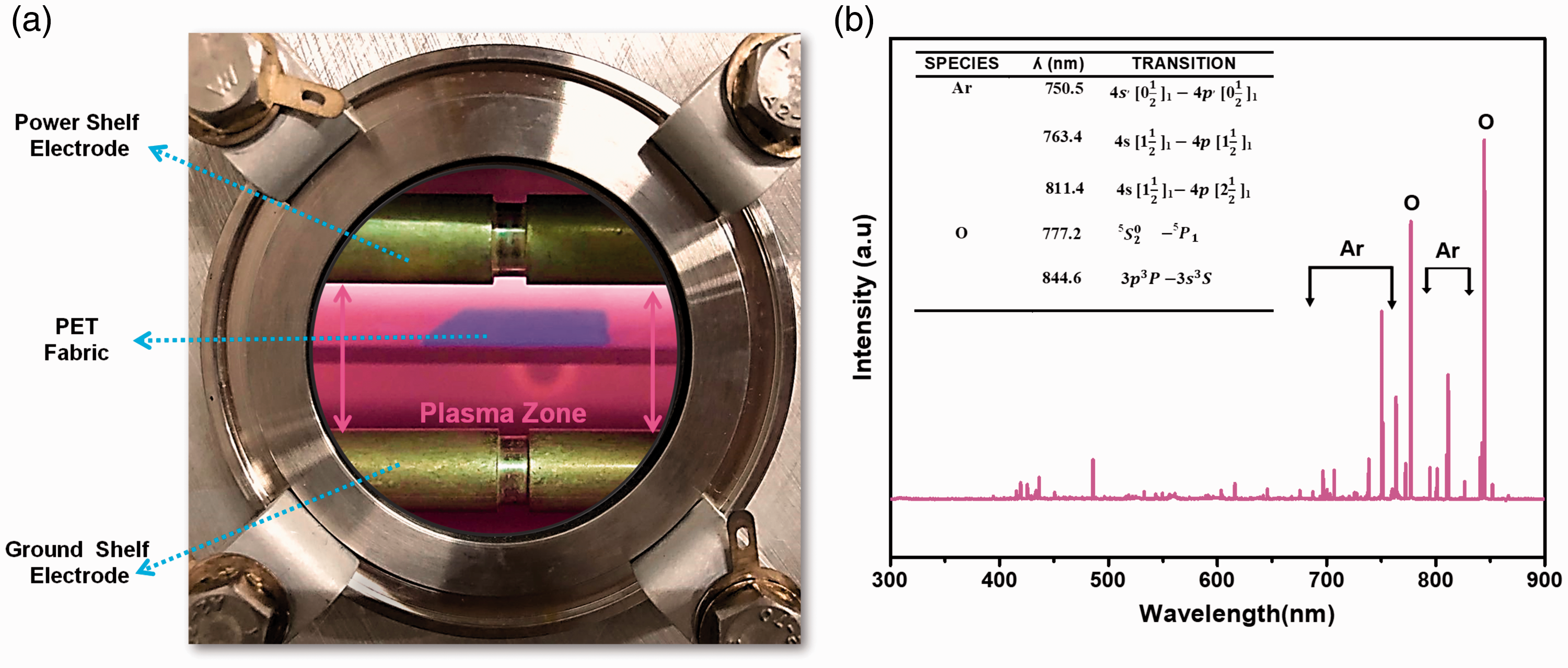
(a) Photograph of plasma chamber window; (b) optical emission spectrum of discharge, with the table of atomic transition lines inserted.
The reactive plasma production was recognized by optical emission spectroscopy, and the considerable transition lines in the discharge conditions were 777.2 nm and 844.6 nm O2 lines. Ar content was not a noticeable influence on the emission intensities of O atoms.38–40 The results are shown in Figure 1(b).
Fabrication mechanism of plasma-exposed TiO2 nanoparticles
Figure 2 illustrates the production process and the proposed mechanism. Plasma activation species, including high-energy electrons, ions, and Ti4+ (Lewis acid site), reinforce polymer chain scissions, which will etch away more organic components and create rough waviness surfaces and introduce a large number of reactive radicals or groups. The rough surface with etched waviness, prominent TiO2 nanoparticles, and polar functional groups becomes attractive to fluorine copolymer molecules, resulting in improved absorption and penetration of C6 fluorine molecules on the fabric surface. More fluorine molecules tangle with the rough ditches in the surface; they react with Ti4+ and carboxyl or hydroxyl groups, consequently forming an adhesive hybrid micro/nano dual-scale structure on the fiber surface of PET[TiO2]E. Plasma treatment with Ar and O2 is efficient in removing and etching away some organic components from the synthetic polymer fiber surface and creating micro-/nanostructures. At the same time, the inorganic micro-/nanoparticles are exposed to the fiber surface. Therefore, a durable hydrophobic and oleophobic surface was obtained.
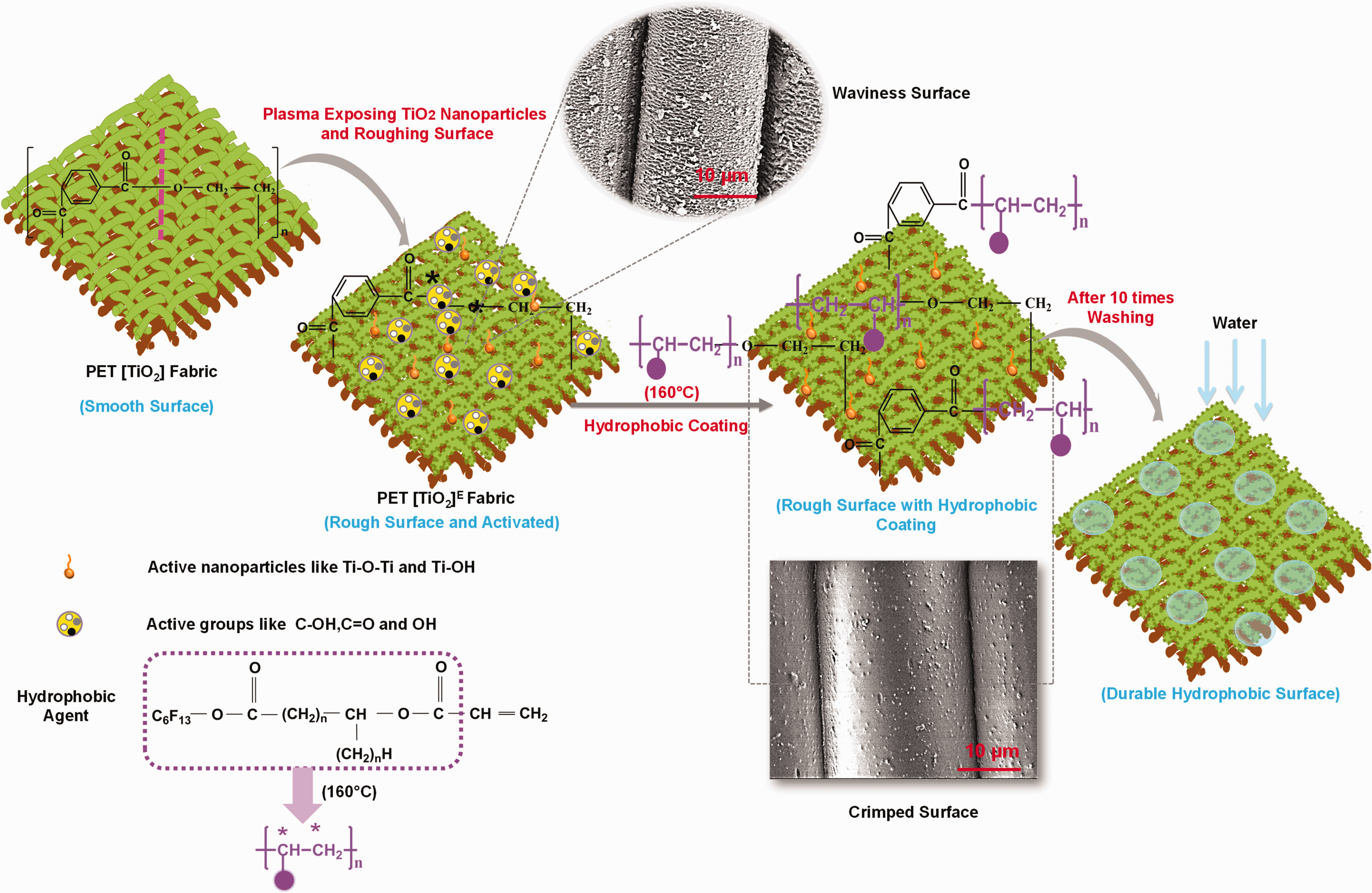
Schematic diagram for the plasma etching and TiO2 nanoparticles exposure mechanism and the preparation of durable hydrophobic PET[TiO2]E fabric.
Coating durability of PET[TiO2] and PET[TiO2]E fabrics
The untreated PET[TiO2] and plasma-exposed PET[TiO2]E fabrics were padded in hydrous solutions of C6 fluorine (AG-E081 30%, w/w) and dried at 160°C for 90 s. Then all materials were rinsed to remove residual chemicals. The selection of solution concentration and temperature as well as time were consistent with the experimental work. The final samples, assigned as untreated coated (PET[TiO2]F) and plasma-exposed coated (PET[TiO2]EPF), were evaluated by the American Association of Textile Chemists and Colorists (AATCC) water spray test method and underwent 10 repeated washing cycles. The codes of all the samples are shown in Table 1.
Table of sample codes used

Characterization of the PET[TiO2] and PET[TiO2]E fabrics
The surface morphology was characterized by field emission scanning electron microscopy (FE-SEM) (S-4800, Hitachi, Japan). Energy-dispersive X-ray spectroscopy (EDS) was applied to elemental mapping analysis. Attenuated total reflection–Fourier transform infrared (ATR-FTIR) spectroscopy (Nicolet 6700, Thermo Fisher, USA) was used for the chemical bonding measurement in the range of 500–4000 cm−1 with a resolution of 4 cm−1. The chemical composition was characterized by X-ray photoelectron spectroscopy (XPS) (Escalab 250Xi, USA). The superhydrophobic behavior was analyzed by a drop meter A-200 (MALSI, China) water contact angle. Water resistance was assessed by the water spray test (AATCC test method 22-2014). Meanwhile, the oil repellency test for hydrocarbon resistance (AATCC test method 118-2013) was carried out with four series of liquid hydrocarbons: n-tetradecane (grade 4), n-dodecane (grade 5), n-decane (grade 6), and n-octane (grade 7), with different surface tensions of 26.4, 24.7, 23.5, and 21.4, respectively.
Results and discussion
Influence of plasma-exposed PET[TiO2]E fabrics
The surface of untreated pure PET fabric without TiO2, shown in Figure 3(a), was smooth and occasionally distributed with micro-sized dust particles. Figure 3(b) shows that the particles made of C, O, and Na elements with relative atom ratios 34%, 48%, and 8%, respectively, were recognized. Sodium (Na) content comes from the refining process in most synthetic fabrics, and Platinum (Pt) element caused by sputtering metallic for SEM characterization. After plasma treatment, the pure PET fabric surface presents a harsh surface with flat pits and nanosize protrusion dots, as shown in Figure 3(c). The EDS results in Figure 3(d) show that C, O, and Na ratios are 31%, 52%, and 10%, respectively. The plasma etching process has slightly changed the element ratios.
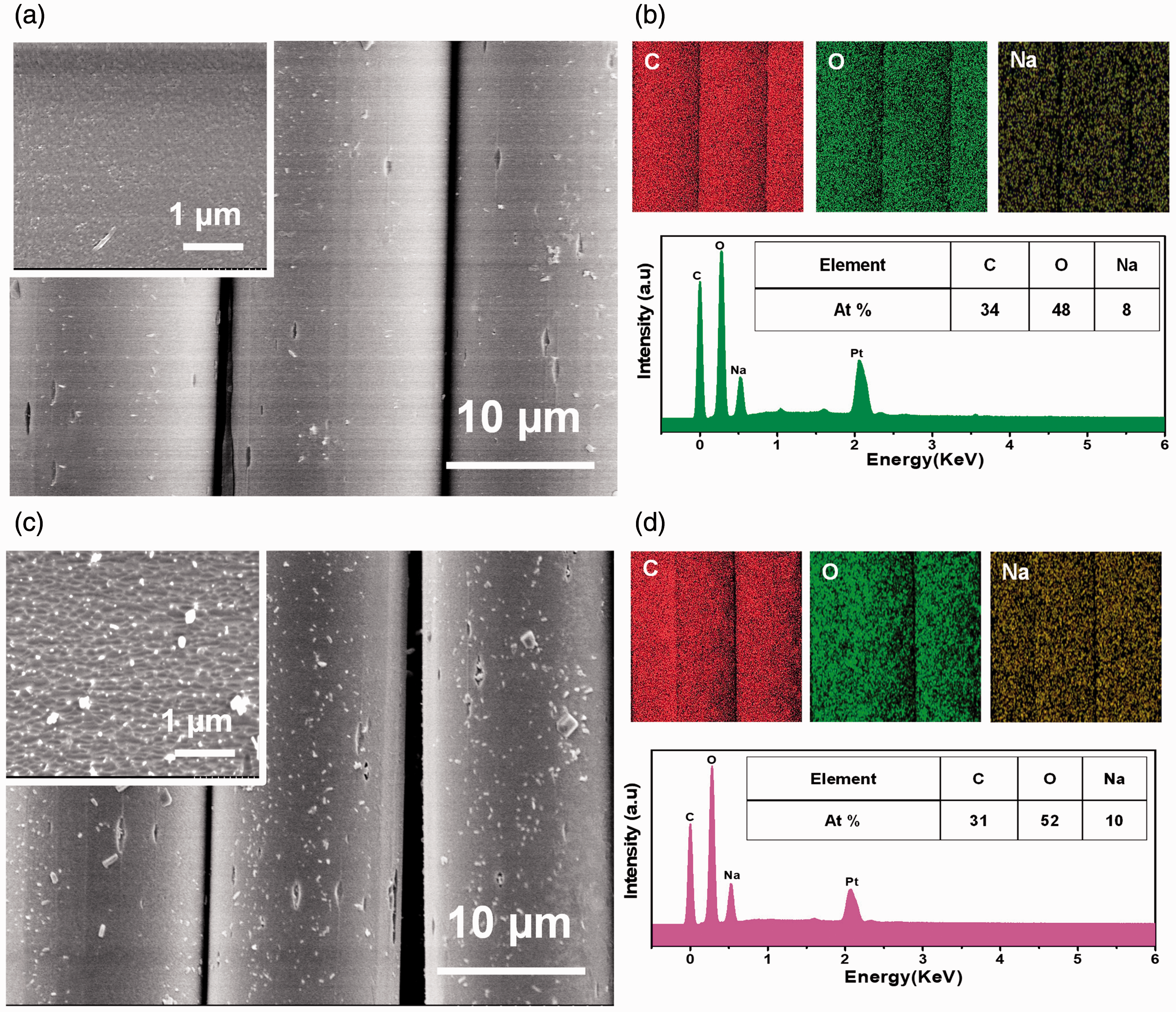
Scanning electron microscopy images of (a) untreated and (c) plasma-treated pure PET (10 µm); insets are their corresponding images at high magnification (1 µm). Energy-dispersive X-ray spectroscopy element mapping of (b) untreated and (d) plasma-treated pure PET.
The surface of untreated PET[TiO2] was coarse with fine nanoparticles, as shown in Figure 4(a). Figure 4(b) shows that the EDS energy spectrum contains 63% C, 25% O, and 4% Na elements, with 3% of Ti discovered in the PET[TiO2] matrix. Figure 4(c) shows the increased rough surface structure with deeply cracked waviness was identified on the etched fiber surface, attributing the relative high etching rate of the organic component of PET compared with inorganic TiO2 in the PET[TiO2] matrix. In addition, some irregularly round-shaped particles are visible, whose sizes are much bigger than those observable in Figure 4(a). The EDS spectra analysis in Figure 4(d) shows that the relative surface atomic ratio of C, O, Na, and Ti is 32%, 38%, 10%, and 13%, respectively. More Ti indicates that more TiO2 is exposed after plasma etching.
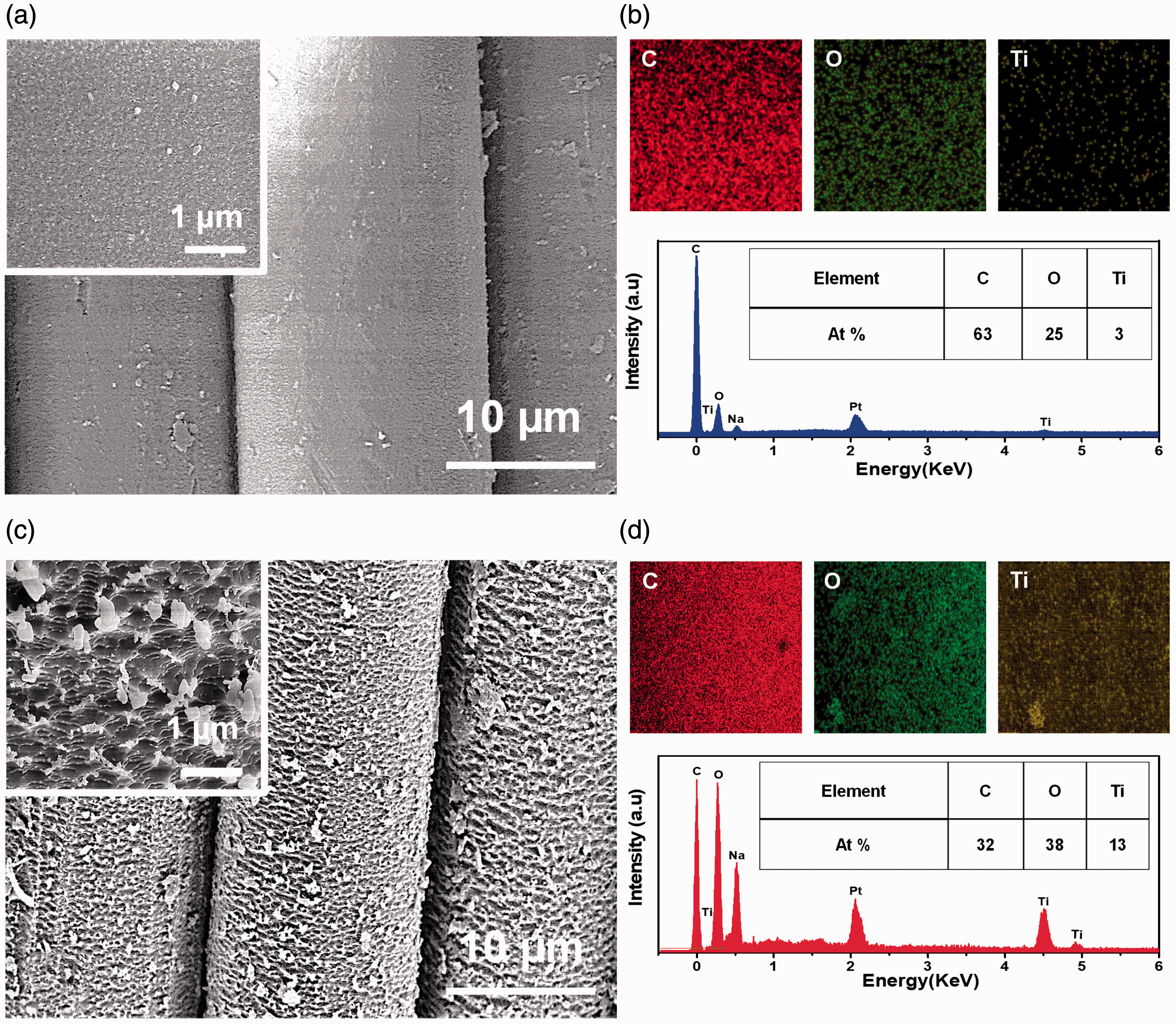
Scanning electron microscopy images of (a) untreated and (c) plasma-exposed PET[TiO2]E (10 µm); insets are their corresponding images at high magnification (1 µm). Energy-dispersive X-ray spectroscopy element mapping of (b) untreated and (d) plasma-exposing PET[TiO2]E.
After fluorine coating and washing, the fabric surface morphology was observed by SEM. Figure 5(a) shows the smooth fiber surface of PET[TiO2]F after fluorine C6 coating; this suggested that the fluorine emulsion adhesion was weak on the surface; therefore, it was the leading cause that the fluorine coating was severely flaking off after washing. Because of the smooth surface and the hidden TiO2 nanoparticles beneath the PET matrix surface, it was difficult for the fluorine coating to adhere to the fiber surface tightly. Thus, the fluorine coating was removed from the surface after 1 cycle to 10 cycles of washing, as shown in Figure 5(b) and (c) for PET[TiO2]FW1 and PET[TiO2]FW10 separately. After plasma treatment and fluorine coating, the deep and rough micro/nano waviness ditches were flattened, and some TiO2 particles were still prominent on the fiber structure, as presented in Figure 5(d). The cracked waviness rough surface created by plasma-exposed TiO2 nanoparticles improved the fluorine emulsion’s absorption and adhesion. As shown for PET[TiO2]EPFW1 and PET[TiO2]EPFW10 in Figure 5(e) and (f), the C6 coating was not removed after washing. As will be seen later, the rough surface with exposed TiO2 nanoparticles and the adhesive layer promotes its durable hydrophobicity.
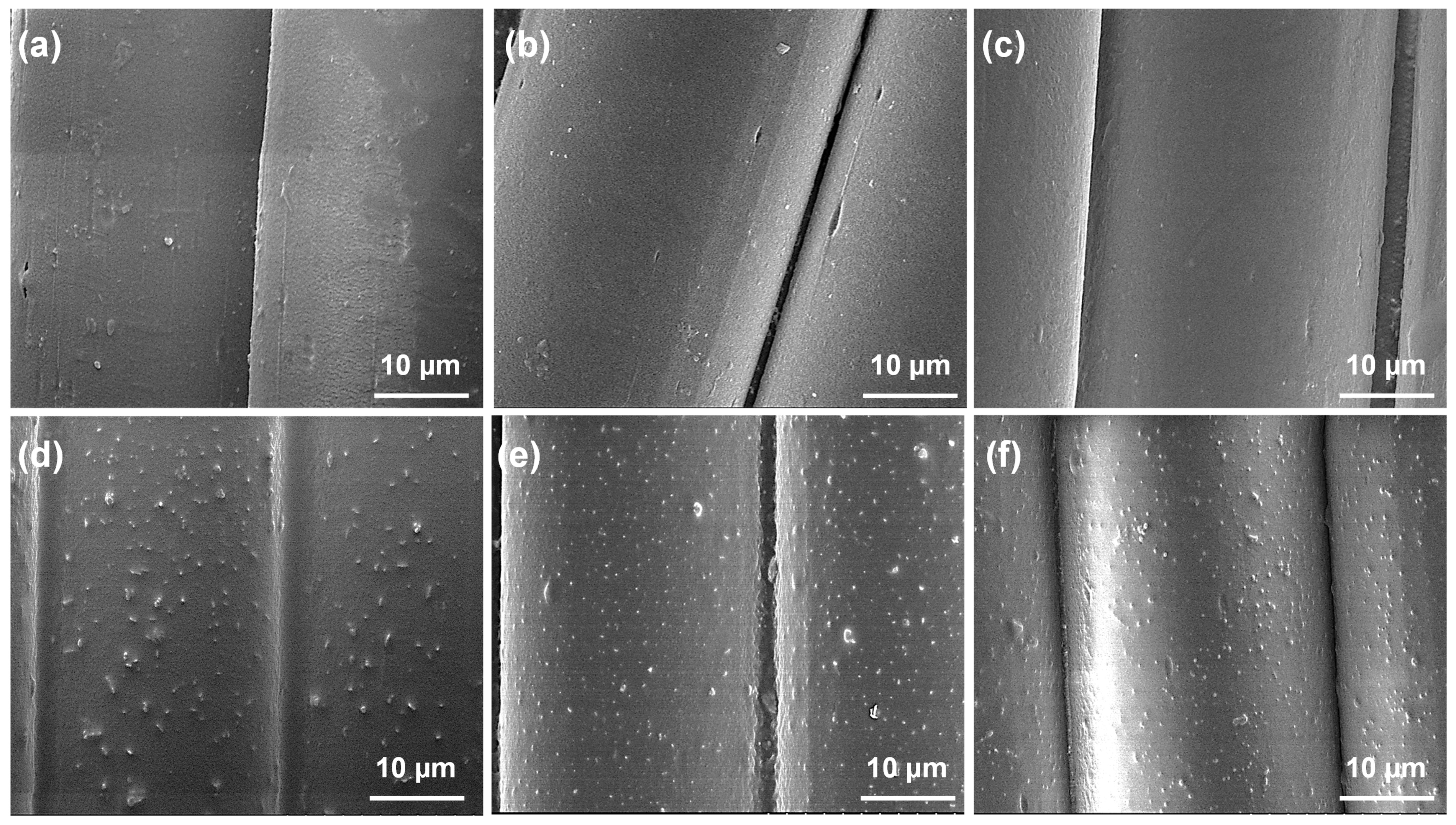
Scanning electron microscopy images of untreated and C6 fluorine-coated PET[TiO2] and plasma-exposed and C6 fluorine-coated PET[TiO2]E fabrics before and after repeated washing: (a) PET[TiO2]F; (b) PET[TiO2]FW1; (c) PET[TiO2]FW10; (d) PET[TiO2]EPF; (e) PET[TiO2]EPFW1; (f) PET[TiO2]EPFW10.
Fluorine reactions on plasma-exposed PET[TiO2]E fabrics
Using ATR-FTIR spectroscopy, the chemical structure information after the fluorine coating was obtained. The main structures are aromatic ring, ester, alcohol, and heterocyclic rings, assigned as N-H 2966 cm−1, C═O 1708 cm−1, C═C 1233 cm−1 (secondary alcohol), O═C-O 1088 cm−1, and C-H 860 cm−1 (heterocyclic aromatic ring). The presence of fluorine assured by C-F stretching in aliphatic fluoro-compounds at 1000 cm−1 to 1600 cm−1, 41 , 42 which was merged with C═C and O═C-O peaks, is shown in Figure 6(a) for PET[TiO2]F and PET[TiO2]EPF fabrics. The small difference in the spectra assumes that the plasma pretreatment introduces more fluorine-compounds to the surface compared with direct coated. Figure 6(b) shows the ATR-FTIR spectra of PET[TiO2]FW10 and PET[TiO2]EPFW10; the fluorine compounds disappeared on PET[TiO2]FW10 with low washing durability due to the weak adhesion.

Attenuated total reflection–Fourier transform infrared spectra of untreated PET[TiO2] and plasma-exposed PET[TiO2]E fabrics: (a) PET[TiO2]F and PET[TiO2]EPF, after fluorine coating; (b) PET[TiO2]FW10 and PET[TiO2]EPFW10 after 10 washing cycles.
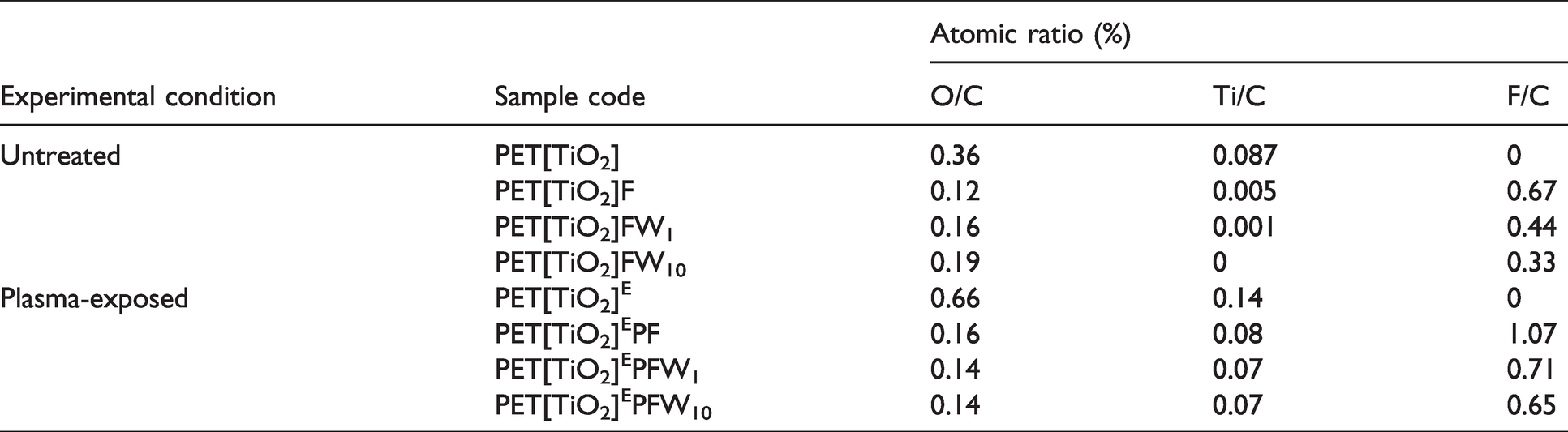
The chemical composition of PET[TiO2] and PET[TiO2]E fabrics characterized by XPS, Figure 7, show the high-resolution spectra of C1s, O1s, and Ti2p, for untreated PET[TiO2] and plasma-exposed PET[TiO2]E fabrics. The C1s spectra exhibited three distinct subpeaks; the peak at 284.6 eV corresponds to C-C/C-H groups, whereas the peaks at 285.9 eV and 288.8 eV represent the C-O (or C-OH) and O=C-O (or COOH), as observed in Figure 7(a) and (b), respectively. Figure 7(c) and (d) show the O1s spectra, which have two main peaks at a binding energy of 530.9 eV coinciding with O-C═O, whereas the peak at 532.3 eV corresponds to C-O. 43 The XPS core level spectra for Ti2p in Figure 7(e) and (f) show that two distinct peaks at 459 eV and 460.6 eV were assigned to Ti2p3/2 and Ti2p1/2, 44 respectively. The splitting energy in Ti2p core levels suggests the presence of a normal state of Ti4+, similar to the data for TiO2. 45 The C1s, O1s, and Ti2p for plasma-exposed PET[TiO2]E spectra indicated that a major amount of C-H is oxidized, and more polar groups are generated into forms of C-OH groups. The relative ratio of O, Ti, and F to C after C6 coating is given in Table 2.

Deconvoluted X-ray photoelectron spectroscopy spectra of untreated PET[TiO2] and plasma-exposed PET[TiO2]E fabrics: (a) and (b) C1s; (c) and (d) O1s; (e) and (f) Ti2p; respectively.
Relative surface atomic ratio of carbon of variable untreated PET[TiO2] and plasma-exposed PET[TiO2]E fabrics with fluorine coating before and after repeated washing
The C1s deconvolution analysis after fluorine graft polymerization and washing is shown in Figure 8. The surface presence of fluorine functional groups was indicated by two peaks corresponding to C-F2 and C-F3 at 291.4 eV and 293.7 eV. Figure 8(a) shows PET[TiO2]F had a droopy fluorine peak intensity, which continuously decreased after washing: see Figure 8(b) for PET[TiO2]FW1 and Figure 8(c) for PET[TiO2]FW10. In contrast, there was no significant difference found on the plasma-treated fabrics before and after washing: see Figure 8(d), (e), and (f) for PET[TiO2]EPF, PET[TiO2]EPFW1 and PET[TiO2]EPFW10 respectively. In addition, their F/C ratios were higher than the untreated samples. Plasma-exposed TiO2 nanoparticles introduced more fluorine coating onto the fabrics, and the layer was adhesive on the surface.
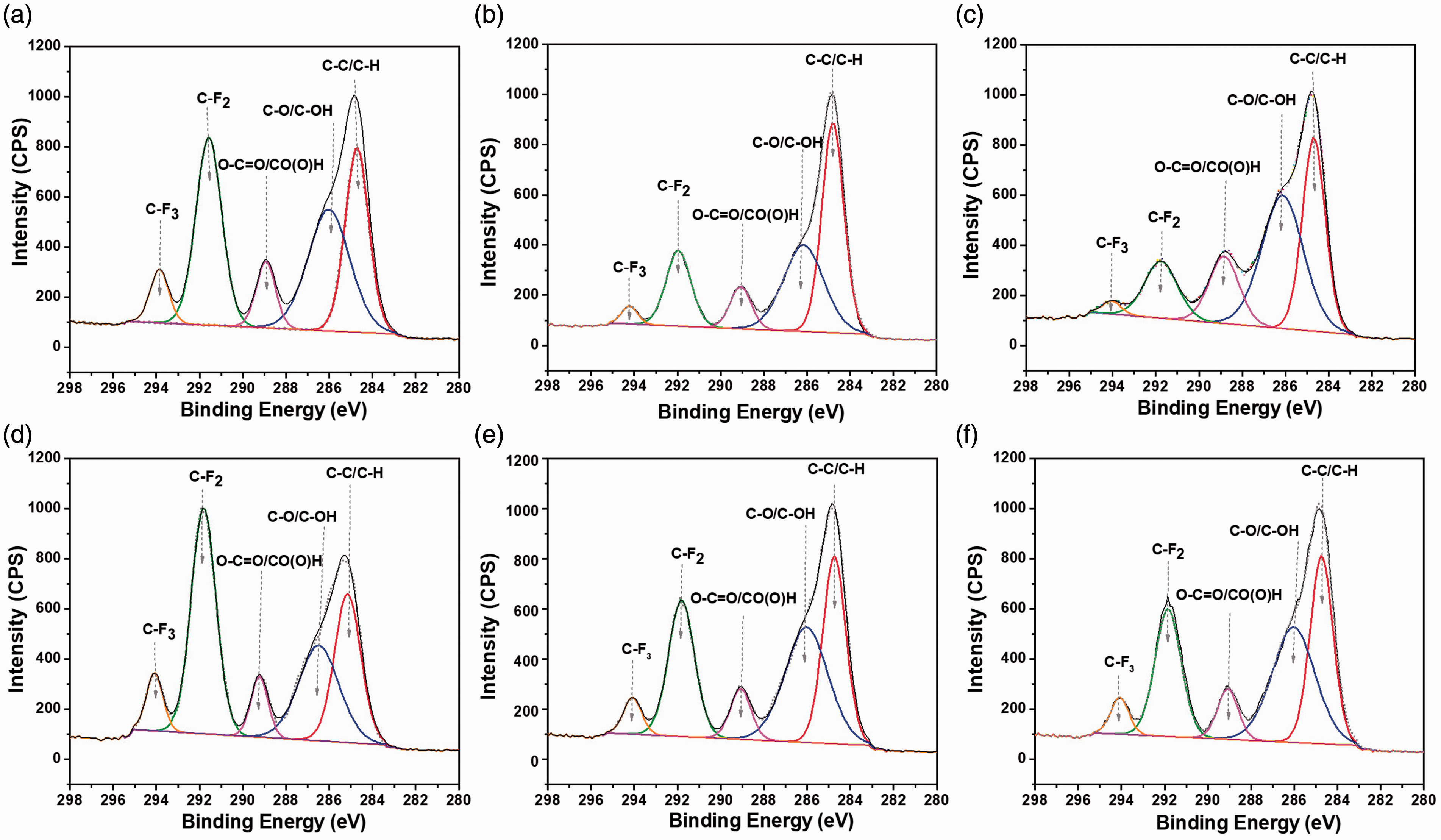
Deconvoluted X-ray photoelectron spectroscopy C1s of untreated PET[TiO2] and plasma-exposed PET[TiO2]E fabrics with fluorine coating before and after repeated washing: (a) PET[TiO2]F; (b) PET[TiO2]FW1; (c) PET[TiO2] FW10; (d) PET[TiO2]EPF; (e) PET[TiO2]EPFW1; (f) PET[TiO2]EPFW10.
Durable hydrophobicity analysis of plasma-exposed PET[TiO2]E fabrics
The hydrophobicity of plasma-exposed PET[TiO2]E fabrics was studied using the water contact angle technique before and after repeated washing cycles, see Figure 9(b). The initial contact angle value of PET[TiO2] was 24.9°. After plasma treatment, the contact angle value of PET[TiO2]E was zero, satisfying the hydrophilic phenomena. The water contact angle of PET[TiO2]F was 166° and continuously decreased after repeated washing cycles. However, after plasma exposing and fluorine coating, PET[TiO2]EPF showed a remarkably increased hydrophobicity with a water contact angle as high as 179.9°.
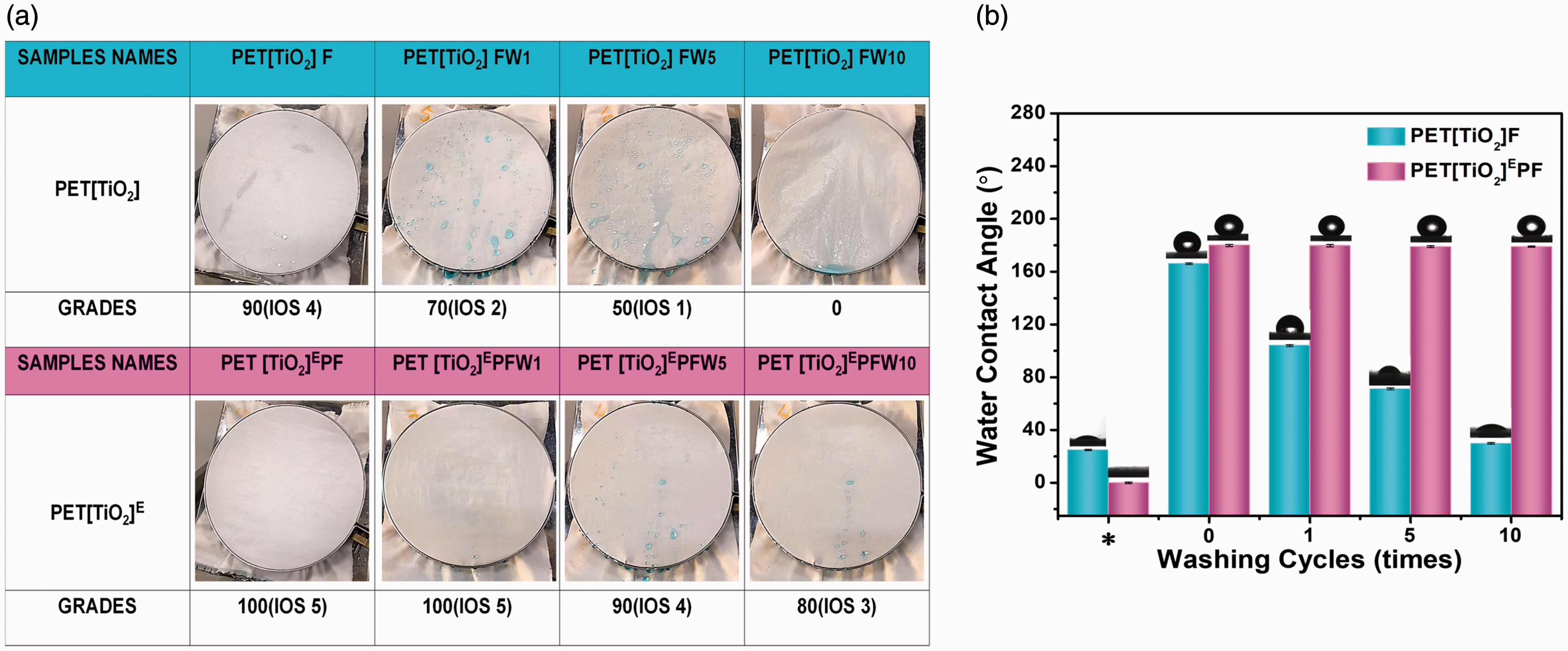
AATCC water spray test and water contact angles on PET[TiO2] and plasma-exposed PET[TiO2]E fabric surfaces before and after repeated washing: (a) AATCC water spray test photographs on PET[TiO2] and PET[TiO2]E fabrics, respectively; (b) water contact angles and their corresponding graph versus washing cycles; * represents the initial contact angle value of PET[TiO2] and plasma-exposed PET[TiO2]E.
Further, after repeated washing, the water contact angle remained stable, which means the durable superhydrophobic coating is formed on the plasma-exposed PET[TiO2]E samples. The AATCC water spray test was utilized to study the durability performance, and Figure 9(a) shows the samples’ photographs with their rating grades. The untreated PET[TiO2] and plasma-exposed PET[TiO2]E fabrics showed a water spray rating of 0 and an oil repellency of D in grade 4, implying that both samples were affinity attached to water and oil. These results corresponded well with the observation in SEM and demonstrated that after plasma etching and exposing of TiO2 nanoparticles on the surface, the surface turns rougher and more effective to introducing fluorine functional groups on the fabric.
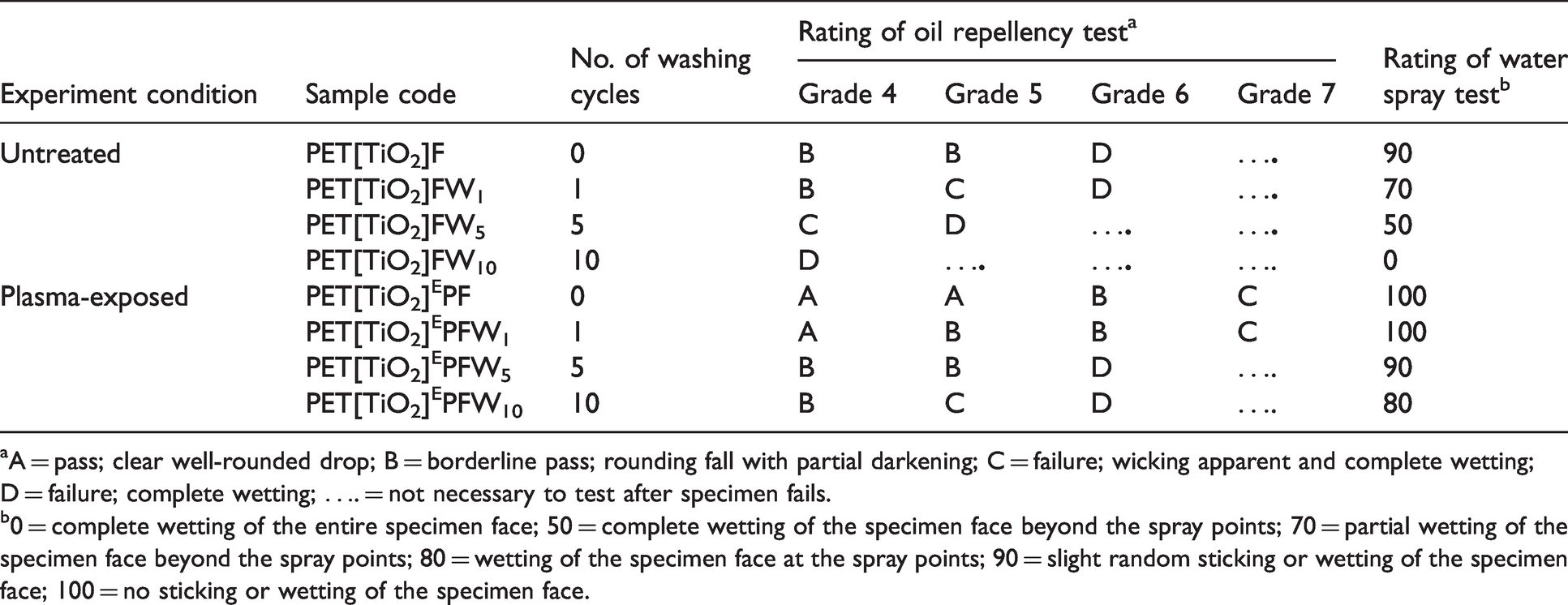
Table 3 summarizes the durability of water and oil repellency before and after different washing cycles. Before washing, PET[TiO2]EPF obtained the best water/oil repellency due to better absorption of the fluorine coating than PET[TiO2]F. The water/oil repellency behavior for PET[TiO2]F decreased with the increase in the number of washing cycles, whereas there was a little change for PET[TiO2]EPF.
Water spray and oil repellency testing of PET[TiO2] and plasma-exposed PET[TiO2]E fabrics before and after repeated washing
aA = pass; clear well-rounded drop; B = borderline pass; rounding fall with partial darkening; C = failure; wicking apparent and complete wetting; D = failure; complete wetting; …. = not necessary to test after specimen fails.
b0 = complete wetting of the entire specimen face; 50 = complete wetting of the specimen face beyond the spray points; 70 = partial wetting of the specimen face beyond the spray points; 80 = wetting of the specimen face at the spray points; 90 = slight random sticking or wetting of the specimen face; 100 = no sticking or wetting of the specimen face.
The AATCC oil repellency test ratings for PET[TiO2]FW1 after one wash cycle were B, C, and D for the different grades; after five wash cycles the oil ratings continuously decreased for PET[TiO2]FW5, showing poor oleophobicity, whereas there was a little reduction in PET[TiO2]EPFW5 on grade 4 and 6. After 10 washing cycles, PET[TiO2]FW10 had no oil repellency, whereas PET[TiO2]EPFW10 still showed ratings of B, C, and D. The hydrophobic durability was consistent with the oleophobic behavior. After one washing, the water spray rating of PET[TiO2]FW1 decreased to 70, with a further reduction to 0 observed in PET[TiO2]FW10. In comparison, the water spray rating of PET[TiO2]EPFW10 was still 80, which indicates a reliable adhesive bonding on plasma-exposed PET[TiO2]E surface that upgraded the omniphobicity.
As shown above, the plasma etched waviness ditches and exposing TiO2 nanoparticles on PET[TiO2]E increased the surface roughness and introduced reactive groups on PET[TiO2] fabric surfaces, which is beneficial for preparing the superhydrophobic and oleophobic surface. Moreover, the surface physical chemistry changes made the fabric absorb more C6 fluorine coating and improved its adhesion on the surface, which greatly enhanced the structure washing durability.
Conclusions
We presented an efficient and environmentally benign technique to obtain highly durable hydrophobic and oleophobic PET[TiO2]E fabric. Through plasma etching first, some organic component was removed from the PET[TiO2] matrix and a micro/nano waviness ditch structure was created, together with exposed prominent TiO2 nanoparticles on the fiber surface as shown by SEM. Furthermore, fluorine graft polymerization demonstrated a remarkably improved water/oil repellency on the plasma-treated coated PET[TiO2]E fabric. The water contact angle on the plasma-treated coated PET[TiO2]E fabric was more than 170°. Evaluated by AATCC water spray and hydrocarbon resistance tests, its water spray test rating was 100 (ISO 5), and oil repellency test rating was A for both n-tetradecane (grade 4) and n-dodecane (grade 5) hydrocarbon oils. After 10 repeated washing cycles, coated PET[TiO2]E fabric still maintained the static water contact angle of more than 170° and exhibited an AATCC water spray test rating of 80 (ISO 3). It even showed oil repellency test ratings of B and C separately for n-tetradecane (grade 4) and n-dodecane (grade 5) hydrocarbon oils. For untreated C6-coated PET[TiO2] fabric, the static water contact angle decreased to less than 30°, and the AATCC water spray test rating was 0. Its oil resistance rating was only D for n-tetradecane (grade 4) and did not show any resistance for hydrocarbon oils n-dodecane (grade 5), n-decane (grade 6), and n-octane (grade 7). This approach can apply ordinary dull PET[TiO2] fabric or other synthetic polymer fabric with other inorganic micro-/nanoparticles. It is concluded that this approach has excellent potential and practical applications in fabricating durable inorganic/organic functional synthetic polymer fabrics.
Footnotes
Declaration of conflicting interests
The author(s) declared no potential conflicts of interest with respect to the research, authorship, and/or publication of this article.
Funding
The author(s) disclosed receipt of the following financial support for the research, authorship, and/or publication of this article: This work was supported by the National Natural Science Foundation of China NSFC (Nos. 12075054, 11875104) and the Fundamental Research Funds for the Central Universities of China (No. 2232019A3,12).
