



Abstract
In order to reuse the waste fabric and develop a novel textile-based adsorbent for heavy metal removal, the waste silk fabric was modified by tannic acid (TA) and the prepared adsorbents were characterized using Fourier-transform infrared spectroscopy (FTIR), X-ray diffraction (XRD), scanning electron microscopy (SEM), and X-ray photoelectron spectroscopy (XPS) analysis. The removal of Cd(II), Cu(II), and Ni(II) ions from aqueous solutions was investigated using the modified silk fabric (TA-SF) under various conditions and the adsorption behavior of heavy metal ions was compared with the original silk fabric. The results showed that the maximum metal adsorption amounts reached 100% in 10 min. The adsorption isotherm models were demonstrated using Langmuir, Freundlich, and Temkin isotherm models, and the adsorption of TA-SF to Cd(II), Cu(II), and Ni(II) were well fitted with Langmuir isotherm than Freundlich and Temkin isotherm model. Moreover, the adsorption kinetics was well fitted with to the pseudo-first-order and pseudo-second-order kinetic models, and adsorption kinetics indicated that the former model was better suited than the latter. For 60 mg/L initial concentrations of Cd(II), Cu(II), and Ni(II) at pH 9.0, the adsorbents' maximum adsorption capacity was 8.03 mg g−1, 7.42 mg g−1, and 7.47 mg g−1, respectively. Within 5 min, the absorbed metal ions on TA-SF could mostly be desorbed. Moreover, TA-SF can adsorb heavy metal ions from dyeing aqueous solution, showing its capability of simultaneous removal of heavy metal and waste dyes. The results suggest that the lower-cost TA-SF could be an effective adsorbent for removing heavy metals from industrial wastewater.
Heavy metal pollution causes more and more public problems in modern society because of its long-term accumulation in animal and human tissues.1,2 Metal toxicology concerns 80 elements and their compounds, including relatively simple ionic salts and complex structures composed of ligand structures and organometallic compounds. 3 Environmental and human exposure to metal element pollution may be caused by natural factors (such as erosion of metal mineral surface deposits) or human activities (mining, smelting, fossil fuel combustion, and metal applications in the industry). 3 Heavy metals often enter the food chain through aquatic and terrestrial pathways, causing harm to animals and humans. 4
Heavy metals in water can come from various natural sources, including volcanoes, bedrock, mineral weathering, erosion, and anthropogenic activities such as mining, industries, wastewater drainage, and agricultural activities. 3 The modern chemical industry is mainly based on catalysts, heavy metals, or heavy metal compounds, mostly as heat stabilizers.5,6 Similarly, heavy metals also have other industry applications, such as electroplating and lubricant manufacturing. 7 However, electroplating is the primary source of pollution because almost all of these processes require water for cleanings, such as washing off spills, replenishing process fluids, cooling and lubrication quenching, assembly, and testing. 3
In industrial wastewater, many harmful heavy metals are often released into the environment, causing significant soil and water contamination. 3 Wastewater discharged directly into natural water bodies is greatly detrimental to aquatic ecosystems. 8 Ten heavy metals are currently of great concern to public health: lead, arsenic, cadmium, chromium, cobalt, copper, mercury, manganese, zinc, and nickel. Their high water solubility makes them readily ingested by aquatic living organisms, allowing them to accumulate and reach harmful concentrations in the ecosystem. Toxic metals such as cadmium, copper, and nickel can cause living beings to suffer from severe illnesses.9,10 Heavy metal exposure is associated with developmental retardation, multiple diseases, kidney damage, autoimmunity, and even death in extreme cases. Therefore, water needs to be separated from polluted water before discharge. 3 Removing of metals from waste streams is essential because of their toxicity and the possibility of reusing metals in different industrial applications.
Numerous approaches to extracting heavy metals from water have recently been developed, including ion exchange, chemical precipitation, and reverse osmosis. Some of them are considered too costly and insufficient to treat water contaminants. 3 Adsorption is considered an attractive alternative method to reduce the amount of heavy metals in wastewater due to the availability of low-cost, eco-friendly, and efficient adsorbents.11,12 Novel adsorbents have also been established to improve the adsorption capacity, selectivity, and reusability for a wide range of applications of traditional adsorbents. In contrast to traditional adsorbents such as starch, chitosan, protein, pea fly ash, aluminum phosphates, perlite, brown marine macroalgae, biofilms, and associated minerals are used to promote the removal of heavy metals due to their ability to increase adsorption performance at a low cost. 3
Textiles worldwide are increasing day by day and are expected to triple by 2050.13,14 As the global demand for textile products grows, so does textile production. 3 Textiles are made from different fibers, including natural protein fibers, natural and generated cellulose fibers, and synthetic fibers. Textiles are primarily used as clothes, bedding, and decorative clothing. They are have limited applications in other fields, such as civil engineering, packaging, agriculture, medical aircraft, aircraft, electronics, etc.15,16 As the world's largest textile exporter and producer, China plays an important role in the global textile supply chain. 17 Approximately 45% of textiles produced in China are wasted, ranging from pre-consumer waste composed of fabrics, materials, and clothing processing, to post-consumer waste when discarding used clothing. 3 As for pre-consumer waste, textile waste production in China is expected to exceed 100 million tons. Silk has become the most common and high-grade textile material due to its attractive luster, soft feeling, good moisture absorption, good mechanical properties, and air permeability. Among all the natural fibers, silk fiber is one of the most expensive fibers, and waste silk from the textile industries could be used as a reinforcing material to substitute for silk fiber. 3 Moreover, the waste silk is inexpensive and has almost similar physical properties, contributing to an overall reduction in composite manufacturing costs. 3 Therefore, the need to assess the success and potential challenges of waste management in Chinese textile industry cannot be overemphasized.
Tannic acid (TA) is a plant polyphenol found in almost all aerial plant tissues. TA is astringent polyphenolic biomolecule that binds with proteins and other chemicals and precipitates them, including amino acids and alkaloids. 18 TA comprises five pyrogallol classes and five catechol groups that can interact with substances through multiple binding actions such as hydrogen bond, ionic bond, coordinate action, and hydrophobic effect. TA has valuable properties such as antioxidant, antibacterial, and biodegradability. In recent years, the expansion of different bonding modes of TA in materials science has been booming.
There are a few studies on textile fibers as heavy metal adsorbents, but as far as we know, there is no study on silk fabric modification with TA for this purpose. The present work aims to evaluate the removal of Cd(II), Cu(II), and Ni(II) ions from aqueous solutions by TA modified silk fabric (TA-SF) adsorbent. The three heavy metal ions are widely used in mining and smelting industry. The effects of the initial concentration of metal ions, contact time, and solution pH on removal were discussed. However, the adsorption isotherms and kinetics were investigated. Furthermore, the ability of TA-SF and SF as adsorbents to remove heavy metals was compared. The result indicates TA-SF is an effective, stable, and regenerable adsorbent for heavy metal removal. This work can provide a basis for application of waste silk in heavy metal removal in the future.
Experimental
Materials
The waste silk fabric (48 g/m2) used as adsorbent was provided by Huajia Silk Group, China. Analytical grade TA (98.5%), sodium perborate (NaBO3 · 4H2O), ferric chloride hexahydrate (FeCl3 · 6H2O) were purchased from Shanghai Lingfeng Chemical Reagent Co., Ltd. (Shanghai, China). Furthermore, stock solutions of 1000 mg/L were prepared by dissolving appropriate amounts of CdN2O6 · 4H2O, Cu(NO3)2 · 3H2Om and Ni(CH3COO)2 · 4H2O reagents in deionized water without additional purification. Then the stock solutions were further diluted to the concentrations required. Finally, the pH adjustment was performed using 0.1 mol/L NaOH or 0.1 mol/L HNO3. The metal ions were measured using the inductively coupled plasma optical emission spectrometry (ICAP6300 DUO, Thermo Fisher Scientific Co., Ltd, England).
Preparation of TA-SF
The waste silk fabric was synthesized by using TA (see in Scheme 1). In general, the waste silk was pre-treated with deionized water. The waste silk fabric (0.8 g) was immersed into a 250 mL flask containing a 150 mL 0.5 mmol/L TA and 2 mmol/L ferric chloride (FeCl3 · 6H2O) at 50°C in a water shaking bath. After 20 min, 12 mmol/L of sodium perborate (NaBO3 · 4H2O) was added and the solution was stirred for 40 min. Finally, the modified silk fabric (TA-SF) was withdrawn, washed, and dried in an oven at 60°C.

Preparation of adsorbent (TA-SF) for removal of heavy metal ions.
Characterization studies
Fourier transform infrared (FTIR)
The original silk fabrics (SF) and modified silk fabrics (TA-SF) were characterized by FTIR with a Nicolet-5700 Fourier transform infrared spectrometer (Thermo Electron Scientific Instruments Co., Ltd, USA)
X-ray diffraction (XRD)
X-ray diffraction analysis (XRD) was carried out by X’Pert Pro MPD X-ray powder diffractometer (Panalytical, Holland) with a source of filtered CuKα radiation.
Scanning electron microscopy (SEM)
The surface morphologies of SF and TA-SF were observed using an S-4800 scanning electron microscopy (SEM, Hitachi Ltd, Japan) under different magnifications.
X-ray photoelectron spectroscopy (XPS)
X-ray photoelectron spectroscopy (XPS) spectra of silk fabrics before and after adsorption were analyzed by ESCALAB 250XI X-ray photoelectron spectroscopy (Thermo Fisher Scientific Co., Ltd, USA) to determine the element content of each sample.
Mechanism of tannic acid (TA) grafted with silk
TA was absorbed on the surface of silk fibers, and hydroxyl and amino groups of TA can combine with amino acids of silk fibers through hydrogen bonds; phenol hydroxyls of TA can combine with aromatic amino acids of silk fibers through π–π stacking interaction. Moreover, the phenol hydroxyls of TA can complex with metal ions and absorb more metal ions. Silk fibroin can chelate with metals ions, which is thought to be due to the coordination bond between Cd(II), Cu(II), and Ni(II) ions and the surface functional groups (phenolic hydroxyl groups and amino groups) of TA-SF. As a result, TA provides more adsorption sites, explaining the adsorption mechanism of TA-SF adsorbent for metal ions. Moreover, the adsorption occurs through negative charges on the SF surface with metal ions under neutral conditions (Scheme 2).
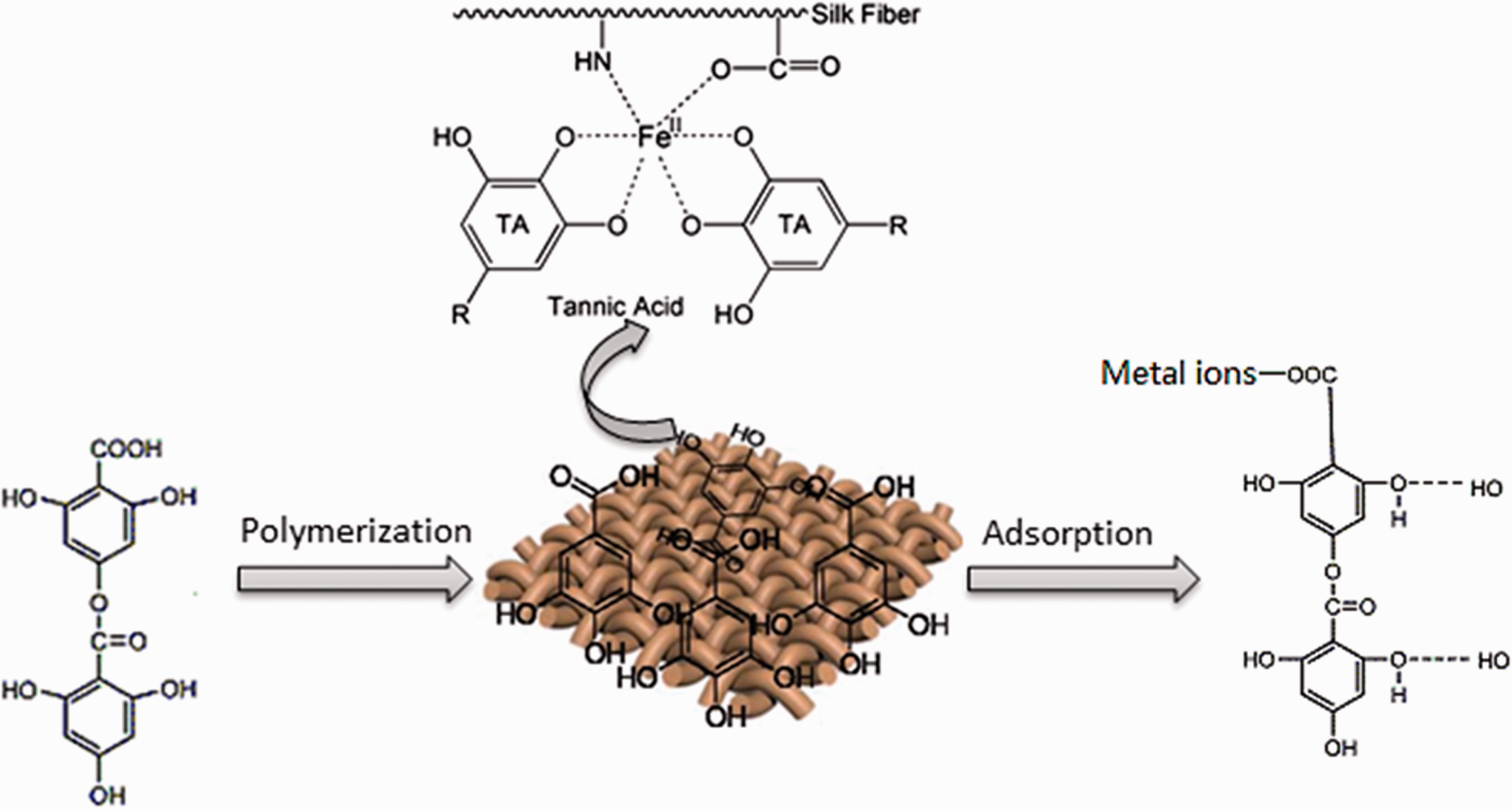
Schematic of the mechanism of TA grafted silk.
Metal adsorption procedure analysis
CdN2O6 · 4H2O, Cu(NO3)2 · 3H2O, and Ni(CH3COO)2 · 4H2O were dissolved in distilled water and stirred well, and then transferred to 1000 mL volumetric flasks to prepare standard stock solution with a concentration of 1000 mg/L Cd(II), Cu(II), and Ni(II) ions. To optimize the adsorption parameters, 0.4 g of adsorbent and 50 mL of metal solutions containing Cd(II), Cu(II), or Ni(II) were put together at room temperature and concentrations ranging from 20 mg/L, 40 mg/L, 60 mg/L to 80 mg/L and 100 mg/L for each metal ions. This experiment was carried out for 20 min in a water-bath shaker and the solution was filtered through 0.45 m Millipore filter paper at the end of the specified time for the adsorption process, and the concentration of filtered metal ions was measured using the inductively coupled plasma optical emission spectrometry (Thermo iCAP 6300 DUO). The difference between the initial concentration (C0) and the equilibrium concentration (Ce) of metal ion was determined by the amount of metal ion adsorbed on the TA-SF. The adsorption capacity qe (mg/g) and the percentage removed R (%) from the solution of Cd(II), Cu(II), and Ni(II) ions were calculated by using the following equations:


Desorption procedure
Adsorption experiments were performed by shaking 0.4 g of TA-SF at room temperature with 50 mL of 60 mg/L Cd(II), Cu(II), and Ni(II) solutions for 10 min. The solution was filtered after the adsorption of the metal ions on the TA-SF, and the filtrate was used to calculate the percentage of adsorption for each metal ion. For the desorption study, a metal-loaded TA-SF sample was treated with 50 mL of 0.1 mol/L HNO3 solutions in a volumetric conical flask and stirred for 5 to 30 min at 30°C in an orbital shaker. The amount of desorbed metal ion was measured by the difference between the amount of fully loaded metal ion on the adsorbent materials and the same solution. The desorbed efficiency (percentage of desorption) of Cd(II), Cu(II), and Ni(II) ions were calculated by equation (3).


Experiment on simultaneous removal of dyes and heavy metal ions
To investigate the removal effect of modified silk fabric on both dyes and heavy metal ions, 0.4 g of adsorbent (TA-SF) and 50 mL of solutions containing Methylene Blue and heavy metal ions (Cd(II) or Cu(II) or Ni(II)) were performed together at room temperature. The concentration of Methylene Blue was 20 mg/L, and the metal ions concentration was 50 mg/L for each metal. This experiment was carried out for 30 min in a water-bath shaker and the solution was filtered through 0.45 m Millipore filter paper at the end of the specified time for the adsorption process and the concentration of filtered metal ions was measured using the inductively coupled plasma optical emission spectrometry (ICAP 6300 series).
Results and discussions
Characterization of TA-SF
Fourier transform infrared (FTIR) analysis
FTIR spectroscopy was used to analyze the functional groups of waste silk fabrics before and after treatment, as shown in Figure 1. It can be seen from Figure 1 that the absorption peaks at 3282 cm−1 and 3071 cm−1 belong to the stretching vibration of -OH and C-H of polyphenols in waste silk, respectively. In the 1624 cm−1 and 1617 cm−1 zones, high absorption peaks are assigned to the -C=O stretching of amide I. The peaks at 1507 cm−1 and 1515 cm−1 are attributed to the N-H stretching vibration of amide II, and those at 1230 cm−1 and 1223 cm−1 are derived from the O-H stretching of amide III.19,20 At 2161 cm−1, there is an additional absorption peak for TA-SF corresponding to the C=O groups. In particular, the strong absorption of amide I band at 1624 cm−1 (SF) and 1617 cm−1 (TA-SF) is also used to measure the crystallinity index of SF protein. SF and TA-SF exhibited high absorption peaks around 1066 cm−1 and 1061 cm−1, corresponding to C-O-C bending and stretching vibration, respectively. It is observed that the specific absorption peaks of SF and TA-SF do not overlap. Therefore, SF with high TA content shows vast absorption peaks due to the accumulation of a large amount of TA on the SF surface, The secondary structure of SF can be further studied by using the amide I region of 1624 to 1617 cm−1. These investigations demonstrate that the surface of the TA-SF has been chemically activated for adsorption procedures. 21
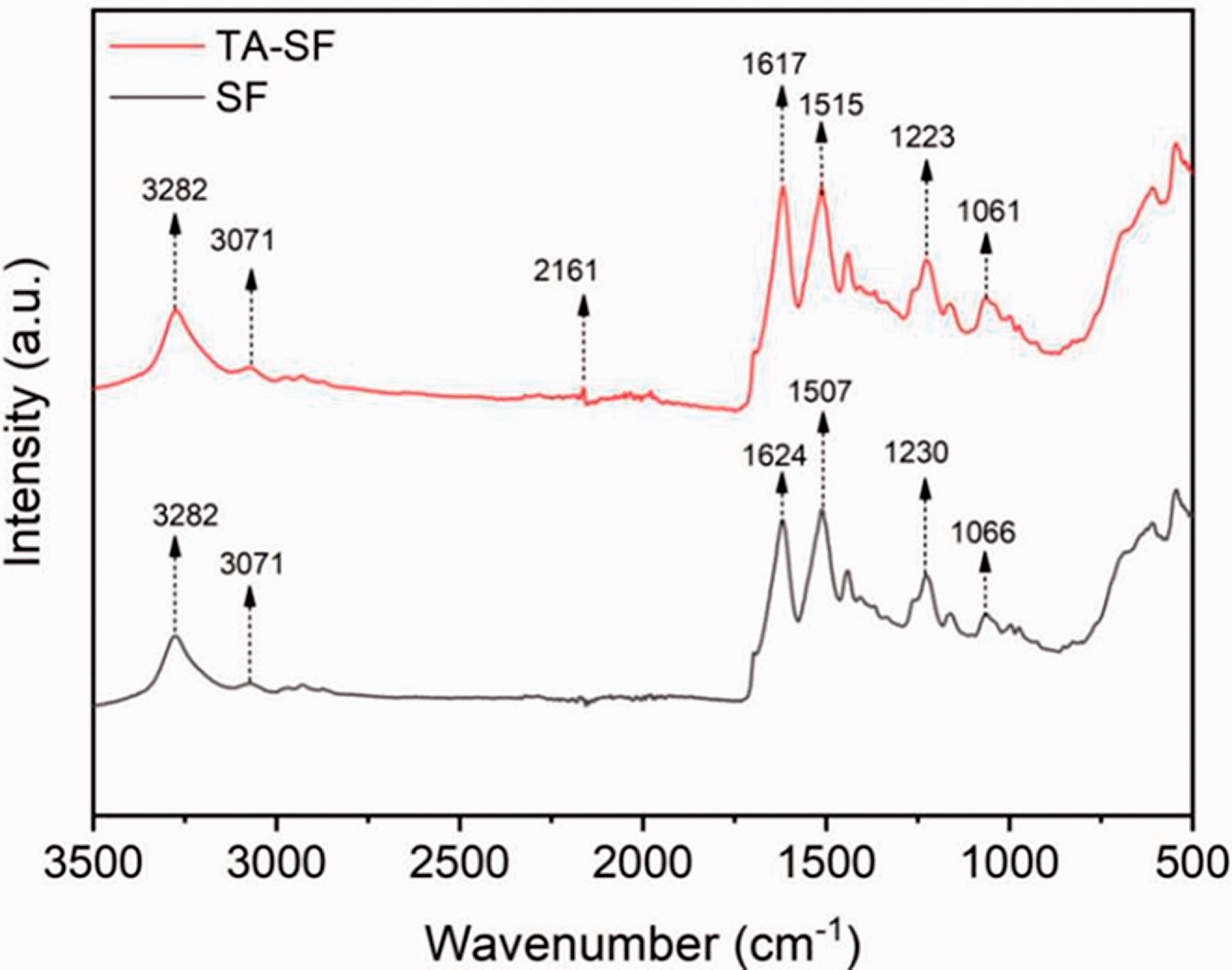
Fourier-transform infrared spectroscopy (FTIR) spectra of SF and TA-SF.
X-ray diffraction (XRD) analysis
The crystal phases present in the samples were identified by XRD with diffraction angle (2θ) from 10° to 90° and a scan rate of 5°/min. Figure 2 shows XRD pattern of silk before and after modification. The results demonstrate that SF and TA-SF show typical crystalline peaks respectively. The amorphous existence of these fibers is characteristic of the giant peaks of SF and TA-SF occurring at 2θ of 20.5° and 20.3°. This observation indicates the dominance of the c-axis direction as the main ascending direction. Furthermore, it was also observed that the intensity of the typical peaks of SF and TA-SF were different.22,23 However, the XRD diffraction peaks emerging in TA-SF indicate the presence of TA surface coating materials on SF.

X-ray diffraction (XRD) patterns of SF and TA-SF.
Scanning electron microscope (SEM) analysis
Scanning electron microscope (SEM) imaging was used to study the morphology of the SF and TA-SF, as shown in Figure 3(a). The representative images of SF and TA-SF are shown in Figure 3(a)–(c) and Figure 3(d)–(f), respectively. It was observed that there were significant differences in the surface morphology of waste silk before and after modification. As shown in Figure 3, the surface morphology of SF is very smooth, while on the other hand, TA-SF is clustered, convex, and rough. With the increase of surface roughness, the actual surface area of the adsorbent increased, so there are many places on the surface for metal ion adsorption.24,25 Overall, after modification of waste silk, SEM analysis showed different surface morphologies.

Scanning electron microscope (SEM) image at different magnifications of SF (a)–(c) and TA-SF (d)–(f).
X-ray photoelectron spectroscopy (XPS) analysis
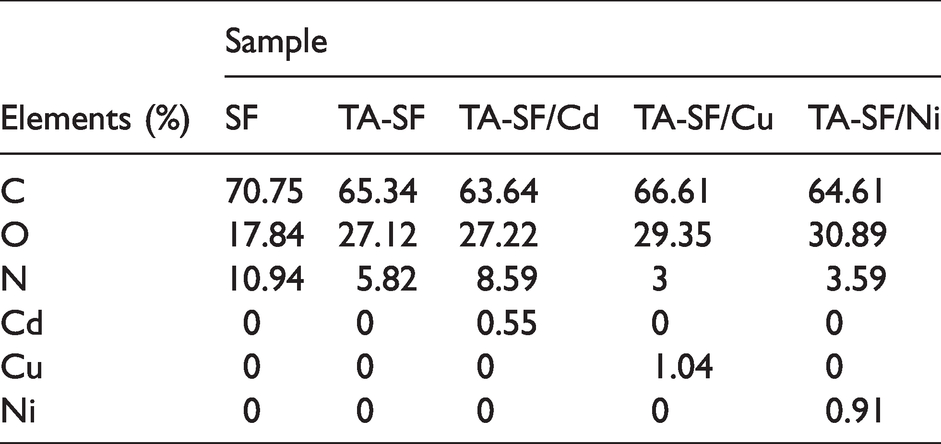
XPS was adopted to investigate the chemical composition and functional groups of SF and TA-SF. The XPS spectra of silk before and after adsorption of Cd(II), Cu(II), and Ni(II) metal ions, are shown in Figure 4. The percentage of such surface elements of silk samples obtained by the XPS wide scan spectrum is shown in Table 1. The results showed that the surface elements of C and N of the treated fabric are significantly smaller than the untreated sample. The surface element of O of the untreated fabric is smaller than the treated sample. In addition, on the other hand, after adsorption of Cd(II), Cu(II), and Ni(II) metal ions on TA-SF, the surface elements of metal ions increased significantly. As shown in Figure 4(a), peaks of C, N, O elements appear on the XPS spectra of SF and TA-SF/Fe samples, and the corresponding peak of Cd 3d, Cu 2p, and Ni 2p elements appear on the TA-SF/Cd, TA-SF/Cu, and TAA-SF/Ni surface spectrum. Figure 4(b)–(c) shows the C1s spectra of SF and TA-SF, and the C1s spectra are fitted to the absorption peaks at 284.6, 285.5, 286.4, and 288.1 eV, corresponding to C-C, C-N, C-OH, and O-C-O bonds, respectively. For more comprehensive analysis, after the adsorption of Cd(II), Cu(II), and Ni(II), Figure 4(d)–(f) shows the core-level of Cd3d, Cu2p, and Ni2p on the surface of TA-SF, and the characteristic peaks are attributed to Cd 3d3/2 (412.1 eV), Cd 3d5/2 (405.8 eV), Cu 2p1/2 (952.8 eV), Cu 3p3/2 (952.8 eV), Ni 2p1/2 (874.1 eV), and Ni 2p3/2 (856.1 eV), respectively. 3 Therefore, the XPS results confirm that the waste silk was modified with TA and Cd(II), Cu(II), and Ni(II) were successfully adsorbed by TA-SF.

X-ray photoelectron spectroscopy (XPS) spectra of wide scan spectra (a) SF, TA-SF and after adsorption of Cd(II), Cu(II), and Ni(II); high resolution C1s of (b) SF; (c) TA-SF; (d) TA-SF/Cd; (e) TA-SF/Cu, and (f) TA-SF/Ni.
Surface elemental compositions (atomic weight percentage) of SF, TA-SF and after adsorption of TA-SF/Cd, TA-SF/Cu, and TA-SF/Ni
Adsorption
Effect of different sample
The adsorption performance of Cd(II), Cu(II), and Ni(II) ions by SF and TA-SF were investigated. It can be seen from Figure 5 that different samples have a significant influence on metal adsorption, and TA-SF is more effective for the removal of heavy metal ions. The experiments were conducted with the initial concentrations of Cd(II), Cu(II), and Ni(II) solution at 60 mg/L. The adsorbent (SF and TA-SF) weight was 0.4 g and was placed in 150 mL of conical flask containing 50 mL of metals solution respectively at solution pH, which was incubated in a water shaking bath at 30°C for 30 min. As shown in Figure 5, the removal percentage of SF is 31%, 32%, and 24% for Cd(II), Cu(II), and Ni(II) ions, respectively. On the other hand, the removal percentage of TA-SF is 100% for Cd(II), 87% for Cu(II), and 78% for Ni(II) metals. At the same time, TA-SF also has higher adsorption capacity(qe) than SF sample. Accordingly, TA-SF have better adsorption ability for Cd(II), Cu(II), and Ni(II) ions, and it might be a consideration for further investigation.

Evaluation of the metals adsorption behavior of SF and TA-SF.
Effect of the concentration of heavy metal ions
According to the sources of pollution, the concentration of metal ions found in the polluted area varies. Therefore, the effects of various concentrations of heavy metal ions on their adsorption by modified TA-SF are exciting to research. The removal of Cd(II), Cu(II), and Ni(II) ions on TA-SF is shown in Figure 6. As a function of the initial metal ion concentration (20 mg/L, 40 mg/L, 60 mg/L, 80 mg/L, and 100 mg/L), 0.4 g of adsorbent was contained in a 150 mL conical flask and 50 mL of Cd(II), Cu(II), and Ni(II) solution were transferred to the flask at 30°C for 30 min at solution pH. The results showed that TA-SF absorbed almost 100% of Cu(II) and Ni(II) ions at metal ion concentrations of 20 mg/L and 40 mg/L. Further increases in the concentration of metal ions to 60 mg/L, 80 mg/L and 100 mg/L, the metal adsorption capacity decreased to 87%, 70%, and 56% for Cu(II), and 79%, 63%, and 50% for Ni(II). For Cd(II) ions, increasing the concentration of metal ions from 20 mg/L to 60 mg/L did not affect the performance of adsorption (100%), but increasing the concentration of metal ions to 80 mg/L and 100 mg/L reduced the removal percentage to 97% and 87%, respectively. According to the increase in adsorption capacity, adjusting the adsorption efficiency to 60 mg/L concentration could be a suitable parameter for Cd(II) ion. In addition, with an increase in adsorption capacity for Cu(II) and Ni(II) ions, the investigation showed that 60 mg/L was the maximum adsorption capacity, and there was no further increase in adsorption capacity with increasing initial ion concentration due to the attainment of dynamic equilibrium between the adsorbent and adsorbate. 3 The initial concentration of 60 mg/L can explain the efficient removal of Cd(II), Cu(II), and Ni(II) ions from aqueous solutions.

The effect of initial concentration of Cd(II), Cu(II), and Ni(II) ions adsorption.
Effect of contact time
The effect of contact time on TA-SF adsorption of Cd(II), Cu(II), and Ni(II) metal ions from aqueous solutions is shown in Figure 7. The experiments were investigated at various contact times ranging from 1 to 20 min at 30°C with an adsorbent dose of 0.4 g and 60 mg/L of metal ions at solution pH. Due to the presence of numerous active sites on the adsorbent surface, adsorption was very fast,99% for Cd(II), 82% for Cu(II), and 77% for Ni(II) were adsorbed within 5 min. As shown in Figure 7, after 10 min of contact time, equilibrium adsorption is established and the maximum TA-SF uptake for all metal ions are reached: 100% (8.03 mg g−1) for Cd(II), 87% (6.51 mg g−1) for Cu(II), and 78% (5.79 mg g−1) for Ni(II). After reaching equilibrium, the contact time no longer affected the metal-ion adsorption and removal efficiency and adsorption capacity. 3 For the subsequent analysis, an adsorption time of 10 min was used.

The effect of contact time of Cd(II), Cu(II), and Ni(II) ions adsorption.
Effect of pH
The pH of the aqueous solution has a significant impact on the adsorption process, especially for heavy metal ions like Cd(II), Cu(II), and Ni(II), which occur at different pH levels in distinct species. The effect of the solution pH on the adsorption of Cd(II), Cu(II), and Ni(II) metal ions by TA-SF at different pH values from 3 to 11 was investigated, and the results are presented in Figure 8. The results show that the removal of Cd(II), Cu(II), and Ni(II) metal ions in TA-SF is highly dependent on the pH of the aqueous solution. The amount of adsorbed heavy-metal ions demonstrates that the removal rate of TA-SF for Cd(II) increased from 72% to 100%, for Cu(II) from 34% to 100%, and for Ni(II) from 5% to 100% while the pH increased from 3.0 to 11.0, The maximum removal rates of Cd(II), Cu(II), and Ni(II) were 100% (8.03 mg g−1, 7.42 mg g−1, and 7.47 mg g−1, respectively) at pH 9.0. The adsorption of Cd(II), Cu(II), and Ni(II) ions decreased dramatically with the decrease of solution pH, particularly when pH > 3, the removal rate of each heavy metal ion decreased to less than 5%. It is generally believed that metal ion adsorption increases with the increase of pH as the solution becomes less stable for the metal functional groups.26,27 Nonetheless, the adsorption capacity decreased at higher pH values (11.0), which may be due to the precipitation of the Cd(II), Cu(II), and Ni(II) ions.

The effect of solution pH of Cd(II), Cu(II), and Ni(II) ions adsorption.
Adsorption isotherm
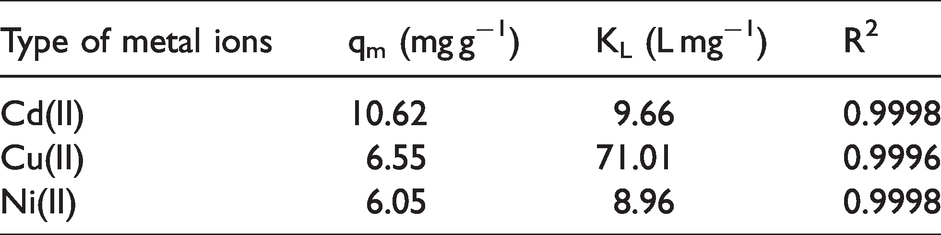
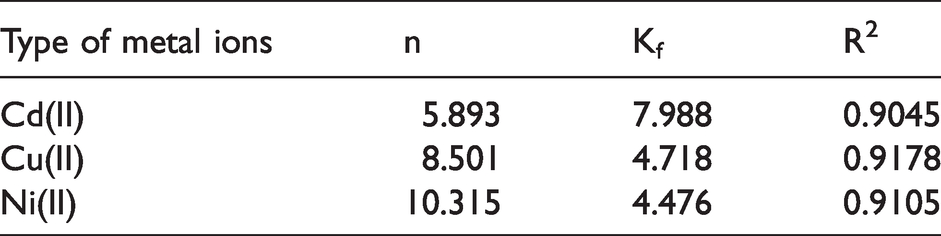
Adsorption is a complex process generally defined by isotherms, calculated by fitting experimental data with mathematical models. The impact of the initial metal ion concentration was investigated to establish the adsorption isotherms of Cd(II), Cu(II), and Ni(II) ions using TA-SF. The adsorption equilibrium between the adsorbent and the aqueous heavy metal ions was determined using Langmuir, Freundlich, and Temkin adsorption isothermal models.
Langmuir isotherm
The Langmuir model is a good monolayer adsorption isotherm, which relates the equilibrium concentration of adsorbent to the capacity of adsorbent. This model provides a strong relationship with a wide range of experimental data, and the linearized form of Langmuir is expressed in the equation (4):

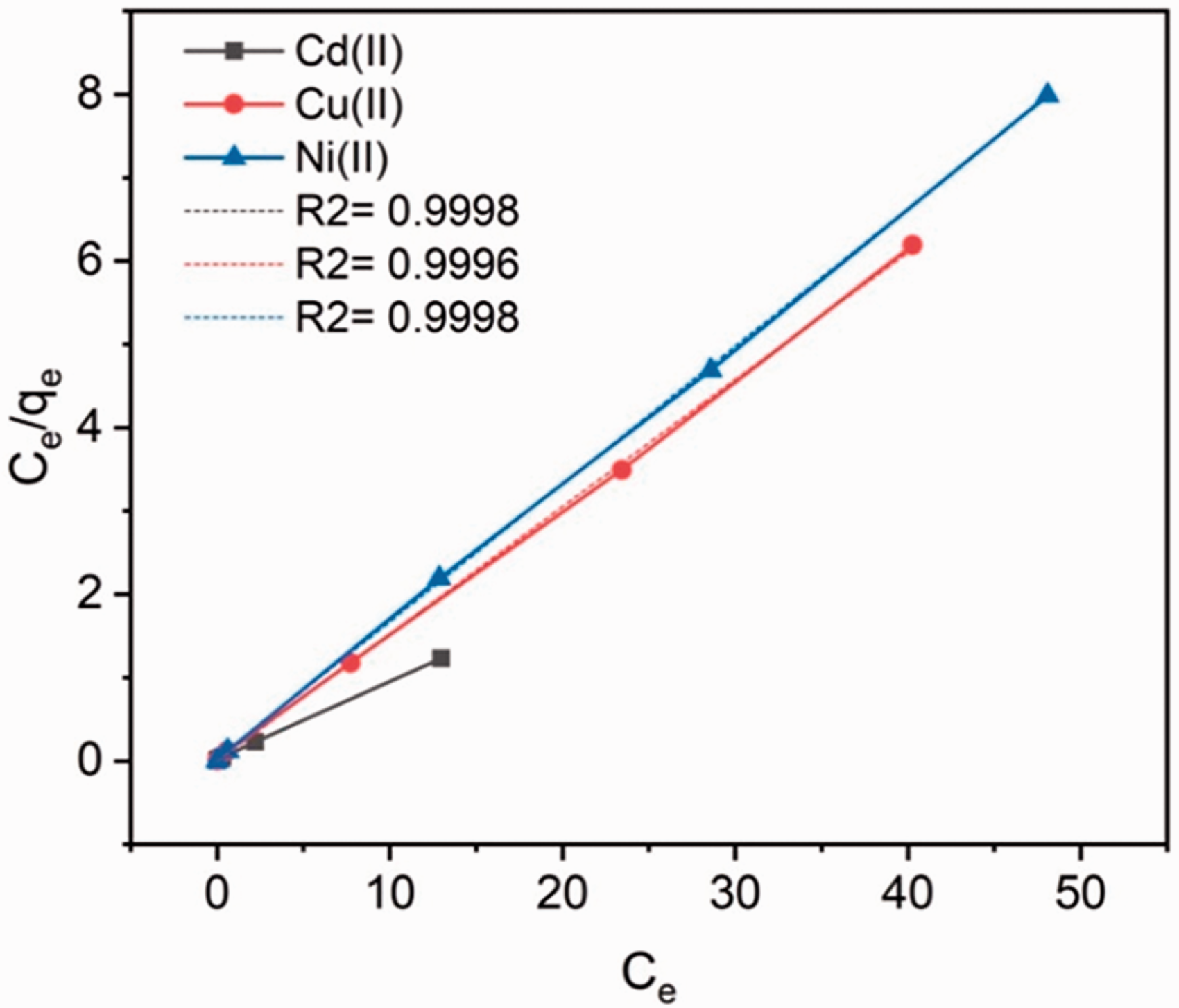
Langmuir adsorption isotherm for Cd(II), Cu(II), and Ni(II) ions
Langmuir adsorption isotherm models parameters of metals ions on TA-SF.
Freundlich isotherm
The Freundlich isothermal adsorption model was used to analyze the adsorption strength of adsorbent. It ensures that the heterogeneous surface of the adsorbent has non-ideal adsorption. Thus instrumental is Freundlich isothermal, which is given by the linearized form at equation (5):


Freundlich adsorption isotherm for Cd(II), Cu(II), and Ni(II) ions.
Freundlich adsorption isotherm model parameters of metals ions on TA-SF.
Temkin adsorption isotherm
The purpose of the Temkin adsorption isotherm is taken into consideration in the adsorbate–adsorbent interaction. It is assumed that the adsorption energy evolution and the adsorbent surface coverage are linear. The model of the Temkin isotherm is presented in equation (6):


Temkin adsorption isotherm for Cd(II), Cu(II), and Ni(II) ions.
Temkin adsorption isotherm models parameters of metals ions on TA-SF.

Adsorption kinetics
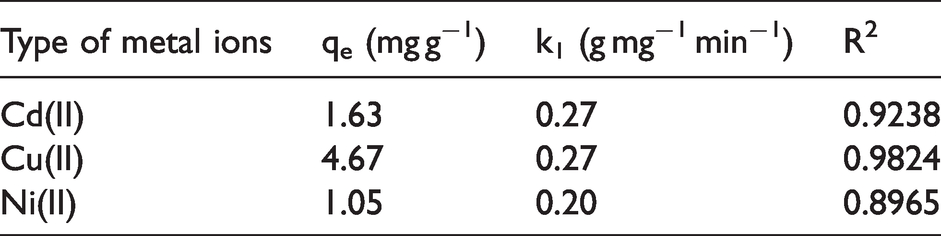
The kinetic adsorption for the treatment of aqueous solutions is of great significance. The adsorption kinetics data were analyzed to understand the dynamics of the adsorption process in terms of the order of rate constants. The pseudo-first-order and pseudo-second-order models were applied to the adsorption kinetic results to investigate the behavior of the adsorption process of heavy metals on TA-SF.
Pseudo-first-order kinetics
The pseudo-first-order model, the earliest known equation to describe the adsorption rate based on the adsorption capacity, was used to describe the adsorption kinetic data. The differential model expressed in linearized form is shown in equation (7):

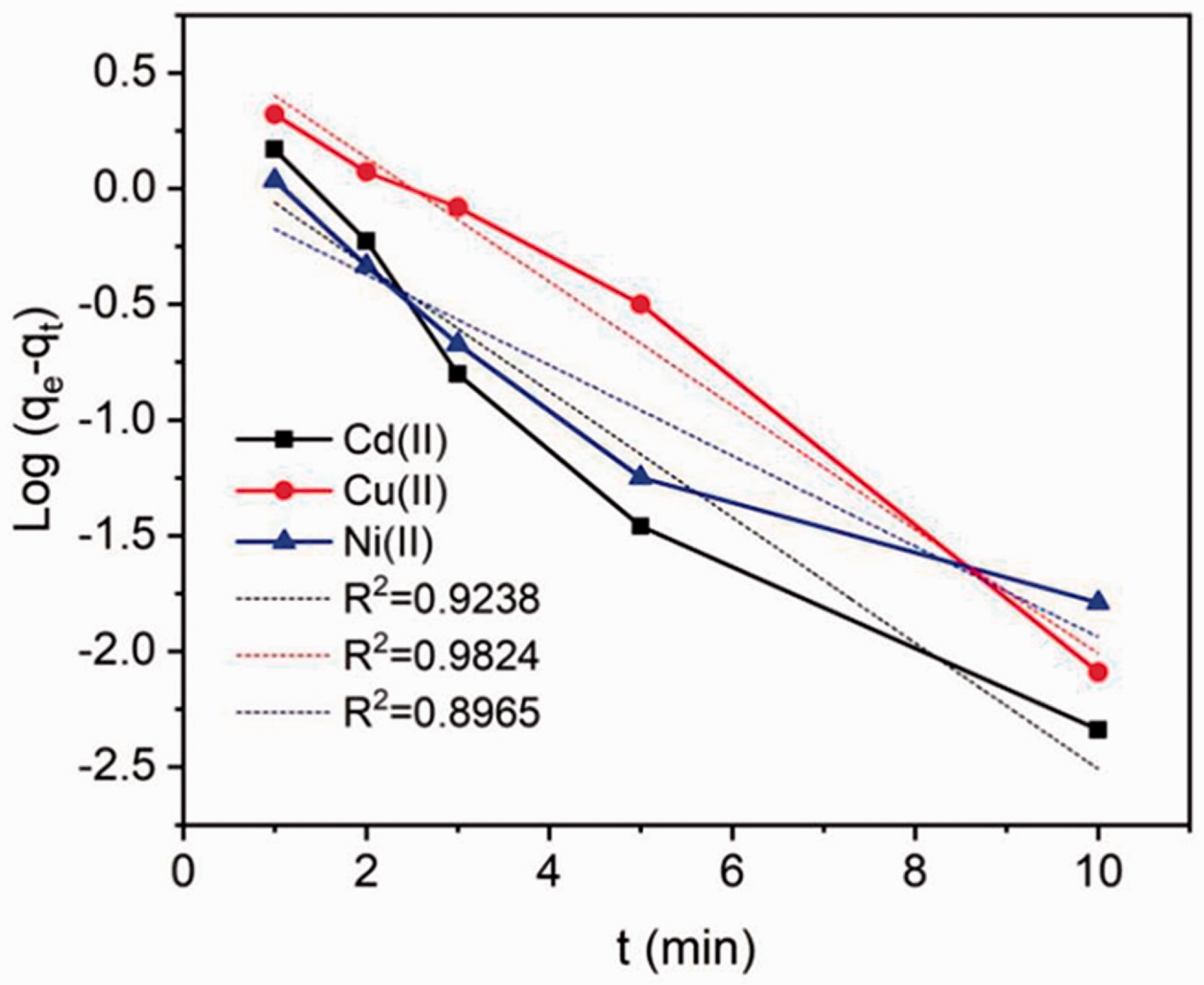
Pseudo-first-order plots for the adsorption of Cd(II), Cu(II), and Ni(II) ions.
Pseudo-first-order kinetics parameters for Cd(II), Cu(II), and Ni(II) ions on TA-SF/Fe
Pseudo-second-order kinetics
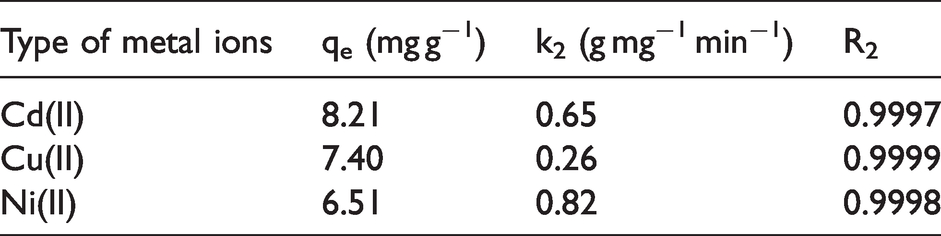
The linearized form of the pseudo-second-order model is expressed by equation (8):

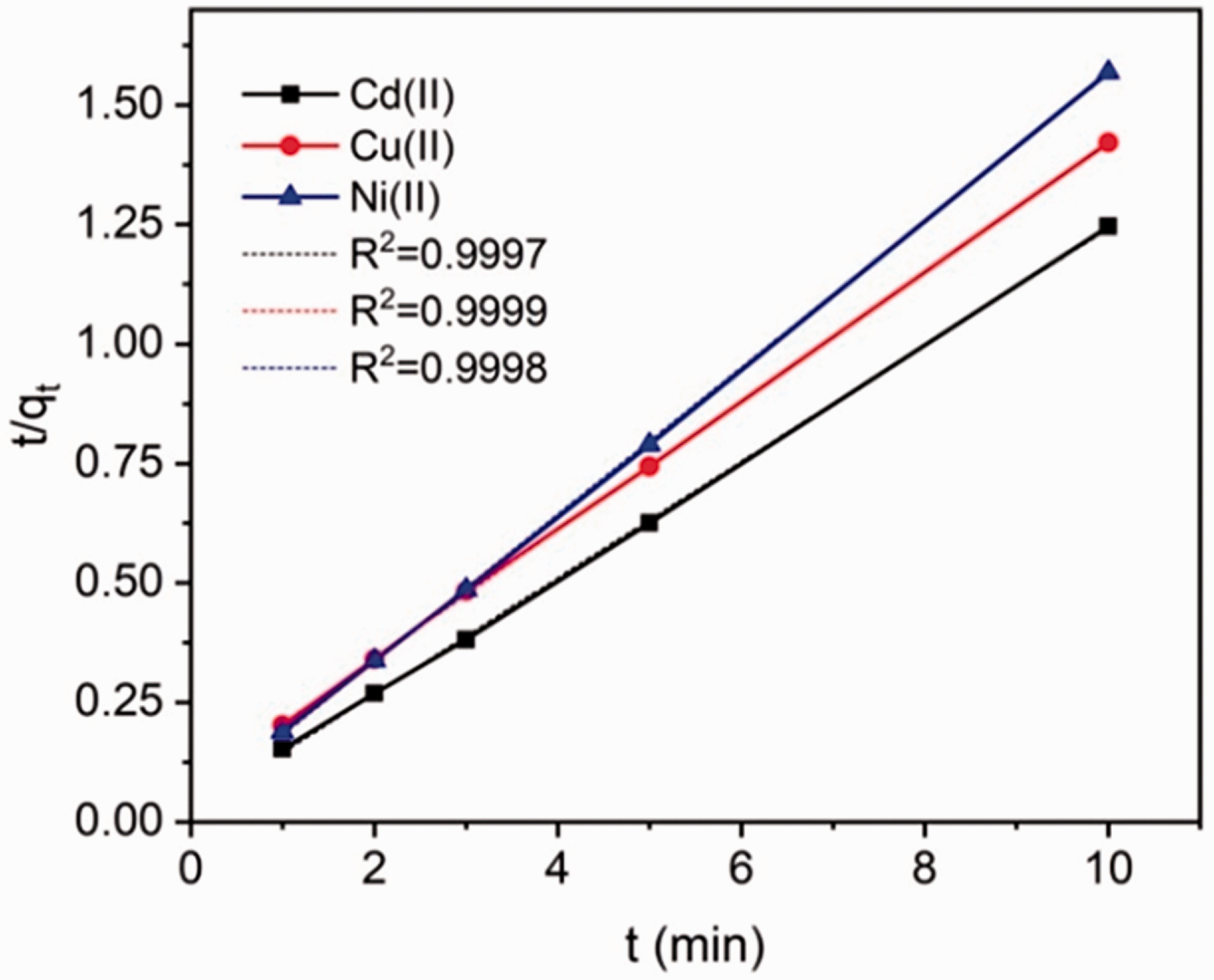
Pseudo-second-order plots for the adsorption of Cd(II), Cu(II), and Ni(II) ions.
Pseudo-second-order kinetics parameters for Cd(II), Cu(II), and Ni(II) ions on TA-SF.
Desorption
Desorption performance is a significant variable for recycling and repeated availability of ideal adsorbents. An ideal adsorbent not only has greater adsorption capacities, but also exhibits better desorption performance. Better desorption effectively reduces the overall cost associated with the removal of adsorbates, while high costs usually limit their potential use. Therefore, the optimal conditions for the successful desorption of Cd(II), Cu(II), and Ni(II) from TA-SF were studied to evaluate them. Figure 14 shows the effect of time on the desorption of Cd(II), Cu(II), and Ni(II) in a 0.1 mol/L HNO3 solution from the metal-loaded TA-SF samples. It can be noted that within 5 min, Cd(II), Cu(II), and Ni(II) exceeded the maximum desorption rate, and the amount of recovered metal ions slightly increased with the increase of specific time. It is evident from the figure that the desorption rate were 78%, 92%, and 83% for Cd(II), Cu(II), and Ni(II), respectively. TA-SF has a strong recovery ability for further uses. 3

Desorption of Cd(II), Cu(II), and Ni(II) ions in the presence of 0.1 mol/L HNO3 solution as a function of time from the metal-loaded TA-SF.
Simultaneous removal of dyes and heavy metal ions
Residual dyes and heavy metal ions often coexist in dye wastewater, which has higher biological and cellular toxicity. The adsorption of heavy metal and Methylene Blue on modified silk fabric was studied, and the results are listed in Table 7 and Figure 15. It can be seen that TA-SF had excellent removal to Methylene Blue, and the color removal percentage reached 99% after 30 min. The modified silk fabric also shows good removal of heavy metal ions, especially Cd(II). Thus, this trial experiment provides the potential for removing dyes in the presence of heavy metals from industrial wastewater.
Adsorption performance of Cd(II), Cu(II), and Ni(II) ions from dyeing wastewater

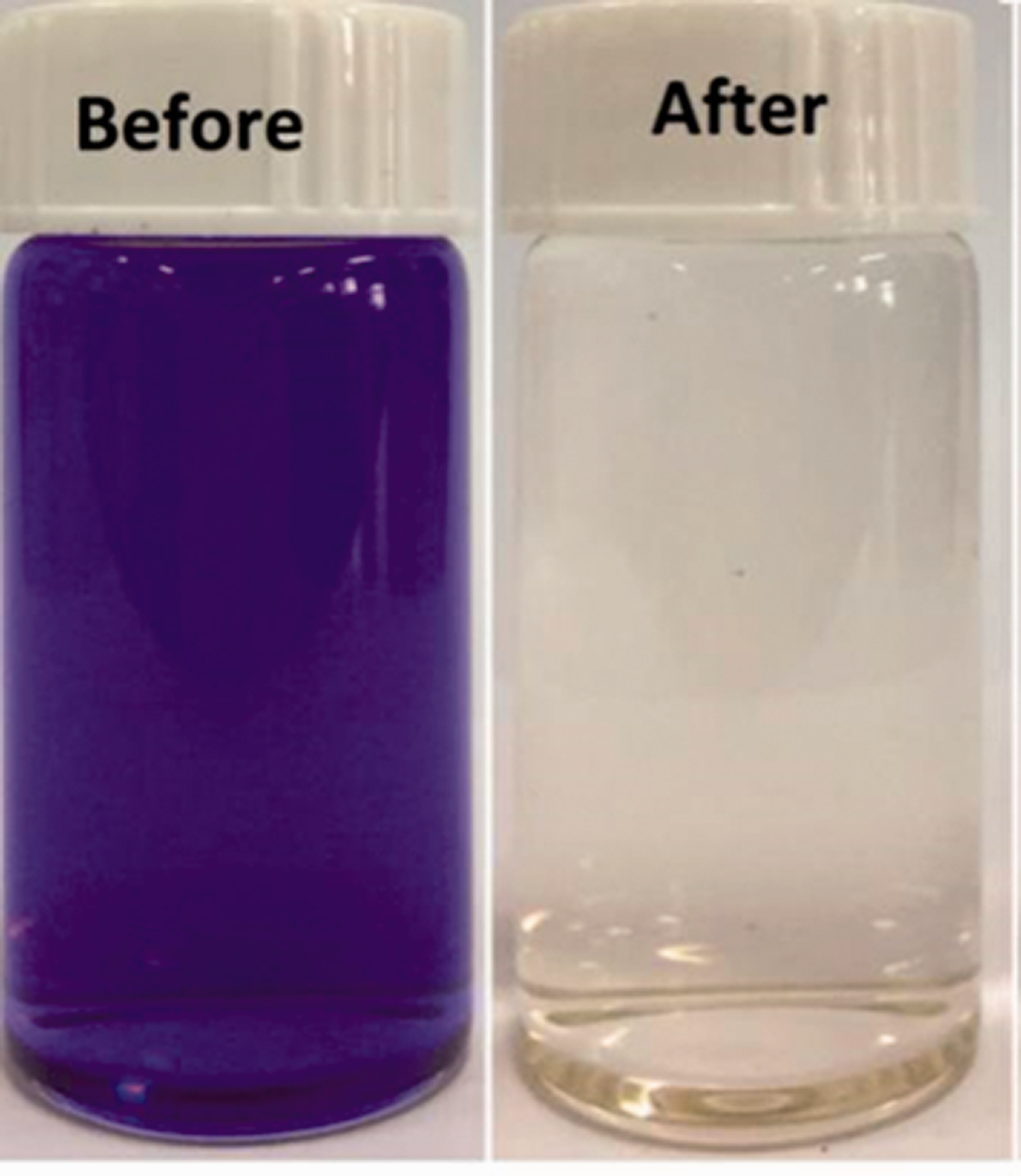
Dye degradation images before and after removal of dyes.
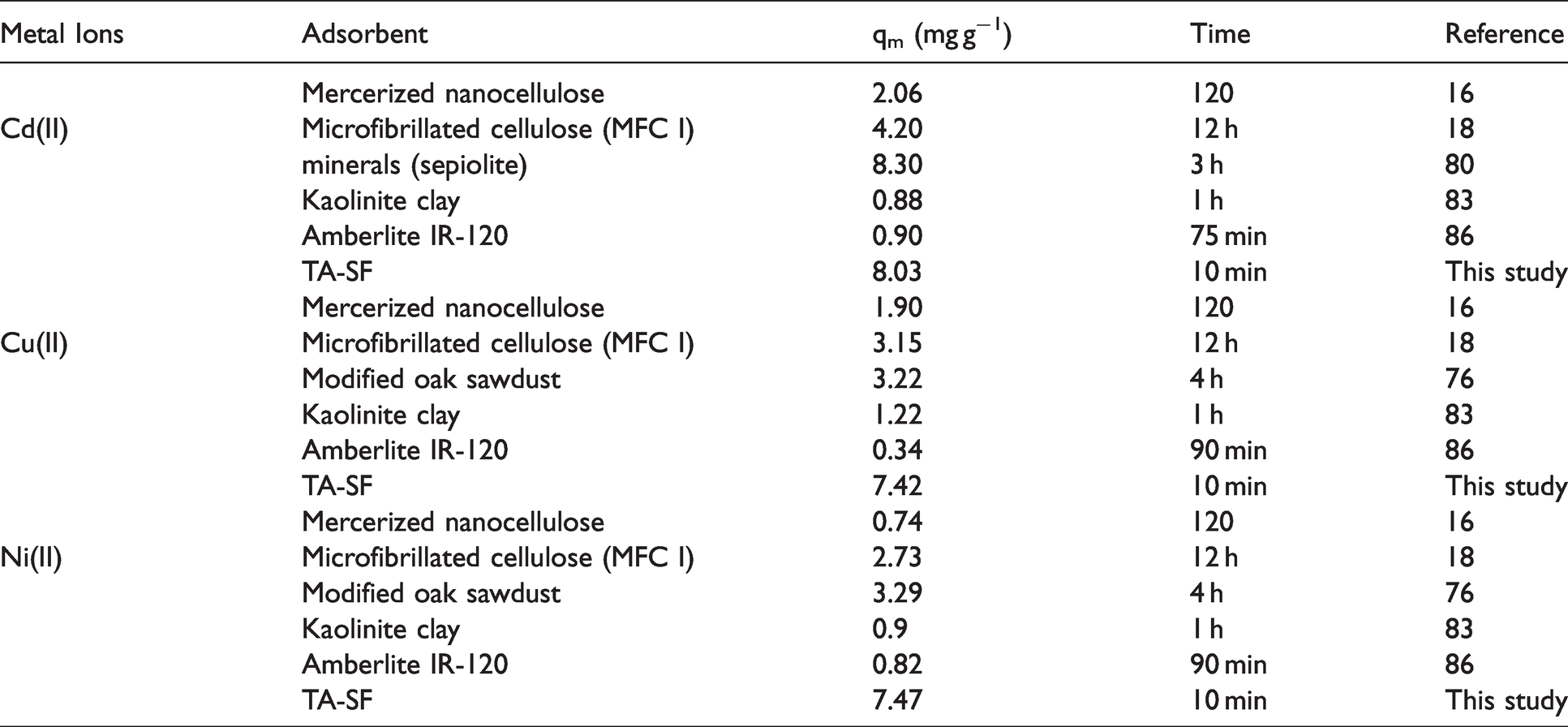
As shown in Table 8, the experimental data of this study is comparable to the existing results and be better than many research. Additionally, it can be observed in Table 8 that the adsorption capacities of Cd(II), Cu(II), and Ni(II) ions on TA-SF reached a high value within 10 min, which is better than the previous studies on the adsorption of Cd(II), Cu(II), and Ni(II) ions from various adsorbents. Moreover, the order of qm and removal percentage of TA-SF to three metals ions are: Cd(II) > Cu(II) > Ni(II). The reason is that the coordination constant of hydroxyl with Cd(II), Cu(II), and Ni(II)Cd is 4.17, 7.0, and 4.97, respectively. However, Cd has the highest atomic weight, and the atomic weight of Cu and Ni are similar. In summary, TA-SF has the strongest coordination capability and adsorption effect to Cd(II), and the worst adsorption effect to Ni(II), which also presents the same adsorption trend with the materials listed in Table 8.
Comparison of adsorption capacities with previous studies of different adsorbents for the adsorption of Cd(II), Cu(II,) and Ni(II) ions
Conclusion
The waste silk fabric was modified by TA and was used as an adsorbent for the removal of Cd(II), Cu(II), and Ni(II) from aqueous solutions. The modified silk fabric was characterized by FTIR, XRD, SEM, and XPS to assess the functional groups, structure morphologies, and element content. The modified silk (TA-SF) had a higher adsorption affinity for Cd(II), Cu(II), and Ni(II) metal ions than SF. The effects of adsorption conditions, such as metal ions concentrations, contact time, and pH of the solution, were studied and optimized. The Langmuir model fit better than Freundlich and Temkin isotherm models for the adsorption of Cd(II), Cu(II), and Ni(II) ions. Additionally, the pseudo-second-order equation is well fitted for studies of kinetics. In addition, the absorbed metal ions on TA-SF can be easily desorbed, and TA-SF can simultaneously adsorb heavy metal and dyes, indicating it can also be applied in the dye removal treatment of textile dyeing & printing contaminated water and its application prospect in industrial wastewater treatment.
Footnotes
Declaration of conflicting interests
The author(s) declared no potential conflicts of interest with respect to the research, authorship, and/or publication of this article.
Funding
The author(s) disclosed receipt of the following financial support for the research, authorship, and/or publication of this article: This work was supported by the National Natural Science Foundation of China (51973144, 51741301); the Major Program of Natural Science Research of Jiangsu Higher Education Institutions of China (18KJA540002); the Natural Science Foundation of Jiangsu Province (BK20201181); Jiangsu Province “333” project (BRA2020324) and the Foundation of Jiangsu Engineering Research Center of Textile Dyeing and Printing for Energy Conservation, Discharge Reduction and Cleaner Production(Q811580621).
