



Abstract
Carbonized cotton fabrics have been used in the preparation of wearable sensors. However, there are few studies on the carbonization structure and properties of carbonized cotton fabric. This work provided a practical and effective method for the preparation of carbonized cotton knitted fabrics. The effects of impregnating agents and pre-oxidation on the carbonization structure and performances of the cotton knitted fabric were investigated systematically for the first time. Thermal gravimetry analysis revealed that cotton knitted fabric impregnated with 10% (NH4)2HPO4 had a higher carbonized yield of cotton knitted fabric than that with 5%, which was followed by 10% NH4H2PO4, and the worst was 10% (NH4)2SO4. The results also showed that the carbonized yield of cotton knitted fabric was enhanced considerably at 900°C for 120 min after impregnation with 10% (NH4)2HPO4 and pre-oxidation at 240°C for 60 min. The integrity of the cotton knitted fabric was maintained after carbonization. Scanning electron microscopy showed that the natural turn of carbonized cotton fiber was deepened after being impregnated with 10% (NH4)2HPO4 and pre-oxidized at 240°C for 60 min. With the increase of carbonization temperature, C-O and C-H were destroyed, and C=C bonds were formed. The amorphous carbon interlayer was created after carbonization. The structural order of these carbonized cotton fibers was improved with the enhancement of temperature. Pre-impregnation agent treatment and pre-oxidation greatly heightened the carbonized yield of cotton knitted fabric, maintained the integrity of the carbonized cotton fiber, and then increased the electrical conductivity of the carbonized cotton knitted fabric.
In recent years, carbon materials have shown great value in the fabrication of flexible strain sensors because of their excellent electrical properties. They have been widely studied by researchers from many fields.1 –6 At present, the precursors of carbon materials are mainly non-renewable resources, such as hydrocarbons,7,8 polyacrylonitrile (PAN), 9 and coal tar pitch. 10 People have faced significant challenges of the environment and resources. It is an inevitable trend to seek clean and renewable resources. Cellulose fiber is a renewable resource with abundant carbon elements and ample reserves, which makes it an ideal precursor for the preparation of carbon materials. 11
Cellulose fibers have drawn significant attention due to their potential utilization as an ideal precursor for the preparation of carbon material because of their high thermal conductivity, high purity, outstanding mechanical flexibility, and low cost. 12 Cotton is a natural cellulose fiber, and carbonized cotton fiber is a new type of conductive material with the advantages of low cost, abundant sources, and environmental friendliness compared with chemical conductive fiber, which needs to have conductive particles added or be plated with a metal layer.4,13 It is of great significance to study the pyrolysis process of cellulose on the performance and application of carbonized materials. Suhas et al. 14 investigated the pyrolysis process of pure cellulose, which was controlled primarily by two predominant reactions, dehydration and depolymerization (cleavage). Miyajima et al. 15 suggested that the pyrolysis of cellulose mainly went through the following four successive stages during carbonization: stage 1, volatilization of physically adsorbed water between 25°C and 150°C; stage 2, the dehydration of the cellulosic unit continued between 150°C and 240°C; stage 3, C-O and C-H were destroyed and C=C bonds formed between 240°C and 400°C; stage 4, formation of graphite-like layers occurred at high temperature (>700°C). However, the complexity of the cellulose pyrolysis process and the existence of too many side reactions, the yield, and the performance of carbon materials produced from cellulose precursors are faced with significant challenges at present.
Some attempts have proved that the yield and electrical properties of carbonized materials can be improved by pre-oxidation, flame retardant finishing, and reducing the heating rate during carbonization. These treatments could act on the pyrolysis of cellulose. 16 Brunner and Roberts 17 enhanced the carbonized yield of fiber by reducing the heating rate during the carbonization. Pre-oxidation of cellulose carbon has been examined by several research groups. Deng et al. 18 successfully prepared cellulose nanofiber and heightened the performance of carbonized nanofiber by heating to 240°C in air at a rate of 3°C min−1 for initial stabilization, followed by a 60 min isotherm at the final maximum temperature. DeGroot et al. 19 found that oxidation of cellulose carbon (prepared at 450°C) initiated at 200°C. Ibbett et al. 20 chose Lewis acids as the impregnation agents to increase the carbonized yield of regenerated cellulose fiber. Benini et al. 21 suggested a mild acid washing of the cellulose before pyrolysis. The yield and electrical properties of carbonized materials were improved by the presence of the acid enormously. Zeng and Pan 22 worked on a series of phosphates and sulfates. They found that all of the impregnated materials increased the carbon fiber formation yield by 50–70% relative to the absence of impregnant. However, these methods involved complicated operations and produced contaminants, which were toxic and had a strong irritating odor. These factors limit the possibility of practical applications. Therefore, exploring new methods that are easy to operate, low cost, and relative environmentally friendly remains a challenge. In addition, cotton knitted fabric, made of loops connecting with each other, has good extensibility compared with the explored woven fabric and nonwoven fabric,3,4,23 which helps to improve the conductivities of the carbonized cotton knitted fabric as a strain sensor to a certain extent.
In the present study, carbonized cotton knitted fabric was developed by a facile and low-cost method. The cotton knitted fabric was impregnated with (NH4)2HPO4, NH4H2PO4, and (NH4)2SO4. The impregnated (10% (NH4)2HPO4) cotton knitted fabric was carbonized at high temperature (600°C, 700°C, 800°C, 900°C) after being pre-oxidized at 240°C for 60 min. This study aimed to explore the effects of impregnation agents, pre-oxidation, and carbonization temperature on the structures and properties of carbonized cotton knitted fabric. The carbonized cotton knitted fabric was characterized by scanning electron microscopy (SEM), Fourier transform infrared spectroscopy (FTIR), X-ray diffraction (XRD), thermal gravimetry (TG), and Raman spectroscopy. The results indicated that the processing method significantly heightened the yield and conductive properties of the carbonized cotton knitted fabric. This work not only provided a practical and effective method for the preparation of carbonized cotton knitted fabrics but also introduced the possibility for the large-scale application of carbon-based cotton knitted fabric sensors.
Sample preparation
Materials
Raw cotton knitted fabric (undyed and unfinished) purchased from Zhejiang Jiaming Textile Co., Ltd, China was used as samples. The sample specifications are listed in Table 1. The interlock stitch was selected as the sample due to its better flatness, dimensional stability, and anti-raveling in cotton knitted fabrics.
The specifications of the sample

The impregnation agents, namely (NH4)2HPO4, NH4H2PO4, and (NH4)2SO4, were supplied by Baisi Yiji Experimental Supplies Mall. They had the role of flame retardant in the initial stage of carbonization to protect the cotton knitted fabric and reduce the loss of the cotton knitted fabric to varying degrees, thus improving the yield of carbonized cotton knitted fabric (hereinafter referred to as the carbonized yield, which was defined as the ratio of the samples’ weight after thermal treatment (carbonization) and before pre-treatment (pre-impregnation and pre-oxidation) in the impregnant solutions), and ultimately enhanced the conductivity of the cotton knitted fabric after carbonization. 22 All chemicals used in this study were of analytical grade, unless stated otherwise.
Impregnation agent treatment
The cotton knitted fabric was immersed in anhydrous ethanol solution and treated with ultrasonic waves for 30 min to remove impurities, and washed with deionized water for 30 min in the same way. (NH4)2HPO4, NH4H2PO4, and (NH4)2SO4 solutions with 10% mass fraction were configured, respectively. In addition, 5% (NH4)2HPO4 solution was prepared according to previous studies22,24 for comparison. The cotton knitted fabrics were soaked in these solutions for 3 h (bath liquid ratio 1:40, commonly used in industry), respectively. The impregnated cotton knitted fabrics were squeezed of excess solution and dried in an oven at 80°C.
Pre-oxidation and carbonization stage
The impregnated cotton knitted fabrics were placed in the middle of a tube furnace and initially stabilized by heating to 240°C in air at a rate of 5°C min−1, followed by a 60 min insulation at the final maximum temperature. The stabilized cotton knitted fabrics were then carbonized by heating at a rate of 5°C/min, followed by a 120 min isotherm at the final maximum temperature (600–900°C) in an argon atmosphere (99.999%). Finally, the tube furnace was closed and the samples were cooled to room temperature in an argon atmosphere (99.999%).
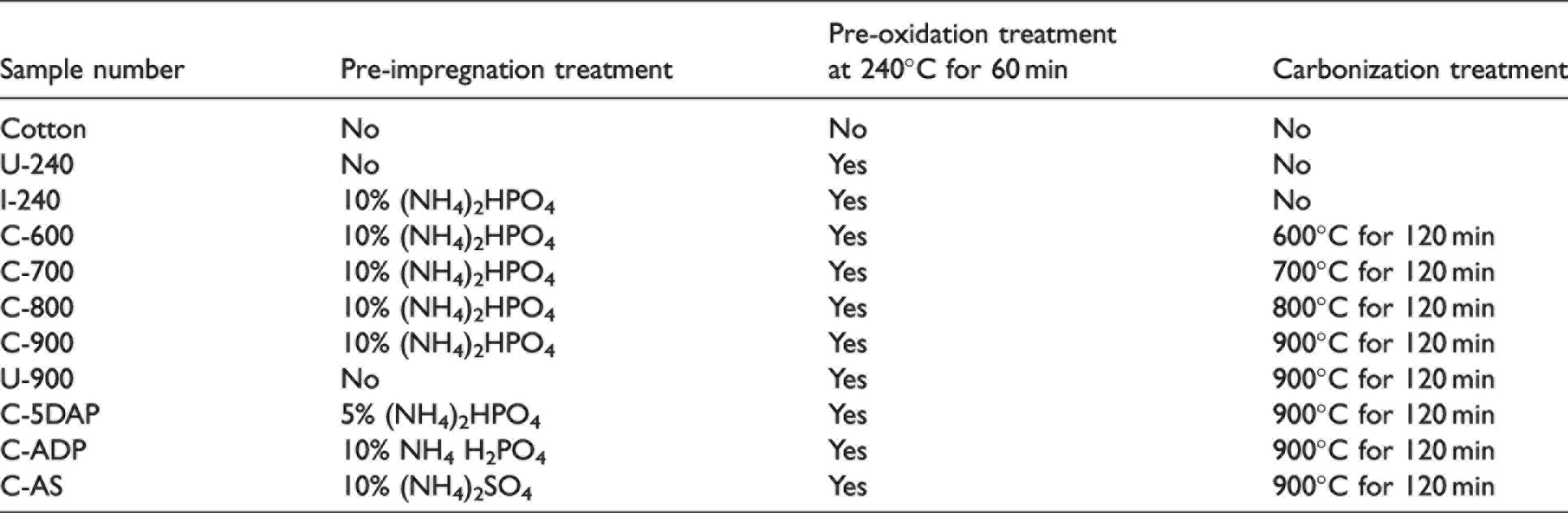
The treatment conditions of the cotton knitted fabric corresponding to sample numbers are shown in Table 2. The impregnated (5% (NH4)2HPO4, 10% NH4H2PO4, 10% (NH4)2SO4) cotton knitted fabrics were carbonization at 900°C for 120 min after being pre-oxidized at 240°C for 60 min; these samples were represented as 5DAP, ADP, AS, respectively.
The treatment conditions of cotton knitted fabric corresponding to sample number
Characterization of carbonized cotton knitted fabric
Thermogravimetric analysis
A TGA 4000 thermogravimetric analyzer (Netherlands) was used to analyze the cotton knitted fabric before and after carbonization. The test was carried out in a nitrogen atmosphere (purity: 99.999%, rate: 30 ml min−1) to isolate the air. The samples were placed in an alumina crucible and heated from 25°C to 900°C at a rate of 35°C min−1, followed by a 1 min isotherm at the final maximum temperature. In the TG analysis curve, the carbonized yield was the ordinate corresponding to 900°C. Data from the thermogravimetric analysis (TGA) were used in the determination of weight loss and the carbonized yield for cotton (as showed in Table 2, here should be the sample number ‘Cotton’), U-240, and the impregnated (10% (NH4)2HPO4, 5% (NH4)2HPO4, 10% NH4H2PO4, 10% (NH4)2SO4, respectively) cotton knitted fabrics pre-oxidized in the air at 240°C for 60 min.
Morphological characteristics
The surface morphology of the cotton knitted fabric before and after carbonization was observed by a Dino Capture 2.0 hand-held digital microscope (China, Shenzhen). The fibers in the cotton knitted fabric before and after carbonization were taken as samples. The morphology of the fibers before and after carbonization was characterized by an S-4800 scanning electron microscope (Japan). The surfaces of the samples were sputter coated with gold through a vacuum evaporator. The morphology of the cotton fiber was used to characterize the effect of different impregnation agents on carbonization behavior.
Energy dispersive X-ray spectroscopy analysis
The cotton fibers impregnated with three impregnating agents (10% (NH4)2HPO4, 10% NH4H2PO4, 10% (NH4)2SO4), carbonized at 900°C for 120 min after being pre-oxidized at 240°C for 60 min, were taken as samples. The elemental quantitative analysis of samples was characterized by an S-4800 scanning electron microscope (Japan). The surface of samples was sputter coated with Pt through a vacuum evaporator. The elemental quantitative analysis of samples was used to determine whether heteroatoms (N, S, and P) were introduced into the carbonized cotton knitted fabrics.
Structural parameters
The thickness and weight of the cotton knitted fabrics before and after carbonization was measured by YG141N thickness gauge (China) and FA-1004 balance (China), respectively. The weight of the cotton knitted fabrics was calculated. A Y511B fabric magnifier (China, Suzhou) was used to measure the total fabric density before and after carbonization. All the structural parameters were taken from at least 10 samples of data, and the average value was taken as the final result.
Fourier transform infrared spectroscopy
FTIR was used to analyze the structure and composition of molecular chemical bonds during carbonization. The cotton knitted fabrics before and after carbonization were analyzed using a Fourier transform infrared (IR) spectrometer (UK). The sample (2 mg) was mixed with potassium bromide crystals (200 mg) and grinding powder. Absorbance measurements were performed at a resolution of 4 cm−1 in the wave number range of 500–4000 cm−1, and 32 scans were used per sample.
X-ray diffraction analysis
The crystal structure of cotton knitted fabric before and after carbonization was determined by an SAXSessmc2 X-ray diffractometer (Austria) under the radiation of Cuk α (λ = 1.54056 Å) of 6 kW. The scanning speed was 2°min−1 and the measurement angle (2θ) was 10–80°. The layer spacing d002 can be calculated using Bragg's law

The stacking height of the chaotic layer structure Lc can be obtained according to the Scherrer equation

Transmission electron microscope
The carbonized cotton knitted fabric was cut into pieces and dispersed in ethanol ultrasonically for 30 min. The dispersed liquid was deposited on a transmission electron microscope (TEM) grid (porous carbon film). The structure of the graphite carbon layer in the carbonized cotton knitted fabric was confirmed by a JEM-2100F TEM (Japan).
Raman scattering
The Raman spectrum was obtained by coupling the sample in a Via-Reflex Raman spectrometer (UK) with a 532 nm laser. The scan range was 100–4000 cm−1. Raman spectroscopy was used to characterize the complex microstructure of carbonized cotton knitted fabric and was helpful to study the structural changes during carbonization.
Conductive properties of carbonized cotton knitted fabric
The cotton knitted fabric was treated for 24 h under constant temperature and humidity (relative humidity of 65 ± 2%, temperature of 20 ± 2°C). The electrical conductivity of the fabric was tested by a RIGOL DM3000 series digital multimeter (China, Beijing). The carbonized cotton knitted fabrics were cut into rectangle strips with a length of 40 mm and a width of 5 mm along the transverse and latitudinal tangents, respectively. Conductive silver paste was coated on both ends of the rectangle strips, and a copper wire with a diameter of 0.5 mm was used as the electrode to measure the resistance. The resistivity was calculated by the following formula

Also, the conductivity can be calculated by the following formula

Results and discussion
Overall appearance
Figure 1(a) shows a photograph of the pristine carbonized cotton knitted fabric. It can be seen that the carbonized cotton fabric had a carbon black color and a smooth surface, which had maintained the integrity of the cotton fabric better. Figure 1(b) shows a photograph of the carbonized cotton knitted fabric after being folded, which showed its excellent flexibility compared with Figure 1(a).

Photographs of the pristine (a) and folded (b) carbonization cotton knitted fabric.
Thermal properties
Degradation of native cotton started at 240°C and ended around 380°C under an inert atmosphere, as shown in the TGA. 13 The thermal stabilization step was normally performed in air at a temperature of 240°C and was a necessary step to prevent the precursor fibers from degradation during the subsequent carbonization. 26 Figure 2(a) illustrates the TG and differential thermal gravimetry (DTG) curves of untreated cotton knitted fabric. When the temperature was between 25°C and 150°C, the weight decreased, resulting from the volatilization of physically adsorbed water. The structural water was removed, and C=O and C=C bonds formed between 150°C and 240°C. It can be seen that there was a rapid weight loss between 240°C and 400°C, which was attributed to the formation of C4 residues by bond pyrolysis to produce large amounts of tar, water, carbon dioxide, and carbon monoxide. 27 The C4 residue was the basis of the graphene-like structure. The non-carbon materials were further removed at 400°C. The disordered graphite structure was formed by the condensation reaction of dehydrogenation. Compared with untreated cotton knitted fabric, the weight of pre-oxidized cotton knitted fabric decreased more slowly, and the carbonized yield was about 45%, which was higher than that in previous research. 20
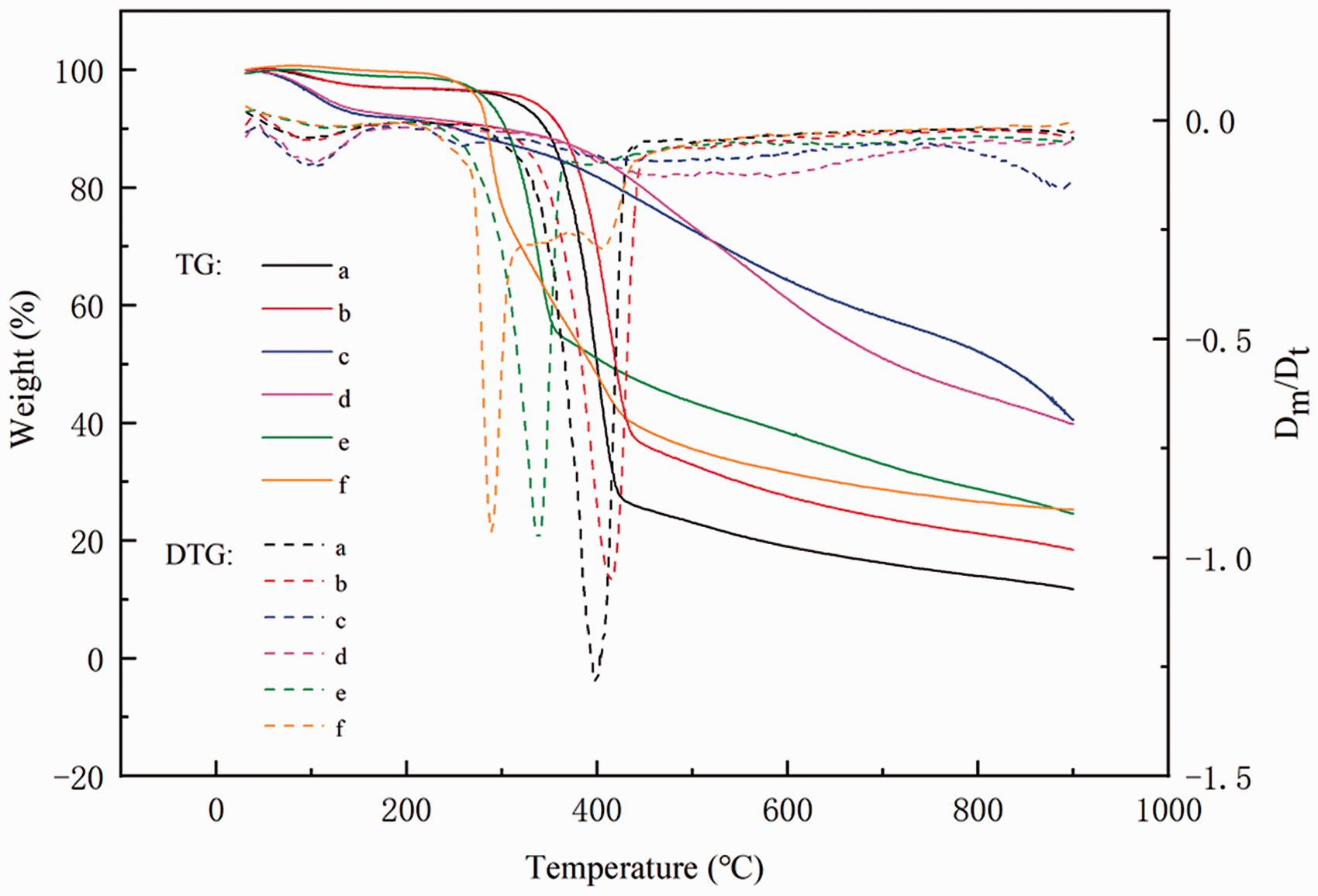
The thermal gravimetry (TG) and differential thermal gravimetry (DTG) curves of cotton knitted fabrics: (a) cotton (as showed in Table 2, here should be the sample number ‘Cotton’); (b) U-240; impregnated ((c) 10% (NH4)2HPO4, (d) 5% (NH4)2HPO4, (e) 10% NH4H2PO4, (f) 10% (NH4)2SO4) cotton knitted fabric pre-oxidized in air at 240°C for 60 min.
The curve in Figure 2(b) shows a slower weight decline than that in Figure 2(a), displaying a higher carbonized yield and better stability than the untreated cotton knitted fabric because the cotton knitted fabric became more stable after pre-oxidation in air at 240°C. 18
Figures 2(c) and (d) describe the TG and DTG curves of impregnated (10% (NH4)2HPO4, 5% (NH4)2HPO4, respectively) cotton knitted fabric pre-oxidized in air at 240°C for 60 min. The carbonized yield of cotton knitted fabric impregnated with 10% concentration was higher than that with 5%. The weight of the sample decreased obviously at about 150°C. (NH4)2HPO4 began to decompose at 155°C. The weight loss was mainly due to the decomposition of (NH4)2HPO4 and the removal of ammonia and water. The pyrolysis temperature of C-O and C-C bonds was advanced with P2O5. It mainly prevented the depolymerization of cotton knitted fabric before 360°C and eliminated the reaction of the hydroxyl groups or esterified hydroxyl groups. This process promoted the dehydration of cellulose at low temperatures and reduced the formation of volatile matter. The weight decline was relatively slow between 360°C and 700°C, and the weight loss was about 20%. P2O5 began to sublimate and escape from the sample, which no longer played a role in the high temperature carbonization (600-900°C). This stage was mainly a dehydrogenation condensation reaction, in which C4 residues were cross-linked by horizontal and vertical condensation in this temperature range. The disordered graphite lamellar structure was formed on the cellulose plane (101).
As shown in Figures 2(c), (e), and (f), the cotton knitted fabric impregnated with 10% (NH4)2HPO4 had a higher carbonized yield, followed by 10% NH4H2PO4, and the worst was 10% (NH4)2SO4. All of them had a higher carbonized yield than the unimpregnated carbonized cotton knitted fabric. This could be attributed to the large specific surface area of (NH4)2HPO4. 22
Dino-lite morphology of cotton knitted fabric before and after carbonization
Figure 3 depicts the morphology of cotton (as showed in Table 2, here should be the sample number ‘Cotton’) and C-900. Figure 3(a) describes the cotton knitted fabric morphology before carbonization. More cotton fibers extended out of the surface of the cotton knitted fabric and the loop density of the cotton knitted fabric decreased after carbonization. As illustrated in Figure 3(b), it was found that the integrity of the cotton knitted fabric was maintained after carbonization at high temperatures. The fiber extending out of the surface of the carbonized cotton knitted fabric was less and its surface was relatively compact.

Morphology of cotton knitted fabric: (a) cotton (As showed in Table 2, here should be the sample number ‘Cotton’) (50×); (b) C-900 (50×).
Morphology of cotton fiber before and after carbonization
Figure 4 depicts SEM micrographs of the morphology of cotton fibers treated by various processes. Figure 4(a) describes the natural turn of untreated cotton fiber. The surface of the fibers is shown in Figures 4(b) and (c) with a multitude of folds. It can be seen that the roughness of U-240 carbonized at 900°C was higher than those of cotton (as showed in Table 2, here should be the sample number ‘Cotton’) (Figures 4(d)–(f)). As described in Figures 4(g)–(i), the natural turn of I-240 carbonized at 900°C was deepened, its surface was relatively smooth, and there were quite a few granular substances and impregnation agent residues. (NH4)2HPO4 had the role of flame retardant, which can protect the cotton fiber in the initial stage of carbonization, reduce the loss of cotton fiber to varying degrees, and maintain the integrity of the cotton fiber better.

Morphology of fibers: (a)–(c) cotton (As showed in Table 2, here should be the sample number ‘Cotton’) (magnifications: 1000×, 5000×, 25,000×, respectively); (d)–(f) U-900 (magnifications: 1000×, 5000×, 25,000×, respectively); (g)–(i) C-900 (magnifications: 1000×, 5000×, 25,000×, respectively); (j) C-5DAP (magnification: 50,000×); (k) C-ADP (magnification: 50,000×); (l) C-AS (magnification: 50,000×).
As shown in Figures 4(i) and (j), C-5DAP was similar to C-900 in surface morphology. The channels formed by connecting grooves on the surface of the fiber can improve the electrical conductivity of cotton knitted fabric after carbonization at 900°C. The surface of C-ADP formed fewer connections between the tracks than C-5DAP, which resulted in its conductive property being slightly weaker (Figures 4(j) and (k)). The worst was C-AS, because there were many nanoscale particles on the surface of the treated fiber and fracture occurred on the surface of fiber (Figure 4(l)). These results were consistent with those of TG analysis.
Energy dispersive X-ray spectroscopy analysis
The surface morphology of cotton fibers impregnated with three impregnating agents (10% (NH4)2HPO4, 10% NH4H2PO4, and 10% (NH4)2SO4) and carbonization at 900°C for 120 min after being pre-oxidized in air at 240°C for 60 min is shown in Figure 5. There were many nanoscale particles on the surface of the carbonized cotton fiber. Figure 6 describes the energy dispersive X-ray spectroscopy (EDS) of cotton fibers impregnated with three impregnating agents (10% (NH4)2HPO4, 10% NH4H2PO4, and 10% (NH4)2SO4) and pre-oxidized in air at 240°C for 60 min followed by carbonization at 900°C for 120 min. The mass fraction of the carbon element in pure cotton fiber is 44.4%, and the mass fraction of the oxygen element is 49.4% (the molecular formula of cellulose is [C6H10O5] n ). As shown in Table 3, the cotton fiber was impregnated with the three impregnating agents and pre-oxidized in air at 240°C for 60 min followed by high-temperature carbonization. The mass fraction of carbon increased to 93.88% and the mass fraction of oxygen decreased to 6.12%. The presence of nitrogen, sulfur, and phosphorus was not found in the energy spectrum, indicating that the impregnants were completely volatilized in the carbonization process and no other elements were introduced into the carbonized cotton knitted fabric.

Morphology of fibers impregnated with three impregnating agents (10% (NH4)2HPO4, 10% NH4H2PO4, and 10% (NH4)2SO4) and carbonization at 900°C for 120 min after being pre-oxidized in air at 240°C for 60 min (10,000×).

Energy dispersive X-ray spectroscopy of fibers impregnated with three impregnating agents (10% (NH4)2HPO4, 10% NH4H2PO4, and 10% (NH4)2SO4) and carbonization at 900°C for 120 min after being pre-oxidized in air at 240°C for 60 min.
Element content of carbonized cotton fiber in 0.2 txt

Influence of different treatment processes on the structural parameters and yield of the cotton knitted fabrics
In previous studies, the indispensable step for producing regenerated cellulose-based carbon fiber was pre-oxidation in air at a specific temperature for a certain period. 20 The oxidative thermal stabilization process can make the precursor fiber resist the high temperature of the carbonization and graphitization stage to improve the carbonized yield and electrical properties of the carbonized fabric. 28 (NH4)2HPO4 solution, due to its excellent flame retardant effect, was used for impregnation of regenerated cellulose fiber before pre-oxidation stabilization. 22
The influence of different treatment processes on the process parameters and carbonized yield of samples is demonstrated in Table 4. The total loop density is defined as the product of the transverse loop density and the longitudinal loop density, that is, the number of loops in 25 square centimeters. At the same temperature, the weight loss of the cotton knitted fabric without impregnation treatment was significantly greater than that after impregnation treatment. The smaller increment in the total fabric density was caused by the flame retardant effect of impregnation treatment, which can slow down the loss of carbon content. For the cotton knitted fabric pretreated with impregnants and pre-oxidized in air at 240°C for 60 min, the weight of cotton knitted fabric declined rapidly from 600°C to 900°C and reached 86.9 g/m2 at 900°C, which was consistent with the test results of TGA. 15
Structural parameters and yields of samples with different treatment processes

Since the specimen and absorbed impregnants will gradually decompose and generate some volatile substances that escape during heating, the carbonized yield should be less than 100%, except at low temperatures where the remaining impregnants made it possible for the carbonized yield to exceed 100%. The treatment temperature should exceed 600°C for more than 0.5 h so the impregnants can be completely burned away and true carbonized yields obtained. 22 For the cotton fabric pretreated with 10% (NH4)2HPO4 and carbonized at high temperature (>600°C) after being pre-oxidized in air at 240°C for 60 min, the carbonized yield declined rapidly from 700°C to 900°C and reached 44.91% at 900°C.
When the carbonization temperature increased from 600°C, the total fabric density enhanced to a certain extent, reaching 12312 loops/25cm2 at 900°C, which is attributed to the volatilization of non-carbon elements in the fiber leading to a certain degree of loss and shrinkage of the fiber with the temperature increasing. 15 Macroscopically, the transverse density and longitudinal density of the carbonized cotton knitted fabric improved, resulting in the thickness declining after carbonization at 900°C.
Therefore, there was a rapid weight loss and thickness loss after high-temperature carbonization, accompanied by area shrinkage. However, compared with the untreated cotton knitted fabric, the cotton knitted fabric treated by 10% (NH4)2HPO4 and pre-oxidized in air at 240°C for 60 min followed by high-temperature carbonization had less loss of thickness and weight and more significant increase of total fabric density.
It can also be concluded that the structural parameters and carbonized yield of 5% (NH4)2HPO4 impregnated cotton knitted fabric pre-oxidized in air at 240°C for 60 min followed by high-temperature carbonization were similar to those with 10%. Those of cotton knitted fabrics impregnated with the three kinds of 10% impregnants were different, among which 10% (NH4)2HPO4 was the best, 10% NH4H2PO4 was fair, and 10% (NH4)2SO4 was the worst. However, their carbonization effects were better than the cotton knitted fabric without impregnation.
Fourier transform infrared spectroscopy
The FTIR of cotton (As showed in Table 2, here should be the sample number ‘Cotton’) and I-240 in the 4000–500 cm−1 region is shown in Figure 7. The O-H bond at 3336 cm−1 and C-H bonds at 2900 cm−1 disappeared after pre-oxidation of cotton fiber in air at 240°C for 60 min. This observation was consistent with the findings by Karacan et al. 28 The absorption peak at 1700 cm−1 was caused by the stretching of C=O bonds in ketones, aldehydes, lactones, and carboxyls. Nevertheless, the stretching band of the C=C bonds was investigated to be dominant at 1594 cm−1, indicating that the pre-oxidized cotton fiber (impregnated with 10% (NH4)2HPO4) contained a highly aromatic structure. 29 The results showed that the dehydration reaction was catalyzed by the pre-oxidation of cotton fibers impregnated with 10% (NH4)2HPO4. The P2O5 produced by (NH4)2HPO4 decomposition enhanced the dehydration and cross-linking response at low temperatures. 28

Fourier transform infrared spectroscopy of cotton (as showed in Table 2, here should be the sample number ‘Cotton’) and I–240 in the 4000–500 cm−1 region.
Figure 8 describes the FTIR of cotton (as showed in Table 2, here should be the sample number ‘Cotton’), I-240, C-600, C-700, C-800, and C-900 in the 4000–500 cm−1 region. The impregnated (10% (NH4)2HPO4) cotton knitted fabric was pre-oxidized in air at 240°C for 60 min, followed by being carbonized at the final maximum temperature (600–900°C) for 120 min in an argon atmosphere (purity: 99.999%, rate: 5°C/min). The OH and CH groups of C-600 disappeared completely in the 4000–2375 cm−1 region. It was found that the strength of the IR absorption band corresponding to the carbon fiber was significantly weakened and broadened in the region of 1900–800 cm−1. When the carbonization temperature was at 700°C or higher, the stretching band of the C=C bonds at 1560 cm−1 weakened gradually and then disappeared completely, accompanied by the formation of more aromatized structures. Hence, with the carbonization temperature growth, the conductivity of the carbonized cotton knitted fabric was improved. The complete deletion of the stretching band of the C=C bonds may be related to the strong absorption of blackbodies by the carbonized cotton fibers. 22

Fourier transform infrared spectroscopy of cotton (as showed in Table 2, here should be the sample number ‘Cotton’), I-240, C-600, C-700, C-800, and C-900 in the 4000–500 cm−1 region.
XRD analysis
Figure 9 describes the XRD patterns of untreated cotton and I-240. The peaks at 2θ = 15°, 22.7°, and 34.5° correspond to (101), (002), and (040) reflections of cellulose I structure, with d-spacing of 0.586nm, 0.391nm, and 0.260nm, respectively. 30 The reflections of (101) and (002) were caused by the transverse arrangement of microcrystals in cellulose I, while the reflection of (040) was related to the longitudinal structure of the polymer. 31 It can be seen from the XRD pattern of cotton fiber impregnated with 10% (NH4)2HPO4 and pre-oxidized in air at 240°C for 60 min that the crystal state of cotton fiber changed after the pre-oxidationin air at 240°C for 60 min. There was an apparent broad peak (halo) between 2θ = 15° and 35°.

Equatorial X-ray diffraction traces of cotton (as showed in Table 2, here should be the sample number ‘Cotton’) and I-240 in the 2θ = 10–80° range.
After carbonization at 900°C, the crystalline state of the cotton fiber had changed. The results are shown in Figure 10. There was an obvious broad peak (halo) between 2θ = 15° and 35° and 2θ = 40° and 50°, which indicated the formation of an amorphous carbon interlayer after carbonization. The peak position and full width half maximum (FWHM) of the diffraction peak were used to evaluate the interlayer d-spacing and the microcrystalline size. 32 It can be seen from Table 5 that with the carbonization temperature increasing from 600°C to 900°C, the position of the diffraction peak moved from 2θ = 23.75° to 24.76°, and the d-spacing of the carbon layer declined from 0.38 to 0.369 nm. It was reported that the (002) diffraction peak of disordered carbon appeared in the range of 2θ = 22–25°. The results showed that with the enhancing of carbonization temperature, the thickness of the microcrystalline (LC) improved from 0.589 to 0.891 nm, and the number of graphene layers increased from 1.5 to 2.5.
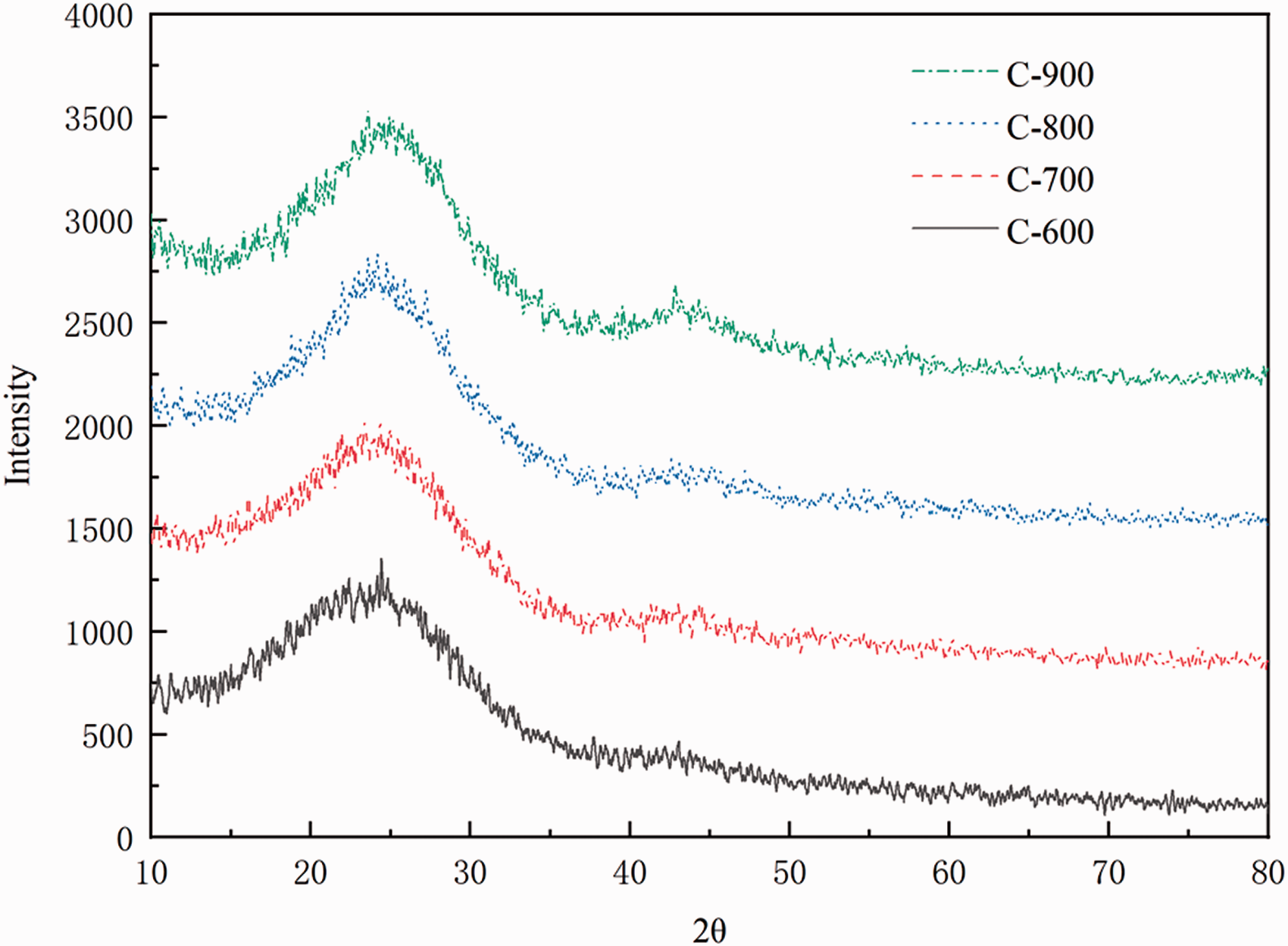
Equatorial X-ray diffraction traces of C-600, C-700, C- 800, and C-900 in the 2θ = 10–80° range.
Peak parameters of equatorial X-ray diffraction trace of carbonized cotton fibers in the 2θ = 10–80° range

Transmission electron microscope
The typical TEM image of C-900 is illustrated in Figure 11. When the carbonization temperature reached 900°C, it can be seen from Figure 11(a) that a disordered graphite carbon layer, namely turbostratic carbon crystallites, 18 appeared in the carbonized cotton knitted fabric. This was consistent with the results of XRD. The spacing between the carbon layers was 0.34 nm, which is the inter-planar spacing of the (002) plane for hexagonal graphite, as described by Figure 11(b). The appearance of turbostratic carbon crystallites was the fundamental reason for the enhanced electrical conductivity of the carbonized cotton knitted fabric.
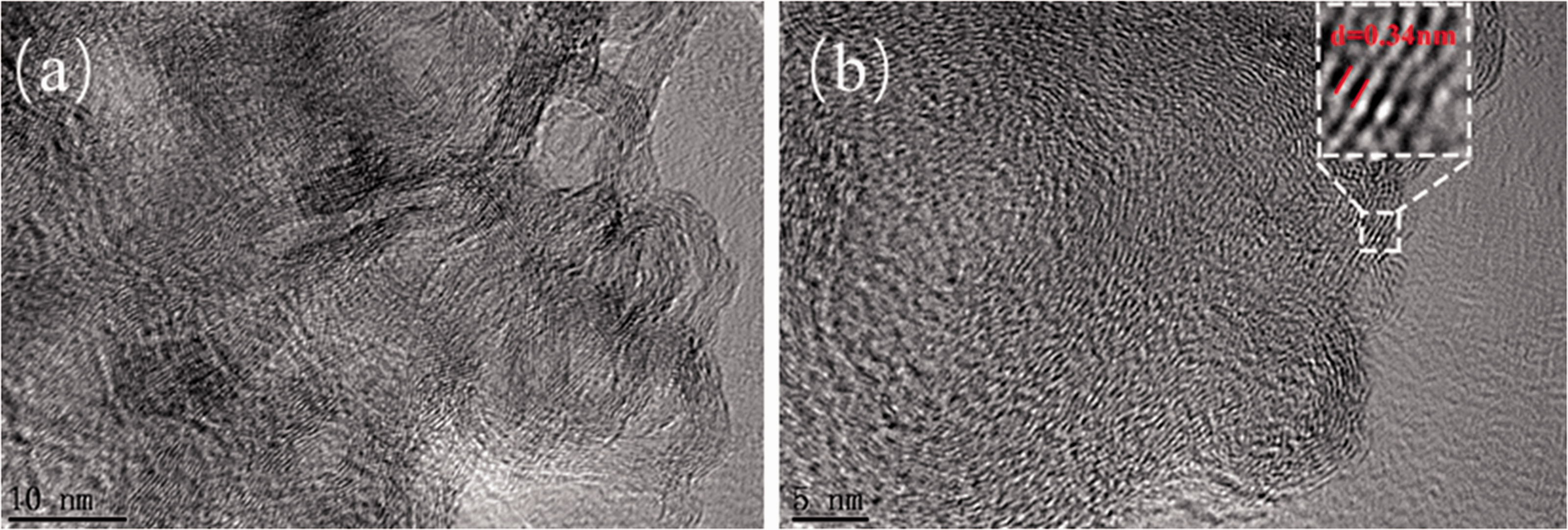
Transmission electron microscope images of C-900 at both lower (a) and higher (b) magnifications.
Raman scattering analysis
The structure of carbonized cotton fiber was further characterized by the Raman spectrum. Figure 12 illustrates the Raman spectrum of carbonized cotton fiber in the temperature range of 600–900°C. The D-band and G-band of the Raman spectrum were around 1350 and 1590 cm−1, respectively. The D-band represented the defect of the carbon atom crystal, and the G-band was related to the in-plane stretching motion of the carbon atom sp2 hybridization. 3
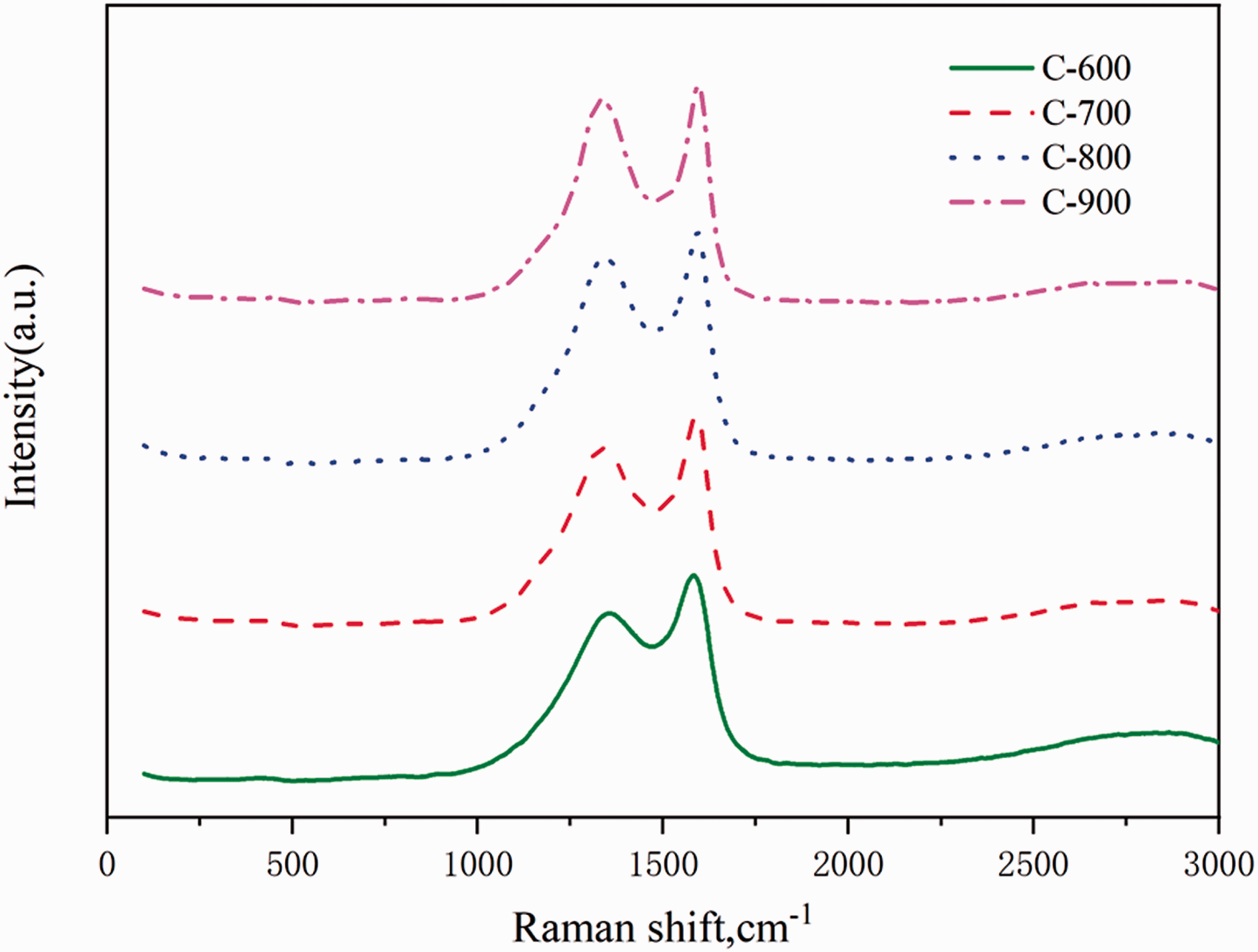
Raman spectra of C-600, C-700, C- 800, and C-900 in the 100–3000 cm−1 region.
Various Raman indices, including the intensity ratio ID/IG between the D-band and the G-band, the full half maximum width (FHMW), and the Raman spectra frequency can be used to characterize carbon-containing materials. 18 The intensity ratio ID/IG has been correlated with La. 33 The intensity ratio ID/IG increased from 0.840 to 0.980 with the increase of carbonization temperature. The result is shown in Figure 13(a). This conclusion was consistent with the pyrolysis behavior of softwood. 34 Contrary to the pyrolysis behavior of pitch, ID/IG of the pitch declined with the improvement of carbonization temperature. 35 Figure 13(b) shows that the FWHM of the D-band and G-band decreased with the increase of temperature, indicating that the structural order of these carbonized fibers improved. 36
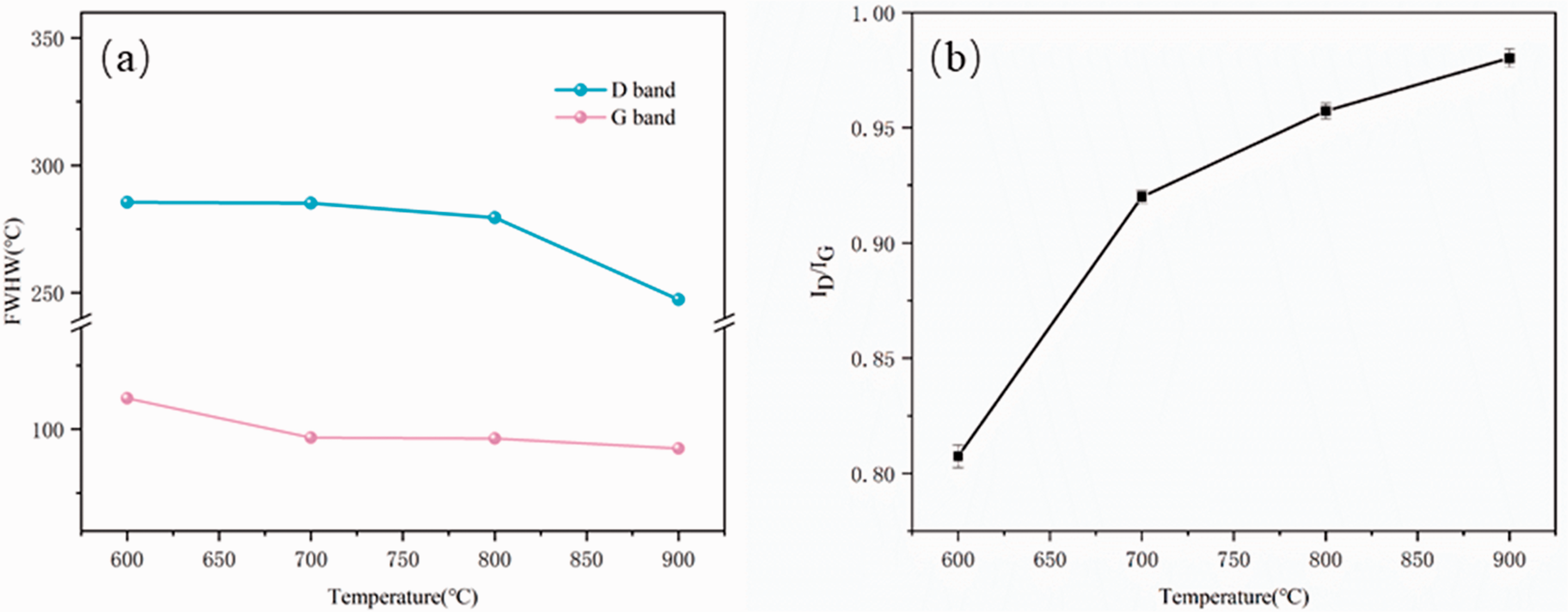
The full half maximum width (FWHW) (a) and the intensity ratios ID/IG (b) as a function of carbonization temperature.
Conductive performance
After high-temperature carbonization, cellulose in the cotton knitted fabric can form flake graphite carbon layers but was disordered in a structure. The conductivities of these carbon layers resulted from the movements of π-electrons.
Table 6 describes the conductivity of the carbonized cotton knitted fabric as a function of carbonization temperature. From the transverse and longitudinal resistance, resistivity, and conductivity of the cotton knitted fabric, it can be seen that the transverse conductivity of the carbonized cotton knitted fabric was better than the longitudinal one at the same temperature. This may be caused by the difference in the connection of the longitudinal and transverse loops of cotton knitted fabric. With the temperature increase from 600°C to 900°C, the transverse resistivity decreased from 9.6 * 104 to 5.23 Ω/cm. The longitudinal resistivity decreased from 1.50 * 105 to 3.90 Ω/cm. The transverse and longitudinal directions conductivities of the carbonized cotton knitted fabric were enhanced significantly. This was because the number of carbon layers and π-electron motion of graphene improved with the improvement of carbonization temperature. 37
Conductive properties of the cotton knitted fabrics with different treatment processes
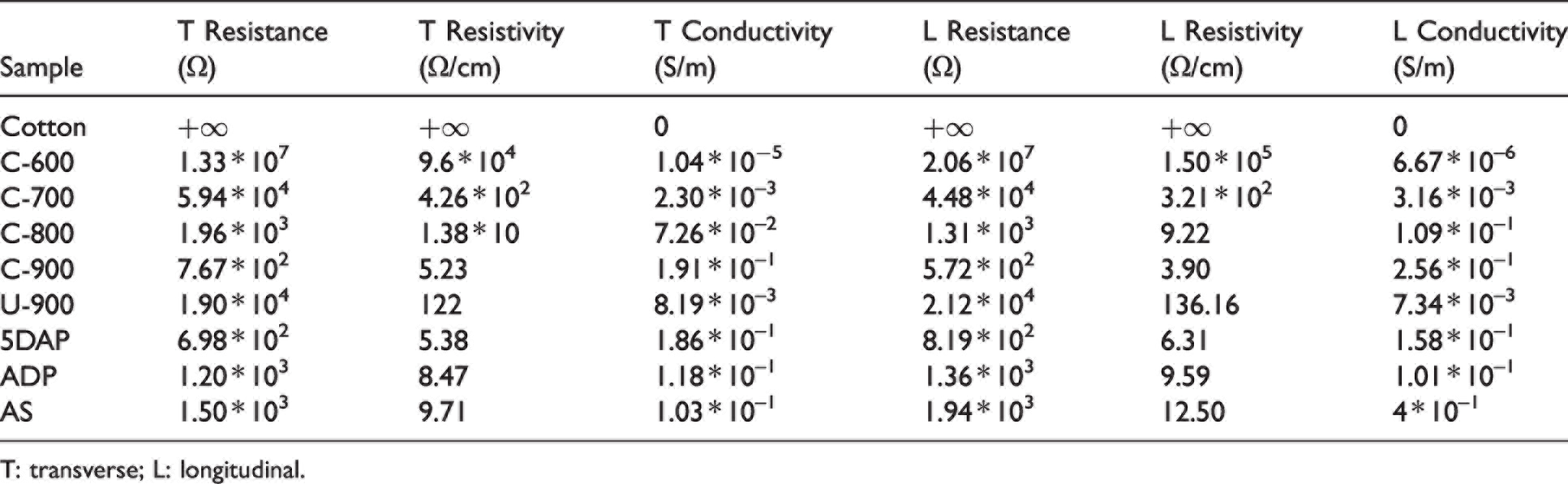
T: transverse; L: longitudinal.
It can also be concluded that the conductivity of 5% impregnated (NH4)2HPO4 cotton knitted fabric pre-oxidized in air at 240°C for 60 min followed by being carbonized with 900°C for120 min was not significantly different from that at 10%. The electrical conductivities of carbonized cotton knitted fabrics impregnated with three kinds of 10% impregnants were different, among which (NH4)2HPO4 was the best, NH4H2PO4 was fair, and (NH4)2SO4 was the worst. However, they were better than the carbonized cotton knitted fabric without impregnation. This was consistent with the results obtained by TGA and SEM.
Conclusion
In this paper, carbonized cotton knitted fabric was explored by a kind of facile, low cost, and relatively environmental protection method. The effects of impregnation agents, pre-oxidation, and carbonization temperature (600–900°C) on the carbonization structure of cotton knitted fabric were studied systematically for the first time. Under the condition of impregnation ((NH4)2HPO4 with the mass fraction of 10%) and pre-oxidation, the carbonized yield of cotton knitted fabric increased significantly. The physical and chemical properties of the carbonized cotton fiber were characterized by SEM, FTIR, XRD, Raman, and TG analysis. TG analysis showed that the cotton fiber impregnated with (NH4)2HPO4 with the mass fraction of 10% has a higher carbonized yield than other impregnations. It was found to be about 45% at 900°C. SEM described that the natural turn of cotton fiber was deepened after being impregnated with 10% (NH4)2HPO4 and pre-oxidized in air for 60 min at 240°C, wherein the surface grooves of the carbonized cotton knitted fabric connected to each other to form many channels to increase its electrical properties. The FTIR spectra revealed that C-O and C-H bonds were removed and a new C=C bond was produced during the carbonization of cotton knitted fabric. An amorphous carbon interlayer was observed for the cotton knitted fabric carbonized at a relatively low temperature of 900°C, which was indicated by XRD analysis and TEM. The Raman spectra showed that the FWHM of the D-band and G-band declined with the increase of temperature. The structural order of these carbonized cotton fibers improved with the increase of temperature. The electrical conductivities of carbonized cotton knitted fabrics impregnated with three kinds of impregnants were better than those without impregnation, which was consistent with the results obtained by TGA and SEM. This work presented a method to prepare carbonized cotton knitted fabric and analyzed the carbonation structure and characteristics, and laid the foundation for further investigating the force–electric performance of carbonized cotton knitted fabrics as strain sensors.
Footnotes
Declaration of conflicting interests
The author(s) declared no potential conflicts of interest with respect to the research, authorship, and/or publication of this article.
Funding
The author(s) received no financial support for the research, authorship, and/or publication of this article.
