




Abstract
The most applicable polymer in different applications is poly(lactic acid) (PLA) due its merits. This polymer attracts great interest as an environmentally friendly bioplastic polymer. The main goal of this work is to enhance the different physical properties of PLA. The melt-spun process was used to produce a continuous multifilament yarns of PLA textile fibers. The mechanical properties (tensile properties) of PLA(D600) filaments were studied. The tensile modulus and the maximum tensile strength were 3 and 0.4 GPa, respectively. The effect of the cold-drawing process on some physical properties, such as the melting temperature, glass transition temperature, crystallinity, birefringence, and orientation factor, were measured. The crystallinity values changed as the draw ratio increased, confirming the reorientations and chain packing. From the obtained results of the different physical properties, it was concluded that the drawing process has a great effect on performance of PLA fibers.
Biodegradable textile fibers have attracted considerable attention in various technological application fields. Poly(lactic acid) (PLA) polymer is amongst the biodegradable polyesters that have been extensively studied in different works. It can be used to replace petrochemical polymers in different industrial applications and in biomaterial applications in the medical field.1,2 PLA has many advantages: 3 (1) it is derived from renewable items, such as wheat or corn, and is thus known as an eco-friendly polymer; (2) it is biodegradable and can be recycled easily;2,4 (3) it consumes carbon dioxide during its production; 5 (4) It can be treated as a biocompatible material that does not produce any toxic material during tissue healing. However, it has some drawbacks that limit its usage in different applications. Specifically, it is a very brittle polymer with poor toughness. 6 Therefore, it cannot be utilized in applications that depend on the use of polymers with high plastic deformation as fixation plates. 7
The different physical properties of PLA fibers depend mainly on the manufacturing conditions, annealing conditions, molecular weights, and isomer components.8–10 The thermal history and conditions have a vital and direct effect on the rate of the crystallinity of PLA fibers. 9 The rate of crystallinity indicates the ratio of the crystalline region to the amorphous region. The physical properties of fibers, such as strength, tensile modulus, hardness, stiffness, and melting temperature, are directly affected by crystallinity.
Two approaches are used to form crystals to obtain crystallizable PLA fibers. The first involves cooling after the melting spinning of the polymer above its melting temperatures or cooling the heated fibers at temperatures between their glass transition temperature (Tg) and melting temperature (Tm). The second way involves inducing crystal formation after stretching.11,12 When PLA fibers crystallize under applied stress, the number of fibers oriented in the drawing direction increases. Therefore, the resulting textile becomes increasingly anisotropic and exhibits considerable improvement that expands the application fields of PLA fibers.
In PLA fibers undergoing crystallization under different thermal conditions and through different mechanical processes, crystals can develop into three different forms, namely, α, β, and γ. 1 The α form forms and grows through cold crystallization (up-melting). The β form develops through the mechanical drawing of the highly stable α form. The γ form develops on hexamethylbenzene substrates. 13
The chains of regular repeating units in polymers can be folded into highly dense regions called crystallites that act as crosslinks, which confer the crystalline region with higher tensile strength than the amorphous region. 14 Differential scanning calorimetry (DSC) is the most common technique used to measure the characteristic temperatures of a polymer. The Tg is one of the most important characteristic temperatures of fibers, given that the change in the chain mobility of the fibers occurs at and above this temperature. The Tg and Tm should be measured for predicting the physical behaviors of PLA fibers.7–9,15,16
The diameters and transverse sectional shapes of fibers have important roles in the mechanism of crystallization during mechanical stretching. Birefringence is a vital indicator for characterizing the physical characteristics of semicrystalline polymers.8,9 The degree of molecular orientation, as one of these physical parameters, can be measured by considering the birefringence of the fiber. 17
The principal goal of this work is to elucidate the different physical properties of PLA fibers and their dependence on the cold-drawing process. The effect of the drawing ratio on different physical properties, such as crystallinity, birefringence, orientation, and geometrical properties, was studied. These properties were measured by using DSC, X-ray diffraction (XRD), laser diffraction and polarized light microscopy. The overall molecular orientation was determined by using the measured birefringence values of PLA fibers at different drawing ratios.
Materials and methods
Melt spinning
Grade 4032 PLA polymer with the molecular weight of 171.9 KDa was used in this work. Melt spinning is one of the most frequently used techniques for producing fibers for industrial applications. A single Busschaert extruder was used for the melt spinning of the PLA fibers. The length/diameter ratio of the spinneret was 30:1. The temperatures of the extruder zones and the die were 200°C and 210°C, respectively. The spun multifilament bundle was cooled through passage for approximately 6 m after air quenching in a vertical system with the uptake speed of 1000 m/min. Figure 1 shows the schematic of fiber spinning. 8 The drawn fibers can be obtained by changing the speed of the different roller sets R1, R2, and R3. The roller sets (R1–R5) are known as the godot. Most of these rollers, except R3, were kept at room temperature. The temperature of R3 was set at T = 70°C to avoid shrinkage of the sample roller. The filaments were allowed to pass through the godot to obtain drawn filaments and then were collected at the winder. The sample under consideration was collected at the uptake speed of R1 = 600 m/min. The ratio between the roller set uptake speeds (R5:R1) was 2:1.
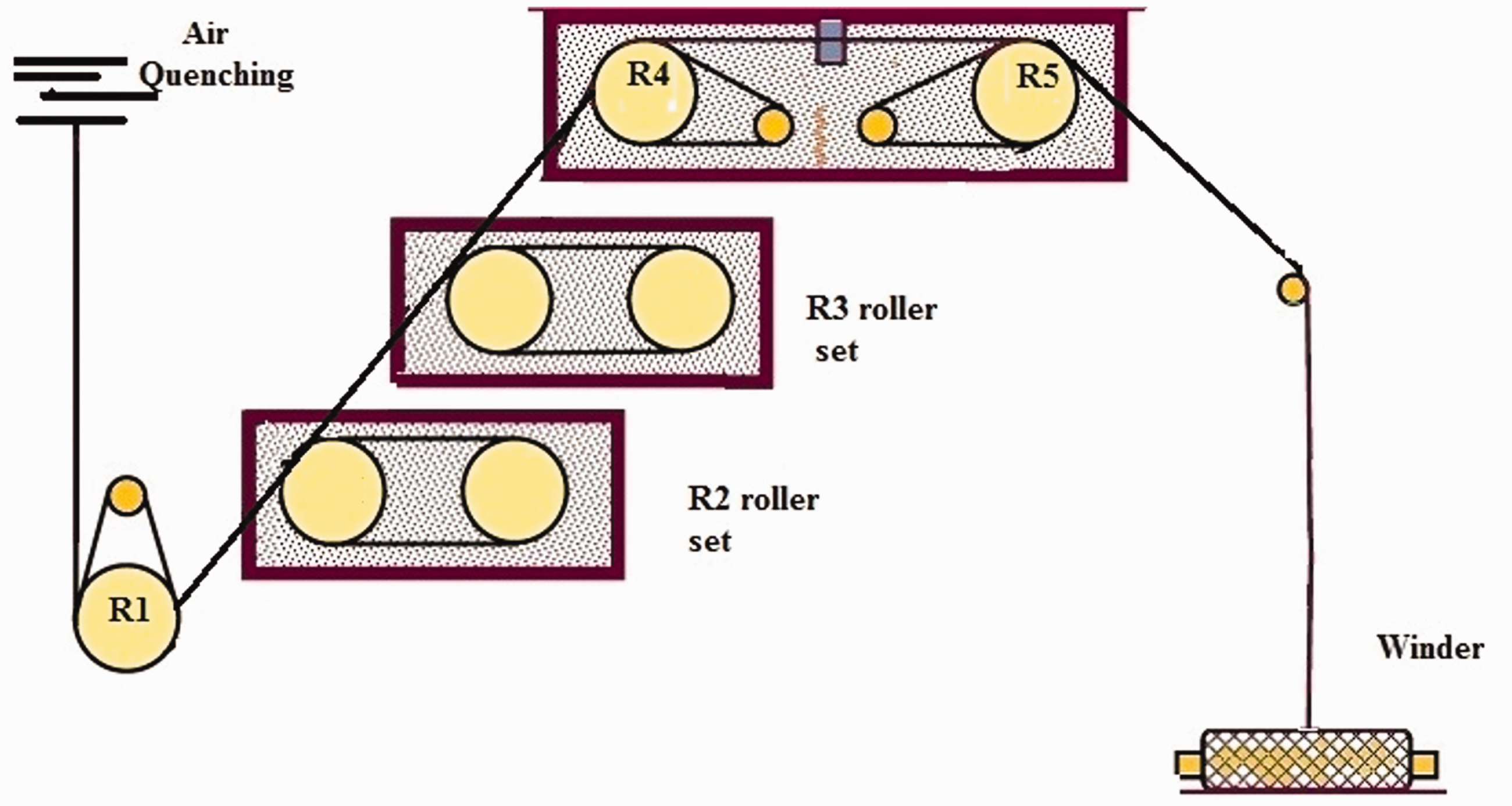
Schematic diagram of the spinning process of the fibers. 8
Testing and measurement methods
An Instron tensile testing machine was used to study the mechanical or the tensile properties of the PLA fibers. The Instron mode was 5566. The operating speed was 100 mm/min. The specimen length was approximately 5 cm. The data presented for the mechanical test were the average of 10 samples.
XRD was used to elucidate the microstructural properties of the drawn PLA fibers. A Bruck D8 diffractometer with a CuKα source was used for the XRD technique. The wavelength was λ = 0.154 nm. XRD was conducted at 45 kV and 66 mA. The XRD radiation was monochromatized by using a monochromator beam made from graphite. Crystallinity can be measured by using the following equation:
17

DSC was used to measure the crystallinity, Tm, and Tg of the drawn PLA fibers. DSC was performed with a Perkin–Elmer Diamond-1 apparatus at the heating and cooling rates of 10°C/min. The nitrogen flow rate was 15 mL/min. The degree of crystallinity can be measured by using the measured fusion enthalpy and the heat fusion at complete crystallization of the drawn PLA fibers with the aid of the following equation:
8

Laser diffraction was used to measure the geometrical parameters of the drawn PLA fibers, such as the transverse section shape and area. The tested fiber diameter (d) can be determined by using the following equation
9

Results and discussion
Mechanical properties of PLA (D600)
The different mechanical properties of polymers should be varied from soft and plastic to stiff and strong to widen their application range. Semicrystalline polymers are more desirable than amorphous ones. The Instron testing machine was used to study the tensile properties of PLA fibers (D600). Primarily, PLA filaments were drawn to different draw ratios (DRs) at room temperature. Figure 2 represents the tensile stress–strain curves of the samples under consideration. Clearly, the strain of the sample increased gradually as stress was applied. This effect led to an increase in the degree of crystallinity of the D600 sample, likely due to chain orientation and relaxation during the stretching of the sample. The tensile modulus of the PLA fibers was measured as 3 ± 0.13 GPa. The tensile strengths were calculated to be 50–70 MPa, and the elongation at break was 4%.18,19
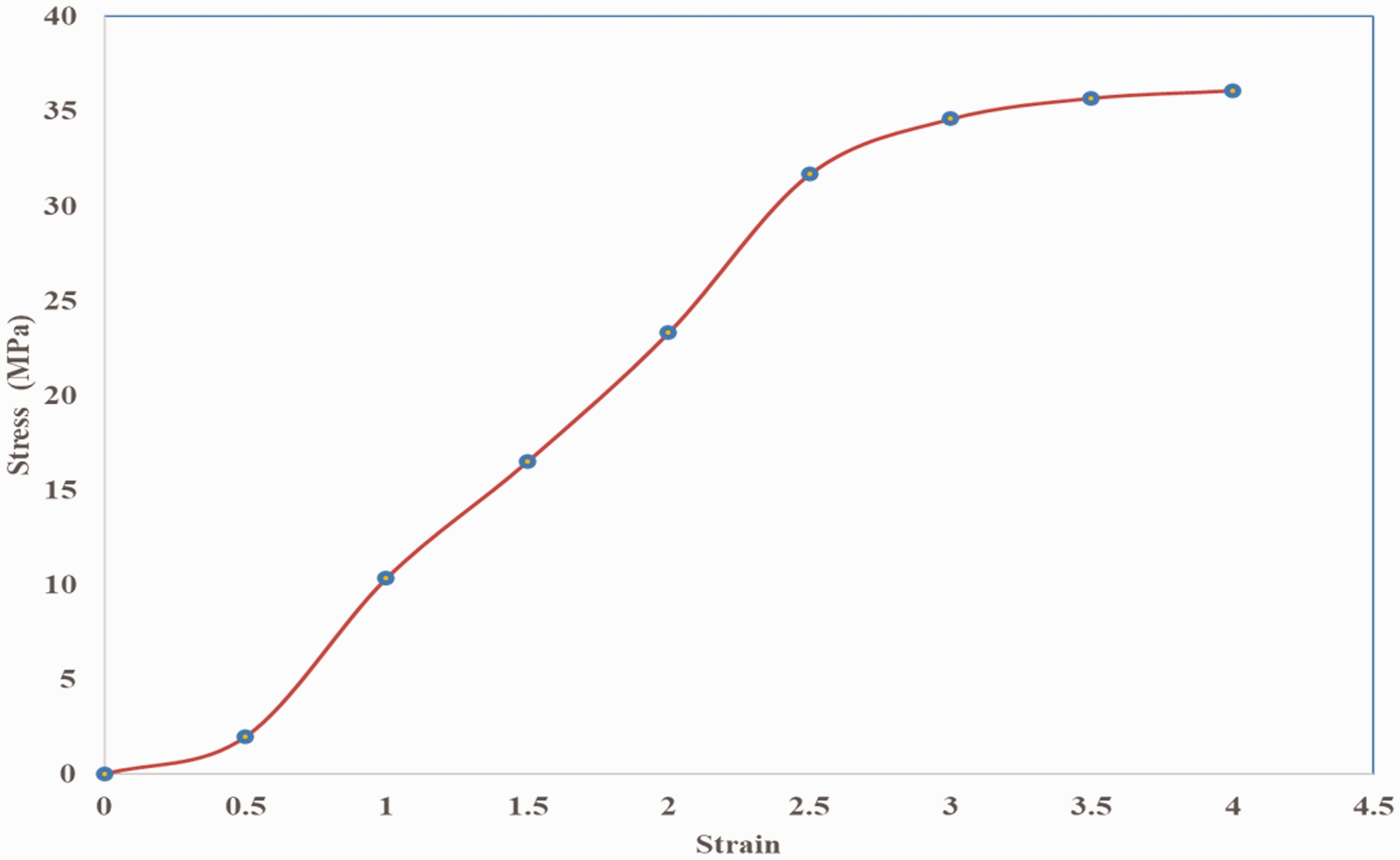
The tensile stress–strain curve for the sample under consideration.
Geometrical properties of drawn PLA (D600) samples
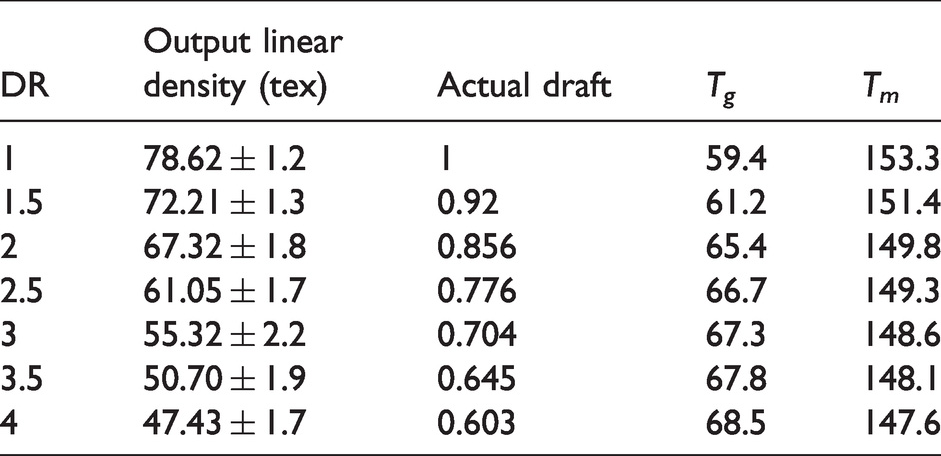
The laser diffraction technique was used to measure the different geometrical properties, such as the transverse section shape and area, of the drawn PLA (D600) samples. All the treated samples in this work exhibited circular transverse sectional shapes, as shown in Figure 3(a). Figure 3(b) shows the variation in the calculated transverse sectional area with the DR of the drawn PLA (D600). The transverse sectional area clearly decreased gradually with the DR, likely because of the non-compressibility of PLA fibers. During the cold drawing of the PLA (600) fibers, the transverse sectional area of the fibers should decrease as the strain on the fibers increases,19,20 due to chain reorientation and relaxation. The input linear density of PLA (D600) was 78.62 ± 0.2 tex. The linear density values depended mainly on technological parameters, such as the DR, melting temperature, and pressure. The calculated values of the final (output) linear density for the drawn samples are given in Table 1. As the DR was increased, the linear density of the PLA fibers decreased. The calculated data were the average of 10 samples.19,20 The actual draft was calculated and is given in Table 1.
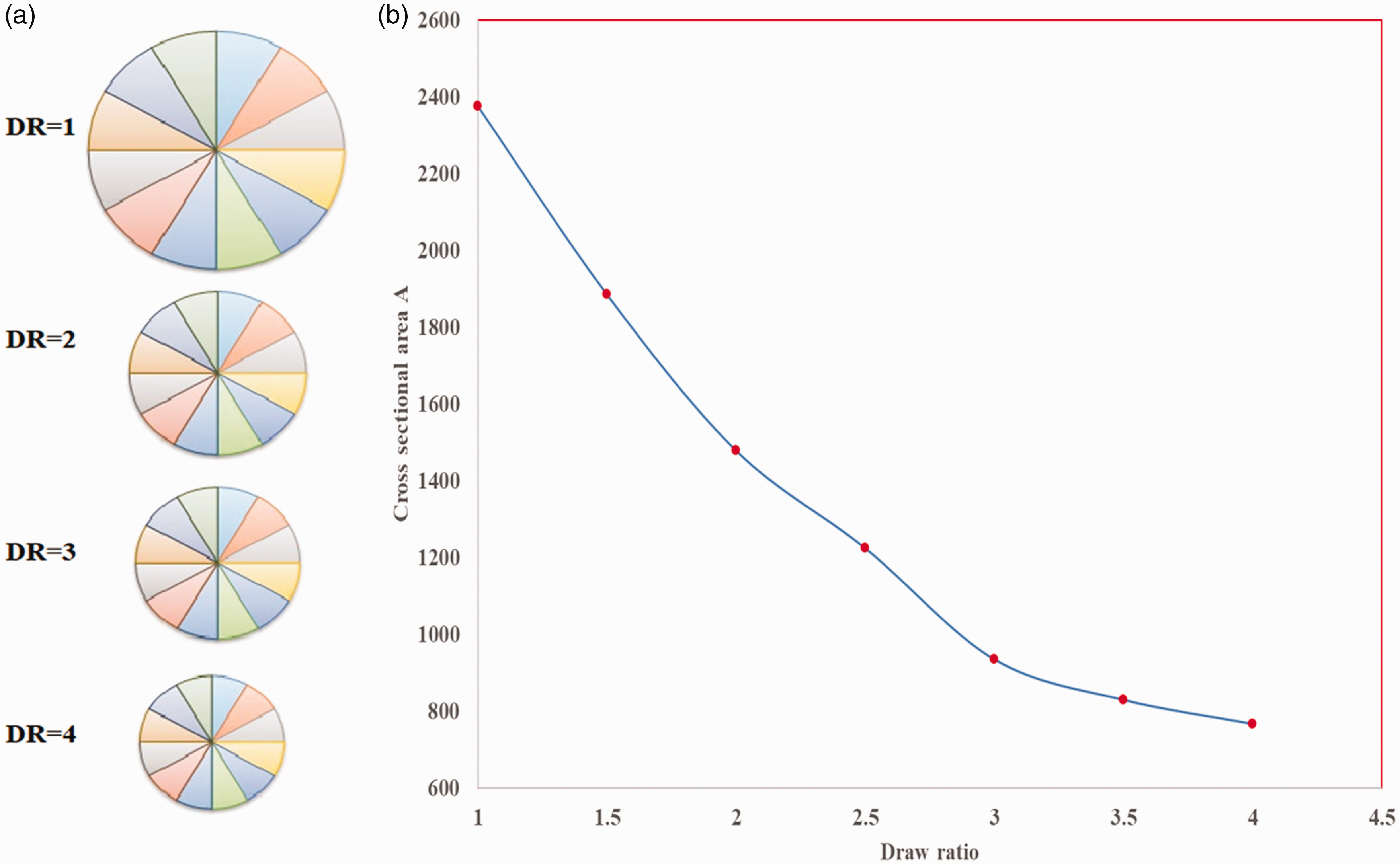
The transverse sectional shape and the calculated transverse sectional area at different draw ratios (DRs) of PLA (D600).
Calculated data of the measured linear density, actual draft glass transition temperature (Tg) and melting temperature (Tm) at different draw ratios (DRs)
DSC measurements
DSC is one of the most applied techniques for measuring the characteristic temperature and crystallinity of polymers. The characteristic temperatures of polymers are Tg and Tm. Figure 4(a) shows the thermograms obtained by using DSC for the drawn PLA (D600) at different DRs. Measuring the Tg and Tm during the mechanical processing of fibers is essential. The Tm can be measured directly from the temperature corresponding to the maximum endothermal peak. Figure 4 shows that the melting peaks for all of the drawn samples of PLA (D600) were located within the range of 140–155°C. A second peak a few degrees lower than the major peak appeared when DR = 4 and 5. Table 1 presents the calculated data of the measured Tg and Tm at different DRs. The Tm clearly decreased gradually as the DR was increased, whereas Tg increased slightly during the cold drawing of the PLA (D600) fibers. At temperatures above Tm, the whole chain was mobile, and the mechanical properties of the fibers were zero. When the PLA (D600) fibers were subjected to cold drawing, the amorphous phase chains attempted re-establish their preferred isotropic state. Therefore, the reduction in chain mobility led to a reduction in Tg.
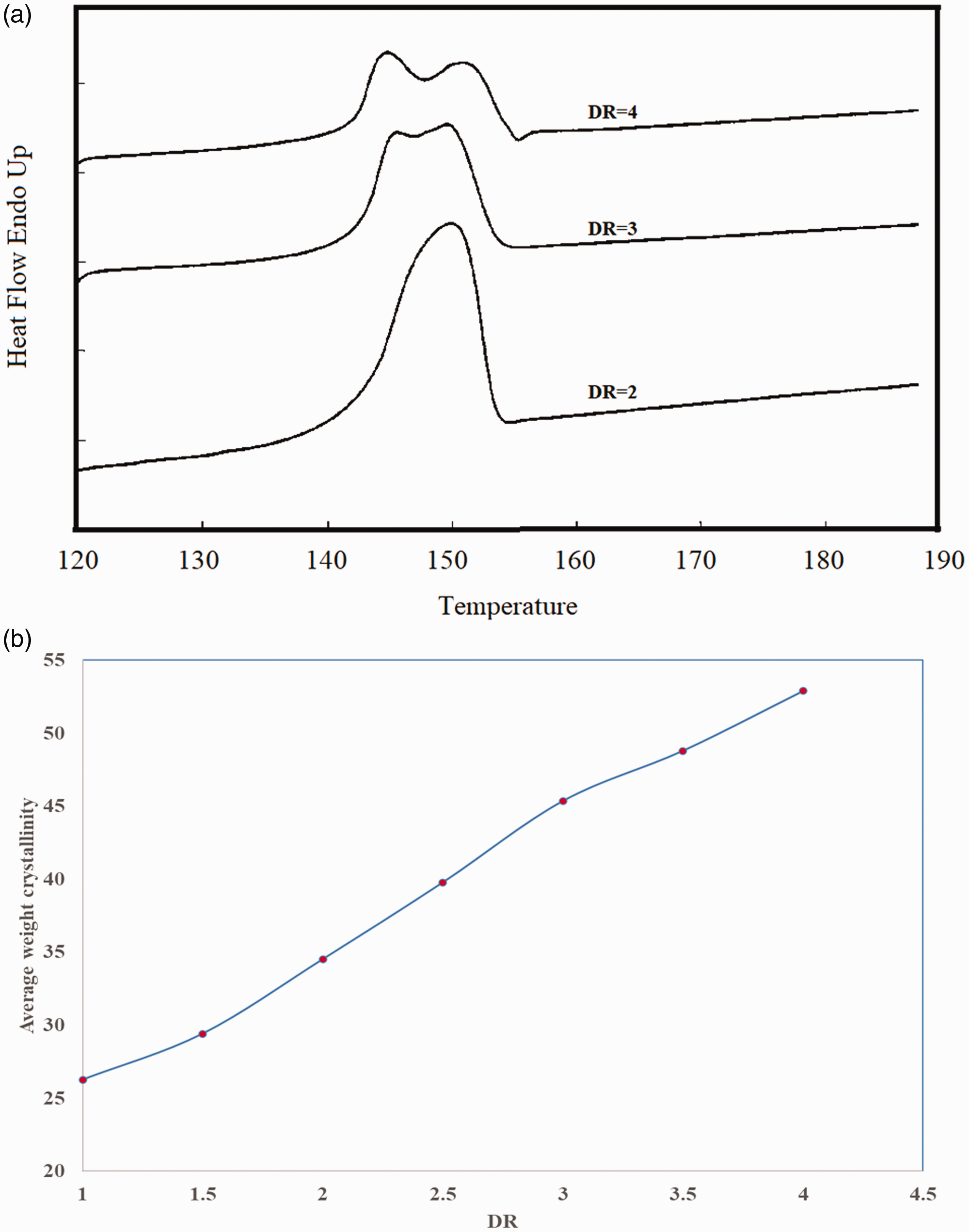
The obtained thermograms using the differential scanning calorimetry technique for the drawn and calculated average weight crystallinity of poly(lactic acid) (D600) at different draw ratios (DRs).
Depending on their thermal history, PLA fibers can be obtained in amorphous or semicrystalline form. The calculated values of the thermal properties play an important role in the selection of the suitable application of semicrystalline PLA (D600). 21 The crystallinity of drawn PLA (D600) was measured by using the obtained values of heat fusion enthalpy with the aid of Equation (2). Figure 4(b) shows the variation in the measured values of average weight crystallinity with DR by using the DSC technique. Crystallinity clearly increased due to the induced strain of crystallization and molecular reorientation during cold drawing. 22
XRD measurements
The XRD technique was used to measure the crystallinity of the drawn PLA (600) fibers. Crystallinity can be measured with the aid of Equation (1) by summarizing the areas of the crystalline and amorphous peaks from the obtained XRD patterns. Figures 5(a) and (b) show the obtained XRD patterns and the calculated crystallinity of PLA (600) with the DR. The measured crystallinity showed great variation with the DR. Therefore, the drawing process had a significant effect on the crystallinity recorded by using different techniques (DSC and XRD). This increase can be attributed to chain relaxation and differences in chain orientations due to the drawing process.
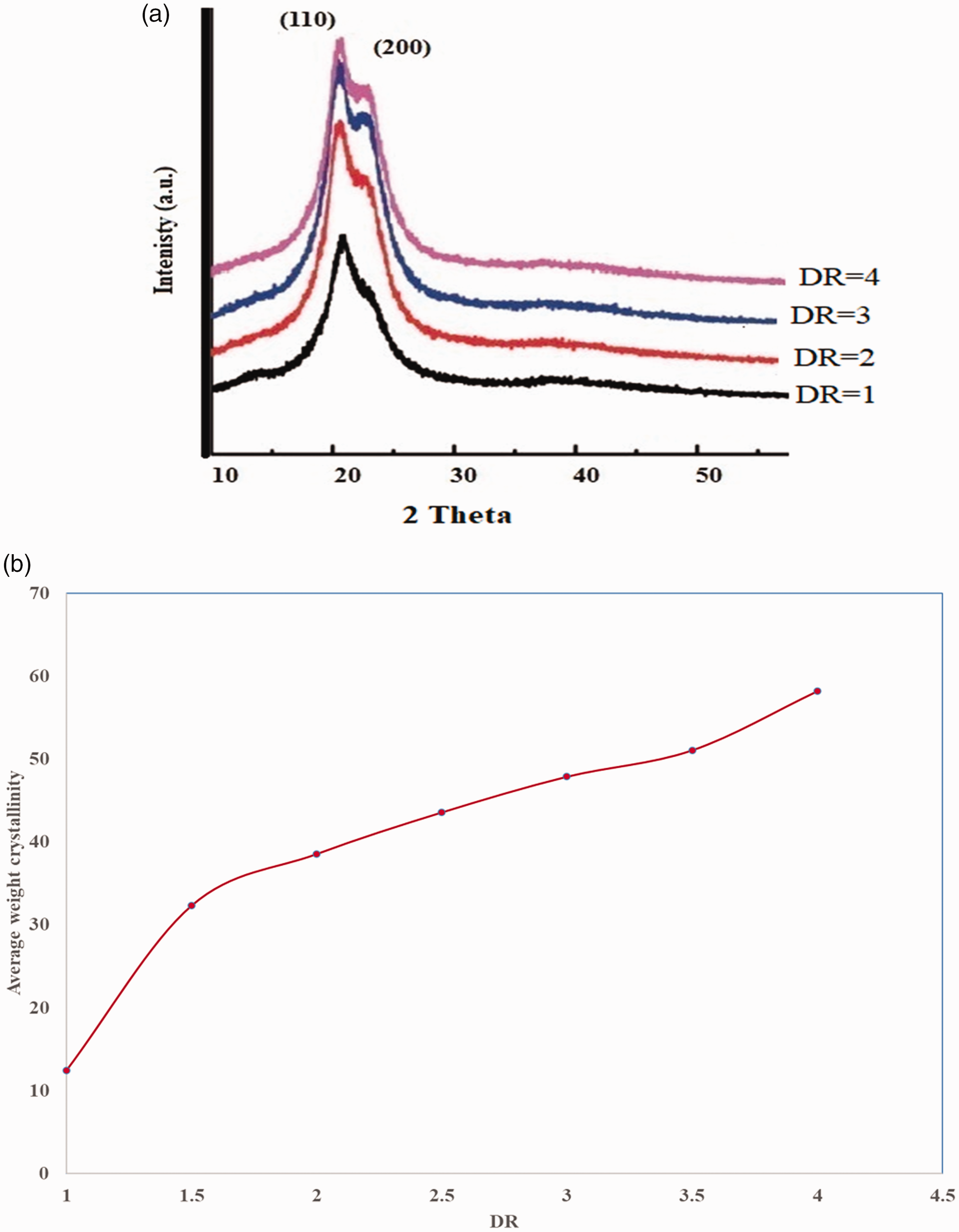
The obtained diffraction pattern and the variation of the calculated crystallinity of poly(lactic acid) D(600) with the draw ratio (DR) using the X-ray diffraction technique.
Strain-induced crystallinity formed due to cold drawing. Two main factors affected strain-induced crystallinity. Extrinsic factors included the mode of cold drawing and the values of the DR. Intrinsic factors included the chain linear structure and molecular weight. 23 The crystallinity of the drawn PLA (D600) fibers was higher than that of the undrawn fibers due to the induced molecular orientation. The microfibrils were aligned along the drawing direction (fiber axis) and increased as the DR was increased. 12
Birefringence and molecular orientation measurements
Double refraction (birefringence) is considered as an indicator of the basic optical parameters and molecular orientations of the samples. Its measured values can be used to monitor the effect of different treatments on the physical and structural properties of the fibers. An optically polarized light microscope can be used to estimate the double refraction of the treated samples. Given its great sensitivity, optically polarized light microscopy can be used to obtain the qualitative and quantitative information of the samples under study. Birefringence can be measured from the maximum interference color and the sample radius by using the Michel–Lévy chart in accordance with the following equation

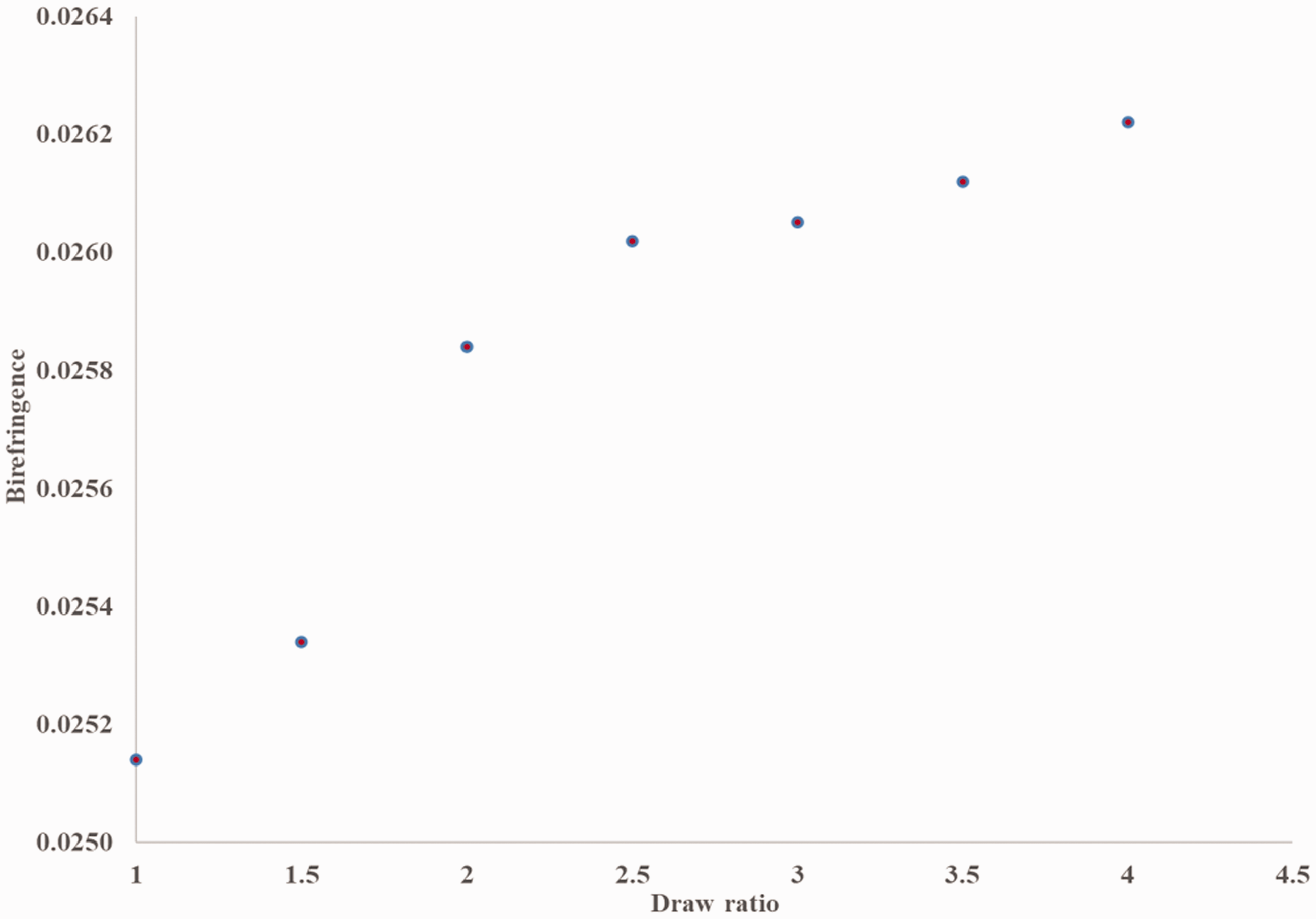
The calculated birefringence of poly(lactic acid) (D600) with the draw ratio.
The birefringence values can be used as strong indicators of molecular orientation during fiber drawing. With the aid of Herman’s orientation factor equation, the degree of molecular orientation can be calculated by using Equation (5)

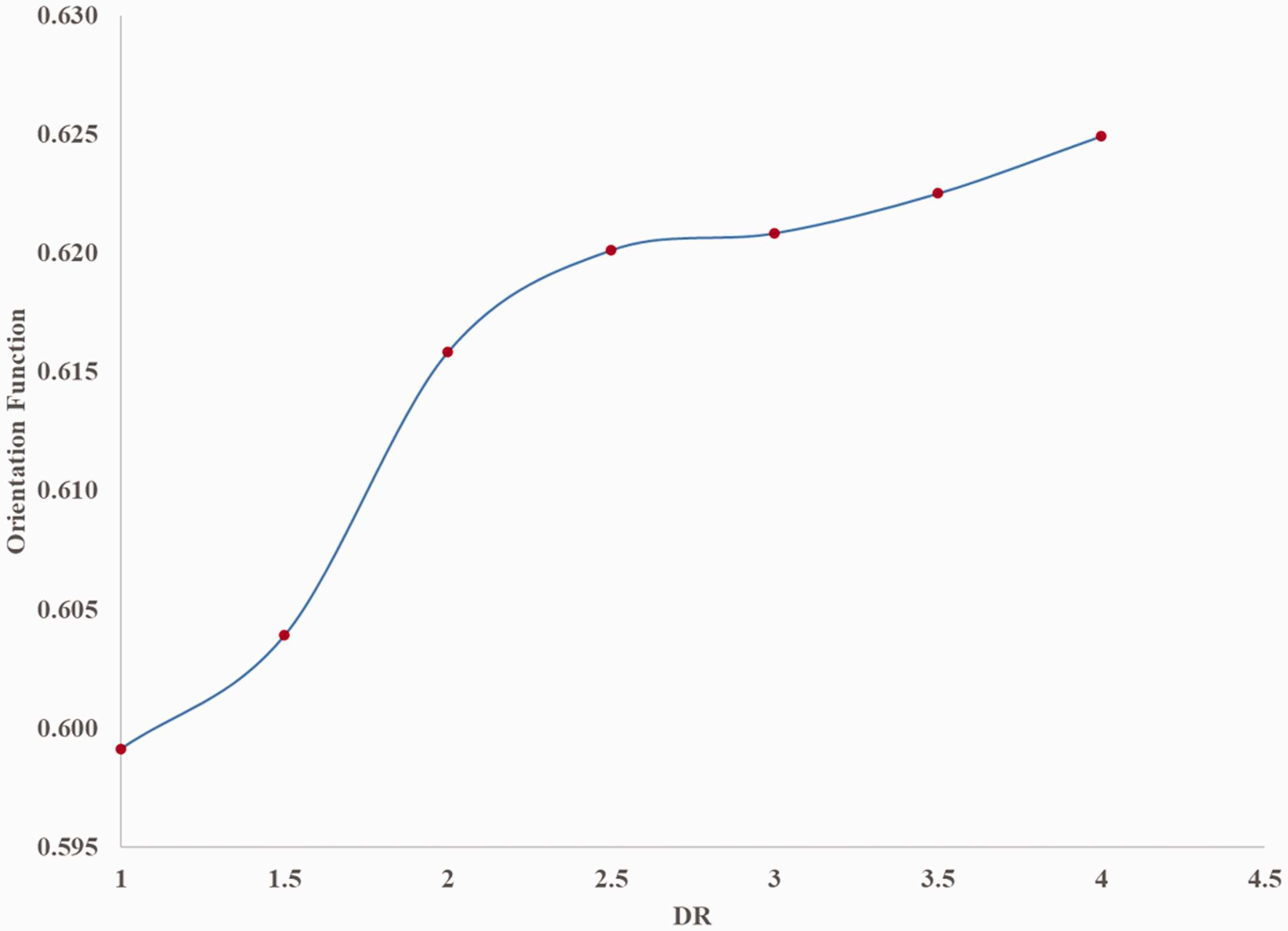
The calculated molecular orientation of drawn poly(lactic acid) D600 at different draw ratios (DRs).
The initial inclination angle (
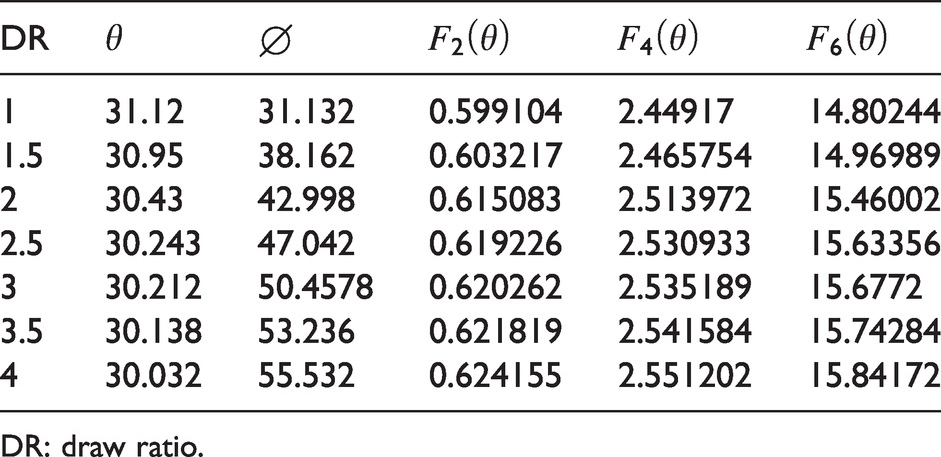
Herman’s orientation factor can be described in terms of the Fourier series. The first three even terms of this series are given below by Equation (7)



The final inclination angle (
The different orientation functions
The calculated initial inclination angle and final inclination angle orientation functions
DR: draw ratio.
Conclusion
PLA fibers produced using a melt-spinning technique followed by cold-drawing process can be manipulated to show a wide range of physical properties. PLA fiber was extruded using a melt-spinning technique at low take up speed of about 600 m/min. To get partially oriented PLA fibers, a low speed of the spinning process was used. These partially oriented samples can be post drawn as in this investigation. Some techniques were used to calculate the different physical and mechanical properties of PLA. From the above obtained results, one can conclude the following.
(a) The DSC and XRD results indicate that the mechanical drawing treatment relaxed the polymer chains leading to an increase in the resulting crystallinity, which was due to the induced strain crystallinity and orientation. (b) Both the crystal orientation and crystallinity of the drawn PLA(D600) fibers increase with the DR. From these obtained results the drawing process has been evidenced for its great effect on the different physical properties. (c) Tensile strength and elongation were increased during the drawing process consistent with chain relaxation and crystallinity. (d) The manufactured oriented PLA textile fibers are of great interest to be applied in different composite applications. They can be used to form fully recyclable, bio-based, and self-reinforcement PLA composites.
Footnotes
Declaration of conflicting interests
The author(s) declared no potential conflicts of interest with respect to the research, authorship, and/or publication of this article.
Funding
The author(s) disclosed receipt of the following financial support for the research, authorship, and/or publication of this article: This work was supported by the Deanship of Scientific Research at Umm Al-Qura University (Grant code: 22UQU4331100DSR09).
