




Abstract
We propose the final softening finishing of textile products based on a complex of modifying effects on a highly ordered cellulose backbone of the secondary cell wall G-layer or on a mesh corset of microfibrillar cellulose in the primary cell wall. We suggest using polypeptide molecule sizes and the strength of polypeptide molecule adsorption binding on a model solid-phase substrate as parameters of the structurally regulated action of cellulase preparations. The article presents an analysis of 11 cellulase preparations as groups of weakly, tightly and medium adsorption enzymes, and also groups of volumetric, peripheral or combined activity manifested in the fiber structure. We show the regularities of enzyme property influence on the fiber pore structure development, changes in the parameters of the fabric bending stiffness and breaking load and technological shrinkage for two modification modes: liquid treatment with flax fiber swelling or low-modulus application solution. For the liquid method of treatment (with a bath module of at least 10) it is recommended to apply highly adsorbable cellulases (A > 50%), in which the content of molecules with a globule size less than 30 nm does not exceed 15%. For the low-modulus method of treatment it is recommended to use enzymes with the adsorption capacity of at least 40% and a low content of small-sized fractions (no more than 25%). The recommended treatment variants ensure a three to four-fold bending stiffness decrease at the mechanical strength loss of not more than 15% and shrinkage of linen fabrics not more than 0.5%.
Keywords
One of the steady trends of the world's economic development is broadening of practical applications of biotechnologies in various fields of industrial production.
Textiles and clothing are among regular biocatalyst uses. Besides, while 60 years ago the greatest demand was for starch-splitting enzymes, 1 now biotechnological processes are employed in a whole range of textile wet processing techniques.2,3 Achievements in enzymology and molecular biology have opened up new opportunities for identification of new enzymes and obtaining recombinant preparations with modified properties, the use of which improves the quality and aesthetic properties of textile goods and reduces water and power consumption.4 –6 Biochemical methods of modification of textile materials have been successfully combined with other innovations, such as the use of microwave or ultrasound treatment for process intensification, as well as with advanced nanotechnologies for providing goods with functional properties.7 –9
A great deal of attention has been paid by researchers to enzymatic methods of fabric production from bast-fiber plants.10 –12 A common question is the choice of biocatalyst used for ramie degumming in one of the recommended processing methods based on pectinases, pectate lyases or xylanases and their compositions.13 –17 Fiber biomodification has made it possible to increase the mechanical strength, fiber spinnability and capillarity, and also to decrease yellowness after bleaching and to provide fabrics with higher dyeing quality in comparison with that achieved by chemical treatment.18,19
The increased attention to studying the interrelation between the mechanical properties of bast fibers and their cell wall structure was triggered by the widening range of linen fabric applications in the production of reinforced biopolymer composites.20 –23 New knowledge about fibrous substrates allows researchers to reformulate the problems of biocatalyst selective action into those of achieving uniformity of the reinforcing fibrous filler processing characteristics in composite production and those of improving the performance of apparel fabrics and clothes made from them.
The durability and breathability of linen fabrics, combined with their premium feel, have made them suitable for business attire and wardrobe accents, thus promoting a rapid evolution of the global linen fabric market. However, linen fabrics have some drawbacks, such as lower elasticity and, hence, lower crease and wrinkle resistance.
The limitations in the range of linen apparel models are caused by the natural stiffness of the flax fiber. On the one hand, stiffness provides textile goods with shape retention but, on the other hand, a rigid fabric cannot be used to make soft clothes, tightly fitting at the waist or softly draping below the hip.
The methods of chemical softening of cellulose fiber fabrics are constantly being improved. One of the ways to achieve such improvement is to use quaternary ammonium compounds and silicone preparations.24,25 However, their application has a number of drawbacks, including the greasy feel that they cause, low biodegradability of the softening agents and short duration of the effect as the compounds are washed away with time. 26 All this has made it necessary to utilize fabric softeners, such as those based on cationic surfactants, for washing clothes made of cellulose fibers. 27
The important advantages of enzymatic softening before the application of chemical softeners consist of the retention of the softening effect by the fabric after repeated washing 28 and the possibility to selectively affect the target biopolymer component type. However, researchers cannot agree on selecting the object of such exposure.
The stage of finishing treatment with cellulases is, in fact, repeating biopolishing and enzymatic washing processes, which is widely applied in the production of cotton fabrics and denim goods.29,30 Technologically, it is reasonable to use cellulases in the process of linen fabric dyeing when the aim of their application is not only to improve the dyeing quality but also to achieve better drapability and softer handle in the fabric. 31 The unavoidable side effect is the loss of mechanical strength of a fabric, which can be reduced by selecting the appropriate biological preparation dosage and exposure time.
This drawback of cellulases is eliminated when pectolytic enzymes are used. The results of fabric treatment with cellulase and pectinase commercial preparations were shown to be comparable with each other, according to the changes in the tensile, bending and shearing properties evaluated in the Kawabata Evaluation System for Fabrics (KES-FB). 32 However, the tests were made with fabrics produced without preliminary bleaching with a high content of pectic substances, which means that the results cannot be used to predict the effectiveness of flax fabric softening by pectinases at the finishing stage.
The low deformation behavior of flax fibers is largely dependent on the stiff-chain mesh lignin structures.33 –35 Evidently, lignin can produce a significant effect only if the fiber has not been completely delignified at the preliminary treatment stage. The optimal level of residual lignin content, according to our data, 36 is 1.5 wt%.
To confirm the effectiveness of the enzymatic softening strategy, it is reasonable to rely on the modern understanding of the flax fiber cell wall structure.20,23,37 –39 As Figure 1 shows, it consists of multiple layers.
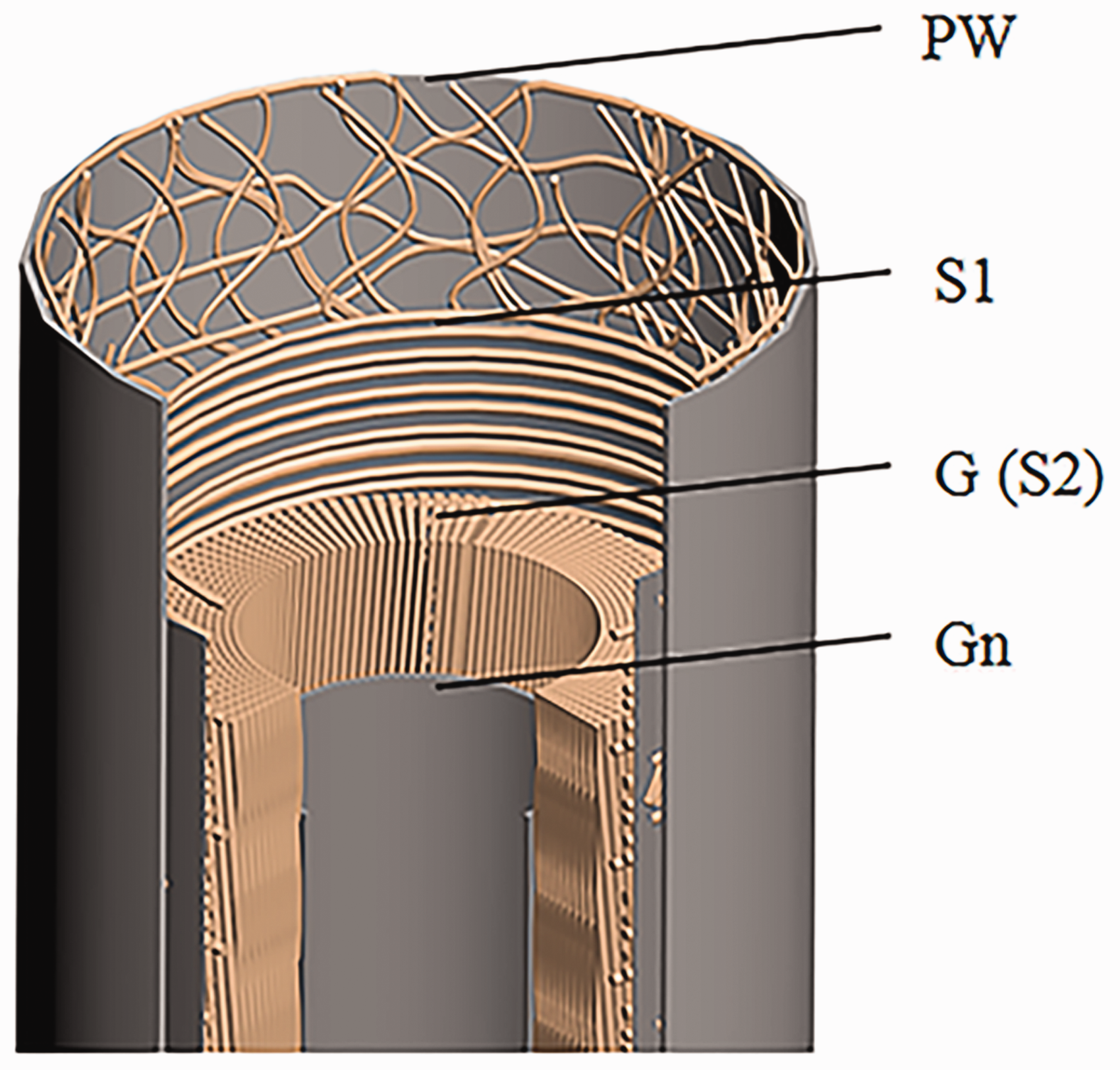
Elemental flax fiber structure and cellulose microfibril orientation in the primary cell wall layer (PW) and in the secondary cell wall layers (S1, G and Gn).
It has been recognized that the mechanical properties of a mature flax fiber depend on the main layer of the secondary cell wall, labelled as G or S2. The G-layer contains 90% cellulose per dry weight. The G-layer does not contain lignin. The low deformability, high compression strength and bending stiffness are attributed to the fact that cellulose microfibrils in the G-layer are arranged in a spiral with an extremely small slope angle relative to the longitudinal axis of the fiber (5.8–7.3° according to Wang et al. 40 ). For comparison, the cotton fiber spiral angle is 30°. 41
In the first secondary cell wall S1-layer, the cellulose microfibril angle reaches 60–80°. 42 This means that the S1-layer cellulose component does not make a significant contribution to the total fiber stiffness. At the same time, only the S1-layer of the mature flax fiber contains up to 20% lignin.20,38,39
The problem of lignin destruction can be solved by inducing lignin redox transformations under the action of low molecular weight products forming after the enzymatic breakdown of polysaccharides.43,44 Destruction of monosaccharides as a result of a thermally activated retro-aldol reaction in an alkaline medium makes it possible to achieve a reducing potential level sufficient for reduction of the carbonyl groups in the lignin macromolecule and breakage of the adjoining ether bond between the phenyl-propane units.45 –47
Mature flax fibers have practically no third Gn-layer in the secondary cell wall. At the earlier stages of cell growth, the Gn-layer has a heterogeneous loose structure enriched with long galactan chains. 48 This means the Gn-layer contribution to the elementary flax fiber stiffness can be considered to be negligibly small.
The PW-layer is formed at the initial stage of cell wall growth, the elongation stage, at the end of which the cell reaches not more than 5 µm in diameter.49,50 The necessary PW-layer elasticity at the cell elongation stage is reached due to the hydrated pectic substances that mostly contain unbranched homogalactorunan.51,52 The pectin macromolecules in the PW-layer together with hemicelluloses (mostly xyloglucan) and polypeptide compounds form three-dimensional carbon-protein complex structures. Therefore, effective surface modification and flax fiber stiffness reduction can be achieved not only by applying pectin-destructing enzymes but also by using combined xylano-pectinolytic enzymes.12,32,53
The cellulose content in the primary cell wall is 25–40%.39,52 A typical feature of the PW-layer is chaotic cellular interweaving of the cellulose microfibrils. 54 The flax fiber maturing (thickening) stage consists of cellulose mesh densification and aggregation of parallelized microfibril parts into elongated bundles accumulating in the internal tensile forces. In this state, cellulose forms a kind of corset, tightening the elementary flax fiber cell. It is the damage to the microfibrillar cellulose mesh integrity in the PW-layer that causes the observed softening of the material when cellulases are applied in enzymatic methods of linen fabric preparation for dyeing or in biopolishing processes.31,55
By the time linen fabrics are subjected to finishing softening, most of the polymeric companions of cellulose, as a rule, have been removed during the multi-stage flax fiber preparation for spinning and bleaching. In this case, the excessive fabric stiffness is, evidently, the result of two types of cellulose textures: the mesh structure in the primary cell wall layer and the highly ordered backbone of the secondary cell wall G-layer. The experience in cellulase application in fabric softening or enzymatic washing of clothes confirms that an enzyme-treated fabric has a soft handle, a smooth surface and good elasticity. However, the reduction in the fabric strength after exposure to cellulase preparations from different manufacturers can equal from 20–25% to 75%.56,57
Consequently, the control strategy for linen fabric biosoftening can be built based on spatially localized effects of cellulase preparations on the aforementioned cellulose texture types in the fiber cell wall. To solve these problems, it is not enough to take into account the main features underlying the enzyme classification and nomenclature: the type of chemical reaction they catalyze, the initial substrate type and the product type. Any biocatalyzed transformation is preceded by the formation of an enzyme-substrate complex. The cellulase action character on a solid-state substrate is largely dependent on the adsorption strength and presence or absence of a cellulose binding domain (CBD) in the enzyme molecule. 58 The presence of the CBD connected with the catalytic domain (CD) by a flexible linker is responsible for the “multiple attack” mechanism of biocatalyzed cellulose destruction without changes in the enzyme location. 59 Low adsorbed cellulases, the molecules of which do not contain a CBD, are highly mobile and change their location after each catalytic impact.60,61 It is assumed that it is preferable to use CBD-free cellulases for achieving biostoning surface effects in denim fabrics.62,63
However, it is reasonable to take into account the data on the higher conversion degree of cellulose materials in bioethanol production in the case of CBD-free cellulase application. 64 It is evident that the absence of strong binding with cellulose does not guarantee that enzyme treatment will result in surface effects and, in contrast, may facilitate biocatalyst diffusion inside the substrate. Besides, analyzing the changes in the flax fiber pore system in the process of swelling in an aqueous solution, Dutta and Chakraborty 65 came to the conclusion that enzymes can permeate into the interfibrillar mesoporous spaces together with moisture before the adsorption interactions start.
Among the distinguishing features of numerous enzyme forms relevant to this study is the molecular weight, which varies within a wide range of values. For example, one of the works describes an amino acid sequence of six types of endoglucanase from Bacillus lautus with the molecular weights of 92, 75, 65, 60, 56 and 45 kDa. 66 Another study reports an amino acid sequence of cellulase EG V from Trichoderma reesei with the lowest molecular weight of 20–25 kDa. 67 The maximum level (105 kDa) was observed in cellulase EG VI from Trichoderma longibrachiatum. 68 It is recommended to apply purified recombinant cellulase from Caulobacter crescentus with the molecular weight of 73 kDa for biostoning of denim goods. 69
There have been no systematic studies of the effects of sizes and adsorption properties of cellulases on the effectiveness of softening treatment of fabrics from cellulose and flax fibers. However, such studies could be the key to process optimization. Therefore, the aim of experimental research is to identify the interconnection between the specified properties of enzymes and changes in the structure and processing parameters of linen fabrics.
To characterize the enzyme globule dimensions, the dynamic light scattering (DLS) method that is systematically use in biological and biochemical studies can be applied.70,71 The enzyme affinity to cellulose can be characterized by the parameters of equilibrium sorption from a solution using microcrystalline cellulose.
Materials and methods
Linen fabric in the form of a bleached cloth without mechanical or chemical softening operations (art. 04303 by JSC “Vologda Textile,” Russia) was used as the object of the research. The primary technical parameters of the fabric are width – 160 cm; surface density – 235.6 g m−2; fibrous composition – flax 100%; yarn linear density – 69 tex in the warp and weft. A linen fabric dyed with Remazol Red RR (art. 06152 by LLC “Bolshaya Kostromskaya Lynyanaya Manufactura,” Russia) was used as the object to assess the quality after enzymatic softening.
Eleven commercial cellulase preparations were used for fabric bioprocessing, as follows:
CelloLux A (Sibbiopharm, Russia); CelloLux F (Sibbiopharm, Russia); Ultraflo Kore (Rusferment, Russia); Cellusim ultra (Enzym, Ukraine); Enzitex (Ferment, Belarus); Fekord 2012C (Ferment, Belarus); Stonezyme P (Novozymes, Denmark), Cellusoft Ultra (Novozymes, Denmark), Conzyme TM90 (Sunson group, China); Rucolase ZLL (Rudolf Chemie, Germany); KAC® 500 (Genencor International Inc., USA).
To avoid unauthorized advertising of branded products, the enzyme preparations were randomly assigned serial numbers from CP1 to CP11.
Enzyme assays
The endoglucanase activity in enzyme solution (CA, U mL−1) preparations was determined using the Ghose method. 72 This method measures the release of reducing sugar produced in 60 min from an enzyme solution (0.5 mL) and acetate buffer (0.1 M, pH 4.8, 1 mL) mixture in the presence of 50 mg Whatman No.1 filter paper (1 cm × 6 cm strip) and incubated at 50°C. The reducing sugar was determined using a 3.5-dinitrosalicylic acid (DNS) reagent with glucose as the standard. 73 A unit (U) of enzyme activity is defined as the amount of enzyme required to liberate 1 μmol of the product per 30 min.
The adsorption capacity of the enzymes was evaluated in accordance with the procedure. 74 A microcrystalline cellulose suspension (50 g L−1) in a solution of an enzyme (100 U mL−1) was prepared to study the adsorption capacity (A, %) of the enzymes. The experiment was carried out with constant stirring using a magnetic stirrer for 30 min at a temperature of 8°C. Next, the mixture was centrifuged for 3 min at 14,000 rpm, then the residual protein concentration in the supernatant was determined by absorption at a wavelength of 280 nm. The adsorption capacity A was calculated as a percentage of the adsorbed protein compared to the initial value.
DLS analyses of enzymes
The hydrodynamic size of particles in the enzyme preparation hydrosol was measured by the DLS method on a Zetasizer Nano ZS analyzer (Malvern Instruments Ltd, UK).
In this experiment, the enzymes were prepared by double recrystallization of polypeptides from solutions in bidistillate with isopropyl alcohol precipitation. The test solutions were prepared on bidistillate with additional chromatographic purification. 75 The solution was analyzed using Rotilabo-disposable cuvettes (Carl Roth GmbH + Co.KG, Germany). The sampling was carried out using disposable syringes equipped with Rotilabo-Spritzenfilter filtering attachments (Carl Roth GmbH + Co.KG, Germany) with 0.45 μm pores.
The signal accumulation time in the series of three measurements was 20 min. The analysis of the measurement results was carried out by an automated program based on the solution of the Fredholm integral equation of the first kind with an exponential kernel for the normalized correlation function. 76 To increase the recording ability of the measuring system, taking into account the recommendations for studying polyfraction systems in the results processing window, the value of the lower threshold indicator “0.05” must be corrected to “0” in accordance with the recommendations for studying polyfractional systems. 77
Enzymatic treatment
The linen fabric processing with enzyme preparation solutions was carried out in two technological modes. The first mode simulated a periodic method of processing in devices with solution forced circulation or in a washing drum machine. The second mode simulated a semi-continuous method of fabric processing, including impregnation, wringing and aging in a roll, or an aerosol method of applying a solution onto a textile material. The main difference between the modes consisted of the parameter of the bath module M that was calculated as the solution volume (VS, mL) to the textile material mass (m, g). The bath moduli were 10 and 1, respectively, for the first and second modes.
The concentration of the enzymes in the technological solutions was selected to ensure the same level of endoglucanase activity: treatment mode 1 – 25.8 U mL−1; for mode 2 – 150 U mL−1. The solutions were prepared using softened water heated to 40–45°C. The solution pH was maintained using sodium acetate buffers in accordance with the recommended optimum for each enzyme preparation. The concentration of the nonionic surfactants was 0.5 g L−1.
An Alliance NT3JLASP403NW22 washing and drying machine was used to realize mode 1. The enzyme treatment was carried out for 40 min. After washing with warm (40°C) water, the samples were dried at 80°C. Processing according to mode 2 consisted of impregnating the samples with the solution using a laboratory fabric impregnation machine with the fabric squeezed in rolls until the weight gain of 100% was achieved. The wet-pressed material samples were protected from drying with a polymer film and kept in a drying oven at 40–45°C for 60 min. The enzymes were inactivated by processing on a Japsew SR-600 heat press (China) at 80°C.
Porosity analysis
The effectiveness of the pore structure modification was evaluated by the low-temperature nitrogen adsorption–desorption method at 77 K on a NOVA 1200e gas sorption analyzer (Quantachrome, Boynton Beach, FL, USA) to find out the pore volume (VP, сm 3 g−1). The calculation of the pore size distribution was carried out on the basis of the descending branch of the adsorption–desorption curve analysis by the Barrett–Joyner–Halenda (BJH) method using a special computer program.
Scanning electron microscopy
Scanning electron microscopy (SEM) (Quattro S, Thermo Fisher Scientific, Netherlands) was used to study the fiber surface. The samples were obtained by cutting small pieces of fibers. Before the test, to ensure that the samples had good electrical conductivity, they were fixed onto a circular iron platform with a conductive adhesive and were coated with a thin layer of gold. After that, the samples were scanned.
Infrared spectroscopy
The Fourier transform infrared (FTIR) spectroscopic studies were carried out using a Vertex 80v FTIR spectrometer (Bruker Optik GmbH, Germany). Samples of the native flax fiber, original bleached linen fabric and the same after biomodification were analyzed. The samples were mechanically ground, sieved through a sieve with a 1 mm mesh and thoroughly dehydrated by drying in vacuum at a pressure of 66.5 mPa. Then, pellets were pressed from a mixture of the biopolymer material and powdered KBr taken in a ratio of 3:300. The vibration spectra were recorded in the transmission mode within a frequency range of 400–4000 cm−1 at a resolution of 2 cm−1.
The quantitative analysis of the transmission spectra was performed in accordance with the standard procedure.
78
The relative optical density, dD, was used to estimate the absorption bands in comparison with the internal standard peak at 1160 cm−1 that characterizes the skeletal pyranose ring vibrations. The spectra were baseline corrected for further analysis. The dD value was calculated using Equation (1)

Physical and mechanical tests
The bending stiffness (EI) testing of linen fabrics was conducted in accordance with the international standard ASTM D1388-18 test method for the stiffness of fabrics. Fabric strips of 160 mm × 30 mm in size were used. They were placed horizontally on the top side of the machine and pressed by a 20 mm load in the middle. After that, the anchor sides were dropped down and the material ends hung loose due to gravitational force. One minute later, the overhang amount of the strips ends (f) was measured. The bending stiffness EI (10

The breaking load (BL) test was conducted in accordance with ISO13934-1:2013 Textiles – tensile properties of fabrics – Part 1: determination of maximum force and elongation at maximum force using the strip method and ASTM D4632 – Standard test method for grab breaking load and elongation of geotextiles.
The fabric shrinkage (FS) during the enzymatic treatment was determined in accordance with ISO 3759:2011 – Textiles – preparation, marking and measuring of fabric specimens and garments in tests for determination of dimensional change and ISO 675-2014 – Textiles – method for determination of dimensional change of woven fabrics on commercial laundering near the boiling point.
The abrasion resistance was determined using a DIT-M device in accordance with ASTM D4060 – Standard test method for abrasion resistance of organic coating by Taber abraser and ASTM D3884 – Standard guide for abrasion resistance of textile fabrics (rotary platform, double-head method).
Hygienic parameters, such as hygroscopicity, capillarity and moisture loss, were measured in accordance with ISO 811-81 – Textile fabrics – methods for determination of hygroscopic and water-repellent properties.
The color indicators of the CIELAB color system were estimated in accordance with ASTM E308-18 – Standard practice for computing the colors of objects by using the CIE system, using a Datacolor 800V device in the reflected light mode.
The color resistance to physical and chemical effects was evaluated in accordance with standard GOST 9733.0-83
The detergent washing testing was conducted in accordance with ISO 105 C06
The color fastness to perspiration test was conducted in accordance with ISO 105 E04 – Textiles – tests for colour fastness – Part E04 – method for determination of colour fastness to perspiration and AATCC 15 – Test method for colorfastness to perspiration. To measure staining, a strip of a multifiber fabric was attached to the test specimen. During this test, the fabric was soaked in a simulated perspiration solution for 30 min under a fixed pressure and then dried slowly at an elevated temperature. The staining of the rubbing cloth was then assessed using the gray scale for staining.
Results and discussion
Granulometric analysis
When analyzing the size of the particles in an enzyme hydrosol by the DLS method, we process the results in a computer program that can characterize the colloidal state of the system by the particle size distribution dependences (r, nm) of three interrelated parameters: relative light scattering intensity (I, %), relative dispersed phase volume (V, %) and relative particle number (N, %). In the case of polydisperse systems, the dependences may look different, which is illustrated by the results of the CP1 preparation studies shown in Figure 2.
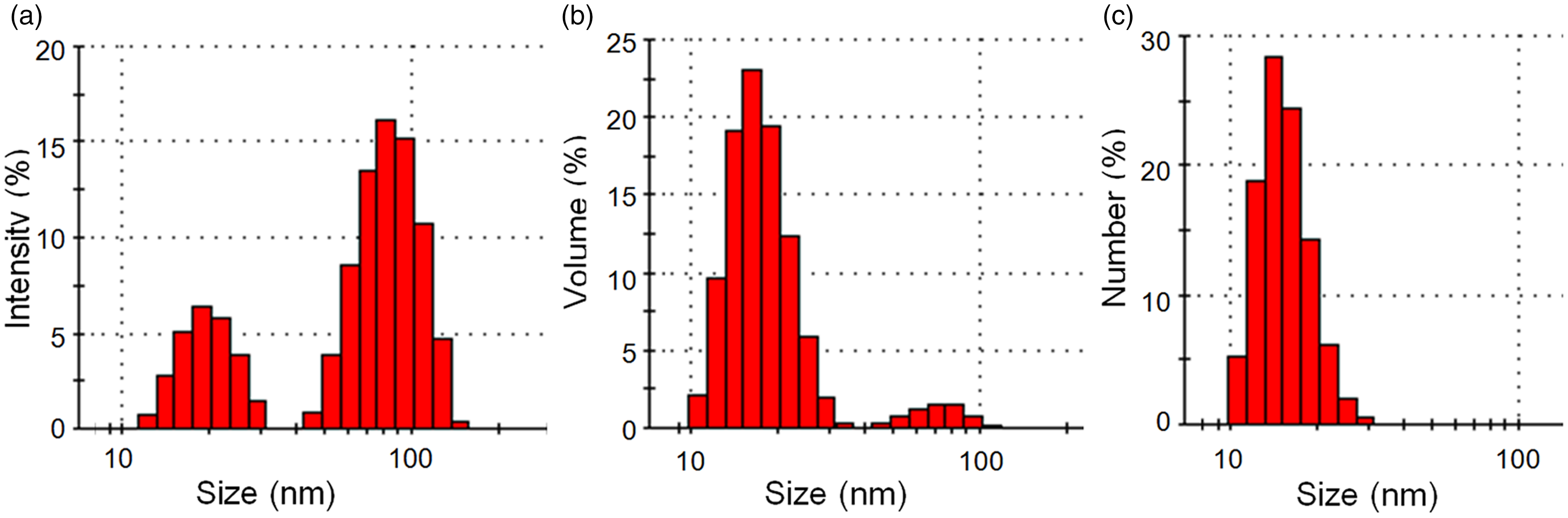
Fractional particle size distribution of parameters: (a) relative light scattering intensity; (b) relative dispersed phase volume and (c) relative particle number in the hydrosol of the cellulase preparation CP1.
The bimodal character of the dependence in Figure 2(a) demonstrates that the biopreparation contains multiple components. At the same time, evaluating the colloidal system state based on indicator I may lead to the wrong conclusion about the dominance of large fractions in the hydrosol (with particle sizes from 45 to 145 nm and the maximum at 82–95 nm). As shown in Aleksensky et al., 79 such errors concerning polydisperse systems are caused by shielding of small particles by larger aggregates, representing the main obstacle to the beam. The number of large fractions can be extremely small because a 10-times increase in the linear parameters of a particle makes its volume three orders of magnitude larger. The opposite relation is equally true: the volume of one large particle corresponds to the total volume of 1000 particles that are 90% smaller in size.
As Figure 2(b) shows, the total volume of large fractions in the CP1 preparation does not exceed 6.5%. The diagram presented in Figure 2(с) indicates that the total number of light scattering objects within the fraction range measured by the program for r > 40 nm is smaller than the minimum value (0.1%) required to identify their share in the total number of particles.
Thus, analysis of dispersed phase particle size distribution and number of particles allows us to characterize the hydrosol size parameters more objectively. We have earlier shown in other works that it is necessary to control these parameters simultaneously to optimize the engineering properties of nanodispersed systems. For example, it is recommended to take into account data of dispersed phase particle size distribution when making reinforced composites with a graftcopolymer adhesive introduced into the pores of a textile substrate or when using functional nanodispersed fillers.80 –85 When modifying biopolymer and fibrous materials, the state of enzymatic preparations must be characterized based on the size distribution of the relative number of particles.33,46,86 –88 The number of particles in these processes depends on the number of simultaneous catalytic events involving protein catalyst globules.
In this study, a comparison of the enzymatic preparations was also made taking into account the dispersed phase particle size distribution based on indicator N. The analysis results are shown in Figure 3 as a complex of spline interpolations.

Curves of the relative number of particle size distribution in solutions of cellulase preparations (the curve numbers correspond to the preparation numbers).
When designing the engineering processes considered in this work, it is important to take into account the enzyme ability to penetrate inside the capillary-porous system of elementary flax fibers. Fiber swelling in aqueous solutions increases the mesopore diameter to 30 nm. 65 Therefore, the value of the relative number of particles of less than 30 nm in size (N30) was used to characterize the biopreparation capacity to affect the total volume of a fibrous material or only its surface. The results of the size distribution analysis of the enzymatic preparations are given in Table 1.
Granulometric characteristics of the compared cellulase preparations
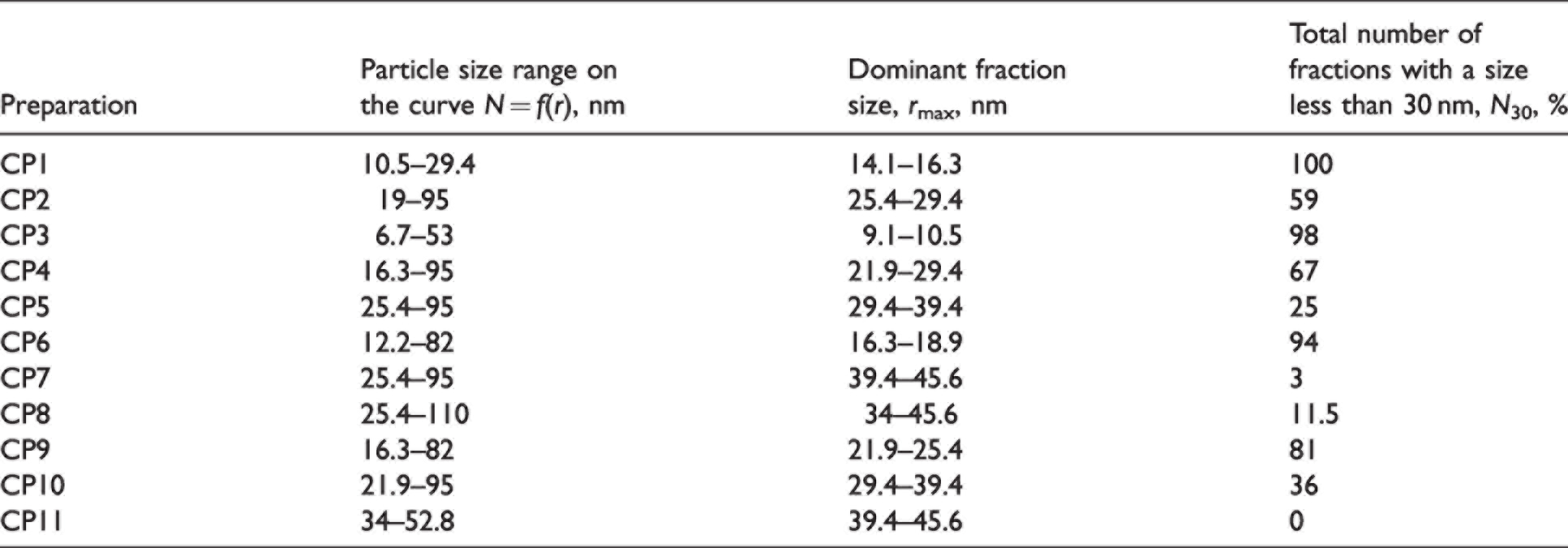
Taking into account the N30 indicator, all the cellulase preparations can be divided into three groups. It was indicated that the highest inner mass transfer capacity during fabric biotreatment in regime 1 had been achieved by CP1, CP3, CP6 and CP9, where over 80% of the biocatalyst molecules were smaller than the diameter of the swollen flax fiber. CP11, CP7 and CP8 were included in the group of biopreparations producing surface effects. The content of small fractions in them did not exceed 15%. The group including the CP2, CP4, CP5 and CP10 preparations was characterized by mixed activity, both on the flax fiber surface and in the volume of the secondary cell wall.
Adsorption analysis
The difference in the action of tightly and weakly adsorbable cellulases is illustrated by the schemes shown in Figure 4.

Mechanism of catalytic destruction of polymers by (a) tightly adsorbable and (b) weakly adsorbable enzymes.
The fact that the molecule of tightly adsorbable enzymes has a CBD is responsible for its localized action in a certain section of the polymer substrate, the size of which depends on the length of the flexible linker connecting the CBD with the CD. The location of such an enzyme in the flax fiber cell wall is largely determined by its ability to diffuse inside the capillary structure with the flow of the processing solution absorbed.
Weakly adsorbable cellulases without a CBD are bound with the polymer only for a short time during the formation of an enzyme-substrate complex preceding the catalytic event. Like a ping-pong ball, their molecules can migrate inside the inner layers of a fibrous substrate or return to the outer layer of the solution, thus maintaining the interphase dynamic equilibrium conditions.
Tightly adsorbable cellulases can only be resorbed together with the substrate oligomeric residue formed as a result of a series of catalytic events on the CBD. The sorption experiment was conducted at a reduced temperature (8°C) to prevent resorption when determining the enzyme affinity to a solid-phase substrate. In these conditions, the cellulase catalytic center was characterized by weak activity, which almost excludes polymer biodestruction.
The kinetic curves of cellulase sorption on microcrystalline cellulose shown in Figure 5 demonstrate that the solutions with all the studied preparations are not completely depleted. The sorption equilibrium in systems with tightly adsorbable cellulases was reached more quickly. At the same time, a 30-min test exposure was enough to saturate the substrate and weakly adsorbable forms of cellulase preparations.
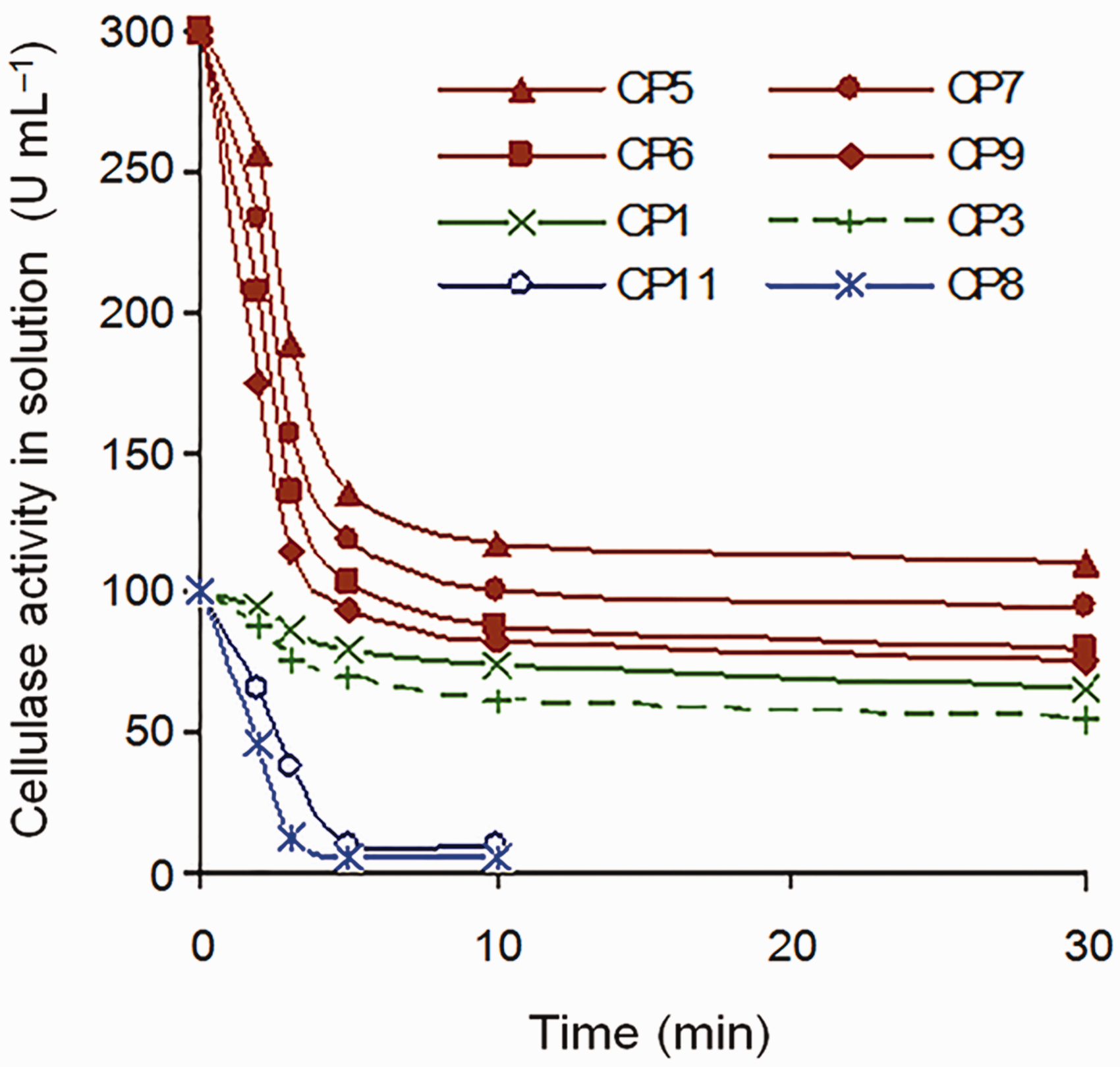
Kinetic curves of enzyme sorption on microcrystalline cellulose.
The adsorption capacity level for weakly adsorbable enzymes was limited by the value of indicator A ≤ 15% in accordance with the recommendations. 89 As the data in Table 2 show, only CP8 and CP11 can be included in this group.
Grouping of cellulase preparations according to the adsorption capacity level

The limiting value of indicator A for tightly adsorbable cellulases was A > 50%. Four preparations – CP5, CP6, CP7 and CP9 – were included in this group. The other five preparations were included in the group of medium adsorbable cellulases. The lower level of adsorption capacity in these preparations can be caused by both the lower energy of intermolecular interactions and the presence of several types of cellulases with different types of sorption binding in them.
Flax fiber structure transformation analysis after the action of cellulases
The results of FTIR spectroscopic studies explain the required character of the biocatalyzed effect at the stage of linen fabric final softening treatment. In Figure 6, the FTIR spectra of fibrous materials made from bleached linen fabric (LF curve) before and after biomodification with the tightly adsorbable preparation CP5 (CP5 curve) are compared with that of the native flax fiber (FF curve).
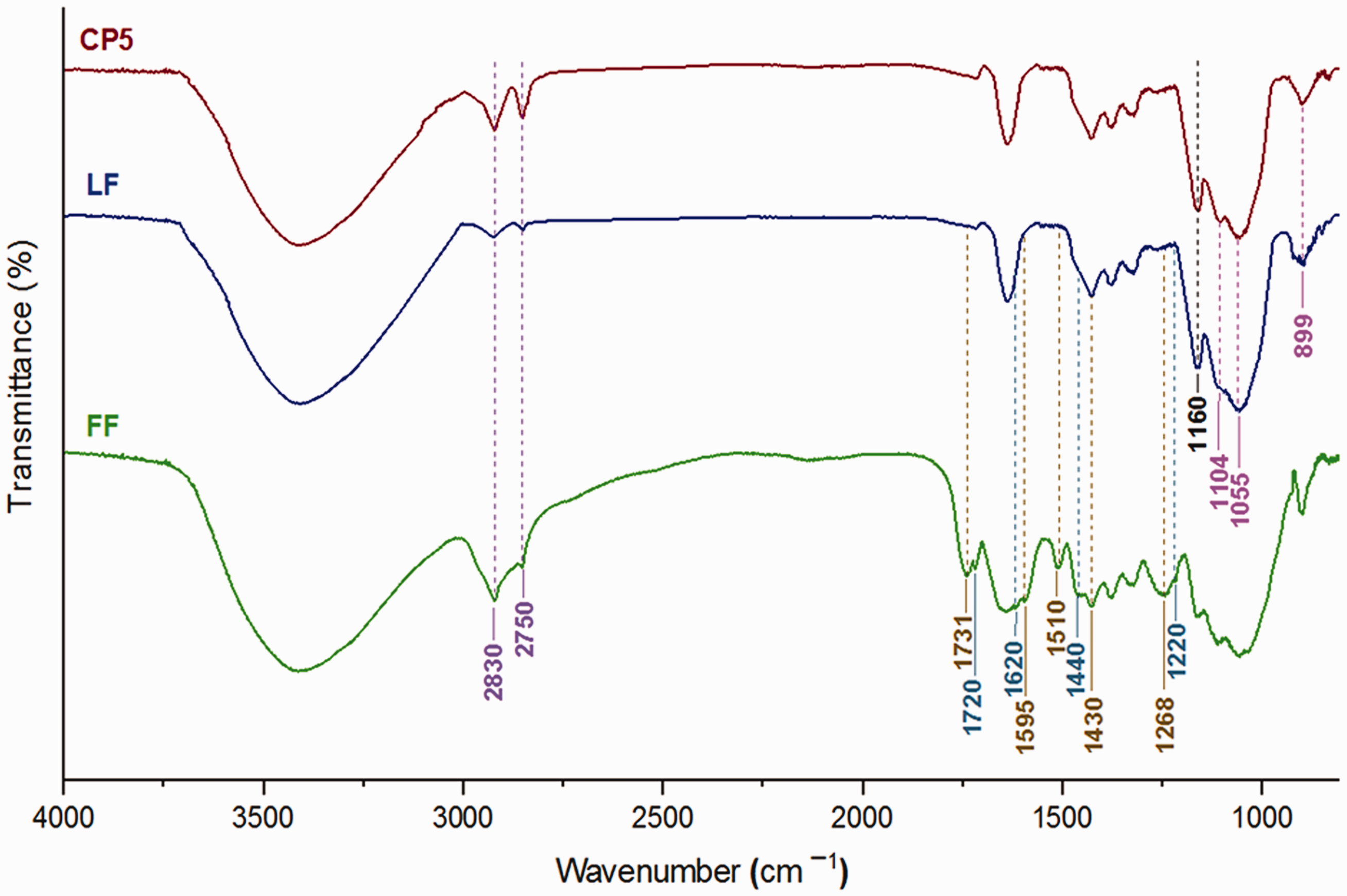
Fourier transform infrared spectra of native flax fiber and bleached linen fabric in the initial state and after modification with tightly adsorbed cellulases CP5.
The spectrum for FF is a complex superposition of different types of vibration processes that are excited in the interatomic bonds of the whole variety of lowly and highly molecular components of a fibrous material. The spectral contour of the LF sample becomes much simpler after significant impurity amounts have been removed during the fiber preparation for spinning and fabric bleaching. The integral peaks on the FF curve are marked with callouts that contain characteristic valence vibrations for the main flax cellulose polymer companions. The identification of the bands was carried out in accordance with the reference data. 90
Pectins were characterized by the presence of carboxyl groups that are part of galacturonate units with a different chemical structures:91,92
at 1720 and 1220 cm−1 there are valence vibrations of the bonds C=O and C-OH in unsubstituted carboxyl groups; at 1620 cm−1 there are asymmetric valence vibrations of the carboxyl with metal ions vas(C-OMe) in the pectate unit; at 1440 cm−1 there are deformation asymmetric vibrations of δas(O-СН3) in the metaxyl units.
The skeletal vibrations of the aromatic ring νС–С at 1595 cm−1 and in the overtones at 1510, 1430 and 1268 cm−1 were the main lignin “fingerprints.”93 –96 A decrease in the intensity of these bands in the bleached fabric spectrum is accompanied by the disappearance of the valence vibrations of the C=O bond at 1731 cm−1 in the ketogroups present in every fifth phenyl-propane unit of the macromolecule. The spectrum of the biomodified sample CP5 shows the same level of absorption of these bands and also the valence vibrations of the band in the pectin carboxyl groups.
The LF spectrum shows that the extraction of hemicelluloses from the FF sample led to a decrease in the intensities of the peaks at 2830 and 2750 cm−1 formed by the macromolecule end aldehyde groups. The number of such groups in native flax fiber is quite large due to the low degree of hemicellulose polymerization. At the same time, the low absorption intensity of these bands on the LF curve is explained by the uniquely high chain length in flax cellulose macromolecules and, consequently, the small number of end units in the aldehyde form.
The effect of the CP5 preparation during the biomodification caused a significant increase in the absorption bands at 2830 and 2750 cm−1 relative to the initial LF sample. This was accompanied by a decrease in the intensity valence vibrations of the band in the glycoside bond νС-О-С at 899, 1055 and 1104 cm−1.
The quantitative characterization of the biopreparation depolymerizing effect on cellulose was made by the changes in the intensity of these bands in comparison with the absorption band at 1160 cm−1 corresponding to the vibrations of the bonds in the pyranose ring. This band was used as an internal standard. The decrease in the relative optical density of the bands at 1055 and 1104 cm−1 when the LF sample was replaced with a CP5 one was 5–8%. The increase in the absorption of the end aldehyde groups by three to four times indicates that the equivalent increase in their number was the result of the cellulose macromolecule destruction.
Similar changes in the flax cellulose state were observed when other biopreparations were analyzed. This was achieved by maintaining the same cellulase activity values due to the selection of the biopreparation concentrations in solutions. The level of cellulose depolymerization can be considered not very high in all the biomodification variants. When studying the enzyme catalytic activity zone in the fiber structure, the compared biopreparations were found to produce different effects.
Figure 7 presents the results of determining the inner pore volume value (VP, cm3 g−1) in linen fabrics according to the low-temperature nitrogen adsorption–desorption data. The data allow us to trace the development of the inner pore structure of a fibrous material in the case of liquid treatment (mode 1) and low-modulus bath treatment (mode 2) of linen fabrics. The compared cellulase preparations are characterized by a polar combination of size and adsorption values.
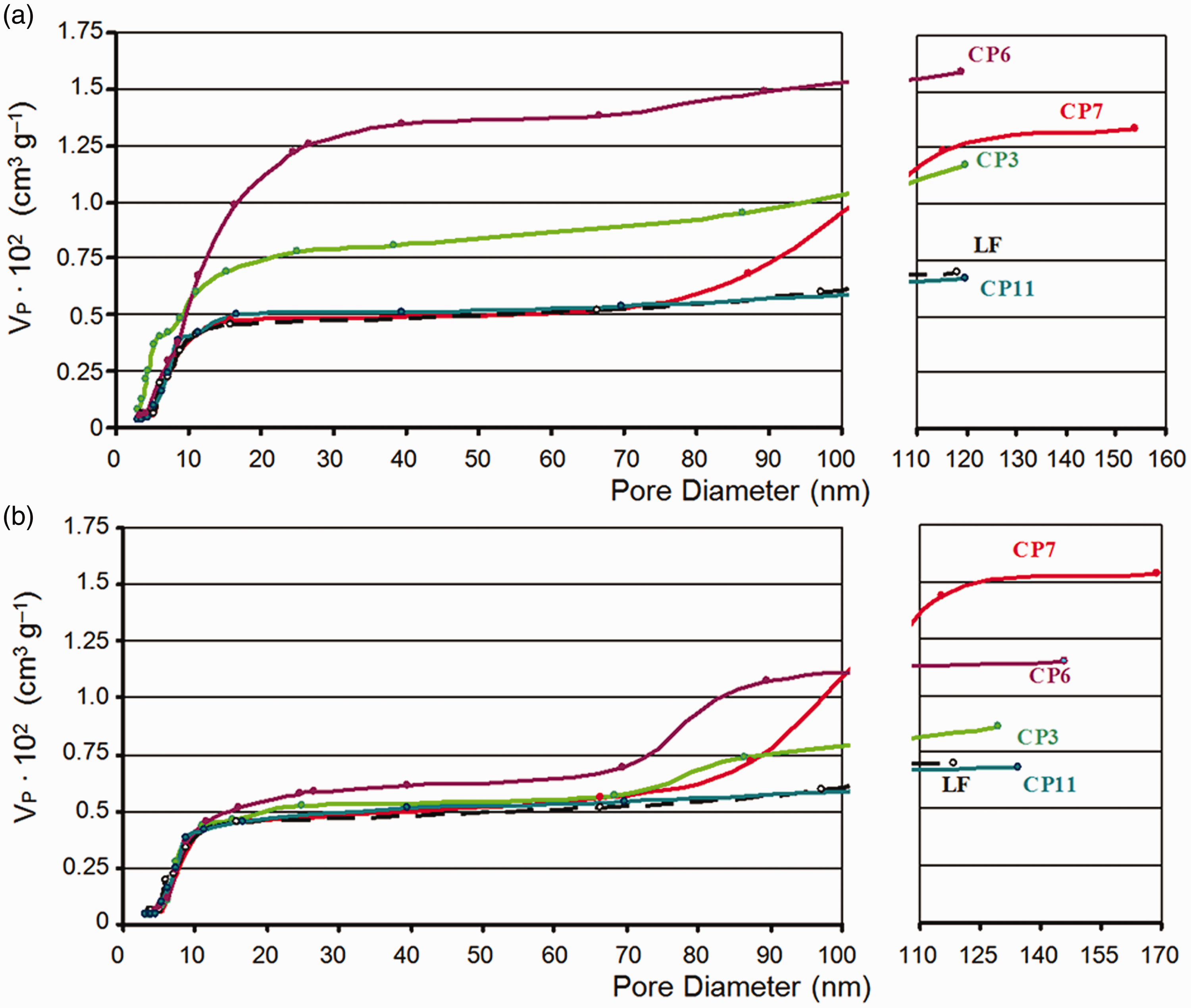
Pore volume distribution by pore diameter in the initial linen fabric and after the biomodification: (a) liquid treatment – mode 1 and (b) low-modulus processing – mode 2. CP3, CP6, CP7 and CP11 correspond to the cellulase preparation designation used.
In accordance with the pore classification adopted by the International Union of Pure and Applied Chemistry (IUPAC), 97 the fiber pore system in the initial linen fabric (LF curve) has three pore types. There are submicronic pores with the diameter of less than 3 nm, mesopores of 7–15 nm in diameter and large mesopores with sizes over 90 nm. It can be assumed that the latter group of cavities was the result of the removal of flax cellulose companions from the PW and S1 periphery layers of the cell wall (see Figure 1) during the fiber preparation for spinning and bleaching cloth.
As the data in Figure 7(a) show, changes in the submicronic pores are only observed in the regime of low-modulus treatment of the CP3 preparation, with cellulases having the smallest globule size and average level of adsorption binding with the substrate. In this case, the gain in the total VP value is caused by the increased number of pores of up to 7 nm in size. The further run of the CP3 curve coincides with the increase in the inner volume in the initial fiber mesopores.
Evidently, in the low-modulus treatment conditions suitable for flax fiber swelling, the CP3 preparation activity was observed in the fiber cell wall G-layer. The increase in the submicron pore VP was caused by the formation of additional submicron pores as a result of the cellulose destructive action on the microfibrils concentrated at enzyme adsorption sites rather than the widening of the smallest pores (which would increase their diameter).
The same behavior was observed in CP6 cellulases. However, taking into account the globule size and high strength of absorption binding of the enzymes, their action led to the formation of an additional number of mesopores with a diameter of 10–30 nm.
Large tightly adsorbable CP7 cellulases can only increase the volume by making mesopores larger. The effect of these preparations does not only make the VP value higher but also increases the limiting pore diameter value to 154 nm, compared to 118 nm in the initial fiber.
Large weakly adsorbable CP11 cellulases, as expected, are unable to penetrate the fiber structure. Their peripheral action made the fiber surface smoother and the large mesopore volume slightly smaller.
The dependences shown in Figure 7(b) for the samples after low-modulus treatment (regime 2) indicate that after all the enzymatic preparations were applied, most of the changes took place in the large mesopore regions. This happened because the moisture content was insufficient for swelling and opening of the mesopores in the cell wall G-layer structure. Even when the CP6 preparation was applied, the small increase in the volume of pores of less than 70 nm in diameter was evidently associated with the cellulose effect on the fibrillar structure in the peripheral cell wall layers. For all the preparations, the limiting pore diameter became larger. The maximum macropore system development was the result of the action of large highly adsorbable CP7 cellulases.
The results were consistent with the data from the analysis of SEM images of linen materials. The comparison of the native flax fiber state shown in Figure 8(a) and the fiber from bleached fabric shown in Figure 8(b) allowed us to estimate the effect of the technological cycle of the fiber preparation for spinning and fabric bleaching. In the bleached sample, the residues of plant tissues present in the flax raw materials and surrounding the bast bundles in the plant stem were almost completely removed. The interlayers binding the elementary fibers to each other were also removed. The image in Figure 8(b) demonstrates that the peripheral PW-layer of the primary fiber cell wall is open for penetration of the softening reagents. It is obvious that the use of enzymes destructing hemicelluloses and pectin in this case is ineffective, unlike the previously discussed processes of native fiber degumming bioscouring and rough linen fabric bioscouring.
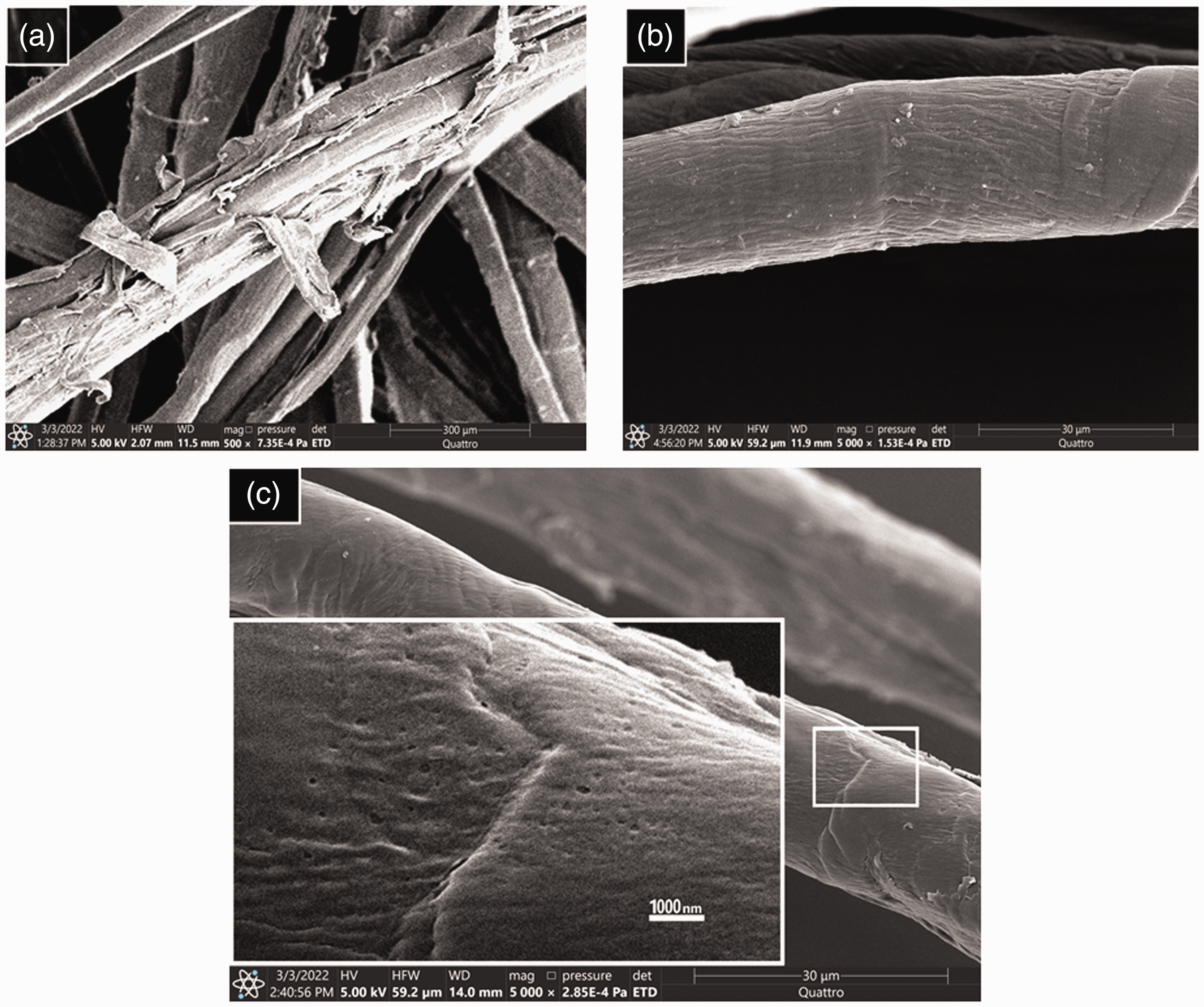
Scanning electron microscopy images of (a) native flax fiber, (b) bleached linen fabric in its initial state and (c) after modification by tightly adsorbed cellulases CP5.
The result of biomodification of the flax fiber surface is shown in Figure 8(c). The action of the tightly adsorbed cellulase preparation with globule sizes that limit its penetration into the fiber cell wall led to the appearance of many point microcavities. The scheme of their formation was plausibly depicted in Figure 4(a). The selected image fragment in Figure 8(c) was enlarged additionally. This made it possible to fix the presence of 100 nm macropores and smaller cavities on the fiber surface. All of them destruct the integrity of the thin peripheral layer of the primary flax fiber cell wall.
Mechanical strength test
Flax fabric mechanical strength reduction is the most dangerous side effect of cellulases. The comparative experiments aimed at determining the changes in the process characteristics of flax fabric samples subjected to the action of enzymatic preparations were carried out at the same level of cellulase activity in process solutions. The activity value in the case of liquid treatment (regime 1) was 25.8 U mL−1. In the case of low-modulus treatment (regime 2), the enzymatic preparation concentrations were selected so that the cellulase activity value reached 150 U mL−1. If the cellulase action duration was the same, the deviations in the linen fabric quality indicators were dependent only on the enzyme properties determined by the molecular structure.
In Figure 9, the values of fabric breaking load after liquid treatment are ranged in the ascending order of the number of small-sized fractions in the enzymatic preparations and cellulase adsorption binding strength on the solid substrate.
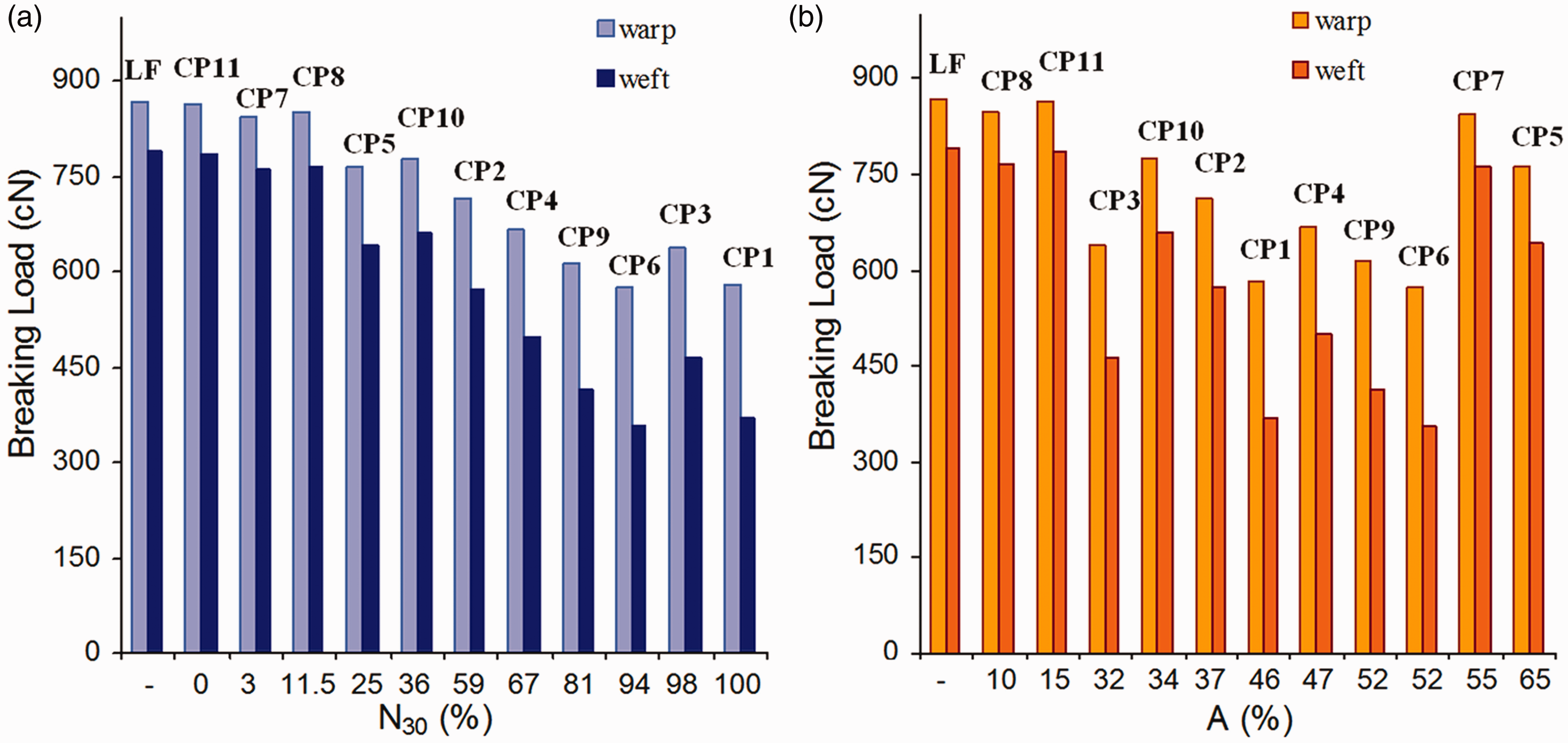
Influence of (a) the enzyme globule size and (b) their adsorption capacity on the fabric breaking load (BL, cN) under liquid treatment (regime 1). The bars of the histogram designations correspond to the cellulase preparations numbers. The initial linen fabric parameters are marked as LF.
The fabric strength reduction along the warp (BLwarp) was from 0.6% to 33.3% and along the weft (BLweft) was from 0.5% to 53.3%. The presented results indicate that there is a clear interrelation with the enzyme globule size. Variations in the cellulase adsorption capacity values led to chaotic changes in the breaking load of the modified fabric samples. The results were processed mathematically. This allowed us to express the fabric strength decrease as dependences reflecting individual and combined effects of enzyme properties according to Equations (3) and (4)


Equations (3) and (4) indicate that both cellulase characteristics have a negative effect on the breaking load value. The multiplier value for the N30 indicator is 3.5–5.2 times higher than that for the adsorption indicator A. Therefore, the lower fiber strength in the case of liquid treatment is mainly the result of the enzyme ability to penetrate the pore structure of the swollen fiber G-layer. The strength reduction becomes much more pronounced if the small-sized enzyme adsorption capacity increases. This reflects the last term in the equations. However, under the action of cellulases with large particles (N30 → 0), the two summands in Equations (3) and (4) vanish, and even at the maximum values of parameter A (55%), the breaking load reduction does not exceed 2% of the indicator value of the initial fabric.
Figure 10 shows a similar set of data for fabric treatment according to regime 2. At the low-modulus softening the amount of absorbed moisture is limited due to the 100% weight gain during the fabric wringing. The solution fills only the fabric peripheral layer pores, which prevents enzyme penetration deeper inside the cell wall. In these conditions, the fabric breaking load reduction does not exceed 7.5% along the warp and 6% along the weft.
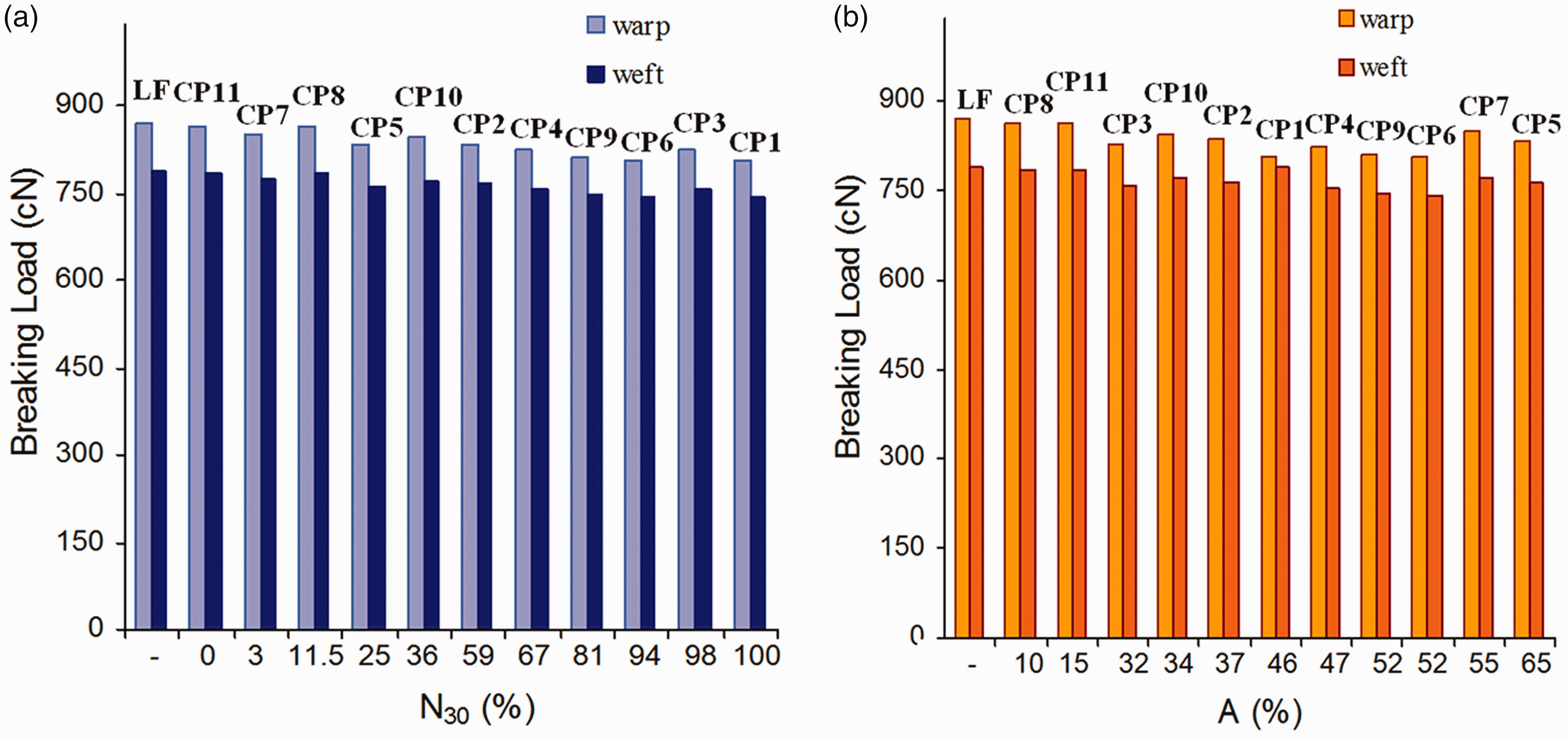
Influence of (a) the enzyme globule size and (b) globule adsorption capacity on the fabric breaking load under low-modulus treatment (regime 2). The bars of the histogram designations correspond to the cellulase preparation numbers. The initial linen fabric parameters are marked as LF.
The total set of experimental data is described by correlation Equations (5) and (6)


It should be underlined that the coefficients of parameter A in the pairs of equations (3) and (5) and (4) and (6) almost coincide, reflecting that the results remain the same under the localized action of tightly adsorbable enzymes. At the same time, the N30 variable coefficients decrease to 30–40 times, showing that this parameter is negligibly small for this fabric treatment regime.
Shrinkage test
An adverse side effect of cellulase softening of linen fabrics is fabric shrinkage. This fact is especially undesirable when apparel processing leads to uneven changes in the linear dimensions along the warp and weft yarns, which not only makes the apparel dimensions deviate from the size measurements but also distorts the apparel shape.
As the data in Figure 11 show, the fabric shrinkage degree after application of the considered cellulase preparations in liquid treatment conditions ranged from 1% to 12.5%. A control experiment was carried out in order to determine the shrinkage value for the initial linen fabric. The shrinkage after the sample treatment with a buffer solution without cellulase introduction did not exceed 0.5%.
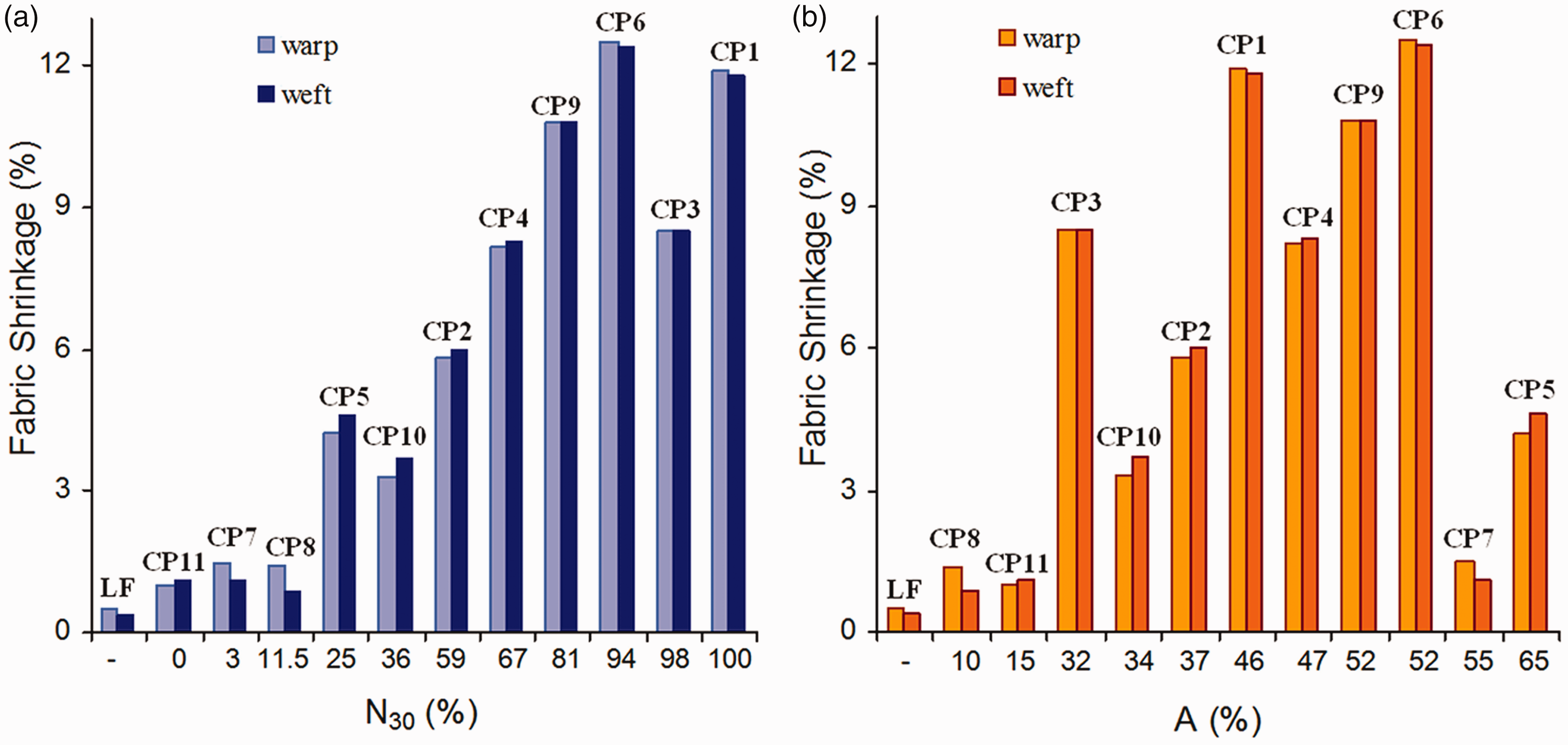
Influence of (a) the enzyme globule size and (b) globule adsorption capacity on the fabric shrinkage after the enzymatic liquid treatment (regime 1). The bars of the histogram designations correspond to the cellulase preparation numbers. The initial linen fabric parameters are marked as LF.
The histogram in Figure 11(a) indicates that the group of peripheral activity preparations (CP11, CP7 and CP8) selected by the criterion did not cause significant changes in the linear dimensions of the samples. The fabric shrinkage during the softening procedure with cellulase preparations was the result of cellulose destruction in the cell wall G-layer. The data on the CP6 preparation illustrate that the most dangerous combination of enzyme preparation properties was the high content of cellulases with the molecule size of less than 30 nm and their tight binding to the polymer substrate. At the same time, the data on CP7 in Figure 11(b) confirm that the high adsorption capacity of the preparation in combination with the large size of the cellulases did not produce any negative effects.
However, mathematical processing of the results shown in Figure 11 demonstrates that both parameters of the enzymatic preparations made the fabric shrinkage more pronounced


The absolute term in Equations (7) and (8) corresponds to the shrinkage value in the control experiment when the liquid treatment without cellulase addition was used. The last term in the equations has the largest weight that can be reduced to zero if N30 → 0. The simultaneous increase in the parameters characterizing the enzymatic preparation properties became the critical factor. It is evident that permeation of small-sized cellulases into the pores of the swollen cell wall G-layer, their attachment and localized action on the cellulose microfibrils was promoted by the internal stress structural relaxation in the fiber and the increase in the segmental mobility that shortened the fiber.
As Figure 12 shows, regime 2 caused much smaller post-treatment shrinkage. The maximum values of the FS indicator did not exceed 2%.
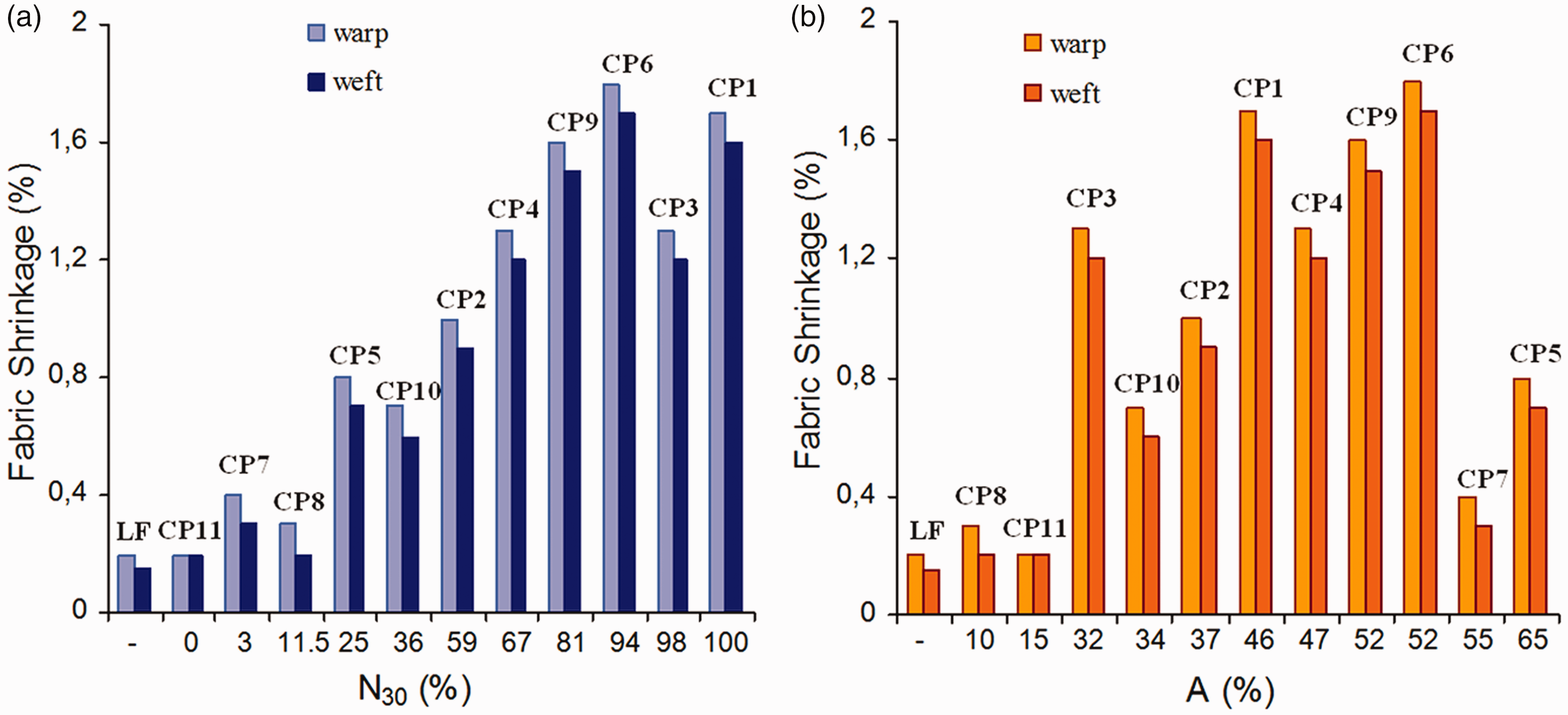
Influence of (a) the enzyme globule size and (b) globule adsorption capacity on the fabric shrinkage during the enzymatic low-modulus treatment (regime 2). The bars of the histogram designations correspond to the cellulase preparation numbers. The initial linen fabric parameters are marked as LF.
The character of the individual and cooperative effects of the enzymatic preparation properties on shrinkage did not change. The interrelation of the low-modulus modification parameters is expressed by correlation equations (9) and (10)


Stiffness test
The results of the sample stiffness test after the fabric treatment with cellulase preparations was the main criterion of enzymatic softening quality. The second level criteria for process optimization were the above data describing the mechanical strength and post-treatment shrinkage of linen fabrics.
The fabric bending stiffness (El) experimental values for liquid and low-modulus treatments are summarized in Figures 13 and 14. The maximum decrease in the El indicator reaches 3.5 times along the warp and 4.2 times along the weft.
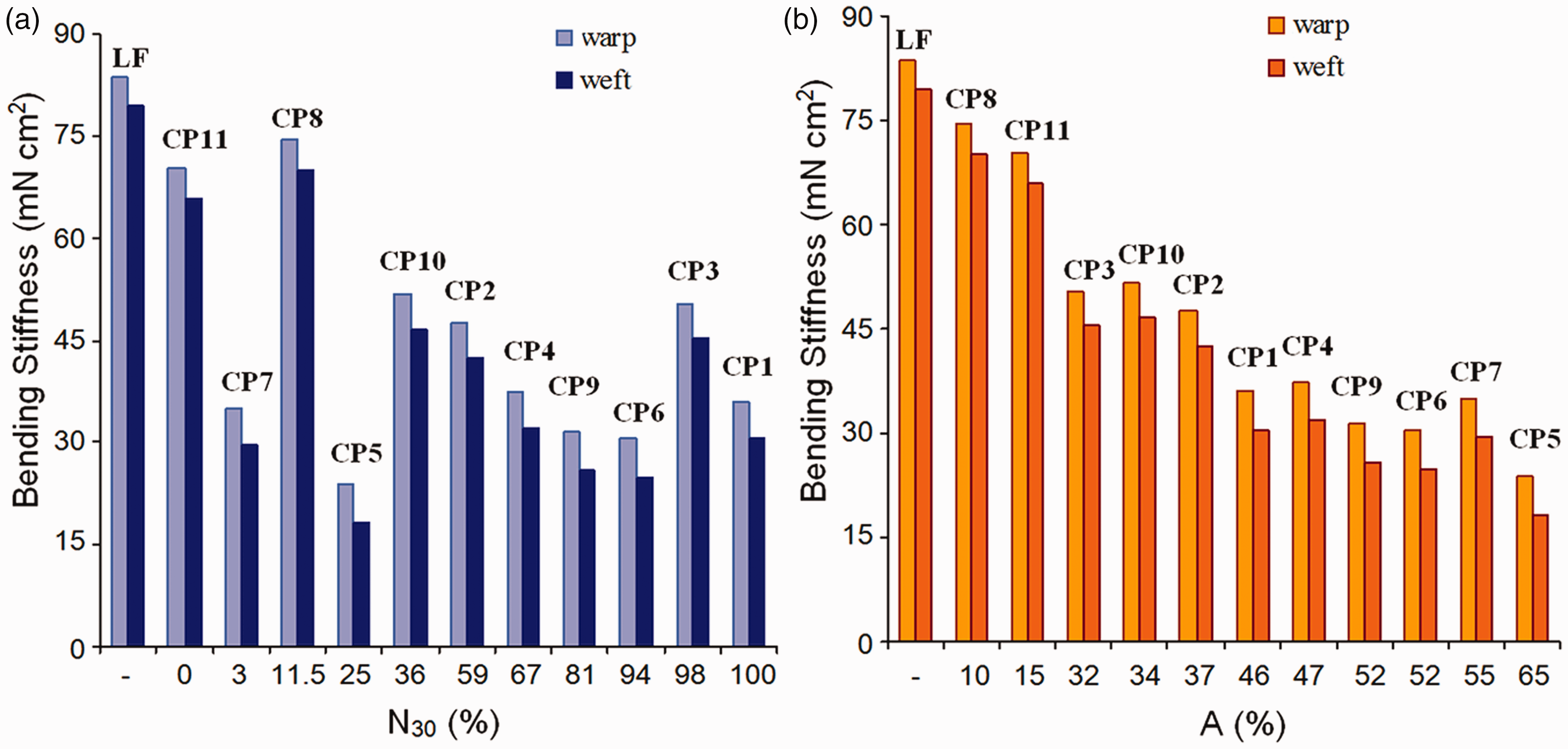
Influence of (a) the enzyme globule size and (b) globule adsorption capacity on the fabric bending stiffness (El) under liquid treatment (regime 1). The bars of the histogram designations correspond to the cellulase preparation numbers. The initial linen fabric parameters are marked as LF.
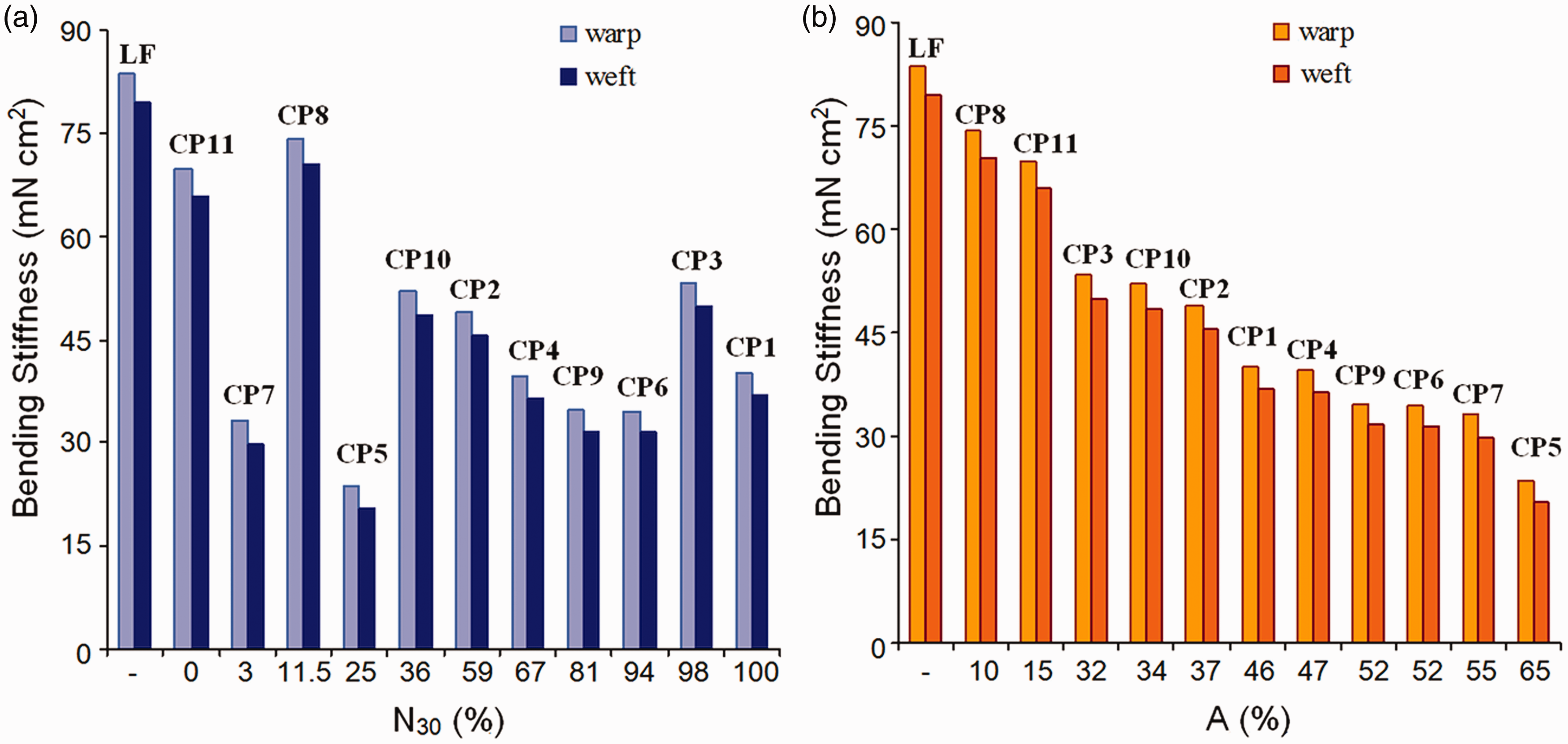
Influence of (a) the enzyme globule size (N30, %) and (b)) globule adsorption capacity (A, %) on the fabric bending stiffness under low-modulus treatment (regime 2). The bars of the histogram designations correspond to the cellulase preparation numbers. The initial linen fabric parameters are marked as LF.
The histogram in Figure 13(a) demonstrates that the El indicator value does not change as the small-sized cellulase content in the enzymatic preparation increases. The CP7 preparation having large tightly adsorbable cellulases and the CP6 preparation having small-sized enzymes that also exhibit a high adsorption capacity demonstrated approximately equal effectiveness in stiffness reduction. The obtained results can be quite well ranged by the adsorption capacity values of enzymatic preparations, as shown in Figure 13(b).
Correlation equations (11) and (12) reflect the interrelation between the parameters in the low-modulus modification regime


An analysis of Equations (11) and (12) indicates that the higher content of small-sized cellulases in the preparations and their effect on the flax fiber cell wall G-layer facilitate stiffness reduction. However, the role of the first variable term in the equations is extremely low. Even at the maximum N30 value (100%), the size effect alone is an order of magnitude weaker than that of the second variable term at the minimum value of indicator A (10%). The importance of the last equation term in the equations reflecting the total effect of enzyme properties is lower than that of the summand characterizing the individual role of cellulase adsorption capacity, at any ratios of the variables.
Consequently, the effectiveness of linen stiffness reduction after liquid treatment with cellulase preparations depends, first of all, on the adsorption binding strength of the enzymes and their localized effect. It is not reasonable to apply weakly adsorbable enzymes at the final stage of the linen fabric softening. It is very important that linen fabric bending stiffness can be optimized by affecting only the fibrillar structure of the flax fiber primary cell wall outer layer using large-particle enzymes.
This is also clearly demonstrated by the sample test results obtained after low-modulus treatment, as shown in Figure 14. Selecting the cellulase activity level in the solutions for fabric treatment in regime 2 allowed us to achieve the same maximum reduction in the El indicator values as in liquid treatment. The effect of the enzymatic preparation properties on the fabric strength was also similar.
A comparison of the data in Figures 13(a) and 14(a) shows that there is a small increase in the efficiency in the case of low-modulus treatment involving preparations with a high content of small-sized enzyme fractions. The result of their localized action on the cellulose backbone of the primary cell wall exceeds their distribution inside the G-layer of the secondary cell wall in the liquid treatment regime.
The experimental data in Figure 14 with a high correlation degree were approximated by the following dependences


Equations (13) and (14) demonstrate a larger reduction in the enzyme size in the low-modulus regime. The multiplier values of the summands with the N30 variable are an order of magnitude lower than in Equations (11) and (12). The processing result almost completely depends on the adsorption capacity value.
Thus, the obtained results develop the existing concepts of controlled changes in consumer properties of linen fabrics and apparel with high-tech biochemical methods of flax fiber structure modification.
Analysis of all the experimental data presented in Figures 9 –14 and results of their mathematical processing allow formulating the requirements for enzymatic preparations used in finishing softening treatment of linen fabrics and clothing. In the case of liquid treatment with the minimum bath module of 10, it is preferable to use highly adsorbable cellulases with an adsorption capacity over 50%, in which the number of molecules with a globule size of less than 30 nm does not exceed 15%. In the low-modulus regime of fabric treatment, it is recommended to use enzymes with at least 40% adsorption capacity and content of small-sized fractions (not more than 25%).
Analysis of consumer properties
The comprehensive evaluation of the changes in consumer properties was carried out using linen fabric (art. 06152) undergoing a full cycle of preparation and dyeing with Remazol Red RR. The softening treatment options were realized in accordance with the above recommendations. The liquid treatment mode was carried out using the CP7 preparation. The CP5 preparation was used for the low-modulus treatment mode. The technical properties of the softened samples were compared with the initial fabric indicators. The results are summarized in Table 3.
Effect of enzymatic softening on consumer indicators of dyed linen fabric art. 06152

The presented experimental data indicate that the main target effect was reproduced on another fabric assortment: the stiffness was reduced by 3–3.3 times. The obtained result is two times higher than the effectiveness of reducing the stiffness of materials using Cellumax AP, which was demonstrated by Eladwi and Kotb. 26 In addition, exposure to Cellumax AP causes fabric shrinkage at the level of 21–23% versus 0.5% according to the proposed regimens. The preservation of the softened fabric durability was confirmed by a technologically acceptable level of tear and abrasion strength reduction, which did not exceed 12%.
The action of CP7 and CP5 preparations differs from the nature of the fiber surface effect of cellulases used in getting the faded look in denim. Patra et al. 30 presented results using an alternative group of drugs for enzymatic fading. The main achievement of the treatment is the reduction of color strength (K/S value) by 48.22%. In contrast to this, the effect of tightly adsorbable enzymes CP7 and CP5 on the fiber primary cell wall does not cause dye desorption and has practically no effect on the color characteristics of the fabric. In our work, the chromaticity and color difference deviations did not exceed 0.15 units. This corresponded to the determination level of accuracy indicators in parallel measurements. At the same time, the dye resistance to physico-chemical tests in the wet state tended to increase by 0.5–1 points.
The recommended biomodification options make it possible to significantly improve the hygienic properties of linen fabrics. The development of fiber porosity increased the fabric hygroscopicity by 11–33%. The softened material was characterized by easier evaporation of the absorbed moisture: the MT value increased by 1.8–2.1 times. The capillary moisture absorption test (see the indicator “Capillarity” in Table 3) indicated that the most intensive acceleration of the initial process stage by 36–42.5% was observed in the first 30 min. The equilibrium capillary moisture absorption level was increased by 22–34%.
Conclusions
The study results show that it is possible to replace processes employing environmentally unsafe chemical softeners with enzymatic treatment of linen clothes. A method was proposed for differentiated evaluation of the action of cellulolytic enzymes on cellulose microfibrils in the flax fiber primary cell wall and secondary cell wall G-layer, which have different structural organizations. The cellulose effects in the fiber structure were determined using the data on the enzyme globule size in the hydrosol measured by the DLS method and on the equilibrium sorption binding onto a model solid-phase substrate. The mesopore diameter was found to increase to 30 nm at the flax fiber swelling. Therefore, the relative content of cellulases with the particle size of less than 30 nm (N30) was used as the size parameter. The cellulase preparations were classified by size into those with peripheral (N30 < 15%) and bulk (N30 > 80%) effects and a mixed activity group (N30 = 15–80%). By their adsorption capacity, the cellulases were divided into three groups with tight (A > 50%), weak (A ≤ 15%) and medium (А = 15–50%) adsorption capacity.
The changes in the fabric tensile strength, post-treatment shrinkage and bending stiffness indicators were ranged by the increase in the enzymatic preparation characteristics. The lower mechanical strength of the material was established to be mainly caused by the action of small-sized cellulases tightly adsorbed into the G-layer fibrillar structure. In these conditions, the maximum changes in the linen fabric linear dimensions were also observed. The effective stiffness reduction resulted from the action of preparations with high adsorption capacity, whereas the size played a secondary role. Correlation dependences were obtained for predicting quality indicators of softened linen fabrics taking into account the initial fabric properties and characteristics of the applied cellulase preparations.
For liquid treatment (the bath module was at least 10), it was recommended to use tightly adsorbable cellulases (A > 50%), in which the content of molecules with the globule size of less than 30 nm did not exceed 15%. For low-modulus treatment it was recommended to use enzymes with the adsorption capacity of at least 40% and a content of small-sized fractions no more than 25%. The recommended processing options were provided a three to four-fold reduction in the stiffness indicator at the minimal loss of mechanical strength and a slight shrinkage of the linen materials. Finishing biomodification did not worsen the color properties of the dyed fabric and improved its hygienic characteristics. The material retained the biosoftening effect during the subsequent washing.
Footnotes
Declaration of conflicting interests
The author(s) declared no potential conflicts of interest with respect to the research, authorship, and/or publication of this article.
Funding
The author(s) received no financial support for the research, authorship and/or publication of this article.
