



Abstract
Taking into consideration the requirements of anti-fire performance, safety protection and wearing comfort of firefighter clothing during anti-fire missions, the design of a novel interactive firefighter clothing with multiple functionalities is presented in the current paper. The conventional firefighter clothing has been redesigned from the perspectives of anti-fire functions and ergonomics. A safety protection clothing system has been developed involving hazardous gas detection, facilitated visual detection, positioning and vocal communication modules and a data interactive module. Objective evaluation tests have been carried out to verify the effectiveness of the proposed firefighter clothing in both functionality and comfort as compared with the conventional clothing. The results have been double validated by the subjective tests based on an analytic hierarchy process integrated fuzzy comprehensive evaluation method. The current research on firefighter clothing with multiple functionalities provides not only reference for the innovative design of firefighter clothing in the new era, but also, and more importantly a theoretical base for further study on more smart and comprehensive wearable systems for firefighting scenarios. Besides, the research framework and methodology of the current study could be instructive for the human-centered design of various products of diverse functionalities.
Keywords
Firefighter clothing is a piece of equipment that is used to ensure the personal safety of firefighters in frontline work. Due to the nature of their work, firefighters often need to enter and exit fire scenes and other dangerous locations, and therefore, it is essential to ensure the flame and heat resistance and the overall safety and comfort of firefighting protective clothing.1,2
The anti-fire performance refers to the performance of the garment or fabric to prevent the transfer of heat from the environment to the body, which includes flame-retardant performance and anti-heat performance (or thermal protection performance). 3 The development and evaluation of anti-fire fabrics has been a mainstream direction in firefighting clothing research. 4 Factors such as composition, thickness, and structure of the fabric are important factors affecting the thermal protection performance of firefighting clothing. 5 The composition of the fabrics used in the firefighting suits needs to be determined according to the corresponding needs, for example, the outermost layer of firefighting clothing is usually made of high-performance fibers, such as PBI fibers, aramid 1414, aramid 1313, etc. The commonly used materials for the insulation layer are flame-retardant cotton fibers, aramid 1313, polyamide fibers, etc. 6 In addition, fabric thickness has a great impact on the thermal protection performance of fabrics, the thermal resistance increases and the thermal protection performance is enhanced as the thickness of the fabric increases. 7 Meanwhile, fabric structure also affects the thermal protection performance of garments and fabrics, for example, Dahamni et al. 8 compared three fabric structures and found that plain knitted fabrics had the lowest thermal resistance and the highest breathability, followed by ribbed knitted fabrics and cotton wool knitted fabrics.
Meanwhile, some researchers have tried to develop new types of firefighting clothing with new materials, such as aluminized materials, phase change materials, shape memory materials and aerogels. For example, Lippong et al. 9 found that as phase change materials can absorb or emit heat depending on their morphology when the temperature changes, the firefighting clothing which complied with phase change materials will lead to an improvement in firefighter’s cooling sensations, potentially increasing their operation time. Lah et al. 10 proposed a prototype of a new shape memory nitinol knitted fabric intended for use as an active thermal insulating interlining in firefighting protective clothing, when it was exposed to environmental temperatures of 75°C and higher, it instantly changed its form from a two-dimensional shape to a three-dimensional shape, while increasing the air gap between fabrics locally to improve thermal insulation and protect the human skin from overheating or burns. Mazari et al. 11 verified the feasibility of aerogels in firefighting clothing by experiments, and found that under the same heat effect, new materials can significantly reduce the quality of clothing and reduce the burden of firefighters. At the same time, they enhance the comfort of clothing and better protect the safety of firefighters.
Besides, smart clothing technologies have emerged recently as a new solution for complex human-machine problems. As smart clothing works based on accurate computation and prompt reaction, and can give more acute and stable performance than humans during complex and dangerous missions, they represent the cutting-edge direction of research on assistive wearable equipment for special working operations including firefighting scenarios.12,13 For example, the PROETEX project represented an innovative application of smart textiles in the field of fire protection. The developed firefighter clothing could realize the monitoring of the body temperature, blood oxygen and other physical indicators.14,15 Another representative project was the Smart@Fire project, which enhanced the practicability of smart firefighter clothing. In particular, the intelligent firefighter clothing developed in this project involved positioning and temperature and humidity monitoring functionalities. 16 In addition, researchers from other countries or regions have also proposed many representative design solutions for smart firefighter clothing. In 2013, Park et al. proposed a smart firefighter clothing system based on Microsoft service network (MSN) and micro-electro-mechanical system (MEMS), which could be used to sense the ambient temperature and location of firefighters. 17 Su et al. designed a real-time monitoring system for the temperature and humidity inside the firefighter clothing; however, the system could not adjust the internal temperature and humidity of the firefighter clothing. 18 Based on the Development of Advanced Robots and Information Systems for Disaster Response (DDT) project, Doi et al. designed a rescue vest for firefighters, which could realize vital sign monitoring and emergency response functionalities. 19 Salim et al. developed a smart protective undergarment, which incorporated various sensors to assess the thermal status of the wearer. 20 Through the collation of relevant data, it can be noted that the existing research on smart firefighter clothing is focused on monitoring the vital signs or positions of the firefighters, and the implementation of functions such as the monitoring of flammable or hazardous gases that may appear in the working environment or enhancing the cooperation among firefighters is relatively inadequate. Besides, a firefighting scene is never an individual combat. It needs effective and efficient cooperation between the members at all levels, including their equipment. The design of existing firefighting clothing focuses on the functional realization at an individual level, but more or less ignores the communication between the members, which is believed to be essential to the better completion of the anti-fire mission as well as protecting the safety of the firefighters to the largest extent. Therefore, the current work developed multifunctional interactive firefighter clothing taking into account the comfort, functionalities and real-time communication at the same time, which improves the protection from the single unit mode to the network-based collaborative mode. Compared with the existing research, the proposed clothing will provide a firefighter with more comprehensive and dynamic protection, and meanwhile enhance his sense of safety through facilitating the interaction among individuals during missions.
The rest of the paper is organized as follows. First, the characteristics of the firefighters’ working environment are identified. Then the design principles of the firefighter clothing are analyzed, and the comfort and functionality of the clothing are discussed, based on which, the new firefighter clothing was developed. Finally, the functional testing and verification of the new firefighter clothing was carried out through a set of experiments. Based on the test results, several suggestions for the improvement and the developmental trends of firefighter clothing design are proposed.
Design planning of novel firefighter clothing
This study was aimed to design a new type of multifunctional firefighter clothing, with a functional design based on the actual working environment of firefighters.
Analysis of the firefighters’ work scenarios
The working scenarios of firefighters primarily include fire sites, toxic and harmful gas gathering sites, dust gathering sites, and narrow rescue sites, in addition to other sites, among which, fire sites are the most common. The fire environment is complex and harsh and is characterized by a high temperature and low visibility. These aspects yield certain requirements pertaining to the flame retardance and noticeability of firefighter clothing. Regions with explosive gas or dust accumulation may involve explosions when exposed to electric sparks, as a result of which, there exist certain limitations on the electronic equipment carried by firefighters. In rescue scenarios involving narrow locations, firefighters cannot carry large-scale rescue equipment or intercom equipment, and the requirements for cooperation among firefighters are higher. Furthermore, due to the unpredictability in the rescue time, firefighters must be prepared for large periods of work, which places certain requirements on the portability and comfort of firefighter clothing.
Design principles
According to the different requirements of firefighter clothing, this research developed a design scheme of the new firefighter clothing considering four major aspects: anti-fire performance, comfort, safety, and interactive functionality, respectively.
Firefighter safety
Anti-fire performance
The most important function of firefighter clothing is to protect firefighters from various types of injuries. The basic anti-fire performance of such clothing should meet the requirements on protectiveness, visibility, and safety.
In terms of the protectiveness, firefighter clothing must exhibit flame retardance and heat insulation. The flame retardance of firefighter clothing must satisfy the requirements specified in the standard GA10-2014 Fireman’s protective clothing for firefighting. 21
Moreover, firefighters work over days and nights, and certain factors such as dense smoke and dust in the workplace may affect the visibility. To facilitate the firefighters’ normal operations and rescue work, the firefighter clothing must be identifiable.
As much uncertainty exists in the specific working environment, the critical dangerous factors must be detected and monitored in real time. Specifically, it is necessary to detect the concentrations of methane, propane and carbon monoxide, which are often present in fire scenes. Besides, the complex building environment generates considerable challenges to the firefighters’ work. it is necessary to locate and monitor firefighters accurately.
Interactive performance
In most cases, firefighting is a collaborative work which requires good communication among members to ensure the efficient completion of missions and guarantee the safety of members to the largest extent. The existing firefighter clothing focuses on the individual safety of firefighters, and has not taken into account the needs derived from the cooperation among them. Thus, it is necessary to develop a mechanism that is capable of facilitating the real-time communication among the firefighters and the command center. In the current paper, the novel firefighter clothing was equipped with interactive modules to make the individual clothing units work together as a network to maximize the protective effect on firefighters. Besides, from a psychological point of view, this part of design shifts the safety protection from single unit mode to network-based collaborative mode, which is believed greatly to improve firefighters’ sense of safety during dangerous anti-fire missions.
Wearing comfort
Firefighters undergo long working hours and perform intensive tasks, and are often involved in direct exposure in fire sites. The high temperature environment of fire sites and high-intensity work pose more stringent requirements on the thermal and moisture comfort of the clothing. Therefore, while ensuring the flame retardance and heat insulation of clothing, it is necessary to enhance the wearing comfort and lightweight nature of the clothing.
Research framework
Based on the above discussion, the framework of the current research is divided into three main parts, the planning, design and test, respectively, as illustrated in Figure 1. First, the daily work scenes of firefighters were analyzed, and the key points pertaining to the design of the new type of firefighter clothing were identified. According to the design principles, the development of the proposed type of firefighting clothing was carried out from two perspectives: the carrier design, and the functional design. The carrier design was realized considering two aspects: improving the comfort and facilitating the visual detection. The functional design was realized considering the following two aspects: enhancing the protection network and ensuring real-time monitoring of the related data, to achieve the functionalities of voice interaction, location sharing, gas monitoring, real-time feedback, and timely warning. In the testing phase, the overall performance of the proposed firefighter clothing was evaluated considering five aspects: anti-fire performance (mainly including anti-flame performance and anti-heat performance), wearing comfort, effect of visual detection, gas monitoring function, and data interaction performance.

Research framework.
Design scheme of the new firefighter clothing
The comfort of firefighters is directly related to their clothing. Considering the unique working environment, the anti-fire performance and wear resistance of the clothing must be enhanced while ensuring the air permeability and thermal/moisture comfort of the clothing.
Carrier design of the firefighter clothing
Fabrics
In order to ensure both the functionalities and comfort of the clothing, the proposed firefighter clothing adopted a three-layered structure design, involving the outer layer (Figure 2(1)), the waterproof and moisture-permeable layer (Figure 2(2)), and the thermal insulation and comfortable layer (Figure 2(3)) in one outfit. As the layer directly confronting the firefighting scene, the outer fabric of the firefighter clothing should be flame retardant, waterproof, wear resistant, and antistatic. In the proposed design, the outer fabric was developed using a new type of antistatic aramid material, composed of 2% silver fiber and 98% aramid fiber, which is a strong fabric being both waterproof and flame retardant. Table 1 shows the details of the fabrics used by the proposed firefighter clothing. Besides, the use of highly conductive materials reduces the thermal insulation of the outer layer, which is harmful in terms of thermal protection.
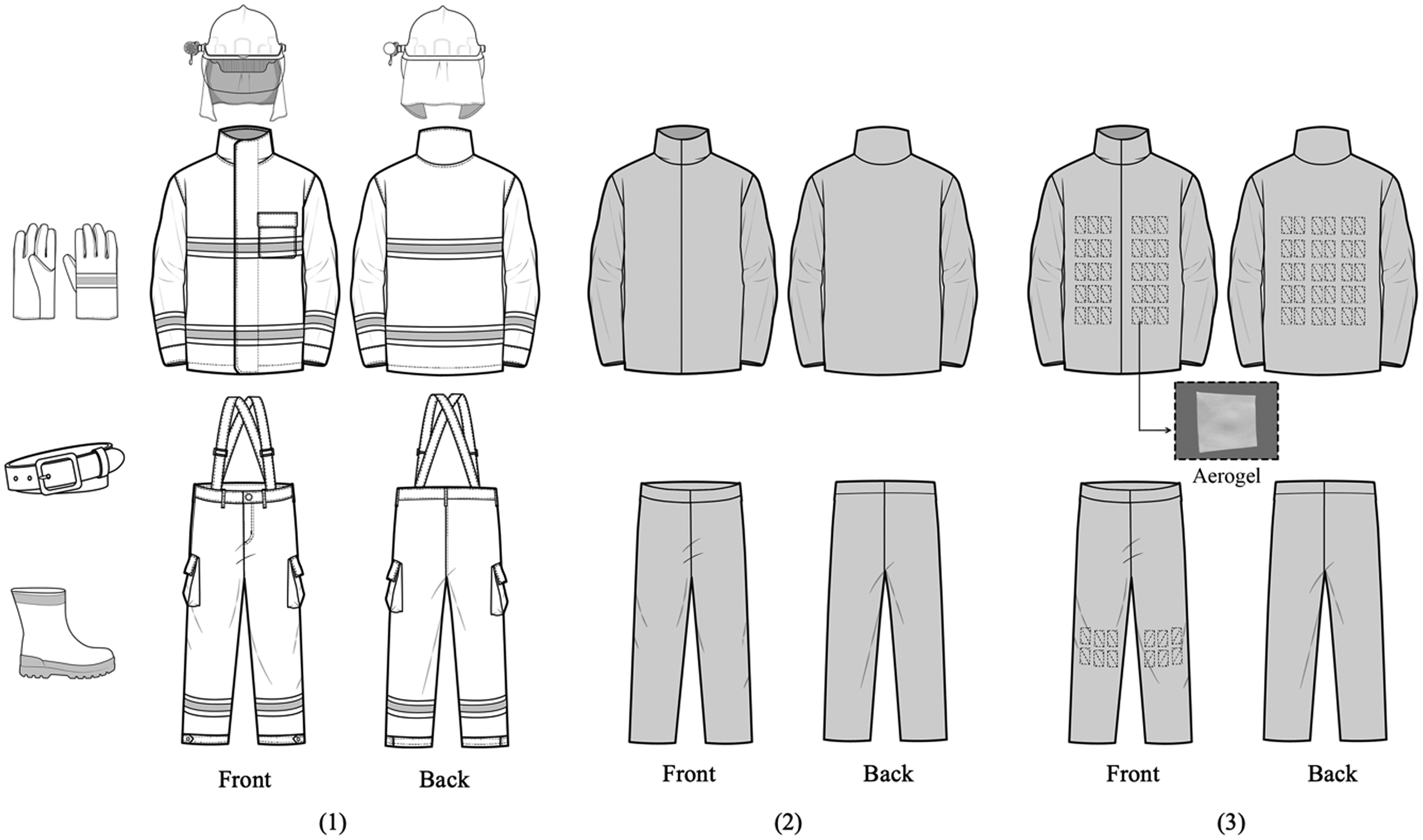
Technical drawing of the proposed firefighter clothing.
Three-layered structure of the proposed firefighter clothing

The second layer (shown in Figure 2(2)) of the firefighter clothing was composed of 20% aramid 1414, 80% aramid 1313, and a PTFE membrane, so that it can prevent water from permeating the heat insulation layer, and simultaneously to discharge water vapor and sweat, to enhance the clothing comfort.
The lay of thermal insulation and comfort (shown in Figure 2(3)) had direct contact with the skin, thus was required to be both flame retardant and comfortable to wear. Thus, this layer of fabric used stitched aramid-based fabric with aramid insulation felt.
Garment design
Figure 2 shows the technical drawing of the new type of firefighter clothing as the carrier of the functional modules. For the convenience of the firefighting operation as well as putting on and taking off the clothing, the proposed firefighter clothing adopted a split design (i.e. the upper and lower garments are independent). The upper garment adopted the conventional jacket style to facilitate rescue operations and provide good protection. The lower garment was a bib overall to ensure the stability of clothing during missions. The proposed firefighter garment adopted an open zipper collar with wide neck width to provide better protection to the neck. Elastic bands were used at the collar, the sleeve cuffs and the bottom of the pants to make sure the clothing could be tightened up at these openings to prevent dust if necessary.
To enhance the wearing comfort, the proposed firefighter clothing was equipped with detachable aerogel felt on the thermal insulation and comfort layer, as shown in Figure 2(3). The aerogel felt was prepared by attaching nano-grade aerogel to the flexible substrate of silica through a specialized process. Thirty pieces of aerogel felts (85 mm × 55 mm × 3.5 mm of each) were placed evenly on the front and the back of the top clothes, while six felts were placed evenly on the lower part of each pant leg.
As a result of the high flame retardance of silica matrix, the thermal conductivity of the aerogel felt was extremely low, and the heat-resistant temperature could reach 650°C. Moreover, the sponge-like or foam-like porous structure of the aerogel could store still air, thereby effectively enhancing the thermal insulation performance of the clothing. 22
Besides, the proposed firefighter clothing was equipped with a helmet. The cap shell and the mask were made of polyetherimide which has strong puncture resistance.23,24 The surface of the mask was coated with a metal film which can reflect the radiant heat of the fire scene and block harmful rays from damaging the face and eyes. A small shawl made of basalt fiber covered with an aluminum protective layer was attached to the back of the helmet to protect the neck of the wearer. Gloves used Kevlar fiber material coated with polyurethane to increase the wear resistance. The belt used aramid 1313 fiber material, on which the metal parts were made of 45# carbon steel. Boots used nitrile butadiene rubber.
Design for visual detection
As the working hours of firefighters may encompass both day and night, and the workplace includes places with a high dust concentration and low visibility, to facilitate the normal operation and rescue work of firefighters, the clothing is required to be identifiable.
To facilitate the visual detection of firefighter clothing, the following points should be considered:
Avoid major changes to the structure of the clothing to avoid affecting the activities of the operators (or wearers); Avoid significant impacts on the comfort of the clothing; Ensure that the module stays acute and generates sufficient effects.
Based on the above principles, and taking into account the factors such as the ease of production and low cost, in the proposed design, the visibility of the outfit in firefighting scenarios was enhanced by pasting reflective strips on critical parts (such as the front chest, arms, back, and cuffs). The clothing structure is shown in Figure 2(1), and the gray part in the figure shows the regions on which the reflective strips are pasted.
Design of the safety protection modules
For safety protection, the proposed firefighter clothing was implanted with four electronic modules, namely, gas detection module, position sharing module, interactive module and module of controller. Notably, the various hardware devices were placed in a detachable mesh fabric, which could be adhered to the surface of the garment by using Velcro (see Figure 3).
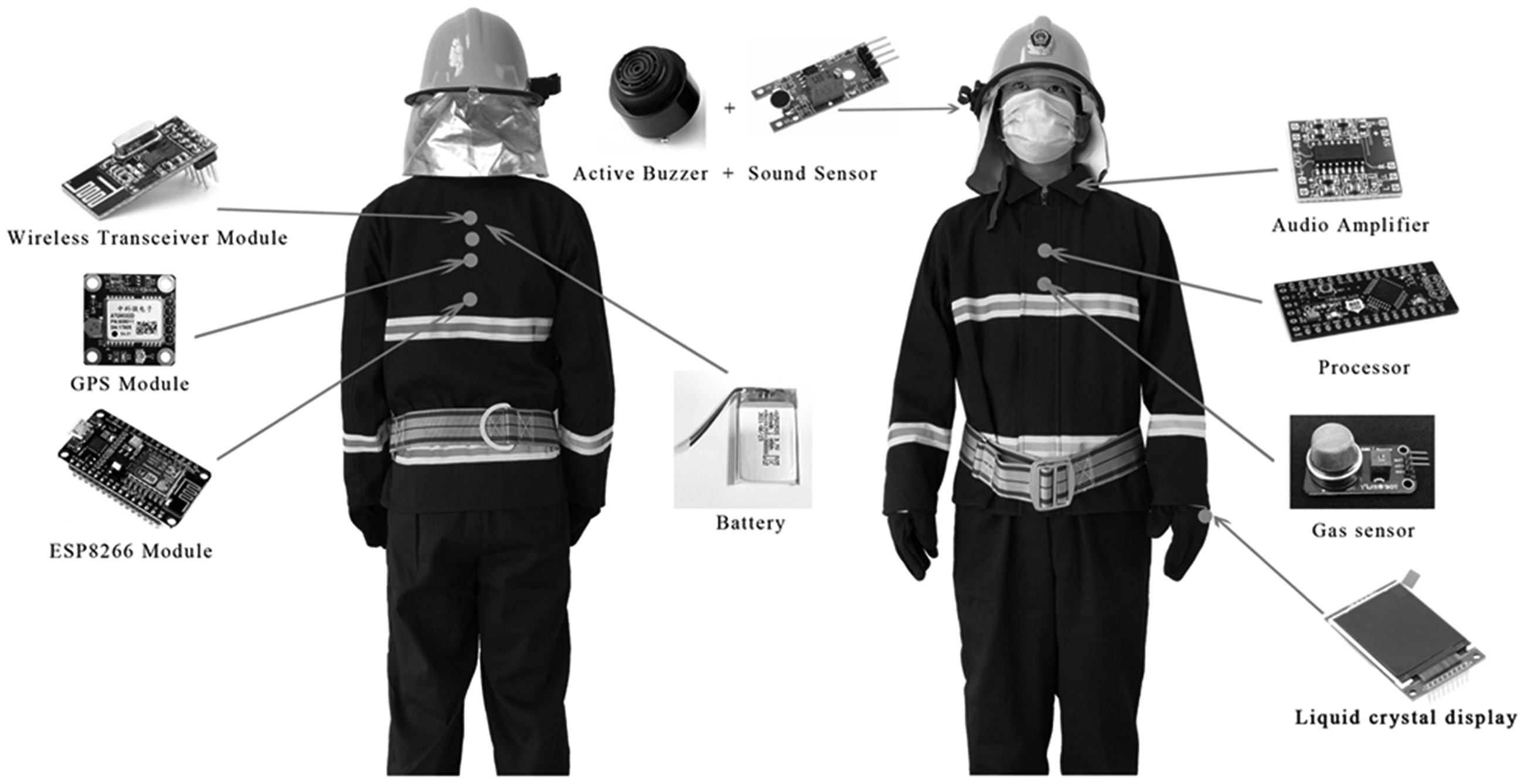
Hardware placement.
Gas detection module
With the advancement of urbanization, natural gas (methane as the main component) and liquefied gas (propane and butane as the main components) are being widely applied. However, the public’s low awareness regarding fire prevention considerably increased the probability of the occurrence of related fire disasters. Therefore, it is necessary to design a module to monitor the relevant gases. In this work, an MQ-9 gas sensor (Winsensor, China; dimensions 27 mm × 15 mm × 10 mm)25,26 was used to detect combustible and harmful gases. The sensor could detect a variety of combustible and harmful gases, such as methane, propane and carbon monoxide. Specifically, the sensor could detect carbon monoxide and combustible gases with a concentration of 10–1000 ppm and 100–10000 ppm, respectively.
Position sharing module
Firefighters are exposed to high operational risks. Thus, it is necessary promptly to locate the firefighters to protect them from any potential harm. This research used the ATGM332D module (Zhongke Microelectronics, China; dimensions 25 mm × 25 mm × 3 mm) 27 to realize positioning. In particular, the module supports dual positioning through GPS and Beidou Navigation, the data transmission follows the NMEA-0183 protocol, the unified standard format is NMEA-0183, and the output is in the form of ASCII code.
Interactive module
When firefighters enter a fire scene to extinguish the fire, the team members and command center must maintain timely and effective communication to ensure the safety of the firefighters and the effectiveness of the command and action. The interactive module is assumed to realize barrier-free voice communication and the display of the firefighters’ location. To realize barrier-free voice communication among the firefighters, the NRF24L01 module (Nordic Semiconductor, Norway; dimensions 19 mm × 13 mm × 3 mm) 28 with a power amplifier and low noise amplifier was used as the wireless transceiver chip, which was matched with the PAM8403 stereo audio amplifier (Power Analog Microelectronics, USA; dimensions 29.5 mm × 20 mm × 15 mm), 29 KY-038 high-sensitivity sound sensor module (JOY-IT, Germany; dimensions 35 mm × 15 mm × 10 mm), 30 and active buzzer (HNDZ, China; dimensions 12 mm × 9.5 mm × 8 mm) 31 to realize the functions of sound recording, transmission and playback, respectively.
To realize map checking, a 2.2 inch color SPI display was used as the map display module. By setting the threshold, an 8 bit PNG indexed image could be converted into a binary map data file, and the multi-threshold extraction and OR method was used to extract the background and ground objects and label the text data in the original map, to ensure that the firefighters could check their own location information along with that of their team mates in real time while working.
To allow the commander to observe the relevant gas concentration and firefighters’ location in real time, the ESP8266 (Ai-Thinker, China; dimensions 25 mm × 15 mm × 3 mm) 32 module was linked to the terminal equipment. This module is an industrial-grade Wi-Fi module (model ESP-01S). The ESP module creates a web page at the IP address and sends the data received from the sensor to the IP address. Subsequently, the specific concentration of the relevant gas and location of the firefighters is displayed on the web page in real time. The webpage can be accessed by using terminal equipment (such as mobile phones, computers, and tablets).
Module of controller
The Arduino Lite development board (Arduino, Italy; dimensions 45 mm × 18 mm × 3 mm) 33 was used as the controller or processor. The size of the processor is only 45 × 18 mm, and the Atmel ATmega328 microcontroller is used to support the TX, RX, and AREF terminals. The processor is compatible with UNO systems and exhibits the advantages of a small size, low energy consumption and stable working state, which can satisfy the requirements of the processor in the proposed design.
Positioning and connection mode of the hardware
To facilitate the monitoring of the concentration of the toxic and harmful gases in the flowing air, the gas sensor and processor were placed on the front chest. The KY-038 module and buzzer responsible for the intercom function were placed on the collar and the left/right ears of the mask, respectively. To make it easier for the firefighters to check their own location along with that of their team mates on the map, the LCD screen (RXXLCD, China; dimensions 85 mm × 35 mm × 5 mm) 34 was placed on the back of the left glove. Firefighters often directly face the fire, to ensure the stability and safety of the hardware system, the remaining hardware modules were placed on the back of the upper outer garment. The details are shown in Figure 3.
The connections between the hardware are shown in Figure 4. The 5 V power supply (AUREDSUNNY, China; dimensions 35 mm × 25 mm × 3 mm) 35 was placed at the back and aimed to provide power to the MQ-9 gas sensor, Arduino Lite processor, Wi-Fi module, GPS module, intercom module, and liquid crystal display module. The 10th pin of the Arduino Lite processor provided power for the buzzer, and the ground pins between the modules were connected. The different modules were connected through conductive yarn.
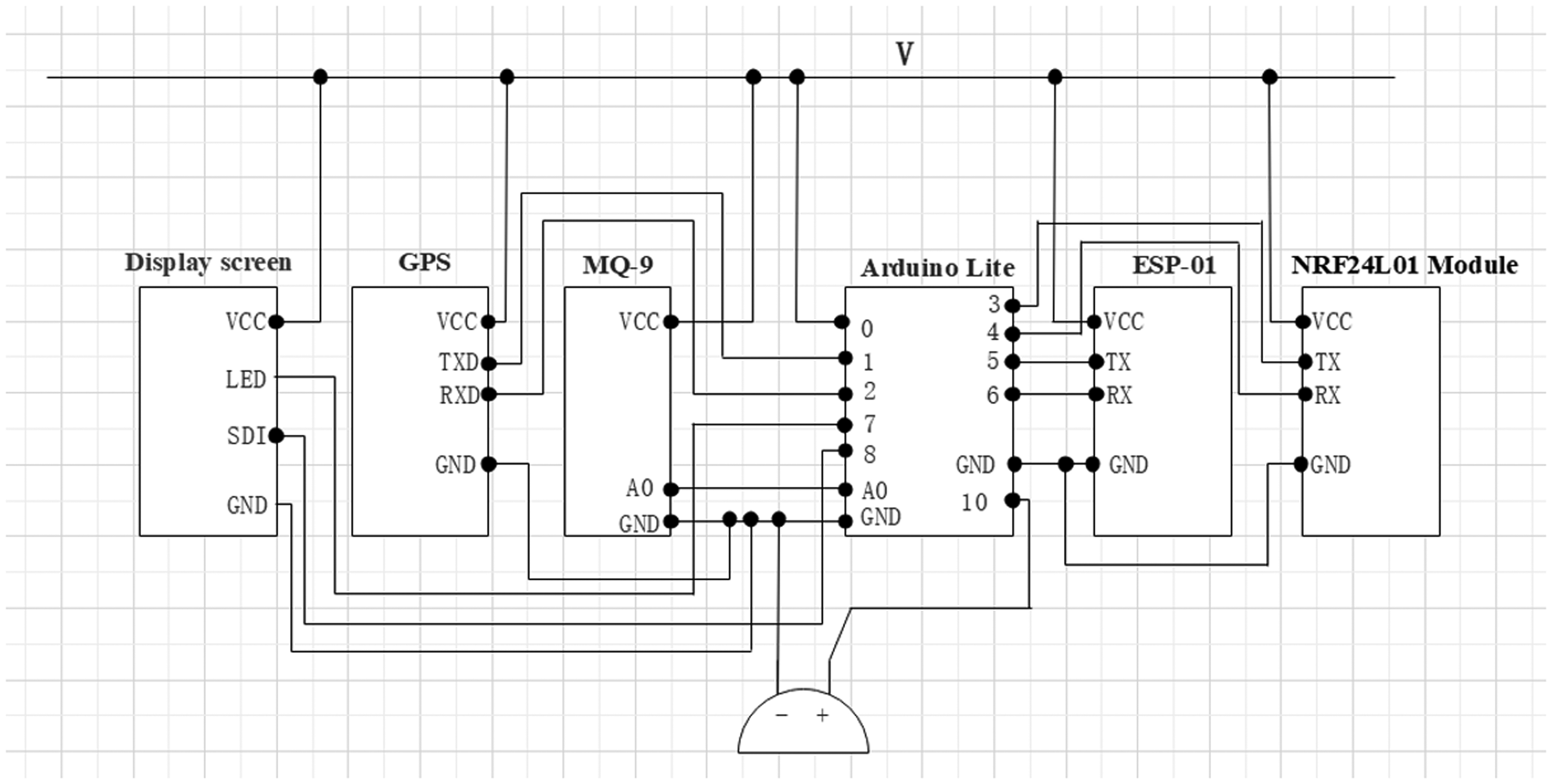
Connection diagram.
Design of working mechanism
System design
The compilation and upload of the developed system were realized through the Arduino IDE software. 36 To enable Arduino pins to perform RX and TX communication, the Serial library, NRF24 library, and Maniaxbug RF24 library were added to the IDE software. Subsequently, the communication rates of the serial port, GPS module, and interactive system module was set as 9600 baud rates, and the input and output modes of the pins were specified. Finally, the function was invoked to set the server at the IP address provided by the Wi-Fi module, and data were transmitted to this server.
The minimum concentration limits of methane and propane gas explosion in the air are 5% and 1.5%, respectively. Moreover, when the concentration of carbon monoxide is 35 ppm, the firefighters may be poisoned in one hour.37–39 Therefore, when the gas concentration reached the abovementioned threshold, the electric signal value received by the processor is set as 250 in the Arduino IDE.
The terminal display interface is displayed in the form of web pages. Specifically, the top part corresponded to the overall management part of the equipment sensor, in which the sensors in the clothing system could be added or deleted, thereby enabling convenient management when new sensors are added or replaced in the firefighter clothing. The middle part was used to check the relevant information of the gas sensor. This part was designed to receive the concentration of the relevant gas, returned through the Wi-Fi module. The interface would display ‘normal’ or ‘abnormal’ pertaining to the threshold exceedance of the gas concentration. The lower part corresponded to the GPS module display interface. The user could establish an electronic fence on the web page to ensure that the firefighters do not leave the work area. Moreover, the latitude and longitude of the firefighters were also displayed, and the user could click on position to open the map. An example is shown in Figure 5.

Schematic diagram of terminal web page.
Working principles
The wireless body area network mainly included the NRF module, GPS module, and Wi-Fi module. The NRF module was used to realize the voice communication among firefighters. The GPS module was used to transmit the positioning information among the firefighters. The Wi-Fi module was used to realize the data transmission among the firefighters and web pages, as shown in Figure 6.
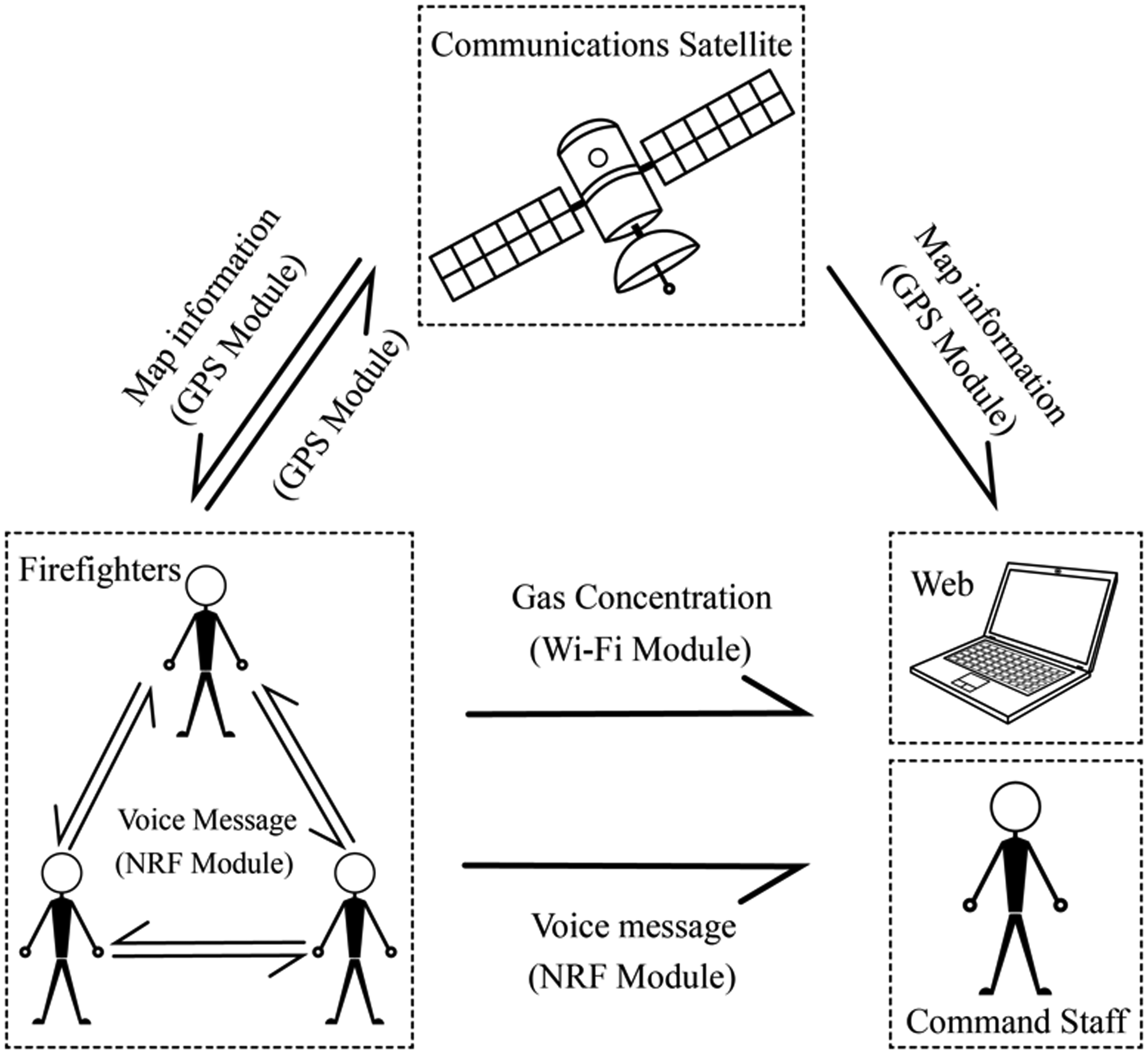
Wireless body area network.
When the firefighter is working, the gas sensor in the firefighter clothing system monitors the relative gas concentration in the environment and feeds it back to the Arduino processor in the form of a digital signal. The processor determines whether the digital signal exceeds the threshold and accordingly controls the state of the relevant hardware. The GPS module collects the location information of the firefighters and feeds it back to the display in the clothing system, enabling the firefighters to check their location information along with that of their team mates. The NRF module can support barrier-free voice communication among the commanders and firefighters to enable smooth operation. The Wi-Fi module can be used to transmit the gas monitoring data and location information of each firefighter to the computer webpage, which enables the command center to dispatch all the firefighters in a uniform manner.
Experimental evaluation on multiple functionalities of firefighter clothing
To verify the enhancement in the comfort of the new type of firefighter clothing and test the safety monitoring function of it, a series of tests were conducted. The tests for the proposed type of firefighter clothing were carried out on the following three aspects, protective functionality, wearing comfort, and interactive functionality.
Evaluation on protective functionalities
According to the main points of the abovementioned functional design, the safety test of the proposed firefighter clothing has been carried out concerning three aspects: protective performance, harmful gas monitoring, and noticeability tests of the clothing.
Tests on anti-fire performance
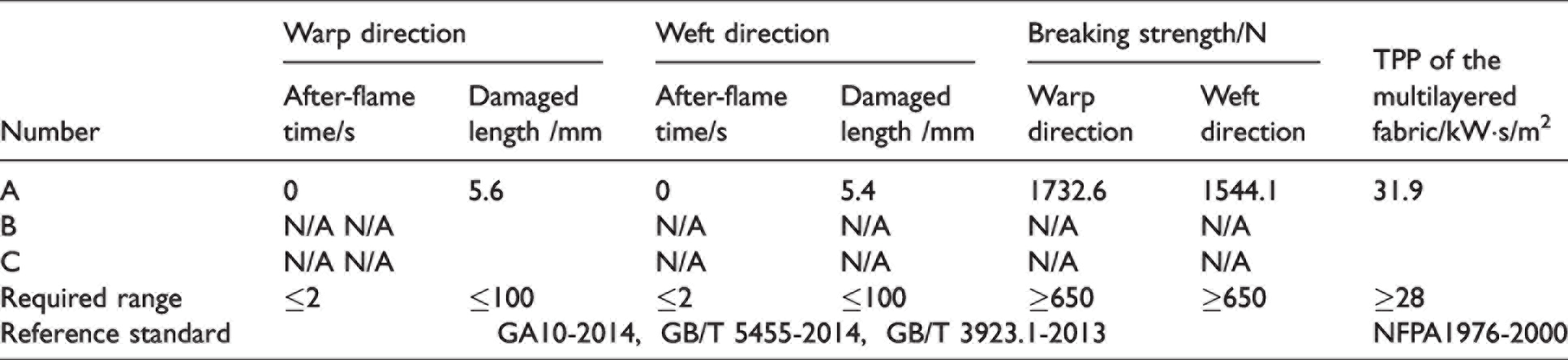
Some anti-fire performance including after-flame time, and damaged strength of the fabric, to be specific the outer layer (i.e. fabric A) of the firefighting clothing was evaluated according to the national standards of GA10-2014 21 (Fireman’s protective clothing for firefighting), GB/T 5455-2014 40 (Textiles – Burning behaviour – Determination of damaged length, afterglow time and after flame time of vertically oriented specimens), and GB/T 3923.1-2013 41 (Textiles – Tensile properties of fabrics – Part 1: Determination of maximum force and elongation at maximum force using the strip method). In this study, a precalibrated fabric flame-retardant performance tester (YG815-I, produced by Ningbo Textile Instrument Factory, China), with an accuracy of ±0.2%, was used to test the after-flame time, and damaged length of the fabrics. A precalibrated electronic fabric strength meter (YG026T, Ningbo Textile Instrument Factory, China) was used to measure the breaking strength of the fabrics.
A precalibrated TPP thermal protection tester (Roachelab, China), with an accuracy of ±0.5%, was used to test the thermal protection performance (TPP value) of fabrics according to the NFPA1976-2000 42 Standard on protective ensemble for proximity firefighting. According to the requirements of GA10-2014 21 Fireman’s protective clothing for firefighting, at least three test samples were developed. The sample size was (150 ± 2) mm × (150 ± 2) mm (excluding joints), the total heat flow of the experiment was (83 ± 2) kW/m2, and the heat exposure time was set as 30 s. 43
Tests on gas monitoring
The monitoring of the harmful gases was conducted in a closed experiment chamber. The humidity and wind speed in the environmental chamber was set at 50% and 0.5 m/s, respectively. Before the experiment, the researchers equipped a dummy with the proposed type of firefighter clothing. The researchers evaluated the gas monitoring performance of the clothing by injecting methane gas, propane gas, and carbon monoxide into the environmental chamber and observed the value of the serial port plotter in the Arduino IDE, status of the buzzer, and data changes displayed by the terminal device. The gas-sensitive material used in the MQ-9 gas sensor is tin oxide (SnO2), which is of low conductivity in clean air. The sensor adopts a high and low temperature cycle detection method, which enables the detection of carbon monoxide at low temperature and methane and propane at high temperature. Changes in sensor conductivity will reflect the detected concentration of toxic gases. In this study, the high and low temperature cycle was realized by outputting 1.5 V and 5 V voltage to the sensor at intervals.
Tests on visual detection
According to the standard GB 20653-2020 (Protective clothing – High visibility warning clothing for professional use), after 50 machine washes, the proposed firefighter clothing was hung to dry and placed in an environment with the temperature of 20°C and humidity of 65% for 2 h. A precalibrated retroreflective coefficient tester with an accuracy of ±0.2% (Radvista 932, USA) was used to measure the minimum retroreflective coefficient or visibility of the clothing at different angles of incidence and observation.
In addition, a set of subjective tests was conducted to verify the visual detection of the clothing in the work environment. To simulate the dim environment that firefighters may encounter in their daily work, this round of testing was performed in a room in which the light intensity could be controlled. The visibility of the proposed firefighter clothing was evaluated as the visibility of the contour and critical parts (i.e. head, chest, back, arms and legs) of the firefighter clothing under different light intensities. During the test, one subject was required to wear the proposed firefighter clothing and make different working postures. Ten healthy panelists without visual impairment were recruited to evaluate the visibility of the subject wearing the outfit standing at a distance of 10 m away using the 5-degree semantic scale, according to which 0, 1, 2, 3, 4 represent ‘not at all’, ‘a little’, ‘medium’, ‘good’ and ‘excellent’, respectively. To simulate the real working conditions, the light intensities of the test were set at 0.5 lx, 1 lx, and 5 lx, in which lx or lux is a measure of luminance.
Evaluation on wearing comfort
A conventional firefighter clothing (produced by Henan Hengan Rexin Fire Technology Co., China) was selected to be compared with the proposed outfit in the evaluations. It is a typical firefighter clothing currently used by many domestic fire forces which meets the requirements of the standards EN479, GA10-91 and GB 865.1-2020. Both objective and subjective evaluations were carried out to obtain a comprehensive and reliable (or double-validated) assessment of the comfort of the concerned two firefighting outfits. In the objective evaluation, a try-on test was carried out on the two sets of clothing, and the temperature and humidity of the skin surface in simulated working scenarios was measured. In the subjective evaluations, a set of panelists were recruited to describe their try-on feeling about the proposed and conventional firefighter clothing according to sensory evaluation methods. Finally, a validation test was carried out by judging the consistency between the results obtained from subjective and objective evaluations.
Objective evaluation
Many studies suggest that for human trials, five to 50 participants are considered adequate for relatively representative and reliable responses.44–46 For the thermal humidity comfort evaluations, we referred to some previous studies when setting the number of subjects.47–49 Besides, some pre-tests were carried out to determine that 10 subjects are adequate for stable results. All the participants in the tests were healthy men aged 22–28 years, with height and weight of (176 ± 3) cm and (73 ± 3.3) kg, respectively. Objective comfort tests were carried out on the proposed and conventional firefighter clothing in the Biotron artificial climate chamber.
To simulate the climate environment of a real firefighting site, the temperature, humidity and wind speed of the artificial climate chamber were set at 35°C, 65%, and 0.1 m/s, respectively. 50 What is worth mentioning is that, in order to obtain close to real experimental results, real humans were invited to participate in our study. In this case, it is necessary to avoid injury to subjects caused by extreme test conditions. This is an important issue to be considered in the design of most human experiments. For example, the real fire scene temperature can easily cause harm to the respiratory tract. Thus, in most real human experiments, lower temperatures (mostly lower than 35°C) were set for safety reasons.51,52 In the current study, by referring to some peer research,53,54 35°C (a temperature already quite high to cause discomfort) was determined for the thermal humidity comfort tests. Besides, the two clothing sets were washed, aired under the same conditions, and held in the climate chamber for at least 24 h before the experiment.
To simulate the increase in working intensity with time during their rescue work and to understand the relevant characteristics of the clothing during the firefighters’ resting period, the wearing test was carried out in five stages. Participants were asked to make different postures or movements of different intensity levels in the corresponding test stage. The first stage involved 10 min of still sitting. The second stage involved light exercises, with the participants running on a treadmill at a speed of 3 km/h for 10 min. The third stage involved medium-intensity exercise, with the participants running for 10 min at a speed of 6 km/h on a treadmill. In the fourth stage, the participants performed required gymnastic exercises for 10 min continuously. The gymnastic exercises include eight separate movements, which were designed to simulate the typical body movements of the firefighters in fire scenes. They involved raising the arms forward, bending arms, raising arms upward, bending over, squatting, getting on one knee, lunging forward, and lunging backward, as shown in Figure 7. The fifth stage involved 10 min of sitting still.
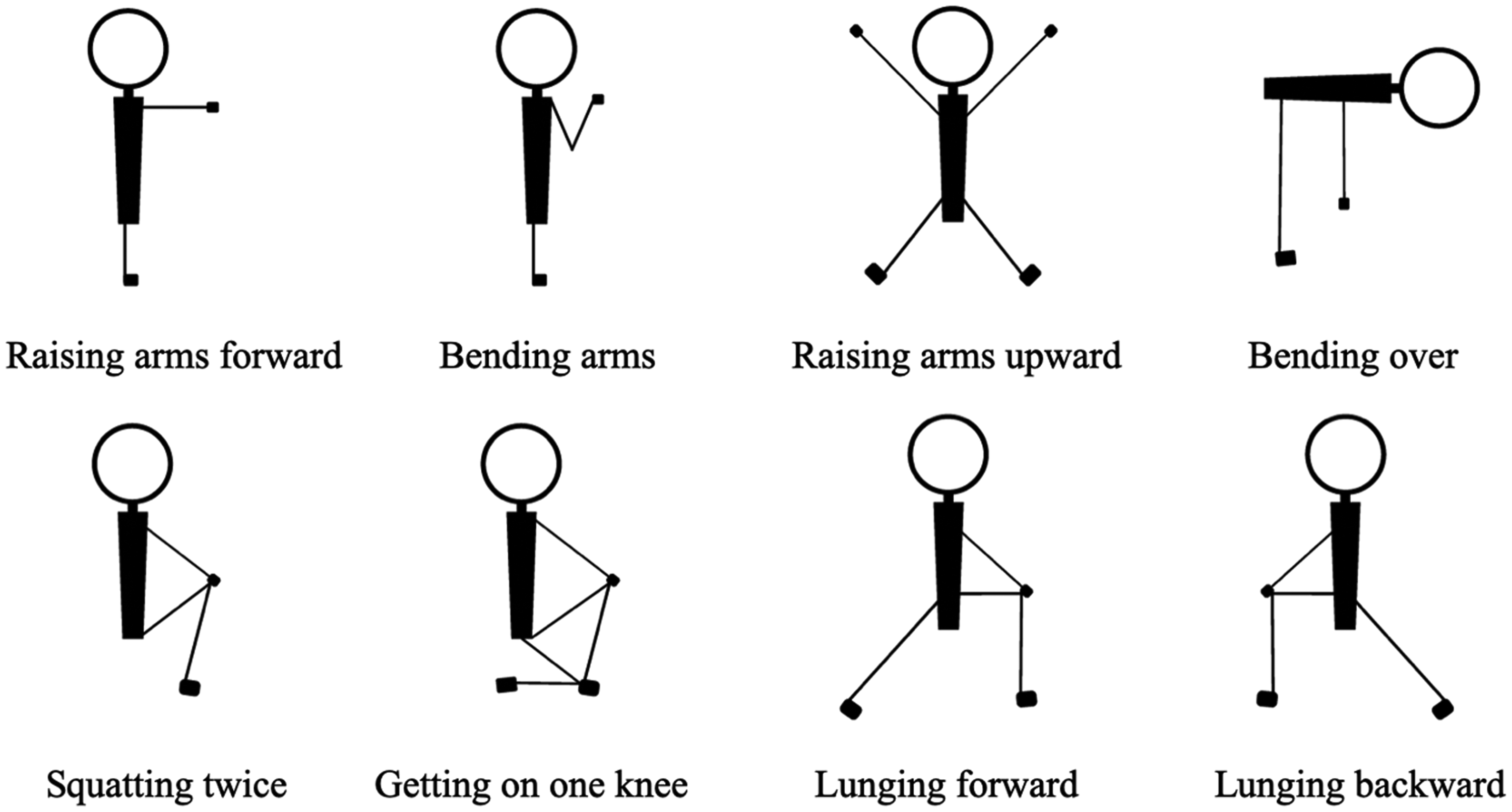
Exercises to simulate real firefighting activities.
Before the experiment, the participants entered the climate chamber 30 min in advance to adapt to the pre-set environment. During this period, the researchers placed sensing patches on the participants’ armpits, chest, back, thighs, and knees to get ready for the measurement of the skin surface temperature and humidity during the tests. The experiment process was as described above, and the data were recorded once per second; the environmental conditions in the comparison experiment were identical. The precalibrated Msr145 temperature and humidity sensor (MSR Company, Switzerland), 55 with an accuracy of 0.0625°C and 0.04% relative humidity, were used to record the temperature and humidity of the subject’s skin surface during the experiment. The bear load of the human trial in the current study was set at a medium level as compared with real rescue missions after consulting experts.
Subjective evaluation
In the current study, the comfort of the proposed firefighting clothing was further evaluated subjectively on individual indices and the overall feeling, respectively. Subjective comfort evaluation can intuitively and effectively reflect a person’s subjective perception of a certain clothing. 56 To determine the subjective descriptors of clothing comfort, a questionnaire was conducted. The questionnaire was formulated according to the clothing comfort classification, 57 by listing the comfort indicators and letting the participants make selections, the firefighters’ emphasis on the clothing comfort indicators can be determined.
As subjective evaluations contain much uncertainty, more samples are often necessary. Thus, in our study, for the wearing comfort evaluations, a larger sample size (i.e. 50 participants) was used to seek reliable results. Table 2 shows the basic physical information of the participants. Before the experiment, the participants were informed of the relevant requirements and precautions of the questionnaire. Each participant was asked to select any descriptors that he thinks are most appropriate to judge the perceived comfort in firefighter clothing.
Basic information of the participants (mean ± standard deviation)

The results of the survey showed that warmth, humidity, stuffiness, stickiness, heaviness, restrictions, stiffness and tightness were the most frequently used comfort-related descriptors in the case of firefighter clothing.
The participants and experimental environment of the subjective comfort test were consistent with those of the objective test. Before the test, all the participants were informed of the specific steps of the experiment and related tasks. The test object included the proposed and conventional firefighter clothing. The bipolar descriptors and the Fritz’s 7-point evaluation scale 57 is illustrated in Table 3.
Bipolar descriptors and evaluation scale
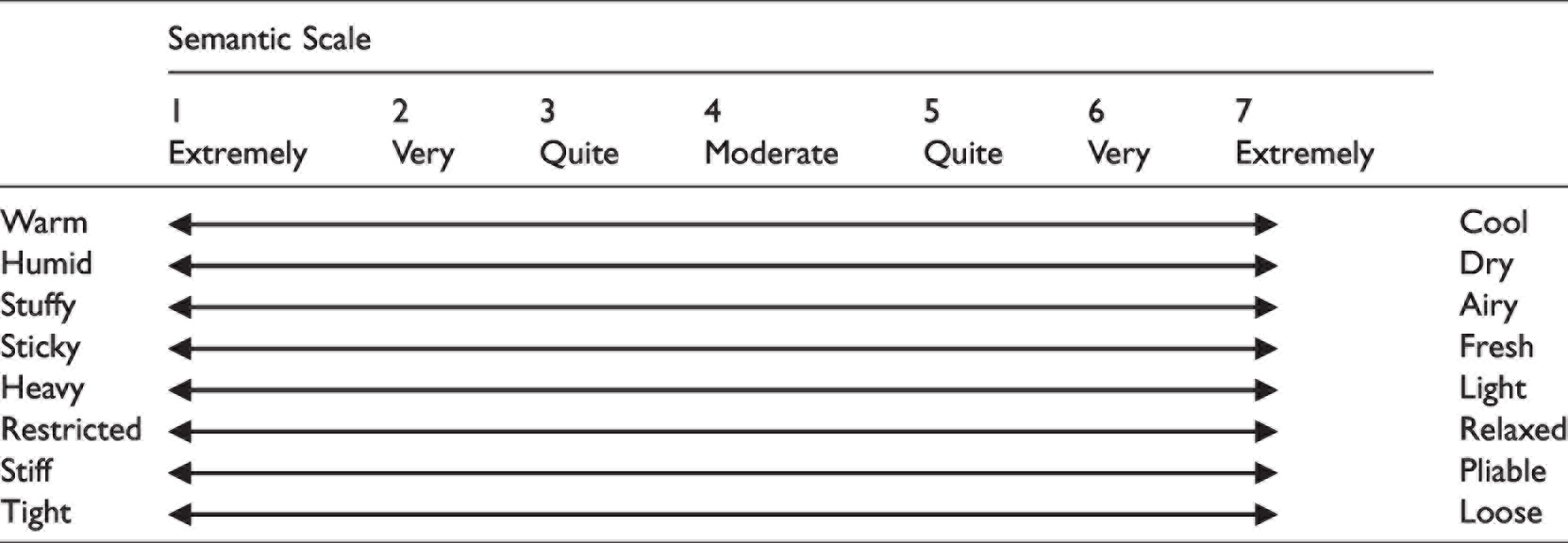
The experimental process for the subjective evaluation was almost the same as that of the objective test, in which the participants were required to make different postures or movements of different intensities in five experimental stages. At the end of each experimental stage, the participants would score each descriptor once. In the comparative tests, the environmental conditions were set to be identical, and the participants wore the proposed firefighter clothing for the evaluation. The researchers recorded and summarized the data after all the experiments were completed.
In the current study, due to the uncertainty and imprecision of the human data obtained from subjective tests, the fuzzy comprehensive evaluation (FCE) method was used to analyze the overall comfort of the proposed and conventional firefighter clothing. 58 The formulation of the evaluation method is illustrated in detail in the Annexure.
Evaluation on interactive performance
The evaluation of the interactive performance of the proposed firefighter clothing was to examine the stability, accuracy and timeliness of the signal transmission, whether it was convenient for the wearer to use the system for real-time communication during rescue operations, and the feasibility of the hardware location setting.
As the output power of the NRF24L01 intercom module was fixed, the interactive performance for the proposed firefighter clothing was evaluated by measuring the maximum distance between two hardware devices at the moment when noise started to be detected during the vocal communication. The clarity, real-time performance and stability of the signal were evaluated at the same time.
The test site was located in an abandoned factory building which is a clay brick wall building of reinforced concrete structure whose wall thickness is of 12 cm, as required by the national standard. The choice of the site conforms to the requirements of a typical indoor working scene of firefighting missions.
Four firefighters were recruited as test participants. During the test, three participants were asked to wear the proposed firefighter clothing and stay in different rooms on different floors in the building. Another participant was asked to wear the proposed firefighter clothing and stay in the ‘command center’ outside the building. The command center was equipped with a computer (other smart terminals such as smart phone and tablet can be alternatives in this case) to receive the wireless transmission data. During the test, the three firefighters in the building moved randomly, and the distance and the number of walls between the firefighters when noise occurred in the vocal interaction were recorded. The firefighters could use the distance measurement function in the AutoNavi map to check the straight-line distance from one another.
Verification results and discussion
Evaluation results on protective functionalities
Anti-fire performance
The fabric performance test results are presented in Table 4. The samples labeled A, B, and C correspond to the outer fabric, waterproof and moisture-permeable fabric, and thermal insulation and comfort fabric. The test results satisfy the corresponding national standards.
Fabric performance test results
Gas monitoring performance
As an example, Figure 8 shows the monitored signal change caused by the change of the detected concentration of carbon monoxide during the test. After the period of adjustment, the digital signal ascended sharply as the gas concentration increased, and the buzzer provided an alarm. After the gas injection was stopped, the digital signal gradually descended. After a certain period, the digital signal decreased to less than the threshold value, and the buzzer stopped alarming.

Port monitor changes.
Visual detection performance
Table 5 shows the minimum retroreflection coefficient of the proposed firefighter clothing at different angles of incidence and observation as compared with the required ranges determined by the standard GB 20653-2020. All the observations fall within the standard ranges, which proves a basic visibility on the proposed firefighter clothing.
Test results of minimum retroreflection coefficient
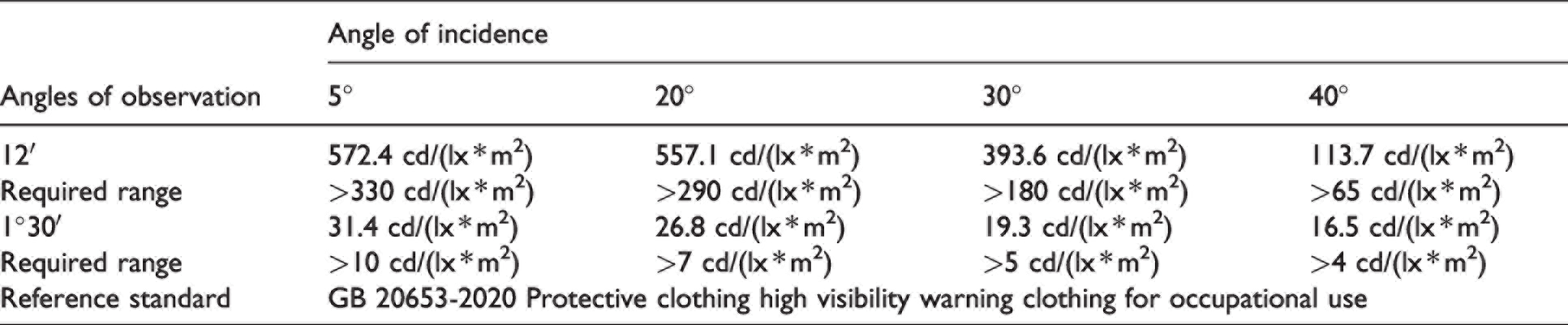
Table 6 shows the average evaluation results on the visibility of the firefighter clothing at the light intensities of 0.5 lx, 1 lx, and 5 lx were 3.6, 3.7 and 3.9, respectively. From the results shown in Table 5 and Table 6, it is indicated that the proposed firefighter clothing exhibits a satisfactory effect of visual detection.
Test results on effect of visual detection

Evaluation results on wearing comfort
Results on objective evaluation
The comparison of the objective test results of the two samples is shown in Figure 9 where the triangles represent the data of the conventional firefighting clothing and the squares represent that of the proposed firefighting clothing. Figure 9(a) shows the average skin temperatures of the 10 participants over time during the test. In the first experimental stage, the average temperature in the two garments was not considerably different among the participants; however, in the second stage, the temperature rises significantly more rapidly in the conventional firefighter clothing than that in the modified clothing. And the temperature difference between the two garments climbed as time and motion intensity increased. In the fourth stage, the participant began to rest, and thus the heat production by the body reduced. The evaporation of sweat dissipated the body heat and lowered the temperature of the clothes. The improved version of the firefighter clothing exhibited a faster temperature drop, thereby demonstrating better thermal comfort than that of the conventional firefighter clothing.
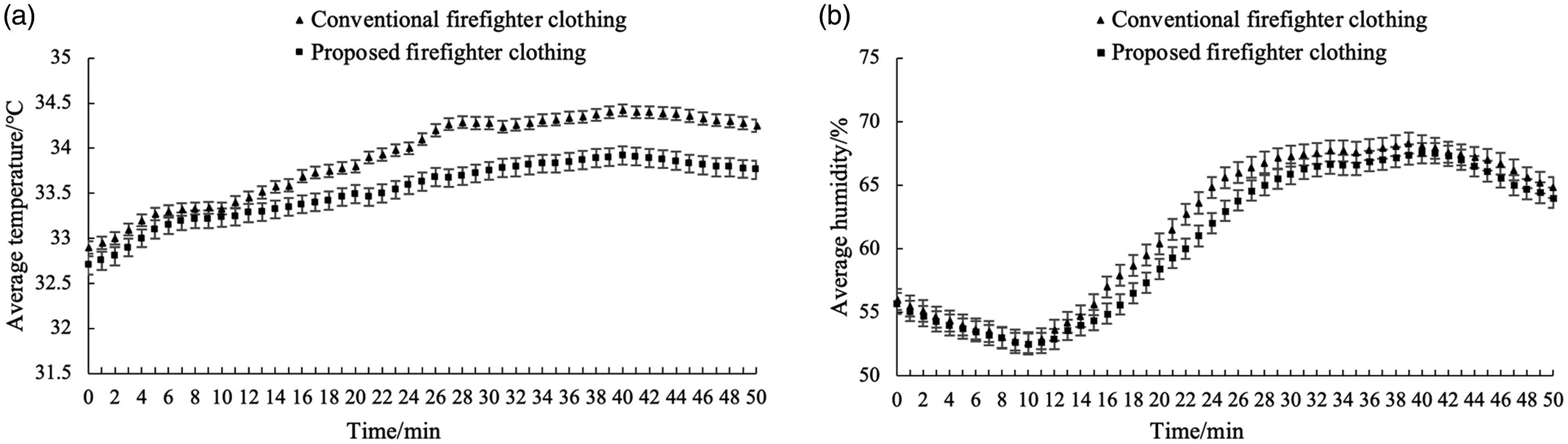
Objective test results on skin temperature and humidity.
Figure 9(b) shows the average skin humidity of the 10 participants over time during the test. During the sitting and walking phases, the average humidity for the two garments were not considerably different. However, as the motion time and intensity increased, the average humidity in the case of the conventional firefighter clothing increased more rapidly than that in the proposed firefighter clothing. In the fourth stage, the humidity in the case of the proposed firefighter clothing decreased significantly more rapidly than that in the conventional firefighter clothing. It was demonstrated that the proposed firefighter clothing exhibited higher moisture absorption and dissipation capacities.
A paired sample T-test was applied to determine the two indicators (i.e. skin temperature and skin humidity) whether there was a significant difference between the experimental results of the two outfits at different time points. The results are shown in Table 7, that for both indicators, P < 0.05. Taking into account the results shown in Figure 9 and Figure 10, it is indicated that the proposed firefighter clothing is evidently more comfortable than the conventional firefighter clothing during objective testing.
T-test results on objective evaluation of conventional and proposed firefighter clothing


Wearing comfort evaluation results on conventional and proposed firefighter clothing.
Results on subjective evaluation.
Results on individual comfort indices
Figure 10 shows the average scores of the participants evaluating the conventional and proposed firefighter clothing on the eight descriptors. A paired sample T-test was used to determine whether there was a significant difference between the test variables measured at each time interval. The significance level was set at P < 0.05. The results are shown in Table 8.
T-test results on subjective evaluation of conventional and proposed firefighter clothing

Results on overall comfort
According to the method, the overall comfort score of the proposed firefighter clothing (
Evaluation results on interactive performance
At the end of the experiment, the transmission distances under the same number of walls were compared among the participants and the minimum value, or the limit distance of signal transmission, was recorded as shown in Table 9.
Limit distance of signal transmission

The Wi-Fi module and GPS module sent the serial monitor data to the terminal device once per second. Data were shown on a webpage. Figure 5 shows the display of the webpage at a certain time point during the test. The monitoring device was named no. 1. The central part of the webpage shows the gas monitoring data received by the gas sensor in the device. As the thresholds of the three gases were uniformly set as a floating-point number 250, when the data received by the webpage exceeded 250, the value was displayed in red, and ‘abnormal’ would be displayed on the right side of the webpage. The lower part of the webpage shows the returned value from the GPS module, displayed in the form of the latitude and longitude on the right side of the webpage. The commander can click on the link to view the specific location of the firefighter on the map.
Discussion
On completion of the test, the thermal and mechanical properties of the outer fabric and the TPP value of the fabric of the proposed firefighter clothing were found to satisfy the standard requirements. The subjectively evaluated (7-point scale) comfort of the new firefighter clothing was 10.9% higher than that of the conventional firefighter clothing, and the average temperature of the skin surface of the firefighters increased more slowly in the former case. The experiments demonstrated that the gas monitoring module in the new firefighter clothing had a highly sensitive and complete feedback mechanism, and could thus be used to monitor the relevant gas concentrations. Moreover, the actual use experience of the interactive function module was satisfactory, and the signal transmission distance could satisfy the real-world requirements, thereby facilitating the collaboration and cooperation among the firefighters during rescue missions.
Conclusions
In this study, a novel design was proposed to enhance the comfort, safety and interactive performance of the conventional firefighter clothing. The design consists of two aspects: carrier design and functionality design. The firefighter clothing carrier was of a three-layer structure involving the outer layer, waterproof and moisture-permeable layer, and thermal insulation and comfort layer. The functional design of the new firefighter clothing involved three main features. First, a gas detection module was designed to monitor and generate feedback on the concentration of the harmful gases that may be present in the working environment. Second, a GPS module was used to monitor and display the real-time positions of the firefighters. Third, a wireless transmission module was used to facilitate the coordination and cooperation among firefighters.
After a series of objective and subjective evaluations, the protective performance of the proposed firefighter clothing was verified to meet the national standard, and the wearing comfort was considerably enhanced. Furthermore, the new type of firefighter clothing was observed to be capable of realizing highly sensitive monitoring of combustible and toxic gases. The interactive module could satisfy firefighters’ requirements on real-time communication, thereby largely enhancing their safety during missions.
There are still some shortcomings concerning the current design: the aerogel packaging bag installed in the clothing will affect the wearing comfort; the power supply gets weak after repeated continuous use; the service lifespan of electronic components is hard to be measured. All these point out the directions for future development of smart personal protective clothing.
Finally, the idea proposed in the study to develop the carrier (i.e. the clothing) and the embedded intelligent system as an integral by taking into account both individual protection and comfort need, both collaborative working demand and environmental characteristics, can be generalized to the design of other functional clothing to be utilized in collaborative working scenarios, such as miners’ protective clothing, policemens’ uniform, etc.
Footnotes
Declaration of conflicting interests
The author(s) declared no potential conflicts of interest with respect to the research, authorship, and/or publication of this article.
Funding
The author(s) disclosed receipt of the following financial support for the research, authorship, and/or publication of this article: This research is funded by Open Project of Jiangsu Key Laboratory of Silk Engineering and National Natural Science Foundation of China.
