



Abstract
Most of the research on the thermal comfort of sports bras has focused on fabric differences, whereas the effect of ventilation has yet to be investigated. This study aimed to investigate the effects of ventilation design on the thermal comfort performance and breast displacement. Based on the physiological nature of breast movement and airflow in exercising women, four sports bras with different necklines and ventilation holes were designed. The thermal comfort performance and the reduction of breast displacement of these four bras were compared. Nine healthy women exercised in random order with four sports bras, and then performed a 20-min short duration high-intensity exercise and rest to recover under thermoneutral conditions. Skin temperature and humidity, body core temperature, the reduction of breast displacement and thermal psychological subjective sensations were investigated during the whole experiment. The results indicated that deepening and widening the neckline could effectively increase the airflow pumped in from the neckline, while the ventilation holes could effectively direct the airflow from the neckline to the middle and bottom area of the breasts, significantly reducing the skin temperature, skin humidity and body core temperature (P < 0.05). In addition, widening the neckline would significantly reduce the reduction of breast displacement, whereas deepening would not. A slightly but not significant increase of the psychological subjective sensation during exercise was observed. These results provide novel information that appropriate application of ventilation design in sports bras could effectively improve the thermal comfort performance without reducing the function of support to benefit exercising women.
Keywords
Women’s breasts will move relative to the chest wall when they participate in physical activity, due to the limited anatomical support, 1 especially during exercise in which a woman’s torso moves mainly vertically, such as running and jumping. The sports bra is proved to be effective at reducing breast movement, exercise-related breast pain and the risk of breast sag, increasing confidence and improving sports performance.1,2 However, an extra clothing layer reduces the amount of air movement near the skin,3–5 and creates air gaps which further reduce the ability of sweat to evaporate to the outward environment (the most important way for heat loss during exercise). 6 If this heat cannot be dissipated, it will affect thermal comfort and may cause heat strain, fatigue, stroke, and even death for the wearer. 6
Many studies have discussed the thermal comfort of sports bras,7–12 while most of the attention has been paid to varieties of fabrics,7–10 without discussing the ventilation. Ventilation is an effective strategy for improving heat loss and has been used in many other garments.13,14
Heat is lost from the body through four independent processes: radiation, conduction, convection and evaporation, 3 of which evaporation is the body’s main method of heat dissipation during exercise and in hot environments,4,15,16 and it can be effectively promoted by convection. Convection refers to the transfer of mass and heat by a gas or liquid, or in this application, air exchange. 17 There are two types of convection: natural convection and forced convection. The former occurs due to existing temperature gradients, while the latter occurs due to wind or ‘pumping’. 6 Pumping is defined as a mechanism of air exchange caused by rhythmical movements of the limbs and body during exercise. 18 It can promote heat loss effectively by reducing clothing insulation and vapor resistance, which can be quite dramatic, amounting to over 50% for total clothing insulation and over 80% for vapor resistance at high speed of air or body movement. 3 Ventilation is an important strategy for promoting pumping which can be a traditional opening such as the collar, cuffs, and bottom hems or be purposely designed as vents. 6 During physical activities, body movement forces air around clothing and brings air in or pushes it out through openings, 14 promoting direct air exchange between the microclimate underneath the clothes and the environment, and significantly improving the heat loss and sweat evaporation. 6
Related research has indicated that the design of two or more openings can form a path for airflow and force air to flow through certain parts of the body, effectively removing heat and sweat in these parts. The design of openings at the shoulder and side seam enabled air to flow in from the side opening and then out from the shoulder opening, effectively promoted the loss of heat from the skin surface. 19 The designed vents on the shoulders of motorcycle cycling clothes allowed ambient air to enter through the shoulder openings and flow out through the hem of the clothes when riding. 20
As the amount of contact an item of clothing has with the skin may affect thermoregulation, 21 there will be less exchange of air beneath the sports bra with the environment as it fits tightly,5,21,22 when women are sitting or standing quietly. However, during exercise, as the breasts rhythmically move in three directions (anterior-posterior, medial-lateral, and vertical), the opening formed between the neckline and the body will open and close, resulting in the pumping of the ambient air from the neckline. In recent research about the thermoregulation performance of a range of mastectomy bras and external breast prostheses, Shin et al. (2020) found that the bouncing breast movements might create extra airflows through the bra cup neckline, which swiftly promoted sweat evaporation during exercise at the upper-center front cup. 23 Besides, the heat-reduction mastectomy bra with ventilation holes and breast prosthesis with a hollow inner air chamber demonstrated better thermal and moisture control, resulting in lower body temperature and lower humidity increment during excise. 24 This suggests the possibility that the thermal comfort performance of the sports bra can be improved through ventilation design.
Therefore, as an effective strategy for improving heat loss, ventilation has been used in many other garments,13,14 and the research of Shin et al. (2020) suggested the possibility that the thermal comfort performance of sports bras could be improved through ventilation design. 23 However, most studies on the thermal comfort of sports bras were addressing the effect of different fabrics,7–10 whereas the effect of ventilation design on heat loss during exercise has yet to be investigated. In addition, the improvement of thermal comfort performance should not be at the cost of the reduction of support performance, which was regarded as one of the most important functions of sports bras. However, most studies have focused only on support25–37 or thermal comfort7–12 (as shown in Table 1), little research has paid attention to both the breast support and thermal comfort performance of sports bras.
The effect of design features of sports bras on breast displacement and thermal comfort

This study aimed to investigate the effect of ventilation design on the thermal comfort and breast support performance of sports bras by comparing body core temperature (Tc), skin temperature (Ts), skin humidity (Hs), psychological subjective sensations, and the reduction of breast displacement (RBD) and provide novel information in optimizing thermal comfort and breast support performance to benefit exercising women. RBD is defined as the displacement percentage change (breast displacement range without a bra minus breast displacement range with a bra, and divided by breast displacement range without a bra), and is considered to be a unique evaluation standard of the supporting performance for sports bras. 29 The larger the RBD, the better the supporting performance.
As mentioned above, due to the movement of the breasts during exercise, air flowed from the neckline bottom and then flowed out of it, carrying away the heat and moisture of the upper part of the breasts. If the airflow could be directed to the middle and lower parts of the breasts, it could effectively promote heat loss in those areas. As a result, ventilation holes were used in the center bottom area between two breasts and the cup bottom. Besides, as the airflow is pumping from the neckline bottom, deepening and widening the neckline bottom can increase the amount of the airflow pumped in. In addition, the difference in the structures of sports bras (ventilation holes and neckline) may result in the differences of RBD during exercise.29–31,33–35 Therefore, four hypotheses were stated as follows: H1: Ventilation holes in sports bras will significantly affect Ts, Hs, Tc, and subjective sensations. H2: Deepening or widening the neckline will significantly affect Ts, Hs, Tc, and subjective sensations. H3: Ventilation holes will significantly affect the RBD. H4: Deepening or widening the neckline will significantly affect the RBD.
Methodology
Participants
As age may affect the thermoregulatory and sweat responses (e.g. cardiac output, autonomic responses and peripheral vascular responsiveness to heat stress, skin blood flow, and core temperature)40–42 and the participation rate of physical exercise, 43 nine healthy, pre-menopausal and recreationally active Chinese female university students with a small age range (around the age of 20 years), who undertook 30 min of exercise more than twice a week were recruited as participants to minimize the potential between-participant effect on the thermal comfort performance of sports bras. The details of the subjects are shown in Table 2. Following institutional ethical approval (20210105-R01), the purpose, procedures and the possible risks of the experiment were carefully explained to all subjects before they signed the informed consents to participate. All participants had experienced no surgical procedures to the breasts or gone through pregnancy or breast feeding, and were not in their menstrual cycle. They were asked to ingest a telemetric pill sensor (HQ Inc., USA) prior to the experiment and were prohibited from taking fluids and food in order to avoid the interference of core temperature data collection and to minimize the impact of hydration status.
Details of subjects

BMI: body mass index; SD: standard deviation.
The participants’ bra sizes were assessed by a trained bra fitter, following the recommendations of McGhee and Steele (2006). 44 The bust girth circumference and the under-bust girth circumference are shown in Table 2, and all participants had a bra cup size B, which was among the most prevalent cup sizes in China. 45 The low variation in participants’ anthropometric profiles was to reduce the potential between-participant effect in thermal comfort performance. The bra fit and comfort was then assessed and ensured by the same bra fitter, according to a professional bra fitting checklist with detailed criteria, which were developed by Zhou et al. (2013)29 and modified according to the features of the bras used in the experiment. The results showed that all sports bras fitted well and no uncomfortable feeling (such as pressure, tactile and so on) was reported.
Experiment samples
The experiment samples were four knitted compression sports bras, with the fiber content of 53% polyester, 33% polyamide, and 14% spandex, no pad, single layer. The physical properties of the fabric used in different areas of the sports bra are summarized in Table 3. As indicated above, the only differences between these four sports bras were the neckline bottom and the ventilation holes, other than these differences, design, material properties, and production methods were kept the same to minimize the experimental errors. As shown in Figure 1, the same number and size of ventilation holes were applied in bra B, bra C, and bra D, while there were no ventilation holes in bra A. In addition, the same shape of neckline was used in bra B and bra A, while a deeper neckline bottom was used in bra C and a wider neckline bottom was used in bra D. The only difference between bra A and bra B was the ventilation holes, while the only difference between bra B, bra C, and bra D was the neckline. To test the effect of deepening and widening the neckline bottom between bra C and bra D, the coverage area of these two bras was designed to be the same as the amount of contact clothing has with the skin may affect thermoregulation. 21 The depth and the width of the neckline bottom of these four bras are shown in Figure 1(e), and the plane coverage area of bra C and bra D were the same, as SΔαob = SΔcod (both the coverage area of these two triangles was 4.16 cm 2 , calculated from the dimensions of the necklines).
Physical property summary of the fabrics for four sports bras

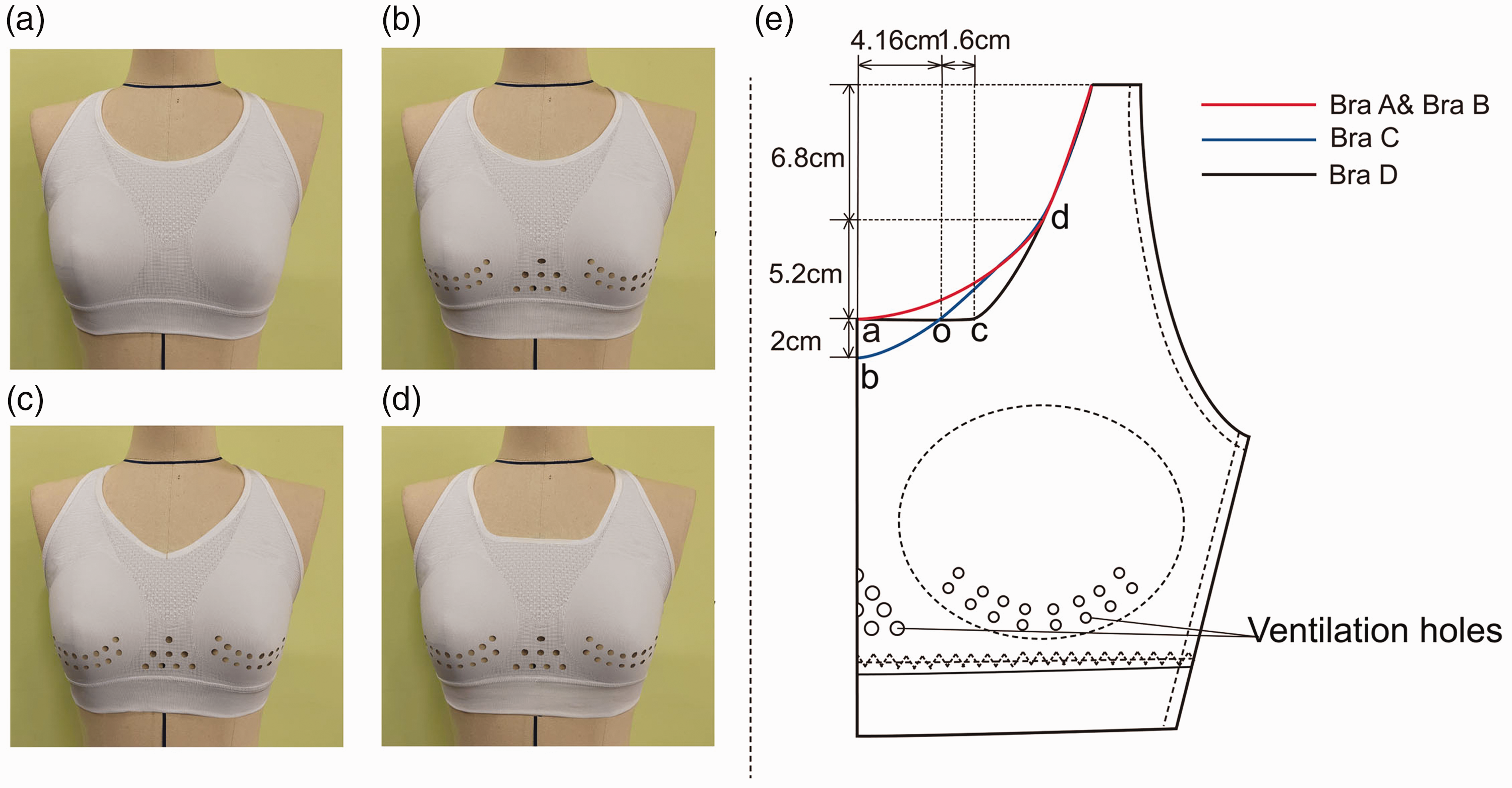
Experimental samples: (a) bra A; (b) bra B; (c) bra C; (d) bra D and (e) the design details of four sports bras.
The ventilation holes were made by laser cutting (SCM3000SP, Sunic Laser, China), a thermal and contactless separating process for fabrics using a high powered laser beam, which provided high accuracy and speed, and effectively prevented the edges unraveling for the ventilation holes.46,47 The holes were 5 mm in diameter, 5 mm apart placed in two places, one was in the bottom area between the two cups, another was in the bottom of the cup (Figure 1). The former was chosen because the breasts and the body formed a direct passage here for the airflow from the neckline to the bottom, taking away the heat between the two breasts and the surrounding area. Battling constant frictional forces will cause the increase of Ts, especially where there are skin folds, such as the inframammary fold, where the moisture and sweat gets trapped and often makes it aggravated by heat, sweat, maceration, chafing, and lack of air circulation. 48 Therefore, the bottom area of the cup was chosen. The ventilation holes were hoped to direct the airflow and improve the sweat evaporation.
Based on the subjects’ under-bust girth circumference (shown in Table 2) and the cup size, all four sports bras used in the experiment were designed in the size of 75B, which would fit them best according to the size system in the bra industry. 29 Due to the long experiment time for each participant and the limitation of the experimental equipment, only one participant took part in the experiment in one day, and to keep the same temperature and humidity of the sports bras at the beginning of every experiment, the bras were placed in the constant thermoneutral conditions of 27°C with an average relative humidity of 46% for 24 h before the experiment. 49 Participants were wearing the same type of sports pants and sports shoes, and randomly wore one of these four bras (bras only on their upper body) to minimize potential errors in the experiment.
Measurements
The Ts and Hs data were collected with temperature/humidity sensors every 10 s (iButton, USA) in two places: the medialis area (point A) and the bottom area (point B) of the breast (as shown in Figure 2), as the former was of high regional sweat rate, 50 and the latter was often aggravated by heat, sweat, and chafe. 48 The data were read by a universal serial port adapter and reconstructed by Enlog V3.5.6 in the computer. The Tc was measured with a CorTemp Ingestible Core Body Temperature Sensor (HQ Inc., USA) every 30 s, in the gastrointestinal tract, as the gastrointestinal temperature was considered to be the only accurate measurement assessing Tc, during and after exercise in heat when compared with other methods such as rectal, oral, axillary, and aural temperature measurements. 51 And the measuring data were then reconstructed using CorTrackII Data-Graphing Software (HQ Inc., USA).
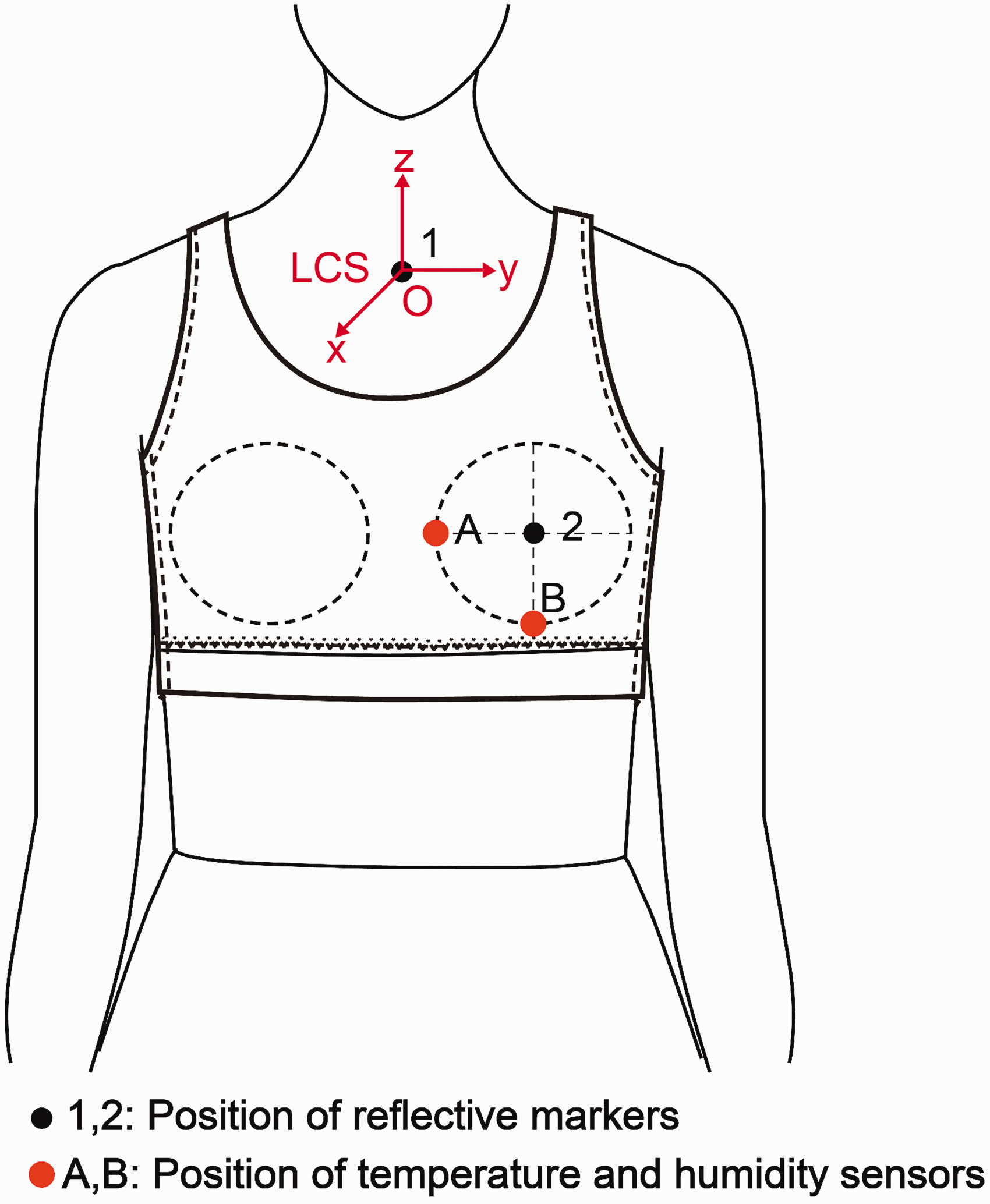
Location of temperature/humidity sensors and the reflective markers, and the trunk local coordinate system (LCS).
Psychological subjective sensations about the sports bras were gathered by rating the six sensations of wetness, coldness, breathability, itchiness, softness, and overall comfort. 10 A visual analog scale (VAS) with a rating of 1 (negative) to 7 (positive) was used to collect the participants’ subjective perceptions at five critical time points (Table 4).
The visual analog scale for subjective sensation

The motion of the breast when wearing four sports bras and when naked was captured by the motion capture system (Qualisys, Sweden) every 0.0056 s during running. Biomechanical research has shown that breasts would move in three directions (x as anterior-posterior, y as medial-lateral, and z as vertical direction) relative to the chest wall during exercise,52,53 as shown in Figure 2. As the trunk also moves during exercise, the displacement data of the breast in the ground coordinate system (GCS) recorded by the motion capture system should be converted to the data in the trunk local coordinate system (LCS). During running, as the torso mainly moves vertically, the suprasternal notch was often chosen as the reference point,32,54–56 while the nipple was often chosen to measure the breast movement.29,32,57,58 Therefore, the trunk LCS was established, x was identified as anterior-posterior, y as medial-lateral, z as vertical direction, and the suprasternal notch was identified as the origin of the LCS as shown in Figure 2.
Two retro-reflective markers were attached to the skin or bra, one on the nipple and the other on the suprasternal notch as the trunk reference point, as shown in Figure 2, and the displacement of the markers was tracked by nine calibrated Oqus infrared cameras (Qualisys, Sweden) positioned around the treadmill. The displacement data were reconstructed using the Qualisys Track Manager Software (Qualisys, Sweden). The related breast displacement (in LCS) was calculated by subtracting the displacement data of the suprasternal notch from that of the nipple. Gait cycles were identified using every other inferior minima of the suprasternal notch sensor,33,59 and the range of breast displacement in every gait cycle was calculated by the amplitude of displacement (i.e. peak position value minus trough position value).33,59 The breast displacement obtained in 10 consecutive gait cycles was averaged for the mean breast displacement, and the RBD in three directions (x as anterior-posterior, y as medial-lateral, and z as vertical direction) was calculated as: breast displacement range without a bra minus breast displacement range with a bra, and divided by breast displacement range without a bra. 29 The flowchart of the experiment is shown in Figure 3.
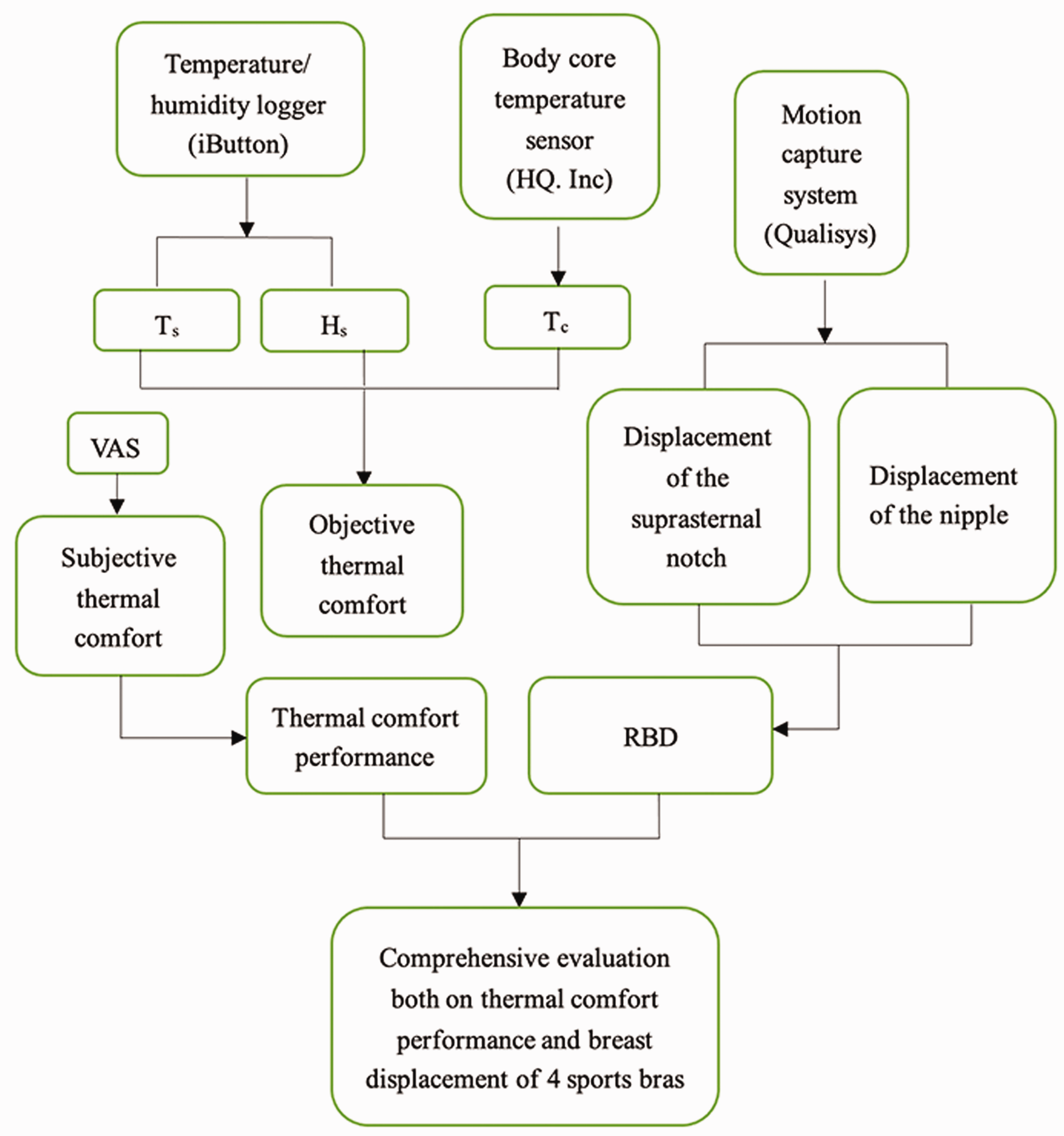
Flowchart of the experiment.
Experiment protocol
A parallel, randomized blinded design wear trial was carried out. The temperature of the laboratory was set to the thermoneutral conditions of 27°C with an average relative humidity of 46%, for all the key routes of heat exchanges are still available for heat loss and the body temperature can be controlled by changes in peripheral blood flow when at rest, at this temperature. 4
The experiment protocols developed by Lin et al. (2015)10 were adopted and modified simply to simulate a situation for Chinese young women running in the gym according to participants’ feedback about their daily exercise. It comprised four phases: preparing (sitting on a chair for 10 min), walking (for 5 min at 5 km/h on a treadmill), running (for 15 min at 7.5 km/h on a treadmill), and resting (sitting on a chair for 15 min). The 15 min running duration and the speed of 7.5 km/h were chosen to minimize the participants’ burden, although they usually exercise at higher speeds for a longer time. The experiments were arranged in the afternoon. It lasted for approximately 45 min for testing each bra for one participant, and there were 30 min extra for rest and recovery before wearing the next sports bra. The experimental protocol is shown in Figure 4.

Experiment protocol.
Statistical analysis
The data were statistically analyzed using SPSS version 25.0. The Ts, Hs, Tc, the subjective sensations at five critical time stamps (0, 10th, 15th, 30th, and 45th min), and RBD in three directions when wearing these four bras were found to be parametric (Kolmogorov–Smirnov and Shapiro–Wilks, P > 0.05), and analyzed by repeated measures analysis of variance (ANOVA). On detection of a significant difference in the ANOVA test, a post hoc test was performed to examine the pairwise comparison in different phases of the experiment. The data were presented as mean ± standard deviation, and the significance level was set at P < 0.05. The power analysis was taken by GPower 3.1, and the validity was verified as 1–β > 0.8. The test–retest reliability intraclass correlation coefficient (ICC) was defined as a very high reliability when ICC > 0.74, a high reliability when 0.60 < ICC < 0.74, a medium reliability when 0.40 < ICC < 0.59, and a low reliability when ICC < 0.40, according to Noble et al. (2016). 60
Results
According to previous research,10,23,61 the sports bra with (significantly) lower values in Ts and Hs at all or most of the five time points was considered to be (significantly) better in thermal comfort performance than other sports bras. In addition, the average value of Ts and Hs of five time points was also compared if there was no significant difference between two sports bras at any time point. A large partial eta squared effect size and a high degree of reliability were observed, the ICC for Ts (medialis), Ts (bottom), Hs (medialis), Hs (bottom), Tc, the subjective sensations and RBD are shown in Table 5, which indicated that the results were of practical significance and very high consistence, reproducibility and reliability, as a basis for studies.
The ICC for measuring items

CI: confidence interval; Hs: skin humidity; ICC: intraclass correlation coefficient; RBD: reduction of breast displacement; Tc: body core temperature; Ts: skin temperature.
Skin temperature and humidity
The results of the Ts and humidity responses to the four bras at five different time points are shown in Table 6. The results demonstrated that there was a complex relationship between the contributing factors including the data collection locations, the design of sports bras and the time points.
Temperature and humidity responses of four sports bras at five different time points

Hs: mean skin humidity; Ts: mean skin temperature.
aSignificant difference between bra A and bra B.
bSignificant difference between bra A and bra C.
cSignificant difference between bra A and bra D.
dSignificant difference between bra B and bra C.
eSignificant difference between bra B and bra D.
fSignificant difference between bra C and bra D (P < 0.05).
Skin temperature (Ts)
The Ts trends at the medialis area when wearing four sports bras were very similar as shown in Figure 5(a). After a slight increase in the preparing session, it decreased in the following three sessions, except a small increase at the beginning of the resting session. The Ts when wearing bra A was consistently higher than that of the other three sports bras. Repeated measures analysis of ANOVA found a significant difference in time by bra interaction effect (F = 7.499, P < 0.001) in Ts at the medialis area of the breast. In addition, statistically significant differences were found at the last three time points (15th, 30th, and 45th min) when comparing the four sports bras. When compared to bra A, bras B, C and D all showed significantly lower Ts after running and resting (P < 0.001), and bra D also showed significantly lower Ts after walking than bra A (P < 0.05). Compared to bra B, bra D showed significantly lower Ts at the 45th min (P < 0.05). Bra C showed no significant difference with bra B. There was no significant difference between bras C and D at any time point; however, bra D showed lower Ts at 0, 15th and 45th min, while bra C showed lower Ts at 10th and 30th min, and the average Ts of five time points for bra D (31.86 ± 1.20°C) was lower than that of bra C (32.02 ± 0.76°C).
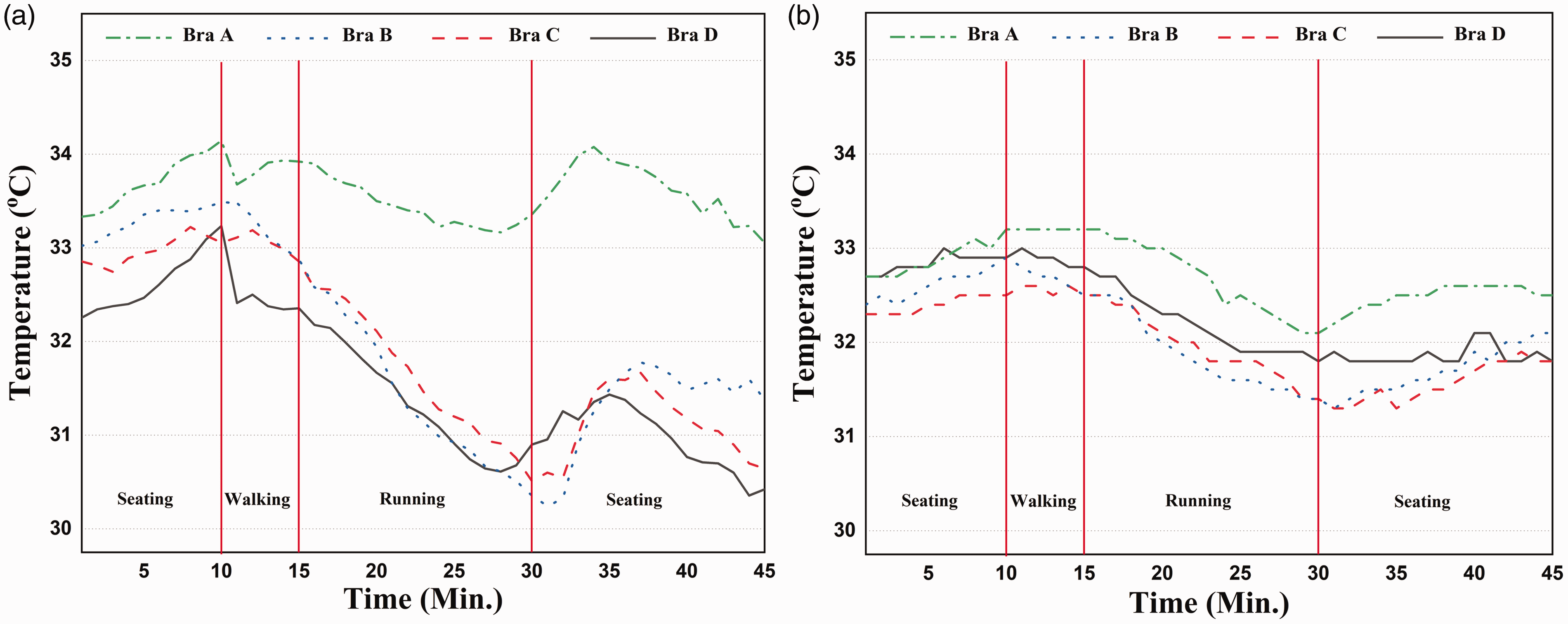
Mean skin temperature (Ts) in (a) the medialis area and (b) the bottom area of four sports bras.
Similarly, the Ts performance of each bra was measured at the bottom area. After a slow increase during the preparing session, it decreased during the walking and running sessions, and then rose in the resting session, as shown in Figure 5(b). It showed a similar trend with the medialis area in the preparing, walking and running phases, but a different trend in the resting phase. Moreover, except for bra A, the decrement of Ts in the bottom area was smaller than the medialis area for the other three bras during the whole experiment (0∼45th min). Different from the medialis area, there was no obvious decreasing trend in the resting phase in the bottom area. According to the repeated measures analysis of ANOVA, no significant difference was found in the bra or in the time by bra interaction effect. However, bras B, C, and D consistently showed lower Ts than bra A during walking, running and resting phases. Bra C showed the lowest mean Ts at all time points, and the lowest mean Ts (32.10 ± 0.26°C) of the whole experiment. Bra B showed a lower Ts during most of the running phase but higher Ts during most of other three phases compared to bra C. The Ts of bra D was higher than that of bra C and bra B in most of the whole experiment.
Skin humidity (Hs)
The mean Hs trends of four sports bras at the medialis area were similar as shown in Figure 6(a). Briefly, after a slight decrease in the walking session, the Hs in the medialis area began to increase until a few minutes after running and then decreased. A significant difference in time by bra interaction effect (F = 14.144, P < 0.001, 1–β = 0.993) in Hs in the medialis area was detected. Moreover, significant differences were found at all five time points when comparing the Hs of four sports bras in the medialis area. When compared to bra A, bra B showed significantly lower Hs at the 30th min (P < 0.05). Bras C and D performed significantly better at 0 min (P < 0.05) and the other four time points (P < 0.001) than bra A. Compared to bra B, bra C and bra D showed significant Hs at the last four time points (P < 0.001). Bra C performed significantly better than bra D at the 45th min (P < 0.05).
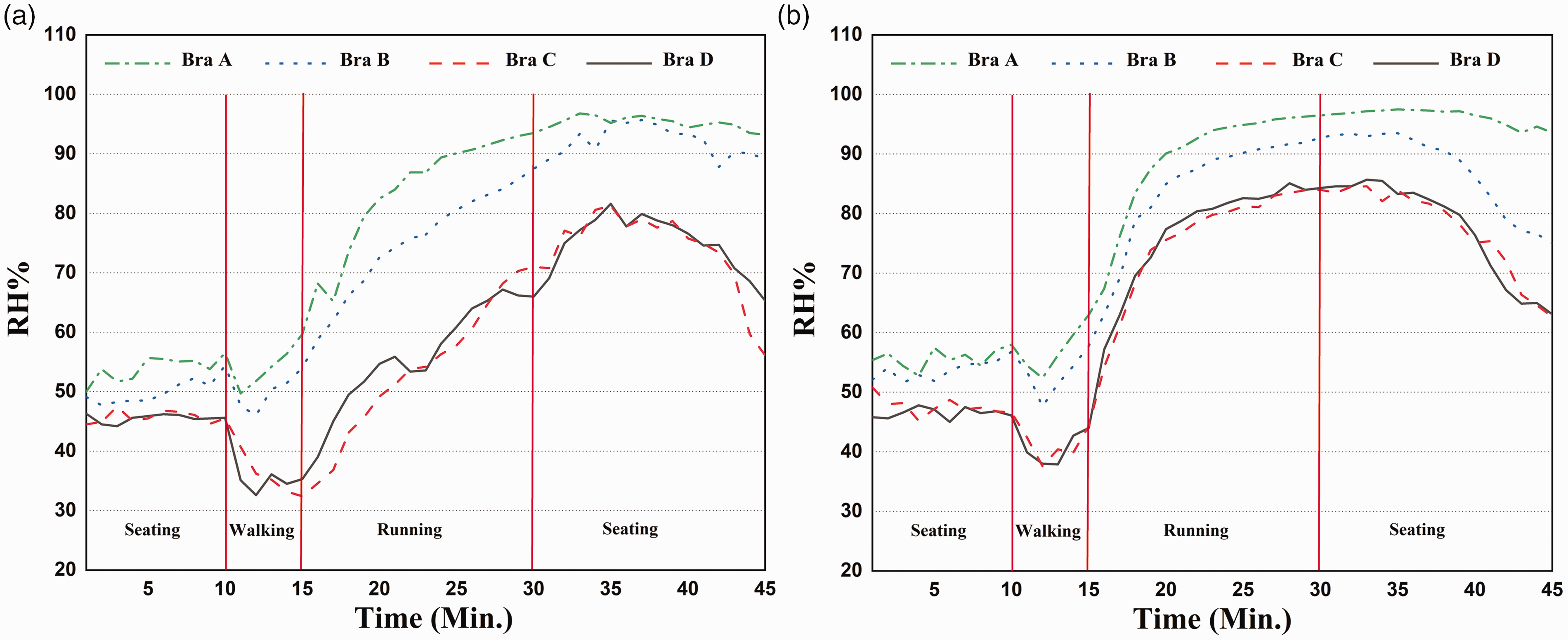
Mean skin humidity (Hs) in (a) the medialis area and (b) the bottom area of four sports bras.
A similar Hs trend was observed at the bottom area, which decreased in the walking phase, increased during the running phase, and slowly decreased in the resting phase, as shown in Figure 6(b). However, the temperature incremental rates and pace at the bottom area were different from the medialis area. For instance, although the peak Hs value of bra D in the bottom (85.71%) was only 4.12% higher than the medialis area (81.59%), the Hs increased sharply once the participants started to run and reached the high value of 77.39% after 5 min of running, whereas Hs in the medialis area increased slowly, only to get the value of 54.70% after 5 min of running and then increase steadily to the peak value. The differences between the four sports bras at the bottom area were much the same as at the medialis area. A significant difference in the time by the bra interaction effect (F = 18.708, P < 0.001, 1–β = 0.999) was detected. Statistically significant differences were found at all five time points when comparing these four sports bras. According to the comparison with bra A, bra B showed significantly lower Hs at the 15th (P < 0.05), 30th, and 45th min (P < 0.001). Bra C exhibited lower Hs at 0 min (P < 0.05), and the other four time points (P < 0.001) than bra A, while bra D showed lower Hs at all five time points (P < 0.001) than bra A. Bra C and bra D performed significantly better than bra B at the last four time points (P < 0.001), and bra D also performed more satisfactorily than bra B at the beginning of the preparing phase (P < 0.05).
Body core temperature (Tc)
The Tc trends of four sports bras were very similar. After a slight decrease in the walking phase, it increased during the running phase, and then decreased in the resting phase. Bra C and bra D exhibited lower core temperature responses than bra A and bra B in the entire experiment, especially after walking, running, and resting (15th, 30th and 45th min). The mean Tc during the entire 45 min experiment when wearing bra B showed no significant difference with bra A, while bras C and D showed significantly lower mean Ts than bras A and B (P < 0.05), as shown in Figure 7(a). There was no significant difference between the peak Tc when wearing bras B and A. Bras C and D also exhibited significantly lower peak Tc than bras A and B (P < 0.001), as shown in Figure 7(b).
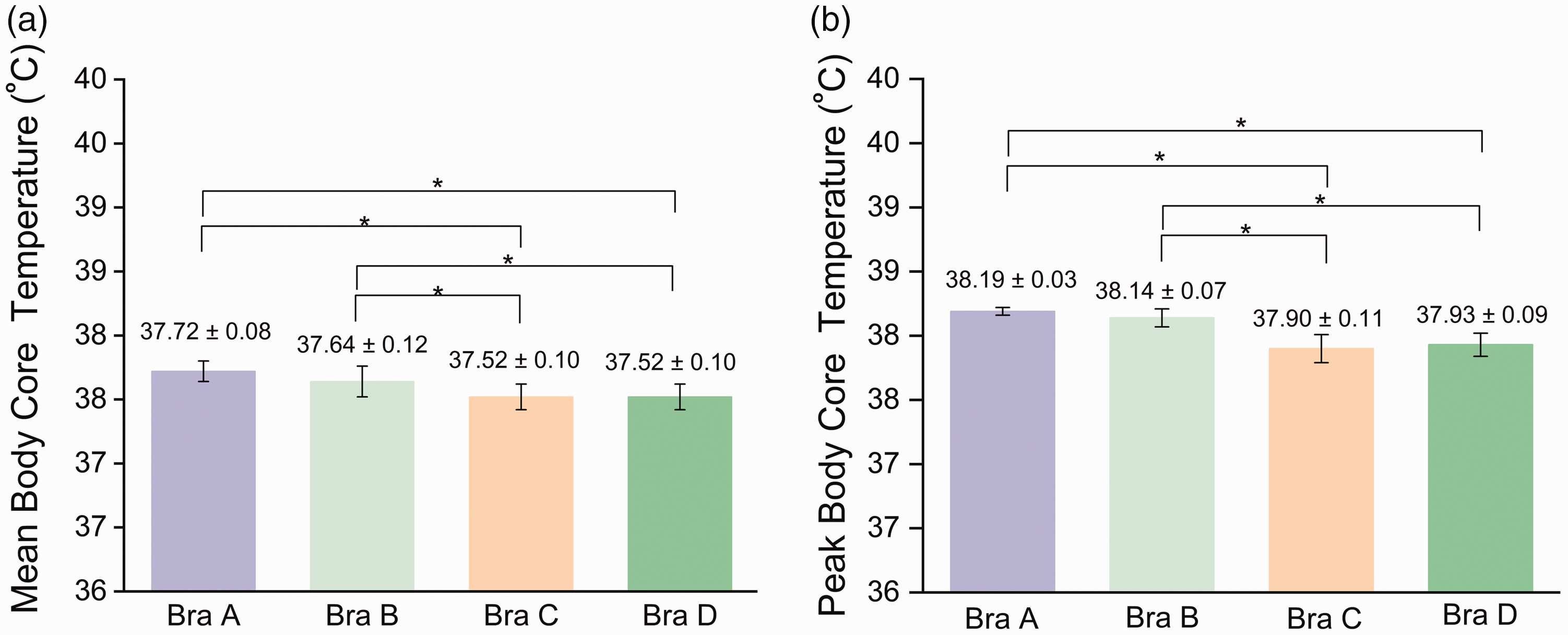
(a) The mean body core temperature, and (b) the peak body core temperature of four sports bras. *P < 0.05.
The differences of Tc between these four sports bras were relatively small but physiologically meaningful from a heat balance and thermal comfort perspective as a fever or hyperthermia could be caused by these small differences. 61
Subjective sensations
The effects of time, bra, and their interactions on psychological sensations at the five critical time points were analyzed by repeated measures analysis of ANOVA. Although no significant difference was detected in the bra or in the time by bra interactions, bras C and D generally received a little higher score on the psychological sensations than bras A and B after running and resting. For instance, at the 30th and 45th min (after running and resting), the sensation of coldness, breathability, softness and overall comfort of Bra C and bra D was a little higher than bra A and bra B, as shown in Figure 8. Different from the other five sensations, the rating of softness was high during the whole experiment (ranging from 4.36 ± 1.15 to 5.08 ± 0.84), and showed no significant difference between the five time points.

Subjective sensations for the sports bras in five time points: (a) wetness, (b) coldness, (c) breathability, (d) itchiness, (e) softness and (f) overall comfort.
Reduction of breast displacement
The multiplanar breast displacement of a representative subject (S1) when wearing four sports bras during one running gait cycle is exhibited in Figure 9, which showed different movement trends in three directions. A double trough in the vertical direction, a single trough in the anterior-posterior and a single peak in the medial-lateral direction were observed, with minimum anterior-posterior and maximum medial-lateral displacement occurring during the mid-flight of the ipsilateral limb. Overall, bras A and B showed very similar movement trends, while bra D exhibited the largest displacement range in all three directions, and nine subjects showed similar results.
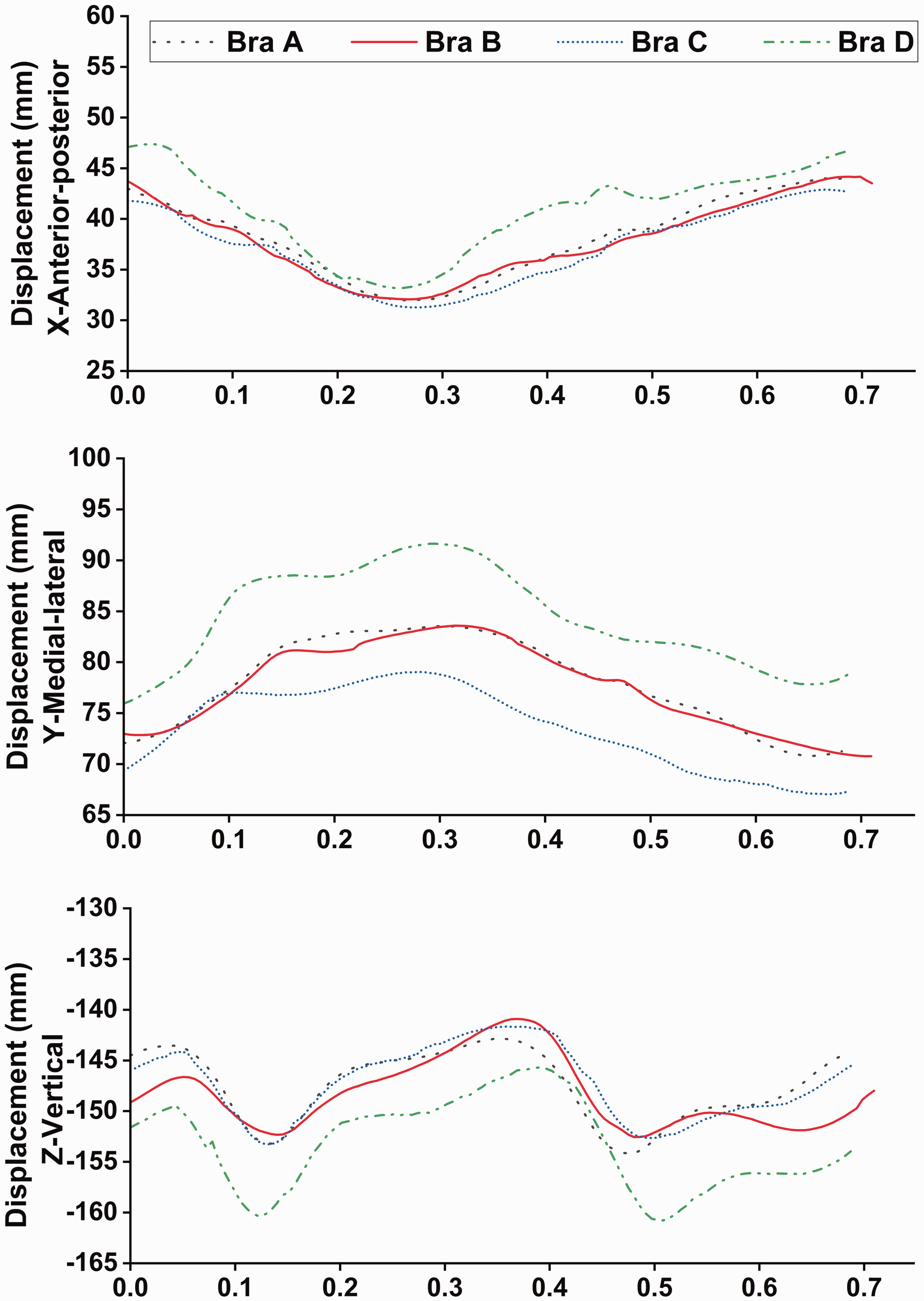
Multiplanar breast displacement of a representative subject (S1) in one gait cycle.
The range of breast displacement (peak position value minus trough position value)33,59 of nine participants when naked and when wearing four sports bras in three directions is shown in Figure 10, based on which, the RBD of nine participants was calculated.
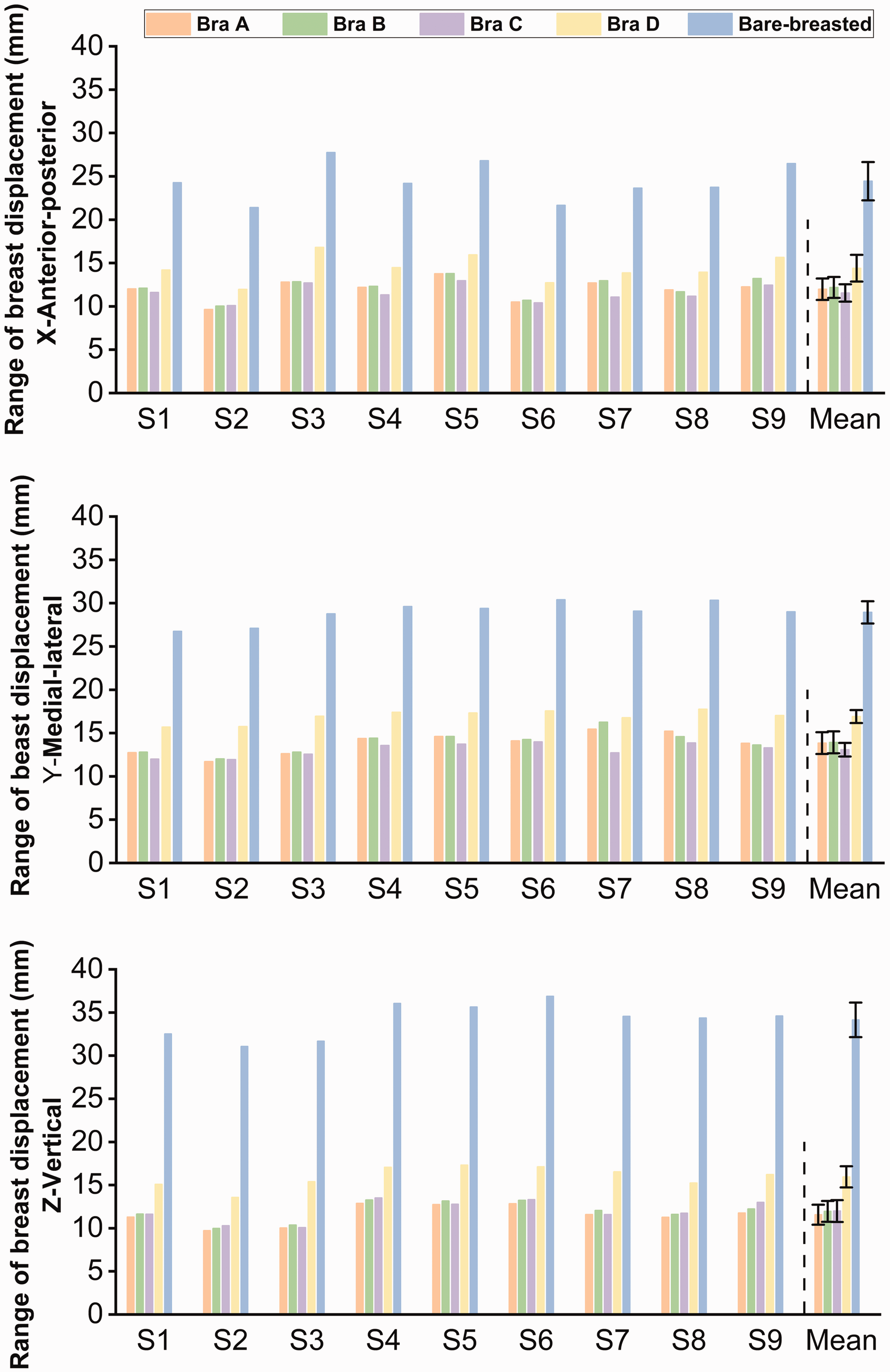
The range of breast displacement of nine participants.
As shown in Figure 11, four sports bras showed the highest RBD in direction z (vertical). A significant direction by the bra interaction effect was detected in RBD during running (F = 5.898, P < 0.05, 1–β = 1.000). The pairwise comparison of RBD between four sports bras showed significant differences in each direction. In direction x (anterior-posterior direction), when compared to bra A, bras B and C showed no significant difference with bra A, while bra D showed significantly lower RBD than bra A (P < 0.001). In addition, bra B performed better than bra D (P < 0.001). Bra C performed better than bra B and bra D (P < 0.001). In direction y (medial-lateral direction), bra B exhibited no significant difference with bra A. Bra C showed significantly higher RBD than bra A (P < 0.05), while bra D showed significantly lower RBD than bra A (P < 0.001). Moreover, bra B performed better than bra D (P < 0.001). Bra C showed significantly higher RBD than bra B (P < 0.05) and bra D (P < 0.001). In direction z (vertical direction), bras B and C showed no significant difference with bra A, while bra D exhibited significantly lower RBD than bra A (P < 0.001). In addition, bra B and bra C performed significantly better than bra D (P < 0.001).
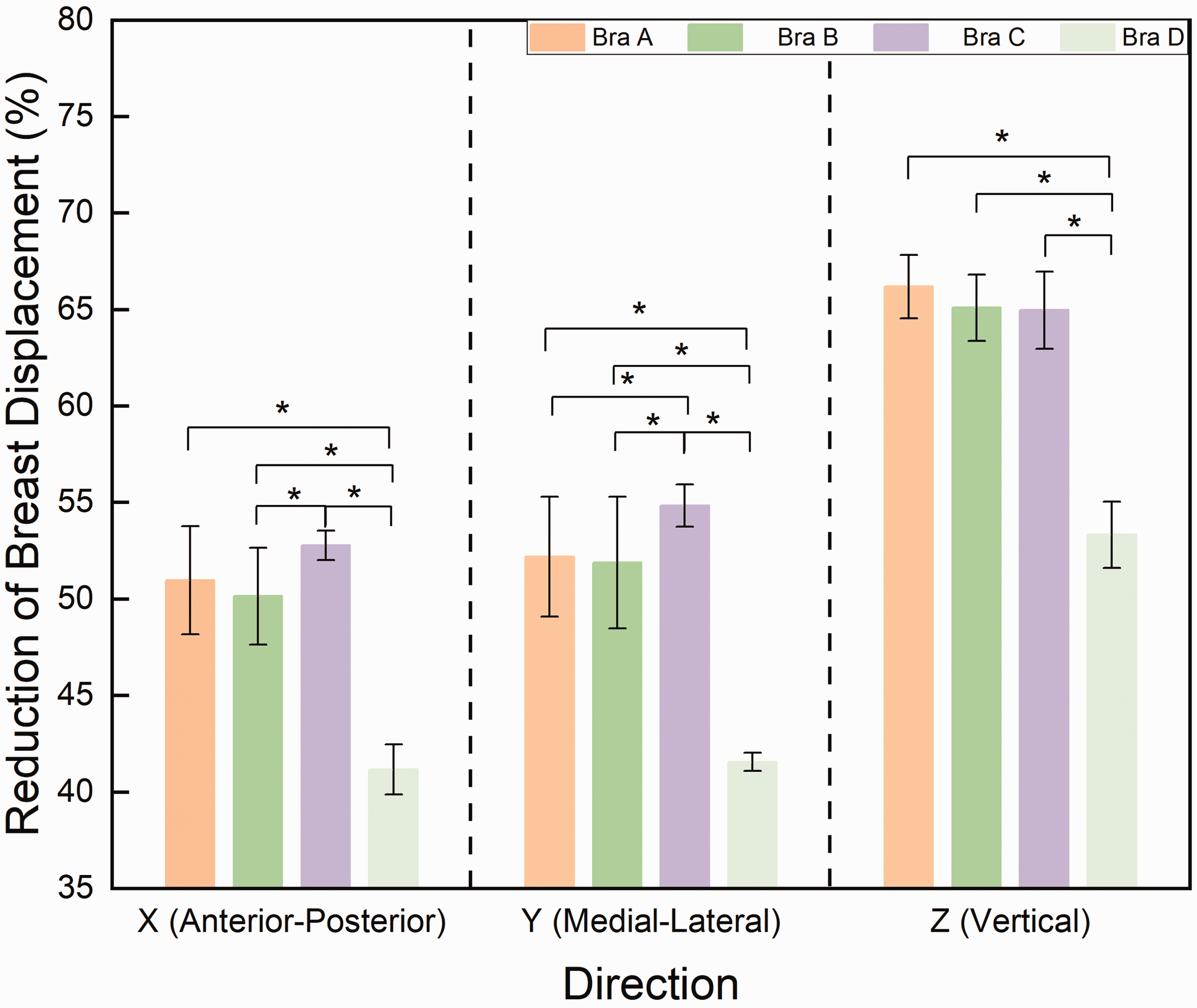
The reduction of breast displacement (RBD) of four sports bras in three directions. *P ≤ 0.05.
In conclusion, both the factor of time and bra caused significant effects on heat loss and sweat evaporation. The differences of Ts, Hs and Tc between four sports bras in exercise phases were much more significant than the preparing seating phases, which demonstrated that the ventilation design worked effectively during exercise rather than seating quietly. As the breast bounced, air flowed into the bra and took away the heat, improving evaporation of sweat and promoting the thermal comfort performance. Both bra C and bra D showed a better performance than bra B and bra A in Ts, Hs and Tc, while bra B performed generally better than bra A. No significant differences were detected in the subjective sensations. Bra C showed a significantly satisfactory performance in RBD, while bra D showed an extremely lower RBD in contrast.
Discussion
During exercise, a large amount of the heat produced from metabolic activity in the muscles is stored in the body,4,15,62 resulting in an increase of the body temperature. Sweat transfers heat from the body’s core to the skin, and then converts to water vapor to take the heat away from the body. 23 The evaporation could be promoted by a convective airflow created by body movement, resulting in the reduction of the temperature of skin.9,10,63 Therefore, a rising trend of Tc and a reducing trend of Ts during walking and running phases in four sports bras were observed, consistent with previous research. 10 Similarly, the extra airflows created by the bouncing breast also made Hs decrease when the walking phase started, especially for bras C and D, of which the neckline and ventilation holes improved the convection.
Compared to the medialis area, the slowly increasing trend of Ts in the resting phase, the smaller Ts decrement, and the higher Hs incremental rates and pace in the whole experiment in the bottom area might have been due to the fact that more air flowed out of the ventilation holes in the center front bottom, taking away the heat in the medialis areas, while less air flowed out of the ventilation holes in the cup bottom, where the airflow might be hindered by the breasts to some extent.
According to the comparison between bra B and bra A, the former exhibited a significantly better performance than the latter in Ts and Hs, whereas no significant difference was observed in Tc or subjective sensations, partially accepting H1. Moreover, there was no significant difference in RBD between bras A and B, rejecting H3. This indicated that the ventilation holes significantly reduce the accumulation of heat and sweat in the breast skin without the reduction of breast support. That is, the design of the ventilation holes effectively directed the airflow from the neckline to the middle and lower parts of the breast, promoted the evaporation of sweat, and took away the heat from the breast area (Figure 12).
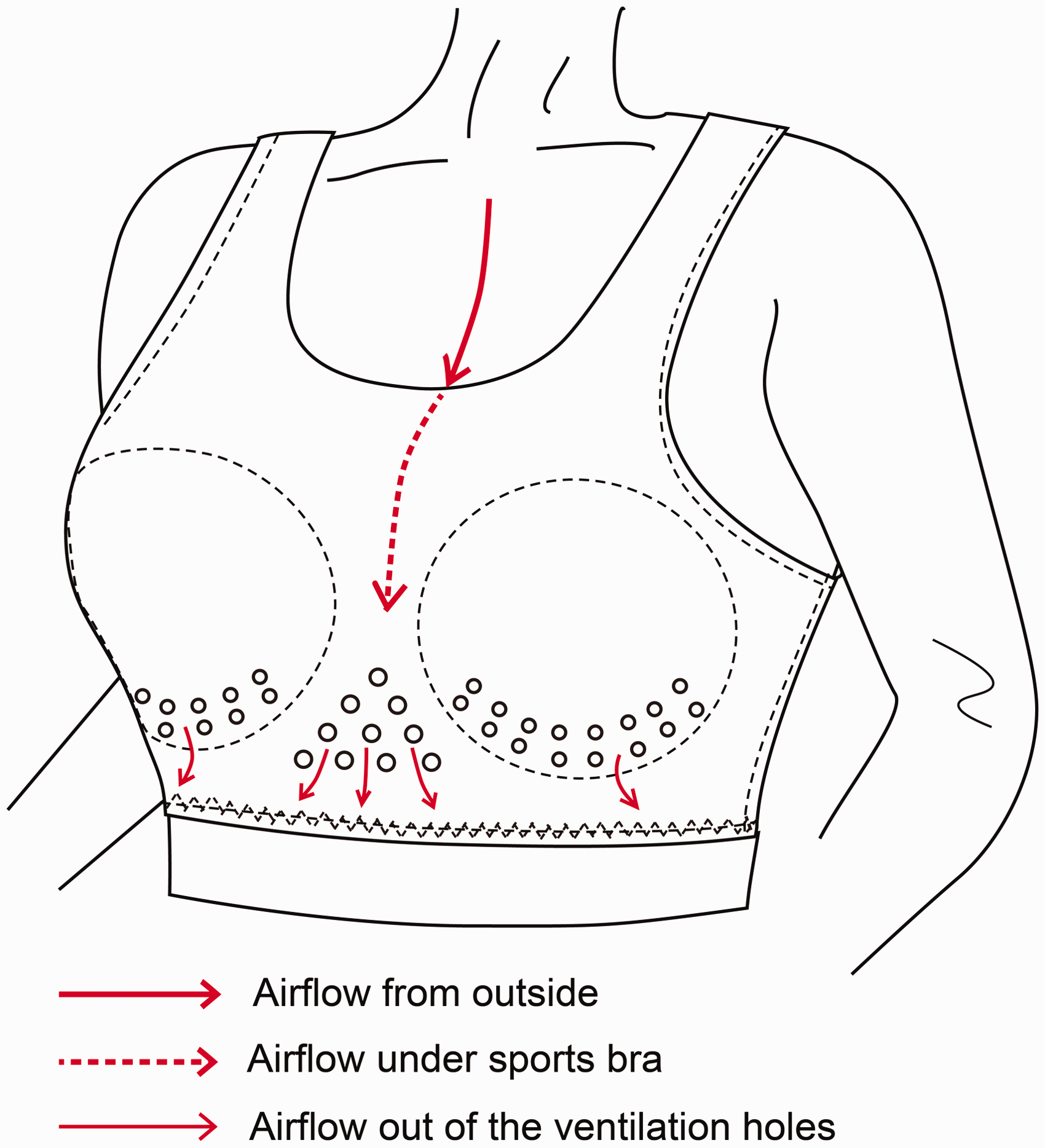
The airflow path of the sports bras from the neckline to the breast area.
According to the comparison between bras B, C and D, bra C showed significantly lower Hs and Tc than bra B, while there was no significant difference in Ts or subjective sensations between bras C and B. In addition, it also showed an even higher RBD than bra B, indicating that increasing the depth of the neckline bottom could significantly increase the airflow pumped from the neckline without reducing RBD. When the body moved, a gap between the bra and the breast can easily occur on the bra’s neckline. 29 Therefore, an opening was formed between the neckline and the body. The longer the neckline, the larger the opening was, resulting in an improvement of the heat loss.14,64,65 Similarly, as a result of a wider neckline bottom, the airflow pumped from the neckline of bra D was more than that of bra B, and bra D showed significantly lower Ts, Hs and Tc than bra B, while no significant difference was detected between bras D and B. However, the RBD of bra D was significantly lower than that of bra B (and also significantly lower than that of bra C and bra A), indicating that the widening of the neckline bottom would cause the decrease of RBD, and the improvement of thermal comfort performance was not entirely dependent on the ventilation design, but partly due to the increase in breast displacement. From the comparison between bra C and bra D, there was no significant difference in Ts, Hs, Tc or subjective sensations between these two sports bras (except the Hs in the medialis area at the 45th min), but the RBD of bra D was significantly lower than that of bra C. Therefore, according to the comparison in thermal comfort performance between bras B, C and bra D, H2 was partially accepted. In addition, as there were significant differences in RBD between these three sports bras, H4 was accepted. The results indicated that deepening the neckline bottom would be more effective than widening the neckline bottom in promoting thermal comfort performance without decreasing breast support, although their coverage area was the same. Due to the bulge of the breasts, the deeper the neckline bottom was, the further it was from the torso. As a result, when the breast bounced, the opening formed by the torso and the neckline between two breasts was larger. That was why bra C showed a better thermal comfort performance than bra D.
Moreover, the comparison of RBD between bra B and bra A indicated that the ventilation holes in two locations (the center front bottom area, and the cup bottom area) did not affect the breast support performance of sports bras. And the difference between bras B, C and D showed that different neckline had a significant effect on the support performance of sports bras. Previous research has shown that the neckline height should be sufficient to fit the upper breast boundary to limit the breast movement. 29 However, the relationship between RBD and the distance from the neckline bottom to the bust point was not linear. There was a certain range within which RBD reached its maximum. 29 Therefore, a deeper neckline bottom does not always lead to a lower RBD. Although the neckline bottom depth of the four sports bras was different, all of them covered the upper breast boundary. The effect of the neckline bottom width on RBD has yet to be investigated. The results of this research showed that RBD was not only related to the depth of the neckline bottom but was also related to the width of it. It seems that reducing the width of the neckline bottom will cause the increase of RBD, this may account for the high RBD of bra C (a deeper and narrower neckline bottom). However, whether the relationship between RBD and the neckline bottom width is linear warrants further investigation. Overall, bra C with a deep neckline bottom and ventilation holes showed the best thermal comfort performance and breast support among the four sports bras.
In addition, although the ventilation design in sports bras could enhance thermoregulation in terms of lower skin temperature, humidity, and body temperature, it could not significantly improve the subjective thermal and wear comfort sensation for women during physical activities. This may have been due to the fact that the same textile materials used in the bras caused similar sensations to the skin of the breasts, as Leung et al. (2021) reported in their research, 61 and the fact that physiological responses such as skin temperature was only one factor affecting an individual’s thermal comfort.4,66 For example, friction was reported to affect the roughness and wetness.24,38 Although four sports bras used in this research were made of the same fabric to minimize the effect of friction coefficient, the friction was also affected by the water content and the contact pressure (affected by breast mass, and the direction, displacement and the velocity of breast movement), which kept changing during exercise. Besides, thermal comfort was affected by pressure.67–71 Higher clothing pressure leads to blood circulation block of the distal skin, and skin temperature will inevitably change accordingly, directly affecting the cold and warm feelings and the humidity feelings. 67 The warm feeling threshold increased at a high pressure level (300 mmHg), while the cold feeling threshold decreased. 71 As the effect of the difference in the neckline and ventilation holes on the contact pressure has not yet been studied, it was not clear whether these changes would cause a difference in pressure. Moreover, research has shown that there was no significant difference in material comfort such as breathability between sports bras made of different fabrics during exercise, 72 and that clothing fabrics did not affect comfort sensation responses during exercise in a moderately warm environment. 73 It seems that the subjective sensation responses were not as ‘sensitive’ as the physiological responses.
Conclusion
In summary, ventilation design played a significant role in improving the thermal comfort performance of the sports bras when subjects were performing a 20-min short duration high-intensity exercise under thermoneutral conditions. Ventilation holes at the bottom area between the breasts and the bottom of the cup effectively directed airflow from the neckline into the middle and bottom area of the breasts, promoting heat loss and sweat evaporation. Increasing the opening (deepening or widening the neckline bottom) could effectively increase the amount of air entering the neckline, while deepening the neckline bottom had a more significant effect than widening the neckline bottom. In addition, the results showed that bra D with a wider neckline bottom could cause the reduction of RBD, whereas bra C with a deeper neckline bottom would not. It should be noted that bra C with the design of a deeper neckline bottom and ventilation holes could effectively improve thermal comfort performance of the sports bras by reducing Ts, Hs, and Tc, and promote the RBD.
These results provided novel information that the appropriate application of ventilation design in sports bras could effectively improve the thermal comfort performance without reducing breast support, which was supposed to benefit exercising women. In addition, the results were also instructive for everyday bras, the thermal comfort performance of which might be improved through appropriate ventilation design according to the movement of the breast in women’s daily life and work. It was suggested that future research in this field may include different ventilation strategies, such as a different location, shape, and size of the opening design to get an effective thermal comfort performance and breast support. Besides, the effect of the neckline bottom width on the breast support of sports bras has yet to be investigated, and it should be considered with the effect of the neckline bottom depth together. Moreover, the results showed that the reduction of temperature and humidity cannot directly lead to the improvement of the subjective sensation. This was an interesting result; future research may emphatically investigate the relationship between physiological responses and subjective sensation responses by changing measuring methods and scales, and take more factors in to consideration, such as friction and pressure. In addition, the total number of participants was small. A large-scale experiment with stratified depth randomization will be needed for future research to benefit more exercising women of different ages, body mass, and breast sizes.
Footnotes
Declaration of conflicting interests
The author(s) declared no potential conflicts of interest with respect to the research, authorship, and/or publication of this article.
Funding
The author(s) disclosed receipt of the following financial support for the research, authorship, and/or publication of this article: the 2020 National Social Science Foundation of Art Project: History of Chinese women’s underwear (grant/award number: 20BG134).
