




Abstract
Polydopamine polymerization is one of the simplest methods for the functional modification of material surfaces. Because of the high requirements for rubbing and washing color fastness of textile and clothes fabrics during taking, the polydopamine on the fabric surface is a porous, loose, and disordered structure that cannot meet the color fastness requirements. To solve the above problems, we use a hot pad-batch treatment process of dopamine and CI reactive red 239 dye (RR239) that induces the orderly polymerization and growth of dopamine to prepare smooth and orderly polydopamine-modified and dyed cotton fabrics. In this way, the fastness of color is satisfied, and the color of the polydopamine-modified fabric can be enriched. In this paper, we compared the effects of three modification processes on the surface morphology of fibers with cotton fabrics as substrates, investigated the results on the dyeing properties of cotton fibers in the co-presence of dopamine/RR239, explored the role of calcium (Ca2+) ions in the dyeing process, and the Fourier transform infrared and X-ray photoelectron spectrometer spectra of polydopamine-modified dyed cotton fibers were tested and the mechanism of cotton fiber modification and dyeing was elaborated. The results showed that the hot pad-batch dyeing process with the simultaneous presence of dopamine and reactive dyestuff could improve the polymerization and covalent cross-linking of dopamine, and increase the reaction of reactive dyestuff with fiber fixation. Due to the strong fabric extrusion, the polydopamine is an ordered and smooth structure, with excellent color fastness.
Keywords
Reactive dyes have good water solubility, and the reactive groups can be formed into covalent bonds in the reaction of cellulose under the action of alkali, and the dyed products have good washing, which is mainly used in dyeing and printing of cotton fabrics.1,2 Cold pad-batch dyeing with reactive dyes is an economic and low-energy semicontinuous dyeing process in which the fabric is first dipped and rolled with the dye and alkaline solution, and then the dipped fabric is rolled and placed at room temperature for dyeing and color fixation.3–5 Due to the low dyeing temperature of cold pad-batch dyeing, it is necessary to select reactive groups with high reactivity to achieve good dyeing performance. During dip rolling and stacking dyeing of reactive dyes, it is necessary to avoid the migration of dyes, improve dye penetration and homogenization, and increase the fixation percentage of reactive dyes. In actual production, waste hot air can sometimes be used to increase the ambient temperature of the pile, which can expand the choice of reactive dyes and increase production flexibility. 6 Cold pad-batch dyeing is an eco-friendly dyeing process with low energy consumption; however, high-temperature type dyes (such as bifunctional reactive dyes) are not suitable for the dyeing process, which limits the choice of reactive dye varieties.
Dopamine (DA) is one of the derivatives of dihydroxyphenylalanine and has a similar structure to dihydroxyphenylalanine. As the molecular structure of dopamine contains catechol reactive groups, it can be oxidized and polymerized to produce dopamine oligomers of polydopamine under the condition of moist and weak alkaline oxygen.7,8 The catechol structure in polydopamine can form covalent bonding crosslinks with materials containing sulfhydryl or amino functional groups, or chelate and coordinate with materials containing metals and metal oxides, and can graft materials onto polydopamine coatings, resulting in surface modified materials with special functions.9–13
The wide applicability of polydopamine to substrates and mild reaction conditions is also suitable for functionalized surface modification treatment of textile materials, such as the preparation of silver nanoparticles (AgNPs)-polydopamine-coated silk by uniformly depositing AgNPs on the surface of silk fibers with long-lasting antibacterial and antimicrobial effects using polydopamine as the reducing agent. 14 On silk fabrics, the laccase has been used to catalyze the oxidative polymerization of dopamine to prepare ultraviolet-resistant silk fabrics by the adjustment of the amount of laccase and reaction time. 15 The surface of fabrics (polyester, polyester-cotton, cotton, acrylic) is coated with dopamine and AgNPs to increase the roughness of the fiber surface; and then grafted with fluoroalkyl mercaptan to reduce the surface energy, which can obtain superhydrophobic fabrics with excellent self-cleaning and water–oil separation ability. 16 Or it uses polydopamine to cover the fabric; and then modifies it with stearic acid emulsion to prepare hydrophobic material with low surface energy and roughness. 17 Dopamine is also suitable for the modification of aromatic fibers (PMIA). PMIA is impregnated in a mixed solution of dopamine and silver ammonia nano ions to produce a dihydroxyphenylalanine @ silver nanoparticle assemblies (AgNAS) coating deposited on the fiber surface, which is then chemically nickel plated to prepare nickel-plated PMIA fibers (dihydroxyphenylalanine @ AgNAS-Ni-PMIA) with excellent electrical conductivity and mechanical stability. 18 The monodisperse polydopamine-silver (Ag) core-shell nanostructure has photocatalytic degradation of neutral dyes, 19 and polydopamine has excellent adhesion, 20 hydrophilicity, 21 antibacterial, 22 reducing, 23 anti-biocontamination, 24 ultraviolet resistance and corrosion resistance, etc. Moreover, polydopamine is also a green melanin-like material that can be used as a light-absorbing material,25,26 and can be applied in the field of structural color generation. 27
In textile applications, dopamine is often used in the traditional impregnation method, in which polydopamine in solution is adsorbed and bonded on the fabric surface to form a polydopamine coating. Due to the continuous adsorption adhesion and polymerization of polydopamine in solution, a porous and loose surface structure is formed, which gives the fabric functionality but cannot meet the requirements of color fastness for use, which is the deficiency of dopamine or polydopamine in textile applications.
Herein, we report a new method for co-bath-modified cotton fabrics with dopamine and reactive dyes. Using a hot pad-batch treatment process, dopamine and CI reactive red 239 (RR239) were forcibly adsorbed on cotton fibers by rolling, and then the dip-rolled fabrics were stacked in a hot air environment for a certain period to complete the dyeing of cotton fibers with reactive dyes and the orderly polymerization of dopamine on the fabrics, and to prevent the evaporation of water on the fabrics, the surfaces of the dip-rolled fabrics were wrapped with polyethylene films. In addition, the dyeing conditions of hot air could be obtained from the waste heat of the fabric heat-setting process, which also provided a new way to reuse waste heat in the textile printing and dyeing industry. The use of the hot pad-batch treatment process can adapt to bifunctional reactive dyes, and can also induce the orderly polymerization of dopamine inside the fabric, and fabrics to meet the requirements of textiles on colorfastness. In this paper, the effects of the co-bath of dopamine and RR239 on the dyeing properties of cotton fibers and the role of metal ions in the dyeing process were investigated, and the dyeing mechanism of cotton fibers was studied.
Materials and methods
Materials
A scoured combed cotton (100% plain weave cotton, yarn count: 60 s × 60 s, yarn density: 90 × 88 ends/10 cm, gram weight: 115 g/m2) was purchased in the market. CI reactive red 239 dye (RR239) was purchased from Shanghai Anoky Group Co. Ltd. (Shanghai, China). Dopamine hydrochloride (98% dopamine) was purchased from Shanghai Macklin Biochemical Co. Ltd. (Shanghai, China). Commercial samples (chemical purity) of calcium dichloride (CaCl2), sodium sulfate (Na2SO4), and sodium carbonate (Na2CO3) were purchased in the market. Leveling agent MP-1 (25%, a mixture of an ionic and nonionic wetting and penetrating agent, industrial grade) was purchased from Suzhou Changchunteng Import and Export Co., Suzhou, China.
Co-bath hot-batch treatment method
Figure 1 shows three kinds of methods for dyeing treatment using dopamine and reactive dyes in the same bath. First, RR239 was dissolved in an aqueous solution and dopamine, Na2CO3, Na2SO4, and MP-1 were added to produce the dyeing solution. Next, the cotton fabric was dyed in three processes:

The process flow charts for hot-batch and exhaustion dyeing of cotton fabrics with reactive dyes and dopamine.
Process A: The impregnated cotton fabric was dipped and rolled with EL-400 type vertical gin (Shanghai Langgao Textile Equipment Co. Ltd., Shanghai, China), and the pick-up was 90%, while the dipped and rolled cotton fabric was rolled, and the outer layer of the fabric was covered with polyethylene film, and then placed at 70°C for 3 h.
Process B: The above dipped and ginned cotton fabric was stacked flat (not rolled) and the rest of the conditions were the same as in process A.
Process C: The above cotton fabric impregnated dyeing solution was heated up to 70°C and reacted for 3 h, and the liquid ratio was 1:30.
After the above three processes of fabric, dyeing was completed, soaping, washing, and drying were carried out to produce dyed cotton fabrics. The soaping conditions were 3 g/l Na2CO3, 3 g/l soap powder, bath ratio 1:30, washing temperature 80°C, and washing time 10 min.
Cotton fabrics dyed with dopamine and RR239 were evaluated for dyeing performance and structure using the following indicators:
The K/S values were measured on a spectrophotometer (Ultra Scan XE, Hunter-Lab., Reston, VA, USA) with a D65 light source and a 10° field of view, and the color yield (K/S) and color characteristic values (a*, b*) were tested as the average of four times, where a* indicates the degree of reddish (+a*) and greenish (–a*), and b* indicates the degree of yellowish (+b*) and bluish (–b*). The fastness to rubbing of dyed fabrics was measured according to the standard (ISO105-171X12:2016) using a model 670 type friction fastness machine (James H. Heal & Co. Ltd., Halifax, UK). The washing fastness test was measured according to the standard (ISO105-C02:2013) using a washfastness tester (Roaches International Co., Leek, Staffordshire, UK). The surface morphology of dyed fabrics was tested by scanning electron microscopy (SEM, S-4800; Hitachi, Tokyo, Japan) under the condition that the surface of the fabric was sprayed with gold twice and the surface morphology of the fabric was observed under the accelerating voltage of 5 kV. Fourier transform infrared (FTIR) tests were performed using a Nicolet 5700 FTIR spectrometer (Thermo Electron Co., Waltham, MA, USA). Samples were analyzed over a frequency range of 500–4000 cm−1 using the KBr pellet technique and at a resolution of 4 cm−1. The surface elemental analysis of dyed fabrics was tested by an X-ray photoelectron spectrometer (XPS; ESCALAB 250 XPS, Thermo, Waltham, MA, USA), using Al Kα radiation (hν = 1486.6 eV) operated at 14.0 kV and 200 W. The water wetting time analysis of dyed fabrics was tested by an optical contact angle measurement device (OCA20; Dataphysics Co., Filderstadt, Germany), using 6 µl water and using video recording, the default frame rate was 400 frames per second.
Results and discussion
Morphology of polydopamine on the fabric surface
Dopamine is easily generated on cotton fibers as polydopamine. To investigate the fixation of polydopamine on cotton fiber, four dyed fabrics were prepared by fixing sodium carbonate at 10 g · l−1, MP-1 at 5 g · l−1, RR239, and dopamine dosage as shown in Table 1. Figure 2 and Table 1 show the differences in surface morphology and color fastness of the polydopamine dyed fabrics prepared by the four processes.
Effect of salt concentration on dyeing color light

Effect of dyeing process on the morphology and dyed samples of polydopamine on the cotton fiber surface. (a) Dyeing process A (×4000); (b) dyeing process B (×5000); (c) dyeing process C (×5010) and (d) dyeing process A (no dopamine, ×2000).
Effect of different treatment methods on color fastness and hydrophilicity

Figure 2(c) shows the morphology of the fiber surface of the impregnation method using process C. Dopamine and reactive dyestuff can occur on cotton fibers by adsorption, dopamine polymerization, and reactive dye fixation. As the dyeing time is extended, the fabric adsorbs more dopamine to generate porous and loose polydopamine, which can give the fabric good hydrophilicity (water wetting time to 2.3 s). However, the disorderly growth of polydopamine is not up to the standard of use due to the lack of better bonding with cotton fibers, resulting in a decrease in color fastness, such as dry or wet fastness to rubbing is only grade 1, and washing color fastness is grade 2 (change) and grade 3 (staining).
Figure 2(b) shows the morphology of the fiber surface by the dipping and rolling loose stacking method using process B. Dopamine and reactive dyes are forced to be adsorbed on the fiber for dopamine polymerization and reactive dye fixation; compared with process C. Although the disorderly growth of polydopamine on the cotton fiber surface is reduced, the polydopamine is still porous and loose in structure, and water wetting time is 5.3 s. Dry or wet fastness to rubbing is only grade 2, and washing color fastness is grades 3–4 (change and staining), and the rubbing color fastness is unable to meet the requirements.
Figure 2(a) shows the morphology of the fiber surface of the pad-batch dyeing method using process A. Due to the winding and squeezing effect between the fabric and the fabric, the polydopamine on the fiber surface can be converted from disorderly growth to orderly growth, and the self-polymerization of dopamine can occur inside the fiber yarn and fiber. The fabric surface is smooth and dense polydopamine, and water wetting time is 21.3 s, and the dry or wet rubbing color fastness reaches grades 3–4, and washing color fastness is grade 4 (change and staining), which can meet the requirement of color fastness of the garment fabric, and the dyed fabric has a bright deep red color.
Figure 2(d) shows the morphology of the fiber surface of the pad-batch dyeing method using process A, and dye solution only using RR239. Because there is no dopamine in the dye solution, the fiber surface is smooth and has good color fastness, and water wetting time is 1.3 s. The dry or wet rubbing color fastness reaches grades 3–4, and washing color fastness is grade 4 (change and staining), and the dyed fabric has a bright red color.
In summary, when dopamine and RR239 are dyed in the co-bath, the same color fastness as RR239 alone can be obtained, because the polydopamine produced on the fabric is yellow and the fabric color turns from red to dark red.
In addition, process C can generate polydopamine in solution, resulting in the waste of dopamine, and the disorderly growth and polymerization of polydopamine will also aggravate the burden of dyeing post-treatment, while medium temperature pad-batch dyeing (process A) is suitable for dopamine and reactive dyestuff to modify and dye cotton fabrics in the same bath. In addition, the dopamine forms an orderly and regular polydopamine on the fiber surface, which reduces the water-wetting time of the fabric.
Hot pad-batch dyeing performance of DA and reactive dye
Effect of reactive red 239 on the K/S of dopamine dyeing performance
The concentration of fixed dopamine was 15 g · l−1, MP-1 was 5 g · l−1, sodium carbonate was 10 g · l−1 and sodium sulfate was 30 g · l−1, and 0, 2, 6, 10, and 15 g · l−1 RR239 were added to the dopamine hydrochloride solution, and comparison sample (dopamine = 0 g · l−1, RR239 = 15 g · l−1), respectively, and Figure 3 shows the effect of dye concentration on K/S values.

Effect of reactive red 239 on the K/S of dopamine dyeing.
When using only RR239 dyeing, the maximum absorption wavelength of the red fabric was 555 nm and K/S was 11.81. In addition, there was also an obvious absorption peak at 370 nm and K/S was 6.98. When dyed with dopamine only, the maximum absorption wavelength of the yellow fabric was 370 nm and K/S was 8.77, indicating that dopamine formed a yellow polydopamine on the fabric. While dopamine/RR239 was present in the co-bath, the maximum absorption wavelength of the deep red fabric was shifted from 555 nm to a short wavelength of 30 nm (to 525 nm), and the wavelength at 370 nm remained unchanged. Comparing the same RR239 (15 g · l−1), the K/S values increased from 11.73 (555 nm, no dopamine) to 15.61 (525 nm, with dopamine), while the K/S values at 370 nm increased from 6.98 (no dopamine) to 12.12 (with dopamine).
When the concentration of dopamine remained unchanged and the concentration of dye was 2–10 g · l−1, K/S values (370 nm and 525 nm) increased along with the increase of dye concentration, and the apparent color depth of cotton fabric increased. With the addition of a small amount of RR239 (2 g · l−1), the K/S value at 370 nm increased by 60.66%, which indicated that the addition of reactive dyes further promoted the polymerization of dopamine. As the concentration of dye continued to increase, the K/S value (370 nm) decreased. For example, the concentration of dye increased from 10 to 15 g · l−1, and the K/S value decreased from 16.78 (RR239 = 10 g · l−1) to 12.84 (RR239 = 15 g · l−1), which was because the production of polydopamine may be competitive with the fixation between reactive dyes and fiber. Moreover, the fabric was kept squeezed in a flat state, which inhibited the disordered growth of polydopamine, resulting in a decrease in K/S values. Because fabric dyeing requires a higher color depth, the dye concentration is fixed at 15 g · l−1 subsequently.
Effect of dopamine on the K/S of reactive red 239 dyeing performance
The concentration of RR239 was fixed at 15 g · l−1, MP-1 at 5 g · l−1, sodium carbonate at 10 g · l−1 and sodium sulfate at 30 g · l−1, and dopamine at 0, 5, 10, 15, and 20 g · l−1 were added to RR239 solution, respectively, and Figure 4 shows the effect of dopamine concentration on the K/S value.
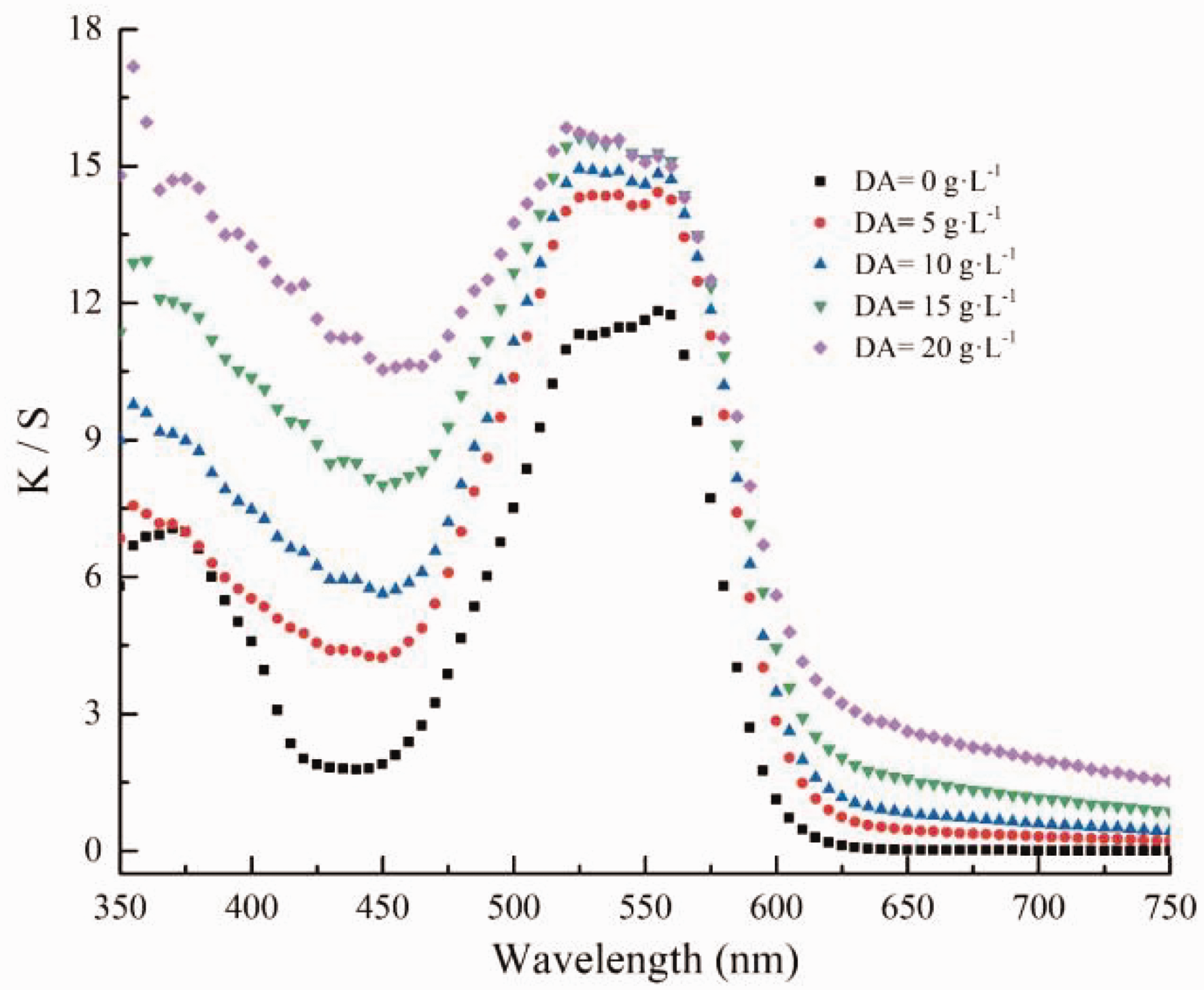
Effect of dopamine on the K/S of reactive red 239 dyeing.
When the concentration of RR239 was fixed, the dyed fabric changed from red (555 nm) to dark red (525 nm) by different concentrations of dopamine. With increasing the dopamine concentration, the K/S value increased. Compared with no dopamine, the K/S value increased by 21.3% (dopamine = 5 g · l−1), 25.6% (dopamine = 10 g · l−1), 32.3% (dopamine = 15 g · l−1) and 32.4% (dopamine = 20 g · l−1), respectively. Also, the K/S value (370 nm) increased by 1.6% (dopamine = 5 g · l−1), 29.5% (dopamine = 10 g · l−1), 70.6% (dopamine = 15 g · l−1) and 108.4% (dopamine = 20 g · l−1), respectively. When a small amount of dopamine (5 g · l−1) was added to RR239, the K/S value increased by 1.6% (370 nm) and 17.5% (525 nm). Similarly, when the amount of dopamine was increased from 15 to 20 g · l−1, the K/S value increased by 18.1% (370 nm) and 0.6% (525 nm). This is because the color of generated polydopamine is yellow, when the polydopamine generated on the fabric is less, it can affect the fabric color change from red to dark red. When the polydopamine generated on the fabric is more, the effect on the fabric color is less, only affecting the fabric color light change. Therefore, the preferred dopamine concentration is 15 g · l−1.
Effect of salt on polydopamine and reactive red 239 dyeing performance
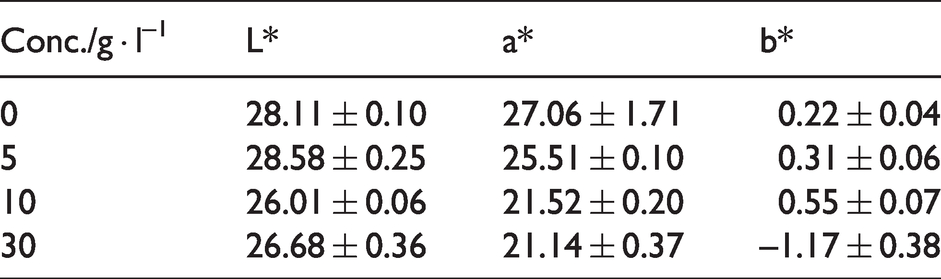
The concentration of RR239 was fixed at 15 g · l−1, dopamine at 15 g · l−1, MP-1 at 5 g · l−1, sodium carbonate at 10 g · l−1, and sodium sulfate at 30 g · l−1, and 0, 5, 10 and 30 g · l−1 CaCl2 was added to the RR239 solution, respectively. Figure 5 shows the effect of the CaCl2 concentration on the K/S values of the dyed fabrics, and the variation of color characteristics (L*, a*, b*) is shown in Table 2.

Effect of calcium dichloride (CaCl2) concentration on dyeing K/S.
It can be seen that with the addition of different concentrations of CaCl2, the K/S at 525 nm were 15.63 (0 g · l−1), 14.37 (5 g · l−1), 16.07 (10 g · l−1), and 15.13 (30 g · l−1), respectively; the K/S at 355 nm were 12.87 (0 g · l−1), 11.34 (5 g · l−1), 13.99 (10 g · l−1), and 11.13 (30 g · l−1), respectively. The addition of a suitable calcium salt (10 g · l−1) increased the fixation of RR239 and the production of polydopamine.
As the concentration of calcium salts increased, the a* value shows a decreasing change, weakening the fabric’s red light; the b* value indicates an increase in yellow light or even blue light. When the amount of CaCl2 was 10 g · l−1, the L* value was the lowest and the color of the fabric was the darkest.
This may be related to the fact that calcium salts cause aggregation of reactive dyes and polydopamine. In addition, the growth of polydopamine in this test was ordered and affected by the strong pressure squeeze of fabric and fabric, and the calcium salts could hardly promote the generation of more polydopamine, but the maximum absorption wavelength of polydopamine was shifted from 370 nm to 355 nm towards blue, that is, the addition of calcium salts may have increased the aggregation of polydopamine. The suitable CaCl2 concentration is 10 g · l−1.
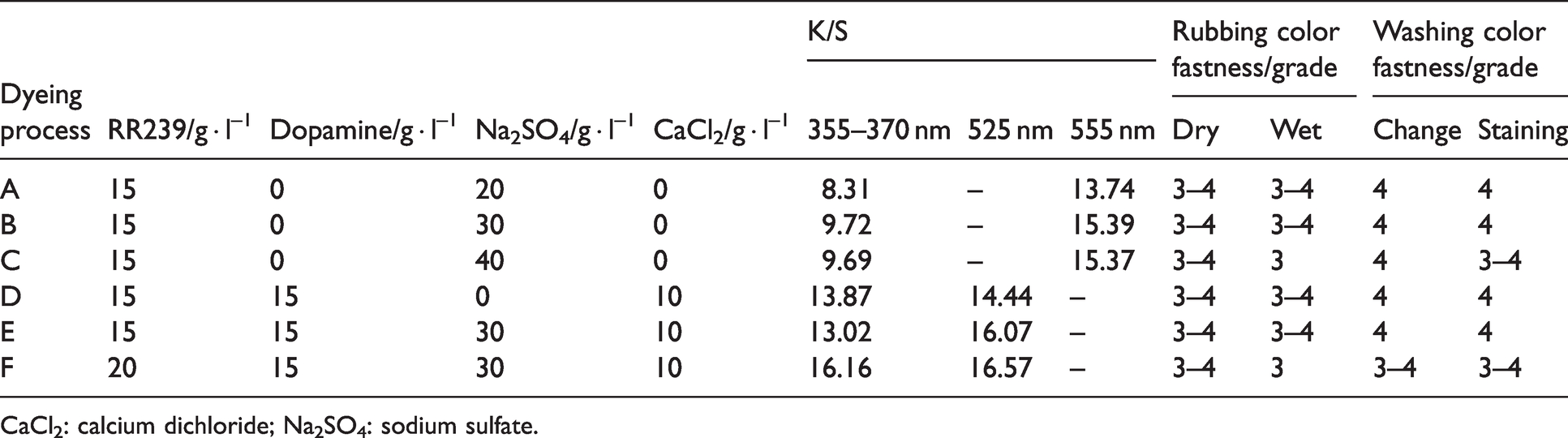
To investigate the effect of salt (Na2SO4, CaCl2) and dye concentration, the hot pad-batch treatment was used to fix MP-1 to 15 g · l−1, and sodium carbonate to 10 g · l−1, and other conditions are shown in Table 3. Figure 6 and Table 3 show the effect of salt on K/S values and the color fastness of dyeing.
Effect of salt concentration on K/S and color fastness
CaCl2: calcium dichloride; Na2SO4: sodium sulfate.

Effect of salt concentration on dyeing K/S.
It can be seen that when dopamine was not added, with the increase of sodium sulfate concentration, the K/S values (555 nm) were 13.74 (20 g · l−1), 15.39 (30 g · l−1), and 15.77 (40 g · l−1), respectively.
When the salt dosage was increased from 20 to 30 g · l−1, the K/S value increased by 12.0% and the color fastness remained unchanged, with a dry and wet rubbing color fastness of grades 3–4 and a washing color fastness (discoloration and staining) of grade 4. By continuing to increase the salt dosage to 40 g · l−1, the K/S value increased by 14.8%, but the color fastness decreased, and the wet rubbing and washing color fastness (staining) decreased by grade 0.5. The suitable sodium sulfate for the hot pad-batch is 30 g · l−1.
When RR239 and dopamine exist at the co-bath, the fabric changed from red (555 nm) to dark red (525–530 nm). Also, the absorption peak at 370 nm was shifted to the short-wave direction near 355 nm (polydopamine characteristic peak). Comparing processes A and D, it can be seen that calcium chloride can promote the production of polydopamine and affect the color change of the fabric, and the K/S values changed from 8.31 (no DA, 370 nm) and 13.74 (no PA, 555 nm) to 13.87 (with PA, 355 nm) and 14.44 (with PA, 525 nm), respectively. Comparing processes D and E, it was observed that in the existence of calcium chloride, the addition of sodium sulfate increased the K/S value of the dyed fabric from 14.44 to 16.07, but the K/S value (355 nm) decreased from 13.87 to 13.02. This indicates that sodium sulfate has a dye-promoting effect on reactive dyes, but has a slight disadvantage in the polymerization of dopamine.
When 15 g · l−1 RR239 and 15 g · l−1 dopamine were selected for hot-batch dyeing in the co-bath, the color fastness was excellent, with a rubbing fastness of grades 3–4 and washing fastness of grade 4. Further increasing the concentration of RR239 to 20 g · l−1 (process F), the K/S values increased by 3.1% (525 nm) and 24.1% (355 nm), and the wet rubbing color fastness and washing color fastness both decreased by grade 0.5. Therefore, the choice of a high concentration of dyestuff does not significantly increase the fixation of dyestuff and cotton fiber but increases the floating color dyestuff, which increases the burden of soaping and reduces the color fastness.
FTIR and XPS spectra of dyed cotton fabrics
FTIR analysis
The cotton fabrics were hot pad-batch treated with RR239, dopamine, and RR239/dopamine, and the results of the infrared spectra of the three samples are shown in Figure 7. The broad absorption peak at 3200–3400 cm−1 was the stretching vibration peak of –NH2, –NH– (3330.2 cm−1), –OH (3285 cm−1), which were the characteristic peaks of cellulose, RR239, and polydopamine. 28 The C–O–C asymmetric stretching vibration peak of cellulose was found at 1105.6 cm−1. 29 In sample B (polydopamine), there was a new peak (1734.6 cm−1), which was the peak of 1,2-diketones (six-ring), indicating that dopamine has a strong self-polymerization to produce dopaminechrome. In sample C (RR239/dopamine), there was no 1,2-diketones structure, which might be due to the covalent cross-linking reaction of dopaminechrome with the reactive group of RR239, or the conversion of dopaminechrome to dihydroxylindole before reacting with the reactive group in the dye, resulting in the disappearance of the characteristic peak. In sample A (RR239), a new peak (530.5 cm−1) was present, which was a stretching vibration peak of –C=C–, a group of the vinyl sulfone in RR239 that formed –C=C– by the elimination reaction. The peak was not present in sample C (RR239/dopamine), which indicated that RR239 was covalently cross-linked with polydopamine.
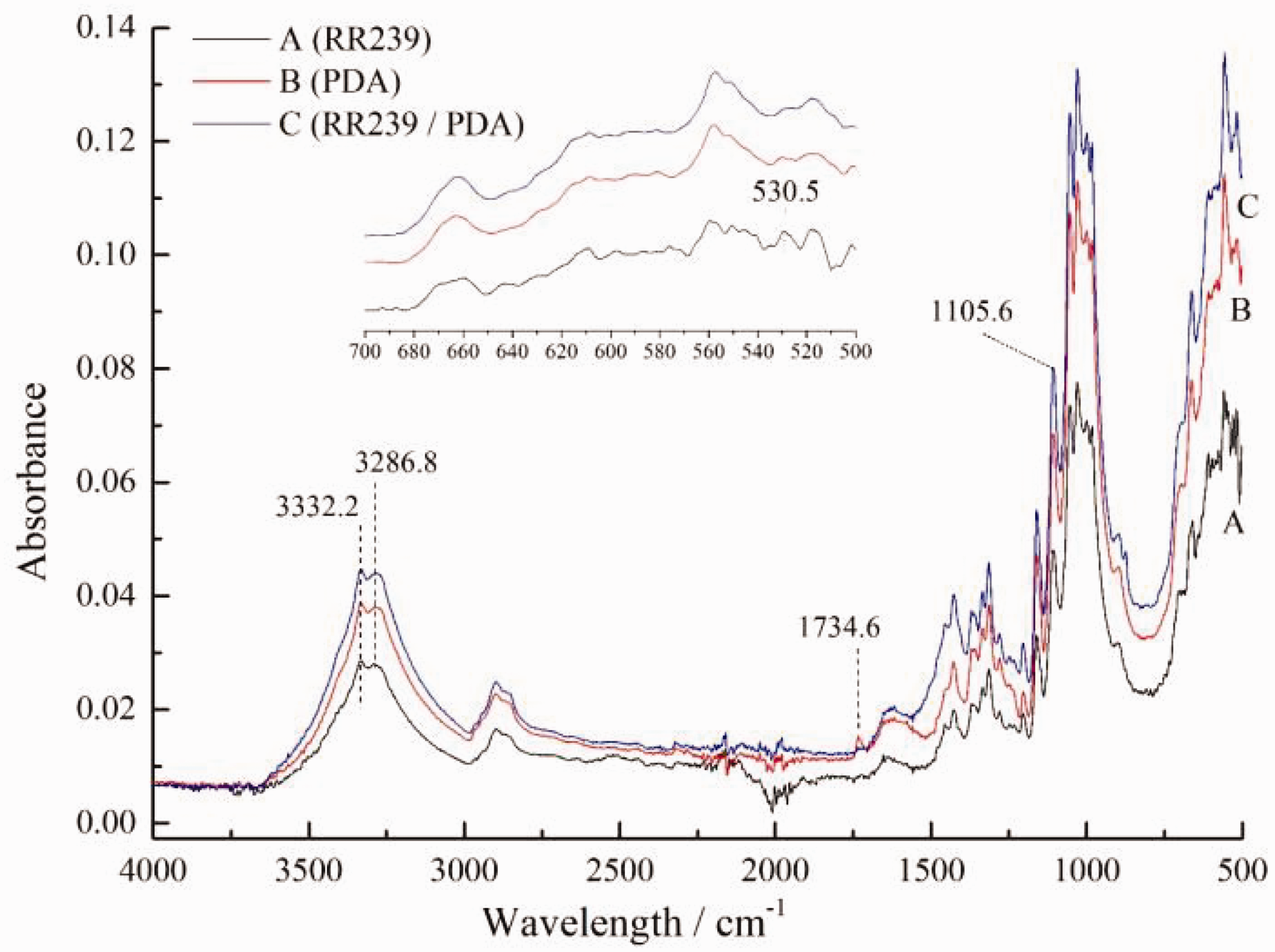
Fourier transform infrared (FTIR) spectra of samples.
XPS analysis
The cotton fabrics were hot pad-batch treated with dopamine and RR239/dopamine, and the results of the XPS spectra of the two samples are shown in Figure 8.
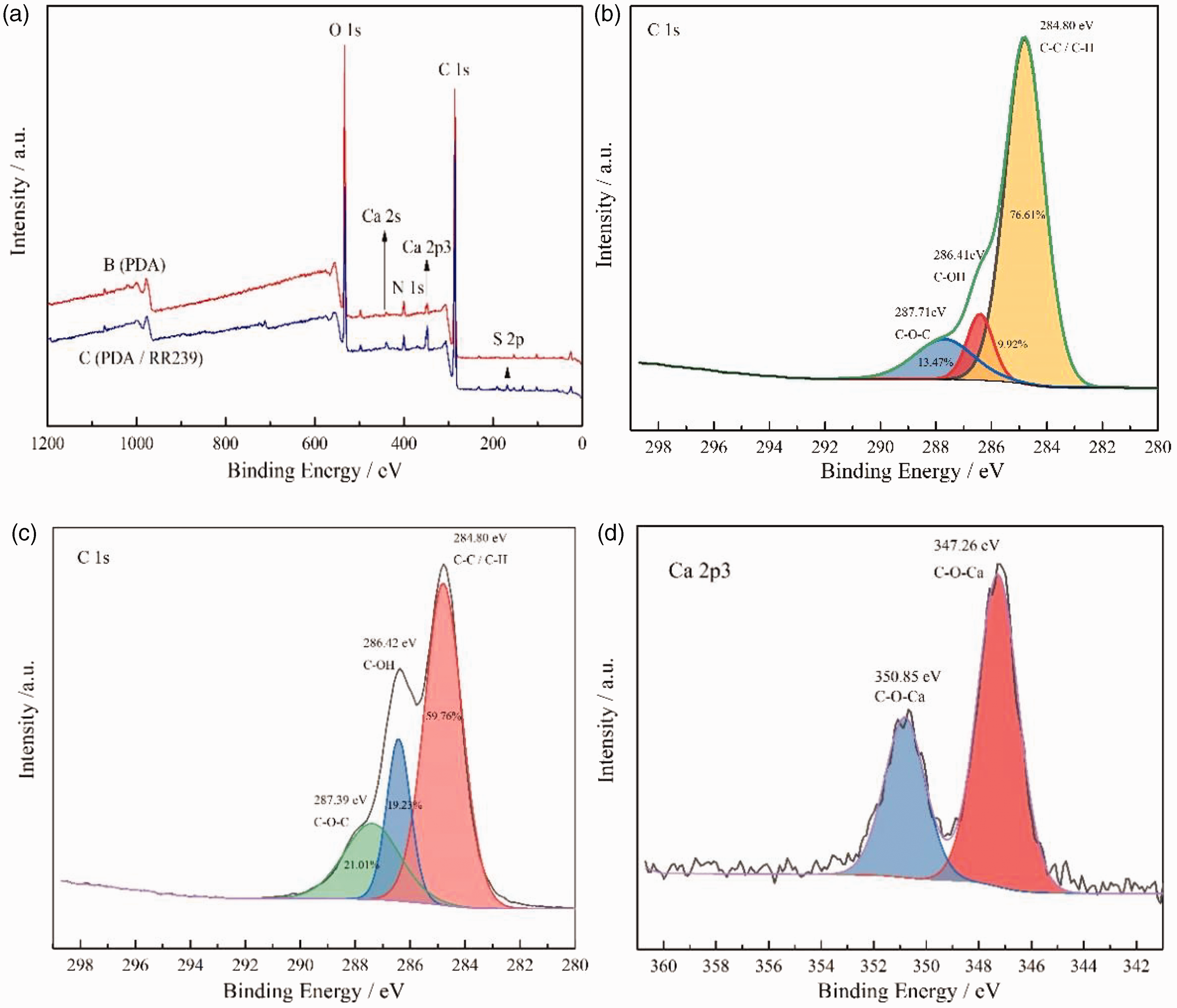
X-ray photoelectron spectrometer (XPS) spectra of samples. (a) Wide-scan XPS of sample B (polydopamine) and sample C (polydopamine/RR239); (b) high-resolution C 1s XPS spectra of sample B; (c) high-resolution C 1s XPS spectra of sample C and (d) high-resolution Ca 2p3 XPS spectra of sample C.
As can be seen from Figure 8, the elemental composition of sample B (polydopamine ) and sample C (polydopamine /RR239) was similar, and only the elemental content was different. The main element of samples B and C was C (284.1 eV, C 1s), N (399.4 eV, N 1s), O (532.2 eV, O 1s), Ca (347.3 eV, Ca2p3 and 439.1 eV, Ca 2s). The S 2p (166.3 eV) peak was the vinyl sulfone reactive group of RR239, see Figure 8(a).
When treating cotton fibers with dopamine alone, the C 1s correspond to C–C/C–H, C–OH, and C–O–C bonds, respectively, see Figure 8(b), in which C–O–C is the covalent bond formed between the polydopamine and the cotton fiber.
When cotton fibers were treated with dopamine/RR239, the C 1s peaks were similar to the above, but the peak areas of C–OH and C–O–C were significantly increased by 9.31% and 7.54%, respectively, as shown in Figure 8(b) and (c). This indicates that the self-polymerization of polydopamine and the covalent bonding with cotton fibers are enhanced in the presence of reactive dyes, which generate covalent bonds with cotton fibers through nucleophilic substitution and nucleophilic addition reactions, and also the covalent bonding of reactive dyes with polydopamine. 29
Ca 2p3 (347.3 eV and 350.9 eV) and Ca 2s were peaks for the generation of coordination bonds of calcium ions with dopamine and derivatives, corresponding to the C–O–Ca chemical bond, and the possible presence of calcium chloride hydrolysate (CaCO3) and dopamine with Ca ions, see Figure 8(d).
Dyeing mechanism analysis
Dopamine has a strong adsorption capacity and can occur in complex polymerization reactions.10,27 In this study, a process was used to force dopamine and reactive dyes (RR239) to penetrate (e.g. pressure) and adsorb uniformly (e.g. leveling agent MP-1) on cotton yarns and fibers, and then induce the orderly polymerization of dopamine into polydopamine on the fibers by the physical action of layer extrusion of the fabric.
The RR239 dye has a bi-reactive group, the vinyl sulfone, and monochloro homotriazine reactive groups are capable of both covalent cross-linking with the –OH group of the cotton fiber and hydrolysis with water. Therefore, the dyeing mechanism of cotton fibers may be complex when dopamine and reactive dyes are present together.
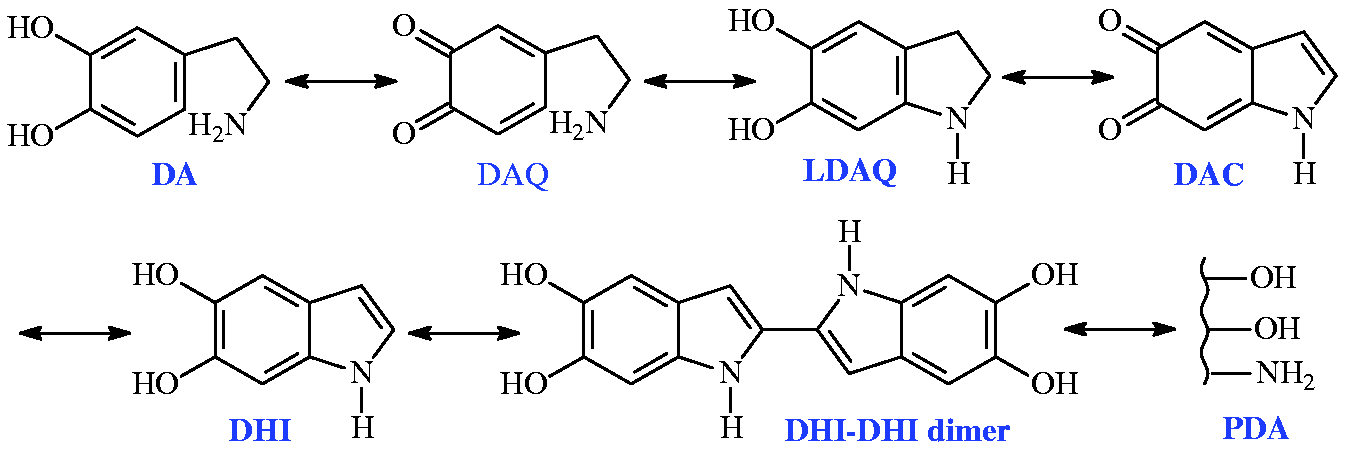
Polymerization of dopamine: The reaction process of dopamine to polydopamine is more complex (see Figure 9). Dopamine-containing catechol group (dopamine) can undergo chemical reactions such as oxidation, intramolecular cyclization, and molecular rearrangement in the presence of weak base and oxygen to form dopamine quinone, leucodopaminechrome, dopaminechrome, dihydroxylindole, dihydroxylindole–dihydroxylindole dimer, or other oligomers, which form cross-linked dopamine.30,31 A portion of the oxidation products are linked together by hydrogen bonds,
26
or bound by covalent bonds to form oligomers, which eventually form polydopamine.
32
Polymerization of dopamine. Covalent cross-linking and hydrolysis of reactive dyestuffs with cotton fibers: The polar hydroxyl group on cotton fiber can ionize to generate a hydroxyl negative charge under the action of weak alkalinity. The vinyl sulfate in the reactive dyestuff undergoes an elimination reaction under the action of weak alkalinity to generate a more reactive vinyl sulfone group, and the reactive chlorine in the vinyl sulfone group and monochlorotriazine can react with the cellulose anion or water to generate covalent bonds by nucleophilic substitution and nucleophilic addition. Covalent cross-linking of polydopamine with cotton fibers and reactive dyestuffs: The infrared spectra showed that the 1,2-diketones and –C=C– groups in polydopamine disappeared when RR239 was present, indicating that dopaminechrome can be converted to dihydroxylindole, and the –OH group on the polydopamine molecule can covalently cross-link with the reactive group of the dye and the hydroxyl group of the cellulose. The XPS spectra showed that the peak areas of C–OH and C–O–C were significantly increased, indicating that the hydroxyl groups in polydopamine can generate covalent bonds with the hydroxyl groups of cellulose. Co-influence of polydopamine and dyes: It is generally believed that the addition of metal ions can induce the polymerization of dopamine through ligand bonding to produce high molecular weight polydopamine.33,34 Because polydopamine contains more strong polar groups (–OH and –NH2), it can interact synergistically with dye molecules (such as electrostatic, H-bonding, Π–Π stacking),
32
which can enhance the encapsulation of polydopamine with reactive dyes and increase the interaction of dyes with fibers. Influence of salt: Similar to conventional reactive dyeing, sodium sulfate is a dyeing promoter that improves dye utilization. Calcium chloride is mostly used in polydopamine reactions to promote and accelerate the polymerization of dopamine. Calcium chloride also has a stain-promoting effect on dyeing. Because of its low solubility, weak coordination ability, and easy hydrolysis, its suitable dosage is 10 g.l−1 and it needs to be used together with sodium sulfate (e.g. 30 g · l−1).
Conclusions
In this study, we provide a new method of hot pad-batch dyeing using dopamine and bifunctional reactive dyes in one step, which can fulfil the polydopamine modification of cotton fabrics and improve color fastness.
The hot pad-batch dyeing process using RR239 and dopamine in the same bath can promote the orderly polymerization of dopamine on the fiber surface because the polymerization of dopamine is subject to the strong pressure squeezing effect of fabric and fabric. It can improve the color fastness and color depth of the dyed fabric, and meet the requirements of daily use of textiles and clothing, which has high practical value.
FTIR and XPS test results showed that polydopamine could enhance the interaction between reactive dyes and fibers, and also covalently bond with dyes and fibers.
Calcium (Ca2+) ions, like sodium (Na+) ions, have a dye-promoting effect on dyes; however, the main effect of Ca2+ ions is to promote the production of polydopamine. The suitable conditions for the treatment of dopamine and reactive dyes in the co-bath are 10 g · l−1 calcium chloride, 30 g · l−1 sodium sulfate, and 10 g · l−1 sodium carbonate.
Footnotes
Declaration of conflicting interests
The author(s) declared no potential conflicts of interest with respect to the research, authorship, and/or publication of this article.
Funding
The author(s) disclosed receipt of the following financial support for the research, authorship, and/or publication of this article: Natural Science Research Projects in Colleges and Universities of Jiangsu Province, Grant ID: 21KJA540003.
