



Abstract
The aim of the study was to evaluate the effects of laser texturing of coated textile materials on their cut resistance. The investigated material was an aramid knitted fabric coated with a polymer layer made of an acrylic-styrene dispersion functionalized with particles of silicon carbide (SiC). The distribution of SiC particles in the coating microstructure was assessed on the basis of microscopic observations (scanning electron microscopy). The coating was laser textured, and then the cut resistance of the assembly was determined using a rectangular blade. The findings showed that laser texturing improved the cut resistance of the tested materials, causing a fourfold increase in that parameter as compared to non-modified textile materials. This fact may improve the safety of workers wearing protective gloves in terms of cut protection.
Protective gloves made of coated textiles constitute an important group of personal protective equipment products. 1 The main purpose of safety gloves is to protect the hands against hazards in the working environment, in particular against cuts. This is of great practical significance, as the body parts most commonly injured in non-fatal workplace accidents in the European Union (EU) in 2019 were the upper limbs, and in particular the hands (39.3% of non-fatal accidents at work). 2
Protective gloves characterized by high cut resistance are made, among others, from p-aramid, polyethylene, and core-spun yarns, as well as glass fibers.3–5 Non-standard cut-resistant materials can be obtained using surface modifications induced by either physical or chemical methods.3–5
Literature data show that cut resistance depends in particular on the type and structure of the fibers, 6 as well as on the use of polymeric materials to increase the mechanical resistance of textiles. 7 For this purpose, polymer coatings can be used in the form of continuous or dotted applications.8,9 Gloves may incorporate more than one coating material in their structure: if one does not fulfill the intended protective or utility functions, then more layers with different properties can be added. 3
In addition, the physical and chemical properties of polymers may be modified by the introduction of additives, 10 whose size, shape, and chemical structure may significantly affect the process of creating a porous structure, which translates into mechanical properties.11,12 Yang et al. 13 investigated the effects of a coating containing carbides particles on the mechanical resistance of a textile material. The highest puncture resistance to blade impact was observed for samples with the thickest coating variant (100 μm).
The use of laser texturing is a promising line of research leading to increased cut resistance of coated textiles. Works aimed at strengthening polymer materials through laser texturing are becoming increasingly popular in protective materials.14,15
Studies of the interaction of a laser beam with fabrics are known in the literature. At the end of the 20th century, Bahners 16 published a work on the modification of the surface of synthetic fibers included in textile products with the use of excimer laser pulses. It indicates the possibility of modifying the properties of the fiber, such as wetting properties or adhesion of particles and coating. Bahners points out that laser treatment is in many cases an alternative to the widespread addition of chemicals as part of the chemical pretreatment of fabrics.
The influence of the laser beam of CO2 technology on some physical and chemical properties of cotton and cotton–polyester mixed fabrics was investigated by Hung et al. 17 His group checked the influence of various laser processing parameters on the color and their mechanical properties. They confirmed the defect of the cotton fiber surface and local uneven smoothing on the surface of fabrics with a cotton/polyester mixture. They found that laser treatment reduced the whiteness of both types of fabrics. That change was noticeable; however, according to Hung's group, still acceptable. One of the results of the research presented by Hung et al. is that during the laser processing, the cotton fibers will be etched. The effect of a CO2 laser on the leather surface morphology and wettability was handled by the Gulbiniene et al. 18 They pointed to the slight influence of the laser beam on the leather macrostructure and the possibility of modifying the morphology and the contact angle of the leather surface. In another research facility, Kan 19 used a CO2 laser to clean the surface of denim fabrics. The literature shows a decrease in the tear and tensile strength of surface-modified denim fabrics. 20 The influence of the laser beam, this time of the ultraviolet (UV) type, on the physical and chemical properties of polyester as well as cotton fabrics was also investigated by Ayesh et al. 21
Kan 22 in another study describes the results of his research on the modification of textile properties of polyester with the use of a laser beam, taking into account the characteristics of materials. It shows the positive influence of the laser on the wettability and air permeability of the fabric as well as the negative influence of laser treatment on the mass and geometrical dimensions of the fibers, as well as their mechanical resistance to bending, stretching, and abrasion. As one of the results of his research, Kan points to the limited impact of laser irradiation on the volumetric and structural properties of polymer fabrics due to the low penetration depth of light into the material.
Other aspects of laser applications in the textile industry can be found in Nayak and Padhye. 23 As can be seen from the analysis of the available literature, the impact of a laser beam on textile substrates is a current topic that allows achieving the desired effects in the field of broadly understood textile products.
A very wide application area for laser technologies is the surface texturing of materials with laser pulses of nano-, pico-, and femtosecond durations. The resulting microstructures are most often used in tribological layers.24–27 Another large area of application is the production of superhydrophobic layers for the purposes of self-cleaning. 27 Laser texturing is also used to improve light absorption in photovoltaic cells,28–31 as well as for the surface structuring of selected biocompatible materials 32 and other biomedical applications, 33 for structuring to enhance thermal imaging, 34 in the formation of sliding surfaces, 35 for changing the electrical properties of conductive layers made on dielectric substrates, 36 for modifying the behavior of surfaces with different wettabilities in water/oil lubrication environments, 37 and for inducing superhydrophobicity. 38 Laser technology is well known in mechanical and materials sciences and researchers have worked with laser beams to change the surfaces of bearings 39 and modify the stick-slip phenomenon on sliding guideways. 40
The combination of physical modifications (laser texturing) and the addition of silicon carbide (SiC) particles can increase the cut resistance of materials. In addition, using laser texturing to create microcavities in the coating layer could improve material elasticity, which is important from the point of view of usage properties. Reduced thickness and stiffness improve manual dexterity and may also help decrease occupational injuries. 41 Cut-resistant gloves are usually made by textile methods, typically from highly cut-resistant yarns. Coating methods have been developed to enhance the functional properties of materials.
The novelty of this paper consists of verifying the applicability of laser texturing in obtaining cut-resistant surfaces in protective gloves. To date, laser texturing has not been used to improve the cut resistance of protective gloves, and so it might be a promising line of research leading to increased cut resistance of coated textiles. This paper describes the use of physical surface modification with mineral particles aimed at enhancing cut-resistant properties. Tests were carried out on a textile material double-coated with a latex paste containing SiC particles.
Materials and methods
Materials
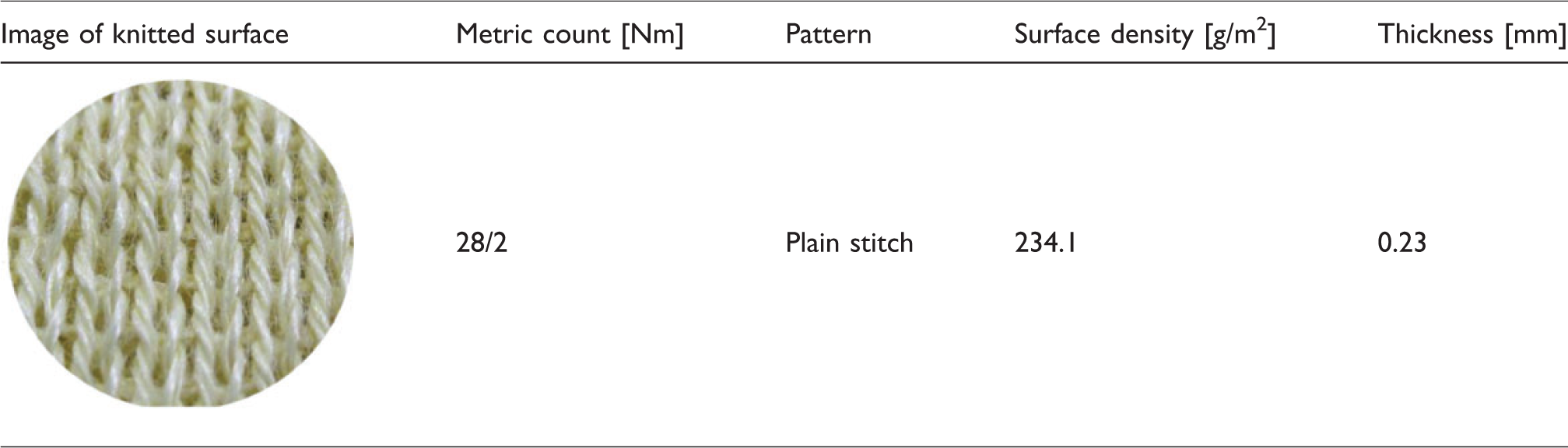
The study material was prepared using a textile carrier made of a knitted aramid fabric (S.I. ZGODA, Poland) with the following parameters (Table 1).
Properties of the textile carrier (knitted aramid fabric)
A coating layer was applied to the textile carrier, which was then subjected to laser texturing, and the process was repeated twice.
The coating was made of a polymer latex (Thorex Sp. J., Poland) reinforced with SiC nanoparticles. The selection of the type of polymer used was dictated by the fact that this kind of polymer material is commonly used in protective glove materials and has good processing properties, both in laboratory and technological conditions. The maximum particle content was determined to be 4% by weight based on experiments optimizing component proportions to ensure homogeneous SiC distribution across the polymer. SiC was combined with the polymeric material using a laboratory stirrer. The textile carrier was then placed in the experimental station (Figure 1) for the surface application of the resulting polymer paste. The paste was spread evenly by passing the trowel twice over the textile carrier. Finally, the surface layer was cured in a laboratory dryer (ZALMED, Poland) at 120°C for 300 s to fix the polymer coating on the textile carrier.

Stand for the application of polymer paste to textile material: (a) schematic view and (b) technical view.
The obtained coating was laser textured to produce two geometric patterns on the textile material surface: hexagonal and semicircular structures (Figure 2).
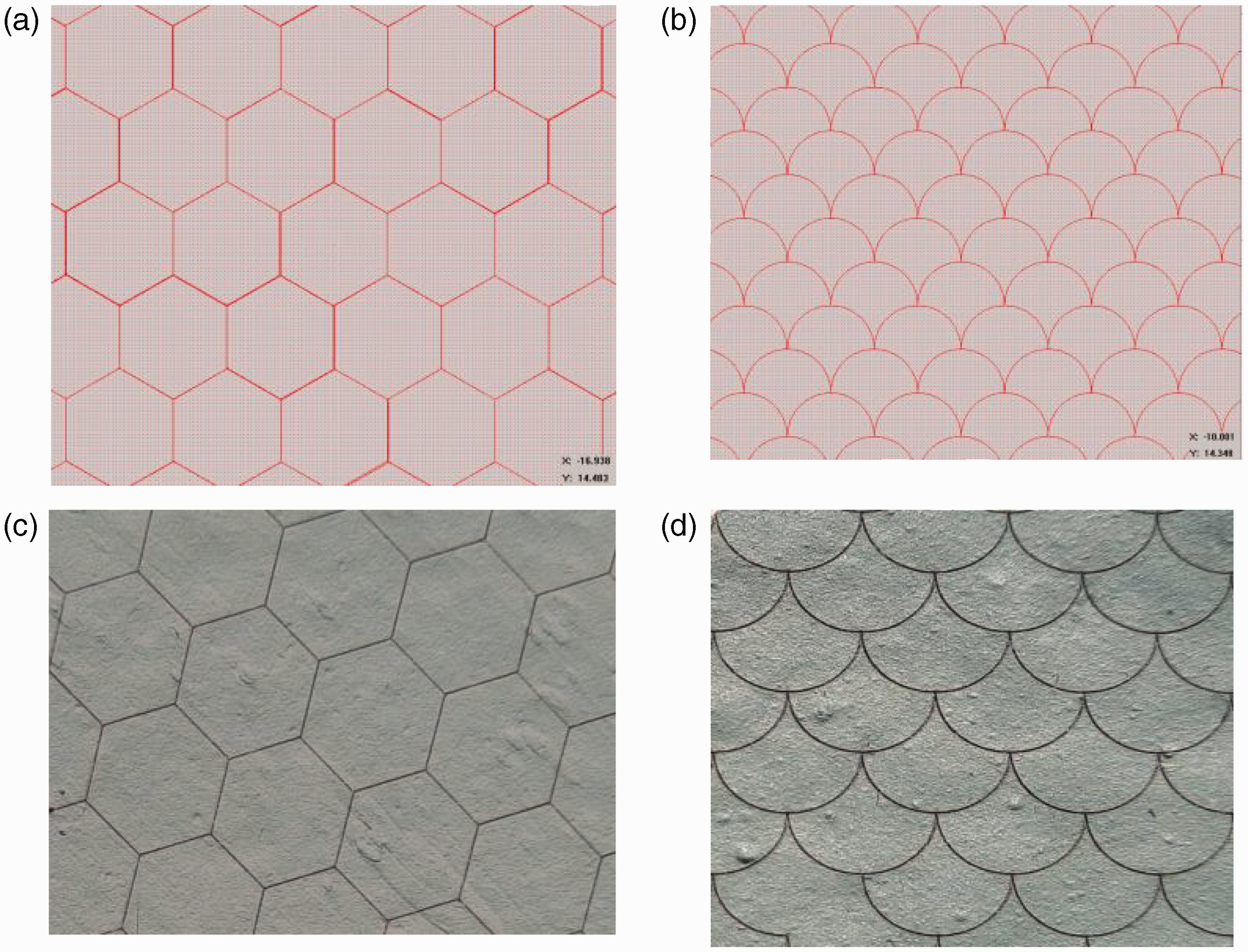
Geometric patterns produced by a laser beam in the coating on the textile carrier: schematic view – (a) hexagonal structure and (b) semicircular structure; actual view – (c) hexagonal structure and (d) semicircular structure
An SPI G3 pulsed fiber laser (Laser SPI redEnergy G3 SM 20W with an Xtreme scanner from Nutfield Techn. Inc., Hudson, NH, USA) emitting a beam with a wavelength of 1062 nm was used to produce textures in the polymer coating on the textile carriers. The laser can generate pulses with a duration from 15 to 220 ns at a repetition frequency from 35 to 290 kHz. Pulse energy was adjusted to the absorption properties of the material subjected to texturing. Since the paste used in the study does not absorb the laser radiation of the wavelength applied, it was necessary to use absorption pigments. The applied pigments, PG50 cobalt green and K-200 iron black, were characterized by a high radiation absorption coefficient at a wavelength of 1062 nm and were added in the proportion by weight of 1.5%. The use of a paste incorporating SiC particles further improved the absorption coefficient of the composite due to higher light absorption by SiC at a wavelength of 1062 nm. During preliminary tests, the following laser settings were selected for making the proposed textures:
pulse duration of 220 ns; 20 W beam power; beam scanning speed of 200 mm/s; pulse repetition frequency of 35 kHz; pulse energy for the assumed beam power of 0.57 mJ.
The proposed texture shapes (Figure 2) were made with a laser beam scanner equipped with an F160 telecentric lens. The scanning speed of the laser beam (200 mm/s) was adjusted for the mutual correlation of pulse duration and repetition frequency. To ensure the continuity of laser texturing, in the two stages of microcavity generation, the patterns were shifted by 2 mm (pattern a) and by 3 mm (pattern b), which led to a two-dimensional (2D) geometric structure, as schematically shown in Figure 3.
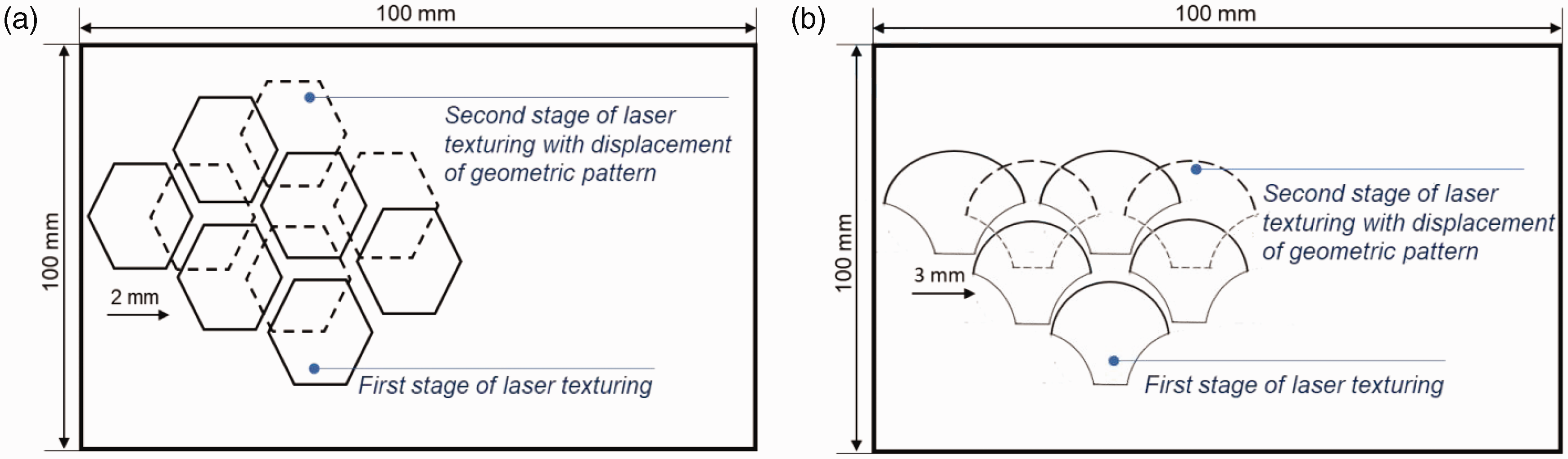
Schematic representation of the two stages of modeling layered patterns: (a) hexagonal structure and (b) semicircular structure. 42
As a result, the knitted aramid carrier was coated with two laser-textured layers exhibiting hexagonal and semicircular textures, as presented in Table 2. The reference material was prepared in the same way, without laser texturing.
Material characteristics after double laser texturing
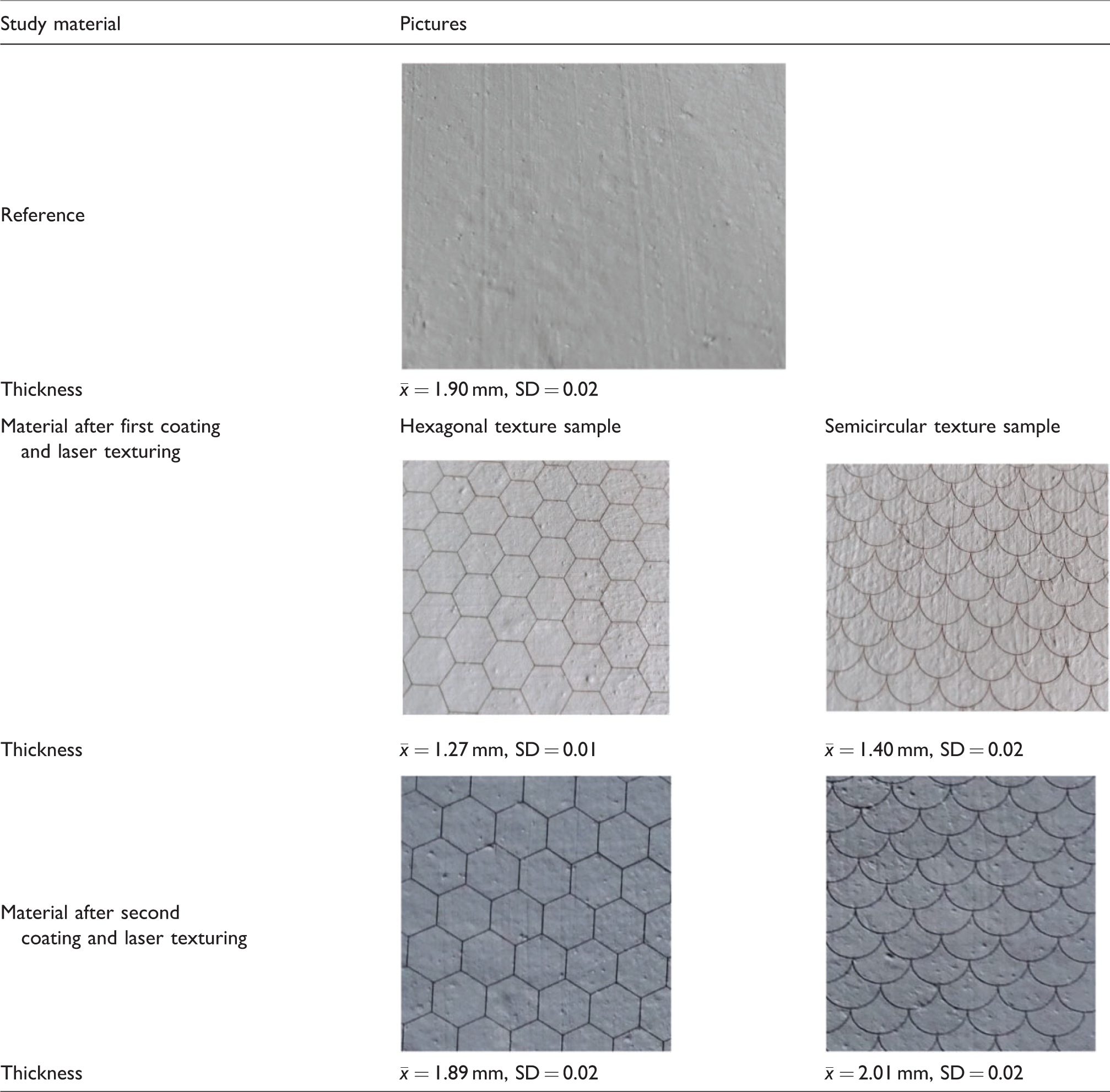
The study material was an aramid knitted fabric with a double polymer coating subjected to laser texturing. Two types of samples were tested for resistance to cutting: one with a hexagonal pattern and one with a hemispherical pattern made in the coating. The reference material was a textile carrier not subjected to laser texturing.
Before testing, the samples were acclimatized in the air at (23 ± 2)°C and relative humidity (50 ± 5)% for 24 h.
Testing methods
Cut-resistant testing
The created materials were tested for cut resistance using a tono-dynamometer (P.I. KONTECH Ltd, Poland) with a straight blade (Figure 4). 43
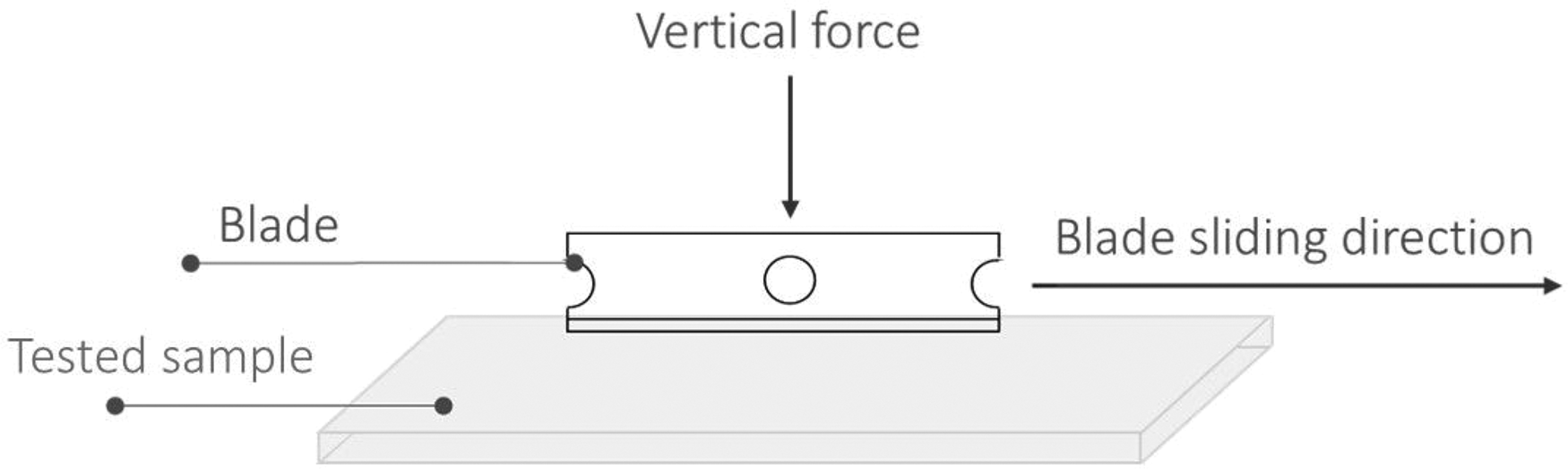
Diagram of blade operation on the test sample.
During cut resistance test blades (Figure 4) with a ground to bevel width of (2.5 ± 0.2) mm along the straight edge – this included an angle of approximately 22° at the cutting edge – were used. The blades had a cutting edge of length 70 mm and 19 mm width and were made of stainless steel with a hardness greater than 50 HRC. The cuts were achieved in blade movements of 3–50 mm length when a range of forces were applied to the blade normal to the specimen surface. At least 20 cut measurements, using a new blade, were made for each of the three samples. During the test, a force ranging from 1.0 to 200.0 N was applied to the blade. The cutting speed was (2.5 ± 0.5) cm/s. The greater the value of the force, the more resistant the sample was to cutting.
The results were interpreted with reference to the requirements of the EN 388:2016+A1:2018 standard, in accordance with Table 3.
Cut resistance requirements 44

Surface morphology (scanning electron microscopy)
Scanning electron microscopy (SEM) was performed to assess the morphology of the obtained materials. The surface microstructure of the functionalized material was examined with a Hitachi SU-8000 scanning electron microscope. Cross-sections were cut with a precision guillotine, mounted onto aluminum stages with carbon paste, and then sputtered with a 7 nm layer in a high-vacuum sputtering device to stabilize the Ni-Cu surface (Gatan, USA).
Results
Cut resistance results
Figure 5 shows the cut resistance test results (with standard deviations) for a double-coated textile carrier subjected to laser texturing and for a reference sample, as well as an interpretation of the results expressed in performance levels according to EN ISO 13997.
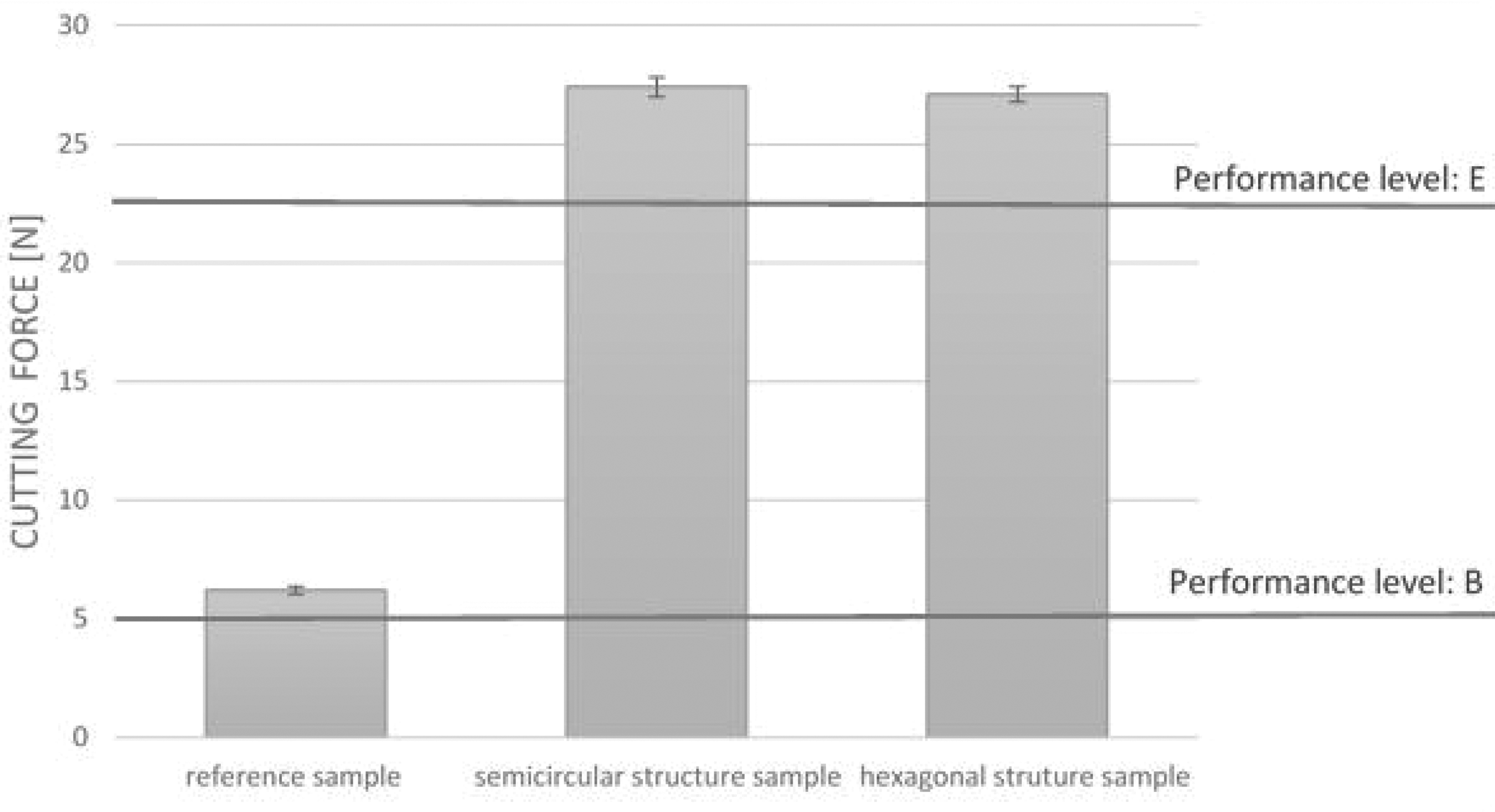
Cut resistance test results with interpretation expressed in performance levels according to EN ISO 13997.
Microscopic observations (SEM)
The results of microscopic observations are shown in Figures 6 –8. Observations were made for the cross-sections (Figure 6) of coatings containing a SiC additive and a reference sample (Figure 7).
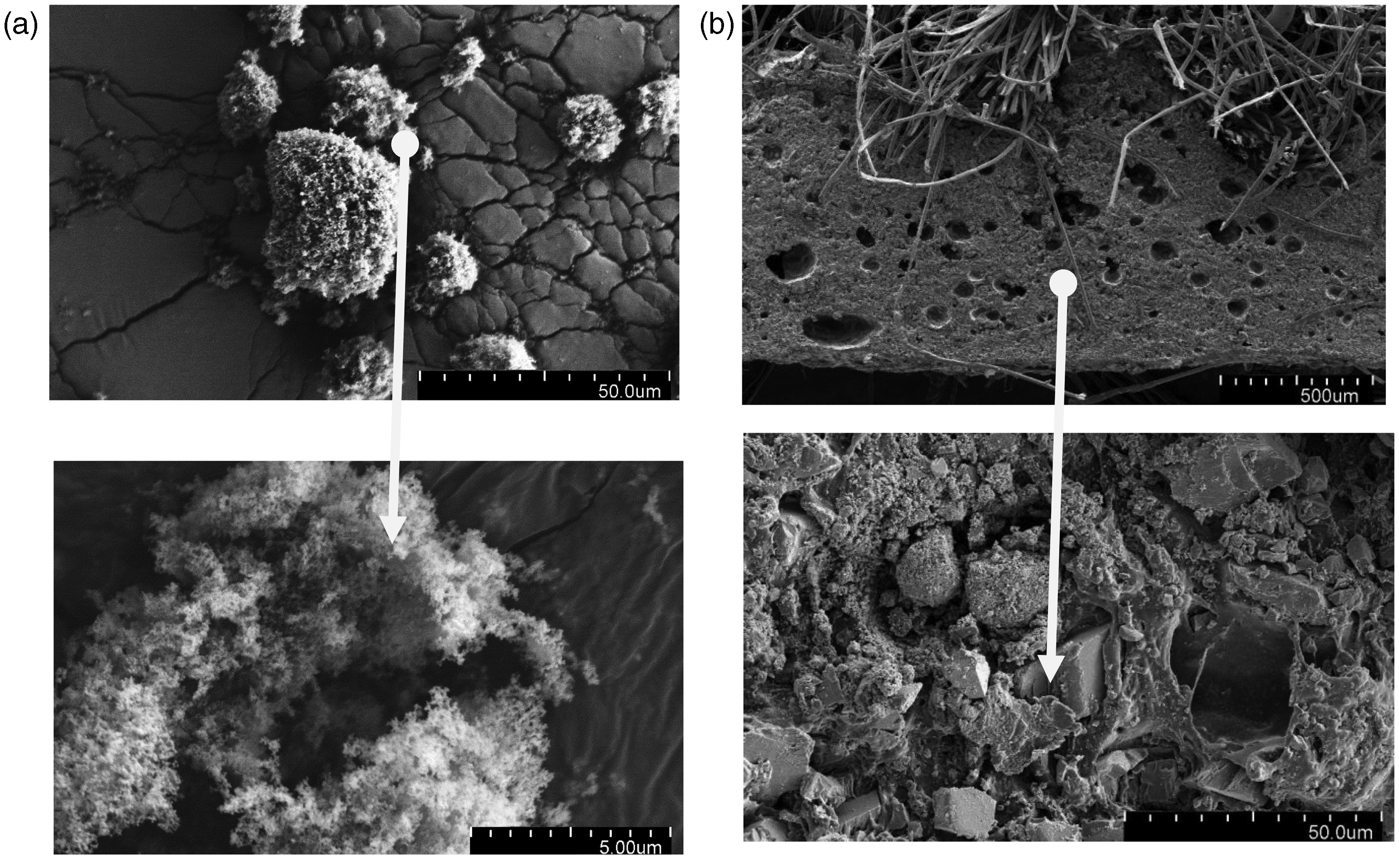
Scanning electron microscopy images of (a) SiC particles before application and (b) cross-sections of coatings with SiC particles.
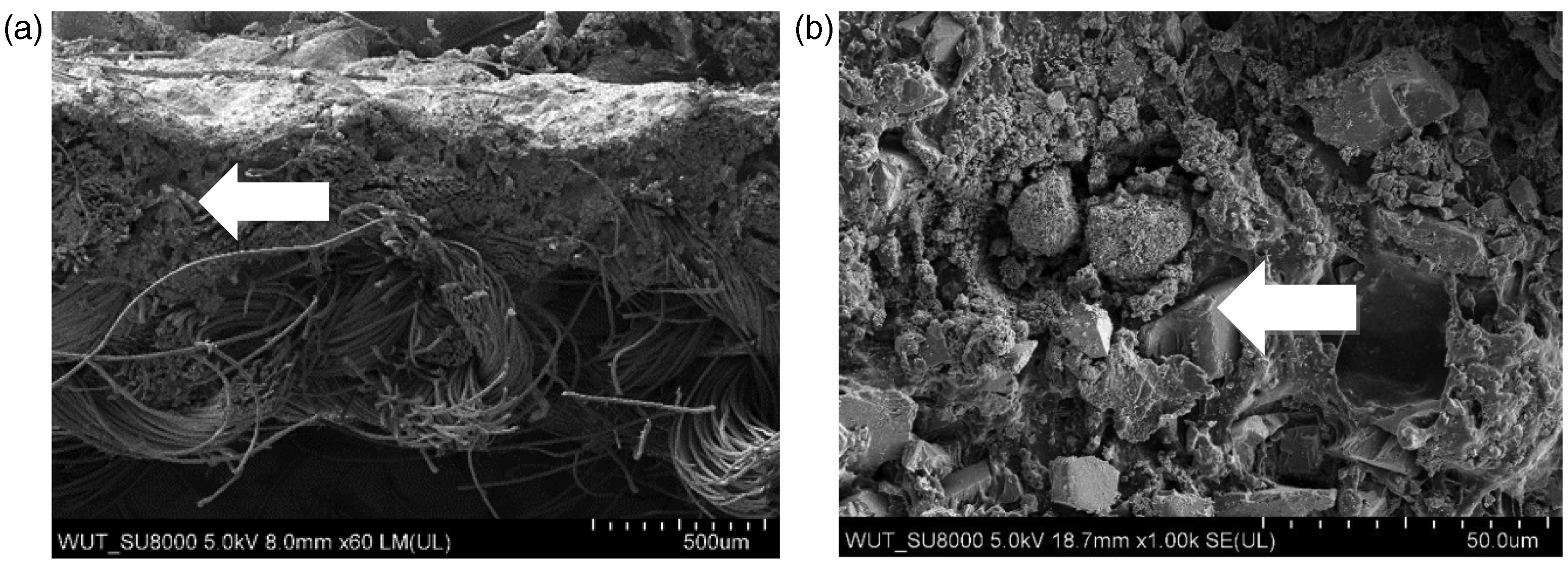
Scanning electron microscopy images of (a) cross-sections of a reference sample and (b) cross-sections of a sample with SiC particles.

(a) Surface before laser texturing and (b) Surface after laser texturing.
The structure of the polymer paste contains additives in the form of micrometric mineral particles (Figure 7(a)). Manufacturers of coating materials introduce particles of fillers (Figure 7(b)) into polymer pastes in order to increase their viscosity and technological stability (filled polymers do not run down the coated surface). Figure 7(b) demonstrates the presence of mineral particles in the paste structure. SiC nanoparticles are in the form of agglomerates with a size of up to 20 µm and are not wetted with polymer. Non-matrix bonded agglomerates can be an effective barrier to the blade in the cutting test.
SEM images of the surface of coatings before laser texturing are shown in Figure 8(a), and after laser texturing in Figure 8(b).
In the case of elastomeric porous coating materials, the shape and size of the pores and their distribution largely depend on the technological parameters of the layer application process: layer thickness, application time, and cross-linking temperature. The addition of particles also influences the pore formation process. During the production of layers on a laboratory scale, technological regimes were followed in order to maintain the repeatability of the layer application technology. The pores visible in the SEM cross-sections are a natural effect of the cross-linking process of the polymer paste. Their presence has a positive effect on the thermal effects that occur during the process of laser surface texturing. The discontinuity of the heat-conducting layer limits the spread of the heat-affected zone (HAZ), which is particularly important in surface treatment processes. The presence of pores also increases the absorption of laser radiation due to the effect of multiple reflection of the laser beam and the accommodation of the energy of the laser beam. For the proposed paste it is particularly important due to the low absorption coefficient of laser radiation with a length of 1064 nm. The presence of pores also increases the elasticity of the fabric covered with the paste.
Discussion of the results
The present study involved a textile material for protective gloves double-coated with a latex paste containing SiC particles. The coating was subjected to laser texturing in order to increase the cut-resistant properties of the material, which was evaluated. The two variants of the modified material were characterized by similar cut resistance and achieved performance level E (Figure 6). The variant with a semicircular texture exhibited higher cut resistance (27.4 N) than that with a hexagonal texture (27.1 N). The textile carrier, serving as the reference material, was characterized by a cut resistance of 6.2 N, which placed it in performance level B. These findings show that materials for protective gloves with improved cut-resistant properties can be successfully produced by the method proposed in the paper. The thermal conductivity of the paste is increased by adding SiC particles, which improves the effectiveness of laser treatment. The addition of SiC nanoparticles to polymers improves the mechanical properties, such as hardness, abrasion resistance, and as proven in this publication, the cut resistance of polymeric materials. The increase in cut resistance after laser texturing may be the result of changing the distribution of mechanical stresses in discontinuous hexagonal and semicircular structures. The proposed shapes result from the authors' previous research experience in the field of analysis of natural biological features. The presence of particles in the form of SiC increases the mechanical strength of the polymer paste due to the high hardness of the particles used. SiC particles improve the effectiveness of the laser beam. Depending on the type of doping of the textile layer, it is necessary to use appropriate pigments. The addition of SiC does not require the use of dyes that increase radiation absorption, as the pulse energy of this wavelength is well absorbed by the material due to the presence of SiC. The ablation threshold was 3 W. During processing, a slight plasma cloud was noticeable and the laser beam left a 10 µm wide trace. The trace width was smaller than the diameter of the laser beam (26 µm) due to a Gaussian power distribution in the cross-section of the beam. During a single scan of the beam, only about 2–3 µm was removed.
Rubin et al. 45 assessed the puncture resistance of aramid knitted fabrics coated with a thermosetting coating with the addition of SiC particles. The introduction of SiC increased puncture resistance, as examination of the microstructure of the samples showed that SiC particles were deposited in spaces between the fibers. Also, in the present study it was found that a latex coating incorporating such particles (Figure 8) constituted a layer protecting the fibers against blade action, increasing cut resistance. SEM photographs of coating cross-sections show a layer of uniform thickness and porous structure, containing significant amounts of SiC with a multi-walled, smooth surface (Figure 6). Hard and densely packed SiC particles protect textile fibers against the blade. In order to cut the fibers covered with a composite layer, it is necessary to apply a much greater force pressing the blade to the material. The literature reports the beneficial effects of mineral additives (including SiC) in modifying the surface of knitted fabrics on their resistance to cutting.46,47
In the present study, laser texturing and physical surface modification with mineral particles were used to improve cut resistance properties. The applied laser power ensures complete removal of the layer of the applied polymer paste at the point of interaction of the laser beam. The process has the character of the ablative evaporation of the material. No process byproducts remain on the surface of the fabric. Power that is too low does not ensure complete incision of the protective layer, and melted paste fragments remain in the vicinity of the impact of the laser beam. Using too much power may damage the fibers of the fabric, which naturally weakens its mechanical strength. The optimal selection of the scanning speed and the pulse repetition frequency ensure a smooth cutting edge – the overlapping effect. The applied parameters result in the occurrence of a small heat effect zone (approximately 25 µm in the area around the beam impact in each direction), thanks to which the laser texturing process does not change the physical properties of the used paste.
The tests involved a textile material double-coated with a latex paste containing SiC particles, which resulted in a fourfold increase in cut resistance (Figure 5). Lin et al. 47 applied multilayer polyethylene coatings in an effort to improve the mechanical properties of polyester yarns, increasing the tensile and puncture resistance. The examined surfaces of the latex coating before laser texturing were relatively smooth with slight inhomogeneity due to the presence of additives (Figure 8(a)). Microscopic observations showed the presence of clearly defined traces with irregular edges, approximately 200 µm deep, which were created by the laser beam (Figure 8(b)).
The width and depth of the incision depends on the amount of energy supplied at a given point by the laser beam. This parameter consists of the following factors: beam power, absorption coefficient, pulse duration, and beam scanning speed. For high energies, about 0.57 mJ (high power 20 W, long beam exposure time 220 ns, and low scanning speed 200 mm/s), the width is about 100 µm and the depth is about 200 µm. This dimension consists of the width of the 26 µm laser beam and the HAZ of about 2 µm × 35 µm. For lower energies, which are achieved by reducing any of the parameters mentioned, the width of the HAZ and thus the width of the incision are reduced. The minimum width that can be achieved is the width of the laser beam, which for the optics used is 26 µm. The use of energy below 25 mJ will not have any effect due to the limit value of fluence for ablative processes of a given material – about 5 * 105 J/m2.
Conclusions
The test results presented in the paper indicate that the performed laser texturing contributes to the improved cut resistance of coated textiles. Laser texturing and the addition of SiC particles increased the resistance of the tested textile material to cutting. The use of a double polymer coating increased cut resistance more than fourfold, from 6.2 to 27.4 N. There was no significant difference in the cut resistance between the two tested geometric textures: hexagonal and semicircular.
Removing the entire paste coating (about 400 µm) with a laser beam would require scanning the surface more than 20 times with the process efficiency being about 40 s/cm2. Thus, it was more effective to increase the laser power while keeping the other parameters unchanged. At 12 W, the laser removed approximately 175 µm of the material, while at 20 W, the coating was completely removed after a single pass of the beam. The complete removal of the protective coating would, however, entail the risk of damaging the underlying fabric. In the tested case, the material (aramid fabric) did not absorb the applied wavelength, but some individual fibers of the fabric were nevertheless melted due to the indirect influence of the plasma cloud formed in the process of laser cutting. As the beam power increased, the trace of vaporized paste increased. At 5 W, the trace width reached the diameter of the laser beam (26 µm), at 12 W it was 60 µm, while at 20 W it was as much as 140 µm. The increase in trace width over the diameter of the laser beam was attributable to the expanding HAZ and an intense plasma cloud. A greater width of the laser cuts had a positive effect on the flexibility of the coated fabric. However, it should be remembered that after exceeding a certain width of laser traces, the resistance of the fabric to cutting may be reduced. Similar to SiC, the green dye increased light absorption by the textile paste. An addition of SiC in the proportion of 4% made it possible to use a laser beam with a wavelength of 1062 nm for the processing of the paste applied in this study.
Footnotes
Declaration of conflicting interests
The author(s) declared no potential conflicts of interest with respect to the research, authorship, and/or publication of this article.
Funding
The author(s) disclosed the receipt of the following financial support for the research, authorship, and/or publication of this article: This paper is published and based on the results of a research task carried out within the scope of the fifth stage of the National Programme “Improvement of safety and working conditions” supported by the National Centre for Research and Development. task no. III.PB.13 entitled “Application of mineral nanoadditives in constitutive bionic structures to improve the cut resistance of protective glove materials”. The Central Institute for Labour Protection – National Research Institute is the Programme’s main co-ordinator.
