




Abstract
One of the challenges in improving the protective performance of flexible body armor is optimizing woven fabric, so it is critical to understand how different fabrics and fabric arrangements with the same areal density affect their ballistic resistance. An object of this article is to comparatively investigate the ballistic resistance of single-layer and multi-layer woven fabrics with the same areal density. Four single-layer fabrics with areal densities of 70, 125, 200, and 280 g/m2 were selected, and multi-layer fabrics (comprising two, three, and four layers) were assembled by folding a single-layer fabric with an areal density of 70 g/m2. Ballistic impact tests were carried out on the single-layer and multi-layer fabrics to compare their ballistic resistance. The results show that the specific energy absorption of the multi-layer fabric assembly is more than 7% higher than that of the single layer fabric; the multi-layer fabric mainly improves the ballistic resistance by increasing dynamic in-plane force, while the single-layer fabric does so by increasing the maximum transverse deflection. Moreover, from the perspective of fabric application in the flexible body armor, the energy absorption at ballistic limit of the single-layer and multi-layer fabrics was transformed into energy absorption per unit transverse displacement, and the index of the multi-layer fabric is obviously better than that of the single-layer fabric.
Keywords
High performance polymer fibers such as aramid fiber and ultra-high molecular weight polyethylene (UHMWPE) fiber generally have a high tensile strength of 2∼3 GPa, which is about 2∼3 times that of high-strength steel.1,2 Moreover, these fibers also possess favorable characteristics such as low density (0.9∼1.5 g/cm3) and flexibility. They can be spun into various types of yarns, then woven into different types of fabrics – for example, two-dimensional plain and twill weave fabrics, as well as three-dimensional orthogonal and angle interlock fabrics. These fabrics are usually characterized by light weight, high specific strength, and energy absorption capacity, in addition to good flexibility. Consequently, they are often used in applications for protection against ballistic impact and blast. Typical examples include body armor for military and law enforcement personnel, explosion proof tanks, and military tents. The most commonly used fabric for such applications is two-dimensional (2-D) plain-woven fabric, and hence, extensive research has been carried out on the response of 2-D plain-woven fabric to impact loading.3–5
These efforts have focused primarily on two particular aspects: (a) structural and material parameters such as yarn strength,6,7 inter-yarn friction,7–12 yarn crimp, 12 and fabric architecture characteristics (including thread density and yarn linear density);12–15 and (b) external loading factors such as boundary conditions (fabric pre-tension, target shape and size, clamping mode),16,17 impact angle, 18 and projectile geometry.19–21 Analytical models for projectile impact of on plain-woven fabric have also been developed to estimate the kinetic energy absorbed and projectile residual velocity, which also served as references for the design and utilization of plain-woven fabric against ballistic impact.22,23
In practical applications, soft body armor, explosion resistant containers, etc., incorporate plain-woven fabrics in multi-layer form, thus prompting investigation into the impact resistance and energy absorption of multi-layer plain-woven fabrics. Research on projectile perforation of double-layer aramid fabrics has been undertaken by Lim et al. 24 and Nilakantan et al., 25 who found that the increase in energy absorbed did not necessarily double when the number of layers was increased to two. Guo et al. 1 also studied the relationship between the energy absorption and the number of layers of Kevlar fabric, and noted that the relationship between these two parameters appeared to be approximately exponential. An experimental study of the influence of layer orientation on the ballistic impact resistance of multi-layer fabrics has been conducted by Wang et al., 26 who found that layer orientation affected the energy absorption capacity of multi-layer fabrics significantly. Theoretical studies on the ballistic impact of multi-layer woven fabrics have been carried out by Gu, 27 Chen et al., 28 and Mamivand et al., 29 who developed analytical models to predict the ballistic limit.
However, the aforementioned studies did not comparatively analyze the effect of fabric arrangements on energy absorption. For example, how single-layer and multi-layer fabric arrangements with a common areal density affect their ballistic performance. When plain-woven fabrics are incorporated into soft body armor design, the areal density is often considered in enhancing the performance-to-weight ratio. In other words, the fabric should have the ability to absorb energy more efficiently. Therefore, it is instructive to examine the ballistic resistance of single-layer and multi-layer fabric arrangements with a common areal density; however, such investigations on this appears limited, and this study seeks to yield some insights into this aspect.
The main novelty of this work is to comparatively investigate the ballistic resistance of single-layer and multi-layer woven fabrics with the same areal density. Four single-layer UHMWPE plain-woven fabrics with different areal densities (70, 125, 200, and 280 g/m2) were examined, and two categories of projectile impact tests were designed and performed: (a) impact on the four types of single-layer UHMWPE fabrics; (b) impact on three multi-layer UHMWPE fabrics (two, three, and four layers) assembled from the single-layer UHMWPE fabric with an areal density 70 g/m2. The performance of single-layer and multi-layer fabrics were compared on the basis of approximately equal area densities. The transient responses of fabric during impact tests, such as force-time history and fabric deformation, were examined to elicit an understanding of the mechanisms accounting for the influence of areal density and the number of layers.
UHMWPE plain-woven fabrics
Characteristics of fabrics
Four single-layer UHMWPE plain-woven fabrics with different areal densities of 70, 125, 200, and 280 g/m2, which are made of ZTX (Zhong Tai X, X refers to numbers) series fibers, were selected for investigation, and their optical microscopy images are shown in Figure 1. The fabric with an areal density of 70 g/m2 is woven from 200 Denier yarns, with 160 yarns per 10 cm in both weft and warp directions. For the other three fabrics, their yarn parameters and number of warp and weft yarns are listed in Table 1.

Optical microscopy images of fabrics.
Parameters of four plain-woven ultra-high molecular weight polyethylene (UHMWPE) fabrics

D: denier.
Tensile properties of yarns
The fabrics studied were made from four different UHMWPE yarns – denoted by 200 D, 800 D, 1000 D, and 1500 D. To characterize their tensile properties, quasi-static tests were conducted on 250 mm long yarn specimens at a strain rate of 0.001 s−1, according to ASTM D7269/D7269M-17 standards. Specimens were cut from original yarns, and bollard-type fixtures were employed to mount the specimens, 30 then held in an Instron universal testing machine (68TM-10). Figure 2 shows representative stress-strain responses obtained from three tests on each type of yarn, and their elastic modulus and tensile strength are listed in Table 1.

Quasi-static tensile stress-strain response of 200 D, 800 D, 1000 D, and 1500 D ultra-high molecular weight polyethylene (UHMWPE) yarns.
Experimental arrangement
Experimental setup
Figure 3 shows the fixture used to clamp UHMWPE fabric specimens for projectile impact tests, and it is the same as that used by some of the authors in earlier studies. 18 Two vertical clamping rods, 140 mm apart, which are rotated by a ratchet system are incorporated to stretch the specimen before being subjected to impact. Rectangular specimens of 400 mm length in the warp direction and 140 mm width in the weft direction, are cut from rolls of fabric. The longer sides of the specimen are aligned vertically, and its upper and lower portions are warped around the two clamping rods, exposing a square target area measuring 140 mm ×140 mm. This results in boundary conditions corresponding to clamping at the ends of the warp direction, and free ends along the weft direction. The two specimen clamping rods are supported by four vertical aluminum columns, on which strain gauges are mounted, to measure the dynamic compressive force caused by the projectile stretching the fabric during impact. Since the dynamic in-plane force imposed on the fabric or the projectile resistance experienced during impact cannot be measured directly, the compressive force experienced by the four support columns of the specimen clamping fixture provides an indirect indication of the fabric in-plane force, and thus its resistance against the impacting projectile.

Fixture used to clamp fabric specimens for projectile impact tests.
The experimental arrangement is illustrated schematically in Figure 4, which depicts a 12 mm diameter, 7 g spherical steel projectile launched by a gas gun; the impact velocity is measured by means of two laser photodiodes, which have their beams sequentially cut by the projectile. A high-speed camera (Photron Fastcam SA1.1), operating at 40,000 frames/s, was employed to obtain optical images of the deformation and failure of the fabric specimen, and to determine the projectile residual velocity after specimen perforation. Three mirrors were mounted within the target chamber to enable simultaneous observation of the side profile and exit face of the specimen, with mirror 1 for the exit face, and mirrors 2 and 3 for the side profile.

Schematic diagram of experimental arrangement for projectile impact tests.
Experimental procedure
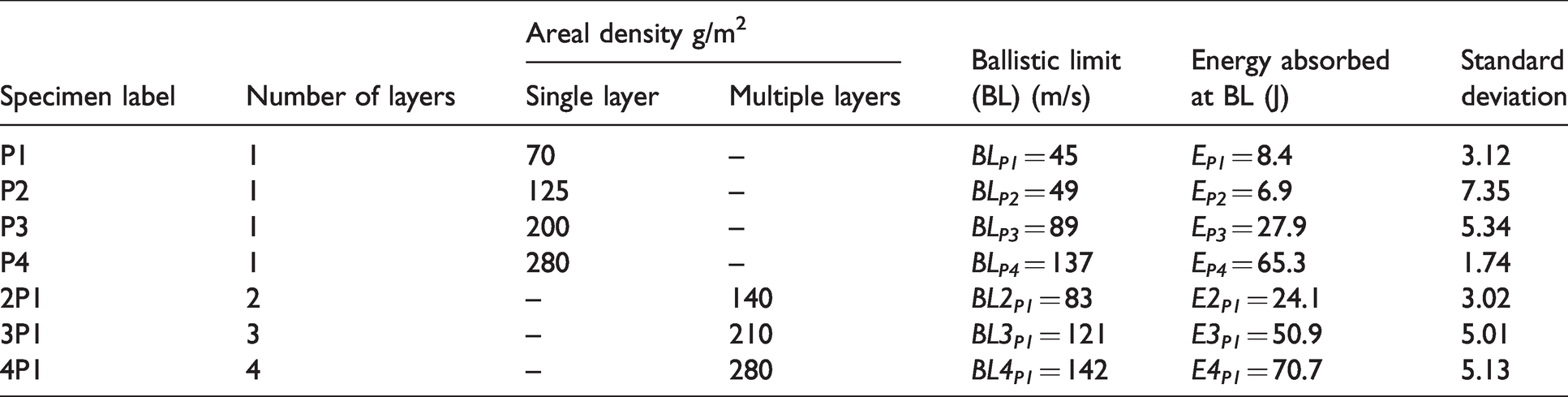
Two categories of projectile impact tests were established and performed, as listed in Table 2: (a) impact on the four single-layer UHMWPE fabrics – i.e. with areal densities of 70, 125, 200, and 280 g/m2; (b) impact on three multi-layer UHMWPE fabrics assembled from the single-layer UHMWPE fabric with an areal density of 70 g/m2 – i.e. two, three, and 4four layers, corresponding to areal densities of 140, 210, and 280 g/m2; this resulted in a total of seven fabric specimen types. A pre-tension force of approximately 100 N was applied to straighten the fabric specimens in the warp direction before testing.
Projectile impact test matrixes
Projectile impact test results
Ballistic limit and energy absorption
The widely-adopted ballistic limit is used to quantify the penetration resistance of a protective component, and corresponds to the velocity at which a projectile perforates the target with zero residual velocity. To obtain the ballistic limits of the four types of single-layer UHMWPE fabrics and three multi-layer fabric assemblies, 8–10 impact tests around their respective ballistic limits were conducted on each type of specimen. This resulted in a mix of non-perforation and complete perforation outcomes. An impact and residual projectile kinetic energy approach was adopted to determine the ballistic limit:
1
in instances of complete perforation, the residual velocity was derived from high-speed camera images, and the energy absorbed by the fabric or energy lost by the projectile was obtained from:


Therefore, the energy absorbed at BL of seven fabric specimen types and their standard deviation are listed in Table 2.
Influence of areal density and number of layers on ballistic resistance
The ballistic limits of the four single-layer fabrics with different areal densities were obtained via Equation (2) and their values, as well as the energy absorbed at the ballistic limit, are presented in Figure 5. The ballistic limits and corresponding energy absorbed by the four single-layer fabrics, are presented in Table 2. Three of the single-layer fabrics – with areal densities of 70, 200, and 280 g/m2 – display a positive correlation between areal density and ballistic limit, as well as with energy absorbed at the ballistic limit. However, the single-layer fabric with an areal density of 125 g/m2 exhibits a ballistic limit and energy absorption slightly lower than that of the fabric with an areal density of 70 g/m2, and these are the smallest values observed. Examination of post-test specimens shows that the poorer performance of these 125 g/m2 areal density specimens is the result of the relatively large spacing between their yarns, resulting in greater ease of the projectile wedging between yarns. To facilitate further analysis of energy absorption capacity with respect to areal density for single-layer fabrics, the specific energy absorption, ea = Ea/D, which is the energy absorbed per unit mass of fabric, was calculated to compare their energy absorption efficiency at the ballistic limit, as illustrated in Figure 6. For the single-layer fabrics with areal densities of 70, 200, and 280 g/m2, the values of the specific energy absorbed at the ballistic limit are 0.12, 0.14, and 0.23 J/(g/m2) respectively, indicating that the energy absorption efficiency increases non-linearly with areal density of for single-layer fabrics.

(a) Residual velocity data points as a function of impact velocity for single-layer fabrics of different areal densities (solid lines denote the ballistic limits; parallel dashed lines define the scatter/error bounds) and (b) variation of energy absorbed at the ballistic limit with areal density for single-layer fabrics.

Variation of specific energy absorption at ballistic limit with areal density for single-layer fabric.
For the three multi-layer UHMWPE fabrics (two, three, and four layers), Figure 7 shows how the ballistic limit and energy absorbed at the ballistic limit vary with the number of fabric layers. Together with the ballistic limit of the single-layer fabric with an areal density of 70 g/m2, the ballistic limits of the other three assemblies of UHMWPE fabric layers based on this single layer, are presented in Table 2. It is noted that the values of N × EP1, where N = 2, 3, 4 and EP1 is the energy absorbed by a single 70 g/m2 layer of fabric, are all smaller than that of ENP1, the energy absorbed at the ballistic limit by an assembly of N single layers of fabric. In essence, the energy absorbed by multiple layers of fabric is not a direct multiple of the amount of energy absorbed by a single layer, but increases nonlinearly by more than the number of layers. To emphasize this increase in energy absorption efficiency, the specific energy absorption at the ballistic limit, for each assembly of multiple layers of fabric, was also calculated, and is presented in Figure 8. For the single-layer fabric with an areal density of 70 g/m2 and three multi-layer fabrics, the values of the specific energy absorbed at the ballistic limit are 0.12, 0.17, 0.24, and 0.25 J/(g/m2), respectively. This demonstrates that an assembly of multiple fabric layers results in a higher energy absorption efficiency.
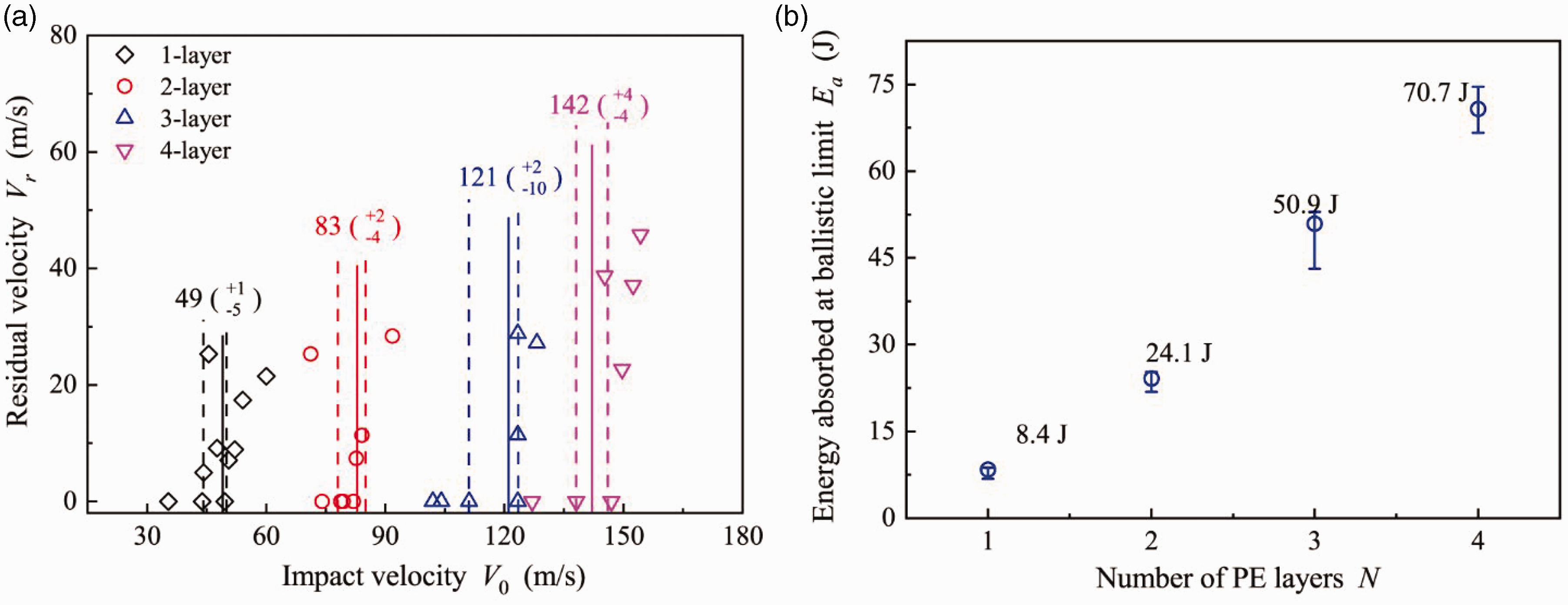
(a) Residual velocity data points as a function of impact velocity for assemblies of multiple layers of fabric (solid lines denote the ballistic limits; parallel dashed lines define the scatter/error bounds) and (b) variation of energy absorbed at the ballistic limit with the number of fabric layers.
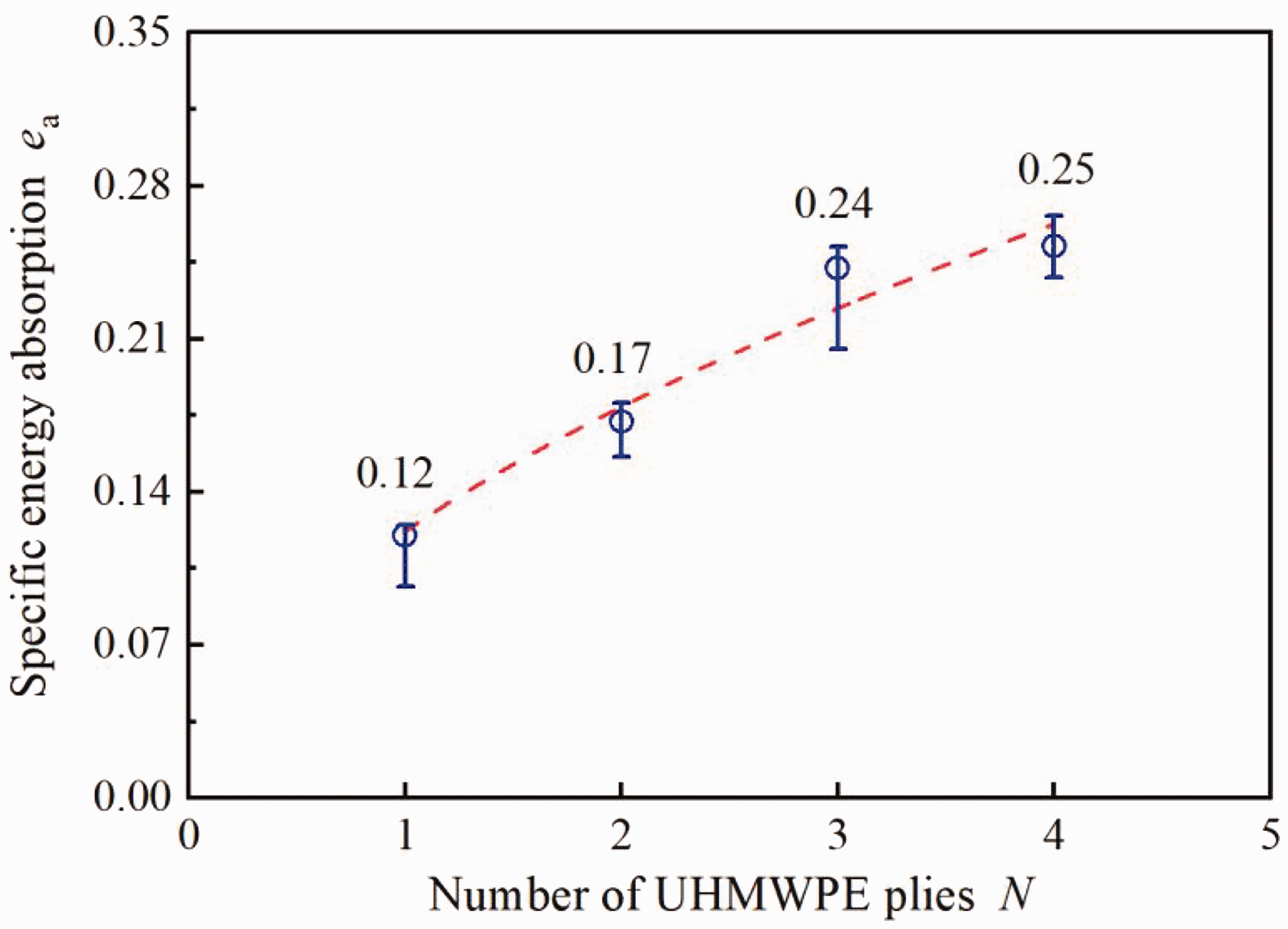
Variation of specific energy absorbed at the ballistic limit with number of fabric layers. UHMWPE: ultra-high molecular weight polyethylene.
Comparison of ballistic resistance between single-layer and multi-layer fabrics
To compare the energy absorption capability of single-layer fabrics with that of multi-layer assemblies, Figure 9 shows how their specific energy absorption at the ballistic limit rate against one another: (a) for the two-layer fabric assembly with an areal density 140 g/m2 and the single-layer fabric with an areal density 125 g/m2, the areal density of the two-layer assembly is about 12% higher, but the specific energy absorption at the ballistic limit of the former (0.17 J/(g/m2)) is higher than the latter (0.06 J/(g/m2)) by 183%; (b) a comparison of the three-layer fabric assembly with an areal density 210 g/m2 with the single-layer fabric with an areal density 200 g/m2, shows that the areal density of the three-layer arrangement is only about 5% higher, but the specific energy absorption of the former (0.24 J/(g/m2)) is 71% higher than that of the latter (0.14 J/(g/m2)); (c) the areal density of the four-layer fabric assembly is the same as that of the 280 g/m2 single-layer fabric, but the energy absorbed at the ballistic limit per unit areal density by the four-layer system is still about 9% higher than that of the single-layer fabric. These results indicate that for a common areal density, multi-layer fabric assemblies possess a higher energy absorption efficiency compared to a single layer of fabric.
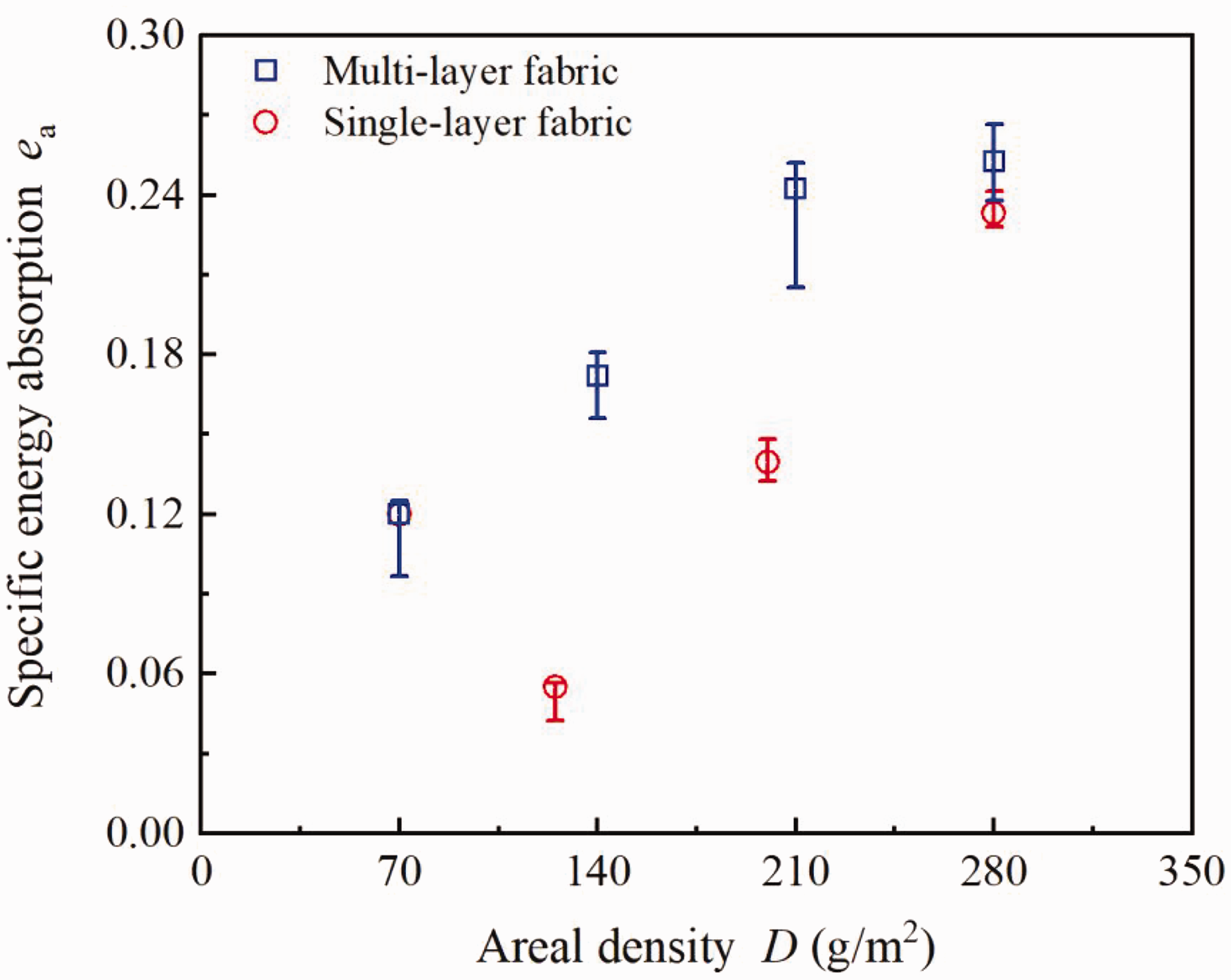
Comparison of specific energy absorption at the ballistic limit for single-layer and multi-layer fabric arrangements.
Energy absorption mechanisms for different fabrics
The effect of the areal density and number of fabric layers on ballistic resistance can be related to three aspects: (a) dynamic in-plane force during impact, (b) degree of fabric deformation, and (c) nature of fabric failure. The dynamic compressive force experienced by the four support columns of the specimen clamping fixture (Figure 3), is generated by the projectile stretching the fabric during impact, and the force in the columns was measured directly via the strain gauges mounted on them. Consequently, dynamic force in the fabric plane is related to the compressive force in the support columns. Since the former is difficult to measure directly, the latter is used to provide an indirect quantitative measure of the how the force in the fabric varies with time during impact.
Figure 10 shows a typical force-time response related to stretching of a fabric specimen with an areal density of 200 g/m2, impacted at 87 m/s, and the transverse deformation at eight instants. In the initial phase of impact (t = 0 µs to ∼200 µs in Figure 10(a)), the increase in the compressive force in the columns is more gradual, since some time is needed to take up any residual initial slack before tension in the fabric starts to increase significantly. Figure 10(b) shows that clamping and pre-stretching in the (vertical) warp direction results in the transverse wave propagating faster in that direction, compared to expansion of transverse deflection in the unrestrained (horizontal) weft direction. This causes the boundary of the transverse deformation to assume the shape of a rhombus. At t = 200 µs, the transverse wave in the warp direction has not yet reached the top and bottom clamps so the number of yarns deformed is smaller, and the increase in fabric in-plane tension is relatively slower during this phase, which is reflected by the compressive force in the support columns. The transverse wave then propagates to the clamped upper and lower ends, while also spreading horizontally in the fabric weft direction. Figure 10(b) depicts the situation corresponding to t = 325 µs during this phase (t = 200∼425 µs), whereby transverse deformation has reached the clamped ends of warp yarns, and further stretching, leads to a steep increase in the fabric in-plane force. After t = 425 µs, the increase in force tapers off, as the projectile breaks several yarns and also wedges through yarns. The maximum value of the force recorded occurs at t = 525 µs, which is also the instant the transverse deflection in fabric reaches its maximum. As the projectile perforates the fabric, the tension in it decreases, and perforation is completed at t = 600 µs.
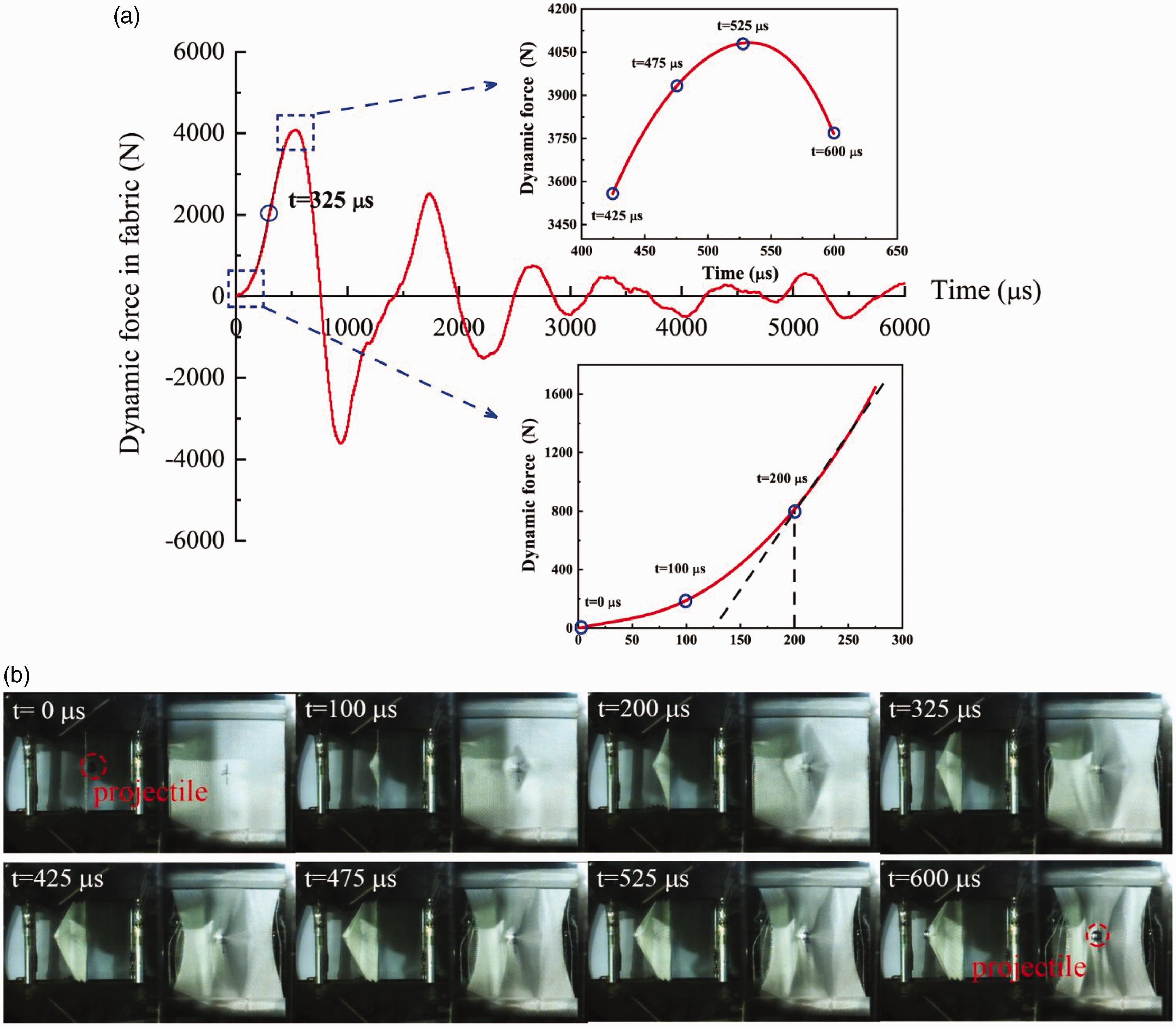
Response of fabric to projectile impact (areal density 200 g/m2, impact velocity 87 m/s): (a) support column force-time history and (b) fabric deformation.
It has been established that the energy absorbed by the fabric at the ballistic limit comprises primarily the strain energy in stretched yarns, energy dissipated by yarn breakage, and a small amount in the form of fabric kinetic energy and frictional losses. Studies 1 have demonstrated that the strain energy in the fabric at the ballistic limit accounts for 90–95% of the total energy absorbed. Since the dynamic force in the fabric plane is indirectly represented by the compressive force in the four support columns, and transverse deflection of the fabric is captured by high-speed camera images, they provide an insight into the amount of stretching the fabric experiences and the influence of parameters such as areal density or number of fabric layers on fabric strain energy and ballistic resistance, for analysis.
Analysis of ballistic resistance of single-layer fabrics
To understand the influence of areal density on the ballistic resistance of single-layer UHMWPE fabrics, the dynamic force-time response of the support columns was examined as an indirect representation of the dynamic force in the fabric, since it is not possible to measure the force in the fabric directly. Figure 11(a) depicts the dynamic force-time history for single layers of various areal densities – i.e. 70, 125, 200, and 280 g/m2, while Figure 11(b) illustrates how the peak force varies with areal density. It can be seen that: (a) the fabric with an areal density of 125 g/m2 exhibits the slowest rate of increase and its peak force is the smallest, which also confirms that the resistance a fabric generates against an impacting projectile, depends on its structure; (b) for the other three single-layer fabrics, the column force increases more sharply with an increase in areal density, and the peak force is also higher; (c) the variation of the peak force with area density is consistent with that of ballistic limit or energy absorbed of fabric. The resistance the projectile encounters is related to the tension in the fabric which the force in the supporting columns of the fixture provides an indication of, so the increase of the areal density of single-layer fabric can improve the impact resistance of fabric to projectile.
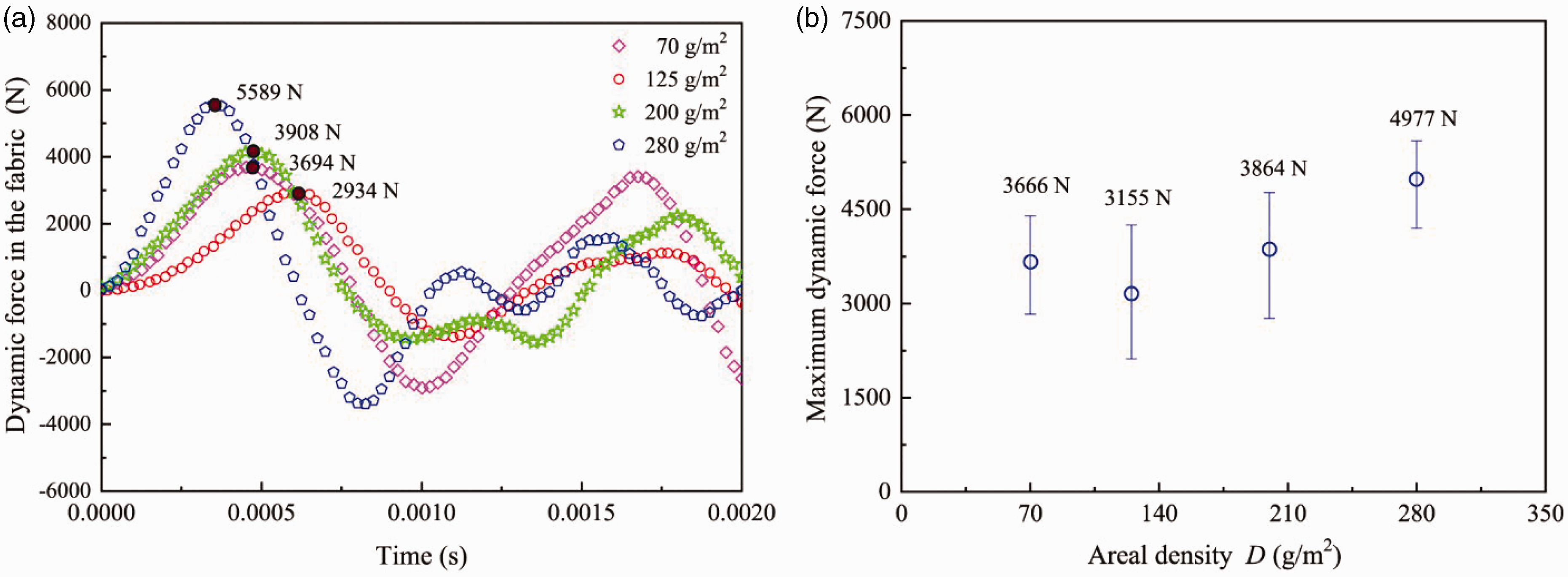
(a) Column force-time histories for impact at ballistic limit on single layer fabrics of different areal densities and (b) average peak force.
From these impact tests on four single-layer fabrics with different areal densities, high-speed images corresponding to the instant the projectile exits the target – i.e. state of maximum transverse deflection – are shown in Figure 12. Compared to the 125 g/m2 fabric, many more yarns are deformed in the other three fabrics (area within the red dashed line), and more yarns are transversely deflected when the areal density is larger. This is confirmed by the variation of peak force in fabric with area density. With regard to the side profiles of the fabrics, the maximum transverse deflection increases in the order of areal density according to 125, 70, 200, and 280 g/m2. The average value of the maximum transverse deflection of each of the four single-layer fabrics was calculated and is presented in Figure 13. The maximum transverse deflections for fabrics with areas densities of 70, 125, 200, and 280 g/m2, are 24.0, 21.7, 39.0, and 60.2 mm respectively. This variation of the maximum transverse deflection with areal density is similar to the variation of peak force with areal density, indicating that an increase in areal density elevates both the peak force (i.e. impact resistance) and maximum transverse deflection in fabric, enhancing the ballistic resistance.

High-speed images of single-layer fabric targets of different areal densities at the instant of perforation and hence maximum transverse deflection.
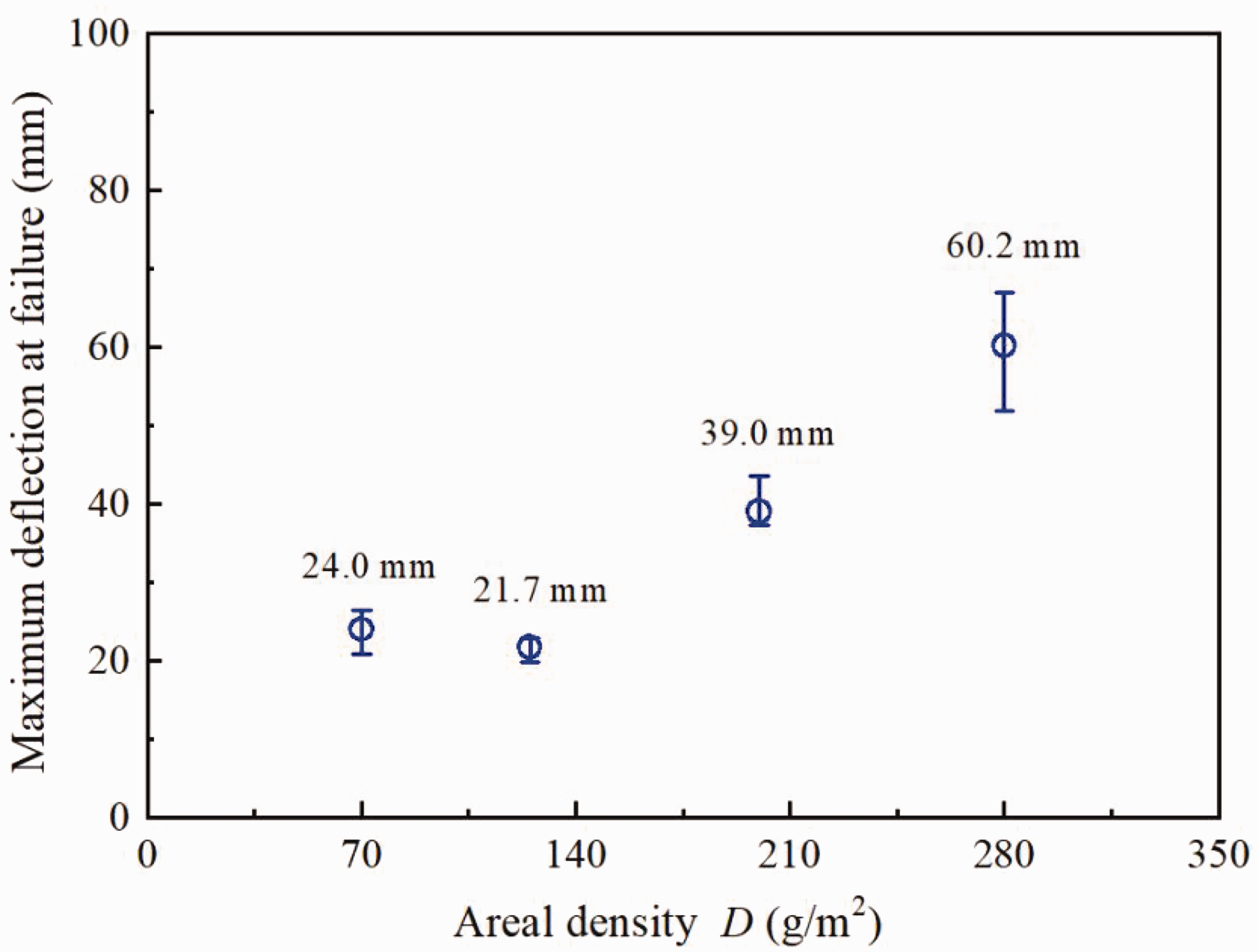
Average maximum transverse deflection for single-layer fabrics.
Analysis of ballistic resistance for multi-layer fabrics
The dynamic support column force for samples with one to four layers of fabric, is shown in Figure 14(a). The dynamic force responds faster as the number of fabric layers increases, and the maximum deflection (corresponding to the peak force) occurs earlier. The average value of the peak force for targets with one to four fabric plies is shown in Figure 14(b), and correspond to 3670, 7890, 10,130, and 12,290 N, a nonlinear proportional relationship with the number of fabric layers. In other words, an increase in the number of fabric layers enhances the projectile impact resistance of fabric.

(a) Force-time history for various areal density of fabric and (b) average peak force in multi-layer fabrics. UHMWPE: ultra-high molecular weight polyethylene.
To further understand the increase in the peak force with number of fabric layers, Figure 15 shows the yarn failure of each layer of multi-layer fabrics. Taking the test result of single-layer fabric as an example, the failure form of yarns in the fabric was described. Since the fabric was clamped and restrained in the warp direction, some yarns in the warp direction were broken by projectile (as shown in the view of zone A of Figure 15); while the fabric was a free boundary condition in the weft direction, so some yarns in the weft direction were gradually pulled out from the fabric after being impacted by projectile (as shown in the view of zone B of Figure 15), resulting in the yarns in the weft direction becoming sparse (as shown in the view C of Figure 15), and the projectile obtains space to squeeze through the fabric. It is found that from the failure form of yarns: (a) for the single-layer fabric, four yarns in the warp direction were broken by projectile, while the yarns involved by the projectile were pushed away, and the yarns in the weft direction were not broken; (b) there are five broken yarns in both the first and second piles of the two-layer fabric, so the number of broken yarns in each layer is one more than that of the single-layer fabric; (c) the number of broken yarns in the first, second, and third piles of the three-layer fabric is 5, 7 and 8 in turn, and the number of broken yarns increases layer by layer; (d) for the four-layer fabric, the number of yarn breaks in the first, second, third, and fourth layers of four layers of fabric is 5, 8, 8, and 9 in turn. The total number of broken yarns of fabrics with one to four layers was counted, as shown in Figure 16, and the number of broken yarns corresponding to them are 5, 11, 20, and 30 respectively. Therefore, more yarns are involved in the interaction with the projectile for fabrics with more layers, which also leads to increase of ballistic resistance of fabric with the number of folding layers.

Number of broken yarns for various layers in 1, 2, 3, and 4 specimens.

Number of broken yarns for various layers in 1, 2, 3, and 4 specimens. UHMWPE: ultra-high molecular weight polyethylene.
The energy absorbed at ballistic limit is not only determined by the peak force of fabric, but also affected by the maximum transverse deflection. The deformation process of fabrics with different folding layers is photographed by a high-speed camera, and Figure 17 shows the target side and back face at instant of the maximum transverse deflection. From the target back face, it can be observed that the yarn deformation areas (the red dotted line area) involved in the four different folding layers of fabrics are approximately the same, so the number of yarn deformations also increases with the number of fabric layers, resulting in the increase of the peak force. From the target side face, the maximum transverse deflection of fabric was picked up, and Figure 18 shows variation of the average value of the maximum transverse deflection with the number of fabric layers. The maximum transverse deflection of fabrics with one to four folding layers is 24.0, 31.7, 37.5, and 41.2 mm respectively, so the maximum transverse deflection of fabrics also meets the positive correlation with the number of folded layers, which approximately meets the exponential function relationship. As a result, combined with the fabric energy absorption Equation (3), increasing the number of folding layers can improve its ballistic protection ability by increasing the peak load and maximum transverse disturbance of the fabric.

High-speed images of multi-layer fabrics at maximum transverse deflection.
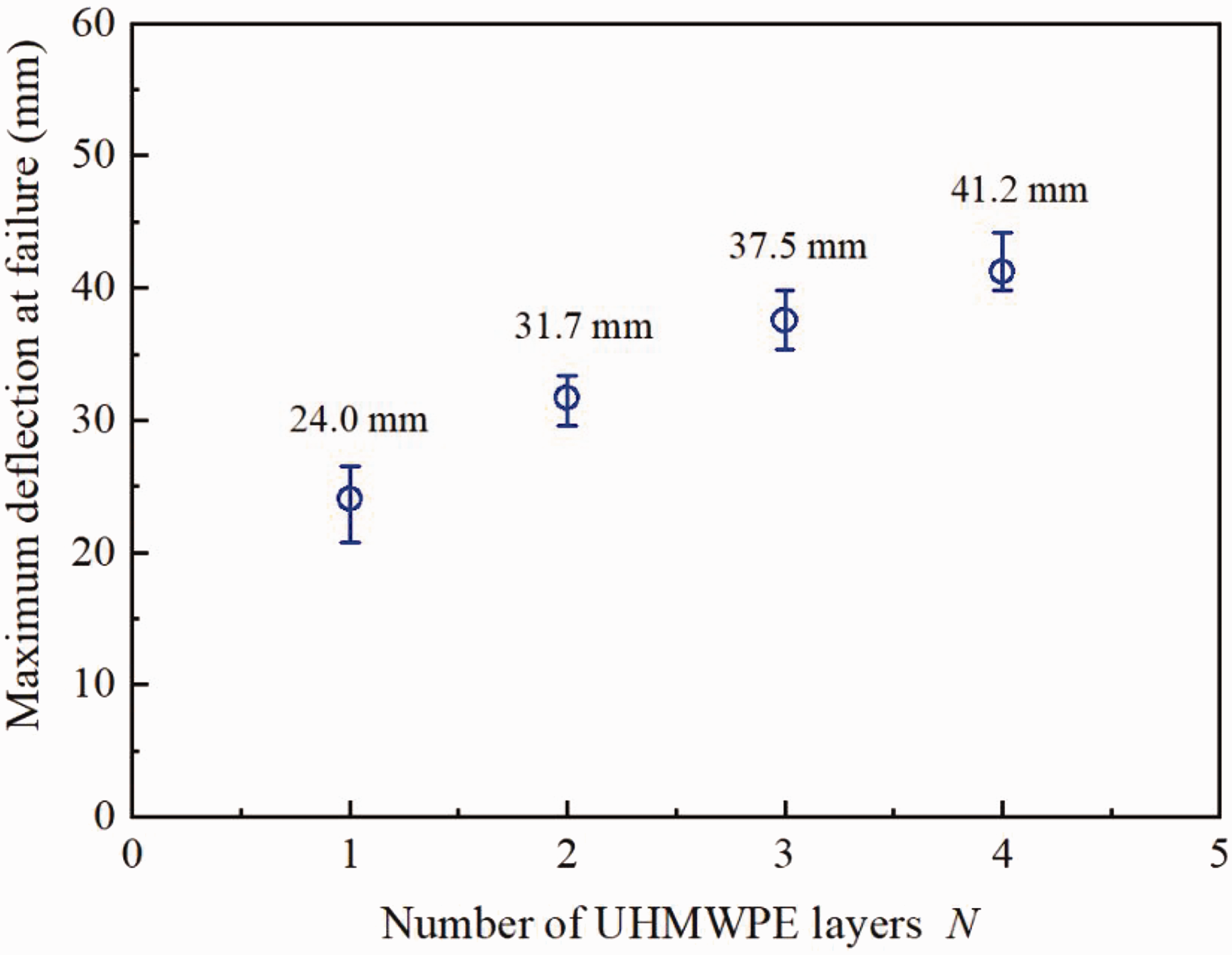
Average maximum transverse deflection in multi-layer fabrics. UHMWPE: ultra-high molecular weight polyethylene.
Comparative analysis of single-layer and multi-layer fabrics
By the analysis of the influence mechanism of areal density and number of folding layers of UHMWPE plain-woven fabric on its ballistic resistance, the results indicate that there are positive effects of their increase on the ballistic resistance by improving the peak force and maximum transverse deflection of fabric. To compare the influence difference of the areal density and number of folding layers on the peak force and maximum transverse deflection, Figure 19 shows the comparison results of the peak force and maximum transverse deflection of single-layer UHMWPE fabrics with different area density and multi-layer UHMWPE fabrics with different folding layers. For single-layer UHMWPE fabric with area density of 125 and two-layer UHMWPE fabric with area density of 140, both peak force and maximum transverse deflection of the former are less than the latter, resulting in lower ballistic limit or energy absorbed of the former than the latter. With the increase of the area density of single-layer fabric (i.e. 200 and 280 g/m2) and the number of folding layers (i.e. three and four layers), the peak force of single-layer fabrics is significantly lower than that of multi-layer fabrics, and the former is reduced by 162% and 147% respectively compared with the latter; however, the maximum transverse deflection of single-layer fabric is higher than that of multi-layer fabrics, and the former is increased by 4% and 46% respectively compared with the latter. This proves that for the two groups of single-layer and multi-layer fabrics, the difference of the peak force is greater than the maximum transverse deflection, which also leads to the finding that the ballistic resistance values of these fabrics are determined by the peak forces, so the ballistic resistance of multi-layer fabrics is better than that of single-layer fabrics under the same approximate area density. In addition, the yarns of the multi-layer fabric are broken in varying degrees after being impacted by the projectile, and the yarn fracture also improves the energy absorbed at ballistic limit of fabric.

Comparison of variation of peak force and maximum transverse deflection with areal density for different kinds of fabric.
From the application of 2-D plain fabric in soft armor, in addition to comparing the ballistic resistance of single-layer fabrics and multi-layer fabrics under the condition of equal area density, it is also necessary to consider the maximum transverse deflection of the fabric. Therefore, a parameter – i.e. energy absorption at ballistic limit per unit transverse deflection – was defined to comprehensively examine the ballistic resistance of fabric, and Figure 20(a) illustrates the variation of the parameter with areal density of fabric. The energy absorption per unit transverse deflection values of the multi-layer fabrics are all better than those of the single-layer fabrics. To quantify this, these energy absorption per unit transverse deflection values were normalized with respect to those for 70 g/m2 fabric (as a reference), and for two, three, and four layer fabrics the values are 2.17, 3.88, and 4.90 times that of the reference, while only 0.91, 2.04, and 3.10 times for 125, 200, and 280 g/m2 fabrics. As shown in Figure 20(b), the variation of normalized specific energy absorption per unit transverse deflection values with normalized areal density were fitted by:

(a) Energy absorption at ballistic limit per unit transverse deflection for various areal density of fabrics and (b) normalized energy absorption per unit transverse deflection.
Conclusions
The focus of this research was to comparatively investigate the ballistic performance of single-layer and multi-layer woven fabrics with the same areal density, so impact tests on these fabrics were carried out to examine their ballistic limit. The conclusions draw from the analysis of test results are as follows: the specific energy absorption at the ballistic limit of single-layer fabrics with areal densities of 125, 200, and 280 g/m2 are 0.07, 0.14, and 0.23 J/(g/m2), and those of multi-layer assemblies (two, three, and four layers, corresponding to areal densities of 140, 210, and 280 g/m2) are 0.17, 0.24, and 0.25 J/(g/m2), so multi-layer fabric assemblies possess a higher level of energy absorption efficiency compared to a single layer of fabric. By analysis of the dynamic in-plane force and deformation degree of fabrics, the results indicate that the multi-layer fabrics mainly improve the ballistic resistance by increasing the peak force in the fabric, while the single-layer fabrics by increasing the maximum transverse deflection. Moreover, from the perspective of fabric application in body armor, the energy absorption at ballistic limit values of single-layer and multi-layer fabrics were transformed into energy absorption per unit transverse displacement, the index of the multi-layer fabric is obviously better than that of single-layer fabric.
Footnotes
Declaration of conflicting interests
The author(s) declared no potential conflicts of interest with respect to the research, authorship, and/or publication of this article.
Funding
The author(s) disclosed receipt of the following financial support for the research, authorship, and/or publication of this article: The author(s) have received support from the following for aspects of the research, authorship, and/or publication of this article: National Natural Science Foundation of China (Grant Nos: 12172179, 12202207), China Postdoctoral Science Foundation (2022M711623), Natural Science Foundation of Jiangsu Province (BK20220968), and Open Funds for Key Laboratory of Impact and Safety Engineering (Ningbo University), Ministry of Education (CJ202201).
