



Abstract
Electrolytic active water was prepared by electrolytic treatment of sodium chloride aqueous solution using a self-made device. In order to investigate the properties of electrolytic active water , the pH value, available chlorine contents and decolorization ability on methylene blue solution were tested and compared with that of sodium hypochlorite aqueous solution. Experimental results showed that the electrolytic active water has higher oxidation capacity and decolorization efficiency for methylene blue compared with sodium hypochlorite solution, implying maybe other reactive oxygen species components besides hypochlorite existed in the electrolytic active water. The electrolytic active water was stable under long-term storage, and mechanical force with oxidation activity did not decrease. In addition, the decolorization kinetics of methylene blue in the electrolytic active water was explored, and it was found that, in general, the decolorization reaction of methylene blue in electrolytic active water was consistent with the first-order reaction kinetics model, but when the pH value of electrolytic active water solution was weakly alkaline or neutral, the decolorization reaction of methylene blue was closer to the second-order reaction kinetics model.
In textile industry effluents, dyeing wastewater occupies a considerable part and is the most difficult to dispose of.1–3 Discharging of dye wastewater into the environment directly will not only reduce the transparency of the river water, weakening the photosynthesis of aquatic plants, leading to a large number of aquatic plant deaths,2,4,5 but also has teratogenicity and various toxicity to animals and humans. At present, it is difficult for the traditional treatment of printing and dyeing wastewater to meet increasingly stringent environmental protection requirements, so the development of more efficient dye wastewater treatment technology is of great significance to environmental protection and economic development.
In recent years, many methods including adsorption,6,7 membrane separation,8,9 microbial treatment,10,11 coagulation, 12 ozone,13,14 and Fenton treatment,15,16 as well as photocatalytic degradation17–19 have been proposed for the treatment of dyeing wastewater. However, there are still some disadvantages of high cost, low efficiency, incomplete removal of pollutants, and generated secondary pollution20–22 with the above solutions. Electrochemical methods for treating dye wastewater technology have attracted a lot of attention due to their ease of automation, high efficiency, and small secondary pollution.23–26 Electrolyzed water generated by passing sodium chloride solution through an electrolytic cell was initially developed in Japan. 27 It has reported antimicrobial effects against a variety of microorganisms including common biofilm, viruses, bacteria and fungi in chronic wounds, and has been widely used in medicine, dentistry, agriculture, and food preservation for years.28–31 The chlorine group (Cl2, OCl–, and HOCl) has been reported to play an important role in the antimicrobial efficacy of electrolyzed water, and hypochlorous acid (HOCl) is the most effective inactivation compound in the group.28,32 Currently, electrolyzed water has gained much research interest due to its nature of green chemistry, but there are few reports on its application in the decolorizing of dyes. The electrolytic active water (EAW) used in this study is produced by the electrolysis of sodium chloride (NaCl) in a single-cell unit without diaphragm in the anode and cathode. It is generally believed that the component attributed to its high chemical activity in aqueous solution obtained by electrolysis of sodium chloride water is sodium hypochlorite (NaClO).33–35 However, in our previous experiments on applying the EAW to hemp degumming, it was found that EAW has an excellent hemp degumming effect which was unattainable in aqueous NaClO solutions. 36 In addition, there were also large differences in the decolorization behavior of EAW and NaClO on methylene blue (MB) in this study. Therefore, the authors believe that in addition to the presence of NaClO in the EAW, there is also a macro reactive oxygen species (ROS) component in the EAW, and it could be widely used in textile bleaching, plant fiber degumming, 36 wastewater decolorization and antibacterial disinfection.37,38
MB is a commonly used cationic dye, but many symptoms such as Heinz body anemia, morphology change in red blood cells, and necrotizing abscesses may be caused when MB is ingested into the human body.39–47 Therefore, it should be degraded before being discharged into the environment to reduce its hazards. At present, the research on MB degradation is relatively mature, so MB is selected as a simulated pollutant in this paper, and the properties of the EAW and the application potential of dye wastewater decolorization treatment are investigated by studying MB decolorization behavior and comparing with that of aqueous NaClO.
Experimental section
Materials
MB was provided by Shanghai Macklin Biochemical Technology Co. Ltd. Sodium hydroxide, hydrochloric acid, sodium chloride, Na2S2O3, sulfuric acid, potassium iodide, soluble starch, NaClO, pure analysis were all purchased from Tianjin Kemiou Chemical Reagent Co. Ltd. All solutions were formulated using deionized water.
Preparation of EAW
The EAW used in the study was prepared using an EAW generator made in our laboratory, 36 as shown in Figure 1. NaCl was selected as the electrolyte with its concentration of 30 g/L, and the electrolytic temperature was 25°C. Different specifications of EAW were obtained by changing the electrolysis time. The prepared EAW was used immediately or stored in glass containers for a period of time to test its stability in the experiments.

Preparation of electrolytic active water (EAW) and its application in methylene blue (MB) decolorization.
Determination of available chlorine content
Quantitative analysis of available chlorine in EAW or aqueous NaClO was performed by the iodine dosing method. 36 First, 10 mL of EAW was taken into a 250 mL iodine bottle, and 10 mL of prepared 2 mol/L sulfuric acid solution was added for acidification, and then 10 mL of 10% potassium iodide solution was added. After shaking, the solution in the iodine measuring bottle turned brown. At this time, the iodine measuring bottle was sealed and placed in a dark place for 5 min before being taken out. Titrating with Na2S2O3 standard solution (in a 25 mL burette) was carried out and well shaken. When the solution turned light brown and yellow, 10 drops of 0.5% starch solution were added to the solution, at this time the solution was dark blue. Titrating with Na2S2O3 standard solution (0.1 mol/L) was continued until the blue disappeared and the solution became clear and transparent. The volume (mL) of Na2S2O3 standard solution consumed was recorded. The test was repeated three times, taking the average of the three times for calculation.
The available chlorine content was calculated according to the amount of Na2S2O3 used in the titration. Because 1 mL of 1 mol/L Na2S2O3 is equivalent to 0.03545 g of chlorine, the available chlorine content could be calculated using equation (1):

MB decolorization
Process of MB decolorization
The MB dye solution with a concentration of 50 mg/L was decolored by mixing with the prepared EAW in a 1:1 ratio under continuous magnetic stirring, and 3 mL of the mixed solution was taken at regular time intervals to determine the residual concentration of MB by testing absorbance with a spectrophotometer at 664 nm, using deionized water as the reference solution. The final result recorded for each sample was the average of three tests.
The change of relative absorbance is used to record the change of MB concentration in the solution. The decolorization percentage of MB can be calculated according to equations (2) and (3):


Comparison of decolorization of MB by EAW and NaClO
NaClO containing different available chlorine content and EAW of different specifications was prepared. The two solutions with the same (pseudo) effective chlorine concentration were selected and then reacted with MB dye. The difference between EAW and conventional NaClO solution was studied by comparing the pH values of the two solutions and the time taken to decolorize MB to 95%. Further, the storage time and mechanical action on decolorization efficiency of two solutions were studied by standing the two solutions for 2 weeks and carrying the MB decolorization test under constant stirring.
Influence of initial concentration of MB
EAW of each specification was divided into five parts and mixed with equal volumes of MB dye solution with concentrations of 20 mg/L, 33.33 mg/L, 50 mg/L, 66.66 mg/L, and 80 mg/L, respectively, at room temperature. The decolorization performance of EAW on MB solution with different concentrations was investigated by measuring the absorbance of the above MB solutions at 664 nm every 2 min, and the total decolorization time for each concentration of MB solution was 10 min.
Influence of pH value
The influence of the pH value of EAW on MB decolorization was investigated. Sodium hydroxide and hydrochloric acid were added to adjust the pH of the prepared EAW, and decolorization experiments were carried out using EAW with different pH values of 6, 7, 8, 9 and 10, respectively. The duration of each decolorizing reaction was 6 min with sampling every 1 min and testing its absorbance at 664 nm, and then the concentrations of MB samples were calculated according to the absorbance.
Influence of temperature
In order to study the influence of temperature on the experiment, decolorization experiments were carried out at different temperatures of 30°C, 40°C, 50°C, and 60°C, respectively. The duration of each decolorizing reaction was 6 min with sampling every 1 min and testing its absorbance at 664 nm, and then the concentrations of MB samples were calculated according to the absorbance.
Results and discussion
Comparison of EAW and NaClO solution
Reaction of EAW and NaClO solution with Na2S2O3
Assuming that the main component of EAW is NaClO, the available chlorine contents of EAW and NaClO aqueous solution could be determined by iodometry as described in the Determination of available chlorine content section. However, the experiments found that the behaviors of the two solutions exhibited quite differently during their application even though they had the same available chlorine contents. In order to explore the reasons for the difference, the absorption curves of EAW and NaClO solution with the same available chlorine contents in the 200–800 nm band were tested using a UV-vis spectrometer. Furthermore, the two solutions were diluted two times, followed by adding the 300 times diluted Na2S2O3 standard solution, and samples were taken at 1, 3, 5 and 10 min time intervals, respectively, followed by testing absorption in the band of 200–800 nm. The spectrogram obtained is shown in Figure 2.
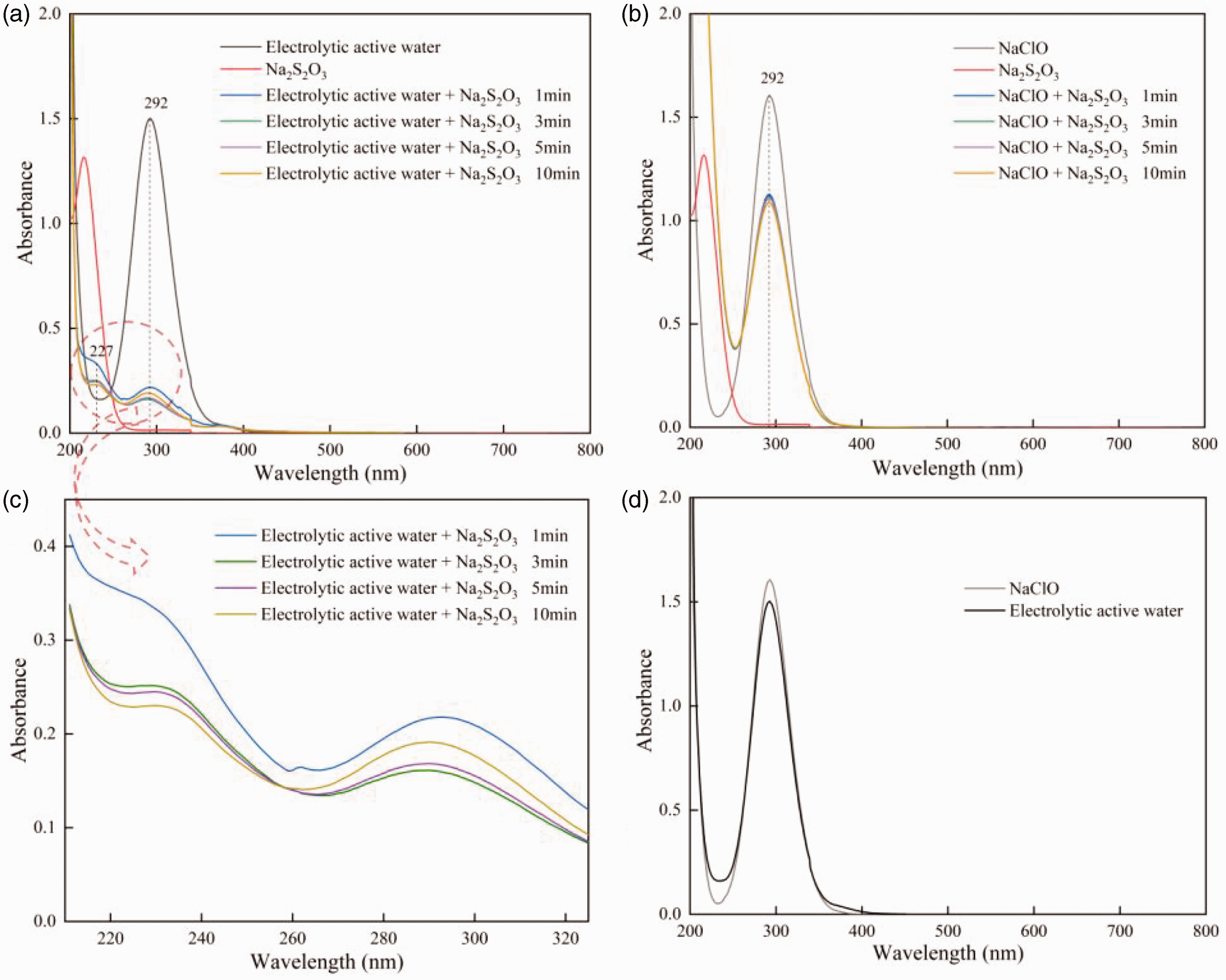
Difference in reactions of electrolytic active water (EAW) and sodium hypochlorite (NaClO) solution with sodium thiosulfate (Na2S2O3).
Both EAW and the NaClO solution had the strongest absorption peak at 292 nm, but the peak intensity of EAW was slightly lower than that of the conventional NaClO solution (Figure 2(d)). It could be seen from Figure 2(b) that 1 min after adding Na2S2O3, the absorption peak intensity of NaClO solution at 292 nm decreased significantly, indicating that NaClO reacted with Na2S2O3. However, NaClO solution 1 min after adding Na2S2O3 and aqueous solution 10 min after adding Na2S2O3, their intensity of absorption peaks at 292 nm decreased to the same extent, indicating that EAW and Na2S2O3 react rapidly and almost completely within 1 min.
As can be seen from Figure 2(a) and 2(c), 1 min later after the reaction of EAW with Na2S2O3 solution, both the absorption peak at 292 nm of EAW and Na2S2O3 solution at 216 nm showed significant decreasing in density, and even almost disappeared, accompanied by a new peak occurring at 227 nm. Compared with the ultraviolet spectrum of the two solutions, it could be seen that the EAW had higher oxidation activity than that of NaClO solution in the condition of having the same available chlorine content, which wae attributed to oxidizing substances other than NaClO in the EAW, and these substances were nonchlorine, such as ozone and superoxide ions. Therefore, the available chlorine content of the EAW measured by iodometry was not equivalent to that of the NaClO solution. However, before truly understanding the chemical composition of EAW, the parameter of available chlorine content was still used in the research to characterize the EAW, but was named ‘pseudo-available chlorine’ content in order to avoid confusion with the available chlorine content of NaClO solution.
Comparison of pH values EAW and NaClO solution
The pH values of EAW and NaClO solutions at the same (pseudo) available chlorine contents were tested and are listed in Table 1. It can be seen that there is a large difference in the pH values of the two solutions even though they had the same available chlorine contents. For EAW, the pH decreased with the increase of the pseudo-available chlorine content, the pH value decreased to a minimum when the pseudo-available chlorine content was 0.9 g/L, and then the pH value continued to increase as the pseudo-available chlorine contents increased. For NaClO solutions, the pH value was generally stable, or the pH increased slightly as the available chlorine contents increased. Overall, the pH of NaClO solution was greater than that of EAW. The results of pH values testing further implied that the properties of prepared EAW were quite different from NaClO aqueous solution.
Initial pH value EAW and NaClO solution

EAW: electrolytic active water; NaClO: sodium thiosulfate.
Study on decolorization of MB by EAW and NaClO solution
Comparison of the decolorization performance of MB by EAW and NaClO solution
The results of the experiment on the reaction of EAW and NaClO solution with Na2S2O3 showed that the oxidation activity of EAW was significantly higher than that of NaClO aqueous solution. In order to verify further the difference in oxidative activity between EAW and NaClO aqueous solution, the decolorization of MB by EAW and NaClO solution with the same (pseudo) available chlorine content was studied in the research. As the pH value has a significant influence on the reactivity of NaClO solution, in order objectively to compare the decolorization effect of two solutions on MB, the pH value of NaClO solution was adjusted to the same pH value as that of EAW with the same (pseudo) available chlorine content, according to Table 1. The decolorization effects of the chlorine contents of the two solutions were compared by the time it took for the MB decolorizing percentage to reach 95% (Figure 3).
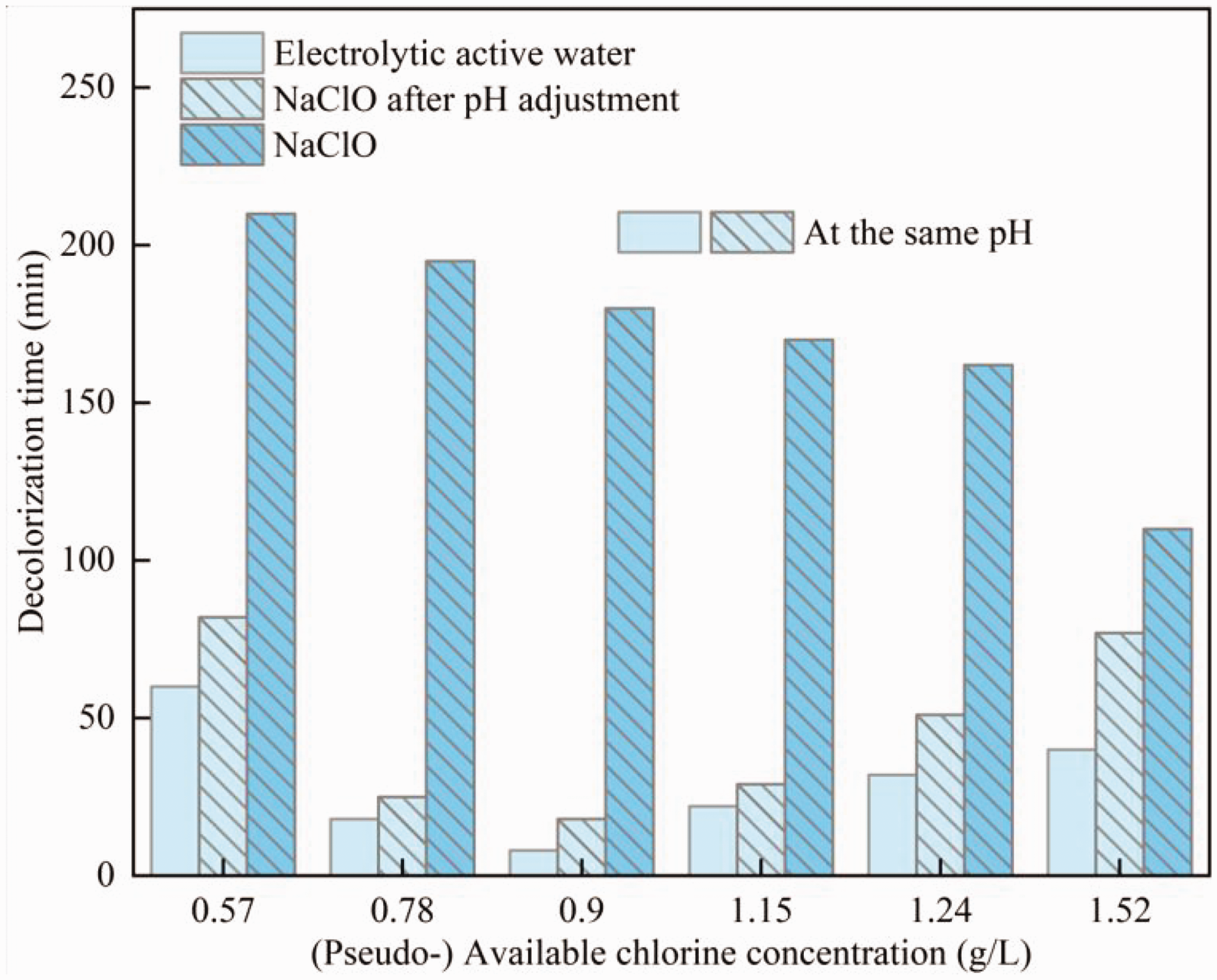
Time to decolorize methylene blue (MB) with electrolytic active water (EAW) and sodium hypochlorite (NaClO) at the same (pseudo) available chlorine content (when the decolorization percentage of MB reached 95%).
As can be seen from Figure 3, when using NaClO aqueous solution without adjusting the pH value to decolorize MB, the time required for the 95% MB decolorization was shorter with the increase of available chlorine content, meaning the higher the available chlorine content, the faster the MB decolorizing rate for NaClO aqueous solution. While the MB decolorizing rate increased with the increase of available chlorine content of the two solutions when using EAW and NaClO aqueous solution with the pH value adjusted, and the decoloring rate got the maximum value as the (pseudo) available chlorine content was 0.9 g/L for EAW and NaClO aqueous solution with the pH value adjusted, when the two solutions had the lowest pH value. It was explained as the decrease in pH value of NaClO solution was conducive to the generation of more HOCl in solution, which is more helpful to MB decolorization, and the EAW also had such a rule. It was also observed that the decolorization rate of MB by EAW was faster than that by NaClO aqueous solution, regardless of whether the pH value of the NaClO aqueous solution was adjusted or not. This was also a reason that we speculated that there were other oxidizing species in the EAW, in addition to oxidizing substances similar to NaClO aqueous solution.
Stability EAW and influence of mechanical force on the decolorization reactivity of MB
Based on the above analysis, if there is an active ingredient of nonNaClO in the EAW, it is necessary to understand the stability of the active substance in the EAW solution. The prepared EAW and NaClO solution were left to stand with the conventional NaClO solution for weeks, and the stability of the EAW was analyzed by testing and comparing the (pseudo) available chlorine contents, pH value, and MB decolorization rate of the two solutions at days 0, 1, 3, 7 and 14, as shown in Figure 4. The results show that for the EAW, the pseudo-available chlorine contents decreased with the increase of the standing time, but the pH value of the solution and the decolorization of MB were not significantly changed. In contrast, the available chlorine contents of the NaClO solution kept almost unchanged, while the pH value of the solution decreased and the decolorization rate of MB increased, as increasing the standing time. The authors believe that the pH of the NaClO solution decreased due to the dissolution of carbon dioxide in the air during the standing process, and the oxidation capacity of the NaClO solution was very sensitive to the pH value, so the decolorization rate of the NaClO solution to MB within 20 min increased as the standing time was prolonged. This result once again confirmed the difference between EAW and NaClO solution, and also showed that the active ingredient in EAW has good stability.

Effect of standing time on electrolytic active water (EAW) and sodium hypochlorite (NaClO) solution.
In order to investigate the effect of mechanical force (such as bumps in transportation and pumping during transportation) on the performance of the EAW in the application, also to compare further the behaviors of EAW and NaClO solution, the following experiments were designed. The same (pseudo) available chlorine content of EAW and NaClO solution were simultaneously stirred for 8 h, the decolorization effects of MB of the two solutions were tested and compared with those of solutions without stirring. Experimental results exhibited that stirring had no obvious influence on MB decolorization for NaClO solution, but the decolorization time of MB by the EAW stirred for 8 h was shortened by nearly half compared with the time of no stirring. It was noted that the (pseudo) available chlorine contents of the two solutions with 8 h stirring was not changed (as shown in Figure 5). It can be concluded that the mechanical force has little effect on the activity of the chlorine component in the two solutions, but has a greater impact on the stable state of the unknown active ingredient in the EAW, and the stirring promoted the release of its activity and accelerated the decolorization of MB.
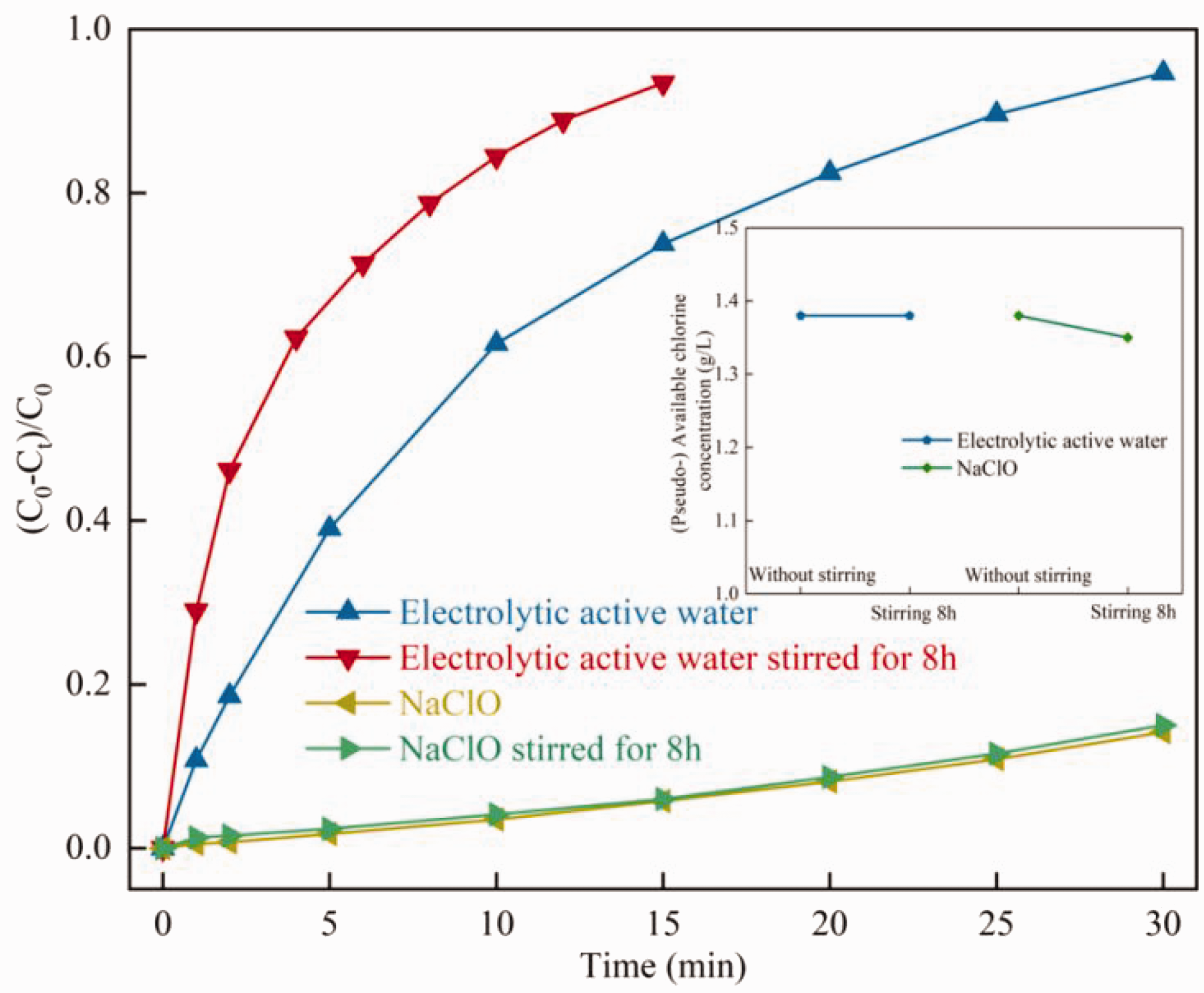
The effect of stirring for 8 h on the decolorization effect of methylene blue (MB).
UV-vis spectrometer analysis
The changes in the absorption spectra of the MB dye in both solutions during the decolorization of EAW and NaClO solutions were monitored using a UV-vis spectrometer, as shown in Figure 6. As can be seen from Figure 6(a), the UV spectra of the EAW and NaClO solution with the same (pseudo) available chlorine contents were quite similar, both having strong signal peaks at 292 nm. Two main absorption peaks were observed in the MB spectrum, from Figure 6(b) and 6(c): one at 292 nm, attributed to transitions associated with the unsaturated conjugate aromatic rings of π → π*, 48 and at 664 nm, belonging to the chromophore functional groups of MB and its dimers, that is, –C=S and –C=N. 49 In addition, a wide peak appears near 610 nm, which is attributed to a 0–1 vibration transition. 50 It can be clearly seen in Figure 6(b) that with the decolorization of MB by EAW, the intensity of all absorption peaks decreased with the extension of the decolorization time, especially the intensity of peak at 664 nm decreased significantly, and almost disappeared when the decolorization time was 30 min. As the EAW and MB both had absorption peaks at 292 nm, the decline of 292 nm absorption peaks could be a combined result of the consumption of active substances in the EAW and the destruction of MB molecular chemical structure, while the decrease and disappearance of the peak at 664 nm indicated that the conjugate system in MB molecular structure was destroyed during decolorization by the EAW. However, the above changes were not prominently displayed in Figure 6(c), indicating that hypochlorite does not play a major role in the decolorization of MB in the EAW.

UV-VIS absorption spectra of methylene blue (MB) solution degradation at different times. (a) Electrolytic active water (EAW) and sodium hypochlorite (NaClO) solution with the same (pseudo) available chlorine contents; (b) degradation of MB by NaClO solution and (c) degradation of MB by EAW.
The above experimental results showed the differences between the active ingredient in the EAW and that from the NaClO solution: the active ingredient present in the EAW can not only be stable but also had a much higher MB decolorization than that of NaClO solution. In particular, mechanical action such as stirring can enhance the decolorization effect of active water on MB, while the NaClO solution did not show such behavior.
Analysis of EAW after being applied to bleached cotton fabric
Hypochlorite is often used in the bleaching of cotton fabric, also we applied the EAW in pretreatment cotton grey fabric by dipping fabric into the EAW and got a good bleaching effect. The change of available chlorine contents and pH values of the EAW before and after being applied to bleached cotton was tested in this study, then the residual EAW (EAW after been used to bleach cotton) was collected to decolorize MB, and the results are shown in Figure 7. The results showed that the pseudo-available chlorine contents in the EAW residue decreased from the original 1.13 g/L to 0.18 g/L after bleaching, but the decolorization of MB could still reach more than 75% within 15 min, which also suggested that the active ingredients in EAW should not only be hypochlorite, but also other active ingredients. In addition, the pH value of the newly prepared EAW was 8.7, which was reduced to 7.5 after bleaching of cotton fabric. When the pH value of the bleached solution was adjusted to 8.7, it was found that the decolorization rate of MB was reduced to 27.35%, indicating that the pH of the reaction system had a great influence on the decolorization of MB.
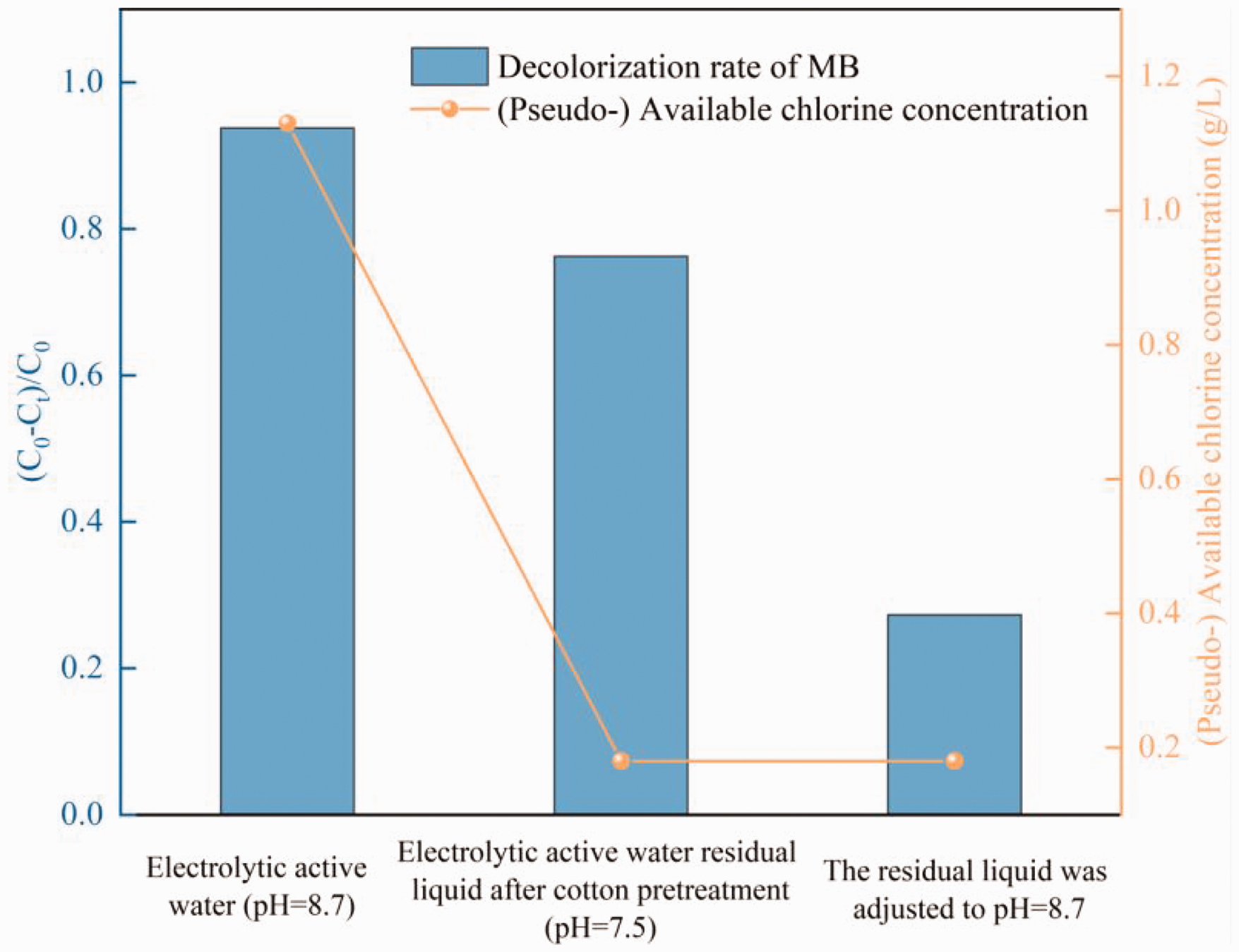
Comparison of electrolytic active water (EAW) quality before and after being applied to bleached cotton fabric.
Kinetics of decolorization reaction of MB with EAW
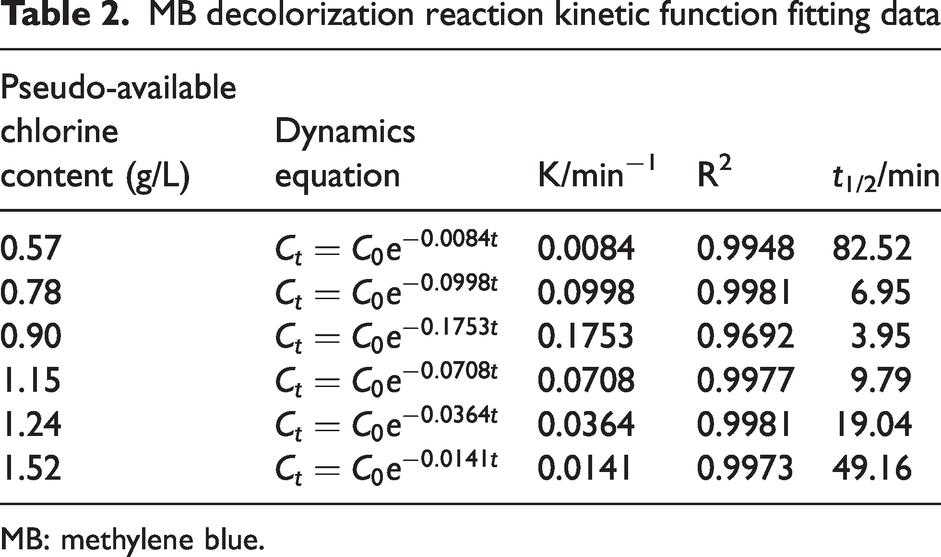
The decolorization of MB in EAW with different specifications is shown in Figure 8. It can be seen from Figure 8(a) that the decolorization percentage of 25 mg/L MB can reach up to 78.88% after being treated in EAW for 10 min. As can be seen from Figure 8(b), the decolorization reaction of MB in EAW could conform to the first-level kinetic model, and the first-order kinetic equation (4) is:

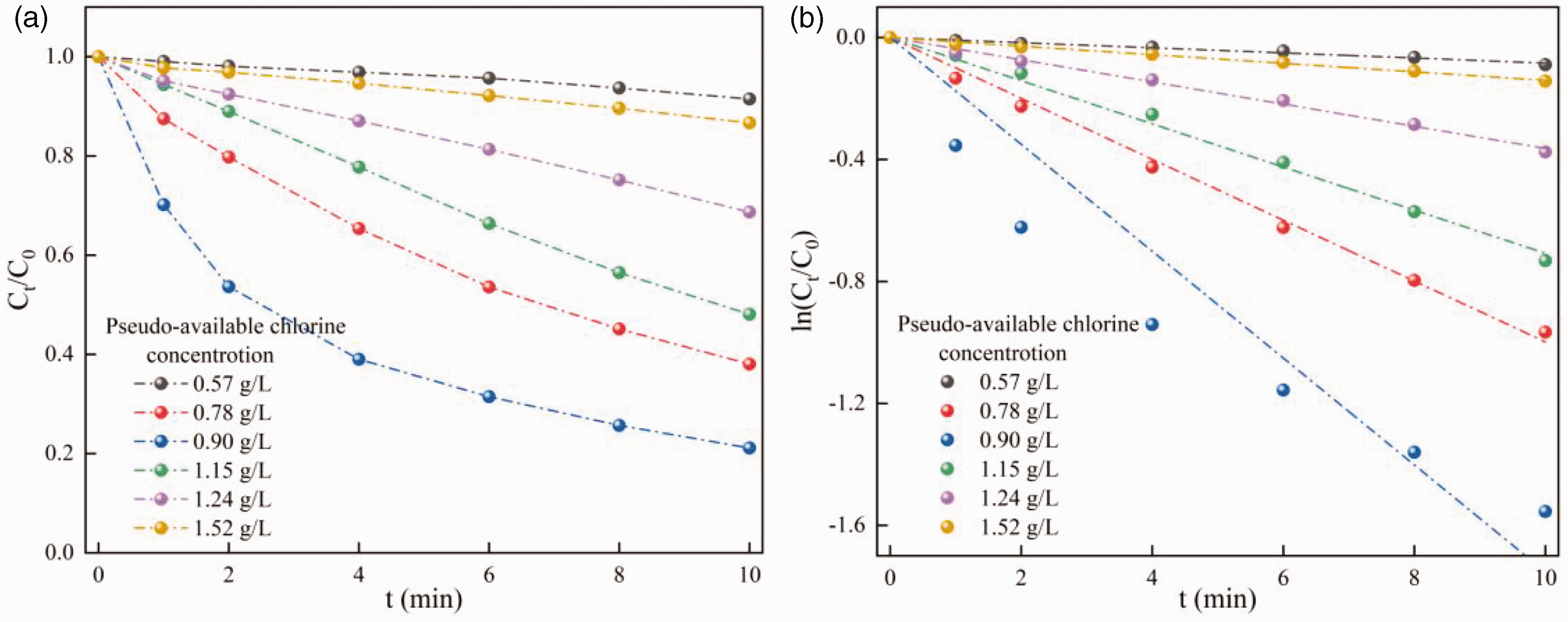
Decolorization curve of methylene blue (MB) in electrolytic active water (EAW) with different specifications. (a) C t /C0 and (b) the relationship between –ln(C t /C0) and t.
MB decolorization reaction kinetic function fitting data
MB: methylene blue.
In addition, the half-life of MB decolorization reaction
As shown in Figure 8(b), –ln(C t /C0) has a good linear relationship with time, indicating that when EAW of different specifications acted on MB, it satisfied the first-order kinetics law, and the fitting degree was good (the fitting coefficient was above 0.96). Therefore, the decolorization reaction of MB by the EAW satisfied the first-order kinetics equation. It was observed that the reaction rate was the fastest, reaching 0.1753 min−1, when the pseudo-available chlorine contents in the EAW was 0.9 g/L; besides, the reaction rate decreased with the increase or decrease of the pseudo-available chlorine contents.
Influence of initial MB concentration on decolorization
The influence of the two factors which were the specification of the EAW and original concentration of MB on the kinetics of MB decolorization reaction are shown in Figure 9. As can be seen from Figure 9(a), when the pseudo-available chlorine contents in EAW was around 0.9 g/L, the decolorization percentage was the best for all concentrations of MB. When the initial concentration of MB increased, the decolorization percentage of MB decreased. As can be seen from Figure 9(b), under the same pseudo-available chlorine contents, the reaction rate decreased continuously with the increase of the initial concentration of MB, which was considered to be caused by the limited active components in the EAW.
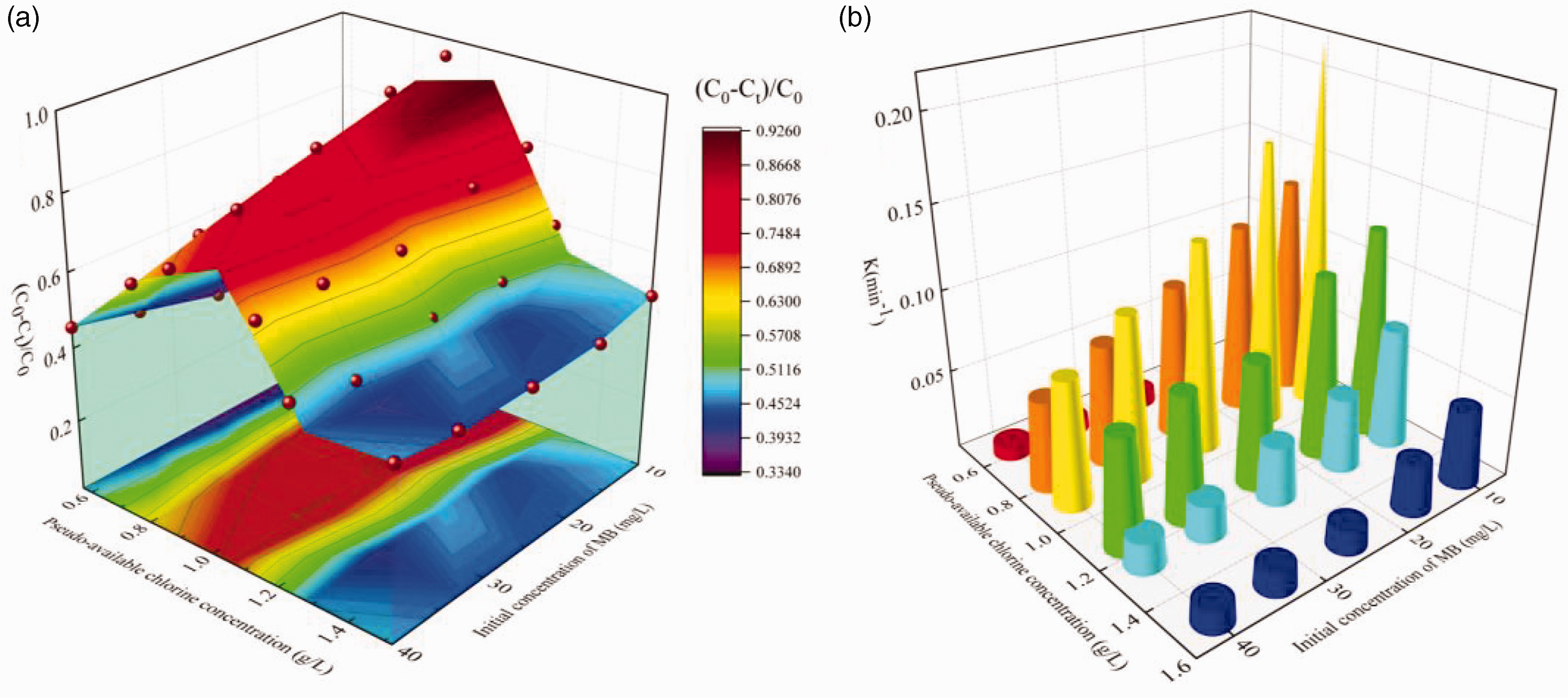
Kinetics of decolorization of methylene blue (MB) with different specifications of electrolytic active water (EAW) and initial concentration of MB. (a) (C0–C t )/C0 and (b) influence on reaction rate.
Effect of pH value on decolorization of MB
As we know, the pH value has a great influence on the reactivity of the NaClO solution. As the EAW prepared in this experiment contained a NaClO component, the influence of the pH value of the EAW on the decolorization of MB was investigated. The effect of available chlorine contents and pH value on the MB decolorization reaction of EAW is shown in Figure 10. As can be seen from Figure 10(a), the decolorization percentage of MB decreased with the increase of pH. Figure 10(b) showed that under the same pseudo-available chlorine content, the decolorization rate decreased with the increase of pH, indicating that the decrease of the pH value was conducive to the decolorization reaction of MB dye in EAW. In addition, for different specifications of EAW, the initial pH value was also different, as shown in Table 1. In different specifications of EAW, the MB decolorization reaction rate had a great relationship with the initial pH of the EAW, the larger the initial pH value, the more H+ was needed to be added to reach the same pH, so when the pH reached the same value, the faster was the reaction rate. By comparing Figure 8 and Figure 10(b), it can be seen that when MB was decolorized in the initial pH system of EAW, the reaction rate was the fastest when the pseudo-available chlorine content was 0.9 g/L, and the reaction rate decreased with the increase or decrease of pseudo-available chlorine contents. However, when the pH of the system was adjusted by H+, the reaction rate gradually increased at the same pH value with the 0.9 g/L pseudo-available chlorine content as the inflection point, regardless of whether the pseudo-available chlorine content was large or small, which reflected that the EAW had similar properties to NaClO solution, or it could be considered as the result of the synergistic interaction between NaClO and unknown active components.

Kinetics of the decolorization of methylene blue (MB) in electrolytic active water (EAW) with different specifications and pH values. (a) (C0–C t )/C0 and (b) influence on reaction rate.
Influence of temperature on MB decolorization
The influence of specifications of EAW and temperature on the kinetics of MB decolorization reactions was investigated, as shown in Figure 11. It can be seen from Figure 11(a) that EAW got the highest MB decolorization rate when the pseudo-available chlorine contents of EAW was around 0.9 g/L at room temperature (30°C), then the MB decolorization rate of EAW was reduced whether its pseudo-available chlorine contents increased or decreased. The temperature would affect the MB decolorization as the MB decolorization rate increased with increasing temperature at the same pseudo-available chlorine contents (Figure 11(b)), indicating that an endothermic reaction occurred in the system.
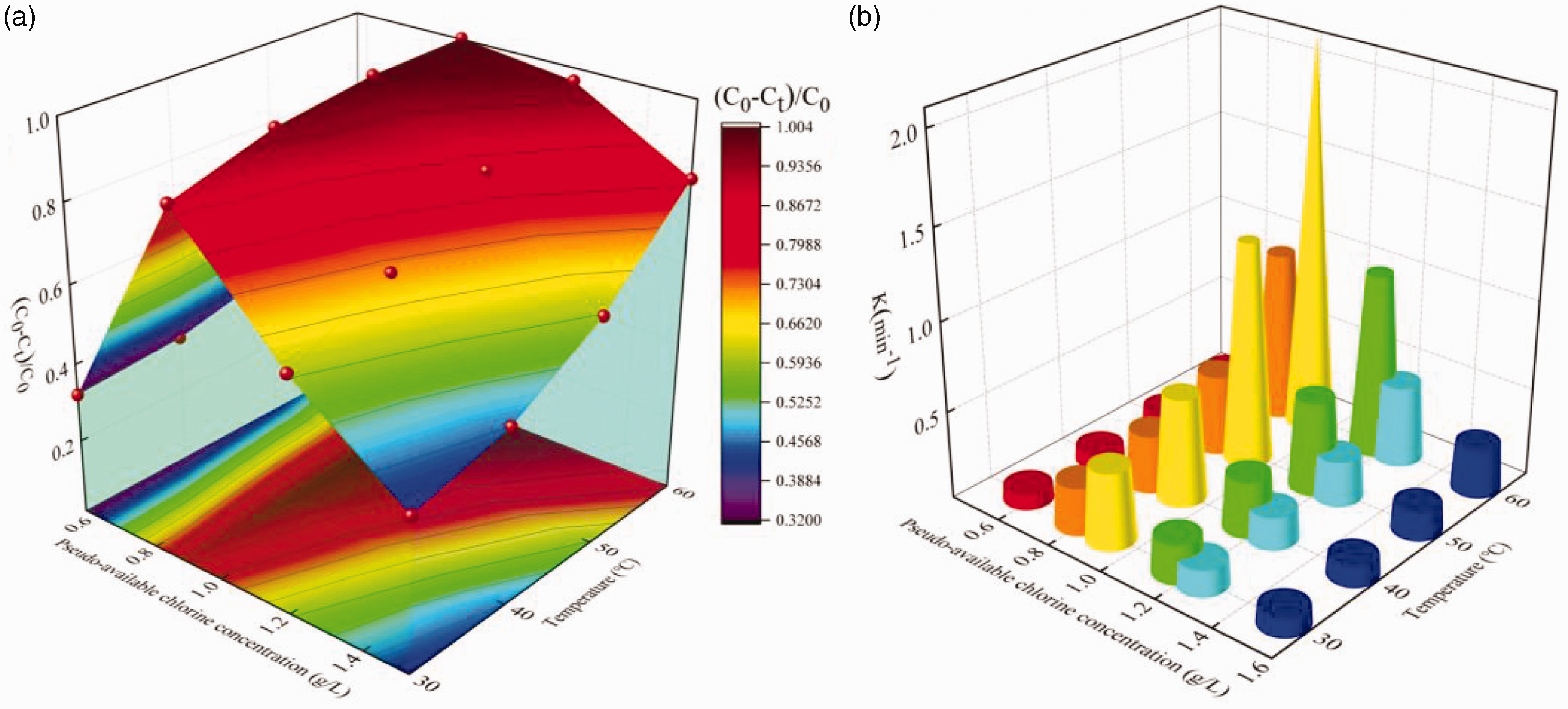
Kinetics of decolorization of methylene blue (MB) in electrolytic active water (EAW) with different specifications and temperatures. (a) (C0–C t )/C0; (b) influence on reaction rate.
Analysis of fitting coefficient of decolorization reaction kinetics
The reaction kinetics of the decolorization of MB under different conditions was simulated in the first stage reaction kinetics, and the fitting coefficient is shown in Figure 12. The more the fitting coefficient R2 was closer to 1, the better the fitting, and it was generally believed that the fitting effect of the model was relatively high when R2 exceeded 0.8. It can be seen that the fitting coefficients of different specifications of EAW for MB decolorization reaction kinetic models were slightly different: all species of EAW had a relatively good fitting effect with the fitting coefficient R2 exceeding 0.9, under the two-factor conditions (initial concentration of MB/temperature); while the primary reaction kinetic fitting effect was not very ideal when the pH value was adjusted to 7 or 8, attributed to the great impact of the pH value on the reaction, as H+ addition was conducive to the decolorization of MB by EAW. By comparing with the secondary reaction kinetics fitting coefficient, it was found that when the pH of the reaction system was weakly alkaline or neutral, the decolorization reaction of the EAW to MB was closer to the secondary reaction kinetic model, as shown in Table 3.
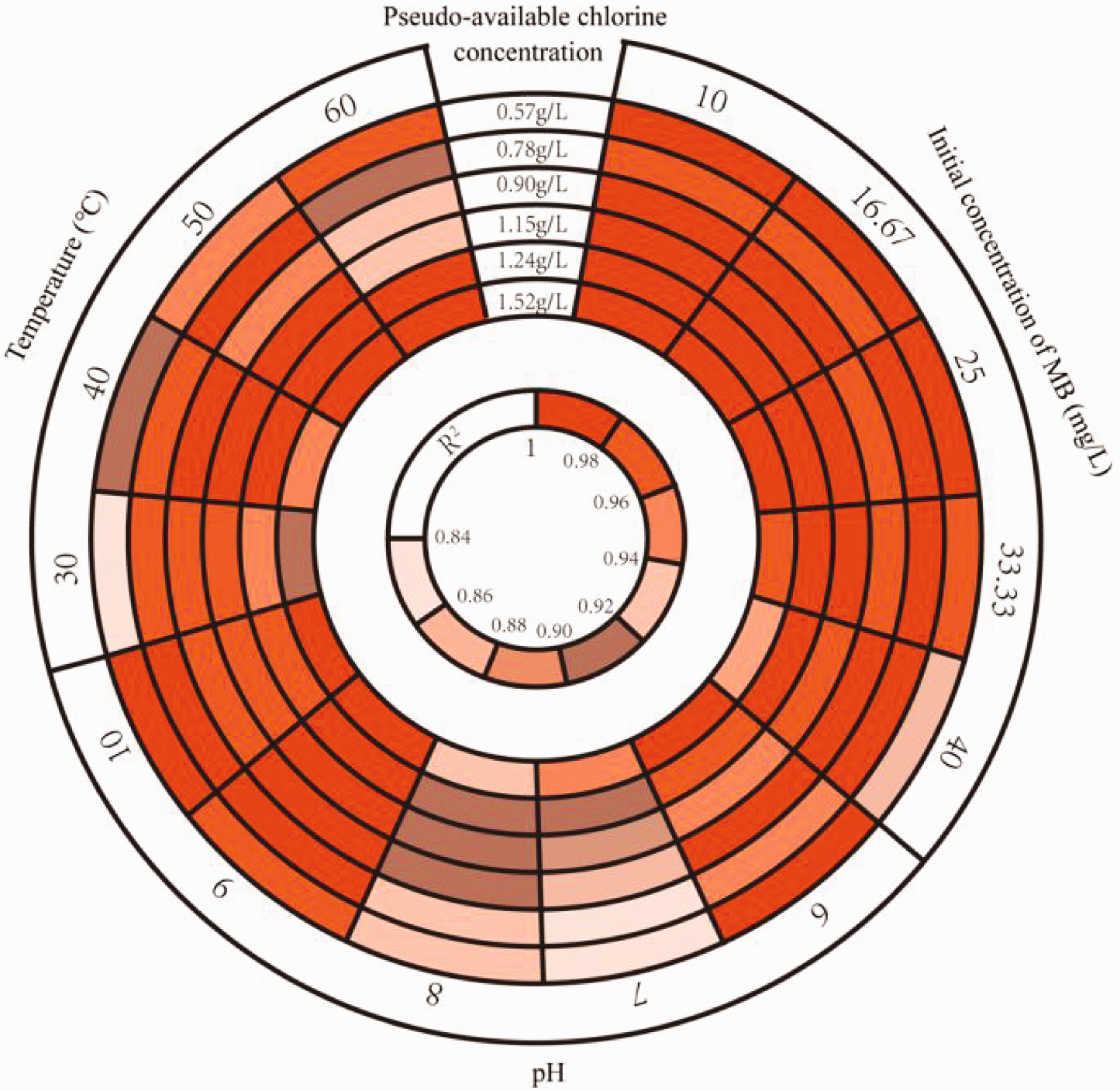
Analysis of fitting coefficient of decolorization reaction kinetics of methylene blue (MB) in electrolytic active water (EAW) with different specifications and initial concentrations of MB/pH values/temperatures.
Analysis of fitting coefficient of decolorization reaction kinetics of MB in EAW with different specifications

EAW: electrolytic active water; MB: methylene blue.
R12: the fitting coefficient of first-order reaction kinetics; R22: the fitting coefficient of second-order reaction kinetics.
Conclusions
By comparing the pH value, (pseudo) available chlorine content and the decolorization effect of MB between EAW and NaClO aqueous solution, different behaviors of the two solutions were found. First, under the condition of the same (pseudo) available chlorine content, the EAW had the lowest pH value when the (pseudo) available chlorine content was around 0.9 g/L, while the pH value of the NaClO solution increased slightly with the increase of the available chlorine content. Second, the higher the available chlorine content, the shorter the time needed for MB decolorization when using the NaClO solution, while the EAW had the highest MB decolorization rate at 0.9 g/L pseudo-available chlorine content. Third, EAW had a stable decolorization ability so that the decolorization efficiency of MB was not obviously affected even undergoing long-term standing (2 weeks) and mechanical force, and the residual EAW that had been applied to bleach cotton gray fabric still had 75% decolorization percentage of MB within 15 min. Thus, it was believed that there are other active components in the EAW prepared except HClO, ClO–, which is promising in the application of textile manufacturing and decolorizing of dye wastewater.
Footnotes
Declaration of conflicting interests
The author(s) declared no potential conflicts of interest with respect to the research, authorship, and/or publication of this article.
Funding
The author(s) disclosed receipt of the following financial support for the research, authorship, and/or publication of this article: This study was Supported by the earmarked fund for CARS — 43 and Tianjin Natural Science Foundation (No. 19JCYBJC18300).
