



Abstract
Polyphenylene sulfide fiber is easily oxidized at high temperature, thus vastly reducing its application range. In this study, polyphenylene sulfide/quercetin fibers were prepared via melt spinning. The effect of quercetin on the spinnability of the composite fibers was explored, and their cross-sectional morphology, crystalline properties, orientation, tensile properties, thermal stability and oxidation stability were investigated. At the quercetin content of 1.5 wt.%, particle agglomerates and some gasification, causing fluctuations in melt pressure, fiber breakage and poor spinnability, were observed in the polyphenylene sulfide matrix. The addition of quercetin can increase the crystallization temperature of polyphenylene sulfide, shorten its crystallization time, refine the crystalline particles therein, and improve the degree of fiber orientation. At the quercetin content of 1.0 wt.%, the tensile strength and elongation at break of composite fibers increased by 30.8% and 7.6%, respectively, as compared to those of pure polyphenylene sulfide fibers. Moreover, the decomposition temperature and the oxidation induction temperature at a 5% weight loss were 16.3°C and 13.4°C higher than those of the unmodified PPS fibers. The loss of strength of composite fibers subjected to oxidation for 240 h was only 18.4%. The X-ray diffraction results showed that the phenolic hydroxyl groups in the quercetin structure were able to capture free radicals generated during the oxidation of polyphenylene sulfide fibers, as well as inhibit the oxidative degradation reaction and improve the oxidative stability of the fiber. The oxidation resistance mechanism of composite fibers was also proposed.
Polyphenylene sulfide (PPS) is a semi-crystalline polymer in which benzene rings are alternately linked by sulfur atoms at the para positions to form the macromolecular backbone. 1 The large π bond of the benzene ring endows the PPS macromolecular chain with good rigidity and heat resistance, while sulfur atoms increase its flexibility. The alternation of benzene rings and sulfur atoms makes the macromolecular structure symmetrical, regular, and highly crystalline. PPS fibers are mainly used for high-temperature filter bags for filtration of hot exhaust gases in thermal power generation, waste incineration, steelmaking, and cement manufacturing.2–5 In addition, PPS fibers possess excellent dimensional and temperature stability, wear resistance, and chemical corrosion resistance. Because of good compatibility with glass fibers, carbon fibers, carbon nanotubes and other reinforcing materials, PPS can be used for polymer matrices or reinforcing fibers in aerospace and weapon industries. 6
However, the benzene ring and sulfur atoms making up the macromolecular chain are connected by weak (low-energy) σ bonds. 7 In a complex high-temperature environment, the PPS macromolecular chain is easily attacked by strong oxidizing gases which break it to form free radicals resulting in subsequent cross-linking and degradation.8–10 As a result, the service life of the fiber is shortened, which considerably limits the area of application of PPS fiber. Therefore, improving the antioxidant properties of PPS fibers is an urgent task.
At present, there are two main methods for oxidative protection of PPS fibers, which are based on the use of traditional organic antioxidants and inorganic nanomaterials. Traditional organic antioxidants can be divided into chain termination and preventive types depending on their mechanism of action 11 (e.g. hindered phenolic antioxidants12,13 and amine antioxidants 14 ). However, because of the high melting point of PPS (285°C), the temperature of each zone of fiber melt spinning is above 310°C and the residence time of the fluid state is 8–10 min longer than that in the conventional injection molding method, which causes common antioxidants to undergo thermal decomposition or deactivation during processing. Although the inorganic nanomaterials have excellent heat resistance,15–18 their nanoparticles easily agglomerate in the PPS matrix due to the nanoscale size effect. The problem of particle dispersion could be solved by grafting surfactants, but they also experience thermal decomposition and gasification during high-temperature processing of PPS fibers, resulting in reduced spinnability. Quercetin 19 is a polyhydroxy flavonoid widely spread in plants, which has strong antioxidant and free-radical scavenging abilities. Its melting point is as high as 320°C, and its decomposition temperature can rise above 335°C. In terms of thermal stability, it surpasses many typical organic antioxidants. The molecular structure of quercetin features a double bond between the second and third carbon atoms, and there are hydroxyl groups at positions 37 and 47, so it can serve as an acceptor of free radicals generated during oxidation of resins. 20 The phenol group of the polymer can be applied as a free radical scavenger to improve the antioxidant properties of the polymer. 21
The use of quercetin to improve the antioxidant properties of PPS fibers was proposed in a previous study. 22 In particular, PPS composite fibers with quercetin contents of 0.1 wt.%, 0.15 wt.%, 0.2 wt.%, 0.25 wt.%, and 0.3 wt.% were prepared, and their morphology, orientation, tensile properties, thermal stability, and antioxidant properties were thoroughly investigated. According to the results, quercetin enhanced the antioxidant properties of PPS fibers. However, there are still issues to be solved, First of all, the antioxidant capacity is positively correlated with the quercetin content, and the higher the amount of quercetin is, the better are the antioxidant properties. Meanwhile, the maximum quercetin content that could be achieved in the study 22 did not exceed 0.3%, i.e. the compatibility of quercetin content with the PPS matrix was insufficient. In addition, understanding the effect of quercetin on the antioxidative properties of PPS fibers also requires further in-depth research and analysis. In view of the above, PPS composite fibers with quercetin contents of 0.2 wt.%, 0.6 wt.%, 1.0 wt.%, 1.5 wt.%, and 2.5 wt.% were produced in our study using a high shear threaded combination twin-screw technique. The cross-sectional compatible structure, crystalline properties, crystalline crystal morphology, and tensile strength of the fibers after high-temperature oxidation were comprehensively and systematically investigated using various methods. The valence and content of sulfur in PPS fibers before and after high-temperature oxidation were analyzed by X-ray photoelectron spectroscopy (XPS), and the influence of quercetin on the antioxidant properties of PPS fibers was considered as well.
Experimental
Materials
PPS (Fortron 0320P0, d25°C =v1.36 g/cm3, Tg ≈ 90°C, Tm ≈ 282°C) were purchased from the Ticona Company (USA) in the form of resin granules. The diameter of the granules was about 3 mm, and the image of the raw material is shown in Figure 1. Quercetin (a light-yellow powder with Tm ≈ 315°C and decomposition temperature ≈ 335°C) was provided by Aladdin Reagent (Shanghai) Co. Ltd.
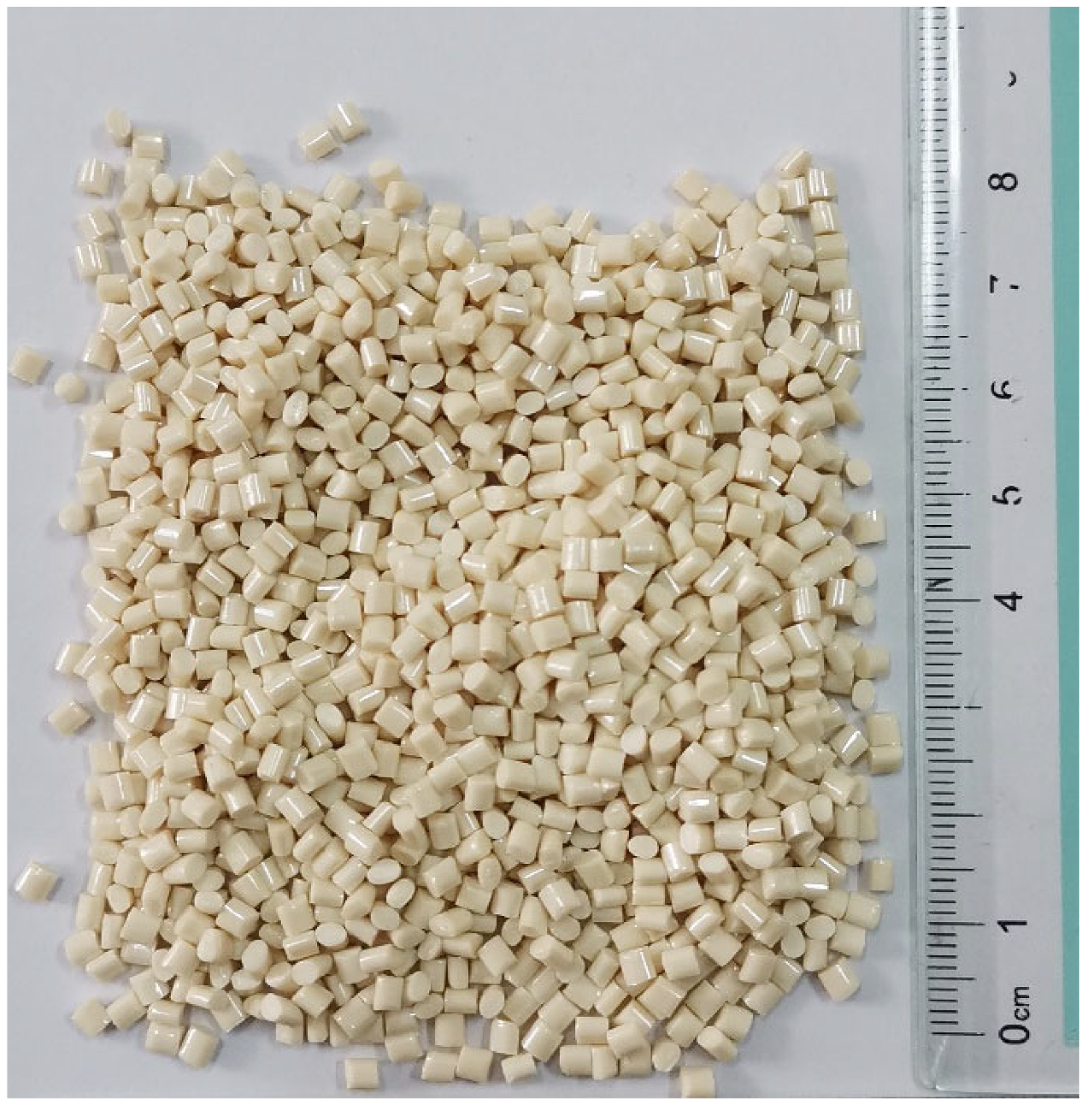
Image of polyphenylene sulfide (PPS) resin raw material.
Preparation of polyphenylene sulfide/quercetin (PPS/Qu) composite fibers
PPS resin was dried at 120°C for 12 h in a vacuum drum oven under the vacuum of 0.08–0.09 MPa and stored in a dry environment before use. Quercetin was placed in a vacuum oven and dried at 90°C for 10 h. The PPS/Qu master batches with the effective quercetin contents of 0.2, 0.6, 1.0, 1.5, and 2.5 wt.% were prepared via the melt-blending method using a double screw extruder. The composite fibers were directly melt-spun using the master batches. The schematic of the preparation process of PPS/Qu composite fibers is shown in Figure 2. The melt-spinning parameters and spinnability of PPS fibers with different quercetin contents are listed in Table 1. The PPS fiber filament consisted of 48 monofilaments and had the yarn number of 40 tex. The image of the PPS filament is given in Figure 3.
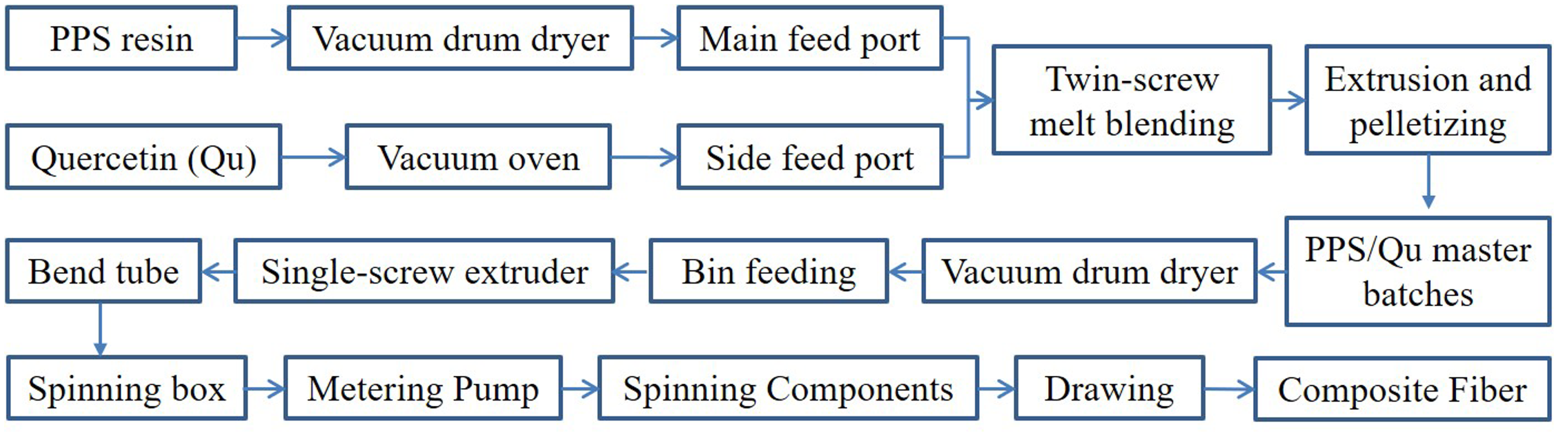
Schematic of the preparation process of polyphenylene sulfide (PPS)/quercetin (Qu) composite fibers.
Melt-spinning parameters and spinnability of polyphenylene sulfide (PPS) fibers with different quercetin (Qu) contents
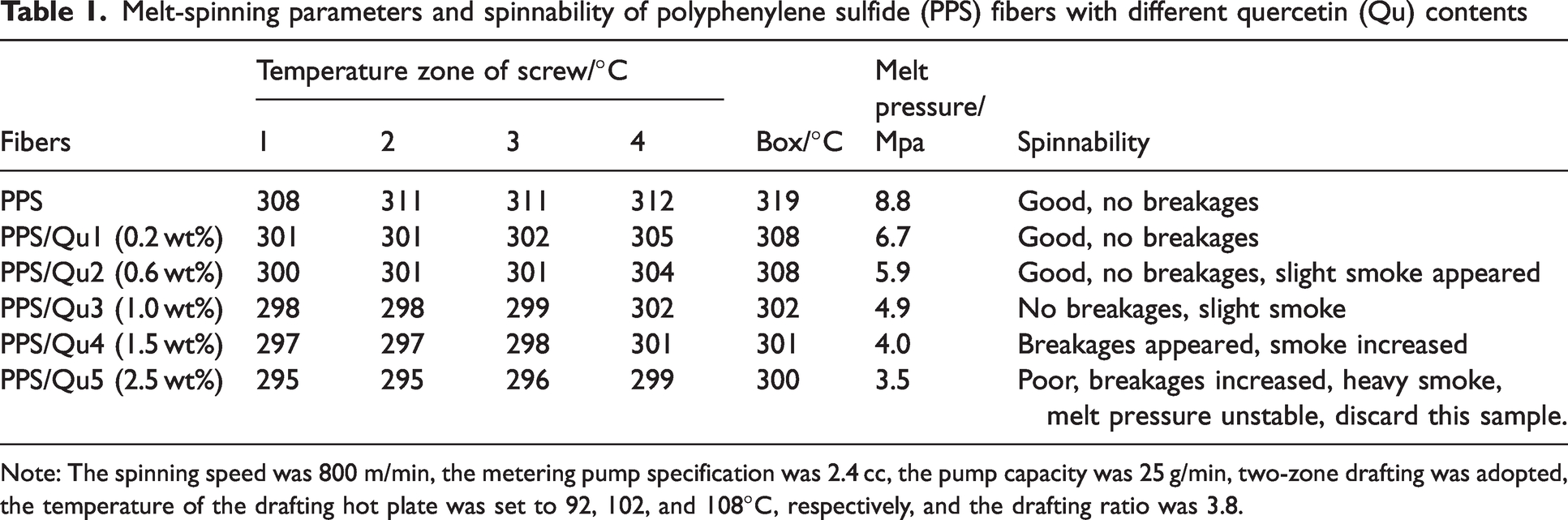
Note: The spinning speed was 800 m/min, the metering pump specification was 2.4 cc, the pump capacity was 25 g/min, two-zone drafting was adopted, the temperature of the drafting hot plate was set to 92, 102, and 108°C, respectively, and the drafting ratio was 3.8.
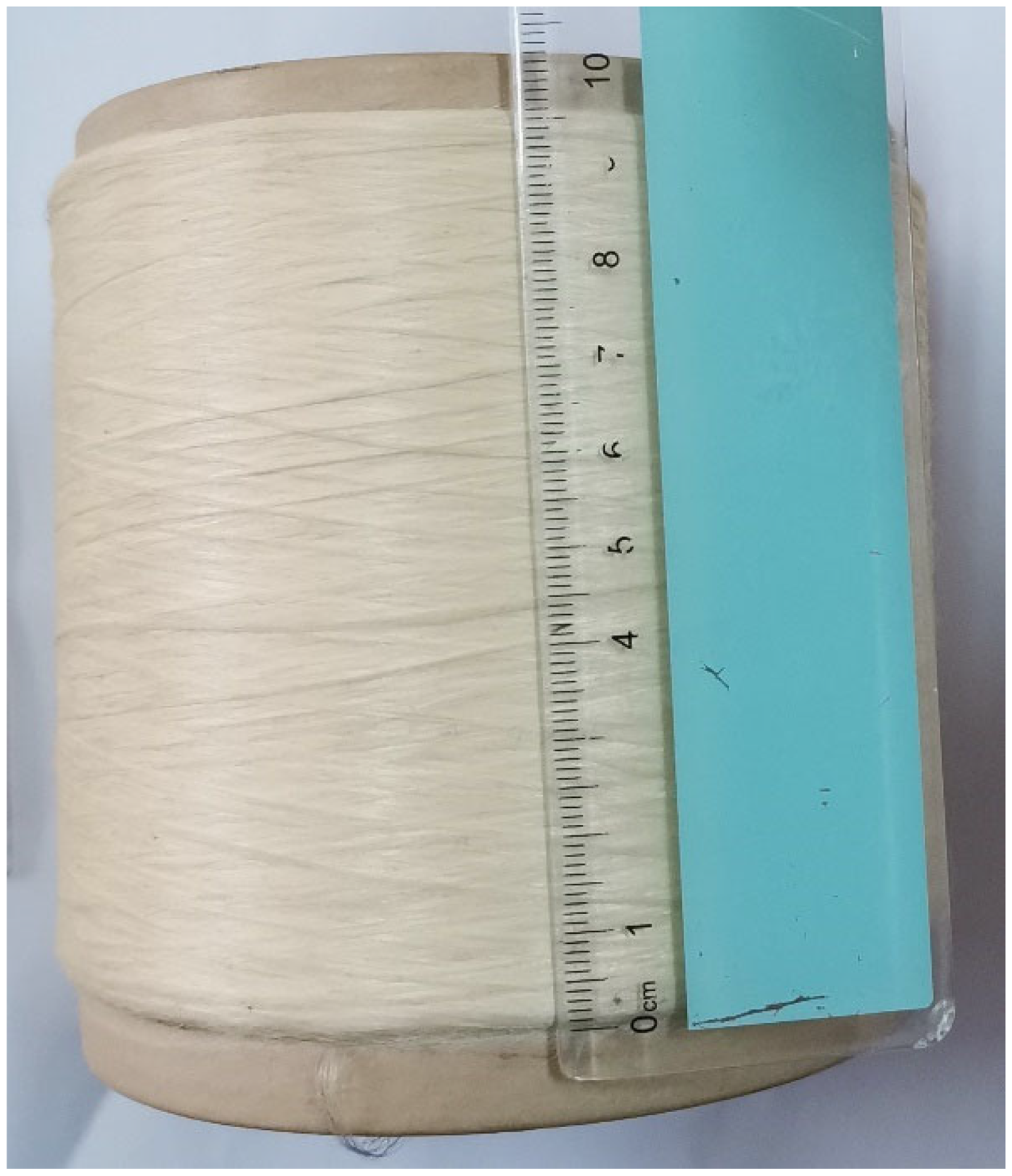
The image of the polyphenylene sulfide (PPS) filament.
Characterization
Morphology
The cross-sectional scanning electron microscopy (SEM) images of the prepared PPS/Qu fibers were obtained with a ZEISS Gemini 300 microscope operated at an acceleration voltage of 10 kV. Before SEM characterization, the surfaces were sputter-coated with gold. A JEM-2100F transmission electron microscope (TEM, JEOL Ltd, Japan) was used to examine the dispersibility and compatibility of quercetin in the PPS composite fibers.
Crystallization behavior
The differential scanning calorimetry (DSC) experiments were carried out on a Perkin Elmer DSC6000 differential scanning calorimeter using a nitrogen flow rate of 20 ml/min. The samples for DSC experiments were cut into powder using scissors, and the fiber length in the powder was about 0.5 mm. Then, 10 ± 0.5 mg of the samples were placed in aluminum pans and heated from 30°C to 320°C at a rate of 10°C/min. The temperature of 320°C was kept for 5 min to erase the thermal history of powders, after which they were cooled down from 320°C to 30°C. The degree of crystallinity (Xc) was estimated from the relation
Crystal morphology
The growth of spherulites in the films was observed under a constant flow of nitrogen by means of an Olympus BX51 polarized optical microscope (Tokyo, Japan, 500× magnification) equipped with a heating/cooling stage and a temperature controller (Linkam THM-S600). The overall crystallization behavior of PPS was studied by monitoring the intensity of light transmitted through specimens using the BX-51 polarized optical microscope in coupling with a Canon EOS 600D imaging system (Osaka, Japan).
The degree of orientation of composite fibers
The degree of orientation of the fibers was determined by measuring the speed sound in them. The time period required for the sound wave to travel a distance L in the fiber was recorded by a SCY-III sound velocity meter. The degree of orientation of the fibers was afterwards calculated from the determined time and distance.
Tensile properties
The tensile tests were carried out on a semiautomatic tensile tester (type GYB021) at an ambient temperature of 25°C and a humidity of 50 ± 5% RH according to GB/T 14344-2008 standard. The pretension was 15 cN, the tensile speed was 150 mm/min, and the stretch gauge was 250 mm. Ten coupons were tested for each specimen, and the data reported here were the corresponding average values.
Thermal decomposition performance
The thermogravimetric curves Thermogravimetry-Differential Thermogravimetry (TG-DTG) were acquired on a PerkinElmer TGA4000 thermobalance under nitrogen atmosphere. During the experiments, the temperature was varied from 30°C to 800°C at a heating rate of 10°C/min. The samples for the TG experiments were cut to powder using scissors, and the fiber length in the powder was about 0.5 mm. The quantity of the powder taken for the measurements was 10 ± 1 mg, and the purge gas flow rate was 30 ml/min.
Dynamic oxidation induction temperature (OIT)
The OIT experiments were carried out on a TA Q100 differential scanning calorimeter at an oxygen flow rate of 50 ml/min conforming with ISO 11357-6:2008 standard. 24 Samples (15 ± 0.5 mg) placed in aluminum pans were heated at a scan rate of 20°C/min from 40°C to 500°C.
Tensile strength after high-temperature oxidation
The high-temperature resistance tests were conducted in the high-temperature oven at an oxygen flow rate of 20 ml/min. The pieces of PPS fiber and PPS/Qu3 composite fiber, each measuring 100 m, were coiled together, suspended in the oven at 230°C for different times, and then exposed to the tensile testing.
Oxidative stability of PPS macromolecular chains
The difference between the valence states of S atoms before and after oxidation was used to characterize the oxidative stability of PPS fibers. The XPS analysis of the fibers was performed on an AXIS ULTRA DLD (Shimadzu Kratos) spectrometer equipped with an AlKα X-ray source (hv = 1486.6 eV) operating at 150 W. The binding energies were calibrated with respect to the C1s line at 284.6 eV with an uncertainly of ±0.2 eV.
Results and discussion
Effect of quercetin on the spinnability of composite fibers
Because of the rigid macromolecular chains, PPS exhibits quite specific rheological properties 25 which mainly manifest themselves by the high sensitivity to temperature and pressure, leading to difficulties in spinning or even failure to obtain fibers. Quercetin as the second-phase organic filler will inevitably change the rheological properties of the PPS melt and impact the spinnability of fibers. The spinning parameters and spinnability records of PPS/Qu composite fibers are shown in Table 1. In comparison to unmodified PPS, the temperature of each zone of the composite fiber was generally low. The pressure of the melt also decreased significantly with decreasing temperature, and both the temperature and pressure tended to decrease as the quercetin content increased. It is known that quercetin in the PPS melt acts as a plasticizer and reduces its apparent viscosity. When the content of quercetin is lower than 1.0 wt.%, there is neither breakage nor smoke, and the composite fiber shows good spinnability. At the quercetin content of 1.5 wt.%, slight breakages and smoke were observed. Once the quercetin content exceeded 2 wt.% and reached 2.5 wt.%, the melt pressure started to fluctuate significantly and was quite difficult to stabilize, so that continuous fibers could not be obtained. These observations show that when the quercetin content is greater than 2 wt.%, distinct decomposition processes occur and lead to the decrease in spinnability of composite fibers. This is because the melt should be maintained at a high temperature for about 8–9 min while moving from the feed port to the spinneret during the fiber preparation process. Moreover, the sleeve heating block was heated to a high temperature at a certain location. Although the decomposition temperature of quercetin reached a value of 335°C, the disintegration of the material was still observed. On the other hand, abundant quercetin agglomerates form an island-like structure, which also results in poor spinnability as will be confirmed by the SEM images below.
Dispersibility of quercetin in composite fibers and its compatibility with PPS matrix
The cross-sectional SEM images of pure PPS fiber and fabricated composite fibers with the quercetin contents of 0.6, 1.0, and 1.5 wt.% are presented in Figure 4(a)–(d) images, respectively. At the quercetin content below 1.0 wt.%, the composite fiber exhibited a smooth cross-section, and no two-phase structure indicative of separation was observed, suggesting that quercetin as an organic antioxidant was fully dispersed within the PPS matrix and had good compatibility with PPS. At the quercetin content of 1.5 wt.%, a porous two-phase island-like structure appeared in the composite fibers. In a word, abundant quercetin tended to agglomerate and decompose to form gaseous products, which was one of the reasons why quercetin-rich composite fibers were brittle.
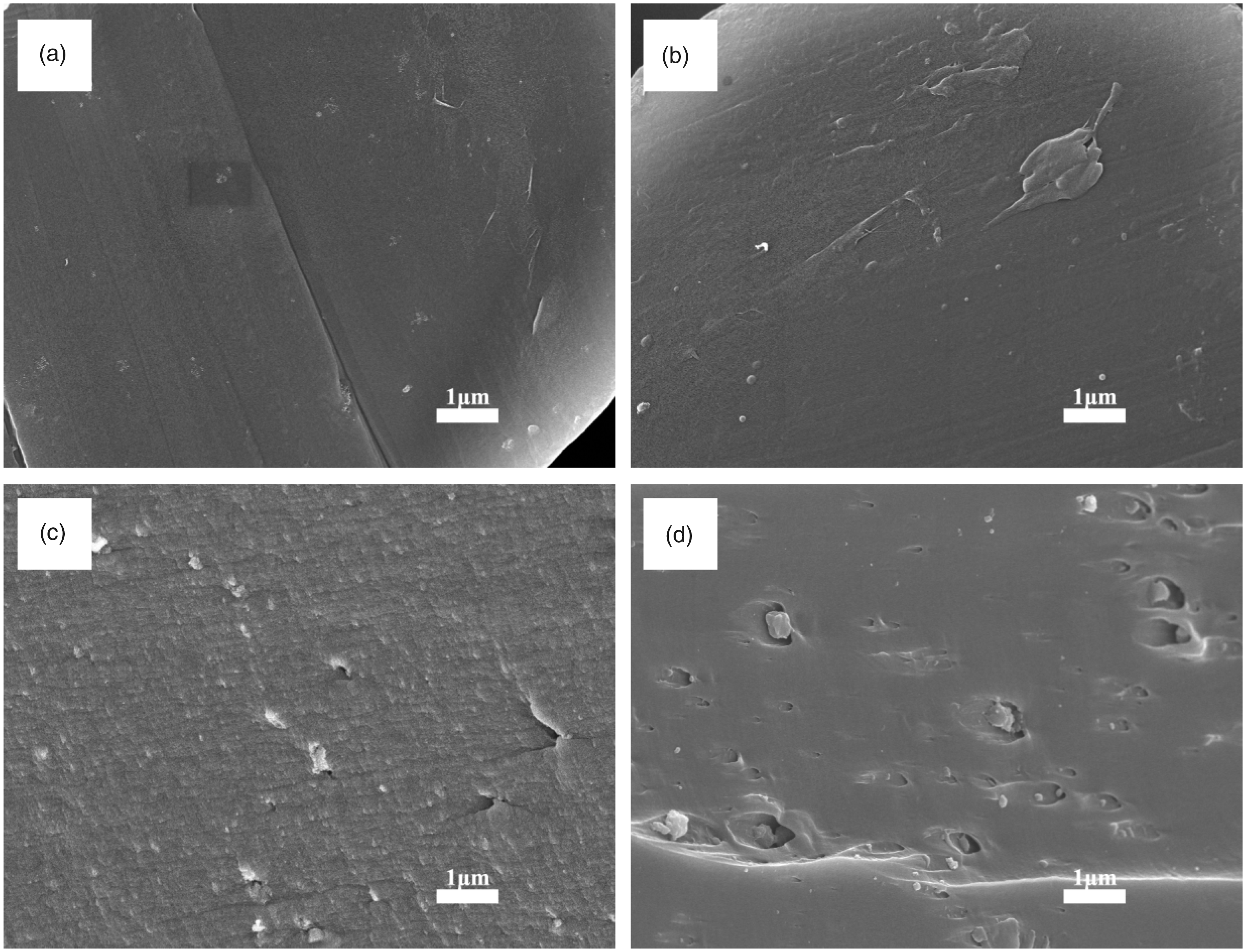
Scanning electron microscopy (SEM) images of composite fibers ((a) pure polyphenylene sulfide (PPS) fiber, (b) PPS/quercetin (Qu) (0.6 wt.%), (c) PPS/Qu (1.0 wt.%) and (d) PPS/Qu (1.5 wt.%)).
The interfacial relationship between quercetin and PPS matrix was further investigated using TEM. Figure 5 displays the TEM image of PPS/Qu (1.0 wt.%) composite fiber. Similar to what was observed by SEM, there was no demarcation between quercetin and PPS. However, a crystalline structure was produced by PPS around quercetin, which indicated that the latter acted as a heterogeneous nucleating agent, improving its compatibility with PPS.
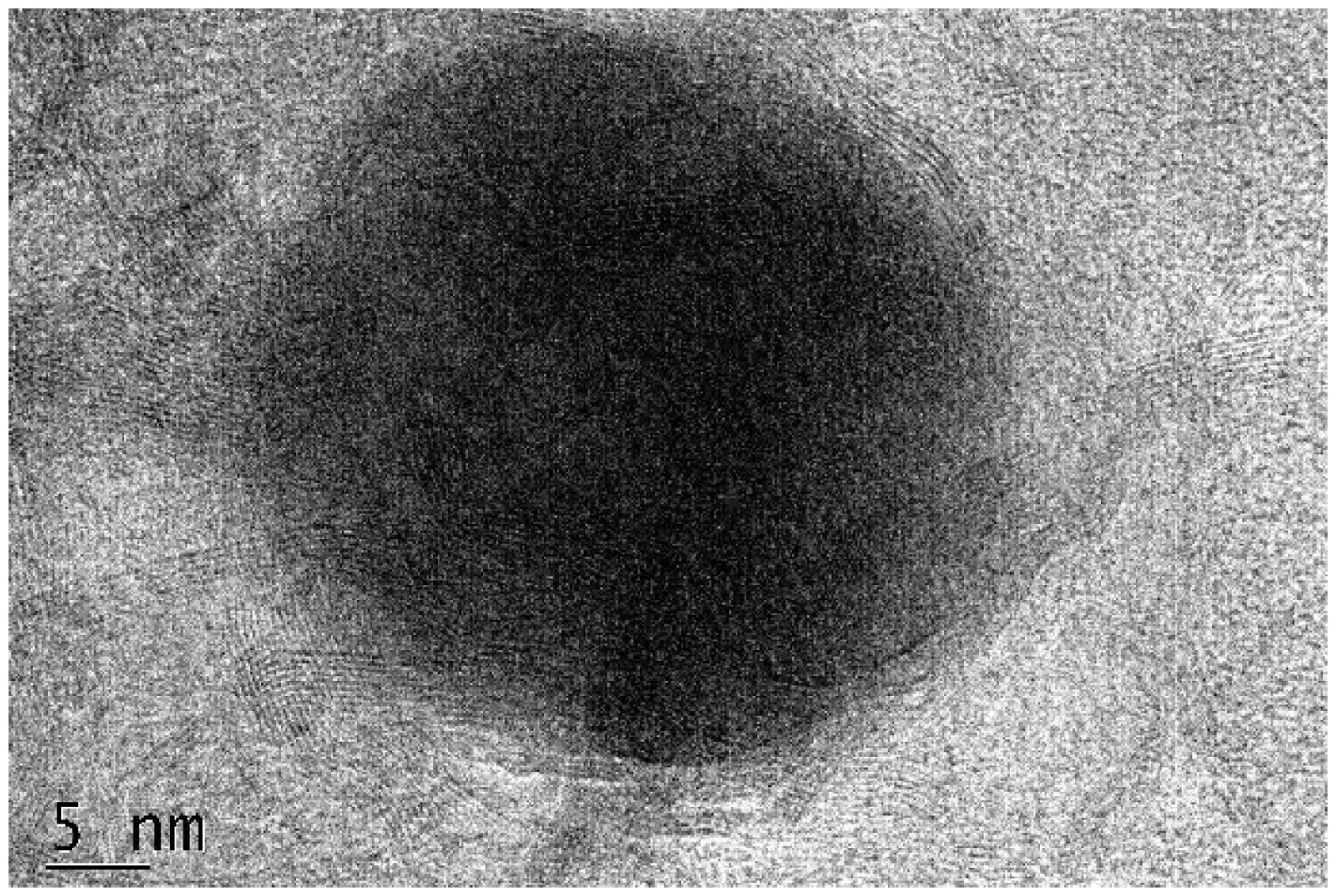
Transmission electron microscope (TEM) image of polyphenylene sulfide (PPS)/quercetin (Qu) (1.0 wt.%) composite fiber.
Effect of quercetin on crystallization of composite fibers
The DSC heating and cooling curves of pure PPS and PPS/Qu composite fibers are shown in Figure 6, and the DSC parameters are listed in Table 2. During the heating stage, the glass transition temperature Tg of PPS/Qu composite fibers remained basically unchanged relative to that of pure PPS fiber. In turn, the onset and peak cold crystallization temperatures decreased with increasing quercetin content, while the melting temperature Tm and crystallinity Xc slightly increased. During the cooling stage, the onset crystallization temperature Tco and peak crystallization temperature Tcp of PPS/Qu composite fibers shifted to the higher values relative to those of pure PPS fiber, and the degree of supercooling ▵Tc decreased with increasing quercetin content.
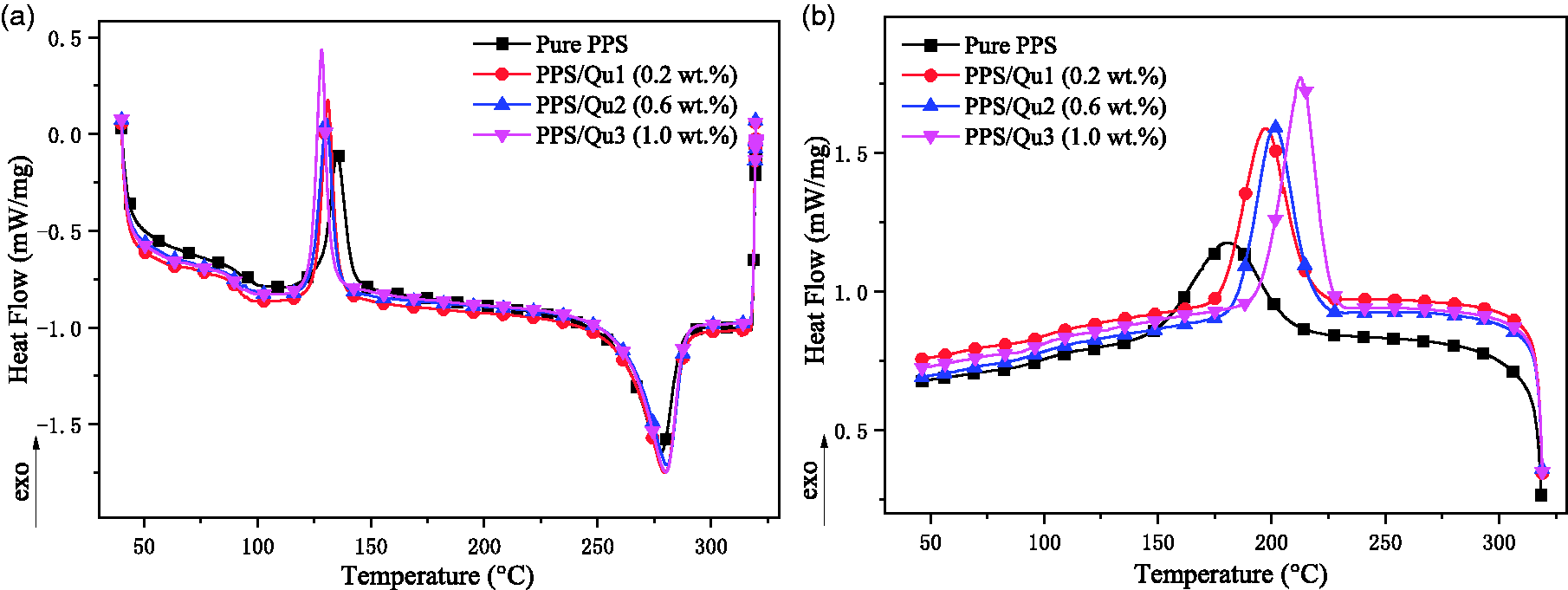
Differential scanning calorimetry (DSC) heating and cooling curves of pure polyphenylene sulfide (PPS) and PPS/quercetin (Qu) composite fibers ((a) heating curves and (b) cooling curves).
Differential scanning calorimetry (DSC) data of pure polyphenylene sulfide (PPS) and PPS/quercetin (Qu) composite fibers
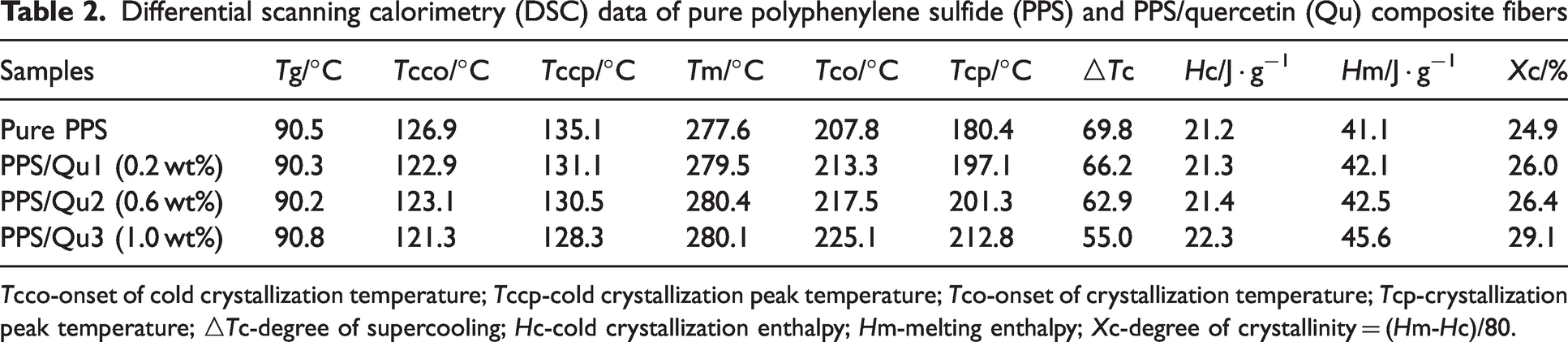
Tcco-onset of cold crystallization temperature; Tccp-cold crystallization peak temperature; Tco-onset of crystallization temperature; Tcp-crystallization peak temperature; △Tc-degree of supercooling; Hc-cold crystallization enthalpy; Hm-melting enthalpy; Xc-degree of crystallinity = (Hm-Hc)/80.
Further, the crystal morphologies of pure PPS and PPS/Qu composite fibers with quercetin contents of 0.2 and 0.6 wt.% after the same cooling rate were observed through a polarized optical microscope (POM) (Figure 7). As can be seen from the figure, the crystal morphology of PPS consisted of spherulites. At the constant cooling rate, the macromolecular chains of PPS first formed the unit cells which were then stacked in lamellae and subsequently in microfiber bundles. The bundles grew in the radial direction to form spherulites that collided with each other to produce a polygonal aggregate structure. Although quercetin did not change the morphology of PPS spherulites, the number of nuclei in the composite fiber was significantly greater than that in pure PPS fiber. After the crystallization was completed, the size of spherulites decreased and the interface between them was blurred, causing their overlapping and staggering. These phenomena were also consistent with the above DSC results. In a word, quercetin acted as a heterogeneous nucleation agent and reduced the conformational entropy of the PPS macromolecular chain, making it easier for the latter to form a stable nucleus and grow during the cooling process. This was also reported in other studies on heterogeneous nucleating agents.26,27
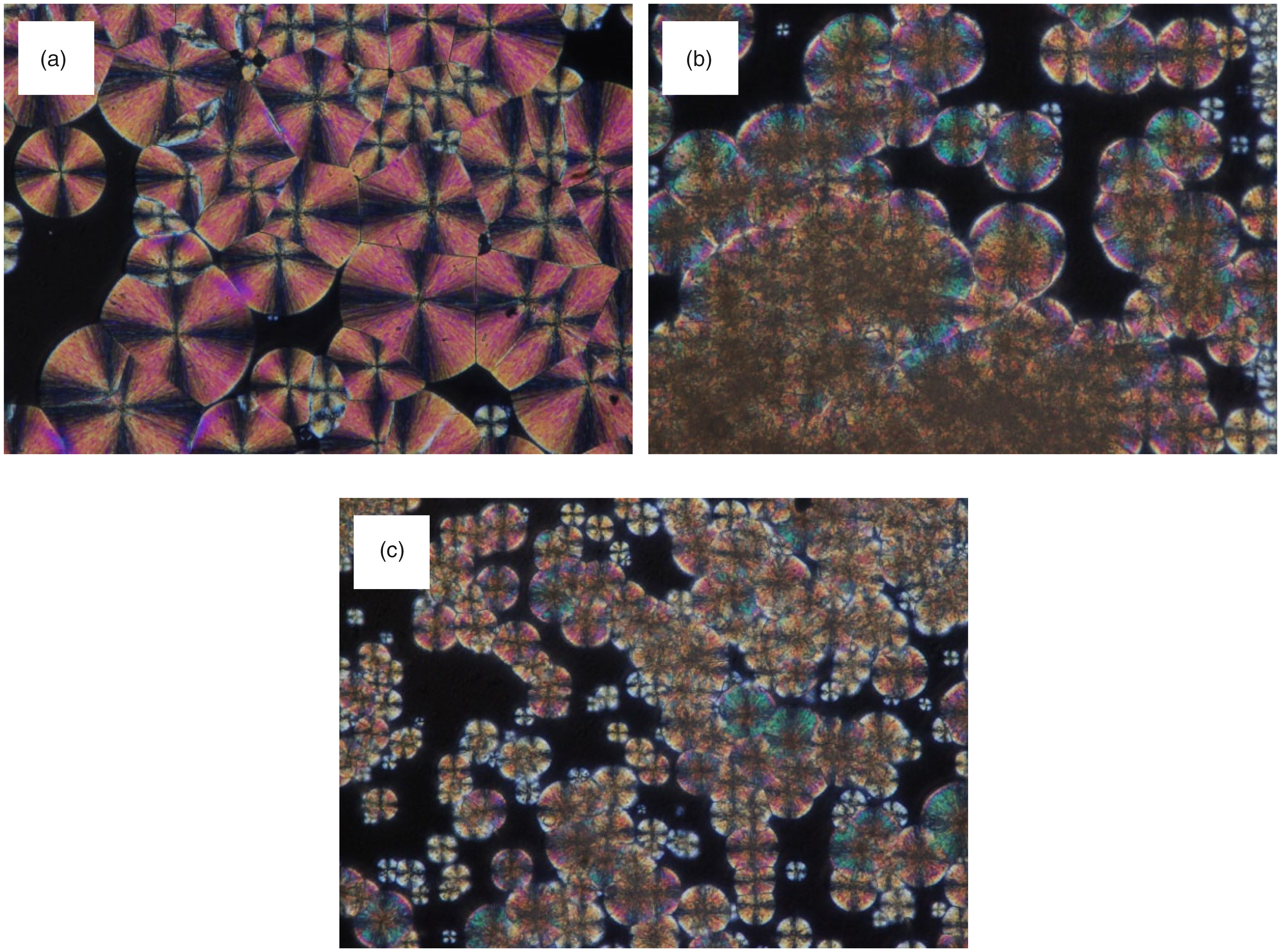
Polarized optical microscope images of pure polyphenylene sulfide (PPS), PPS/quercetin (Qu) (0.2 wt.%), and PPS/Qu (0.6 wt.%) composite fibers ((a) pure PPS, (b) PPS/Qu (0.2 wt.%) and (c) PPS/Qu (0.6 wt.%)).
Degree of orientation in PPS/Qu composite fibers
The PPS composite fiber needs to be drawn and heat-set during the molding process. Applying an external force will cause the macromolecular segments and crystal structure to be oriented along the stretching direction, thereby enhancing the mechanical properties of the fiber. The higher the degree of orientation of the macromolecular structure of the fiber, the faster the sound wave propagates along the fiber. The degrees of orientation of the composite fibers, determined from the measured speed of sound, are shown in Figure 8. It can be seen from the curve that the degree of orientation for the composite fiber has exceeded that of the pure PPS fiber. For the composite fiber with a quercetin mass fraction of 1.0%, the speed of sound reached 2.01 km/s, which was 18.9% higher than that in pure PPS. Since quercetin improved the fluidity of the PPS melt, the macromolecular chains under the same spinning process could more easily align along the fiber axis under the action of the tensile force. At the same time, quercetin promoted the increase in the PPS crystallization rate, which allowed macromolecules to faster align along the axial direction, thus preventing their misorientation.
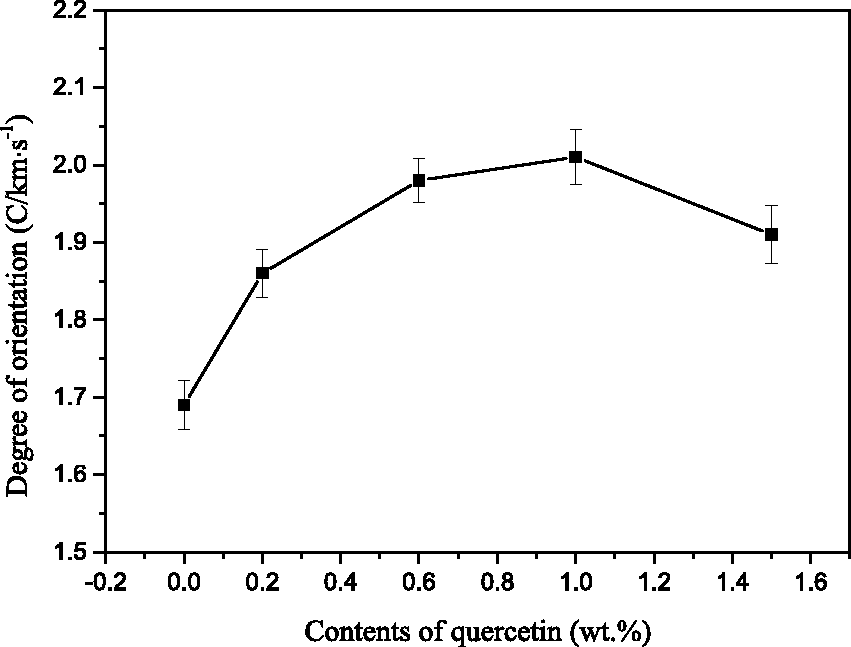
Degree of orientation of polyphenylene sulfide (PPS)/quercetin (Qu) composite fibers.
The effect of quercetin on the tensile properties of PPS composite fibers
Figure 9 depicts the tensile strength and elongation at break curves for pure PPS and PPS/Qu composite fibers. The tensile strength of fibers at quercetin loadings of 0.2, 0.6, and 1.0 wt.% increased by 11.5, 26.9, and 30.8%, respectively. The breaking elongation at quercetin loadings of 0.2, 0.6, and 1.0 wt.% increased by 2.8, 8.8, and 7.6%, respectively. The observed improvement in the mechanical properties of composite fibers was due to the plasticizing effect and heterogeneous nucleation of quercetin because of its high compatibility with PPS. It also improved the rheology of PPS melt without undergoing thermal decomposition, which would otherwise have led to the formation of gaseous products. As a result, the degree of orientation of PPS/Qu composite fibers was increased, crystalline particles were refined, and the supramolecular structure became more regular relative to that of pure PPS fibers. It is noteworthy that achieving these improvements required the adequate dispersion of quercetin and its good compatibility with the PPS matrix. If the two-phase separation occurs, the tensile properties of the PPS fiber will be downgraded.
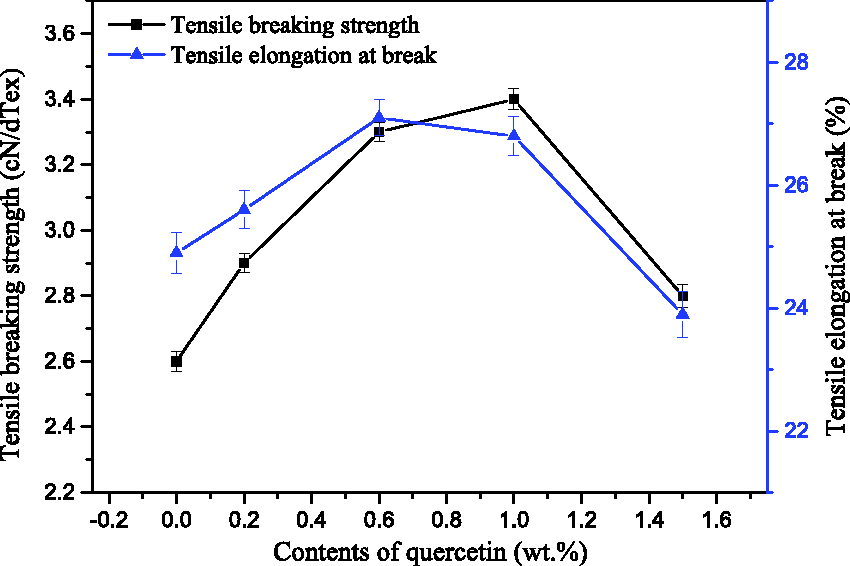
Tensile strength and elongation at break curves of pure polyphenylene sulfide (PPS) fibers and PPS/quercetin (Qu) composite fibers.
The effect of quercetin on the thermal stability of composite fibers
Figure 10 shows the TG and DTG curves for the PPS/Qu composite fibers, and the curve parameters are listed in Table 3. According to the plots, the thermal decomposition of pure PPS and composite fibers was a one-step process. The decomposition data in Table 3 revealed that the T5% temperature of the composite fiber was significantly higher than that of the pure PPS fiber. Its maximum (509.9°C) was enriched at the quercetin content of 1.5 wt.%, which exceeded the corresponding value for the pure PPS fiber by 18.7°C. In addition, the values of THRI 28 for different fiber samples (see Table 3) indicated that quercetin could significantly improve the heat-resistance index of PPS fibers. At the same time, the T15% and Tmax temperatures of the composite fibers increased, but the growth rate decreased with the increase in the quercetin content. This might be caused by the fact that the supramolecular structure of the polymer directly affected its thermal stability.29,30 The good dispersibility of quercetin and its compatibility with the PPS matrix allowed one to optimize the supramolecular structure of PPS fiber and improve the thermal stability of the composite fiber. On the other hand, as an antioxidant, quercetin delayed the decomposition and breakage of the macromolecular chains, which was also conducive to the increase in Tmax of the composite fiber. However, the dispersion and compatibility worsened with the increase in quercetin content, and the decomposition temperature stopped increasing.
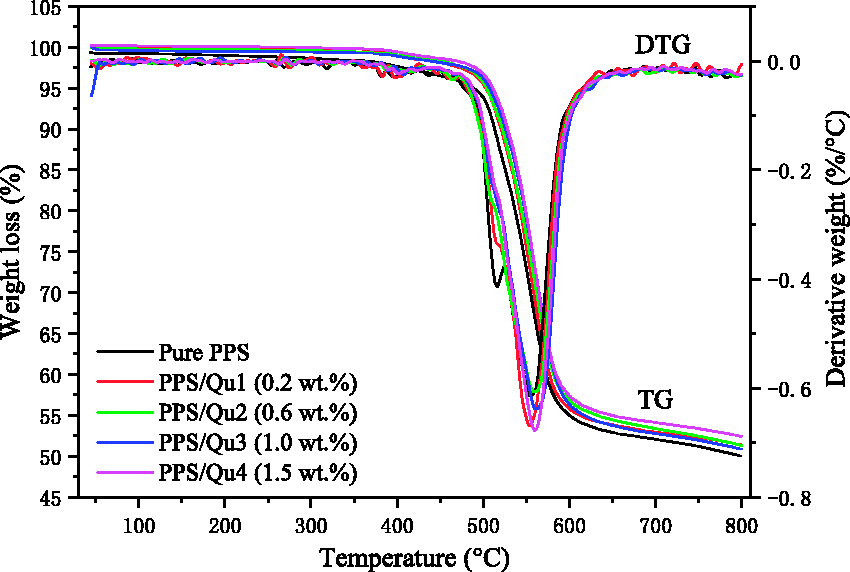
Thermal decomposition (TG-DTG) curves of polyphenylene sulfide (PPS) and PPS/quercetin (Qu) composite fibers.
Thermal decomposition (TG-DTG) data of polyphenylene sulfide (PPS) and PPS/quercetin (Qu) composite fibers
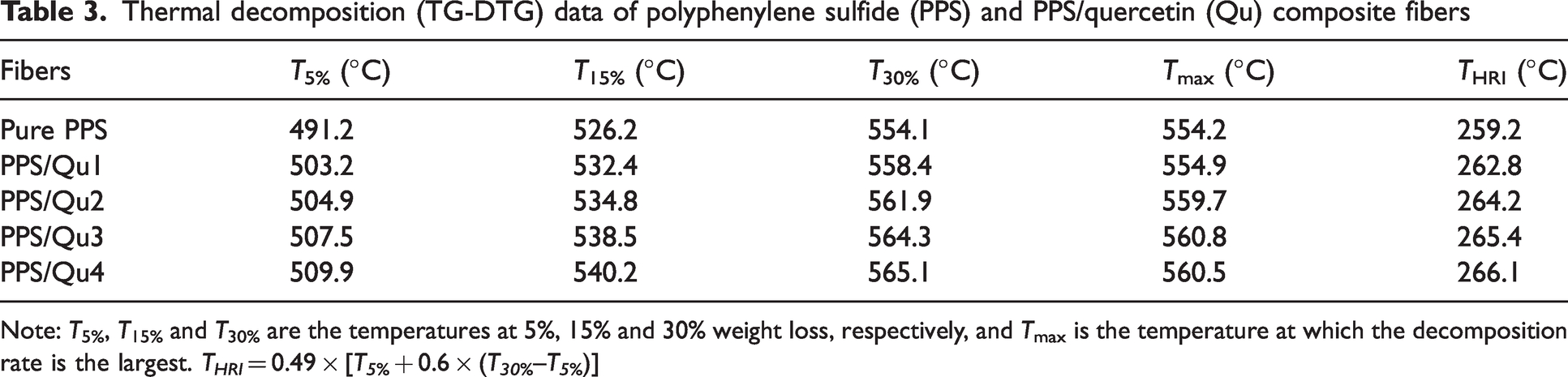
Note: T5%, T15% and T30% are the temperatures at 5%, 15% and 30% weight loss, respectively, and Tmax is the temperature at which the decomposition rate is the largest. THRI = 0.49 × [T5% + 0.6 × (T30%–T5%)]
The effect of quercetin on the antioxidant properties of composite fibers
The dynamic OIT and changes in the breaking strength after high-temperature oxidation experiments were measured to determine the oxidative stability of PPS/Qu composite fibers. Based on the time-temperature equivalence principle, the dynamic OIT is one important method to assess the oxidative stability of polymer materials. 31
As can be seen from the dynamic OIT curves and values for PPS/Qu composite fibers in Figure 11, the OIT of the fibers increased with increasing quercetin content. At the quercetin content of 1.0%, the OIT of composite fibers reached its maximum value of 481.9°C, which was higher than that of pure PPS by 13.4°C. This meant that quercetin significantly improved the oxidation stability of PPS fibers. However, when the content of quercetin is too high, its compatibility with the PPS matrix and the antioxidant effect deteriorate, resulting in a decrease in the oxidation-induced temperature. The mechanism by which quercetin improves the oxidation resistance of PPS fibers has been investigated at the structural and molecular levels via XPS, and will be discussed in the subsequent section on the mechanism of oxidation stability improvement.
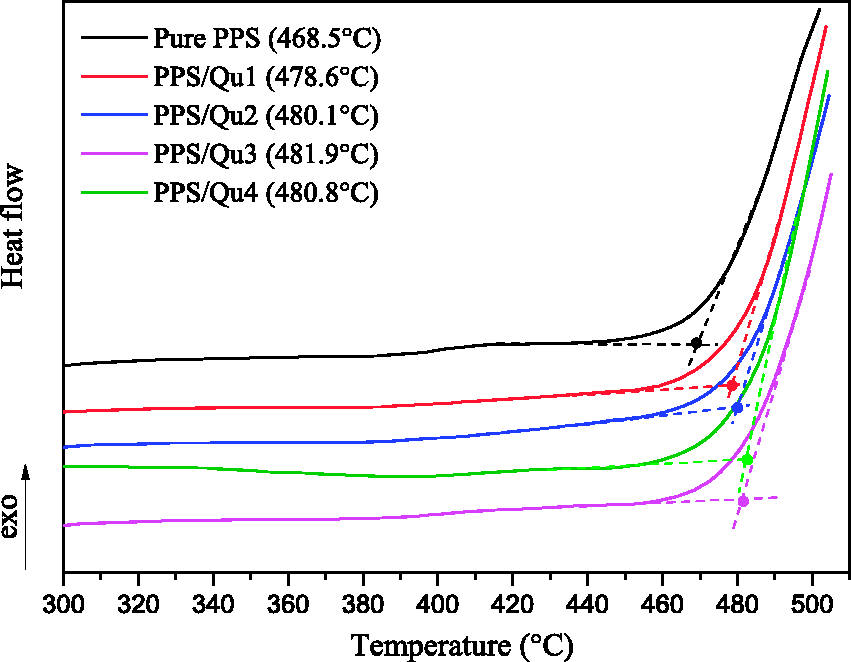
The dynamic oxidation induction temperature (OIT) curves and values of polyphenylene sulfide (PPS)/quercetin (Qu) composite fibers.
The PPS fibers and PPS/Qu3 (1.0 wt.%) composite fibers were treated at 230°C in a circulating air atmosphere for 3, 24, 72, and 240 h, and then the tensile strength of the fibers was tested as shown in Figure 12. The tensile strength of pure PPS and PPS/Qu3 composite fibers decreased with reducing high-temperature treatment duration. Moreover, the strength loss rate of PPS composite fibers at each time point (e.g. 9.9 and 18.4% at 72 h and 240 h, respectively) was lower than that for the pure PPS fiber (24.5 and 37.2%, respectively). These results show that the macromolecular chain of PPS had been broken during oxidation, and quercetin had played a significant role in delaying this process. It is worth noting that the breaking strength of all fibers slightly increased upon the treatment for less than 3 h. The reason was that the processing temperature exceeding the cold crystallization temperature of PPS fiber caused secondary crystallization and some increase in fiber crystallinity. At the same time, the high-temperature oxidation led to partial cross-linking between macromolecules of the fiber, which also slightly improved the initial tensile properties.
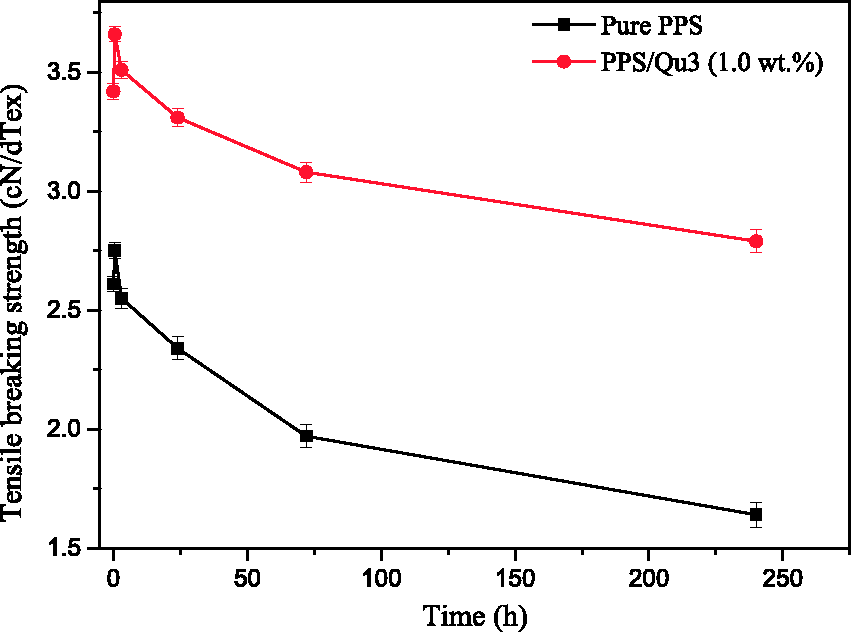
Tensile strength of polyphenylene sulfide (PPS) and PPS/Qu3 (1.0 wt.%) composite fibers treated at 230°C for 3 h, 24 h, 72 h, and 240 h.
Gaining insight into the mechanism of oxidation stability improvement of quercetin-containing PPS fibers
In order to understand how quercetin delays the oxidation of PPS macromolecules, the valence states of S atoms within the macromolecular chain were further analyzed by XPS. The survey XPS spectra of pure PPS and PPS/Qu composite fibers, recorded before and after the materials were subjected to high-temperature treatment, are shown in Figure 13. The high-resolution S2p fitted curves are presented in Figure 14, and the relative contents of different forms of sulfur, determined from the curve fitting, are summarized in Table 4.
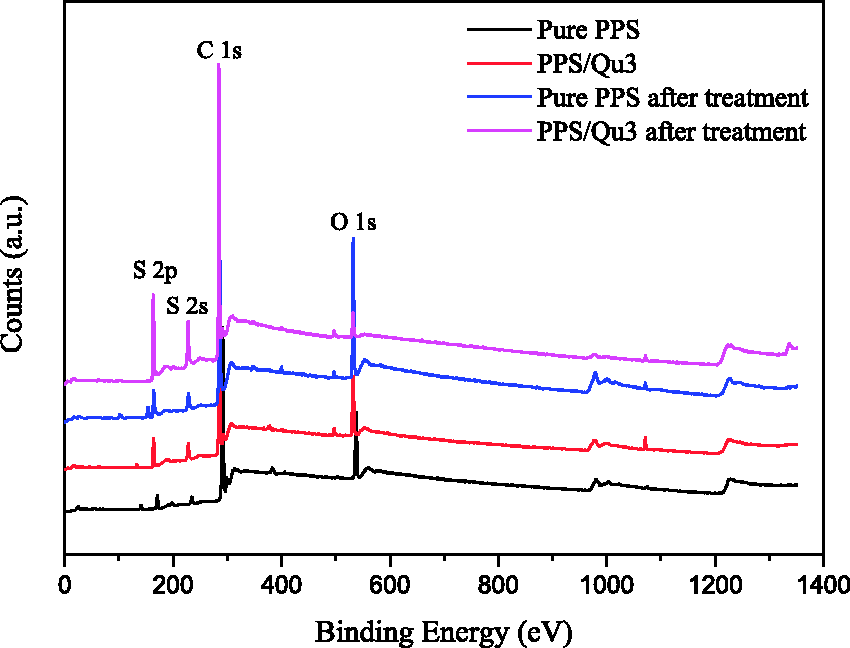
Survey X-ray photoelectron spectroscopy (XPS) spectra of pure polyphenylene sulfide (PPS) and PPS/quercetin (Qu) composite fibers before and after high-temperature treatment.
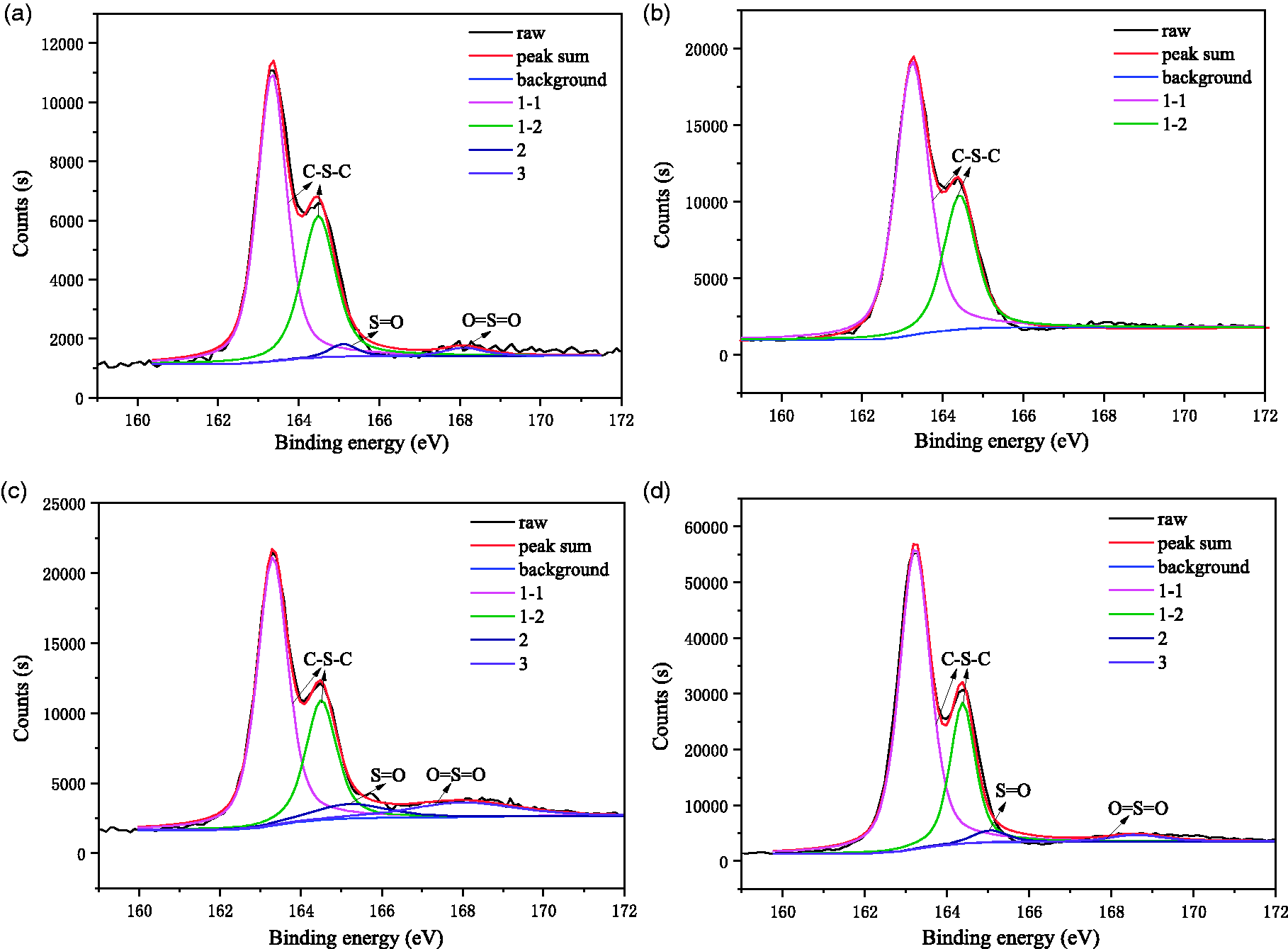
High-resolution S2p fitted curves of pure polyphenylene sulfide (PPS) and PPS/quercetin (Qu) composite fibers before and after high-temperature (230°C) treatment for 240 h ((a) pure PPS, (b) PPS/Qu3 fiber, (c) pure PPS fiber after treatment and (d) treated PPS/Qu3 fiber).
Fitted S2p curves of pure polyphenylene sulfide (PPS) and PPS/quercetin (Qu) composite fibers
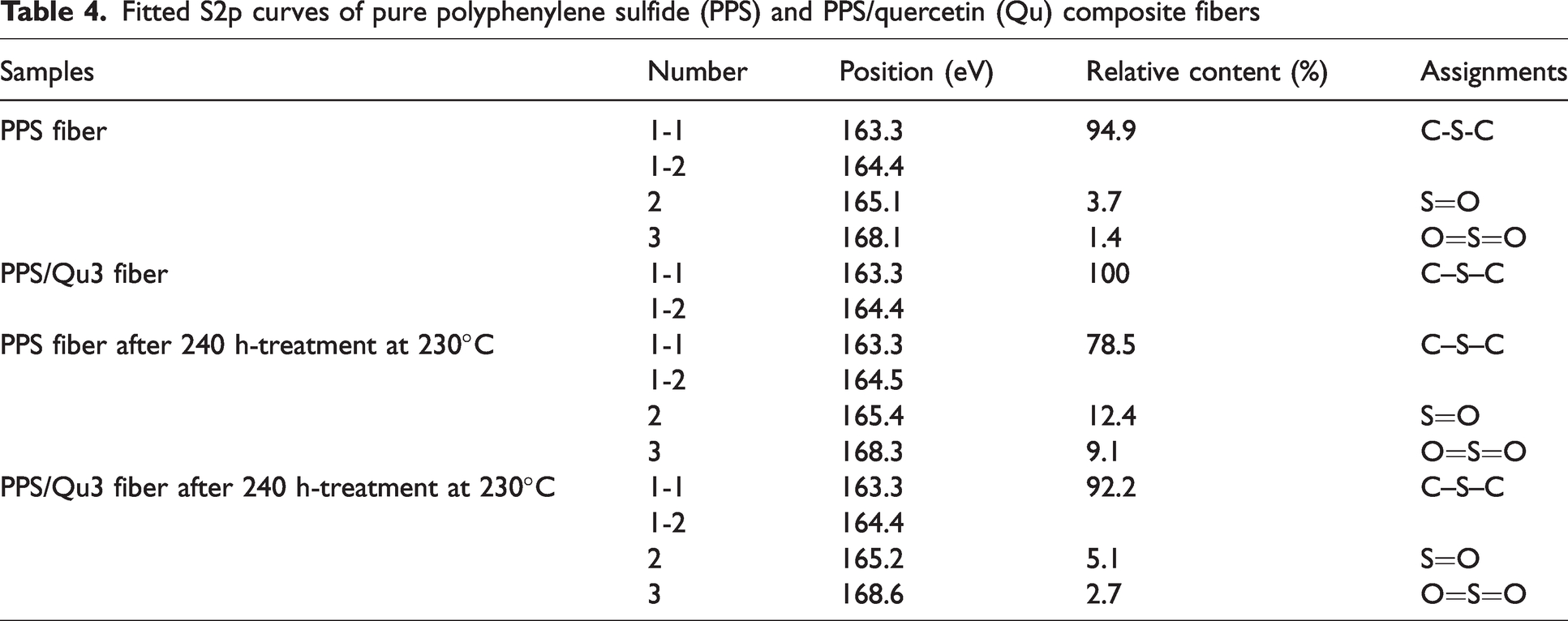
By comparing the S2p spectra of pure PPS and PPS/Qu3 composite fibers before and after treatment, it was found that fibers subjected to the high-temperature oxidation exhibited the prominent characteristic peaks at high binding energies, suggesting the presence of sulfone sulfur. According to the area ratios of peaks representing sulfur atoms with different valences, the content of C–S–C bonds in pure PPS fibers after treatment decreased from 94.9% to 78.5%, while the amount of sulfoxide and sulfone increased. Compared to the pure PPS, the content of C–S–C bonds in PPS/Qu3 composite fibers decreased from 100% to 92.2% after the high-temperature oxidation, and the quantities of sulfoxide and sulfone were also significantly lower than those in pure PPS fibers. The data suggested that quercetin could have markedly inhibited the transformation of C–S–C into –SO– and –SO2−. The variations in the amount of sulfur having different valence states indicated that one of the main structural changes that occurred during the oxidation of PPS fibers consisted in oxidation of the C–S–C bonds and generation of sulfur radicals, which in turn triggered the chain reaction, causing irreversible oxidative cleavage of the macromolecular chain. 32 Since quercetin contains a large number of phenolic hydroxyl groups that have the ability to capture free radicals, the generated sulfur radicals (S· and SO·) as well as the free radicals R· and ROO· will be rapidly captured by highly active H atoms of the phenolic hydroxyl groups of quercetin to form stable compounds.21,33 As a result, the chain growth reaction will be inhibited.
Conclusions
The PPS/Qu composite fibers with the quercetin content below 1.0 wt.% display good spinnability. If the quercetin content exceeds 1.5 wt.%, the fiber begins to break, the melt pressure fluctuates, and the spinnability worsens. Quercetin prevents phase separation and considerable agglomeration in the PPS matrix, but also exhibits good compatibility with PPS when its content is below 1.5 wt.%. Quercetin can increase the crystallization temperature of PPS, shorten the crystallization time, refine the PPS crystals, and improve the degree of fiber orientation. The PPS/Qu3 (1.0 wt.%) composite fiber had the best tensile strength and elongation at break, which were 30.8% and 7.6%, respectively, higher than those of the pure PPS fiber. Quercetin can effectively improve the thermal stability and oxidation resistance of PPS. At the quercetin content of 1.0 wt.%, the decomposition temperature of the composite fiber at a 5% weight loss (T5%) was 16.3°C higher than that of the pure PPS fiber, whereas the oxidation induction temperature increased by 13.4°C. The strength loss of composite fibers after the 240-hour oxidation treatment was only 18.4%. The X-ray diffraction results showed that the phenolic hydroxyl groups of the quercetin structure captured free radicals generated during the oxidation of PPS fibers, inhibited the oxidative degradation reaction, and improved the oxidative stability.
It is noteworthy that antioxidant-modified PPS fibers can be used in dust filter bags at the temperatures of at least 10°C higher than those of pure PPS fibers. Moreover, the demand for antioxidant PPS fibers is essential for regions and countries that use coal power generation. According to research realized in China's Shanxi Province, there are numerous industries (e.g. coal power generation, steelmaking, cement production) that require more than 3000 tons of PPS fibers per year, while the current PPS fiber production capacity in the region is close to zero. Therefore, PPS fibers have great prospects for market and industrial applications.
Footnotes
Declaration of conflicting interests
The author(s) declared no potential conflicts of interest with respect to the research, authorship, and/or publication of this article.
Funding
The author(s) disclosed receipt of the following financial support for the research, authorship, and/or publication of this article: This work was supported by the National Natural Science Foundation of China (project no. 51903184) and China Postdoctoral Science Foundation (project no. 2021M701129).
