



Abstract
The aim of this study was to investigate the physical properties of yarns made with different blend ratios of meta-aramid, para-aramid, flame-resistant (FR) viscose, and antistatic nylon fibers, as well as the tensile strengths and burning behaviors of fabrics made from these yarns. For this purpose, 10 different yarns of two different linear densities were produced using five different blend ratios, which are commonly used in the production of fire-resistant fabrics, and knitted fabrics were produced from these yarns, with the same knitting machine and the same production parameters. Physical properties of the yarns and tensile properties and burning characteristics of the knitted fabrics were measured according to commonly applied standards, and the results obtained were evaluated using the SPSS statistical program. The findings of this study are that the blend ratios of meta-aramid, para-aramid, FR viscose, and antistatic nylon fibers have statistically significant effects on the unevenness, humidity, and tenacity of the yarns, as well as on the tensile properties and burning characteristics of the fabrics. It was found that, with an increase of the aramid fiber ratio in the blend, the tensile values of the yarns and fabrics increased. The lowest moisture contents were recorded for 100% para-aramid yarns but the highest moisture contents were recorded for yarns whose blends contained FR viscose fibers. The yarns whose blends contained antistatic nylon fibers exhibited the greatest unevenness and the most thin and thick places and neps.
Keywords
Fabrics made from flame-resistant (FR) fibers have gradually gained importance in everyday life, in addition to their wide use in defense industries and social security, and it has become a necessity to use these fabrics for upholstery and curtains of the buildings where people live or stay. Flame and heat resistant properties of textiles are closely associated with the areas where they are to be used and with the desired degree of heat and flame resistance.
High heat and flame protective textiles are commonly used in dangerous workplaces where people are very much likely to be exposed to high heat or flame, such as firefighting, the petrochemical industry, the military industry, the engineering industry, foundries, the aviation industry, and the aerospace industry. 1 Fibers that are used in the production of high heat and flame protective textiles should have good thermal properties and be able to maintain their physical properties, even at high temperatures.
FR properties can be imparted to textile goods in different ways, such as by using inherently FR fibers, by copolymerization of fibers, by changing fiber structures through chemical modification, by incorporating FR chemicals in synthetic polymers during fiber spinning and by treating fabrics with FR chemicals.1 –3 Among these methods, the one that provides the highest protection from heat and flame is based on the production of fabrics from inherently FR fibers.
Inherently FR fibers are produced from polymers that have high bond energies. A large amount of thermal energy is required to break down these polymers. Polymers that possess higher bond energies have higher thermal and mechanical resistance. Resistance of polymers to high heat arises from the decreased probability of polymer chain scission. 2
Aramid fibers are inherently FR, owing to the presence of aromatic rings in the main chains of their polymers. 2 Because of these properties, products made from 100% aramid fibers or from different aramid blends have found wide uses in areas where a high degree of protection is required, such as military fields, industrial fields, and firefighter clothing. Also, such products have an increasing use in hospital textiles, sports fields, aircraft textiles, cinemas, and workwear.
Another method is to change the structures of fibers by copolymerization and chemical modification. In this method, polymers undergo a chemical reaction with some chemicals and the resultant chemical modification imparts FR properties to these polymers. Thus, the elements that impart flame resistance are incorporated in the polymer chains and, accordingly, the polymers become inherently FR. In this way, flame resistance is imparted to such fibers as FR viscose, FR polyester, or FR nylon fibers. 3
Inherently FR viscose fibers are produced by incorporating FR additives in the spinning dope before extrusion. During burning of this fiber, the flame point produces a lot of nitrous oxide, which effectively isolates the fiber flame point from oxygen, thereby showing a fire-retardant effect. This fiber does not exhibit combustion and will instantly extinct without a fire source with low smoke concentration. 4 Viscose fibers that have been made FR also provide wear comfort; therefore, they are widely used for the inner parts of protective clothing for firefighters, industrial workers, and military personnel.
Our review of the literature regarding FR yarns and fabrics revealed that most studies were concerned with imparting flame resistance to fabrics during finishing processes.5 –17 This was followed by a number of studies that investigated the properties of the yarns and fabrics made from FR fibers.18 –24 A small number of studies examined the burning behaviors of fabrics produced from inherently FR meta-aramid and para-aramid fibers, or from their different blends.25,26 There was an insufficient number of studies of the mechanical properties of yarns and fabrics made from aramid fibers;25,26 therefore, in this study, five different blend ratios, which are widely used in the production of FR yarns, were chosen for study; the yarns and fabric samples were produced on the same production line with stable production parameters.
The blend ratios included in this study are extensively used in the production of heat- and cut-resistant gloves and in the production of firefighters’ clothing, military clothing, police clothing, private security workwear, electric power plant workwear, and clothing for workers of natural gas facilities. This study is intended to make a scientific contribution to the field; since the blend ratios used in this study are the most extensively used blend ratios in the production of FR products, the study is also expected to be beneficial for the manufacturers of FR fabrics, in providing information that will help in improving the properties of these products.
Experimental
Materials
The properties of the yarns used, which were produced especially for this study, and the properties of the fibers that were used in the production of these yarns are given in Tables 1 and 2. Antistatic properties were imparted to the nylon fiber by including an antistatic agent in the extrusion process.
Properties of yarns

Fiber properties

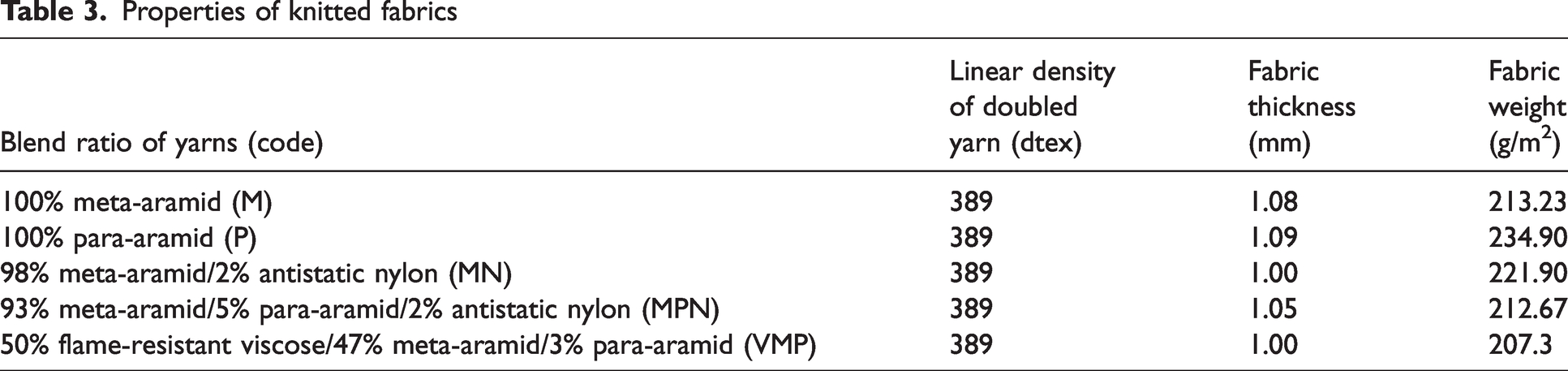
Yarns of densities 167 dtex and 222 dtex, which were produced for each blend, were doubled and then five single jersey fabrics were obtained using these yarns on a knitting machine with 20 fine. The manufacturer of the machine is İpekçioğlu and its brand name is Faycon CKM-01-S. The properties of the fabrics are given in Table 3. 27
Properties of knitted fabrics
Methods
The fabric samples obtained were washed and dried according to DIN EN ISO 6330:2013. 27 All the yarns and fabric samples used in this study were kept under standard atmospheric conditions (20 ± 2°C and 65 ± 2% moisture) for 24 h according to BS EN ISO 139:2005+A1:2011. 28 All the tests applied to the yarns and fabric samples were carried out after the conditioning process. 28
The linear densities of the yarns were determined by taking 10 measurements from each yarn according to EN ISO 2060:1994. 29 The twist amounts of the yarns were tested by taking 10 measurements from each yarn according to EN ISO 2061:2015. 30 The tensile strength tests of yarns were conducted on a Textechno instrument with 500 m/min gauge speed, using 500 mm gauge length, in accordance with ISO 2062:2009 (yarn pre-tension, 0.50 cN/dtex.). 31 Breaking elongation, breaking strength, and work of rupture values of the yarns were measured by taking 25 measurements from each yarn. 32
Humidity tests of the yarns were conducted in accordance with ISO 6741-1:1989. 32 Three measurements were taken from each yarn. 33 The unevenness of the yarns used in this study was tested using an Uster Tester 4 SE. In total, 100 m of yarn were tested for each yarn, with a test speed of 100 m/min. Three measurements were taken from each yarn to determine the unevenness value and the numbers of neps and of thick and thin places. Hairiness tests of yarns were conducted using a Zweigle hairiness tester; three tests were conducted for each yarn.
Bursting tests of knitted fabrics were conducted in accordance with ISO 13938-2:2019. 33 An SDL Atlas M229P Pnuburst bursting strength tester was used to test fabric samples. The experimental area of the device used was 100 cm2 (112.8 mm in diameter). Three measurements were taken from each fabric sample.
The abrasion resistance tests of the fabric samples produced for this study were conducted in accordance with BS EN ISO 12947-3:1998 by taking three measurements from each fabric sample. 34 The abrasion resistance test was conducted at a pressure of 9 kPa and a rotating speed of 30,000 rpm was applied during the test.
Heat and fire resistance tests of the fabric samples were carried out according to ISO 15025:2016. 35 A propane gas flame with a height of 40 ± 2 mm was applied for 10 s during the test. Three tests were conducted for each type of fabric sample.
All the results obtained from the tests were statistically evaluated using the SPSS program at the 0.05% level of significance. The effects of different blend ratios on yarn properties were investigated, as well as the effects on tensile properties and burning behavior of knitted fabrics. 27
Results and discussion
Effects of blend ratios of FR fibers on breaking tenacity and elongation of yarns
Student–Newman–Keuls (SNK) test results, which show the effects of the blend ratio of fibers on the breaking tenacity and breaking elongation of yarns, are given in Table 4. As can be seen from these SNK results, the blend ratios of fibers has statistically significant effects on breaking tenacity and breaking elongation values of 167 dtex and 222 dtex yarns.
Student–Newman–Keuls test results for yarn tenacity and elongation

The values 1, 2, 3, 4 in parentheses denote the effect of the blend ratio of flame retardant fibers on the yarn breaking tenacity and breaking elongation properties (4 denotes the highest rank and 1 the lowest rank).
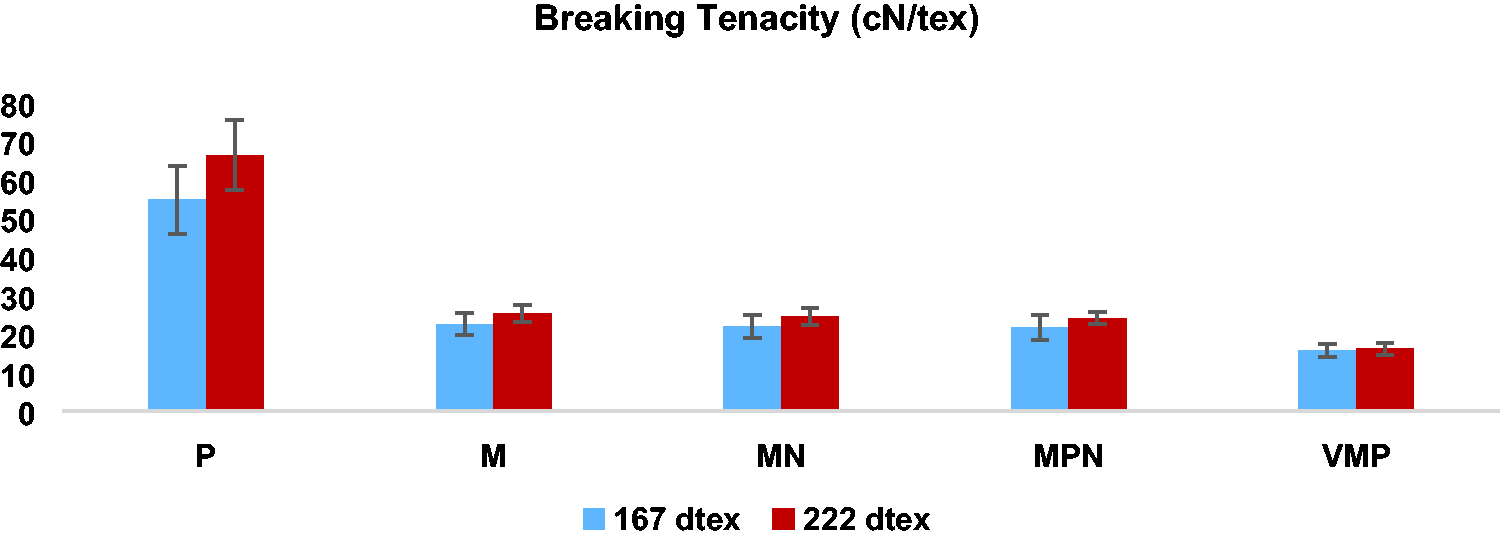
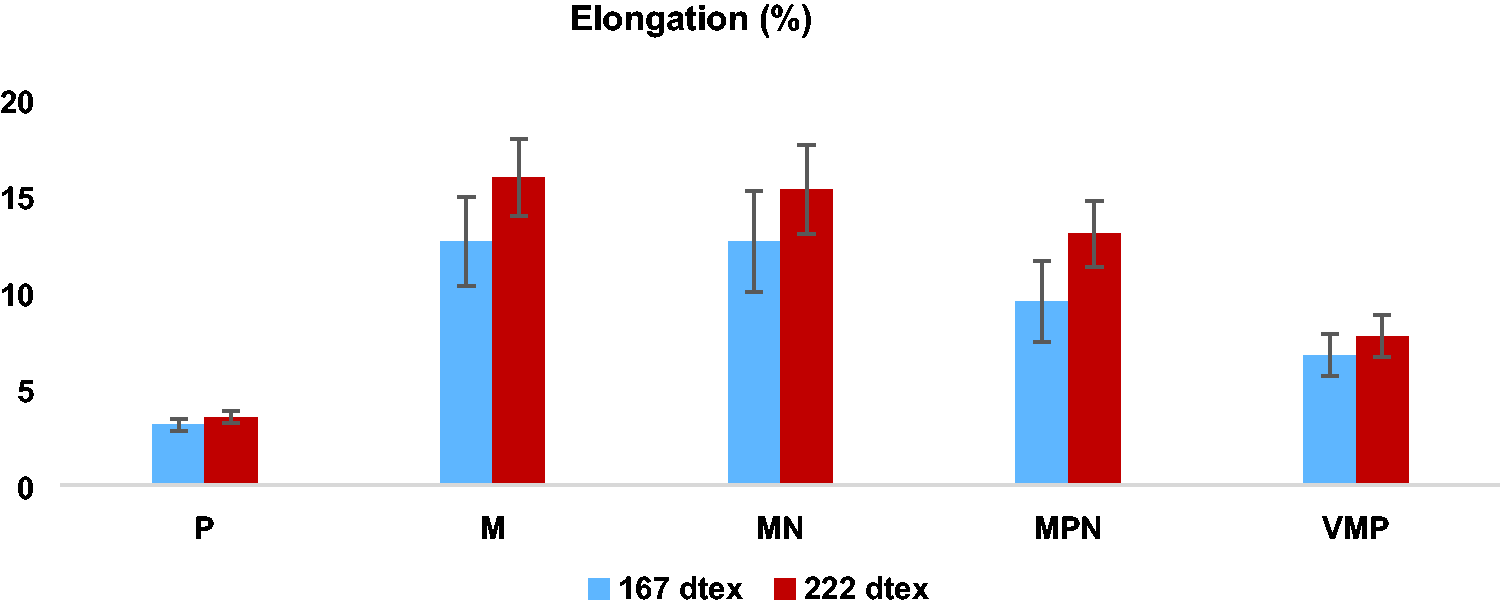
An examination of Figures 1 and 2 reveals that, when the two yarn densities are compared, the highest breaking tenacity and the lowest breaking elongation values are obtained from 100% para-aramid yarns. Breaking elongation values decrease with the decrease in proportion of meta-aramid in the blend. The highest breaking elongation values were obtained from 100% meta-aramid yarns. As for the yarns whose blends contain FR viscose fibers, they show the lowest breaking tenacity values. The incorporation of 5% para-aramid and 2% antistatic nylon fibers in the blend does not have any statistically meaningful effect on the breaking tenacity values of the yarns; however, the incorporation of 5% para-aramid in the blend decreases breaking elongation values of yarns, and this difference is statistically meaningful (Table 4).
Breaking tenacities of yarns.
Breaking elongations of yarns.
In this study, except for the blend ratio for each yarn number, all other production parameters were kept constant. The breaking tenacities of para-aramid, meta-aramid, and FR viscose fibers were 1.65–2.5 N/tex, 0.39 N/tex, and 0.25 N/tex, respectively. Average breaking elongations of para-aramid, meta-aramid, and FR viscose fibers were 2.2–4.4%, 27%, and 15%, respectively.36 –38 The tendency in the breaking strength and breaking elongation of the yarns turned out to be directly proportional to the tendency that the fibers had in their breaking strength and breaking elongation.36 –38 In addition, the breaking tenacity and elongation of 222 dtex yarns were higher than the breaking strength and elongation of 167 dtex yarns. As the yarn thickness increases, the number of fibers in the cross-section increases; therefore, the strength needed to break the yarns made from these fibers increases. 39
Effects of blend ratios of FR fibers on rupture properties of yarns
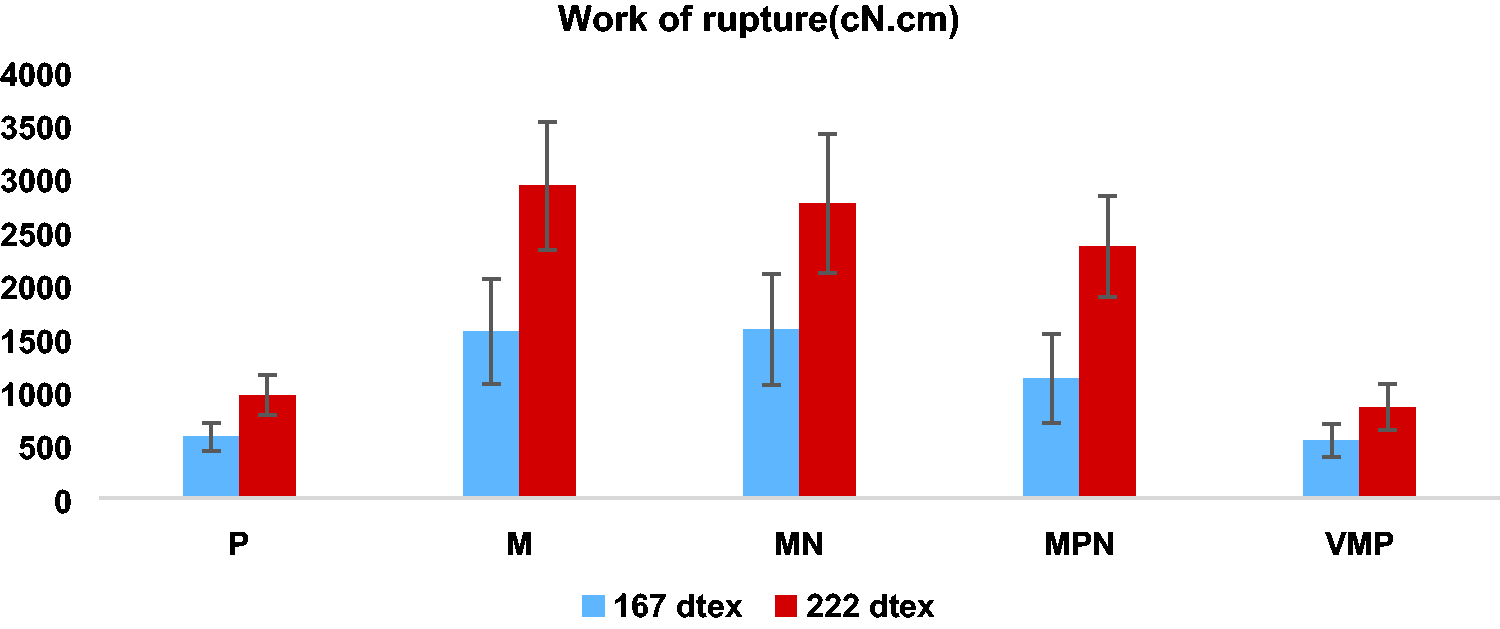
The SNK test results given in Table 5 and Figure 3 show that the blend ratio has a statistically significant effect on work of rupture of 167 dtex and 222 dtex yarns.
Student–Newman–Keuls test results for work of rupture of yarns

The values 1, 2, 3 in parentheses denote the effect of blend ratio of flame retardant fibers on the work of rupture of yarns (3 denotes the highest rank and 1 the lowest rank).
Work of rupture of yarns.
The work of rupture is the energy needed to break a yarn; it is the area under the load–elongation curve. 40 In other words, it can be defined as a measure of yarn performance in subsequent processes.
The SNK test results given in Table 5 show that the highest work of rupture values were obtained from 100% meta-aramid yarns and from yarns containing 98% meta-aramid fibers. Yarns with 100% para-aramid fibers and yarns whose blends contain FR viscose fibers were observed to have low work of rupture values. Incorporation of para-aramid into the blends decreased work of rupture values. The work of rupture values of 222 dtex yarns are higher than the work of rupture values of 167 dtex yarns. As the yarn thickness increases, the number of fibers in the cross-section increases; therefore, the energy needed to break the yarns made from these fibers increases. 39
The fibers and blend ratios used in this study were the fibers and blend ratios that are frequently used in the manufacture of fabrics desired to have highly FR properties. This study shows that, with the increase in proportion of meta-aramid in the blend, work of rupture values of the yarns increased; this is an indicator of the yarn performance in subsequent processes.
Para-aramid fibers inherently have high degrees of tensile strength and these fibers are generally used in the production of items that are desired to have high degrees of tensile strength; moreover, the limiting oxygen index (LOI) of para-aramid fibers is 29%. Fabrics with highly FR properties are high performance fabrics, and they are often desired to have high tensile strength properties, depending on their areas of use. Therefore, if FR is the only desired property, depending on the type of intended use, yarns with a high ratio of meta-aramid fibers are used, as this allows the yarns to function more efficiently in subsequent processes. When tensile strength and fire resistance are desired to coexist, it may be necessary to use low proportions of para-aramid fibers (in our study, it turned out that this proportion needed to be over 5%), which makes it necessary to consider that work of rupture values will be low in this case. This study shows that, with an increase in the proportions of para-aramid and viscose fibers in the blend, work of rupture values of the yarns decreases and the yarn performance decreases accordingly during use.
Effects of blend ratios of FR fibers on moisture content of yarns
The SNK test results given in Table 6 show that blend ratio has a statistically significant effect on moisture content of yarn.
Student–Newman–Keuls test results for moisture content of yarns

The values 1, 2, 3 in parentheses denote the effect of blend ratio of flame retardant fibers on the moisture content of the yarns (3 denotes the highest rank and 1 the lowest rank).
The moisture content of the fiber used is an important parameter in the comfort properties of a fabric. A fabric should have a high rate of moisture transfer so that good comfort can be ensured. When choosing fibers, the first thing that comes to mind is that hydrophilic natural fibers generally provide better comfort than synthetic fibers.
Hydrophilic fibers, which have high moisture absorption capacity, absorb a large amount of moisture from the skin, thus allowing the moisture to be removed from the skin; conversely, water molecules are absorbed by the fiber and bind tightly to the fiber, as a result of which the fiber swells and the porosity of the fabric decreases. 40 When the porosity of a fabric decreases, the diffusion of the water on the fabric surface, promoted by evaporation, slows down, and accordingly its drying time is prolonged and it feels cool and wet to the touch.41,42 In other words, natural fibers are unable to offer all the comfort properties at the same time. Moisture is not absorbed by a fabric made from synthetic fibers but it passes through the gaps between the fibers and the yarns and is transferred to the surface of the fabric.43,44 Synthetic fibers do not possess all of the comfort properties; therefore, two or more (different) fibers are used together in clothing systems for better comfort properties. The advantages of different fibers are combined, while their disadvantages are eliminated by blending two or more fibers. 45
In this study, as can be seen in Figure 4, the lowest moisture contents were obtained from 100% para-aramid yarns but the highest moisture contents were obtained from the yarns whose blends contained FR viscose fibers. After viscose blended yarns, the highest moisture content values were obtained from yarns whose blends contained meta-aramid fibers. It is thought that this is because of the fibers’ standard moisture contents. Standard moisture contents of meta-aramid, para-aramid, and FR viscose fibers are 6.39%, 3.2%–3.5% and 10%, respectively.36 –38 Moreover, it was seen that there was a statistically insignificant difference in moisture content values of the yarns containing different proportions of meta-aramid fibers and those made from 100% meta-aramid fibers. In short, it is seen that 5% para-aramid fibers need to be used together with meta-aramid fibers for the fabrics that are desired to possess fire resistance, tensile strength, and comfort properties at the same time.
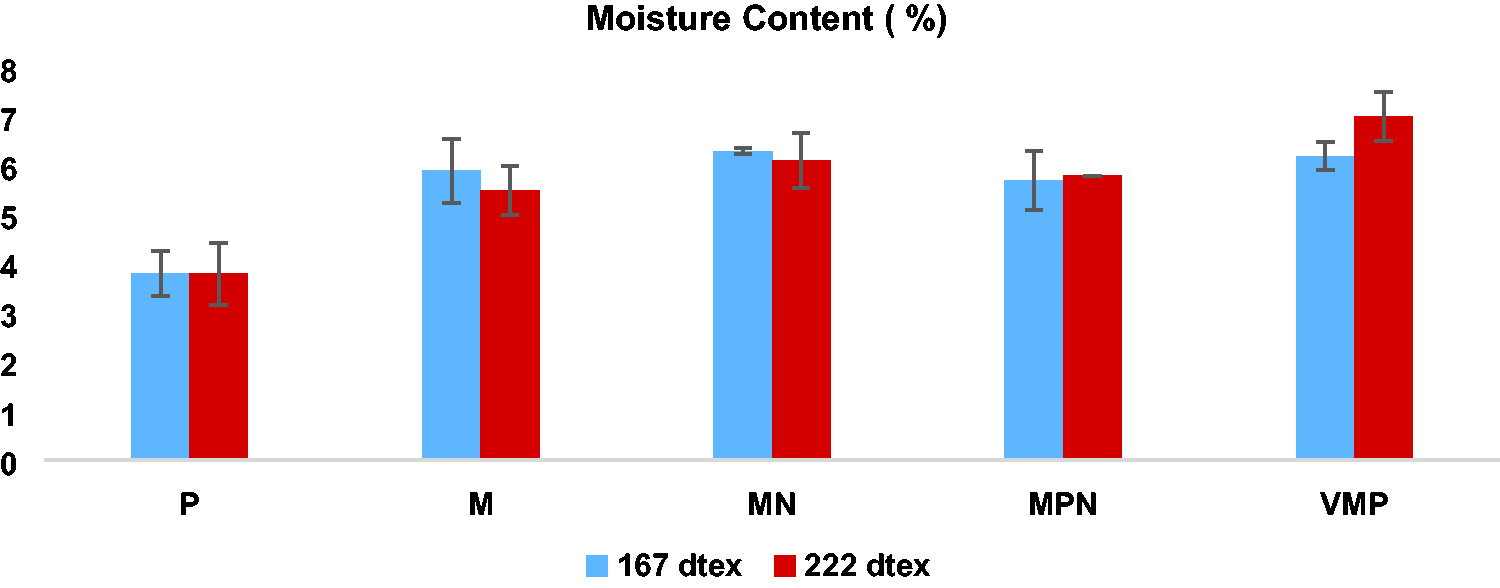
Moisture contents of yarns.
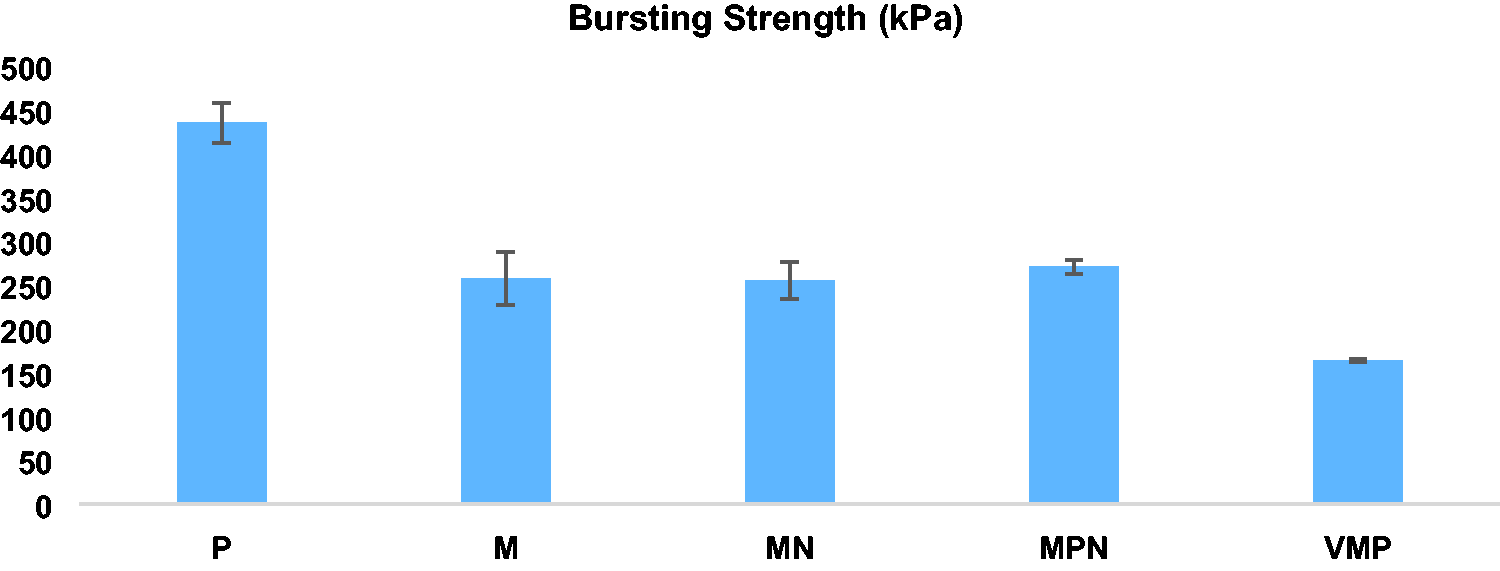
Bursting strengths (kPa) of knitted fabric samples.
The use of 50% FR viscose fibers did not bring about any statistically significant (meaningful) changes in the moisture contents of the yarns. Therefore, more than 50% of FR viscose fibers need to be used to improve the comfort properties of FR fabrics. Since the cost of FR viscose fibers is lower than that of meta-aramid fibers, they can be used to reduce the cost while improving the comfort properties of fabrics. However, compared with aramid fibers, FR viscose fibers have rather smaller degrees of fire resistance (the LOI of FR viscose is 28%; the LOI of para-aramid is 30%; the LOI of meta-aramid is 29%); therefore, when imparting flame resistance to a fabric, the requirements of its intended use should be taken into consideration.36 –38
Effects of blend ratios of FR fibers on unevenness, hairiness, and numbers of neps and thick and thin places of yarns
The SNK test results given in Tables 7 and 8 show that the blend ratio of fibers has a statistically significant effect on unevenness, hairiness, and the numbers of neps and of thick and thin places of both yarn densities.
Student–Newman–Keuls test results for hairiness and unevenness of yarns
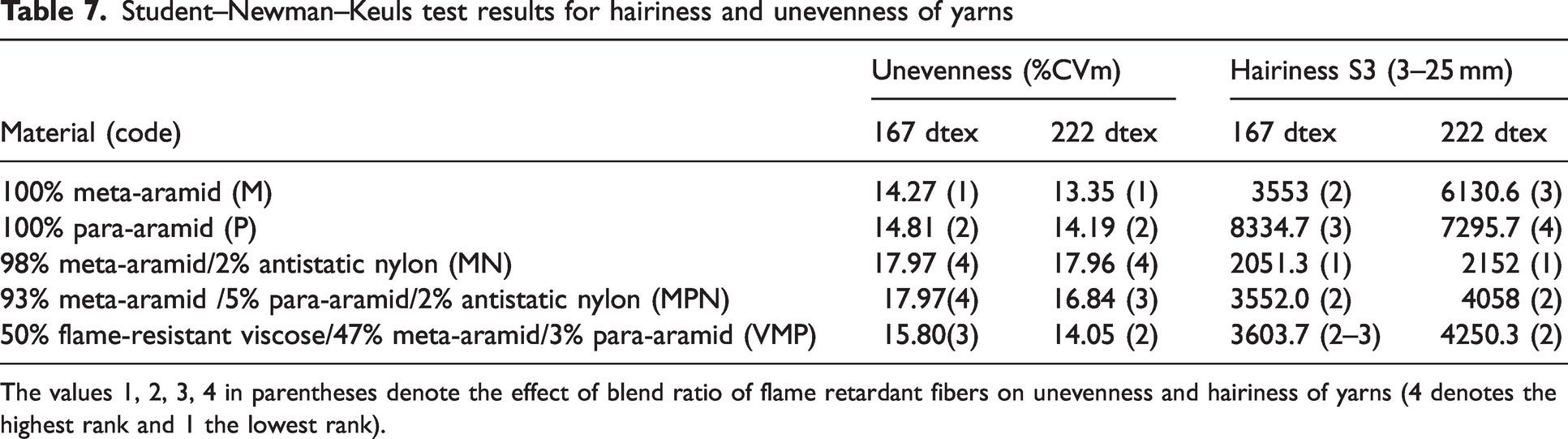
The values 1, 2, 3, 4 in parentheses denote the effect of blend ratio of flame retardant fibers on unevenness and hairiness of yarns (4 denotes the highest rank and 1 the lowest rank).
Student–Newman–Keuls test results for numbers of neps and thick and thin places of yarns

The values 1, 2, 3, 4 in parentheses denote the effect of blend ratio of flame retardant fibers on the numbers of neps, and of thick and thin places of yarns (4 denotes the highest rank and 1 the lowest rank).
As can be seen in Tables 7 and 8, the lowest unevenness values and the lowest numbers of neps and of thick and thin places were obtained from 100% meta-aramid and 100% para-aramid yarns, respectively. The yarns whose blends contained antistatic nylon fibers exhibited the highest unevenness values and the highest numbers of thin or thick places and of neps.
Similarly, the unevenness values and the numbers of thin or thick places of viscose blended yarns were higher than those of 100% meta-aramid and 100% para-aramid yarns. It is thought that the reason for this increase in yarn evenness is the slight difference in thickness of the antistatic nylon and FR viscose fibers used (Table 2). Yarn unevenness, its neps, and its thin and thick places adversely affect the surface appearance of the fabric, degrading the quality of the fabric. In short, it should be noted that the incorporation of antistatic nylon fibers in the blend is likely to spoil the appearance of the fabric.
Thick yarns (222 dtex) had more fiber in the cross-section than thin yarns (167 dtex), as a result of which some of their unevenness and imperfections were covered up by these fibers; therefore, thin yarns (167 dtex) exhibited higher unevenness values and higher numbers of neps and of thin or thick places. 46
Yarn hairiness occurs because some fiber ends protrude from the yarn body. Yarn hairiness can also be defined as the total number of protruding yarn ends per unit length. 47 Hairiness can be a desirable property in certain situations but it is generally regarded as undesirable because hairy yarns cause problems during processing. Irregular or periodic distributions of yarn hairiness cause some imperfections in the appearance of fabrics. Yarn hairiness is affected by many factors, such as fiber properties, yarn properties, spinning, or spinning process parameters. Fiber properties affected by yarn hairiness are fiber length, fiber thinness, cross-sectional shape resistance of fiber to bending and folding, fiber tensile strength, fiber breaking elongation, and fiber cross-section. 48 In this study, the lowest hairiness was obtained from the yarn that contained 98% meta-aramid and 2% antistatic nylon but the highest hairiness was obtained from 100% para-aramid yarn. The presence of para-aramid fibers in the blend increased the hairiness of the yarns but the incorporation of antistatic nylon and FR viscose fibers in the blend decreased the hairiness of the yarns. It is thought that this is because the tenacity of para-aramid fiber is higher than those of meta-aramid, viscose, and nylon fibers (tenacities of meta-aramid fibers, para-aramid fibers, FR viscose, and antistatic nylon are 0.393 N/tex, 1.65–2.5 N/tex, 0.25 N/tex, and 0.27 N/tex, respectively).36 –38 The fibers with higher tenacity have higher hairiness and vice versa. As the tenacity of the fibers decreases, the fibers are wrapped very easily in the main yarn body when they emerge from the spinning triangle, thus reducing the hairiness.49 In addition, as a result of the study, the hairiness of 167 dtex yarns was found to be less than that of 222 dtex yarns. This is an expected result, as the number of fibers in the cross-section will decrease as the yarn becomes thinner.
Effects of blend ratios of FR fibers on bursting strength of knitted fabrics
The SNK test results of bursting strength of knitted fabrics made with different blend ratios of FR fibers are given in Table 9. The SNK test results show that the blend ratio of flame retardant fibers has a statistically significant effect on the bursting strength of knitted fabrics.
Student–Newman–Keuls test results for bursting strength of knitted fabrics

The values 1, 2, 3 in parentheses denote the effect of blend ratio of flame retardant fibers on bursting strength of knitted fabrics (3 denotes the highest rank and 1 the lowest rank).
The highest bursting strengths were obtained for the fabrics made from 100% para-aramid yarns and the lowest bursting strengths were obtained for the fabric samples whose blends contained FR viscose. When compared with 100% meta-aramid fabric samples, incorporation of 5% para-aramid fibers in the blend increased the bursting strengths of the fabric samples but incorporation of 2% antistatic nylon in the blend decreased the bursting strengths of the fabric samples. Tenacities of para-aramid, meta-aramid, and FR viscose fibers are 1.65–2.5 N/tex, 0.39 N/tex, and 0.25 N/tex, respectively. It is thought that the differences in bursting strength result from the tensile strengths of fibers.34 –36 However, it turns out that decreases and increases that took place in the bursting strengths of 100% meta-aramid or fabrics containing meta-aramid were not statistically significant. From this study, it can be inferred that the ratio of para-aramid fibers to be used should be over 5% and that using 2% antistatic nylon is sufficient for fabrics that are desired to have high tensile strength and flame resistance.
Effects of blend ratios of FR fibers on abrasion resistance of knitted fabrics
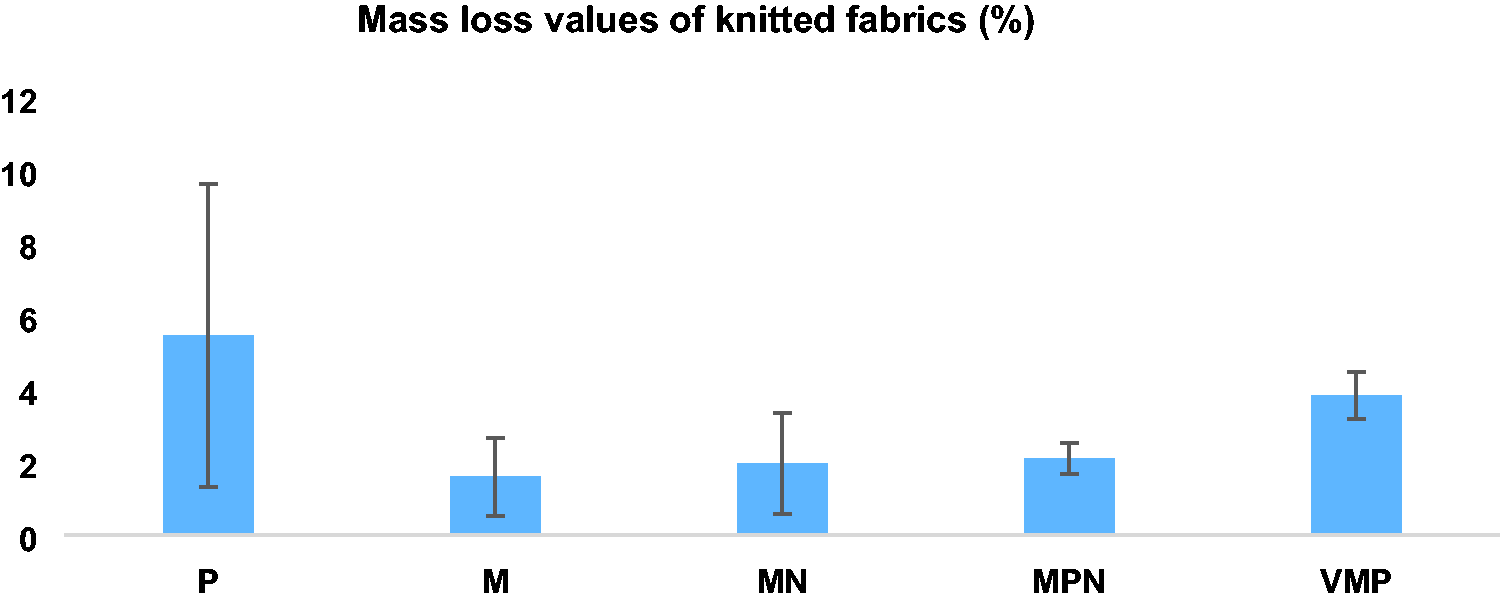
The SNK test results showing the effect of the blend ratio of FR fibers on the abrasion resistance of knitted fabrics are given in Table 10 and Figure 6. The SNK test results show that the blend ratios of fibers had statistically significant effects on the abrasion resistance of knitted fabrics. The highest mass loss was observed in the fabrics made from 100% para-aramid yarns, whereas the lowest mass loss was observed in the fabrics containing meta-aramid yarns. The decrease in the meta-aramid ratio in the blend increased the mass loss.
Student–Newman–Keuls test results for abrasion resistance of knitted fabrics
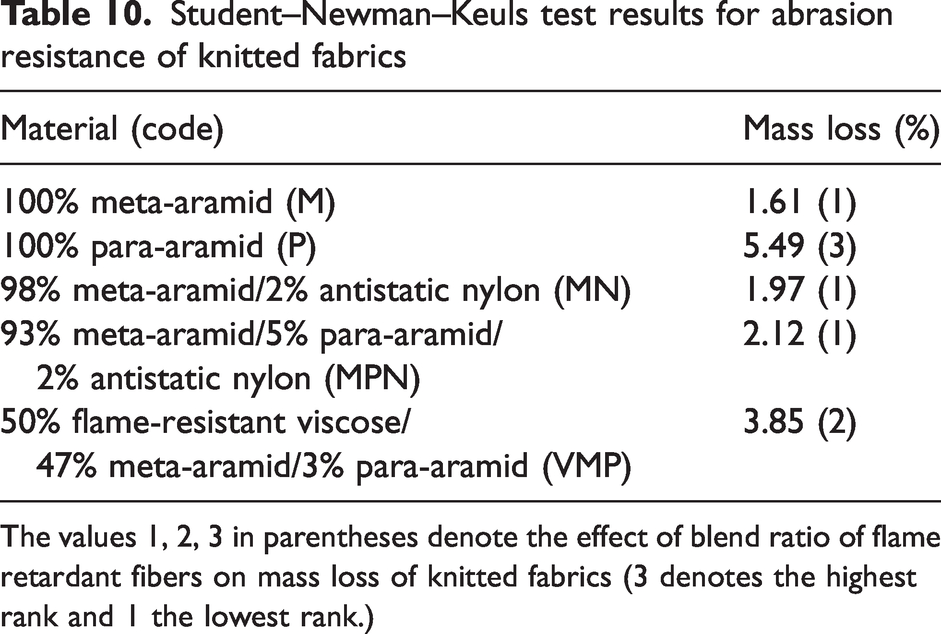
The values 1, 2, 3 in parentheses denote the effect of blend ratio of flame retardant fibers on mass loss of knitted fabrics (3 denotes the highest rank and 1 the lowest rank.)
Mass losses of knitted fabric samples.
Effects of blend ratios of FR fibers on flame resistance of knitted fabrics
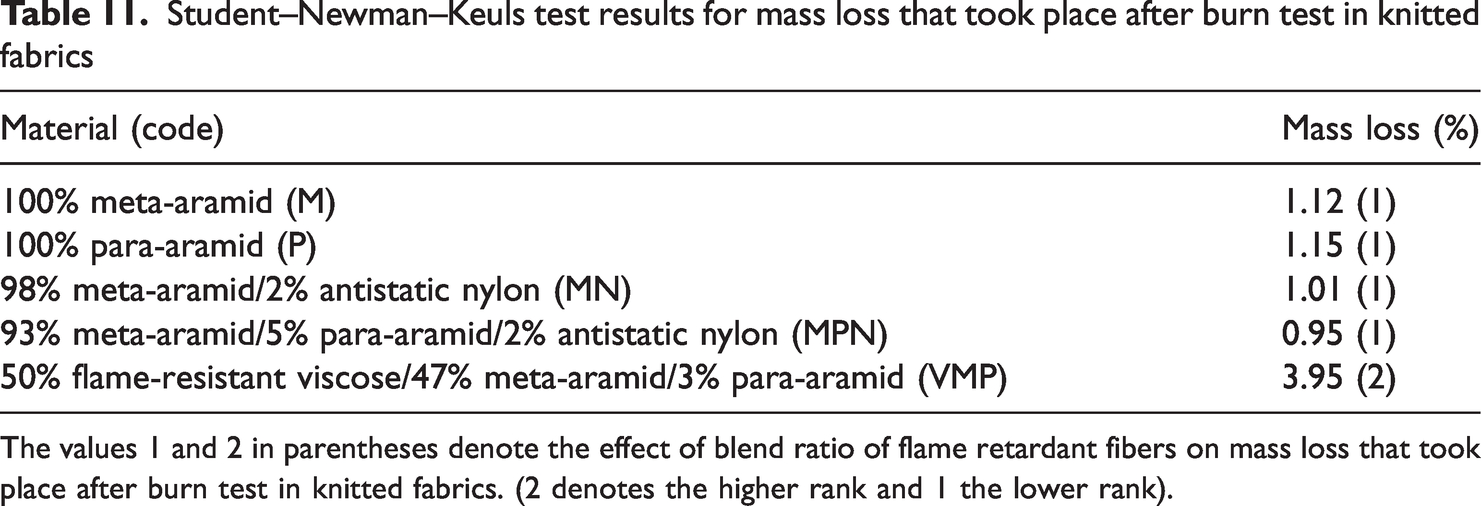
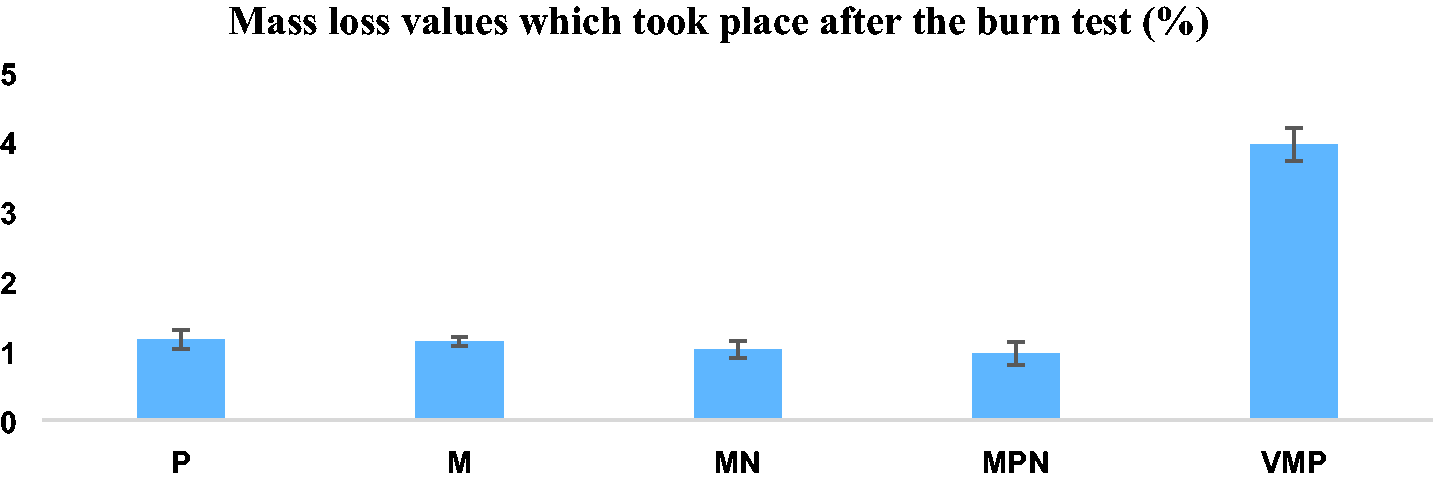
The fabric samples that contained different ratios of FR fibers were subjected to the burn test according to standard ISO 15025:2016; 35 naked-eye assessments made during and after the test showed that none of the samples exhibited flaming combustion, melting, dripping, or shrinkage, and that no flame reached any edge on any fabric sample. Moreover, the fabric samples were weighed before and after the burn test, to determine the mass losses that occurred after the burn test. The SNK test results showing the effects of blend ratios of FR fibers on the mass loss values of the knitted fabrics after the burn test are given in Table 11. The SNK test results show that the blend ratios of (FR) fibers had statistically significant effects on the mass losses of the knitted fabrics.
Student–Newman–Keuls test results for mass loss that took place after burn test in knitted fabrics
The values 1 and 2 in parentheses denote the effect of blend ratio of flame retardant fibers on mass loss that took place after burn test in knitted fabrics. (2 denotes the higher rank and 1 the lower rank).
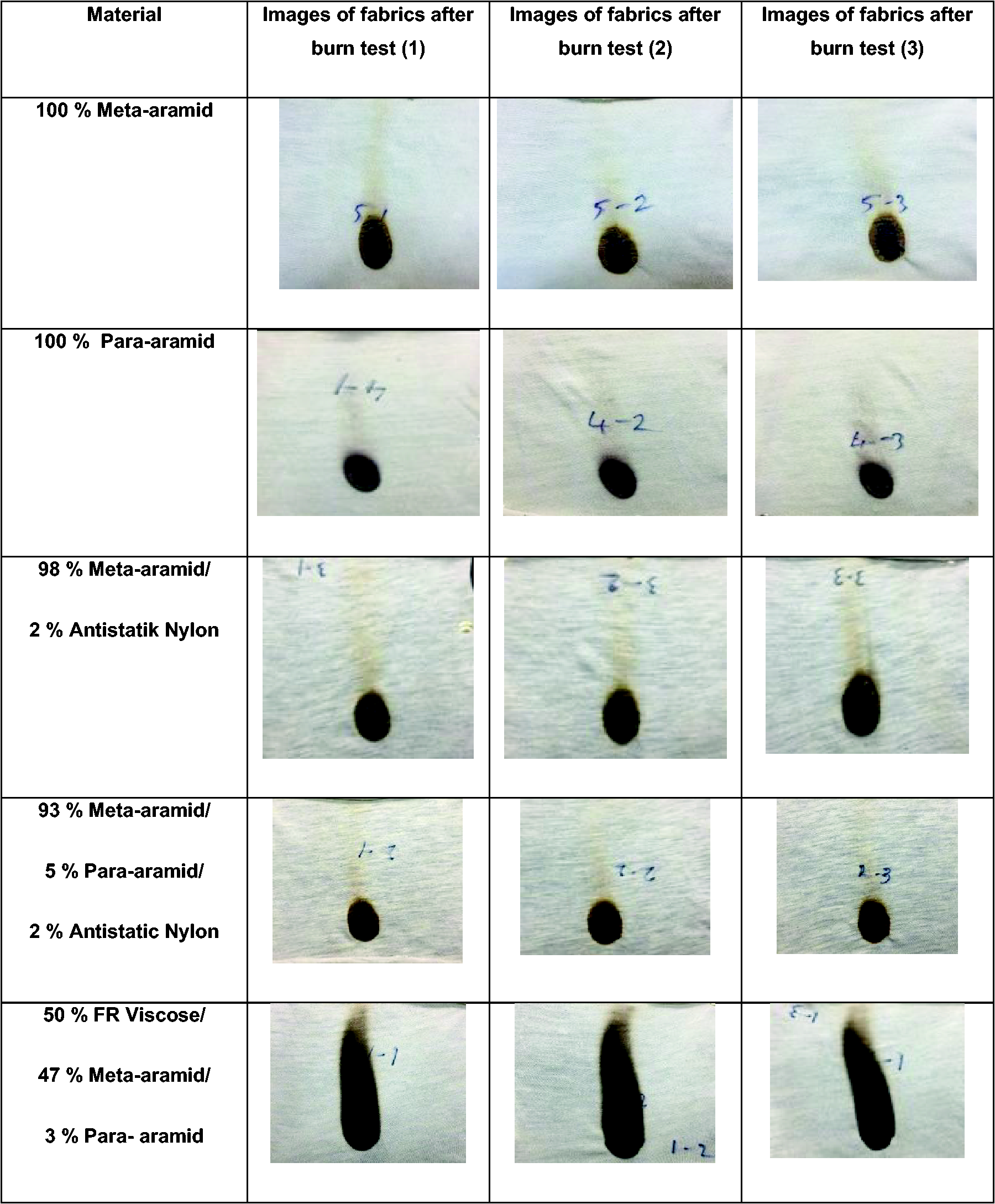
An examination of Table 11 and Figure 7 shows that fabrics whose blends contained FR viscose fibers exhibited the highest mass loss after the burn test. Fabrics that contained more than 50% meta-aramid or 100% para-aramid exhibited statistically similar mass losses after the burn test. From the charring images of all the fabrics after the burn test, given in Figure 8, it can be seen that when charred areas that formed on fabric samples in the burn test are compared, the largest charred areas are found on the fabrics whose blends contained FR viscose fibers. This is because the LOI of FR viscose fiber is less than that of the aramid based fibers. Oxygen is needed for the combustion process to continue and the amount of oxygen needed is called the LOI. If the LOI of a fiber is greater than 21%, the fiber does not ignite easily. The LOIs of meta-aramid, para-aramid, and FR viscose fibers used in this study are 30%, 29% and 28%, respectively.36 –38
Mass loss (%) after burn test in knitted fabrics.
Charring images after burn test of fabrics made from yarns produced with different blend ratios of flame-resistant (FR) fibers.
Conclusions
The following results were obtained from this study.
The highest mass loss after the burn test took place in the fabrics that contained FR viscose yarns. After the burn test, mass losses of 100% para-aramid fabrics and all fabrics that contained more than 50% meta-aramid were statistically at the same level. Tensile strengths of yarns and fabrics increased as the content of aramid fibers, especially para-aramid fibers, in the blend increased. The presence of FR viscose fibers in the blend decreased the tensile strengths of yarns and fabrics. It has been found out that it is necessary to use more than 5% para-aramid fibers when tensile strength and FR properties are desired to coexist; however, it should be taken into consideration that the presence of more than 5% para-aramid fibers in the blend will decrease the work of rupture of the yarns. The lowest moisture values were obtained for 100% para-aramid yarns, while the highest moisture values were obtained for yarns that contained FR viscose fibers. The lowest unevennesses and the lowest numbers of neps, thick places, and thin places were obtained from 100% meta-aramid and 100% para-aramid yarns. The yarns that contained antistatic nylon fibers exhibited the highest unevennesses and the highest numbers of neps, thick places, and thin places. The lowest value of yarn hairiness was obtained from the yarns that contained 98% meta-aramid and 2% antistatic nylon fibers, whereas the highest value of yarn hairiness was obtained from 100% para-aramid yarns. The presence of para-aramid fibers in the blend increased the hairiness of yarns, but the incorporation of antistatic nylon and FR viscose fibers in the blend decreased the yarn hairiness.
According to the data obtained in this study, all properties for each yarn linear density were compiled in Figures 9 and 10. These figures are shaded according to the data obtained from the SNK test results and given in this article. For each of the tested yarn and fabric properties, the best values are shown in black, the middle values in gray, and the worst values in light gray. As can be seen from the tables, it is seen that 100% meta-aramid yarns have the best values in all yarn, fabric properties, and fire resistance in both yarn counts. The light gray parts, classified as the worst, were not obtained in 100% meta-aramid yarns and fabrics. The worst yarn and fabric properties were obtained in yarns containing 100% para-aramid or 50% FR viscose.
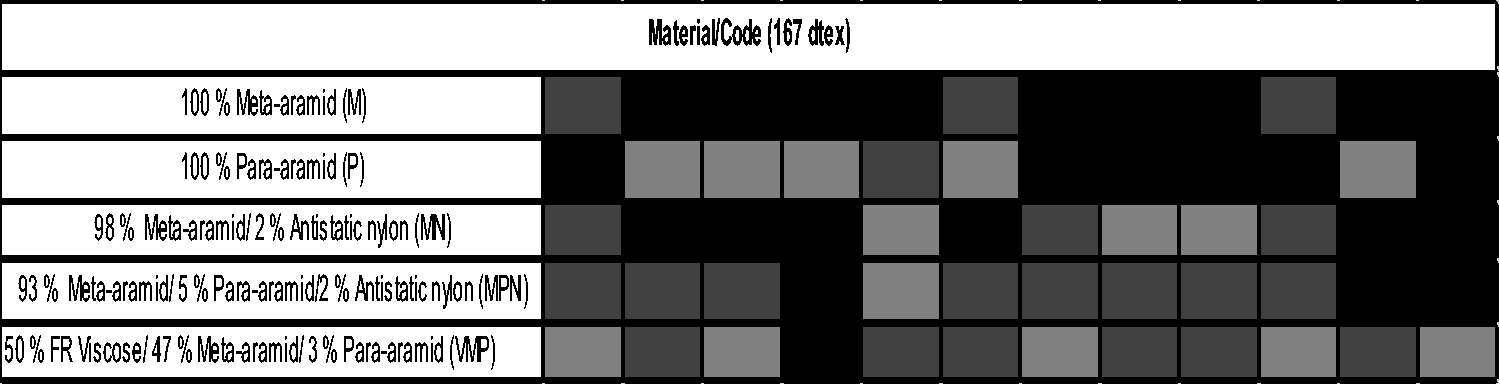
Properties of yarns produced with different blend ratios of flame-resistant (FR) fibers (167 dtex).
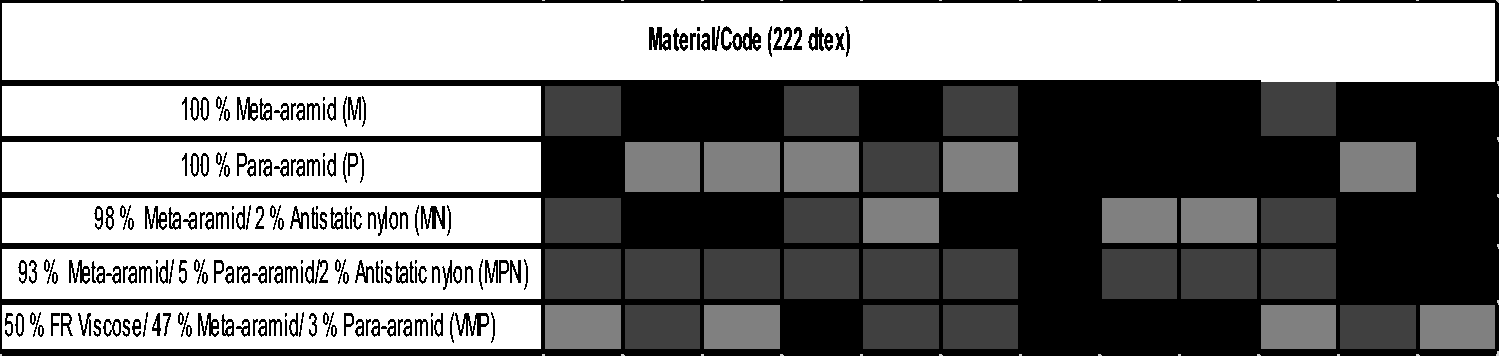
Properties of yarns produced with different blend ratios of flame-resistant (FR) fibers (222 dtex).
In this study, many properties of the yarns, such as tenacity and irregularity, were measured. Therefore, according to the data obtained and Figures 9 and 10, it can be said that 100% meta-aramid fibers alone are sufficient when it is desired to obtain high-quality FR yarns and fabrics. FR viscose fibers can be used when the costs of FR products are desired to be reduced or when they are desired to have extra comfort features. However, it should not be forgotten that when FR viscose fibers are used in FR products, the fire resistance and strength of FR textile products will decrease. Similarly, when the strength of FR products is desired to be higher, para-aramid fibers can be added. In this study, it has been determined that if para-aramid fibers are used in FR products, the para-aramid ratio should be above 5%. However, it should not be forgotten that problems will be encountered during the production of para-aramid yarn and its use in subsequent processes, as can be seen from the decrease in the breaking strength, and work of rupture values of the yarns with the use of para-aramid fiber.
Footnotes
Declaration of conflicting interests
The author(s) declared no potential conflicts of interest with respect to the research, authorship, and/or publication of this article.
Funding
The author(s) received no financial support for the research, authorship, or publication of this article.
