




Abstract
Unclear light propagation in mixed fibers has resulted in unachievable masses of primary fibers, in particular thin two-mixed fiber assemblies for decades. Hereby, a modified mixed medium addition theorem of the Kubelka-Munk transmission model is proposed to address this issue. This theorem was constructed by introducing a transfer function in the common ones on scattering coefficients, and such a transfer function takes both the mass proportion of each component and the reflectivity of mixed material into consideration. This opens up a new avenue for understanding the possible light mechanism of color mixed fiber assemblies. The proposed method demonstrated excellent accuracy in determining the primary masses of 48 specimens, with an average mean absolute error of only 2.23 mg. In comparison, the Lambert-Beer law yielded a much higher average mean absolute error of 8.66 for all types of blended samples. Such superiority was particularly obvious in white-black mixed samples, probably due to its comprised reflectance. In brief, this proposed theorem shows a high-quality prediction accuracy level in fiber mass and can be expanded to detect and control mixed fibers, as well as fiber length and uniformity detection through further study.
In recent years, blending yarn has been of wide interest because of its green ecological production process,1,2 rich color layers, and hazy three-dimensional effects.3–5 Hence, its quality control and technical design in color and mechanical properties played vital roles and were mainly determined by the masses of primary fibers in mixed fiber assemblies,6,7 especially in the processing of supplied yarns or fabrics.
Transmission spectroscopy and lights are commonly applied to characterize materials’ homogeneity and quality in the textile industry.8–10 Among them, the optical theory is of great value in the development of fiber mass and concentration distribution tests.11,12 The Lambert-Beer (L-B) law has been widely adopted since 1941 for measuring the thickness of transparent media materials,13,14 and then applied to determine each material’s thickness and surface density in a multilayer color specimen.15,16 However, the medium described by the L-B law is expected to be transparent and uniform due to it ignoring scattered and reflected light.17,18 Therefore, the poor prediction accuracy of the L-B law was commonly observed in fiber assemblies in the textile industry as the fibers are not fully opaque or transparent. 19 Alternatively, the Kubelka-Munk (K-M) two-flux theory describes the propagation law of light in turbid media by taking both scattered and reflected light into consideration,20,21 which makes the K-M theory suitable to be applied in various scenarios, such as textile color prediction,22,23 soil moisture inversion,24,25 and food quality testing. 26 However, bias resulting from the exclusive surface reflectance of this theory still exists.27,28 To date, the K-M theory has mainly focused on color prediction in the textile field using its reflectance law and addition theorem,5,23,29–31 and was also gradually applied in relative mass prediction using its transmission function in recent years.32–34 For example, Wu and Wang proposed an algorithm to calculate the optical relative surface density of fiber assembly based on K-M theory and obtained stable and accurate results on measuring the fiber length.35,36 Following this, Wu et al. constructed the color-separation algorithm on scattering for the relative thickness distribution of each primary component in mixed films based on the derived K-M transmission equation and mixed medium addition theorem. 37 The scattering coefficient was obtained on K-M transmission law by multiple actual thickness,38,39 and the results exhibited a high consistency between the predicted relative masses and the actual ones, better than the L-B model. 37 However, this method cannot be directly applied in mixed fibers blended with primaries at different ratios, which calls for further study in both the optical theory of K-M law and the turbid addition theorem.
The addition theorem was built by assuming the optical interaction between the components is independent and has no interactions.40,41 Still, due to the different refractive indices of different color fibers, the scattering and absorption of light inside the medium occur between primary fiber and air and at the interface formed by different primary-colored fibers.42,43 This means lights among the inner fibers can interact in a specific fashion, which does not perfectly fit the assumptions. Meanwhile, the primary fibers cannot reach complete homogenization in the mixed assembly, implying a nonlinear transformation of the mixed medium addition theorem should be considered. Hence, the addition theorem also contributes to problems in practical use, rather than the K-M theory itself.
Based on the thoughts mentioned above, in order to predict the mass of primary components in mixed fibers more accurately, a modified addition theorem is proposed on the derived transmission K-M law in this article. This theorem was constructed by introducing a transfer function in the common ones on scattering coefficients, and such a theorem takes both the mass fraction of each component and the reflectivity of mixed materials into consideration. Experimentally, three sets of bicolor fiber blended assemblies with nine different ratios were adopted for training their mixed medium additivity theorem, and 12 specimens with four different ratios of each set were applied to test its accuracy and availability, the results of which were also compared with the counterparts by the L-B model. This method exhibits good prediction for the mass of primary fibers in thin mixed fiber layers, theoretically processing a measurement precision of single fibers verified using about 0.5 ∼ 3 g fibers evenly flattened within a square with sides of 8 cm.
Methods
L-B model
The L-B law has been widely used to calculate the thickness of transparent material, providing the relationship between the light and the thickness or mass of material. The thickness of material (X) is proportional to the logarithm of the reciprocal transmittance
14
as given by

Derivation K-M model
The K-M two-flux model describes the light propagation in turbid media, and it has the advantage of physical interpretability and model simplicity when depicting the scattering and absorption characteristics of matter, considering downward and upward light propagation fluxes perpendicular to the layer. A derived K-M transmission function was transferred for studying
35
the fiber assemblies, including a definition of a scattering power P,

Of particular note, the diameter of natural fibers is not fixed, but fluctuates within a specific range, and it is hard to measure. Hence, in this article, the scattering coefficient S and absorption coefficient K were instead computed by obtaining multiple mass observations. That is to say, X represents the mass of fibers m in the process of achieving S or K in this article, X = m.
Construction of modified addition theorem
To date, the Duncan addition theorem
44
was commonly accepted for color prediction using reflectance. In the Duncan addition theorem, the absorption and scattering coefficients of the mixed material can be treated as simple linearly superimposed, weighted in accordance with their proportion. Hence, the Smix of the two-component mixed fiber assembly can be defined as

Indeed, the scattering coefficient of mixed fibers cannot be obtained via a simple combination of this addition theorem as equation (3) and K-M transmission law as equation (2), though it fits theoretical demands. For example, the calculated scattering powers of mixed fibers with white and black fibers at a ratio of 50%:50%, Pmix_add were totally different from the tested ones, Pmix_act, as shown in Figure 1(a). This is supposed to result in two distinct scattering coefficients and limits its usage scope to the relative mass of mixed fibers at a certain blending ratio. The schematic diagram of this case was illustrated in Figure 1(b), explained as the effects of inner light interaction of each component and the exclusive surface reflectance of K-M law.
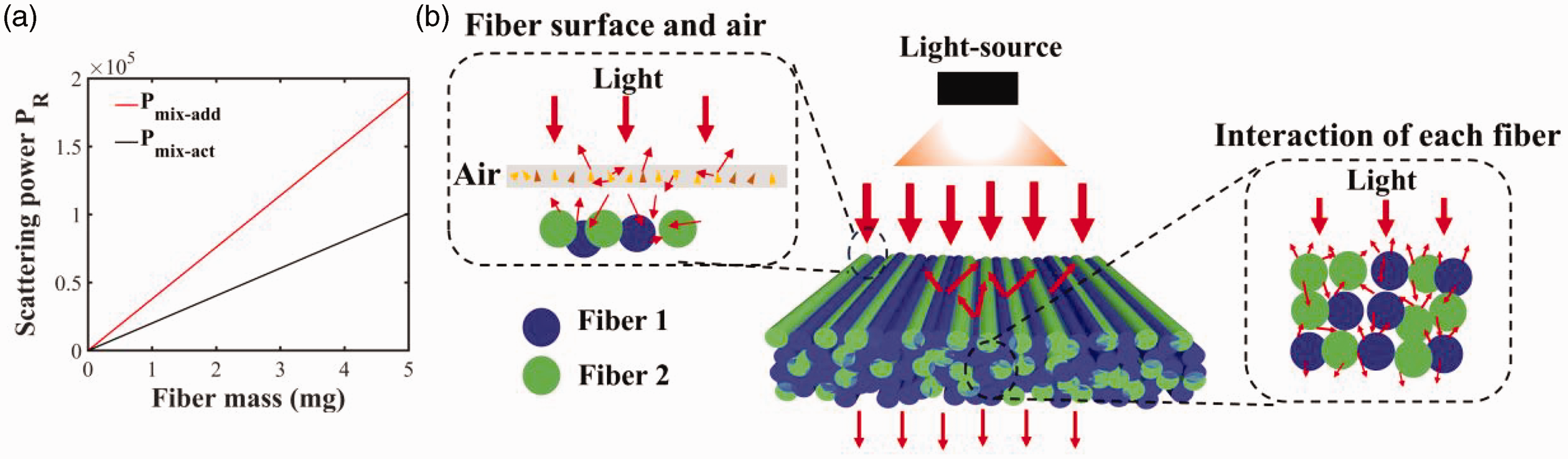
(a) Comparison of measured scattering powers Pmix_act and added ones Pmix_add and (b) schematic diagram of light propagation analysis of mixed fibers.
A modified addition theorem is published here to solve this challenge. Hereby, the modified addition theorem was constructed by introducing a transfer function of F(C1, R∞,mix) into the original one as equation (3), shown in

Accordingly, the scattering coefficient S of mixed material can be obtained by multiple masses on linear regression method using the K-M transmission law as equation (2). Herein, X represents the mass of the material m, Xmix = m. Hence, equation (4) can also be converted to

Finally, a system of equations on different monochromatic lights can be constructed to obtain the mass of each item (C1m and (1 – C1)m) in two-mixed fibers, combined with equation (2):

Materials and experiment
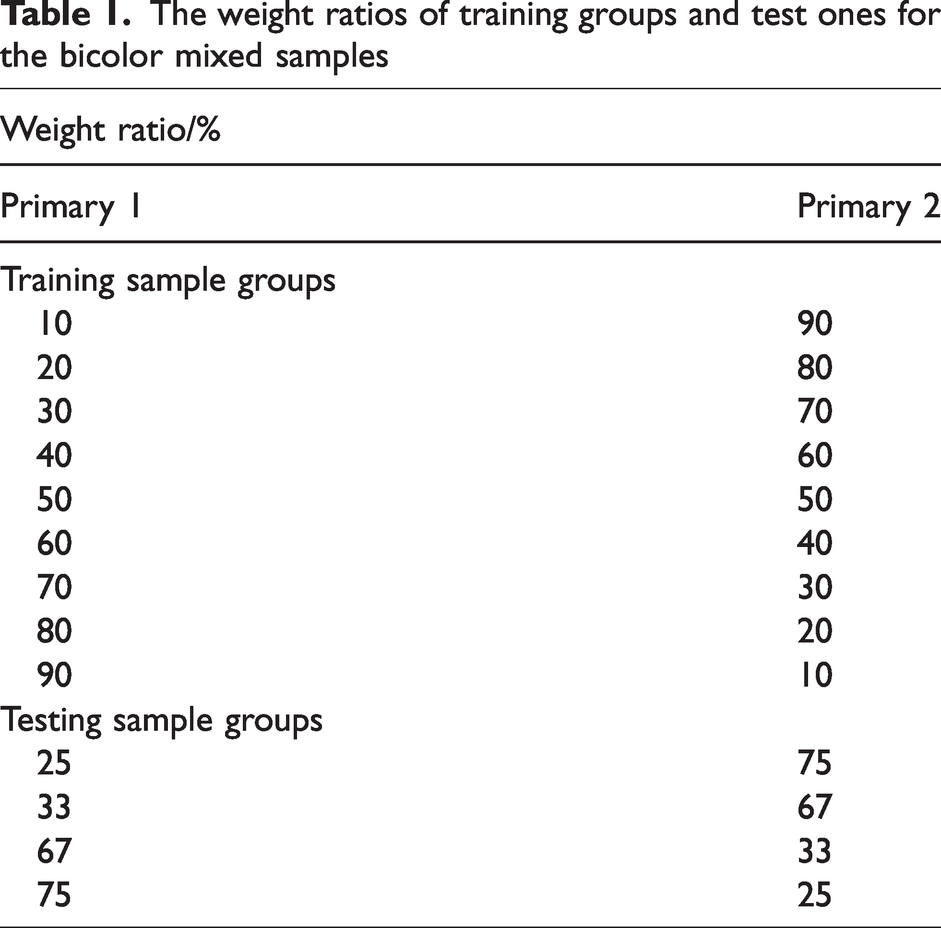
In this experiment, a total of five monochromatic cotton fibers were selected as materials, including four pre-colored fibers with colors of red (R), green (G), blue (B), black (K), and the raw white (W) ones, as shown in Figure 2(a). These fibers were provided by Zhejiang Changshan Textile Co., Ltd, China, and blended to prepare three sets of two-mixed fiber samples with a meter, expressed as W:K, R:G, and R:B. Herein, the former ones, W and R of these blending fibers are defined as primary 1, and their specific blending ratios are listed in Table 1. Before the experiment, all samples were kept in the standard atmosphere (20°C, 65% relative humidity (RH)) for at least 24 h. Then, we divided the blending ones into training sample groups and test ones to construct and verify the new theorem. In particular, each smaller group was designed to involve four increasing masses, aiming to achieve the essential scattering coefficient of a particular training blend at the same proportion and that of each primary fiber, following equation (2).
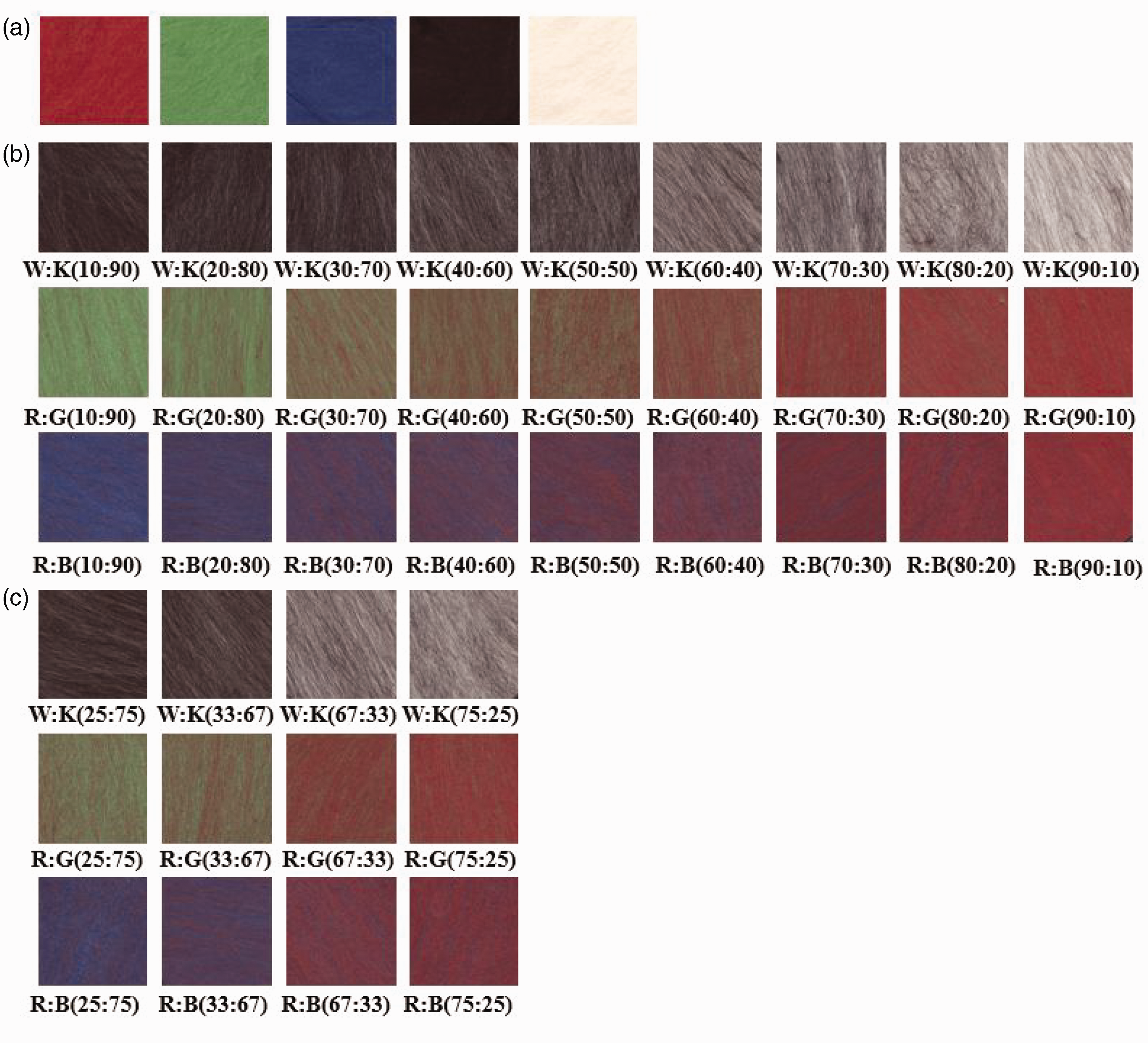
Images of monochromatic fiber groups and bicolor mixed ones at different concentrations: (a) five monochromatic fiber groups; (b) 27 bicolor mixed fiber groups for establishing a new theorem and (c) 12 bicolor mixed groups for testing experiment.
The weight ratios of training groups and test ones for the bicolor mixed samples
An own-build image instrument was adopted to measure the transmission and reflection RGB images of primary fibers and mixed ones at a resolution of 1000 dpi, where there are 1000 dots within 1 inch, and their RGB values were divided by 255 to obtain the corresponding transmission T and reflectance of infinite layers R∞ of equations (2) and (6) for each channel, respectively. Accordingly, when reflectance images of each sample group with infinite layers were obtained, a weight of 1.2 g fibers needed to be arranged in parallel to a thickness of above 1 cm for three measures at different locations. Similarly, we arranged fibers in a size of 8 cm * 8 cm to obtain a transmission image of each specimen. After the acquisition of T and R∞, we computed the scattering powers of each sample group for primary fibers and the training samples on equation (2) for each channel. Then, the scattering coefficients were gained, S1,R, S1,G, S2,R, and S2,G, using their masses and linear regression method, and we employed these coefficients to the theorem construction of equation (6). Finally, the accuracy of this new theorem for the mass of each primary fiber in blends was examined by testing specimens on two methods and compared with that of the L-B law. Their specific flow chart is shown in Figure 3.
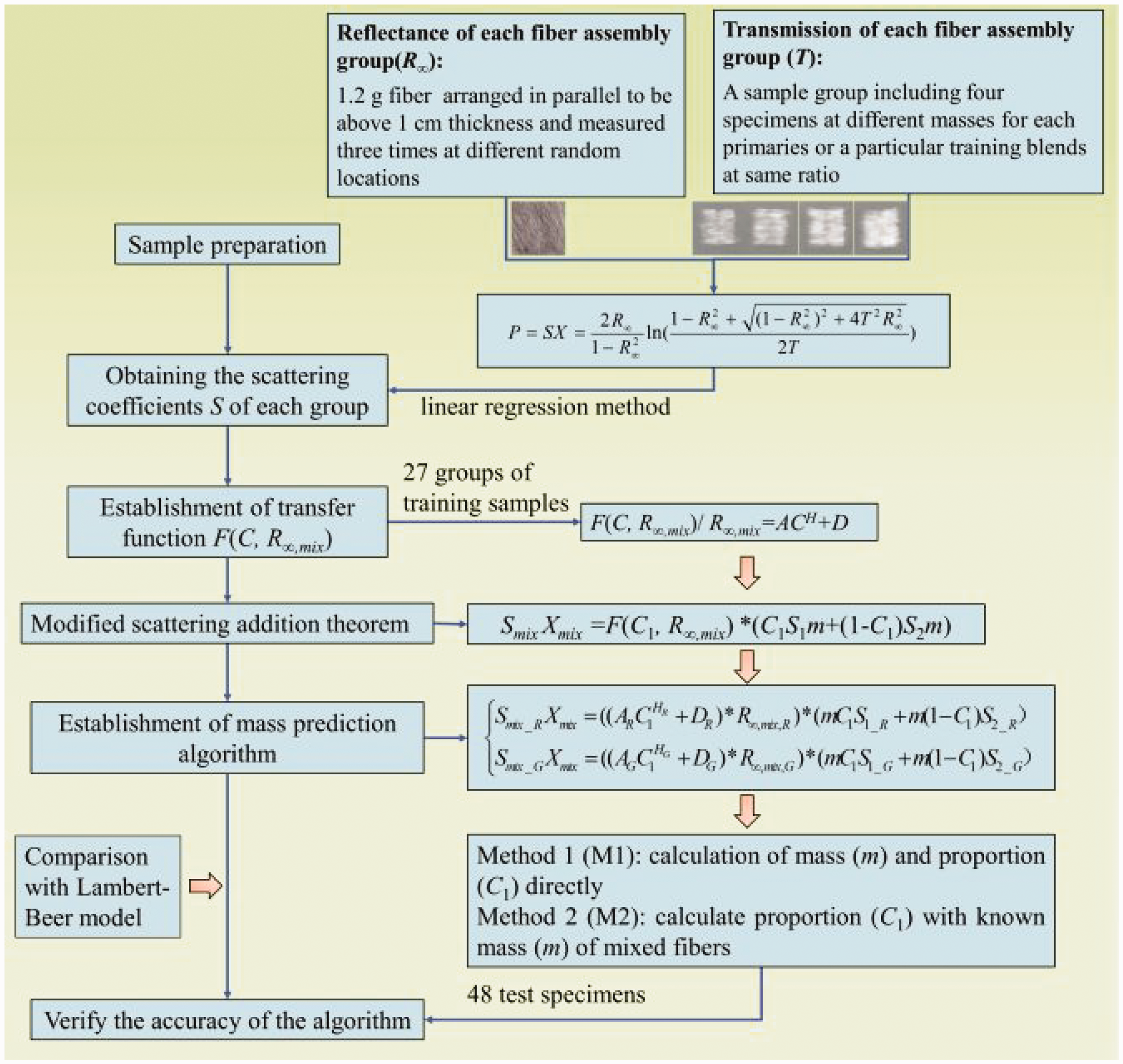
The flow chart to achieve the mass of each primary in the bicolor mixed fiber assembly.
Results and discussion
Scattering coefficients of primary fibers and mixed ones under monochromatic lights
The scattering coefficient is a vital optical parameter and plays a crucial role in new addition theorem construction and verification. Theoretically, the scattering coefficient can be solved on the linear regression method as long as scattering power (P = SX) varies linearly with masses (X) of samples. Hence, each group was prepared with four specimens of incremental masses for primary fibers and training blends. Subsequently, Figure 4 exhibits the scatterplot of calculated scattering power (P = SX) on equation (2) for groups of these samples, respectively. Obviously, linear relationships were observed between the scattering powers and masses for each group, and their scattering coefficients S were computed on the linear regression method. The results show that the linear goodness of fit values were all above 0.99, and these scattering coefficients could be adopted to explore the addition theorem in the following sections.
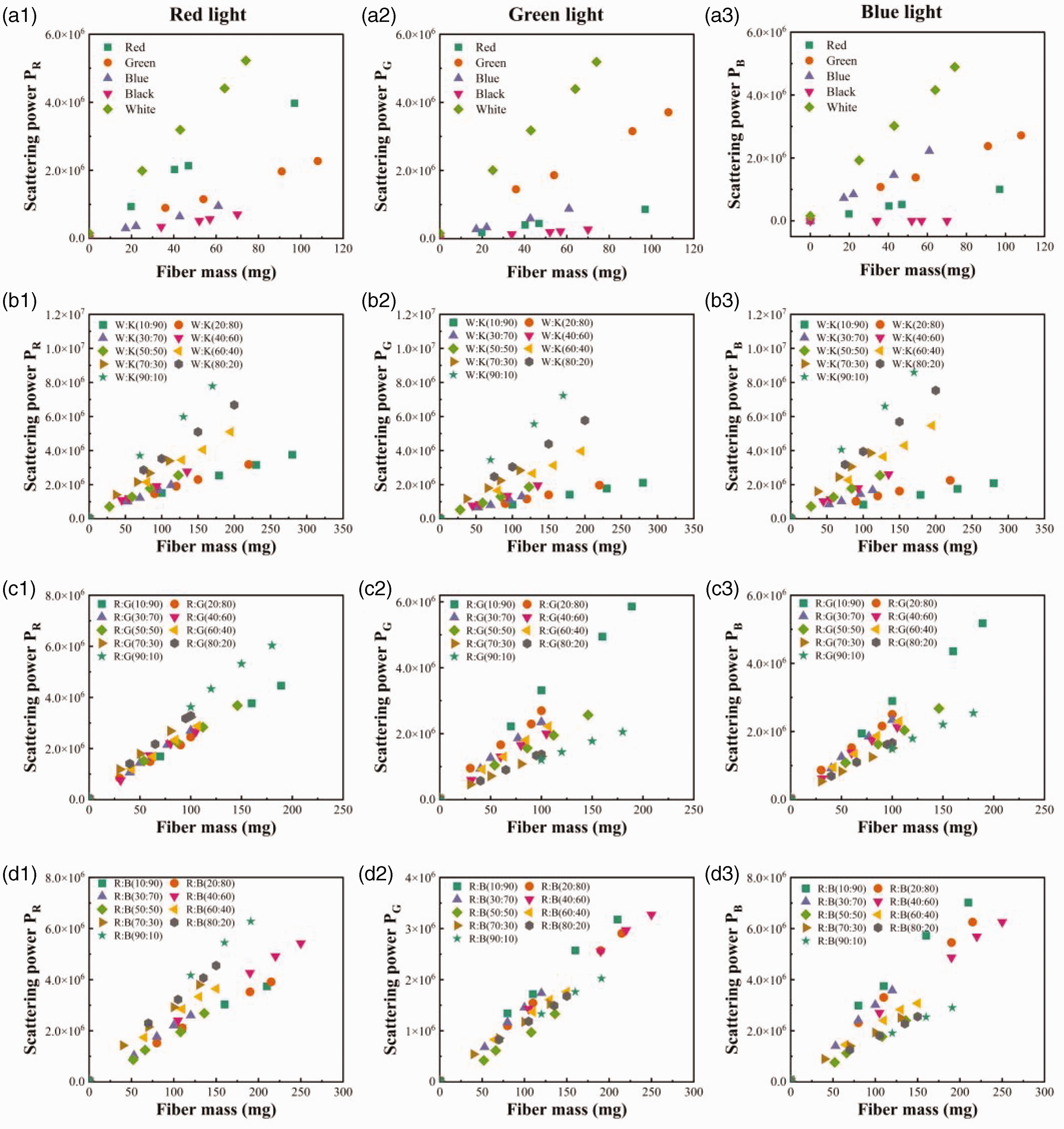
Scattering powers at different masses for five primary fibers ((a1)–(a3)), W:K bicolor mixed samples ((b1)–(b3)), R:G bicolor mixed samples ((c1)–(c3)), and R:B bicolor mixed samples ((d1)–(d3)) under red, green, and blue monochromatic lights.
Transfer function of addition theorem for predicting the mass of primary fibers in mixed fiber assemblies
It has been commonly accepted that the scattering coefficient of a mixed material can be treated as a simple linear superimposed of that of its constituents. Nevertheless, significant differences were observed between the measured scattering powers and computed ones on the common theorem as equation (3) and K-M transmission law as equation (2). That is to say, this theorem cannot be adopted to obtain the scattering coefficient of mixed specimens at different ratios, for example as detailed in Figure 1. Indeed, this turns to be effective evidence for the influence of the optical inner interaction of primary fibers and the exclusive surface reflectance of K-M law. Hence, a new theorem was explored.
The results of transfer function F (C1, R∞,mix) can be acquired on the scattering coefficient of training mixed fibers Smix and primary ones, S1 and S2, as denoted in equation (3). Interestingly, typical power function relations were found between the ratio of these obtained results to reflectance, 
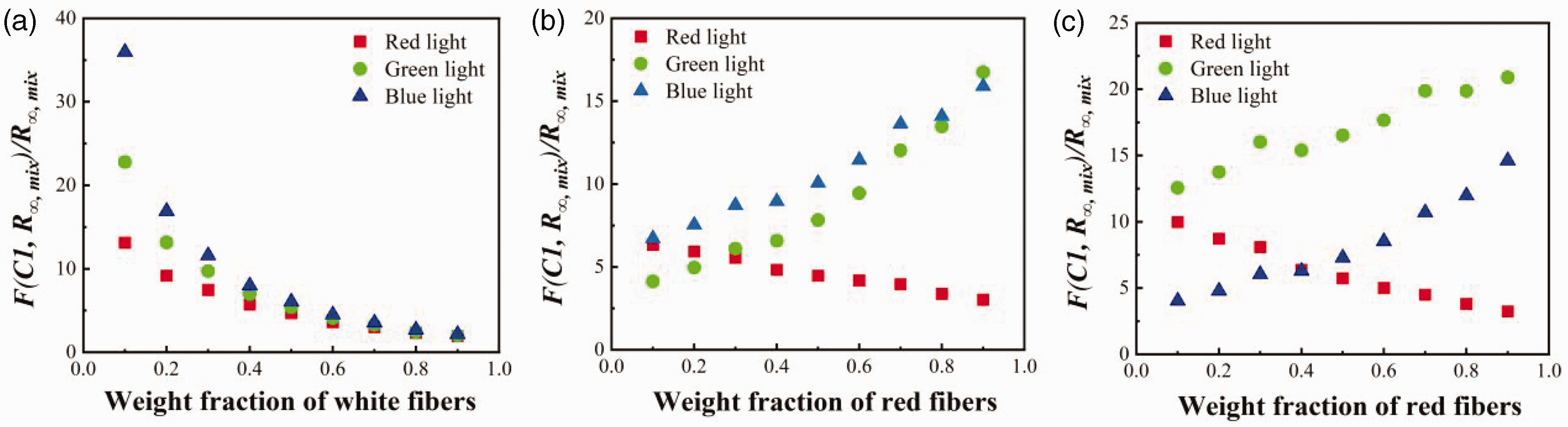
Scatter plot of the proportion of primary 1 in training fiber samples and F (C1, R∞, mix)/R∞,mix under the different wavelength of lights: (a) W:K. (b) R:G. (c) R:B.
Coefficients and goodness of fit of the transfer functions at each monochromatic light
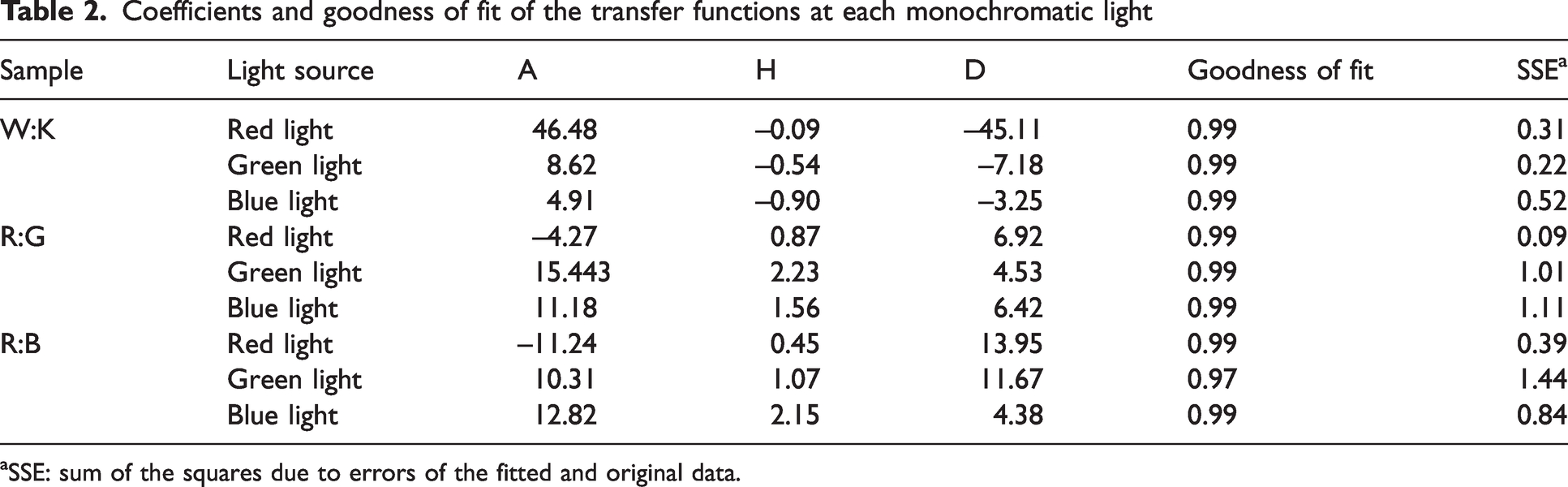
SSE: sum of the squares due to errors of the fitted and original data.
The fitting parameters A, H, and D are related to the reflectance of the bicolor mixed fiber and the proportion of primary fiber. The parameter H seems to be related to the trend of bicolor mixed fiber reflectance with increasing the proportion of primary fibers, while H<0 and decreasing, the data curve is steeper, such as in W:K fibers. Similarly, the data curve exhibits upward convexity in the R:G and R:B mixed fiber fitting parameter H (1>H>0) in the red channel. In other channels, the fitting parameter H (H>1) resulting in the data curve displays downward concavity. The fitting parameters A and D seem to correlate with the original material’s color properties, and affect the data curve change interval. The detailed relationship between these parameters and other physical ones needs further study.
In addition, the values of goodness of fit for these equations were examined and are exhibited in Table 2, as several outliers exist in Figure 5(b) and (c). Apparently, their results turn out to be good as no less than 0.97, and the mean, minimum, and maximum values of the sum of the squares due to errors of the fitted and original data (SSE) between the predicted results of 
Accordingly, the scattering powers of W/K training specimens were obtained by this method. These results are shown in Figure 6, delivering fairly good matches with the actual ones, and far superior to the original scattering addition theorem of K-M law on the transmission equation. This attempt was useful and has never been carried out before. To date, relevant research studies of the K-M model mainly focused on the usage of its reflectance equations, including the regressed functional relationship between optical thickness and mass of a particular composition of soil,24,45 color,19,20 and proportion prediction33,37 of blending fibers with infinite thickness or inks on papers. Among them, only the first case had the opportunity to be adopted for thin materials. However, the thickness of the material was declared to be as large as possible, because a thin measurement would introduce a large bias probably consisting of an additional parameter of reflectance of background Rg. 46 Hence, its transmission equation is more adaptable to thin fiber blends, and a new addition theorem on it has never been studied before. Above all, this equation (8) is appealing for use to obtain scattering coefficients and scattering power of blends at different proportions.
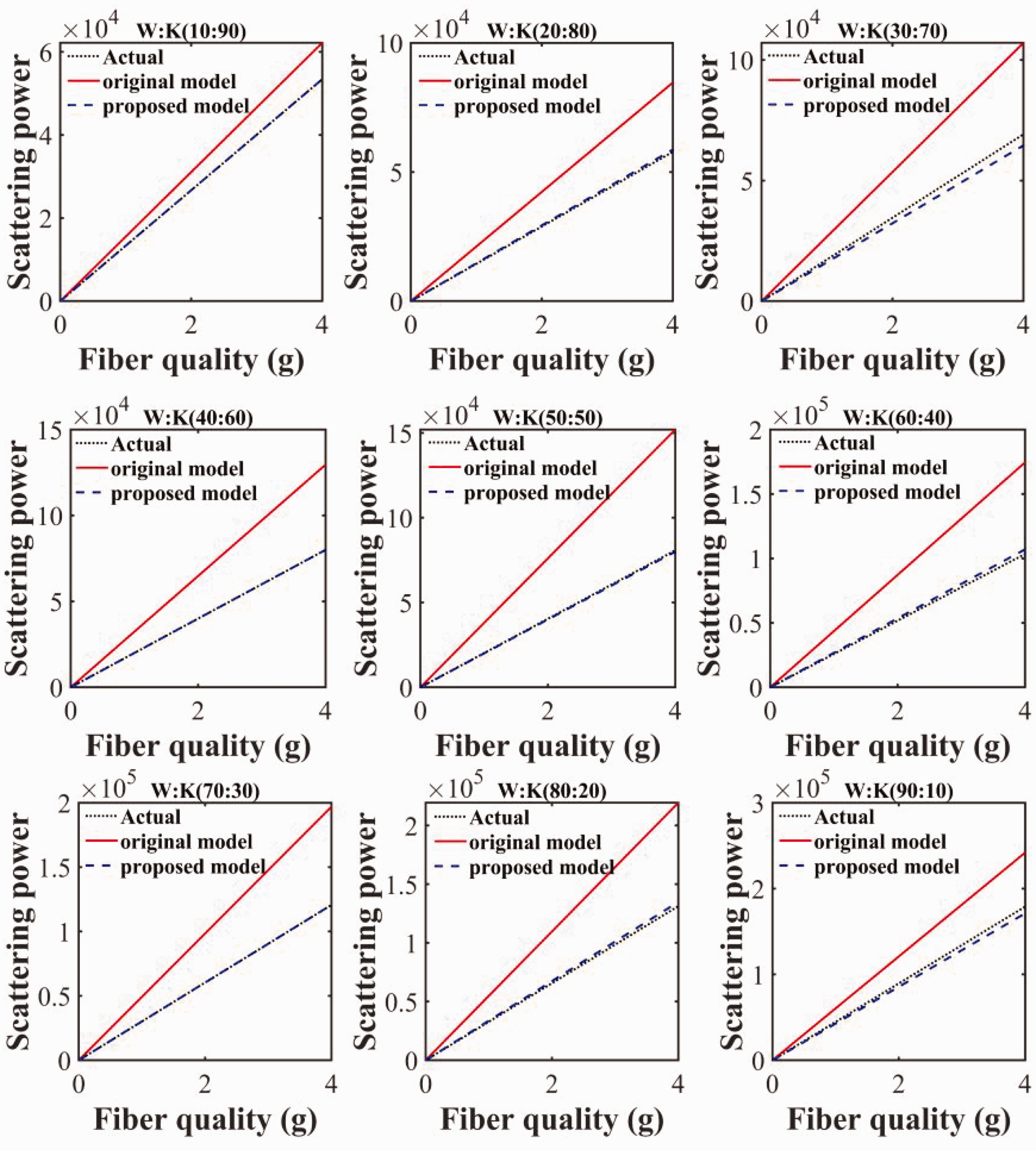
Comparison of the scattering power obtained by our proposed theorem and the original model.
Subsequently, a system of equations for two-mixed color fibers can be built on equation (8) under two monochromatic lights, as expressed in
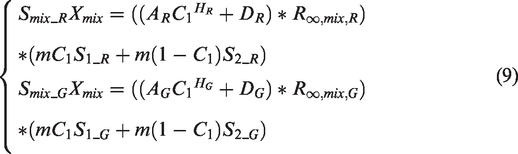
Here, two methods are adopted to predict the mass of primary fibers in the mixture when using equation (2) and equation (9). The first method (M1) calculates the mass (m) of mixed fibers and the proportion of primary 1 (C1) directly, while the second one (M2) obtains this proportion (C1) with a known mass (m). To evaluate both methods, we compared their mean absolute error (MAE) values of predicted masses of each primary for 27 groups of training samples with those of the L-B model, 16 as expressed in Figure 7 and Table 3. It is shown that the MAEs of both proposed methods are much lower than those of the L-B model, especially for W:K specimens at a low ratio of white fibers. Furthermore, the standard deviation and average values of MAEs on M2 are only 3.30 mg and 2.61 mg, while those of M1 and the L-B model are as large as 4.17 mg, 2.79 mg, and 16.46 mg, 8.66 mg, respectively. Hence, the M2 may be the optimal method to obtain the mass of primary in fiber blends in further test experiments.
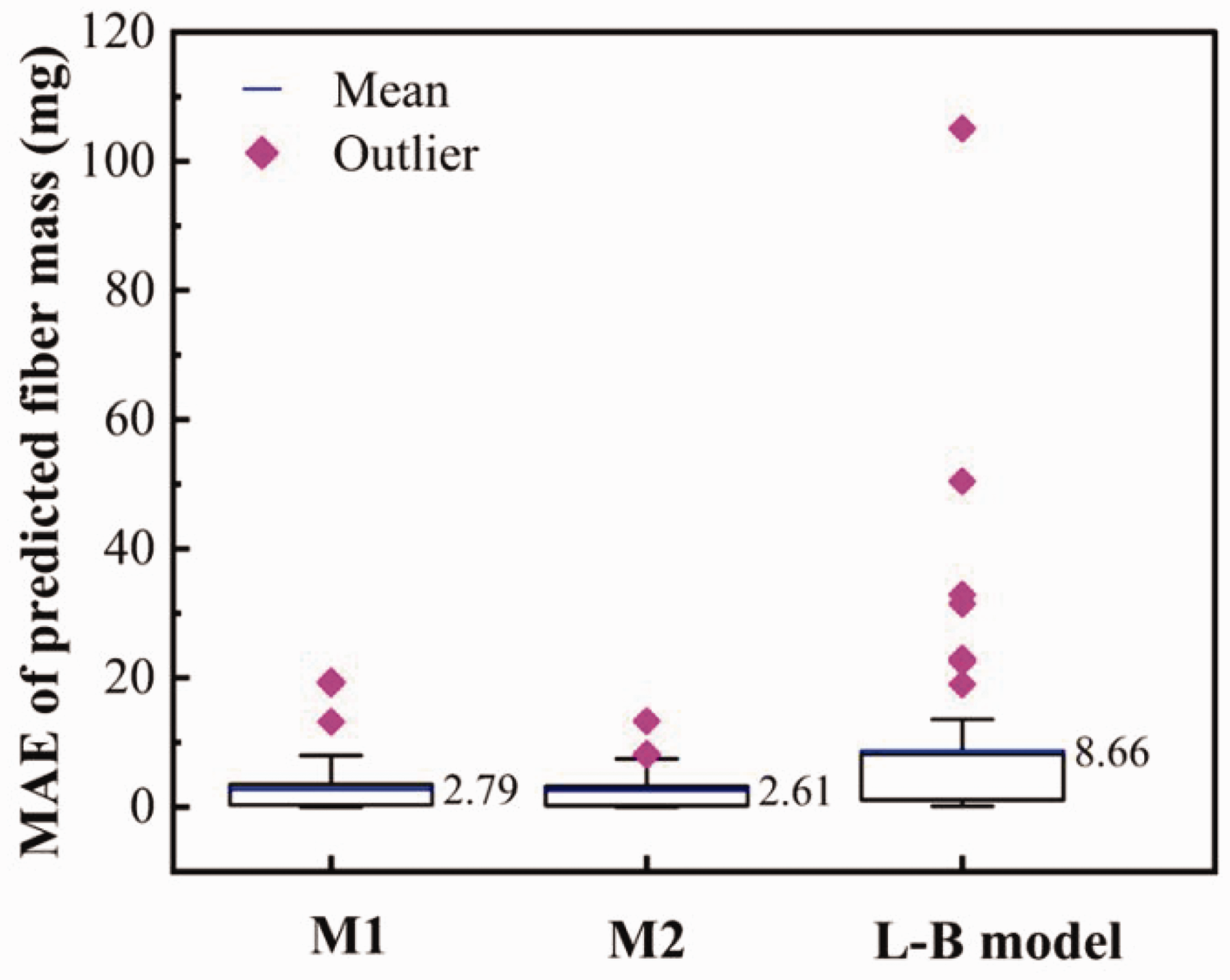
Distribution of the mean absolute error of predicted mass of the training samples on the proposed method and Lambert-Beer (L-B) model in a box plot.
Statistic and distribution of the mass prediction results in mean absolute error (MAE)
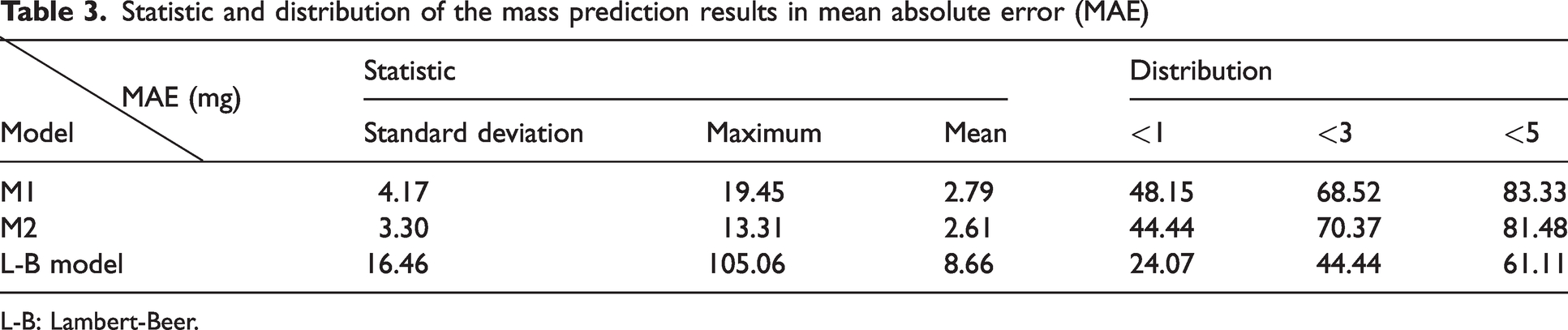
L-B: Lambert-Beer.
Validation test of the new theorem for predicting the mass of primary fibers in mixed fiber assemblies
In this experiment, test samples of up to 12 groups of 48 specimens were carried out to further validate this new theorem. The specific recipes of test sample groups are listed in Table 1. Then, significant consistencies between predicted masses on M2 and actual ones were confirmed in Figure 8, revealing correlations all above 0.99 and only several biases in samples of W:K (25:75) and R:G (25:75). Additionally, their MAEs were also compared with those of M1 and the common L-B model. 15 In Figure 9(a), our proposed method showed lower values compared to other methods, except for W:K (25:75) and R:G (25:75) specimens which had slightly larger values. The white fibers exhibited the most intense scattered and reflected light properties. The L-B model only considered light absorption, excluding reflected and scattered lights. Our proposed method showed a clear advantage, especially in the W:K fibers. The maximum MAE of our proposed model was only 10, compared to the L-B model’s high MAE of 40, demonstrating the effectiveness of our proposed method even with the lowest ratio of white fibers in W:K mixtures. Additionally, the average MAE of the M2 (2.17 mg) was significantly less than that of the L-B model (2.31 mg) in R:G and R:B bicolor mixed fibers. This provides evidence of the significant bias of the L-B law caused by ignoring reflected and scattered lights. Figure 9(b) and Table 4 indicate that M2 has the lowest mean MAE value of 2.33 mg compared with the M1 and L-B law, as large as 3.43 mg and 7.66 mg, respectively. More importantly, the dispersion of MAE results on M2 is also far more concentrated than that of others, revealing the highest sample number percentages of 83.33% and 75% for MAEs less than 5 mg and 3 mg, respectively. Therefore, it can be concluded that the new theorem M2 method is suitable and exhibits higher accuracy than the M1 and L-B law.
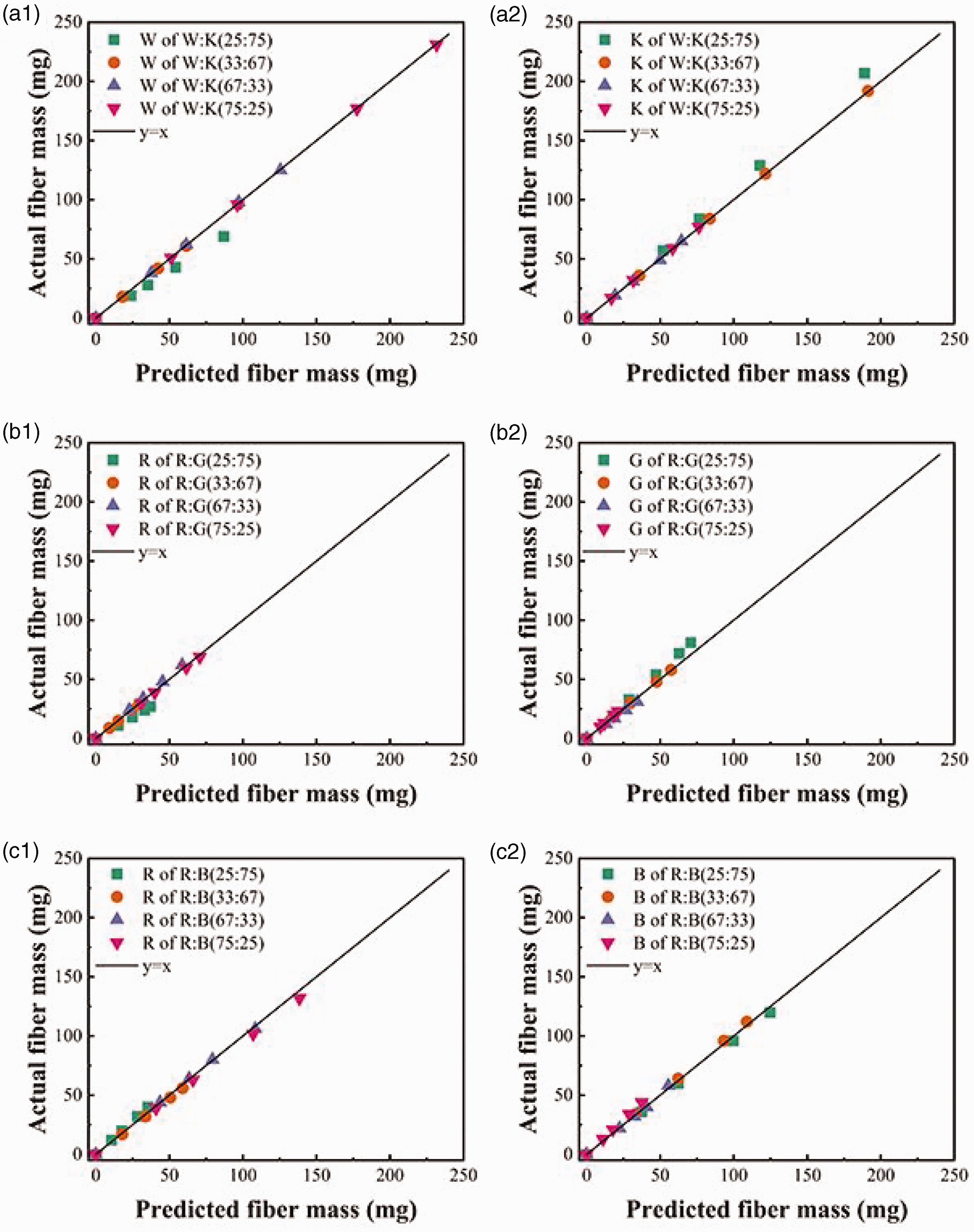
Comparison of the predicted fiber mass and the actual one of each primary in W:K bicolor mixed fibers ((a1) and (a2)), R:G bicolor mixed fibers ((b1) and (b2)), and R:B bicolor mixed fibers ((c1) and (c2)).
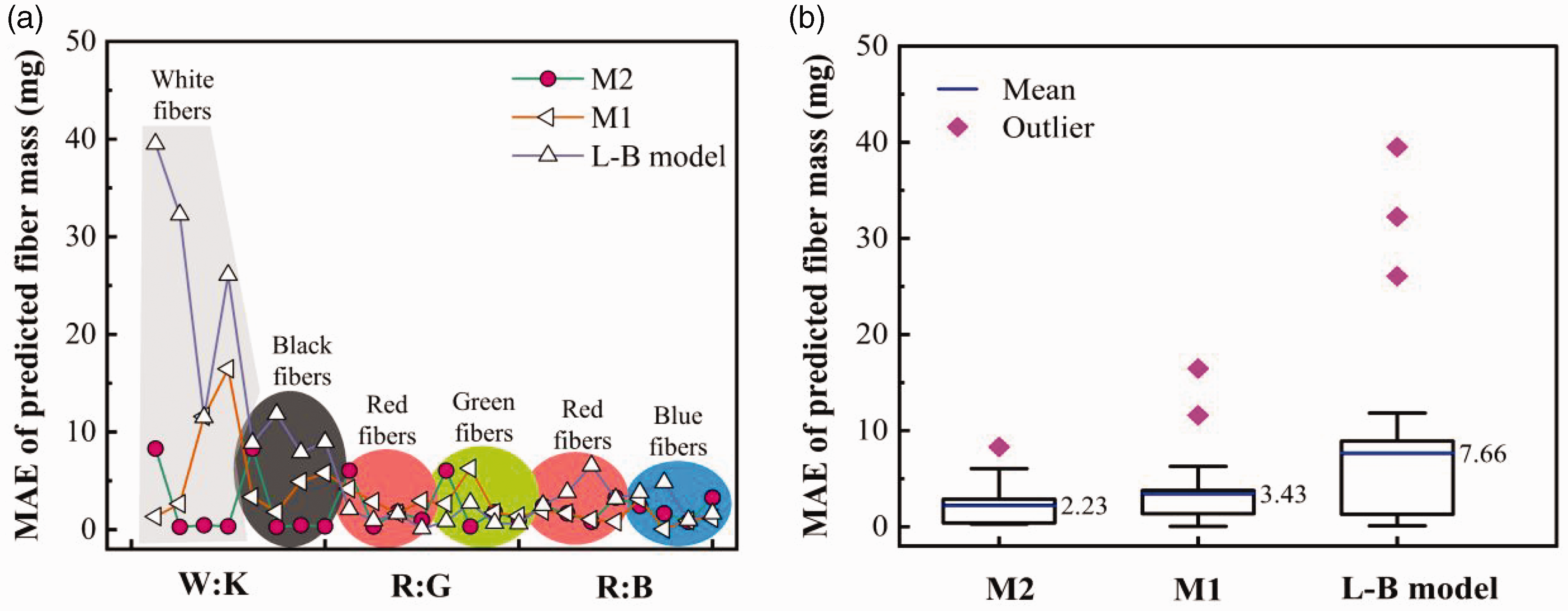
Mean absolute error (MAE) of predicted results of the testing samples: (a) results of three methods and (b) distribution of the results in a box-plot. L-B: Lambert-Beer.
Statistic and distribution of the mass prediction results in mean absolute error (MAE)
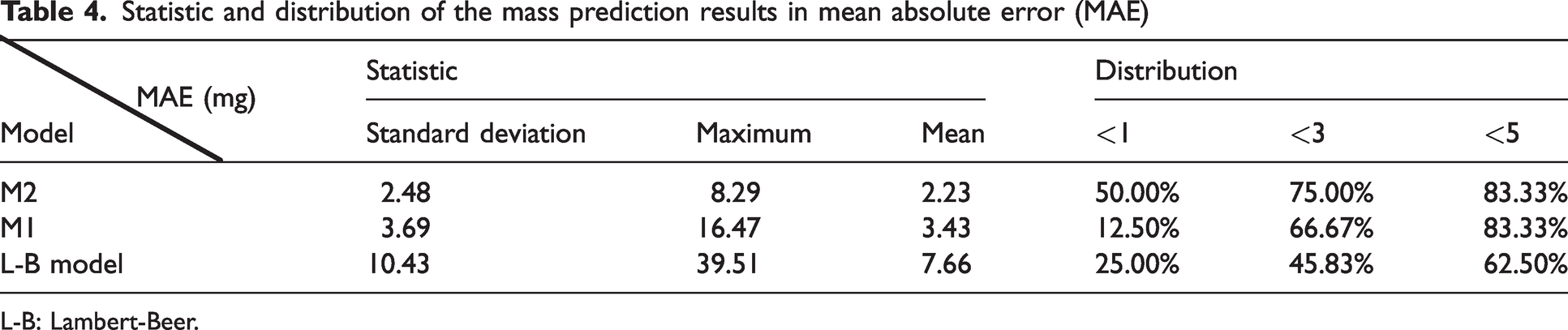
L-B: Lambert-Beer.
Conclusion
This article proposes a modified addition theorem on the scattering coefficient of the K-M transmission theory. It solves the unachievable problem in predicting the mass of each primary fiber at different ratios in a certain two-mixed fiber assemblies. In particular, a transfer function was introduced into the common theorem from this new one, and constructed on scattering coefficients of monochromatic fibers and training mixed ones, which takes both reflectivity and proportion into consideration. This is also of significant help in understanding the possible light mechanism of color-mixed fiber assemblies from a new standpoint. According to the new theorem model, two methods with unknown (M1) and known (M2) masses of mixed materials were declared to calculate the masses of primary fibers at different proportions, and compared with the L-B model. Finally, the superiority of the M2 method in accuracy was established on 12 test groups compromising 48 specimens with the lowest average and standard deviation values of MAE between predicted masses and actual ones. This advantage is especially undeniable in the black-and-white blends. Hence, this proposed new theorem is verified to be reasonable and can be applied to predict the mass distribution of the primary fibers in mixed fiber assemblies in further study and this will speed up the digitalization of textile products, intelligent testing, and production. The article reports a preliminary exploration of mass prediction of the color fiber mixed blends on the transmission laws of K-M theory on the new theorem. We will focus on detecting the uniform law of fiber blends and application in multi-color mixed fiber assemblies in further work.
Footnotes
Declaration of conflicting interests
The author(s) declared no potential conflicts of interest with respect to the research, authorship, and/or publication of this article.
Funding
The author(s) disclosed receipt of the following financial support for the research, authorship, and/or publication of this article: This work was supported by the National Natural Science Foundation of China (52003244), Science Foundation of Zhejiang Sci-Tech University (20202092-Y), and Outstanding Doctors Foundation of Zhejiang Sci-Tech University (2020YBZX15).
