



Abstract
The increasing demand for advanced personal protection systems has motivated a considerable interest in hybrid woven fabrics and textile composites. However, the effectiveness of the combination method of fibers on ballistic performance remains uncertain, leaving the selection of an appropriate hybridization strategy unresolved. This study conducted a thorough comparison of the ballistic responses of hybrid aramid/ultra-high molecular weight polyethylene (UHMWPE) woven fabrics, aiming to provide a comprehensive understanding of the hybridization effects. Specimens with inter-layer, intra-layer, and intra-yarn hybrid configurations were manufactured, and ballistic impact tests were performed via a light-gas gun. The residual velocity, energy absorption, dynamic penetration process, and perforation modes of the hybrid specimens were recorded at two selected impact velocities and then compared with those of non-hybrid specimens. The results demonstrated that the enhancement effect of hybridization varied with hybrid configuration and impact velocity. The interlacing of aramid yarns and UHMWPE yarns in intra-layer hybrid specimens did not promote the breakage of UHMWPE fibers, which was responsible for the inferior ballistic performance. In contrast, inter-layer hybridization and intra-yarn hybridization could overcome the insufficient friction of UHMWPE and the low mechanical properties of aramid, resulting in superior ballistic performance.
Woven fabrics and textile composites have been increasingly incorporated into lightweight body armor. The commonly used fabrics for ballistic protection are woven from high-performance fibers such as aramid fibers and ultra-high molecular weight polyethylene (UHMWPE) fibers.1,2 Attributed to their low density, high failure strength, and high failure strain, aramid fabrics and UHMWPE fabrics have shown superior energy absorption capability under ballistic impact.3,4 Furthermore, the ever-increasing demand for advanced personal protection systems has motivated a considerable interest in the ballistic performance of woven fabrics.
The ballistic impact responses of woven fabrics and the underlying mechanisms have been well elucidated. 5 Upon impact, the yarn in direct contact with the projectile (known as the primary yarn) is stretched and deflected, while the secondary yarn is also forced to move due to the inter-yarn interactions at the interlacement. 6 As a result, the projectile kinetic energy is mainly transformed into the kinetic energy and strain energy of fabrics. When there is insufficient friction between the yarns, yarn slippage occurs, and the primary yarn may be pulled out by the projectile rather than broken, leading to less efficient energy absorption. 7 Based on a thorough understanding of protection mechanisms, efforts have been made to enhance the ballistic resistance of woven fabrics. For instance, the effect of fabric construction on energy absorption efficiency has been investigated,8,9 and the impregnation of shear-thickening fluid (STF) has been used to increase the friction between yarns.10,11
Among various approaches, hybridization has become a fascinating option to elevate ballistic resistance. 12 A combined experimental and numerical approach was employed by Martínez-Hergueta et al. 13 to study the impact response of hybrid nonwoven/woven fabric, and they found that the hybrid fabric outperformed its woven and nonwoven counterparts in terms of the ballistic limit and the energy absorption capacity. Pandya et al. 14 investigated the impact behavior of hybrid composites made of E-glass fabric and carbon fabric and revealed that the ballistic limit was increased by placing E-glass fabric in front of carbon fabric. The concept of hybridization has also been used to make structural lightweight armor. 15 Zulkifli et al. 16 have shown that the significant reduction in back-face signature, as well as the dramatic improvement in flexural strength, could be achieved by combining UHMWPE composites with carbon woven fabric composites. Bao et al. 17 investigated the hybrid effects of carbon/aramid woven fabric composites and found that both flexural properties and ballistic performance were improved. In addition, from an industrial perspective, the hybrid configuration could provide considerable cost reduction while maintaining the ballistic performance.18,19
As shown in Figure 1, hybrid strategies can be classified according to the combination method of fibers. 20 The inter-layer hybrid configuration consists of different fabric layers, while the intra-layer hybrid fabric is woven by different yarns. For the intra-yarn hybrid, two kinds of fibers can be mixed or comingled in the yarn. The effect of the inter-layer hybrid has been extensively studied because of its low cost and simple preparation.21–23 Xiang et al. 24 constructed hybrid woven composites with carbon fabric layers and UHMWPE fabric layers, and examined the delamination damage after high-velocity impact experiments via computed tomography. The ballistic impact experiments of Kędzierski et al. 25 demonstrated that the inter-layer hybrid could reduce backface signature (BFS) by about 10%. Numerical simulations have also been adopted by Vescovini et al. 26 to investigate the inter-layer hybridization effect of S2-glass/aramid woven composites. Chen et al. 27 and Yang and Chen 28 observed that thermal damage and shear failure of the front UHMWPE unidirectional layers occurred. Thus, hybrid configurations with woven fabric layers or nonwoven felt layers on the striking face would exhibit higher energy absorption. 29

Schematic illustration of the three main hybrid configurations.
To the best knowledge of the authors, few published studies have focused on the effect of intra-layer and intra-yarn hybridization on the ballistic performance of woven fabrics, and the differences between hybrid strategies remained unclear. Motivated by the above literature review, the present study aimed to systematically compare the ballistic responses of hybrid aramid/UHMWPE woven fabrics and provide a comprehensive understanding of the hybridization effects. The paper is organized as follows. The second section is devoted to introducing the hybrid fabrics, as well as the methods employed for the tensile test and ballistic test. In the third section, the corresponding mechanical properties are first described. Subsequently, the experimental results of residual velocity and energy absorption are reported, with the dynamic deformation and perforation modes presented. Furthermore, the physical mechanisms underlying the diverse ballistic performance of hybrid specimens are interrogated. The study is expected to provide a new perspective to enhance the ballistic resistance of woven fabrics and textile composites.
Materials and methods
Yarns and fabrics
The plain fabrics used to investigate the hybrid effect were woven with aramid yarn (Kevlar® 29) and UHMWPE yarn (Tekmilon® I). Before the weaving process, the multi-filament yarns were tightly wound onto the double-flanged beam of the warping machine. Then, the resultant beam was mounted on the backside of a retrofitted rapier loom, and the plain fabric was manufactured by interlacing the warp and weft yarns. As shown in Figure 2 and Table 1, two kinds of neat fabrics and six kinds of hybrid fabrics were prepared. All fabrics had a thread density of 7 threads/cm. For the intra-layer hybrid fabrics shown in Figure 2(d), two different materials were selected for the warp and weft yarns, respectively. By alternating UHMWPE and aramid as the weft yarns, the mass ratio of different fibers could be controlled (Figures 2(c) and (e)). In terms of the intra-yarn hybrid fabrics shown in Figures 2(f)–(h), the UHMWPE and aramid fibers were mixed on a twisting frame prior to the weaving process.
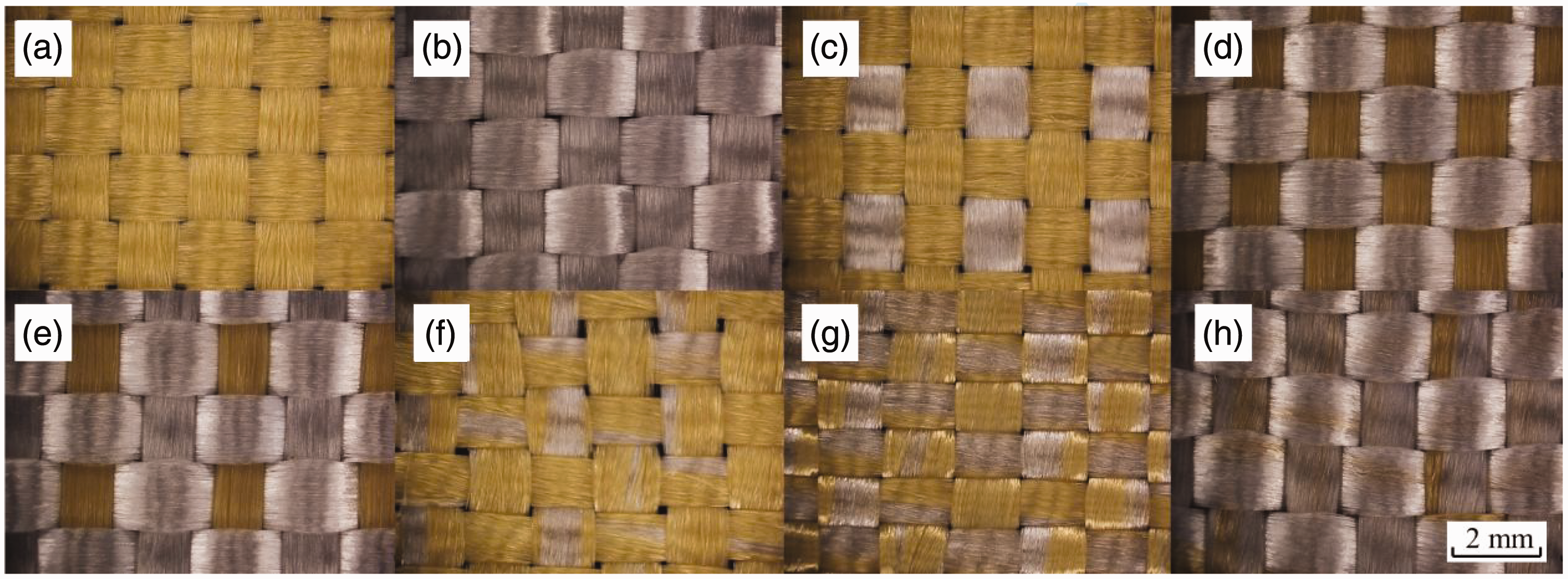
Optical microscopy images showing the fabric structure. (a) neat aramid fabric; (b) neat ultra-high molecular weight polyethylene fabric; (c)–(e) intra-layer hybrid fabrics and (f)–(h) intra-yarn hybrid fabrics.
Specifications of the single-layer plain fabrics

UHMWPE: ultra-high molecular weight polyethylene.
Tensile test
Quasi-static tensile tests of the aramid and UHMWPE yarns were carried out. Both yarns had a linear density of 167 tex and no twist. The tensile tests were performed using a universal testing machine (Instron 68TM-10, Illinois Tool Works Inc., USA) at a fixed displacement rate of 10 mm/min, and the tensile force was measured directly with the load cell of the test machine. To avoid slippage and damage in the clamps, both ends of each yarn were coated with aluminum sheets with dimensions of 25 mm ×25 mm × 1 mm, leaving a gauge length of 100 mm. Further, quasi-static tensile tests were conducted on the eight kinds of fabrics shown in Figure 2 and Table 1. With reference to ASTM D5035, the specimens were prepared from both warp and weft directions by the raveled strip procedure. The strip specimens had a width of 25 mm and a gauge length of 100 mm. The aluminum sheets with dimensions of 50 mm × 50 mm × 1 mm were used to prevent high-strength fibers from slipping in the clamps or being damaged. The geometry of the yarn specimens and fabric specimens for tensile tests is shown in Figure 3.
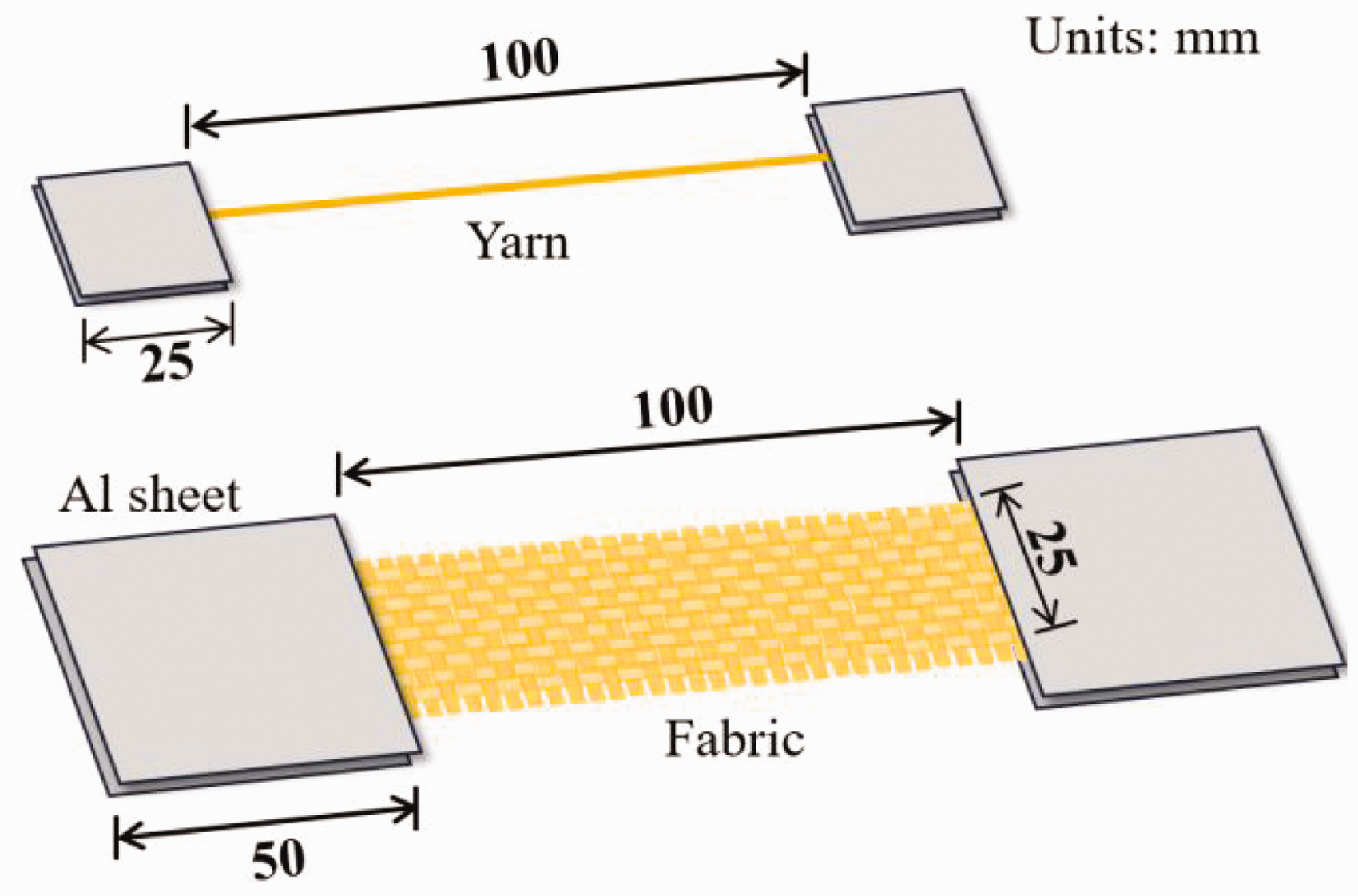
Geometry of the yarn specimen and fabric specimen for tensile tests.
Ballistic impact test protocol
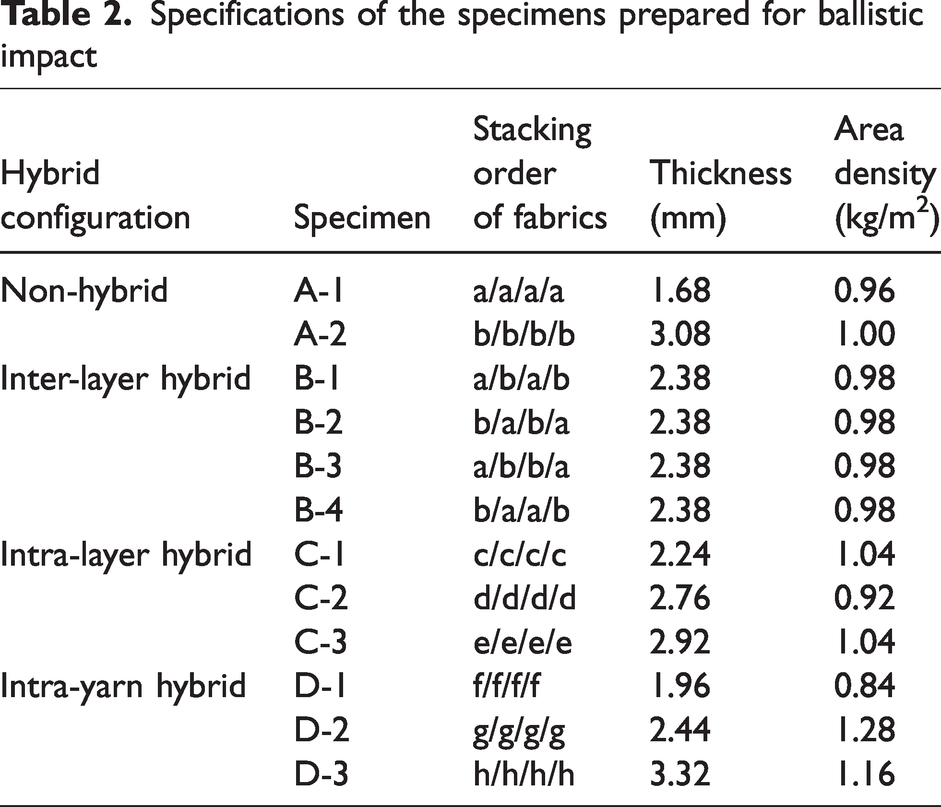
In the current study, the specimen prepared for ballistic impact tests consisted of four layers of fabric, as shown in Table 2. The inter-layer hybrid specimen had two layers of aramid and two layers of UHMWPE, and four types of inter-layer hybrid specimens were obtained by changing the stacking sequence. As shown in Figure 4, the ballistic test was performed using a light-gas gun, which included a gas chamber and barrel. A spherical steel projectile with a diameter of 8 mm and a mass of 2.1 g was selected to impact the specimen. For each test, the projectile was fixed in a sabot made of polycarbonate and accelerated by compressed helium. Two sets of laser gate systems were used to measure the impact and residual velocity of the projectile. The dynamic deformation and perforation process was recorded by a high-speed camera (I-SPEED 513, IX). The high-speed camera was positioned and secured in a suitable location to capture the back view of the specimen. Additional lighting sources were used to illuminate the impact area. A frame rate of 100,000 fps (i.e., 100,000 frames per second), exposure time of 2 µs, and image resolution of 408 × 228 pixels was adopted. To fasten the clamping boundary, an edge-clamped fixture was designed. Each specimen was gripped at the edges, and the effective area exposed to impact was 120 mm × 120 mm.
Specifications of the specimens prepared for ballistic impact
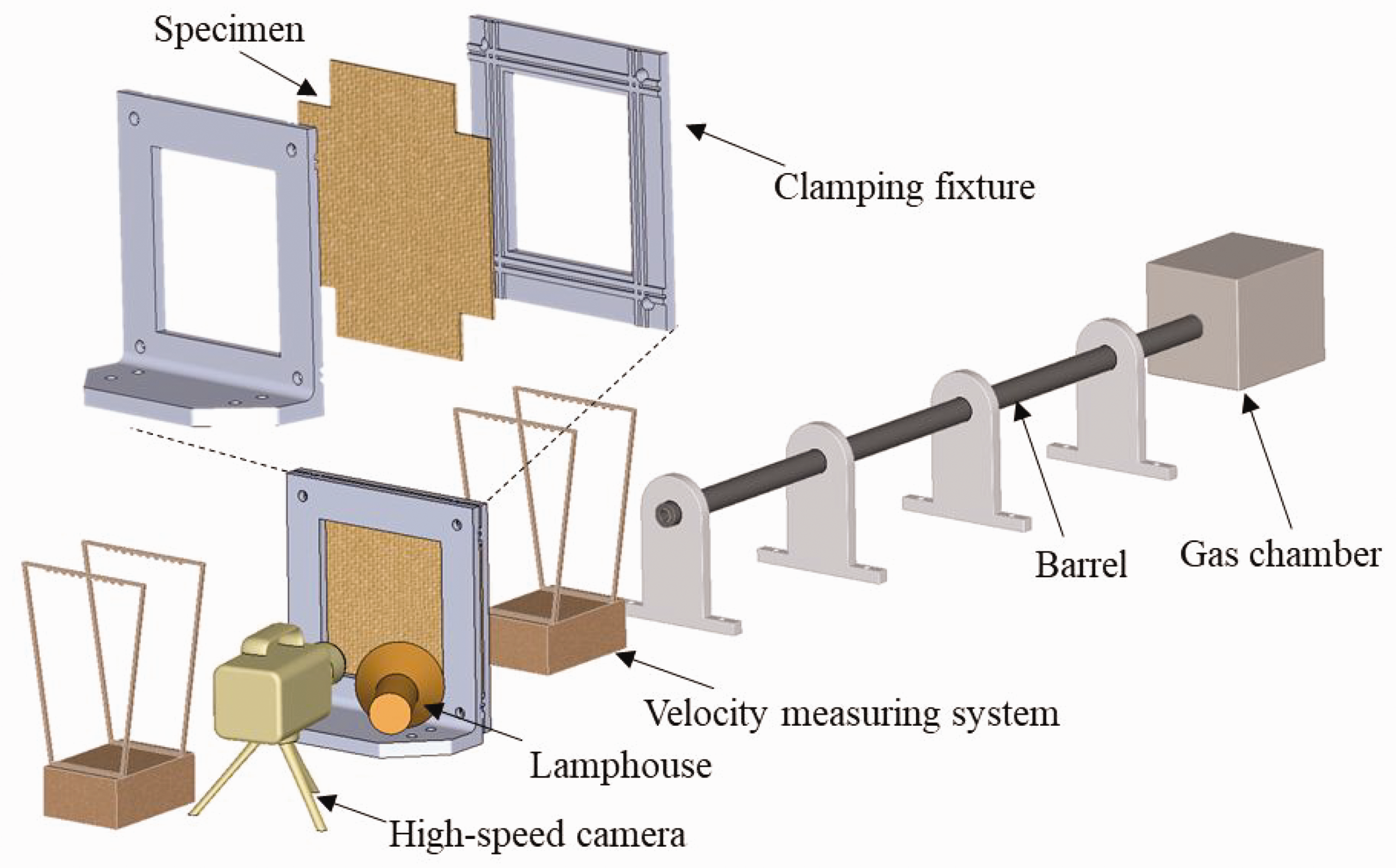
Schematic diagram of the ballistic testing setup and the clamp condition.
Results and discussion
Mechanical properties
The measured tensile responses of the yarns and fabrics are plotted in Figure 5. As shown in Figure 5(a), both yarns appeared to have linear elasticity. The Young’s modulus of the aramid yarn was higher than that of the UHMWPE yarn, but the failure strain and failure strength of the aramid yarn were lower. As a result, the peak force of neat aramid fabric was lower than that of neat UHMWPE fabric (Figure 5(b)). For the woven fabrics, the yarns were crimped during the weaving process and would undergo de-crimping when subjected to tensile load, resulting in a nonlinear mechanical response. As the degree of crimp was different, the tensile curve in the warp direction was different from that in the weft direction. Figures 5(c) and (d) compared the force–displacement curves of intra-layer hybrid and intra-yarn hybrid fabrics. Compared with the neat aramid fabric, the hybrid fabrics showed no increase in peak force when the aramid content was high (i.e., the fabrics ‘c’ and ‘f’). When the aramid content was reduced to 50%, the peak force of the hybrid fabrics was comparable to that of the neat UHMWPE fabric. Further reduction of the aramid content had no significant effect on the peak force. In addition, due to the alternating fracture of aramid and UHMWPE fibers, some specimens still retained large residual strength after reaching the peak force.
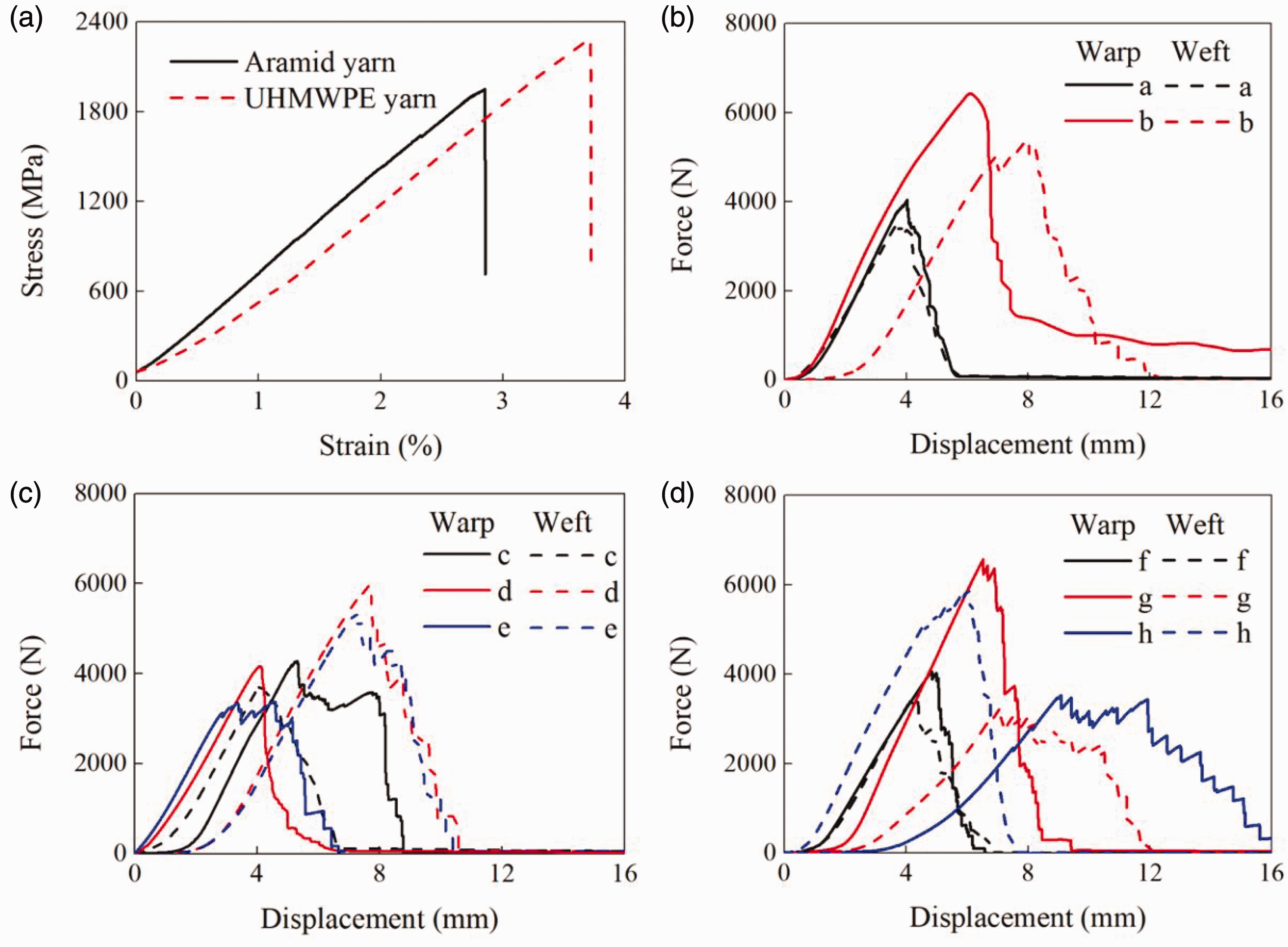
(a) Tensile stress-strain curves of aramid and ultra-high molecular weight polyethylene (UHMWPE) yarns. Force–displacement curves of (b) non-hybrid fabrics, (c) intra-layer hybrid fabrics, and (d) intra-yarn hybrid fabrics.
Ballistic performance
The ballistic performance of the specimens was assessed at the impact velocities of 300 and 400 m/s, respectively. Two key parameters were used to quantify the performance: residual velocity and specific energy absorption (SEA), as depicted in Figure 6. The SEA served as a measure of the energy absorption capacity per unit of areal density. Since the spherical projectile underwent no plastic deformation and its mass m remained constant after impact, the SEA could be calculated as follows:

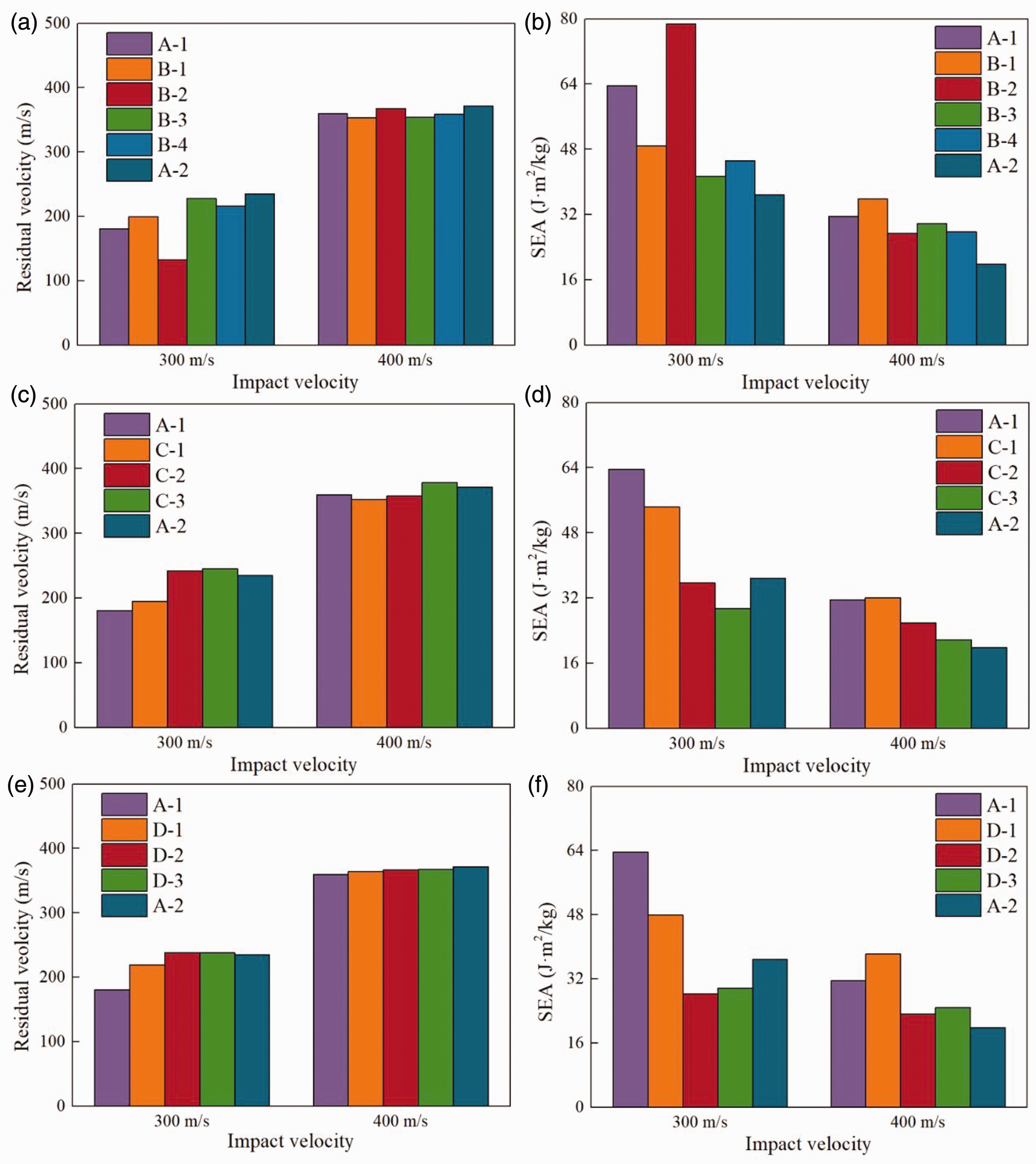
Experimentally measured (a) residual velocity and (b) specific energy absorption (SEA) of non-hybrid and inter-layer hybrid specimens. For intra-layer hybrid specimens, comparisons of residual velocity and SEA are presented in (c) and (d), respectively. For intra-yarn hybrid specimens, comparisons of residual velocity and SEA are presented in (e) and (f), respectively.
In Figures 6(a) and (b), the ballistic performance of non-hybrid and inter-layer hybrid specimens is compared. It was observed that the neat aramid specimen exhibited superior ballistic performance compared to the neat UHMWPE specimen. At the impact velocity of 300 m/s, the ‘B-2’ specimen showed the lowest residual velocity and the highest SEA. However, this superiority was not maintained when the impact velocity increased to 400 m/s. Moreover, the SEA at the impact velocity of 400 m/s was found to be lower than that at 300 m/s, indicating a decrease in the capacity of energy absorption with the increase in impact velocity.
As shown in Figures 6(c) and (d), when impacted at 300 m/s, the ballistic performance of all intra-layer hybrid specimens was inferior to that of the neat aramid specimen. In addition, an increase in the UHWMPE content resulted in a gradual decrease in the SEA of hybrid specimens. In the case of intra-yarn hybrid specimens, as shown in Figure 6(e) and (f), the ‘D-1’ specimen with a lower UHMWPE content initially demonstrated inferior ballistic performance compared to the neat aramid specimen. However, as the impact velocity increased, the same ‘D-1’ specimen exhibited the highest SEA among all specimens. It is worth noting that the SEA of inter-layer hybrid specimens consistently remained higher than that of the neat UHMWPE specimen throughout the tested range. In contrast, the SEA of the ‘C-3’, ‘D-2,’ and ‘D-3’ specimens could be even lower than that of the neat UHMWPE specimen. This observation implied that both intra-layer hybridization and intra-yarn hybridization might have adverse effects.
Dynamic deformation and perforation modes
The dynamic deformation process of non-hybrid and hybrid specimens impacted by projectile at the velocity of 300 m/s was manifested via a sequence of high-speed images, as displayed in Figure 7. Due to the interaction between the projectile and the yarns within the impact area, a pyramid-shaped out-of-plane deflection was observed on the rear surfaces of all specimens. This deflection continued to propagate outward from the center of impact, with the ridges aligning with the orientations of the weft and warp yarns. For the ‘A-1’ (neat aramid) specimen, the deflection continued to increase until 100 µs. Simultaneously, a hemispherical protrusion was observed at the impact center, suggesting the presence of a projectile coated with fibers. Subsequently, the fibers on the surface of the projectile fractured, ultimately causing the projectile to exit from the specimen. Unlike the ‘A-1’ specimen, the ‘B-2’ specimen exhibited fractured fibers and yarns being pulled out by the projectile at 150 µs. The occurrence of yarn being pulled out could also be observed in the ‘C-2’ and ‘A-2’ specimens. It could be seen from the high-speed images of the ‘D-2’ specimen that the yarn below the projectile did not fracture or pull out. Instead, it was pushed away by the projectile and slipped down. Furthermore, among all specimens, the ‘A-2’ specimen exhibited the smallest deflection area at 50 µs.
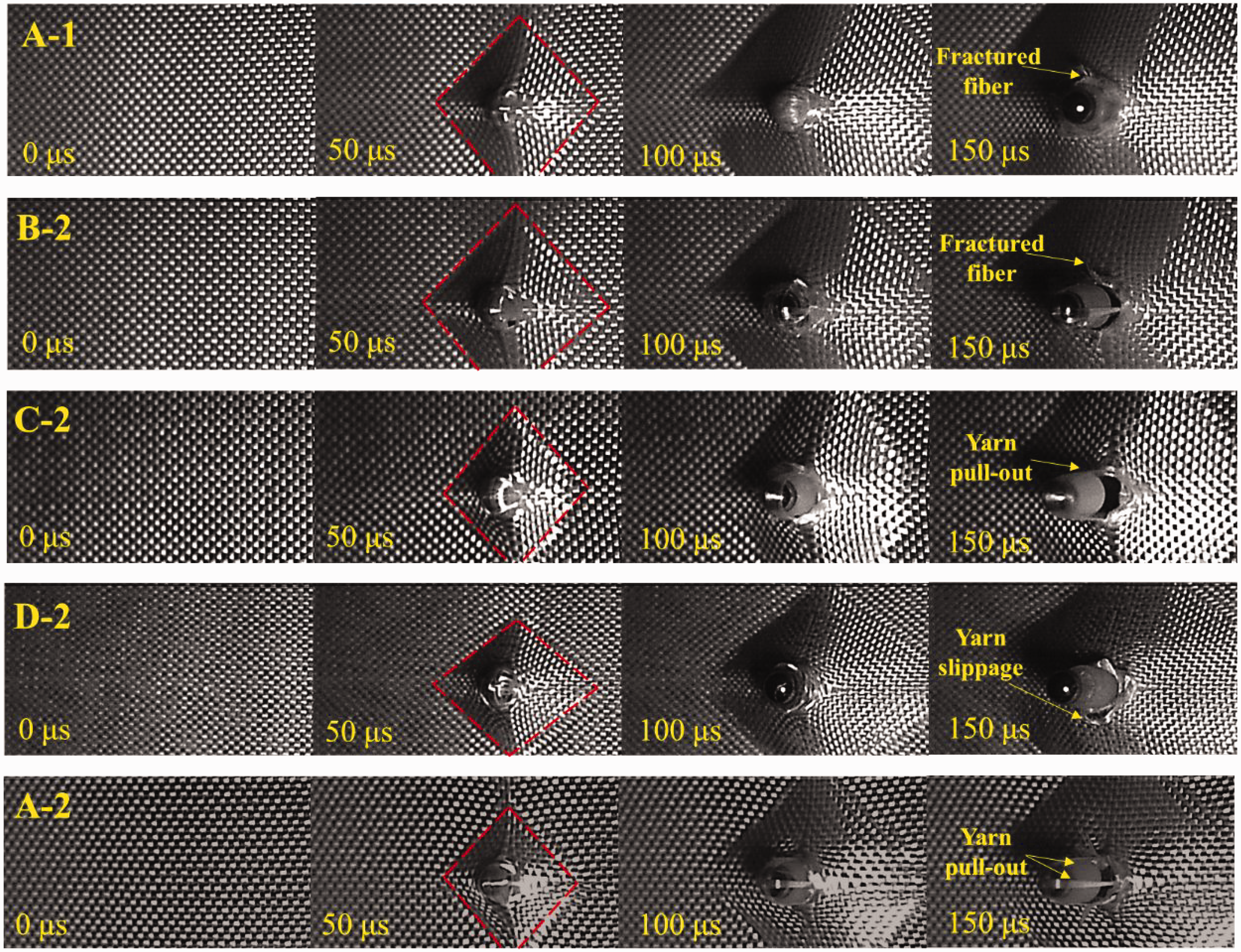
High-speed images at the impact velocity of approximately 300 m/s.
The high-speed images at the impact velocity of approximately 400 m/s are presented in Figure 8. With an increase in impact velocity, the specimens were perforated prior to 60 µs, displaying a relatively small deflection. After perforation, the ridges of deflection disappeared, and the expansion of the deformation area slowed down. Consistent with the low-velocity cases, fractured fibers were evident in the ‘A-1’ and ‘B-2’ specimens. For the ‘C-2’ and ‘A-2’ specimens, yarn pull-out no longer occurred, and the projectile escaped by slipping out of the yarn.
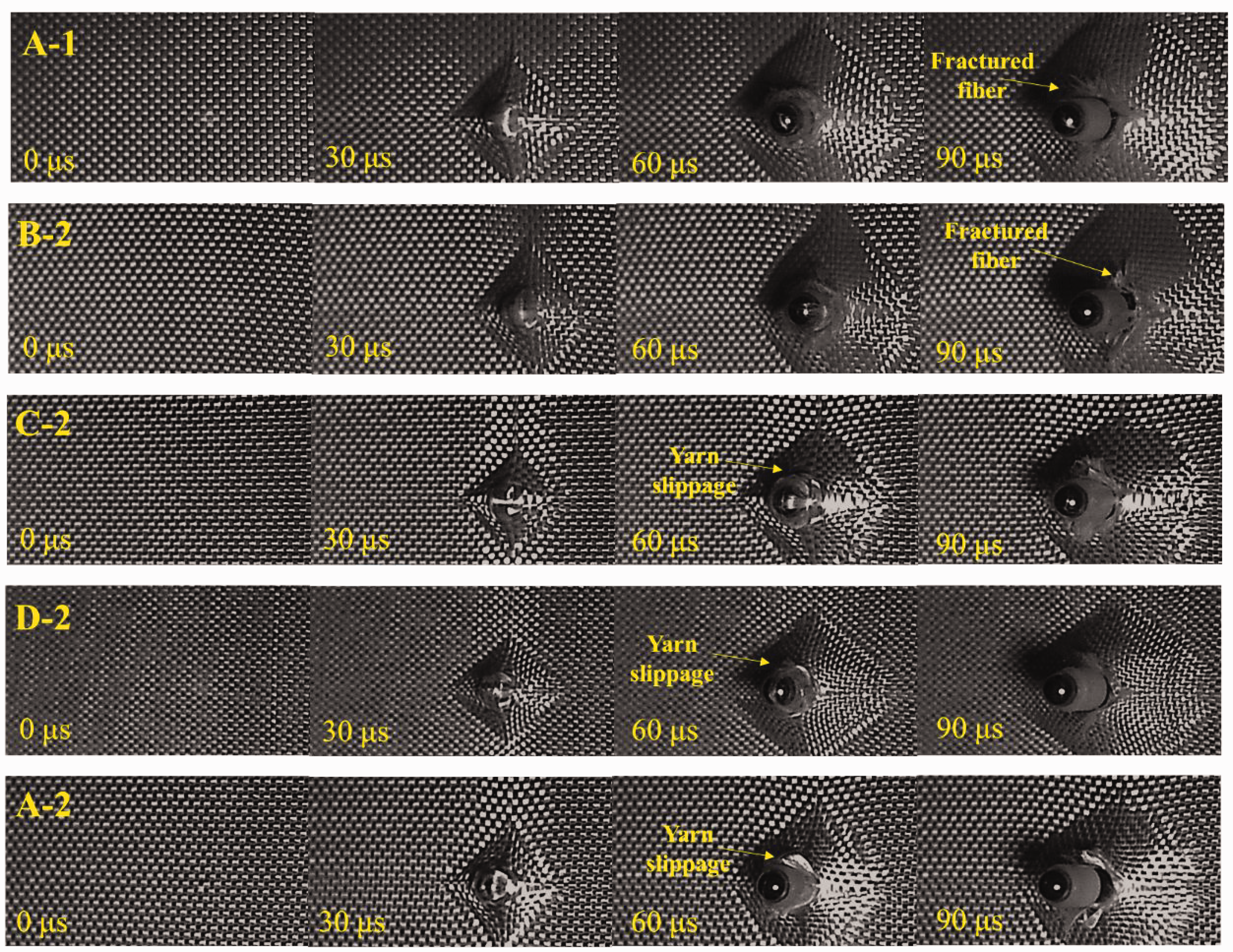
High-speed images at the impact velocity of approximately 400 m/s.
After impact, the typical failure modes of specimens were examined, as depicted in Figure 9(a). In this study, the complete fracture of all fibers within the yarn was defined as ‘yarn fracture,’ while the ‘yarn pull out’ referred to a portion or the entire length of the yarn extracted. For ‘yarn slippage,’ the yarns were pushed aside and the fibers underwent significant lateral displacement. In addition, the partial fracture of fibers within the yarn was defined as ‘yarn damage.’ The failure modes in each layer of the ‘C-2’ specimen at the impact velocities of 300 and 400 m/s are shown in Figures 9(b) and (c), respectively. At 300 m/s, the yarn pull out was found to originate from the first layer, with yarn damage occurring in the second and third layers and yarn slippage in the last layer. When the impact velocity increased to 400 m/s, yarn fracture was observed in the first and second layer fabrics, while yarn slippage occurred in the third and last layers. The above results suggested that the failure modes may vary with the position within the specimen and the impact velocity.
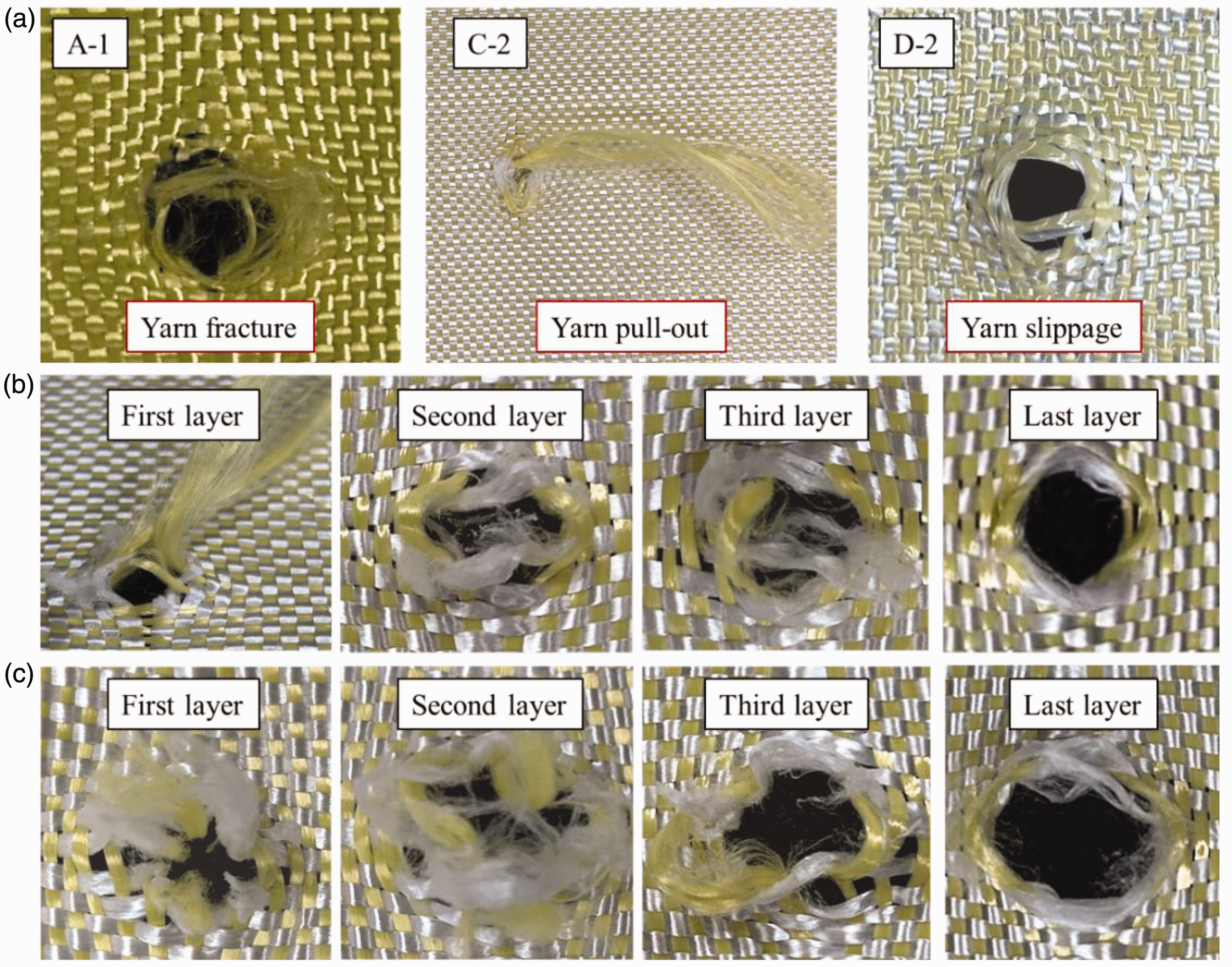
(a) Typical perforation modes observed from the rear surfaces of different specimens. Images showing the perforation modes for each layer of C-2 specimens at the impact velocities of (b) 300 m/s and (c) 400 m/s.
Discussion
To elucidate the hybrid mechanisms underlying the ballistic performance, the perforation modes for each layer of the specimens were examined and are summarized in Table 3. Generally, the yarn slippage was more likely to occur in the layers near the rear surface, while yarn pull out was more likely to occur in the layers closer to the front surface. Thus, the fibers in the front layers experienced more severe failure compared to those in the rear layers. Zhu et al. 30 also observed the lateral displacement of UHMWPE fibers in the cross-ply composite when impacted by a conical-nosed projectile. However, due to the restraining effect of resin and the orthogonal lay-up of unidirectional plies, the number of fibers undergoing lateral displacement generally decreased from the impact surface to the rear surface. For the neat aramid specimen ‘A-1,’ fiber fracture could be observed in all layers. However, for the neat UHMWPE specimen ‘A-2,’ intra-layer hybrid specimen ‘C-3,’ and intra-yarn hybrid specimens ‘D-2’ and ‘D-3,’ yarn slippage dominated as the primary perforation mode, resulting in inferior penetration resistance. The yarn slippage in all inter-layer hybrid specimens was observed within the UHMWPE layer. In addition, under the impact velocity of 400 m/s, a reduction in yarn pull out and yarn slippage was found in the current study, with more yarns being fractured or damaged.
Summary table showing the perforation modes for each layer of the specimen
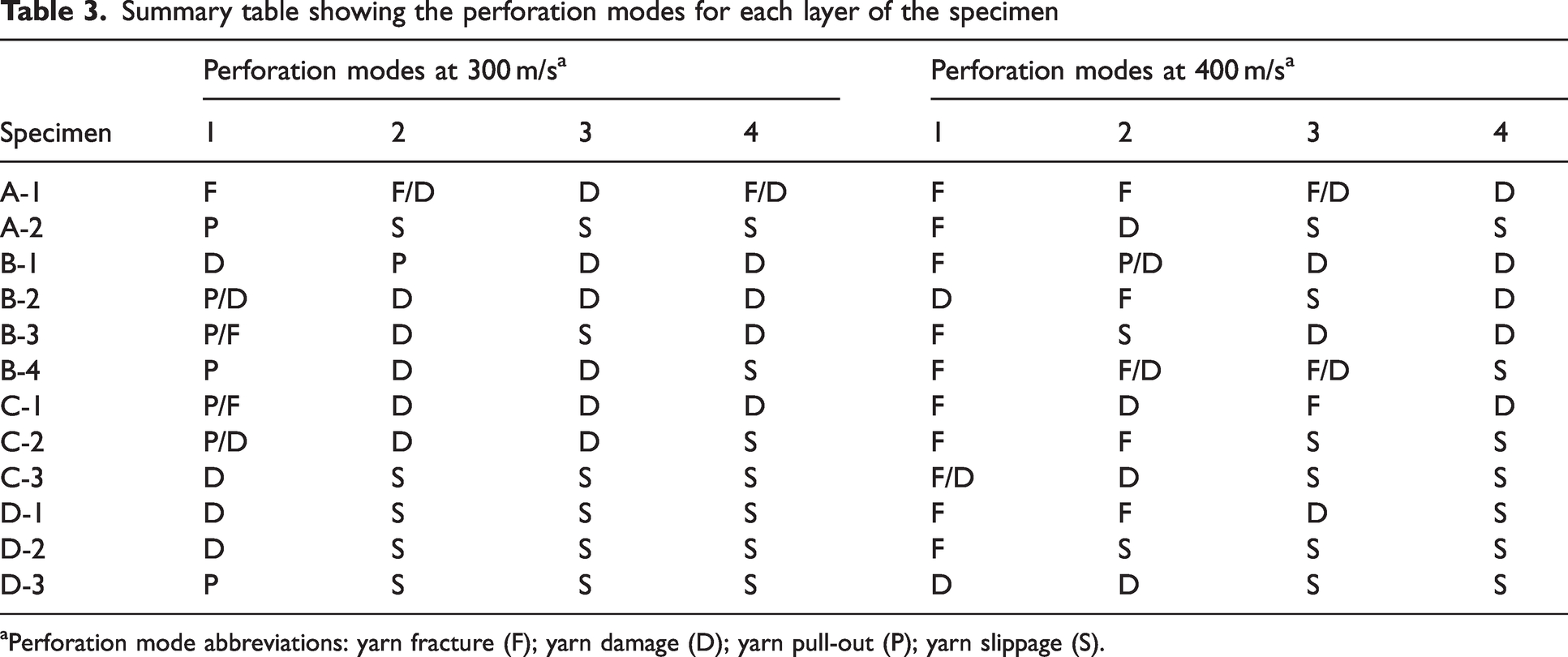
Perforation mode abbreviations: yarn fracture (F); yarn damage (D); yarn pull-out (P); yarn slippage (S).
The frictional performance of yarn was a critical factor that determined whether the yarn would fracture during ballistic impact. According to the friction test conducted by the present authors, the coefficient of friction between UHMWPE yarns was measured to be 0.119, which was one third lower than the coefficient of friction observed for aramid yarns, which was 0.192. The obtained coefficients of friction between UHMWPE yarns were found to be consistent with the measurement of 0.11 reported by Chu et al. 31 Similarly, the obtained coefficients of friction between aramid yarns were also consistent with the measurement of 0.19 reported by Rao et al. 32 In addition, the coefficient of friction between UHMWPE yarn and aramid yarn was determined to be 0.139.
Furthermore, the inter-yarn friction could also be evaluated using a yarn pull-out testing method.33–35 This testing method typically involved securing a fabric sample in a fixture and extracting a yarn from the fabric. The force required to extract the yarn from the fabric was measured, providing an indication of the inter-yarn friction. This method allowed for the evaluation of the frictional properties between yarns within the fabric structure and provided insights into the interlocking and cohesion between the yarns. Bajya et al. 36 conducted yarn pull-out tests on aramid, UHMWPE, and poly(p-phenylene benzobisoxazole) (PBO) fabrics and found that aramid fabric exhibited higher inter-yarn friction compared to UHMWPE and PBO fabrics.
In the current study, the insufficient yarn–yarn friction of UHMWPE could not prevent the movement at crossovers, and the UHMWPE yarns were not capable of being fully stretched to fracture. As a result, the UHMWPE yarn would be pulled out or pushed aside. Duan et al. 37 conducted numerical simulations and reported a similar finding regarding the contribution of friction, that is, the reduction of yarn mobility allowed the projectile to load and break more yarns, resulting in higher energy absorption for fabrics with a high level of friction compared to fabrics with no friction.
Then, considering a yarn impacted transversely by a projectile, both tensile waves and transverse waves would be generated and propagate outward from the point of impact.
38
The tensile waves resulted in the stretching and elongation of the yarn, while the transverse waves caused deflection. The wave propagation characteristics in the primary yarns of woven fabrics would exhibit fundamental similarities to those of a single yarn. Further, the inter-yarn interactions at the interlacement of woven fabrics would enforce the movement of secondary yarns. Cunniff
39
presented the dimensional analysis of textile-based body armor systems and indicated that the most important material properties governing ballistic performance were the longitudinal wave speed
With reference to Figure 5(a), CL and ey of the UHMWPE yarn (CL = 7977 m/s, ey = 43.9 J/g) used in the current study were higher than those of aramid yarn (CL = 6897 m/s, ey = 19.3 J/g). However, due to the low friction of the UHMWPE specimen, the neat aramid specimens demonstrated superior ballistic performance. Then, the mechanisms underlying the hybrid specimens could be elucidated, as shown in Figure 10. The UHMWPE specimen exhibited an insufficient friction coefficient, so the high mechanical properties were not fully utilized due to the incomplete yarn breakage. 40 For neat aramid specimens, the lower CL and ey values would lead to more pronounced stress concentration and an earlier occurrence of yarn fracture. Therefore, a hybrid specimen with sufficient friction and high mechanical properties could show superior ballistic performance.
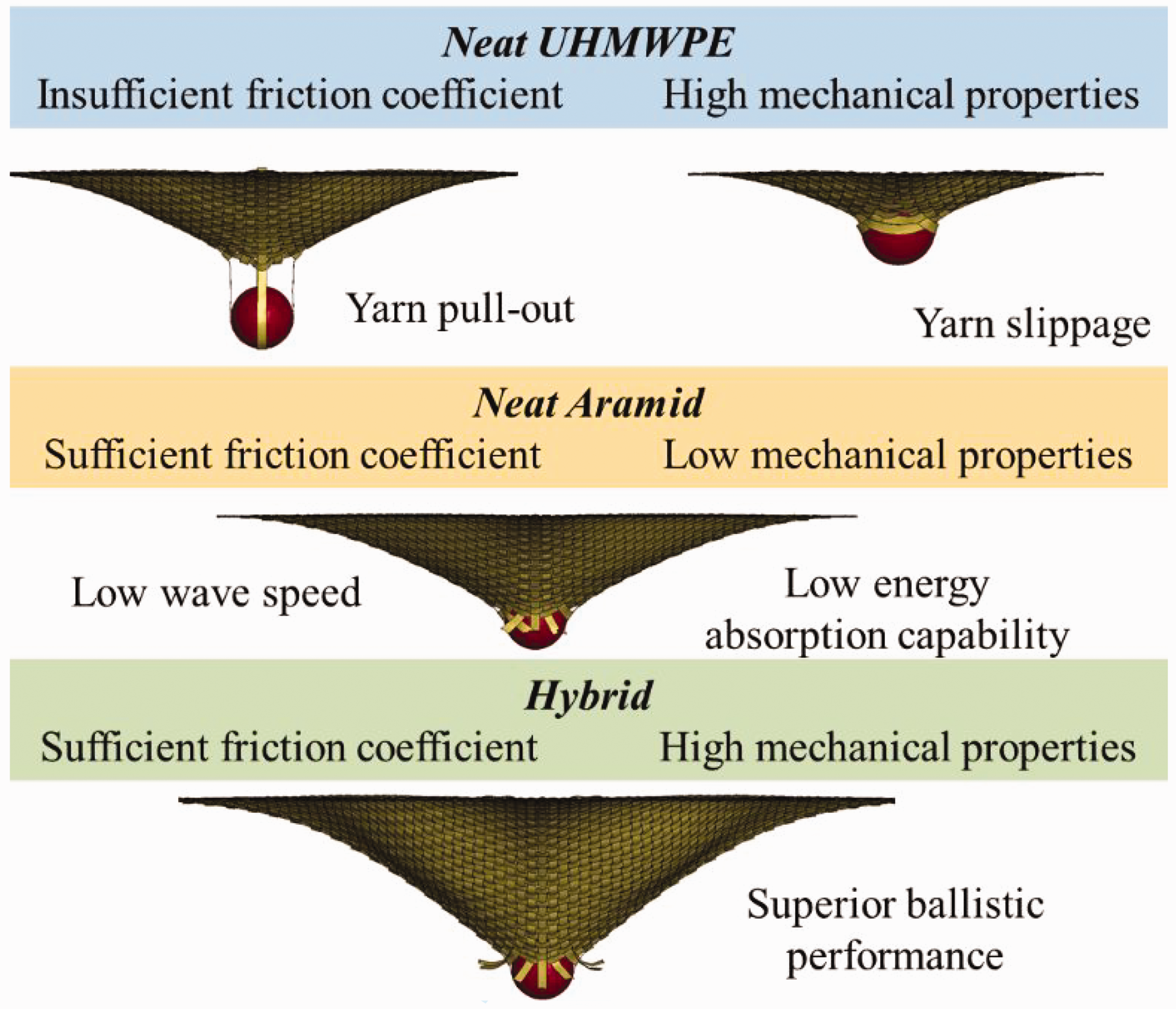
Schematic illustrations of the enhancement mechanism of the hybrid specimen. UHMWPE: ultra-high molecular weight polyethylene.
In inter-layer hybrid specimens, the ballistic performance was influenced by the stacking sequence. At the impact velocity of 300 m/s, momentum transfer between the layers of the ‘B-2’ specimen was responsible for the fracture of UHMWPE fibers occurring in both layers. However, for other inter-layer hybrid specimens, there was one layer of fabric where the UHWMPE fibers did not fracture. For the intra-layer and intra-yarn hybrid, an increase of UHMWPE content would lead to a decrease in friction; thus, a low UHMWPE content was suggested. A comparison was made between the intra-layer hybrid specimen ‘C-1’ and the intra-yarn hybrid specimen ‘D-1,’ with the typical perforation modes examined in Figure 11. It was found that the interlacing of aramid yarns and UHMWPE yarns in ‘C-1’ did not promote the breakage of UHMWPE fibers, and almost all fractures occurred within the aramid yarns. In contrast, in the ‘D-1’ specimen, the aramid fibers and UHMWPE fibers were intertwined through twisting, enabling them to fracture simultaneously under the ballistic impact.
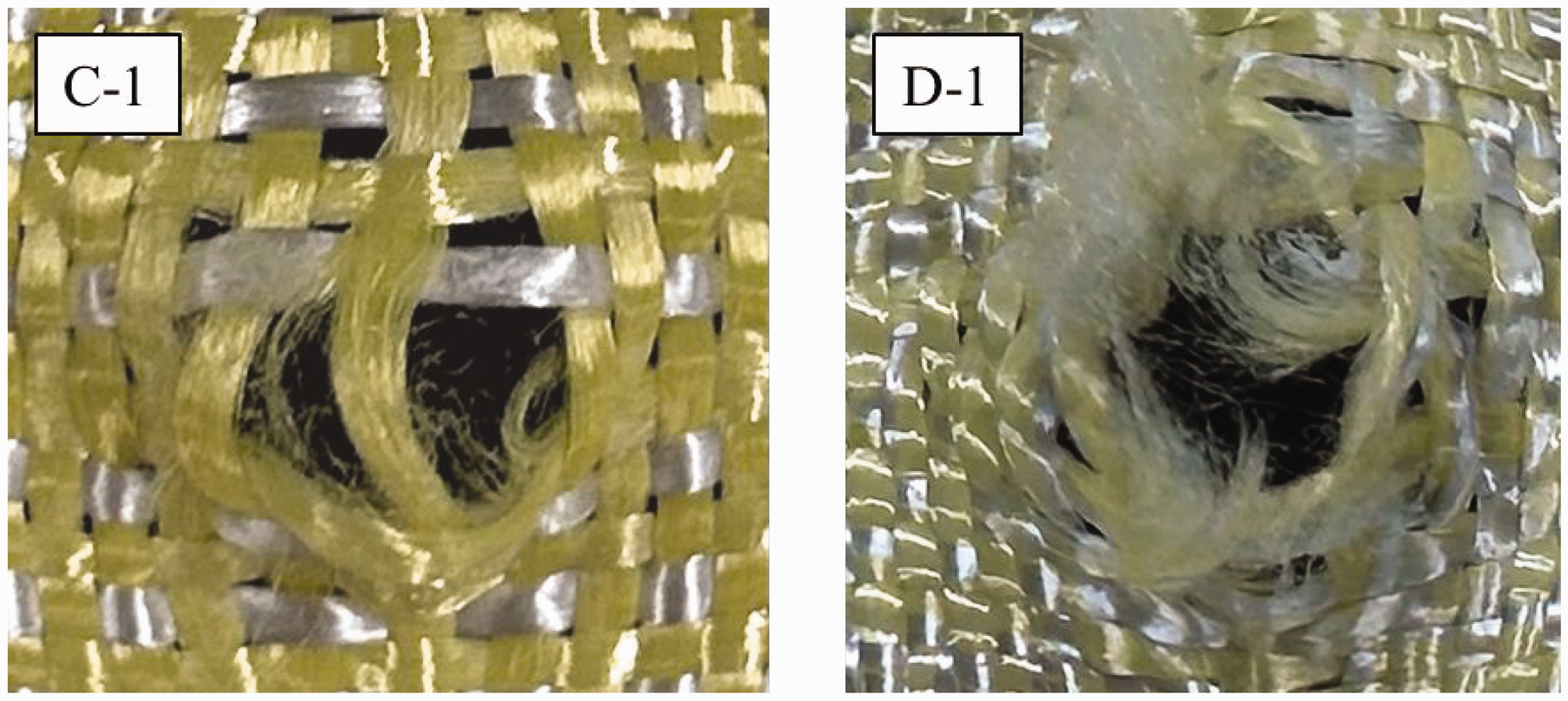
Comparison of fiber fracture morphology between the ‘C-1’ and ‘D-1’ specimens.
While thermal loads could arise from shock-induced heating and plastic deformation during ballistic impact, the transient nature of these effects limited their significance. Cao et al. 41 conducted a study where UHMWPE fiber-reinforced composites were treated at a constant temperature for 24 hours prior to the ballistic test. They found that temperatures of 10°C and 80°C had no significant effect on deformation and failure, while 95°C resulted in the lowest energy absorption efficiency. In contrast, the numerical investigation performed by Austin et al. 42 provided valuable insights into the thermal softening effects on UHMWPE composites during ballistic impact. Their findings indicated that thermal softening only resulted in a minimal 1% difference compared to cases without thermal softening. As such, the thermal effect was only significant for thick targets (more than 20 mm) under impact velocity beyond 1000 m/s. In the current experiment, where the fabric target was thin and the velocity ranged from 300 to 400 m/s, it was reasonable to consider the thermal softening effect as negligible. However, the temperature resistance was important for the application of hybrid fabric under different conditions, and would be considered in the future.
Concluding remarks
The main objective of this paper was to investigate the ballistic responses of hybrid aramid/UHMWPE woven fabrics and gain a deeper understanding of the differences among hybridization strategies. The specimens with inter-layer, intra-layer, and intra-yarn hybrid configurations were manufactured using textile techniques, and the effectiveness in enhancing the ballistic resistance was experimentally explored. Based on the results of ballistic performance and perforation modes, the hybrid mechanisms were discussed and elucidated. As follows, four primary conclusions are established.
Hybrid strategies have demonstrated great potential in improving the energy absorption of neat fabrics under ballistic impact, and the enhancement effect was influenced by the impact velocity of the projectile. In the present study, the inter-layer hybrid specimen ‘B-2’ showed the highest SEA at the impact velocity of 300 m/s, while the intra-yarn specimen ‘D-1’ with a lower UHMWPE content exhibited the highest SEA at the impact velocity of 400 m/s. A range of perforation modes could be observed in the tested specimens, such as yarn fracture, yarn damage, pull out, and slippage. In addition, the perforation mode of each layer varied based on its position within the specimen, the impact velocity, and the hybrid configuration. The frictional performance played a crucial role in determining whether the yarn would fracture under ballistic impact, while the mechanical properties governed the speed of wave propagation and the energy required for yarn fracture. A hybrid specimen with sufficient friction and high mechanical properties could show superior ballistic performance. The interlacing of aramid yarns and UHMWPE yarns in intra-layer hybrid specimens did not promote the breakage of UHMWPE fibers, which was responsible for the inferior ballistic performance. In contrast, the momentum transfers between layers with different properties in inter-layer hybridization and the intricate blending between aramid and UHMWPE fibers of intra-yarn hybridization could further enhance the ballistic performance.
Footnotes
Declaration of conflicting interests
The author(s) declared no potential conflicts of interest with respect to the research, authorship, and/or publication of this article.
Funding
The author(s) disclosed receipt of the following financial support for the research, authorship, and/or publication of this article: This work was supported by the National Natural Science Foundation of China (12302187, 12372136, 12002157, and 11902148), the Hubei Provincial Natural Science Foundation of China (2023AFB092), the Opening project of the MIIT Key Laboratory of Multifunctional Lightweight Materials and Structures, and the Knowledge Innovation Program of Wuhan-Shuguang Project (202201080102)
