




Abstract
Hemp fiber, recognized for its eco-friendliness, wide availability, and biodegradability, stands as a renewable resource with promising applications. To fully harness its potential, it is crucial to study the relationship between chitosan concentration and both the mechanical and thermal properties of hemp fiber. Understanding these effects can provide a direction to improve the properties and functionalities of hemp fiber, which are essential for many applications, including textiles and construction and automotive materials. Chitosan is known to enhance the antimicrobial and adsorption properties of fibers by changing the chemical properties of the fiber surface. However, up to now, a very limited number of studies have focused on the exact effect of chitosan on the mechanical and thermal stability properties of hemp fibers. Here, the effect of treatment with different concentrations of chitosan solutions is investigated to enhance the properties of hemp fibers and the treated hemp fibers are characterized. It is found that chitosan solution treatment can effectively improve the various properties of hemp fibers. The chitosan treatment improved the surface roughness of hemp fibers. The tensile strength and flexibility of hemp fibers were enhanced. The CSHF-1.5% sample exhibited the highest tensile strength of 616.11 MPa and the lowest tensile modulus of 15.61 GPa. The fiber swelling rate increased to 24.73% at a chitosan solution concentration of 1.5%. The results of thermogravimetric analysis and differential scanning calorimetry analysis demonstrated the effectiveness of chitosan solution treatment in enhancing the thermal stability of hemp fibers. These findings propose a promising method for a significant modification of hemp fiber's mechanical and thermal stability.
Keywords
Hemp fiber (HF) is a multifunctional natural material, and its main source is the stem of the hemp plant. The structure of HFs is similar to that of other cellulosic fibers, containing up to about 75% cellulose, with some non-cellulosic substances, such as hemicellulose, lignin, and pectin, in HF.1 –3 The physical properties of HF include high strength, high tensile modulus, high water absorption, biodegradability, and eco-friendliness, which make it promising for a wide range of applications in the textile, construction, automotive, and aviation fields, and for medical treatment.4 –9 In order to further improve the various properties of HF, researchers have used different surface functionalization treatments to change its properties, such as surface chemistry and the compositional structure. Wu et al. 10 used tung oil anhydride (TOA) to modify HFs and prepared polypropylene/HF composites. The results showed that the TOA layer improved the toughness and thermal stability of the composites. Viscusi et al. 11 used two in situ methods to modify the surface of HFs to prepare Fe/Al-modified HFs, which significantly improved the thermal stability of the HFs and imparted magnetic properties to the fibers. In the modern textile industry, the pursuit of further enhancing the performance of HFs to expand their applications to meet the ever-changing market demand is still a research area of great interest. With the increasing pursuit of sustainable development, it has become particularly important to find environmentally friendly and efficient treatment methods.
Chitosan, a natural biomolecule obtained by alkaline deacetylation of chitin, is the most abundant polysaccharide in nature next to cellulose.12 –14 Chitosan contains a copolymer of glucosamine and N-acetyl-glucosamine units linked by β-1,4-glycosidic bonds.15,16 Many researchers have demonstrated that chitosan has a wide range of applications in food, industry, agriculture, and biomedicine due to its hydrophilicity, biodegradability, antibacterial, and diverse chemical and physical properties.17 –20 Given its abundant advantageous characteristics, there is a considerable amount of interest in using chitosan for surface treatment of fibers to enhance the dyeing, biocompatibility, and antibacterial properties of fibers.21,22 The polycationic structure of chitosan facilitates its interaction with anionic proteins to cause the death of microbial cells, thus exhibiting antibacterial properties. 23 Therefore, many researchers have also investigated the utilization of chitosan antimicrobial finishing agents for the modification of natural textile materials.24,25 Samanta and Bagchi 26 treated jute fabrics using a combination of chitosan and citric acid, which showed good crease and rot resistance. Khan et al. 27 treated jute cotton blend denim fabrics with different concentrations of chitosan solution, and antimicrobial evaluation was carried out against Staphylococcus aureus and Escherichia coli. The results showed that chitosan could effectively reduce the two microorganisms, and the inhibitory effect on the two bacteria was enhanced with an increase in chitosan concentration. In addition, utilizing the cationic properties of chitosan for the cationization treatment of textile materials can result in effectively absorbing anionic dyes through electrostatic attraction. 28 Chitosan has been employed in the pretreatment of cotton fibers before dyeing with onion skin dye to enhance the dye absorption and colorfastness of cotton textiles. 29 It was demonstrated that chitosan pretreatment method could effectively enhance color strength and fastness properties of cotton fabric without using salts and alkalis. In addition, this method also improved other properties, such as ultraviolet protection and antibacterial functionality, in comparison to the use of other toxic chemicals. A similar attempt has been made to modify the surface of wool fiber with oxygen plasma and chitosan. 30 Increasing cochineal and safflower natural dye uptake was a property imparted to wool fibers after treatment with chitosan. Many studies have focused on the application of chitosan for enhancing the functionality of natural fiber materials. However, relatively few studies have been conducted on the effect of chitosan treatment on the properties of the fibers themselves, and further in-depth academic research and exploration is needed.
In this study, chitosan solutions were utilized for surface treatment of HFs, and the effects of different concentrations of chitosan solutions on the properties of HFs were investigated. Morphological and structural changes in chitosan-treated hemp fibers (CSHFs) were analyzed using Fourier transform infrared spectroscopy (FTIR) and scanning electron microscopy (SEM). In addition, the effects of changes in chitosan concentration on the tensile, thermal, and swelling properties of the HFs were determined. Based on the experimental results, the feasibility of the chitosan surface coating strategy was evaluated.
Experimental setup and methodology
Surface treatment experiments on HFs were conducted to investigate the effect of chitosan solution concentration on the properties of HFs, as shown in Figure 1. Firstly, experimental samples were prepared by treating the HFs with chitosan solutions of five different concentrations. The surface morphology, mechanical properties, thermal stability, and swelling performance of the fibers were subsequently analyzed under different conditions to evaluate the effects of chitosan solution concentration on the properties of HFs.
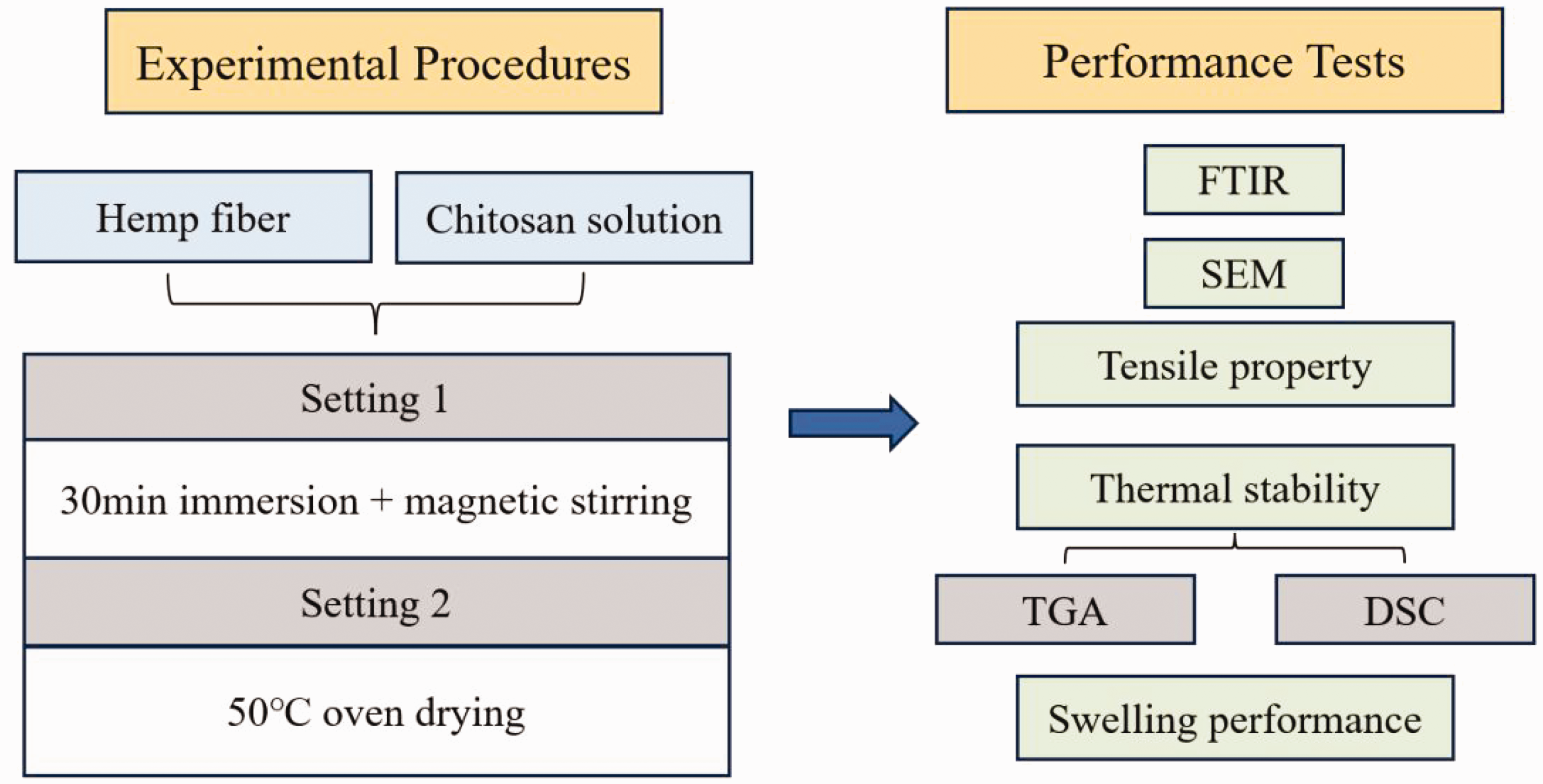
Summary of all experiments. FTIR: Fourier transform infrared spectroscopy; SEM: scanning electron microscopy; TGA: thermogravimetric analysis; DSC: differential scanning calorimetry.
Materials
The HF was graciously provided by WuHan Hemp Biological Technology Co., Ltd. All chemicals used in the study, including chitosan (Sigma-Aldrich, St. Louis, USA) and glacial acetic acid (Ghtech, Guangdong, China), were purchased from commercial sources and were of analytical grade.
Chitosan treatment of hemp fibers
The process flow of the chitosan treatment of HF is shown in Figure 2. Chitosan solutions with concentrations of 0.5, 1.0, 1.5, 2.0, and 2.5 wt% were prepared by dissolving in 1% acetic acid. The mixture was stirred for 24 h to ensure complete dissolution of the chitosan. HF in different concentrations of chitosan solution at room temperature was subject to magnetic stirring for 30 min. Subsequently, the samples were dried under vacuum at 50°C for 2 h to a constant weight. This process yielded the modified HF samples, which were then brought to drying equilibrium and packaged. The resulting samples included pure HF and CSHF, as shown in Table 1. Before conducting mechanical, thermal, and swelling experiments, all fibers were stored at a temperature of 25°C and a relative humidity of 50%.
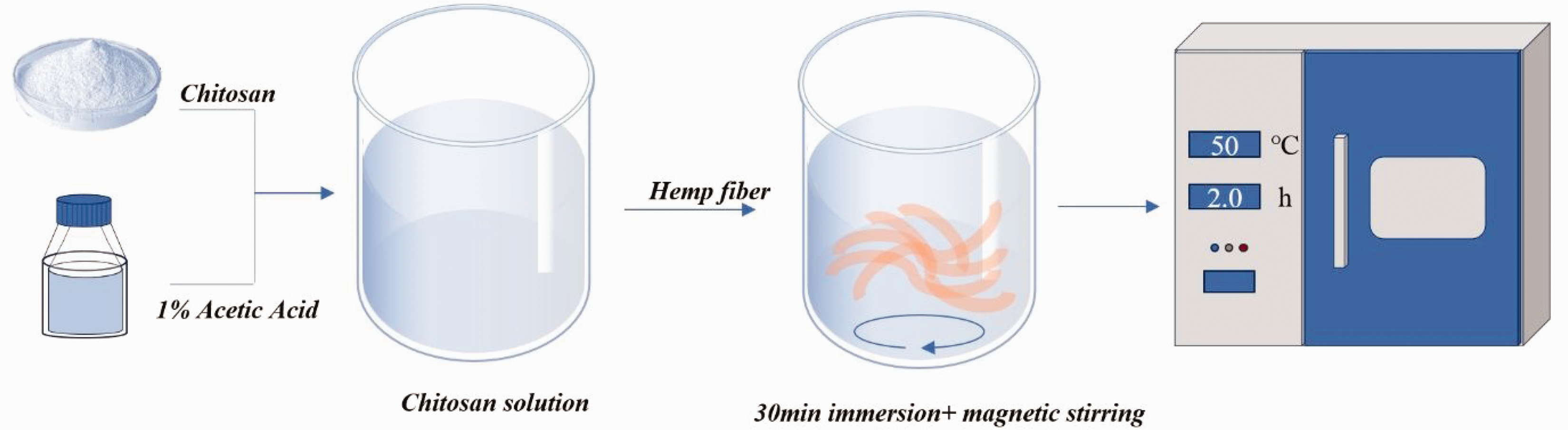
Schematic diagram of the process for treating hemp fiber with chitosan.
Six kinds of hemp fibers before and after chitosan treatment
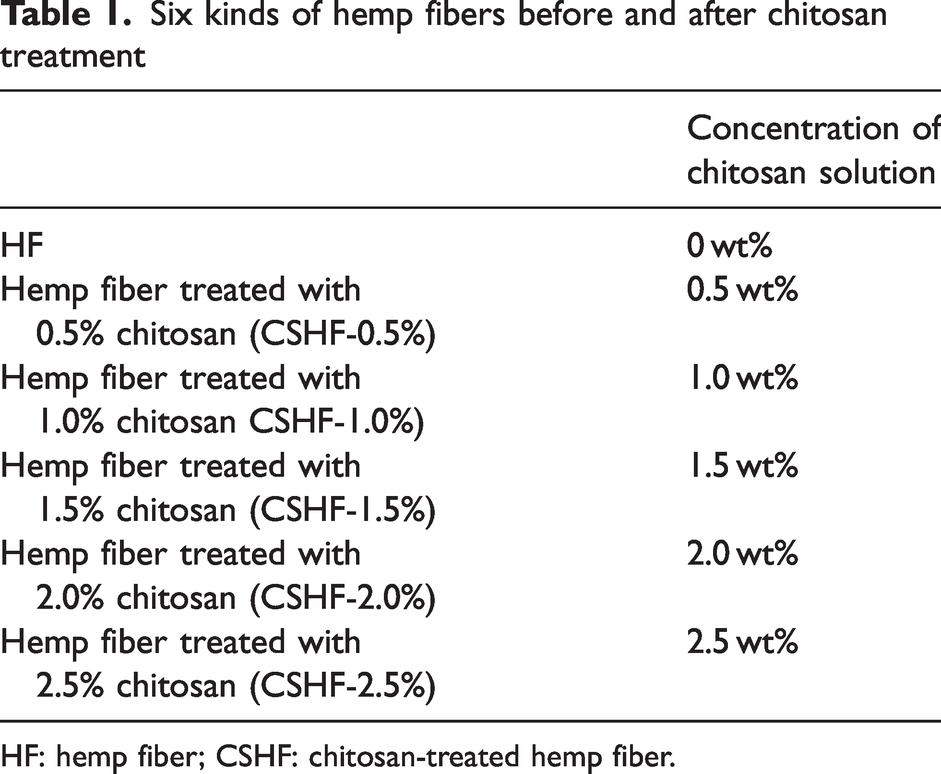
HF: hemp fiber; CSHF: chitosan-treated hemp fiber.
Characterization techniques
Fourier transform infrared spectroscopy
FTIR spectra of both untreated and CSHFs were analyzed at room temperature using a Vertex 70 FTIR spectrometer with a resolution of 4 cm−1. The wavenumbers were in the range of 650–4000 cm−1
Scanning electron microscopy
Dry samples of HFs before and after treatment were mounted on SEM stubs and gold coated with platinum before examination in a ZEISS Sigma 300 (ZEISS, Jena, Germany). Photographs of the samples with surface characteristics were taken randomly.
Tensile strength
The fibers were stored in a constant temperature and humidity chamber for at least 24 h before testing. Fiber bundles of 20.00 cm in length and 0.02 g in weight were selected for each of the six HFs treated with different concentrations of chitosan. The tensile properties of the fiber bundles were assessed using an Instron 5566 dynamic mechanical tester (Instron Industrial Products, Grove City, PA, USA) following the ASTM D3822 standard. To minimize measurement uncertainties, 10 fiber bundles of each fiber type were examined. The findings are presented as the average value of the experimental samples.
Thermal analysis of fibers
Analysis of the thermal stability of HF samples was performed using thermogravimetric analysis (TGA) and differential scanning calorimetry (DSC). TGA measurements of the HF samples was carried out using a TGA instrument (TGA4000, PerkinElmer, USA). The percent weight change as a function of temperature was evaluated in the range of 30–600°C at a heating rate of 20°C/min and a nitrogen flush rate of 20 ml/min. DSC analyses were performed using a thermal analyzer (DSC8000, PerkinElmer, USA). Samples (about 4 mg) were sealed in aluminum pans and tested under a constant nitrogen flow of 50 ml/min. The temperature program was set in the range of 30–500°C with a heating rate of 20°C/min.
Swelling performance of hemp fibers
Swelling of the fibers was determined at room temperature. A standard sample of fixed size was used for calibration. HFs were put on a glass slide and we used a pipette to absorb water droplets and drop them onto the HFs, so that all of them were immersed in water. The glass slide was sealed around the edges with silicone rubber. The samples were tracked at fixed intervals by the camera system under a Leica DM2500 light-emitting diode (LED) optical microscope to observe the swelling process of HFs in water. The swelling degree of HFs in water was indirectly expressed by the increase rate of the HF diameter L, which can be calculated according to the following formula:

Results and discussion
FTIR analyses
The FTIR spectra of the fibers confirm the compositional changes of the fibers treated with chitosan solution. Figure 3 shows the FTIR spectra of pure chitosan powder and untreated and CSHFs with different concentrations. The characteristic absorption bands of chitosan can be observed from Figure 3(a). The bands at 1035 and 1069 cm−1 correspond to C–O stretching. The peak found at 1425 cm−1 corresponds to CH2 bending. The band at around 1594 cm−1 corresponds to the N–H bending of the N-acetyl glucosamine.31,32 The residual N-acetyl units were confirmed by the presence of bands at around 1645 cm−1. The absorption bands observed at around 2875 cm−1 can be attributed to the characteristic C–H asymmetric stretching observed in polysaccharides. A weak peak at around 3444 cm−1 corresponds to NH2 stretching of the glucosamine unit. The spectra of chitosan samples analyzed in this study exhibit the presence of all bands that have been previously reported by others.33,34
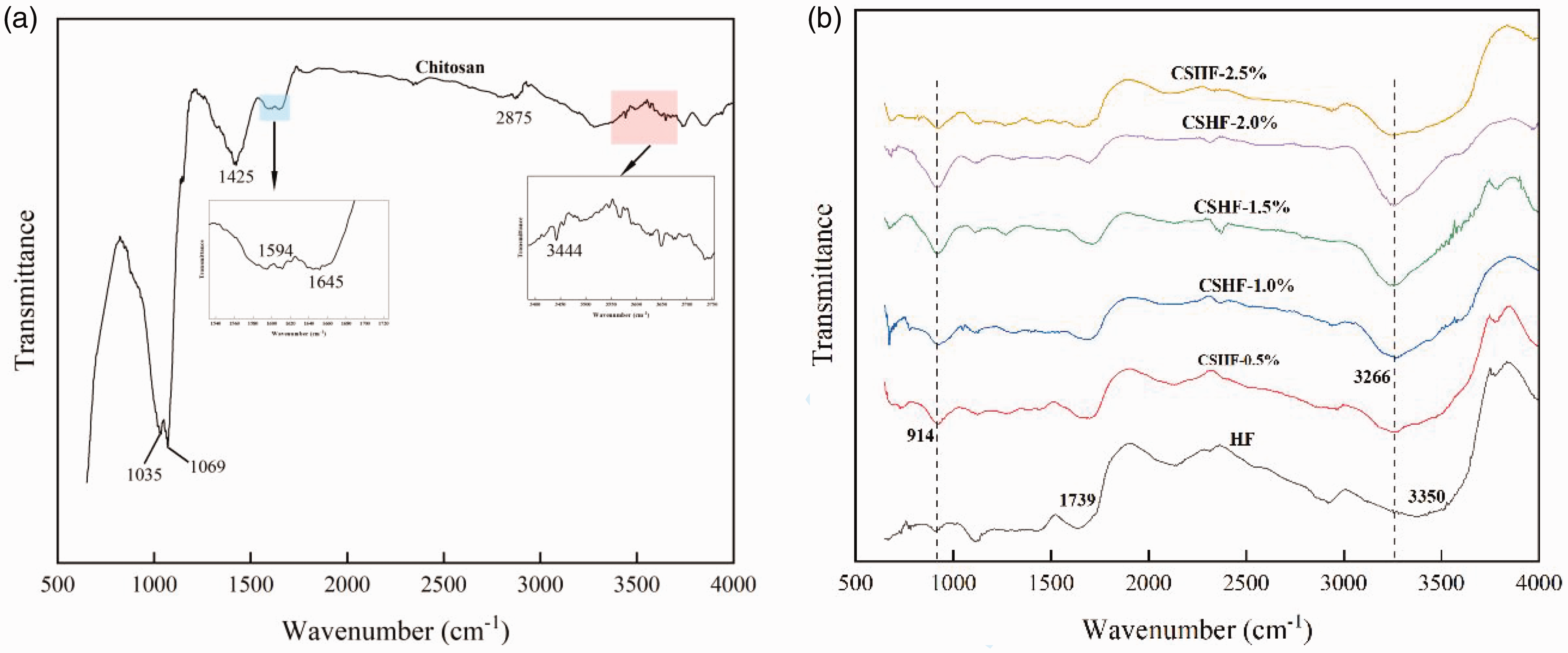
Fourier transform infrared spectra of (a) pure chitosan powder and (b) hemp fiber (HF) and chitosan-treated hemp fiber (CSHF) samples.
In addition, it can be found from Figure 3(b) that the fibers after treatment with chitosan solution still retained the basic molecular structure of HFs. The characteristic peaks of the main components in HFs (cellulose, hemicellulose, and lignin) were observed in all samples. The broad band observed at 3350 cm−1 corresponds to O–H stretching of cellulose and hemicellulose. The peak at around 1739 cm−1 corresponds to the C=O stretching found in pectin, waxes, and hemicellulose. The presence of absorbed water was confirmed by the by the bands at around 1690 cm−1 (O–H bending). 35 The peak at 1374 cm−1 corresponds to C–H deformation vibration in cellulose and hemicellulose. 36
Comparing the infrared spectra of untreated and treated HFs, both the peak values (around 914 cm−1) and ranges (3200–3500 cm−1) of the treated HFs changed significantly. Among them, the peaks near 914 cm−1 became more pronounced and narrower as the concentration of the chitosan solution increased. Meanwhile, in contrast to the broad band observed at 3350 cm−1 in the HF sample, the treatment with the chitosan solution resulted in a peak that shifted to approximately 3266 cm−1, exhibiting a more defined and narrower profile. The above phenomenon can be attributed to the formation of hydrogen bonds between the hydroxyl functional groups in chitosan and the HF surface. 37 These interactions brought about changes in the vibration frequency and peak positioning. In summary, a suitable chitosan concentration can lead to a heightened interaction strength. This finding reinforces the notion of chitosan molecules interacting with the surface groups of the HFs, consequently influencing the chemical environment of the HF surface.
SEM images of the hemp fibers
Figure 4 shows SEM images of HF (a) and CSHF-0.5% (b), CSHF-1.0%(c), CSHF-1.5% (d), CSHF-2.0% (e), and CSHF-2.5% (f). Significant differences in the surface morphologies of HF were observed after treatment with different chitosan concentrations. The surface of the HF bundles exhibited several fine linear grooves, accompanied by the appearance of longitudinal cracks. In addition to many fine crevices, a large number of colloidal and flaky impurities could be seen in the fiber tows because the polydentate was not degummed, as similarly observed by other researchers.38,39 After treatment with chitosan solution, a thin film can be observed on the fiber surface. 40 The surfaces of the CSHFs were generally smoother than those of the untreated fibers, without longitudinal cracks. 41 This indicates that chitosan solution can effectively improve the surface properties of HFs.
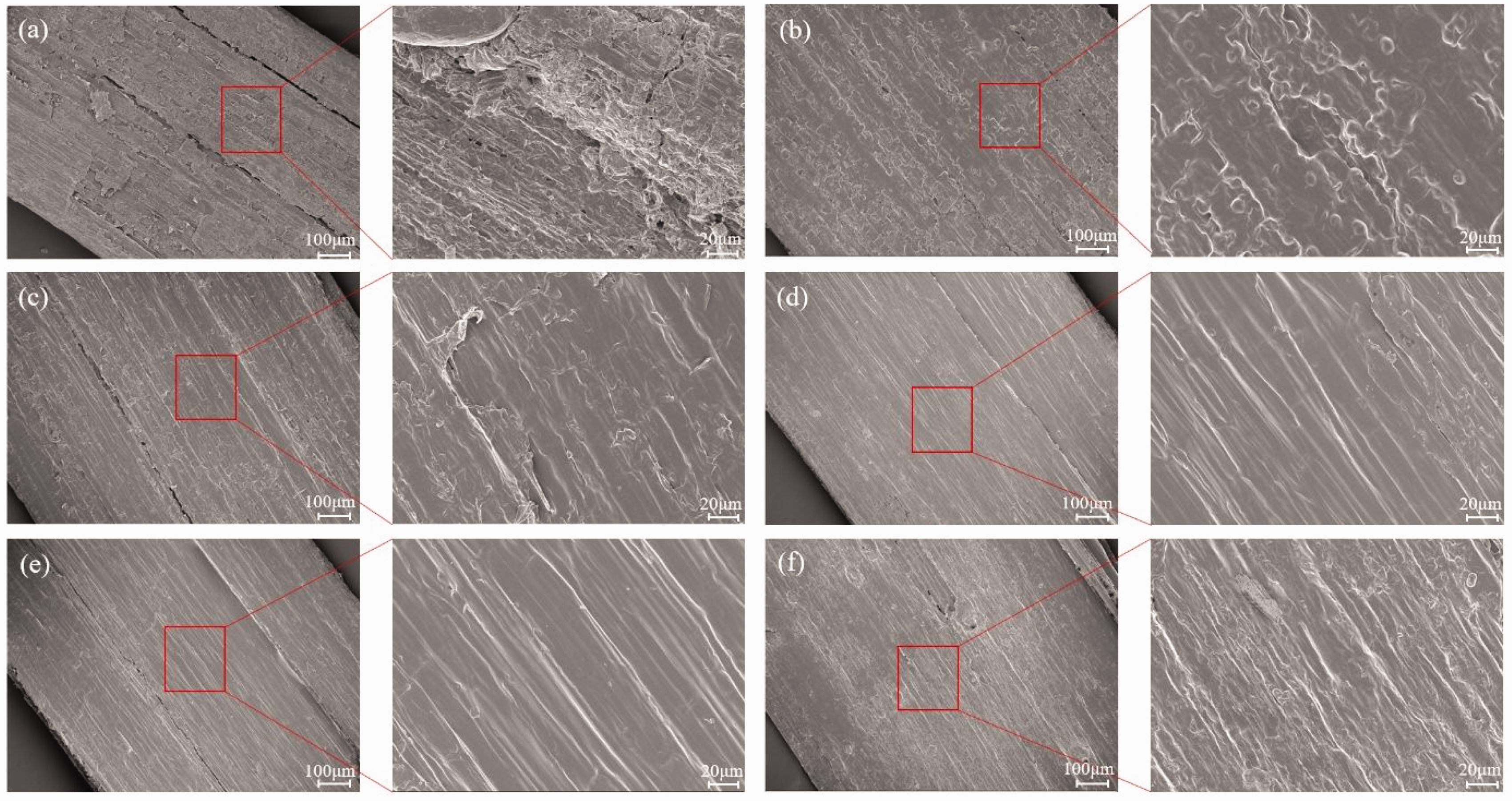
Scanning electron microscopy microphotos of the samples: (a) hemp fiber; (b) CSHF-0.5%; (c) CSHF-1.0%; (d) CSHF-1.5%; (e) CSHF-2.0% and (f) CSHF-2.5%. CSHF: chitosan-treated hemp fiber.
Analyses of tensile properties
Figure 5 illustrates the stress–strain curves, tensile strength, and Young’s modulus of HFs treated with varying concentrations of chitosan solution. From Figure 5(a), an increase in tensile stress and strain of HF was observed after chitosan treatment. Compared with HF, CSHF-1.5% showed a 39.8% increase of tensile strength with an increase of strain at the ultimate strength of 78.1%. This indicates that chitosan is playing a reinforcement role as an effective stress transfer constituent by leveraging its ability to establish hydrogen bonds with the cellulose molecules within the HFs.42,43
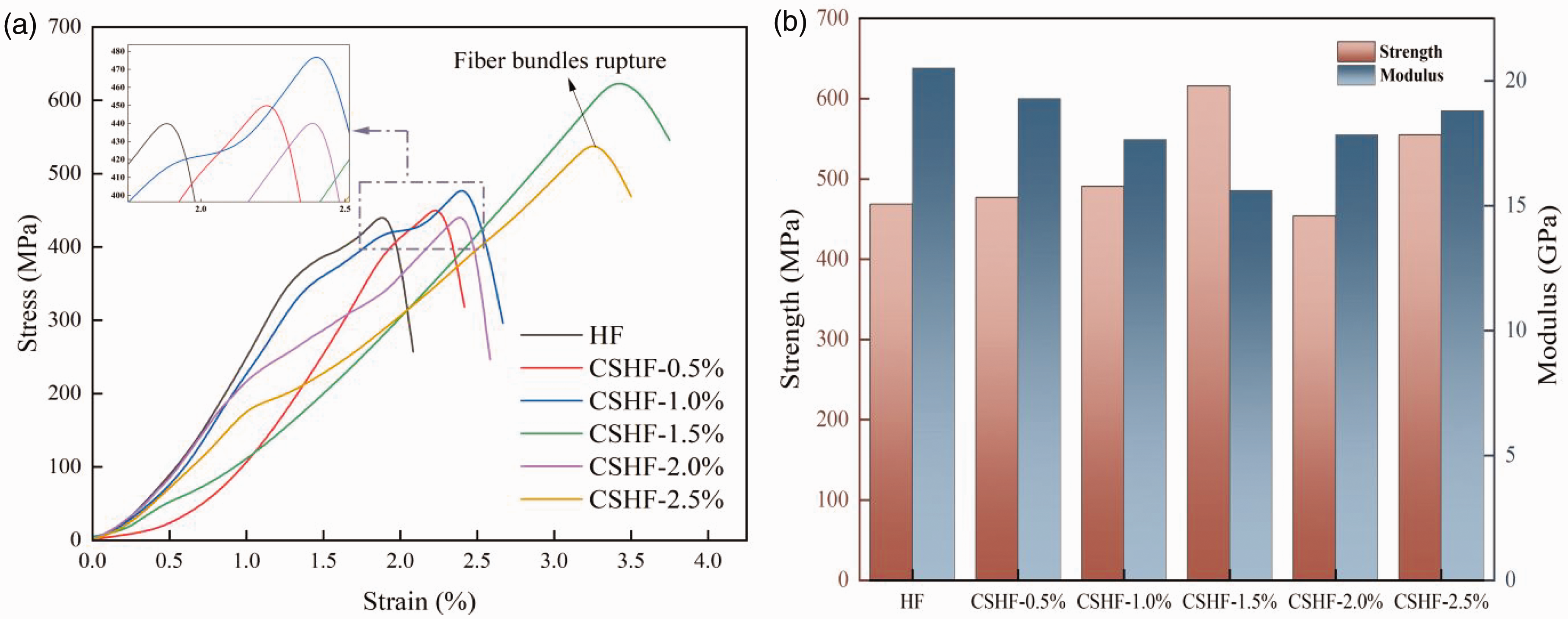
Tensile properties of the samples: (a) tensile stress–strain curves and (b) tensile strength and tensile modulus. HF: hemp fiber; CSHF: chitosan-treated hemp fiber.
It can be seen from Figure 5(b) that as the concentration of the chitosan solution increased, the tensile strength of the HFs first experienced an increase before subsequently declining. The CSHF-1.5% sample presented superior tensile strength with values of around 616.11 MPa. When the chitosan concentration was higher than 1.5%, the tensile strength of the HFs decreased. The excessive presence of chitosan changed the roughness of the HF surface in comparison to the relatively smooth surface of CSHF-1.5%, which was confirmed by SEM micrographs.44,45 Changes in roughness may have a negative impact on the tensile strength. The trend of the tensile modulus showed an initial decrease followed by an increase. The CSHF-1.5% sample exhibited a poor tensile modulus of 15.61 GPa. Chitosan treatment altered the fiber structure and composition, making the fibers more prone to deformation. 46 However, when the chitosan concentration became excessive, the excessively thick chitosan film on the fiber surface led to an increase in fiber rigidity, thereby augmenting the tensile modulus of the fibers.
Thermal analysis (TGA and DSC)
The discernible influence of treating HFs with distinct concentrations of the chitosan solution is evident in the thermogram. This thermogram, captured at a heating rate of 20°C/min, is illustrated in Figure 6. The initial mass loss observed in the thermogravimetric curves (Figure 6(a)) occurs around 100°C, and is mainly attributed to the evaporation loss of water content in the samples. 47 This loss can be observed for chitosan and all HF samples. After that, the stability of the HF sample was slightly lower than that of the treated HFs. The degradation temperature of both HF and CSHF samples occurred around 288°C and 355°C, respectively. The increase in the degradation temperature is due to the amine groups (glucosamine and N-acetyl-glucosamine) of chitosan. The results of DSC, shown in Figure 6(b), are in good agreement with the TGA. It was obvious from the DSC curves that small endothermal peaks appeared in the temperature range of 50–150°C for the HFs before and after treatment. This heat absorption peak was due to the dehydration of absorbed water from the intercellular region of the fibers. 48 Free water is easier to remove than attached water (attached to the cellulose). 49 The thermal decomposition temperature of CSHF increased from 354.30°C to 366.79°C after treatment with chitosan solution concentrations ranging from 0.5% to 2.5%. This was attributed to the chemical reactions occurring between chitosan and HF. The research findings showed that the thermal stability of HF was improved after chitosan solution treatment.
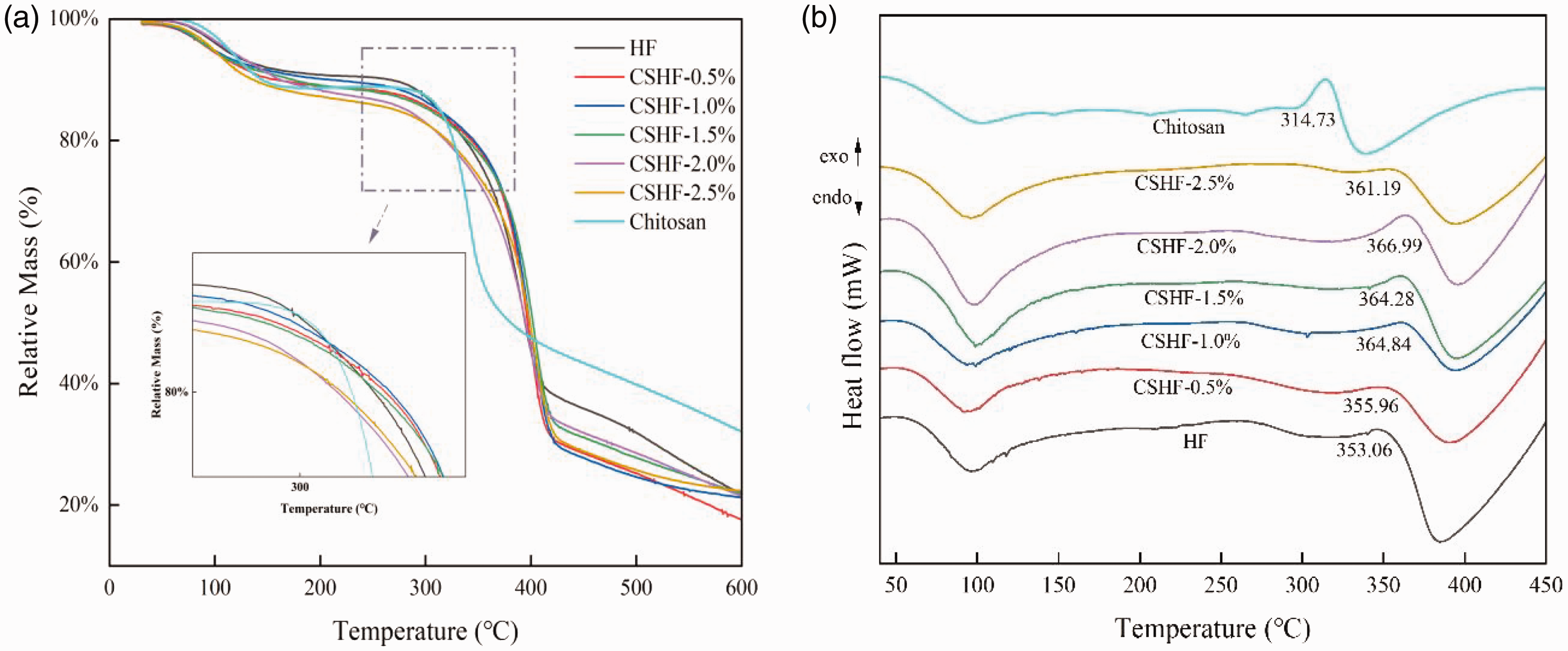
Thermogravimetric analysis (a) and differential scanning calorimetry (b) curves of untreated hemp fiber (HF) and chitosan-treated hemp fiber (CSHF).
Swelling rate of the hemp fibers
The interaction between CSHFs and water can be explained as a competition between the hydroxyl groups of the polymers (mainly cellulose and chitosan, but also non-cellulosic components such as hemicellulose and lignin) for the formation of hydrogen bonds between the water molecules or water clusters. 50 Water penetrates into the fiber through the chitosan membrane, disrupting secondary interactions between cellulose macromolecules, which are then adsorbed into the fiber through hydrogen bonding, leading to fiber swelling, 51 as shown in Figure 7.
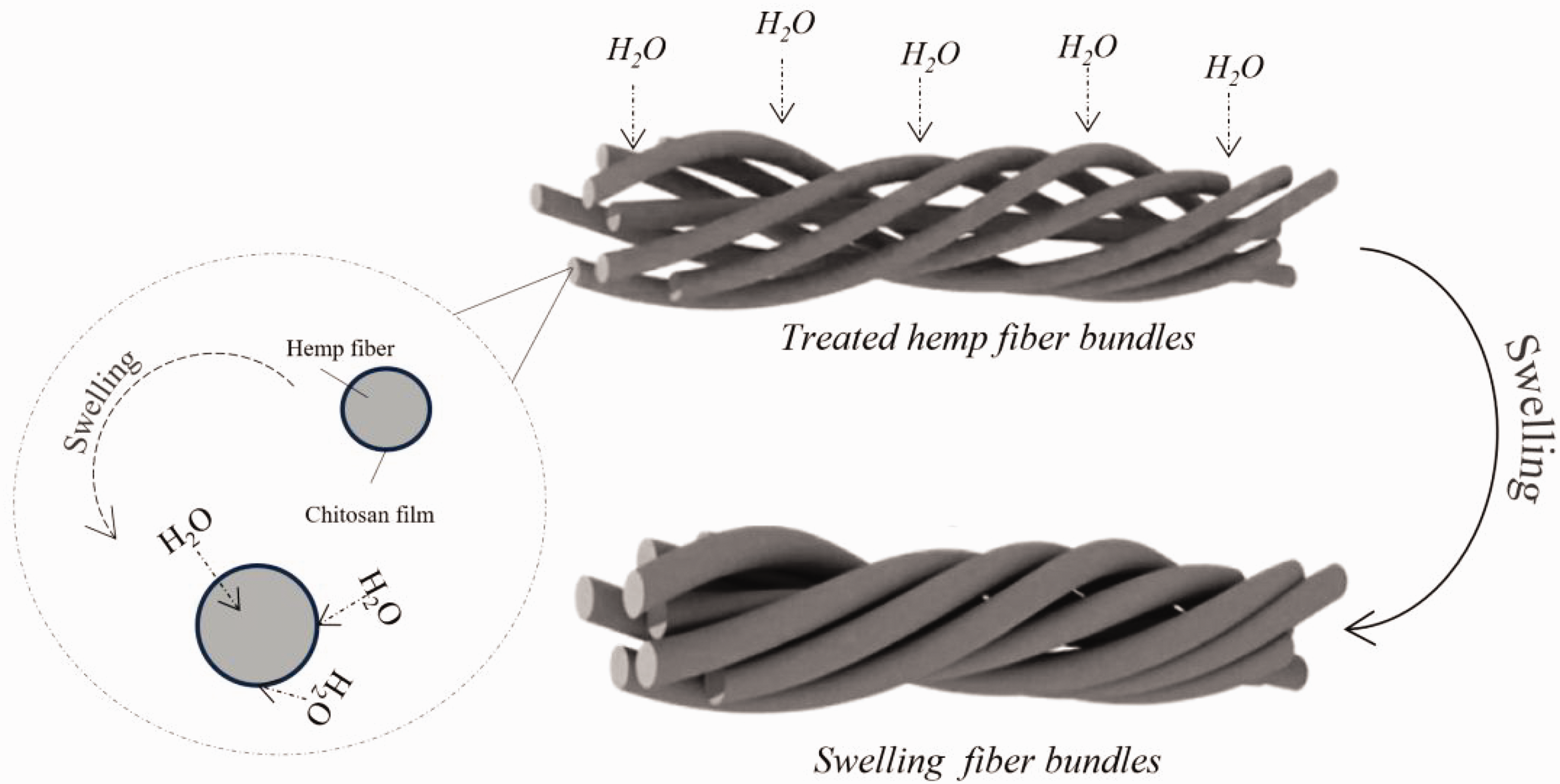
Swelling of hemp fiber bundles.
The swelling rate was used to indicate the water absorbency of HF and CSHF. Figure 8 shows the swelling rate of different HFs. The HF sample exhibited the swelling rate of 10.97%. The presence of chitosan film considerably increased the swelling rate of HF. It can be seen that the swelling behavior of CSHFs exhibited a fluctuating trend of increasing and then decreasing. Notably, CSHF-1.5% demonstrated the most pronounced swelling, with a peak swelling rate of 24.73%, showing an increase of 125.43% over the HF swelling rate. This can be primarily attributed to the formation of hydrogen bonds between the chitosan solution and the hydroxyl groups in the HFs, enhancing the hydrophilicity of the fibers and further reinforcing their swelling behavior. In comparison, the swelling rate of CSHF-2.5% experienced a reduction to 12.49%. This reduction mainly resulted from the thick film formed by the chitosan coating on the surface of the HFs, thereby impeding the water molecules’ absorption into the fiber; a similar finding was reported by others. 52
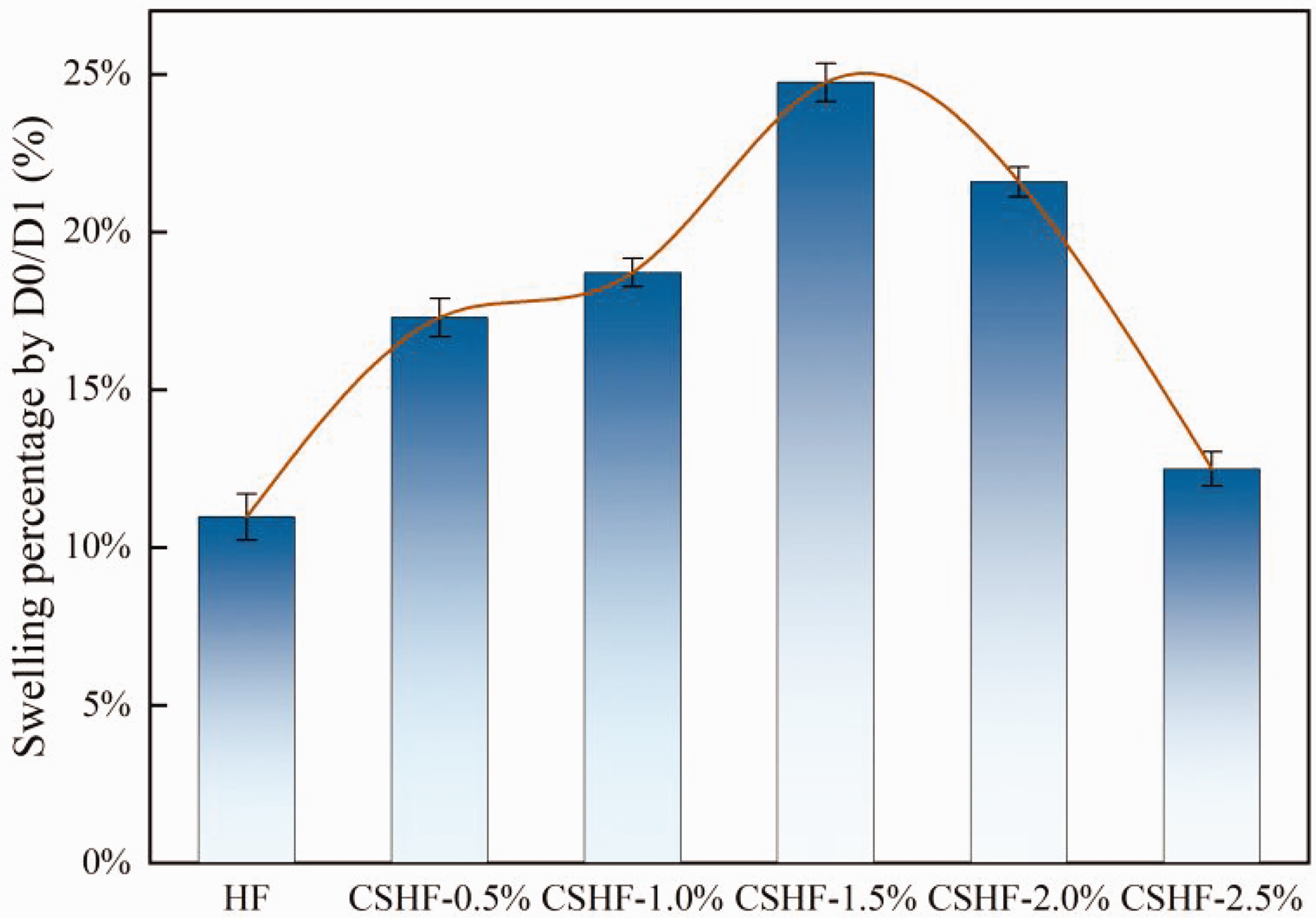
Effect of chitosan solution concentration on the swelling rate of hemp fiber (HF). CSHF: chitosan-treated hemp fiber.
Conclusions
In this work, the effect of different concentrations of chitosan solution treatments on the structure and properties of HFs was investigated. The surface structure, tensile characteristics, thermal stability, and swelling performance of HFs were all affected to varying degrees by the chitosan solution treatments with various concentrations. SEM showed that the surface of CSHFs formed a film that made the surface of HFs smoother. The results of the mechanical performance testing indicate that the CSHF-1.5% sample achieved the maximum tensile strength of 616.11 MPa, exhibiting a relative increase of 31.45% compared to HF. The CSHF-1.5% sample also demonstrated the minimum tensile modulus of 15.61 GPa, effectively improving the flexibility and ductility of HF. The swelling performance experimental results showed that the swelling properties of HF were improved after chitosan solution treatment. Among them, CSHF-1.5% showed a 125.43% increase in swelling rate compared to HF. The TGA and DSC analysis showed that the thermal stability of the CSHFs was improved. The treatment of HFs with a 1.5% concentration of chitosan solution could be particularly interesting to improve mechanical properties and thermal stability while respecting sustainable development goals. Due to the influence of various factors, HFs exhibit significant variabilities in the compositional ratio. Given the current experimental constraints, future research endeavors will be directed towards delving into the mechanisms underlying the chitosan modification of HFs. This will involve a more extensive investigation into the interaction mechanisms between chitosan and HFs, aiming to enhance the overall effectiveness of chitosan modification on HFs.
Footnotes
Declaration of conflicting interests
The author(s) declared no potential conflicts of interest with respect to the research, authorship, and/or publication of this article.
Funding
The author(s) disclosed receipt of the following financial support for the research, authorship and/or publication of this article: This work was financially supported by the NSFC General Program (Grant Number 32071906).
