




Abstract
The rapid development of piezoelectric sensors has been studied extensively, owing to their good flexibility, wearability, high sensitivity and low cost. However, some inorganic materials with good piezoelectricity cannot make sensors flexible, and the organic materials with good flexibility have a weak output electrical signal and low strength. In order to explore and optimize the preparation technology of piezoelectric sensors, a BaTiO3@polyacrylonitrile (PAN)/poly(vinylidene fluoride) (PVDF) nanofibrous composite membrane (NCM) was prepared by cross-electrospinning technology and the central combination design (CCD) method. The morphology, structure, hydrophobicity, mechanical properties and piezoelectricity of the BaTiO3@PAN/PVDF NCMs were investigated. The BaTiO3@PAN/PVDF NCMs had the better hydrophobicity and mechanical properties compared with the pure PAN/PVDF NCM. The 5BaTiO3@PAN/PVDF NCM designed by CCD had a more uniform fiber diameter, and a more stable output voltage with a 46% improvement. With the help of cross-electrospinning technology and the CCD method, the NCM will be outstanding for the development of fabricating flexible wearable piezoelectric sensors.
Keywords
In recent years, flexible and wearable piezoelectric sensors have become popular in the fields of medical monitoring, human–machine interaction and artificial intelligence, 1 because they can provide electricity for micro and nano electronic devices and reduce the use of chemical batteries. 2 In 1880, the piezoelectric effect was first discovered, which is that the piezoelectric potential would be generated owing to the break of central symmetry in the crystal structure under the action of the external force. 3 In 1947, Roberts discovered the strong piezoelectric effect of BaTiO3 material, which was a leap in the history of piezoelectric materials. The piezoelectric performance of BaTiO3 is good, but it cannot make sensors flexible. 4 In 1969, Kawai 5 discovered the piezoelectric properties of poly(vinylidene fluoride) (PVDF). In particular, the increase of the β phase in PVDF can effectively improve its piezoelectric properties through inducing dipole alignment by stretching, polarization under a high electrical field, thermal annealing and filler incorporation. 6 Recently, Wang et al. 7 reported a new polyacrylonitrile (PAN) polymer piezoelectric material, the piezoelectric output signal of which was higher than that of PVDF. However, PVDF and PAN piezoelectric sensors8,9 still have the problems 10 of a weak output piezoelectric signal 11 and low strength. 12 Therefore, it is a research hotspot to explore the combination of organic and inorganic piezoelectric materials 13 with a high dielectric constant 14 and good flexibility. 15
The flexible wearable applications of piezoelectric materials have been widely studied, especially in the design of nanofiber-based textile structures. Electrospinning technology16,17 is the process of forming micro-nanofibers from polymer melts or solutions18,19 under the action of a high-voltage electrostatic field. Under a high electrical field, 20 the phase structure of PVDF/PAN nanofibrous membranes will be affected, resulting in different piezoelectric properties. The conventional electrospinning technologies 21 include single-needle 22 and multi-needle technology. 23 Multi-needle electrospinning technology is often used to prepare multi-component or multifunctional nanofibrous composite membranes (NCMs), mainly due to the low efficiency of single-needle electrospinning technology. However, when multiple needles are used with composite solutions to electrospin multi-component fibers, it is difficult to find a common solvent or suitable spinning parameters. Cross-electrospinning technology can solve this problem to fabricate PVDF/PAN NCMs, the mechanism of which is that in the process of electrospinning, needles containing different solutions are cross-arranged along the spinneret, and the roller collects the nanofibers together. 24
Excellent technology and research methods often achieve twice the result with half the effort. Response surface analysis is a common method to optimize experimental conditions, 25 where the obtained value of each level in the prediction model is continuous. 26 At the same time, central combination design (CCD) 27 is the most widely used experimental design method in response surface analysis. 28 There are few researches on the optimal spinning parameters and response values of NCMs by CCD. To obtain a higher and more stable piezoelectricity, BaTiO3@PAN/PVDF NCMs was fabricated based on the CCD method and cross-electrospinning technology in this paper. The effects of the addition of BaTiO3 at different levels on the fiber morphology and distribution, crystal shape, hydrophobicity, mechanical properties and piezoelectric properties of the NCMs were investigated. The experimental results showed that the mechanical and piezoelectric properties of BaTiO3@PAN/PVDF NCMs could be fabricated and significantly improved by cross-electrospinning and the CCD method.
Experimental details
Materials
PVDF with molecular weight of 1,200,000 was purchased from Solvay in the USA. PAN (molecular weight 80,000) was purchased from Qilu Petrochemical Company. N,N-dimethylformamide (DMF, ≥99.9%), anhydrous ethanol (≥99.9%) and deionized water (DI) were purchased from Sinopharm Chemical Reagent Co., Ltd. BaTiO3 (B118840-100 g) and dopamine hydrochloride (DA·HCl, D103111-5 g) were purchased from the Aladdin Company. Trimethylol aminomethane (Tris) was obtained from the Biofroxx Company. All chemicals were used without further purification.
Modification of BaTiO3
To prevent aggregation in the spinning solution, it was necessary to perform surface modification treatment on BaTiO3. Each treatment of BaTiO3 required DI, 1.2 g. Tris (0.24 g) was firstly dissolved in DI (200 mL) to form a buffer solution (PH: 8.5). Then BaTiO3 (1.00 g) was added into the buffer solution, and the obtained solution was placed into an ultrasonic cell crusher for ultrasonic treatment for 1 h, so that the added BaTiO3 nanoparticles were dispersed evenly. Then DA·HCl (1.20 g) was added to the solution, which would be stirred magnetically at room temperature for 24 h. The polydopamine modified BaTiO3 (PDA@BaTiO3) nanoparticles formed by centrifugal separation were washed several times with DI and anhydrous ethanol. After being dried in the oven for 12 h, the modified BaTiO3 were finally obtained.
Preparation of cross-electrospinning solutions
Modified BaTiO3 was firstly dispersed in DMF and treated with ultrasound for 1 h, so that the modified BaTiO3 was fully dispersed in the DMF. Then a quantitative PAN or PVDF powder was added and the solution was magnetically stirred at 40°C for 12 h. The uniform and stable modified BaTiO3@PAN or BaTiO3@PVDF spinning solutions were obtained, in which the levels of modified BaTiO3 were 0%, 1%, 5%, 9% and 13%. According to the previous results from our group, the levels of PAN and PVDF were 12%, and 14%, respectively.
Preparation of cross-electrospun BaTiO3@PAN/PVDF NCMs
Under the environment temperature of 25–30°C and humidity of 30–35%, the spinning solutions were cross-arranged in four needles along the spinneret, where two needles contained BaTiO3@PAN solution and the other two needles contained another solution. At an appropriate spinning voltage, liquid supply speed and receiving distance, NCMs with different levels of modified BaTiO3 could be fabricated. After being dried in the oven at 60°C for 4 h, the modified BaTiO3@PAN/PVDF NCMs were obtained, which were named 1BaTiO3@PAN/PVDF, 5BaTiO3@PAN/PVDF, 9BaTiO3@PAN/PVDF and 13BaTiO3@PAN/PVDF NCM. The blank sample was PAN/PVDF NCM. Then they were sealed with sealing tape and stored for subsequent testing.
CCD experiment
The three main process parameters of cross-electrospinning, the spinning voltage, receiving distance and liquid supply rate, were optimized by response surface analysis of the CCD. In the practical application, the smaller the diameter of the fiber, the more beneficial to obtain NCMs with a high sensitivity of piezoelectricity. Therefore, with average fiber diameter and output voltage as the response values of the CCD, Design Expert 8.0.5 software was used to design each factor, and the experimental results were analyzed to finally obtain the spinning parameters corresponding to the best response values. As the voltage increases, the electric field strength and the charge on the jet surface increase, which is conducive to the formation of nanofibers with smaller diameters. As the voltage continues to increase, the stretching time during jet flow spinning is further reduced, and the solvent cannot completely evaporate, resulting in the increase of the fiber average diameter. Therefore, based on previous experiments, the voltage for electrospinning was selected to be 28–32 kV. The receiving distance directly affects the electric field strength and the flight and stretching time of the jet in the electric field. The receiving distance is small and the average fiber diameter is small, but the solvent is not completely evaporated, and the fibers are uneven. The receiving distance is large, the fiber diameter is large and the uniformity decreases. Thus, we choose a receiving distance of 18–22 cm. There is a certain relationship between the liquid supply rate and the voltage during the spinning process. The higher the voltage, the greater the solution consumption, and a higher liquid supply rate is required to ensure the continuity of spinning. Thus, we choose a liquid supply rate of 0.5–1.0 mL/h.
Characterization
The surface morphology of the NCMs was observed by a scanning electron microscope (SEM, Nippon Electronics, JSM-IT300A). Image Pro Plus software was used to measure the fiber diameter of the recorded SEM photos and calculate the coefficient of variation (CV) value. According to the SEM results, the diameters of 100 fibers were randomly measured and then the average fiber diameter was calculated. Finally, the CV of the average fiber diameter was calculated using the following formula:

The chemical structures of BaTiO3 nanoparticles and BaTiO3@PAN/PVDF NCMs were tested using a Fourier transform infrared spectrometer (FTIR, Bruker, Tensor27) with the wavenumber range of 650–4000 cm−1 and an X-ray diffractometer (XRD, Panaco, Empyrean, the Netherlands) with the scanning range of 10–80°. The tensile tests of BaTiO3@PAN/PVDF NCMs were measured by an electronic universal testing machine (Shanghai Xeqiang Instrument Manufacturing Co., Ltd, CTM2100) at the speed of 50 mm/min. The piezoelectric properties of BaTiO3@PAN/PVDF NCMs were tested under cyclic compression or the drop-hammer pattern and electrometer test. The piezoelectric sample was a sandwich structure, in which the middle layer was BaTiO3@PAN/PVDF NCM and the upper and lower layers were packaged with polyethylene terephthalate (PET) film, protecting the NCM from damage.
Results and discussion
Morphology and structure
The scheme and physical photos of the cross-electrospun BaTiO3@PAN/PVDF NCMs are shown in Figures 1(a) and (b). From Figure 1(b), at the level of BaTiO3, the macroscopic color of the NCM gradually deepened from white to dark brown. Figures 1(c)–(g) show the SEM results of neat PAN/PVDF and BaTiO3@PAN/PVDF NCMs. In Figure 1(c), it could be seen that the average fiber diameter of neat the PAN/PVDF nanofibrous membrane was 205 nm, and its CV value was 23.30%. From Figures 1(d)–(g), the average fiber diameter of NCMs became larger with the introduction of different levels of BaTiO3. The average fiber diameter of the 5BaTiO3@PAN/PVDF NCM was 233.39 nm, and its CV value was 24.57%. In this case, the fiber of the NCMs was the thinnest and uniform with a smooth surface. The 13BaTiO3@PAN/PVDF NCM had an obvious beading phenomenon. This was because the excessive BaTiO3 nanoparticles were agglomerated in the spinning solution, and fibers were not getting uniform drafting in the electric field during the cross-electrospinning process, resulting in a large difference in fiber diameter and the beading phenomenon.
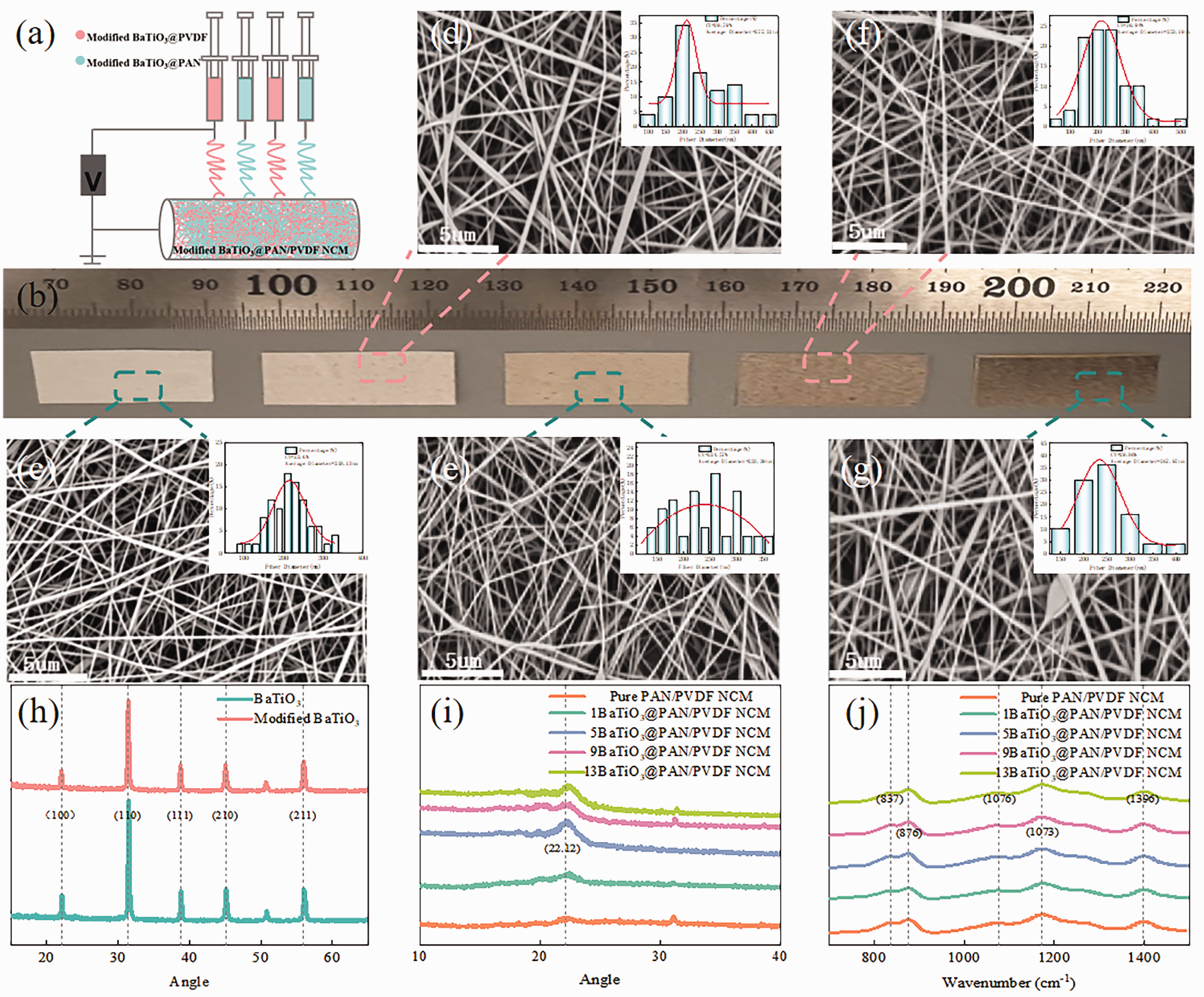
(a) Scheme of the cross-electrospinning process. (b) Physical photos of nanofibrous composite membranes (NCMs). From left to right, the levels of BaTiO3 were 0%, 1%, 5%, 9% and 13%, respectively. The scanning electron microscopy results and diameter distribution of NCMs: (c) 0%; (d) 1%; (e) 5%; (f) 9%; (g) 13%. X-ray diffractometry of BaTiO3 (h) and the NCM (i) and (j) Fourier transform infrared spectroscopy results. PVDF: poly(vinylidene fluoride); PAN: polyacrylonitrile.
In order to observe the structural changes of BaTiO3 before and after modification and the effect of the BaTiO3 level on the structure of NCMs, XRD and FTIR tests were conducted, and the results are shown in Figures 1(h)–(j). As shown in Figure 1(h), the BaTiO3 had the same characteristic crystal structure, which indicated that the surface modification did not change the original crystal form of BaTiO3, resulting in retaining excellent piezoelectric properties. As can be seen from Figure 1(i), the crystallinity of neat the PAN/PVDF NCM was very low. After BaTiO3 was added as a nucleating agent, the diffraction peak of the (110) crystal plane of the BaTiO3@PAN/PVDF NCM gradually increased. When the level of BaTiO3 was 5%, the diffraction peak of the (110) crystal plane was the most obvious, which indicated that the 5BaTiO3@PAN/PVDF NCM had the best crystallization and the fastest crystallization rate. When the level of BaTiO3 exceeded 5%, the movement of macromolecular chain segments was inhibited by heterogeneous nucleation, resulting in the weakened diffraction peak of the (100) crystal plane and the deteriorated crystallization.
As shown in Figure 1(j), the absorption peak at 837 cm−1 belonged to the bending vibration of -CH2 in PAN, which represented the 31-helical conformation of PAN. Meanwhile, the absorption peak of 876 cm−1 was attached to the joint action of the plane rocking vibration of -CH and the non-plane rocking vibration of -CH2, which represented the planar zigzag conformation of PAN. The absorption peaks at 1076, 1173 and 1396 cm−1 showed the β-crystal characteristic of PVDF in the cross-electrospun BaTiO3@PAN/PVDF NCM. Under the action of electrostatic force generated in the electrostatic field during the cross-electrospinning process, PVDF was converted from the original α crystal form to a β crystal form, which would be helpful to improve the subsequent piezoelectric performance of NCMs.
Mechanical property and hydrophobicity
In order to investigate the effect of the BaTiO3 level on the mechanical properties of NCMs, a tensile test was conducted and the results are shown in Figures 2(a)–(c). From Figures 2(a)–(c), the tensile strengths of the BaTiO3@PAN/PVDF NCMs were higher than those of the pure PAN/PVDF NCMs, which indicated that the introduction of BaTiO3 can significantly improve the mechanical properties of the NCMs. Furthermore, the 5BaTiO3@PAN/PVDF NCM had the highest tensile strength of 3.12 MPa, which was 43% higher than that of the pure PAN/PVDF NCMs. The reason might be that the average fiber diameter and CV value of the 5BaTiO3@PAN/PVDF NCM were both small at this time, resulting in no weak joint effect when most fibers withstand tensile stretching. In Figure 2(c), the addition of BaTiO3 could slightly reduce the Young's modulus of the NCMs.

Stress–strain curves (a), tensile strength (b), Young’s modulus (c) and water contact angle (WCA) (d) of the nanofibrous composite membrane (NCM). PVDF: poly(vinylidene fluoride); PAN: polyacrylonitrile.
Due to the fact that the prepared NCMs were used for piezoelectric sensors, the material should have a certain degree of hydrophobicity. The water contact angles (WCAs) of the NCMs are shown in Figure 2(d). From Figure 2(d), the WCA of the BaTiO3@PAN/PVDF NCMs were higher than those of pure PAN/PVDF NCMs, which indicated that the introduction of BaTiO3 can significantly improve the hydrophobicity of NCMs. Moreover, the WCAs of BaTiO3@PAN/PVDF NCMs were above 90°, resulting in the better waterproofing.
Piezoelectricity
To characterize the piezoelectric properties, the NCMs were surrounded by a pair of copper electrodes on the top and bottom, and the outermost layer was a non-conductive flexible polyester film to prevent fiber damage 29 and improve stability during the piezoelectric test, according to the previous method, 30 as shown as in Figure 3(a). Figures 3(b)–(d) display the piezoelectricity of pure PAN/PVDF NCMs under different compression pressures, speeds and thicknesses of NCMs. From Figure 3(b), the highest output voltage of pure PAN/PVDF NCMs was 73.34 mV when the compression pressure was 5 N, and thus the perfect compression pressure of the piezoelectric test was selected to be 5 N. Figure 3(b) shows the piezoelectricity of pure PAN/PVDF NCMs at different compression speeds under the pressure of 5 N. In Figure 3(c), the output voltages of NCMs were 61.87, 57.73, 68.78, 73.34, and 63.35 mV. The maximum output voltage was 73.34 mV when the compression speed was 30 cm/min. As shown in Figure 3(d), the highest output voltage of NCMs with the thickness of 3 mm was 73.34 mV. Therefore, the best parameters in compression piezoelectric testing were a pressure of 5 N, a speed of 30 cm/min and a thickness of 3 mm.
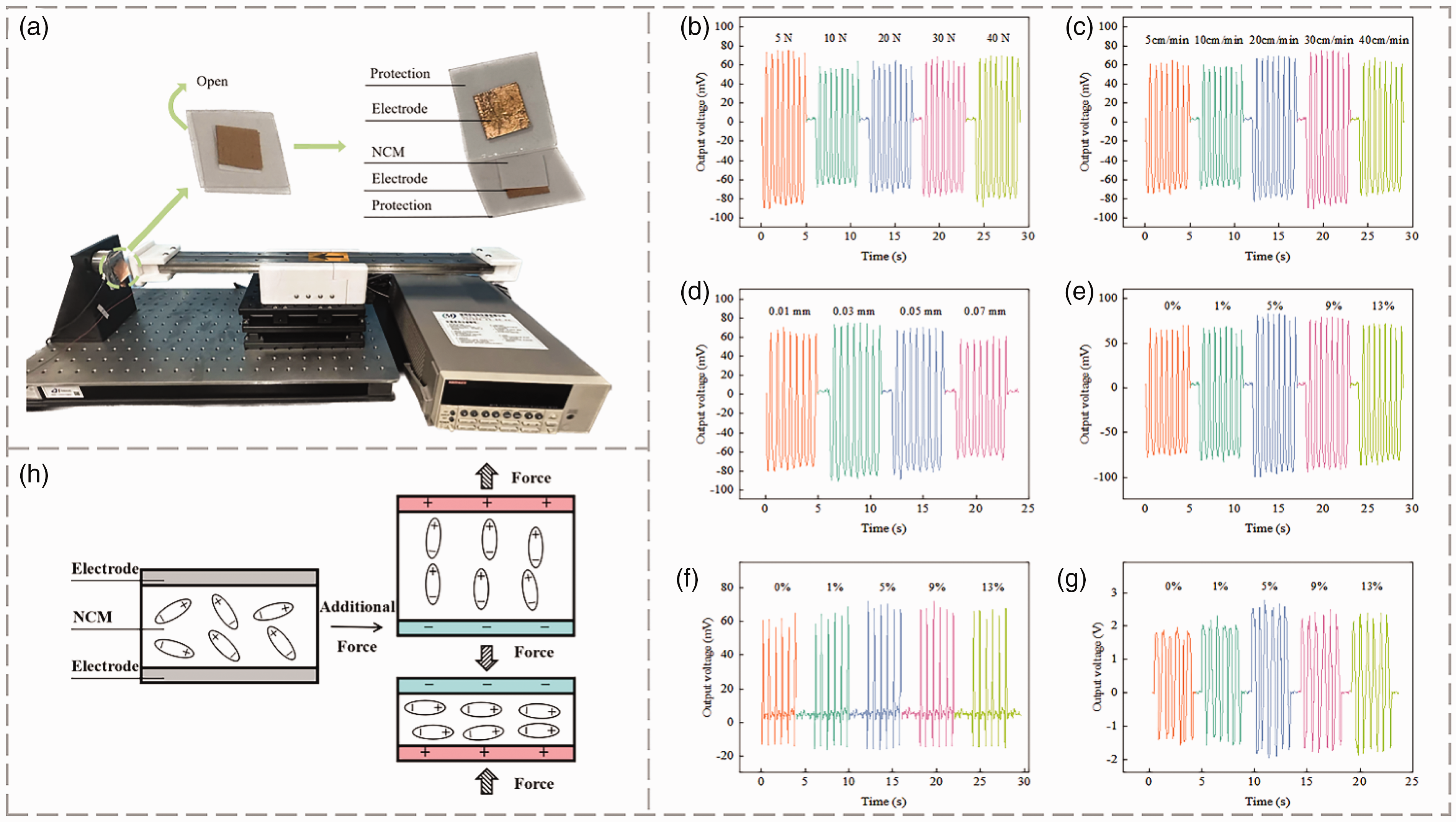
(a) The test equipment and sample. Piezoelectric properties of pure polyacrylonitrile (PAN)/poly(vinylidene fluoride) (PVDF) nanofibrous composite membranes (NCMs) under different pressures (b), speeds (c) and thicknesses (d). Piezoelectric properties of pure PAN/PVDF and the BaTiO3@PAN/PVDF NCM under cyclic compression (e) and the drop-hammer (f) pattern. (g) Electrometer test and (h) Piezoelectric mechanism.
Due to the different force situations of people in motion in real life, cyclic compression and the drop-hammer pattern were conducted to characterize the piezoelectric properties of NCMs, as shown in Figures 3(e) and (f). From Figure 3(e), the output voltage of NCMs first increased and then decreased with the increase of the BaTiO3 level. The main reason might be that excessive BaTiO3 accumulated on the fiber surface and could not form a continuous and stable channel during the transmission of electrical signals. When added to 5%, BaTiO3@PAN/PVDF NCMs had the highest output voltage of 80.04 mV, which was 9.13% higher than the that of pure PAN/PVDF NCMs. In Figure 3(f), the piezoelectric properties of NCMs exhibit the same trend of change as the level of BaTiO3 increased. Due to the limitation of the test equipment, the output voltages of NCMs with the best test parameters by directly connecting the electrometer were obtained and are shown in Figure 3(g). As can be seen from Figure 3(g), the 5BaTiO3@PAN/PVDF NCM had the highest output voltage of 2.613 V, which was 46.39% higher than the that of pure PAN/PVDF NCMs. Under the electrometer test conditions, the output voltages of NCMs increased significantly by nearly 10 times, but the change trend of the output voltage was the same.
Generally, if pressure is applied to a piezoelectric material, it will generate a potential difference, known as the positive piezoelectric effect. Conversely, applying voltage generates mechanical stress, known as the inverse piezoelectric effect. Therefore, piezoelectric materials have the function of converting and inverting mechanical and electrical energy. Figure 3(h) shows the piezoelectric mechanism of NCMs. When a NCM is subjected to a fixed direction of external force, internal polarization occurs and opposite charges are generated on two surfaces. After the external force is removed, the NCM returns to its uncharged state. Moreover, the polarity of the charge also changes with the direction of external force action, which represents the positive piezoelectric effect.
Theoretical and experimental validation by CCD
In order to optimize the preparation process of the 5BaTiO3@PAN/PVDF NCM, the CCD was conducted using Design Expert software, aiming at three influential factors: spinning voltage (A), acceptance distance (B) and liquid supply rate (C). The average fiber diameter and output voltage were the response values, which are summarized in Table 1. The regression analysis of the data in Table 1 was conducted by using Design Expert and the multivariate quadratic regression equations of each factor on the average fiber diameter and output voltage of the response value were finally obtained:


Experiments and results of the central combination design
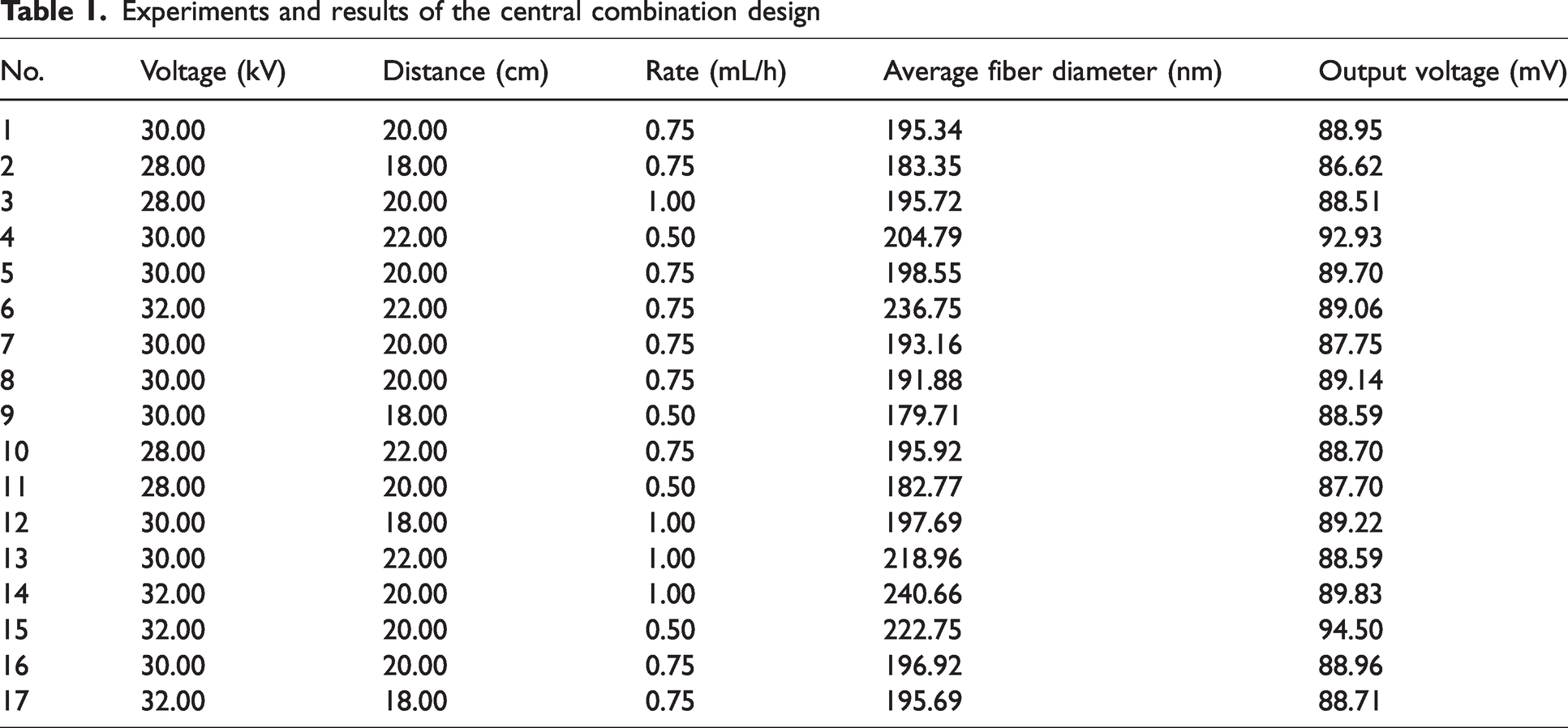
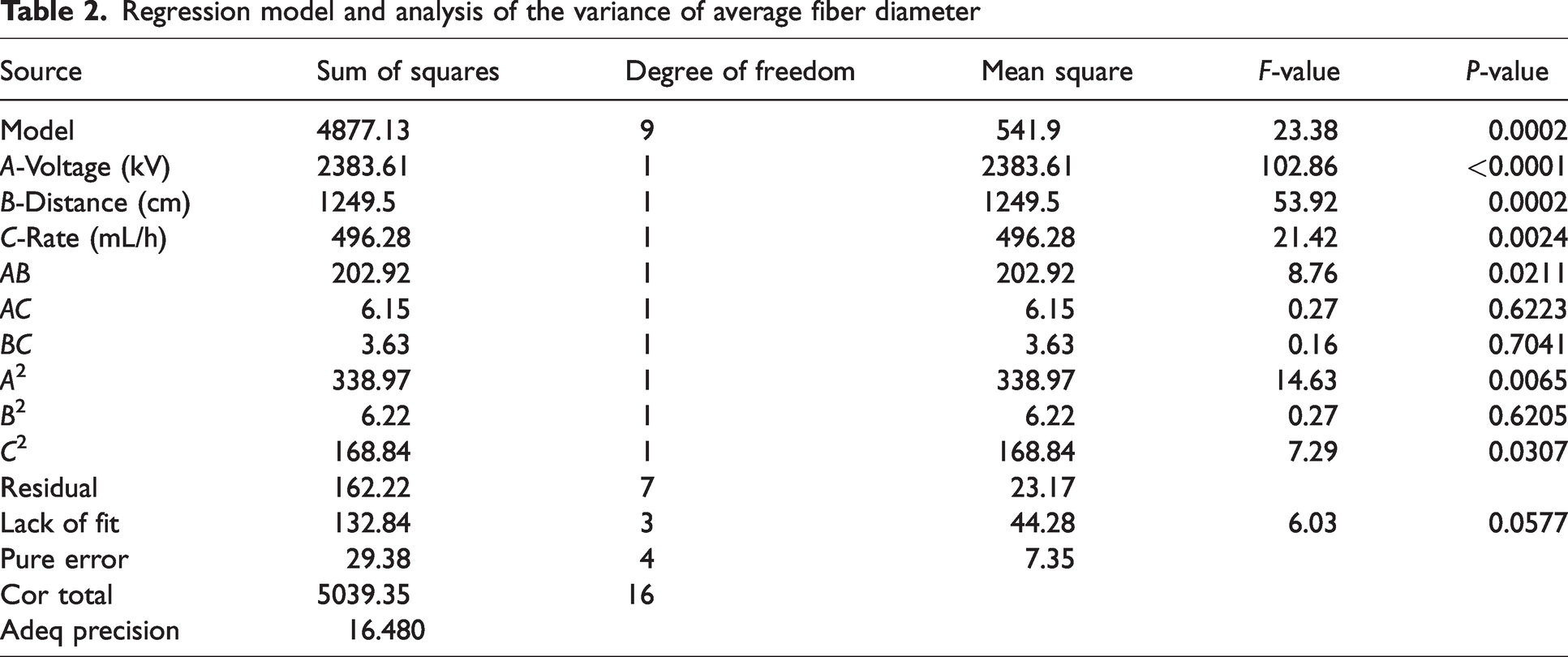
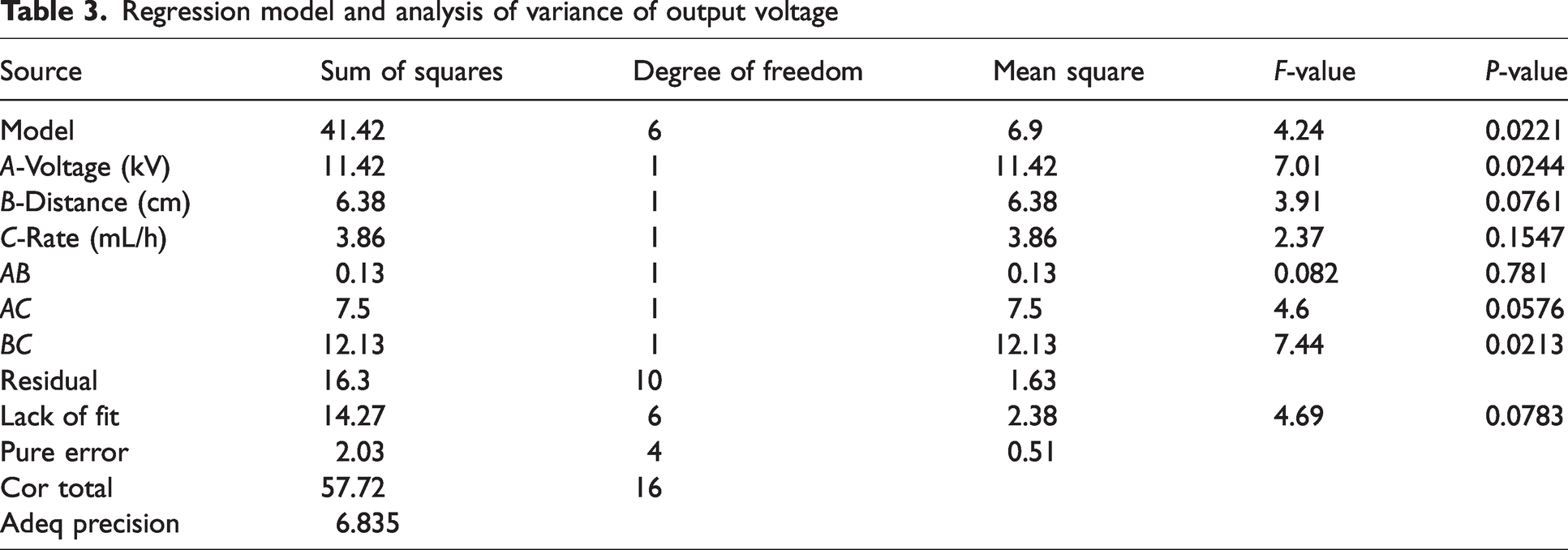
The variance analysis of multiple quadratic regression (Equations (1) and (2)) is given in Tables 2 and 3. In Table 2, the P-value of the model and the misfit term were 0.0002 (<0.05) and 0.0577 (>0.05), respectively. This indicated that the regression model was significant and effective. The signal-to-noise ratio was 16.480 (>4), which is an important index to measure the accuracy of the response value, resulting in significant discriminant ability. Similarly, Table 3 indicates that the model selection of this experiment was very appropriate, with significant discrimination ability, and could be used for theoretical prediction.
Regression model and analysis of the variance of average fiber diameter
Regression model and analysis of variance of output voltage
In order to select the best comprehensive spinning parameters, response surface analysis of the average fiber diameter and output voltage were conducted, as shown as Figure 4. From Figures 4(a) and (d), under a constant liquid supply rate, the average fiber diameter and output voltage were enhanced with the increase of spinning voltage, and they reduced with the decrease of spinning distance. In Figures 4(b) and (e), at a certain spinning distance, the average fiber diameter and output voltage increased with the increase of spinning voltage. With the decrease of liquid supply rate, the average fiber diameter became smaller and the output voltage became out higher. This was because the reduction of spinning distance could easily mean NCMs are not formed. While the liquid supply rate was reduced, and it was difficult for drips to form. Under the condition that the forming was guaranteed and the liquid was not dripping, the increase of voltage helped the nanofibers to form uniformly, so that the piezoelectric properties of the NCMs were improved. Figures 4(c) and (f) show the relationship between the predicted and actual values of the average fiber diameter and output voltage, respectively. It could be found that the predicted value of the yield was very similar to the actual value, which proved a high match between the theoretical model and the actual situation.
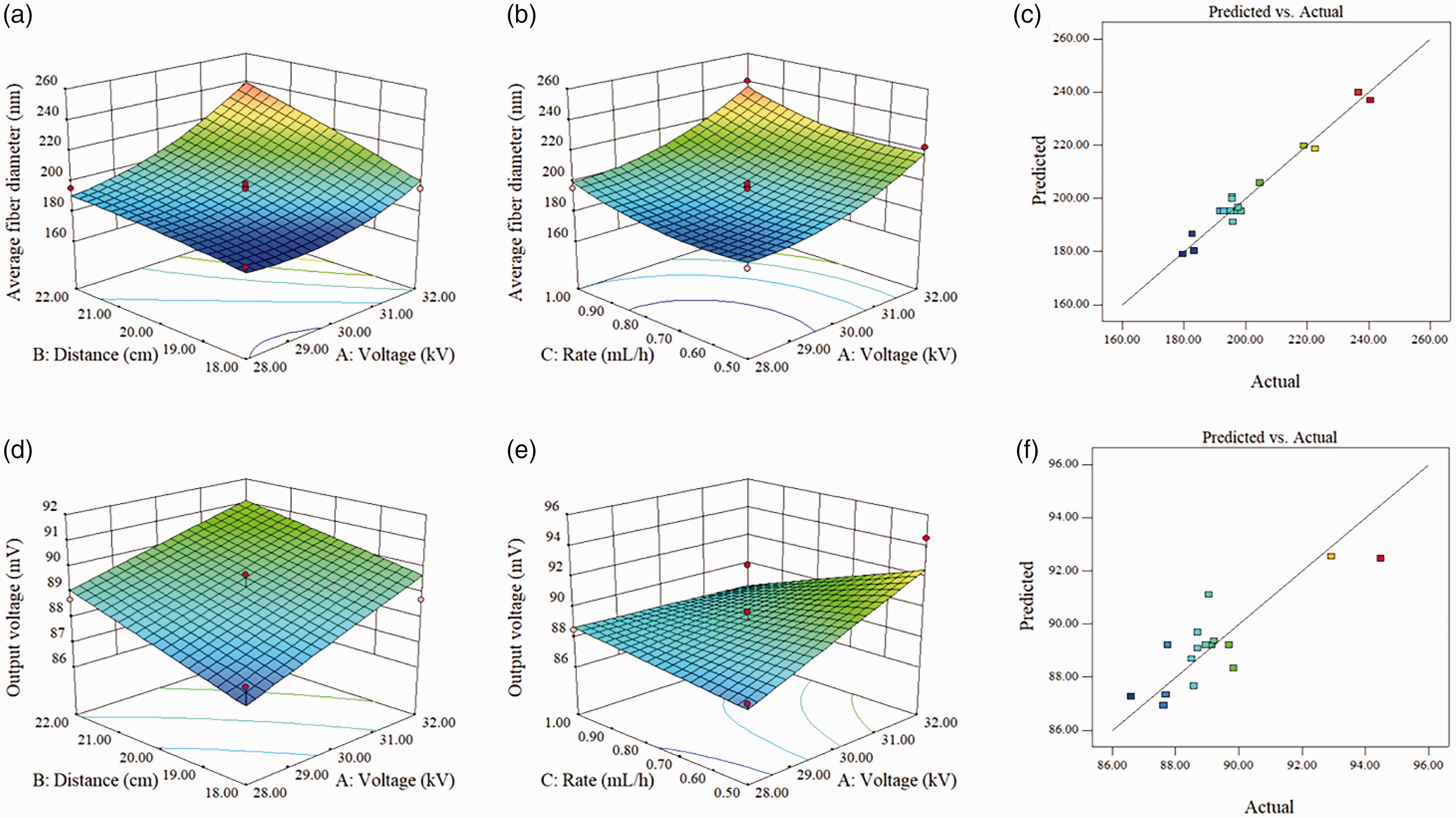
(a), (b) Response surface value of average fiber diameter with the spinning voltage, acceptance distance and liquid supply rate. (c) Comparison of predicted and actual average fiber diameter. (d), (e) Response surface value of output voltage with the spinning voltage, acceptance distance and liquid supply rate and (f) Comparison of predicted and actual output voltage.
According to the results of the CCD for obtaining a good piezoelectric and structurally stable NCM, the spinning parameters should be the spinning voltage of 30 kV, the acceptance distance of 22 cm and the liquid supply rate of 0.5 mL/h. In order to verify the accuracy of the theoretical value, the average fiber diameter and output voltage of the 5BaTiO3@PAN/PVDF NCM under the optimal experimental conditions were compared with the experimental values without optimization and theoretical results, as shown in Figure 5. According to Equations (1) and (2), the predicted average fiber diameter and output voltage should be 200.2 nm and 93 mV, respectively. From Figure 5, the optimized experimental value of NCMs was 192 nm with the relative error of 10.1%, and 91 mV with the relative error of 3.3%, respectively. This indicated that the model could fit well with theoretical model and meet the experimental requirements. Furthermore, after optimizing the experimental conditions, the average fiber diameter of NCMs decreased by 20% from 240 to 192 nm, and the output voltage increased by 21% from 75 to 91 mV. With the help of the CCD, the average fiber diameter of NCMs was thinner and more uniform, resulting in improving the output voltage and piezoelectric sensitivity of the NCMs. Therefore, the piezoelectric properties of NCMs were significantly enhanced and relatively stable after the CCD.
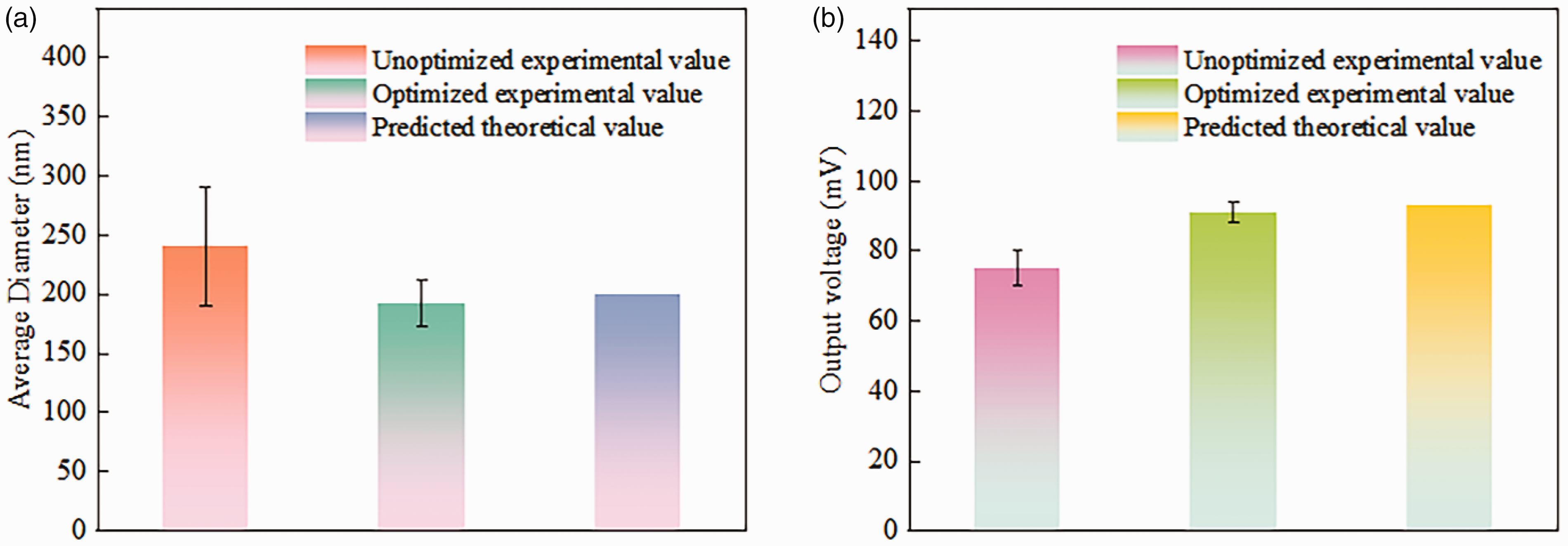
Average fiber diameter (a) and output voltage (b) of the 5BaTiO3@polyacrylonitrile/poly(vinylidene fluoride) nanofibrous composite membrane.
Conclusions
In summary, modified BaTiO3@PAN/PVDF NCMs were prepared by cross-electrospinning technology. The effects of the addition of BaTiO3 at different levels on the fiber morphology and distribution, crystal shape, hydrophobicity, mechanical properties and piezoelectric properties of NCMs were investigated. The results showed that the mechanical properties and piezoelectricity of the 5BaTiO3@PAN/PVDF NCM could be improved by over 40%. The effects of three spinning parameters on the piezoelectric properties of NCMs were recorded and analyzed by the CCD, and the optimum process parameters for the preparation of the 5BaTiO3@PAN/PVDF NCM were determined: voltage of 30 kV, distance of 22 cm, rate of 0.5 mL/h. The piezoelectric performance of the optimized 5BaTiO3@PAN/PVDF NCM was more stable and improved by 46%. Therefore, we believe that the modified BaTiO3@PAN/PVDF NCM combined with cross-electrospinning technology and CCD can facilitate the development of flexible wearable piezoelectric sensors. anionic-based conductive organic nanofibrous sensor with high flexibility, high adhesion, recycling ability and good self-power supply performance under mechanical action was fabricated, which would expand the application scope of intelligent wearable devices, human motion and health monitoring devices and medical testing and flexible electronic devices.
Footnotes
Data availability
Data will be made available on request.
Declaration of conflicting interests
The author(s) declared no potential conflicts of interest with respect to the research, authorship, and/or publication of this article.
Funding
The author(s) disclosed receipt of the following financial support for the research, authorship, and/or publication of this article: This work was supported by the National Natural Science Foundation of China (NSFC, No.51973168) and the Wuhan Yellow Crane Talents Program (Grant No. [2022]734).
