



Abstract
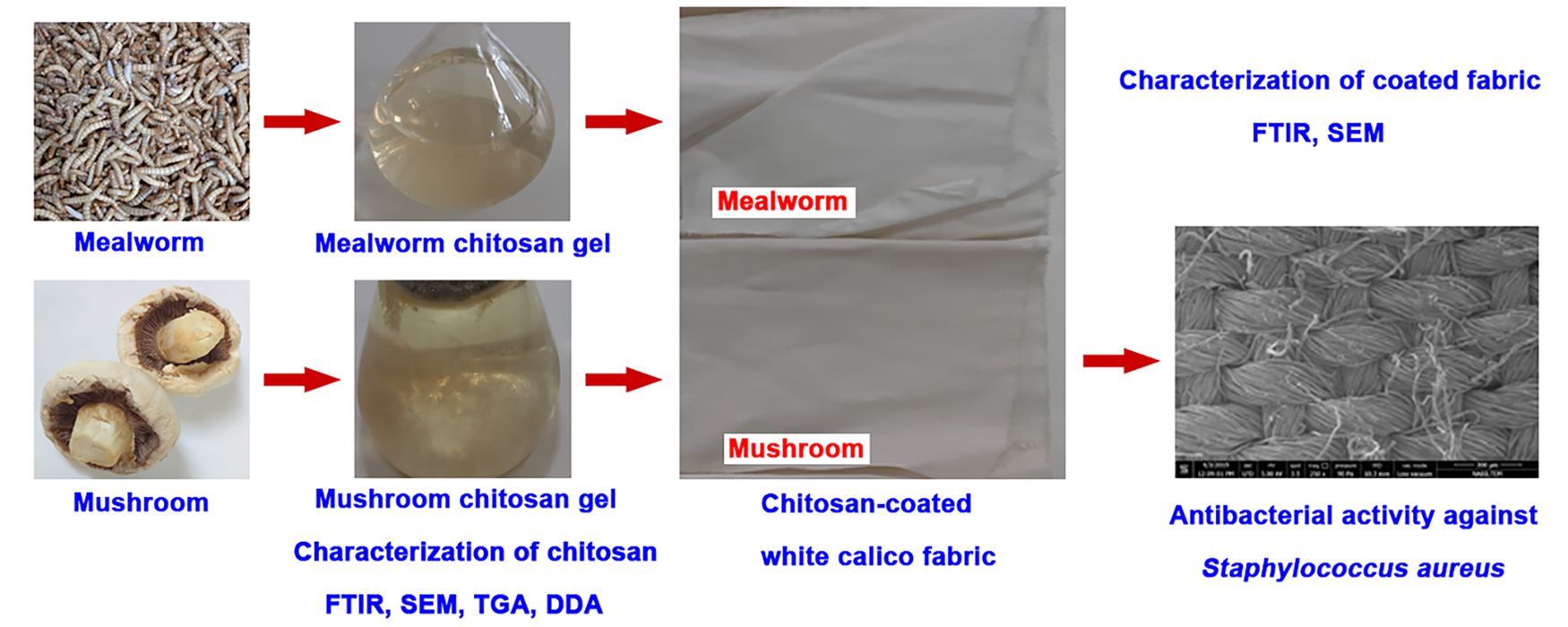
This study presents a comparative evaluation of chitosans derived from fungi (Agaricus bisporus) and mealworms (Tenebrio molitor) as sustainable antibacterial finishing agents for textile applications. The structural properties of fungal and insect chitosans were determined using Fourier transform infrared (FTIR) spectroscopy, scanning electron microscopy (SEM), thermogravimetric analysis, and elemental analysis. The applicability of fungal and insect chitosans to cotton fabrics, the antibacterial activity they impart to the fabric, and the durability of this antibacterial activity after washing were evaluated using the standardized Japanese Industry Standard L 1902 methodology. The analysis results showed that mealworm chitosan exhibited higher thermal stability (maximum degradation temperature of 325°C for mealworm and 309°C for fungal) and a higher degree of deacetylation (79.65% for mealworm and 8.7% for fungal) than fungal chitosan. FTIR spectroscopy and SEM analyses demonstrated that fungal and insect chitosans were physically bound to the fabric surface. Both chitosans were observed to impart good antibacterial activity (A = 3.86 for mealworm and A = 3.61 for fungal; ≥99.9% reduction) to the fabric surface. Consequently, this study demonstrates the usability of alternative chitosan sources in the textile industry while also identifying the limitations of these systems in terms of wash resistance, thereby providing a concrete roadmap for future research.
Keywords
Get full access to this article
View all access options for this article.