




Abstract
The academic performance and engagement of youth from under-represented ethnic groups (African American, Latino, and Indigenous) in science, technology, engineering, and mathematics (STEM) show statistically large gaps in comparison with their White and Asian peers. Some of these differences can be attributed to the direct impact of economic forces. But cultural factors also play a role. This essay will examine two culturally responsive math education technologies and report on evaluations of the technologies in urban out-of-school settings that suggest both approaches can be effective for integrating math education into urban, after-school contexts.
The academic performance and engagement of youth from under-represented ethnic groups (African American, Latino, and Indigenous) in science, technology, engineering, and mathematics (STEM) show statistically large gaps in comparison with their White and Asian peers (e.g., National Science Board, 2010). Since these populations also tend to have lower incomes, some of the difference can be attributed to the direct impact of economic forces: less stable living conditions, fewer resources, attendance in underserved schools, and so on (e.g., Dahl & Lochner, 2008). But cultural factors also play a role. This essay will review the various roles that culture can play in STEM learning, and the corresponding strategies that educators have developed for culturally responsive instructional practices. We then examine two different approaches to the design of information technologies that support culturally responsive math education, and report on some evaluations in urban out-of-school settings. The results of our study suggest that both approaches can be effective for integrating math education into urban, after-school contexts. The differences between the two approaches help to illuminate the diversity of factors that can be incorporated into educational technologies that support culturally responsive STEM education.
Myths of Cultural and Genetic Determinism: Two Noneconomic Factors in Under-Represented Youth STEM Achievement
Research on noneconomic factors in under-represented youth STEM achievement indicates that the social barriers fall into two major groups. The first we will refer to as “myths of cultural determinism.” Fordham (1991) conducted qualitative studies that documented the ways in which high-achieving African American students were accused of “acting White” by their peers. Skeptics have asked why the same is not true for Asians, who also have minority status but are statistically high achieving. Ogbu and Simons (1998) provide a convincing model in their distinction between “voluntary and involuntary” minorities. Asian groups who came to the United States seeking advancement are in a different niche in the “cultural ecology” than the African Americans forced here through the slave trade, or Native Americans who had the misfortune of inhabiting the land when Europeans arrived. Thus the latter formed an “oppositional identity” in which a sense of ethnic authenticity (“keepin’ it real” in Black vernacular) was formed in opposition to markers of White identity: in particular STEM education success. Fryer and Torelli (2010) provided quantitative support to the “acting White” hypothesis by showing that Black student popularity was inversely proportionate to academic success when popularity was a weighted measure based on the popularity of those linked to the individual. Similar studies include Martin (2000) on African American conceptions of the “cultural ownership” of mathematics, Powell (1990) on the conflict between mainstream stereotypes of scientists and African American cultural orientation, and Eglash (2002) on the contradictory figure of the “Black nerd” in popular culture.
The second group of factors can be grouped under the rubric of “myths of genetic determinism.” Here we find the historically pervasive (and biologically discredited; e.g., Gould, 1981) idea that under-represented students are incapable of performing at the same level as White students because of gene-based differences in brain physiology. A large number of studies of “stereotype threat,” for example, show that African American students do worse on standardized testing when they believe the test may be reflecting racially determined intelligence (see Steele, Spencer, & Aronson, 2002 for a review of this literature). Even in our own conversations with teachers we have encountered genetic determinist beliefs—and it is well documented that such low teacher expectations have a deleterious effect on student achievement (Oakes, 1990; Stipek, 2002).
There is some cross-over between the two sets of mythologies: Genetic determinism is sometimes used to support oppositional identity. For example when questioned about the role of Navajo code talkers in WWII, one elder suggested that the Navajo have a special ability to memorize codes that is “in our blood.” Similar mythic claims have been made for African minds as genetically predisposed to be “more holistic,” and even for “race memory” as genetic transmission of rhythmic skills or other cultural attributes. While such attempts to appropriate genetic determinism for the benefit of a minority group are done out of good will, ultimately they too reinforce the negative effects of the myths of genetic predestination. For example, Ngwainmbi (1999) extols Africans for their “holistic” mental abilities, but also sees this as a reason to question importing information technology: “Africans think holistically, not in the metrical pattern which typifies computer operation” (p. 104).
Like the myth of cultural determinism, the myth of genetic determinism becomes a self-fulfilling prophecy: If you believe you are predestined to do poorly in math, there is no point in trying, and your math grades will indeed be lower as predicted. With lower expectations from students and teachers, test anxiety from stereotype threat, and excuses for poor performance that can act as a badge of honor (“at least I’m not a sell-out”), these myths generate serious barriers to academic performance.
The Lack of Social Dimensions in STEM Education
Imagine that you have just explained the above myths of cultural and biological determinism to a teacher, and his reply was “yes, if we could only prevent these students from thinking of themselves as Black or Latino, that would solve the problem.” We do not want to present cultural identity as a problem to be overcome. Rather, we maintain that STEM education’s failure to incorporate the social dimensions of science and technology has harmful repercussions throughout society; exclusion of under-represented youth is just one of the many bad outcomes it creates. In the chemical sciences, for example, “pure science” chemists are trained to develop new molecules with regard only to its physical properties—any thought of their social consequences is for the “applied science” chemists and thus not a concern. But applied chemists are directed to come up with uses for the molecules created by the pure chemist’s labs (Wargo, 1996). Consequently the chemical industry routinely creates pesticides, dry cleaning agents, industrial solvents, and other products with deadly health effects, and these deadly effects are disproportionately concentrated in low-income communities (Bullard, 1983). Chemical pollution is just one example from an enormous array of social disasters created by the deceptive myth of science as independent of social and cultural contexts. Imagine if the math and computing professionals who created the complex investment schemes largely responsible for the 2008 economic collapse had been trained to think about socially sustainable economics rather than boosting profits. How might socially trained scientists and engineers develop better approaches to problems in energy, global conflict, or electronic freedom?
Thus, rather than thinking of culturally responsive education as compensating for some deficit in children who lack a “normal” response to the usual noncultural version of STEM, we should think of these children as providing a valuable insight: The problem is with STEM education, not with them. A more socially oriented STEM education system would benefit all citizens.
Three Dimensions of Strategy for Culturally Responsive Education
A wide variety of teaching frameworks have been developed for culturally responsive education: providing familiar context, developing materials and modes of inquiry that are culturally relevant, modifying instruction to accommodate students prior knowledge, encouraging cooperative learning environments, using model-based approaches, and facilitating staff reflections on students’ progress (Bransford, 2000; Eglash, Bennett, O’Donnell, Jennings, Cintorino, 2006; Villegas & Lucas, 2002). We can think about all strategies for culturally responsive STEM education as constituted by the following three dimensions, each of which offers a spectrum of possibilities.
Cultural Reference: Vernacular Culture Versus Heritage Culture
Heritage culture consists of culture transmitted through ancestry. Thus culturally responsive STEM education based on heritage culture can directly address the myths of genetic determinism: showing students that there is a history of Black mathematicians in contemporary academia, or that there were complex mathematical ideas present in African culture before European colonialism, would both be examples using heritage culture. One drawback of heritage culture is that it may not be very familiar to youth: Indeed, one after-school staff member in our study suggested that African American youth are ashamed of African heritage because they associate it with primitivist stereotypes of mud huts and grass skirts. However helping children to overcome these ethnocentric or racist portraits of indigenous culture is another important reason for culturally responsive STEM education: Several researchers have shown correlations between positive affirmation of ethnic self-identity and academic success (Chavous et al., 2003; Oyserman, Gant, & Ager, 1995). Culturally responsive STEM education based on heritage culture thus not only directly contradicts the myths of genetic determinism, but also offers children new paths to more a positive affirmation of ethnic self-identity.
Vernacular culture consists of culture in one’s local social networks and environments. For many urban youth, hip-hop (rap, graffiti, DJing, breakdance) is an important locus, but more diffuse influences include elements of corporate culture from the commercial fashion industry, video games, and traditional “kid’s culture” such as sports, crafts, games, bad food and making a mess. Unlike the challenge of unfamiliarity in the case of heritage culture, children are (by definition) familiar with vernacular culture. However, culturally responsive STEM education based on vernacular culture runs the risk of reinforcing the dominance of corporate influence, which can be deleterious. Children may be more interested in a math game that has them deciding which brand of sneaker to purchase, but that is not an ambition we wish to reinforce. On the other hand, “street art” such as graffiti or breakdance, like heritage culture, can be disparaged as “low art”— not worthy of our best museums and performance halls. Thus, “elevating” the vernacular material by showing its relation to STEM, while not addressing myths of genetic determinism, does address myths of cultural determinism.
Vernacular and heritage can be thought of as two opposite ends of a continuous spectrum: As we will discuss shortly, some practices—such as cornrow hairstyles in the African diaspora—are better located as the center of the spectrum. Indeed, cultural theorist Paul Gilroy notes that many aspects of what we think of as African tradition were influenced by African Americans (such as the impact of the Virginia Jubilee Singers visit to Africa in 1890), and refers to this long-term cultural mix of indigenous tradition and vernacular innovation as the “Black Atlantic.”
Social Justice: Social Critique Versus Social Affirmation
Several researchers have developed culturally responsive STEM education based on applications of social justice. Terry (2011) for example worked with a group of African American students to develop a statistical analysis of the changes in crime rates. They calculated the changes in the ratio of police officers per citizen, and concluded that the results contradicted public claims by the city government regarding the cause of decrease in crime and the rationale for city fees. Terry concludes that their experience fits well with the “counterstory” framework from critical race theory, in which alternative explanations challenge hegemonic claims, and open possibilities for transformation among the marginalized (Solórzano & Yosso, 2002). Gutstein and Peterson’s (2005) anthology provides a wide variety of lesson plans for other social justice topics ranging from Iraq war economics to the geometry of a wheelchair ramp.
As Gutstein (2003) points out, the method is not without challenges: “How to do this type of project without reinforcing negative stereotypes, depressing, or paralyzing students?” remains a persistent tension. However it is possible to focus on positive examples as well, such as the statistics on Black doctorates over time. As noted in the introduction to this section, we can think of these dimensions as spectrums: in this case, at one end focused on more critical approaches—using math or other STEM to illuminate injustice—and at the other end more an affirmation of cultural accomplishments or social justice triumphs.
Pedagogical Style: Deductive Versus Inductive
Cultural connections to mathematics first appeared in textbooks in the 1960s as a consequence of the civil rights movement. These images were minor illustrations, meant more to inspire than to instruct. Since the 1980s culture-based math instruction has increasingly used more active approaches such as inquiry learning (Brown & Campione, 1994) in which students are guided through a discovery process. This inductive approach often facilitates discussions and other aspects of group learning, which provides additional social dimensions (Vygotsky, 1978).
However, there are limits to the active, discovery learning method: If learners lack sufficient preparation they may become frustrated; if they already have misconceptions they may be reinforced; and some skills are difficult to master without considerable repetition (Kirschner, Sweller, & Clark, 2006). In addition, more passive deductive pedagogy using media such as video or animation have become increasingly sophisticated, and children have become increasingly adept at the use of such media (Ito et al., 2010). Again, inductive and deductive are the two opposite ends of a spectrum of possibilities.
These three dimensions are not meant to be exhaustive; nor are there strict boundaries between them. Most importantly, all three dimensions intersect or interact in most actual teaching experiences. Consider, for example the introduction of a “role model”—a STEM professional who is brought into a classroom or after-school program—for African American students.
Cultural reference
Identity matters: If the role model was an African mathematician, she would not represent vernacular culture, but could contest the myth of genetic determinism through heritage connections. Conversely, a Latino mathematician who grew up in the inner city might inspire through vernacular culture connections, even with no racial connection.
Critical stance
A role model talking about experiencing racism in the mathematics profession might encourage engagement with critical social justice, but here the potential to discourage students is more worrisome. At the other end of this spectrum, there is empirical evidence for the positive effects of STEM role models who affirm engagement of social issues as part of their STEM research (e.g., Weisgram & Bigler, 2006).
Pedagogical style
Giving a speech in front of a class would constitute passive learning; engaging in a discussion would offer a more active learning experience. As noted previously, both approaches can be effective. In one striking example of passive (media-only) exposure to a role model, Marx, Ko, and Friedman (2009) examined Black and White test score differences during the 2008 presidential campaign, and found that at moments just after Barack Obama made strong positive media impacts, Black/White test differences were dramatically diminished.
Two Designs for Technologies Supporting Culturally Responsive STEM Education: AADMLSS and CSDTs
The two designs described in the study each have its respective focus in a different group of social barriers. The reasons for this are more or less simply an accident of the differing design histories, but it provided an opportunity for comparison.
Both sets of tools began with the following common set of premises:
a. Self-identity is not static or predetermined: Rather identity is constantly being constructed, especially in youth (Gutiérrez & Rogoff, 2003; Pollock, 2004). Nonetheless, there are “proclivities,” resources, pressures (what anthropologist Bourdieu called “habitus”) that guide identity formation in particular directions.
b. Culturally responsive educational technology design should leverage this dynamic identity-in-formation as a means to:
A. Motivate and improve STEM learning experiences
B. Provide a deeper understanding of heritage and vernacular culture, empowerment for social critique, and appreciation for cultural diversity.
C. Bring A and B together: to diminish the separation between the worlds of culture and STEM
c. This technology must not only respond to these identity issues, but also satisfy pedagogical demands of the curriculum. In particular, both design teams were somewhat concerned with the trend that assumes the barrier to computing careers is a lack of interest in technology, and thus focuses on helping students become computing application users. We believe that, particularly for low-income, under-represented youth, there is already substantial interest in technology, and that greater career barriers are low academic performance (particularly in math), and an orientation toward becoming consumers rather than producers.
African American Distributed Multiple Learning Styles Systems (AADMLSS, http://www.CulturallyRelevantComputing.org/BGCLogin.php) began with the specific goal of developing information technology for math learning lessons that would be culturally responsive to the identities of African American urban youth. Since culture is a prime determinant of an individual’s development (Vygotsky, 1978), it has an immediate impact on the individual’s ability to learn. Lave and Wenger’s (1991) Situated Learning Theory and Ausubel’s Meaningful Learning Theory (Driscoll, 2000) support the fact that learning is a function of culture, and a learner’s ability to comprehend is enmeshed in her ability to relate new information to previous experiences. In a recent study, researchers have shown the magnitude of cultural influences on brain function, and how widespread the engagement of the brain’s attention system became when making judgment outside the cultural comfort zone (Azar, 2010). Everyone uses the same attention machinery for more difficult cognitive tasks, but they are trained by culture, thus trained to use it in different ways.
Byproducts of culture participation are the diverse and socially mediated transactions manifested through events and activities, labeled as funds of knowledge (Moll & Greenberg, 1990). “Our perceptions of objects and events in the natural world are strongly dependent on our store of prior knowledge . . . we view the world through a pair of ‘conceptual goggles’” (Mintzes & Wanderse, 1997). These conceptual goggles are heavily influenced by culture. Identification with a specific culture can be manifested in many ways, for example, appearance, thought, and lifestyle (Gilbert et al., 2008). Making use of the knowledge already familiar to the learner to teach new knowledge can help create a mental model that maps onto their schema, adding meaning to the new knowledge for the learner (Moll, Amanti,Neff, & González, 1992).
Thus, the AADMLSS design team decided to focus on a game-like virtual environment for the math learning modules: one in which cultural identity could be conveyed though a variety of signifiers—not only the ethnic identities of characters but also a narrative of actions, contexts, and stylistic elements in sound and image that would be familiar and engaging to urban students. In other words, it was tied to vernacular culture. Care was taken to ensure that the narrative logic was also consistent with youth preferences. For example, the design team needed to carefully consider why the character Malik, a young African American urban teenager who was the focus of the pilot scenario, would want to know how much an individual candy bar would cost. Such considerations stand in contrast to standard math textbook word problems, in which such rationales are rarely provided. Williams (2012) notes that this elision sacrifices learning motivations based on the practical utility of mathematics for learning motivations focused on an implied promise of future scholastic advancement (roughly mapping onto the use value/exchange value distinction). In terms of social barriers, AADMLSS was focused on countering myths of cultural determinism, providing an alternative narrative in which mathematics was neither irrelevant nor culturally alienated from the world of Black urban youth.
AADMLSS runs as a flash applet in any browser. It features a flash-based animation that is passively observed (Figure 1), followed by a set of interactive word problems, starting with one that imitates the problem solved in the animation, and progressively moving to less familiar variations. The word problems offer smooth integration of evaluation with the system use. Initial pilot studies were conducted to measure engagement and to get an initial assessment of AADMLSS’s impact on learning. In the pilot studies, participants independently used AADMLSS. After using AADMLSS, the participants answered a 15-item mathematics assessment based on the algebraic lessons that were presented in AADMLSS. The participants also filled out a battery of survey items. The survey items assessed several factors including the participants’ interpretation of the AADMLSS environment, their learning styles, and the teaching effectiveness in AADMLSS. A small sample of the participants were also asked to participate in one-on-one and/or group interviews to capture their recommendations for improving AADMLSS and their opinions of the teaching capabilities of AADMLSS. The pilot studies did not show a statistically significant improvement over standard class lessons, but the cultural relevance was highly successful in attracting youth engagement (Gilbert et al., 2008). It was clear that the basic hypothesis regarding the embedding of vernacular culture throughout the virtual environment as motivational leverage was sustained. Indeed the pilot studies revealed that some of the cultural requirements were nonintuitive to teachers. For example, the pacing preferred by youth was much faster than most teachers would predict. Since youth were generally far more attracted to the AADMLSS lessons than standard lessons, this created a natural niche for application to programs outside the classroom, as we discuss in the following section.

Clip from AADMLSS animation.
The other system investigated in this study, Culturally Situated Design Tools (CSDTs, www.csdt.rpi.edu), began with a year of ethnographic research under the Fulbright program in west and central Africa, which documented the conscious use of fractal structures for various symbolic and practical purposes, along with intentional recursive scaling structures in textiles, sculpture, metal work, hairstyles, and in some cases even quantitative systems (Eglash, 1999). It is important to understand that this “ethnomathematics” approach is not a matter of imposing western mathematical ideas from the outside: Rather it is a matter of documenting indigenous math and computing concepts embedded in traditional practices, and then using simulations to “translate” to their western equivalents. Adding this computational component to ethnomathematics is sometimes termed ethnocomputing (see Eglash et al., 2006). In reverse from AADMLSS history, which began with an educational system attempting to develop math/culture connections, CSDTs began with a culture/math connection—and the question was then how to apply these rich relationships to education.
An obvious audience for the African fractals content would be African American students, and thus many of our studies have focused on urban education. Simply by virtue of differing design histories, AADMLSS was focused on vernacular culture, and CSDTs were focused (at least at first) on heritage culture. The CSDT team decided to make the education connection by developing design tools: If users could create their own simulations of African designs using fractals—that is showing that traditional design techniques used recursion, scaling, and so on—it would (hopefully) make a convincing case that there is a sophisticated African mathematical heritage, and thus counter myths of genetic determinism.
Ethnomathematics examines the mathematical ideas and practices embedded in traditional cultural activities. Students who assume that their indigenous heritage is limited to mud huts and hunting can be surprised to find that sophisticated math and computing principles underlie many of the traditional designs and activities. There are, however trivial ways to do ethnomathematics. When done properly it can be summarized by the following four principles:
A. Deep design themes. When examined in their social context, indigenous mathematical practices are not trivial or haphazard; they reflect deep design themes providing a cohesive structure to many of the important knowledge systems for that society. The pervasive use of fractals in African design, for example, ranges from the scaling structure of village architecture to recursively-generated binary codes in divination practices, and is associated with complex conceptual schemes in their art, cosmology, and other knowledge systems (Eglash, 1999).
B. Anti-primitivist representation. By showing sophisticated mathematical practices, not just simplistic examples (e.g., “African houses are shaped like a cylinder”), ethnomathematics directly challenges the genetic and cultural determinist stereotypes most damaging to underrepresented groups.
C. Translation, not just modeling. Often indigenous designs are merely analyzed from a western view; for example, applying the symmetry classifications from crystallography to indigenous textile patterns. Ethnomathematics, in contrast, uses relations between the indigenous conceptual framework and the mathematics embedded in corresponding indigenous designs. This is crucial to giving underrepresented students a sense of cultural ownership of math, rather than an empty gesture toward “inclusiveness.”
D. Dynamic rather than static views of culture. While evidence for independent indigenous mathematics is crucial in opposing primitivism, it is also important to avoid the stereotype of indigenous peoples as historically isolated, alive only in a static past of museum displays. For this reason ethnomathematics includes the vernacular practices of the contemporary era; for example, the geometry in contemporary Black hairstyle patterns, the “street geometry” of graffiti, and so on. However it is important to note that ethnomathematics applied to vernacular culture has less power for disrupting myths of genetic determinism than its application to indigenous (i.e., heritage) culture. Showing that your group had a Cartesian coordinate system before Europeans arrived indicates independent mathematical thinking; showing that Graffiti artists use a coordinate system just means that were paying attention in school. On the other hand, if you can tie the experience of learning mathematics to the experience of creating graffiti, that can have a strong impact on disrupting myths of cultural determinism.
By placing ethnomathematics in a computational framework (i.e., ethnocomputing), an additional benefit emerged: the potential to support creative inquiry/discovery learning. Students could start out simulating traditional designs, but once they had learned the mathematical and computational principles underlying these traditional techniques, they could generate their own creative innovations. Since there are strong links between inquiry or discovery learning (e.g., as technologically implemented in the tradition of LOGO, Scratch, Alice) and the constructivist theory that forms the basis for much of the culturally relevant education (e.g., Vygotsky), this creative approach to culturally enriched math and computing seemed especially promising.
As in the case of AADMLSS, the CSDT pilot system had some initial success, but also raised several challenges. On the success side, we found statistically significant improvement in math and computing performance and attitudes toward computing careers in some controlled studies (see Eglash, Krishnamoorthy, Sanchez, & Woodbridge, 2011, for a recent example). However there were at least three challenges to the original premise:
Teachers noted that fractal geometry is not a standard topic in the K-12 curriculum.
A mouse-driven interface, despite mathematical content, makes it difficult to engage students in numeric practices.
African American students were generally not familiar with African artifacts or cultural practices.
None of the challenges negated the worth of the pilot system—Some K-12 math teachers do include fractal geometry as an interesting supplement to the regular curriculum, and there is value in children’s psychology of development when they learn about the sophistication of their heritage culture (as discussed previously). But it did inspire the idea of branching out into simulations of cultural materials more familiar to American under-represented youth; that is, vernacular culture. By introducing a CSDT to simulate cornrow hairstyles (Figure 2), the design could utilize a cultural practice that was familiar to urban African American youth, still include heritage ties (the African origin of cornrows is covered in the “cultural background” section of the website), and shift the focus to numeric parameters for transformational geometry (which unlike fractals is part of the standard curriculum). Over the years CSDTs have grown to include other heritage and vernacular examples: Latino percussion rhythms, urban graffiti, breakdance, native American beadwork, and Mangbetu sculpture are just some of the examples. Unlike AADMLSS, evaluation is external to the system; teachers must administer pre- and post-tests on paper or using an online survey.
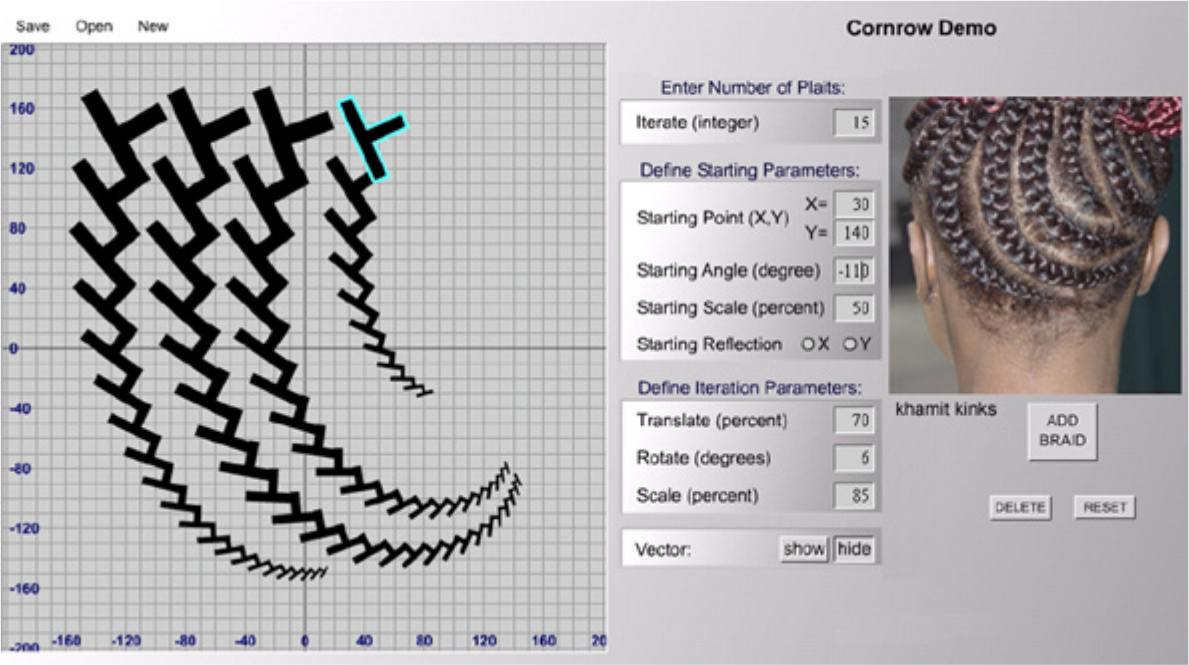
CSDT for simulating cornrow hairstyle patterns.
Table 1 summarizes the distinctions between the two systems in terms of the three dimensions discussed previously.
A Comparison of Content Relations to Learning Motivations in CSDTs and AADMLSS.
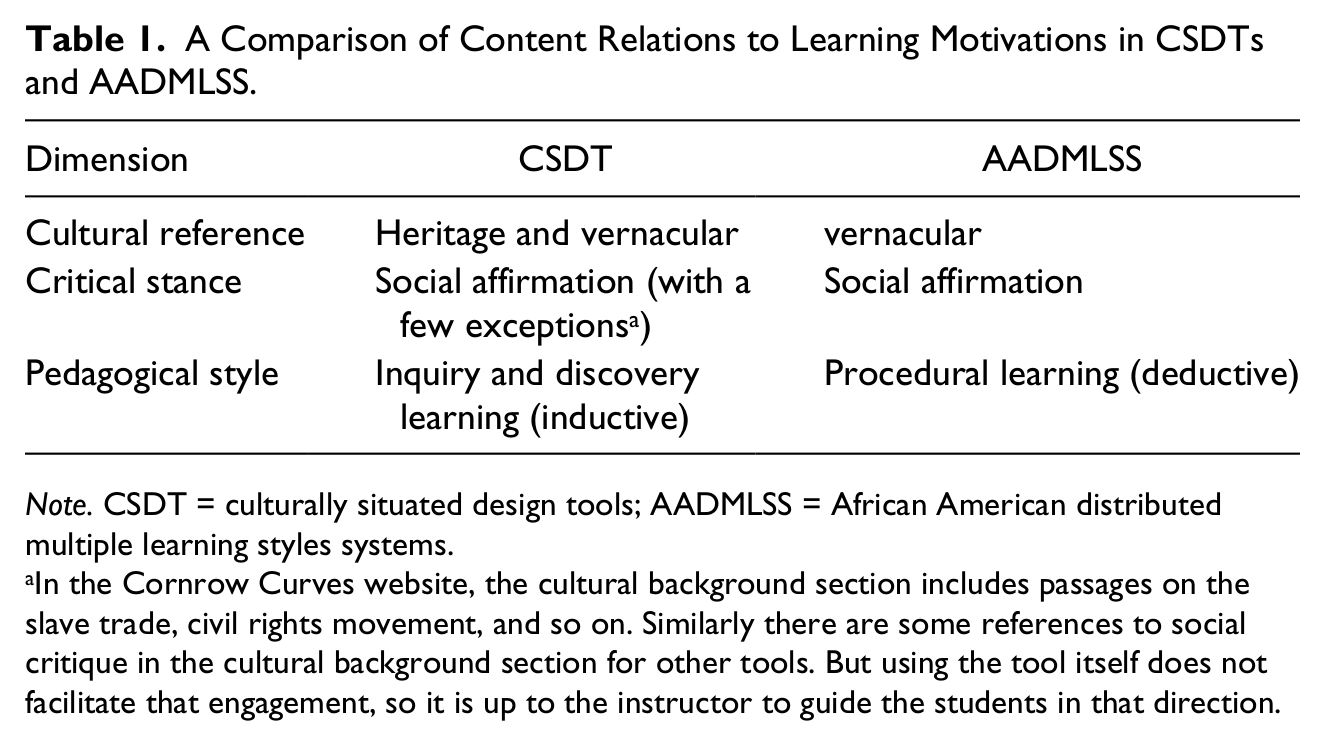
Note. CSDT = culturally situated design tools; AADMLSS = African American distributed multiple learning styles systems.
In the Cornrow Curves website, the cultural background section includes passages on the slave trade, civil rights movement, and so on. Similarly there are some references to social critique in the cultural background section for other tools. But using the tool itself does not facilitate that engagement, so it is up to the instructor to guide the students in that direction.
Table 2 summarizes other distinctions between the two systems.
A Comparison of Content Relations to Software Design in CSDTs and AADMLSS.
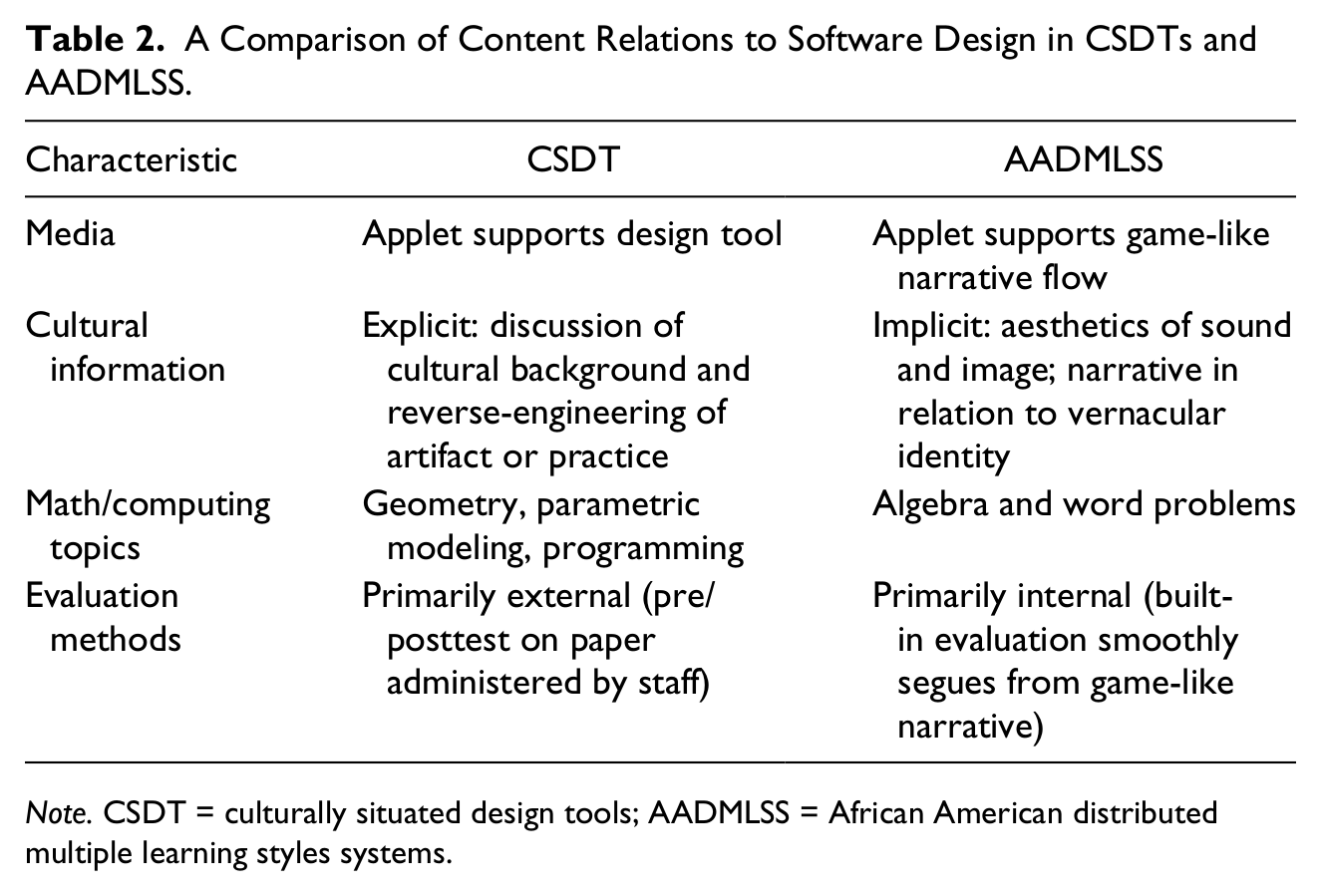
Note. CSDT = culturally situated design tools; AADMLSS = African American distributed multiple learning styles systems.
Evaluation Methods
In 2009, we received funding from the National Science Foundation to apply AADMLSS and CSDTs to after-school programs at various Boys and Girls Clubs (BGC), a national organization that primarily serves youth from groups that are under-represented in STEM professions. Our programs were carried out at eight different BGC locations in Texas, Alabama, and New York. The tools were selected primarily based on the interest of the participating. The primary tools utilized were:
Snickas (AADMLSS): purchase narrative. Algebra.
Ice Cream (AADMLSS): purchase narrative. Algebra.
Rhythm Wheels (CSDT): students create percussion rhythms using sound libraries that offer heritage (Latino-Caribbean) and vernacular (Hip-Hop) sounds. Math concepts include Least Common Multiple, ratio, fraction, and proportion.
Cornrow Curves (CSDT): covers heritage and vernacular examples. Transformational geometry.
Virtual Bead Loom (CSDT): focused on Native American heritage identity. Cartesian coordinate systems.
Breakdancer (CSDT): primarily focused on vernacular identity. Angles in 3D Cartesian space.
Skateboarder (CSDT): vernacular identity. Slope, physics of motion, programming.
African Fractals (CSDT): heritage identity; fractal geometry
Anishinaabe Arcs (CSDT): Native American heritage identity; 3D Cartesian space.
The evaluation used multiple assessment approaches. First, student participants’ interests and attitudes toward computing and math were captured using a one group pretest–post-test design. Every student that used the tools completed online registration and had the opportunity to answer demographic questions and rating and open-ended items related to computing and math attitudes. Once registered, students gain access to the online web page that outlines available computing tools. Continuing students who had already registered completed a survey about tool choice, computer use, and suggestions for BGC sessions. Given the drop-in nature of the BGC and the reality that some BGC serve a more transient community, it is critical to track individuals over time. Pre/post–web-based skills tests were added to measure concepts associated with the particular tools used. By “skills tests” we refer to tests that offer specific math challenges, such as marking the correct Cartesian graph point given a coordinate pair.
Second, participants’ experiences were captured through informal interviews at the end of the semester and responses were analyzed for emerging themes. Third, student artifacts such as designs, computer simulations, photographs and videos were presented to the researchers and evaluation team as a visual referent for student engagement with the tools. Finally, a postintervention feedback survey provided specific information about the ease of use and relevance of the tools used by the students. These evaluations were refined over the first 3 years of the project: For example, we discovered that repeating individual skills tests for each tool led to survey fatigue for the students; consequently, a combined skills test was developed and implemented in place of the individual tests. The assessment involves pre- and postskills tests, attitudinal surveys, and individual interviews.
Evaluation Results
Preliminary evaluations indicate that there are complimentary values to the CSDT and AADMLSS approaches. For example, although CSDTs primarily utilize numeric inputs, these are typically parameters that govern graphical output: how many iterations of copies, the Cartesian coordinates for placing an object on the screen, the amount of scaling applied, and so on. This emphasis on math as the interface to a graphic design tool makes it difficult to use this as a platform for teaching topics such as algebraic equations, in which there is a focus on symbol manipulation to get the “one right answer.” Conversely, AADMLSS is the perfect format for such topics: The current models are essentially animated word problems that clearly ask users to set up and solve an algebraic equation. But the lack of creative opportunities limited its appeal for some after-school programs, particularly those in which we compete with sports and other playful activities. On the other hand, merely the fact that some students do volunteer to use AADMLSS speaks to the strength of its aesthetic appeal: These are students who have chosen algebra lessons over basket-ball or other recreations. BGC staff also remarked on this trend: When asked what development they would like to see in the future, one remarked “More word problem tools such as [AADMLSS].”
One particularly interesting incident occurred in which BGC staff at one location noticed that children using AADMLSS were “cheating” by moving through the system twice; once to gather the correct answers and a second time to apply them. While discouraging cheating is certainly a good design goal and ethical principle, this offers some insight into how future AADMLSS designs may take advantage of such motivations. Searching virtual environments for clues has been a particularly important development in the design of computer games that are more appealing to girls (Cassell & Jenkins, 1998), and users need not be cheating if this was built-in as part of the system. The challenge would be to integrate such “search modes” with the learning process.
Outcomes from CSDT use reinforced earlier evaluations, showing statistically significant improvement in several pre/postskill tests. For example, one group utilized a Native American simulation in which they controlled parabolas in a 3D Cartesian space to generate wigwam-like virtual structures (Figure 3).
Print out of a virtual wigwam.
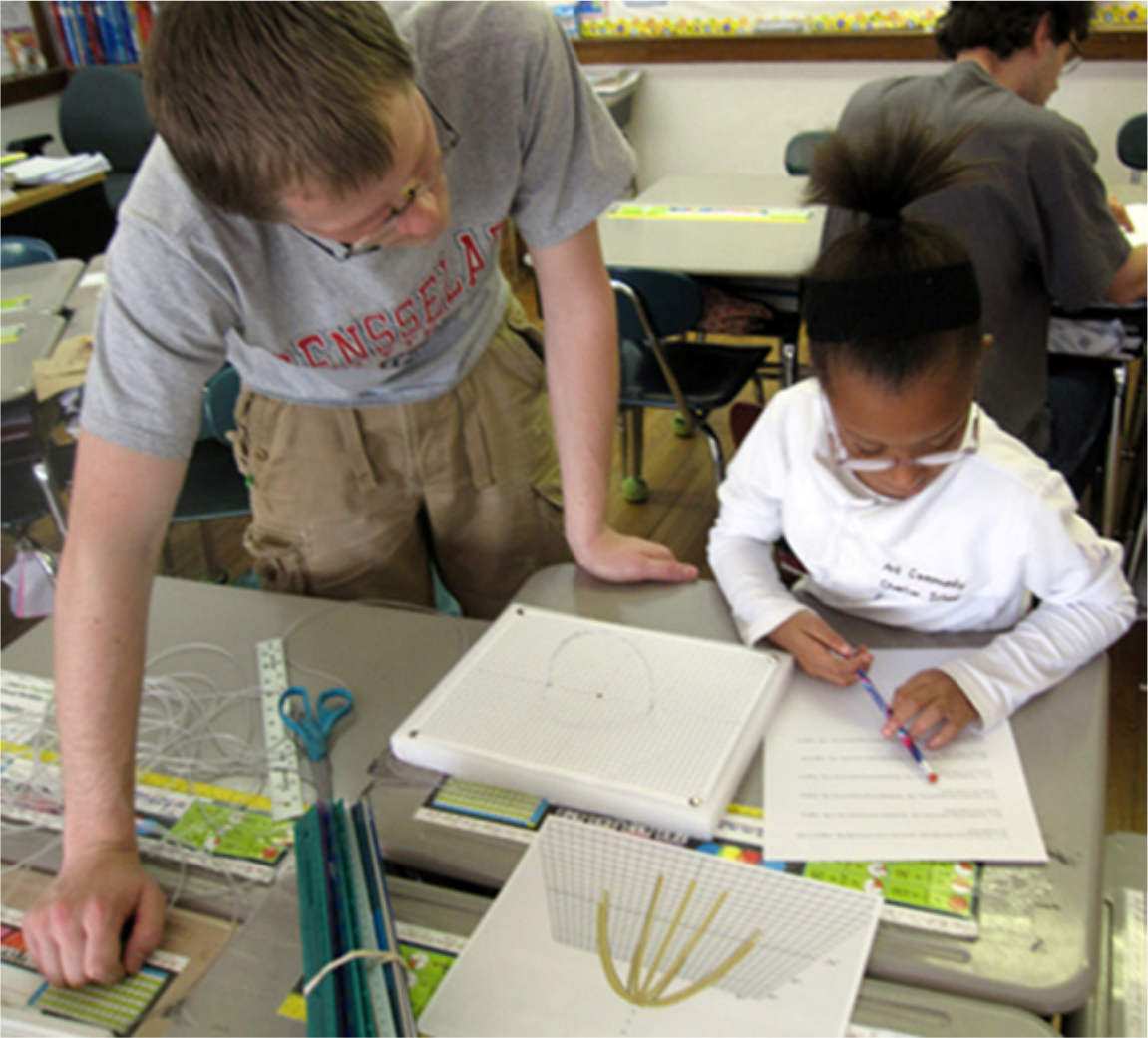
The software provided them a list of parabola lengths and the Cartesian positions of the endpoints: They cut tubing to match these lengths and inserted them in Styrofoam boards with Cartesian grid printouts glued to the surface (Figure 4). The result was a physical rendering of their virtual designs. In a final step, students created a life-size version (Figure 5).
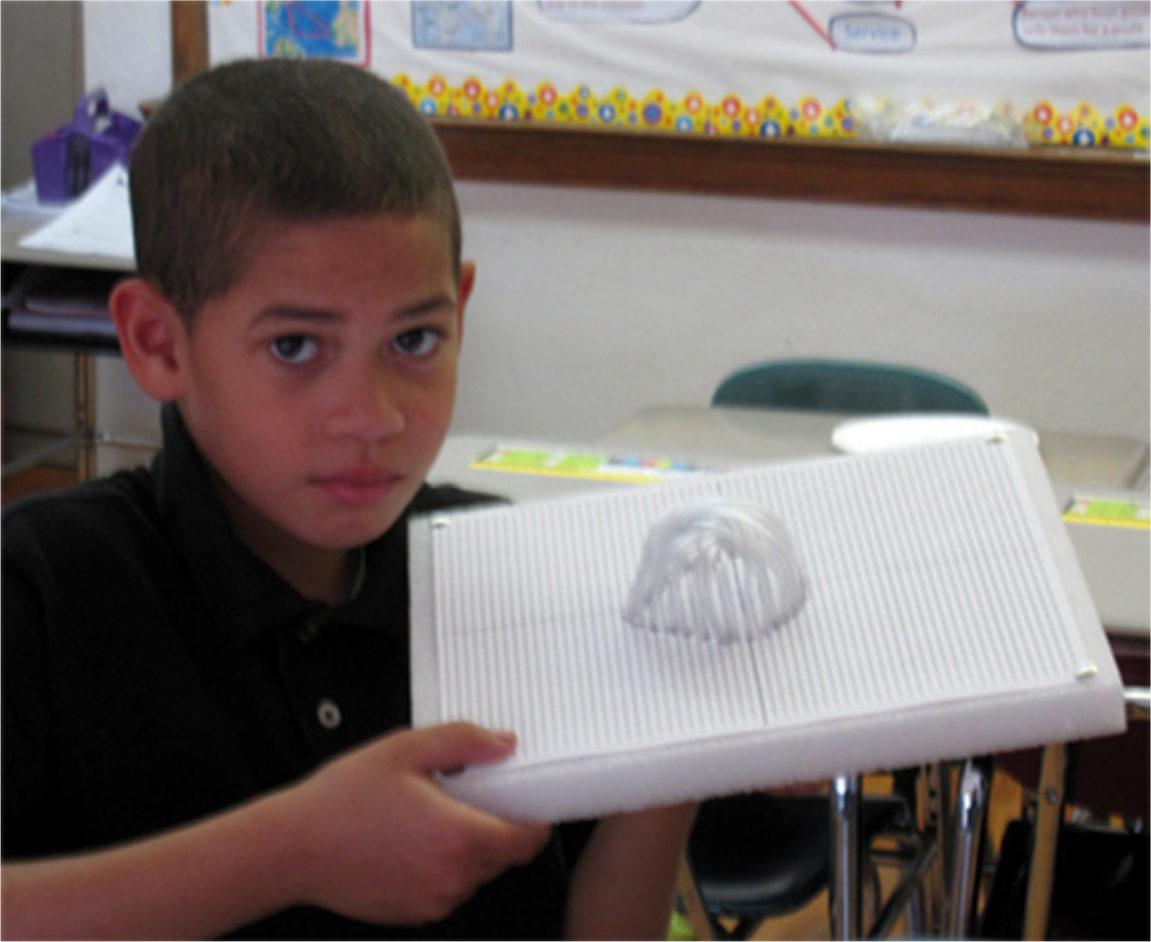
Physical rendering of the virtual wigwam.
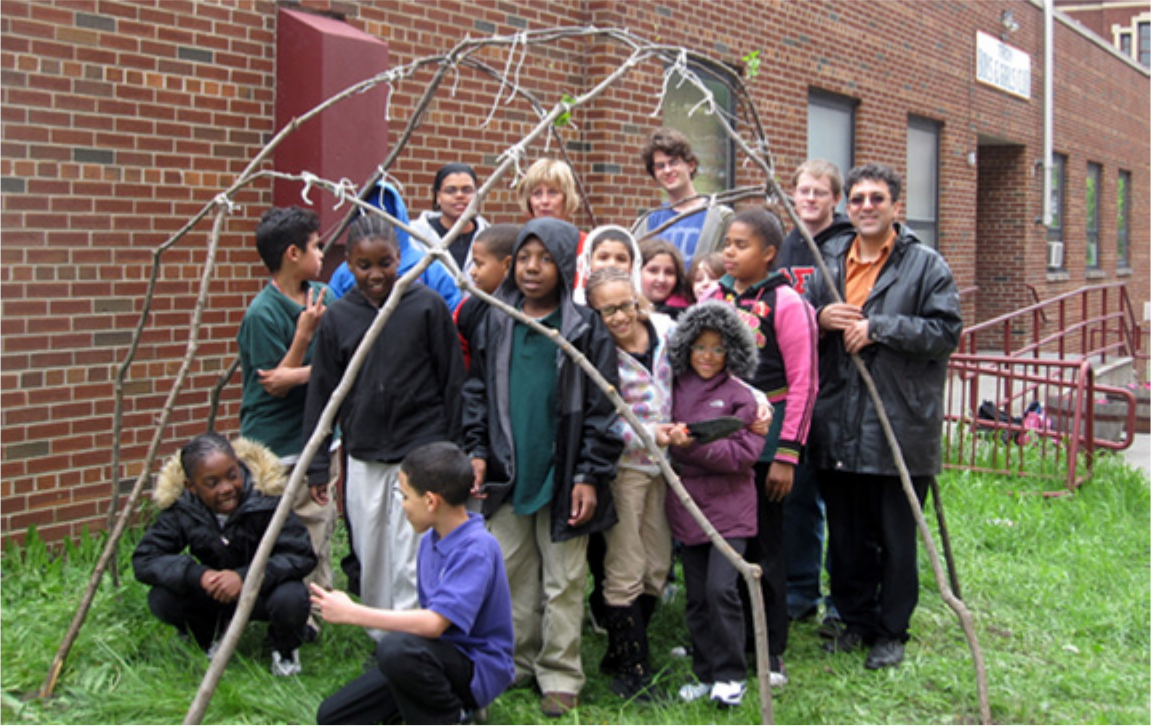
Life-size wigwam.
The most rigorous evaluation occurred in a location where the BGC was partnered with a local charter school. This enabled a quasi-experimental comparison between pre/postdifferences for students attending the after-school program, and their peers in the same school who did not attend the program. We discarded the first run of this evaluation due to a need to refine the tests. The results of the second run are shown in Tables 3 and 4: There is a strong advantage to students using the software.
Evaluation of Wigwam CSDT (N = 13).
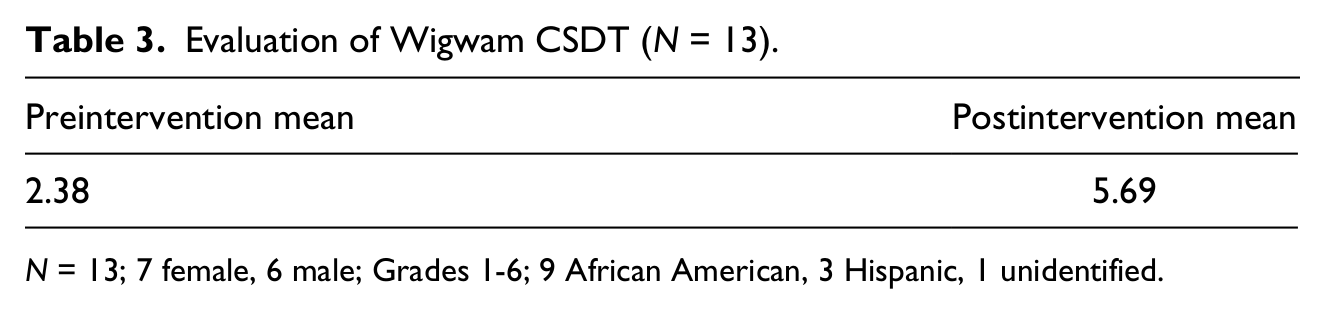
N = 13; 7 female, 6 male; Grades 1-6; 9 African American, 3 Hispanic, 1 unidentified.
Quasi-Experimental Study of Skateboarding CSDT.
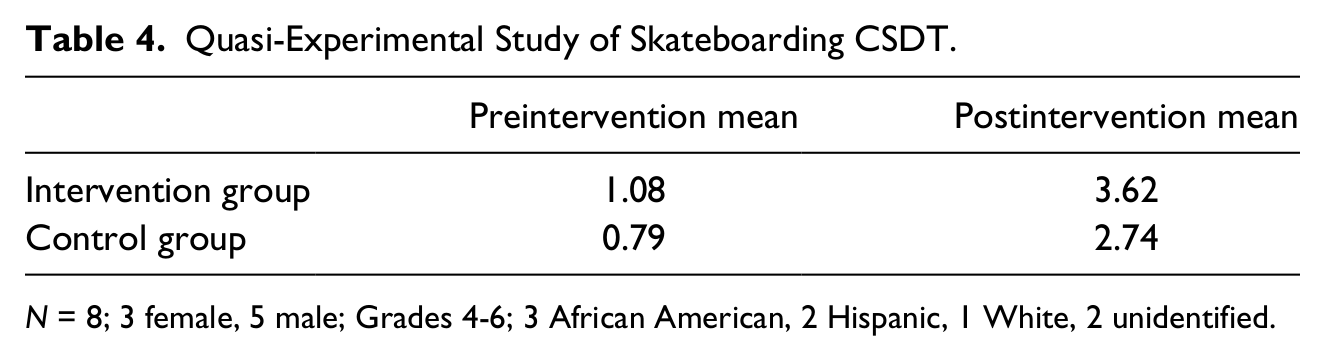
N = 8; 3 female, 5 male; Grades 4-6; 3 African American, 2 Hispanic, 1 White, 2 unidentified.
The largest group came from one of the Texas sites, and provided a glimpse of how children viewed the value of the tools for their own purposes. The demographics for this site is listed in Table 5.
Boys and Girls Club College Station CSDT Registrants.

Note. CSDT = culturally situated design tools.
The results of this survey are listed in Table 6.
Continuing BGC Member Survey Results (n = 45).

Note. BGC = boys and girls clubs; CSDT = culturally situated design tools.
It was particularly striking to see that 12 of the students reported that they had continued to use the tools at home. The pattern in which tools were ranked most popular vaguely follows a vernacular over indigenous trend, but that is not entirely consistent. We can assume that “Math” is referring to the AADMLSS tools based on vernacular culture: They are above African Fractals but on the same popularity ranking as Virtual Beadloom, which is indigenous. Another hypothesis is that this is actually ranking easy to learn versus difficult to learn. The Beadloom is generally seen as one of the easiest to learn, but Breakdancer, which is much harder, is also much higher in popularity. We also might hypothesize that this is ranking “cool effects.” That would certainly explain the high ranking for Breakdancer, which is a 3D animation, but not the low ranking for African Fractals, which can be visually spectacular.
Conclusion
BGC participating in the study generally found that both approaches (AADMLSS and CSDTs) were useful, and provided complementary coverage of the various dimensions of culturally responsive learning. While we can generally say that there is some tendency to prefer vernacular culture over heritage culture, we have to express some caution in implications. Most importantly, children may simply be selecting what is familiar to them. For example, when we have trained children using several tools, the fractal tool often elicited more excitement than that for other static images, but it is very low in their choices when they are selecting on their own, perhaps because they have never heard of fractals.
Another important consideration is age: Most of the children in this study were in Grades 4 to 6. Research on adolescent development of identity concludes that focused attention toward ethnic identity—that is, asking the question “what does it mean to be a member of my ethnic group?”—does not typically become important until middle school (Phinney 1989). This is consistent with the differences in the designs produced by children in this study versus older students from the same demographic. The younger children tend to produce designs from familiar icons such as abstractions of animals or a “smiley face.” Figure 6 shows a design created with the graffiti CSDT by a ninth-grade Latino student; we can see “Mexicana,” “Chicana” and “Oaxcaca” along with the Mexican flag. Figure 7 shows a design created with the Cornrows CSDT by a ninth-grade African American student. Her father was originally from Ethiopia, and had told her about a famous waterfall there. The caption reads “Tisissat—I named this after the largest waterfall in Ethiopia. It shows strength and holding people together. The math is based on rotation.”
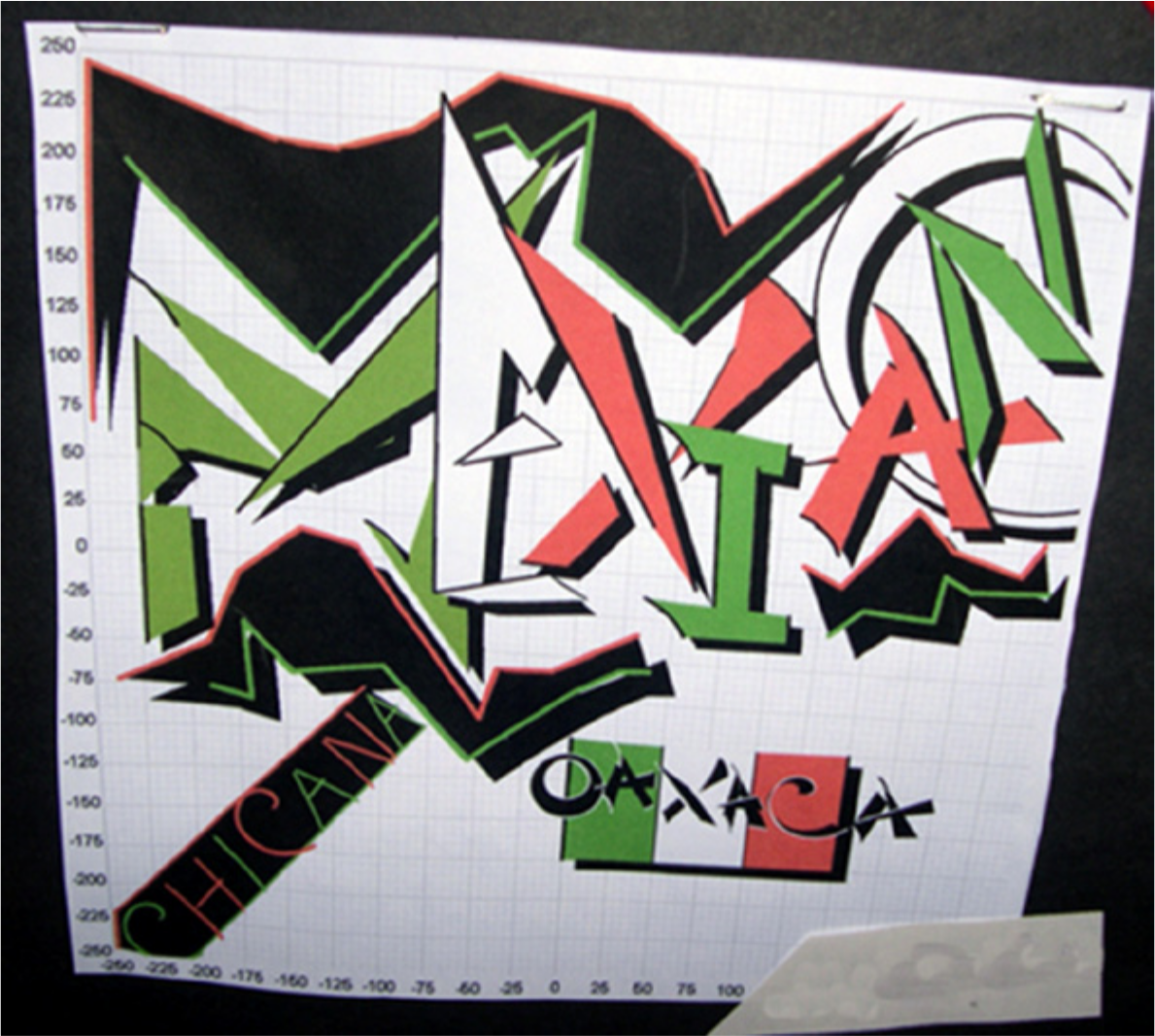
Graffiti from ninth-grade Latino student. Ethnic identifiers such as these are rarely seen in elementary age users.

Cornrows from ninth-grade African American student.
We should note here that even for older children, tools were not limited by ethnic identity, nor were the cultural associations of designs limited by the tools. Latino children in the same classroom as the student who produced the “Mexicano” graffiti in Figure 6 also produced what they called “New York Style,” which did not have any Latino cultural signifiers. We have seen African American children use the Native American beadloom to create what appear to be graffiti tags, and Native American children who were fascinated by the cornrows tool. Even for children whose ethnic heritage matched the tool, there were diverse cultural associations generated (see Eglash & Bennett, 2009, for examples regarding the cornrows tool as used by African American children).
CSDTs and AADMLSS are available online for free to anyone who would like to use them. But more generally, we can offer the following recommendations for urban educators interested in developing culturally responsive approaches to STEM education:
Consider all locations along all three dimensions. It is tempting to think that each of the three dimensions we discussed—cultural reference, social justice, and pedagogical style—might have one optimal location. But children vary widely in their aptitudes, backgrounds and beliefs. Offering a wider variety of cultural access points—vernacular culture and heritage culture, social critique and social affirmation, both types of pedagogical style—allows the best chance of reaching all the participants.
Actually reaching all locations along all three dimensions is often not possible, and so we have to come up with strategies for deciding where to locate. It is tempting to simply pick the low-hanging fruit: For example, one researcher had children zoom into small images of their choosing (mostly vernacular), and then calculate the number of pixels in the image. This kind of shallow gesture toward cultural reference does nothing to disturb the barriers between the technical and the social. There are plenty of deep connections to be found with a thoughtful approach.
Take vernacular culture seriously. It is a common mistake to think of culture as the sugar-coating that will make children swallow the bitter pill of math or science. Hence culture often appears in its most facile forms: whatever will tempt children best. In the hyper-commodified world that urban youth inhabit, simply encouraging their cult of consumerism is doing them a disservice. Rather than, say, a math lesson to calculate some mindless fact about this year’s hot sneakers, we could have a math lesson about the sweat shop labor that creates the sneakers.
Take heritage culture seriously. Heritage can be an important component in healthy identity formation (Wang, 2011). African American children typically have a broken relationship to Africa in comparison with White children’s heritage culture, and they may have negative feelings about a culture that has been misrepresented to them as primitive. Showing the deep STEM connections to this heritage—for example the mathematical sophistication of African designs— can reverse those negative associations, and offer STEM as a bridge to culture, rather than a barrier.
Give children the flexibility to explore other cultures and identities. Most of the literature on Culturally Responsive Education focuses on self-identity: the need for elements of the child’s own culture to be integrated into the curriculum. But many children are “hybrids” to begin with, and even if they are not as individuals, most classrooms are collectively. More importantly, we do not see a strong tendency for children to focus exclusively on their own cultural heritage when given the option. Rather, at least with CSDTs, they seem more interested in exploring the diversity of possibilities.
In conclusion, research indicates that “social creativity” and ethnic exploration are important means by which children from devalued or disempowered ethnic groups are able to develop a healthy self-identity (French, Seidman, Allen, & Aber, 2006). Typically this is described in terms of experimentation in music, clothing, food, language, and other attributes of personal style. Our study suggests that with a diverse array of culturally responsive learning environments, math and computing can also be part of this repertoire of healthy identity self-construction.
Footnotes
Declaration of Conflicting Interests
The author(s) declared no potential conflicts of interest with respect to the research, authorship, and/or publication of this article.
Funding
The author(s) disclosed receipt of the following financial support for the research, authorship, and/or publication of this article: The authors would like to acknowledge NSF Grants CNS-0634329, CNS-0837564, and DGE-0947980 in support of this work