



Abstract
Using critical race structuralism (CRS), a new contribution, as well as primary and secondary data, this article explores the role of science in teaching social justice issues in urban education. In the United States, a teaching workforce, which is predominately White, middle class, and female, intersects with an increasingly diverse student population, creating a need for culturally responsive teaching practices, particularly in science, technology, engineering, and math (STEM), and science, technology, engineering, arts, and math (STEAM) classes. An investigation of existing literature reveals the need for greater emphasis on environmental racism and social justice as they pertain to students living in low-income and urban communities. Our findings reveal that CRS can be utilized in a collective effort to transform teacher education programs and teacher pedagogy, to effectively address environmental racism and other social justice issues in urban schools and communities.
Keywords
Visit any high school science classroom in the United States and the odds are the teacher is White, is middle class, has obtained a bachelor or master’s degree in natural science, and is teaching in a diverse school (Atwater et al., 2014; Bell & Hopson, 2017; Bennett et al., 2019; B. A. Brown, 2019; DeMarrais & LeCompte, 1998; Ford & Airhihenbuwa, 2010; Ladson-Billings, 1999; National Center for Education Statistics [NCES], 2018a). According to the U.S. Department of Education’s NCES (2018a), 80% of science teachers in the United States are White and 55.5% are female. This is illustrated below in Table 1.
Percent Distribution of Teachers in the United States During the 2015–2016 School Year by Race.
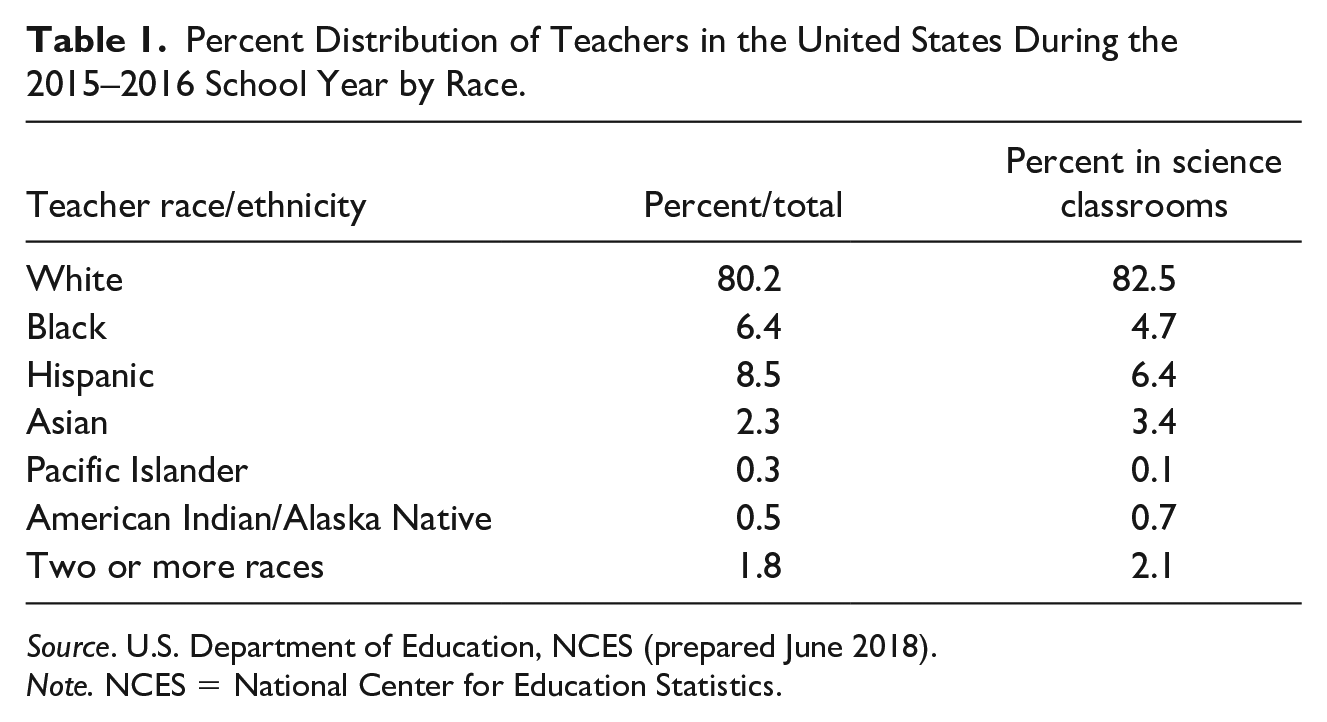
Source. U.S. Department of Education, NCES (prepared June 2018).
Note. NCES = National Center for Education Statistics.
In addition, as shown in Figure 1, the student population demographics indicate that 47% of students are White and 53% are minority. By the year 2027, the U.S. Department of Education projects that the percentage of White students will decrease to 45% and minority students will total 55% of the nation’s schools (NCES, 2018a). As the science teaching workforce remains homogeneous, the student demographic has become increasingly diverse. While teaching content in isolation, science teachers generally teach from their own culture and worldview, which can be problematic when teaching diverse students in urban schools (Dimick, 2012; Gay, 2018; E. King & Butler, 2015; Ladson-Billings, 1999). Figure 1 illustrates the shift in K–12 public school enrollment.
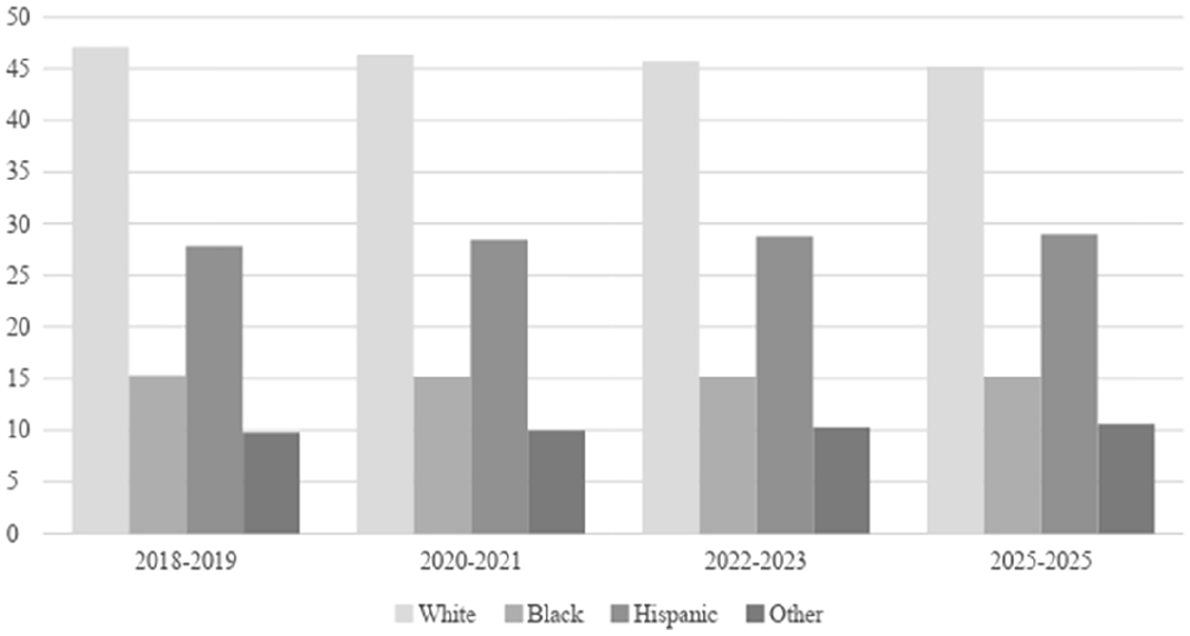
Percent of student enrollment in the United States during the 2018–2019 school year and 7-year projection.
According to NCES (2018a), the science teacher workforce demographic will change very little over the next decade, continuing the trend of White, middle-class, female teachers in urban schools and science classrooms (Atwater, 1989; Bell & Hopson, 2017; DeMarrais & LeCompte, 1998; Ford & Airhihenbuwa, 2010).
According to Pigliucci and Boudry (2013), “Science refers to the disciplines investigating natural phenomena and individual human behavior and to some of the disciplines studying human societies” (p. 63). Pigliucci and Boudry (2013) further explains that pseudoscience exists outside the scientific community of knowledge and abandons documented and established scientific, historical, and literary principles. Hansson (2008) continues, “pseudo-science fits within the category of non-scientific doctrines and practices, including science denial(ism) and resistance to facts” (p. 1). Per Hansson (2008) and in the purview of the preponderance of scientific evidence, continental drifts created the rift valley in Africa and divided the continents into the geological wonders we are a part of today. At the foot of the Mountain of the Moon in modern-day Ethiopia, the first humans worshiped the god Hapi (B. Brown et al., 1923; Diop, 1974). Africa is the birthplace of civilization and along the 4,000-mile-long Nile River, rich, abundant resources and fertile agriculture were cultivated by the people who built the archeological marvels of pyramids found in ancient Kemet (later called Egypt; B. Brown et al., 1923; Watson & Wiggan, 2018), and wrote the first manuscripts of philosophy and religion, respectively, in The Teachings of Ptahhotep, 2300 BCE, and The Book of Coming Forth by Day and Night, 2000 BCE (Ash & Wiggan 2015; B. Brown et al., 1923; Hilliard et al., 1987).
In U.S. schools, history has been told from a European perspective. However, critical race structuralism (CRS) challenges the master narrative and provides a framework for inclusion. It also provides a lens through which to view the history of humanity, which reveals that there is more variation within racial groups than there is across racial groups (Lieberman et al., 2003; Martin & Yeung, 2003). Old Hansson ideology is being challenged with scientific and biological sciences, which indicate that all of humanity shares 99.9% of the same deoxyribonucleic acid (DNA; Lieberman et al., 2003; Martin & Yeung, 2003; A. Nelson, 2016). Thus, race is a social construction, yet it has very powerful consequences in schools and society.
Western academy is generally premised on Homer’s Odyssey and Iliad 850 BCE, as the beginning of intellectual thought (Ash & Wiggan, 2015; B. A. Brown et al., 1923). This positioning buries the rich, vibrant history of other civilizations, and Africa in particular, as precivilization or as having primitive societies. However, the narrative of humanity and the cradle of civilization, written text, universities, where civilization stretched from Ethiopia to Egypt, and sacred books predating 850 BCE, challenge old hegemonic narratives (B. A. Brown et al., 1923; Diop, 1974).
Traditionally, the master narrative has attributed little value to non-European contributions (Cobern & Loving, 2001). As Audre Lorde (1984) notes, “for the master’s tools will never dismantle the master’s house. They may allow us temporarily to beat him at his own game, but they will never enable us to bring about genuine change” (p. 112). Western hegemony and ideology have undermined the ancient cultural traditions and practices associated with agricultural, medicinal, and architectural customs of minority and indigenous groups (Cobern & Loving, 2001; Wiggan, 2010). The paradox is that the earliest known scientist is a man named Imhotep, who was a Black African who lived in 2600 BCE in ancient Egypt or Kemet, the original name of the country, which means “Land of the Blacks” (Watson & Wiggan, 2018). See Figure 2.
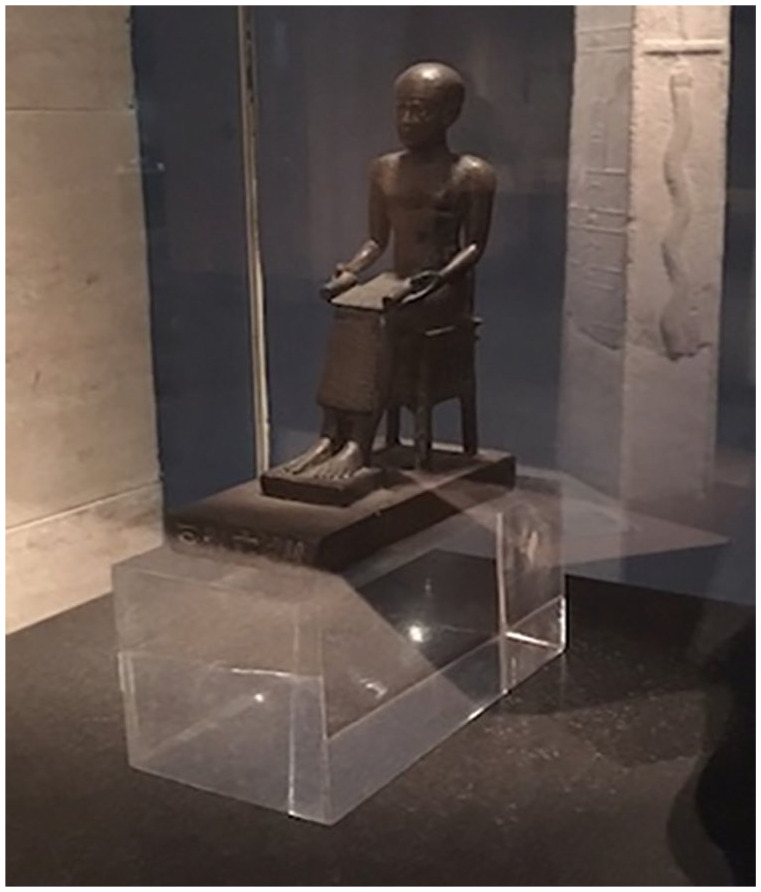
Image of Imhotep.
Imhotep wrote what is the oldest known medical or science manuscript in the world, “The Imhotep Medical Papyrus,” which was in 1862 renamed the “Edwin Smith Papyrus” (Watson & Wiggan, 2018). The renaming of the manuscript points to the power and privilege of those who are able to usurp and suppress non-European contributions. Unfortunately, there is no mention of Imhotep in the K–12 public school curriculum or science classrooms, and although a Black person wrote the first science and medical manuscript on the human record, there are very few Black science teachers.
As NCES (2018a, 2018b) data indicate, White females are completing education programs at a higher rate than minority students (Yuan, 2018). Science teachers are in high demand across the nation as urban school districts place underqualified teachers in science, technology, engineering, and math (STEM), and science, technology, engineering, arts, and math (STEAM) classrooms (Johnson & Sondergeld, 2020; J. E. King & Swartz, 2014; Ladson-Billings, 1999). Thus, this investigation explores the following research question:
First, the article discusses the theoretical frameworks of critical theory, critical race theory (CRT), and structuralism, which are synthesized into a new framework and contribution to the field, CRS. CRS provides a lens to inform pre-service teachers in urban schools on how science can be used to raise awareness and to disrupt oppressive practices surrounding social justice issues in urban communities. Next, the article delineates the five principles/tenants of CRS. The methods used in the research study are then outlined, followed by a review of relevant literature. The article provides a novel approach to teaching social justice through science for pre-service and in-service teachers in urban schools. The findings of this study are crucial to the field of urban education.
Social Justice and Science Education
Kevin Kumashiro, founder of the Center for Anti-Oppressive Education and Work at the National Education Association, argues that merging the fundamentals of teaching and education with social justice is the best form of advocacy (Kumashiro, 2015). He states, Science is perhaps most viciously attacked when it betrays itself and refutes its own legacies of perpetuating or at least complying with neoliberalism, imperialism, etc. For these reasons, teaching and studying STEM alongside critical studies that trouble the very things being taught are all the more vital for our democracy . . . STEM education has much to contribute to social-justice education, and vice versa. (Kumashiro, 2018, p. 6)
Similar to Kumashiro, Bullard and Johnson (2000) define social justice as a belief in human equality, especially with respect to social, political, and economic affairs or as a social philosophy advocating the removal of inequalities among social groups. As illustrated in Table 1 and Figure 1, the racial and cultural mismatch in the student and teacher demographics in K–12 public schools provides the context for the lack of diversity in the field of education and for science education in particular. Race, class, gender, sexuality, language, culture, and so forth, are all factors that demonstrate the need for diversity training in teacher education programs (Ladson-Billings, 1999). As such, CRS is proposed as a new contribution to the field, which helps to address the crucial diversity and social justice needs in teacher preparation programs. CRS also guides our analysis and discussion on the role of science in teaching about environmental racism and other social justice issues that disproportionately affect urban areas.
Theoretical Framework
Critical Theory
Critical theory is a theoretical framework developed by German neo-Marxists such as Max Horkheimer, Theodor Adorno, and Jürgen Habermas among others, and can be traced back to social theorists George Hegel and Karl Marx (Knapp, 1986; Lemert, 2014/2016; Morrison, 2006). Marx was a conflict theorist and materialist who was influenced by Hegel, an idealist (Knapp, 1986; Lemert, 2014/2016; Morrison, 2006). During the rise of capitalism in Europe, Marx formulated his conflict theory to explain the relationship between the working class he called proletariats, and the wealthy factory and land owners, which he designated as the bourgeoisie (Knapp, 1986; Lemert, 2014/2016). Marx argued that as proletariats become aware of their oppressive conditions, it would lead to social change. In Marx’s view, the oppressed would rise up in revolution and demand a change in the social, economic, and political structure of society (Sabia, 1988). This materialist conflict would be an ongoing process (Lemert, 2014/2016; Morrison, 2006). Marx attributed all human oppression to economics and ownership of the “modes of production” or systems of capitalism, and his solution would require the removal of inequities and the creation of a socialist economic and political system that allowed greater access for the proletariats (oppressed nonowners; Morrison, 2006).
Based on this view, a neo-Marxist, Max Horkheimer created the Institute for Social Research or The Frankfurt School as it was called, at the University of Frankfurt in Germany (Horkheimer, 1982). The Frankfurt School consisted of a group of scholars who sought to explain why Marx’s concept of revolution had not occurred (Sabia, 1988). In Horkheimer’s view, Marx’s assertion of a proletarian revolution in The Communist Manifesto was not realized because he underestimated the ability of capitalism to maintain the status quo. In addition, the proletariats were further controlled by religious ideology and the notion of being obedient, modest, and accepting traditions (Horkheimer, 1982; Lemert, 2014/2016; Sabia, 1988). Thus, critical theory is a theoretical framework developed by Horkheimer and other scholars like Theodor W. Adorno and Jürgen Habermas who shared a common aim of exposing and dismantling sources of oppression in society, in pursuit of greater liberation and human freedom. The Frankfurt School criticized Marx for failing to emphasize the role of noneconomic forces that contribute to social oppression, and for undertheorizing the power of the dominant group’s ideology over the working class (Lemert, 2014/2016). Critical theory differs from traditional social theory, in that, its goal is not only to critique and understand the sources of oppression in society, but to bring about change in the social conditions of the oppressed (Adorno & Horkheimer, 1997; Horkheimer, 1982; E. Nelson, 2011). As noted in the Dialectic of Enlightenment (Adorno & Horkheimer, 1997), one of the primary concerns of The Frankfurt School was the rise of mass culture and the use of technology to distribute cultural products such as music and film on a large scale (Adorno & Horkheimer, 1997). However, where critical theory did not necessarily have a sharp focus on racial and ethnic relations, a key feature of the U.S. social landscape, researchers like Derrick Bell (1980, 1995, 2004), Bell and Bell (1976), Richard Delgado and Jean Stefancic (2017), and Kimberlé Crenshaw (2002) made key refinements to the framework to make race a central issue, introducing CRT (Crenshaw, 2002; Martinez, 2014).
CRT
CRT is an interpretive framework used to advocate for racial and social justice, and to mobilize marginalized groups to create racial equity, and social and political change (Ladson-Billings & Tate, 1995). Posited by Derrick Bell, a constitutional scholar, CRT was developed to examine society and culture as they relate to race, power, and the legal system (Bell, 1980; Ladson-Billings & Tate, 1995). Bell’s concept of interest convergence is a key tenet of CRT (Bell, 1980), which explains racial progress or justice in relation to the legitimating interest of the dominant group (Bell, 1980; Crenshaw, 2002; Delgado & Stefancic, 2017). Although CRT was not originally created as a framework to specifically examine education, it has evolved to become a transformative theory with a social justice lens through which racial disparities in urban schools are framed (Caldwell, 1996; Donner & Ladson-Billings, 2005; Martinez, 2014; Matsuda, 1991; Mertens, 2014). For more than four centuries, race and racism have been rooted in the U.S. social, economic, and political systems. It is also embedded in the legal system and every institution, including education and the state-mandated high-stakes testing (Crenshaw, 2002; Ladson-Billings & Tate, 1995). Thus, if the goal of critical theory is human emancipation, then the goal of CRT is the enfranchisement of humanity who have been oppressed based on racialization, social stratification, and cultural domination by the ruling class (Alexander, 2012; Bell & Hopson, 2017; Dei & Lordan, 2016; Lorde, 1984).
A transformational theme of CRT is the tenet of counternarratives against racism. As such, it agitates against and deconstructs Eurocentrism, whiteness, and hegemonic indoctrination in school processes (Ighodaro & Wiggan, 2011; J. E. King & Swartz, 2014). It helps to liberate against hegemony, or cultural dominance of one group over all others, and racialization in schools and society (DeMarrais & LeCompte, 1998; Gramsci, 1971). In this sense, CRT antiracial and anticolonial praxis mitigates against power and privilege, and hegemonic social and educational institutions (Crenshaw, 2002; Morrell et al., 2013; Paris & Alim, 2017). CRT examines society and culture as they relate to race and power, but focuses less attention on relationships with—and within—social institutions, as structuralism does.
Structuralism
Structuralism is a theoretical framework based on a system of relationships between social groups and social structures (Althusser, 2006; Hall, 1985; Lemert, 2014/2016). Originating in the field of linguistics, Ferdinand de Saussure is generally recognized as the founder of modern structuralism (Saussure et al., 1966). Per Saussure et al. (1966), the structure of language represents the most concise example of structuralism.
Saussure explains that the linking of names and objects to form language is a complex psychological process involving the associative bonding of symbol and name in the human brain, to form a linguistic sign (Lemert, 2014/2016). He suggests there is no basis for assigning a particular meaning to a sound image other than the fact that it is culturally associated with that particular meaning. As seen through the lens of critical theory (CT) and CRT, language can be considered as a tool of oppression by the ruling class (B. Brown, 2019; Dei & Lordan, 2016; Ford & Airhihenbuwa, 2010). Saussure proposes that language is an unchangeable and accepted norm that is inherited from previous generations (Althusser, 2006; B. Brown, 2019; Hall, 1985; Lemert, 2014/2016). This dominant culture indoctrination assigns meaning to images and determines their relationship to other images (Eagleton, 1996). In this sense, Black can be conjured as violent or evil, and White as good and purity. For example, the Merriam-Webster (2019) dictionary defines Black as relating to any of various population groups having dark pigmentation of the skin, relating to African American people or their culture, dirty, soiled, connected with or invoking the supernatural and especially the devil, characterized by grim, distorted, or grotesque satire; and White as free from color; being a member of a group or race characterized by light pigmentation of the skin; characteristic of, or consisting of, White people or their culture; free from spot or blemish; free from moral impurity; innocent; favorable; fortunate (Merriam-Webster, 2019). In this sense, individuals are not free to impose linguistic meaning as it is derived by the social group to which they belong (B. Brown, 2019; Lemert, 2014/2016). According to Brown (2019), “it is the culture of power and the customs associated with that culture that determine the linguistic norms that signal intelligence” (p. 26).
This is particularly the case for oppressed groups, who are often ascribed false titles of deviants, lazy, unintelligent, and so forth, by their oppressors and as evident in the definitions of Black and White (Althusser, 2006; Hall, 1985). Similarly, human behavior can be explained by social structures, systems, and institutions that arise from labels. Thus, although CT and CRT place less emphasis on social structures, structuralism can make an important and necessary synthesis with both frameworks.
Of interest, Louis Althusser’s version of structuralism incorporates Marxist thinking regarding the notion of the State as the apparatus that operates to maintain the interests of the ruling class. Thus, it is situated well with CT and CRT. In Ideology and the State Ideological Apparatuses (2006), Althusser proposes that labor power requires the reproduction of skills to perform and reproduce the repressive ideology used by the ruling class for the exploitation of the working class. Althusser refers to the State as the repressive state apparatus (RSA; Althusser, 2006). He proposes that the RSA operates through force or coercion, and consists of private institutions such as the government, military, and prisons (Althusser, 2006). In addition to the RSA, Althusser introduces a second state apparatus, the ideological state apparatus (ISA), which includes public institutions such as education, religion, culture, and politics. In the context of CT and CRT, ISA is a necessary and powerful tool of analysis as it explains the ways the state maintains repressive ideology. The RSA works first by repression through force or coercion, whereas ISA is created first through ideology and then by repression (Althusser, 2006). The ISA teaches the skills necessary for the production of labor while also maintaining repressive ideology.
From an ISA perspective, schools generally condition students to work and perform the duties of the capitalist state (Althusser, 2006). In the purview of urban schools, the curriculum and teacher pedagogy can be instruments of RSA and ISA. Schools teach students how to perform the labor dictated by the ruling class (Hall, 1985). Thus, in this sense, ISA creates a false sense of individual autonomy, while shaping and controlling human behavior. Although CT places emphasis on the oppressed and CRT emphasizes racialization of minority groups who are dominated by the ruling class, structuralism explains the process through RSA and ISA. Thus, CRS combines tenants of CT and CRT to formulate a more precise and expansive theoretical framework to explain, advocate, and create greater agency to mediate environmental racism, and in support of social justice issues.
CRS
CRS is a theoretical framework that explains racial and ethnic relations in social and institutional systems in terms of patterns and relationships between race, culture, gender, and social structures (Alexander, 2012; Bell & Hopson, 2017; Bullard, 2000; Caldwell, 1996; Crenshaw, 2002; Meyer, 2000; Taylor et al., 2009). CRS is evidenced in places such as schools, districts, urban cities, and government. It is an important contribution to research because it provides a social and institutional examination of structural racism, bias, and prejudice. CRS brings a timely analysis and discussion on racial and ethnic relations as today’s society begins to cycle back into segregation and the pervasive constructs of racial boundaries (Bullard, 2000; Caldwell, 1996; Ighodaro & Wiggan, 2011;Meyer, 2000; Taylor et al., 2009). CRS is composed of five tenants: (a)
From a CRS lens, this investigation directly confronts social and educational inequities by combining tenets of critical theory, CRT, and structuralism. Education often does not provide the safe space needed for deep conversations surrounding race, class, and gender where there may be repercussions or reprisals for raising these issues (Bell & Hopson, 2017; Caldwell, 1996; Crenshaw, 2002; Taylor et al., 2009). Instead, in urban schools, students often experience curriculum violence (Ighodaro &Wiggan, 2011), which is the “deliberate manipulation of academic programming in a manner that ignores or compromises the intellectual and psychological well-being of learners” (Ighodaro &Wiggan, 2011, p. 2). In this sense, researchers, educators, social scientists, professionals, and students have an opportunity to use CRS to begin a dialogue and create action in shared work, play, educational, and living spaces (Bell & Hopson, 2017; Gay, 2018; Ighodaro &Wiggan, 2011; Ladson-Billings & Tate, 1995). If we are willing to put CRS to work, moving forward together for progress rather than for political correctness is a difficult and challenging notion, yet it may be a viable source of hope for the nation.
CRS helps frame racial and ethnic relations in the United States. It explains one of the most pressing social issues in the country (Ighodaro &Wiggan, 2011; J. E. King & Swartz, 2014; Kozol, 2005). Cases such as Trayvon Martin (2012), Michael “Mike” Brown (2019), Freddie Gray (2015), the “Charleston Nine” (2015), Sandra Bland (2015), Philando Castile (2016), George Floyd (2020), among others, have brought much attention to racial and ethnic relations (Castile, 2016; Craig et al., 2018; Frazier, 2019; Oswald, 2019; Pincus & Ehrlich, 2019; Stone, 2018). The nation has only progressed as far as the thoughts, language, and actions of its youth, and what they experience in their lives. Children generally experience the world in ways that adults may not experience or understand directly. They may even tell truths and speak regarding what they see, hear, feel, and absorbed without the filters of adult or societal expectations. As Saussure suggests, children assign particular meaning to images that they are culturally associated with. Saussure proposes that language, which could be used as a form of protest, is inherited from previous generations and consequently brought to life through individual actions (Althusser, 2006; Hall, 1985; Lemert, 2014/2016). As seen through the lens of CRS, language can be considered as a tool of oppression or liberation to give voice to social justice issues such as environmental racism (Dei & Lordan, 2016; Ford & Airhihenbuwa, 2010; Ladson-Billings & Tate, 1995). In this sense, CRS has the potential to address the environmental crisis in landfills, water, and waste systems that disproportionately affects urban and minority communities.
Method
In the following, we explore environmental justice concerns that disproportionately affect people living in urban communities in the United States and around the world. The investigation also explores teacher education programs as sites where racial awareness, exposure, and culturally responsive pedagogy and curriculum must be embraced. The reports, articles, and books referenced in this study provide national student and teacher demographics in K–12 public schools—to demonstrate the disparities that exist in public education in urban communities in the United States, while also addressing the discriminatory practices associated with environmental justice issues.
Using secondary data analysis, the U.S. Department of Education’s NCES database was searched for the most recent data on teacher and student demographics in K–12 public schools (Johnston, 2017; NCES, 2018a, 2018b). According to Johnston (2017), “secondary data analysis is the analysis of data that was collected by someone else for another primary purpose” (p. 1). Johnston affirms that the abundance of “archived” primary data and the ease by which they can be accessed, has made the use of secondary data analysis more prevalent. In this work, data were analyzed to determine the percentage distribution of teachers and students by race/ethnicity and gender in K–12 public schools in the United States in 2018 (NCES, 2018b).
Next, the Education Resources Information Center (ERIC), PsycInfo, Science Direct, and WorldCat databases were searched using the time period 1989 to 2019. The key terms used in the search included structural racism and science, race and science, racism and science, environmental racism, social justice and science, water quality, environmental justice, environmental toxins, low-socioeconomic communities and environmental justice, science education, urban education, social justice, culturally responsive pedagogy, structuralism, multiculturalism, pre-service teachers, and social justice. The searches yielded more than 350 abstracts.
Content analysis was then utilized to analyze abstracts. According to Krippendorff (2018), content analysis is an “investigative tool” that researchers use to analyze data and to draw analyses from that data. Abstracts that discussed the demographics of science teachers and students in U.S. urban schools, culturally responsive teaching practices, inequities associated with environmental justice, racialization of lead poisoning, and STEM education and social justice were selected for the literature review (Caldwell, 1996; Cochran-Smith, 2004; Esposito & Swain, 2009; Gay, 2002; Kumashiro, 2015; Pellow, 2016; Yuan, 2018).
The reference sections of the articles and books reviewed for this investigation provided a rich source of additional works related to the theme of CRS. Journals such as the Journal of Higher Education; Journal of Science Teacher Education; Teaching and Teacher Education; Urban Education; Urban Review; Race, Ethnicity, and Education; The American Scholar; Science Education; and the International Journal of Science Education were among those examined for relevant material. In our analysis, we also included data on toxic land (chemical pesticides), global CO2 emissions (G7 meeting report, climate change), toxic water—Centers for Disease Control’s (CDC) report on sewage and waste products, as well as the Environmental Protection Agency’s (EPA) report on lead in drinking water, as well as the case in Flint, Michigan.
Literature Review
Social Justice Through Science
Teacher preparation programs have the opportunity and responsibility to train teacher candidates to use science education as a social justice tool in urban schools (Ash, 2015; Atwater et al., 2014). Studies by Dimick (2012) and Szostkowski and Upadhyay (2019) discuss the components of science education programs used to teach social justice in urban schools. Dimick studies social justice education in the case study of a high school environmental science class. Using a student empowerment framework, Dimick examines the impact of an environmental action project on the creation of social, political, and academic empowerment. The project targets an environmental problem within the urban Black community in which the students live. Dimick notes, “when students reflected on their work, the ‘boundaries’ of what they thought possible for their projects broadened into deeper understandings of what they could accomplish by doing and using science” (p. 1009).
Szostkowski and Upadhyay (2019) explore the intersection of social justice, morality, and healing in science education. Szostkowski and Upadhyay define equity as “fairness,” and posit that equity in science education incorporates tenets of CRT and morality. They further add that reflection on the history and past prejudices in science are critical to understanding the difficulty in attaining equity in science education. In the study, Szostkowski and Upadhyay highlight racism in science, and the use of Henrietta Lacks’ (HeLa) cells in biomedical research without her or her family’s knowledge. This is also reflective of how teachers are trained.
Historically, teacher education and professional development have focused on expanding individual teacher practices (Ball, 2000; Darling-Hammond, 2012). Prior to the 1990s, emerging alternatives to traditional training models did not change significantly (Newmann, 1991). National reforms in curriculum standards required a shift in teaching practices to increase student achievement as measured through standardized testing (Newmann, 1991). Since then, teachers’ roles have evolved as they are now tasked with the responsibility of becoming reformers and social justice advocates (Atwater et al., 2014; Ball, 2000; French, 2019; Gay, 2018). Using CRS, as change agents, teachers in urban schools have the opportunity to address cultural domination in education practices and policies. Teacher disposition, visions, and views are crucial aspects in capacity building, which could also have implications for STEM (Ferguson, 2008; Little, 1993). As Dimick (2012) notes, Science educators recognize that issues of equity within their field include creating more equitable access and opportunity for students, particularly among students from communities that have been marginalized . . . in science education. (p. 992)
Per Dimick, science teachers recognize issues of equity and access in STEM and STEAM for students from marginalized communities. These are still national concerns and appropriate reforms are needed.
Founded in 1848, the American Association for the Advancement of Science (AAAS) is the world’s largest multidisciplinary science society. AAAS contends that science teachers should understand that all students deserve equal and fair treatment, opportunities, and authentic problem-based science education (Barton, 2000; Sleeter, 2001; Southerland, 2000). However, there still remains a gap between the Western, contemporary representation of science, and multicultural education, which this article helps to bridge (Atwater, 1989; Tate, 1997; Watson & Wiggan, 2018). STEM fields lack minority representation and CRS calls for the scientific community to address this and other diversity-related issues. Brown states, The stereotypes about who can become a scientist do not merely exits in television, but have been reinforced for generations in the general social milieu. These stereotypes indirectly reference a perception of who should not be a scientist. If white, awkward men are scientists, then are cool Latinx women immediately out of consideration? (p. 5)
This is also reflected in STEM or STEAM content and teacher pedagogy (Barton, 2000; Sleeter, 2000, 2001). In this sense, science is often taught in isolation of other contents, and taught through the cultural perspective and worldview of the teacher (Dimick, 2012). To disrupt these oppressive practices would require the “science curriculum to be reconceived to include teaching knowledge about science, instead of merely teaching scientific knowledge” (Southerland, 2000, p. 302). In the purview of social justice education scholarship, Dimick (2012) identifies three characteristics or purposes of social justice in science education as addressing “issues of equity, social justice curricula and pedagogy, and socially just interrelations” (p. 992).
In this sense, CRS fills a gap in pre-service teacher programs by incorporating multicultural content in science education, and pre-service teacher programs. According to Cobern and Loving (2001), “multicultural science will better serve the needs of students from diverse cultural backgrounds and will help to change the culturally corrosive effect that Western science has had on non-Western cultures” (p. 55). In addition, CRS targets groups that are largely understudied in science fields—such as urban dwellers and minorities. CRS provides a framework that allows these groups to resist the mythos of government and industry, which lay claim that toxic land and water do not exist in public communal spaces and schools (Berman et al., 2019; Bullard, 1996; Cembalo et al., 2019; Crane, 2019; Kashyap et al., 2019). As a historical reference, Bullard (1996) note A new form of environmental activism has emerged in communities of color. Activist have not limited their attacks to well-publicized toxic contamination issues but have begun to seek remedial action on neighborhood disinvestment, housing discrimination and residential segregation . . . and other environmental problems that threaten public safety. (pp. 6–7)
To Bullard’s (1996) point, is clean air, water, and land a basic human right? Does the physical environment have a formative influence on one’s physical, mental, and emotional development? Environmental activists in communities of color have broadened their focus on issues of public safety beyond environmental toxins.
Almost 50 years have passed since the first Earth Day was held in 1970, which drew attention to unequal protection and environmental discrimination (Bullard, 1996). According to Cutter (1995), “a healthy environment is a basic right of all of the Earth’s inhabitants, a right reaffirmed by the Rio Declaration of the United Nations in 1992 . . . yet environmental risks are unevenly distributed within and between societies” (p. 111). Environmental inequities persist today as deeply rooted racial divides are a part of the U.S. social landscape (Berman et al., 2019; Bryant & Mohai, 2019; Bullard, 1996; Cembalo et al., 2019; Crane, 2019; Cutter, 1995; Kashyap et al., 2019). The mismanagement of natural resources and toxic contamination of the environment, which includes chemical pollution of soil, water, and oil spills, have left many urban and minority city dwellers in perils (Crane, 2019; Kashyap et al., 2019). This has also had an enduring impact on access to clean water.
Findings
Data Presentation
In the following section we present the data sources used in this study. These data sources include national and global data as indicated below including toxic land (chemical pesticides), global CO2 emissions (G7 meeting report, climate change), toxic water (CDC report, sewage, waste products), and levels of lead in drinking water (EPA report).
Toxic Land
Advocacy for a healthy environment is not a new pursuit, as it was the focus of Rachel Carson’s (1962) groundbreaking work, Silent Spring. This work brought national attention to the environmental risks associated with the brazen use of chemical pesticides in the United States after World War II. As Carson explains, researchers knew for some time of the dangers associated with chemical pesticides such as dichlorodiphenyltrichloroethane (DDT), dicofol, and methomyl, among others, but failed to openly share this information with U.S. citizens (Kashyap et al., 2019; Krebs et al., 1999). It was Carson’s belief that money and power were the driving forces behind the government’s lack of regulation over the companies responsible for the production and marketing of harmful chemical pesticides. Carson’s work regarding the use of pesticides is an example of how science and social justice work can be used to address destructive environmental practices and create institutional change. Carson’s studies were disruptive to the repressive ideology of the government and chemical companies that profited from the widespread use of chemical pesticides (Carson, 1962; Hajnal, 2019). Similarly, the 2018 G7 meeting in Quebec, Canada, highlighted environmental issues the current U.S. government (2019) will not acknowledge (Paletta et al., 2019). Kirton and Warren (2018) note, This strong success flowed from the shocks of extreme weather events that exposed the vulnerability of all G7 countries, especially the powerful United States and Japan as the meetings unfolded . . . Success was also spurred by the failure of the slow moving, siloed UN institutions and processes to meet these urgent, global needs on time, although Halifax made only incremental and incomplete advances on climate change due to the resistance of the United States. (p. 1)
Figure 3 below underscores Kirton and Warren (2018) point, and illustrates the global impact of pollution.
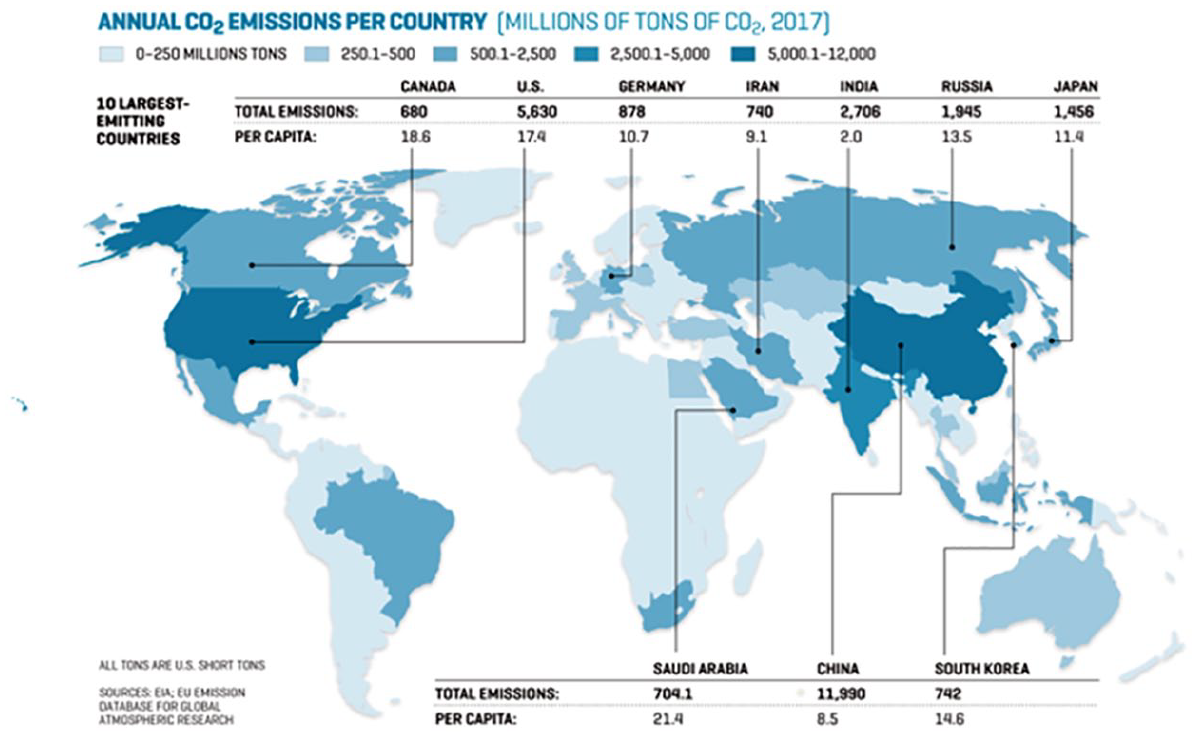
Annual carbon dioxide emissions per country—2017.
Although the G7 meeting addressed some of the issues that the science community has raised, there is still a high level of disregard. In connection to low-income minority communities, Bullard (2000) discusses the methods used to allow CO2-emitting companies such as Chevron (Richmond Refinery), General Chemical West, ExxonMobil, Aramco, British Petroleum, Gazprom, Shell, among others, to operate near low-income and minority communities.
Bullard (2000) affirms that environmental and land-use regulations are loosely enforced near urban communities. Low-socioeconomic Black neighborhoods are often primarily inhabited by renters who lack financial resources and agency. As a result, this prevents community members from advocating for equitable environmental protection (Bullard & Johnson, 2000; Dillon, 2014; Sampson & Winter, 2016; Vasudevan, 2019). Thus, CRS allows for a critical analysis regarding discriminatory environmental practices that affect minority communities. These practices are not limited to land, but extends to all aspects of the environment, including water: the source of life.
Toxic Water
According to the CDC (2016) report, Meeting the MDG Drinking Water and Sanitation Target, across the United States, quality drinking water is less accessible in low-income and urban communities. Relatedly, Crane (2019) finds that lead poisoning in children from contaminated water has long been recognized as a serious clinical and public health problem, especially in large and older urban cities. Yet, very little has been done. In Philadelphia, Pennsylvania, between 1955 and 1960, approximately 50 cases of lead poisoning were reported yearly, and from 10% to 20% of diagnosed patients died within 5 years of their diagnosis (Crane, 2019). Many of those who survived lead poisoning had permanent damage to their central nervous system, and frequently suffered from mental illness and intellectual disabilities (Ingalls et al., 1961).
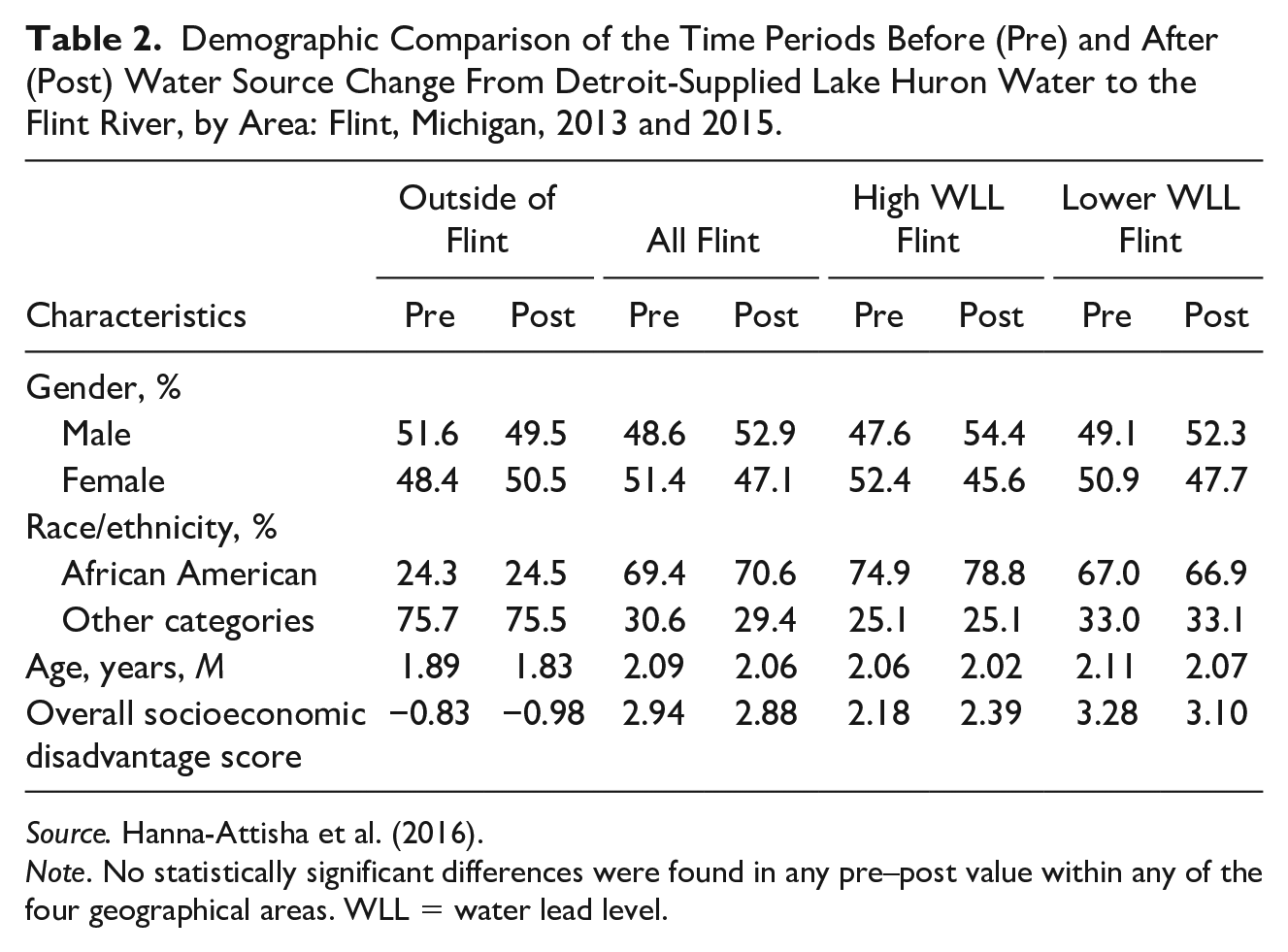
In this sense, CRS calls for agency and advocacy for equitable representation of those who may not have the capacity to represent themselves. For example, in Flint, Michigan, lead poisoning from contaminated water is associated with elevated blood lead levels in children (Day et al., 2019; Forrer et al., 2019; Hanna-Attisha et al., 2016; see Table 2). Laidlaw et al. (2016) found that most low-income and minority students in Flint had high levels of lead in their blood (Laidlaw et al., 2016), which affects school achievement. See Table 2.
Demographic Comparison of the Time Periods Before (Pre) and After (Post) Water Source Change From Detroit-Supplied Lake Huron Water to the Flint River, by Area: Flint, Michigan, 2013 and 2015.
Source. Hanna-Attisha et al. (2016).
Note. No statistically significant differences were found in any pre–post value within any of the four geographical areas. WLL = water lead level.
As illustrated in Table 2, the population demographics of Flint are predominantly African American, particularly in the city limits where high levels of lead are found in drinking water (Forrer et al., 2019). Lead poisoning and contaminated waters are also associated with intestinal track diseases and diarrhea.
Relatedly, according to the CDC (2016), globally, an estimated 801,000 children below 5 years of age die from diarrhea annually. This amounts to 11% of the 7.6 million deaths of children below the age of 5, and means that about 2,200 children are dying every day from diarrheal illness. In this sense, CRS advocates for underrepresented groups locally and globally, and calls for the intercultural collaboration to create institutional and environmental change. Much like Flint, 80% of the world’s population is facing threats to water supplies with large amounts of domestic sewage and waste containing toxicants, derbies, solid waste, oil, plastic litters, and bacterial contaminants, which cause water pollution (Kounina et al., 2019; Liboiron et al., 2018; Sankhla et al., 2018). Worldwide, millions of people are infected with neglected tropical diseases (NTDs), many of which are water and/or hygiene related (Sankhla et al., 2018). Similar to the case of Flint, these diseases are most often found in places with unsafe drinking water and poor sanitation (EPA; UNDESA, 2016). Even low levels of lead in the blood of children can result in stunted physical growth, hyperactivity, hearing and sight problems, anemia, and learning and behavior problems. In rare cases, ingestion of lead can cause seizures, coma, and even death (CDC, 2016).
Fink et al. (2011) found a connection between child health and access to water and sanitation. The researchers concluded that lack of clean, potable water, and sanitation increases the risk of neonatal, postneonatal, and child mortality risks; and developmental stunted physical and intellectual growth (Fink et al., 2011; Kounina et al., 2019; Liboiron et al., 2018).
Implications
As a result of use, growth, and climate change, by 2025, 1.8 billion people worldwide who live in areas with water scarcity, will equal two thirds of the world’s population living in water-stressed regions (UNDESA, 2016). The challenge we face as we head into the future is how to effectively conserve, manage, and distribute a quality water supply. Currently, race, class, and region are determinants of who has access to clean water, free of toxins, including lead (Group, 2016; Kounina et al., 2019; Rist & Dahdouh-Guebas, 2006).
Water fountains are symbolic of equity in American society, communities, and schools. In our Jim Crow past, water fountains were an iconic barrier to racial equity, as Blacks were not permitted to drink from White water foundations (Alexander, 2012). “Whites Only” signs were positioned along walls, designating and notifying non-Whites they were not allowed to drink from White water fountains (Alexander, 2012). Today, the signs are no longer displayed on the walls, but the inequity exists in a more lethal method, poisoning minority children with lead, in water, which creates intellectual impairment and disabilities (Bouchard et al., 2011; Lambrinidou et al., 2010). Pellow (2016) compares the abuse associated with environmental racism to the violence, which has become the focus of the Black Lives Matter (BLM) movement. Pellow (2016) notes, This is a connection that many scholars might not make at first glance because police brutality and environmental politics would appear to be only tangentially related, but I argue they are in fact closely intertwined and that we must explore their myriad connections in order to excavate the roots of racist violence . . . The questions I explore here include: How can Black Lives Matter’s emphasis on police violence against African American communities inform our understanding of the scourge of ecological burdens facing those same communities? (p. 2)
Educators, including pre-service teachers, can positively affect scientific discourse by using CRS to frame contemporary social issues and movements, which helps nurture greater social justice advocacy (Pellow, 2016; Southerland, 2000). This can be achieved through purposeful curriculum development, lesson planning, and teaching for socials justice.
Discussion/Relevance of Teacher Training
CRS can help to foster discussion and dialogue about science and social justice issues in teacher education. It provides a relevant lens for developing science education curriculum in urban schools. CRS also challenges the European historical construct of discovery and whiteness as norm through the use of multicultural curriculum development and culturally responsive pedagogy (Bell, 1995; B. Brown, 2019; Ladson-Billings & Tate, 1995). It also deconstructs traditional, dominant societal perspectives and historiography of the beginning of civilization and written language. CRS exposes pre-service teachers and students to the historical truths of Pangea: out of one continent, many (Murphy & Nance, 2008; Rogers et al., 2004). Pangea was a supercontinent that encompassed the land masses of the earth during prehistoric global creation (Stampfli et al., 2013). Many states and urban school districts are implementing new innovative programming designed to bring about transformation, social equity, and academic opportunity, which could bridge science and multicultural education gaps, and could increase academic competencies in STEM and STEAM (Esposito & Swain, 2009; Yuan, 2018). Multicultural science standards are slowly penetrating urban classrooms and teacher education programs (Dimick, 2012; Skiba et al., 2016).
As Bell and Hopson (2017) notes, “Prejudice is taught. It is active. It is learned” (p. 92). If racism is taught, perhaps it can be unlearned through antiracism education and culturally responsive pedagogy (Crenshaw, 2002; Tate, 1997). CRS could potentially help to create greater agency in urban schools and the broader society, and build collective consciousness and foster change in institutional practices (Alexander, 2012; Kozol, 2005; Memmi, 2000; Paris & Alim, 2017; Tate, 1997).
The principles of CRS can be applied to help create change. Programs using CRS may center on academic achievement, restorative practices, multiculturl enrichments, and science classrooms across content areas using culturally responsive teaching practices. In light of CRS, interactions and intercultural collaboration with teachers and peers in urban schools create a context of shared experiences and inclusion (Barrier-Ferreira, 2008). To close the social and environmental racism gaps, positive and productive educational experiences need to entail a balance of opportunities to engage social justice topics, which must be taught in teacher education programs (Darling-Hammond, 2012). Culturally responsive curriculum development and lesson planning in STEM can help in this area. An engaging educational experience allows for growth and development, while nurturing the intellectual and emotional needs of diverse learners, which is also conducive to improving student learning outcomes in STEM classrooms (Atwater, 1989). In this sense and through CRS, Ladson-Billings (2014) addresses the needs of diverse student populations through culturally responsive teaching, which includes high expectations for all students, respecting diversity, and using students’ home culture as pedagogical tools. Effective pre-service teacher education and professional development for teachers in urban schools should be designed to ensure a coherent, comprehensive system of teaching and learning for professionals, which in turn should be reflected in individual teacher practices, science classroom opportunities, and student engagement in environmental and social justice (Atwater, 1989).
From a CRS perspective, pre-service programs should have courses surrounding science and social justice topics or STEM and social justice topics, professional development, and field experiences in urban communities that are affected by environmental racism or other forms of science-related racism. Those who prepare pre-service teachers and develop teacher preparation programs must expose teacher candidates to environmental justice issues in urban communities. Similarly, school teachers in STEM classrooms must empower their students to become advocates of environmental equity, and to work toward making clean air, water, and land a basic human right.
In conclusion, we found that CRS can be used in pre-service teacher programs and for professional development opportunities in science to develop curricula connecting STEM and STEAM to multicultural education. We recommend that teacher preparation programs provide opportunities for teachers to study science-related topics as social justice issues, and to gain exposure to environmental justice in urban communities.
Footnotes
Declaration of Conflicting Interests
The author(s) declared no potential conflicts of interest with respect to the research, authorship, and/or publication of this article.
Funding
The author(s) received no financial support for the research, authorship, and/or publication of this article.
