




Abstract
Survey data collected from participants in the Ahmedabad Slum Networking Project (SNP) is analysed to examine the importance of community participation in explaining respondent complaints about the project overall and with the specific public services provided. Logistic regression results suggest that community involvement matters when asking about overall SNP satisfaction, but is less important in explaining negative comments concerning water, sewerage and street lighting. For these specific services, contact with NGOs and municipalities and community characteristics matter more. The paper identifies policy implications and suggests further research questions based on these findings.
Introduction
Researchers studying community involvement have frequently debated whether and to what extent participation improves public service and infrastructure delivery (Bebbington, 2002; Kleemeier, 2000; Mayer, 2003; Mosse, 2006; Motiram and Osberg, 2010; Prokopy, 2005). Quality of public services is often measured via project outcomes including cost recovery and efficiency, appropriate targeting and project sustainability as well as individual satisfaction with results (Mansuri and Rao, 2004; Nance, 2005; Narayan, 2002).
In this paper, we examine the importance of continued project involvement and participation for long-term resident satisfaction with programme results after services have been provided and municipal funding for community involvement withdrawn. In so doing, we seek to clarify project satisfaction given what other scholars have argued, that professed programme satisfaction may less accurately reflect on the quality of services provided and is more likely to reflect other factors, such as individual preferences, socioeconomic status, strength of social networks and neighbourhood location (Baum et al., 2010; Ké Shon, 2007; Parkes et al., 2002).
We hypothesise that, post-funding and project completion, residents who continue to participate in the project (via maintenance and community development activities) would express greater satisfaction with the programme results. In the process of testing this hypothesis, however, we also discovered that measuring satisfaction is more complicated than it is often treated in closed ended survey-based programme evaluation measures. Thus a secondary question we address in this paper asks: what explains the difference in professed satisfaction and the choice to complain when given the opportunity for further comment? We further hypothesise that controlling for socioeconomic status and neighbourhood characteristics, higher levels of resident satisfaction are related to continued participation, a close relationship with a partnering NGO and access to the municipality.
To explore how resident participation is linked with project satisfaction, we first review the literature on participation and programme satisfaction and introduce our framework conceptualising the relationship of participation to physical and social-psychological project outcomes. Following this, we introduce the case of the Ahmedabad Slum Networking Project, a project internationally recognised for its participatory design, before outlining the survey design and sample. We then report the results of descriptive statistics and logistic regression models that assess the relationship among participation, professed satisfaction and complaints over service provision. We conclude with a summary of the major findings and implications for further research and policy.
Relating Project Participation to Social-Psychological and Physical Outcomes
The literature on project participation and participatory governance provides important theoretical foundations on how best to incorporate women and other marginalised groups in international development. The focus on community-driven and community-based development research has primarily revolved around whether participation has a positive effect on project outcomes (Bebbington, 2002; Kleemeier, 2000; Mayer, 2003; Mosse, 2006; Motiram and Osberg, 2010; Prokopy, 2005). Individual satisfaction is one often used measure of project/service quality.
The complex relationship between participation and physical programme outcomes has been demonstrated previously (Agarwal, 2010; Cornwall, 2003; Kleemeier, 2000; Prokopy, 2005). For example, Agarwal (2010) focuses on gendered participation and decision-making in her recent study of rural forest management programmes in South Asia. Results of multivariate analysis support the hypothesis that a critical mass of at least one-third women in an organisation allows women to participate more fully in decision-making. Other studies have pointed to the importance of various kinds of participation, including capital contributions and labour, to service quality and sustainability (Kleemeier, 2000; Prokopy, 2005).
Mansuri and Rao’s (2004) survey of the literature on participation points to the importance of community institutional capacity for initial and sustained participation in community development projects. While the literature generally supports the assertion that community institution building is important for programme outcomes, equally important is the ability of these community institutions to build formal support networks outside the community. It is less realistic to sustain physical and social outcomes of community-based participatory projects “unless communities can lobby for continuing support for marginal inputs and training” (Mansuri and Rao, 2004, p. 18).
These findings relate directly to larger debates on participatory governance and the challenges to partnership development for participatory decision-making given unequal socio-structural power relations. 1 For example, Hoppe et al. (2007) support the earlier findings of Fung and Wright (2003) that partnership building is most effective when centred on specifically defined, practical needs. The need for deliberative consensus is also illustrated to be central to process-oriented decision-making. Prior work on participatory slum upgrading efforts (Das and Takahashi, 2009; Russ, 2010) points to the many complications inherent in establishing and maintaining participatory partnerships for slum-upgrading in India given unequal power relations within and between institutions.
Despite remaining debates regarding participation in public service system design and delivery, less focus has been paid to critically evaluating resident or client satisfaction in assessing the quality and effectiveness of service delivery. Furthermore, the distinction between participation, physical outcomes and social-psychological outcomes has been explored in less depth. Often, social-psychological outcomes are used as a proxy for physical improvements, yet it is unclear if this relationship is as straightforward as it may appear (Deichmann and Lall, 2007). In this paper we separate social-psychological outcomes (such as, professed satisfaction) from physical project outcomes (such as the quality of services provided) in order to understand more fully project satisfaction and its interrelationships with both participation and physical outcomes. Next, we discuss concepts and measures of satisfaction before introducing our conceptual approach.
Conceptualising and Measuring Satisfaction
In the context of infrastructure provision in the developing world, it is important to understand how satisfaction after providing physical improvements might increase neighbourhood stability and boost health and economic development within the neighbourhood and at the city level. Despite its importance, little research critically evaluates programme or service delivery satisfaction in the developing world. As Diechmann and Lall (2007) aptly illustrate in their study of service delivery in Bangalore, India, resident satisfaction with public utility improvements is only partly reflective of actual quality of services; other factors, including residents’ comparisons of their service quality with their perception of the service levels received by neighbours, also explain variations in satisfaction levels.
These findings are also mirrored by studies of neighbourhood satisfaction in the US and western Europe that focus on satisfaction as a proxy for broader social-psychological well-being and neighbourhood stability (Baum et al., 2010; Galster and Hesser, 1981; Ké Shon, 2007; Parkes et al., 2002). This literature seeks to explain how neighbourhood satisfaction is linked with individual life satisfaction as well as neighbourhood stability and strength, while also illustrating the difficulty in conceptualising and measuring social-psychological outcomes (i.e. satisfaction). Although the context for much of the neighbourhood satisfaction literature differs from that of project satisfaction, particularly with respect to differences between holistic neighbourhood evaluation and project-specific evaluation as well as the distinction between Western cities and low-income slum areas in India, many of the lessons from this literature are applicable.
For example, Parkes et al. (2002) establish the importance of measuring neighbourhood satisfaction and argue its importance as a measure of overall life satisfaction, socioeconomic status, exposure to neighbourhood problems, neighbourhood resources and reputation, as well as neighbourhood attachment and social integration. In addition, Baum et al. (2010) argue the importance of neighbourhood satisfaction as a measure of community stability and strength and find that lower levels of satisfaction are associated with respondents having weak social contacts or networks. In contrast, high levels of satisfaction are linked to respondents being long-term residents in neighbourhoods where neighbours help each other and have convenient and reliable access to high-quality services. A more recent study by Dassopoulos and Monnat (2011) on community participation and neighbourhood satisfaction in Los Angeles, CA, finds that, while social cohesion is linked with satisfaction, neighbourhood social support is not. Further, participation in neighbourhood improvement has only a limited relationship with satisfaction. In sum, controlling for demographic variance, social networks and cohesion, neighbourhood resources and reputation, as well as participation in neighbourhood improvement, all relate to respondent’s professed satisfaction, although results are not consistent across all studies.
This literature on neighbourhood and project satisfaction illustrates that social-psychological outcomes and physical outcomes are not synonymous; rather, satisfaction is a complex measure of socioeconomic status, social networks and individual preferences. Many of these scholars also acknowledge the difficulty in accurately measuring satisfaction (Hipp, 2010; Ké Shon, 2007; Parkes et al., 2002). As Parkes et al. (2002) argue, respondents are likely to express high levels of satisfaction due to social desirability and other biases. Given the high level of bias that social desirability may introduce, it is important to clarify the social and psychological factors that may affect one’s professed levels of satisfaction.
The literature on social psychology and consumer satisfaction points to key factors that explain the effects of social desirability on expressed satisfaction and dissatisfaction. For example, Kowalski (1996) focuses specifically on expressed dissatisfaction, seeking to understand in what social contexts complaining may lead to socially desirable outcomes. Findings of the study indicate that the decision to complain is the outcome of weighing the social costs (for example, being seen as a negative individual, losing social capital) with the benefits (for example, achieving interpersonal or intrapsychic goals). The choice to express dissatisfaction (i.e. complain) is thus based on intrapersonal relationships and social sanctioning as well as internal levels of agency (i.e. those who feel they have little command over a situation are less likely to complain).
The consumer satisfaction literature builds upon these ideas. Blodgett and Granbois (1992) argue that complaining is a process that must be considered in light of a person’s satisfaction or dissatisfaction with services received as well as important social-psychological factors including having a voice. Following Hirschman, Blodgett and Granbois argue that those who choose to voice dissatisfaction may be those who feel loyalty to the service provider or for whom the service is especially important. Even after voicing complaints, however, satisfaction can be achieved if the process of complaining leads to the customer feeling that his/her concerns are taken seriously and that complaining resulted in an appropriate redress of the situation. The perceived justice with the outcome may then affect the desire of the individual to opt out of the relationship and/or complain to a third party.
The relationship between perceived satisfaction with services and the choice and ability to complain and seek redress when services are inadequate is important to consider in the context of social and infrastructure service provision. In the context of participatory service provision, continued loyalty and participation are needed, especially to maintain community support to sustain service quality over time. When project participants choose to discontinue their participation because they feel they are not heard and/or problems are not addressed, this can have negative repercussions on neighbourhood social stability and social networks and can potentially lead to poor maintenance of services.
Here, we argue that continued participation plays a role both for maintaining positive social-psychological outcomes (i.e. satisfaction) as well as sustaining physical outcomes (i.e. quality and quantity of services provided over time). While continued participation may link directly to the quality of services provided and/or to programme satisfaction, we argue here the importance of conceptualising and measuring satisfaction and quality of services as separate yet interrelated outcomes (see Figure 1). Satisfaction may also encourage continued participation in programme-sponsored activities, which may ultimately result in improved neighbourhood conditions.
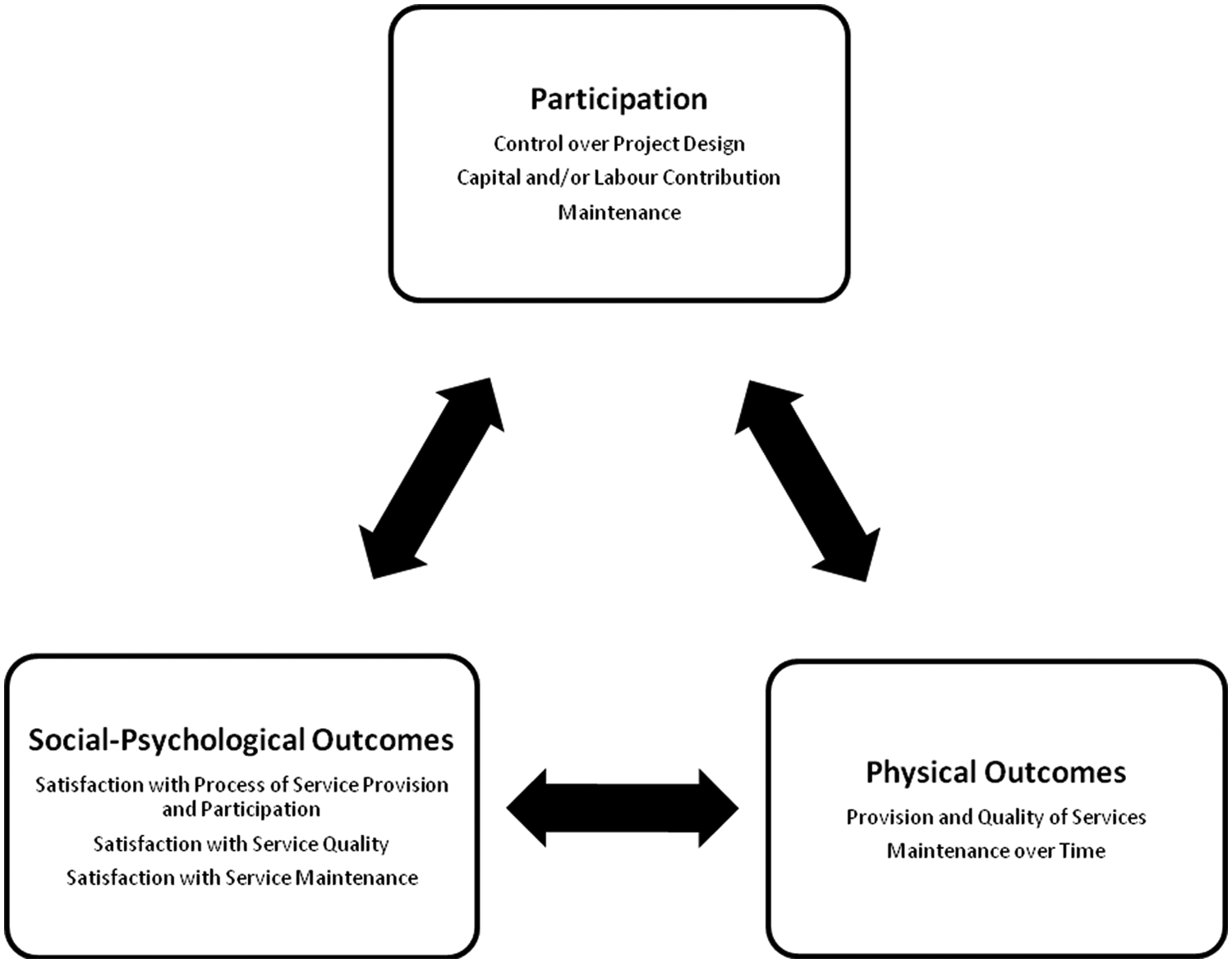
Relating participation to social-psychological and physical outcomes.
Given the importance of satisfaction for continued participation and for physical service provision and maintenance, we focus on two factors of social-psychological outcomes and satisfaction: the ability to seek redress; and relationships with outside institutions/actors that can facilitate redress by strengthening agency and opportunity structure. Next, we introduce the case of the Ahmedabad Slum Networking Project before turning to a more detailed discussion of data collection and our hypotheses.
The Context: Slum Upgrading in Ahmedabad, India
Initiated in 1995, the Ahmedabad Slum Networking Project (SNP) is an in situ redevelopment programme that provides both physical infrastructure services and complementary social services. Unique for its integrated approach, the programme requires that neighbourhoods apply collectively to receive services and that all residents agree to and financially contribute to all aspects of the programme (Baruah, 2007). The neighbourhood must apply together as a unit, even for services provided at the household level (see Table 1).
Services provided by the slum networking project
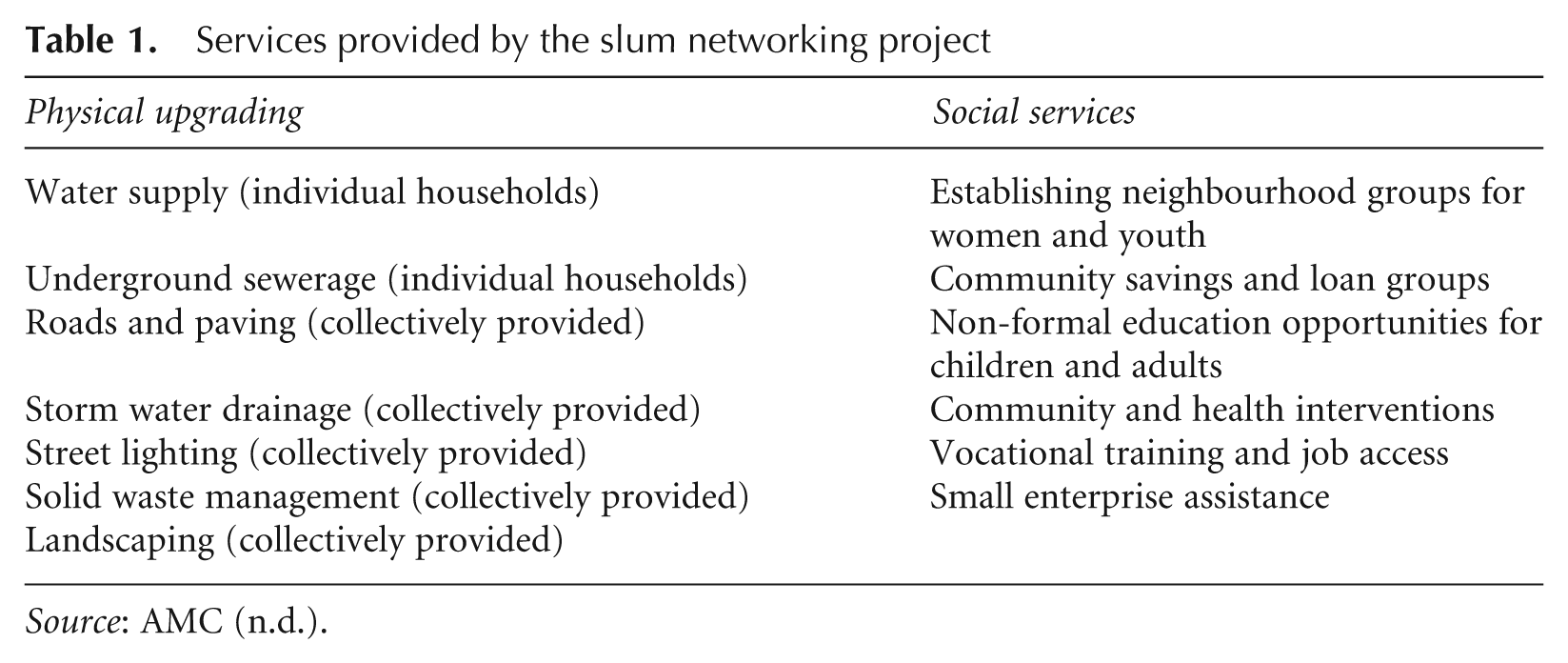
Source: AMC (n.d.).
The SNP remains unique in that the Ahmedabad Municipal Corporation (the municipal government agency) designed and executed the project in partnership with voluntary community councils and with three different NGOs: Gujarat Mahila Housing SEWA Trust (MHT), SAATH and World Vision. These NGOs have taken responsibility for organising communities via community councils under the SNP guidelines for infrastructure service delivery as well as providing on-going social services.
Although individuals participate in the programme, primarily via household monetary contributions, it is the responsibility of these local voluntary community councils—called community-based organisations (CBOs)—to act as advocates to the municipality and as community managers with the purpose of collecting community contributions, overseeing the initial physical upgrading and later maintaining physical infrastructure. Earlier studies (Baruah, 2007; Das and Takahashi, 2009) suggest, however, that not all CBOs have managed to sustain themselves. As a result, not all areas have achieved and maintained equal levels of services.
Methodology
Survey Design and Sampling Frame
To examine whether continued resident involvement and participation in the SNP is associated with project satisfaction, a survey of 300 CBO leaders and members representing 38 separate neighbourhood organisations in Ahmedabad was conducted between January and June 2009 with the assistance of the Indian Academy for Self Employed Women (SEWA Academy) and the co-operation of the three NGOs affiliated with the SNP. The survey sample was drawn from SNP-registered CBOs and selection was based on the following criteria: CBOs formally registered with the municipality for at least three years; community had benefited from physical slum upgrading; and, affiliation with an NGO. Of approximately 75 CBOs working within the SNP, 52 met these criteria.
The CBO sample was then stratified proportional to NGO affiliate and activity level as assessed by the NGOs. Additionally, the population within each CBO was stratified according to the size of CBO and number of leadership positions within the organisation as reflected on the CBO’s registration charter. Individuals were then randomly selected from within these strata to create a sample with characteristics proportional to the general CBO population. Of a total population of approximately 500 leaders and members of these 38 CBOs, 320 were selected for the survey sample.
Characteristics of the sample population, while reflective of the larger population of CBO members, differ from that of Ahmedabad’s wider slum population as well as city-wide demographics (see Table 2). The sex ratio in this survey is skewed in comparison with the general population because the MHT-affiliated CBOs were about 70 per cent of the sample and these CBOs are primarily comprised of women. This may have also skewed other results related to the sample, in particular education levels, which are much lower in the sample than either the general slum population or the city population as a whole. Also of note is the proportion of Hindus to Muslims, which is higher in the sample compared with the slum population and with the general city population. This is, in part, a reflection of the neighbourhoods selected for the SNP and less related to who was selected in neighbourhoods as CBO leaders. Since neighbourhoods are extremely segregated, Muslim neighbourhoods would be likely to have had Muslim leaders. This suggests that very few Muslim neighbourhoods participated in the SNP. Finally, although demographic characteristics differ between the sample and the broader population in Ahmedabad, income and expenditures for the sample are comparable with the larger population of slum-dwellers in the city, adjusting for inflation.
Comparison of sample demographics with Ahmedabad slum and general population (percentages)
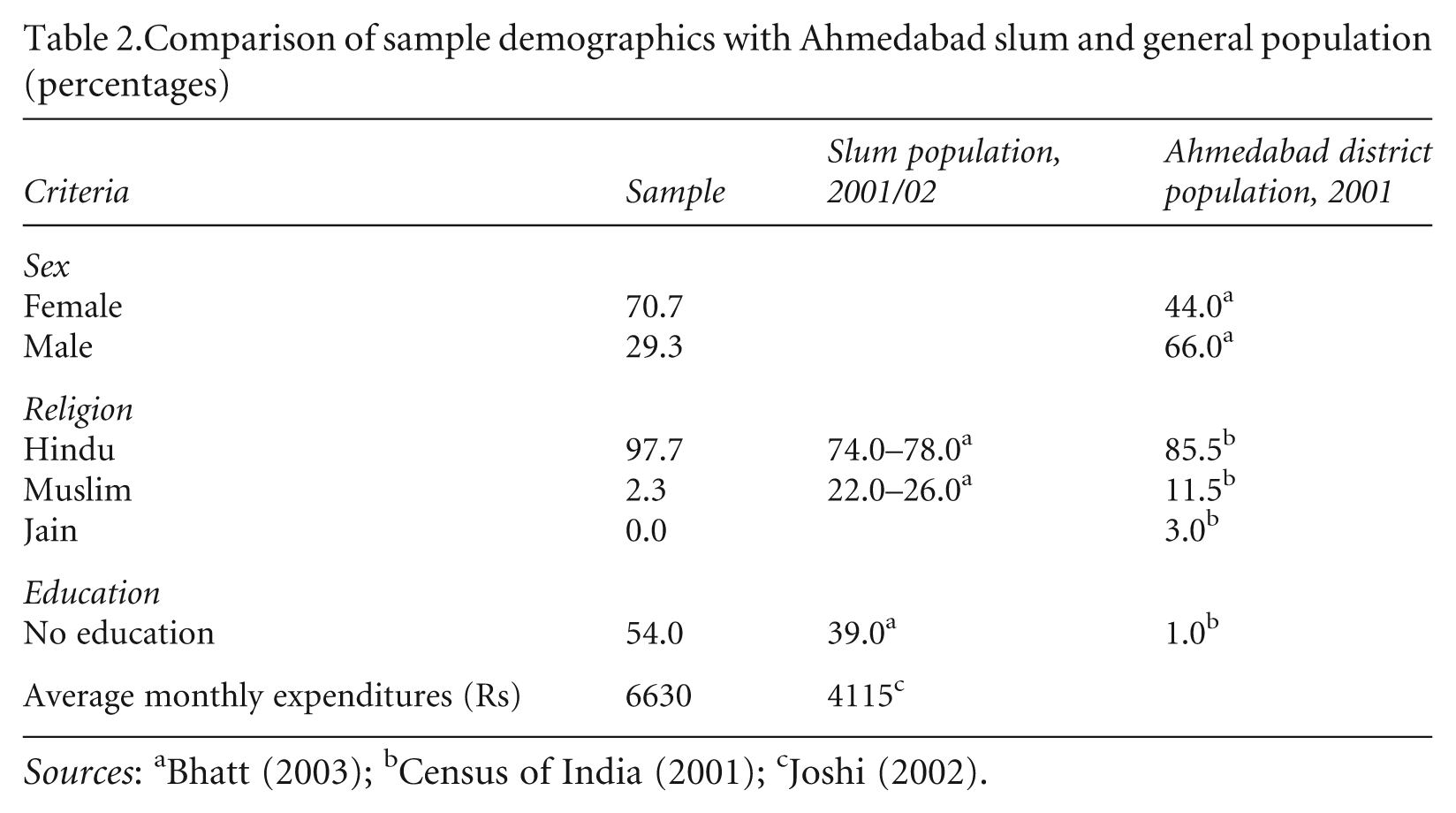
Sources: aBhatt (2003); bCensus of India (2001); cJoshi (2002).
Measuring Project Satisfaction
We hypothesise that controlling for socio-economic status and neighbourhood characteristics, higher levels of resident satisfaction are related to continued participation (measured by meeting attendance), a close relationship with a partnering NGO (i.e. expanding agency and opportunity structure via social networks) and access to the municipality (i.e. ability to seek redress). In other words, the more CBOs are active, the more they should be partnering with NGOs, which should then be associated with greater interaction with municipal government bureaucrats and agencies, and higher levels of reported satisfaction with the SNP. To measure overall satisfaction with the quality of the project, we asked respondents a closed-ended question of whether their level of satisfaction with the overall quality of the SNP project was ‘very satisfactory’, ‘satisfactory’ or ‘poor’. Respondents were then asked an open-ended question, “Do you have any comments about the project?”.
Resoundingly, respondents indicated that they find the project quality to be either ‘very satisfactory’ (74.9 per cent) or ‘satisfactory’ (23.1 per cent) with the overall quality of the project. Such results suggest that residents are highly satisfied with SNP results. Yet, comparing overall satisfaction with project quality with the open-ended comments illustrates that, while only 25 per cent of respondents report less than the highest level of satisfaction with the services provided (those who found the project quality to be ‘very satisfactory’), over 37 per cent make a mixed (25.7 per cent) or negative (12.0 per cent) comment about project quality and/or service provision.
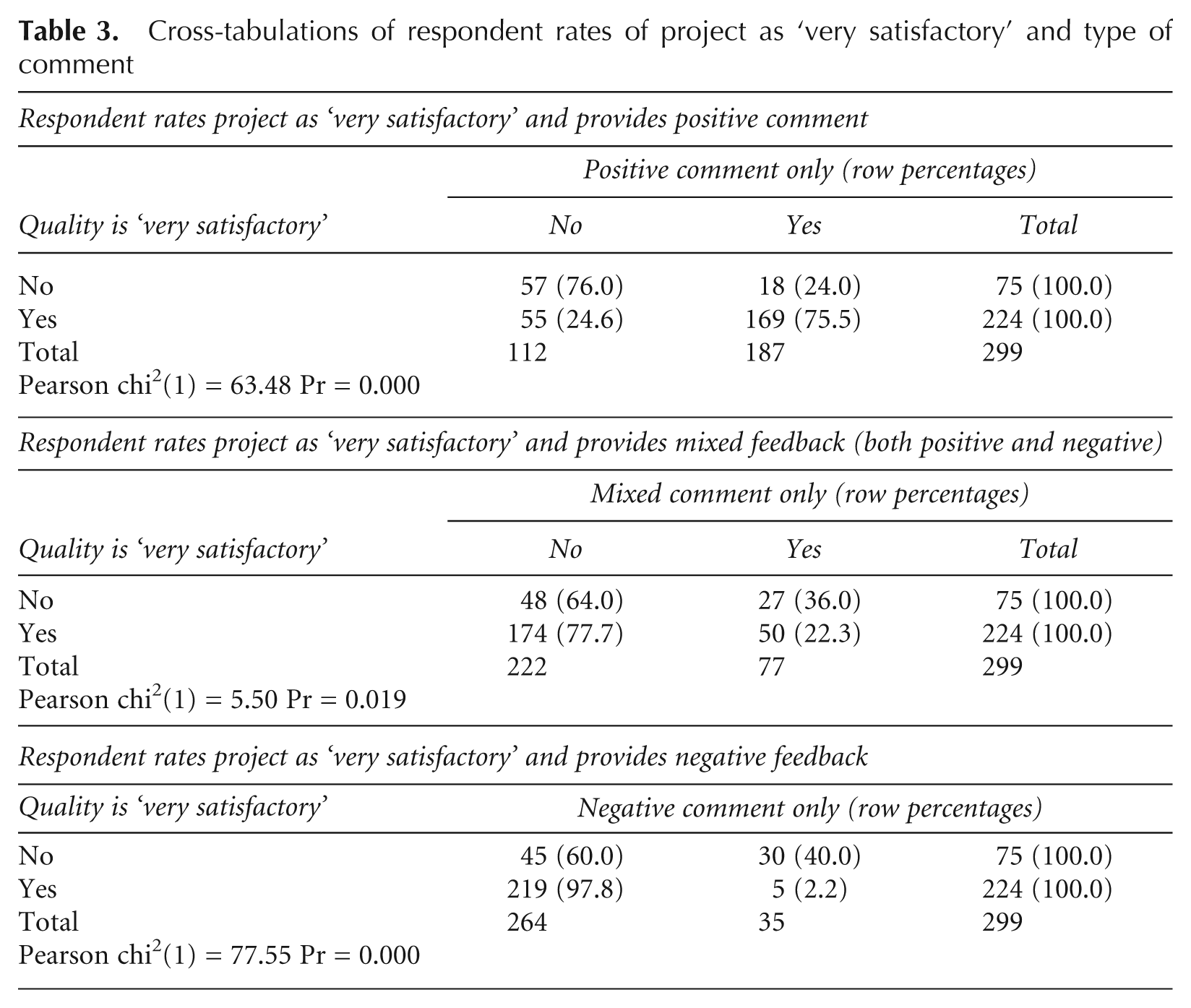
Cross-tabulations of respondents who report SNP quality as ‘very satisfactory’ (snp_qual2) and those who report only positive comments suggest that, while nearly all of the respondents who comment positively are also highly satisfied with project quality (Table 3), approximately 50 per cent of respondents who provide mixed or negative comments also report being highly satisfied with the project quality (i.e. responding that quality is considered ‘very satisfactory’). Specifically, approximately two-thirds of those who provide mixed feedback (both positive and negative comments) also report being highly satisfied (Table 3); of those providing only negative comments, nearly all (30 of 35) report being less than highly satisfied (Table 3). These descriptive results suggest that, although there is overlap between the type of comment made and level of reported project satisfaction by respondents, there is also significant divergence between reported project satisfaction and negative comments. This divergence is also reflected in Pearson correlations. There is a positive correlation between those who make positive comments and those who report being highly satisfied (r = 0.461, p<0.01), while mixed and negative comments are negatively correlated (mixed comments: r = −0.136, p<0.05; negative comments: r = −0.509, p<0.01).
Cross-tabulations of respondent rates of project as ‘very satisfactory’ and type of comment
The low correlation between professed overall SNP satisfaction and negative comments (or complaining) points to a need to clarify who chooses to comment negatively and why. Following the literatures on neighbourhood and consumer satisfaction, one possible explanation for this discrepancy is that a high proportion of respondents may express satisfaction with programme outcomes due to social desirability (Kowalski, 1996; Parkes et al., 2002). Alternatively, those respondents who chose to comment negatively weighed the opportunity-cost of doing so and found the action to be beneficial (Blodgett and Granbois, 1992; Kowalski, 1996). This may imply that those who make negative comments lack other outlets to voice their dissatisfaction and are therefore less empowered in their ability to independently access necessary channels of redress (such as an NGO or municipal official) to obtain programme improvements and repairs.
It is important to point out that those respondents who express high levels of satisfaction may also experience problems with the project (i.e. not giving a negative comment may not mean that there are no service problems); conversely, those respondents who make negative comments or complain may not have actually experienced low-quality service levels. In other words, perceived satisfaction of services may only partially capture actual quality of service provision. To investigate these alternative explanations further, the following section presents logistic regression models of respondents’ levels of satisfaction as compared with respondents’ choices to comment negatively about specific service problems.
Analysis: Relating Sustained Participation to Project Satisfaction
Logistic regression models are estimated to investigate the relationship of reported on-going resident participation with project satisfaction. Project satisfaction is measured by respondents’ being ‘very satisfied’ with overall programme quality (snp_qual2) and by respondents’ specific complaints or negative comments made via the open-ended question. Open-ended responses were coded by type of service delivered (Table 4). Given low frequencies of garbage, roads, drainage and other miscellaneous service concerns, logistic regression models were fitted only for water, sewerage and street lighting.
Dependent variables frequency and type of complaints (in descending order)
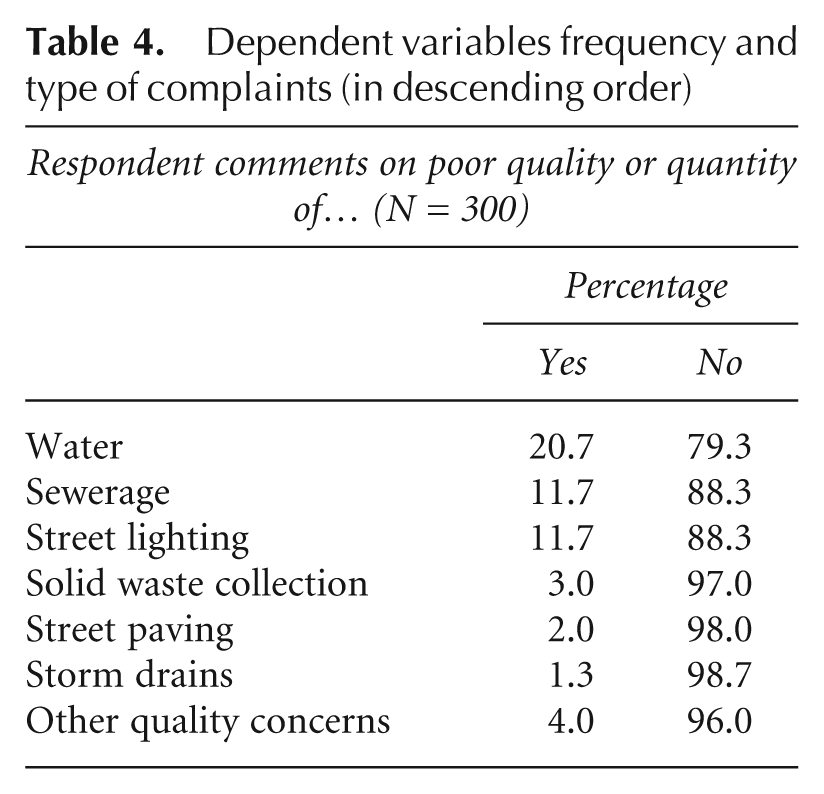
Again, our hypothesis is that, controlling for socioeconomic and area factors, satisfaction with service quality is related to continued participation, strength of external support networks such as a sponsoring NGO and access to channels of redress/choice to seek redress

The four dependent variables selected as measures of satisfaction include whether the respondent reports being ‘very satisfied’ with overall project quality (“snp_qual2”), and whether the respondent complains about quantity or quality of water, sewerage and street lighting services.
Independent variables were selected for each category of measurement. All highly correlated variables (r ≥ 0.4) were excluded. Independent variables for the logistic regression models were retained if they had a statistically significant relationship with the dependent variable using descriptive statistics (as measured via chi-squared tests and OLS regression; see Table 5).
Independent variables and frequencies
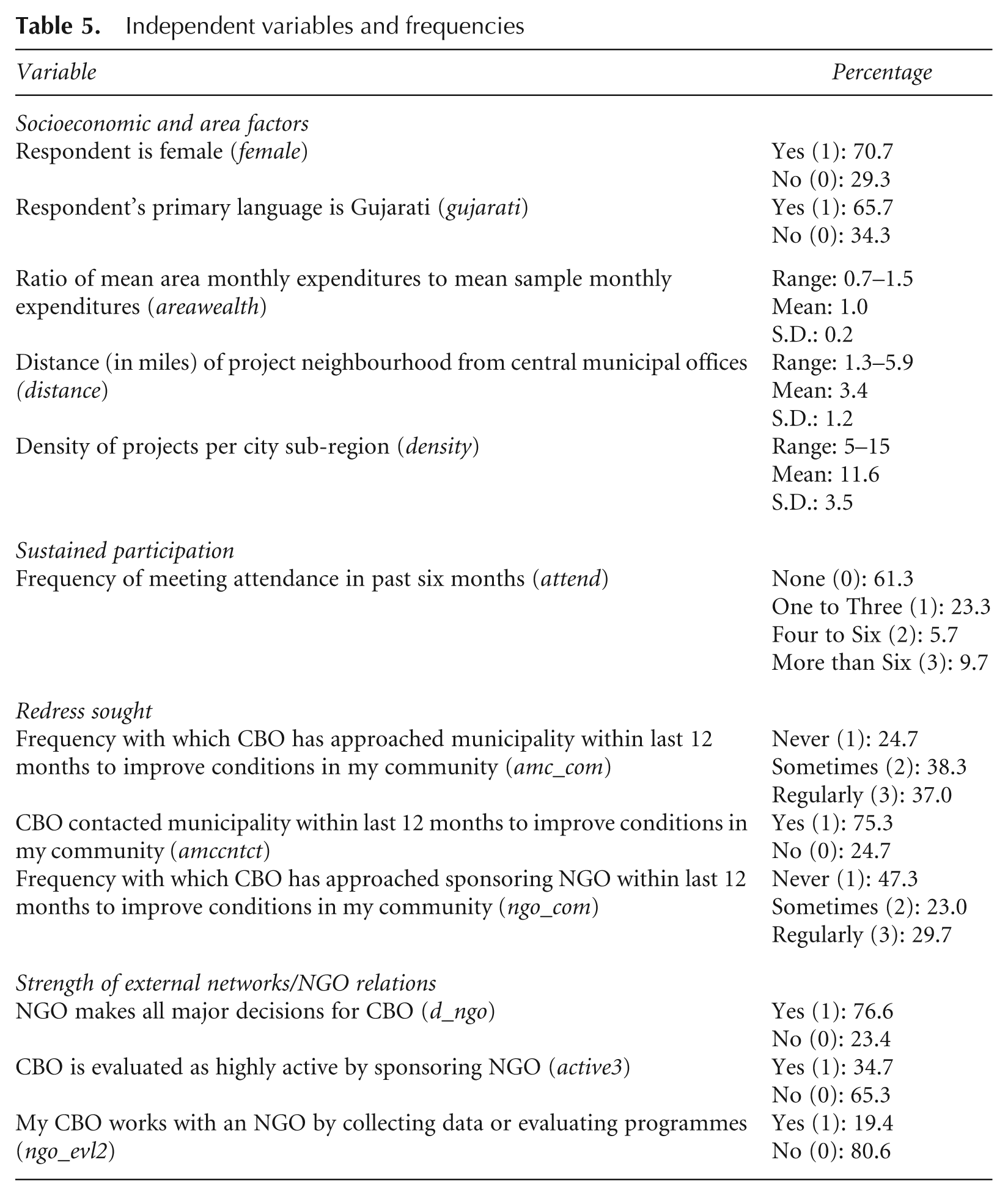
Logistic regression models were estimated to test whether, controlling for socioeconomic status and neighbourhood characteristics, individual participation, external organisational support networks and seeking redress through available channels relate to satisfaction levels. To account for threats of reverse causation or joint determination due to endogenous variables, we made use of instrumental variables in two-stage least squares regression (2SLS) models. The results were similar to those reported in the logistic regression model results (see Table 6).
Logistic regression results
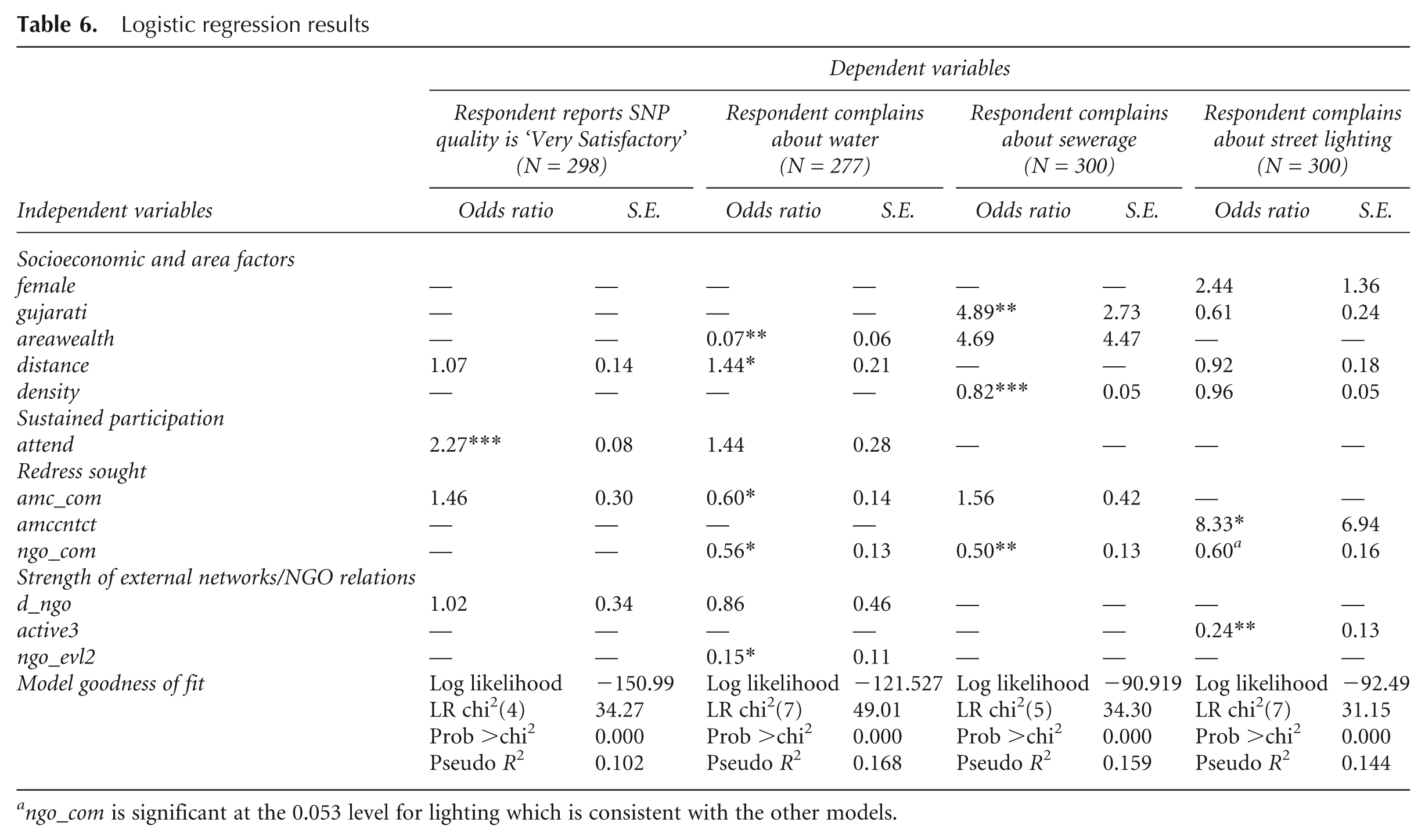
ngo_com is significant at the 0.053 level for lighting which is consistent with the other models.
Overall Project Satisfaction
The logistic regression model for project satisfaction as measured by whether respondents indicate they were ‘very satisfied’ with programme quality has an LR-chi-squared value of 34.27 (p >chi2 = 0.001), a pseudo R2 of 0.10 and a log likelihood of −150.99, indicating that the model explains 10 per cent more of the variability in satisfaction than an empty model (i.e. the degree to which the model improves upon the prediction of a model with no independent variables). Of the four variables included in this model, only attend is statistically significant. With an odds ratio of 2.27 (p <0.001), this suggests that respondents who report attending a meeting of their community-based organisations in the past six months are over twice (2.27) as likely as those who do not report attending a meeting of their CBO to also report being ‘very satisfied’ with the overall quality of services provided through the SNP. This supports our hypothesis that continued participation via community involvement is associated with project satisfaction.
Respondents’ Complaints over Water Services
The logistic regression model for project satisfaction, measured by respondent complaints about the quality or quantity of water services, has an LR-chi-squared value of 49.01 (p >chi2 = 0.001), a pseudo R2 of 0.17 and a log likelihood of −121.53, indicating that the model explains approximately 17 per cent more of the variability in satisfaction than an empty model and explains more variation in the dependent variable compared with the model of overall satisfaction with the SNP.
Two control variables are significant in this model, relative area wealth of the project neighbourhood as compared with the sample (areawealth) and distance of the project neighbourhood from the central municipal offices (distance). Respondents living in comparatively wealthier neighbourhoods are less likely to complain about water services (odds ratio of 0.07) than respondents living in lower-income areas. In addition, for every mile farther from the central municipal offices the respondent lives, the more likely s/he is to have complained about the quality or quantity of water services. Taken together, we can surmise that respondents residing in more centrally located and wealthy areas are less likely to complain or have made negative comments about water services.
Access to channels of redress and the strength of the relationship with a sponsoring NGO also explain variation in complaining about water services. The more frequently the respondent reports that his/her CBO has contacted either the municipality (amc_com) or their sponsoring NGO (ngo_com) to request service assistance, the less likely the respondent is to complain about water services (odds ratios of 0.60 and 0.56 respectively, p<0.05). Respondents who report a strong partnering relationship with their sponsoring NGO, as measured by whether the respondent reports his/her CBO partners with the NGO for programme evaluation purposes (ngo_evl2), are also less likely to complain about water services (odds ratio of 0.15, p<0.05). These results suggest that respondents who are members of CBOs with a close partnering relationship with their sponsoring NGO, and/or have the ability to communicate their needs to either that NGO or to the municipality, are less likely to have complained about the quality or quantity of their water services. This suggests that complaining about water services is associated with lower relative wealth and greater distance from the municipal agency and, in addition, that individual sustained participation in the group is less relevant than the ability of the group to consult and/or partner with external institutions.
Respondents’ Complaints over Sewerage Services
The logistic regression model for project satisfaction, measured by respondent negative statements about the quality or quantity of sewerage services, has an LR-chi-squared value of 34.30 (p>chi2 = 0.001), a pseudo R2 of 0.16 and a log likelihood of −90.92, indicating that the model explains approximately 16 per cent more of the variability in satisfaction than an empty model and explains a comparable amount of variability in the dependent variable compared with the water services model.
The model fitted for sewerage negative comments is different both from the water services model and the overall satisfaction model. Two socioeconomic status and area characteristic variables are significant for explaining the variation in negative comments about sewerage services. Whether the respondent’s primary language is Gujarati (gujarati), a proxy for whether the respondent is a member of an ethnic/linguistic majority, is positively related to negative comments over sewerage services. With an odds ratio of 4.89 (p<0.01), this suggests that respondents who are of the majority ethnic/linguistic group are almost five times more likely to complain about the quality of their sewerage services than respondents whose primary language is not Gujarati. The density of projects per city region is also statistically significant. With an odds ratio of 0.82 (p<0.001), this suggests that respondents residing in regions of the city with more neighbourhoods participating in slum upgrading are less likely to complain over sewerage than respondents living in regions where there are fewer neighbourhood projects. One possible explanation is that economies of scale may allow for better project co-ordination, which in turn may have culminated in more effectively laid sewerage mains. As in the water services model, respondents who report that their CBO has frequently contacted their sponsoring NGO to request service assistance (ngo_com) are less likely to make negative comments about their sewerage services than respondents who do not report that their CBO is in frequent contact with the sponsoring NGO.
Respondents’ Complaints over Street Lighting Services
The logistic regression model for project satisfaction, measured by respondent negative comments about the quality or quantity of street lighting services, has an LR-chi-squared value of 31.15 (p>chi2 = 0.001), a pseudo R2 of 0.14 and a log likelihood of −92.49, indicating the model explains approximately 14 per cent more of the variability in satisfaction than an empty model and explains a comparable amount of variability in the dependent variable compared with the water and sewerage services models.
In the street lighting service model, only two variables are statistically significant: whether the respondent reports that his/her CBO has contacted the municipality within the past year for service assistance (amccntct) and whether the respondent is a member of a CBO that has been evaluated as ‘highly active’ by its sponsoring NGO (active3). Unlike in the models for water and sewerage services, those respondents who report contacting the municipality to request service are more than eight times more likely to have complained about street lighting services (odds ratio of 8.33, p<0.05). One explanation for this is that access to channels of redress may not be sufficient to lessen dissatisfaction. As Blodgett and Granbois (1992) argue, access to redress channels may lead to increased dissatisfaction and likelihood of making negative comments to a third party if the individual does not feel that his/her complaint has been addressed efficiently and fairly. This suggests that, unlike water and sewerage, complaints to an NGO or the municipality over street lighting did not result in desired consequences (i.e. feeling heard or appreciated as well as receiving service improvements). Despite this difference, sustained activity and a strong relationship with an NGO (as measured by active3) are again linked with higher levels of reported satisfaction with this service type, as measured by less likelihood of making negative comments about street lighting services.
Summary Discussion
All four models of respondent satisfaction suggest that continued involvement and participation in the project (as measured by meeting attendance), access to and pursuit of redress (frequency of service requests on behalf of the community) and an on-going partnering relationship with a sponsoring NGO are associated with respondents expressing greater satisfaction with project outcomes. Yet, results of the logistic regression models fitted to explain the variation in negative comments about specific service types have greater explanatory value than a general measure of overall satisfaction with programme quality. The models also suggest that different characteristics are significant in explaining the variation in negative comments and how CBO and NGO organisational factors might matter in the variation of negative comments made by respondents.
Conclusion
In this paper, we have explored the extent to which continued participation in the Slum Networking Project (SNP) explained variation in respondents’ expressions of satisfaction and dissatisfaction with the SNP overall and with specific services provided. We tested two hypotheses: residents who continue to participate in the project (via maintenance and community development activities) would express greater satisfaction with the SNP; and, higher levels of resident participation (measured by meeting attendance) would be associated with a closer relationship with a partnering NGO and greater access to the municipality, thereby leading to greater expressed satisfaction with SNP service quality.
The results indicated that the variables significant in explaining variation in overall SNP satisfaction were distinct from those explaining variation in negative comments made concerning specific service types (water, sewerage, street lighting). This upholds prior findings that high levels of professed satisfaction may not accurately capture residents’ feelings of satisfaction due to respondent bias nor accurately measure quality of neighbourhood services (Deichmann and Lall, 2007; Parkes et al., 2002). For overall SNP satisfaction, participation in the CBO (measured by attending meetings of the CBO) was positively associated with overall SNP satisfaction. For water services, however, negative comments were associated with not having a strong partnering relationship with the sponsoring NGO and with not communicating with the NGO or with the municipality to request service assistance. Negative comments about sewerage services were associated with being a member of the ethnic/linguistic majority, lower density of projects per city region and not contacting the sponsoring NGO to request service assistance. Finally, negative comments for street lighting services were associated with being a member of a not highly active CBO and contacting the municipality (in contrast to the other service types in which contacting the municipality was associated with less likelihood of negative comments).
These results suggest that satisfaction with service types differs substantially in terms of the importance of CBO activity, contact with NGOs and municipalities, as well as project characteristics (density of projects in city region) and community characteristics (neighborhood relative wealth). Participation via attending meetings appears to matter less than continued involvement with a sponsoring NGO or group activity vis-à-vis making negative comments about specific SNP service types. For water and sewerage services, respondents who reported no or little NGO and municipal agency contact also tended to make negative comments about these services. For water and sewerage services, then, these results suggest that one strategy to reduce negative comments may be to increase contact with an NGO, which may then improve access to the municipal agency and opportunities to achieve appropriate redress such as tangible service improvements. In other words, these findings indicate that continued meeting with other residents, through for example the CBO infrastructure, may be insufficient to minimise negative comments or complaints; what also appears to be necessary is the enhanced ability for residents to create useful relationships with the municipal government or NGO so that neighbourhoods can maintain services.
An exception to this association is street lighting services, where negative comments were associated with contact with the municipal agency. Results point to the need to critically assess project satisfaction and the reasons individuals may choose to engage in complaining behaviour. Model results showed that reported satisfaction may differ not only because of neighbourhood characteristics, participation and access to NGOs and municipal governments, but also because of the specific type of public service or infrastructure system under consideration and residents’ subsequent ability to achieve appropriate and/or desired redress. In the models presented, it is reasonable to presume that complaints to the municipality regarding street lighting may not have led to the service repairs respondents requested. In such a situation, complaining to the municipality and not obtaining a ‘just’ response may have heightened dissatisfaction and led to complaints to a third party (i.e. the survey team). This service-specific finding suggests that additional research utilising a more nuanced measure of the choice to pursue redress and outcomes of this choice is needed to explore the relationships among type of service, redress achieved and the subsequent choice to engage in complaining behaviour. Furthermore, additional research is necessary to ascertain how satisfaction and quality of services may shift based on project location and type of service received. Clarifying these service-specific programme satisfaction dynamics would be helpful to scholars, international donor agencies and service providers in reaching a better understanding of the circumstances in which complaints reflect unacceptable service quality and/or access to decision-makers (municipal agencies and/or NGOs).
Footnotes
Acknowledgements
The authors thank the managing officers and field staff at Gujarat Mahila Housing SEWA Trust (MHT), SAATH, and World Vision, the Indian Academy for Self Employed Women (SEWA Academy) and Ashish Kapadia for their assistance with data collection. The authors would also like to thank the three anonymous reviewers of this manuscript and editor Michael Timberlake for their insightful comments. The contents and views expressed here are the authors’ only. All errors and omissions remain the responsibility of the authors.
Notes
Funding
The first author was supported by a Doctoral Dissertation Research Improvement grant from the US National Science Foundation’s Geography and Spatial Science Program and Office of International Science and Engineering (award number 0902222) and fellowship funding from the UCLA Graduate Division.