



Abstract
Numerous studies have demonstrated the detrimental influence of residential segregation on poor inner-city residents. This study examines the impact of residential segregation on the welfare of populations in US metropolitan areas using economic growth as the indicator. Panel data of US metropolitan areas spanning 25 years, 1980–2005, are used to analyse the effect of segregation on economic growth. The results show that both racial and skill segregation have a negative impact on short- and long-term economic growth, which have increased over time. Further, the negative impact of the variables associated with spatial mismatch is also revealed. The results clearly point to the need for mobility policies that favour non-White households and comprehensive strategies that promote economic opportunities in low-resource communities in the US.
Introduction
Residential segregation is a central feature of US metropolitan areas. In spite of declining racial segregation (Glaeser and Vigdor, 2003), poverty is suburbanising and income disparities have grown ever wider (Hanlon et al., 2010; Raphael and Stoll, 2010). Residential location often determines access to products and services that affect one’s quality of life and one’s ability to earn a living (Goss, 1995; Squires and Kubrin, 2005; Swanstrom et al., 2004; Weiss, 1988). Segregation impacts the nation’s efforts to address its urban problems; this is evident in the fact that central-city revitalisation, school integration and programmes fighting urban poverty and encouraging mixed communities have been central to urban policy debates.
Residential segregation refers to the isolation of poor and/or racial minorities that live in communities and neighbourhoods separated from those of other socioeconomic groups (Coulton et al., 1996; Goldsmith and Blakely, 2010; Massey, 1996; Swanstrom et al., 2004). It not only undermines the efforts to address the needs of the poor and minorities, but is detrimental to the welfare of the entire population—rich and poor, racial majorities and minorities, those in cities and suburbs. Suburban residents encourage the implementation of exclusive policies in their local political jurisdictions to protect their well-being and resist having to compensate for the recovery of distressed areas that they are not concerned with (Goldsmith and Blakely, 2010; Stegman, 1997). Metropolitan areas with high poverty concentrations have found it difficult to pursue tax-base sharing strategies from affluent jurisdictions to combat poverty, segregation and their associated social ills. Social and economic disparities between central cities and their suburbs and between rich and poor communities foster mutual ignorance and impede efforts to co-operate on a regional basis to pursue economic development and/or alleviate poverty (Frisken, 2001; Kantor, 2006; Savitch and Vogel, 2004). Therefore, it is important to convince the non-poor that segregation adversely affects them too.
The formation and consequences of residential segregation and poverty concentration on the lives of poor inner-city minorities is well documented (Briggs, 2005; Dreier et al., 2002; Kain, 1968, 1992, 2004; Liu, 2009; Massey and Denton, 1993; Wilson, 1987) and some studies have compared the effect of segregation on uneducated minorities and on educated Whites (Benabou, 1993). By examining the effect of segregation on metropolitan growth, we extend this line of inquiry to metropolitan areas and their populations—inner cities and suburbs, poor and non-poor, and minorities and Whites. We use panel data to assess critically the impact of residential segregation on economic growth across US metropolitan areas by relating per capita income growth to the levels of racial and skill segregation. Our analyses cover the 1980–2005 period and use consistent metropolitan area boundary definitions. Our results demonstrate that residential segregation based on race and skill level not only negatively affects metropolitan growth, but that its impact has grown stronger over time. Racial segregation is consistently detrimental to both cities and suburbs, while the impact of skill segregation on central cities is stronger. Our results also cast doubt on the neo-classical supposition that simple increases in factor endowments drive the economic growth of American metropolitan areas.
We elaborate on the role of skill complementarity and spatial mismatch in metropolitan growth and outline our theoretical model based on endogenous growth theories. After discussing our data and variables, we present our empirical findings. We conclude with a few policy implications and speculate about our findings with respect to the Great Recession of 2008–09. We also recommend research that clearly links segregation and metropolitan growth that promotes an understanding of the multidimensional nature of segregation and its effects on different demographic groups. We hope that this will help to facilitate national and local debates on inequity and urban growth.
Skill Complementarity
High- and low-skilled labour are complementary in production. The US labour market is characterised by the polarisation of wages for high- and low-skilled labour as the service sector produces an increasing proportion of economic activity. In the context of US metropolitan areas, living in low-resource, segregated, inner-city neighbourhoods can produce adverse labour market outcomes, especially for those with few marketable skills. Thus, residential segregation can adversely affect metropolitan growth.
Endogenous growth theories argue that new ideas (innovation, technological progress and knowledge spillover) are the engines of local and national economic growth (Grossman and Helpman, 1991; Lucas, 1988; Romer, 1990). Accordingly, an innovation- or technology-driven economy will experience an increasing demand for high-skilled labour and rapid growth in their wages. Skill-biased technological progress thus is possibly a cause for the widening disparity in US incomes since 1970 (Acemoglu, 2002; Berman et al., 1994; Katz and Autor, 1999).
Since 1990, employment shares in both the highest- and lowest-skilled occupations have increased, while those in the mid range have decreased. Additionally, wages at the bottom occupations have grown, although not as rapidly as those at the top (Autor et al., 2006, 2007). Autor et al. (2003) argue that computerisation and international outsourcing contribute to labour market polarisation (see also Levey and Murnane, 2004), suggesting that information technology replaces routine tasks but not abstract and manual ones. Hence, the declining price of computer capital is believed to increase the demand for educated professionals and managers performing abstract tasks and lower the demand for moderately skilled workers performing routine tasks.
Metropolitan economies use labour of all kinds, because high- and low-skilled labour are complementary. Cross-national evidence shows that growth depends positively on the ratio of final-good workers to researchers (Ribeiro, 2000). Low-skilled occupations are primarily time-intensive services like food preparation, cleaning, repair and delivery. As skilled workers’ productivity increases, they are more likely to externalise household functions to free themselves of home production tasks. The increasing wages and productivity of high-skilled workers create a demand for low-skilled employment. Mazzolari and Ragusa (2007) demonstrated that the share of college graduates in the urban workforce correlated positively with the productivity and wages of low-skilled workers. Thus, a technology-rich region produces a knowledge- and service-based economy. If low-skilled employment opportunities are dependent on their physical proximity to workers (Manning, 2004), economic growth might be hampered by segregation that inhibits skill complementarity.
Emphasising educational investment as key to the complementary effects argument, Benabou (1993) discussed a negative effect of residential segregation on economic growth based on skill. If low-skilled workers are segregated in communities deprived of high-skilled workers and access to job-related information and networks, their potential earnings might be even lower, implying lower returns on education. As a result, the poor might reduce educational investments, remain unskilled and display lower rates of labour force participation. The reduced supply of low-skilled workers also impedes the productivity of those with higher skills, which would lower their returns on education, too. If such an imbalance persists, the educational investments of high-skilled individuals might decline, further slowing economic growth. However, Benabou acknowledges the incentive for educated families to live in high-resource neighbourhoods and partake in class-based networks as this encourages information sharing and educational persistence. Cumulatively, the different effects of residential sorting depend on which process (complementary effects vs high-skilled segregation) is stronger. It is conceivable then that segregation could lead to inefficiency at the aggregate metropolitan level due to its disincentive impact on human capital accumulation.
The Spatial Mismatch Hypothesis
While our model is based on the complementary effect of low- and high-skilled labour, we also study the physical barriers of segregation faced by low-skilled workers participating in the labour market.
The spatial mismatch hypothesis (SMH) proposes that residential segregation reduces employment opportunities for poor minorities. Accordingly, living in high-poverty neighbourhoods undermines workforce participation and labour market outcomes primarily due to the physical distance between the residence and potential jobs and the limited access to networks informing people about job opportunities (Gobillon et al., 2007; Ihlanfeldt and Sjoquist, 1998; Kain, 1968; Korsu and Wenglenski, 2010; Preston and McLafferty, 1999; Weinberg, 2000). Within metropolitan areas, many low-skilled jobs, including production services, home production services and public services, have become dispersed and decentralised with suburbanisation and the emergence of the service economy (Cullingworth, 2008; Glaeser and Kahn, 2001; Kasarda, 1990; Teitz and Chapple, 1998; Wyly et al., 1998). Despite recent trends in the suburbanisation of poverty, low-skilled labour is frequently constrained in central cities by inaccessibility to automobiles and insufficient public transit (Gautier and Zenou, 2010; Sanchez, 1999; Raphael and Rice, 2002). As distance and travel time between inner-city residences and potential employment locations increase, policy-makers continue to recommend improved public transport to address employment problems (Holzer, 1991; Hughes, 1991; National Advisory Commission on Civil Disorders, 1968). This strategy has met with some success (Blumemberg and Manville, 2004; Sanchez, 1999).
Given that US metropolitan areas are highly auto-oriented, public transit is not always a viable link between inner-city residences and job locations (Kain, 1968; Thompson, 1997). Even in densely developed urban areas, public transit connecting dispersed destinations is poor (Fernandez and Su, 2004; Holzer et al., 1994; Taylor and Ong, 1995). More job locations can be reached by car than by public transit (Baum, 2009; Gautier and Zenou, 2010; Raphael and Rice, 2002). Car ownership plays a significant role in the differing labour market outcomes for Whites and minorities (Hess, 2005; Shen, 1998). The evaluation of a programme showed that the monthly income of participants rose by 20 per cent with improved access to automobiles (Goldberg, 2001). Access to cars might also enhance one’s employment-related social networks. Without cars, segregated residents find commuting to business centres or accessing job information expensive (Calvó-Armengol and Jackson, 2004; Calvó-Armengol and Zenou, 2005; Granovetter, 1973).
For the poor and racial minorities segregated in inner-city communities with fewer opportunities, finding suitable employment can be difficult because of physical barriers, constrained mobility, discrimination in employment and housing, and a lack of social networks and information. If so, they might participate less in the labour force, thereby limiting complementarity to high-skilled workers. Thus, we hypothesise that
Metropolitan areas with high levels of residential segregation are associated with lower rates of economic growth. 1
Model Specification
Since 1980, the US economy has become increasingly knowledge-intensive. Thus, we base our model on endogenous growth theory to test the hypothesised negative impact of segregation on economic growth. We treat technological progress as a function of the human capital stock, while the physical capital for a metropolitan area is determined by technological progress and human capital.
Assuming Cobb–Douglas technology and taking log differences, the standard growth accounting equation is

where, Y denotes per capita income; A, productivity progress; L, labour; K, physical capital; and H, human capital.
Recent endogenous growth theories have modelled

where,
Investment is driven and made possible by profits; technological progress is responsible for new products and processes that generate profits (Adelman, 1961; Schumpeter, 1939). In an open economy such as a metropolitan area, investments might come from external investors. A qualified labour pool with sufficient human capital and public services are important for an urban area to attract investment. Thus

Substituting equations (3) and (4) in (1) and incorporating the vectors of residential segregation variables (RS), SMH variables (SMH) and metro control variables (METRO), discussed in more detail later, metropolitan economic growth can be described as
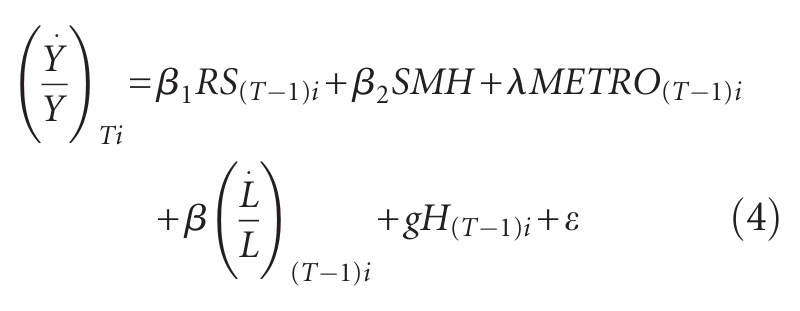
This model helps the determination of how the initial values of the independent variables affect subsequent economic growth. The possibility of segregation affecting economic growth is our concern in the analyses.
We conduct three sets of statistical tests to examine our hypothesis. First, we conduct a fixed-effects panel data analysis to test the impact of residential segregation on economic growth in the 1980s, 1990s and 2000–05. The method allows the error term to be correlated with the segregation variables and controls for time-invariant unobserved variables that affect both segregation and economic growth. It thus helps to address the reverse causation possibility, if not resolve it adequately. 2 Next, three separate ordinary least squares (OLS) regressions including spatial mismatch variables are conducted to examine trends in parameter estimates in 1980–89, 1990–99 and 2000–05. 3 Finally, we run an OLS analysis examining the effect of segregation on economic growth between 1980 and 2005. We refer to metropolitan statistical areas and primary metropolitan statistical areas as ‘MAs’ 4 and employ the definition of the county composition of MAs used in Census 2000.
Data and Variables
Data for our analysis come from the Regional Economic Information System (REIS), the Census of Population and Housing, the Census of Governments, 5 America Votes and other sources.
These data help us to conduct panel data analyses from 1980 to 2005 and to calculate segregation indices by race and skill, based on census tract data. Consistent MA boundaries are used throughout, although some MAs in the north-east are excluded. 6 Our dependent variable is the average annual rate of real per capita income growth for each period under study. Our models demonstrate how initial segregation affects subsequent growth. We also examine the effects of segregation on central-city and suburban residents to reveal how segregation affects particular population groups.
Residential segregation based on race and skill is measured using a dissimilarity index calculated with census tract level data. For example, our racial dissimilarity index is computed as 7

where,
While various income segregation indices such as Theil’s entropy indices, the neighbourhood sorting index (NSI) and the centile gap index (CGI) have been developed (Dawkins, 2007; Jargowsky, 1996; Shorrocks and Wan, 2005; Watson, 2006), consensus on their use is limited. Instead, we employ two other indices: a high- and low-skilled labour dissimilarity index and the ratio of city-to-suburb per capita income. The first of these indices captures isolation and possible impedance of skill complementarity central to our theory, while the city/suburb per capita income variable reflects broad geographical disparities shown to affect metropolitan growth over long periods of time (Voith, 1998).
Similarly, we calculate the skill-based dissimilarity index as

where high-skilled workers are managers, executives, administrators, professionals, technicians and those holding other related occupations, and low-skilled workers are salespeople, machine operators, assemblers and inspectors, handlers, equipment cleaners, helpers, labourers and workers in transport and material-moving occupations. Intraregional income inequality is introduced through the ratio of city-to-suburb per capita income. Measures that reflect the SMH include the percentage of Black households without cars and the percentage of workers commuting by public transit. H is the percentage of the resident population with at least a college degree and L is measured using two variables: the annual population growth rate and the labour force/population rate.
Our control variables for METRO include metropolitan size, race, industrial structure, government structure and political homogeneity. Metropolitan size is measured in square miles and race by the percentage of Black MA population, 8 while the percentage of employment in manufacturing is our indicator for industrial structure. Government structure is the total number of governmental units per 10 000 population, while political homogeneity is calculated as

where,
Descriptive Statistics
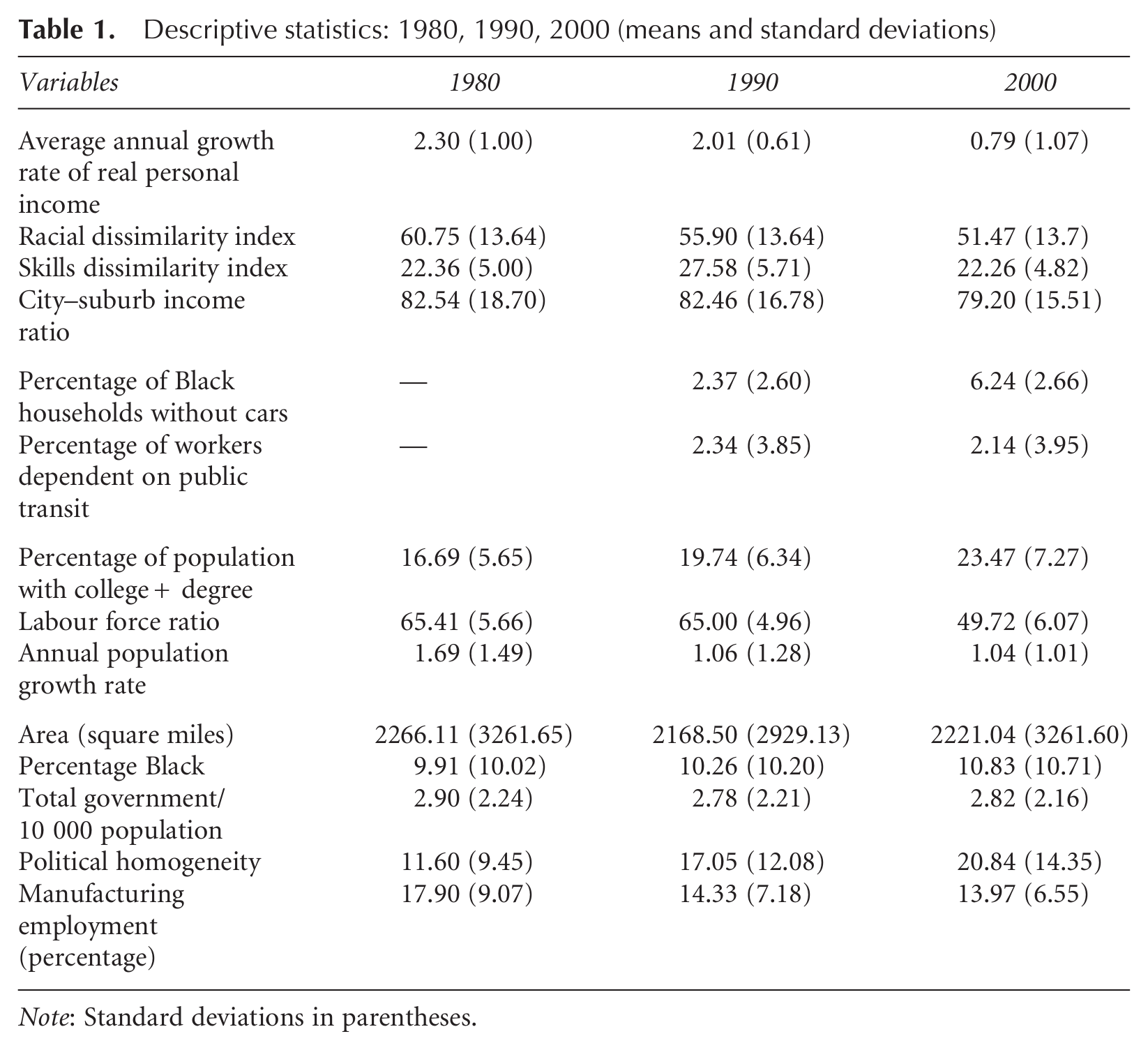
Table 1 reports the descriptive statistics of the variables in different periods. Racial segregation has been declining continually over three decades. The proportion of Black population that needs to move to other tracks with more Whites to achieve an even spatial distribution of Blacks and Whites declined from 61.75 per cent in 1980 to 51.47 per cent in 2000. This is consistent with the evidence from many studies (for example, Farley and Frey, 1994; Fischer, 2003; Iceland, 2004). With respect to skills, metropolitan areas in the 1980s witnessed an increase in skill segregation. Yet, this increase was offset by a modest decline in segregation in the 1990s. This pattern is similar to the growth of economic segregation, which increased from 1980 to 1990 and decreased from 1990 to 2000 (Massey and Fischer, 2003; Watson, 2006). The household income of central-city residents persistently dwindled compared with their suburban peers. In 2000, as compared with 1990, there were more Black households that could not afford cars and fewer workers going to work by public transit. The percentage of population with at least a four-year college degree grew significantly from 1980 to 2000. Yet, the percentage of labour force in the population decreased dramatically in the 1990s and population growth slowed over the period. The average share of employment in manufacturing also declined and political homogeneity and governmental fragmentation increased.
Descriptive statistics: 1980, 1990, 2000 (means and standard deviations)
Note: Standard deviations in parentheses.
Per capita income growth consistently slowed from 2.3 per cent (1980s) to 0.8 per cent annually (2000s). With the flourishing Internet, high-tech and service industries and the shrinking manufacturing sector, MA economic growth shifted from the north-east (1980s) to the south and west (2000s) as Figure 1 shows.
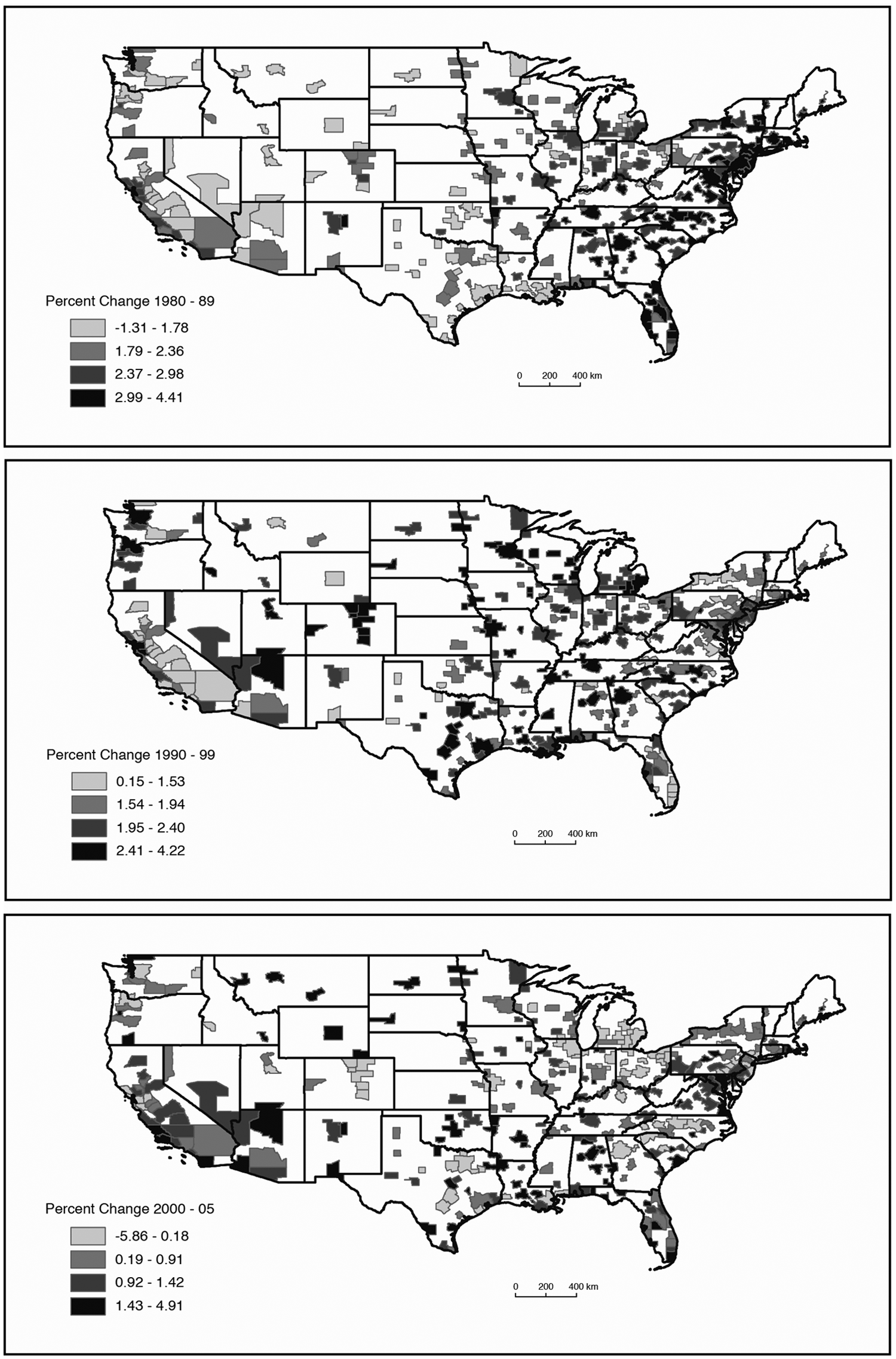
Annual per capita income growth, 1980–89, 1990–99 and 2000–05 (percentage change).
Effects of Segregation on Metropolitan Growth
Results from panel data analysis of 10-year growth and OLS estimation on the long-term economic growth suggest that residential segregation not only exerts downward pressure on short-term economic growth but also negatively impacts long-term income growth over the 25-year period.
Residential Segregation
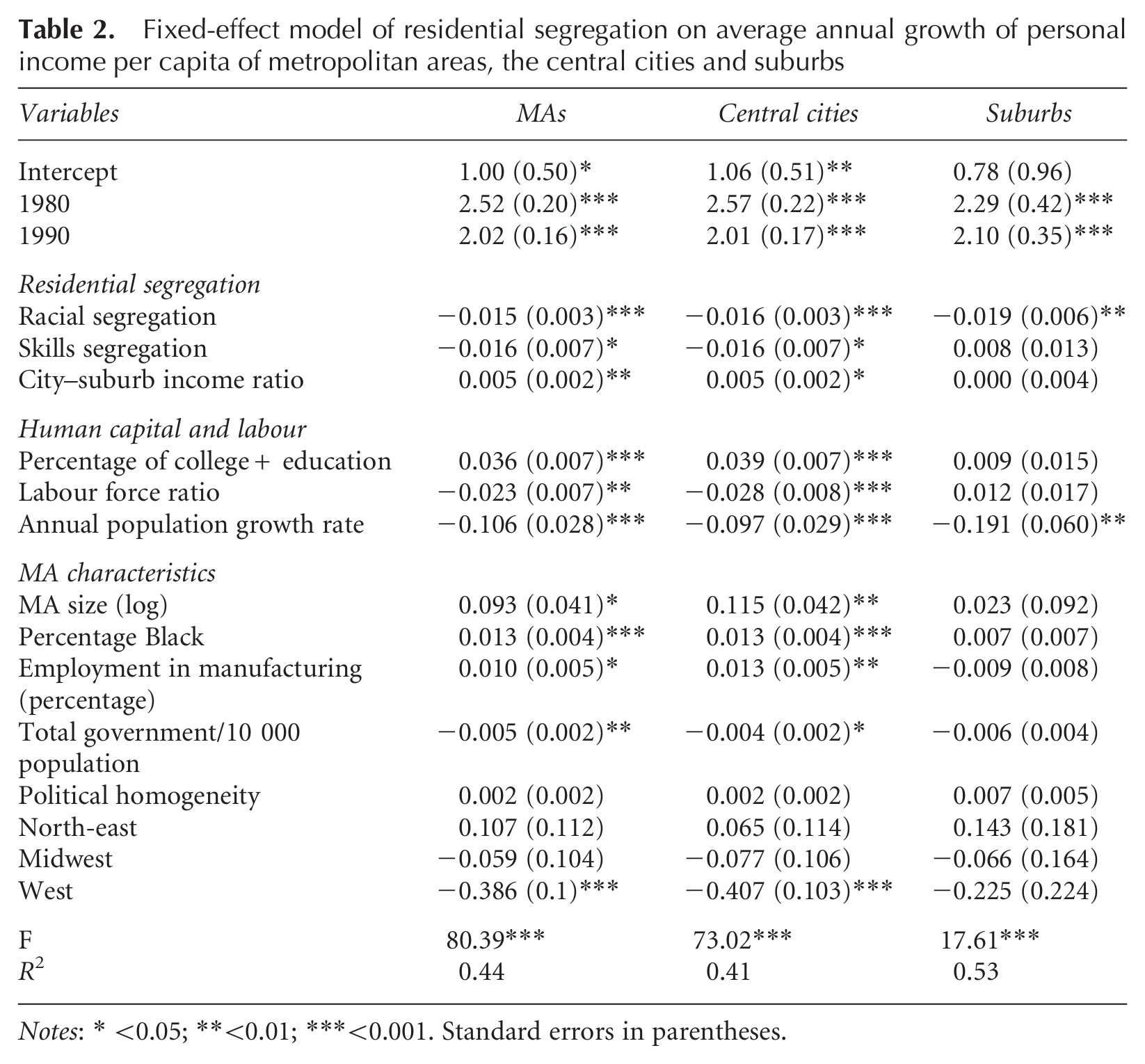
Column 1 in Table 2 reports the results from the fixed-effects model analysis of the panel data. Higher initial racial and skill segregation yielded slower subsequent 10-year metropolitan economic growth. From 1980 to 2005, a unit increase in racial segregation was associated with 1.5 per cent decrease in economic growth. Similarly, a unit increase in skill segregation slowed the economic growth rate by 1.6 per cent. Narrowing the ratio of central-city-to-suburb income by a unit increased income growth by 0.5 per cent.
Fixed-effect model of residential segregation on average annual growth of personal income per capita of metropolitan areas, the central cities and suburbs
Notes: * <0.05; ** <0.01; *** <0.001. Standard errors in parentheses.
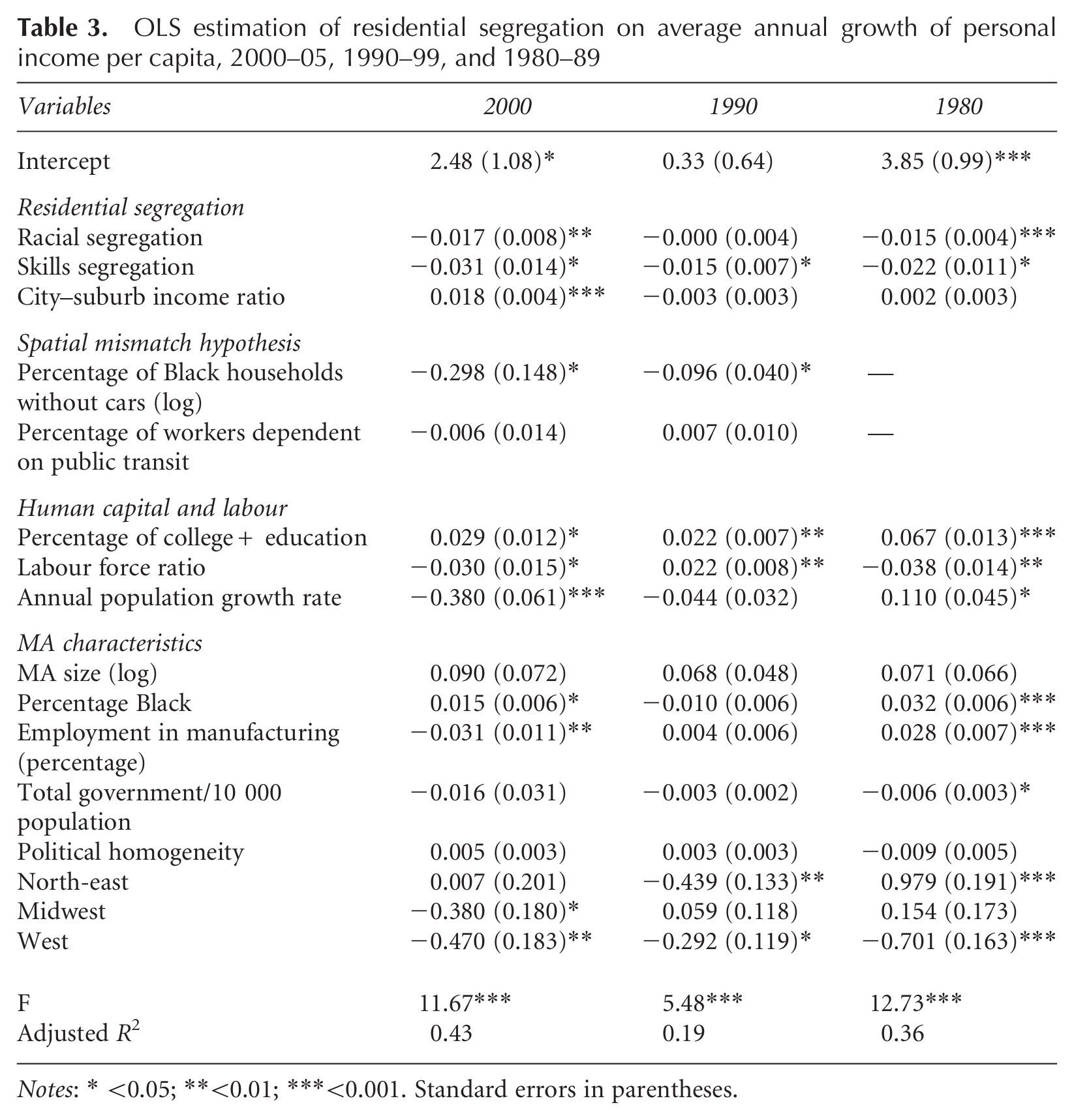
Table 3 presents parameter estimates for three cross-sections in time and introduces spatial mismatch variables. 10 In both the 1990s and 2000s, 11 the log value of the percentage of Black households without cars is negative. With constrained car access, residents of deleterious communities are trapped in spatially constrained labour markets. Residential segregation, along with separate residential and job location, not only limits the life chances of poor minorities through social isolation but also creates an obstacle for social welfare improvement in auto-dependent MAs.
OLS estimation of residential segregation on average annual growth of personal income per capita, 2000–05, 1990–99, and 1980–89
Notes: * <0.05; ** <0.01; *** <0.001. Standard errors in parentheses.
The impact of residential segregation increased from 1980 to 2000: the size of the estimated parameters for racial segregation increased by 13 per cent, while the skill segregation estimates increased by 41 per cent. All three segregation variables in 2000 were significant predictors of economic growth from 2000 to 2005. The standardised coefficient of skill segregation (not shown) increased consistently from -0.011 in 1980 to -0.014 in 2000. With structural shifts in employment from manufacturing to services, the booming high-tech and service industries demand more low- and high-skilled labour. Yet, constrained mobility makes it increasingly difficult for low-skilled workers to access the growing employment centres. Thus, the negative impact of residential segregation has grown over time.
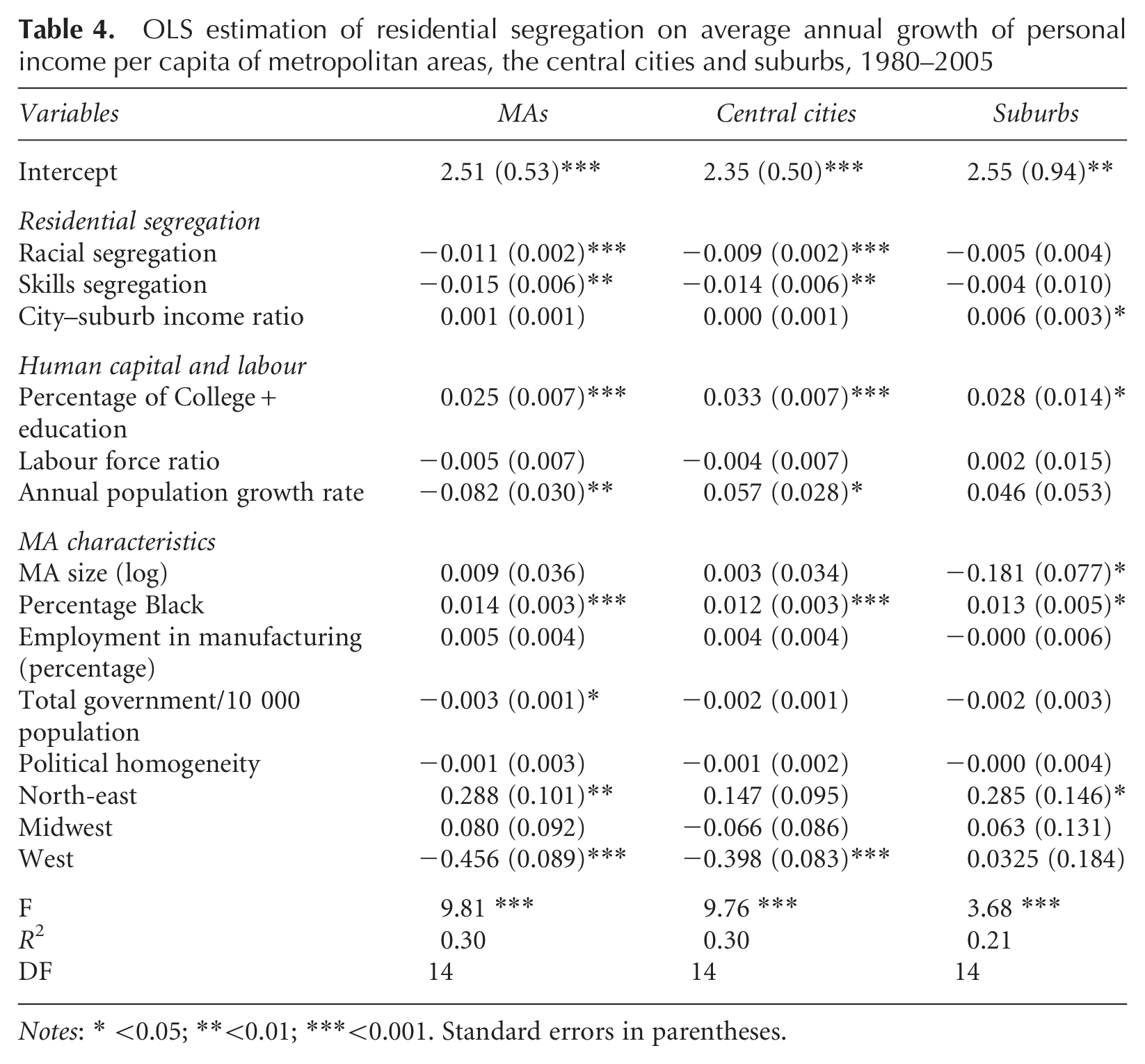
Column 1 in Table 4 suggests that racial and skill segregation deter long-term economic growth. The results clearly illustrate the connection between macroeconomic growth and the geographical distribution of the socioeconomic attributes of the population. The results indicate that avoiding social isolation and helping the poor and low skilled to be employed would enhance economic efficiency that benefits the income growth of the entire metropolitan population. This comes at a time when the premium associated with human capital acquisition is reflected in its large and positive coefficients. Policies encouraging social integration and central-city revitalisation would not only improve the quality of life and enhance social equity for the poor, but would also facilitate social and economic efficiency.
OLS estimation of residential segregation on average annual growth of personal income per capita of metropolitan areas, the central cities and suburbs, 1980–2005
Notes: * <0.05; ** <0.01; *** <0.001. Standard errors in parentheses.
Other Variables
As convention suggests, human capital positively contributes to metropolitan economic growth. Yet, the labour force ratio and the population growth rate have negative signs, contrary to the neo-classical view that labour and population growth drive economic growth. The negative correlation between the population growth and labour force engagement suggests that the growing labour supply exerts a downward pressure on wages, the primary source of income in MAs.
The concentration of manufacturing industries, the percentage of the Black population, 12 and MA size have positive effects on economic growth, indicating that diversity in the manufacturing sector and demographics positively contribute to economic growth. This is consistent with the results reported by Glaeser and Shapiro (2003). Since the 1990s, a higher percentage of those employed in the manufacturing sector has been associated with slower metropolitan growth. It indicates that the emergence of the service sector might contribute more to income growth than manufacturing industries during the economic structural transformation. The negative sign on total governments per 10 000 population reflects increasing governmental fragmentation and is not conducive to metropolitan income growth.
Effects of Segregation on Central Cities and Suburbs
Does segregation have the same effect on the income growth of residents in central cities and suburbs? All three segregation indices show negative economic growth in central cities (column 2, Table 2). The conventional mechanism for residential segregation—racial segregation—has a negative effect on suburban income growth (column 3).
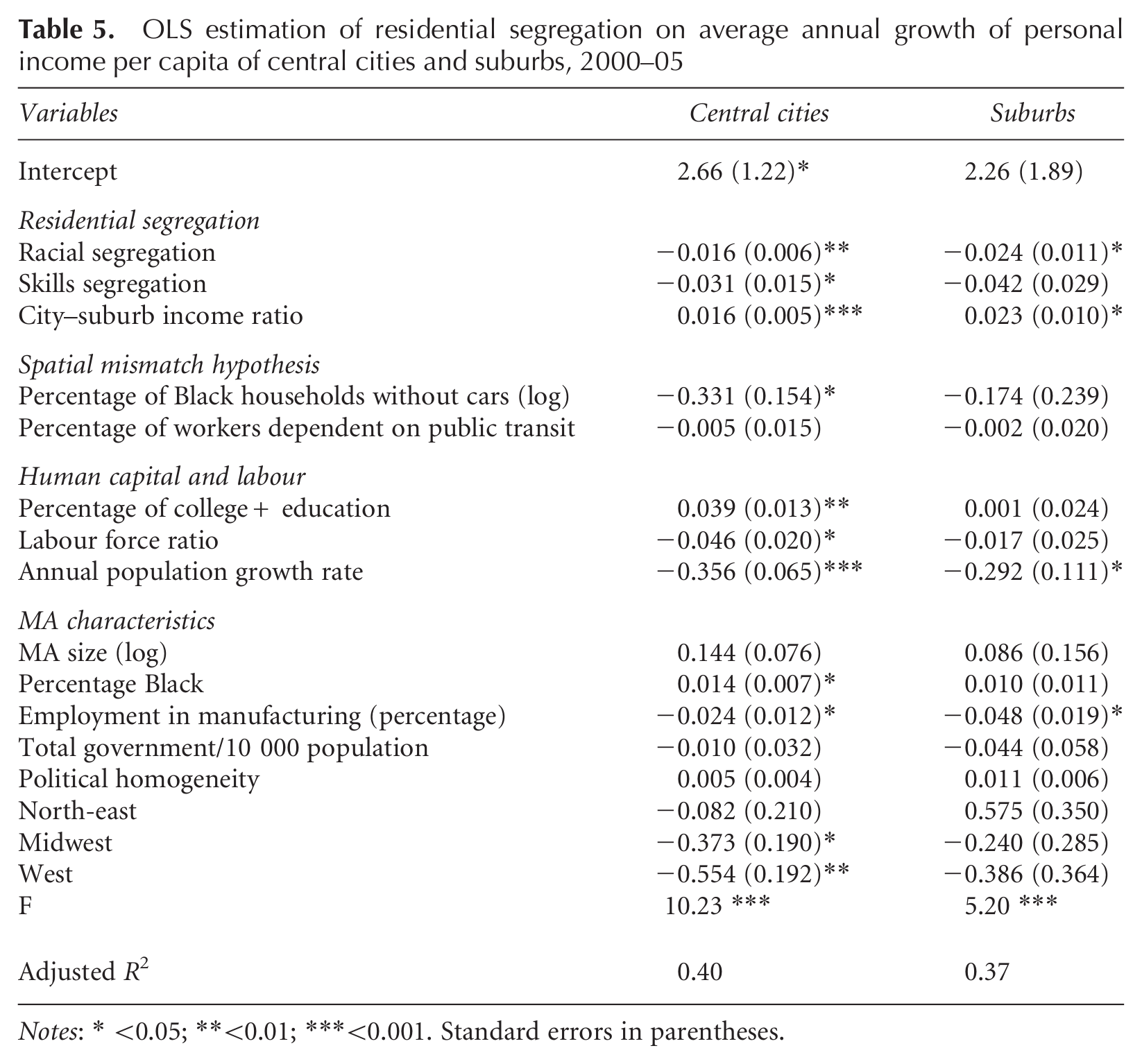
Cross sectional analyses 13 (Table 5) show that racial and skill segregation negatively affect the income growth of central-city residents. The percentage of Black households without cars in 2000 is negative (Table 5). Racial segregation had a negative impact on suburban residents in 2000.
OLS estimation of residential segregation on average annual growth of personal income per capita of central cities and suburbs, 2000–05
Notes: * <0.05; ** <0.01; *** <0.001. Standard errors in parentheses.
Columns 2 and 3 in Table 4 reveal similar information. Initial racial and skill segregation have a negative impact on central-city economic growth for the next 25 years, but do not significantly affect suburban economic growth in the long term. Larger city–suburb income disparities, however, slow long-term suburban income growth.
Our results demonstrate that racial segregation negatively affects inner-city and suburban residents. While skills segregation slows the income growth of inner cities, it does not significantly impact the suburbs. Thus, research about how the inter-race and inter-class interactions differ in facilitating social networks to enhance employment access would enrich our theoretical understanding of metropolitan dynamics.
Summary and Conclusion
From 1980 to 2005, the economic growth of MAs declined. Metropolitan areas became more racially integrated, made virtually no progress with respect to skill-based integration and exhibited greater city–suburb income disparities.
The results demonstrate that higher initial racial and skill segregation are associated with slower subsequent economic growth. The negative effect of the percentage of Black households without cars supports our theory connecting residential segregation and economic growth, indicating that mobility policies might be warranted. In the post-industrial economy, labour markets consist of low- and high-skilled labour. Services provided by low-skilled individuals ensure the productivity of high-skilled workers. When high- and low-skilled labourers are segregated into distinct communities, the geographical distance between their residences and job locations increases for those who are disproportionately low-skilled. Constrained personal mobility from car inaccessibility or insufficient public transit impedes their accessibility to jobs. Such an imbalance in the labour market inhibits the productivity and income growth of all workers.
Literature on the subject is flush with research emphasising that residential stratification is a by-product of market forces. Americans prefer living in neighbourhoods occupied primarily by households with similar incomes, cultural values, outlooks and racial/ethnic backgrounds (Baum-Snow, 2007; Downs, 1994, ch. 4). It provides builders the incentive to create large sub-divisions of homes similar in size and price, thus perpetuating a residential hierarchy: high-income households cluster in high-prestige areas and middle-income in midrange-prestige areas. At the bottom are the low-prestige communities with often deteriorated housing in the central cities and inner suburbs. In order to exclude low-income people and sustain residential homogeneity, the middle and upper class establish independent jurisdictions through local zoning, building codes and other regulations.
Extensive research has documented the disadvantaged position that poor minorities suffer in the segregated urban system. Yet, affluent residents, voting with their feet, actually produce a negative externality that impedes the income growth of metropolitan areas. Residential segregation is thus detrimental to the welfare of all the people, both the poor and non-poor, in central cities and suburbs.
Although skill segregation does not have a negative impact on suburban economic growth, racial segregation has a statistically significant negative effect. The effect has grown stronger over time in spite of declining rates of segregation. This contradicts theories positing positive externalities associated with separate communities for wealthy residents. Coincident with economic transformations taking place since the 1980s, the destructive impact of residential segregation has increased significantly in the ensuing 25 years. Its detrimental impact was not restricted to those of the inner-city. It impacted the economic welfare of all metropolitan residents.
Policies designed to combat spatial mismatch typically focus on a combination of three strategies: increasing mobility, creating affordable housing in job-rich suburbs and/or shifting the location of job growth within the metropolitan area. While our model results do not speak to all these policy options directly, they do provide support for mobility-enhancing policy initiatives, especially those that promote car ownership among non-Whites. We suspect the lack of statistical significance of public transit use reflects both the omission of several large north-eastern MAs and the generally poor condition and configuration of insufficient public transit services in metropolitan areas. A fruitful line of research would examine areas with good public transit to explore the causal relationship between the availability of public transit, job search activities and minority employment.
Our results suggest that better rates of income growth would result from reducing disparities within metropolitan areas. Many urban problems are, at least partly, rooted in the segregated urban system. Thus, policies cultivating a mixed living structure, breaking racial and class barriers that impede minorities and the poor from engaging in the mainstream, are supported. Examples of such policies that have met with modest success include Moving to Work (MTW) and Moving to Opportunities (MTO), programmes aimed at increasing the housing choices for the poor and providing easier access to jobs and other public services. While some have suggested that as much as 50 per cent of jobs are found through friends and relatives (Bayer et al., 2008; Holzer, 1987, 1988; Kasinitz and Rosenberg, 1996), research assessing the extent to which moving to better communities, moving closer to job-rich areas or to areas that promote social mixing actually help the assisted families benefit from community-based social networks is desperately needed.
The fact that labour force participation and population growth were negatively correlated with income growth, casts doubt on the neo-classical supposition that economic growth is tied to ever-increasing factor endowments. Without skill-appropriate opportunities and mechanisms that deter residential segregation, it appears that there are limits to the ability of metropolitan areas to absorb the unemployed and underemployed.
Problems of excess labour supply reflected in high unemployment rates since the 1970s compound the problems of spatial mismatch and segregation, and thus exacerbate slower rates of metropolitan growth. The Great Recession from which we still suffer disproportionately affected metropolitan areas whose economic base was tied to manufacturing and financial services or those that simply overbuilt as a result of speculation in housing markets. It has not been kind to those subject to racial and skills-based segregation who are typically older and those at the lower ends of the socioeconomic strata. The resulting decline in residential mobility suggests that little progress in deterring residential segregation by race or skill will be made in the short run. Yet, at no time in recent history have policies designed to redress these conditions been more urgent.
Footnotes
Acknowledgements
I thank the Geographical Information Science and Technology Group at Oak Ridge National Laboratory. The data collection and core analyses were conducted there. I also thank Dr. Shihe Fu, Dr. Dean Lacy, Dr. Qiang Li, Dr. Qingfang Wang and the anonymous reviewers for their constructive comments. The opinions and conclusions are the sole responsibilities of the authors.
Funding
This study is funded by Shanghai Pujiang Program.