




Abstract
New Urbanism has been appropriated in an Australia context and deployed in the marketing of a peri-urban housing development on the far north coast of New South Wales. Mimicking the ‘neo-traditional’ focus in the US, developers offered a resurrection of quintessential Australian beach house architecture ‘lost’ through the suburbanisation of the coast. Symbolic references to a more ‘authentic’ past, represented in the built form, were contemporised using tropes of environmental sustainability and integration with nature. The image of beach housing and a green lifestyle have successfully attracted buyers and housing price premiums. This paper demonstrates that the cultural capitals of ‘heritage’ and ‘greenness’ are valued as distinction to the suburban norm. It is concluded that, while this development appeals to the notion of an enlightened consumer, this new model of development ultimately offers little to challenge issues of environmental degradation associated with other versions of (sub)urban sprawl.
Introduction
I’m heartbroken … all the [fibro(ous cement)] beach shacks have been knocked down … the developers’ mantra is ‘let’s stick the largest, ugliest building we can squeeze on this block’ … [The] charm of a beach shack was that it was affordable accommodation for families to get away from the city … how can the average family afford those holidays now? (Sydney Morning Herald, blog post, 24 May 2007, 12:07 am). Remember those beach holidays we all loved as kids, well they’re back … awesome! (Mark ‘Occy’ Occhilupo, Australian Surfing identity, The Beach Shacks, www.beachshacks.com.au/index.html).
1
After World War II, many ‘Western’ cities experienced a rapid phase of suburban housing development. Widely documented in North America, (sub)urban sprawl occurred also in Australia’s major cities. In recent decades, large migrations to Australia’s coastal townships have resulted in another version of sprawl through peri-urban settlement. Although capital cities are home to about two-thirds of Australia’s population, the Australian Bureau of Statistics (2010) 2 reported that between 2003 and 2008, the largest increase in population outside capital cities occurred in the coastal region of Gold Coast-Tweed in south-eastern Queensland and far northern New South Wales (NSW). Burnley and Murphy (2003), and others, have referred to this move to the coast as engagement in a ‘sea change’, with the allure of temperate coastal climates, dynamic landscapes and healthier beachside lifestyles. ‘Push’ factors from Australian cities include a fear of replicating the US experience, where suburban sprawl has been blamed for “fostering unhealthy way[s] of life … of individual trauma, family distress, and civic decay” (Langdon, quoted in Falconer Al-Hindi and Till, 2001, p. 192). The mass media have enflamed this fear of sprawl. For instance, an Australian newspaper cited a “five year longitudinal study” that identified that suburban life is making us “sick”, with “an outbreak of anxiety, diabetes and obesity” (Perkins, 2012), while another cited car dependence as the reason why ‘Suburban sprawl makes us fat’ (Masanauskas, 2012). Melbournians, who are residents of one of Australia’s largest cities, have been warned that their city risks losing it ranking as “the world’s most liveable city” because of the growing inequities between the sprawling suburbs and the inner city (Harrison, 2012). ‘City sprawl hits food bowls’ (Millar and Fyfe, 2012) raised the spectre of food insecurity through the loss of agriculturally rich hinterlands. Many of the tenets of a new form of urbanism, or ‘New Urbanism’, have emerged in response to the many (perceived) ills of suburban living.
New Urbanism began in the US as a popular and populist architecture and planning discourse that encouraged a return to village formats in cities, and also in non-urban locations. New Urbanism would revive social values and create healthier and more ecologically integrated communities (Falconer Al-Hindi and Till, 2001). Urban theorist and critic, Jane Jacobs (1961) advocated a return to village life in inner cities as part of this new way of living. Responses to suburbanisation include the now well-theorised and documented processes of gentrification—the migrations of ‘middle classes’ (back) to post-industrial inner cities (see Lees et al., 2007, for overview). Gentrification has been linked to New Urbanism because of its reliance on ‘free market forces’ and a general distrust of ‘the state’ (Smith, in Hetzler et al., 2006). Critics of New Urbanism have identified its tendency to produce social exclusivity through enhanced enclave protectionism (Plotkin, 1990) and NIMBYism, 3 which are well entrenched cultures of gentrification. The extent to which the principles of New Urbanism’s ecological sustainability can be put into practice has also remained somewhat elusive (Till, 2001; Zimmerman, 2001).
This paper considers how discourses of New Urbanism that emerged in the US have been translated and interpreted in the design, sale and consumption of a specific housing form that is erupting along the eastern coastline of Australia. 4 We provide an in-depth analysis of a prominent and leading example of how developers and real estate marketeers have interpreted and integrated specific credentials of New Urbanism into a new housing estate. Specifically, we detail how the tropes of ecological sustainability and heritage-referenced or neo-traditional architectures have played an integral role in providing an elite housing experience at Casuarina Beach, a new purpose-built, eco-referenced township in Northern New South Wales (NSW), Australia. This example, which is the case study for this paper, has become a new form of housing township that is representative of the kinds of beachside developments that are now emblematic of new ways of peri-urban living in Australia, particularly with the associated reinvigoration of the iconic ‘Aussie beach house’ (see Figures 1 and 2). The appeal of this interpretation of New Urbanism has resulted in its utilisation to formulate guiding principles for much of this kind of development (Winstanley et al., 2003). The result is a ‘tasteful’ interpretation of now-diminishing ‘retro’ beachy housing styles. The new versions include environmentally friendly technologies built into the designs, as legislated for and mandated in 2005 (New South Wales Government’s BASIX, Building Sustainability Index, for new builds). 5 The development of Casuarina’s first stage, and the basis of this study, pre-dated the imposition of such inclusions. Notions of ‘environmental friendliness’ were therefore heavily promoted as part of the uniqueness of this master planned estate (MPE), at that time.
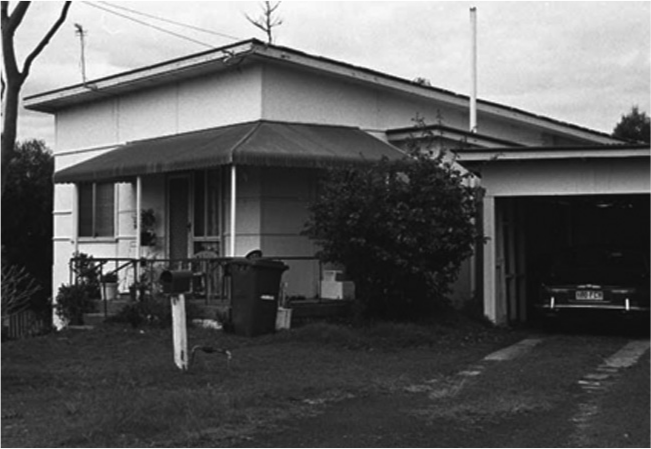
Original beach shack.

Contemporary beach shack.
In the following, we provide a context for the successful uptake and deployment of the interpretation of New Urbanism found at Casuarina Beach, and increasingly along much of Australia’s coastline (Beeton et al., 2006). We interrogate the tricky incorporation of a distinctly Australian interpretation of New Urbanism in the development, packaging and promotion, and consumption of one of the earliest, therefore the most controversial, large beach-side MPEs. We engaged a multiple methods approach to generate data, drawing on a range of secondary sources about the rush to the coast, including advertising, media discussions and blogs. Primary data were generated through the use of householder surveys and in-depth interviews with residents, 6 developers, architects and other stakeholders in the production, promotion and consumption of Casuarina Beach housing estate. We also provide an examination of the attraction of these sorts of developments to the new homeowners, particularly before the imposition of the NSW government’s BASIX requirements, and unpack a much more complex set of motivations than those promoted through the marketing discourses that liberally engaged tropes of nature (and eco-friendly community) and Australian heritage to market and sell this distinctive MPE.
New Urbanism: An Elixir to Modernism
A driving force of New Urbanism is concern about the environmental degradation associated with suburban expansion. Increasingly mainstreamed, environmental concerns are now debated in a range of contexts, which include urban planning and policy, and architectural circles. New Urbanism has influenced city and state-wide policies, codes and plans, and in the Australian context these include the Western Australia’s Liveable Neighbourhoods Code, Melbourne 2030, the Western Sydney Urban Land Release (winner of a 2005 CNU Charter Award) and Queensland’s new South East Queensland Regional Plan (Kaufman, 2006). Australian New Urbanism is allied with the US-based Congress for the New Urbanism (CNU)
7
which views … the spread of placeless sprawl … environmental deterioration, loss of agricultural lands and wilderness, and the erosion of society’s built heritage as one interrelated community-building challenge.
8
New Urbanism attempts to bring humanity back in touch with its naturalness and, in particular, in response to the dehumanising impacts of modernist sprawl. The development and spread of suburbs in the mid 20th century involved a reshaping of nature to offer more rational and controlled ways of living (Kunstler, 1993). This technological approach to urban development relied on mass production and has been associated with mass consumption and consequent resource depletion and pollution, as well as the degradation of ecological systems and wildlife habitat. Problems of suburbanisation are associated with low density housing, which means high levels of car dependence and consequent traffic congestion. Isolation, deterioration of family life, social polarisation and the banal overconsumption of resources and consequent ecological damage have also been attributed to urban sprawl (Duany and Plater-Zyberk, 1991; Calthorpe, 1993; Katz, 1994; de Villiers, 1997). Advocates of New Urbanism have therefore promoted the re-creation of ‘small towns’, or community-based settlements that are embedded within nature, rather than overpowering it (Duany and Plater-Zyberk, 1991). Such towns (or MPEs) would be situated within local ecological systems and provide streetscapes that encourage reduced car dependence and generally offer higher lifestyle amenity and community health. As well as heightened environmentalism, these towns or estates promise a comforting connection to pre-modernism. New urbanism could offer a feeling of solidity and preservation of history, through heritage-referencing or ‘neo-traditional’ architectures (Falconer Al-Hindi and Till, 2001).
The use of heritage symbolism to create continuity with a selected version of the past has been well acknowledged. Hobsbawm and Ranger (1983) identified the use of heritage for the purposes of imparting specific value systems and reinforcing social cohesion or memberships to groups. Lehrer and Milgrom (1996) built on this critique through their observations of the use of heritage symbolism in housing development designs based on the principles of New Urbanism. In their study of urban form, they exposed class (distinction) and (‘White’) ethnicity reflected in heritage-referenced housing. As Veninga (2004, p. 479) identified in a study of a post-industrial company town in the US, “saccharine images misrepresent[ed] local history, privilege[d] hetero-patriarchal social relations, and den[ied] difference[s]”. Along with notions of heritage, ‘nature’ too has been used in careful and specific ways. New Urbanism eschews modernism through the inclusion of difference, including nature. However, Zimmerman (2001) has argued that nature has been commodified and used to ‘dress up’ modernist development modes such as large building projects, including MPEs. Cultural capital (Bourdieu, 1984) has therefore been generated through this use of nature (for non-US examples see Winstanley et al., 2003). In the following, we detail how the tropes of heritage and nature have been used in the development, sale and consumption of a housing development that offers distinction (see Bourdieu, 1984) for the discerning home buyer, one that shuns the suburban ‘norm’, of ecologically damaging and architecturally banal sprawl. Prior to state-mandated inclusion of environmental technologies, such as rainwater tanks and solar hot water panels, Casuarina Beach offered exclusivity for those with the economic capacity to choose to live in an expensively designed ‘eco-village’.
Geographies of Peri-urban Redevelopment in Australia
Sea change narrative[s have been] built upon a cultural heritage which, when combined with the general myths of the natural world and a ‘communal’ nostalgia for country life, strengthens its sacralised position in relation to the profaned metropolis (Osbaldiston, 2010, p. 250).
Although housing development is often the domain of gentrification research, including more recent considerations of rural gentrification (Phillips, 1993; Osbaldiston, 2010), studies of suburban (re)development have built on its theoretical trajectories to include studies of MPEs (for Australian context: Kenna and Stevenson, 2010; McGuirk and Dowling, 2007). Migrations to the Australian coast share elements of (rural) gentrification and counter-urbanisation movements (see Phillips, 1993). The lure of the coast is not usually driven by desires to take up farming or fishing, or other traditional rural/coastal occupations. Rather, the Australian coast offers an alternative to the urban, or suburban. While rural gentrification in Australia offers heritage property in the Australian vernacular, of colonially referenced Georgian, Victorian or Federation buildings, the dominant housing form on the coast is new build and, increasingly, MPEs. According to McGuirk and Dowling, MPEs in Australia tend to be large-scale, integrated housing developments produced by single development entities that include the provision of physical and social infrastructure, and that are predominantly located on the growth frontier or city fringe (McGuirk and Dowling, 2007, p. 22).
The recent sea-change surge in Australia now includes the development of MPEs at ‘growth frontiers’ (McGuirk and Dowling, 2007) or by expanding existing holiday or fishing villages. The once-dominant housing form, of modest timber or (asbestos-based) fibrous cement, or ‘fibro’, sheeting and corrugated iron construction, is diminishing as many of these depression- and post-war-era built shacks have been demolished in readiness for the construction of seaside dream-homes (Burns, 1999; Goad and Willis, 2011).
The old beach shacks that dominated seaside fishing villages or isolated holiday surfing spots provided low cost accommodation for holiday-makers in often remote and low-populated settings with few services. Some of these holiday houses were owner-occupied but remained vacant outside holiday times. Most were available for short-term holiday rental (Booth, 2001). All were relatively basic (Figure 1) by today’s Australian housing standards. One blogger’s response to a newspaper article titled ‘It’s tough when you fancy rough’ (Farrelly, 2007) on the demise of the humble beach shack reflected on one aspect of the simplicity of its design [It] is all about Lino[leum floor covering]. I love Lino, so easy on the feet, so easy to clean … I don’t care if the kids get sand … on it. Yet [I] wouldn’t have Lino in my main home. It’s a holiday thing (Sydney Morning Herald, blog post, 23 May 2007, 5.57pm).
The post-war versions of this form of housing tended to straddle class divides. They represented an era of optimism and holidaying in places accessed by car (see Booth, 2001). Coastal locations, rather than the housing, provided the attraction. With the redevelopment of many of these beach locations, the memory of this form of housing has elevated the status of its modernist-referenced architectural simplicity (see Collins, 2002). For some, this architecture nods to a more egalitarian time remembered through the holiday experiences of yesteryear. As another blogger reminisced, with reference to a sense of how ‘we’ used to be I love the idea of a relaxed beach shack. I hope we Australians can retain some of our run-down shoddy beach shacks as a reflection of part of what it is to be Australian (Sydney Morning Herald, blog post, 23 May 2007, 3.56pm).
As part of the ‘sea-change’ phenomenon, coastal property values have escalated and the ‘character’ of seaside locations has changed; for some, this is a loss. Following typical gentrification trends—in Australia and elsewhere—the loss of ‘ordinary’ housing styles from the past can evoke nostalgia for those styles and the era they represent (see Shaw, 2005). Many retirees might have opted for a coastal location but then found that places of former holidaying had lost their character, or had changed too much, or were too expensive, or simply ‘bulging’ (with people). Many retirees have opted instead for a quieter ‘tree change’, or home in non-coastal rural locations (Costello, 2007, p. 86; Salt, 2004). Others have paid a premium to purchase a home that appears to have captured the essence of the old beach shack, while providing more contemporary comforts (Figure 2).
Building on previous research on the conspicuous consumption of housing styles (Jager, 1986; Crilley, 1993), it is to the ‘bulging’ of the Australian coastline that we now turn in this paper. Specifically, we interrogate the appeal of a form of New Urbanism operating outside the traditional urban of the city. This version combines specific retro-styled architectural aesthetics and lifestyle choices that reflect a desire for environmental responsibility and ‘closeness to nature’ in a peri-urban location. At Casuarina Beach, distinction has been expressed (see Bourdieu, 1984) through ‘heritage’-referenced, ‘green’ architecture and consumed through the purchase of contemporary beach house designs. Our analysis reflects on purposely selected histories that in these cases emphasise a housing style that echoes, while vastly ‘improving’ upon, a much humbler past (Shaw, 2005). Given our capacity to recognise now that meanings inhabit symbols within built form, we have analysed the utility of ‘retro-modernist’ architectural design (Collins, 2002) 9 in the production and consumption of these new housing styles. These have replaced old housing stock, including some less desirable architectures that are yet to be nostalgically revered. 10 In the case of the Casuarina Beach development, a swathe of coastal bushland ecosystems that remained largely undisturbed since the 1930s was also lost. 11
Fibro Dreaming: The Aussie Beach Shack Goes Green
In northern New South Wales, tropes of nature, community and heritage have been incorporated into the identity of a new beachside ‘town’—a development consisting of housing, and tourist and retail facilities that gained development approval by the NSW Land and Environment Court (LEC) on 5 December 1998. The development at Casuarina Beach (also referred to as Kings Beach), was released in stages until completion in 2011. In 1999, Consolidated Properties prepared the ‘Casuarina Masterplan’ based on the principals of the LEC consent, in 1999. The site is designated residential/tourist accommodation. 12
Previous development applications for the site stalled in the approval stages because of objections from local residents and environmentalists (Four Corners, 2003). To allay any fears, the developers of Casuarina Beach worked with multiple stakeholders, which ensured a more favourable reception from the local Council and residents (research interview, 15 September 2005). In line with the tenets of New Urbanism, that promote a close integration between nature and urban form and consideration of local ecology, the Casuarina Beach developer promoted its ‘green’ credentials (on ‘greenwash’, see Athanasiou,1996; Tokar, 1997). As a representative stated The masterplan uses the principles of New Urbanism … Neighbourhoods are kept small … houses embrace the street; roads are linked to encourage pedestrians rather than cars. [The ‘town’ is] serviced by a network of boardwalks, bikeways and local streets (representative for the developer, personal communication, 31 August 2005).
The building project began in September 2000 with the expectation that, upon completion, there would be approximately 1400 dwellings (apartments and houses), hotels, recreational and retail facilities, and a town centre.
13
The interpretation of the principles of New Urbanism in the context of this development were underpinned by three guiding ‘principles’: to conserve and enhance the natural environment; to create a unique high quality built environment; and, to encourage an inclusive local community culture. These principles—specifically the first two, which we focus on in this paper—also became key concepts in the marketing discourses. The first principle was advertised on the development website as [Casuarina Beach] is a remarkable development which is attracting buyers keen to live in a green environment … it sets an example to the building and development industry and will be used as a benchmark for a long time to come.
14
For the second guiding principle, the aim was to produce the “ultimate Australian Beachside Vernacular” (Consolidated Properties, 2001). However, rather than pre-build the houses, lots (blocks of land) were sold unbuilt, which the developers felt would cater for the taste for individual expression, in the Australian market (respondent 31, August/September 2005). Ultimately, this expression of individualism was carefully restricted to a choice of designs selected through a design competition. Fourteen architects competed to design “the Quintessential Australian Beach house”. 15 Purchasers were then restricted to choosing a design only from the list of prize-winning house designs. The architectural styles were controlled by a covenant (section 88b) and assessed by an architectural review committee before they were passed to the local council (representative for the developer, personal communication, 31 August 2005). This mechanism ensured that the style of the Casuarina Beach MPE would remain largely uniform—there was no place for rogue designs by wealthy individualists.
For the third principle, promoters of the development stated that it was a ‘master-planned’ eco-friendly community village, with a layout that would enhance community amenity (Consolidated Properties, 2001, p. 7). The next sections consider the enactment of the first and second principles that have specifically worked together to provide distinctiveness from the suburban versions of MPEs, at what has become a most exclusive beach location.
Greening the Site
The key to greenwash is manufactured optimism … greenwash comes in many shades (Athanasiou, 1996, pp. 3, 7).
Adherence to the principles of New Urbanism included the embedding of images and narratives of nature conservation and environmentalism within the marketing strategy for Casuarina Beach. A humble wooden sign greets all who arrive at Casuarina Beach. The sign is timber, with earthy colours identifying the site—its name refers to a native Australian plant species, Casuarina equisetifolia, or ‘Beach Casuarina’. 16 Another identifier of the location is that one-third of the site was “dedicated as conservation and open space” and conservation of the beach dunes, included “clean[ing them] up” (representative for the developer, personal communication, 31 August 2005) to “restore the 100 metre wide dune zone to its condition preceding the sandmining of the 1930s”. Another part of the site was left as a “conservation zone”. 17 To further promote the site’s association with wilderness (and conservation), its location was marketed as “bounded to the South and West by National Parks” and “surrounded by the World Heritage listed Central Eastern Rainforests of Australia”, with “3.5 km of untouched beaches” nearby (Casuarina promotional brochure, 2005). The spatial proximity to ‘nature’ helped to enhance the green credentials of Casuarina Beach development.
Other references to nature included organically shaped garden beds, wood surrounds on pathways and rock tiles. Gardens have native plantings and “all private owners … [were] required to plant according[ly]” (Consolidated Properties, 2001, p. 3). The ‘nature’ theme was also promoted discursively; some houses were named after Australian native plant species. Additionally, a unique drainage system was built that mimics nature by recycling excess stormwater through the earth … [with] small infiltration basins known as swales … [that] allow the water to slowly percolate through and be absorbed by the earth.
18
The MPE carries a story that reflects one of the main tenets of New Urbanism, that this development was integrated with the natural environment.
Greening (Retro-modern Heritage) Architecture
Along with other marketing points in lifestyle and ecological sensitivity, Casuarina Beach has been heavily marketed through ‘architecture’. … Some of the architects [have made] personal appearances in television advertisements (John Macarthur, 2002; n.p.).
In addition to the green credentials of Casuarina Beach, the developer and architects have created a distinctive architectural landscape that speaks of quintessential ‘Aussie’ beach shacks/houses. Retro design elements were incorporated into housing designs and façade treatments. Many of the houses were clad using fibrous cement sheeting (a contemporary version of ‘fibro’ that does not contain asbestos) and corrugated iron There is a connection with history … I know it [fibrous cement sheeting] has had a not so good history … but it [the new version] performs well … I think generally it has a lot of aesthetic content … it does relate to the beach shack as a typology and as a particular type of building that … [I’m] reinstating … as an icon or a type of building that should be pursued (Casuarina Beach design competition architect, personal communication, 31 August 2005).
The architects designed new versions of the beach shack style using contemporary, ‘safe’ fibro. To ensure that new housing would follow this aesthetic All homes built in the Casuarina Beach township … adhere to a strict design code that [drew] its inspiration from … beach shacks that dot the [Australian] coast … Section 88b covenant require[d] all purchasers to construct their houses in a ‘contemporary Australian’ style (Consolidated Properties, 2001, p. 5).
This strict imposition of style ultimately resulted in housing that was more facade than replication of old beach shacks. The sophistication of the new architecture combined the look of retro-heritage and the latest in housing technology including chic finishes such as polished concrete. The days of surfing and fishing holidays were echoed through the use of ‘remnants’ from the 1950s and 1960s. Faux surfboard letterboxes and fishing equipment adorned some of the houses. Others had “[beach] seating and [outdoor] showers [that reflect] the surf culture of the town” (Consolidated Properties, 2001, p. 5). Symbolic references to both nature and retro-modern architecture were used in housing designs. One example was a house with a unique wavy roofline that referenced the surf nearby, while its stone feature wall harked back to modernist housing designs from the 1950s and 1960s. As well as through house design, advertising rhetoric also reinforced a nostalgic nod to (imagined) beach holidays and more environmentally sustainable pasts Early beach holiday memories of showering under a [rainwater] tank [that] have [both] been revived [in the house design] … the external shower … beneath the [rainwater] tank stand.
19
The use of retro-referenced architecture and artefacts has contributed to the formation of a lifestyle image that has been reinforced through advertising. A representative for the developer suggested that the Casuarina Beach development “was really [about] lifestyle … we were at the front end of the sea-change phenomenon … everyone thought they wanted to go and live by the ocean” (representative for the developer, personal communication, 31 August 2005.)
The mix of lifestyle and architecture had been refined and reiterated in promotional discourses, as demonstrated in a recent advertising campaign for a later release at Casuarina Beach Is the beach calling you? … relaxed coastal lifestyle away from the crowded beaches … yet close enough for daily commuting to the north …enjoy an active lifestyle, on and off the beach. Spend your days surfing, fishing or just relaxing … [The] architecture is uniquely inspiring, being a modern interpretation of the quintessential Australian beach house.
20
Fantasies of people-less beaches and narratives that invoke images of bygone days, of lazy beach holidays within settings that are devoid of the hustle and bustle of urban life (which can be commuted to) have been used repeatedly to sell this MPE.
In addition to the symbolic references to nature, the architects were explicit about their considerations of local environment and concerns for sustainability. As one architect described [Casuarina Beach home designs] take advantage of the outdoors though a direct connection between living/kitchen spaces and the timber deck on the north
21
and the paved courtyard sheltered within the house … these spaces, shaded from the summer sun [also] take advantage of cooling on shore breezes.
22
Principles of New Urbanism, of environmental conservation and enhancement, and creation of a unique and high-quality built environment have been used in the construction of an overall place-making identity for the Casuarina Beach MPE. The result is an image of green, nature-oriented, architecturally sophisticated housing that draws on an iconic “Australian’ past. In the next section, we consider the overall reception of such place-making and the extent to which a beach place-based, ecologically minded identity has translated, to become embedded within the outlook of the new occupants of this seaside ‘village’.
Consuming the Dream: Eco Living in a Beach Shack?
This section documents the consumption of the Casuarina Beach development by new occupants of this estate. 23 It considers the extent to which purchasers, and several renters, engaged with the principles of clean, green, retro-heritage living as deployed by the architects, developers and property marketeers. The voices of some of the residents of the first stage of housing development at Casuarina Beach paint a unique picture of how place-making and marketing that have drawn on the principles of New Urbanism have translated in the everyday realities of residential life.
Consuming Nature
A technosphere … overlays the … ecosphere. [It] is malleable … there are thousands of paths, and each has different social implications … only some paths will be taken, while the others will be called impractical (Athanasiou, 1996, p. 11).
Many residents at Casuarina Beach have responded to the images of environmentalism proffered by the developers, and the development. A research respondent noted that the development would not impact heavily on the environment. However, many respondents found it difficult define ‘greenness’ and particularly as it manifested at the Casuarina Beach development site. Mostly, it was considered to be an inherent aspect of the overall development. When probed further, some residents pointed to a variety of visual cues. As one respondent identified, the aesthetics of environmental responsibility were “eviden[t] in street designs, parks and gardens, boardwalk, dune control … [and] ground [level] lighting” (respondent 14).
A main environmental indicator of ‘greenness’ for respondents was the conservation of natural spaces. These were, however, the largely dehumanised and mostly separated spaces rather than identifications with housing or human behaviours (see Kaika, 2004). The emphasis was on maintaining ‘nature’, such as returning the dunes to a pristine appearance, which was important for many of the residents. One noted that “the landscape is as close to untouched as possible” (respondent 21). Another stated that the “beach reforestation is excellent” (respondent 16) and another noted that “the refusal to remove the trees along the beachfront [has maintained] a habitat for the many beautiful birds” (respondent 9). Residents also felt that the (reconstructed) sand dunes performed another function in relation to the beach, “you can stand on the beach and you could be in the outback—you cannot see a house” (respondent 1).
The beach as a natural place, as well as recreation space (and valuable asset), was overwhelmingly revered. Many respondents acknowledged that it was the main reason for purchasing at Casuarina Beach. Rather than blocking the view of the beach, the sand dunes were referred to as a ‘buffer’, which maintained the purity of the beach from the destabilising qualities of humanity on the other side.
Private gardens were also perceived as environmentally sympathetic: “gardens [are] an extension of the dunes” (respondent 7), while many stressed they grew only ‘indigenous’ species, or allowed the wild to influence their private property, as one resident noted “sand [is] left where it blows in” (respondent 14). Yet, the intimacy of this relationship remained at the whim of householders, who mostly designed their own gardens: “[we are] trying to educate ourselves to the local plants and wildlife … to fit [the garden] even better [with nature]” (respondent 1). Gardens were understood as transitory spaces between humans and wild[er]ness (see Kiel and Graham, 1998). These ‘wild’ influences were commonly invoked, and tied to ‘green-ness’, and the ‘environmental’ nature of this MPE.
While residents did respond to tropes of environmentalism, this was often not the primary driver in purchasing decisions; indeed, many failed to recognise the intentions of the environmentally sustainable design agenda of the development. Amenity and ‘green experiences’—the consumption of nature—was often far more important. For instance “decorative landscape features” (respondent 4, August/September 2005) and the attractiveness of the beach, parks and walkways, were prioritised by many. The developer was surprised when residents “wanted to have access and walk spaces through the wetlands” (representative for the developer, personal communication, 31 August 2005). Nature is often rendered as artefact (see Kiel and Graham, 1998), an additional commodity for human consumption, rather than a context. Notwithstanding the observation zones at Casuarina Beach, two worlds—the human and the natural—were reference points that remained separated by “pathways designed not to walk on shrubs and plants” (respondent 23). Yet, as Kaika has noted Although natural and social processes remain invisible and are scripted as ‘the other’ to the modern home, they are in fact the precondition for the home’s very existence and remain always part and parcel of its inside (Kaika, 2004, p. 266).
Residents did express interest in the environmental sustainability of the housing stock at Casuarina Beach. One resident felt that “collecting rainwater for the garden, and the use of low energy water heating” exemplified this interest and concern (respondent 28). This resident further commented that “each property should have been built with rainwater tanks [for more than garden use] and solar power”, which is now part of the NSW Government’s BASIX requirement for new housing estates. Passive solar housing design was viewed favourably. Instead of using air-conditioning in a place renowned for its warm to hot sub-tropical weather, one resident referred to “lots of cross-ventilation for cooling in summer” (respondent 15) and another noted that their house was well-oriented, to benefit from the comfort of “no direct sun [to overheat the house] in summer [but warming] sun in winter”, which minimised the need for artificial temperature control (respondent 11). Another noted that the “layout of the house [is] cruisy, airy, natural” (respondent 17). Outdoor recreation areas were also viewed as ‘natural’ with a “closeness to the environment … through outdoor living-decks” (respondent 13) and the “combining indoor/outdoor living” (respondent 21).
It is clear that the new housing development at Casuarina Beach has supported an imaginary of closeness to nature and lifestyles that inflict less environmental harm (than their suburban equivalents). Residents (can) feel environmentally responsible through a housing purchase that has awarded them with the status of ‘doing their bit for the environment’, while remaining removed from environmental conflicts that exist in other settings—particularly in cities. As Zimmerman (2001, p. 260) identified, the “environmentally enlightened” feel like the happy responsible others to their suburban counterparts—the unenlightened environmental degraders who “chose not to … or more likely cannot afford to live [in peri-urban eco-developments]”. Environmental sensibility has therefore become a measure of distinction.
Although packaged and consumed as a green alternative to suburbia, Casuarina Beach still suffers some of the symptoms of modernist sprawl. As a peri-urban development, there is a high level of car reliance, and most necessary services are elsewhere. Moreover, for many, moving to Casuarina Beach has not meant adopting more environmental behaviours, other than those imposed through purchase. One resident noted that “this is the only one [a house with the extra-cost, environmentally sustainable option]” (respondent 21). Another noted that they still need to use a car every day. No matter how this kind of New Urbanism is packaged, in part it Speak[s] to potential consumers who wish to be environmentally progressive through consumption instead of changing their lifestyle and becoming politically active in habitat protection (Till, 2001, p. 236).
Such environmental progressiveness has its limits. Architects and developers did bring ideas of environmental sustainability to the site designs but the uptake of an extra-cost sustainability package proved unfavourable. The developer’s own property had an additional 100 000 Australian dollars’ worth of sustainable technologies (which is on par with US dollars). As a representative for the developer noted, for most buyers that extra cost would equate to “a lot of kitchen and bathroom fittings, and [other] stuff” (research interview, 31 August 2005). Additionally, it appears that the novelty of some innovations, such as passive heating and cooling, began to fade. One resident mentioned that they had retrofitted air-conditioning “to control their living space … [and] environmental fluctuations” (personal communication, 30 August 2005). Residents commented also on the harshness of the coastal environment and the damage to their homes from salt spray and heavy rains. Nature can be unpredictable; it needs to be positioned outside the comfort of home. At the same time, it needs to be protected.
The unexplained removal of several trees from the ‘conserved dunes’ zone (allegedly to enhance beach views for several houses) was viewed as vandalism by other residents and as a threat to all the small pockets of preserved ‘nature’, existing beyond the home. The notion of the sacredness of such pockets had been carefully woven into the eco-rationale of this MPE. The reality, however, was that environmental amenity—including a view of the beach or ocean—proved to be more important for some than the ascribed version of ‘green’, which included the preservation of a stand of trees on the sand dunes. Of course, purchasing in an eco-development provides a level of green cachet only available to those with the economic capacity to choose to purchase (and live) there. Adding a view of the ocean would undoubtedly increase the economic value of the house. As the findings of this research suggest, eco-behaviour does not always follow regardless of the development sales pitch, or pathways prescribed in a development’s planning. As Athanasiou remarked Corporate environmentalism … may …sometimes [be] sincere …[but it] … obviate[s] the need for jarring social change (Athanasiou, 1996, pp. 5–7).
At Casuarina Beach, residents could find ‘nature’ in the palette of the housing aesthetics, which “flow [with the] natural settings of ocean, parklands, dunes” (respondent 34), “the timber used blends well with the environment and earth” (respondent 21), while “the exterior colours reflect [the] surrounding bush” (respondent 10). The softer version, ‘corporate environmentalism’, had provided a buffer from more confronting environmentalisms being fought elsewhere.
Fibro Dreaming: Consuming Casuarina Beach’s Built Environment
The attempt by the developers to create architectural distinction at Casuarina Beach has met with some success according to the new residents. Many were quick to note the high levels of ‘architectural design’. For instance, one resident noted that “although there are other beautifully designed homes [elsewhere] they are not condensed in one area as they are here” (respondent 16). However, as one of the architects commissioned for the site noted, the meanings embedded in building design were not always understood—it was simply important that there was ‘architecture’ involved. Residents responded to what they identified as good-quality housing associated with the engagement of “clever” (respondent 23) architectural design. Additionally, most residents felt that they had attributes in common; they were all ‘discerning’, ‘educated’ and ‘exhibit[ed] taste’ in design selection. They also identified each other as ‘up to date’ or ‘trendy’. Residents had happily consumed the developer’s projection of Casuarina Beach as a ‘showcase’. 24
Beyond the general acceptance that the houses at Casuarina Beach had good architecture, residents were also attracted to specific cultural identifiers within the designs. Commonly, residents responded that their homes were similar to ‘beach shacks’, or had “beach house style” (respondent 19). Beach holidays were also mentioned: “[these] homes [were] typically built [to resemble] holiday houses” (respondent 7) and “[this] reminds me of [beach] holidays in the ‘60s” (respondent 14). These kinds of nostalgic beach associations were one of the most cited attractions to Casuarina Beach. The lifestyle image includes a sense of relaxedness, “using ’50s themed beach house styles shows the ultimate Australian beach lifestyle” (respondent 21), which was not lost on the developer: “clients are interested in [being] … a bit more relaxed” (representative for the developer, personel communication, 31 August 2005).
Overall, approximately half of the respondents from Casuarina Beach acknowledged the architectural pedigree of their beach house design. Some recognised and celebrated the purposeful adoption of cultural referents in the design. One resident commented that “the individual design[s] of the houses, create … an interesting yet tasteful array of streetscapes and the feeling, of stepping back to ‘yesteryear’” (respondent 35). Respondents did acknowledge the link to cultural associations, expressing the nostalgia for beach holidays regardless of the architecture, which used a pastiche of architectural borrowing, from multiple periods, resulting in a blurring of histories (see Boyer, 1998). One respondent identified that “[this housing design is] moving away from the cultural heritage of the [19]50s and [19]60s beach house” (respondent 30). At Casuarina Beach, fibro has been refashioned as a new safe material and re-visioned as a green material, used in eco-designs tailored to client specifications (within the strict limits of the development covenant). There remained a conspicuous austerity with the use of this material regardless of premiums paid for such housing designs. Fibro provided a pivotal difference to other housing forms, at that time. It was being ‘re-used’ in interesting ways. Meanwhile, the more mixed and inclusive (class) history of the lived experience of fibro (dwellings) had been left in the past in the construction and consumption of these new versions.
While the heritage of fibro housing has been left behind at Casuarina Beach, the aesthetics of the heritage materials perform social functions for a new class of residents. Although some residents had first-hand experience with beach shack holidaying, the new versions reflected a heavily romanticised past. For those who had not experienced the old days of beach shack living or holidaying, this history can still be bought into at Casuarina Beach. The architectural nod to this heritage offered consumers a way to express their appreciation for its iconic value (see Jager, 1986). This has meant that these new versions of the Aussie beach shack have been legitimised, along with the wealthier-class colonisation of increasingly rare and expensive beachside locales.
While the visible heritage presented at Casuarina Beach is a partial one, other heritages remain invisible. Beside some cursory references to sand mining, and the fibro shacks to the north of the development, the site appears to have no history. As one resident commented “[the developers] created a community from uncultivated/unpopulated land” (respondent 34). Stories of how others have used this landscape have been erased. A non-Casuarina resident, who was interviewed for this research, stated that, for him, the district was not identifiable with the beach-shack architecture from which the Casuarina Beach MPE has drawn its (imagined) cultural heritage. Rather, it was defined by suburban ‘brick (veneer) and tile’ structures that dominate surrounding settlements. Casuarina Beach’s theme park account of a 1950s fibro paradise had actively denied the presence of less ‘tasteful’ but equally humble housing that was built in the 1970s and 1980s to house inexpensively the hoards that had begun to arrive. Such housing more accurately reflected the extent of peri-urban sprawl that now dominates this stretch of Australian coastline but does not have quite the same romance.
In their quest to create a ‘quintessential Australianness’, the designers of Casuarina Beach have tapped into a dominant cultural discourse about identity that reached beyond local heritage. New residents have come from distant cities, such as Sydney or Melbourne, as well as nearby Brisbane and the Gold Coast. Common to most respondents was a feeling that the housing at Casuarina Beach did convey a sense of ‘typically Australian’ culture. For instance, one respondent noted that “the houses seem to be Australian—corrugated iron etc.” (respondent 17). Others identified ‘Australian’ heritage symbols that rejected ‘other’ identities, as one respondent pointedly remarked “[Casuarina Beach is] not fake Tuscan or Mediterranean” (respondent 19). This Australianness is one that privileges a notion of White Australia, where Indigenous or migrant contributions to heritage have been excluded (see Shaw, 2007). The architecture celebrated is that of periods when White cultural imperialism was accepted with less transparency than it is today (see Veninga, 2004); as Lehren and Milgrom have suggested, architecture is Culturally biased in favour of the dominant classes and races [sic] of the model period, and, therefore, constitute a formal control mechanism in determining the communities that will populate the developments (Lehren and Milgrom, 1996, p. 64).
Moreover, the use of corrugated iron in building and for water tanks, and fibro, draws associations with ‘Australiana’, ‘White’ bush mythology and holiday images that draw on references to ‘bronzed Aussies’ and surf cultures. Where (other) ethnicity was present, it was exoticised—as one resident noted the “slight Asian appeal” of their house design (respondent 4). Protected by the development’s covenant, the architectural preference and directive were for, as one respondent put it, “a real [Aussie] beach house” (respondent 5). This form of ‘new urbanism’ at the coast is therefore highly exclusive. It is also exclusionary. It excludes poorer classes, but not the architecture associated with their beach holidays of yesteryear. At the same time, it celebrates the history of Australian Whiteness and its good old days (see Shaw, 2005).
The housing development at Casuarina Beach represented a watershed in the acceptance of retro-modernism in the MPE housing market at the time of its inception, in the early 2000s. This version has become a marker of taste, particularly when combined with its trend-setting environmental credentials. Residents have attained distinction through the consumption of architecture that references a more inclusive déclassé style from the past, with just enough greenwash. This form of green retro-modernism is aesthetic-heavy with many of the environmental and heritage ‘values’ expressed by New Urbanism, ultimately lost.
Conclusions
Should ‘New Urbanism … be seen primarily as a form of rhetoric designed to sell housing? (Winstanley et al., 2003, p. 186).
This paper has interrogated the tricky incorporation of an interpretation of New Urbanism in the development, packaging and consumption of a large housing MPE that was conceived and marketed just before the legislation of BASIX, in 2005, which heralded the inclusion of mandatory environmental technologies in new housing in NSW. It was built in a peri-urban location on the far north coast—a part of Australia that is renowned for its natural environment and beauty.
The data in this paper have demonstrated the successful use of New Urbanism principles in the production and sale of real estate. We focused on the use of two principles inspired by New Urbanism—to conserve and enhance the natural environment and create a unique high-quality built environment—and the ways in which these principles were specifically deployed in the promotion of Casuarina Beach property.
We have identified how this use of New Urbanism has manifested as a set of environmental and architectural attributes used to attract buyers by promoting distinction. The tropes of nature/environment were combined with architectures that have drawn on a previous era. The compulsory use of retro-heritage architecture, that echoed simple beach holidaying in Australia in the 1950s and 1960s and the now-revered and romanticised rebellion of surf culture that followed and which has only recently become part of the true Australian identity, provided another layer of distinction. This distinction has separated this MPE from what is widely perceived to be the usual forms of modernist suburban sprawl—of unattractive, environmentally destructive and anti-heritage housing.
In this paper, we also traced the ways that retro-architecture and tropes of nature have served to historicise the development at Casuarina Beach (see Till, 1993). The associations with ancient and stable nature have provided, as Hobsbawn suggested, “continuity with a suitable past” (quoted in Till, 2001, p. 227). The Casuarina Beach development has an implied history or ‘sense of belonging’, that appears to pre-date that of the transitory existence of the modernist suburb. It therefore becomes “rooted in (a culturally constructed) history” (Zimmerman, 2001, p. 259; Till, 2001). The historicising functions of architectural distinctiveness and nature created a superior social image (see Till, 1993). Nature and heritage architecture have been deployed as forms of cultural capital. For the incumbents, quality and taste were certainly central to their desire to live at Casuarina Beach. Quirky aesthetics have been incorporated into their ultra-modern homes, and built in an apparent non-suburban environmentally friendly context. The usual attributes of traditional urban sprawl and associated (racialised and classed) dystopias and bad taste, seem far removed—locationally and temporally.
Of course, the privilege of close and regular engagement with nature in a nostalgically-referenced setting is only for those who can afford it. Homes in the MPE have sold quickly, and profitably. In 2011, “beachfront land values have almost doubled since first released five years ago”.
25
Such exclusivity rests on a version of environmental responsibility that reflects aesthetics and amenity rather than an active challenge to environmental degradation. The heritage aesthetics of retro-modernism have reinterpreted history in highly selective ways—this greenwashed, high-tech version of the Aussie beach house (lifestyle) has provided distinction from the imaginary of sprawl. Yet, as Zimmerman noted despite progressive orientation, [New Urbanism’s] particular expression of sustainable development does not [necessarily] alter the fundamental process of capitalist urbanisation (Zimmerman, 2001, p. 262).
And in 2011, as the exclusive Casuarina Beach MPE sat quietly removed from the encroaching mega corridor of coastal development, the threat of environmental, and probably climate-change-related realities, of storm surges, flooding and severe beach erosion (Munro, 2011), remain ever-present on the far north coast of New South Wales, Australia.
Footnotes
Funding
This research received no specific grant from any funding agency in the public, commercial, or not-for-profit sectors.