



Abstract
Despite the rapid transformation in the urban landscape of Vietnam, a simple and uncritical application of the ‘gentrification’ concept out of the specific spatial and temporal context of the country is problematic. Not only does the phenomenon progress in a highly compressed temporal scale compared with similar processes in cities in the Global North, it is also embedded within a paradigmatic shift of the entire socio-economic system. This paper attempts to explore the process of urban redevelopment in Vietnam and critically examines whether this concept, with its origin from the Global North, is capable of offering a conceptually robust lens through which the processes and outcomes of redevelopment can be consistently analysed. This helps to shed light on our understanding of the usefulness of the concept of gentrification in Vietnam and in transitional economies in Asia in general.
Introduction
With the progress of Doi Moi, the economic reform in Vietnam which started in the mid 1980s, big cities in Vietnam have begun to witness the transformation of the urban landscape which is commonly described as gentrification. Yet, despite bearing similar imageries with comparable processes in cities in the Global North, deeper observations reveal substantial differences in both the trajectories as well as the possible underlying causes. Such differences are apparent even when comparison is made with countries which have undergone similar social and economic transition, such as China. There is a general absence of the term in public discourse in Vietnamese society, which is similar to other Asian societies such as Hong Kong (Ley and Teo, 2013). Hence, are there specific socio-cultural and economic forces that are at work in obscuring our understanding of the real process in Vietnam or are such forces in fact shaping the specificity of such processes in ways different from what happened in the West?
In this respect, the transport of the concept from the Global North, where it originated, to the Global South has been queried in recent literature on gentrification (e.g. Harris, 2008; Lees, 2012; Ley and Teo, 2013; Maloutas, 2011). At the heart of the controversy is that the concept is highly contextualised in its causation and whether over-stressing of the concept across varied contexts would lead to a loss of its conceptual rigour. This paper attempts to contribute to such discussion with an analysis of the processes of urban redevelopment in Vietnam and to offer a critical examination of the applicability of the concept in cities of the Global South, particularly within the context of a city in a transitional economy. The city of Hanoi is used as the case study city. As the capital and a ‘political’ city of Vietnam, Hanoi is undoubtedly commendable to the typical socio-political forces that are at work in the country.
Gentrification as an expanded concept
Since Glass (1964) coined the term gentrification, the concept has since travelled across the globe to embrace a wide variety of activities that are associated with urban regeneration and upgrading. It started as a narrow-based description of what happened in post-industrial London in the 1960s in which ‘“new middle class” buying up older often “historic” individual housing units and restoring them for their own use and in the process driving up property values and driving out former, typically lower income working-class residents’ (Lambert and Boddy, 2002: 20, cited in Davidson and Lees, 2010: 398). Subsequent enlargement has expanded the concept beyond the small-scale residential rehabilitation that Ruth Glass sketched. For instance, Clark (2005) advocates for a more embracing definition of gentrification which involves ‘a change in the population of land owners such that the new users are of a high socio-economic status than the previous users, together with an associated change in the built environment through a reinvestment in fixed capital’ (2005: 258). Hence, the scale of coverage of the concept has been enlarged, not just to describe ‘class-based colonization of cheaper residential accommodation … and … a reinvestment of the physical housing stock’ (Atkinson, 2003: 2343–2344) but ‘the remake of the central urban landscape’ (Smith, 1996: 39). In fact, Clark’s conception moved beyond the central landscape as ‘it [gentrification] does not matter where and does not matter when’ (2005: 258).
The explanation of gentrification has been traditionally divided along the supply side driven by the structural underpinnings of ‘rent gaps’ (Smith, 1996) as well as on the demand side, propelled by a new breed of middle class in post-industrial society in their pursuit of cultural fulfillment and new identities (Butler, 1997) and the aesthetic (Ley 1996) in the ‘emancipatory’ space (Caulfield, 1994) of the inner city. Yet, there is apparent spatial specificity of the gentrification processes. For instance, even within London, gentrification in Harkney and Docklands were not the same (Butler, 1997) whereas the built environment in London is not easy to reproduce in small cities within England (Bridge, 2003). Such difference is even greater across countries. In Paris, elite suburbanisation is less significant and hence there are no apparent middle-class gentrifiers moving back to the inner city to reclaim working-class territories (Preteceille, 2007) and in Athens, major gentrification is driven by the reinvestment of the upward mobile working class in the inner city (Maloutas, 2011).
Gentrification also has a temporal dimension that is embedded in cyclical processes that tie to the social, economic and demographic changes over time (Lees, 2000). Based on experience in the USA, Hackworth and Smith (2001) identify a stage model which consists of three waves of gentrification (sporadic and state-led, expansion and resistance, recessional pause and subsequent expansion). Recent financialisation of housing and international migration in global cities have pushed ‘super-gentrification’ at the high end of the gentrified housing market and large-scale immigration triggers the surge of ethnic minority as gentrifiers (who used to be depicted as victims) (Lees, 2000). A fourth wave of gentrification is in the making that combines the financialisation of housing with the consolidation of polarised urban policies (Lees et al., 2008: 183).
Yet, despite the complications that are produced in spatial and temporal specificity of the concept, there is an increasing tendency to a spatio-temporal over-stretching of the concept. Gentrification is being employed, not just to embrace nearly any form of urban regeneration regardless of the context (Maloutas, 2011), but also being spread to very diverse socio-cultural backgrounds (Lees et al., 2008). This has produced a ‘half-way decontextualisation’ process in which the concept has been overextended to beyond its initial contextual limits and is reduced to become ambivalent keywords that impact on the conceptual clarity and theoretical rigour of the concept (Maloutas, 2011). Echoing what Ley (1996) has called for in redirecting the focus of gentrification research back to the ‘geography of gentrification’, gentrification has to be looked at ‘from “outside the box” of the Global North and the Western postindustrial city as well as the parochial gentrification literature itself’ (Lees, 2012: 166).
What happens in Asian cities offers an exemplary backcloth in the transition in shifting the focus of gentrification research to the Global South. For instance in China (He and Wu, 2005), and India (Harris, 2008), with large patches of the old inner city being converted to skyscrapers and stylish shopping malls, the relentless urban transformation of urban space appears to resemble what we understood as gentrification in Western countries. Yet there are a number of variations in such processes.
First, most such transformations are large in scale and stunning in speed, which fits into what Ong (1999) described as a new paradigm in capitalism. This is in sharp contrast to the block-by-block conversion in Western cities. Some such projects were even linked to strategic national development projects, such as the Olympic games in Seoul (Shin, 2009a) and Beijing (Shin, 2009b).
Second, gentrification of working-class housing in the inner city of Asian cities more often involves the conversion, not into middle-class residence, but to upmarket retailing and leisure hotspots. For instance, Xintiandi in Shanghai was a conversion of Shikumen clusters (dilapidated villas with elaborated façades built in the early 20th century) into the trendy catering outlets and international retail brands (He and Wu, 2005).
The third variation is the pivotal role of the state. Instead of acting as an enabler, city governments in Asia often take a more direct role in the pro-growth alliance of local governments and property developers (He and Wu, 2005). More deep-rooted driving forces are perhaps the vitality of housing production and homeownership rate as national goals of the developmental state (Shin, 2009b) as well as bureau interests and calculus of the personal interests of individual key officials within premises of the entrepreneurial state (particularly in China) (Duckett, 1998).
The fourth variation is that many of the urban redevelopment projects are built, not only in converted working-class residential areas, but also on brown- and greenfield sites. Such new-build gentrification, although it creates no direct displacement, would produce indirect and latent impacts such as driving up rents, triggering further gentrification (and thus direct displacement) as well as producing a declining sense of place-based identity (Davidson, 2008). Hence, new-build gentrification shares the commonalities with other forms of gentrification in the altering of the place and class nature of the wider neighbourhood (Davidson and Lees, 2010).
The distinct trajectories in socio-political and institutional reform in Vietnam have made its path of urbanisation very different from that of China and other Asian countries. With the advance of economic reform, redevelopment activities have begun to emerge in big cities, such as Hanoi, in recent years. Yet, even within the city of Hanoi, the unique historic, cultural and spatial context, and more importantly, the uneven impact of capitalism, has created a very divergent landscape of redevelopment across the city. To counteract the trap of decontextualisation of the concept of gentrification, as van Criekingen and Decroly (2003) have demonstrated, discrete renewal types based on different causes which can be mapped in different city locales may help to offer a powerful set of descriptors in analysing gentrification (Atkinson, 2003). The next section will attempt to identify a typology of redevelopment in Hanoi to advance our understanding the specificity of redevelopment.
Urban redevelopment in Hanoi: The context and typology
Context of urbanisation and redevelopment
Hanoi is a city with a thousand years of history. Before Doi Moi, Hanoi’s inner city comprised three main areas: the Ancient quarter as the commercial hub of the city, the French quarter as the administrative centre and the Soviet-style residential areas that were built for state employees. Following Doi Moi, the Ancient quarter and the French quarter, with their cultural, historical and architectural heritage, are still attractive to tourists and the emerging wealthy households, whereas areas of Soviet-style walk-up rental apartments, most of which were sold to residents during the economic reform (Yip and Tran, 2008), are dilapidated and no long desirable to better-off households (Tran, 1999). As a result of the war and long-term neglect by the Communist regime, there is a huge deficit in the urban infrastructure and public services provision.
Doi Moi, the economic reform, has portrayed an ambitious vision for the economy of the country and the urban landscape of the capital city. Hanoi aspires to be a mega-city (Tran, 1999) with 10 million inhabitants by the year 2050 (Government of Vietnam, 2011: 5). Yet with few glamorous icons of modernity, urban transformation in Hanoi appears to be slow. However, a detailed and systematic inspection of the city landscape and documentary review of official town planning and building activities reveal a modestly intensive pace of redevelopment in the city.
However, gentrification is still an alien concept in Vietnam. Not only is there no direct translation of the term, commonly used terms in public or policy discourse of redevelopment, such as nang cap (upgrading), Bao ton (preservation) or cai tao (rebuilding the property), bear no negative connotation. Instead, they have ‘benevolent’ overtones. Ley and Teo (2013) found something similar in Hong Kong and observe that ‘the awkward linguistic transfer from English to Chinese fragments the terms and introduces different, perhaps incommensurate cultural meanings’ (2013: 14). This is also the case in Vietnam.
Four types of redevelopment, which are differentiated both by their characteristics and related causes, can be identified in Hanoi. They are redevelopments supported by foreign aid, state-led redevelopments, capital-led redevelopments and piecemeal small entrepreneurial-led redevelopments.
Foreign aid supported developments
These are the earliest redevelopment initiatives that produce profound impacts on both the policies of redevelopment as well as the landscape of the city centre of Hanoi. Supported by foreign aid in the early 1990, such as the Australian International Development Authority (AusAID, 1995) and the Swedish International Development Authority (SIDA, 1996), the projects were mainly aimed at providing control guidelines and feasible strategies for redevelopment/preservation in the Ancient quarter. Yet there were also initiatives in which original houses were restored or upgraded (e.g. Figure 1, Nr. 87 Ma May) with residents well compensated and relocated (quehuongonline.vn, 2012). There were other restoration and modernisation projects without displacement (e.g. House Nr. 51 Hang Bac (Hanoi2010.org, 2012)) or with daily lives of residents not being interrupted (kienviet.net, 2011). Despite the small scale of such foreign aid projects, their impacts are significant. Not only has the support from foreign countries transferred the necessary ‘hard’ technical skills in preservation and renovation, it also helped to enhance the ‘soft’ skills in minimising impacts on residents while benefits to residents are maximised.
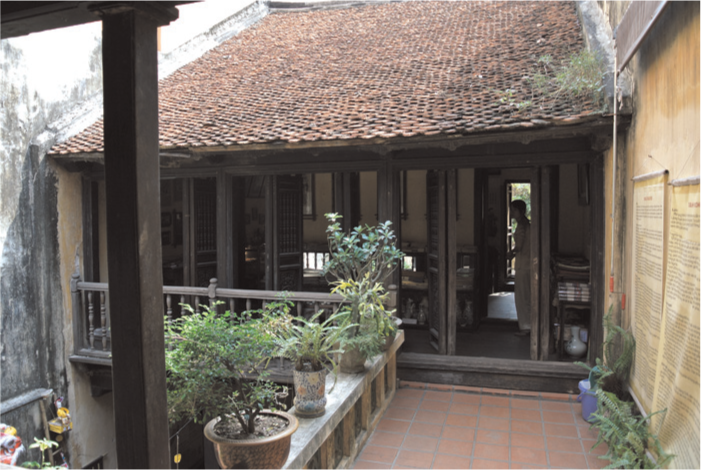
Foreign aid supported redevelopment (Nr. 87 Ma May).
State-led redevelopments
State-led redevelopment and upgrading mainly involved the old ‘soviet-style’ residential areas (Khu Tap The (KTT) in Vietnamese) in the form of public–private partnership underpinned by city government policy (Government of Vietnam, 2007: 1). As most of the KTT buildings are dilapidated and widespread illegal extensions also put further pressures on the decaying building structures, some of the buildings are in fact structurally dangerous. Hence, there is a general consensus that redevelopment is urgently needed.
KTT flats were distributed by state organisations to their employees as work benefits and hence the residents, who worked within the state system, are well informed of their rights. The sense of right was further strengthened after the overwhelming majority of the renters (more than 90%) acquired the ownership of their flats via the privatisation policy. Specific relocation policies have been enacted for KTT housing all residents (except those who desire otherwise) will be relocated to the same building and same floor after the redevelopment is completed. Whilst lower floors are reserved for relocation, remaining upper floors are sold by the developer to recover their costs. Residents are also compensated with larger space (at 1.3 times their original living space) and residents have to pay the difference (at sub-market price) if they want extra exceeding the 130% standard. Tenants can either continue to rent the redeveloped flat at regulated rent or buy at a nominated price (People’s Committee of Hanoi, 2008). Those who accept permanent relocation elsewhere are compensated with larger living space.
Compensation policies apply to residents who have legal papers on their tenure. Yet contrary to owners in the private sector in which property ownership may not be entirely clear (Quinn, 2002), most residents, and nearly all owners, of the KTT have legal papers. In fact, the privatisation policy in the 1990s has cleared most of the ambiguity in ownership. For the few tenants who live either in apartments of unclear ownership (often involves the disputes of ownership between state organisations) or as sub-tenants (very small proportion), they are deprived of the right to compensation and relocation.
As ground-floor space of the redeveloped buildings would be retained by the city government for rental or as public facilities, ground-floor residents have no right to move back to the ground floor but are given priority to rent upper-floor flats in the same building. Hence ground-floor residents can get back only a residence, not their business they ran in their original residence. This would inevitably provoke strong opposition. Hence, obstruction by a minority of ground-floor residents often leads to slow progress in redevelopment. By 2012, after almost 20 years of the promulgation of the redevelopment policy, only 9 out of the 200 planned target blocks to be completed in 2015 had been redeveloped (land.cafef.vn, 2012).
The case of Building A1 in Nguyen Cong Tru, one of the oldest KTT, is a typical illustration. In 2012, 10 years after the commencement of the project, all but 38 ground-floor businesseses have moved out (www.laodong.com.vn, 17/5/2012). To end the long delay, a forced eviction was due to be carried out but was eventually called off on D-day when the ground-floor residents accepted the compensation after intense last minute persuasion (baotintuc.vn, 2012).
Such delay becomes the norm, as large discrepancies often emerge between the level of compensation and conditions of relocation the residents asked for and what the developers are prepared to pay. While the law only requires the consent of two-thirds majority to redevelopment, most projects still try to get the blessing of all residents in order to minimise the risk of opposition. Despite extensive resistance (from ground-floor residents), forced evictions are rare. Local authorities either choose to hold up the projects to avoid direct confrontation with residents (Han and Vu, 2008) or they manipulate the division among residents to ‘atomise’ the dissenters (Harms, 2012). At the same time, the delay, often caused by a minority of residents, in some cases for as long as 6 or 7 years (Baotintuc.vn, 2014) has, unsurprisingly, stirred up resentment among residents who have already moved to transition accommodation but want to move back as soon as possible.
As the policy has been designed in a way that households are relocated to the same floor and same building of the redeveloped block, it is essentially possible to avoid major disruption in the community. The policy that allows residents to pay the extra space above the allocation standards (130% of the original living space) at sub-market price also helps to alleviate the financial burden for those who need more living space. Still, there are probably families, mainly retired people, who find it difficult to pay the difference. At the moment, no systematic data exist on how many relocated residents have moved back, but from the few cases we observe, most residents who wished to return did so. Yet, when new residents in the upper floors begin to move in and old residents gradually move out (attracted by the huge capital gain of their redeveloped apartment), a new community is in the making. However, it needs further research to uncover changes to the community in this respect.
The need to relocate residents on-site and the marathon negotiation processes have in fact discouraged developers in taking in redevelopment of KTT, worrying about the cost spiralling out of control. Height restriction on redevelopment in the inner city, which further limits the profit of redevelopment (reducing the number of higher floor flats), further deters redevelopment. As few developers are willing to invest in redevelopment, the pace of redevelopment hence remains slow. Thus coincidentally, the slow pace of KTT redevelopment combined with the relocation policies that emphasise the right to on-site allocation, have prevented large-scale redevelopment of the KTTs and massive displacement.
Capital-led redevelopment
Compared with the small-scale foreign aid supported redevelopment and slowly progressed state-led redevelopment projects, larger scale and more iconic redevelopments initiated by domestic or international capital are creeping in quickly. Yet nearly all such developments are on brownfield sites. As the Hanoi Municipality plans to relocate more than 200 state-owned factories in the inner city to the city fringe (vietbao.vn, 2012), large areas of well-serviced land free from the hazards of relocating residents offer big incentives to such developments. There are more than 50 projects, distributed quite evenly around the city centre, started or completed in recent years. Nearly all such capital-led redevelopments are luxurious hotels, high-end residences, international grade office towers and elegant shopping malls that hold international brands. While such redevelopments exhibit similar characteristics as new-build gentrification in the literature, they trigger relatively little direct displacement as little residential housing was involved.
Recent examples include the Vincom Centre and the Pacific Place (covers land of 5430 m2 and over 20,000 m2 floor space), both in the French quarter. The former was a mechanical factory and the latter a local bus company and they are being converted to complexes of high-end retail and leisure outlets as well as office and residential space. As the redevelopments occur on brownfield sites, there is in theory no displacement of residents involved. This is the case for the overwhelming majority of the capital-led redevelopments, to acquire a large plot of land for development without being entangled in the complicated relocation process.
However, it is definitely premature to distance capital-led redevelopment from displacement. As big factories or offices, with their concentrated flow of people, created the demand for retail and accommodation which attracted small businesses and informal housing to develop in the vicinity. Most of such housing (and business) is likely to be illegal without the right to stay or compensation. Relocation back to the sites is often out of question, as the new developments are more than keen to get rid of them. At the same time, these developments are also likely to produce a second round of gentrification or indirect displacement. However, these impacts are yet to be observed.
Piecemeal entrepreneurial-led development
By far the most visible signs of redevelopment in the centre of Hanoi in the last decade are the sprouting of small-scale, house by house upgrading or rebuilding, from simple decorative or functional alterations to the complete refitting of the whole property or reconstruction on the same ground, by individual households/proprietors. Nearly all such properties are converted from residential to upmarket restaurants, classy small boutique hotels and elegant galleries and souvenir shops. Yet the presence of global brands is still rare in these converted shops.
A section of the Nha tho street (Figure 2), at the southern border of the Ancient Quarter near the Cathedral, offers a typical example of the transformation to ‘tourist streets’ that mainly cater for international visitors and Vietnamese expats. That section of the street has altogether 16 ground-floor shops, all except three (a news agent (#1), temple (#3), a porridge shop (#7)) have respectively been changed to a boutique hotel (#9), Western restaurants (#13, #25), or shops that target tourists. Over half of such shops are owned by foreigners (#no.5, #5, #19, #11, #23) mostly rented from local landowners at high rents. Yet, it is interesting to note that no big international brand has their presence here

A street section of the Nha Tho Street, Ancient Quarter of Hanoi.
It is apparent that transformation of the buildings inevitably alters the composition of residents. Yet in sharp contrast with the displacement of working-class households to make way for middle-class gentrifiers, which characterised most redevelopment in the inner city of the Western world, the most prominent feature of the redevelopment process in Hanoi is the upward mobility that is involved. As the inner city becomes more attractive, households who own properties (who also often run their own business there) in the inner city have good opportunity to start or expand their family business. Those who decided to move out make handsome gains, either from selling their hugely appreciated properties or renting to proprietors with good rental returns.
The stories of Tan My and Khaisilk, two well-known shops in Hang Gai street in the Ancient quarter, illustrate such mobility. Tan My’s family business of embroidery started in 1969 in the family home at Hang Gai. It was further extended in 1996 to two shops in the same neighbourhood. Supported by capital generated from selling one of the old shops, the family opened a new flagship shop of 700 m2 of retail and café at 61 Hang Gai in 2009, across three adjacent houses. It took Mrs Huong, the owner, five years to buy the properties from eight households one by one at ‘20 m2 at a time’ (interview by the authors, 30 November 2013). Khaisilk is another such business started in 1980 as a modest fashion shop at the family house at 96 Hang Gai. Also funded by the capital generated by selling their old family house, the business was expanded in the same street (113 Hang Gai). Successful in diversifying his business, Mr Hoang Khai, a musician turned businessman, is now the wealthy owner of a multi-million business empire of retailing, hotels, restaurants and real estate (www.khaisiklcorp.com).
On the other hand, the increased rent gaps created by the transformation of the areas into commercial and tourist districts do lead to displacement. Yet, such displacement may not be involuntary but often a conscious move in improving the quality of life. In fact, crammed living space in walk-up apartments in the inner city that lack modern amenities and adequate upkeep has made living conditions there notoriously poor. This is further exacerbated by problems of traffic, noise and pollution brought by the escalated commercial activities. For residents who have no interest to run a business, moving out is a tempting alternative. Not only would quality of life be improved, the often huge capital gain in selling the house is even more attractive (some locations in the Ancient quarter cost as much as US$30,000 per m2 in the late 2000s) (khudothimoi.com, 2009). In an extreme case, a family house in Hang Bong could be sold for US$1 m, which enables the family ‘to escape from the cramped living in the inner city’ (khudothimoi.com, 2009), and to move to the most upmarket villa in the suburb and still leave enough for other investments.
Gentrification in a transitional economy context
General observation
First, compared with comparable cities in China, 1 the pace of redevelopment in Hanoi is relatively slow as well as not matching the profound transformation Doi Moi has brought. Second, not only was large-scale redevelopment that involved demolition and eviction in the inner city by the state or capital uncommon, the few redevelopment projects of this type are confined on brownfield sites. Third, there are intensive conversion, refurbishment or rebuild activities in the old city centre of Hanoi, yet, the overwhelming majority of such projects were initiated and implemented by small business entrepreneurs. In fact, we have to understand the current state and trajectories of redevelopment in Hanoi in connection to the institutional specificity embedded in the transitional economy of the country as well as the unique socio-spatial context of the city.
Path dependency and institutional constraints
Institutional constraints on redevelopment in Vietnam are much tougher than in China. Whilst most cities in China protect only the very valuable buildings, Vietnam set up its first directives on heritage building protection in 1994, 2 quite early in its transition to a market economy when no large-scale redevelopment projects were planned. On the contrary, China enacted the first law on demolition and compensation in 1991 when the average demolition volume was already 80 million m2 annually in Shanghai alone (Ju, 2009).
The enactment of laws on preservation in Vietnam was a result of the pressure from donor countries that came to Vietnam with humanitarian and social development projects (e.g. Sweden, Australia and France). In fact, international donors such as the Swedish International Development Agency, etc. (Gainsborough, 2010) have pushed similar policies such as the law against corruption. Influence from Northern and Western European countries (and also Australia) carried much weight to decision makers of Vietnam in the 1990s at the time when an embargo was imposed by the USA when financial assistance was desperately needed. Pioneering redevelopment initiatives (foreign aid supported redevelopment) at the early stage of the economic reform helped to lay down the blueprints for subsequent official guidelines for redevelopment.
Of course, the influence of international donors should not be understood as the only attributing factor. In fact, local elites benefited from such laws as well, for instance, residents in KTT blocks have the mandate to negotiate for their rights for relocation and compensation. This helps local elites to strengthen the support from their traditional supporters, noticeably those who are affected by the state-led redevelopment plans. Despite the fact that the laws may also slow down the pace of redevelopment and jeopardise the benefits of local elites, this may not really be an issue as authorities have big discretion whether to implement such laws or not. In fact the enforcement of laws has been a common problem in the country as local officials often lack the implementation capacity to enforce the law (Yip and Tran, 2008).
Redevelopments in the Ancient and French quarters are further constrained by the small parcels of land and a dispersed ownership distribution of the narrow and long tube houses. Multiple ownership complicates redevelopment and increases its cost. Small piecemeal redevelopment can reduce the transaction cost in land assembly and this is particularly advantageous when the entrepreneurs are themselves the landowner. Not only is upfront investment in land assembly to be reduced substantially; it is also less costly and more effective to buy off adjacent lands if they want to expand their business.
Weak state capacity
Tough institutional constraints on paper are just paper tigers if not implemented. This is the case of the sweeping redevelopment in China. Underpinned by the impulse of the entrepreneurial state in which bureau interests (e.g. land revenue is pivotal to local finance) intersect with the calculus of personal interests of individual key officials (e.g. economic development being key performance indicator of local officials) (Duckett, 1998), ‘pro-growth’ alliance of local officials and property developers collude to make windfall gains in redevelopment projects (Shin, 2008). For instance, in Shanghai alone, over 1.1 million households have been relocated between 1995 and 2011 to make way for urban redevelopment (Shanghai Municipal Statistics Bureau, 2012). The rapid pace of redevelopment and the forceful measures to overcome resistance in Chinese cities (Zhang, 2001) well demonstrates what Migdal (1988) describes as a strong state which is able ‘to achieve the kinds of changes in society that their leaders have sought through state planning, policies and actions’ (1988: 4).
The case of Vietnam is more complicated. On the one hand, similar to China, the unchecked political power held by the party-state in Vietnam offers a comparable environment for the breeding of the pro-growth coalitions. In Vietnam, gaps between ‘law on paper’ and ‘law in reality’ have been widened with the need for more discretion of the officials in the implementation of laws and regulations as well as government decrees and directives that have been enacted to facilitate social and economic development since Doi Moi (Quinn, 2002). Such gaps generate loopholes in the system and exacerbate problems of misconduct and corruption which have been perceived to be worse than China 3 (Transparency International, 2012).
Yet on the other hand, similar ‘pro-growth’ alliances that underpinned intensive redevelopment in China have either not been consolidated in Vietnam or they are not robust enough to gather the momentum in redevelopment. Not only are large-scale redevelopments not common, the pace of state-led redevelopment of state housing has been snail-like compared with the sweeping speed of China. At the same time, despite that resistance from affected residents is not uncommon, forced eviction or heavy-handed approaches rarely happened. The weak administrative and political capacity of the local state in Vietnam appear to be the attributing factors.
Weak administrative capacity, particularly at the local level, is well documented in the handling of illegal extensions of residential homes and illegal vending in the neighbourhood in which disorganised and dialogical means are being employed instead of standard rules and procedures (Koh, 2006). Incompetence of local officials and interference from the multiple command chains are the attributing factors. At the same time, political capacity of the state to push through planned development projects is also not comparable with that of China (Yip and Tran, 2008). Despite the robust outlook of the party-state in Vietnam that holds monopolistic power, division within the ruling party makes the balance of power a daily practice in all levels of government (KerkvLiet, 2001). Conflicting interests in society are often mediated via the negotiation within the state apparatus (Beresford, 1997).
Hence, residents who are affected by redevelopment are able to exploit such weaknesses to protect their interests. This is particularly popular among residents in Soviet-type housing areas who often have strong affiliation with the party-state that enables them to locate the appropriate channels for assistance. When facing strong resistance, local officials would often hold back the development pace or to negotiate with residents and wait for explicit and clear directives from the high authorities to ensure they will not be held accountable if the development goes wrong. The case of Nguyen Cong Tru (described in a preceding section) is a good illustration. In such respects, the stringent laws on redevelopment, as well as compensation and relocation, offer the legal and moral underpinnings for the negotiation between the authorities (or developers) albeit they alone may not be powerful enough to restrict redevelopment activities. It also partly explains why redevelopments in the city centre take an easy path on brownfield sites to avoid conflicts with residents and the complicated compensation issues that would involve.
Displacement of the working class
Displacement of the working-class residents by middle-class gentrifiers, which is a key ingredient of gentrification, is far from straightforward in Hanoi. As a traditional market city, the city centre of Hanoi had always been a preferred residential location by the upper and middle class. Despite recent construction of luxurious gated developments in the suburbs that do attract some middle-class households who want to escape from the congested and polluted environment of the city centre, there is no evidence of a mass exodus of the middle class from the city centre.
Little displacement is involved both in the state-led redevelopments of Soviet-style state housing and capital-led redevelopments. Whilst there are few residents in the latter type of redevelopment, residents in the former are protected by law for on-site relocation (to the same floor) and compensation for temporary accommodation. Calculating personal gain has induced support from displaced residents. If they choose to stay, improvement in the quality of living is substantial, and if they choose to move and resell their new property, they can recover handsome windfall gain. The redeveloped neighbourhoods also benefit from an improvement in social mix as the extra space the developers get, as compensation for the development cost, would often be sold to middle-class households who can afford the cost of these centrally located properties. More serious resistance comes from owners and operators of business premises who are relocated only on other floors of the redeveloped building but not their original ground-floor business premises, feel that they suffer a double loss. On top of the potential loss of customers during the transition, they also have to face the higher cost of renting the state-owned commercial premises on the ground floor of the redeveloped property.
Piecemeal entrepreneur-led redevelopments do involve displacement. Yet unlike what often happens in cities in the Western world where working-class renters are displaced out of the city centre as the neighbourhoods gentrify and rents pushed up, most of the displaced residents (also owners of the property owing to the legacy of the privatisation policy) in fact gain, both financially from the appreciation of their properties as well as an improvement of quality of life by moving out. Redevelopment constraints in these districts also gives the original owners the upper hand in expanding their business, ‘upward mobility’ similar to what Preteceille (2007) and Maloutas (2011) describe the change in some neighbourhoods in, respectively, Paris and Athens.
Globalisation and localisation
What is highly visible in Hanoi is the diffused, small-scale but continual modification of shops and buildings, which largely adapt to the needs of international tourists. In this respect, redevelopment in the city centre of Hanoi is neither driven by production-side nor consumption-side factors, as the gentrification thesis would have conceived, but a combination of both factors in the synergy of local and international capital in transforming the economic and cultural production of the urban space. Similar to what Gotham (2005) described of New Orleans in the USA, twin processes of globalisation and localisation have progressed in parallel in creating a scenario of an improved physical environment, enhanced local economy and employment as well as at the same time preserving the historical and cultural aesthetics. Spouting of small entrepreneurial-led gentrification also fits with the general observation of the pivotal role of small private entrepreneurs, particularly those who own land, as the most important agents of change of the Vietnamese economy. It is their innovative adaptation as well as cognitive learning that equip them with the skills in surfing the rugged, inhospitable and unpredictable business terrain of economic transformation within a socio-political environment in which power is dispersed and discursive (Kim, 2008).
Conclusions
Creeping transformation has been witnessed in the urban landscape of Hanoi. Iconic skyscrapers of office buildings and elegant shopping malls do emerge off the ground in the centre of the city, patches of working-class neighbourhoods have been rebuilt to high-rise middle-class residences, and shop by shop and block-by-block conversion of local shops into classy retail and entertainment outlets do occur. Yet, despite the apparent similarities to what we understand as gentrification elsewhere, there are marked differences, noticeably the absence of large-scale displacement of residents. This also contrasts with countries with similar processes of rapid transition to a market economy, such as China. In Hanoi, either redevelopments involve brownfield sites (capital-led redevelopment) or residents are relocated back to the redeveloped sites (state-led redevelopment). The piecemeal entrepreneur-led redevelopment in the city centre does lead to displacements. Yet most such displacements are mostly connected with upward mobility.
Such differences are the results of the underlying internal socio-political factors of the transitional economy of Vietnam. The tight control on city centre redevelopment and comprehensive relocating and compensation rules, which are shaped by the influence of foreign aid support redevelopment at the early years of the economic reform, set hurdles to large-scale state- or capital-led redevelopment. Yet such rules alone cannot attribute to the low level of displacement. It is the strong sense of users’ rights of the residents, combined with the weak administrative capacity of the state, created by the fragmentation and dispersion of state power that lies behind the residents’ persistent and relentless struggles to claim their legal rights. At the same time, specificities of the urban landscape, cultural aesthetics and complex ownership structure in the city centre of Hanoi as well as the pace Hanoi is integrated into the global economy, have created twin processes of globalisation and localisation and shape the special features of the entrepreneur-led redevelopments in the city centre.
Similar to what Preteceille (2007) queried about whether ‘the term “gentrification” be considered an adequate mode of categorization [of redevelopment in Paris] …?’ (2007: 30), it appears that gentrification (at least of an Anglo-Saxon interpretation) may also be inadequate in conceptualising the urban redevelopment processes of Hanoi. The distinctive trajectories in the economic and social development of Vietnam have shaped their unique experience. Hence, the case of Hanoi illustrates that an uncritical application of the concept of gentrification to the Global South has to be avoided. It hampers good understanding, and at worst leads to misinterpretation of the actual processes that are taking place. Hence, there is a need ‘[to] constantly challenge it (the concept of gentrification) by revealing/recalling its implicit contextual assumptions and by comparing them to the contextual reality of the analysis each time at hand’ (Maloutas, 2011: 44).
Yet, in a country such as Vietnam in which social and economic transition have been progressing in high speed, a snapshot analysis is unlikely to offer a comprehensive genealogy of the processes that uncover all relevant attributing factors. Not only do the impacts of many of the redevelopment initiatives, particularly the ‘new-build’ redevelopment driven by local and international capital, take time to precipitate. It is also not certain that when capital interests become more predatory, protection of affected residents would be weakened. In fact, some water-testing is on the way. The Hanoi Municipality is suggesting a relaxation of the on-site relocation policy and allows relocation off-site (People Committee of Hanoi, 2013) in order to attract more private developers to redevelop Soviet-type housing projects. This may accelerate redevelopment and enhance economic development but may also create a greater displacement impact.
Footnotes
Appendix 1: Distribution of shops in a street section of Nha Tho Street,Hanoi (key to Figure 2 )
Nr. 1. Office of Transportation News. No change.
Nr. 3. Bada Pagoda.
Nr. 5: Ipa-Nima, Hong Kong businessman owned Bags and accessories shop ( ipa-nima.com ).
Nr. 5: Things of Substance, Australian owned garments and accessories shop (Prieure Vietnam prieure.com.vn) for expats and foreign visitors.
No. 7 May: high-end homeware store.
No. 7. Chao ga ba My (Mrs My’s chicken porridge): specialised in traditional Vietnamese porridge and noodles at local fare. No changes have been made to the building.
No. 9. Church Hotel. A chain hotel converted into a hotel in 2002 and upgraded in 2012.
No. 11 MU Accessories: Newly opened Japanese owned shop selling Japanese designed accessories (www.accessoires.vn).
No. 13. Paris Deli: restaurant chains popular among tourists, foreign expats and younger Vietnamese businessmen.
No. 15. Three Trees: original jewelry designs by a Belgian Vietnamese couple.
No. 16. Three Trees serves international visitors (has more outlets in 5-star hotels).
No.17: under renovation.
No. 19. Alfresco Pizza: Australian owned Al Fresco group operating in Vietnam since 1996.
No. 21: under construction.
No. 23: Mediteraneo, Italian restaurant owned by an Italian.
No. 25. La Salsa: Tapas bar and restaurant since 1999, popular among expats and tourists.
No. 27. Song (‘life’ in Vietnamese) sells ‘French-style clothing inspired by Vietnamese tradition’ (www.song-life.com).
Funding
This research was funded by the Research Grant Council of Hong Kong (CityU 152510).