




Abstract
Since the 1990s the inner city residential areas of CEE post-socialist cities have experienced substantial physical and social transformation. Previous studies have recorded a gradual rehabilitation of inner city housing stock and the displacement of lower status groups by middle and higher social status residents, but they have also shown that diverse social groups continue to live in the inner city. The scholarly emphasis on identifying the macro-scale factors that influence inner city change has resulted in a lack of studies considering micro-scale processes. We therefore herein attempt to address this gap in the literature by providing qualitative insight into the drivers of inner city dynamics at the level of the individual actors concerned. Our study is based on an investigation of two second-tier cities: Tartu in Estonia and České Budějovice in the Czech Republic. We found that, besides supply side factors which emphasise the conditions of urban spatial fabric, relocations to inner cities can best be explained by a combination of household socio-economic, life course and lifestyle factors. We also provide a typology of relocators to post-socialist inner cities, based on our findings.
Keywords
Introduction
A number of studies have documented the ongoing social and physical transformations that have taken place in the inner city areas of post-socialist cities of Central and Eastern Europe (CEE) during the last two decades (Badyina and Golubchikov, 2005; Sýkora, 2005; Temelová, 2007; Temelová and Dvořáková, 2012). During the socialist era, inner cities, i.e. the residential areas located between the central business district and the outer urban zones, usually lagged behind suburban areas in terms of their development, due to the diversion of public investment to the construction of peripheralhigh-rise estates (Enyedi, 1998; Smith, 1996). The historic housing stock was expropriated from pre-war owners, but usually no substantial investments were made during the following half-century to improve the conditions of these poorer housing segments.
The pattern of demographic socio-spatial differentiation in socialist cities between WWII and the end of the 1980s was usually characterised by the over-representation of the elderly in inner cities and of younger populations in newly built prefabricated housing – a situation that amplified existing social differentiation, i.e. via the accumulation of lower income groups in the inner cities (Szelényi, 1996). Given that the allocation of newly built housing during the socialist era was based on a housing ‘need’ as defined by the authorities, priority was given to specific categories of employees, families in need of larger dwellings, or newly arrived migrants in the countries of former Soviet Union, and the remainder of the population had less chance of relocating (Gentile and Sjöberg, 2013; Hess et al., 2012). The inner city villa neighbourhoods, and neighbourhoods with the better standard apartment blocks in the more desirable pre-WWII inner city locations, mostly retained their prestige throughout the socialist era, as a result of both historical socio-economic continuities, as well as relocation by new socialist upper social status groups (Smith, 1996; Szelényi, 1983). The variations in style and condition of inner city housing, the extent of the newly built housing, and differences in immigration rates and allocation mechanisms also led to variations in physical and social patterns in inner cities across the CEE countries (e.g. Smith, 1996; see Marcińczak et al., 2015).
The structural changes that particularly influenced the functioning of the housing market began during the 1990s. Following the implementation of political and economic reforms, reinvestment and the step-by-step renewal of neglected inner city zones took place (Haase et al., 2011; Kovács, 2009; Sýkora, 2005; Temelová 2007). The main components of housing reform included the privatisation of publicly owned flats to sitting tenants (usually for prices far below the market rate), the restitution of state-owned houses to previous owners or their descendants, and a system allowing the state regulation of rents not only for public housing, but also for restituted flats (Lux et al., 2012). The implemented reforms at state and local levels varied between countries in terms of the privatisation of the housing stock and rent reform (Hegedüs, 2013). While the dominant public policy approach to urban development has been of the neoliberal kind, where regeneration and gentrification have rather depended on the initiative of private bodies and their selective investment (Badyina and Golubchikov, 2005; Feldman, 2000; Temelová, 2007), there are a few examples of cases where local governance structures have enabled the formation of strategic public–private partnerships (Földi, 2006; Kovács, 2009).
The limited evidence suggests that post-socialist inner city residential dynamics tend to have a very mixed character; being influenced by the supply-side situation and housing demand, as well as the degree of market influence in the housing market, changes in residential mobility and in situ changes have led to the simultaneous upgrading and downgrading of the social status across buildings and neighbourhoods (Bernt and Holm, 2005; Haase et al., 2011; Kovács, 2009).
However, an account focusing mainly on supply-side issues and urban policies (Hegedüs, 2013; Kovács, 2009; Lux et al., 2012) provides us with an incomplete and one-sided picture of the mechanisms behind the dynamics of neighbourhood change in inner city neighbourhoods in CEE countries. We must therefore also attend to the demand-side drivers of mobility – both preference- and constraint-driven – in order to gain a full understanding of why and in what ways the social transformation of inner city neighbourhoods takes place. However, there is as yet only limited evidence on this, especially regarding relocations to the ‘ordinary’ residential areas of inner cities, which are not necessarily related to gentrification. Here, we aim to gain a better understanding of this issue. The two post-socialist urban contexts from second-tier cities of the CEE region are analysed. In the present analysis we ask what kind of demand-side motives underline the relocations of younger groups (age group 18–29) and younger middle-aged groups (age group 30–40) to post-socialist inner cities. The cross-country perspective is applied to broaden the empirical scope of the analyses, as well as to build an understanding of whether the motives tend to be the same in CEE cities, or rather country-specific. For our research method, we have applied an in-depth analysis of semi-structured interviews with inner city residents who have relocated after the end of the socialist era in these two second-tier post-socialist cities. These cities, Tartu in Estonia and České Budějovice in the Czech Republic, bear many differences in geographical and cultural contexts, but are comparable in size and occupational structure.
Demand-side drives for residential mobility
In case of voluntary moves, residential mobility decision has usually been viewed as a product of the stress generated by discordance between households’ needs, expectations and aspirations on the one hand and its actual housing conditions and environmental setting on the other; whereas needs, expectations and aspirations stem from life course stages, socio-economic background, cultural orientation and past residential experiences of the household (Knox and Pinch, 2010). The level of resources available (income, etc.), i.e. the socio-economic position, affects expectations as regards housing and neighbourhood choices, and may greatly reduce household housing aspirations (Brown and Moore, 1970; Mulder and Wagner, 1998). Depending on institutional context, households with low incomes may aspire only to housing that meets their minimum absolute needs. In particular, younger households are usually restricted in their financial resources, which is delimiting their residential choices (Clark et al., 1984).
The life course paradigm has often been the focus in behavioural accounts within the Western research tradition. According to this approach an individual’s life consists of a series of transitions or life events that are interlinked (e.g. ageing, changes in family structure such as the birth of children, changes in career and income) and which lead to particular life trajectories and in turn influence residential behaviour and housing needs (Boumeester, 2011; Kulu and Milewski, 2007). People are most likely to change their housing conditions in response to those key events in their life course due to changing needs and expectations in relation to housing and residential environment (Clark and Onaka, 1983; Clark et al., 1984; Rossi, 1980). For instance, young non-family households (singles or couples) are more likely to prefer urban apartments (Feijten and Mulder, 2002; Haase et al., 2011; 2012), partnership formation or parenthood is often related to the transition to home ownership (Mulder, 2003; Öst, 2012), whereas the birth of children, together with career progression, commonly leads to a move to a larger, usually detached, dwelling (Boumeester, 2011; Feijten and Mulder, 2005). An increasing heterogeneity of life courses in contemporary society has led to increasing complexity in the mobility patterns of individuals and households (Feijten and van Ham, 2007; Kulu and Milewski, 2007).
Cultural explanations for housing demand aim to understand subjective preferences and specific requirements as regards dwellings and neighbourhoods (e.g. relating to architecture or the social composition and status of neighbourhoods) of households with comparable levels of resources and housing needs (Hedman et al., 2011; Jansen, 2011; Kauko, 2006). An individual’s lifestyle is influenced by factors such as their social belief and value systems, their belonging, and social position(s), and these factors often find expression in ways of thinking and behavioural practices. Also, an individual’s residential history, especially in relation to the childhood, is deemed to be important in creating an awareness of space and a value system that later significantly condition residential preferences (Ærø, 2006; Feijten et al., 2008). Residential choices are increasingly related to the need to distinguish oneself on the basis of identity (Butler and Robson, 2001; Forrest and Kearns, 2001; Mills, 1993). The lifestyle orientation can serve as an explanation of why, for instance, some middle-class families with children prefer inner city living (Karsten, 2003, 2007). Increasingly, people choose to take advantage of the infrastructure of the inner city and the resulting easy access to workplaces and leisure-time opportunities, because it enables them to participate fully in social and cultural life (Haase et al., 2011). As found out by Hedman et al. (2011) and Senior et al. (2006) people are likely to choose a neighbourhood with a social and ethnic composition that matches their own characteristics or that at least represents a balanced social structure.
Thus, when selecting a place of residence, households make trade-offs, which involve a variety of costs and benefits, between actual needs, available resources and cultural preferences (Karsten, 2007). But, the objective circumstances can greatly restrict or enable the possibility of relocation; relocations can be delayed, cancelled, or compromises may occur as regards residential choice. Mulder and Wagner (1998) emphasise the importance of the opportunities and constraints created by institutional settings (legal framework, urban and housing policies, etc.) on the residential choices. The supply-side constraints – housing supply – are indeed very important when explaining why people could not often implement their preferences for certain housing types during the socialist regime (Gentile and Sjöberg, 2006).
In Western cities, new urban professionals (‘yuppies’) were initially considered to be the main group moving into inner cities, replacing existing lower social class groups (Ley, 1996; Zukin, 1982). However, more recent evidence suggests that other groups, i.e. young adults at a transitional familial and/or professional stage, students, artists, middle-class families, ethnic minorities, and long-term residents, have also been active in the processes of inner city regeneration (Bostic and Martin, 2003; Karsten, 2003; Smith and Holt, 2007; Van Criekingen and Decroly, 2003). Inner city neighbourhoods seem predominantly to attract households at the younger non-family stage in cities in CEE; new inner city residents have been characterised as mostly ‘transitory urbanites’, i.e. people in their 20s or early 30s who are highly educated early-stage professionals or students living in rented accommodation (Buzar et al., 2007; Haase et al., 2011, 2012; Steinführer and Haase, 2007). Taking advantage of the infrastructure of the inner city is an important motive underlying such residential choices. The population groups living in the inner city neighbourhoods of CEE countries still exhibit a great heterogeneity.
What are the factors and motives that trigger relocations to post-socialist inner cities?
Study methodology and overview of studied urban contexts
Qualitative data were gathered as part of a wider semi-structured interview survey carried out in the inner city neighbourhoods of two cities – Tartu and České Budějovice – in 2011/2012, which aimed to collect information on: (1) residential mobility (history, current residential choice, future plans); (2) perception of neighbourhood change; and (3) lifestyle (including the daily mobility of residents). Using the other topics for background information, the main focus of this particular study is on current residential choice.
The two countries – Estonia and the Czech Republic – were chosen to represent somewhat different regional and historical-cultural contexts in post-socialist Europe. Estonia was part of the Soviet Union from 1944 until its independence was restored in 1991, while democracy was re-established in the Czech Republic in 1989 after the collapse of communist rule; the pre-WWII condition differed between the two countries, for example the level of urbanisation was much higher in Czech Republic. The two second-tier cities – České Budějovice and Tartu – were found to be the most comparable in the two countries: both are important regional centres with large hinterlands forming urban regions, and are comparable in population size (around 100 thousand inhabitants) (Table 1). Moreover, they are both cities with a historical heritage (some of the housing structures date back to the mid-nineteenth century), and they are both important university centres. A large number of properties were returned to pre-war private owners in both countries, but the structural reforms in the 1990s showed remarkable variations as well, influencing urban trajectories in the inner cities (Lux et al., 2012). Slower and locally controlled privatisation of the housing stock, and well established rent regulation for sitting tenants in restituted houses took place in the Czech Republic. Rapid privatisation with less rent regulation occurred in Estonia.
Characteristics of urban and housing market conditions in České Budějovice and Tartu.
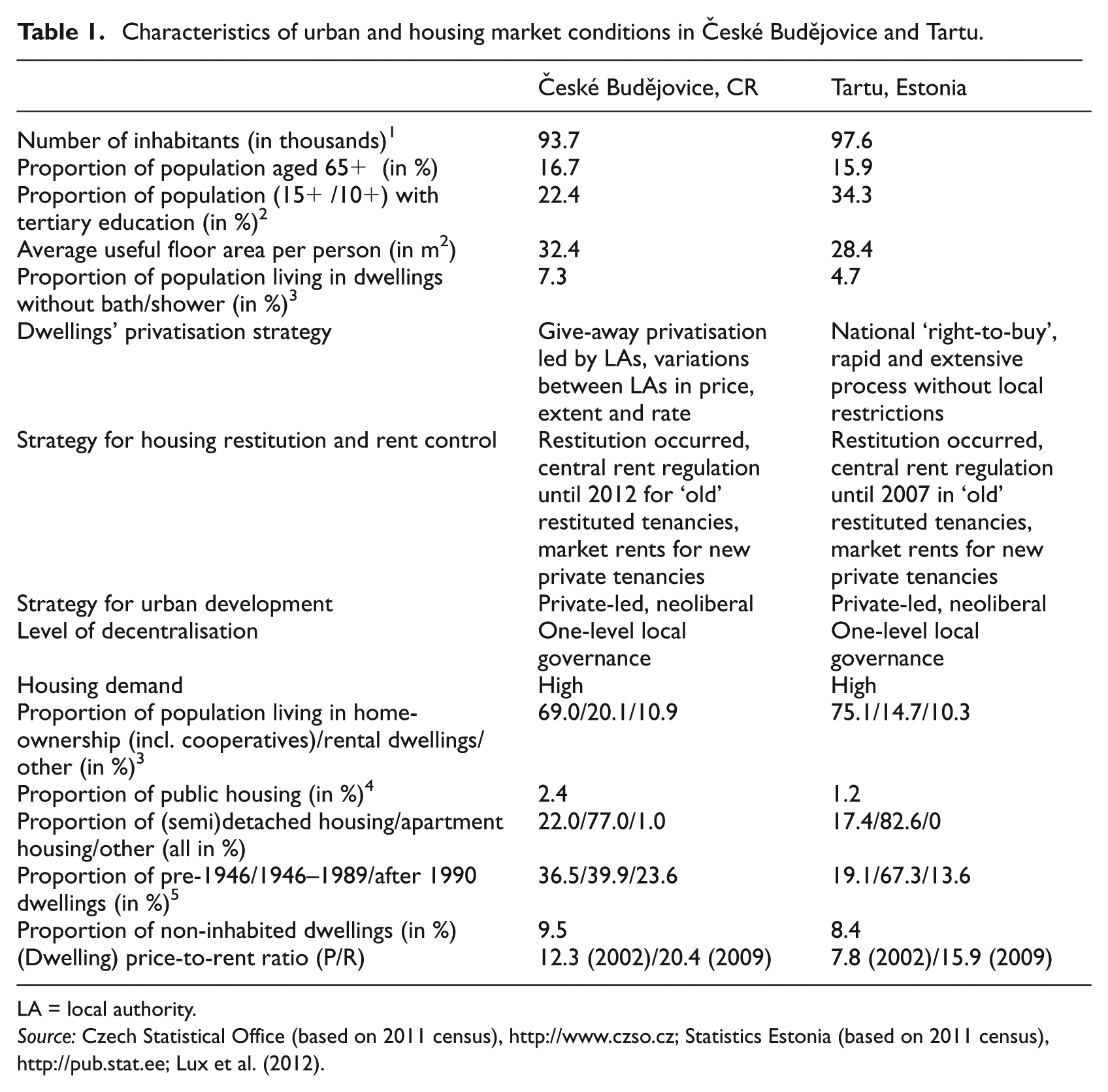
LA = local authority.
Source: Czech Statistical Office (based on 2011 census), http://www.czso.cz; Statistics Estonia (based on 2011 census), http://pub.stat.ee; Lux et al. (2012).
Liberalisation of the housing market facilitated population change, as well as physical upgrading of housing stock, in neighbourhoods with good inner city locations, which had been decaying during the socialist era. As a result of the liberalisation of rents, or of owners’ requests for occupying their housing by themselves, people with fewer economic resources have often been displaced by economically more resourceful residents (interview data). However, between-country variations in privatisation and rent transitions affected the pathways of change in the inner cities. Although no reliable data on intra-urban residential mobility exist, it can be assumed that the displacement of existing inner city residents has accelerated especially in Tartu; furthermore, the less publicly controlled path to urban renewal in Tartu has led to more rapid market-based selective regeneration when compared to České Budějovice, where development has been affected by persistent state housing regulations (rent control) and more generous social welfare provision. In České Budějovice the change has triggered the displacement of the Roma population.
When drawing up the sample of interviewees, we selected inner city neighbourhoods up to 15-min walking distance from the city centre (the historical core), representing the typical residential environments in the two cities. Three general types of inner city housing were chosen: historical quarters with pre-WWII housing structures, socialist-era large-scale apartment blocks, and new developments dating back to the 2000s. The last two types were built as infills in pre-WWII areas. In contrast to the mosaic-like structure in the inner city of Tartu, České Budějovice has larger homogeneous neighbourhoods in its inner city, hence in Tartu the case study neighbourhoods are smaller and more scattered (Figures 1 and 2).
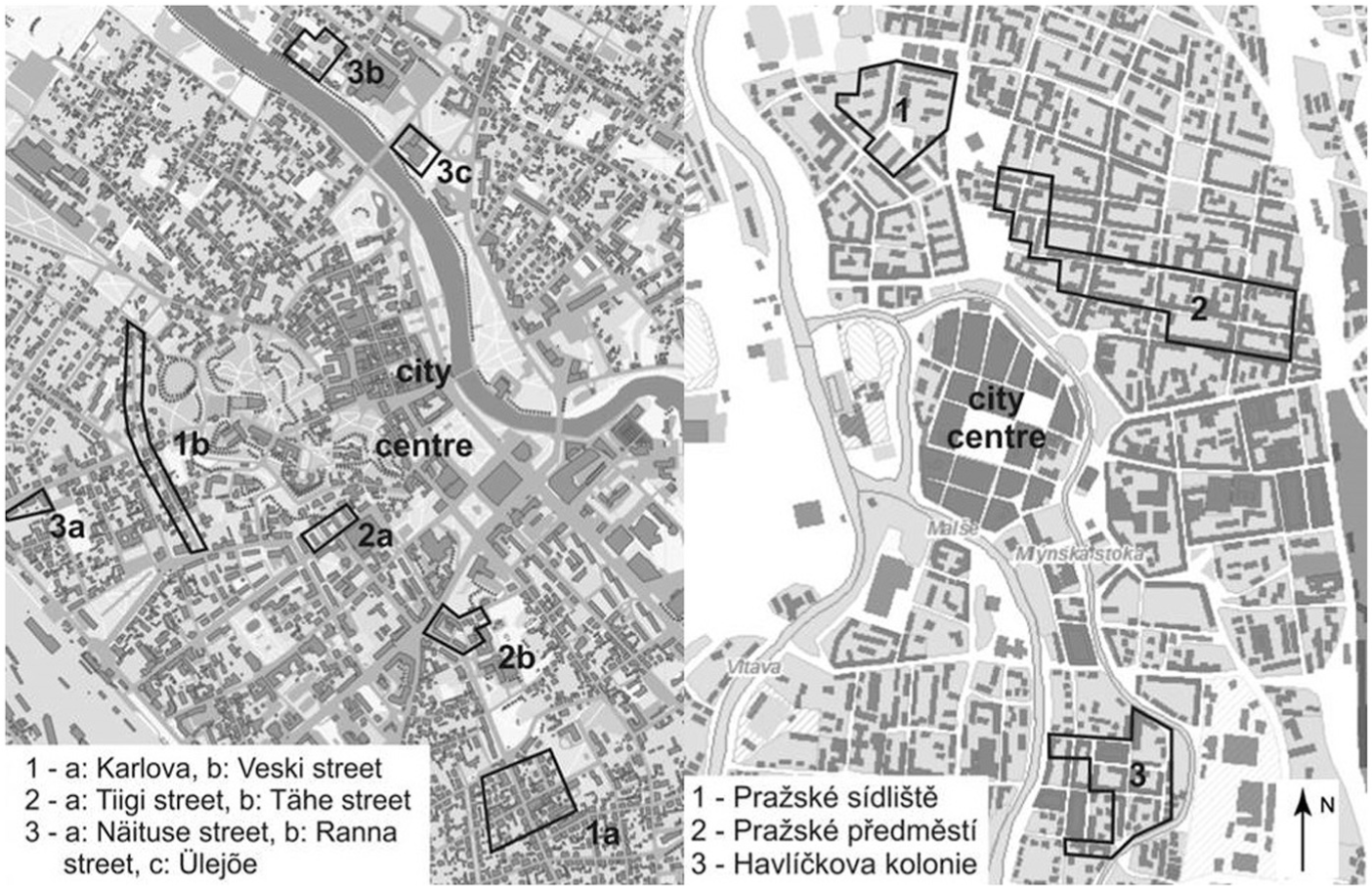
Case study neighbourhoods in Tartu (left) and České Budějovice (right).
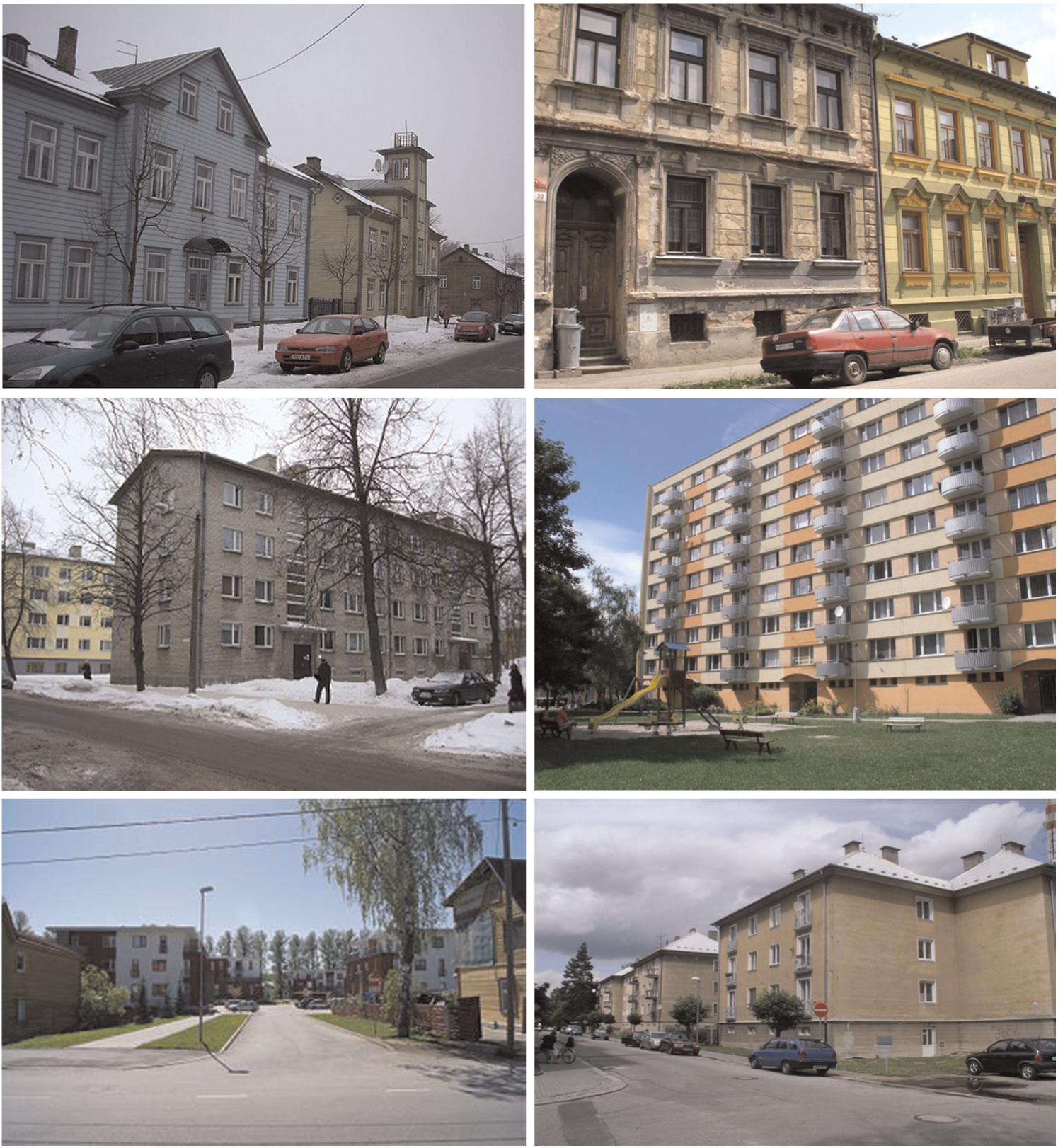
Photos of case study neighbourhoods.
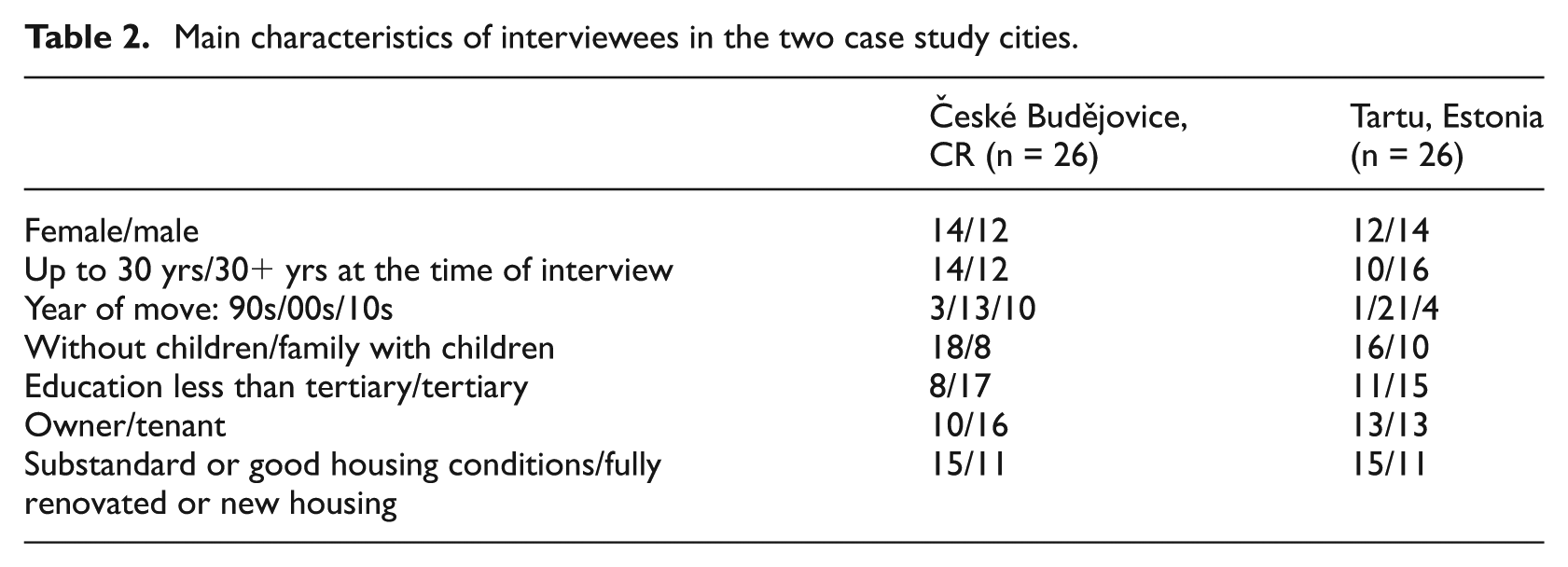
Only those interviews given by relocators after 1991 – i.e. those who moved in under the conditions of the ‘post-socialist’ housing market – were included in the analyses. However, the great majority of relocations had taken place during the 2000s. The respondents were selected randomly using different methods of contact (street or doorstep), whereas the proportions of different population categories (age-groups, household types, etc.) among the interviewees were kept as close to the averages of the city districts as possible. From all interviews only those of the younger (age group 18–29) and younger middle-aged (age group 30–40) at the time of their move were chosen for analyses to narrow the research focus and classify the possible grounds for their mobility. The younger households are the most mobile category of the population (Knox and Pinch 2010), and they have been recognised as important actors of inner city residential change in Central and Eastern European cities (Buzar et al., 2007; Haase et al., 2011, 2012; Steinführer and Haase 2007). Altogether, 52 interviews with residents between the ages of 18 and 55 at the time of interview were chosen for analysis (Table 2).
Main characteristics of interviewees in the two case study cities.
The semi-structured thematic interviews were all transcribed verbatim and analysed using the coding and categorising techniques available in the Nvivo 8.0 software package. We started with some basic general theory-driven categories stemming from our theoretical assumptions; however, we mainly approached the process of coding and categorising the data with an open mind as suggested by advocates of grounded theory (e.g. Strauss and Corbin, 1990); the node tree in Nvivo was created (Gibbs, 2002) to identify the reasoning behind mobility, the choice factors involved in individuals’ current places of residence, respondents’ earlier residential mobility behaviour, and their perceptions of neighbourhood and community. The broader categories were similar in the two countries, although there were some variations at the more detailed levels of analysis.
To systematise the characteristics of relocators we have also constituted a typology of movers. The aim here was not to quantify respondents (who did not always have one-to-one match with the proposed ‘model’ types), but rather to identify the typical characteristics of movers belonging to those different types, based on the leading criteria of their mobility objectives and housing/neighbourhood choice. However, other categories, such as life course stages, position in the labour market, resources available, lifestyle and identities, earlier residential experiences, awareness of space, intention to stay in the current neighbourhood, and perception of neighbourhood, were also considered when building up this typology.
What attracts people to inner city neighbourhoods and why?
Needs, preferences, resources, and spatial experiences shaping inner city relocations
Residential relocations are conditioned by the structures of the very concrete housing markets (submarkets, tenure structure, supply–demand, etc.). However, in this section we aim to answer the questions ‘which factors have triggered the mobility of new relocators to inner cities’, and ‘what kind of motives have attracted the new residents to inner cities’. Our study indicated the importance of combining households’ socio-economic perspective, life course and lifestyle aspects when assessing the possible reasoning behind residential mobility and housing/neighbourhood choice, and it did as well emphasise the relevance of spatial experiences (including residential histories) in mobility decisions (Figure 3).
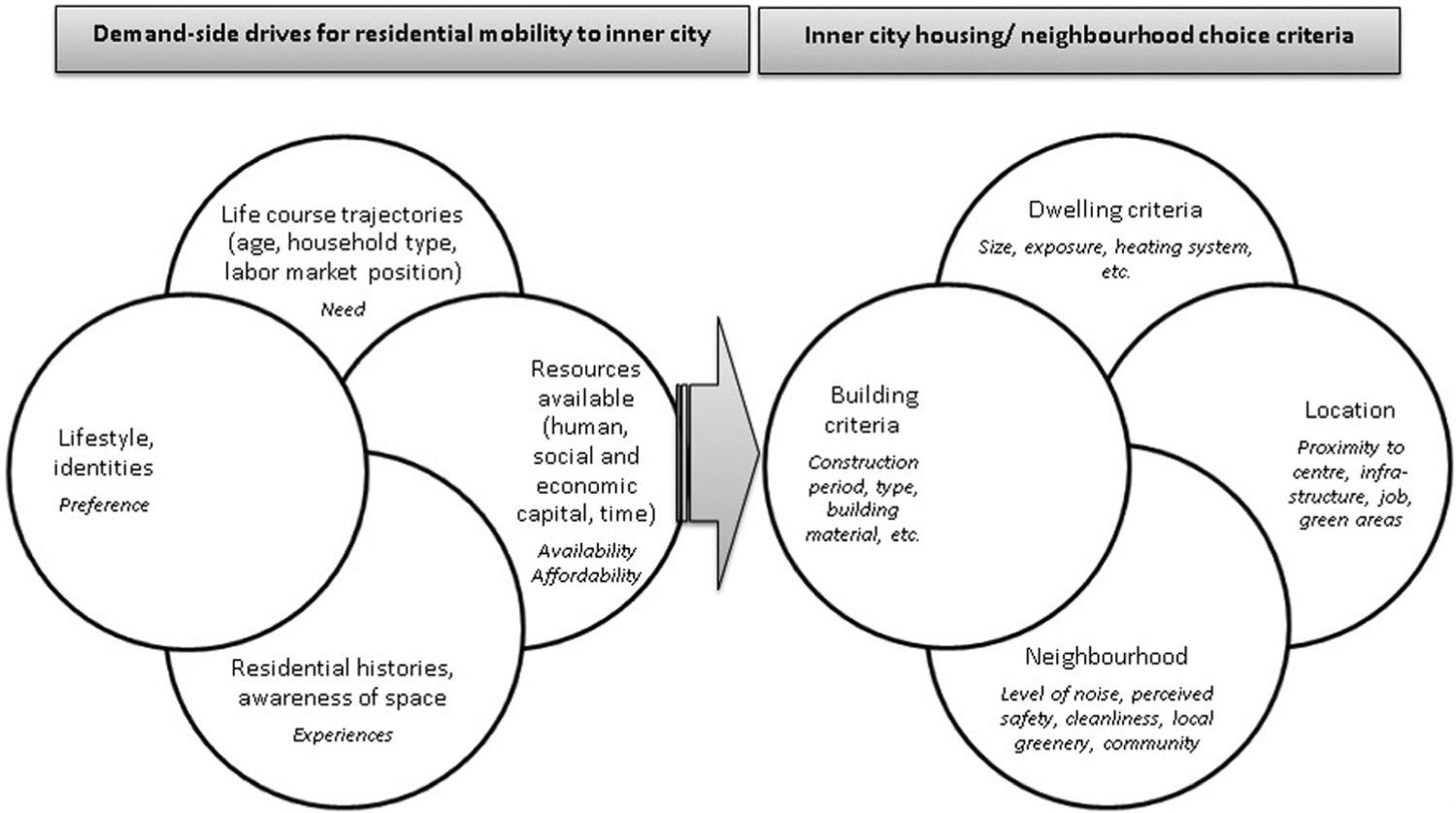
Demand-side drives for residential mobility, and the selection criteria of housing and neighbourhood, in post-socialist second-tier inner cities.
The life course trajectories were found to be intertwined with other types of factors triggering residential mobility; they represented distinctive needs, opportunities, and expectations in relation to residential conditions. For instance, the transition from the non-family to the family stage often increased the importance of neighbourhood qualities and of certain dwelling characteristics, as exemplified in the following extract: Our mobility is related to our growing need for space … When our child was born we needed a separate room for the baby, so now we have three rooms … and when you move to a bigger dwelling then you, like, also want to live in a better neighbourhood to have some kind of progress, whereas a step back would seem like worse. (Int 20, male, Näituse St, Tartu)
The subjective preferences and search criteria that people develop on the basis of past dwelling/neighbourhood experiences, attitudes (related to perception of various urban environments), and lifestyles (related to people’s values, use of time, and activities) are also crucial in decision-making processes with respect to residential choice. Preference and avoidance strategies are often used in relation to certain areas and housing qualities, depending on the awareness and the subjective perception of space.
The neighbourhood was the most important aspect when we chose the apartment … that we definitely didn’t want to go somewhere with panel blocks like Annelinn [suburban panel housing estate in Tartu, the authors]… we looked for something … that was peaceful … safe … and at the same time close to the centre … the living environment is definitely one of the main criteria when you buy an apartment. (Int 23, female, Ranna St, Tartu)
Familiarity and former contact with a neighbourhood or a similar type of dwelling also play an important role. Residential histories often influence the future residential decisions of households (e.g. an aspiration to live in a certain type of dwelling, avoidance of certain neighbourhoods or dwelling types, etc.). In several cases, we found that people had previously lived in or close to the same neighbourhood in their childhood, or later in life: And … as I grew up in Karlova and was born here, then this probably became decisive in the choice … but I tell you, I can’t be objective, because I grew up here and this is my childhood neighbourhood. (Int 9, female, Karlova, Tartu)
However, trade-offs have to be made between household needs and preferences and actual choice of residence because of budgetary and other constraints. In a number of cases moves were induced by the availability of a particular housing opportunity, and people did not consider other options. The criteria used to guide choices when moving exhibited a combination of, and a trade-off between, dwelling size or type, building style or age, location, and neighbourhood characteristics (Figure 3). These aspects, although in different combinations, were all present in respondents’ discourses on the reasoning behind the choice of their place of residence.
The primary consideration mentioned by interviewees was nearly always the consistency between a dwelling and household needs, aspirations, and opportunities. However, the subjective preferences and meanings attached to different housing conditions are complex and diverse. Needs, preferences and available resources meet to shape the choice according to: (a) size or type of building; (b) age of building; (c) interior condition/range of facilities/state of repair, and sometimes also historicity, building materials, or type of heating system. This combination is reflected in the following: I appreciate I have original parquet floor here. When I had a man here to renovate them, he told me, madam, you have original Viennese parquet blocks here. Ceilings are high, there are ancient doors, the apartment is in its original version, it has an ancient soul and that’s why I like it. (Int 43, female, Pražské předměstí, CB) I had my own criteria, and I wanted it definitely to be two-room, with an open kitchen, I wanted the windows and the bathroom to be new. Those were my principle demands. (Int 12, female, Tähe St, Tartu)
However, economic factors intervene to delimit the dwelling choice. Hence, choice was rationalised by interviewees, who referred to ‘the best quality and price option available’. The budgetary constraints were especially important for younger movers (who were often tenants or ‘first-time buyers’), but also for households earning lower salaries and unable to afford a mortgage (e.g. single mothers).
What attracts new relocators to inner city areas?
Choice of an inner city residence could be considered as a trade-off between dwelling, proximity and environmental attributes. The ‘proximity’ criterion stood out as the most common reason for the choice of an inner city residence, as particularly highlighted by childless singles/couples and students. The meaning of proximity was generally defined as good access to social infrastructure, study or workplaces, leisure facilities, or just closeness to the city centre. Proximity was valued because of the overall comfort and time-saving aspects for all household members, and also for its economic benefit (e.g. reduced transportation costs). Interviewees valued the possibility of being able to cycle or walk from their home to their destination. However, importance was also attached to environmental qualities: But it is very important here that the kindergarten is just here and that school is there … and the music school is right here and the city is so close. And in fact the whole milieu in the neighbourhood was also very important. (Int 6, male, Karlova, Tartu)
The biggest trade-off that people usually made when choosing a new residence was between proximity and neighbourhood attributes. The natural qualities of neighbourhoods, such as low noise level, availability of green areas and lanes or housing with private gardens seemed to be the most desired environmental criteria, but the perceived safety and social characteristics of the location played a role as well. The combination of good environmental conditions and building structures that have social values attached to them (often defined in terms of historicity and authenticity) leads to a phenomenon that has been termed the ‘genius loci’ or ‘spirit of place’ (Knox and Pinch, 2010; Relph, 1976). This intangible feature adds extra value to a neighbourhood, attracting people with a certain lifestyle, and contributes to the identity of both the neighbourhood and the residents that live there: It’s been my dream since I was a child to live in an interesting place, in a place that has a soul. This neighbourhood and these brick buildings have a historical identity. (Int 43, female, Pražské předměstí, CB)
Family households (or those at the family-planning stage) in their 30s tend to attach greater value to neighbourhood characteristics than people in their 20s, childless couples or single people; they also exhibit a greater willingness to contribute to the physical and social qualities of their neighbourhood. The young groups in their 20s, on the other hand, tend to attach most value to the characteristics of the dwelling and its location in terms of proximity. The transition from renting to home ownership involves an important shift towards creating roots in a neighbourhood and an attachment to place. This attachment often manifests itself through investment in neighbourhood relationships and community life, involvement in physical improvements, and greater responsibility for caring for the home and surroundings.
In the beginning you are only concerned with yourself, then comes your family – you begin to notice it more, then you become like responsible for the house (through the organisation of an apartment-owners’ association), and then comes the neighbourhood. You start like to worry more. The environment becomes more important as well, before it was not simply an important topic for me. (Int 6, male, Karlova, Tartu)
Types of new inner city residents
To systematise the typical characteristics and mobility motives of relocators the following typology of movers was established: (1) budget-conscious movers; (2) opportunity-driven movers; (3) lifestyle urbanites; and (4) lifestyle semi-urbanites.
The ‘budget-conscious’ movers
The ‘budget-conscious’ movers are usually young (in their 20s or early 30s), most commonly they occupy private rental housing that has been available on the market, and they form a large group of inner city relocators in both cities. Members of this group are often students or people at the start of their professional careers and price is therefore an important criterion guiding their choice of dwelling and location. Hence they also tend to have low expectations of what they can get for a low price with respect to dwelling characteristics, and they often accept accommodation of lower quality, particularly in the case of student housing: The house is not insulated at all, it’s awfully damp here, also quite cold and the main thing is that it gets mouldy. In spring I can open the windows and ventilate the place, so I will endure over the spring, but in autumn I will find something else. (Int 46, female, Pražské předměstí, CB)
Choice of residence must also fit with lifestyle, which for these ‘budget-conscious movers’, is often externally-oriented; the importance of good accessibility is considered highly important, whereas the neighbourhood attributes are much less important. This group considers their current living conditions to be short term; they foresee their future in a higher standard of housing that is most commonly owner-occupied.
This is a temporary solution for us. I want to take out a mortgage. I don’t want to pay rent to someone else. I want to buy an apartment or a terraced house on the outskirts … Here it is just buildings, buildings and no trees, no greenery, no parks. (Int 45, male, Pražské předměstí, CB)
‘Budget-conscious movers’ are found in all types of neighbourhood, but more frequently in nineteenth- and early twentieth-century tenement buildings, and in the case of Tartu also in Soviet-era apartments, both types often being in a neglected physical condition. They are not generally interested in community relationships, often offering no more than a ‘hello’ or in some cases, ‘practical conversation’.
Familiar faces … and it is limited to that. When you have moved so much, then you have the attitude that you know this is still a temporary place and then perhaps you don’t try as much as you could [to build community relations]. (Int 15, female, Tähe St, Tartu)
A particular type of ‘budget-conscious mover’ exists in Tartu specifically, where ‘semi-urban’ inner city neighbourhood types can be found. Some respondents who could not afford to live in their ‘ideal type’ of housing – a suburban detached house – have compromised and moved to small-scale apartment buildings with gardens in the historical inner city.
The ‘opportunity-driven’ movers
Similar to ‘budget-conscious movers’, ‘opportunity-driven movers’ are mostly younger people in their 20s or early 30s. The housing choice for this group of movers is determined by the availability of a specific dwelling. Usually, the opportunity was there when they wished to relocate. For instance, they may have chosen to move into their partner’s dwelling, acquired a property via the restitution process, through inheritance, or as a gift, or taken advantage of the availability of a dwelling owned by a friend or relative: I moved here because it was my brother’s, and it was possible to live here … very simple … it was immediately ready to use, so that it was possible to make use of it. (Int 19, male, Veski St, Tartu) The reason I moved to this place is that my grandmother owns the building, because it was given back to her in restitution. (Int 36, female, Pražské předměstí, CB)
This group consists of residents with heterogeneous backgrounds in terms of lifestyle, life course, and socio-economic status. However, as in the case of budget-conscious movers, ‘money matters’, and the existence of a housing opportunity is appreciated. Family roots and family heritage, as in the case of acquiring property through restitution, often reinforce neighbourhood attachment.
The ‘lifestyle urbanites’
‘Lifestyle urbanites’ can be subdivided into: (a) ‘pragmatic lifestyle urbanites’ at a certain life stage; and (b) ‘committed lifestyle urbanites’ with a clearly defined life perspective. The former subgroup comprises younger age groups usually in their 20s (with or without children) normally lacking long-term experience of inner city living. While they have an adequate and stable income and are in a professional career that allows them to buy property, they still consider an inner city residence and specifically an apartment to be the best option at their current life stage. However, they also have a preference for neighbourhood environmental aesthetics (e.g. a low level of noise, the availability of trees and greenery). This group, similar to the first type, appreciates the functional advantages of a central location, whereas their sense of identity with place and attachment to their neighbourhood are moderate, and they showed only low levels of interest in building community ties in their neighbourhoods. They furthermore sometimes dreamed of a future filled with other residential opportunities, a detached house in the suburbs being one of the most likely options: We plan to build a family house in the suburbs. Once we build it, we will move there. One day I would like to live in my own family house, but not far from the city. (Int 27, female, Pražské sídliště, CB)
Compared to the first group, they place a greater emphasis on the aesthetical and historical qualities of inner cities, their planned stay in their current place of residence is longer (usually in home-ownership), and they differ in their higher level of resources.
‘Committed lifestyle urbanites’ have usually experienced the urban lifestyle for a longer period of time and are on the whole convinced that their choice of dwelling and neighbourhood corresponds with their ‘ideal’. Members of this subgroup typically sought a new apartment near to their previous residence: I have to admit that we even didn’t think of other alternatives … as I said this apartment was close to our previous one, where we lived before our child was born and we just liked it there. (Int 30, female, Pražské sídliště, CB)
These committed urbanites, with their long-term experience of inner city living – the group over-represented in České Budějovice compared to Tartu – are motivated to stay thanks to a general contentment with their overall lifestyle. Not only do they find the inner city location convenient (due to good accessibility, walkability), they also feel a considerable attachment to the place from simply being an inner city resident, sensing a neighbourhood identity or belonging to a local community. If the qualities of their inner city neighbourhood also include access to greenery, to the river, etc., this adds to the attractiveness of their residential choice and promotes the residential stability of such lifestyle urbanites. It seems that the larger housing supply supports the emergence of such a type (historical housing in truly urban environment), which is important because in Tartu the physical neighbourhood structure allows this lifestyle to develop rather less. Equally, it might well be that the longer history of urbanisation in the Czech Republic is an important dimension in explaining this difference.
The ‘lifestyle semi-urbanites’
On the other hand, we only found ‘lifestyle semi-urbanites’ in Tartu because this category is linked with a specific urban fabric; people in this group move to historical neighbourhoods consisting of small-scale (timber) apartment buildings with backyards. Their preference for living close to the city centre is related to their ‘urbanist’ values and lifestyle, whereas the environment of the part of the inner city in which they live, and the way in which they talk about it, is related more to ‘suburban values’ (e.g. private garden, greenery). These residents call their neighbourhoods ‘semi-urban neighbourhoods’. Such an urban fabric is not evident in the inner city of České Budějovice. Overall, functionality (i.e. access to workplaces, services, etc.) is less important for this group compared to the previous group, whereas the historical-environmental milieu, as well as the intangible genius loci, is more important. They value the historicity of their building and dwelling. This group is emotionally attached to the neighbourhood. They often have a strong sense of community and are active in community life. They value the historical qualities of their neighbourhood and buildings. For some, their neighbourhood has become a part of their identity and a clear expression of their lifestyle and outlook. However, similar to the previous group, lifestyle semi-urbanites with a clearly defined life perspective and those at a certain life stage are found in this category: At the moment we do not plan to move, because we are very satisfied with the place. But, my soul misses … I think that I want to live in a house when I get old … where one can step on the grass. At the moment I do not need it. (Int 4, female, Karlova, Tartu)
Discussion and conclusions
The systemic changes of the 1990s have created a new context for inner city change in post-socialist cities of Central and Eastern Europe. The gradual transition to market processes facilitated the gentrification and re-urbanisation processes that had been present in Western cities for several decades. We have demonstrated how the different spheres of life – life trajectories, lifestyles, former residential experiences (and awareness of space), and resources – in a combined way have influenced the decisions to relocate to inner cities in both case study cities; for instance former residential experiences can be seen as ‘filters’ which condition further residential choices.
In our study, we found firm support for previous findings that ‘transitory urbanites’ are an important group of new inner city residents (c.f. Haase et al., 2011). Inner city housing stocks with their high concentrations of rental apartments, smaller apartments, substandard apartments, etc. often provide conditions suitable for students and young adults who are in a transitional position in terms of their life stage. The influx of these groups, compared to the socialist era, introduces new dynamics to these inner city neighbourhoods – in the form of rejuvenation and higher levels of residential turnover – but often also less community attachment and concern for the physical qualities of the neighbourhood. However, an important result is that there are also other substantial groups of new residents present in the inner city; among these, families who were much more committed to their dwelling and their neighbourhood, resulting in a mix of socio-economic resources and age groups living in the same neighbourhoods. We distinguished four categories or groups among inner city movers: ‘budget-conscious movers’, ‘opportunity driven movers’, ‘lifestyle urbanites’ and ‘lifestyle semi-urbanites’. These four different types are characterised by the level of resources available, a distinctive demographic and household conditions, different lifestyles, as well as labour market stages, and different expectations towards dwellings and neighbourhoods, including expected neighbourhood attachment and community ties. The frequency of these groups showed some variation between the two studied cities, however.
We may therefore assume that based on our analysis of second-tier cities, inner cities in the CEE seem to be valued and used by distinctive population groups in terms of demographic, social, and lifestyle characteristics – not only by transitory urbanites, but also those with long-term prospects of staying and an attachment to the community and the neighbourhood concerned. These multiple groups can occupy different neighbourhoods, but can also coexist in the same neighbourhoods, leading to a socio-demographic and lifestyle mix in residential areas. The availability of lower-quality smaller dwelling units makes the inner city attractive to people with fewer financial resources, whereas the historical quarters with their unique milieu, or newly built residential infills, seem to be increasingly attractive to movers from higher socio-economic groups with a particular urban lifestyle. The outcomes vary in different cities, but one of the main factors reinforcing this difference are characteristics of the physical fabric of particular cities. For instance, the availability of ‘semi-urban’ housing and environmental-friendly neighbourhoods with greenery substantially increase the attractiveness of a neighbourhood for long-term middle and higher social status residents, including families with children. Hence in urban renewal, housing developments that are suitable for families (in terms of environmental-friendliness, dwelling size, etc.), would probably serve as an alternative to suburbanisation (c.f. Karsten, 2003).
While proximity is often among the principal reasons why people choose an inner city location, the availability of greenery and environmental quality are key factors that increase the attractiveness of some inner city neighbourhoods (particularly for families). Therefore, a good location in natural surroundings with specific building structures (e.g. historical structures) positions certain neighbourhoods ahead of others in terms of residential choice. The positive evaluation of a neighbourhood is also enhanced through a sense of the genius loci that is believed to exist in certain neighbourhoods. The presence of these features may therefore be prerequisites for the transformation of these areas into flourishing attractive urban neighbourhoods.
Footnotes
Acknowledgements
This paper is dedicated to the memory of Jana Temelová who recently passed away. The authors would also like to thank the students Dana Křešničková and Pavel Tůma from the University of South Bohemia and involved students from the University of Tartu for their help in interviewing respondents, and the anonymous reviewers for their very valuable comments.
Funding
The research was supported by grant no. 332265 of the Marie Curie Intra European Fellowship within the 7th European Community Framework Programme, grant no. 7588 of the Estonian Science Foundation, the institutional research funding IUT (IUT 2-17) of the Estonian Ministry of Education and Research, the Mobilitas grant no. MJD338 of the EU through the European Social Fund, grant no. GA14-00393S of the Czech Science Foundation, and grant no. 072/2010/S of the Grant Agency of the University of South Bohemia.