




Abstract
The aim of this paper is to study how women’s privacy needs are met through the physical form of public spaces in both old and new urban designs, using as a case study the city of Nablus, Palestine, which has been significantly influenced by the culture of gender separation. The findings will help develop a better understanding of the relationship between women’s privacy and the physical form of public spaces and will enhance the development of public spaces that women can use comfortably and actively to participate in the urban life. An environmental approach based on the concept of behavioural setting was used to examine women’s privacy issues in the chosen public spaces. Direct observations and questionnaires were used in the fieldwork, in addition to interviews with women and relevant people who influence the women’s privacy. Maps (GIS), sketches and SPSS techniques were used to interpret the data.
Introduction
In any society, women have specific needs and values, including the need for privacy, security and comfort. These may be reflected in the urban design, for example, in the physical layout of spaces, furnishings, pavements, lighting and the spaces’ functions. As an expression of internationalisation, modern analysis in the field of architecture and urban design is generally based on identifying standard human needs, which are then reflected in the grouping of users into categories according to their functions: pedestrians, vehicular traffic, disabled individuals, and so on. According to this framework, the role of the designers and planners is to consider and fulfil these standard requirements in their designs and plans.
Women can be regarded as a user group of public spaces with specific needs, requirements and values, issues that should be intentionally and specifically addressed in urban design. Because women’s specific needs related to public space are dependent on culture, they should be understood and designed according to the local culture.
For the purpose of this study, ‘public’ spaces include not only open spaces (streets and yards) but also semiprivate spaces that connect dwellings with their surroundings (residential gardens, courtyards, balconies, entrances, etc.) and buildings used for various public purposes (sometimes privately owned), such as mosques, schools, shops, restaurants, and so on.
The modern-day research and design practices in the Arab-Muslim cities, however, lack this focus on fulfilling women’s need for privacy. Although several studies have been conducted concerning public spaces and women’s privacy in Arab-Muslim cities (Abu-Gazzeh, 1996; Akber, 1988; Hakim, 1986; Kenzari and Elsheshtawy, 2003), these studies explained only how women’s privacy needs in public spaces influence the physical form of these spaces. They failed to mention how women’s privacy needs influence their behaviour, which differs from one cultural context to another. Although some other studies have dealt with women’s behaviour (Ghannam, 2002; Kotnic, 2005), they did not focus on the physical form of public spaces. Thus, the existing theories concerning this topic seem inadequate for the purposes of this study, which is concerned with the relationship between the physical form of public spaces and women’s need for privacy as a physical, social and cultural phenomenon. In other words, in investigating the relationship between women’s privacy and the physical form of public spaces, women’s behaviour needs specific consideration.
Thus, this study aims to investigate whether or not – and if so, how – women’s privacy needs are met in the physical form of public spaces in Arab-Muslim cities physically, socially and culturally. The findings of this research will lead to a better understanding of the relationship between women’s privacy and the physical form of public spaces and enhancement of women’s urban and public life. In this regard, women’s privacy does not mean women’s isolation, on the contrary it is an essential requirement for women to achieve their right in access to the public sphere and enjoy using their urban environment.
The city of Nablus in Palestine, as an Arab-Muslim city, has been chosen for the purpose of examining the relationship between women’s need for privacy and the physical form of public spaces in both old and new urban fabrics.
Nablus is the second largest city in the West Bank of Palestine and is an important administrative, educational, commercial and industrial centre; it is located within area ‘A’ according to the Oslo Interim Accord, in which the Israeli militaristic presence is non-existent. 1 Society consists mainly of three communities divided according to religious lines; 99.1% are Muslims, 0.8% are Christians and 0.1% are Samaritan’s Jewish. 2 Despite the religious affiliations, the Nablusians are very cohesive, the family plays an important role in their economic and social life and they are tied to their traditions and social customs, which are based on Arabic and Islamic values, particularly concerning gender separation that influences women’s behaviour in public spaces. Although Nablusians are socially conservative, there is no practice of oppression on women and their society was among the first Palestinian community where women were assured their rights and liberation.
The morphology of Nablus consists mainly of three parts: (a) the Old City that dates back to the Ottoman period and is heavily influenced by traditional culture; (b) the modern neighbourhoods that emerged around the Old City after the British mandate between 1917 and 1995 and was occupied by residents moving out from the Old City and holding with them their inherited values and behaviour (Figure 1); (c) the refugee camps established after the division of Historical Palestine in 1948; they have their own administrative, socio-economic and political entity. 3
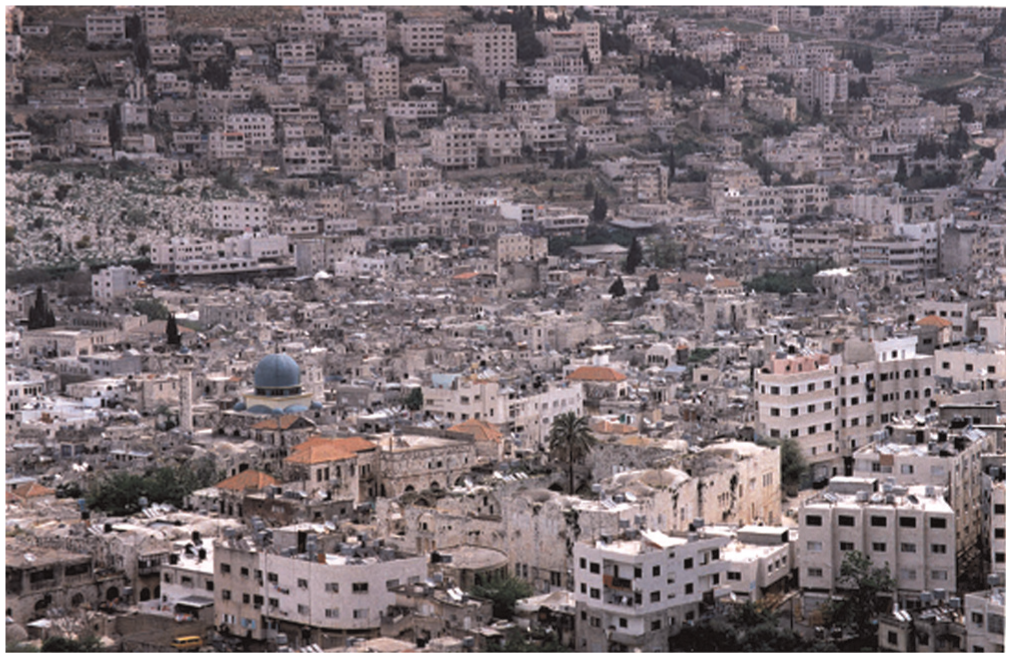
An aerial photo showing the study area in the central part of the city of Nablus. The Old City is visible in the centre of the photo, surrounded by the modern neighbourhoods.
The main question that will be addressed in this study is: How does the physical form of public space in Nablus meet women’s need for privacy?
This question is divided into the following sub-questions: How do the design (physical), use (social) and rules (cultural) components of the public space each meet women’s need for privacy in old and new neighbourhoods? Are the three components – design, use and rules – influenced by each other? How much importance do women give to privacy in public space?
Women’s privacy in Arab-Muslim cities
The ‘Old City’ in general was shaped according to local needs, culture and religion, in addition to geographical factors. The consideration of women’s needs, therefore, had historically been part of the cities’ urban design process. The outdoor spaces, buildings and other urban elements all reflected various values, including providing for female-specific needs, such as security, comfort and privacy. This spontaneous process by which cities were shaped continued until the nineteenth century. 4
In the old urban design of Arab-Muslim cities, the Islamic values concerning women’s privacy were applied formally, such as by regulating the height of adjacent buildings and the placement of windows and doors to allow women to observe the streets without themselves being observed. Besides, the behavioural values concerning women’s privacy have traditionally guaranteed a secure environment for women when using these spaces (Hakim, 1986). The absence of public facilities on dead-end streets and the development of markets along the main streets enabled women to use the dead-end streets without being exposed much to the public sphere in the neighbourhood structure. Also, the old fabric of Arab-Muslim cities enabled women to use the building roofs to stay in contact with each other, enjoy fresh air, and observe the public sphere, all without directly using public open spaces.
Additionally, the different hierarchal levels of public spaces, their irregular form, and the separation between streets and squares all contributed to ensuring women’s privacy in public spaces (Bianca, 2000). Features such as screened windows and the layout of houses and quarters enabled women to see men, whereas men could only see the women they have a relationship with. Also, certain rules governed the element of timing, for instance, regarding the use of public baths, and transitional spaces were used to separate males and females in public spaces (Abu-Lughod, 1987).
During the twentieth century, however, the political and economic institutions of Arab-Muslim cities underwent major transformations caused by the globalisation process. The field of urban design reflected a growing lack of awareness of local needs and values, particularly those related to women. In the West, industrialisation and intellectual transformation have led to gradual changes in urban design strategies and in ways of using urban spaces. In the Middle East, these changes occurred later as a result of colonisation following the First World War, when the emergent dominant powers in the region, particularly Britain and France, dismantled many of the existing societal structures of the defeated Ottoman ruling system. This shift involved all aspects of society, including law, administration, education and commerce. Even Western lifestyles and products began to be adopted into the local culture. This constituted a paradigm shift, which likewise transformed local architecture and town planning (Nooraddin, 2004). As a consequence, the old cities in this world experienced major changes in two related areas, both of which are partially based on Islamic values, including women’s privacy:
Changes in the socio-cultural aspects of the society: The social structure of the city formerly built on micro-communities, often sharing the same tribal or ethnic origin and mirrored in the spatial structure of the city as distinct neighbourhoods, was replaced by a single macro-community within which families of different origins were mixed and merged together (Lapidus, 2002). Besides, new educational and professional opportunities were offered, particularly to women, who, both veiled and unveiled, became more visible on the streets (Ahmed, 1992).
Changes in planning practices: The decentralised planning process controlled by residents and therefore governed directly by their needs and values was transformed into a centralised process controlled by the municipalities according to functional and welfare needs, especially vehicle access (Bianca, 2000).
Therefore, new modern values, particularly those related to functionality and general public welfare prevailed in the new urban design of Arab-Muslim cities. These values were largely imported from other cultures, and often, they directly contradicted the residents’ cultural values and norms, particularly those regarding women’s privacy. Consequently, people started to introduce their own changes in the physical form of public spaces. In Saudi Arabia, people use walls, curtains and other partitions more than in any other society to create physical boundaries and realise their need for privacy. Abu-Gazzeh (1996) outlined how these boundaries became a concept that influences the physical form of public spaces in Saudi Arabia. Al-Hemaidi (2001) explained how, in residential gardens in Saudi Arabia, residents transformed the walls and openings facing adjacent streets by constructing plastic and steel structures on top of their dwellings’ fences or by sealing off their second-floor windows to create the required privacy for women.
Theoretical framework
Privacy involves a diverse set of social relationships: individuals in relation to individuals, individuals in relation to a group, and so on (Altman, 1975). This study primarily deals with women’s privacy in relation to the presence of ‘outsider’ males – that is, males who have no familial relationship with the women and are eligible for marriage. 5
In public spaces, where they are exposed to outsider males in the course of various everyday activities, women search for personal space and territorial control, which enhance their comfort and feeling of security (Altman, 1975; Newman, 1972). Within public spaces that do not provide them privacy, women change either their behaviour or their values, both of which may impact cultural continuity (Rapoport, 1980).
Privacy has a dynamic nature. Too much privacy leads to social isolation, but too little privacy might lead to crowding. To control their social interaction, women use different mechanisms to achieve the appropriate level of privacy for the activity in which they are involved (Lang, 1987). On this basis, any behavioural setting reflects a balanced situation where the desired privacy for women equals their need for privacy, which is defined as the ideal level of interaction with others: how much or how little contact is desired at a given moment. In case the achieved privacy is lower or higher than the desired privacy – that is, there is too much or too little contact, a state of imbalance exists (Altman, 1975).
To keep the society alive and secure, it is important to retain a balance, with neither too much nor too little separation between men and women. Another important issue is the relationship between achieved privacy, desired privacy and the mechanisms that are used to control the need for privacy and shift it towards the achieved privacy. Lang (1987) suggested that privacy is controlled by different mechanisms, which are related to the physical form of the setting, such as territorial definition, personal space and cultural issues. In addition, these privacy mechanisms are not constant; they respond to the setting and its components.
For example, in this study, the women’s privacy mechanisms respond to three main components: design, use and rules. When women cannot achieve the needed privacy through the design components, they will utilise additional use or rules components, which influence the setting’s privacy level. The degree to which the privacy components are reflected in the women’s settings reflects the privacy level in these settings.
The ‘design’ components include walls, curtains, the positioning and height of openings, pavements, the width of spaces, plantings, seating, physical layouts, space locations and the urban fabric (Abu-Lughod, 1987; Bianca, 2000; Hakim, 1986). These components enable women to use the public space comfortably without using any additional components (use or rules components), which enhances their security and pleasure in public space.
The ‘use’ components include the traffic volume, the users of the space and the relationship between the different users (Altman, 1975). Also, women’s privacy needs are influenced by their personal demographics, including income level, age, health and personal level of anxiety (Koning, 2006).
The ‘rule’ components include both formal rules, which are reflected in written signs and regulations (structuring the time, ownership and function of the space), and informal rules (individual, societal and religious), which are reflected in people’s behaviour (Akber, 1988).
These three main component types are all interrelated, both with each other and directly with women’s privacy needs, because women use various mechanisms in response to the setting and its components: physical, social and cultural.
Women’s privacy is influenced by several behavioural rules that are mentioned in Qur’anic texts and the Prophet’s sayings. These rules are related to the differential roles of women and men in relation to each other, to women’s appearance and behaviour, to women’s personal demographics (age and marital status), and also to the behaviour of males in public spaces. Generally, the rules that govern women’s privacy are socially defined and mutable, and they are practised differently according to the cultural context, the period and the situation (Hakim, 1982). In Saudi Arabia the rules which govern women’s privacy in public spaces are set out in legislation, while in Palestine these rules are defined socially.
Furthermore, women’s privacy in Islamic culture implies certain specific aspects of privacy: visual, physical, auditory and olfactory. In other words, privacy encompasses to what extent women should be exposed visually, physically and in the olfactory and auditory senses (i.e. to what extent her voice should be recognisable) to outsider males in either private or public open spaces during their everyday life activities. Despite continuous political, socio-economic and cultural changes in Arab Muslim cites, many of the concepts related to women’s privacy have been inherited by modern Islamic societies and thus are reflected in people’s behaviour and their built environment, which largely reflects local ways of controlling space. In the present literature, the definition of defensible space shows how communities create individual spaces that fit their needs for everyday life activities (social gatherings, moving from one place to another, working and shopping, etc.). All these activities are influenced by privacy issues that impact the physical form of public spaces.
Methodology
To investigate privacy and to analyse the physical form of public spaces that allow for women’s privacy, a concept of ‘behavioural setting’ is used. This concept draws on several sources: typological, cultural and behavioural studies; the published literature regarding privacy; and the personal knowledge of the main researcher, who is a female architect well familiarised with the local culture of Nablus. According to this approach, the behavioural setting consists of three main component types: physical (design), social (use) and cultural (rule) components (Lang, 1987; Rapoport, 1980).
The study followed a comparative analytic strategy based on a symmetric approach and covered public spaces in two neighbourhoods located in the centre of Nablus: the old city and Rafeedyah neighbourhood, developed during the twentieth century.
Various types of public spaces, representative with regard to women’s use and parallel in terms of the old versus new neighbourhoods, were analysed in relation to women’s need for privacy. Observations and a questionnaire survey, conducted in both the old and the new neighbourhoods, constituted the main methods. Moreover, interviews with women and other relevant people were done as supporting methods.
Both ‘participant’ and ‘direct’ observations were conducted to identify women’s privacy components and to examine whether women’s privacy is attained and, if so, by means of which components: design, use or rules (Figure 2). The observations were done at three levels: city, street and public space, according to the above-mentioned three components.

Examples recorded through the conducted observations showing the various settings: (a) design components: open and dead-end pathways; (b) use components: laundry drying and using a staircase to check certain issues; and (c) rule’s components: people waiting in front of a shop using the pathway and using the street space for advertising.
The fieldwork started with a survey of all types of public spaces used by women in both neighbourhoods, and the observations covered the three main components: design, use and rules. The main technique was to count and record the number of women, the type of activity, the time and duration of the activity and the women’s ages: youth (under 20 years old), middle age (20 to 60 years old) and elderly (above 60 years old). In the direct observations, the ages were determined by estimation.
Additionally, other means were used, such as ethnographic (cultural) techniques, sketches, photos and written notes. The observed women were those above 10 years old and using the street. Girls (judged to be) less than 10 years old were excluded from the observations because, in Nablus, females of these ages are not subject to privacy rules. The collected data from the observations were categorised in three main groups according to the established component type.
Concurrently, semi-structured interviews were conducted with certain women to further identify the privacy components, particularly considering that privacy consists not only of tangible components but of intangible ones as well. These interviews helped to provide more thorough explanations of the results and more details about the design and use of public spaces. However, after 20 interviews, the process was stopped because most of the information proved repetitive at that point.
Interviews were also conducted with other people, whose perspectives were deemed particularly relevant to issues of women’s privacy, including religious leaders, planners, managers of public buildings and insider males (fathers, brothers and husbands). These additional insights were useful in developing the privacy concepts and providing more in-depth explanations of the results.
Finally, a standard questionnaire survey was conducted to examine women’s own attitudes towards privacy components. The particular focus was on women’s attitudes towards privacy in public spaces, an element that cannot be ascertained from observation. In this regard, the women’s attitude towards privacy signifies the level of importance that they give to privacy. A total of 200 women over the age of 10 years were chosen, distributed evenly between the two neighbourhoods. A stratified cluster from a random sample was chosen, and this was distributed according to the context of the women’s residence over four identified types of streets within each neighbourhood: commercial, mixed-residential, residential and dead-end streets. Then, in each type of street, 25 houses were chosen according to their spatial arrangement: without a courtyard, with a partial courtyard and/or with a central courtyard. The interviewed women were mainly the homeowners. The data collected from the questionnaires were categorised according to the privacy components: design, use and rules. The Statistical Package for the Social Sciences (SPSS) software was used to analyse the data and derive the results.
Results
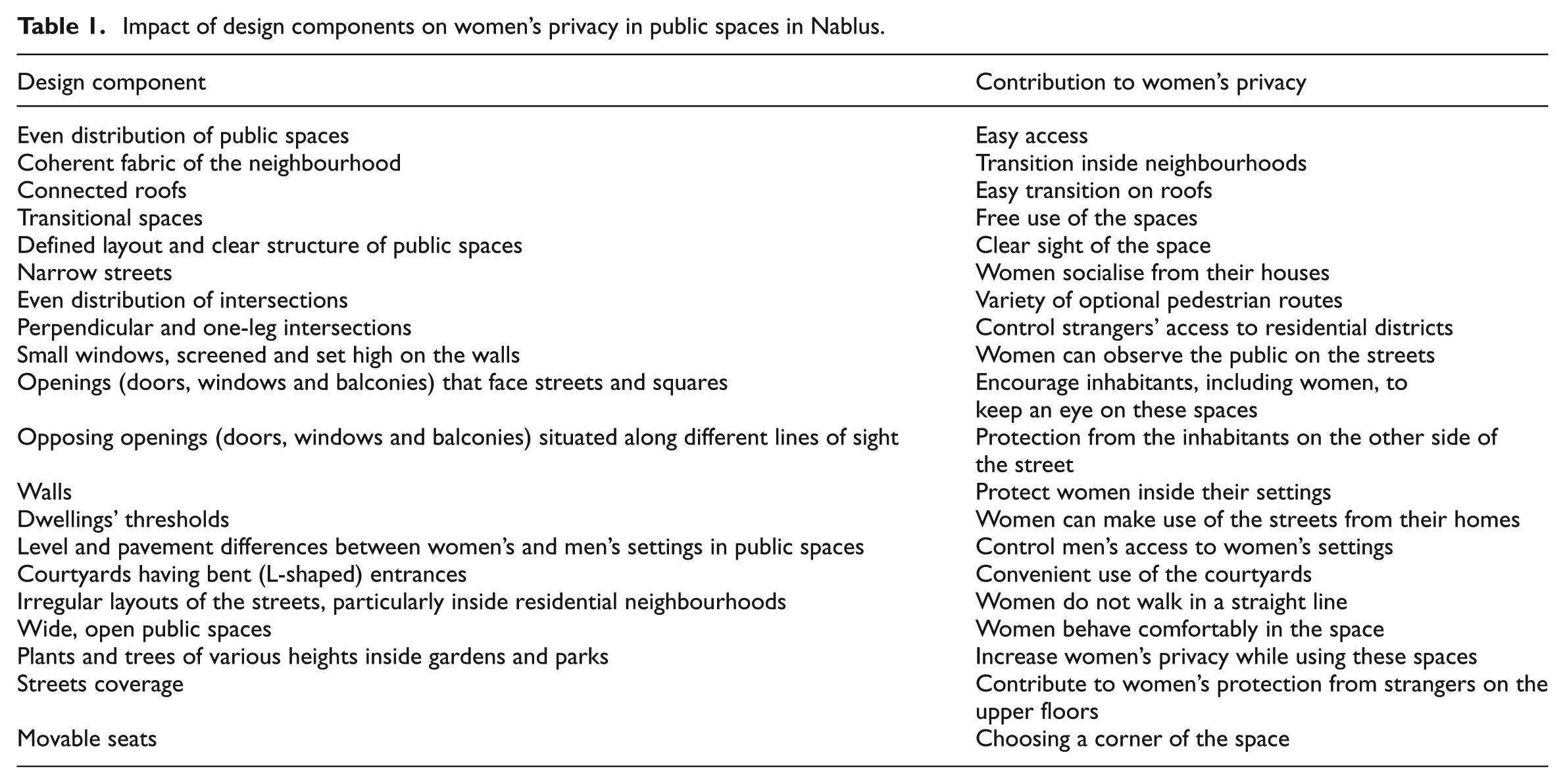
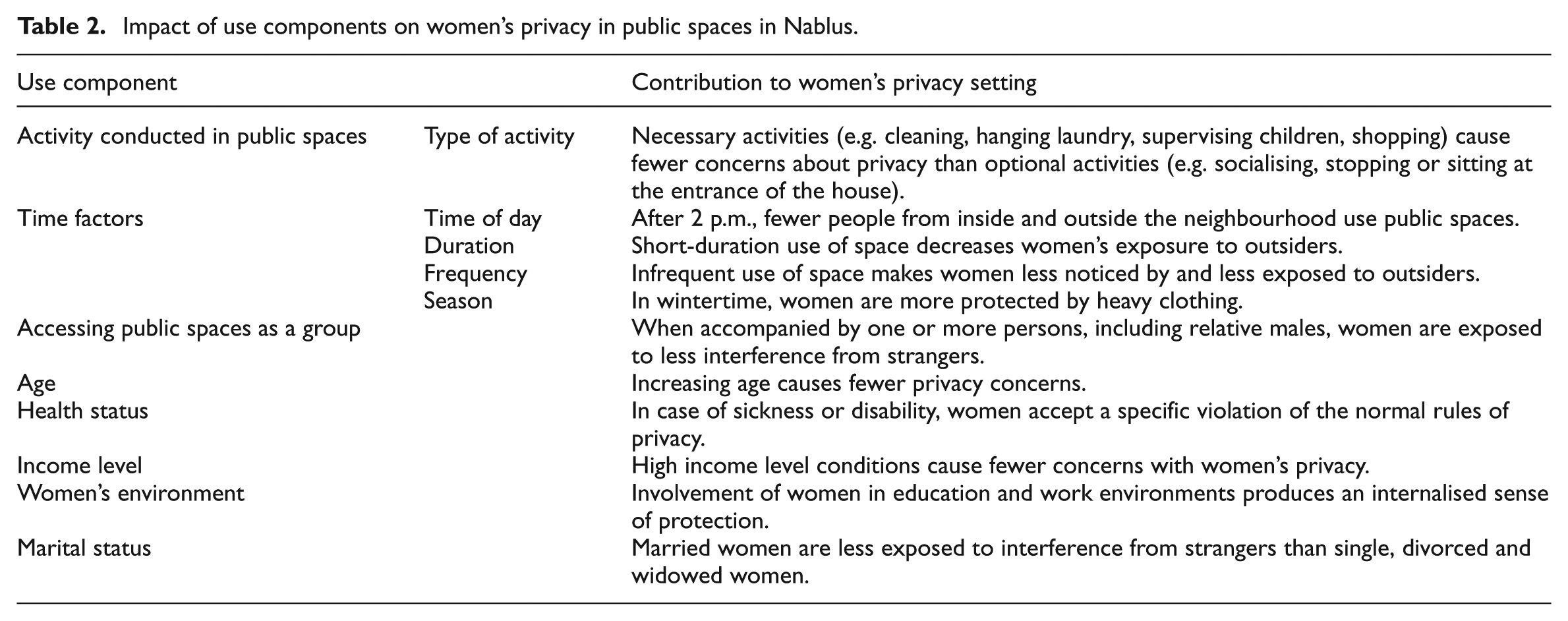
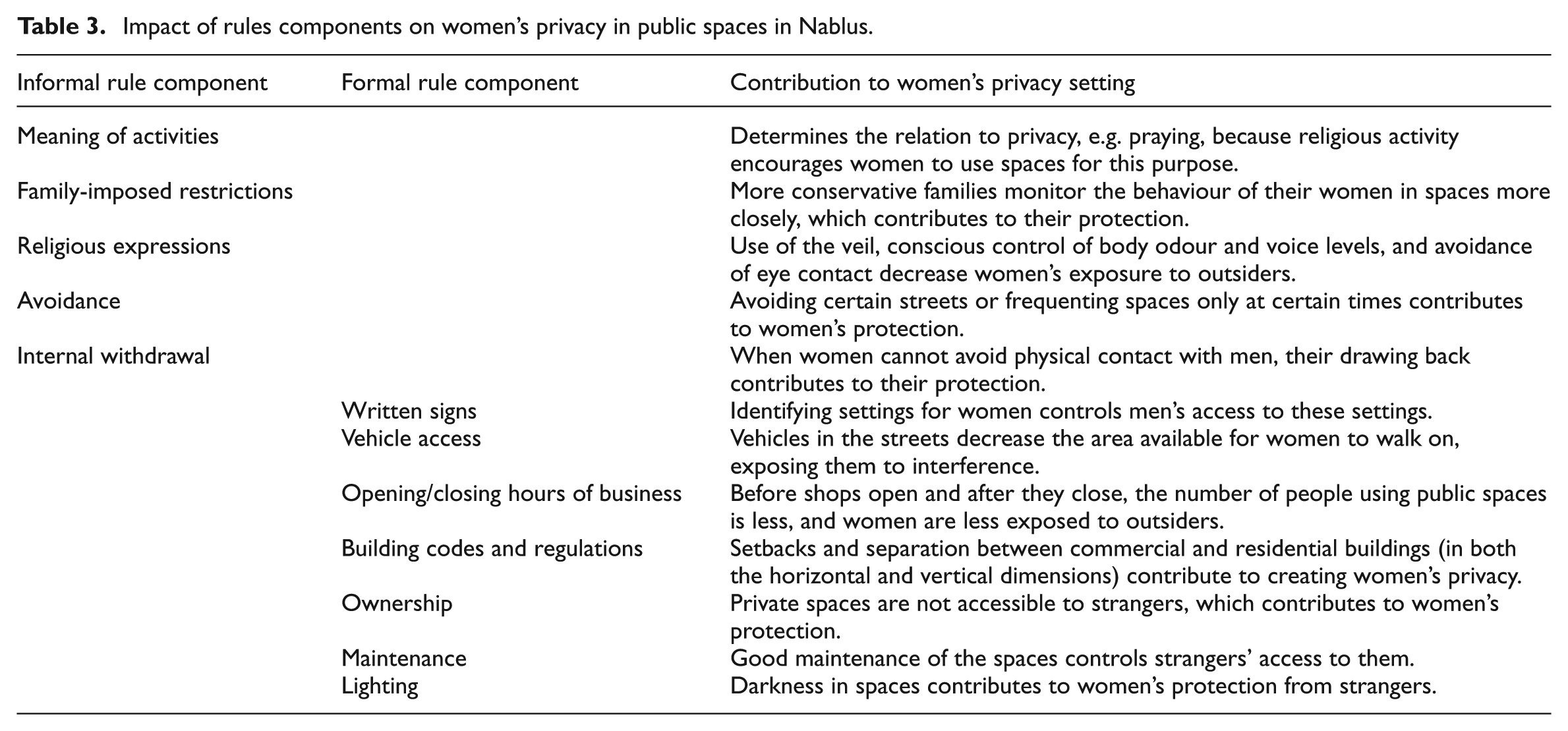
The implemented methods provided sufficient data regarding women’s privacy, particularly in relation to its three components. The general results of the observations and interviews are shown in Tables 1 (design), 2 (use) and 3 (rules).
Impact of design components on women’s privacy in public spaces in Nablus.
Impact of use components on women’s privacy in public spaces in Nablus.
Impact of rules components on women’s privacy in public spaces in Nablus.
Based on the observations of the urban design level, women’s settings (residential courtyards, public buildings, dead-end streets and transitional streets) are distributed more evenly and have a more defined layout in the old neighbourhood than in the new one. Streets are distinguished from each other by means of width, physical layout and type of pavement, in addition to their function. Private spaces are separated from the streets, both vertically and horizontally, by means of transitional semiprivate (public) spaces. Women use public spaces for circulation and gathering activities more intensively in the old neighbourhood than in the new one. In the new neighbourhood, however, streets are distinguished from each other mostly by function, in addition to architectural elements. Private spaces are located adjacent to the streets with no intervening semiprivate (public) spaces. However, in both neighbourhoods, women tend to use the busier streets, of a linear form and short length, more intensively than other street types.
On the street level, the women’s settings are distributed more evenly along the streets in the old neighbourhood than in the new one. The streets are narrow, irregular and mainly for pedestrian use; the shops close at six o’clock in the afternoon, and women of different ages use the streets. In contrast, the streets in the new neighbourhood are wide and straight, and most of them are open to vehicle access; the shops stay open until 10 o’clock in the evening, and women between 20 and 39 years old dominate the streets. In both neighbourhoods, the streets are more intensively populated by women on working days and in summer than on holidays and in winter. A large proportion of the women using the streets are veiled (cover their heads but leave their whole face visible), and they move together with other women or with children and insider males.
Usually, men sit on the sidewalks, and shopkeepers display commodities in front of their shops. The residents encroach on the public streets, making changes to the pavements or establishing thresholds on the sidewalks in front of their dwellings.
On the public space level, in the old neighbourhood, the public spaces are generally evenly distributed and easily accessible to women, but those used specifically for recreational purposes (such as restaurants, sport facilities and parks) are limited or non-existent; the doors and windows on opposite sides of streets are intentionally offset – that is, located along different lines of sight. The women’s settings in public spaces are generally smaller, darker and less maintained compared to the new neighbourhood; males avoid gazing at or entering women’s settings in public spaces because many women do not wear a veil inside the courtyards or on dead-end streets. In the old neighbourhood, women use the public spaces more frequently and for longer periods of time compared to the new neighbourhood, where by contrast, the public spaces are more randomly distributed and allow easy access to vehicles. Also, openings are located in a random fashion, and public spaces are generally larger and better lighted and maintained. Many women wear their veils on dead-end streets and even inside the gardens.
Thus, based on these observations, it seems that women’s privacy needs are partially met through urban design components in both neighbourhoods of Nablus. In particular, this appears to be the case in the old neighbourhood on both the urban design and street levels.
The questionnaire survey results show that the various privacy components are, to a greater or lesser degree, important to women in both the old and the new neighbourhood. The use components are more relevant to women’s privacy (Table 4a and Figure 3), and the different privacy components also influence each other (Table 4b).
Statistical results from the questionnaire survey showing the various privacy components in both the old and the new neighbourhood.
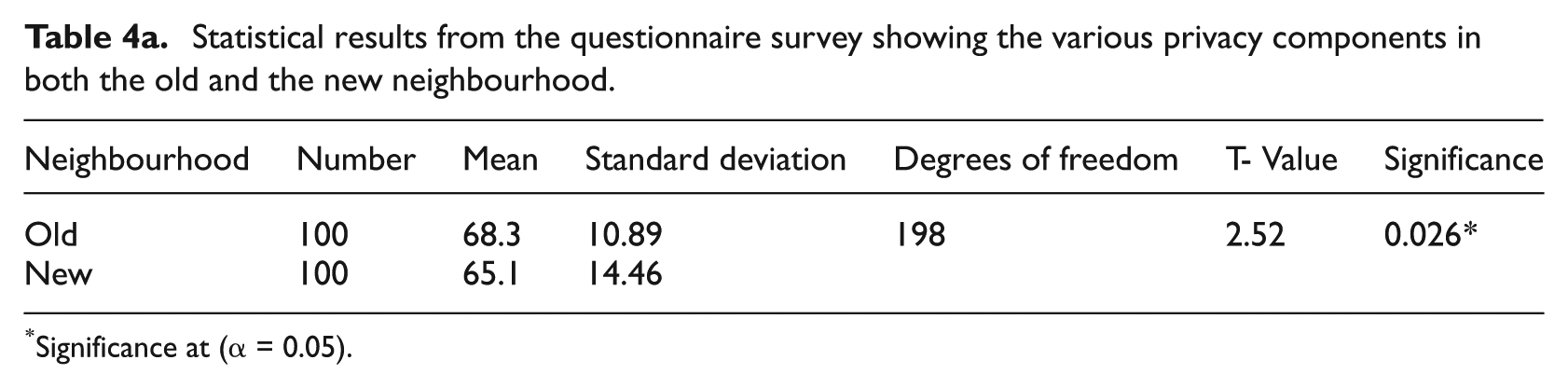
Significance at (α = 0.05).
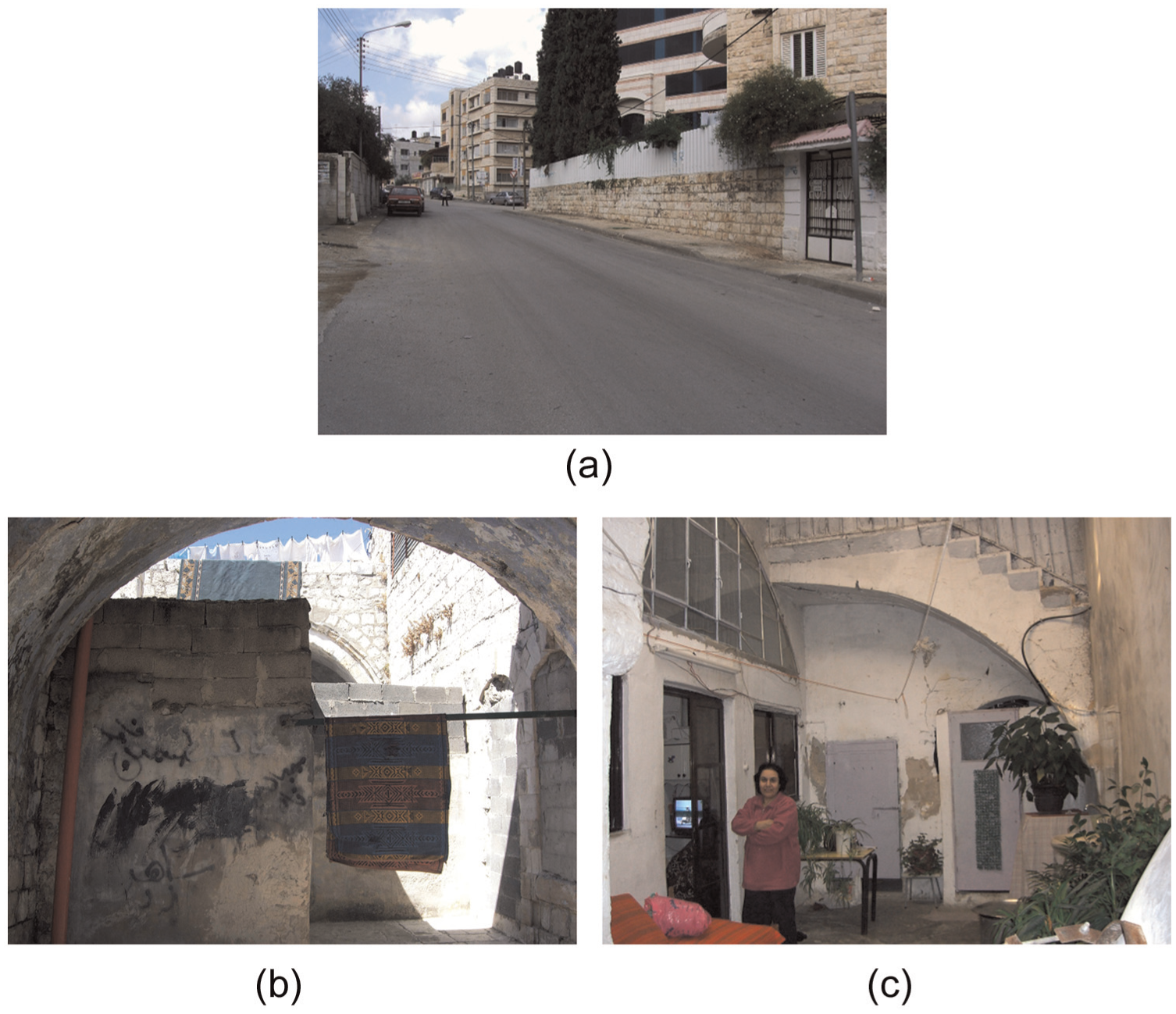
Examples of aesthetic degradation in the physical forms of public spaces due to women’s privacy reasons: (a) an additional barrier above the external walls helps to achieve the desired privacy; (b) a courtyard divided by partitions to accommodate the privacy of various families; and (c) a completely covered courtyard accommodates the required privacy.
Correlation coefficient results on the relationship between privacy and its various components, and between the components themselves.
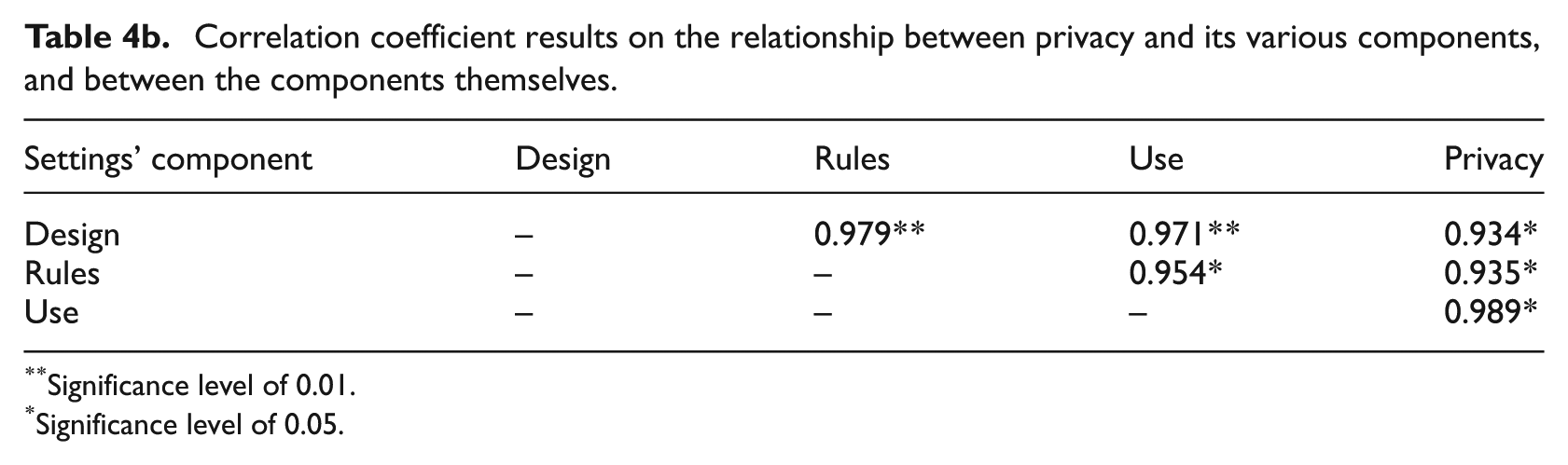
Significance level of 0.01.
Significance level of 0.05.
The interviews, conducted with four categories of people (decision-makers-planners and architects, property owners and managers, religious leaders and insider males), provided the following results:
Decision-makers, both male and female planners, fail to differentiate between men’s and women’s needs in their design work. Besides, men continue to manage the design of public spaces, both numerically and with regard to the decision-making power.
Owners and managers of public spaces (parks, restaurants, etc.) create special spaces for women and families to encourage the use of their facilities and to increase the number of customers. Owners and managers of semiprivate residential spaces (i.e. the inhabitants) also create changes in the physical form of adjacent public spaces to obtain privacy, protect their homes against climatic influences, obtain additional space, and avoid problems with neighbours, causing aesthetic degradation in the physical form of these spaces (Figure 4).
Religious leaders do not see any contradiction between women’s use of public spaces and privacy rules. They encourage women’s use of public spaces for necessary purposes only rather than for recreational ones. This use should not cause the women to neglect their family responsibilities and should have the permission of their insider males. Also, religious leaders relate women’s privacy to the realm of behaviour rather than to the physical environment.
Insider males strongly appreciate women’s behaviour in public spaces, specifically the women’s appearance (dress), the spaces they use and the time of such use. Further, their answers show that they influence women’s attitudes towards privacy rules.
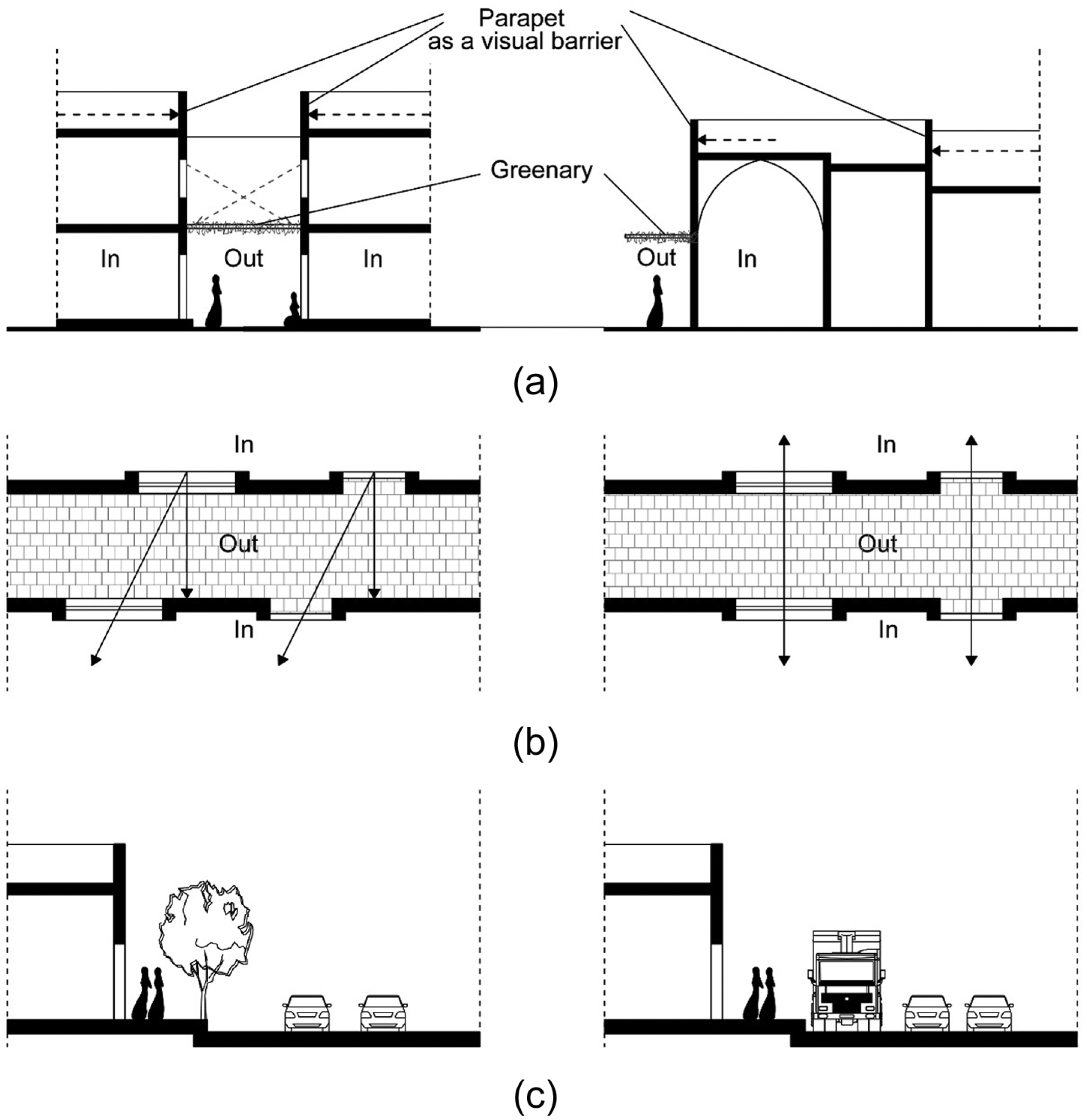
Examples of suggestions for developing public spaces to support women’s privacy: (a) plants covering the courtyards and physical barriers between the roofs assist to control visually and physically the access to the courtyards; (b) opposite windows and balconies located on different sight lines support privacy more than opposite windows and balconies located on the same sight lines; and (c) sidewalk separated from the street by physical barriers supports privacy better than sidewalk lacking physical barrier.
Discussion
The fieldwork showed that the urban design of Nablus does not differ in any significant way from that of many other cities in the Arab-Muslim world. Therefore, it is not necessary that all of its traditional neighbourhoods provide privacy adequately, as many scholars have explained (Akber, 1988; Al-Hemaidi, 2001; Bianca, 2000). At the same time, the more modern neighbourhoods can provide privacy by applying new standards, parameters and understandings of creating and practising privacy.
The fact that women’s privacy is reflected in both neighbourhoods, old and new, simply highlights the fundamental importance of women’s privacy for the society of Nablus, where the majority of inhabitants are Arab-Muslims who are heavily influenced by the notion of women’s privacy in everyday life. Hakim (1983) explained that values are maintained and reinforced by the predominant religion or ideological system. Thus, in Nablus nearly all public behavioural and social habits are influenced by Islamic values, including those related to women’s privacy. The observations and interviews show that many behavioural mechanisms used by women to achieve privacy in public spaces are related to Islamic values, such as wearing a veil, moving in groups either with other women or with insider males, and participating only in common and necessary activities. In addition, an examination of women’s attitudes towards cultural (informal) rules shows that religious rules have a greater impact on women’s privacy than purely societal or family rules might have.
The analysis also showed that women hold a variety of views towards Islamic religious rules. Nearly half (46.3%) of the female respondents consider privacy rules as very important and fixed. They firmly believe that women should be separated from men, and thus they embrace the rules restricting their behaviour and activities in public spaces. Over 30% (30.8%) of the women consider privacy rules as important; they view these as dynamic rules that do not conflict with modernisation, particularly because Islamic rules overall are not fixed values but dependent on the situation, while the remainder of the respondents (22.9%) consider privacy rules as not important, viewing them as restrictive, oppressive and in conflict with modernisation and women’s liberation. Therefore, they do not adhere to the privacy rules but rather behave according to their own beliefs.
In addition, the degree to which women are influenced by Islamic values differs noticeably according to their place of residence. The women living in the old neighbourhood are influenced by Islamic values to a higher degree than those who live in the new neighbourhood. In the old neighbourhood, where buildings are closely joined to each other, women are more concerned about auditory and olfactory privacy compared to those in the new neighbourhood, where buildings are more separated.
The results also show that the defined types of privacy components affect women to different degrees; specifically, the use components are more relevant to women’s privacy than the design and rules components. This can be seen as connected to the interrelation between the privacy components and the components of the setting. For example, women might achieve their sense of privacy through any one or more of these components, depending on their individual privacy needs. Thus, the reason why the use components are more relevant to women’s privacy is seen as related to the inadequate privacy level in women’s settings in public spaces.
Our analysis also shows a high positive correlation between privacy and its components, indicating that all components are relevant to women’s privacy. The ‘design’ components, for instance, affect and are affected by both the rules and use components. Based on the observations and interviews, the fulfilment of women’s privacy only through the informal rules, which govern the people’s way of life, negatively influences the aesthetic quality of public spaces (Al-Hemaidi, 2001; Eben-Saleh, 1998), the women’s urban and public life (Nooraddin, 1998), the women’s level of comfort (Newman, 1972), the women’s security (Jacobs, 1961) and the cultural continuity (Rapoport, 1980).
The ‘use’ components also affect and are affected by the design and rules components. The fulfilment of privacy needs through the use components encourages women’s adaptation (Rapoport, 1980). The results of the observations and interviews show how the women in both neighbourhoods change their attitudes towards privacy rules to cope with their physical environment. They also illustrate that in public spaces that do not meet women’s privacy needs, women either adopt different behavioural mechanisms, such as wearing a veil and staying together, or simply avoid using the spaces except for necessary purposes. In other words, women adjust their behaviour to preserve their privacy. In addition, the observations and interviews with the owners and managers of public spaces show how they adapt the physical form of public spaces to meet women’s needs for privacy in these spaces.
The ‘rules’ components similarly affect and are affected by the design and use components. Meeting privacy needs through the rules components formally restricts the use of the space and does not maintain the continuity of architecture (Parke and Douglas, 1979). In the city of Nablus, where women’s privacy continues to be a topic of debate, privacy issues seem to be important to a large number of women. In such an environment, women’s behaviour in public spaces is thus restricted by rules, precisely because the physical form of these spaces does not provide women with the required level of privacy. Conversely, when planners and architects design and develop public spaces, their consideration of privacy rules could enhance women’s urban and public life.
Conclusions
This study provides important findings that answer the major question posed at the outset regarding the relationship between women’s privacy and the physical form of public spaces in Nablus. These findings show that there is a relationship between women’s privacy and both women’s behaviour and the physical form of the space in both the old and the new urban designs of Nablus and that women’s privacy is met in a variety of ways through the design, use and rules components, although several studies mentioned in this research failed to mention how women’s privacy needs influence their behaviour, which differs from one cultural context to another.
The results demonstrate that women’s privacy needs are met in both the old and the new neighbourhoods through the three distinct components: design, use and rules. Generally, the old neighbourhood fabric meets women’s privacy needs by means of urban design concepts: the even distribution of public spaces, street networks (alternative access points), angled and deeply recessed entrances, differences between pavement and floor levels, elevated and screened windows, opposite openings (doors and windows) offset along different lines of sight, perpendicular intersections between transitional and main streets, transitional spaces in both the vertical and horizontal dimensions, the irregular layout of streets, well-defined spaces and uses, social relations only between users who are relatives, behavioural mechanisms related to religion (religious expressions), and certain spaces defined for women only (through written signs) or limited to pedestrian use. Meanwhile, in the new neighbourhood, women’s privacy in public spaces is achieved primarily through the width of spaces; the placement of walls, partitions, curtains and plantings; setback areas between buildings; private ownership of gardens; written signs; vehicle access (particularly private cars); good maintenance; religious expressions; and infrequent and short-duration use of public spaces. Thus, women’s privacy is achieved primarily through social and cultural components, which in turn influence the physical components of public spaces.
Although it is possible to analyse and influence privacy issues exclusively through urban design components, it is at the same time important to consider all of these components and the relationships between them in the process of designing and developing public spaces. On the other side, ‘privacy’ is a variable factor that can be expressed and practised in different ways in any given area in response to both urban and architectural designs. The most important point is to clarify how both old and new urban designs of Arab-Muslim cities meet women’s privacy needs at present, which is vital for developing better urban designs that support women’s present need for privacy.
The theory developed in this study builds on this particular configuration of factors and investigates it in relation to the components of the setting; as follows:
The relationship between design and rules suggests that architects and planners should incorporate the rules concerning women’s privacy into building codes and regulations (formal rules) so that women’s privacy becomes a specific and intentional urban design concept.
The relationship between design and use is another aspect that architects and planners need to know; mainly, how the design can achieve appropriate and convenient use.
In the relationship between rules and use, rules, in practice, are not always interpreted in a set, consistent manner but rather can be subject to reinterpretation over time. Moreover, not all women behave in the same way at any given time, depending on their values. This was reflected in the results showing how women hold a variety of views towards Islamic religious rules (very important, important and not important). Therefore, architects and planners need to be aware of the changes and trends in this area.
Finally, the findings of this study can be used as a basis for developing more effective design strategies for public spaces not only in Nablus in particular but also in Arab-Muslim cities in general. They might inspire further research pertaining to the subcomponents of women’s privacy, including but not limited to: the shape/form of the space, the various objects in the space (furniture, plantings and pavements), the activities conducted in the space, the social status of women, and the formal and informal rules that govern the use of the urban space.
Footnotes
Funding
This research received no specific grant from any funding agency in the public, commercial or not-for-profit sectors.