



Abstract
With high urbanisation rates, cities in sub-Saharan Africa are contending with food insecurity.
Urban studies scholars have approached the issue mainly from the perspective of food deserts. We adapt Sen’s ‘resource bundles’ and Watts and Bohles’s ‘space of vulnerability’ concepts to examine food insecurity as a function of both tangible and intangible resources. Moreover, we also interrogate the role of kin in strengthening safety nets for the urban poor. Drawing on a data set of 462 single mothers in a slum in Nairobi, Kenya, we find that (1) bundles comes in four types; (2) bundles with high levels of all resources buffer against food insecurity as do (3) bundles weighted with high levels of wealth and social standing; and (4) kin enhance the protective effect of bundles only for two types. These findings should direct urban poverty researchers to consider the compounding effect of resources in the reproduction of poverty and social inequality and encourage policy makers to focus on both vulnerability and resilience in designing interventions to ensure food security.
Hunger and food insecurity, long seen as defining features of rural African contexts, have become increasingly visible amongst urban households in low-income communities in cities across the continent (Smit, 2016; Verpoorten et al., 2013). Indeed, the African Food Security Urban Network (AFSUN) and the Hungry Cities Partnership (HCP) were formed specifically to address these challenges. Food insecurity is commonly defined as inadequate quantity and/or sub-optimal quality of food. High and volatile food prices (Ahmed et al., 2007; Devereux, 2016) coupled with challenges of access, changing consumption patterns (Crush and Battersby, 2016) and lack of stable employment create optimum conditions for such insecurity in urban spaces. Moreover, the focus of scholarship on urban food insecurity in Africa has shifted from the role of the state in response to massive food shortages in the 1970s to a question of access for the individual attempting to manage myriad challenges of securing a livelihood (Maxwell, 1999). In an attempt to integrate both access and political economy, we draw on Sen’s (1981) highly influential ‘resource bundle’ concept and Watts and Bohle’s (1993) ‘space of vulnerability’ framework to advance our understanding of the factors that offer protection for low-income single mothers in Nairobi, Kenya. We expand on the resource bundle concept by distinguishing tangible from intangible resources and examine the moderating effect of kin support in buffering against household food insecurity in a slum community. We employ a data set of 462 single mothers and their extended kin to address the following questions: (1) What do resource bundles look like in this community? (2) Does variation in the composition of resource bundles explain risk of household food insecurity? And (3) under what conditions do kin strengthen the resource bundle?
The importance of this work for urban studies scholars can be appreciated in several ways. First, urban livelihoods in Africa have become the focus of much academic and policy interest given the precarity of urban life fed, in part, by the strains on kinship obligations (Bjarnesen and Utas, 2018) and increasing evidence that the ‘urban advantage’ may be overstated (Kimani-Murage et al., 2014a). Food security is not only a critical aspect of individual livelihoods but is a function of local political economy, urban governance and urban planning. Second, despite being the second Sustainable Development Goal, the eradication of hunger requires a nuanced understanding of how rights to basic necessities such as food and water are negotiated within urban spaces (Allen et al., 2006). Lastly, this work unpacks the nuances of resource access and vulnerability amongst single mothers in a slum of Nairobi. Given the substantial changes in marriage and childbearing underway in Kenya (Hetherington, 2001; Jensen, 2015) and elsewhere in Africa (Hunter, 2016), it is essential to understand both vulnerabilities and resilience of this group in order to design effective interventions. Taken together, our work extends the growing literature on the urban poor in Africa by drawing attention to the variation in vulnerability within slum communities and interrogating the value of kinship solidarity in protecting against food insecurity.
Urban food insecurity in Africa
In sub-Saharan Africa (SSA), severe food insecurity is estimated to affect about 22% of the continent’s population with another 52% categorised as moderately food insecure (Food and Agriculture Organization (FAO), 2019) likely to be further exacerbated by climate change (Hendrix and Haggard, 2015; Raleigh et al., 2015) and, more recently, COVID-19 (Corburn et al., 2020). In Kenya alone, nearly 2.6 million people faced food insecurity in 2018 (USAID, 2018). Food insecurity in African cities is primarily a result of rising prices of imported food and declining wages for workers (Cornia and Helleiner, 1994; McCordic and Frayne, 2017; Rakodi, 1995). Moreover, Cohen and Garrett (2010) show how even small increases in food prices have a disproportionate impact on the urban poor partly because they are very limited in their ability to substitute food sources. Driven by lack of access to production, urban residents are almost entirely dependent on buying food, which is difficult when economic opportunities and employment are so fragile (Crush and Caesar, 2014; Emina et al., 2011). As a result, a rise in staple food prices or frequent fluctuations in food prices have profound effects on poor urban populations (Alem and Söderbom, 2012) as they spend an even larger proportion of their limited and unstable income on food (Tacoli, 2017). A recent study using 2012 and 2013 data on the urban poor in Nairobi found that slum residents spent 52% of their income on food purchases, amounting to 42% of total expenditure (Amendah et al., 2014).
Disjointed modernisation and food deserts
Urbanisation rates in sub-Saharan Africa are some of the highest in the world (United Nations (UN), 2018). However, in what could be termed a process of ‘disjointed modernisation’ (Fox, 2014) in which economic and institutional growth cannot keep pace with urban population growth, the benefits do not accrue to everyone. In fact, there is growing evidence that life in cities is detrimental to the health and wellbeing of the poor. Kenya’s impressive efforts to achieve Millennium and Sustainable Development Goals on child health and wellbeing mask uneven success driven by elevated risks for children in low-income urban contexts, a pattern found in other African settings. Whereas the overall probability of dying before the age of 5 years declined nationally from 102.3 per 1000 in 1990 to 49.4 per 1000 in 2015, under-five mortality was 79.8 in slum communities in Nairobi, the capital and economic hub of Kenya (Mberu et al., 2016). Moreover, intra-urban differences are becoming so profound that the ‘urban health advantage’ is likely to be wiped out (Kimani-Murage et al., 2014a). Given the known links between food insecurity and health outcomes (Hetherington et al., 2017; Jones, 2017; Sorsdahl et al., 2011), researchers and policymakers are increasingly turning their focus to the question of food insecurity in urban contexts.
One of the most visible outcomes of disjointed modernisation is the food desert, a poor, urban neighbourhood characterised by high food insecurity, low dietary diversity and lack of healthy food options. Food deserts have long been a focus of urban studies scholarship (Caspi et al., 2012; Hamidi, 2020; Thibodeaux, 2016) and shown to be linked to inadequate nutrition (Dubois and Girard, 2001; Zick et al., 2009). People living in such contexts consume high-calorie, low-nutrition foods in order to meet their required caloric intake because it is cheaper (Darmon and Drewnowski, 2008; Drewnowski and Specter, 2004; Wang et al., 2014). A study mapping food access in Cape Town, South Africa found that supermarkets are located in wealthier areas of the city but are starting to spread into lower income areas (Battersby and Peyton, 2014). Food deserts are, in turn, a function of the larger issue of urban governance of food systems, a relatively understudied issue in the African context. Smit (2016), in his review, concludes that our knowledge base on both the formal and informal processes through which urban food systems operate is very thin. Indeed, Battersby (2012) found many urban poor residents who had access to supermarkets did not obtain most of their food from the supermarkets but used other coping mechanisms such as sharing meals with neighbours or borrowing food. Moreover, street vendors are a very visible and critical source of food in urban Africa (Skinner, 2010) and may even offer a valuable safety net to weather the COVID crisis (Béné, 2020). Therefore, food insecurity is a function of a complex set of factors including access to food outlets, means to purchase food and social relationships. Our analysis is an attempt to advance our understanding of how geographic, economic and social actors come together to offer protection from food insecurity.
Kin as safety net in urban spaces
In contexts marked by economic fragility, support from kin assumes greater prominence in securing livelihoods. However, the ability and desire of kin to provide support have become more contested amidst urbanisation, economic constraints and changing norms related to kinship obligations (Clark et al., 2017; Madhavan et al., 2017). Indeed, the ambivalence of kinship is at the core of Bjarnesen and Utas’s (2018) theory of urban relatedness in Africa. Nowhere is this more apparent than with single mothers who are particularly vulnerable because high levels of unemployment and extreme poverty place them in precarious positions, struggling to pay for food, shelter and other basic necessities critical for the health and wellbeing of their children, without a partner. Recent scholarship from Nairobi shows that nearly 20% of single mothers report receiving no support from kin (Clark et al., 2017). However, there is notable variation amongst single mothers in terms of employment and income (Clark et al., 2019) that renders some women more vulnerable than others, a point often missed in both academic and popular literature.
Kinship also links the lives of the urban poor to their rural brethren, and flows of food and cash occur between family members resident in both locations (Evans and Ngau, 1991; Rondinelli, 1987). There is a rich scholarship on the importance of urban–rural connections through kinship in Africa (Berry, 1993; Curtis, 1995; Ferguson, 1999; Heyer, 1996; Madhavan et al., 2017) which means maintaining a foothold in a rural community even for long-established urban dwellers (Madhavan and Landau, 2011; Potts and Mutambirwa, 1990; Rempel and Lobdell, 1978). Of particular note is Foeken and Owuor’s study (2001) of the role of urban–rural connections to support multi-spatial livelihoods in Nakuru, Kenya. In the past, urban residents might receive visits from rural family members or neighbours bringing food, or they might even bring back food themselves from a visit to their rural ‘homeplace’ (Curtis, 1995). In recent years, the pattern of travel back and forth to rural areas in Kenya has been replaced, at least in part, by mobile technology that facilitates communication and money transfers (Oduor et al., 2014) that allow family members to purchase food in the city. Oucho et al. (2014), comparing past and recent trends, note that rural–urban transfers of money and food were still reported in interviews in 2012 and 2013. More recently, Crush and Caesar (2017) call for greater attention to the bi-directional nature of food remittances in Africa.
Urban residents see these transfers as critical cushions during the precarious period of adjustment to urban life. Kimani-Murage et al. (2014b) have documented the positive role of food contributions from rural family members to alleviate food insecurity in slum households. Kristjanson et al. (2010) employed a unique mixed-methods approach to arrive at estimates of strategies for escaping poverty employed by households divided into five ‘livelihood zones’, one of those being urban. Amongst urban households that transitioned out of poverty, three of the most frequently employed strategies implicated urban–rural connections. However, the obligations to support kin in both urban and rural communities through what Sahlins (1965) termed a process of ‘balanced reciprocity’ is being tested at present given very high rates of unemployment and/or employment insecurity particularly in urban contexts. Moreover, other factors such as environmental degradation and volatile crop prices that are contributing to worsening rural poverty (Serdeczny et al., 2017) are likely to have implications for rural–urban transfers of resources.
Entitlements, resource bundles and the space of vulnerability
There is a well-established literature on food security in sub-Saharan Africa that draws on Sen’s (1981) seminal work on entitlements, one of the first attempts to conceptualise access to sufficient food as a driving factor in explaining extreme hunger or famine. According to Sen, an individual’s entitlement or command over resources is dependent on their original resource bundle, that is, income, wealth, assets such as land and endowments such as educational attainment, all of which can be either transformed into or exchanged for food. Entitlements, in turn, can be categorised as trade-based (buying food), production-based (growing food), own-labour (working for food) and inheritance and transfer (being given food by others). In the context of a slum in Nairobi, trade- and transfer-based entitlements are the most common means of acquiring food. A deficit or decline in entitlements weakens the ability to acquire food and, subsequently, leads to food insecurity. In contexts where the state’s capacity to provide a functioning safety net is limited and urban governance, in particular, is often very weak (Landau, 2018; Smit, 2016) more informal means, namely kinship support, become a critical aspect of the resource bundle (von Benda-Beckmann et al., 1988). For example, Kerr (2005) applied the entitlement concept to examine the history of food insecurity, kinship relationships and gender in Malawi and found that women’s vulnerability is a function of variation in entitlements and, specifically, kinship support. More recently, Sun et al. (2014), examined the role of ‘gifting’ within kinship networks to mitigate food insecurity in rural Tanzania and found that households that made gifts based on large amounts of altruism were worse off than those who did so with low levels of altruism.
Sen’s work has its critiques, most notably Devereux (2001) who took issue with the ‘failure to recognise individuals as socially embedded members of households, communities and states’ (p. 259). In response, Watts and Bohle (1993) developed their model of a ‘space of vulnerability’ that integrates theories of entitlement with empowerment and political economy in order to identify, with greater precision, those who are at risk for experiencing hunger. Empowerment refers to state–civil society relationships usually manifested in the denial of rights and/or political voice, whereas political economy addresses local-level social inequalities brought on by historical and cultural factors. Their approach extols us to pay close attention to the ways in which embeddedness within family/kin groups, community- and state-level structures results in notable variation in power, access and economic positioning. This framework of vulnerability has been applied to analyses of healthcare utilisation in Chennai, India (Ergler et al., 2011), climate change impacts (Berry et al., 2006) and ageing (Schröder-Butterfill and Marianti, 2006).
We bring together Sen with Watts and Bohle to categorise the resource bundle into tangible and intangible assets. Income and wealth are tangible elements that can be utilised directly and immediately to acquire food. Intangible dimensions – type of employment, educational attainment and self-reported social standing reflect relative power differentials and status and can affect an individual’s efficiency in acquiring food and their longer-term vulnerability to food insecurity. For example, employment in the formal sector might offer slum residents additional leverage in accessing high quality food beyond the expected effects of income. This could be because of the location of employment that may offer more dietary options or because of increased credit. A study on the use of informal credit to buy food by Haitian migrants in the Dominican Republic found steady employment to be one factor that added to trustworthiness and borrower’s reputation in the community (Hippert, 2017). Similarly, how an individual perceives her’s and her household’s social status relative to those around her may reflect confidence in accessing food beyond the direct effects of wealth itself.
Kin can compensate for deficits in tangible resources and/or enhance the value of both tangible and intangible resource bundles. For example, kin who provide financial or in-kind support augment access to food or mitigate the negative effects of shocks such as job loss that would lead to a deficit in trade-based entitlements. More indirectly, the potential for receiving support from a large number of kin – rather than actual transfers of money or food – could enhance the power of tangible and intangible resources through symbolic ‘exchange entitlements’ and help position people in more advantageous positions within local economies. However, these same individuals, particularly if they are poor, may also increase pressure on individuals to reciprocate, further jeopardising wellbeing (Jakiela and Ozier, 2015). Taken together, tangible, intangible and kinship resources offer slum residents the means to navigate the space of vulnerability within contexts that are marginalised politically and economically relative to wealthier urban and even some rural areas.
Site description, data and methods
This study is set in Korogocho, an informal settlement that shares similarities with low-income urban communities in other African countries. The community, which is considered to be more established than other slums, has a population of about 30,000, fairly evenly distributed by gender (Beguy et al., 2015). Even though formally categorised as an administrative sub-division within Nairobi, it has inadequate basic services including water, sanitation and housing. The closest large grocery store is about 10 km away requiring a taxi 1 or own transport. However, there is a thriving street vendor community offering vegetables, fruit, bread and cooked food that has been shown to be critical to address food insecurity (Skinner, 2010). Meat is available but often too expensive unless accessed through informal credit offered by some vendors. Given the relatively small geographical size of these communities, there is no notable spatial segregation by wealth or ethnicity but, as we show in our analysis, individual-level differences exist and are consequential to wellbeing.
The data for this analysis come from an original empirical study that was nested 2 within the Nairobi Urban Health and Demographic Surveillance System (NUHDSS), an ongoing longitudinal data collection system started in 2002 and administered by the African Population and Health Research Center (APHRC). In the Measuring Kinship Support for Single Mothers study, we developed and tested the Kinship Support Tree (KST) instrument to gather data on kinship structure and support from both co-resident and non-resident kin. We used the NUHDSS as the sampling frame to identify 840 single mothers (neither married nor cohabiting) with at least one child under the age of seven at the time of the study. We focused on this group because (1) single mothers are amongst the most disadvantaged; (2) young children are in need of most care; and (3) resource constraints necessitated limiting our sample. After removing those who were deemed ineligible, had moved away or refused, we were able to interview 462 mothers. Information was collected from the mother about the child’s biological father, maternal and paternal grandparents, aunts, uncles and all siblings (full, step and half siblings). Detailed data on each kin included survival status, location, demographic attributes and quantity and type of support – financial, childcare or emotional – provided to mother and child. Data were also collected on mother’s attributes and household characteristics, including wealth, self-reported social standing and food security. The first wave was administered in June 2015 and re-administered six months later to 412 mothers from the original sample (90% retention rate).We draw on the pooled sample from both waves, which after removing women with missing data, drops from 874 to 783. A detailed description of the design and sampling of the KST project can be found in Madhavan et al. (2017, 2018).
Dependent variable
Our key outcome variable, food insecurity, is based on responses to a question on the frequency of skipping meals. The respondent was asked ‘In the last 4 weeks, have you or anyone in this household gone a whole day without eating at least two proper meals a day’. We arrived at this question through extensive discussions with fieldworkers who are from the site and were, therefore, able to convey the meaning of a ‘proper meal’ in the local context and local language. A proper meal in this community pertains to a meal that is preferably hot and includes a starch such as ‘ugali’, a green vegetable such as sukkuma wiki and some source of protein. While there is some variation in the specific food choices across ethnicity, there is general consensus on the food groups. While we cannot rule out some level of subjectivity in the responses, having community members advise on the question construction ensures similar understanding of the question across respondents. The responses were categorised as: never, rarely, sometimes, and often. Following the lead of other food security analysis in the site (Mutisya et al., 2015), we collapse the four categories into a dichotomous variable with 0 representing food security (never skipped) and 1 representing insecurity (any level of skipping). While we recognise that this measure is not as sophisticated as others that are in use (Ashby et al., 2016; Cafiero et al., 2018), we justify its use because this analysis is primarily a proof of concept of the tangible and intangible bundles categorisation. Moreover, when we examined the correlation between the original four categories and the dichotomous measure and women’s self-reported stress, women’s self-reported health status and child’s health status, we found all the relationships to be in the expected direction. 3 Lastly, we carried out a sensitivity test collapsing the original categories as follows: 0 for never or once/twice and 1 for once or more than once a week. The results did not change.
Explanatory variables
The key explanatory variables fall under two categories: tangible and intangible resources. Tangible includes income operationalised as a three-category variable and household wealth based on asset scores converted to wealth quintiles. Intangible resources include type of employment (none, formal and informal), self-reported social status measured using a wealth ladder for the respondent to place her household relative to others (1–10), and educational attainment (less than secondary or completed secondary). The role of kin is operationalised through the number of functional kin (defined as those who provide either financial, in-kind or childcare support) and number of potential kin (defined as those who are known to be alive and over the age of 12 and therefore in a position to provide support). While functional kin, a subset of potential kin, captures actual resource transfers, potential kin reflect intangible benefits associated with enhanced status and power but also liabilities incurred from the obligation to provide support.
To understand how these individual tangible and intangible resources operate as ‘bundles’, we developed a categorisation of the bundle composition using latent class analysis (LCA). We fit models that extracted from two to five classes using five items each of which was dichotomised as follows: employed versus not employed, two highest wealth quintiles versus lower three wealth quintiles, attained secondary level or higher education versus less than secondary, Ksh5000 or more household income versus under Ksh5000 and self-reported social standing in 4–10 range versus in 1–3 range. These items were then evaluated for model fit using the Bayesian Information Criteria (BIC) statistic, the various log-likelihood function statistics, the summary classification statistic (entropy), and the individual item probabilities by class. The 4-class solution fit the data using the Pearson Chi-Square statistic (p = 0.108) as opposed to the 3-class model for which there was no model fit. We also found the overall classification power of these two class structures (entropy) to be virtually the same. Taken together, we decided to retain the 4-class solution.
Methods
We used logistic regression models to examine the relationship between different tangible and intangible resources and the odds of experiencing household food insecurity. The unit of analysis is the household with the mother as respondent. To isolate the role of kin, we ran separate models with and without measures of functional and potential kin. Control variables include mother’s age, household size and mother’s ethnicity. To address the nested structure of the pooled data we use the cluster command in STATA to correct for correlated standard errors for those respondents appearing in both waves of the survey. For the bundle analysis, we calculated the predicted probabilities of experiencing food insecurity by type of resource bundles (extracted from the LCA) keeping other variables at their mean and controlling for functional and potential kin. Lastly, we examined the moderating effects of kin by stratifying the predicted probabilities by number of functional and potential kin.
Findings
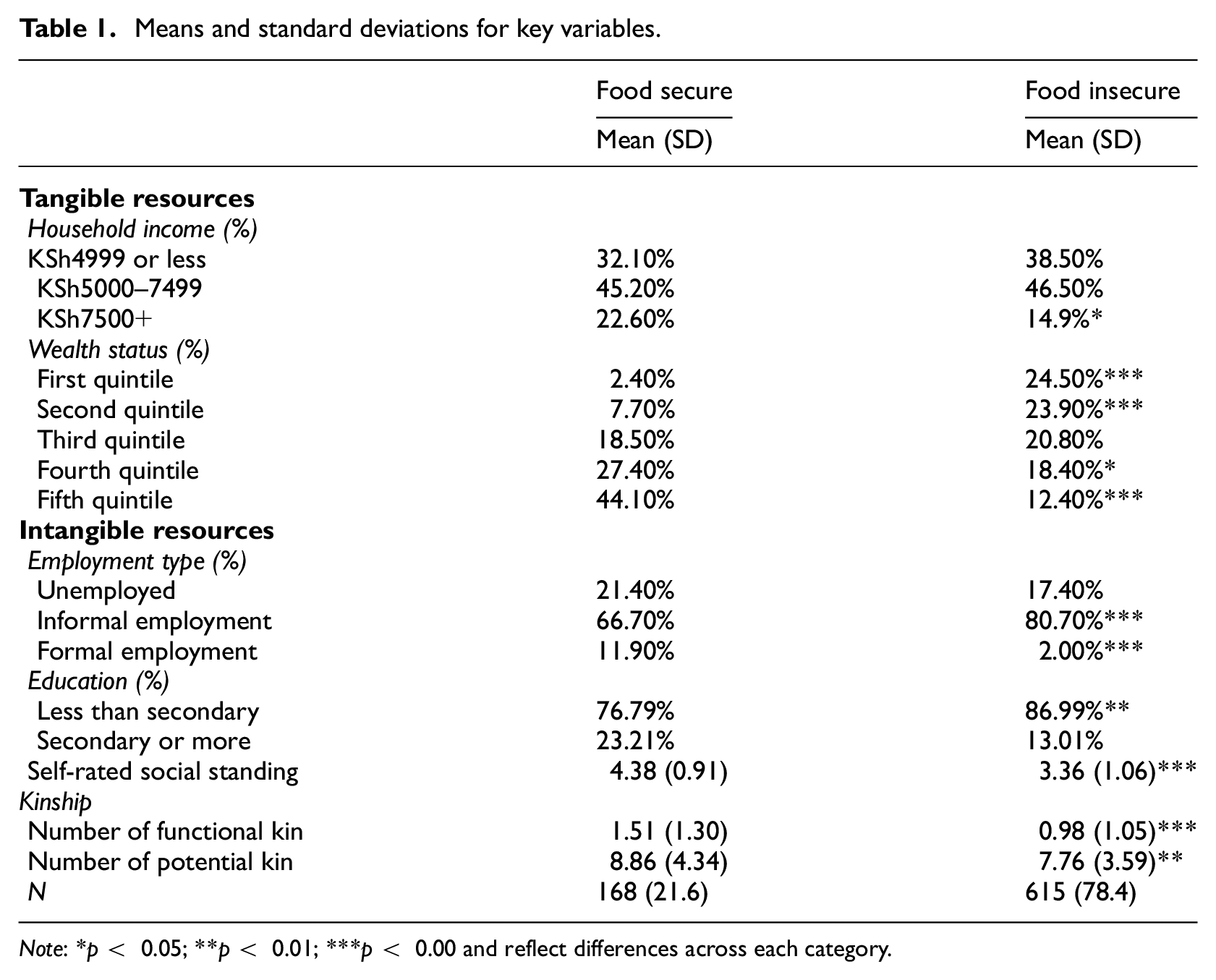
The vast majority of respondents (78.5%) reported being food insecure. In response to the question about going without eating two proper meals in a day over the past month, 35.4% responded once or two times, 23.6% once a week and 19.5% said more than once a week. Table 1 shows means and standard deviations of each of the tangible and intangible resources and functional and potential kin stratified by food security status.
Means and standard deviations for key variables.
Note: *p < 0.05; **p < 0.01; ***p < 0.00 and reflect differences across each category.
There are significant differences in both tangible and intangible resource bundles for those categorised as food secure and insecure in the expected direction. Household income is significantly different across groups only at the highest level. Looking at wealth quintiles, just under 50% of food insecure respondents fall into the lowest quintile compared with only 12.4% of those who are food secure. The differences in employment type are notable. Food insecure women are more likely to be employed in the informal sector than their food secure counterparts but no less likely to be unemployed. This is interesting because food vending tends to be one of the most common types of informal employment for women (Clark et al., 2019) but these results suggest that women are not using their stocks of food to moderate food insecurity. Conversely, food secure women are more likely to be formally employed compared with food insecure women. Food secure respondents are also likely to be more educated than food insecure respondents and report higher scores for social standing. Lastly, food secure mothers have 50% more functional kin (1.5 versus 1.0 functional kin members) and a larger number of potential kin. To examine these differences in a multivariate framework, we turn to the regression models.
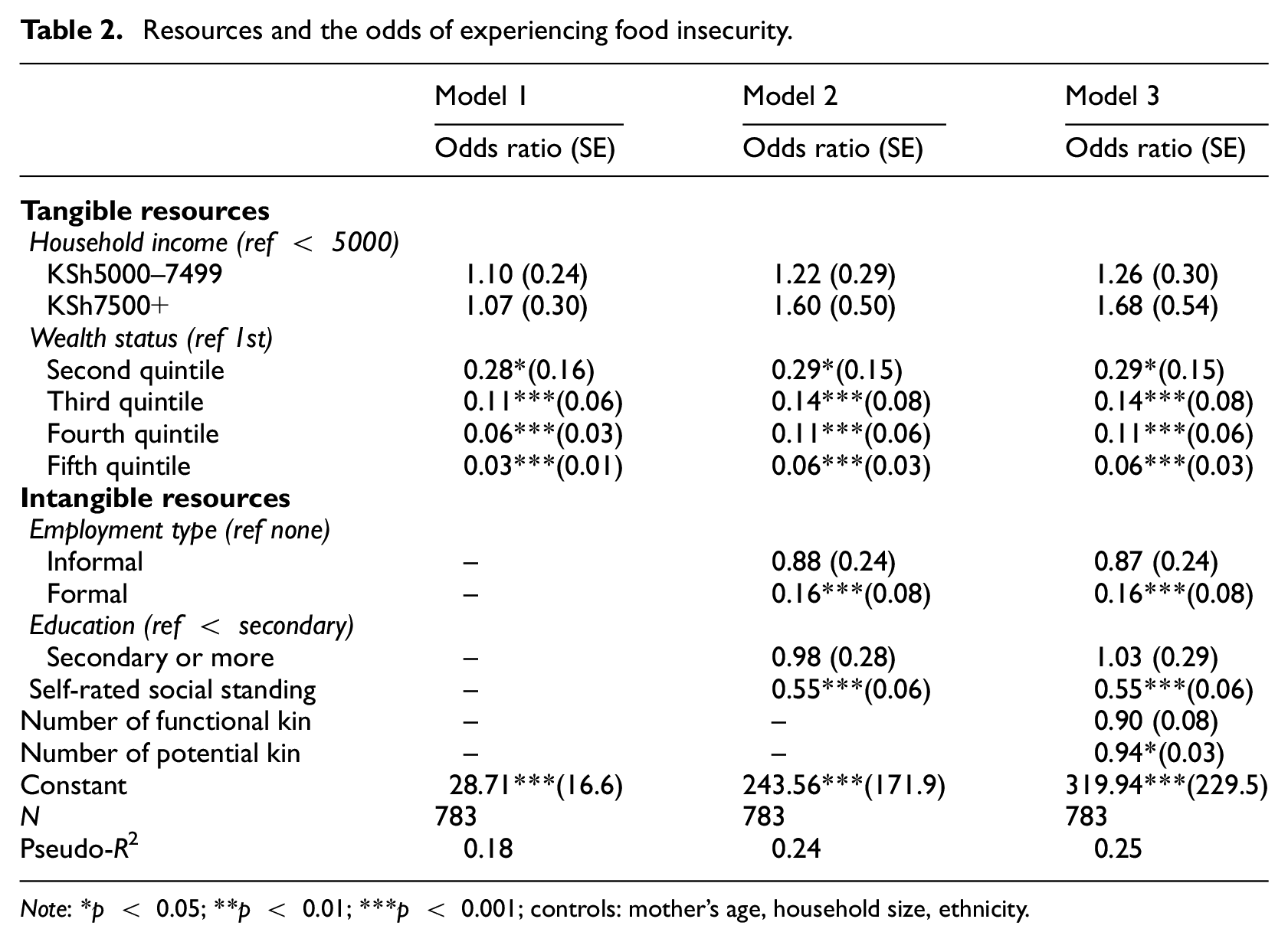
Table 2 presents the results from three logistic regression models examining the relationship between each of the tangible and intangible resources and odds of food insecurity. To isolate the effect of kin, we present models without (Models 1 and 2) and with (Model 3) kin measures.
Resources and the odds of experiencing food insecurity.
Note: *p < 0.05; **p < 0.01; ***p < 0.001; controls: mother’s age, household size, ethnicity.
Consistent with the bivariate results in Table 1, household income has no significant effect in any of the models. Wealth status, on the other hand, is highly significant particularly at the higher quintiles. Being in the highest quintile reduces the odds of food insecurity by 97%. None of the control variables (not shown) are significant. These results suggest that income may be too volatile in this context to offer any significant protection from food insecurity whereas asset-based wealth status is a more reliable form of capital. It may also reflect some reverse causality in that those who are food insecure are the ones who need to work. The inclusion of the intangible resources in Model 2 does not alter the wealth effect. Formal employment reduces the odds by 84% net of tangible resources and an increase in self-reported social standing lowers the odds of food insecurity by 45%. Model 3, the full model, shows that the number of potential kin offers some benefit with a 6% reduction net of all other factors including functional kin, which is not significant. Taken together, these models tell us that both tangible and intangible resources matter but kin – either potential or functional – does not appear to be a critical resource. In ancillary models not shown, we included functional kin as a proportion of potential kin and found no difference in the results. We now move to findings from the analysis of resource bundles.
Resource bundles and food insecurity
Table 3 shows the item distribution for each of the four bundle types extracted from the LCA along with the frequencies and most likely probabilities of class membership.
Class frequencies and item distribution by class.
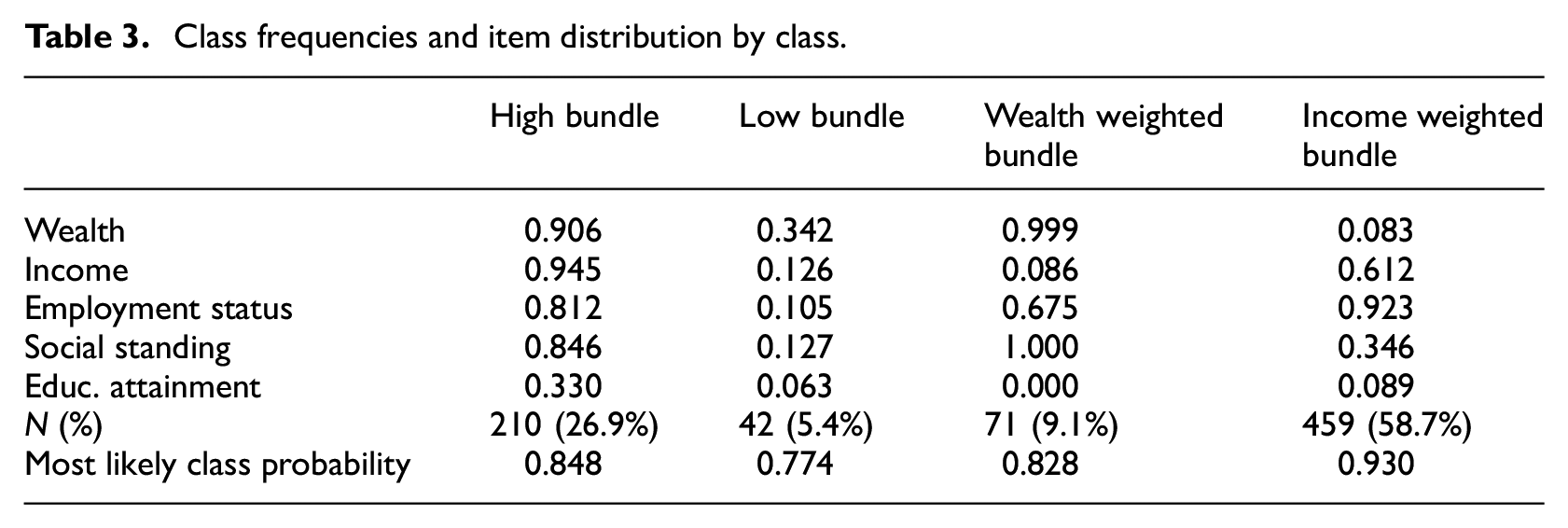
The ‘high’ bundle reflects having high probabilities of being in the higher level on all five items while the ‘low’ bundle is indicative of the opposite. Interestingly the most common bundle is ‘income weighted’ which refers to having a very high probability of having an income over Ksh5000 and being employed but much lower probability on wealth and other items. The last type, ‘wealth weighted’, reflects having a high probability of higher wealth and self-reporting high social standing but relatively low levels on the other items. The high values of the ‘most likely class probabilities’ increase confidence in the internal validity of the LCA. Figure 1 shows the probabilities of experiencing food insecurity across the four classes.
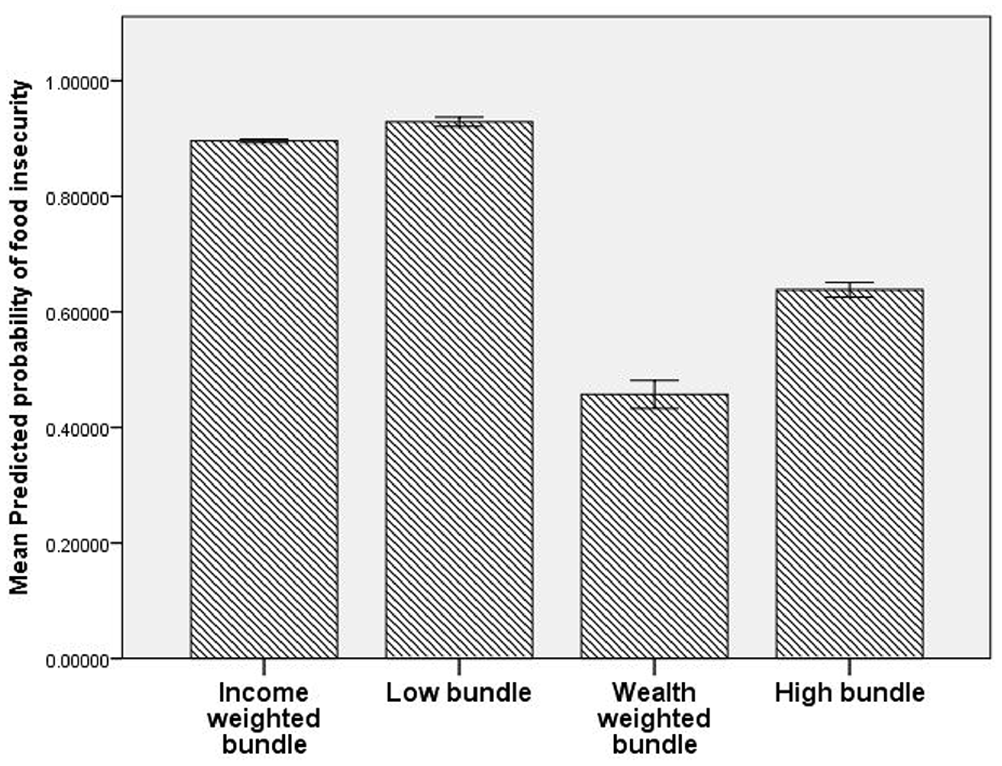
Predicted probability of experiencing food insecurity by bundle type.
Interestingly, the bundle type that offers the most protection against food insecurity is the wealth weighted bundle (42%) followed by the high (62%) type. The confidence intervals confirm that these are significantly lower than being in the low (92%) and income weighted (85%) bundles. The notable finding is that having a bundle with very high levels of two resources – wealth and social standing – is actually more beneficial than having a bundle with relatively high levels of all five resources. This suggests that the cumulative effect of specific tangible and intangible resources is more consequential than having high levels of all tangible resources. Further, it suggests that the perception of own social standing belies symbolic and actual power that can be effectively channelled to protect against food insecurity. To understand the extent to which kin make a difference either as an enhancement or compensation for the bundles, we show predicted probabilities of food insecurity by bundle type varying the levels of functional (left side) and potential kin (right side) in Figure 2. Functional kin groups are 0–1 for low and 2+ for high. Potential kin categories are 0–7 for low and 8+ for high.
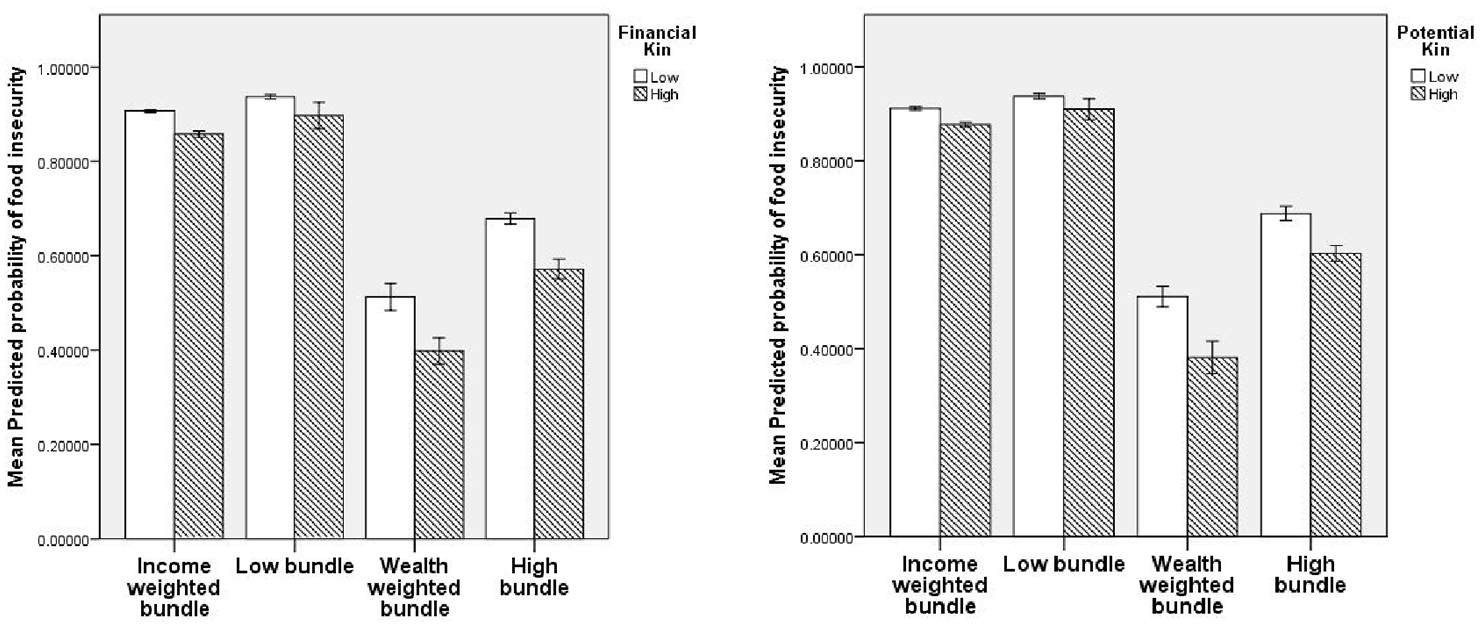
Predicted probability of food insecurity by bundle type varying levels of functional kin (left panel) and potential kin (right panel).
The biggest benefit of having more functional and potential kin is apparent for those with wealth weighted and high bundles. Women in both categories who have 2+ functional kin experience a further 10% reduction in the probability of food insecurity compared with their peers who have 0 or 1 functional kin. By contrast, the difference by number of functional kin in the low and income weighted groups is only about 2%. A similar story is apparent for potential kin. In short, there appears to be no compensating effect of kin for deficits in resource bundles and the moderating effect of kin is only apparent for those who already have high levels of certain resources.
Discussion
Food insecurity is a growing concern in recently urbanised contexts in many sub-Saharan African countries. Driven by unemployment, chronic poverty and dependence on the caprices of food prices, low-income residents face formidable challenges in ensuring both quantity and quality of food. However, as our findings show for a slum context in Nairobi, there is substantial variation even within a marginalised population. While the vast majority of single mothers in our study reported being food insecure they, nonetheless, exhibit variation in the composition of their ‘resource bundles’ which, in turn, has an impact on the odds of being food insecure. Specifically, we have shown that (1) there are four distinct types of resource bundles; (2) bundles that have high levels of all resources buffer against food insecurity but (3) the key drivers are high levels of wealth and social standing; and (4) kin enhance the effect of resource bundles in protecting against food insecurity only for bundles that have high levels of wealth and social standing.
The appeal of the bundle concept is that it offers a way to reflect concentration of advantage or disadvantage in urban settings. This is because the components of the tangible and intangible bundles are highly correlated, that is, those in formal employment are likely to have higher income. The clustering of attributes into ‘bundles’ offers a convenient way to highlight variation within marginalised spaces and the reproduction of inequality within these settings. Rather than view low-income settings as uniformly vulnerable, our findings underscore the value of a more nuanced approach that considers a range of factors that help identify, with finer precision, the contours of food vulnerability in the present and the future. Echoing earlier work of urbanists in the US context (Drake and Cayton, 1970) who criticised their colleagues for paying inadequate attention to social hierarchies within the Black community, our findings underscore the need to consider differences rooted in resources, power and political economy that make a difference to food security. The highly circumscribed role of both functional and potential kin support is a notable finding that challenges long-held views of the importance of extended families and connections over rural and urban spaces in Africa. There are several possible explanations. First, in line with scholarship that views urbanisation as loosening kin-based obligations (Aboderin, 2004; Cliggett, 2005), expectations to receive and obligations to provide support may be muted. In fact, the ubiquity of mobile phone connectivity may inadvertently be weakening ties by easing the pressure to visit in person. Second, even where support from kin is present, it is likely to be extremely limited given economic precarity and employment uncertainty. Moreover, whatever support is provided is unlikely to make much difference to purchasing power in urban contexts. Third, kinship support for single mothers may be particularly weak because of union instability and contentious relationships with natal kin and child’s paternal kin.
This analysis has several limitations. The sample only includes single mothers of young children in one slum community in Nairobi, which limits generalisability. Kinship may have very different implications in households where the mothers are married or cohabitating but the fact that it does not offer significant benefits for those who need it most – single mothers – should be a cause for concern for policy. Moreover, the effects may look different for single mothers of older children who are less reliant on adult care. Second, the food insecurity variable only takes into account one aspect of food security – skipping meals; we have no data on nutritional quality, dietary diversity or the amounts consumed. Indeed, we may be overestimating food insecurity because of the reliance on only one dimension. Third, our focus on kinship obscures the potential benefits from non-kin ties. We included a question on ‘other sources of support’ in our survey, which yielded surprisingly few reports of such support. However, more research should be done to incorporate non-kin support, which may be offered in the form of temporary credit from vendors. Finally, because this is cross-sectional, we recognise the possibility of reverse causality between food insecurity and the bundles. For example, having food security could facilitate a successful search for formal employment. Future research should draw on longitudinal data to build a dynamic model incorporating time varying characteristics of resource bundles and subsequent food security. Despite these issues, the findings from this analysis should spur more research on resource bundles and food insecurity in other low-income urban settings in Africa to test the validity of the concept and the reliability of the measures. It should also be possible to apply our bundle approach to other outcome variables such as health and education.
Footnotes
Acknowledgements
We are indebted to Mike Bader for his feedback on earlier drafts of the article and to Mike Wagner for his assistance with the statistical analysis.
Declaration of conflicting interests
The author(s) declared no potential conflicts of interest with respect to the research, authorship, and/or publication of this article.
Funding
The author(s) disclosed receipt of the following financial support for the research, authorship, and/or publication of this article: We gratefully acknowledge support from the Eunice Kennedy Shriver National Center for Child Health and Human Development grants 1R21- HD078763-01A1 and P2C-HD041041 to the Maryland Population Research Center.
