




Abstract
How do emotional responses associate with urban behavior amid ecological and political disruption? This study explores the emotional, cognitive, and institutional factors associated with urban reactive behavioral intentions during escalating human–wildlife encounters, focusing on wild boars in Haifa, Israel. Using a large-scale survey with visual stimuli designed to evoke emotional responses, we elicited emotions—fear versus empathy and indifference versus curiosity—and measured two outcomes: immediate spatial response and civic reporting (calls to the municipal 106 hotline). Findings show that fear mediates the link between perceived harm and urban reactions, while curiosity and perceived good local governance moderate this relationship. Curiosity, unexpectedly, amplified both fear and behavioral intentions response. Perceived good governance mitigated physical expressions of fear in public space but had limited impact on civic reporting. Emotional responses also shifted depending on visual framing, emphasizing the role of public communication. This research advances understanding of emotional infrastructure in cities and informs adaptive urban governance by linking environmental risk, emotion, and institutional trust.
Introduction
In many cities, encounters between humans and wildlife are becoming increasingly frequent as animals adapt to dense urban environments and ecological boundaries shift (Acuto et al., 2018; Wolch et al., 2000). Such encounters shape how residents perceive safety, interpret public space, and evaluate municipal performance. Urban expansion, habitat fragmentation, and abundant anthropogenic food sources draw adaptable wildlife into streets, parks, playgrounds, and residential courtyards (Lowry et al., 2013; Rupprecht, 2017). Consequently, human–wildlife interactions are increasingly recognized as social and political issues embedded in everyday urban life.
Multiple academic fields have examined parts of this phenomenon, yet their insights remain fragmented. Environmental psychology shows that risk perceptions shape emotional responses and behavioral tendencies during human–wildlife conflict (Fischer et al., 2018a; Kansky et al., 2014). Urban sociology demonstrates that emotions influence how people navigate city spaces and react to unfolding urban events (Bridge, 2004; Papagiannaki et al., 2017). Crisis studies and political psychology suggest that emotions inform judgments of institutional performance under perceived vulnerability (Halperin, 2011; Pasquetti, 2019; Valli, 2015). Environmental governance research similarly finds that public evaluations of local authorities shape attitudes toward management interventions and affect civic engagement during ecological disruptions (Jürgens, 2022). Yet no existing framework fully integrates these strands to explain residents’ immediate responses to sudden wildlife encounters, particularly when such encounters become emotionally and politically charged.
One conceptual gap is the absence of a unified term for the immediate, short-term reactions residents exhibit when encountering wildlife in the city. Related notions such as avoidance, vigilance, withdrawal, risk aversion, or reporting exist across different literatures, yet they remain fragmented rather than treated as a cohesive category. Human behavior refers broadly to actions individuals perform in response to environmental or social stimuli. Within this spectrum, we propose the concept of urban reactive behaviors: the immediate responses residents enact when faced with sudden wildlife encounters in urban environments. These may include spatial adjustments (e.g. stopping, backing away, detouring), bodily or verbal signaling (alerting others, shouting, gesturing), and civic reporting (calling municipal services or hotlines). This term synthesizes ideas from environmental psychology, urban sociology, and conflict studies into a single analytical category capturing rapid reactions in urban settings.
To understand why these reactions emerge, it is necessary to clarify the emotional mechanisms shaping how people interpret wildlife encounters. Emotions are central to environmental conflicts and influence how individuals cope with threats and engage with unfolding events (Fischer et al., 2018a; Halperin, 2011). Perceived harm triggers emotional appraisals—such as fear, empathy, curiosity, or indifference that guide spatial navigation, risk assessment, and judgments about responsibility for managing the situation (Jürgens, 2022; Kansky et al., 2014). In urban contexts, such emotional responses can shape movement and behavior: fear or concern may prompt avoidance, protective action, or contacting city authorities (Bridge, 2004; Papagiannaki et al., 2017; Pasquetti, 2019). When ecological disruption intersects with political contestation, these reactions may intensify. Residents may interpret wildlife incursions not only as natural events but also as signs of municipal fragility or institutional failure, heightening frustration or anxiety (Beeri et al., 2025; Valli, 2015). Overall, the interplay between perceived harm, emotional appraisal, and immediate behavioral responses remains under-theorized, limiting understanding of how emotional and cognitive processes unfold during urban human–wildlife encounters.
This study addresses these gaps by examining how perceived harm, emotional appraisals, and evaluations of municipal governance jointly shape urban reactive behaviors in human–wildlife encounters. Haifa, Israel, serves as an instructive case: a dense city bordering wild habitats, where wild boars increasingly enter residential areas, governance is contested, and public debate over municipal management is intense. Recent incidents have triggered strong emotional reactions and scrutiny of city policies, making Haifa a suitable context for investigating our questions (Beeri et al., 2025). Insights from this case can inform similar urban settings where wildlife encroachment and political tensions converge.
The study makes three contributions. First, it develops an integrative framework linking perceived harm, emotional appraisal, and immediate urban responses, unifying insights from psychology, sociology, and environmental governance. Second, it introduces urban reactive behaviors as a coherent category of short-term spatial and civic reactions to wildlife encounters, offering a new analytical lens. Third, it shows how emotional responses interact with perceptions of municipal governance in shaping behavior, contributing to environmental governance and political psychology by demonstrating how ecological experience and institutional trust jointly influence citizen action during environmental disruptions.
Finally, although the theory focuses on actual reactive behaviors, the empirical analysis measures behavioral intentions. Using visual elicitation methods commonly employed in environmental and urban psychology, respondents viewed scenarios and reported intended reactions. We therefore distinguish conceptually between behaviors and behavioral intentions while aligning with established methodological practice.
Literature review and background
Urban-wildlife encounters in the Anthropocene era
In the Anthropocene, human activity has reshaped ecosystems, generating sustainability challenges across differing scales (Steffen et al., 2007). As urbanization reduces natural habitats, urban wildlife encounters have increased (Lee and Thornton, 2021), producing new tensions that require innovative coexistence strategies (Hubbard and Brooks, 2021). While many cities maintain strict human–nature boundaries, others adopt multispecies governance models (Shingne and Reese, 2022), reframing the spatial and normative question of whether cities belong solely to humans or also to animals (Sadowski, 2021).
Some scholars and advocates propose viewing animals as co-inhabitants with civic or moral standing, though their political status remains contested. Nonetheless, wild animals frequently compel reactive municipal responses (Hirsch-Matsioulas et al., 2022; Wolch et al., 2000). These encounters are associated with administrative pressures and emotional reactions, particularly under environmental or political strain. Emotional and psychological appraisals, including fear, empathy, and curiosity, shape public attitudes and everyday urban conduct, including civic engagement (Jürgens, 2022; Kansky et al., 2014). Fear may drive avoidance or demands for fencing and patrols, empathy may promote tolerance or opposition to culling, and curiosity may lead residents to document or share encounters. Despite limited policy attention, emotional responses strongly shape how people interpret and react to nonhuman presences. Public support for wildlife governance often hinges on perceived risk, emotional orientation, and political trust (Bourban, 2023; Shingne and Reese, 2022).
When the public perceives high risk from wildlife (e.g. threats to safety, crops, or health), support for aggressive management typically increases, whereas lower perceived risk aligns with greater tolerance and reduced demand for strict controls (Koval and Mertig, 2004). Emotional orientation plays a similarly central role: species that evoke fear tend to receive less public support for protection and more endorsement of control measures, while animals that elicit positive emotions (fascination, empathy) generally garner higher tolerance. Empirical evidence shows that fearful individuals are less willing to fund conservation of large carnivores and more inclined to support lethal responses in conflict situations (Johansson and Karlsson, 2011). Political trust also shapes support for wildlife governance. When people trust managing authorities to act competently and fairly, they are more willing to accept and fund management policies; low trust, by contrast, generates skepticism and opposition to interventions (Beeri, 2025b; Davidovic and Harring, 2020; Stern and Coleman, 2015).
Wild boars as an urban environmental challenge
The presence of wild animals in cities is rising, with species such as raccoons, jackals, pigeons, and even bears adapting to urban life (Treichler et al., 2023). Wild boars (Sus scrofa) have become a particularly salient case, with overpopulations documented in more than 60 cities worldwide, including Haifa, Rome, Berlin, and Barcelona (Beeri, 2025a; Treichler et al., 2023). Native to Europe, Asia, and North Africa, their urban spread stems from human-induced ecological shifts and their strong dietary and habitat adaptability. Although sometimes labeled invasive, their expansion reflects broader anthropogenic landscape transformations (Gisselquist, 2012).
Managing urban wild boars presents a complex global-local governance dilemma (González-Crespo et al., 2018). These intelligent, social animals evoke varied emotions—from awe to fear (Masilkova et al., 2021). In dense urban contexts, such emotions complicate policy responses and are related to both public attitudes and immediate behaviors, such as avoidance, confrontation, or calls to authorities, aligning with urban studies linking emotions to real-time spatial and civic conduct (Bridge, 2004; Papagiannaki et al., 2017). Fear can shift public attitudes by framing wildlife as a threat to safety or order, lowering tolerance and increasing support for restrictive policies (Bourban, 2023; Kansky et al., 2014). It may also lead to immediate reactions, withdrawal from specific locations or proactive reporting to seek institutional intervention (Bridge, 2004; Pasquetti, 2019). Emotional reactions such as fear can shift public attitudes by framing wildlife presence as a threat to personal safety or urban order, thereby lowering tolerance and increasing support for restrictive policies (Bourban, 2023; Kansky et al., 2014). Simultaneously, fear may lead to immediate behaviors such as withdrawal, avoidance of specific locations, or proactive reporting to authorities, as residents seek protection or institutional intervention (Bridge, 2004; Pasquetti, 2019). In contrast, lower-arousal emotions like indifference often result in behavioral inaction, while strong negative affect may even lead to confrontational behavior or demands for more aggressive control. These findings resonate with political science research emphasizing that public responses to local governance challenges are shaped not just by risk perception, but also by affective trust and emotional urgency (Shingne and Reese, 2022).
Although many cities have implemented containment efforts, most success remains limited to rural areas (Treichler et al., 2023). Effective urban strategies must therefore frame the issue not only ecologically but as a governance challenge that interlaces policy credibility, political contention, and emotional public response. Yet the perceptual and emotional dimensions of these conflicts remain insufficiently theorized (Beeri et al., 2025). Research on human–wildlife interactions shows that visible wildlife in everyday urban settings often fuels emotional polarization and civic engagement, shaping perceived risk and safety (Jürgens, 2022; Pasquetti, 2019).
Wildlife visibility in cities frequently triggers divergent emotional and cognitive appraisals. For some residents, sightings evoke fear and heighten vulnerability, particularly when animals are viewed as invasive or linked to disorder, increasing demands for state intervention (Jürgens, 2022; Pasquetti, 2019). For others who regard wildlife as legitimate urban co-inhabitants or as victims of urban expansion, encounters foster tolerance or admiration, motivating civic mobilization in defense of animals or critique of municipal overreach. These polarized responses depend on contextual factors such as prior experience, media narratives, and institutional trust, underscoring that perceived risk and safety are socially mediated rather than uniform.
In Haifa, urban wild boars have become a routine presence in several neighborhoods, moving between natural ravines and residential streets in search of food. They frequently overturn waste bins, forage in gardens, and navigate public spaces with growing habituation to human activity. While most encounters are non-aggressive, habituated individuals, especially those accessing anthropogenic food sources or accompanied by piglets, can display assertive behavior that leads to property damage, traffic risks, and, in rare instances, direct injury to residents.
Urban reactive behavioral intentions
Urban reactive behaviors are immediate, emotionally charged responses to unexpected or ambiguous events in urban space. Unlike long-term political opinions or planned choices, they reflect spontaneous reactions under uncertainty, perceived risk, or moral discomfort, situated at the intersection of urban sociology, political psychology, and environmental governance (Papagiannaki et al., 2017; Valli, 2015). These behaviors depend on contextual and cognitive factors such as prior experience, social cues, perceived control, and trust in institutions, and are closely linked to emotional appraisals like fear, curiosity, and surprise (Jürgens, 2022).
This study examines two central forms of urban reactive behavioral intentions during unexpected wildlife encounters in dense urban settings. The first is immediate spatial response—withdrawal, route change, pausing, or redirecting movement. The second is civic reporting through contacting the municipal hotline (106) to report the encounter or seek assistance. These intentions reflect emotional reactions as well as cognitive appraisals shaped by residents’ prior exposure to wild boars and local media.
Such reactions combine instinctive responses with socially shaped behavioral patterns (Papagiannaki et al., 2017). Bridge (2004) and Pasquetti (2019) highlight the emotional reasoning embedded in these responses, while Riger et al. (1982) show fear prompting rerouting or vocal alerts. These behaviors operate as social signals of perceived risk and institutional expectations. Thus, avoidance, vocal reactions, or reporting express not only personal instincts but also broader interpretations of risk and governance. Over time, such patterned responses can influence how institutions prioritize and address perceived threats, even when spatial perceptions themselves remain stable (Doran and Lees, 2005).
Immediate spatial response
Immediate spatial response refers to the spontaneous physical reactions individuals display when encountering a perceived urban threat or emotionally charged event, especially in human–wildlife interactions. These behaviors include stopping, freezing, vocalizing, backing away, or changing direction, and are shaped by emotional appraisal as well as the urban physical and institutional context. Conceptually, this work draws on Mobility as a Response (MaaR) to environmental hazards (Xia and Yeh, 2022), viewing avoidance movement as a protective strategy reflecting both perceived harm and assessments of institutional capacity.
These responses arise from the interplay of cognition, emotion, and spatial perception. Fear commonly produces movement inhibition or redirection, including in urban settings (Papagiannaki et al., 2017; Riger et al., 1982), and such actions constitute embodied expressions of psychological appraisal (Valli, 2015). Because these reactions are publicly visible, they can trigger mimicry, heighten collective alertness, and reinforce shared perceptions of danger (Doran and Lees, 2005).
From a public administration perspective, spatial reactions serve as informal feedback, signaling disrupted feelings of safety, autonomy, and urban entitlement. Altered mobility can be interpreted as a sign of governance failure or ecological mismanagement, reflecting concerns about civic trust and municipal accountability (Bridge, 2004; Pasquetti, 2019). These behaviors therefore illuminate how emotional responses shape reactive behavioral intentions, positioning mobility not only as physical movement but as an indicator of rights, expectations, and institutional responsibility.
Civic reporting response
Immediate spatial response refers to spontaneous physical reactions to perceived urban threats or emotionally charged events in human–wildlife encounters, such as freezing, vocalizing, backing away, or changing direction. These behaviors emerge from emotional appraisal interacting with urban physical and institutional context. Drawing on Mobility as a Response (MaaR) to environmental hazards (Xia and Yeh, 2022), avoidance movement is understood as a protective strategy rooted in perceived harm and evaluations of institutional capacity.
Such reactions reflect combined cognitive, emotional, and spatial processes. Fear often produces movement inhibition or redirection in urban settings (Papagiannaki et al., 2017; Riger et al., 1982), functioning as embodied expressions of threat appraisal (Valli, 2015). Because these responses are publicly visible, they can prompt mimicry, elevate collective alertness, and reinforce shared perceptions of danger (Doran and Lees, 2005).
From a public administration perspective, altered mobility operates as informal feedback about disrupted feelings of safety, autonomy, and urban entitlement. These reactions may signal governance lapses or ecological mismanagement, shaping perceptions of civic trust and municipal accountability (Bridge, 2004; Pasquetti, 2019). Mobility therefore becomes not only a physical adjustment but also an indicator of expectations, rights, and institutional responsibility.
Development of hypotheses: Encounters with wild boars, emotions, good local governance and their association with urban reactive behavior
Socio-cultural influences on urban reactive behavioral intentions
Our model argues that while emotional and environmental factors shape urban reactive behavioral intentions, their intensity is also conditioned by socio-cultural attributes such as age, gender, religiosity, parenthood, and residential tenure (see Figure 1). These traits may influence how residents perceive wildlife and respond to encounters with animals like wild boars.
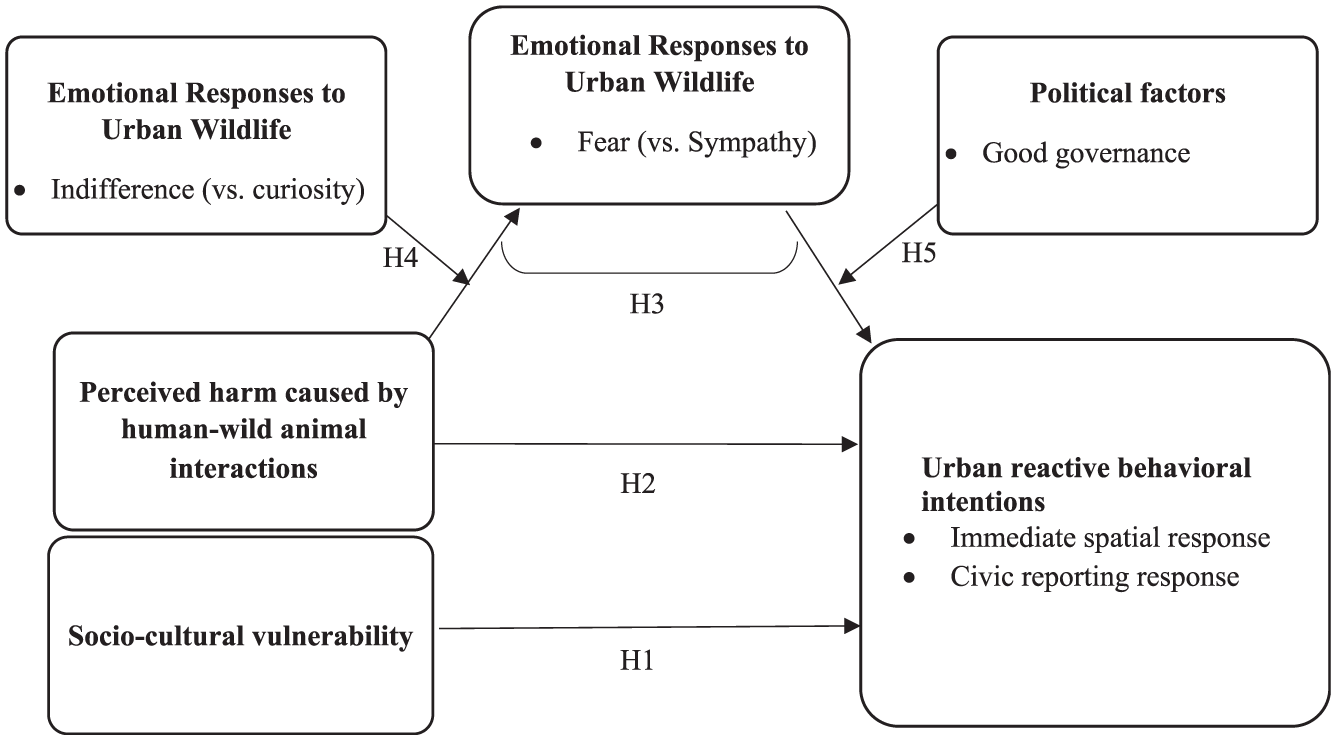
Full research model: Conditional model examining (i) the mediating effects of fear on the relationship between the perceived harm caused by wild boars and urban reactive behavioral intentions: (a) immediate spatial response and (b) civic reporting response (ii) the moderating effect of indifference and political factors.
Encounters with wildlife in unexpected urban spaces can provoke unease and spatial disruption, and these reactions are culturally mediated. Older adults, women, parents, and long-term residents often express stronger fear or avoidance toward nonhuman intrusions (Beeri et al., 2025; Hirsch-Matsioulas et al., 2022; Pasquetti, 2019). In religious Jewish and Muslim communities, wild boars may evoke impurity-related aversion or disgust (Kaltenborn et al., 2006; Vaske et al., 2021).
Such perceptions manifest as spatial avoidance (e.g. stopping, crossing streets) or civic engagement (e.g. contacting hotline 106), reflecting expectations of order and governance rather than fear alone (Bridge, 2004; Riger et al., 1982; Valli, 2015). Socio-cultural vulnerability therefore helps explain why identical encounters evoke responses ranging from curiosity to threat, highlighting how identity, culture, and emotion jointly shape spatial and civic reactions to urban uncertainty.
Media and cultural narratives also shape how people emotionally interpret human–wildlife encounters, influencing attitudes and behavioral intentions. Idealized portrayals of deer as gentle and innocent in popular culture (the “Bambi effect”) can elicit strong positive emotions that conflict with utilitarian management goals such as population control. These anthropomorphized depictions reduce public support for lethal measures, and similar cultural framing may shape how urban communities respond to species like wild boar (Desrochers et al., 2025; Stinchcomb et al., 2023).
Encounters with wild boars and urban reactive behavioral intentions
Environmental perceptions, especially direct interactions with urban wildlife, play a central role in shaping reactive behavioral intentions. Encounters with wild boars highlight growing tensions between urban life and wildlife encroachment, undermining residents’ sense of safety and increasing perceptions of vulnerability and disorder (Beeri et al., 2025; Jürgens, 2022; Lowry et al., 2013).
Perceived harm—physical, emotional, or symbolic, including property damage, psychological stress, or disruption of social norms—is closely related to institutional trust, past experiences, and neighborhood dynamics (Pasquetti, 2019; Rupprecht, 2017). These assessments function simultaneously as cognitive judgments and emotional triggers, prompting withdrawal, protest, or recourse to authorities.
Such perceptions frequently activate reactive behavioral intentions that also signal dissatisfaction with governance. Actions like altering movement patterns or calling the municipal hotline (106) reflect not only risk appraisal but evaluations of administrative responsiveness and spatial control during stress.
Empirical research links perceived harm to both spatial and civic behavioral responses to urban wildlife (Kansky et al., 2014; Papagiannaki et al., 2017). When residents view wild animals as threatening, they may avoid spaces or file formal complaints, reflecting personal emotions such as fear or empathy alongside political expressions like demands for municipal intervention (Frank et al., 2015). Emotional reactions thus shape both individual behavior and civic engagement: fear can prompt calls for stricter controls, whereas empathy may drive resistance to lethal management and support for humane alternatives (Jürgens, 2022). These intertwined emotional-political processes position human–wildlife encounters as triggers for public debate and urban policy responses.
Emotions as mediators of urban behavioral responses
Emotions in this study are defined as rapid affective responses to stimuli appraised as personally or collectively relevant (Frijda and Mesquita, 1998). Basic emotion theory conceptualizes discrete emotions such as fear, anger, joy, and disgust as biologically evolved systems with distinct expressions, physiological patterns, and action tendencies (Ekman, 1992; Frijda, 1986). These emotions carry positive or negative valence, a feature central to their motivational effects (Castillo-Huitrón et al., 2024; Frijda, 1986). Fear typically promotes avoidance and threat mitigation, whereas curiosity or empathy may encourage tolerance or engagement. Under uncertain or rapidly unfolding conditions such as human–wildlife encounters, emotional reactions often guide behavior more strongly than rational calculation (Ekman, 1992; Lerman and D'Amico, 2021). Following this framework, we examine how emotional valence relates to civic engagement (e.g. reporting) or avoidance, acknowledging that these responses are shaped by contextual cues and institutional trust.
Fear–empathy continuum as a mediator of the relationship between perceived harm caused by wild boars and urban reactive behavior
Perceived harm influences urban reactive behavioral intentions, yet its effects unfold through emotional responses, especially fear, which mediate how residents interpret encounters and choose actions. These emotions are associated with experience, vulnerability, moral beliefs, and sociocultural context (Castillo-Huitrón et al., 2024; Fischer et al., 2014; Jürgens, 2022), functioning as filters through which situations are appraised.
Fear is a primary trigger of precautionary behaviors, including avoidance or contacting authorities (Riger et al., 1982), reflecting perceived risk, urgency, and institutional trust. In this study, fear mediated the relationship between perceived harm and both spatial avoidance and civic reporting: residents perceiving greater harm also reported heightened fear, which increased the likelihood of freezing, changing direction, vocalizing distress, or calling the 106 hotline.
This pattern aligns with appraisal theory, which defines emotions as evaluations of situational relevance and coping capacity (Scherer, 2005). Fear arises under uncertainty and low perceived control, conditions typical of urban wildlife encounters (Fischer et al., 2014). We conceptualized fear and empathy as poles on a continuum: higher values reflect fear, lower values empathy. Fear promotes avoidance and reporting, whereas empathy reduces perceived urgency and fosters tolerance. Combined, these emotions shape risk appraisal and behavioral choice.
From a governance perspective, fear-based reactions such as avoidance or hotline calls, signal distress and expectations of institutional action (Espinosa, 2024). Spatialized fear marks vulnerability and can prompt municipal intervention, consistent with Espinosa’s (2024) insights on “undefendable space.” Emotional responses are fluid, shaped by media, culture, and personal traits (Castillo-Huitrón et al., 2024; Herzog and Golden, 2009). Media framing that accentuates danger intensifies fear and demands for control, while balanced portrayals can encourage curiosity or tolerance (Kansky et al., 2014). Cultural narratives and individual experience further shape whether wildlife is perceived as threatening or acceptable, influencing emotional reactions and support for specific policies (Jürgens, 2022). Emotional ambivalence is therefore common, with fear coexisting alongside curiosity or empathy (Jürgens, 2022).
Indifference-curiosity continuum as a moderator of the relationship between perceived harm caused by wild boars and fear
While fear and empathy shape behavioral intentions during urban wildlife encounters, the emergence of fear is also tied to broader affective orientations along an indifference–curiosity continuum. This continuum guides how residents interpret ambiguous encounters, such as seeing a wild boar in urban space. Indifference reflects disengagement and low emotional investment, whereas curiosity activates attention, cognitive processing, and openness to coexistence-oriented interpretations (Castillo-Huitrón et al., 2024; Lerman and D'Amico, 2021). These orientations shape how perceived harm is appraised and whether it triggers fear.
Conservation psychology suggests curiosity may buffer emotional reactivity by encouraging reflective rather than instinctive responses (Fischer et al., 2014; Jürgens, 2022). Conversely, low curiosity and high indifference may dampen both fear and civic engagement, leading residents to ignore the encounter.
From a public administration perspective, indifference creates interpretive challenges: affective expressions like complaints or calls serve as informal feedback for municipal systems (Espinosa, 2024), whereas indifference provides no signal, creating blind spots for responsive governance. Institutional framing also influences these affective orientations; cities that present wildlife as an urban ecological component rather than an intrusion are more likely to evoke neutral or mildly curious reactions (Lerman and D'Amico, 2021). In this sense, governance not only reacts to public emotions but shapes them.
Indifference therefore operates not merely as a personal stance but as a systemic regulatory mode that filters emotional activation, suppresses fear, and may limit residents’ engagement with institutional channels.
Good local governance as a moderator of the relationship between fear and urban reactive behavioral intentions
Fear is a key emotion linked to urban reactive behavioral intentions, yet its effects are shaped by broader evaluations of municipal performance. Research shows that trust in institutions conditions emotional and behavioral responses to environmental threats (Kansky et al., 2014). Good local governance can moderate how fear translates into action by amplifying or buffering reactions. This includes perceptions of administrative competence, professionalism, responsiveness, transparency, inclusion, and ethical leadership (Rhodes, 2000). Public administration scholarship similarly emphasizes that emotions are filtered through institutional legitimacy (Vigoda, 2000). When governance is viewed as competent, fear may arise but is tempered by trust, which stabilizes reactions and shapes whether fear leads to abrupt behavior or more contained expectations of resolution.
Drawing on Lyons and Lowery’s (1986) framework of exit, voice, loyalty, and neglect, fear-driven responses such as avoidance (“exit”), reporting (“voice”), or withdrawal (“neglect”) can be understood as contingent on governance evaluations. Trust in institutions is associated with loyalty or voice, while distrust increases avoidance or disengagement. Empirical studies support this logic: high governance evaluations correlate with emotional tolerance and proportionate responses, whereas low evaluations intensify reactions even to modest threats (Beeri, 2025a; Guan, 2023). Andersson and Gibson (2007) show that institutional strength shapes both threat perceptions and responses; strong governance frames fear as manageable, whereas weak governance renders it a sign of abandonment. Carbone et al. (2006) similarly found that identical threats elicit different behaviors depending on institutional reassurance. In Haifa, public accounts indicate that fear of wild boars is often interpreted not only as a reaction to the animals but also as a reflection of municipal fragility and governance concerns (Beeri, 2025a; Beeri et al., 2025).
Method
Research setting: Municipality and community of Haifa and its natural environment
Mount Carmel in northwest Israel spans 245 km2 and includes a UNESCO biosphere reserve supporting high biodiversity. Haifa, situated on its slopes and home to roughly 289,000 residents, now preserves Mediterranean green pockets mainly in valley corridors, creating ecological conditions uncommon in other Israeli cities.
Haifa is a compelling research site due to its socially diverse population—primarily Israeli Jews, including many immigrants from the former Soviet Union, alongside Christian (14%) and Muslim (4%) minorities. Both Judaism and Islam regard pigs as impure, and neither culture has a hunting tradition; among Jews, swine often symbolize disorder. The city is largely secular and industrial, ranked 7 of 10 on Israel’s socio-economic index, and has shifted politically from left to center (Israel Central Bureau of Statistics (ICBS), 2022). In 2018, Mayor Einat Kalish-Rotem halted.
Ecological and urban context: Wild boars in Haifa
In Israel, wild boars (Sus scrofa) are a protected species under the Wildlife Protection Law (1955), prohibiting harm or hunting without a special permit from the Israel Nature and Parks Authority (2023). Their population has grown steadily since 1948 due to the absence of natural predators, with additional increases linked to food-leaving practices introduced in the 1990s by immigrants from the former USSR and to major infrastructure projects in the 2000s that expanded boar presence in Haifa’s urban areas (Sapir-Hen et al., 2015).
Although the Nature and Parks Authority and Haifa’s municipality coordinated culling efforts, legal constraints limited intervention within the city. As boars entered residential neighborhoods, jurisdictional ambiguity intensified, and the conflict evolved into a wider public issue with ecological, legal, and political implications (Beeri, 2024). Ecologically, repeated encounters accelerated boar habituation to urban environments. Legally, their protected status required municipal coordination with national authorities. Politically, the issue became a test of municipal capacity and legitimacy, shaping public trust, media narratives, and electoral debate in Haifa (Beeri, 2025a).
Political and governance context: Wild boars as a policy issue
A wildlife management challenge in Haifa escalated into a politicized urban governance crisis. Local environmental disruption emerged as municipal institutions struggled to maintain services, order, and safety. Wild boars caused concrete impacts: garden and waste-infrastructure damage, road-safety risks, and perceived threats during unexpected encounters (Beeri, 2025a; State Comptroller of Israel, 2025). As they became symbols of municipal dysfunction, consistent with research on governance breakdowns (Beeri and Navot, 2014), strain increased on sanitation, policing, and hotline systems, making the issue simultaneously ecological, administrative, and political.
Following her 2018 election, Mayor Kalish-Rotem halted boar culling, a major policy shift. By 2021, complaints and media attention intensified, and her mixed messaging reflected tensions between biocentric and anthropocentric orientations. The controversy damaged her political standing; she lost her coalition majority, and in the 2024 election former mayor Yona Yahav campaigned on resolving the boar issue and won decisively, while Kalish-Rotem was eliminated early with 4.5% of the vote. Although not the sole electoral factor, the boar controversy became central to Haifa’s political discourse, demonstrating how wildlife management can serve as a proxy for municipal performance.
Study design
The study uses a visual-elicitation survey to examine how Haifa residents emotionally interpret human–wild boar encounters. Participants viewed photographs of naturally occurring encounters in urban or peri-urban settings, which served as realistic stimuli aimed at eliciting immediate emotional appraisals (fear–empathy; curiosity–indifference) without manipulating conditions or enabling causal inference. This method allowed respondents to evaluate contextually meaningful variations that mirror actual situations in Haifa’s public spaces. Overall, the visual-elicitation approach enriches standard survey methods by grounding responses in concrete, context-rich scenes reflecting residents’ lived experience and supporting the sampling, exposure, and measurement procedures described below.
Photo stimuli and random assignment procedure
The photographic stimuli consisted of authentic images depicting naturally occurring human–wild boar encounters in Haifa. All photographs were taken between 2020 and 2022 by professional news photographers, municipal staff, or bystanders who publicly shared their images. The researcher obtained explicit permission to use all photographs, and only images with verified time, location, and authenticity were included. Sixteen photographs were selected following criteria from visual elicitation research, including ecological validity, clarity of the encounter, visibility of humans and animals, and relevance to recurrent scenarios in Haifa. Because these images captured real events, they varied naturally in background and esthetic features, enhancing ecological realism but limiting full experimental control (Figure 2).
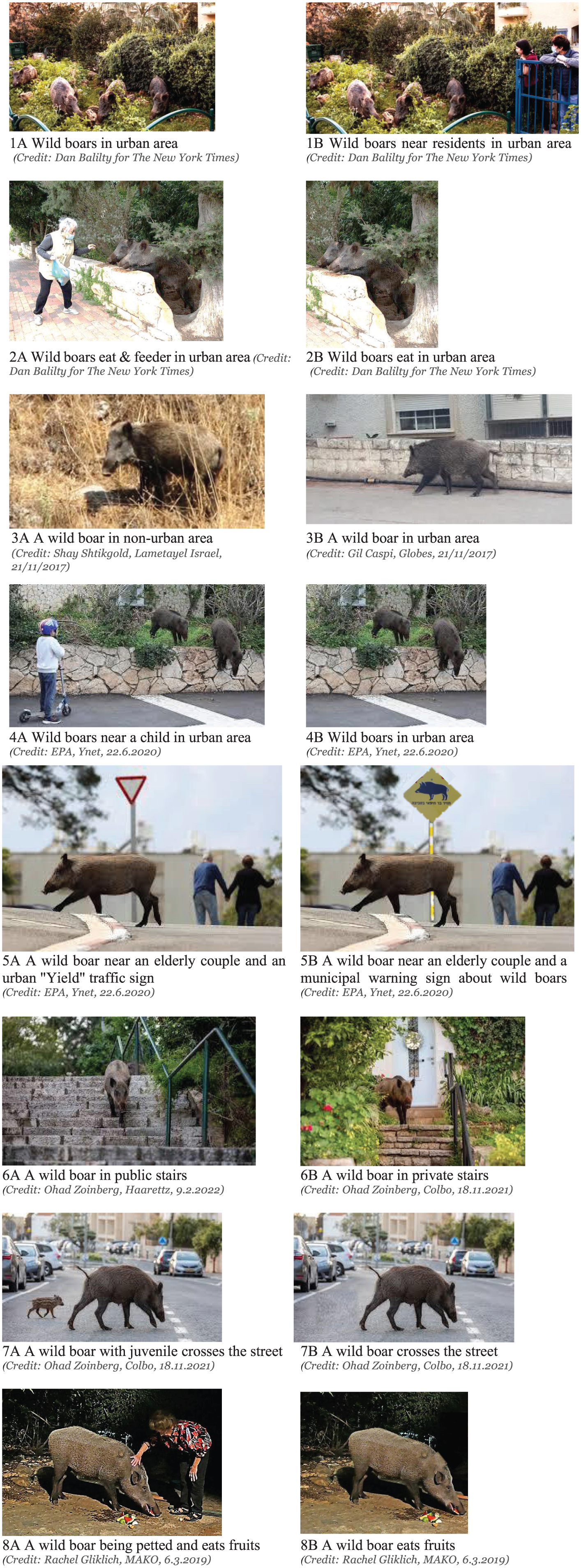
Photo stimuli presented to participants.
The 16 images were grouped into eight A and B pairs. Each pair shared a broad contextual similarity but differed on one focal dimension reflecting meaningful variation in Haifa’s human–wildlife encounters, such as urban proximity, feeding behavior, environmental context, presence of children or vulnerable individuals, signage, public versus private space cues, animal group composition, and food-related cues. As real-world photographs, some additional attributes varied unintentionally, reinforcing realism while reducing standardization.
Participants viewed each photograph without time limits and could move between items if needed. The question sequence followed a fixed structure identical to Appendix A1. To reduce bias, two strategies were used. First, participants were randomly assigned to image sets A or B, and the randomization was statistically validated. Second, the A and B pairs were constructed to remain as similar as possible apart from the focal dimension, with matching on features such as animal size, posture, and framing where environmental differences were larger.
Participants in Group A viewed the eight A-set images; Group B viewed the corresponding B-set images. Random assignment was implemented through quota-based sampling and showed no group differences in gender, age, socio-economic status, religiosity, or residential quarter. Each respondent viewed only one sequence of eight images, ensuring every focal dimension was evaluated once per person, and each image was rated by roughly half the sample.
Importantly, Groups A and B are not experimental conditions but parallel exposure groups viewing realistic stimuli. The A and B structure enables examination of associational differences between image variants while acknowledging that contrasts are not experimentally standardized. The design thus supports correlational, not causal, inference, consistent with visual elicitation approaches in urban and environmental research.
Sample and procedure
We conducted an anonymous online survey in Haifa in November 2022 using a professional panel company. The sampling strategy followed a quota-based design aligned with official demographic distributions published by Israel’s Ministry of the Interior and the Central Bureau of Statistics. The sample was stratified by establishing parallel quotas for gender, age groups, religiosity levels, and Haifa’s eight municipal quarters. Each stratum was monitored separately: underrepresented groups were actively recruited until quotas were met, and overrepresented strata were temporarily closed. This procedure ensured proportional geographic and socio-demographic representation and prevented clustering within any subgroup.
The study received ethics approval from the University of Haifa Ethics Committee (#425/2018). Participants provided informed consent, were assured anonymity and confidentiality, could withdraw at any time, and received approximately $3 compensation.
A total of 522 respondents completed the survey. The sample closely reflected Haifa’s population across key indicators: gender (57% women), religiosity (M = 3.6 on a 0–10 scale), age (18–84, M = 44), education (M = 14 years), marital status (68% partnered), parenthood (39% with children under 18), duration of residence (M = 30 years), and household income relative to the national average. Quotas were monitored throughout to avoid demographic overrepresentation.
We verified equivalence across the two random exposure groups (A and B) through balance checks on all core demographic variables. No statistically significant differences were found in gender, age, education, religiosity, socio-economic status, or residential quarter, indicating successful random assignment.
Data quality procedures included embedded attention checks, removal of incomplete records, detection of straight-liners in slider-based items, and confirmation that response times met validity thresholds for engagement with the visual stimuli. After cleaning, all 522 cases met inclusion criteria. The response rate was 47%, typical for panel-based surveys in Israel and supportive of sample representativeness.
Overall, the sampling and data collection strategy ensured demographic diversity, strong ecological validity, and robust internal consistency for subsequent statistical analysis.
Measures
All constructs were measured using established survey scales adapted to the urban context of Haifa. Full item wordings appear in Appendix A1. Unless otherwise noted, all variables were coded such that higher values indicate higher levels of the construct.
Perceived harm from wild boars
Perceived harm was measured using three items assessing the extent to which residents felt personally affected, socially affected, or that the wider Haifa community was harmed by the wild boar phenomenon. Responses were recorded on a five-point agreement scale. The scale demonstrated high internal consistency (Cronbach’s alpha = 0.82).
Emotional appraisals: Fear–empathy and curiosity–indifference
Emotions were measured using two bipolar visual sliders presented immediately after each photo stimulus. Participants moved a cursor along a nine-point continuum to indicate (a) the extent to which the wild boar appeared frightening versus nice, and (b) the extent to which they felt curious versus indifferent. These emotional evaluations reflect immediate appraisals of each stimulus.
Urban reactive behavioral intentions
Urban reactive behavioral intentions were measured using two photo-elicited response scales presented after each image. (1) Immediate spatial response captured behavioral intentions such as moving away, making noises, pausing movement, or waiting for the animal to leave versus maintaining one’s planned path. (2) Civic reporting response captured intentions to report the encounter to the municipal 106 hotline. Both measures were recorded on nine-point bipolar sliders.
Good local governance
Good local governance was measured using a multi-item index capturing perceptions of municipal performance, professionalism, responsiveness, transparency, innovation, and representation. The scale includes both positive indicators (e.g. professionalism, openness to criticism, technological innovation) and negative indicators (e.g. corruption, political bias, under-representation), with the latter reverse-coded before aggregation. Items were rated on a five-point agreement scale. The composite index demonstrated strong internal reliability (Cronbach’s alpha = 0.86).
Control variables
Standard socio-demographic controls were included: gender, age, religiosity, education, marital status, parenthood, and years of residence in Haifa. These variables were coded based on conventional demographic categories and used in all multivariate analyses.
Statistical procedures
We applied a multi-step analytical strategy to assess the direct, mediated, and moderated relationships in our model. Descriptive statistics, Pearson correlations, and internal consistencies were first calculated for all variables, followed by independent-sample t-tests to evaluate baseline group differences (
Findings
All analyses reported below follow directly from the statistical procedures detailed in the Methods section.
H1: Socio-cultural factors and urban reactive behavioral intentions
Descriptive statistics and Pearson’s correlations for the research variables.
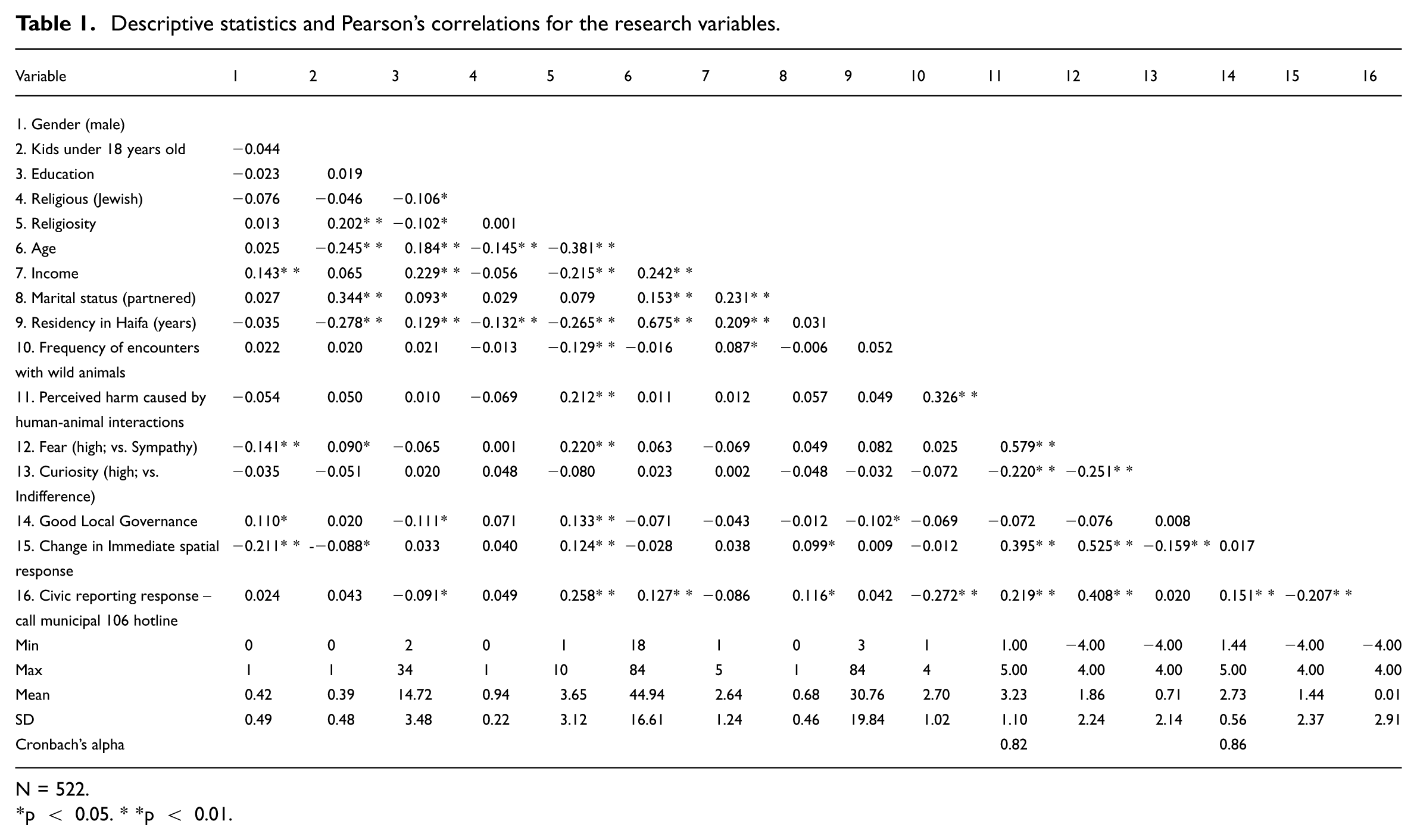
N = 522.
p < 0.05. * *p < 0.01.
H2: Encounter with wild boars and urban reactive behavioral intentions
H3: Fear as a mediator for urban reactive behavioral intentions
(i) Pearson correlations showed that greater perceived harm was strongly associated with heightened fear (vs. empathy; r = 0.579, p < 0.01). Fear was then significantly related to both immediate spatial response (r = 0.525, p < 0.01) and civic reporting response (r = 0.408, p < 0.01).
(ii) As shown in Table 2, and controlling for socio-cultural vulnerability factors, fear mediated the relationships between perceived harm and both behavioral intentions. Without fear in the model, perceived harm predicted immediate spatial response (b = 0.305, p < 0.01) but not civic reporting (b = 0.234, p = NS). When fear was included, indirect effects became significant and stronger for immediate spatial response (b = 0.766–1.318, 90% [LLCI = 0.537–1.146, ULCI = 0.995–1.490]) and for civic reporting response (b = 0.320–0.543, 90% [LLCI = 0.183–0.373, ULCI = 0.475–0.733]).
Conditional model (PROCESS Model #21 & #7) examining (i) mediating effect of fear on the relationship between the perceived harm and urban reactive behaviors: immediate spatial response and civic reporting response; (ii) the moderating effect of indifference; (iii) the moderating effect of good governance.
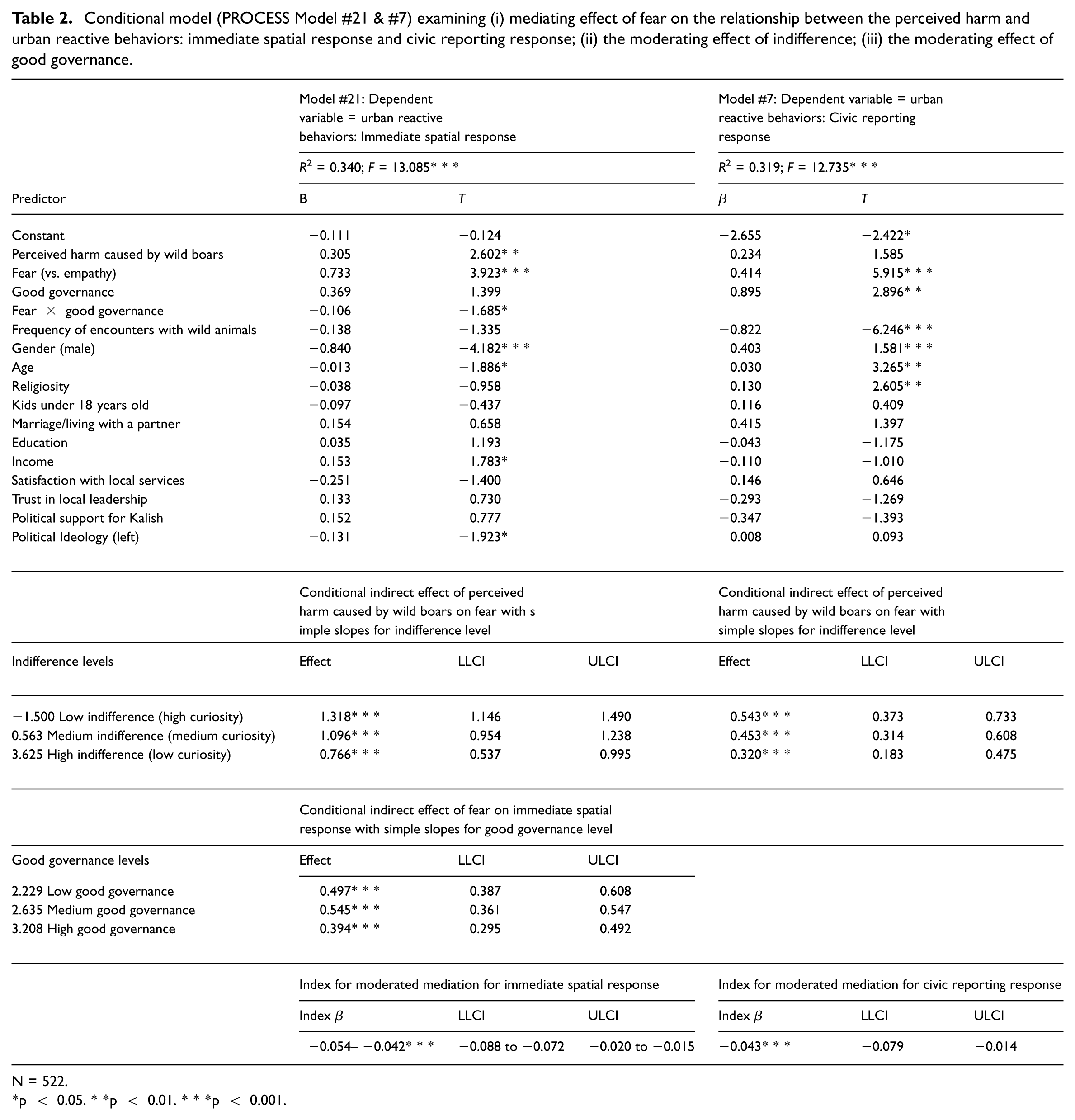
N = 522.
p < 0.05. * *p < 0.01. * * *p < 0.001.
Overall, perceiving extensive harm increased fear (and reduced empathy), which in turn intensified both immediate spatial and civic reporting intentions. These effect sizes fall within expected ranges for correlational emotional-appraisal research and parallel the moderated and moderated-mediation results in
H4: Indifference as a moderator of the relationship between perceived harm caused by wild boars and fear
(i) Pearson correlations showed that higher perceived harm was associated with greater indifference (vs. curiosity) toward the stimuli (r = −0.220, p < 0.01), and greater indifference was associated with heightened fear (vs. empathy; r = −0.251, p < 0.01).
(ii) As shown in Table 2, indifference moderated the link between perceived harm and fear in both models predicting urban reactive behavioral intentions. In Model #21 (immediate spatial response), high-indifference participants showed a weaker positive relationship between perceived harm and fear (b = 0.766) compared to low-indifference participants (b = 1.318; 90% [LLCI = 0.537 to 1.146, ULCI = 0.995 to 1.490]). In Model #7 (civic reporting response), high indifference similarly weakened this association (b = 0.320 vs. b = 0.543; 90% [LLCI = 0.183 to 0.373, ULCI = 0.475 to 0.733]; see Figure 3).
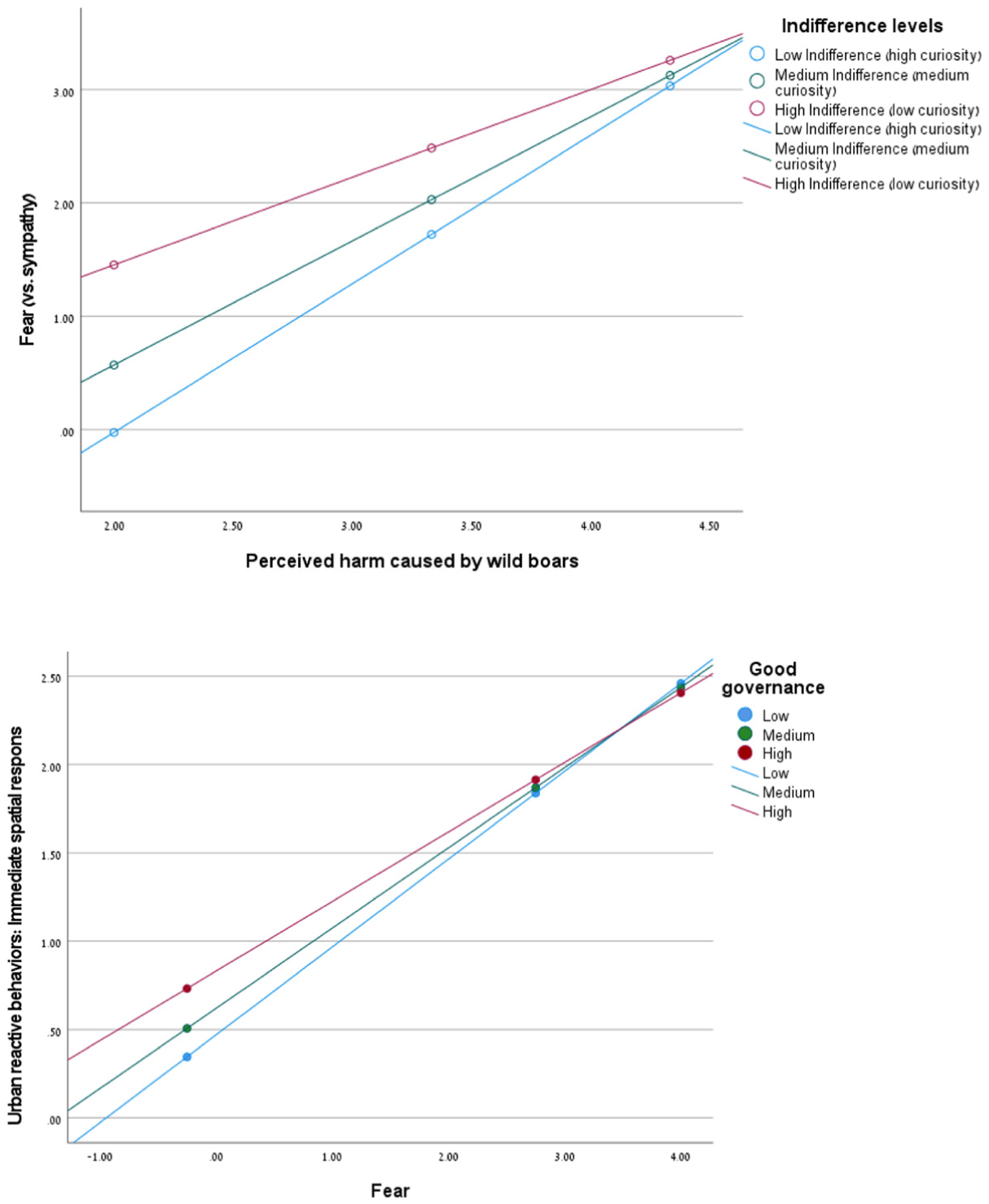
The moderating effect of indifference (vs. curiosity) levels on the relationship between perceived harm caused by wild boars and fear. The moderating effect of good governance levels on the relationship between fear and immediate spatial response.
H5: Good governance as a moderator of the relationship between fear and urban reactive behavioral intentions
Overall, the strongest pathway for immediate spatial response involves high perceived harm leading to heightened fear, particularly among highly curious residents, which is associated with stronger avoidance, especially when governance evaluations are low. Similarly, the strongest pathway for civic reporting involves high perceived harm increasing fear, especially among curious residents, which is associated with greater likelihood of calling the municipal hotline.
Supplementary analyses: Stimulus-level comparisons (Fisher’s Z tests)
Stimulus differences between A/B image variants were examined using Fisher’s Z comparisons of independent correlations, since A and B were not experimental conditions. Beyond the findings for
Fisher’s Z transformation testing significant difference between Pearson correlations between emotions and urban reactive behaviors to photo stimuli.
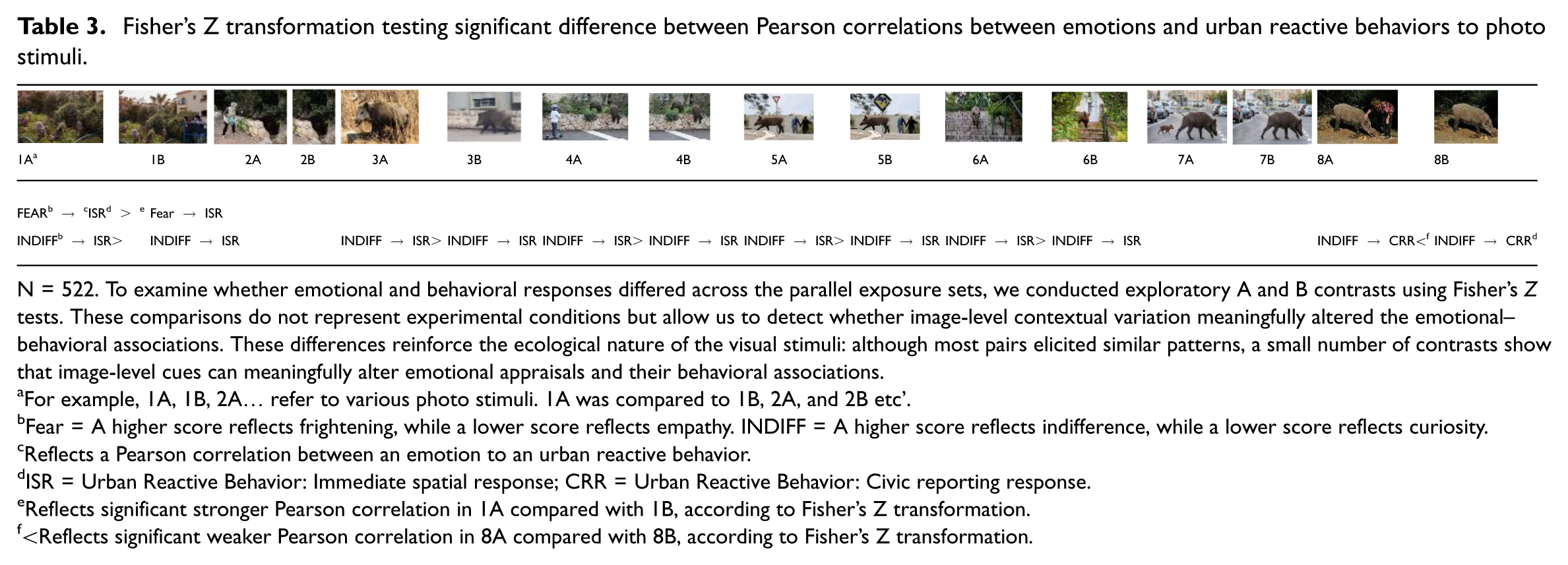

N = 522. To examine whether emotional and behavioral responses differed across the parallel exposure sets, we conducted exploratory A and B contrasts using Fisher’s Z tests. These comparisons do not represent experimental conditions but allow us to detect whether image-level contextual variation meaningfully altered the emotional–behavioral associations. These differences reinforce the ecological nature of the visual stimuli: although most pairs elicited similar patterns, a small number of contrasts show that image-level cues can meaningfully alter emotional appraisals and their behavioral associations.
For example, 1A, 1B, 2A… refer to various photo stimuli. 1A was compared to 1B, 2A, and 2B etc’.
Fear = A higher score reflects frightening, while a lower score reflects empathy. INDIFF = A higher score reflects indifference, while a lower score reflects curiosity.
Reflects a Pearson correlation between an emotion to an urban reactive behavior.
ISR = Urban Reactive Behavior: Immediate spatial response; CRR = Urban Reactive Behavior: Civic reporting response.
Reflects significant stronger Pearson correlation in 1A compared with 1B, according to Fisher’s Z transformation.
<Reflects significant weaker Pearson correlation in 8A compared with 8B, according to Fisher’s Z transformation.
For
Discussion and conclusion
This study examined how emotional reactions—specifically fear, empathy, indifference, and curiosity—interact with individual dispositions and contextual factors to shape urban reactive behavioral intentions during human–wildlife encounters. Focusing on wild boars in Haifa, the findings confirm central theoretical expectations: fear is a pivotal emotional mechanism mediating the relationship between perceived harm and reactive behavior, while its influence is moderated by dispositions such as curiosity or indifference and by perceptions of good local governance. The results also show meaningful differences between the two types of urban response measured (immediate spatial avoidance versus civic reporting), refining existing models of emotional behavior in urban settings.
A closer look at these two response pathways shows that they are shaped by different psychological and institutional factors. Immediate spatial reactions (e.g. freezing, backing away, rerouting, vocalizing distress) are private and embodied, arising instantly from perceived threat and from one’s sense of environmental vulnerability. Civic reporting responses, in contrast, require deliberation, communication, and a belief that municipal authorities will act, thus relying more heavily on perceived efficacy and institutional responsiveness. While both reactions stem from danger appraisal, the former operates as a largely reflexive “exit,” whereas the latter functions as a more dialogic “voice.” This distinction appears clearly in the moderating effect of perceived good governance: high trust attenuated the link between fear and spatial avoidance but did not meaningfully reduce the association between fear and reporting behavior. When residents trust their city, fear is less likely to trigger abrupt withdrawal, because they expect the system to manage the threat. This pattern aligns with the Mobility as a Response (MaaR) framework (Xia and Yeh, 2022), which shows that movement in response to hazards is conditioned by governance quality and institutional reassurance, and with scholarship on emotional governance and affective urbanism (Bridge, 2004; Pasquetti, 2019). It also parallels Lyons and Lowery’s (1986) exit–voice–loyalty–neglect model: those who trust authorities may display loyalty (remaining steady) or voice (reporting), whereas distrust can promote exit (avoidance) or neglect (disengagement). These modes of response thus reflect emotional intensity combined with evaluative judgments of municipal performance and governance quality.
Against this backdrop, the role of curiosity in our model is both theoretically and practically significant. Contrary to assumptions that curiosity tempers emotional reactivity, our findings suggest the opposite: individuals scoring higher on curiosity experienced stronger fear and were more likely to react behaviorally. Rather than mitigating fear, curiosity seemed to heighten emotional attunement. One explanation is that curiosity deepens cognitive processing and attention to the encounter, increasing vigilance and perceived relevance (Fischer et al., 2014). By focusing more intensely on the wild boar and the situation, curious individuals may become more aware of potential risks, intensifying fear and spurring action.
This finding has important implications for urban wildlife management and communication. Municipalities cannot and should not attempt to control public emotions, yet they can shape how these emotions are engaged. Transparent and informative institutional communication may channel curiosity into constructive engagement rather than panic. Clear guidelines about wild boar behavior can reduce uncertainty and support calmer reactions. Conversely, inconsistent or alarmist messaging may transform curiosity into anxiety, mistrust, and rumor, elevating public fear. Managing human–wildlife encounters in cities is therefore not only about regulating animals or residents but also about guiding emotional narratives through effective risk communication.
This point connects to another key finding: the influential role of visual context and framing. Our visual-stimuli survey showed substantial variation in emotional responses depending on the image viewed. Scenes of open public spaces with boars present often elicited stronger fear, curiosity, and higher avoidance and reporting intentions, whereas images of boars in more natural or enclosed settings produced muted effects. This aligns with research showing that responses to environmental hazards depend not only on exposure but also on subjective framing (Carbone et al., 2006). Visual cues shape whether an encounter is seen as threatening or benign. Thus, urban signage, public campaigns, and media reports should be designed with emotional cognition in mind. Effective communication must guide emotional appraisal in proportionate ways, using imagery and messaging that acknowledge risk while conveying controllability and coexistence.
Finally, our findings suggest that good local governance operates not only as a technical performance metric but also as a form of psychological infrastructure for urban resilience. When residents view their municipality as competent, responsive, and fair, fear is less likely to escalate into panic or withdrawal during wildlife encounters. This aligns with research in environmental governance (Beeri et al., 2025; Guan, 2023) showing that managing ecological risks involves not only controlling physical hazards but also addressing stakeholder expectations and behavioral responses. In this sense, attending to public emotions becomes part of building trust and resilience. When residents believe the city will handle a wild boar incident effectively and humanely, they are more likely to remain calm or seek assistance (“voice” or “loyalty”) rather than act impulsively. Emotional trust in institutions, therefore, can buffer the impact of fear in public spaces, revealing an often-overlooked dimension of urban governance.
Beyond Haifa, this study offers implications for urban sustainability and for governing socio-ecological risks globally. As cities become sites of intensified multi-species interaction, adaptive governance must manage not only infrastructure and biodiversity, but also the emotional and behavioral reactions of residents. Our findings contribute to broader discussions on SDG 11 (Sustainable Cities and Communities), SDG 15 (Life on Land), and SDG 16 (Peace, Justice, and Strong Institutions). Coexistence with urban wildlife touches all three: ensuring safe and inclusive urban spaces, protecting terrestrial ecosystems, and sustaining strong institutions that maintain public trust. Emotional infrastructure and civic trust are thus central components of adaptive, resilient urban systems.
The integrated model, connecting perceived harm, fear, emotional dispositions, and governance evaluations to real-time behavioral responses, offers a concise framework for urban ecological governance. It shows how psychological factors interact with institutional context to shape public reactions to wildlife. Citizens’ emotions should be treated not only as signs of environmental strain but also as inputs for designing responsive, sustainable governance. By tracking emotional patterns, city officials can anticipate resident reactions, refine communication, and adopt interventions that reduce conflict and support coexistence.
This study contributes to urban governance, human–wildlife conflict research, and political psychology. It reframes fear as a relational emotion shaped by institutional trust, identifies curiosity as a complex motivator rather than a simple counterweight to fear, and positions good local governance as a central factor influencing emotional and behavioral responses in public space. Together, these insights highlight the importance of integrating emotional processes into the management of urban environmental issues.
Despite its contributions, this study has limitations. Self-reported reactions to photographs cannot fully capture the spontaneity of real encounters, and long-term processes such as habituation or emotional fatigue were not examined. Future research should investigate these processes across time and cities, exploring how repeated wildlife exposure shapes fear sensitization or habituation and how these emotional trajectories interact with political engagement, social media, and community resilience. Such work will deepen understanding of the links between emotion, behavior, and governance in evolving urban human–wildlife relationships.
Footnotes
Appendix 1
The measurement tool.
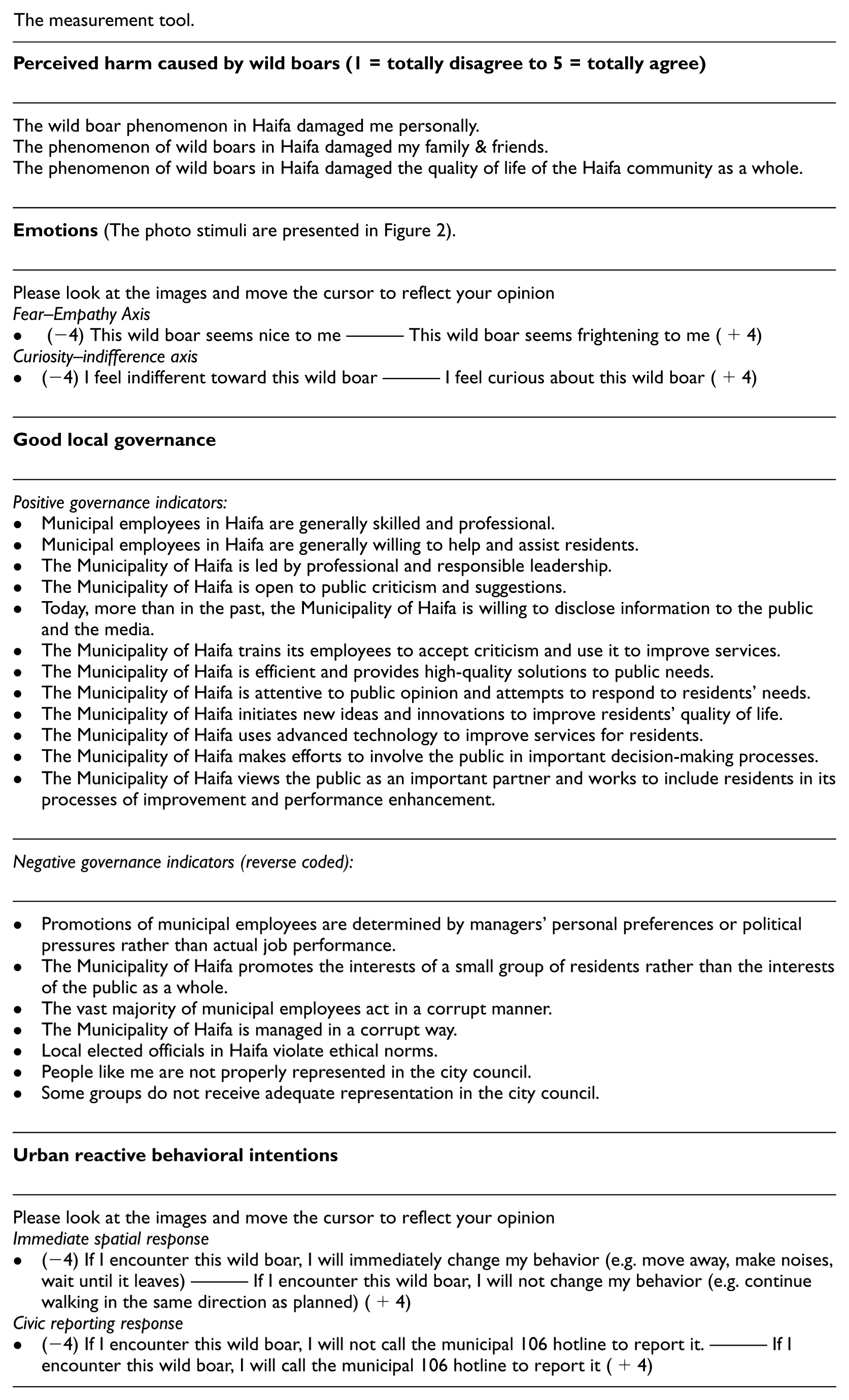
| Perceived harm caused by wild boars (1 = totally disagree to 5 = totally agree) |
|---|
| The wild boar phenomenon in Haifa damaged me personally. |
| The phenomenon of wild boars in Haifa damaged my family & friends. |
| The phenomenon of wild boars in Haifa damaged the quality of life of the Haifa community as a whole. |
| Emotions (The photo stimuli are presented in Figure 2). |
| Please look at the images and move the cursor to reflect your opinion |
| Fear–Empathy Axis |
| • (−4) This wild boar seems nice to me ——— This wild boar seems frightening to me (+4) |
| Curiosity–indifference axis |
| • (−4) I feel indifferent toward this wild boar ——— I feel curious about this wild boar (+4) |
| Good local governance |
| Positive governance indicators: |
| • Municipal employees in Haifa are generally skilled and professional. |
| • Municipal employees in Haifa are generally willing to help and assist residents. |
| • The Municipality of Haifa is led by professional and responsible leadership. |
| • The Municipality of Haifa is open to public criticism and suggestions. |
| • Today, more than in the past, the Municipality of Haifa is willing to disclose information to the public and the media. |
| • The Municipality of Haifa trains its employees to accept criticism and use it to improve services. |
| • The Municipality of Haifa is efficient and provides high-quality solutions to public needs. |
| • The Municipality of Haifa is attentive to public opinion and attempts to respond to residents’ needs. |
| • The Municipality of Haifa initiates new ideas and innovations to improve residents’ quality of life. |
| • The Municipality of Haifa uses advanced technology to improve services for residents. |
| • The Municipality of Haifa makes efforts to involve the public in important decision-making processes. |
| • The Municipality of Haifa views the public as an important partner and works to include residents in its processes of improvement and performance enhancement. |
| Negative governance indicators (reverse coded): |
| • Promotions of municipal employees are determined by managers’ personal preferences or political pressures rather than actual job performance. |
| • The Municipality of Haifa promotes the interests of a small group of residents rather than the interests of the public as a whole. |
| • The vast majority of municipal employees act in a corrupt manner. |
| • The Municipality of Haifa is managed in a corrupt way. |
| • Local elected officials in Haifa violate ethical norms. |
| • People like me are not properly represented in the city council. |
| • Some groups do not receive adequate representation in the city council. |
| Urban reactive behavioral intentions |
| Please look at the images and move the cursor to reflect your opinion |
| Immediate spatial response |
| • (−4) If I encounter this wild boar, I will immediately change my behavior (e.g. move away, make noises, wait until it leaves) ——— If I encounter this wild boar, I will not change my behavior (e.g. continue walking in the same direction as planned) (+4) |
| Civic reporting response |
| • (−4) If I encounter this wild boar, I will not call the municipal 106 hotline to report it. ——— If I encounter this wild boar, I will call the municipal 106 hotline to report it (+4) |

Funding
The author received no financial support for the research, authorship, and/or publication of this article.
Declaration of conflicting interests
The author declared no potential conflicts of interest with respect to the research, authorship, and/or publication of this article.