




Abstract
The current study examined the potential of relational closeness in the natural mentoring relationships (NMRs) of Black students to counter and protect against the noxious effects of school-based discrimination on academic engagement. The study sample included 663 Black students between the ages of 12 and 19 (M = 14.96 years, SD = 1.81 years), all reporting a natural mentor. Approximately half of participants were female (53%). Participants were recruited from three different school districts in a Midwestern metropolitan area. Findings indicated that perceived school-based discrimination was negatively associated with academic engagement. Relational closeness in NMRs countered, but did not protect against, the negative effects of perceived school-based discrimination on students’ academic engagement. Additional analyses indicated that one mechanism through which relational closeness in NMRs may promote greater academic engagement among Black students is via increased racial pride. Results highlight the potential of NMRs to counter messages of inferiority communicated through discriminatory experiences in the school. Fostering relational closeness between Black students and supportive non-parental adults in their lives may be an effective strategy to boost academic achievement among Black youth experiencing discrimination in the school environment. In addition to fostering stronger bonds with natural mentors, strategic efforts to reduce school-based discrimination are needed to truly bolster the academic success of Black youth.
In the United States, Black students face more barriers to achievement than their White counterparts and, on average, display comparably poorer educational outcomes. This includes lower graduation rates at both the high school and college level (Kerpelman, Eryigit, & Stephens, 2008). Previous research suggests a major barrier to Black students’ achievement in the United States is perceived racial discrimination in the school context (Neblett, Philip, Cogburn, & Sellers, 2006; Smalls, White, Chavous, & Sellers, 2007). The deleterious effects of school-based racial discrimination on academic outcomes have been demonstrated both concurrently and prospectively (Butler-Barnes, Chavous, Hurd, & Varner, 2013; Cogburn, Chavous, & Griffin, 2011; Wong, Eccles, & Sameroff, 2003). Black students, however, may draw from pre-existing social resources, thereby countering the negative effects of discrimination (Sanders Thompson, 2006; Scott, 2004). With this in mind, scholars have sought to identify factors that may mitigate the relationship between perceived discrimination and such academic outcomes as academic engagement. One such mitigating factor may be close connections with caring non-parental adults in their social networks who provide support and guidance (i.e., natural mentors; Zimmerman, Bingenheimer, & Behrendt, 2005).
Natural mentoring relationships (NMRs) have been found to play a significant positive role in Black adolescents’ adjustment and may offset some of the negative effects of stressors (Cooper, Brown, Metzger, Clinton, & Guthrie, 2013; Hurd & Sellers, 2013; Hurd & Zimmerman, 2010a, 2010b; Kogan, Brody, & Chen, 2011). For instance, Hurd and Sellers (2013) demonstrated that NMRs were associated with higher levels of academic engagement among Black youth. Although work in this area has begun to address important questions, three key gaps in knowledge remain with regard to the association between NMRs and school engagement among Black youth. First, little is known about the mechanisms through which such benefits are conferred. Recent studies of NMRs among Black youth suggest that one such pathway to greater educational attainment may be via increases in racial pride (Hurd, Sánchez, Zimmerman, & Caldwell, 2012). Second, although research points to NMRs as an asset for Black youth, less is known about which relationship characteristics facilitate positive academic outcomes. Previous research suggests that relationship quality—in particular, relational closeness—may be a key determinant of the potential effectiveness of NMRs in fostering resilient outcomes among Black youth (Hurd & Sellers, 2013; Kogan et al., 2011). Thus, beyond focusing on the presence of natural mentors, the current study investigated closeness in NMRs as a promotive factor for Black youth. Finally, the associations between NMRs and academic engagement have not been explored in the context of Black youths’ experience of school-based discrimination. The current study aimed to fill extant gaps by examining the potential of relational closeness in the NMRs of Black students to counter and protect against the noxious effects of school-based discrimination on academic engagement via the promotion of racial pride.
Resilience Framework
The current study applied a resilience framework to understand how relational closeness in NMRs may counter or protect against the negative effects of perceived school-based racial discrimination. Resilience theory is characterized by a focus on assets and resources that enable adolescents to thrive in the face of risk exposure (Zimmerman et al., 2013). The compensatory model of resilience suggests that a promotive factor directly counteracts the negative effects of risk exposure (Fergus & Zimmerman, 2005). This promotive factor has a direct positive effect on the outcome. For example, experiences of peer victimization may be a risk factor for academic disengagement. This risk may be counteracted, however, by the presence of a supportive teacher. The protective factor model of resilience, in contrast, posits that a protective factor buffers against the negative effects of risk, thus reducing the potential of negative outcomes associated with risk exposure (Fergus & Zimmerman, 2005). For instance, the association between peer victimization and academic disengagement may be weaker among youth with elevated levels of self-esteem (Wong et al., 2003).
Research on NMRs has supported the application of protective and compensatory models of resilience. Rhodes, Ebert, and Fischer (1992) found that NMRs buffered against the negative effects of relationship problems on adolescent mothers’ mental health. In addition, Hurd and Zimmerman (2010a) found that NMRs reduced the negative effects of perceived stressors on adolescent mothers’ psychological distress. More closely related to the current study, Zimmerman, Bingenheimer, and Notaro (2002) found natural mentors to have both compensatory and protective effects on school attitudes among urban youth experiencing negative peer influences. Findings indicated that when considering friends’ negative school behaviors and attitudes as risk factors, having a natural mentor both offset (compensatory) and modified (protective) negative peer influences on school attitudes.
Perceived School-Based Discrimination and Academic Engagement
Black adolescents report higher rates of racially biased treatment compared with other racial/ethnic minority groups (Greene, Way, & Pahl, 2006). Previous research also indicates that Black students perceive their teachers as having lower expectations of them, and that they may be subjected to harsher disciplinary practices than their White peers (Fisher, Wallace, & Fenton, 2000; Rosenbloom & Way, 2004; Wong et al., 2003). Black youth also report experiencing discrimination and exclusion in peer settings at school (Fisher et al., 2000; Greene et al., 2006; Wong et al., 2003). Adolescents’ academic engagement has been linked to identities made salient in academic settings (Garcia & Pintrich, 1994); accordingly, it is likely that Black adolescents’ academic engagement is influenced, in part, by school-based racial discrimination (Benner & Graham, 2013). Indeed, studies have demonstrated an inverse relationship between perceived racial discrimination and academic engagement (Chavous, Rivas-Drake, Smalls, Griffin, & Cogburn, 2008; Dotterer, McHale, & Crouter, 2009; Smalls et al., 2007). Such disengagement may reduce identification with, and persistence in, academics over time (Crocker & Major, 1989; Lesko & Corpus, 2006). Although school-based discrimination may undermine academic engagement, there is substantial variability in academic achievement among Black adolescents. Some suggest this variability may be due to differences in access to social resources (e.g., relational networks, social capital) among Black youths (Goddard, 2003) that support academic achievement and protect against the detrimental influences of stressors such as discrimination. One such social resource Black adolescents may draw upon is support from NMRs.
NMRs Among Black Youth
Mentors are experienced individuals who support, guide, and encourage their less experienced mentees (J. E. Rhodes, 2005). In the mentoring literature, researchers have distinguished natural mentors from formal mentors (Zimmerman et al., 2005). Whereas formal mentors are assigned to mentees through programs (e.g., Big Brothers and Big Sisters), natural mentors are found within the adolescent’s pre-existing social networks. Thus, NMRs are formed through mutual selection between the adolescent and adult. Natural mentors may be extended kin, teachers, school staff, neighbors, or community members (Hurd & Sellers, 2013).
Researchers have increasingly focused on understanding the potential promotive effects of NMRs among Black youth, guided by awareness of the central role that non-parental adults (e.g., extended kin, fictive kin) historically and currently play in child-rearing within the larger Black family system (Stack, 1974; Stewart, 2007). NMRs have been shown to be associated with fewer internalizing and externalizing problems among Black youth (Hurd & Zimmerman, 2010a, 2010b; Kogan et al., 2011; J. E. Rhodes et al., 1992). Researchers have demonstrated Black adolescents with NMRs have more positive school attitudes (Zimmerman et al., 2002), increased high school completion (Klaw, Rhodes, & Fitzgerald, 2003), and higher educational attainment over time (Hurd et al., 2012). These findings underscore the potential of NMRs to bolster resilient outcomes among Black youth. Still, little is known about the mechanisms through which NMRs confer such benefits.
NMRs, Racial Identity, and Academic Outcomes
It is possible that NMRs influence Black adolescents’ racial identity. J. E. Rhodes’s (2005) proposed model of mentoring includes identity development as a mediating variable between mentoring relationships and positive youth outcomes. Accordingly, adolescents’ internalizations might improve as they identify with their mentors and experience positive shifts in their sense of identity (J. E. Rhodes, 2005). Of note, researchers have found the potential effects of racial socialization messages on Black students’ racial identities may be more enduring when they originate from non-parental adult family members (Sanders Thompson, 1994). Given this influence, it is possible that natural mentors are well positioned to augment Black youth’s racial pride (Blash & Unger, 1995; Yancey, Siegel, & McDaniel, 2002).
The extant literature demonstrates a positive link between racial pride, a constellation of racial identity specific to positive feelings about one’s own racial group, and academic outcomes among Black youth (Eccles, Wong, & Peck, 2006; Gregory & Thompson, 2010). For instance, Hurd and colleagues (2012) demonstrated that NMR presence was positively associated with racial pride and subsequent educational attainment. In addition, racial pride has been shown to buffer against the negative effects of discrimination among Black adolescents and young adults (Caldwell, Kohn-Wood, Schmeelk-Cone, Chavous, & Zimmerman, 2004; Sellers, Caldwell, Schmeelk-Cone, & Zimmerman, 2003; Sellers, Copeland-Linder, Martin, & Lewis, 2006). This is consistent with research demonstrating greater assets offset the negative effects of perceived experiences of school-based discrimination on Black adolescents’ academic outcomes (Butler-Barnes et al., 2013). As such, one pathway through which NMRs may foster greater educational engagement is increases in racial pride (Hurd et al., 2012). Both theory (J. E. Rhodes, 2005) and previous research (Chan et al., 2013; Hurd & Sellers, 2013) suggest that relational closeness is a key facilitator of NMR outcomes. This implies NMRs have the best chance of fostering racial pride and academic success in the context of a mentoring relationship characterized by relational closeness.
Relational Closeness in NMRs
Researchers have begun to identify key determinants in effective NMRs. One such factor is relational closeness (Chen, Greenberger, Farruggia, Bush, & Dong 2003; DuBois & Silverthorn 2005; Greenberger, Chen, & Beam, 1998). According to J. E. Rhodes (2005), a strong interpersonal connection characterized by mutuality, trust, and empathy is necessary for mentors to make a positive impact on youth. Kogan et al. (2011) found that NMRs characterized by high emotional and instrumental support and affectively positive interactions contributed to reduced externalizing behaviors over time. Whitney, Hendricker, and Offutt (2011) found that in comparison with low-quality NMRs, high-quality NMRs were associated with higher self-esteem, lower depressive symptoms, and fewer alcohol problems. Hurd and Sellers (2013) demonstrated more connected NMRs were associated with greater social and emotional development than their less connected counterparts. Similarly, Hurd and Zimmerman (2014) demonstrated that NMRs characterized by relational closeness were associated with mentees’ improved psychological well-being over time. Collectively, these findings suggest a strong interpersonal bond may be needed for NMRs to shape youth outcomes.
As it relates to the promotion of racial pride, NMR closeness may be key to facilitating meaningful conversations about race. Black youth may be more likely to be influenced by conversations about race within the context of relationally close NMRs. Black youth may not want to have these conversations if they are worried that they will not go well, or if they do not trust their mentors will take such conversations seriously. Moreover, natural mentors may feel more comfortable broaching this topic and, in fact, may feel more responsible for instilling racial pride in their mentees when a close bond is in place. When natural mentors feel less close to their mentees, they may avoid these conversations and instead rely on youths’ parents to relay race-related messages. In addition, to the extent that natural mentors may bolster students’ racial pride via modeling or displaying positive regard toward the youth, it is to be expected that these experiences will have greater influence on youths’ sense of racial pride within the context of a close relationship.
Current Study
The current study aimed to investigate the extent to which relational closeness in NMRs countered or buffered against the harmful effects of school-based discrimination on Black students’ academic engagement via increased racial pride. We hypothesized perceived school-based discrimination would be negatively associated with academic engagement. Based on research suggesting a strong interpersonal bond is needed for NMRs to have a meaningful impact, we investigated relational closeness in NMRs rather than mere presence. We hypothesized greater relational closeness would both counter the negative effects of perceived discrimination by directly promoting greater academic engagement (compensatory effect) and serve to buffer youth from the negative effects of school-based discrimination on academic outcomes (protective effect). Based on Rhodes’s (2005) mentoring model and previous research findings indicating that mentoring promotes positive youth outcomes via identity development, we also hypothesized that racial pride would mediate the association between closeness to natural mentor and adolescents’ academic engagement.
Method
Participants
Participants in the current study included 663 Black (including African American, Afro-Caribbean, African) adolescents. Data for this study were drawn from a sample of 911 Black adolescents who were recruited from three different suburban school districts in a large Midwestern metropolitan area. School districts were selected for their diverse socioeconomic and racial composition. Due to our interest in studying relational closeness among youth who reported having NMRs, 248 of the original group of 911 students were excluded because they did not have a natural mentor. The final study sample included 663 Black adolescents aged 12 to 19 years (M = 14.96 years, SD = 1.81 years) all of whom reported having a natural mentor. Approximately half of the participants were female (53%).
Procedure
Participants were recruited from six middle and high schools across three school districts in a Midwestern metropolitan area during the 2013-2014 school year. Districts were identified based on diversity in racial and socioeconomic composition. Recruitment information packets were mailed to eligible students’ families, and fliers were distributed during lunch periods and parent meetings. Eligibility was determined based on students’ race as it was listed on school records. All adolescents reported having at least one Black parent, and the overwhelming majority of participants (93%) reported that both their parents were Black. Parents/guardians gave written consent before survey administration, and adolescents provided assent on the day of the survey. Surveys were administered during lunch or class periods at the students’ schools and completed electronically on school computers or tablets. Surveys took approximately 45 minutes to complete and participants were compensated with a US$20 Visa gift card. The survey protocol included questions about the adolescents’ social and emotional functioning, family life, school experiences, and natural mentors.
Measures
Natural mentors
To determine natural mentor presence, participants were asked, “Is there an important adult in your life, other than your parents or a person who raised you, who has taken a special interest in you and who you can go to for support and guidance?” Participants who responded affirmatively were then asked about relational closeness. Participants were asked how close they felt to the adult (5-point scale ranging from 1 to 5: not close at all to very close).
Perceived school-based racial discrimination
School-based discrimination was assessed using a scale developed by the Maryland Adolescent Development in Context Study (MADICS; Eccles et al., 2006; Wong et al., 2003). This scale consists of seven items which assess perceptions of how often students encounter lower expectations, harsher instances of discipline from teachers, and differential treatment from classmates due to race (e.g., “At school, how often do you feel teachers think you are less smart than you really are because you are Black?”). For each statement, adolescents reported the frequency with which they encountered school-based discrimination on a 5-point scale from 1 (never) to 5 (almost every day). All items from this measure were averaged to create a composite variable. The Cronbach’s alpha for these items was .94.
Academic engagement
Student-reported academic engagement was assessed using eight items adapted from Wellborn’s (1991) Scale of Behavioral Engagement, which includes curiosity toward new material and persistence when attempting academic tasks. Sample items include “If I can’t get a problem right the first time, I just keep trying” and “I work hard when we start something new in class.” For each statement, adolescents indicated how true the statement was for them on a 4-point scale ranging from 1 (not at all true) to 4 (very true). A composite variable was calculated by averaging all items from this measure. The Cronbach’s alpha for these items was .79.
Racial pride
Racial pride was measured with the Private Regard Subscale of the Multidimensional Inventory of Black Identity–Teen (Scottham, Sellers, & Nguyen 2008). Private regard refers to positive or negative perceptions of an individual’s own racial group. Three items were used to assess this construct: “I am proud of Black people,” “I feel that the Black community has made many valuable contributions to this society,” and “I am happy that I am Black.” Adolescents indicated how much they agreed with each statement on a 5-point scale with responses ranging from 1 (really disagree) to 5 (really agree). We averaged the items to create a composite variable representing racial pride. The Cronbach’s alpha for these items was .76.
Participant and natural mentor demographics
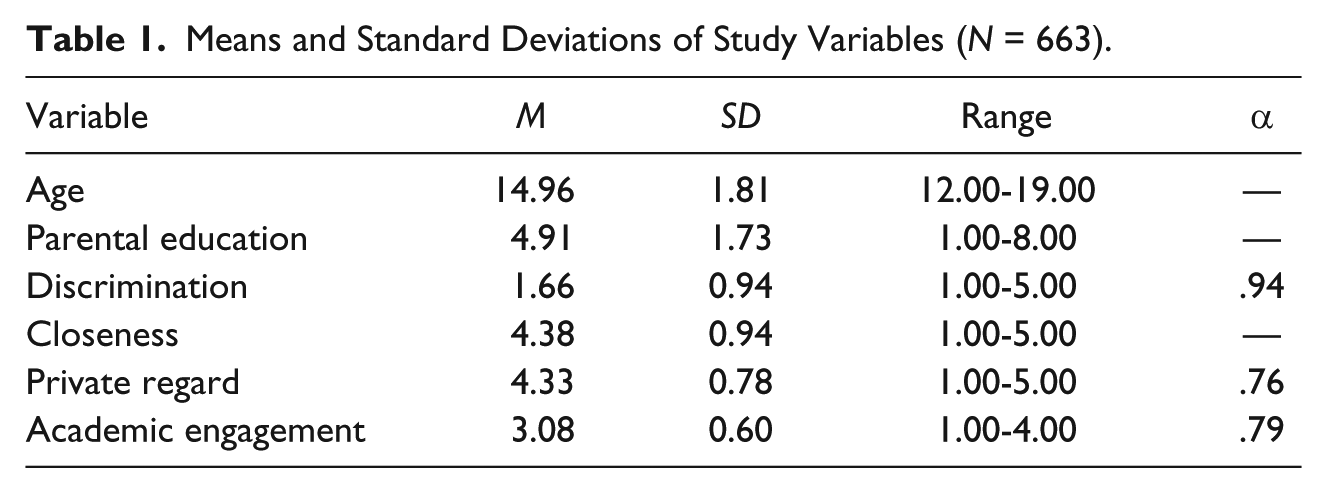
Participants reported on their own and their natural mentors’ age, gender, and race/ethnicity. As an indicator of family socioeconomic status (SES), participants were asked their caregivers’ educational attainment. If an adolescent reported two caregivers’ educational attainment, the higher of the two was used for analyses. Reported caregiver educational attainment ranged from junior high school or less to doctoral or professional degree (1% junior high school or less, 4% some high school, 16% received high school diploma or general education development certification, 18% some college, 19% received college diploma, 4% some graduate school, 21% master’s degree, 4% PhD/MD/JD, 13% do not know). School district was coded using dummy variables with School District 3 as the reference group. Self-reported participant gender was coded (0 = female, 1 = male) so as to account for potential gender effects. We also accounted for study cohort, as this study includes data from students participating in a larger study for the first, second, third, or fourth time. See Table 1 for descriptive statistics of study variables.
Means and Standard Deviations of Study Variables (N = 663).
Data Analytic Plan
All analyses were conducted using SPSS software (version 22). We employed a multiple imputation approach to generate values for data that were missing at random (less than 10% missing). Five imputations were performed (Schafer & Olsen, 1998) and pooled to generate values for missing data across study variables. Correlation analyses were then run to determine correlations among study variables. We then conducted a series of hierarchical regressions to test main and interactive effects of perceived school-based discrimination and natural mentor closeness on academic engagement. In keeping with resilience analytic approaches (Fergus & Zimmerman, 2005), we entered the control variables in the first step (gender, age, parental education, cohort, and school district), the risk factor in the second step (perceived school-based discrimination; see Figure 1, Path A), the compensatory factor in the third step (closeness to natural mentor; see Figure 1, Path B), and the interaction term (perceived school-based discrimination by closeness to natural mentor; see Figure 1, Path C) in the fourth step. All continuous independent variables were centered before computing interaction terms to help prevent problems of multicollinearity (Aiken & West, 1991). To address the potential issue of variable skew for variables such as NMR closeness and private regard, transformations were performed. Transformations did not change association strength or significance. To facilitate interpretation, we report the findings of the analyses conducted without transforming the variables.
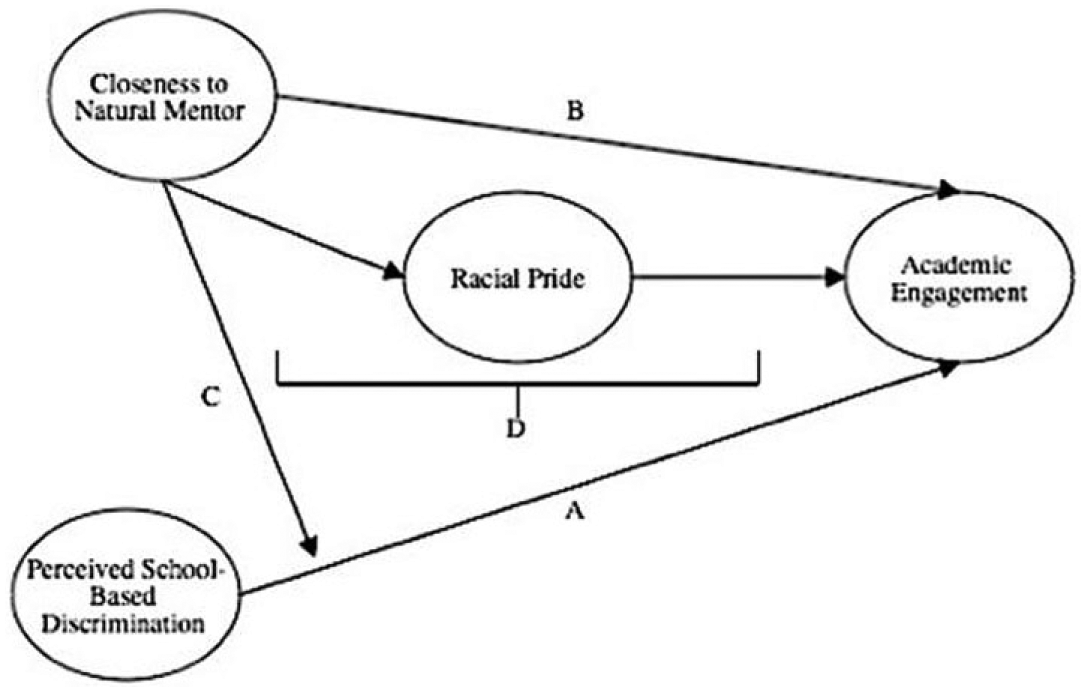
Conceptual model.
Private regard was tested as a mediator in the compensatory model (see Figure 1, Path D). We first tested for direct effects between NMR closeness and private regard, as well as from private regard to academic engagement. We constructed bias-corrected confidence intervals (CI) around the product coefficient of the indirect effect using the SPSS MEDIATE macro and a bootstrapping technique (Hayes & Preacher 2014; Preacher & Hayes, 2008). If the 95% CI surrounding the standardized indirect effect did not include 0, we deemed the indirect effect significant.
Results
Natural Mentors
Most natural mentors were related to participants (73%, n = 484). Of familial mentors, 37% were grandparents, 33% were aunts or uncles, 19% were older siblings, and 11% were older cousins. Non-familial mentors (n = 179) were primarily teachers or coaches (39%), family friends (27%), and church members or pastors (18%). Sixty-four percent of mentors were female, and 70% of the mentors were the same gender as their mentee. In addition, 87% of mentors were Black/African American (an additional 3% were bi- or multiracial). Approximately half of participants’ mentors were between 18 and 39 years old, and 44% were 40 years old or older. Seven percent of participants did not know the age of their mentor. According to participants’ reports, 4% of mentors had less than a high school diploma, 20% had completed high school or a GED, 14% had received some college or vocational training, 22% completed college, and 16% completed graduate or professional school after college. Twenty-four percent of participants reported they did not know the highest educational attainment of their mentor.
Correlational and Hierarchical Regression Analyses
All significant correlations were in the expected direction (see Table 2). Table 3 includes unstandardized coefficients and corresponding standard errors, standardized coefficients, R2s, and changes in R2 from our hierarchical regression analyses focused on the effects of perceived discrimination and natural mentor closeness on academic engagement. Being male and being older predicted poorer academic engagement. We also found relative differences in academic engagement when comparing students in School Districts 1 and 2 with School District 3. We found perceived school-based racial discrimination, the risk factor in our model, was negatively associated with academic engagement. We also found that NMR closeness, the compensatory factor in our model, was positively associated with academic engagement. We did not find support for an interaction effect between perceived school-based racial discrimination and NMR closeness on students’ academic engagement.
Correlations Among Study Variables.
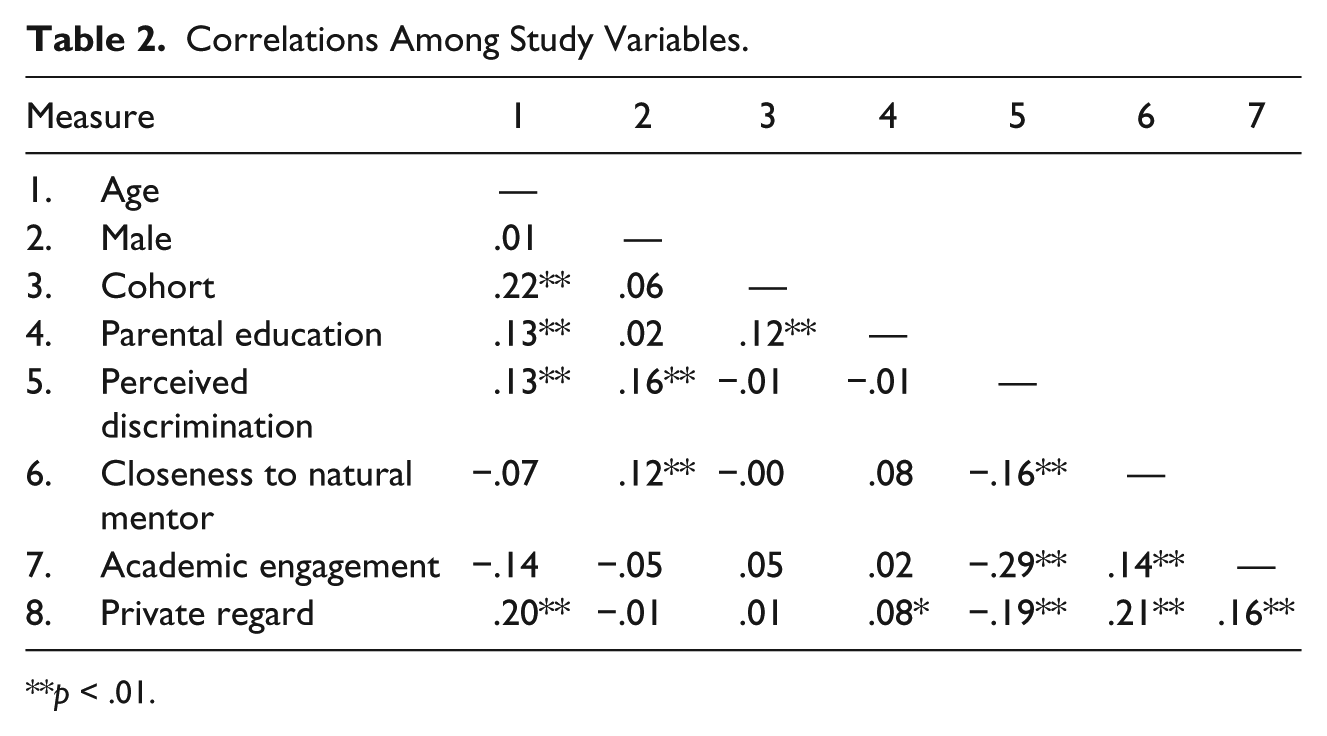
p < .01.
Summary of Hierarchical Regression Analysis Predicting Academic Engagement.
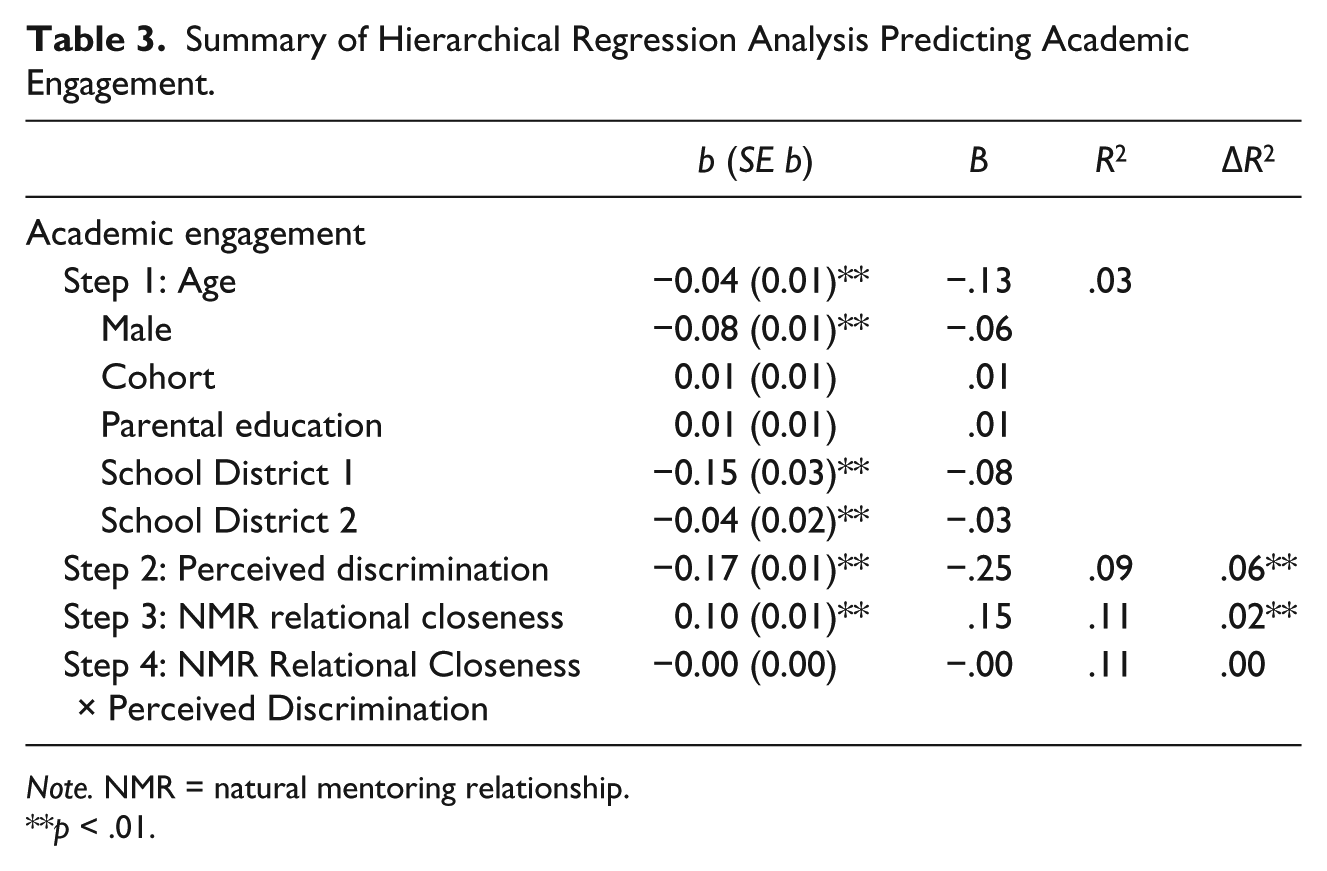
Note. NMR = natural mentoring relationship.
p < .01.
Mediation Analyses
In separate analyses, we found that NMR closeness positively predicted private regard (B = .15, p < .001) and private regard positively predicted academic engagement (B = .13, p < .001) after controlling for gender, parental education level, age, cohort, and school district. Bootstrapped CI of the standardized indirect effect indicated that NMR closeness indirectly predicted participants’ academic engagement via increases in private regard (indirect effect = .01; 95% CI = [.003, .023]).
Discussion
Our findings highlight the potential of NMRs to promote academic engagement among Black youth experiencing school-based discrimination. We found support for the compensatory model of resilience in that NMR relational closeness appeared to counteract the harmful effects of perceived school-based racial discrimination on academic engagement. In addition, we found support for our hypothesis that closeness in NMRs contributed to Black students’ academic engagement via increases in private regard. These findings support Rhodes’s (2005) theory of mentoring, in that closeness in NMRs positively influenced Black adolescents’ outcomes by contributing to their identity development. Of note, the majority (87%) of our sample reported race-matched natural mentors. It is possible that Black natural mentors are particularly able to help adolescents see their race as a personal strength. Increases in racial pride may offset the negative effects of discrimination by improving youths’ self-concept (Butler-Barnes et al., 2013). Support received through close NMRs may also bolster students’ confidence and pride in themselves and their racial group more broadly, thus directly countering the messages of inferiority communicated through experiences of school-based racial discrimination. These findings indicate both the potency of perceived school-based racial discrimination as a risk factor, and the potential for close NMRs to offset these deleterious effects. NMRs with elevated levels of closeness may be a resource to Black youth and an appropriate target for intervention.
We did not find support for the protective model of resilience. It may be that for NMRs to moderate the relationship between school-based discrimination and academic engagement, relationship characteristics beyond closeness must occur. In other words, it may be that for these relationships to actively reduce the harmful effects of discrimination on academic engagement, the natural mentor would have to explicitly focus on responding to discrimination (e.g., specific conversations about the discriminatory experiences). This was not assessed in the current study. It is possible that youth are not in the habit of processing discriminatory experiences with their natural mentors, regardless of how close the relationship may be. In addition, given that the mean reported discrimination was relatively low, it may be the case that these dynamics work differently when youth perceive low levels of discrimination. In the context of more frequent experiences of discrimination, these types of conversations may be more common, particularly within relationships characterized by closeness.
The findings of this study are consistent with previous research documenting the negative associations between perceived school-based racial discrimination and academic engagement (Neblett et al., 2006; Smalls et al., 2007). Consistent with others’ work, we found relational closeness in NMRs to be a key predictor of resilient academic outcomes (Zimmerman et al., 2002). In addition, these findings are consistent with research demonstrating the potential of NMRs to positively influence youths’ racial identities (Blash & Unger, 1995; Kaplan, Turner, Piotrowski, & Silbert, 2009; Yancey et al., 2002). The findings of this study add to this body of work by examining closeness in NMRs within a resilience framework. Much of the work to date has focused on the presence of NMRs as opposed to relationship qualities of NMRs. Our findings suggest variability in the extent to which these relationships may confer benefits to youth, and underscore the need for future research on NMRs to explicitly focus on relationship factors such as closeness. Notably, this is the first study, to our knowledge, to demonstrate a mediating relation between NMR closeness and academic engagement via adolescents’ racial pride in the context of perceived discrimination. Importantly, we detected these associations after accounting for potential confounds such as parental education level.
Limitations
Several limitations of our study should be noted. The cross-sectional design of the current study limits our ability to establish temporal precedence of predictor variables. It is possible, for example, that adolescents with relatively lower academic engagement may have been more likely to perceive experiences of discrimination. Results from studies using longitudinal designs, however, have demonstrated prospective associations between perceived racial discrimination and future well-being and academic outcomes (Hurd, Varner, Caldwell, & Zimmerman, 2014; Sellers & Shelton, 2003; Wong et al., 2003), lending support to the notion that experiences of discrimination influence subsequent academic outcomes. Another limitation is our complete reliance on self-report data from a single source. The anonymity of the survey may have encouraged more truthful responses; however, future research that collects additional data from multiple sources is an important next step to address the issue of shared method variance. Furthermore, the current study assessed relational closeness using a single-item measure. Nevertheless, findings from previous research indicate that this single-item closeness measure accounted for nearly the same amount of variation as a full-scale relationship measure (Rhodes, Schwartz, Willis, & Wu, 2014), suggesting that this is both a valid and more parsimonious approach to capturing relational closeness. Finally, the use of closed-ended survey measures may be a limited way to capture discriminatory experiences and relational dynamics in NMRs. Open-ended interviews may allow for a more in-depth understanding of experiences with discrimination and processes within NMRs. For instance, exploring whether and when natural mentors are deliberate in communicating race-related messages, and whether and when mentees discuss race-related stressors with their natural mentors are areas for future research.
Conclusion
Perceived school-based discrimination poses a considerable risk to academic engagement and subsequently lower academic achievement among Black youth. Thus, additional attention to factors that facilitate resilience in the context of school-based discrimination can support efforts to lessen the achievement gap between Black students and their White peers. Natural mentors may help offset the noxious effects of discrimination by reinforcing Black students’ sense of racial pride and countering messages of inferiority communicated through discriminatory experiences in the school. An important finding of the current study, however, is that only relationships characterized by heightened relational closeness were associated with greater academic engagement in the face of discriminatory experiences. Thus, the promotion of these types of relationships among youth who do not have a natural mentor and the strengthening of these bonds among youth with a moderately connected NMR may be effective strategies for the promotion of more positive academic outcomes among Black early adolescents who are contending with experiences of school-based discrimination. Collectively, our findings build on previous research by extending our knowledge of how NMRs confer academic benefits in the face of risk. Yet, we must note that though positive relationships with non-parental adults may offset some of the negative effects of school-based discrimination, our findings seem to suggest that the harmful effects of school-based discrimination on academic engagement were not directly lessened by the presence of close NMRs. Thus, in addition to fostering stronger intergenerational bonds with natural mentors, strategic efforts to reduce school-based discrimination are also needed to truly bolster the academic success of Black youth.
Footnotes
Declaration of Conflicting Interests
The author(s) declared no potential conflicts of interest with respect to the research, authorship, and/or publication of this article.
Funding
The author(s) disclosed receipt of the following financial support for the research, authorship, and/or publication of this article: This research was supported by the National Science Foundation, Grant No. 0820309. We are grateful to the youth and families for participating in this study and to the schools for their support. The writing of this article was supported, in part, by a predoctoral fellowship from the Institute of Education Sciences to the first author, a predoctoral fellowship from the National Science Foundation to the third author, and a postdoctoral fellowship from the National Academy of Education and Spencer Foundation, as well as a William T. Grant Foundation Scholar Award to the fourth author.