



Abstract
This study examined the moderating effect of youth–adult partnerships (YAPs) on the relationship between youth empowerment in the community and youth’s creative self-efficacy (CSE). A survey was administered to 2,653 youth recruited from youth service centers in Hong Kong, which measured youth empowerment in the community, perceived YAPs in youth services, and CSE. The results indicated positive associations between youth empowerment in the community and youth’s CSE and between YAPs and CSE. There was also an interaction effect between youth empowerment and YAPs on youth’s CSE, where the effect of youth empowerment was stronger for youth who experienced higher perceived levels of YAPs. This suggests an amplification effect of YAPs on the relationship between youth empowerment in the community and CSE. Overall, the present findings support a way for community-based youth services to empower youth and to facilitate creative developmental outcomes and initiatives among young people by enhancing YAPs.
Introduction
In recent years, youth programs aimed at fostering creativity have become increasingly popular in both in-school and afterschool settings. The Organisation for Economic Co-Operation and Development (OECD) Center for Educational Research and Innovation (Vincent-Lancrin et al., 2019) pointed out that given the digitalization of society, skills that are not easily replaced by artificial intelligence and robotics—such as creativity—become more valuable. The development of creativity has also become a significant aspect of education reforms and youth policies in many societies (Hui & Lau, 2010). However, existing research tends to focus on enhancing creativity in school settings rather than community settings. This is a notable oversight, because both formal and nonformal ways of learning are significant and interwoven (OECD, 2017). As more emphasis is starting to be placed on young people’s initiative and participation in community settings, the present study aimed to explore how youth empowerment in the community can enhance youth’s creative self-efficacy (CSE), which is a core component of creativity (Tierney & Farmer, 2002).
Creativity is defined as the generation of new or useful ideas, and it is seen as an important youth developmental outcome that is influenced by psychological, interpersonal, social, and contextual factors (Amabile, 1996; Gardner, 1982). In particular, one of the core components of creativity is CSE, or a person’s belief in one’s own ability to perform a creative task. Higher CSE is found to be associated with greater willingness to experiment with novel ideas (Tierney & Farmer, 2002). Previous research has also demonstrated a link between creativity and empowerment (Özaralli, 2015; Sun et al., 2012; X. M. Zhang & Bartol, 2010), in that empowerment is often associated with enhanced CSE and with such outcomes as independent thinking, risk-taking, and innovation (Conger & Kanungo, 1988; Thomas & Velthouse, 1990).
The empowerment theory (Zimmerman, 2000) describes empowerment as perceived efficacy and control over the social, economic, and political aspects of one’s life; it can be conceptualized as a multi-level construct occurring at the levels of the individual, family, organization, and community. However, the majority of existing research has examined empowerment at the psychological or individual level, which may unintentionally ignore the contextual factors that influence empowerment (Zimmerman, 2000). Similarly, in Hong Kong, although youth empowerment programs at the community level are becoming more prevalent (To, 2007), programs at the individual level of empowerment are still favored over those at the community level (To, 2009).
Meanwhile, young people are increasingly being recognized as contributors to community development and innovation (Checkoway, 2011; Martinez et al., 2017). An example of youth empowerment at the community level is youth participation in community affairs, which can occur through youth–adult partnerships (YAPs). Many researchers have recognized YAPs as a type of youth participation that is highly conducive to enhancing a young person’s potential and creating a constructive environment that supports youth development (N. T. Wong et al., 2010; Zeldin et al., 2013). Therefore, the present study focused on the influence of YAPs on the relationship between youth empowerment and CSE, and it also explored whether YAPs would amplify the effectiveness of community youth empowerment initiatives on youth’s CSE.
Literature Review and Hypotheses
Youth Empowerment in the Community and CSE
Self-efficacy can influence the motivation to engage in specific behaviors (Bandura, 1977) and can affect creative actions (Tierney & Farmer, 2002). CSE is described as the subjective belief that one has the ability to produce creative outcomes, which can influence subsequent creative behaviors or outcomes (Beghetto, 2006; Tierney & Farmer, 2002). Research has found that empowerment can further self-efficacy beliefs by encouraging individuals to think and act independently, to create meaning and purpose, and to understand how one’s tasks fit into a bigger picture (Conger & Kanungo, 1988). Conversely, participating in processes that feel meaningless is ineffective in enhancing self-efficacy and may even leave individuals feeling powerless (Conger & Kanungo, 1988; Thomas & Velthouse, 1990). Thus, youth who feel empowered may be more likely to produce greater creative output, especially if they perceive themselves as being in control of how they will tackle creative tasks.
Although empowerment can occur at either the individual or collective level (Jennings et al., 2006), research is lacking on the positive influences of the community level of youth empowerment on youth creativity. Youth empowerment in the community can be understood as opportunities that allow youth to express their voice, participate in decision-making processes, or engage in meaningful roles related to their communities (Adenaike et al., 2010; Paxton et al., 2005). Previous studies have pointed to the psychological and developmental benefits of youth empowerment by enhancing youth participation and contribution as well as involving youth in decision-making processes (Krauss et al., 2014; Larson et al., 2005). Overall, a welcoming social environment that enables youth to make decisions that affect their lives and wellbeing (as opposed to one that suppresses youth decision-making powers) is more conducive to building young people’s confidence in their abilities to become active agents of change and innovation (Checkoway, 2011; Jennings et al., 2006; Mitra, 2008; V. Wong, 2004).
Study Context: Youth Development in Hong Kong
Like many Asian societies, Hong Kong is known for being examination-oriented and for favoring learning methods focused on acquiring fixed knowledge or memorizing information over methods that promote creative thinking (Hui & Lau, 2010; Tam et al., 2014). Creativity development is becoming more prevalent in Chinese societies (Hui & Lau, 2010), and creativity has been established as a generic skill or learning outcome for primary and secondary students (Education Commission, 2000; Hui & Lau, 2010); still, many researchers lament the general lack of public support for creativity education and the lack of positive attitudes toward the relevance and importance of youth creativity (Chan, 2007; Chien & Hui, 2010; Tam et al., 2014). Furthermore, Chinese societies are characterized by collective relationships and respect for authority (Ho & Chiu, 1994). Thus, compared with Western systems, the importance of authority figures—here, teachers—and the compliance of subordinates—here, students—remain dominant in the Hong Kong education system, which may further challenge the enhancement of CSE among young people in this context (Tam et al., 2014).
In Hong Kong, the Home Affairs Bureau (HAB) is responsible for promoting youth development, and other policy bureaus—such as the Education Bureau and the Social Welfare Department—also shoulder the responsibility of supporting youth development in their respective service areas (Commission on Youth, 2018). In the past, the government concentrated on reducing antisocial behaviors among young people and helping youth achieve certain societal expectations (A. Ng, 1975; To, 2009). At present, more effort is devoted to enhancing youth developmental outcomes at the personal, interpersonal, and community levels (Commission on Youth, 2018; To, 2007).
Although youth empowerment has become a rising trend in youth services, the practice of youth empowerment remains underdeveloped in Hong Kong. In particular, macro-level interventions and forms of empowerment are less popular among social workers compared with micro-level interventions and forms of empowerment (To, 2009). Given that empowerment can also be conceptualized as a social process that takes place in both organizational and community contexts (Peterson & Zimmerman, 2004; Zimmerman, 2000), the relationship between the community level of empowerment and CSE needs to be examined, particularly among young people in Hong Kong. Therefore, the first hypothesis of this study is as follows:
YAPs and Young People’s CSE
In youth development literature, YAPs refer to the collaborations between youth and adults working together to make decisions or take action on issues at the organizational or community levels: these relationships are characterized by authentic decision-making processes, supportive adult mentors, mutuality, reciprocity, and community connectedness (Camino, 2000; Zeldin et al., 2013). Youth participation as active collaborators alongside adult partners has been shown as positively correlated with the personal and social development of young people (Checkoway, 2011; N. T. Wong et al., 2010). For instance, Akiva et al. (2014) found that involving youth in decision-making in community-based and afterschool youth programs was positively correlated with youth problem-solving efficacy and expression efficacy. Wernick et al. (2014) also found that lesbian, gay, bisexual, transgender, queer, and questioning (LGBTQQ) youth’s use of scripted theater performances delivered to adult stakeholders along with theater games within the group enhanced their self-confidence, developed their leadership, and nurtured their sociopolitical self-efficacy.
Previous research has demonstrated that YAPs elevate the self-efficacy of young people. YAPs also encourage youth to create change in the community (Zeldin et al., 2014, 2017). This gives YAPs a role in the development of agency and self-efficacy among young people, in which YAPs are capable of cultivating a space that permits youth to explore different creative pursuits. Therefore, it is likely that an association exists between YAPs and young people’s CSE, one that is predicated upon a supportive and co-creating environment that encourages initiative and creativity, despite the lack of empirical support for the relationship between YAPs and CSE. Thus, the second hypothesis of this study is as follows:
The Moderating Effect of YAPs
Contextual factors can influence both structural levels of empowerment (Wall et al., 2004) and an individual’s psychological empowerment (Seibert et al., 2004). The Typology of Youth Participation and Empowerment (TYPE) Pyramid (N. T. Wong et al., 2010) describes five types of youth–adult relationships, with varying levels of youth empowerment. The pluralistic form of YAP—which involves shared power between youth and adults—was stated to be the most ideal for empowering youth and fostering both organizational and community development.
Empowerment through an organization is found to generate psychological empowerment among its members (Peterson & Zimmerman, 2004), because those who can derive meaning and purpose from their organization’s goals and/or performance often feel more empowered (Jennings et al., 2006; Spreitzer, 1995). This suggests that when YAPs in youth services allow young persons to assess their performance in and contributions to a service, it may enhance feelings of empowerment. In turn, this newfound sense of empowerment, stemming from the knowledge of one’s value and recognition within youth services, may facilitate young people in their experimentation with creative approaches and problem-solving processes, along with their CSE development.
Moreover, the context and characteristics of YAPs are important to consider, as they can influence youth’s perceptions of empowerment (Jones & Perkins, 2005; Larson et al., 2005; Roach et al., 2013). For instance, youth work in Hong Kong has only recently begun to shift from deficit-based approaches to empowerment-based approaches (To, 2009). Previously, youth creativity in Hong Kong was confined to formal channels of education, although youth service centers and nongovernmental organizations are increasingly implementing creativity-based programs for young people, such as facilitating youth entrepreneurship projects (Chandra & Liang, 2017; Cheung, 2008).
On one hand, existing youth services strive to provide young people with opportunities to voice their thoughts and to receive greater support from youth workers so that they feel empowered to engage in service- or community-planning initiatives (Ngai, 2006). On the other hand, despite increased efforts in recent years seeking to empower youth through YAPs, many youth work practices still follow problem-oriented, behavioral-change approaches (To, 2009; V. Wong, 2004). These approaches not only maintain an unequal power dynamic between social workers and youth, but they also position adults as experts as opposed to partners working alongside the young persons (To, 2009).
Because YAPs support two dimensions of organizational empowerment—a supportive system and shared decision-making (Zeldin et al., 2014)—YAPs are likely a moderator of the potential relationship between the community level of youth empowerment and youth’s CSE. Given the existence of organizational forms of youth empowerment (such as coalitions that target community-related issues), it is expected that a synergistic effect exists between youth empowerment in the community and YAPs within youth services in terms of their influences on CSE. Consequently, youth empowerment in the community and organizational-level YAPs are proposed as exerting an interaction effect on CSE. Therefore, the third hypothesis of this study is as follows:
Method
Sampling and Participants
The participants were recruited as part of a larger study examining the impact of youth services provided by local, district-based Integrated Children and Youth Services Centres (ICYSCs), which facilitate youth participation and co-creation between young people and youth work service providers. In Hong Kong, a total of 139 ICYSCs currently provide a range of preventive, developmental, and supportive social work services for children and youth aged 6–24 years, their significant others, and the community, especially those with disadvantaged circumstances (Youth and Corrections Branch, 2019). As of 2015, a total of 322,233 young people were members of ICYSCs (Commission on Youth, 2018).
Sixteen ICYSCs were involved in this study. They are located across five districts in Hong Kong: the Hong Kong and outlying islands, Kowloon East, Kowloon West, the New Territories East, and the New Territories West. A total of 3,000 young people aged 11–24 years were invited to respond to the baseline assessment questionnaire; 2,653 questionnaires (88.4% response rate) were returned, analyzed, and included in this study. This sampling method helped maximize the age diversity among the participants, and it is commonly used in studies examining youth participation and empowerment (Zeldin et al., 2013, 2014).
Data Collection
Ethics approval was obtained from the Survey and Behavioural Research Committee of the Chinese University of Hong Kong. Permission was then obtained from the participating ICYSCs, the participants themselves, and the parents of participants younger than 18 years old. Questionnaires were administered and collected by trained social workers in the ICYSCs, who ensured that participants received thorough explanations regarding the study’s objectives, how the collected data would be processed, the meaning of voluntary participation, their withdrawal rights, and the guarantee of anonymity. After providing their informed consent, participants completed the self-administered questionnaire at a participating ICYSC. Questionnaires were immediately collected by the social workers upon completion.
Measures
For the measures that were adapted from existing scales in Western literature, the English versions of these scales were first translated into Chinese by a professional translator and then reviewed by a panel of four researchers. Then, the Chinese versions of the scales were back-translated into English by another professional translator and were revised again by the panel. The measures were then pilot-tested with a convenience sample of 68 youth aged 11–18 years. Based on their feedback as well as on the results of the initial reliability and validity analyses of the measures, a finalized questionnaire was designed. Details of the measures are as follows.
Predictor variable: Youth empowerment in the community
The Perceived Youth Empowerment Questionnaire (PYEQ) developed by Paxton et al. (2005) measures young people’s perceptions of their empowerment with regard to their neighborhood or community. This scale was selected due to its high reliability, validity (Paxton et al., 2005), and applicability in a range of target groups or contexts (e.g., Adenaike et al., 2010; Muturi et al., 2018). The PYEQ is a five-item scale containing statements such as “I am given chances to make my neighborhood/community better.” Each item is rated on a 7-point Likert-type scale (1 = Strongly disagree; 7 = Strongly agree), with total scores ranging from 5 to 35.
As the PYEQ did not have a Chinese-language version, a split sample procedure was used to validate this questionnaire (To & Chan, 2016). The sample was divided by random sampling into two groups of similar sizes, and exploratory factor analysis (EFA) and confirmatory factor analysis (CFA) were performed separately, one in each of the split samples. In terms of the EFA, only one factor could be extracted according to the rule of extracting factors with eigenvalues greater than 1.0. Based on the EFA results, a CFA was then conducted in the other half, using AMOS Software Version 25 on the second half of the random sample.
To evaluate the goodness-of-fit, a variety of indices were examined, including the comparative fit index (CFI), the Tucker–Lewis index (TLI), and the root mean square error of approximation (RMSEA). The CFI and the TLI each range from 0 to 1, with 0 indicating no fit and 1 indicating a perfect fit; in general, a CFI or TLI value from .90 to .95 is considered a good fit (Bollen, 1989). The RMSEA ranges from 0 to 1, with values less than .05 considered an exact fit and values from .05 to .08 considered a close fit (Bollen, 1989). The goodness-of-fit indices for this measure were found to be acceptable (CFI = .99, TLI = .99, RMSEA = .06), and the factor loadings ranged from .61 to .93. With the whole sample included for reliability analysis, the Cronbach’s alpha coefficient of the PYEQ in this study was .90.
Moderating variable: YAPs
The Youth–Adult Partnership Questionnaire (YAPQ) was developed by Zeldin et al. (2014) to measure young people’s perceived participation and partnership with youth workers. The YAPQ is a nine-item scale containing statements such as: “Youth and adult youth workers learn a lot from working together in this center.” Each item is rated on a 7-point Likert-type scale (1 = Strongly disagree; 7 = Strongly agree), with total scores ranging from 9 to 63.
As the YAPQ did not have a Chinese-language version, a split sampling procedure was used to validate this questionnaire (To & Chan, 2016). The sample was divided by random sampling into two groups of similar sizes. Both EFA and CFA were then performed separately, one in each of the split samples. In terms of the EFA, only one factor could be extracted according to the rule of extracting factors with eigenvalues greater than 1.0. Based on the EFA results, a CFA was then conducted in the other half. The goodness-of-fit indices were found to be acceptable (CFI = .99, TLI = .98, RMSEA = .07), and the factor loadings ranged from .74 to .88. (Specific information about the EFA and CFA is available upon request from the first author.) With the whole sample included for reliability analysis, the Cronbach’s alpha coefficient of the YAPQ in this study was .95.
Criterion variable: CSE
The Creative Self-Efficacy Scale (CSES) was developed by Tierney and Farmer (2002) and translated into Chinese by Gong et al. (2009). This scale measures one’s perceptions of one’s own creative skills and abilities to produce creative, novel, or useful results. The CSES is a three-item scale containing statements such as “I have confidence in my ability to solve problems creatively.” Each item is rated on a 7-point Likert-type scale (1 = Strongly disagree; 7 = Strongly agree), with total scores ranging from 3 to 21. The reliability coefficient of the CSES in this study was .86.
Control variables
Demographic variables
Previous research has demonstrated the influence of age, gender, educational level, and parents’ educational level on the relationship patterns described in the hypotheses (e.g., Lehrer et al., 2014; D. J. Zhang et al., 2018). Consequently, data on these variables were collected in the questionnaire, and they were treated as control variables during the regression analyses.
To rule out the effects of personal and interpersonal dimensions of empowerment, the following variables were also treated as control during regression analyses.
Agentic personality
The Agentic Personality Questionnaire (APQ) developed by Yuan and Ngai (2016) in the Chinese language includes the Resilience Subscale, the Self-Efficacy Subscale, and the Self-Esteem Subscale. In this study, it was used to measure the influence of the personal dimension of empowerment, which involves how people feel a sense of mastery and ability to solve their problems and regain control (Zimmerman, 2000). The APQ is a 17-item scale containing statements such as: “I can finish almost everything that I am determined to do.” Each item is rated on a 7-point Likert-type scale (1 = Strongly disagree; 7 = Strongly agree), with total scores ranging from 17 to 119. The reliability coefficient of the APQ in this study was .91.
Bonding social capital
Because the concept of social capital can be separated into bonding and associational forms of social capital, both were measured in this study to better examine the influences of interpersonal or relational empowerment (Christens, 2012). The Social Provision Scale (SPS) was developed by Cutrona and Russell (1987) and was translated into Chinese by To et al. (2014). This scale was used to assess the interpersonal dimension of empowerment (Christens, 2012). It is a 12-item scale containing statements such as “I feel a strong emotional tie with at least one other person.” Each item is rated on a 7-point Likert-type scale (1 = Strongly disagree; 7 = Strongly agree), with total scores ranging from 12 to 84. The reliability coefficient of the SPS in this study was .89.
Associational social capital
The Associational Social Capital Questionnaire (ASCQ) was developed by Yuan and Ngai (2016) in the Chinese language to measure young people’s perceived social cohesion, trust, and solidarity with the associations with which they are affiliated. The ASCQ is a 10-item scale containing statements such as: “People in this association help each other out.” Each item is rated on a 7-point Likert-type scale (1 = Strongly disagree; 7 = Strongly agree), with total scores ranging from 10 to 70. The reliability coefficient of the ASCQ in this study was .83.
Data Analysis Procedures
Descriptive statistics were run to explore the participants’ demographic characteristics. In the first phase of data analysis, Pearson’s correlation analyses were used to explore the correlations among the variables of agentic personality, bonding social capital, associational social capital, YAPs, youth empowerment in the community, and CSE.
In the second phase of data analysis, a series of hierarchical regression analyses were used to predict CSE. First, the demographic variables were entered in Step 1 of the regression models to control their influences. Second, the variables of agentic personality, bonding social capital, and associational social capital were entered in Step 2 of the regression models to rule out their influences. Third, the perceived youth empowerment in the community was regarded as the primary predictor variable and was thus entered in Step 3 of the regression models. Fourth, the YAPs were regarded as the moderator and were thus entered in Step 4 of the regression models. Fifth, an interaction term (Perceived Youth Empowerment in the Community × YAPs) was created and entered in Step 5 of the regression models. The variables were mean-centered before the interaction term was created, to avoid multicollinearity (Aiken & West, 1991). A significant moderating effect could be detected by plotting the regression equation at two levels (± 1 SD) of the YAPs.
Results
Of the 2,653 participants, 50.6% were male and 49.4% were female. Of the total sample, 10.9% were aged 11–12 years, 56.2% were aged 13–16 years, 25.0% were aged 17–20 years, and 7.9% were aged 21–24 years. Furthermore, 75.8% of the sample was educated at the secondary level; 25.4% had a father whose highest education level was junior secondary school, and 24.2% had a mother whose highest education level was junior secondary school. Table 1 shows the demographic characteristics of the participants.
Demographic Characteristics as a Percentage of the Sample (n = 2,653).
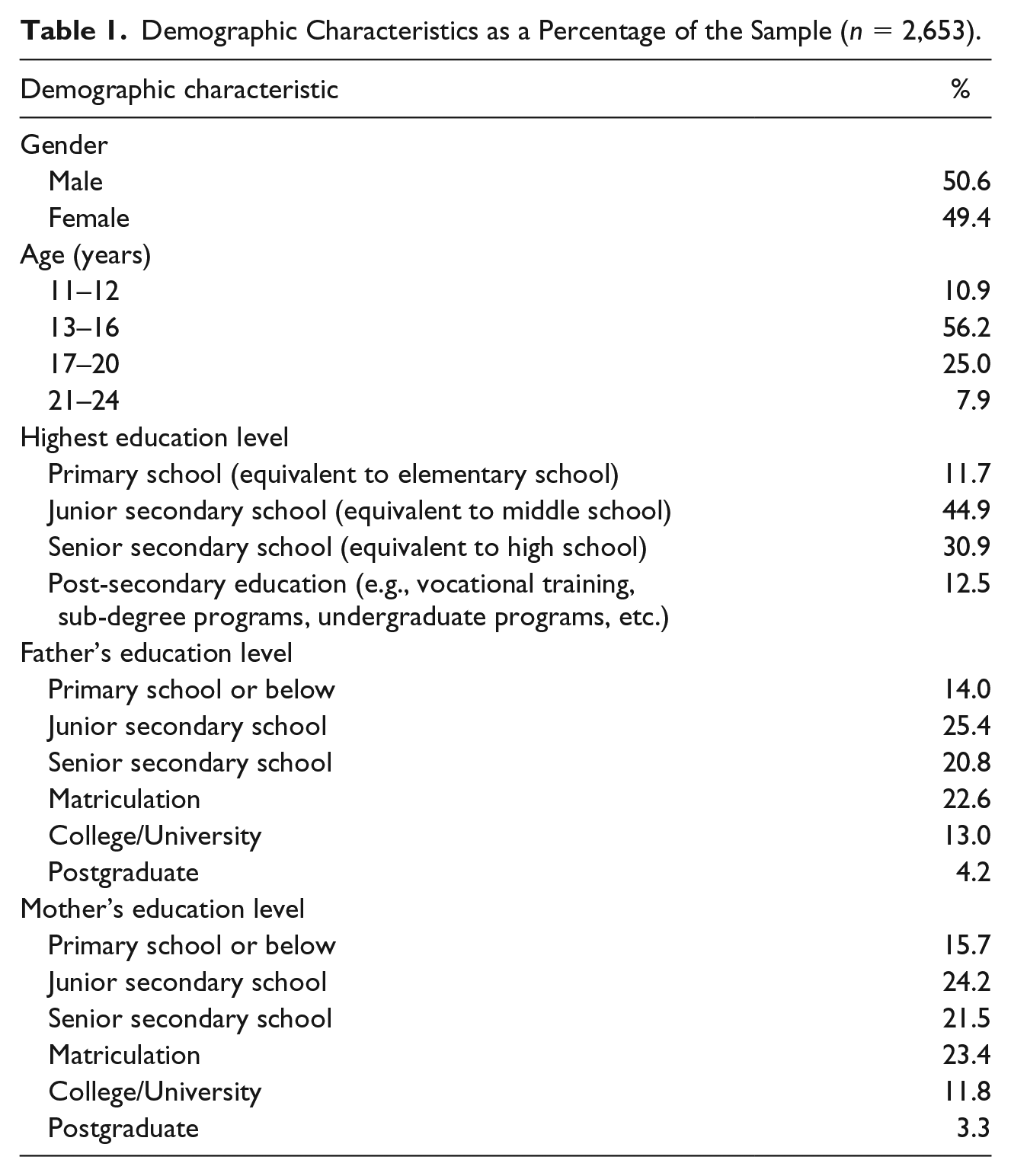
Table 2 provides the results of the zero-order correlations among the variables. The results show that the predictor variable (youth empowerment in the community), the presumed moderator (YAPs), the criterion variable (CSE), and the control variables (agentic personality, bonding social capital, and associational social capital) are significantly correlated.
Summary of Mean Scores, Standard Deviations, and Zero-Order Correlations Between Agentic Personality, Bonding Social Capital, Associational Social Capital, Youth Empowerment in the Community, Youth–Adult Partnerships, and Creative Self-Efficacy (n = 2,653).
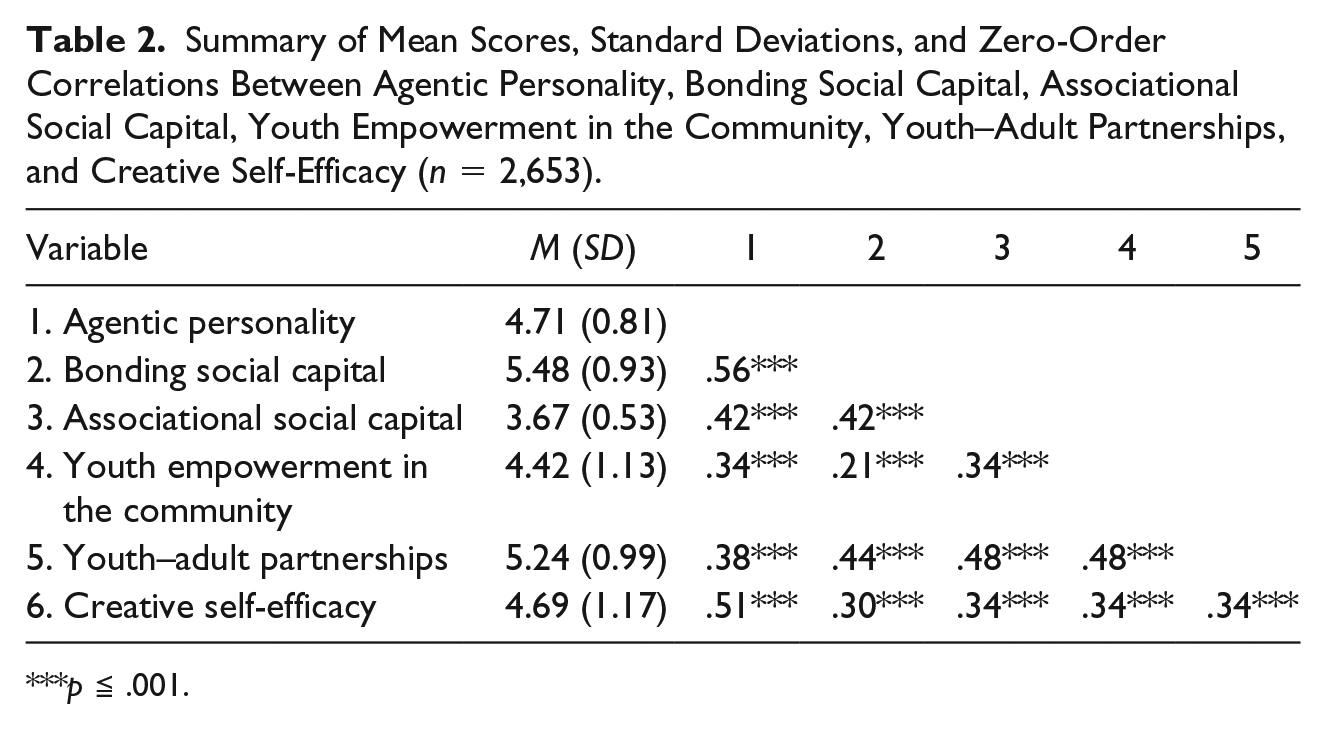
p ≦ .001.
Table 3 reports the results of the hierarchical regression analyses. First, the results support Hypothesis 1, as they demonstrate a positive association between youth empowerment in the community and young people’s CSE when the effects of demographic variables, agentic personality, bonding social capital, and associational social capital are ruled out. Second, the results support Hypothesis 2, as they demonstrate a positive association between YAPs and CSE, after the effects of demographic variables, agentic personality, bonding social capital, associational social capital, and youth empowerment in the community are controlled for. Third, the results indicate an interaction effect between youth empowerment in the community and YAPs in terms of influence on CSE. As shown in Figure 1, the association between youth empowerment in the community and CSE was stronger among participants who had higher mean scores in YAPs than those who had lower mean scores in YAPs. In other words, YAPs have an amplification effect on the relationship between youth empowerment in the community and CSE.
Hierarchical Regression Analyses Predicting Creative Self-Efficacy (n = 2,653).
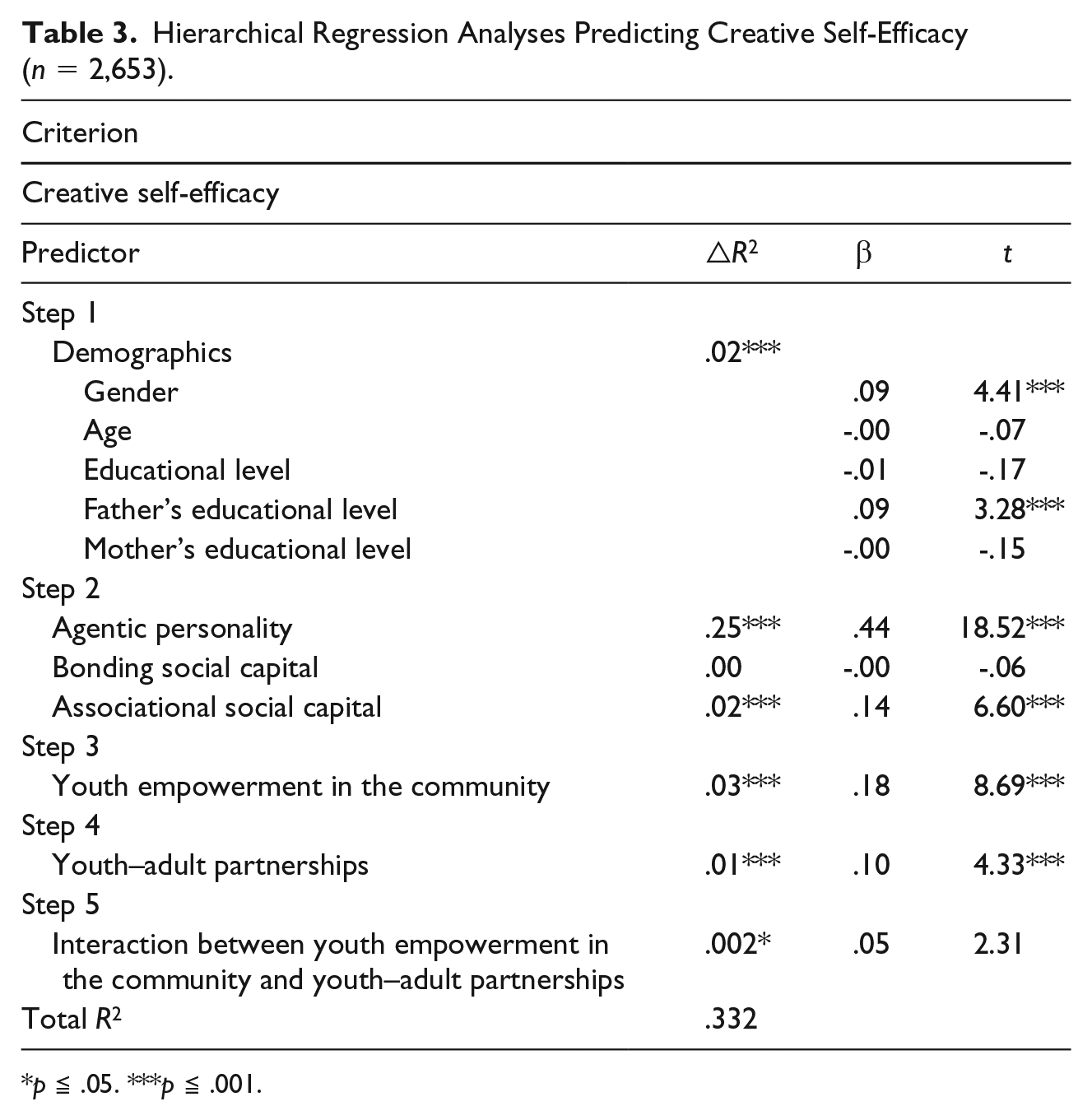
p ≦ .05. ***p ≦ .001.
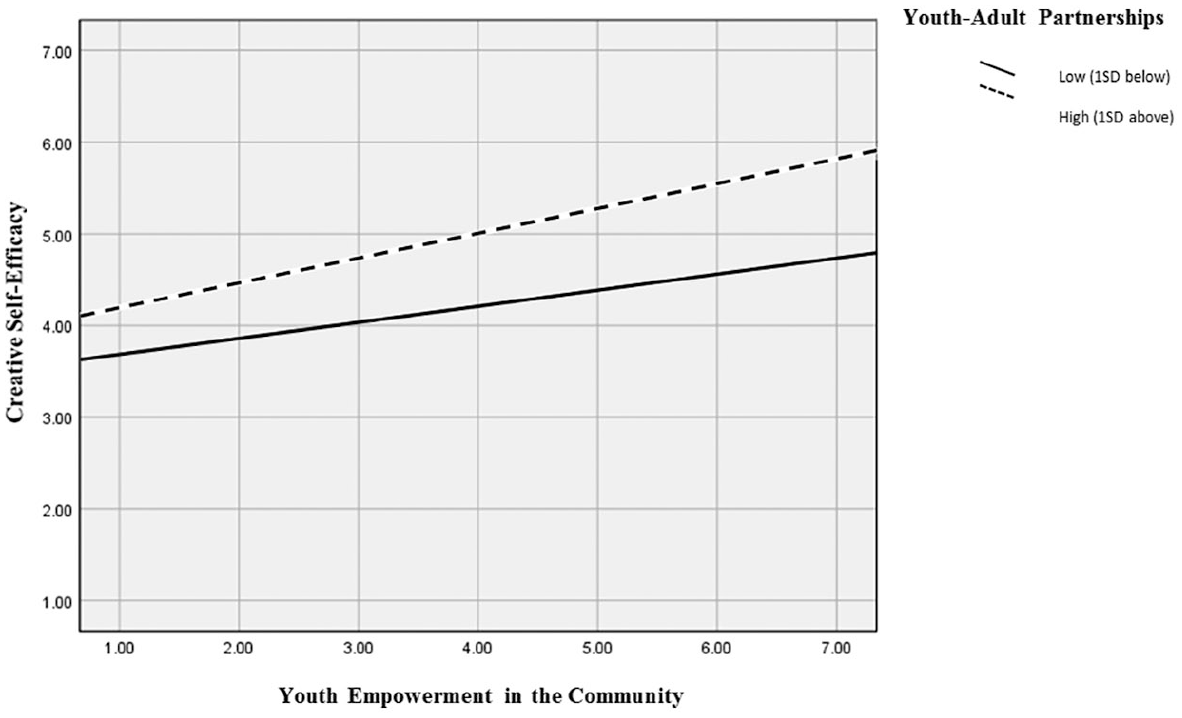
Association between youth empowerment in the community and creative self-efficacy as a function of youth–adult partnerships.
Discussion and Implications
This study examined the relation between youth empowerment in the community and youth’s CSE, and the moderating effect of YAP on this relationship. For one, the results found a positive association between youth empowerment in the community and CSE, which confirms previous research. For example, a prior study found that empowerment programs in the community provide youth with opportunities for growth at the individual level, thus increasing self-efficacy (Akiva et al., 2014). Such experience with empowerment enhances young people’s confidence and lead them to innovate for both personal and community improvement.
Similarly, another study indicated that youth who have actively participated in making a difference through community programs report greater self-efficacy (Gullan et al., 2013). This is likely due to an increased awareness of how one’s roles and responsibilities contribute to the community and hence an increased incentive to innovate in these roles. Other studies have found that when teachers do not listen to students or when students perceive that their teachers have given up on them, these students exhibit lower CSE (Beghetto, 2006). In line with these previous findings, the current findings suggest an association between youth’s self-efficacy beliefs and the feeling of empowerment derived from their surroundings.
In addition, the results showed a positive association between YAPs and youth CSE. According to the empowerment framework proposed by To (2009), when individuals are recognized by others for their contributions and commitment to the mission of an organization, those individuals are also more likely to appreciate their own experiences and goals related to the organization. The current results suggest that establishing a collaborative relationship between service providers and youth service users is necessary to the dialogical processes of empowerment. These findings corroborate previous support for the role of YAPs in helping youth to take on new responsibilities; to attempt new ideas; to achieve positive psychological and developmental outcomes; and to participate as active, emerging future leaders in their communities (N. T. Wong et al., 2010; Zeldin et al., 2013).
Moreover, an interaction effect was found between youth empowerment in the community and YAPs in terms of influence on youth CSE. Specifically, the association between youth empowerment in the community and CSE was stronger for participants with higher perceived engagement with YAPs, suggesting that increased participation in YAPs or more interactions with adult partners can enhance youth empowerment at the community level. In addition, it is possible that YAPs mobilize youth and adult partners alike to engage in genuine dialogue, co-create new ideas, and create a social environment where young people can tap into their creative potential. Youth may construct the meaningfulness of YAPs when they perceive genuine empathy from the adult partner or when they have actively reflected on information given by the adult, rather than blindly following the advice the adult provides (To, 2009). Although most prior studies examining empowerment within organizations took place in professional settings, the current study provides evidence that collective-level empowerment and participation in decision-making potentially influence youth’s CSE in community settings.
Scholars have argued that viewing youth work only at the personal or interpersonal level can result in a failure to notice how structural levels of social systems may contribute to the oppression of youth (Wyn & White, 1997). Creating opportunities for youth to participate in decision-making at the community level may increase youth’s appreciation of the people, issues, and/or events in their communities (Akiva et al., 2014), as well as increase positive attitudes held by adult youth workers toward youth involvement (Jones & Perkins, 2006). YAPs may facilitate positive youth development by building meaningful roles based on mutual responsibility and respect and by fostering youth voices in decision-making and knowledge-building processes (Mitra, 2008); therefore, strong YAPs may have significant implications for addressing power imbalances between youth and adults in the community.
If both youth and adults can actively enhance their reflexivity on YAPs, both parties may be able to reflect on the power dynamics in which youth find themselves and how societal power structures often govern several areas of youth development. Both a deeper understanding of, and lived experiences with, YAPs could also reposition youth and their adult partners as reflexive agents, as well as support young people as they navigate through seemingly oppressive situations to achieve personal goals and certain developmental outcomes. Consequently, youth empowerment initiatives in ICYSCs in Hong Kong could focus more on incorporating reflexive practices that would help youth work practitioners be more aware of how their interactions with youth can help the latter reaffirm their personal power and subsequently enhance their CSE.
Previous research has also suggested that adults often resist viewing youth as partners and sharing power with young people (Collins et al., 2016; Larson et al., 2015; Roach et al., 2013). This could stem from concerns about allowing youth to voice their opinions during decision-making processes, especially for decisions that are traditionally restricted to adults in positions of authority (N. T. Wong et al., 2010). Particularly in Chinese cultures, with deeply embedded Confucian values, respect toward seniors is strongly emphasized (S. H. Ng et al., 1997). This may thus influence YAPs in Chinese societies, where objections to YAPs may be grounded in the idea that these partnerships challenge traditional notions of junior–senior relationships. Consequently, rather than facilitating specific processes and strategies that could promote youth empowerment (To, 2009; V. Wong, 2004), many community organizations in Hong Kong see the provision of youth positions on decision-making boards as successful indicators of youth empowerment (Commission on Youth, 2018). Clearly, policymakers and practitioners should review existing empowerment practices to enhance youth participation in various areas.
Overall, the present study points to a need for a greater systematic examination of how community-based YAPs in Hong Kong can provide new opportunities for youth empowerment, CSE enhancement, and community development. In view of the current societal assumptions and attitudes toward adult privilege and youth responsibility, YAPs may serve as a means through which youth can become fully integrated into community-level decision-making processes and can become active agents in their communities.
Limitations and Future Directions
A few limitations must be considered. First, although the present research included 2,653 youth participants from 16 ICYSCs across Hong Kong, the generalizability of the findings remain speculative at best, due to the absence of a representative randomized sample. Second, the use of a self-reported survey means the data may be subject to social desirability bias. Third, a cross-sectional research design cannot provide causal evidence for the relationships between variables; longitudinal studies should be undertaken to examine the causality and directionality of these relationships.
Overall, despite numerous qualitative studies examining youth empowerment and YAPs in Hong Kong (e.g., To, 2009; V. Wong, 2004), quantitative research investigating the effects of YAPs and youth empowerment at the community level is lacking, as are validated instruments that can measure the constructs presented in this study. YAPs in Hong Kong also need to overcome certain structural barriers that prevent youth from becoming contributors to their communities, such as power differentials, regulatory challenges, and a general lack of regard for youth voices (Mitra, 2008). In all, the current research study holds enormous value for future researchers or practitioners seeking to empower young people in the community.
Conclusion
In sum, the present study demonstrates the different factors and levels of empowerment that can strengthen youth’s CSE. If they can draw on supportive networks and community resources, young people are more likely to realize their strengths, utilize their creativity to attain personal goals, and participate in community events. The current findings also highlight a need to further develop youth empowerment practices and YAPs, especially in the Hong Kong context. Ultimately, creating empowering environments for youth will require youth workers and adult partners to pay greater attention to individual young persons, the surrounding organizational and community systems, and their own relationships with young people and the community.
Footnotes
Declaration of Conflicting Interests
The author(s) declared no potential conflicts of interest with respect to the research, authorship, and/or publication of this article.
Funding
The author(s) disclosed receipt of the following financial support for the research, authorship, and/or publication of this article: This study was supported by the YouthCreate Series granted by the Hong Kong Jockey Club Charities Trust (Project Code: 7105626).
