



Abstract
Youth who report prosocial relationships with natural mentors show increased social and academic success and life satisfaction. However, little research investigates how mentors impact aspects of youth identity such as athleticism or religiosity. The present study applies a Bayesian Additive Regression Trees (BART) analysis model to data from a national longitudinal study (N = 15,701) to predict specific outcomes in educational, athletic, and religious domains. This analytic approach is uniquely well-suited for accurately drawing conclusions within highly collinear, high dimensional datasets. Analyses included demographic variables and childhood base rates of academic success, fitness, and religious beliefs as covariates. Findings indicate that the presence of an academic mentor during adolescence longitudinally predicts educational attainment, while athletic or religious mentors did not have significant impacts in terms of increasing athleticism or religiosity. These results suggest that academic mentors may have more longitudinal impacts on student success than other types of mentors.
Non-parental helping relationships are a central feature of human growth and development. Evolutionarily speaking, a strong relationship with an adult, either familial or non-familial, provides significantly more protection and resources for survival. As humanity has largely transitioned into an industrial society and developed ecological systems of support, the importance of such relationships are still noted in common adages such as “it takes a village.”
While some young people may be matched with supportive adult mentors through formal mentoring programs (e.g., Big Brothers Big Sisters of America), many young people benefit from naturally occurring mentoring relationships. Within these relationships, young people are supported by natural mentors, or non-parental adults who step outside of their typical roles to take an increased involvement in a young person’s life by offering advice and guidance (Jacobi, 1991). At a crucial period in development, many adolescents receive significant prosocial and targeted support from natural mentors. Young people often find natural mentors among the adults in their lives, such as relatives, teachers, coaches, clergy, or employers. For these young people with natural mentors involved in their lives, research demonstrates they are more likely to perform better in school (Rhodes et al., 2000), are more socially successful (Langhout et al., 2004), demonstrate more positive attitudes toward school (Zimmerman et al., 2002), have higher expectations for educational success (Sanchez et al., 2008), and even show higher levels of income (M. A. Hagler & Rhodes 2018). These outcomes are consistent across demographics (e.g., gender and socioeconomic status) (L. Erickson et al., 2009; Haddad et al., 2011). Furthermore, growing evidence indicates these outcomes are likely sustained beyond the duration of the relationship itself, extending into young adulthood (M. A. Hagler & Rhodes, 2018).
Though much is known about the impacts of mentorship, most research is concentrated in examining academic or social outcomes. Less is known about how mentors may impact young people in other areas of identity development, such as athleticism or religiosity. Given many mentors are coaches or religious leaders, such knowledge regarding potential outcomes in these domains would inform our conceptual understanding of how mentoring functions outside of the academic sphere. The purpose of the current study is to examine if the role of a mentor (e.g., teacher, coach, religious leader) uniquely impacts within-domain outcomes over time (e.g., academic success, athleticism, religiosity). Further, we aim to investigate several potential covariates, including baseline rates of academic attainment, athleticism, and religiosity, to control for confounding variables. We expect that the domain of the mentor will predict the relative influence of role-related outcomes. We hypothesize that the presence of an academic mentor will positively predict educational expectations and attainment, that the presence of an athletic mentor will positively predict athletic outcomes, and that the presence of a religious mentor will positively predict religiosity.
Mechanisms of Mentorship
Formal models of mentorship identify the close relationship between mentors and mentees as one of the primary mediums through which mentors can influence young people. In 2005, Rhodes developed a model of mentoring that outlines these paths of potential influence. According to this model, successful mentor relationships are “characterized by mutuality, trust, and empathy” (Rhodes & DuBois, 2008, p. 255). Understandably, mentees often need time to develop this strong connection with a mentor. When young people see certain adults in their lives frequently and consistently, there are naturally more opportunities to build a relationship into mentorship. For this reason, teachers, athletic coaches, and religious leaders often become mentors by nature of their frequent contact with youth in a variety of settings.
As a strong relationship transitions into mentorship, the mentor begins to support the youth through a combination of four primary functions: role modeling, teaching, advocacy, and emotional support (Miranda et al., 2016). For the purposes of this study, we highlight this function of role modeling as especially important. A role model is a figure that young people look up to, learn from, and in some cases, emulate in their own lives. For example, we might expect a young person who finds a strong mentor in their soccer coach to adopt mutual values, like physical fitness, to strengthen the foundation of this relationship. As a result, mentors inevitably introduce their mentees to new activities and perspectives by nature of modeling behavior in their own lives.
Mentees are exposed to these opportunities during a crucial period of identity formation; in fact, Rhodes’ (2005) model of mentoring highlights identity development as a key function of mentorship. The convergence of a strong mentor relationship during this period can lead young people to explore a broader range of “possible selves” (Markus & Nurius, 1986). For example, an academic mentor may introduce the mentee to the possibility of pursuing a career in higher education, potentially shifting the mentee’s educational trajectory and self-concept. Mentors play a large part in this process solely by introducing mentees to new viewpoints. Given the multiple pathways of influence detailed in Rhodes’ model, it stands to reason the identity of a mentor has the potential of what experiences a young person is exposed to, and potentially shift the possible selves a young person envisions.
Benefits of Mentorship
The presence of a mentor in adolescence is tied to many important outcomes for young people, especially when it comes to education. Young people with mentors report stronger beliefs that doing well in school is important, which likely contributes to the increased performance in elementary, middle, and high school (Herrera et al., 2007; Hurd et al., 2012; Sanchez et al., 2008; Wyatt, 2009). These benefits also extend into adulthood; the presence of a mentor is associated with increased rate of college attendance and the selection of careers that are intrinsically motivating (Dubois & Silverthorn, 2005; McDonald & Lambert, 2014). Educational expectation and attainment are a predictor of future success, suggesting the presence of a mentor can have lasting impacts beyond academics. Put differently, because students who expect that they will attend college often back up these efforts with persistence toward degree attainment, and because college degree attainment can boost one’s lifetime earnings and contribute to access to resources that may promote future health and wellbeing, mentors may promote long-term financial, physical, and mental wellbeing by promoting degree attainment (Kim et al., 2015; May & Witherspoon, 2019; Princiotta et al., 2014; Tamborini et al., 2015; Zajacova & Lawrence, 2018).
We see extended benefits of mentorship for youth in psychosocial domains as well. The presence of a mentor is associated with increased social success, decreased psychological distress, and increased self-worth during childhood through young adulthood (Hurd et al., 2018; Langhout et al., 2004). Tangible benefits of mentorship include higher levels of civic engagement, with research findings suggesting that young people who were mentored during adolescence were more likely to spend time volunteering in the community as young adults compared to their non-mentored peers (Ben-Eliyahu et al., 2021; M. A. Hagler & Rhodes, 2018). For many youth, the presence of a mentor improves these broad social outcomes by providing increased pro-social support. However, relatively little is known about mentorship benefits in more specific constructs such as athleticism or religiosity, despite the prevalence of these types of mentors.
Domains of Mentorship
Young people are likely to seek out social connections and develop mentoring relationships when they have increased opportunities to interact with prosocial adults (Barajas & Pierce, 2001; Hamilton & Hamilton, 2005; Mortimer, 2003). Increased community involvement, such as on sports teams or in youth groups, is related to more frequent development of non-parental adult relationships, many of whom can become mentors (Scales et al., 2006). These mentors are considered “weak ties;” weak tie connections are relationships that emerge outside of the direct inner circle of an individual. These connections can be more effective than “strong tie” mentors because they introduce new opportunities, resources, and increase social capital (e.g., role modeling or vocational instruction) (Granovetter, 1973; M. A. Hagler & Rhodes, 2018). When youth become adults, they continue to benefit from this social capital and the influence of their mentors (M. A. Hagler & Rhodes, 2018).
Across all types of mentors, the positive impacts of mentorship can be explained through Rhodes’ three areas of developmental growth. In 2016, a group of researchers assessed longitudinal outcomes for adolescents with mentors and examined mentees’ qualitative responses for patterns of influence. They noted 19 recurring primary functions of mentorship across 1,350 responses, with over 95% of mentoring functions mapping onto the three branches of Rhodes’ model (Miranda et al., 2016). Specifically, in the domain of identity development, mentees identified meaningful support such as the development of positive personal attributes/self-esteem, providing support/motivation toward goals, role modeling, and promoting spiritual development (Miranda et al., 2016). As young people enter adolescence, a crucial period for identity development, mentors become critically important role models with lasting impacts (J. P. Allen & Hauser, 1996). In fact, research has suggested that type of mentor (e.g., teacher vs. familial) can change the strength of a mentor’s influence (Fruiht & Wray-Lake, 2013). Based on this research, we can hypothesize that teachers, coaches, and religious leaders help mentees to develop a concept of self-identity supported by their shared values by providing social support and resources for the development of related skills.
Teacher-Mentors
Given the amount of time students spend in school each day, it is unsurprising that teacher-mentors are some of the most frequent types of mentors. Teachers are explicitly trained to help support students develop cognitive and socio-emotional skills, so they are well-equipped to fulfill the roles of a mentor. There is a well-documented relationship between academic-based mentors, such as teachers, and academic success and educational attainment (DuBois & Silverthorn, 2005; L. Erickson et al., 2009; Sanchez et al., 2008). Teachers and other educators are most strongly associated with positive academic outcomes when compared to other types of mentors (Fruiht & Wray-Lake, 2013). Teacher-mentors are also able to provide academic support and have been shown to have lasting influence in terms of educational success (T. D. Allen et al. 2006; Fruiht & Wray-Lake, 2013; Sanchez et al. 2008). Past research has demonstrated that these impacts are present over time even when controlling for past academic performance and access to resources (L. Erickson et al., 2009).
Coach-Mentors
For many children, the primary source of physical activity is sports. In the United States alone, 45 million children and adolescents participate in organized sports (Christensen et al., 2019). Youth who demonstrate a high level of physical activity during adolescence are more likely to engage in physical activity during adulthood (Huotari et al., 2011; Telama et al., 2005). Coaches play a large role in these sports and help develop youth competence and confidence both within and outside of the realm of athletics. The level of support a coach provides in creating a motivational climate can help or hinder an athlete’s motivation and involvement in sports (Alvarez et al., 2009). Additionally, coaches have been found to have cross-dimensional positive impacts on educational achievement and attainment (Christensen et al., 2019). There is a need for more research to investigate how the presence of athletic mentors contributes to outcomes beyond academics, such as increased level of physical fitness and continued involvement in athletic activity.
Religious Mentors
Like academic-mentors and coach-mentors, religious-mentors have been shown to impact youth education attainment (L. D. Erickson & Phillips, 2012). Furthermore, a 2010 survey of adolescents found that religious mentors were the second most common type of non-familial mentor (Ben-Eliyahu et al., 2021). However, very little research has investigated the role of religious mentors in long-term religious involvement. These findings would be especially important to note during adolescence, as it is a period during which religiosity is likely to decline (Pfund et al., 2022). As adolescents begin to explore their possible selves, they are faced with defining their religious identity as well. Studies have shown that relationships with organized religious leaders are an accurate predictor of involvement with religion later in life and most strong relationships were based in trust and nurturance (Waters & Bortree, 2012). These values are congruent with the model of mentorship presented by Rhodes (2005). Religious leaders can help adolescents to develop their religious identity during a critical period of exploration, which might predict long-term religious engagement.
Challenges in Mentorship Research
Though previous research clearly demonstrates how mentorship is correlated to positive outcomes, it can be challenging for researchers to draw causal inferences. Current research on mentorship and student outcomes often includes a large number of potential confounding variables, such as access to familial support or demonstrating a higher sense of school belonging. Potential covariates are especially important to consider in the present study because access to a normal mentor in one domain likely means a young person spends more time and is more involved in this area to begin with; for example, a student with a religious mentor is likely already involved in their religious community, which may contribute to increased religiosity as they grow older. Given the number of conflated variables and their interconnected nature, it is difficult to parse out the unique influence of a single variable, such as the presence of a mentor. Despite this challenge, it is possible to extricate the influence of one variable from all other confounding variables using advanced statistical methods. The current study, as detailed below, will utilize a statistical approach in order to investigate the unique contribution of mentor type across domains.
Present Research and Hypotheses
Natural mentors, specifically teachers, coaches, and religious leaders, are in a unique position to impact adolescents in numerous ways. It is well documented that both academic and non-academic mentors’ impact academic outcomes for young people. In this study, we will investigate if other types of mentors (coaches and religious leaders) similarly impact athleticism and religiosity of mentees. We will further investigate if the type of mentor has a disproportionate effect on domain-specific outcomes.
We will address this question using the National Longitudinal Study of Adolescent Health (Add Health). This study followed a nationally representative sample of over 20,000 adolescents over the course of two decades (1994–2018) in five waves of data. For the purposes of this study, the type of mentor relationship was measured in Wave III and information regarding educational expectations and attainment, physical fitness, and religiosity was collected from Wave IV. Potential covariates, such as baseline rates of educational success, athleticism, and religiosity, were also measured in Waves I and II to control for potential confounding variables. Demographic variables (e.g., race/ethnicity, biological sex, and parental income) were also collected at Wave I.
Given the previously established links between having an academic mentor and long-term academic outcomes, we hypothesize that presence of an academic mentor at Wave III will significantly and positively predict youth educational expectations (Hypothesis 1) and educational attainment (Hypothesis 2) at Wave IV, after controlling for other possibly influential variables present during adolescence. Similarly, we predict that presence of an athletic mentor at Wave III will significantly predict athletic outcomes (Hypothesis 3) at Wave IV, after controlling for relevant covariates related to baseline athleticism and fitness during adolescence. Lastly, we hypothesize that the presence of a religious mentor at Wave III will significantly and positively predict religiosity at Wave IV (Hypothesis 4) after controlling for relevant covariates related to baseline religiosity during adolescence.
Method
Participants and Measures
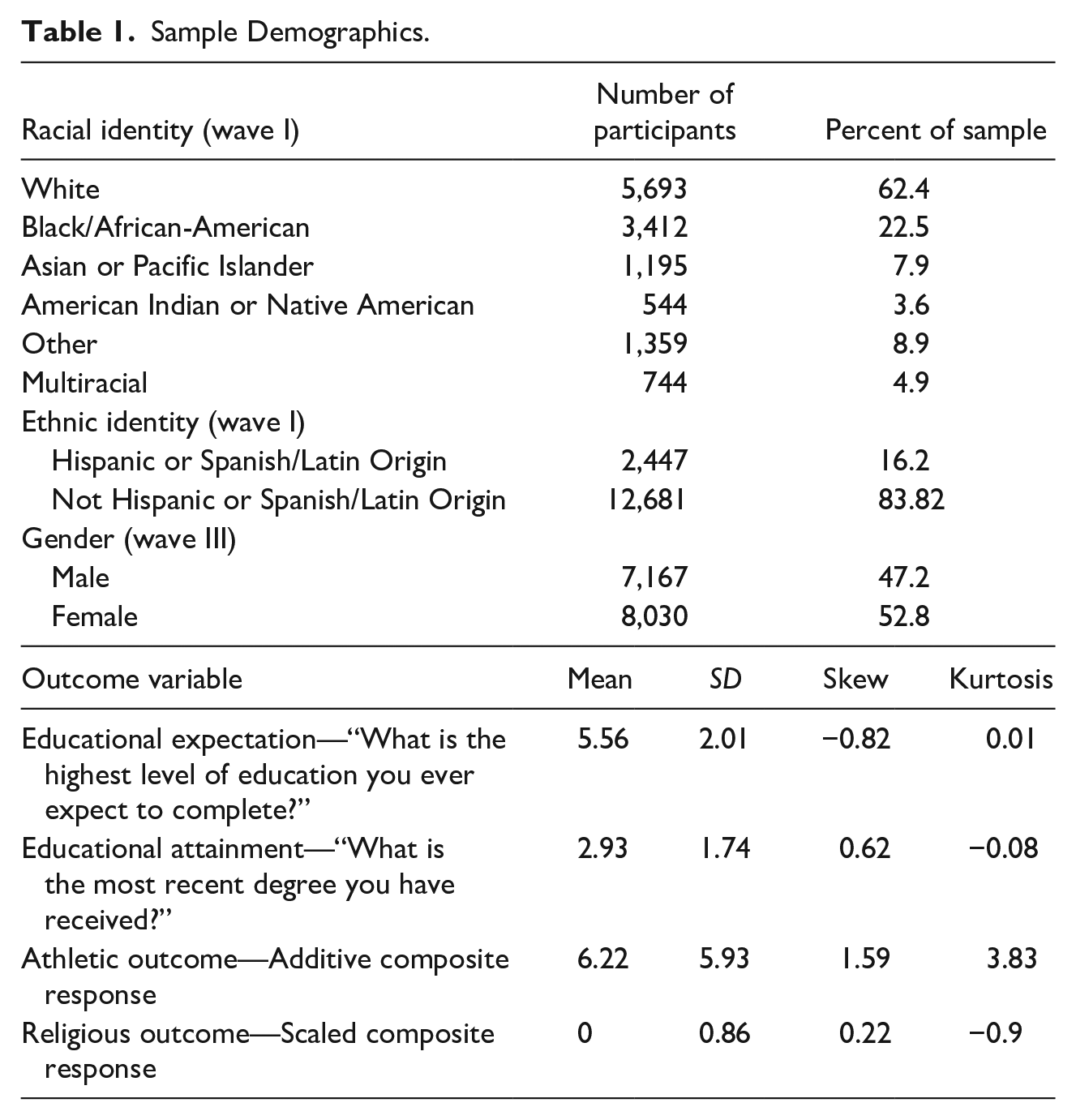
For this study, data from the National Longitudinal Study of Adolescent to Adult Health (Add Health) was analyzed (Harris et al., 2018). The Add Health study is a multi-survey, multi-wave design aimed to directly measure the impacts of social context on youth health and health behavior. The Add Health dataset collected five waves of data over 24 years relating to adolescent school performance, mental and physical health, family and peer relationships, neighborhood and school characteristics, and child outcomes (Harris et al., 2009). The study is a nationally representative sample of adolescents in the United States; participants were in grades 7 through 12 at 80 U.S high schools and 52 middle schools during the initial data collection phase in 1994 to 1995. At Wave III, participants provided information on mentoring relationships; at this point, there was a sample of 15,197 participants aged 18 to 26. Wave IV of data collection occurred 6 years after Wave III and included information about participant’s academic, athletic, and religious outcomes; at this time, there was a sample of 15,701 participants aged 24 to 32. There was a relatively even gender split across all waves of data collection and the sample was representative of racial/ethnic diversity (
Sample Demographics.
Presence and Domain of Mentor
To determine the presence of a mentor, we used participant responses to the question, “Other than your parents or step-parents, has an adult made an important positive difference in your life at any time since you were 14 years old?”. This question was presented during Wave III, when participants were between the ages of 18 to 26. Given the longitudinal nature of this dataset, it is possible participants reported the presence of either a previous mentor (e.g., a mentor they had during the first wave of data collection) or a current mentor (e.g., a mentor they had during the third wave of data collection), though all mentor relationships existed prior to collection of the outcome variables (Wave IV).
To determine the domain of a mentor, we used participant responses to the question presented in Wave III, “How is [name of mentor] related to you? If there has been more than one person, describe the most influential.” Individuals who responded with “teacher/guidance counselor” were coded as “academic mentor” (n = 2,223), individual who responded with “coach/athletic director” were coded as “athletic mentor” (n = 447), and individuals who responded with “minister/priest/rabbi/religious leader” were coded as “religious mentor” (n = 410). Individuals who reported other types of mentors (e.g., family members, therapists/doctors, neighbors, employers) were excluded from analysis (n = 8,336).
Academic Outcomes
Academic outcomes were assessed in two distinct variables: educational expectations and educational attainment. To assess academic expectations, in Wave IV participants were asked “What is the highest level of education you ever expect to complete?” and provided responses from multiple choice options that ranged from “finish high school or earn GED” to “professional doctorate.” To assess educational attainment, in Wave IV participants were asked “What is the most recent degree you have received?” and provided responses from multiple choice options that ranged from “have not received a degree” to “professional doctorate.” Descriptive statistics for these outcome variables can be found in Table 1.
Athletic Outcomes
Athletic outcomes were assessed through the creation of a composite score for athleticism and physical fitness. The composite score was created from participant responses to seven questions regarding frequency of physical activity in several categories including individual sports, team sports, and recreation. All components of the composite score were answered using the same scale, so the composite was created by adding all responses to create a single score. The questions included in the composite can be found in Appendix A and descriptive statistics for this outcome variable can be found in Table 1.
Religious Outcomes
Religious outcomes were assessed through the creation of a composite score for religiosity. The composite score was created from participant responses to four questions regarding the frequency of their religious activity and the importance of their beliefs. The components of the composite score were answered on differing scales, so each question was standardized prior to creating an average score across all four variables. The descriptive statistics for this outcome variable can be found in Table 1.
Covariates
It is noted there is the potential for bias in the analysis of differential domains. For example, adolescents who are actively involved in athletics are likely to have more opportunities to find a mentor who is a coach. Given this potential for confounding variables, we identified other variables that were plausibly related to each outcome. We included 24 potential covariates in both academic models, 31 potential covariates in the athletic model, and 28 potential covariates in the religiosity variable. These predictors included demographic information of the youth, parental income, and baseline variables of academic success, athletic involvement, and religiosity at Waves I and II. A description of each covariate and the time of data collection can be found in Table 2. For more information of the descriptive statistics for each potential covariate, interested readers should visit the Add Health data codebook explorer on the Add Health website (Harris et al., 2018).
Predictors by Outcome.

Procedures
Data Analytic Plan
As previously described, longitudinal mentorship studies often have many variables that are intertwined, making it difficult to attribute causality or decidedly note the contribution of a single variable. For this reason, a machine learning approach is an excellent fit for this analysis because they provide more accurate predictions than traditional statistical models when considering a number of confounding variables (Kapelner & Bleich, 2013). This analytic approach is not compromised by collinear predictors and accounts for relationships that are nonlinear or might be altered by interactions between many predictors (Hill, 2011; Kapelner & Bleich, 2013). Furthermore, these analytic approaches help to parse out the impact of collinearity within datasets with a large number of predictors that do not follow a linear functional form. We specifically selected a machine learning algorithm called the Bayesian Additive Regression Trees (BART) for our analysis. BART analyses are designed to test the unique contributions of highly correlated variables within high dimensional datasets such as Add Health and yields predictions without overfitting the model of observed data (Hill, 2011).
Specifically, BART uses the input data to create a group of algorithms similar to a pyramid of regression trees. Each subsequent regression tree is tested using many different decision rules, or regression equations, to determine the best predictor values. The possible decision rules appear as arbitrary division points within each variable. For example, the model might consider if annual parental income is greater than $100,000 by partitioning the data into two subsamples: one for participants with a parental income lower than the threshold, and one for participants with a parental income greater than the threshold. Each subsample is then split again, into four groups, then into eight groups, and so on until the model reaches a predetermined stopping point.
After the algorithm tests each set of equations against the decision rules, it creates a cumulative equation that represents each tested model. Each individual regression tree, or variable, is then analyzed using the cumulative equation for importance relative to other predictors. For each predictive variable, the model provides both a pseudo R2 value representing the partial prediction, controlling for other variables, as well as an estimate of overall importance. The variable importance is reported as the proportion of times the variable splits improved accuracy of predictions relatively to the total number of predictions. Readers interested in learning more about machine learning algorithms or the BART model should review Chipman et al. (2010) or Kapelner and Bleich (2013) for more in-depth analyses of these approaches.
For this study, we used four BART models to account for the four distinct outcome variables.
The educational expectation BART model included educational expectation as the outcome, the presence of an academic mentor as the primary predictor, and a set of 24 variables as potential covariates (see Table 2 and Figure 1).
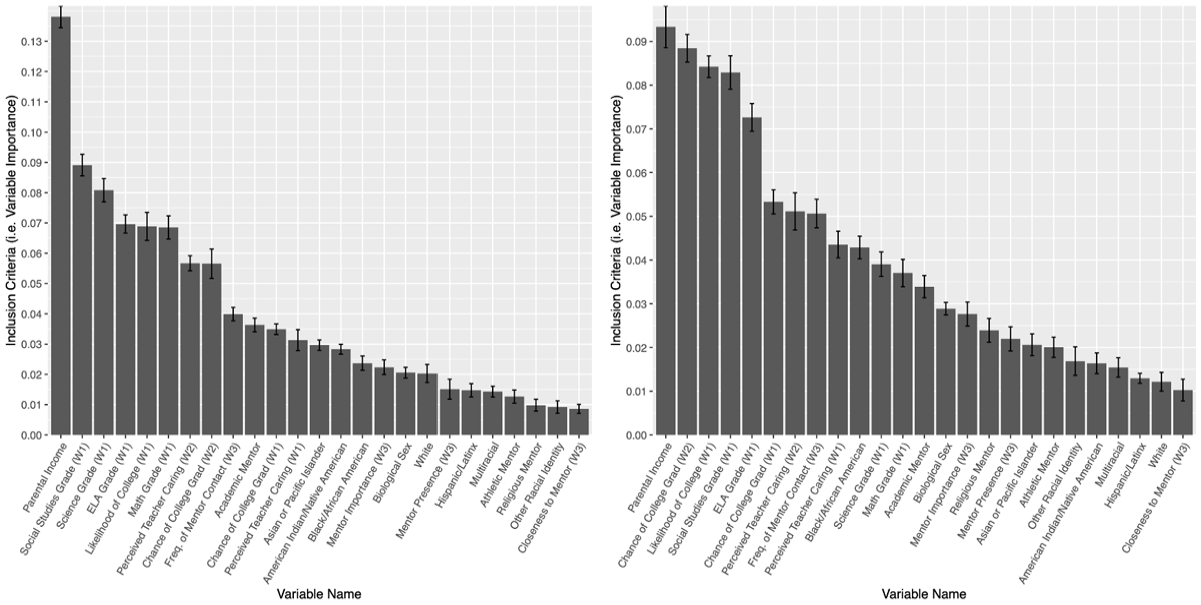
Variable importance graphs for hypotheses 1 and 2. Hypothesis 1. Mentor: Academic, Outcome: Educational Expectation. Hypothesis 2. Mentor: Academic, Outcome: Educational Attainment.
The educational attainment BART model included educational attainment as the outcome, the presence of an academic mentor as the primary predictor, and a set of 24 variables as potential covariates (see Table 2 and Figure 1).
The athletic BART model included the composite athletic score as the outcome, the presence of an athletic mentor as the primary predictor, and a set of 31 variables as potential covariates (see Table 2 and Figure 2).
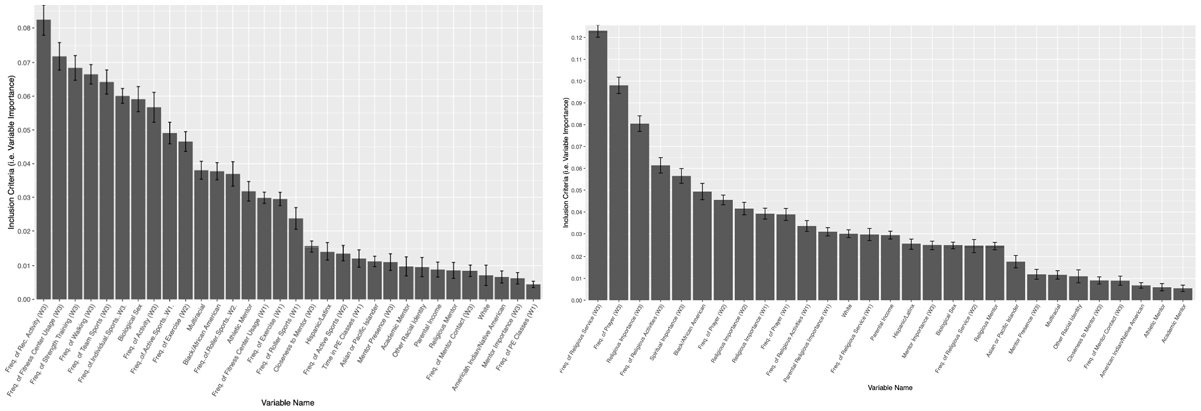
Variable importance graphs for hypotheses 3 and 4. Hypothesis 3. Mentor: Athletic, Outcome: Athleticism. Hypothesis 2. Mentor: Religious, Outcome: Religiosity.
The religious BART model included the composite religiosity score as the outcome, the presence of a religious mentor as the primary predictor, and a set of 28 variables as potential covariates (see Table 2 and Figure 2).
Results
Hypothesis 1: Educational Expectations
The overall pseudo R2 of the educational expectation model including all predictors was .287, which indicates that 28.7% of the variance in reported educational expectation was accounted for by the 25 predictors. This means that most of the variance is unexplained by these variables, but some variables were more important than others. A graphical display of variable importance is found in Figure 1. Variable importance is described in terms of an inclusion proportion; the inclusion proportion is the number of times a specific variable was used as a key split point in the BART model out of all possible split points (Kapelner & Bleich, 2013). A larger inclusion proportion suggests the variable is more important in terms of predictive value. The top five variables in order of importance are as follows: (1) Parental income; (2) Self-reported chance of graduating college at Wave II; (3) Self-reported likelihood of attending college at Wave I; (4) Social Studies grade at Wave I; (5) ELA grade at Wave I. The presence of an academic mentor was the 13th most important predictor.
After analyzing variable importance, we tested the statistical significance of the presence of an academic mentor while controlling for all other indicators. When controlling for all other variables, the presence of an academic mentor was not a statistically significant influence on educational expectations (p = .079). This finding was not in support of our first hypothesis.
Hypothesis 2: Educational Attainment
The overall pseudo R2 of the educational attainment model including all predictors was .267, which indicates that 26.7% of the variance in reported educational attainment was accounted for by the 25 predictors. Some variables emerged as more important predictors than others. A graphical display of variable importance is found in Figure 1 and represented by inclusion proportions. The top five variables in order of importance are as follows: (1) Parental Income; (2) Social Studies grade at Wave I; (3) Science grade at Wave I (4) Math grade at Wave I; (5) ELA grade at Wave I. The presence of an academic mentor was the 10th most important predictor. When controlling for all other variables, the presence of an academic mentor was a statistically significant influence on educational attainment such that the presence of an academic mentor increased mentee educational attainment (p < .001). This was in support of our second hypothesis.
Hypothesis 3: Athletic Outcomes
The overall pseudo R2 of the athletic mentor model including all predictors was .161, which indicates that 16.1% of the variance in reported athletic outcomes was accounted for by the 32 predictors. Despite noise in the model, some variables emerged as more important predictors than others. A graphical display of variable importance is found in Figure 2 and represented by inclusion proportions. The top five variables in order of importance are as follows: (1) Recreation activity at Wave III; (2) Fitness Center usage at Wave III; (3) Walking for exercise at Wave III; (4) Strength training at Wave III; (5) Team Sports at Wave III. The presence of an athletic mentor was the 14th most important predictor. When controlling for all other variables, the presence of an athletic mentor was not a statistically significant influence on athletic outcomes (p = .119). This was not in support of our third hypothesis. Though the variables included in this model are highly correlated (e.g., involvement in an organized sports team and increased athletic activity), our selection of a BART analytic approach is designed for highly collinear variables and is robust to parsing out the unique contributions of variables without overfitting the model (Hill, 2011; Kapelner & Bleich, 2013).
Hypothesis 4: Religiosity
The overall pseudo R2 of the model including all predictors was .493, which indicates that 49.3% of the variance in reported religious outcomes was accounted for by the 29 predictors. This suggests the variables in this model account for nearly half of the variance; still, some variables were more important predictors than others. A graphical display of variable importance is found in Figure 2 and represented by inclusion proportions. The top five variables in order of importance are as follows: (1) Religious Service Frequency at Wave III; (2) Prayer Frequency at Wave III; (3) Religious Importance at Wave III; (4) Time spent in Religious Activity at Wave III; (5) Spiritual Importance at Wave III. The presence of a religious mentor was the 19th most important predictor. When controlling for all other variables, the presence of a religious mentor was not a statistically significant influence on religiosity (p = .406), which was contrary to our fourth hypothesis.
Discussion
We hypothesized that mentors have differential impacts on longitudinal outcomes of mentees based upon their domain of influence such that academic mentors impact academic outcomes, athletic mentors impact athletic outcomes, and religious mentors impact religious outcomes. We used the National Longitudinal Study of Adolescent Health dataset to investigate this prediction by determining the extent to which the type of mentor predicted longitudinal domain-specific outcomes. The four primary analyses yielded important findings regarding the impacts different types of mentors have on young people.
First, the presence of an academic mentor predicts higher educational attainment later in life (supporting Hypothesis 2). Though there are many confounding variables that could influence a young person’s educational attainment, this finding remains statistically significant when controlling for 24 potential covariates including parental income, school performance, self-reported academic expectations, and demographic characteristics such as race and biological sex. This finding is important because it supports the ecological validity of previous research evidence that there are educational benefits for young people involved in mentorship relationships. Young people with mentors are more engaged in school and are more likely to complete high school and college (Dubois & Silverthorn, 2005; Hurd & Sellers, 2013). It is important to acknowledge that the presence of a mentor is not a randomly assigned condition, and thus has other selection factors that contribute to the impacts of mentorship. Some studies investigate the potential covariates of mentorship as moderators in multiple regression models, and find that sociodemographic factors, such as race/ethnicity, environmental risk factors, and family income, can moderate the impact of mentorship (Erickson et al., 2009; Fruiht & Wray-Lake, 2013; Reynolds & Parrish, 2018). The statistical method used in this analysis is unique in that the model can account for a larger number of covariates and is less susceptible to overestimation of effect, providing a more realistic estimation of the unique contribution of a single predictor variable. The findings of this study demonstrate that the presence of an academic mentor does independently contribute to the educational attainment of youth even when considering all the other selection factors that co-occur with mentorship.
Though the presence of an academic mentor predicted increased educational attainment, this study also noted that academic mentors did not have the same unique impact on academic expectations such that the presence of an academic mentor did not significantly alter a young person’s expected level of education (not in support of Hypothesis 1). Given the statistical methods used in analysis, this finding suggests that the unique and independent contribution of an academic mentor on education expectation is not consistent enough when controlling for all other variables. This is noteworthy when considering the significant finding on educational attainment. The contrast in significant findings in the two academic outcome variables suggests that the unique contribution of mentorship is stronger for supporting students to achieve a certain level of education, but not in adjusting their educational expectations. It is also worth noting that there is likely a ceiling effect in that more people received a Bachelor’s degree, but fewer attend higher education levels (e.g., Masters, professional degree, doctorate, etc.) (Staff, 2019).
Another important finding of this study is that the presence of athletic or religious mentors do not predict longitudinal outcomes in athleticism or religiosity (not in support of Hypotheses 3 or 4). This is an important finding because academic mentors are more likely to predict longitudinal outcomes in education when compared to mentors of other domains (Fruiht & Wray-Lake, 2013). Models of mentorship have shifted in recent years to include understanding of larger natural mentoring networks, specifically as it relates to the existing environments where young people find mentors (M. Hagler, 2018). Given many young people spend a large proportion of time involved in athletic or religious activities, their social network frequently includes mentors from these communities. The finding that athletic and religious mentors did not have larger impacts on outcomes in their domains contradicted our hypothesis. Given that the BART analytic models is designed to assess the unique contribution of highly collinear variables, these findings suggest that thein dividual covariates in the model, such as baseline levels of athleticism and religiosity, are stronger than the unique contribution of a mentor when considering athletic and religious outcomes.
Limitations
It is important to note several limitations in this study. First, we were able to include such a large number of potential covariates due to the use of an extensive dataset and a machine learning approach that is appropriate for investigating covariates with high collinearity. However, as this was a secondary analysis of existing data, we were limited to the questions and information collected in the initial survey. As a result, there were slight differences in measures at each wave of data collection. For example, questions regarding physical activity were phrased differently at Waves I to III and questions regarding religious involvement required responses on differing scales. To mitigate such limitations, we applied statistical techniques such as including each question at Waves I and II as a separate predictor rather than creating a mismatched composite, and we applied a standard scale to the questions regarding religious involvement prior to creating the outcome composite. Additionally, given the timeline of data collection, we are unable to parse out exactly when participants were engaged in a mentoring relationship; though participants reported on the presence of a mentor at Wave III, some participants may have reflected on a mentor from earlier in their adolescence. However, our outcome variables were collected during Wave IV, so despite this limitation in the mentoring timeline, we were able to ensure we were considering longitudinal impacts by selecting variables from later time points as our primary outcome variables of interest. Another limitation related to the use of extant data is that we were limited to controlling for covariates that were measured during the initial survey. Given the high probability that mentorship is related to a number of other variables, we selected the BART analytic approach to attempt to control for the large number of common covariates in order to increase the validity of analyses. Finally, as the data for this study was taken from a longitudinal survey and not a randomized control trial, the ability to note causation is also limited.
Conclusions and Future Directions
When considered altogether, this study provides findings that have the potential to provide large impacts for both future mentoring research and practical mentor programs. Previous research notes the extensive benefits of mentorship in conjunction with several covariates and moderators. This study expands upon the previous research by isolating the unique contributions of mentorship to determine that the presence of a natural mentor is a predictor of youth educational attainment with unique and independent contributions to the model of influence.
These findings are important for both future research directions and practical development of mentoring initiatives. In the realm of research, this study provides an example of how advanced statistical methods can be utilized in large datasets in order to account for large networks of potential variables. As researchers gain access to more longitudinal data sets that include information about mentoring, it is important to utilize the most appropriate statistical analyses to ensure we are addressing key questions from an empirical evidence base. In terms of practical applications, there are many formal mentoring programs that specifically pair mentees with trained community mentors that come from a number of different fields and backgrounds. If we understand how mentors influence mentees in different ways, then perhaps we can better engineer program sponsored mentoring relationships to maximize these influences based on the characteristics, preferences, and needs of young people.
Overall, the influence of mentorship often works in tandem with a number of other environmental, individual, and sociodemographic characteristics to influence the trajectory of a young person. Understanding the unique contribution of any single factor is important for the development of strong, evidence-based programs that provide young people of all backgrounds with the most opportunities for success.
Footnotes
Declaration of Conflicting Interests
The author(s) declared no potential conflicts of interest with respect to the research, authorship, and/or publication of this article.
Funding
The author(s) disclosed receipt of the following financial support for the research, authorship, and/or publication of this article: This research uses data from Waves I-V of Add Health, grant P01 HD31921 (Harris) from Eunice Kennedy Shriver National Institute of Child Health and Human Development (NICHD), with cooperative funding from 23 other federal agencies and foundations. Add Health was designed by J. Richard Udry, Peter S. Bearman, and Kathleen Mullan Harris at the University of North Carolina at Chapel Hill. Add Health is directed by Robert A. Hummer and funded by the National Institute on Aging cooperative agreements U01 AG071448 (Hummer) and U01AG071450 (Aiello and Hummer) at the University of North Carolina at Chapel Hill. No direct support was received from grant P01-HD31921 or cooperative agreements U01 AG071448 and U01AG071450.
