




Abstract
Globally, with the increasing emphasis on cognitive health, exergames gains significant academic attention due to their unique potential for enhancing cognitive function. This study used CiteSpace 6.3R2 to conduct a systematic bibliometric analysis to elucidate research progress and emerging trends in this interdisciplinary field. A comprehensive literature search in the Web of Science Core Collection focused on exergaming and cognitive function. After screening, 545 relevant publications were imported into CiteSpace6.3R2 for bibliometric analysis, generating visual maps of keywords, authors, institutions, and other key indicators. Publications on exergames and cognitive function show a steady upward trend, indicating growing academic interest in this interdisciplinary field. The Games for Health Journal produced the highest number of publications, underscoring its central role. The United States leads in collaborative output, followed by China and Switzerland, with ETH Zürich as the most collaborative institution. Among researchers, de Bruin, is the most prolific. PLOS ONE is the most frequently co-cited journal, while Anderson-Hanley (2013) is the most highly cited reference. High-frequency keywords include physical activity, exergames and physical exercise, with emerging terms such as “exergame intervention,” “balance training,” and “mild neurocognitive disorder.” Research on exergames and cognitive function has emerged as a key interdisciplinary hotspot, encompassing exercise science, neuroscience, and digital health. A bibliometric analysis indicates that related studies are primarily published in a range of specialized journals. Within the collaboration network, developed countries dominate, whereas at the author level, collaboration patterns remain mostly within institutions, suggesting that cross-institutional cooperation needs to be strengthened. Future research could focus on the design and mechanisms of exergame intervention programs and personalized interventions tailored to specific populations.
Keywords
Introduction
Cognitive function underpins higher mental processes, including thinking, learning, memory, and decision-making, and is essential for adapting to societal demands and maintaining quality of life. 1 In recent years, cognitive decline has been increasingly observed across age groups, driven by accelerated lifestyles, psychological stress, and chronic diseases. This trend is particularly evident among men aged 18 to 39, whose prevalence of cognitive decline rose from 5.1% in 2013 to 9.7% in 2023. 2 Gradual cognitive deterioration may manifest as mild cognitive impairment (MCI) and, if left untreated, progress to dementia and other neurodegenerative disorders. While cognitive impairment is not limited to older adults, it also affects middle-aged and younger populations, commonly presenting as deficits in attention, working memory, and executive function, thereby imposing substantial individual and societal burdens. 1 Given the limited effectiveness and potential side effects of pharmacological treatments for early or subclinical cognitive decline, emphasis has been placed on preventive and non-pharmacological intervention strategies to preserve cognitive function before irreversible deterioration occurs. 3
In this context, exergames have emerged as a prominent non-pharmacological intervention strategy. Exergames are interactive digital activities that require concurrent engagement in bodily movement and cognitive processing using real-time interaction with a virtual or augmented environment, thereby imposing a motor–cognitive dual-task demand.4,5 The integrated coupling of physical exertion and mental challenges is a defining feature of exergames. For terminological consistency, exergames are an umbrella concept encompassing technology-specific subtypes such as active video games and virtual or augmented-based exercise, which differ in interaction modality or immersion level but share the core characteristic of simultaneous motor and cognitive engagement. Accordingly, traditional non-gamified exercise interventions, which primarily target physical capacity, and purely digital cognitive-training programs that lack concurrent whole-body motor involvement are excluded from this scope.
Therefore, exergames are distinct from both traditional exercise and stand-alone cognitive training and are characterized by their dual-task nature, integrating physical movement with continuous cognitive interaction. Representative platforms include Nintendo Wii Fit, Microsoft Kinect, and, more recently, immersive fitness systems based on virtual reality (VR) and augmented reality (AR) technologies6 -8 Exergames activate the motor and visual cortex, and prefrontal areas, enhancing physical activity and cognitive thinking. 9 Previous research has validated that exergame therapies can augment several facets of cognition, including attention, working memory, reaction time, and executive function, enhancing overall cognitive performance.10 -12 Physiological changes such as increased neuroplasticity, cerebral blood flow, and cognitive-motor coupling, may be responsible for these factors. 13
Exergame research as a cognitive intervention now also includes healthy populations and individuals with cognitive impairment or neurological conditions. This study did not compare intervention effects across population types or stratify findings by disease status; instead, all populations were examined collectively as part of a unified and evolving research domain reflecting the broad application of exergames in cognitive function research.
Exergames have been used by diverse populations to support cognitive health. In individuals with MCI or neurodegenerative diseases such as Parkinson’s disease, exergames help maintain cognitive function and slow decline.14,15 While in children, adolescents, and healthy adults, they enhance cognitive performance, including attentional control, response inhibition, and working memory. 16 The integration of VR/AR technologies further improves immersion, personalization, and long-term adherence. 17 Compared with traditional exercise, exergames offer greater enjoyment and sustainability, supporting their role as a complementary approach in cognitive training and health promotion. Systematic reviews have summarized the cognitive benefits, underlying mechanisms, and clinical applications, particularly in aging and neurological populations.18,19
Despite the rapid expansion of research on exergames and cognitive function, the field remains highly interdisciplinary and conceptually complex, spanning neuroscience, exercise science, artificial intelligence, and rehabilitation engineering, leading to diversified research themes and a fragmented knowledge structure. 14 Simultaneously, substantial heterogeneity exists across studies regarding intervention types, game mechanisms, sample characteristics, and cognitive assessment tools, which affects the comparability and consistency of research findings. Furthermore, existing studies vary in their research framing: some adopt an exercise-oriented perspective emphasizing physical activity demands, others use a rehabilitation-oriented framework focusing on functional and therapeutic outcomes, while studies often described as highlighting “entertainment” more accurately reflect a motivation- or engagement-oriented approach to enhance adherence rather than entertainment. 20 Consequently, the knowledge system of this emerging field remains underdeveloped, as there is still a lack of a systematic understanding of the evolving research hotspots, collaborative networks, and emerging trends.
Bibliometric and visualization analyses have become widely adopted approaches for quantitatively synthesizing scientific outputs and revealing the structural characteristics and developmental trajectories of research fields. CiteSpace, a co-citation based tool, enables the identification of intellectual bases, research frontiers, and evolutionary patterns across disciplines. 21 Previous studies have applied CiteSpace to areas such as exercise interventions, VR, and rehabilitation science, successfully mapping influential literature and emerging themes. 22 However, despite growing scholarly interest in exergames and cognitive function as a multidisciplinary domain, there is lack of a systematic and comprehensive bibliometric synthesis. This gap limits our understanding of the field’s knowledge structure, research hotspots, collaborative networks, and emerging trends. Accordingly, a bibliometric and visualization-based investigation is needed to consolidate existing evidence, clarify the evolution of research attention, and provide a robust foundation for future research and practice.
Therefore, this study aimed to conduct a systematic bibliometric and visualization analysis of international research literature on exergames and cognitive function using CiteSpace 6.3R2. Specifically, the objectives were as follows: (1) to analyze publication trends, journal distribution, and subject categories to reveal the developmental trajectory of the field; (2) construct collaboration networks among countries, institutions, and authors to identify core research forces and collaboration patterns; (3) perform co-citation analyses of journals, authors, and references to delineate the knowledge base and key literature; (4) identify research hotspots and emerging themes using keyword co-occurrence, clustering, and burst analysis; and (5) ultimately construct a knowledge map of exergame cognition research, explore key research directions, and outline the characteristics of future research trends.
Material and Methods
Data Collection
This study adhered to the latest guidelines for a bibliometric analysis and followed the Preliminary Guideline for Reporting Bibliometric Reviews of the Biomedical Literature (BIBLIO; Supplemental Material 1). 23 The Web of Science Core Collection was selected as the database, encompassing the sub-databases SCI-EXPANDED, SSCI, A&HCI, CPCI-S, CPCI-SSH, and ESCI. A single authoritative database ensures consistency in data structure and sources, effectively avoiding systematic bias that may arise from differences in format, indexing scope, and quality control across multiple databases. This approach enhanced the reliability and comparability of the research findings.
The comprehensiveness of literature retrieval is a key prerequisite for ensuring the quality of bibliometric and visualization studies. Therefore, establishing a clear timeframe and a systematic search strategy was essential. Early research on exergames, as an integration of physical exercise and interactive digital technology, can be traced to the late 1990s and the early 2000s.24,25 With the rapid advancement of motion-capture technologies and immersive digital interfaces, the research paradigm of exergames expanded substantially after 2010. Lekova et al were among the first to articulate the dual benefits of exergames in promoting physical activity and enhancing cognitive function, establishing a conceptual and methodological foundation that has been widely adopted across field. 26
Accordingly, the literature search period in this study was set from 1999 to 2025 to ensure comprehensiveness and representativeness of the collected data. The search strategy was developed with reference to previous related studies, the relevant guidelines of the Cochrane Handbook for Systematic Reviews of Interventions, the logical framework of Population, Intervention, Comparison, Outcome, Study design (PICOS), and the validation results from preliminary experiments.27,28
This study underwent 2 rounds of independent peer review and revision, and the finalized search strategy was established as follows: TS = (“exergame*” OR “exergaming” OR “active video game*” OR “active videogame*” OR “video game-based exercise” OR “videogame based exercise” OR “interactive video game*” OR “VR-based exercise” OR “virtual reality exergame*” OR “Wii Fit” OR “Kinect”) AND TS = (“cognitive function*” OR cognition OR “cognitive performance” OR “global cognition”).
Data Screening
To ensure scientific rigor and representativeness of the research data, the retrieved literature was rigorously screened based on predefined inclusion and exclusion criteria. The inclusion criteria were as follows: (1) the publication type was limited to peer-reviewed English articles or review papers; (2) the study explicitly involved exergames (eg, Exergames, Active Video Games, Interactive Video Games); (3) the research focused on the effects of exergames on cognitive function, with interventions involving either exergames alone or in combination with other approaches; (4) the study population was not restricted by age, including children, adults, and older adults; and (5) the study design included randomized controlled trials (RCTs), experimental studies, observational studies, systematic reviews, or literature reviews.
The exclusion criteria were as follows: (1) non-empirical studies, including conference abstracts, news reports, editorials, letters, technical notes, and patents; (2) studies unrelated to exergames or those lacking a clear definition of motion-based interaction or motion sensing in their interventions; (3) studies that did not involve cognitive function–related variables, such as attention, executive function, memory, or information processing speed; (4) duplicate publications, in which only the most complete or most recent version was retained; and (5) studies lacking bibliographic information, inaccessible full texts, or those that had been retracted.
The initial literature search was completed on October 20, 2025, yielding 1772 records. Two researchers independently conducted a preliminary screening by reviewing the titles and abstracts and excluding studies that did not meet the inclusion criteria. In case of disagreement, a third researcher participated in the discussion and reviewed the full text to reach a consensus. Ultimately, 545 eligible English-language publications were included as data sources (Figure 1). The complete bibliographic information and reference lists of these 545 publications were then exported in plain text format and processed using the data import module of CiteSpace 6.3R2 for format conversion and preprocessing, providing a structured data foundation for subsequent visualization analyses.
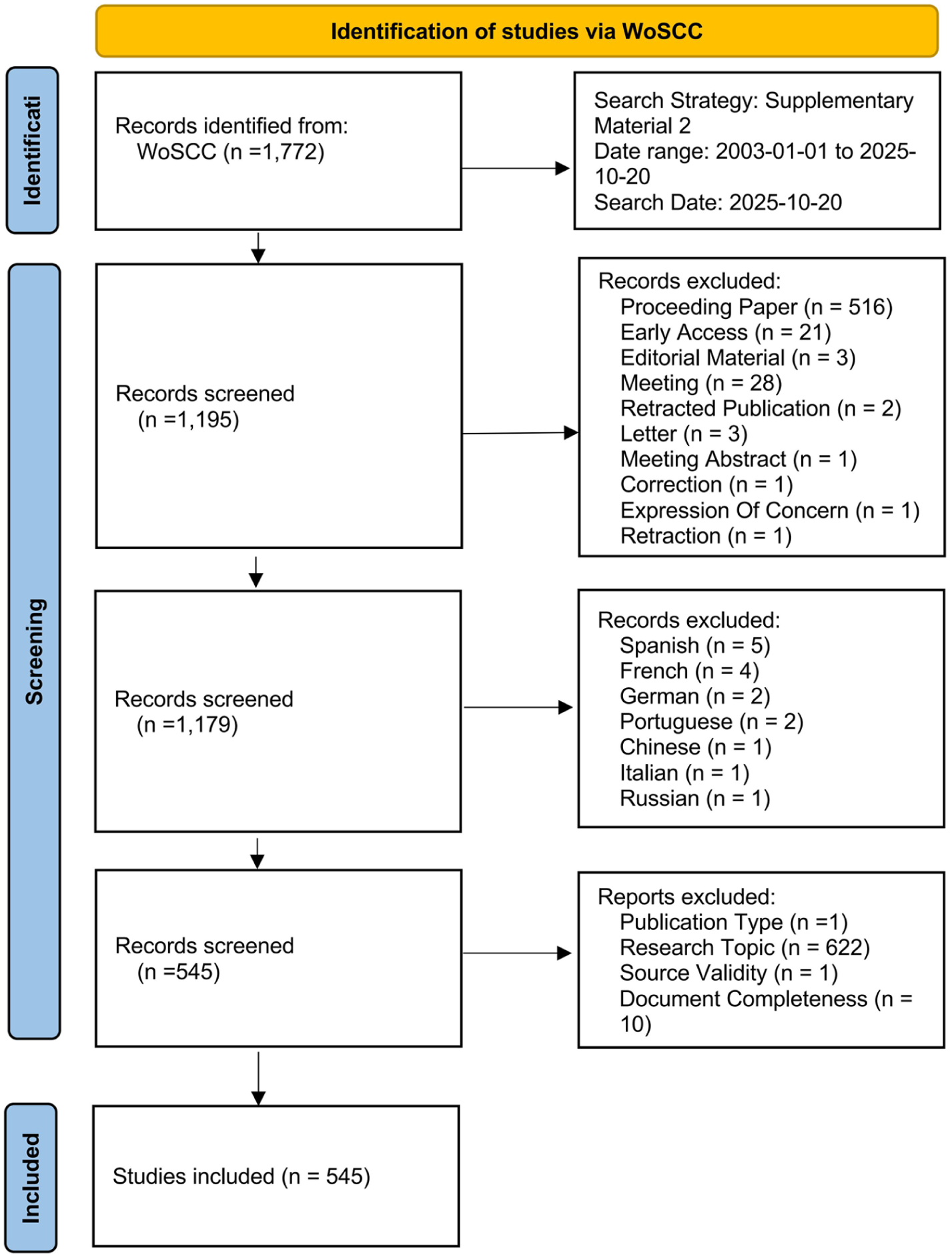
Flowchart of data collection.
Analysis Methods and Tools
This study used CiteSpace 6.3R2 (developed by Professor Chaomei Chen, Drexel University, USA) for bibliometric visualization. CiteSpace uses information visualization and network science to analyze knowledge structure, research hotspots, and emerging trends through methods such as co-occurrence, co-citation, burst detection, and clustering. 29 The software improves clarity and objectivity, by generating visual knowledge maps, which reduce bias and enhance the rigor and reproducibility of the analysis. 30
To conduct bibliometric visualization, CiteSpace 6.3R2 was configured with the following parameters: time slicing from January 2003 to October 2025; 1-year intervals; and node types, including Author, Institution, Country/Region, Keyword, Category, and Cited Reference. The g-index (k = 25) was used as the selection criterion; other settings remained at default. In the resulting maps, node size reflects frequency, line thickness indicates co-occurrence/co-citation strength, and node color shows the time of first appearance. Purple-ringed nodes highlight key items with high centrality, often marking bridges or turning points in a knowledge structure. All author affiliations listed in the original records were retained and included in the institutional and country/regional collaboration analyses. When authors reported multiple institutional or country/regional affiliations, all corresponding institutions, countries, or regions were included in the collaboration networks to reflect the overall structure of research cooperation.
Results
Publication Statistics
Annual Number of Publications
The annual number of publications provides an intuitive reflection of the developmental trajectory and academic attention toward research on exergames and cognitive function. As shown in Figure 2, although slight fluctuations occurred in some years, the overall number of related publications exhibited a steady upward trend from 2007 to 2024. In the early stages of research (2010-2015), the number of publications was relatively low, averaging fewer than 10 per year, mainly focusing on the conceptualization and preliminary validation of exergames. Since 2013, with the widespread adoption of technologies such as VR and motion sensing systems (eg, Kinect, PlayStation Move), the annual publication output has increased substantially. The number of studies rose from 18 in 2016 to 81 in 2025, particularly accelerating after 2018. This overall growth pattern indicates rapidly increasing academic interest in exergame-based interventions to enhance cognitive function. This number is expected to peak in 2025, reaching 72.
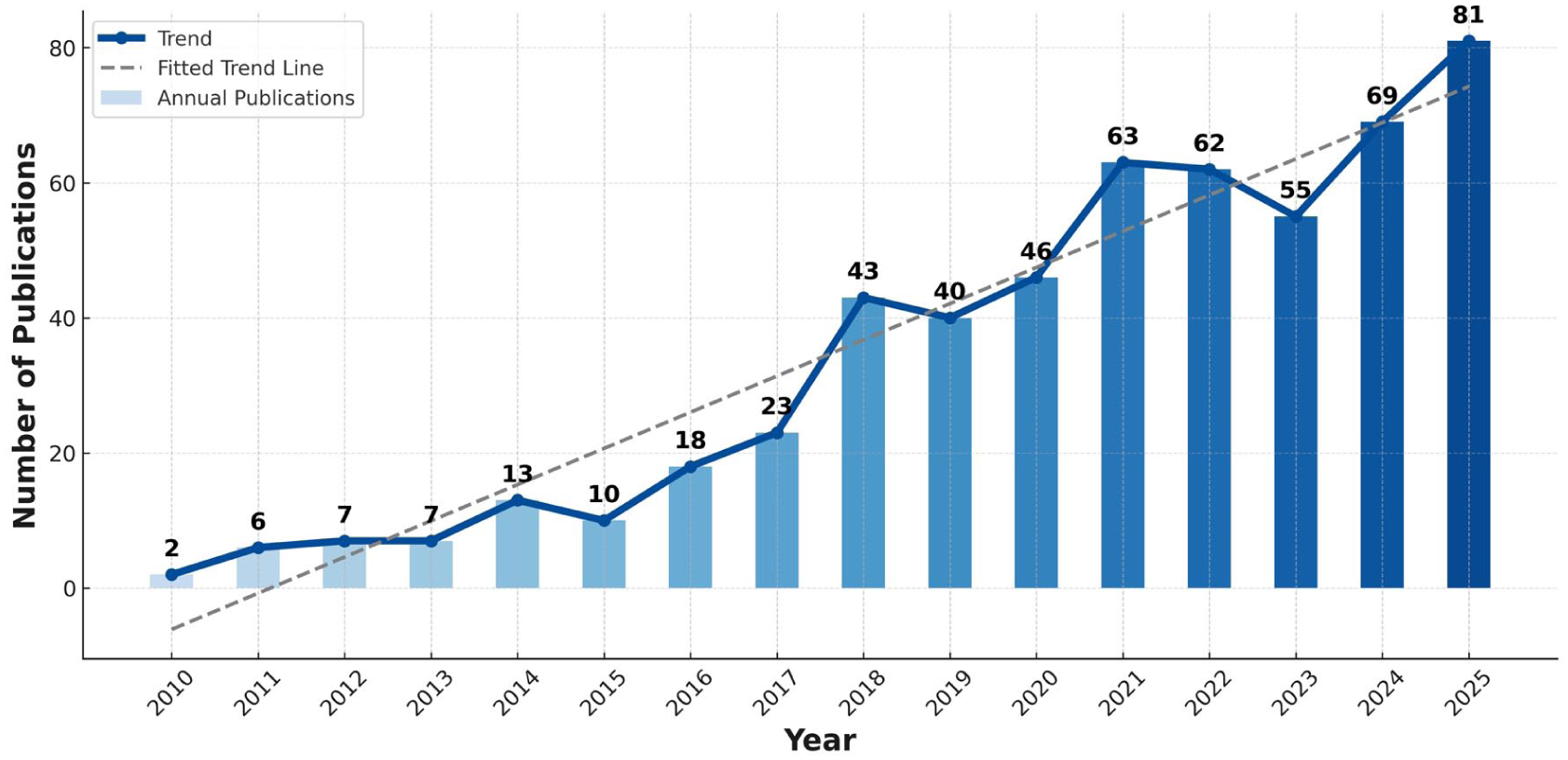
Annual number of publications (2010-2025).
Publication Counts by Journal
To identify the journals that have been published and cited most frequently in the field of exergames and cognitive function, we analyzed the distribution and co-citation patterns of journals. According to data from WoSCC, research on exergames and cognitive function has been published in 272 journals. Table 1 presents the top 10 journals ranked by publication volume; because several journals have identical publication counts, 12 journals are listed. These leading journals collectively account for 27.88% of all publications, indicating that a substantial portion of research is concentrated within a limited set of journals. Notably, several of these journals contain terms such as “Aging” or “Geriatrics” in their titles, for example, Frontiers in Aging Neuroscience, BMC Geriatrics, Journal of Aging and Physical Activity, and Disability and Rehabilitation, highlighting the central role of aging and geriatric research in the field of exergames and cognitive function.
Top 10 Journals by Publication Counts.

Note. The table lists 12 journals due to ties in publication volume among the top 10 ranks.
Number of Publications by Category
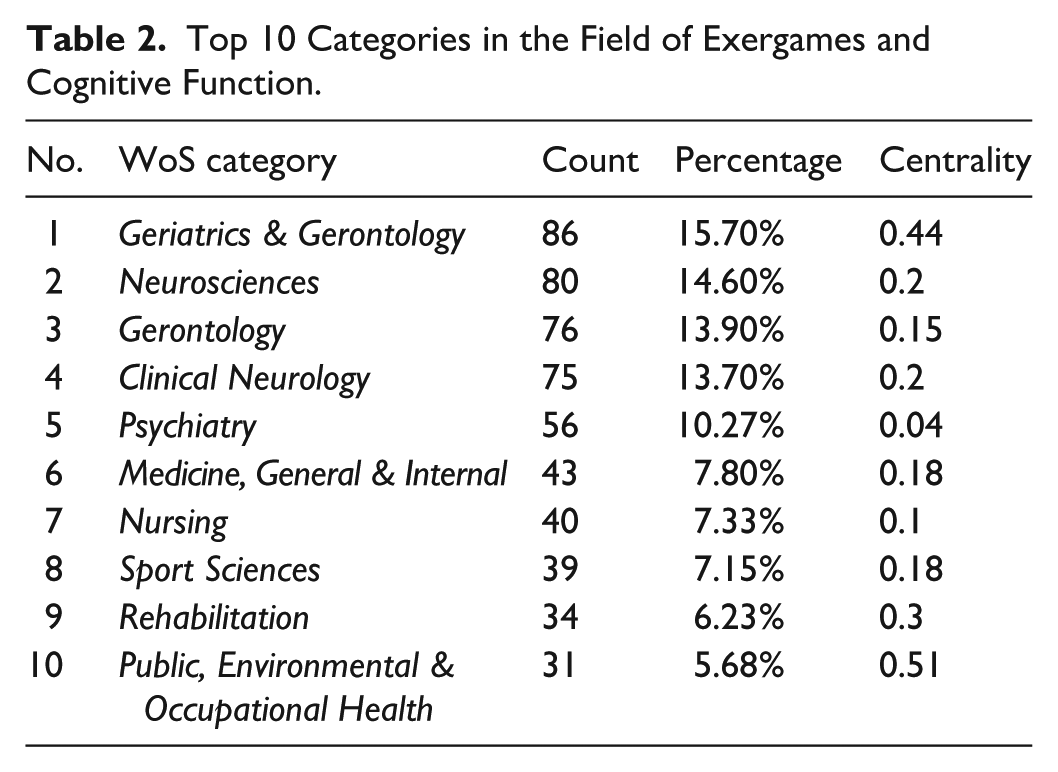
As the publication categories were analyzed, the major focus and interdisciplinary nature of research on exergames and cognitive function became evident. Table 2 presents the top 10 WoSCC categories represented in this field. Among them, Geriatrics & Gerontology is the most prominent category, with 86 publications (15.70%), followed by Public, Environmental & Occupational Health, with 80 publications (14.60%), and Rehabilitation and Neurosciences ranked third and fourth, accounting for 13.90% and 13.70% of publications, respectively.
Top 10 Categories in the Field of Exergames and Cognitive Function.
Collaboration Relations
Regional Collaboration
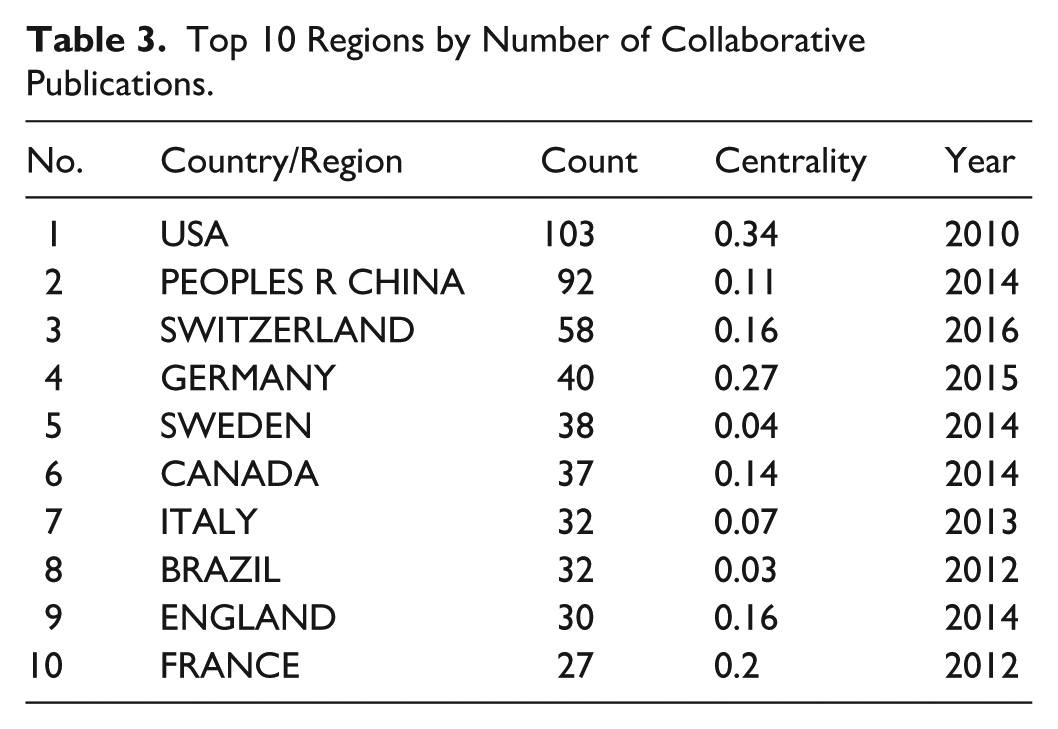
The country/region co-occurrence map comprises 62 nodes and 227 links (Figure 3), providing an intuitive visualization of the international collaboration network in the field of exergames and cognitive function. Table 3 lists the top 10 countries or regions based on the number of collaborative publications, including 5 European countries, 2 Asian countries, 2 American countries, and 1 from Oceania. The results show that the United States (USA) occupies a dominant position in the collaboration network, with the highest node count (103) and an intermediary centrality of 0.34. This is followed by the People’s Republic of China, ranking second (92 nodes), and representing the leading contributor in Asia. Switzerland ranks third (58 nodes) and a centrality value of 0.16).
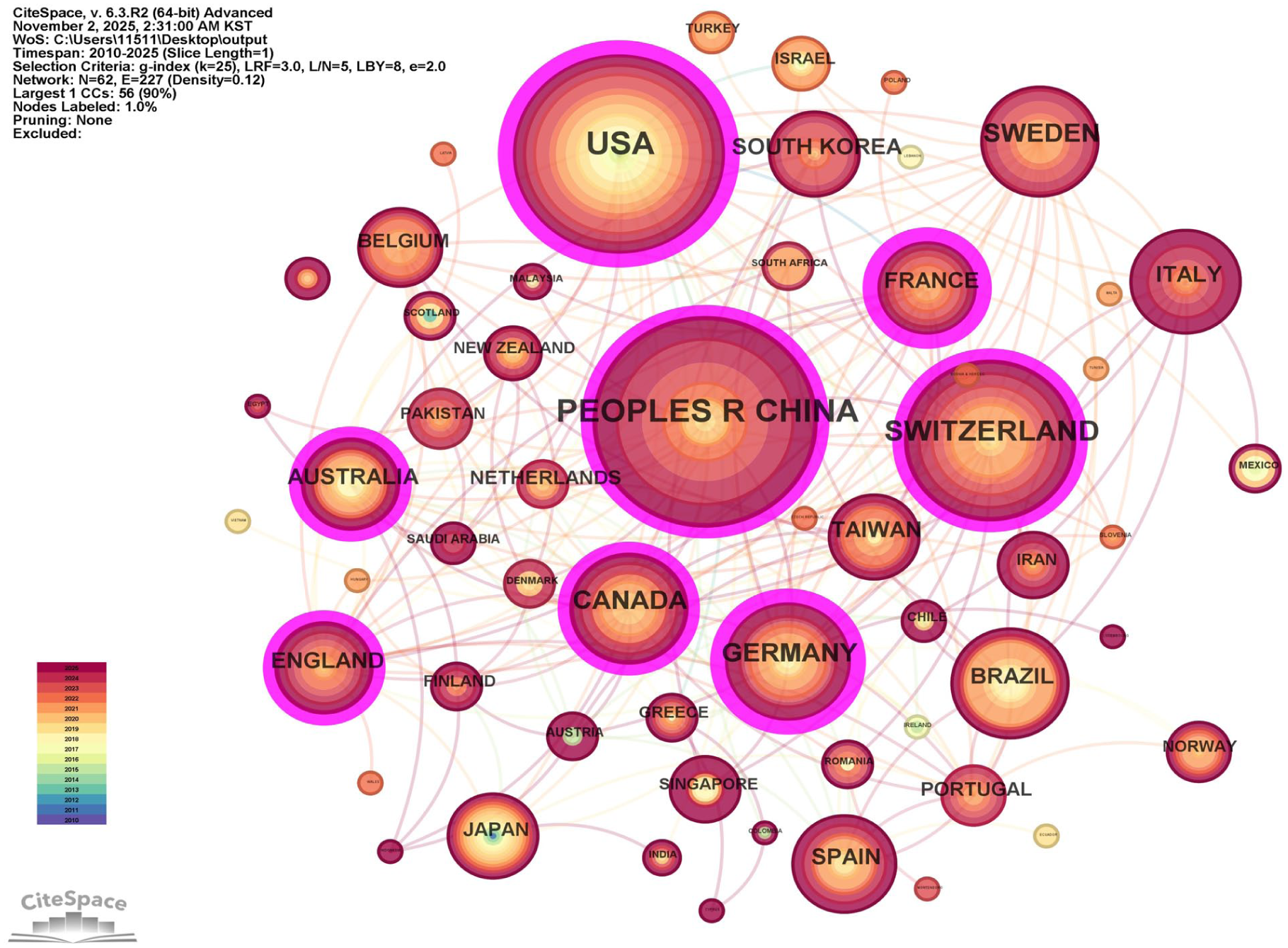
Country/region co-occurrence map.
Top 10 Regions by Number of Collaborative Publications.
Institutional Co-Occurrence
The institutional co-occurrence map (337 nodes, 381 links; Figure 4) illustrates global collaboration patterns in exergames and cognitive function research. As shown in Table 4, the top-contributing institutions are primarily in Europe, North America, and Asia. The Swiss Federal Institute of Technology ranks first (34 publications), followed by the Karolinska Institute (31 publications), which is also the only institution with a notable intermediary centrality (0.01), indicating its key bridging role in the collaboration network. The OST Eastern Swiss University of Applied Sciences ranks third (16 publications). Switzerland shows a particularly strong representation, with 3 institutions: the Swiss Federal Institute of Technology, OST Eastern Swiss University of Applied Sciences, and University of Bern in the top 10. In Asia, Central South University has emerged as a major contributor to rapidly progress in digital rehabilitation and exergame-based intervention research.
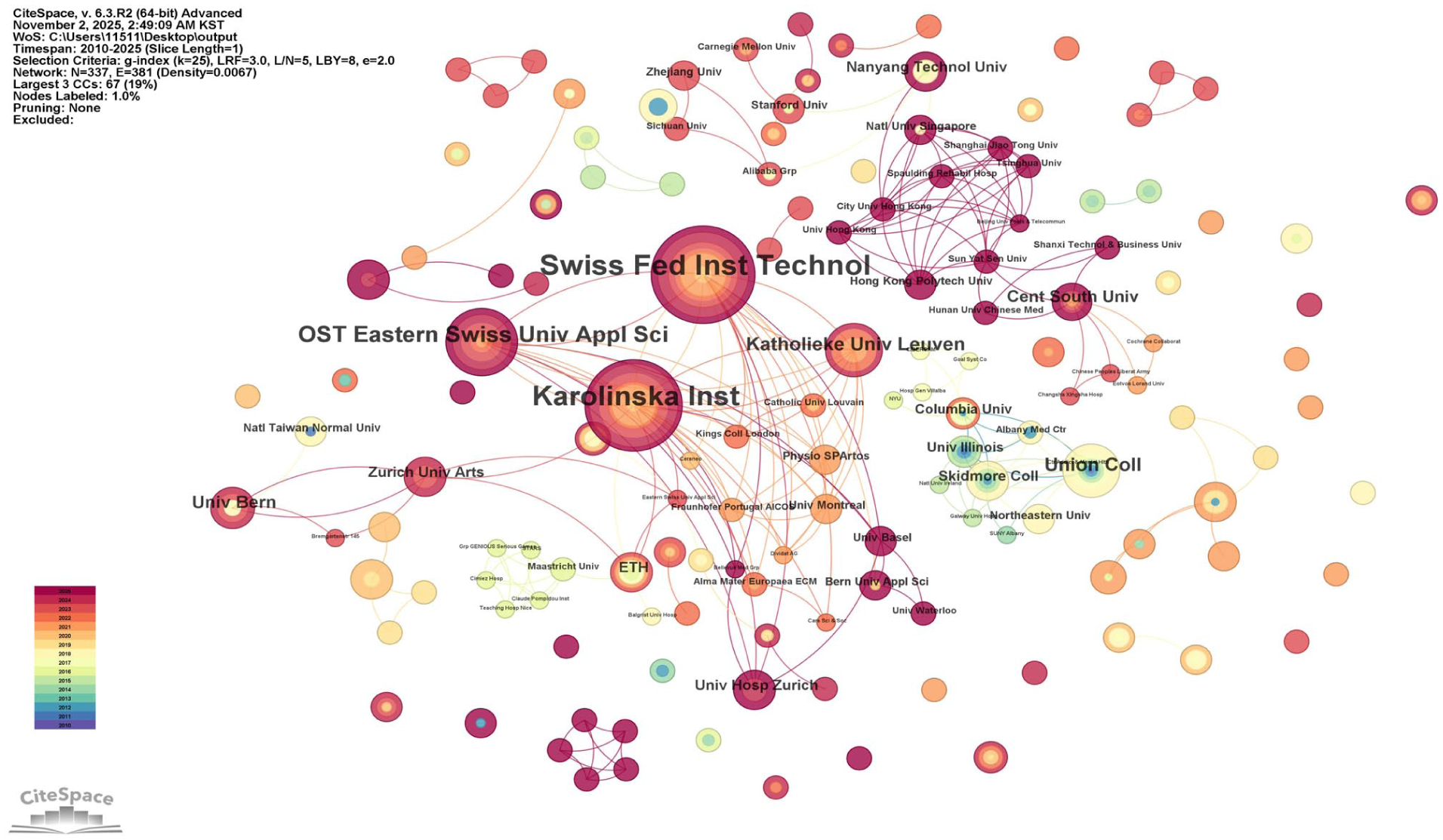
Institutional co-occurrence map.
Top 10 Institutions by Collaborative Publication Counts.

Author Co-Occurrence
The map contains 426 nodes and 730 links (Figure 5), visually depicting the collaborative relationships among authors in the field of exergames and cognitive function. Table 5 lists the top 12 core authors ranked by the number of co-authored publications, representing leading research institutions in Switzerland, the United States, Belgium, and Australia. Among them, De Bruin, ETH Zurich ranks first (34 publications) and is the only author with notable intermediary centrality (0.01), followed by Anderson-Hanley (Union College) and Benzing (University of Bern), (10 and 9 collaborative publications, respectively).
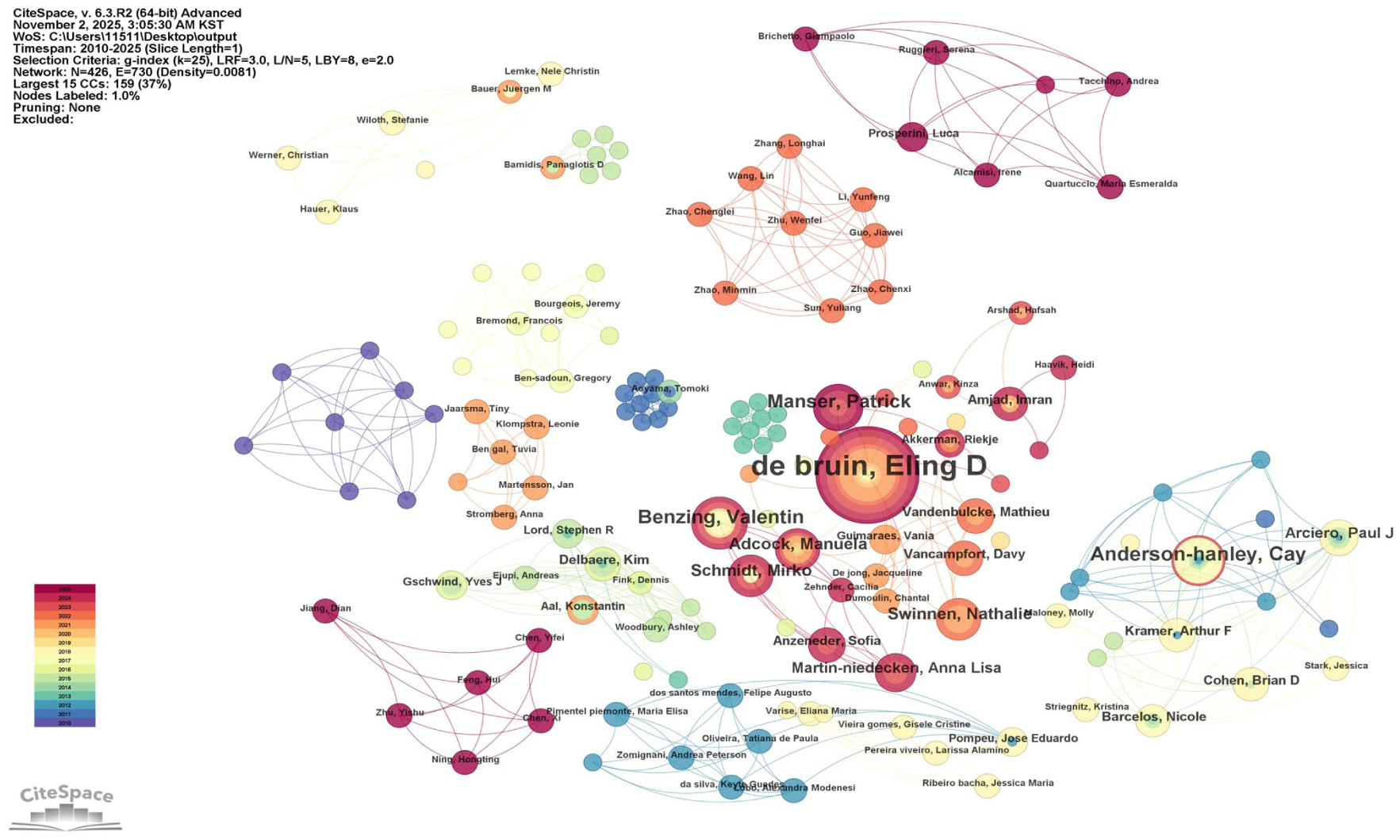
Author co-occurrence map.
Top 10 Authors by Collaborative Publication Counts.

Note. Only the primary institutions of the authors are listed in this table This table includes 12 authors because of ties in the number of collaborative publications among multiple authors within the top 10 rankings.
Co-Citation Relations
Journal Co-Citation
The journal co-citation map (Figure 6) visualizes the citation relationships among major academic journals in the field of exergames and cognitive function, revealing the distribution characteristics of the 7 knowledge clusters. Nodes in different colors represent distinct research themes or directions, whereas connecting lines indicate the co-citation relationships between journals. Further, thicker lines indicate stronger citation links. Several core nodes form dense citation networks, reflecting the primary sources of foundational literature and the key pathways of knowledge dissemination within this field. Table 6 lists the top 10 most frequently co-cited journals. PLOS ONE ranks first (265 co-citations), followed by Games for Health Journal (228) and Frontiers in Aging Neuroscience (205). These journals play essential roles in interdisciplinary research, covering fields ranging from health informatics and exercise science to neuroscience. Notably, although the Journal of the American Geriatrics Society and the Journal of Neuro Engineering and Rehabilitation have slightly lower co-citation frequencies, they exhibit relatively high intermediary centrality (0.04), indicating their bridging importance in the citation network. In terms of academic influence, most of the highly co-cited journals fall within the Q1 quartile, suggesting that they are leading journals in their respective fields.
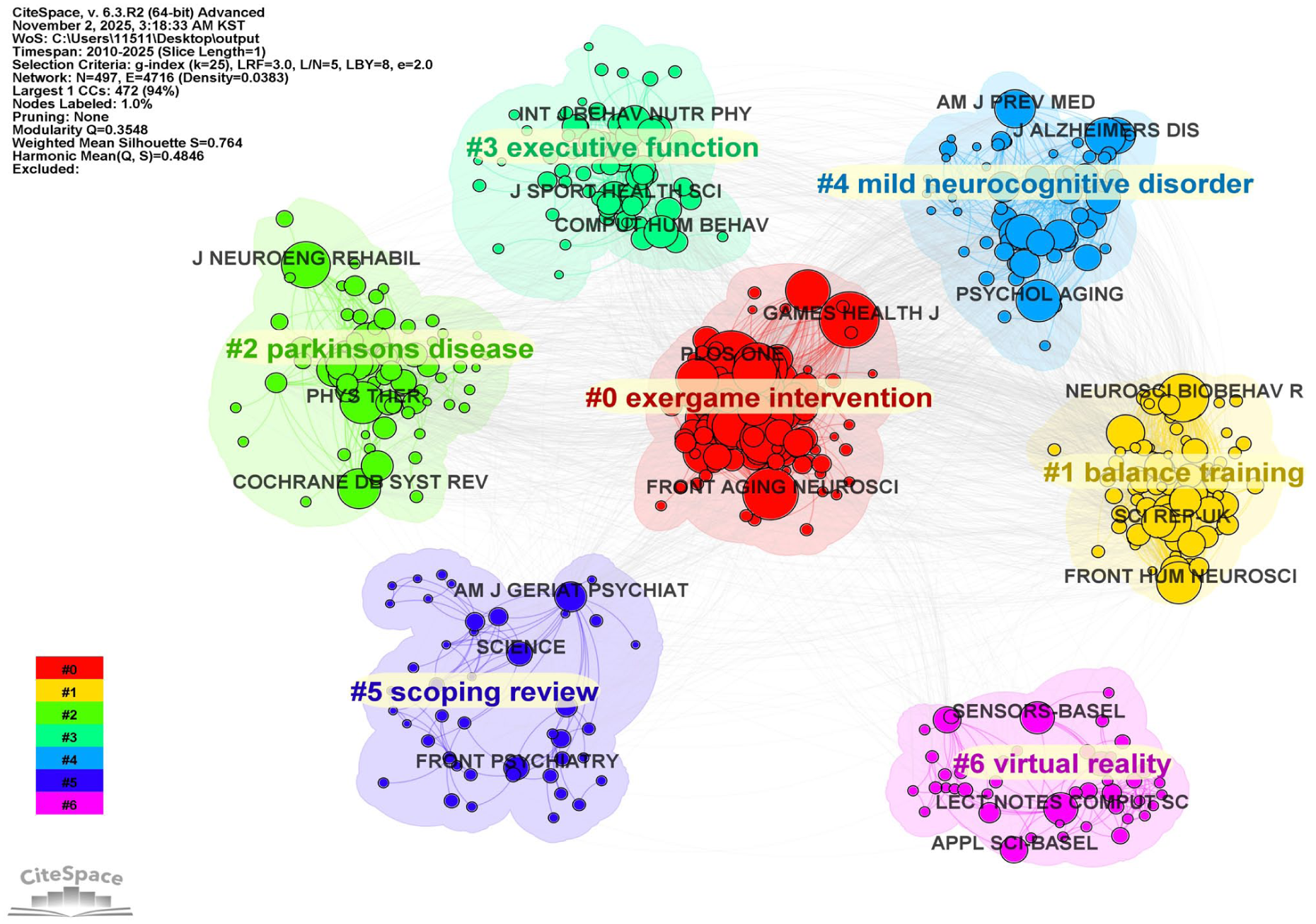
Journal co-cited map.
Top 10 Journals by Co-Cited Frequency.

Author Co-Citation
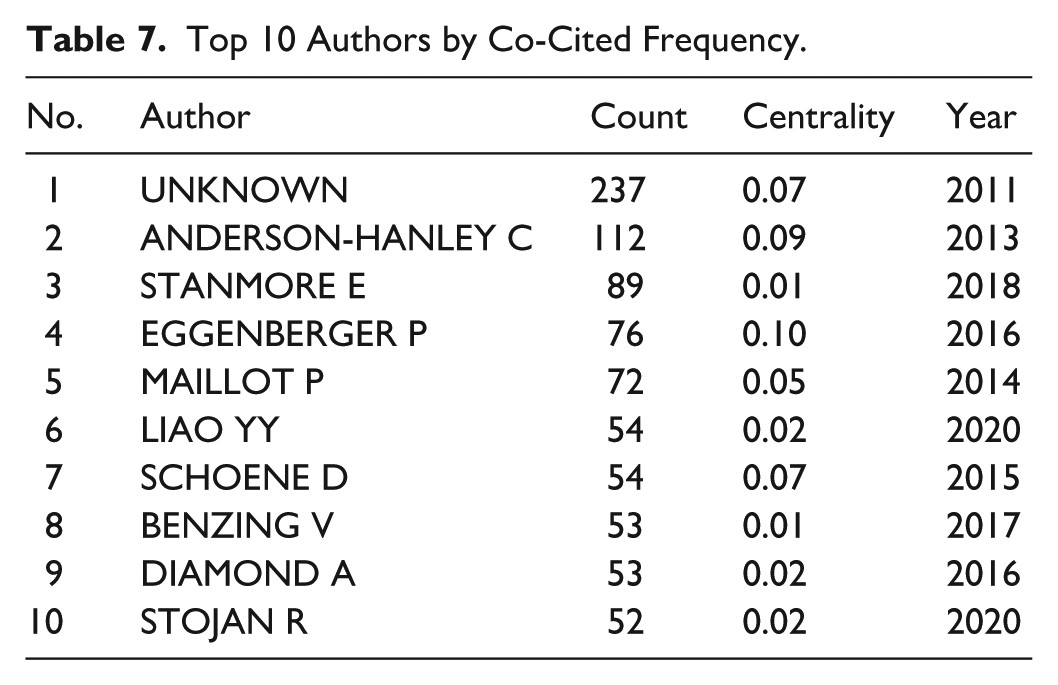
The authors’ co-citation map (Figure 7) visualizes the major groups of scholars who are frequently co-cited in the field of exergames and cognitive function, along with 9 thematic clusters, thereby revealing the knowledge base and theoretical framework of the field. Table 7 lists the top 10 core authors ranked by co-citation frequency. The top-ranked node labeled “UNKNOWN” reflects limitations in bibliometric analysis when processing nonstandard or non-English citations. Anderson-Hanley ranks second (112 co-citations), followed by Stanmore (89 co-citations). Notably, Eggenberger P., from the University of Geneva exhibits the highest intermediary centrality (.10), indicating a pivotal bridging role within the interdisciplinary research network.
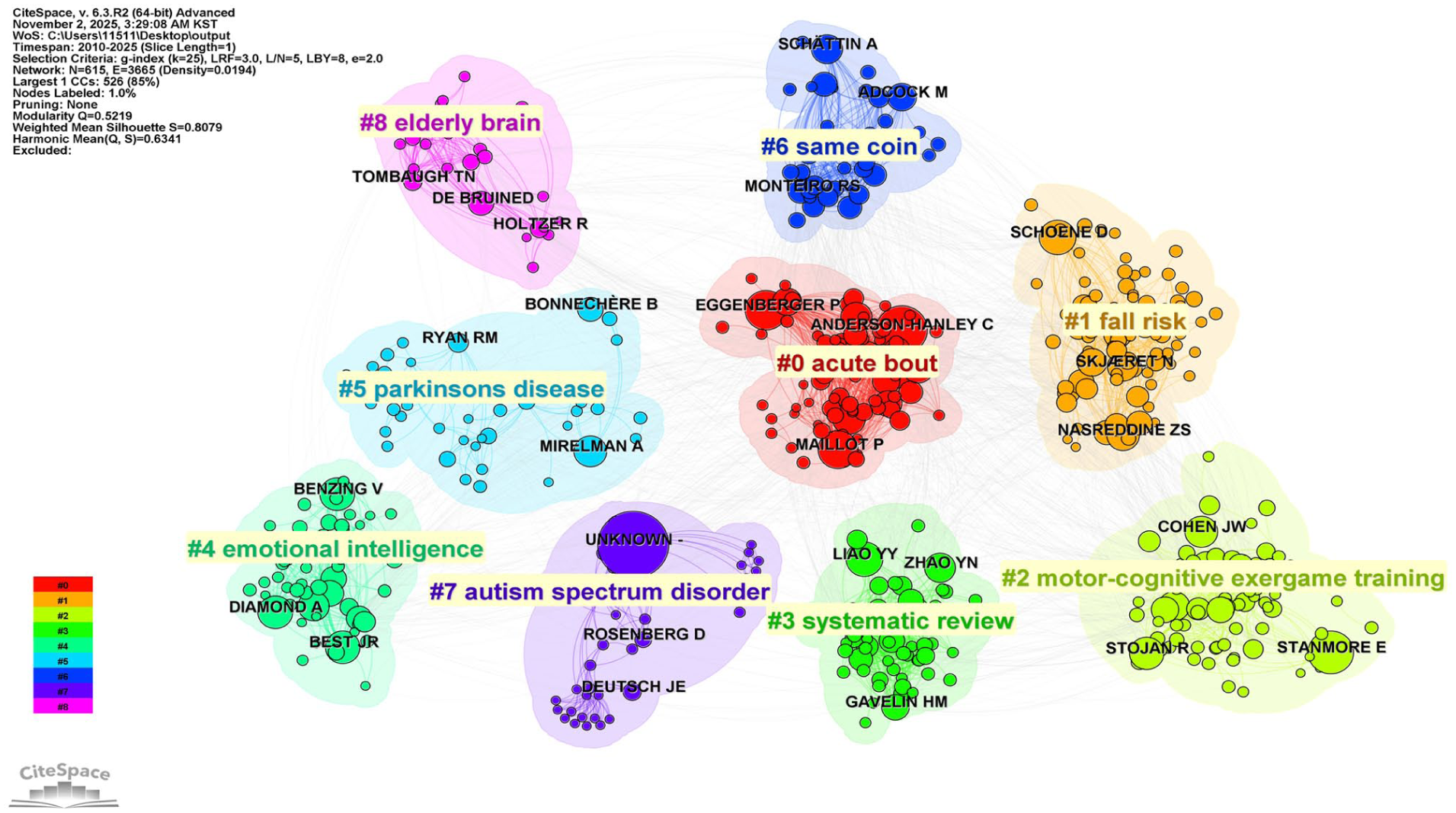
Author co-cited map.
Top 10 Authors by Co-Cited Frequency.
Reference Co-Citation
The reference co-citation map (Figure 8) visualizes the major co-cited references and their thematic clusters in the field of exergames and cognitive function, identifying 10 prominent clusters which reveal the knowledge base and evolutionary trajectory of the discipline. Table 8 presents the 10 most frequently co-cited references. Among them, the study by Stanmore E. 2017, published in Neuroscience & Biobehavioral Reviews, ranks first (88 co-citations). This is followed by Stojan (2019), Journal of Clinical Medicine, Eggenberger (2016), Frontiers in Aging Neuroscience, with the latter having the highest intermediary centrality (0.11), indicating its important bridging role in connecting diverse research themes. In addition, the study by Anderson-Hanley (2012), published in the American Journal of Preventive Medicine, has 30 co-citations but exhibits a notably high centrality value (0.12), reflecting its critical contribution to establishing the theoretical framework for exergame-based interventions.
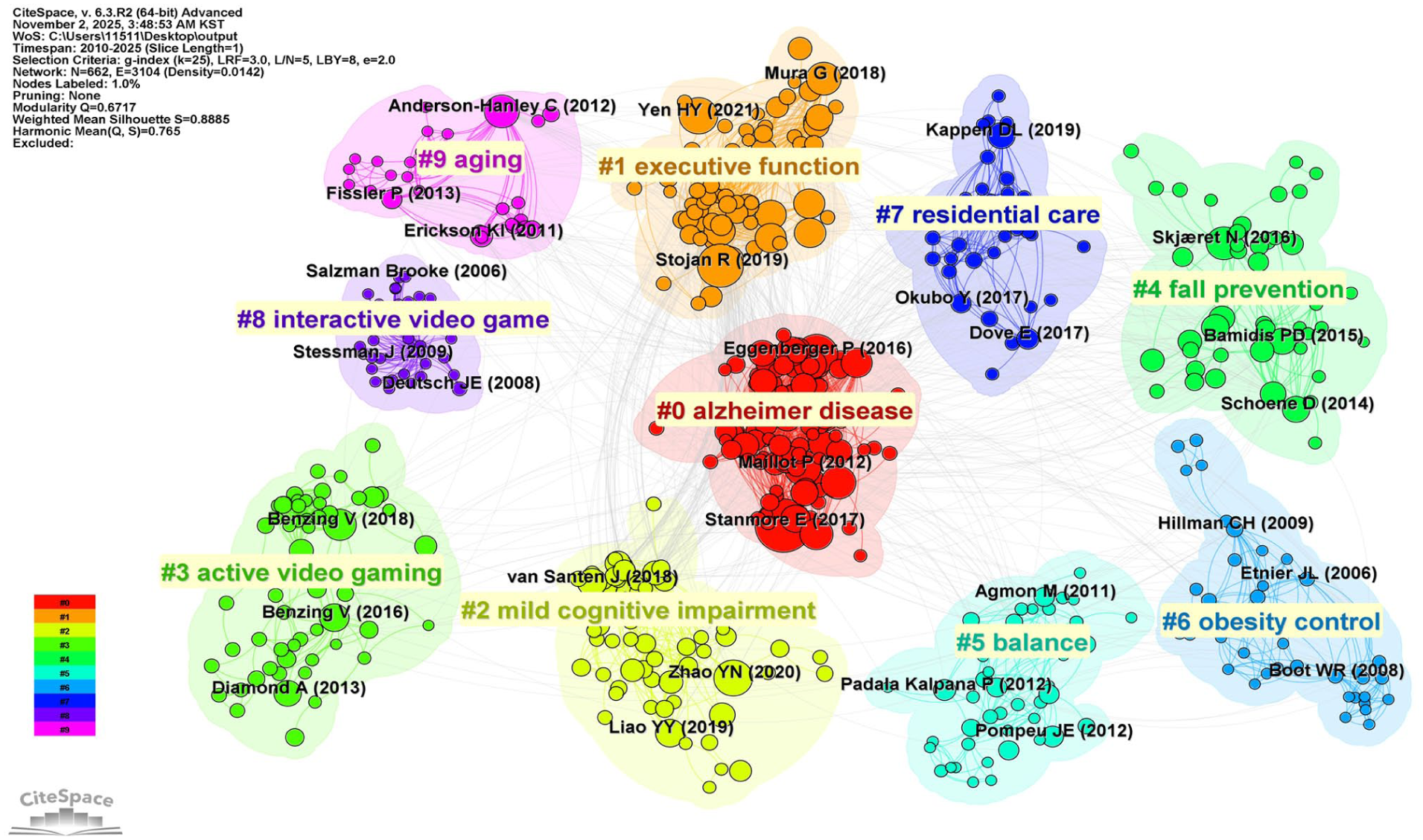
Reference co-cited map.
Top 5 References by Co-Cited Frequency.

Keyword Distribution
Keyword Co-Occurrence
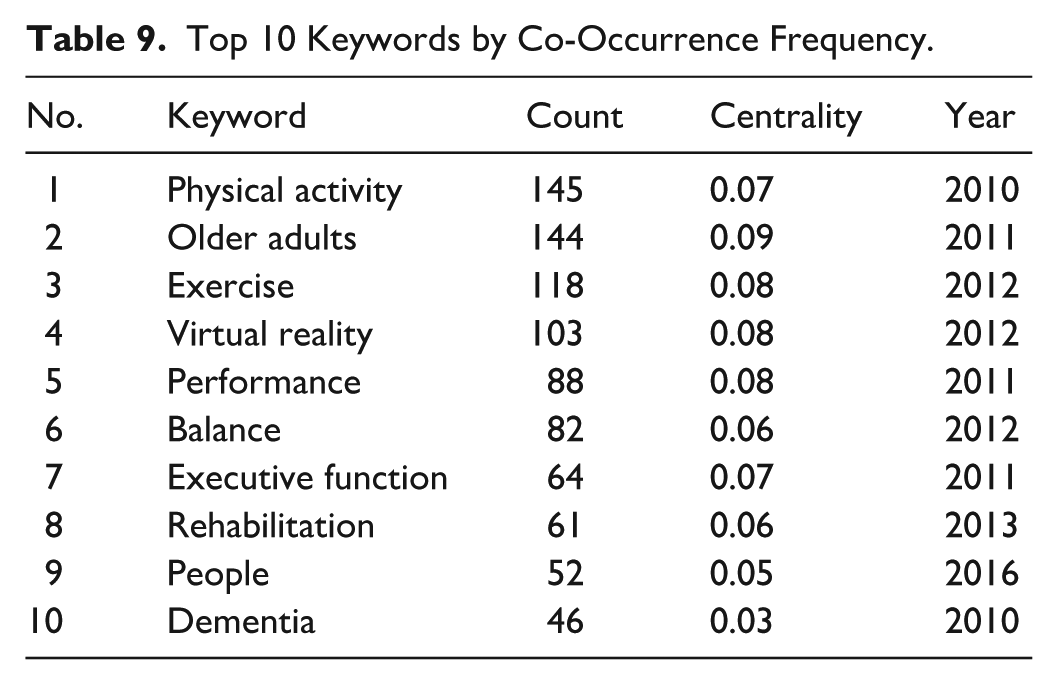
A keyword co-occurrence analysis helps reveal core themes and evolutionary trends in research on exergames and cognitive function. Table 9 lists the 10 most frequently co-occurring keywords in this field. Overall, these keywords reflect 3 major research directions: exercise interventions and physical activity, older adults and cognitive function, and VR-based rehabilitation training. Among them, “physical activity” ranks first (145 occurrences), followed by “older adults” and “exercise” (144 and 118 times, respectively). Meanwhile, “virtual reality” ranks fourth (103), demonstrates a relatively high intermediary centrality (0.08), indicating its bridging role in cross-disciplinary research.
Top 10 Keywords by Co-Occurrence Frequency.
Keyword Clustering
A keyword clustering analysis groups semantically similar terms into thematic categories, thereby revealing the core topics and emerging hotspots within the research field. The keyword timeline displays the chronological evolution and continuity of these clusters. Figure 9 presents the keyword co-occurrence timeline for research on exergames and cognitive function, with 7 major clusters labeled on the right. Early studies (2010-2013) were primarily concentrated in clusters #2 “physical exercise” and #4 “mild cognitive impairment.” Research during this phase focused on validating traditional forms of exercise (eg, aerobic training and balance training) and examining their effects on executive function, memory, and brain plasticity. With the advancement of digital technologies, the period from 2014 to 2017 marked a shift toward clusters #1 “active video games” and #0 “fall prevention.” This stage reflects the introduction of interactive motion systems, such as Wii Fit and Xbox Kinect, expanding the research focus from traditional exercise to digital rehabilitation and interactive training. Between 2017 and 2020, the field expanded rapidly, with emerging clusters such as #3 “development,” #5 “systematic review,” and #6 “feature extraction,” indicating diversification in research methods and applications. After 2020, cluster #7 “age” gradually became a new focal point. Scholars have increasingly examined age-related differences, especially among older adults, in cognitive responses and neural mechanisms underlying exergame-based interventions.
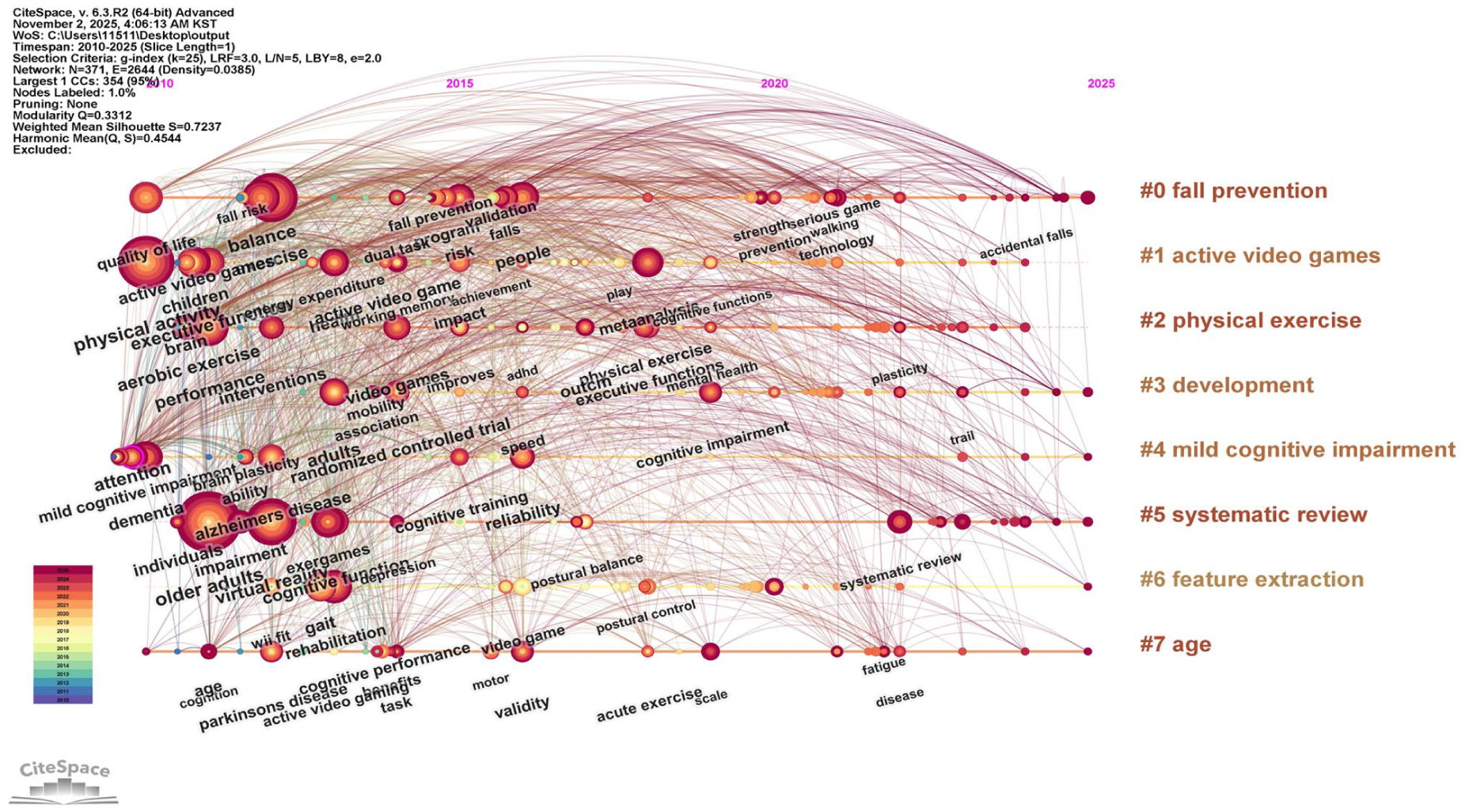
Keyword cluster timeline.
Keyword Bursts
A keyword bursts analysis identifies stage-specific research shifts and emerging trends. As shown in Figure 10, the 25 strongest burst terms illustrate how research hotspots have evolved. During the early stage (2011-2015), keywords such as “fitness,” “aerobic exercise,” and “brain plasticity” dominated, with “brain plasticity” showing the strongest burst (4.5, 2012-2017), reflecting increased attention to neuroplastic mechanisms underlying exercise- and exergame-induced cognitive benefits. In addition, “randomized controlled trial” exhibited a short burst in 2014 to 2015, indicating growing methodological rigor. In the subsequent period (2016-2020), “video game” had the highest overall burst intensity (6.02), indicating a heightened interest in video- and motion-based games as cognitive interventions. Furthermore, emerging terms such as “deep learning,” “Xbox Kinect,” and “play” (2018-2020) indicated technological diversification within the field. Recently, keywords including “multiple sclerosis” and “scale” have shown sustained bursts beginning in 2023 and are projected to continue through 2025, suggesting their rising significance in current and future research.
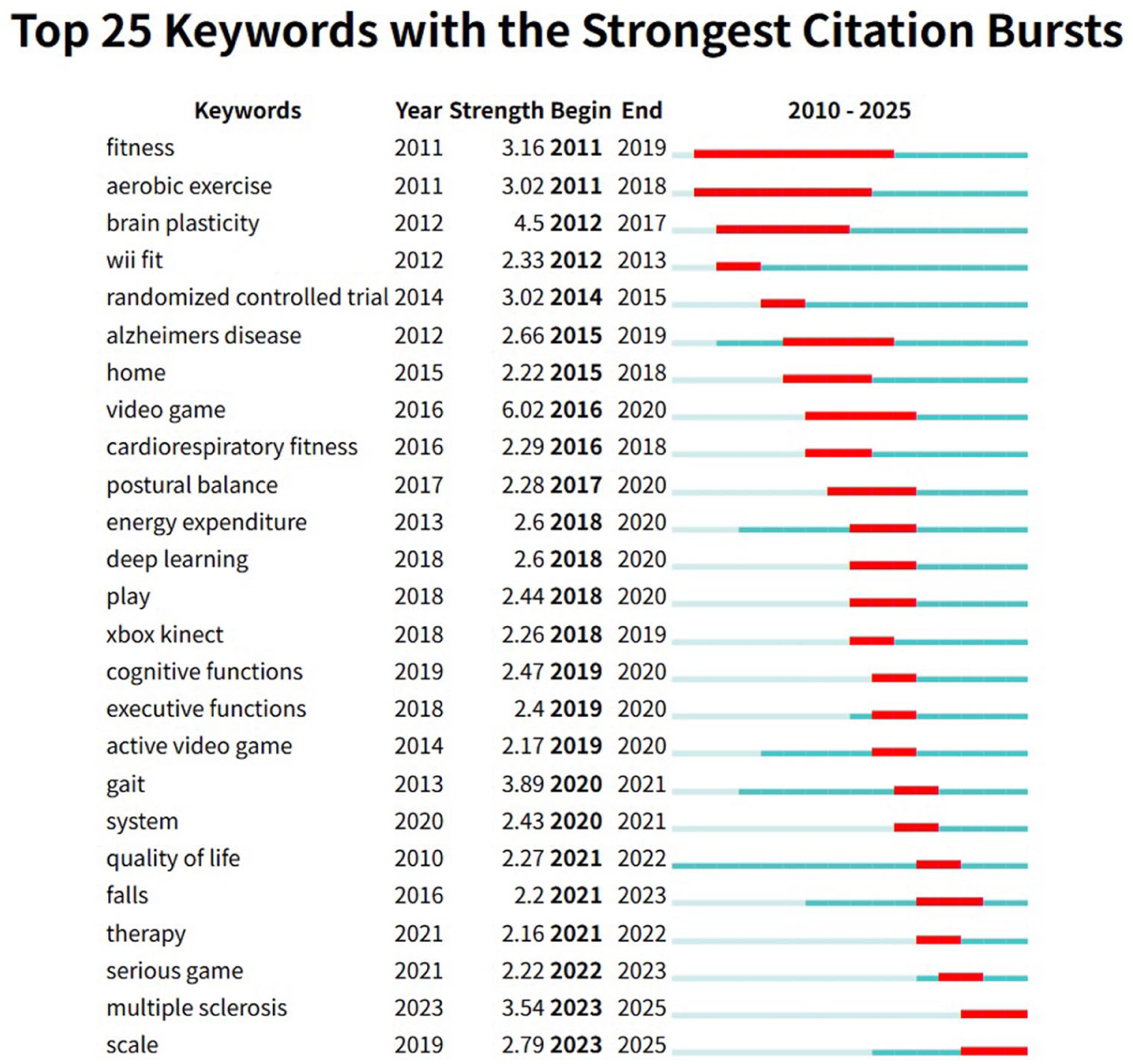
Keyword burst.
Discussion
Knowledge Framework
The results indicate that research on exergames and cognitive function involves a highly complex and multilayered process. Therefore, establishing a comprehensive and intuitive knowledge framework is essential for enabling researchers to quickly and accurately grasp the core components of this field. Such a framework will greatly facilitate a deeper understanding of exercise-based interventions for MCI and promote further advancements in related research (Figure 11). Notably, the present bibliometric and visualization analyses do not directly evaluate intervention efficacy or underlying mechanisms; rather, the proposed framework reflects how research themes, mechanistic hypotheses, and clinical implications have been conceptualized and discussed in the existing literature.
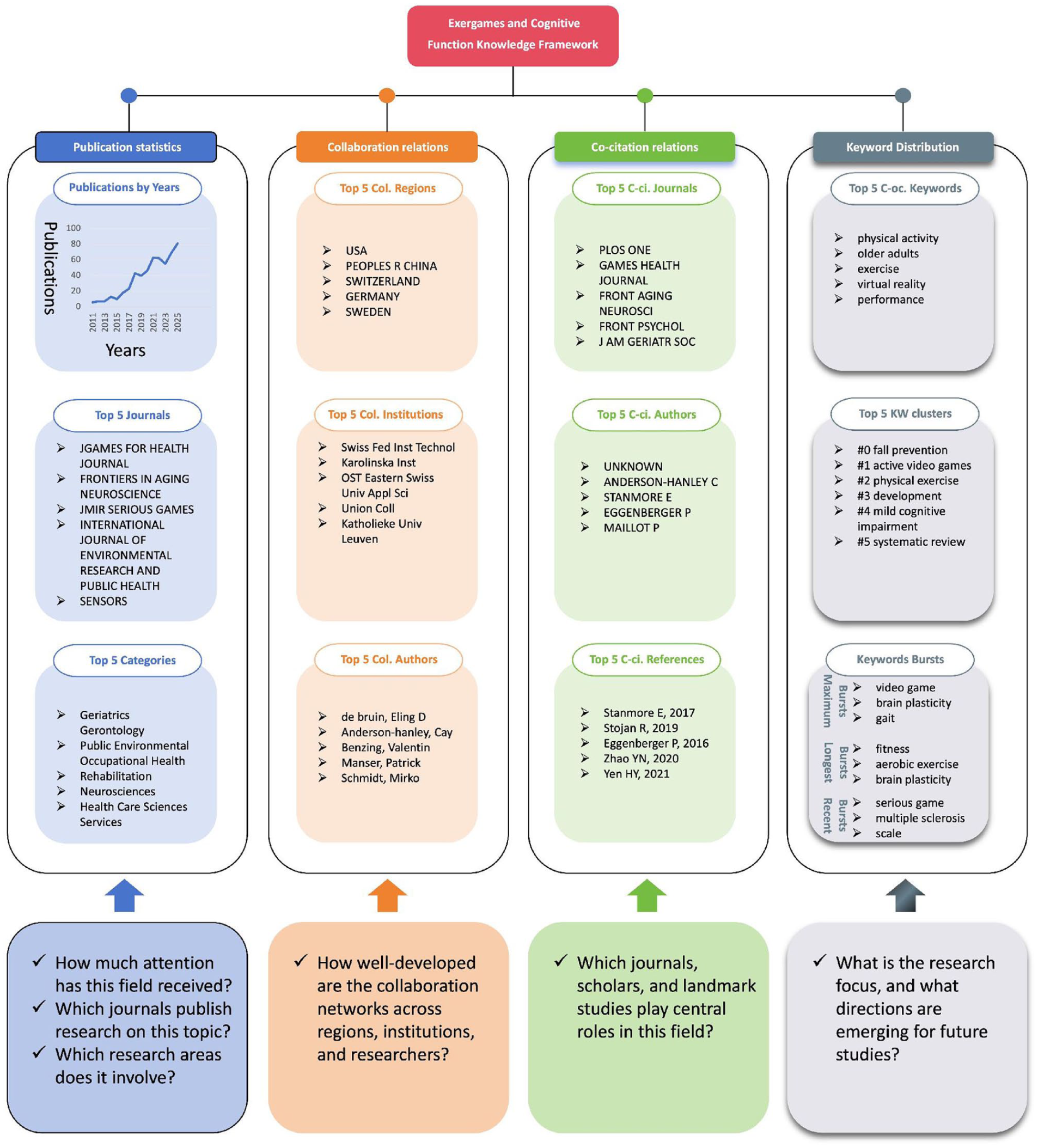
Exergames and cognitive function knowledge framework.
Publication statistics revealed the field’s developmental trajectory and indicated 3 major phases. During the initial stage (2010-2015), research activity was minimal with slow growth and fewer than 50 cumulative publications. The expansion stage (2016-2019) saw steady increases, with annual outputs doubling. A rapid growth stage (2020-2025) followed, marked by a substantial rise in publications from 46 in 2020 to 81 in 2025. Despite, slight declines in 2022 and 2023, overall productivity remained high, reflecting the intensified scholarly interest in exergame-based cognitive research.
The Games for Health Journal leads the field with 29 publications (5.30%), reflecting its central role in disseminating research on game-based health interventions. This is followed by Frontiers in Aging Neuroscience (25 studies, 4.60%) and JMIR Serious Games (24 studies, 4.40%), both emphasizing aging, neuroscience, and digital health, underscoring the growing importance of VR and interactive technologies in cognitive research. International Journal of Environmental Research, and Public Health and Sensors; each contributed 11 publications (2.01%), further demonstrating their relevance to the field. Most studies were published in Q1-Q2 journals with impact factors ranging from 1.5 to 6.0, indicating stable production of mid-to high-quality research. However, the limited presence in top-tier journals suggests room for improvement in theoretical depth and methodological rigor. Future efforts should strengthen interdisciplinary collaboration, enhance mechanistic and evidence-based studies, and aim for publication in leading international venues to elevate the field’s global visibility.
Regarding research categories, Geriatrics & Gerontology ranks first (86 publications, 15.70%), followed by Public, Environmental & Occupational Health (80 publications, 14.60%), with Rehabilitation and Neurosciences closely behind (76 and 75 publications, respectively). In addition, categories such as Geriatrics & Gerontology show high betweenness centrality, underscoring their bridging roles in the knowledge network. Early studies mainly focused on geriatrics, rehabilitation, neuroscience, and public health, however, the disciplinary scope has broadened substantially over time. This diversification reflects a shift from traditional exercise-based interventions to technology-enabled integrated health management models driven by advances in digital health. Concurrently, the interdisciplinary components of Medical Informatics (7.80%), Electrical & Electronic Engineering, Health Policy, and related fields have become increasingly embedded in this domain. 31
Research collaboration across regions, institutions, and authors is essential for advancing this field, however, marked geographic disparities persist. Collaborative activity is concentrated in developed countries with strong scientific infrastructures such as the United States, China, Switzerland, Germany, and Canada, where aging population and advanced research capacity drive interest in exergame-based cognitive interventions. As an emerging intervention modality, exergames align closely with research priorities in public health and medical innovation.14,32 Notably, regions such as Africa and parts of South America have yet to establish substantial international influence in this research area. Limited scientific resources, insufficient funding, and relatively weak technological foundations are major constraints. This regional imbalance highlights the persistent inequality in the global research landscape.
The major institutions in the collaboration network show distinct research emphases and cooperative patterns. Key contributors include the Swiss Federal Institute of Technology and Eastern Swiss University of Applied Sciences in Europe, Central South University in Asia, and Skidmore College in North America. European institutions focus on integrating engineering technologies, neuroscience, and rehabilitation to advance multidisciplinary exergames research. 14 Central South University leads regional efforts in developing virtual reality-based rehabilitation and motion-interactive systems for cognitive impairment prevention. 33 In contrast, North American institutions adopt broader international and cross-disciplinary collaboration strategies, strengthening the overall knowledge framework of exergames and cognitive function. 34 Overall, these diverse research approaches promote the development of exergame-based cognitive interventions from theoretical foundations to clinical application.
The authors’ collaboration network highlights the structural characteristics of research teams in this field. De Bruin, is the most productive and influential author, with 34 publications, followed by Anderson Hanley, Cay, Benzing, and Valentin, have contributed substantially to exergaming and cognitive neuroscience research. Several other active authors, such as Manser, Schmidt, and Adcock, are affiliated with Swiss institutions, forming a collaborative cluster centered around ETH Zurich and the University of Bern. Despite their productivity, these core authors show zero intermediary centrality, indicating that collaboration remains largely confined to small, institution-based groups rather than integrated into broader international networks. 35 This pattern may result from strong intra-institutional infrastructures in Europe, the early developmental stage of the field, and technical or methodological barriers such as differences in VR platforms, sensing devices, and data processing pipelines, that limit extensive cross-institutional collaboration.36,37
Co-citation analysis provides insight into the intellectual structure of the field and identifies journals, authors, and references with a central influence. In exergames and cognition function research, 5 journals emerge as key sources: Plos One, Games for Health Journal, Frontiers in Aging Neuroscience, Frontiers in Psychology, and the Journal of the American Geriatrics Society. Most belong to Q1-Q2 quartiles with 5-year impact factors between 3.2 and 5.3, reflecting the development of exergame research into a mature, multidisciplinary area. Although these journals exhibit low intermediary centrality, suggesting more domain-specific rather than cross-disciplinary influence, their high cogitation frequencies indicate strong authority within their respective fields. Researchers are encouraged to closely follow these journals because their insights and methodologies play a significant role in advancing exergames and cognitive function research.
Numerous scholars have significantly contributed to establishing the intellectual foundation of exergames and cognitive function research. The cluster labeled “UNKNOWN” (237 citations; centrality = 0.07) likely reflects early stage data inconsistencies, particularly involving non-English or conference sources. Among identifiable authors, Anderson Hanley, C. is the most frequently cited (112 citations; centrality = 0.09) and a leading figure who first introduced exergaming into cognitive intervention research, demonstrating its benefits for executive function, cognitive flexibility, and motivation in older adults. 18 Stanmore, E. (89 citations; centrality = 0.01) and Eggenberger, P. (76 citations; centrality = .10) have also advanced the field through work on feasibility, adherence, and mechanisms underlying VR and exergame-based interventions. Stanmore’s studies show that Kinect- and Wii-based programs can improve memory, reaction speed, and balance, while Eggenberger provide electrophysiological and neuroimaging evidence linking exergame training to enhanced neuroplasticity.38 -40 Notably, Eggenberger exhibits the highest betweenness centrality, indicating a bridging role across thematic areas, whereas Anderson Hanley remains a core node. Together, these studies offer essential theoretical, methodological, and empirical insights that have substantially shaped the development of this field.
Highly cited references highlight the theoretical and empirical foundations supporting the cognitive benefits of exergames. The most frequently cited study is Stanmore et al (2017, 88 citations), whose systematic review in Neuroscience & Biobehavioral Reviews demonstrate that exergame interventions improve cognitive function and psychological well-being. This work introduced the influential “dual exercise cognition mechanism,” proposing that exergames enhance cognition through both physiological pathways and cognitively engaging tasks that promote neuroplasticity.41,42 Zhang et al (2020) further validates the clinical feasibility of exergames, showing that 12 weeks of VR-based exergame training significantly improved executive function and attention in older adults, with high adherence and engagement.43 -45 Eggenberger (2016) and Anderson-Hanley (2012) also play central roles, exhibiting the highest intermediary centrality among all references, indicating their importance in bridging diverse conceptual areas. Overall, these highly cited studies form the academic backbone of research on exergame-based cognitive interventions.
High-frequency keywords reveal the core themes and research directions in exergame cognition studies. “Physical activity” (145 co-occurrences) ranks highest, underscoring its role as the conceptual foundation of exergame interventions, which share mechanisms with traditional exercise-based approaches. 25 “Older adults” (144 co-occurrences) reflects the demographic priority of the field, given the growing need to address age-related cognitive decline. 46 “Exercise” (118 co-occurrences) and “virtual reality” (103 co-occurrences) further highlight the importance of non-pharmacological exercise interventions and the increasing use of VR to create immersive, ecologically valid training environments. 47 Overall, these keywords outline a coherent framework: physical activity and exercise form the theoretical base; older adults constitute the primary target population; and VR technologies offer innovative pathways for delivering multidimensional cognitive training. This trajectory supports interdisciplinary integration across exercise science, neuroscience, and rehabilitation engineering while providing scalable strategies for mitigating cognitive decline in aging populations.
The fall prevention cluster (#0), first appearing in 2010, highlights early research on balance training, gait enhancement, and interactive exergames to reduce fall risk in older adults.48,49 The exergames cluster (#1) centers on the dual cognitive and physical benefits of exergames as a digital form of physical activity. 50 The physical exercise cluster (#2) emphasizes mechanisms shared with traditional aerobic and resistance training, including improvements in cognition, brain structure, and emotional well-being. 51 The development cluster (#3) reflects the expansion of exergames to broader populations, with keywords such as children, intervention development, and cognitive improvement, signaling a shift beyond older adults to youth and clinical groups. 52 The MCI cluster (#4) represents a major application area, with evidence showing that long-term exergame training enhances memory, attentional control, and may positively influence early Alzheimer’s pathology. 14 The systematic review cluster (#5) underscores the growing reliance on evidence-based synthesis, reflected in terms like meta-analysis and systematic review. 53 The feature extraction cluster (#6) captures the increasing integration of Artificial Intelligence(AI) and machine learning, such as data analysis, feature recognition, and motion tracking, into exergame research. 54 Finally, the age cluster (#7) examines cognitive aging and the efficacy of exercise-based interventions, with key terms including aging, quality of life, and executive function. 55
Between 2011 and 2019, the keyword “fitness” showed the strongest burst (3.16), reflecting an early interest in how physical fitness training influenced cognitive function. During this period, exergame research frequently examined improvements in motor coordination, endurance, and cognitive flexibility in older adults. 56 “Aerobic exercise” (3.02; 2011-2018) emphasized efforts to clarify the relationship between exercise intensity and cognitive outcomes, with evidence showing that moderate to vigorous activity enhances cerebral blood flow and neuronal activation, thereby improving executive function and memory.17,57 “Brain plasticity” (4.5; 2012-2017) emerged as another major focus, highlighting how exergames may promote neural restructuring through multisensory stimulation and movement-based feedback. Neuroimaging findings indicate activation of the prefrontal cortex and hippocampus during exergame training, contributing to gains in cognitive control and spatial memory. 58 The brief burst of “Wii Fit” (2012-2013) reflected early interest in specific home-based platforms that laid the foundation for later VR-based interventions. 18 The strongest burst overall was observed for “video game” (6.02; 2016-2020), marking a phase of rapid expansion. During this period, the mechanisms driving differential effects of various game genres illustrate the evolution of exergames from entertainment tools to evidence-based cognitive rehabilitation approaches. 14
In addition, several newly emerging keywords, such as “cardiorespiratory fitness,” “postural balance,” “deep learning,” and “Xbox Kinect,” highlight the growing integration of artificial intelligence and motion-recognition technologies into exergame-based interventions, providing important clues about recent technological advances in the field.
Since 2021, the burst of “quality of life” (burst intensity 2.27; 2021-2022) and “therapy” (burst intensity 2.16; 2021-2022) indicates a gradual shift in research focus toward clinical efficacy and long-term health outcomes. 59 After 2023, “multiple sclerosis” (burst intensity 3.54; 2023-2025) and “scale” (burst intensity 2.79; 2023-2025) have emerged as the latest research frontiers. The former reflects the expanding application of exergames in rehabilitation for neurological disorders, whereas the latter underscores advancements in measurement tools, suggesting that the field is moving toward greater standardization and quantitative evaluation. 60
Research Focus
This study systematically identified the research progress and emerging trends in the field of exergames and cognitive function through a comprehensive analysis of publication statistics, collaboration networks, keyword co-occurrence patterns, and clustering structures. High-frequency keywords such as “physical activity,” “older adults,” “exercise,” and “virtual reality” indicate that current research primarily focused on the development of exergame training paradigms and multidimensional mechanisms underlying cognitive enhancement.
According to the keyword clustering and cogitation patterns, the application modes of exergames can be categorized into 3 progressive layers: foundational interaction, dual-task integration, and intelligent adaptation. The continuous advances in motion capture, VR, and biofeedback technologies, have evolved exergame systems from simple physical movement stimulation to closed-loop training frameworks characterized by multimodal input, dynamic difficulty adjustment, and cognitive load adaptation.
As the foundational tier of exergame systems, the basic interaction layer enables motion recognition, virtual feedback, and execution of simple cognitive tasks, forming the basis for effective cognitive training. Researchers with the use of Wii, Kinect, and motion-capture cameras, can now monitor posture, movement quality, and response speed in real time, improving the precision and controllability of interventions. 61 For example, a Kinect-based system tracked center-of-mass shifts during balance tasks, provided real-time feedback and enhanced spatial attention and executive function. 62 Exergame movements combined with light cognitive tasks such as color discrimination or target selection, result in significant gains in sustained attention and reaction speed. Similar to a “monitoring layer” in digital health systems, this tier provides not only movement feedback but also critical data streams and perceptual inputs that support higher-level dual-task integration and adaptive regulation.63,64
In the second developmental stage of exergame applications, the dual-task integration layer built upon the motion recognition and feedback mechanisms of the basic interaction layer introduces the simultaneous execution of cognitive and motor tasks to enhance body cognition engagement. This layer requires participants to process cognitive information (eg, attentional shifting, response inhibition, or memory retention) while performing physical actions, thereby eliciting stronger coactivation of the motor cortex, prefrontal cortex, and broader executive control networks. 65 As dual-task theory and executive function training paradigms advance, an increasing number of studies have incorporated complex cognitive challenges into exergame designs. For instance, gait-prediction and color discrimination tasks embedded into balance training, requiring older adults to maintain trunk stability while performing target recognition; indicated significant improvements in reaction speed and selective attention. 66 A Kinect-based “cognitive navigation task,” in which participants engaged in simultaneous path planning and action imitation within a virtual environment, yielded measurable improvements in spatial working memory and cognitive flexibility. 67 Notably, dual-task integration has gradually evolved beyond the traditional “motor + cognitive” parallel model toward more dynamic mechanisms for cognitive load regulation. Some recent systems automatically adjust interference stimuli during gameplay based on real-time analysis of movement stability and task performance speed, ensuring that training remains within an optimal difficulty zone. The core value of the dual-task integration layer extends beyond enhanced cognitive processing; it strengthens cross-modal sensory integration, increases task engagement, and provides an appropriate level of challenge. Overall, these features establish a critical foundation for the development of intelligent, adaptive training systems.
Upon entering the higher-level interactive engagement layer, exergames extend beyond single-task training and create immersive cognitive motor experiences through VR, social-interaction modules, and gamification-based motivational strategies. This layer emphasizes the essential roles of user motivation, engagement, and social interaction in cognitive training, transforming exercise from a passive task into an intrinsically appealing and sustainably driven active process. With the rapid development of immersive technologies and gamified design, many studies are constructing exergame environments that enhance the training experience. For example, VR natural landscapes designed an immersive walking task enriched with synchronized sound, lighting, and visual path cues, to effectively increase older adults’ emotional enjoyment and adherence to the training program.68,69 A smartphone-based competitive mode in which participants competed against virtual opponents during balance exercises, leading to significantly higher task engagement and reduced dropout rates. 70 A particularly innovative direction within this layer is the development of socialized exergame training systems. These training systems use online match-making, with multiplayer cooperative tasks, and community-based challenge modules, for older adults to gain a sense of belonging and social support during cognitive training. For instance, some programs incorporate family members or community volunteers into interactive game sessions, enabling participants to collaboratively complete memory tasks or balance challenges, which improve cognitive outcomes while simultaneously reducing loneliness and anxiety.71,72 The core value of the interactive engagement layer lies in its ability to leverage immersive experiences, motivational reinforcement, and social connectedness to substantially enhance training adherence. This strengthens the positive cycle among cognition, emotion, and behavior, providing a more stable foundation for the implementation of intelligent adaptive interventions.
Overall, the introduction of the intelligent adaptation layer transforms exergames from static exercise formats into closed-loop systems capable of real-time feedback, personalized customization, and dynamic task adjustment. This shift provides more precise and sustainable digital solutions for cognitive enhancement. Bibliometric evidence indicates that exergaming has strong developmental potential, with effects likely operating through multiple pathways, including neuroplasticity, sensorimotor cognitive integration, and emotion-motivation regulation. With rapid advances in motion capture, VR, physiological sensing, and artificial intelligence, exergames are moving toward more intelligent, multimodal, and mechanism-oriented designs. This trend supports the future development of cognitive-training systems that are more accurate, context aware, and adaptively tailored to individual needs.
As a result of these emerging trends, understanding how exergames enhance cognitive function has become a central focus. Bibliometric mapping shows that mechanism-related keywords such as “mechanism” and “brain activation” cluster across multiple subnetworks, indicating a shift from early outcome-oriented research to more mechanism-focused inquiry. Current evidence suggests that cognitive gains from exergames arise through multiple interacting physiological and psychological pathways, rather than using a single mechanism. To clarify these pathways, this study integrated CiteSpace knowledge mapping with existing literature and identified 3 major mechanisms: enhanced neuroplasticity, perception cognition integration, and emotion-motivation regulation.
Neuroplasticity is the primary mechanism through which exergames improve cognitive function. Bibliometric findings show repeated clustering of keywords such as “mechanism” and “brain activation,” underscoring the centrality of adaptive neural changes in this field. Contrary to traditional exercises, exergames integrate motor activity, visual feedback, and task-based decision-making to provide richer neural stimulation. Kinect-based exergames elicit stronger prefrontal cortex activation during executive function tasks, likely due to the combined demands of movement and attentional control.73,74 Immersive gameplay also requires task switching, response inhibition, and rapid decision-making, thereby engaging multiple cognitive networks and supporting neural reorganization. Long-term exergame participation has also been associated with increased BDNF levels, enhanced synaptic plasticity, and improved neural connectivity, suggesting potential benefits in delaying cognitive decline and supporting executive function recovery.
Sensorimotor cognitive integration is another key pathway underlying the cognitive benefits of exergames. Furthermore, combining motion capture, visual cues, auditory feedback, and spatial navigation tasks, exergames require users to execute complex actions driven by multimodal information effectively engaging both motor and cognitive systems. Evidence shows older adults process visual inputs, adjust posture, and plan actions simultaneously during gameplay, thereby improving sustained attention, spatial orientation, and sensory integration.10,75 Neuroimaging studies further reveal enhanced coordination between the frontoparietal network and sensorimotor regions, supporting neural circuit reorganization and more flexible cognitive motor strategies. 76 This multimodal training enhances spatial cognition, response inhibition, and the speed and accuracy of information processing, providing essential support for cognitive improvement.
Emotion regulation and motivational activation are other key mechanisms underlying the cognitive benefits of exergames. The enjoyment, interactivity, and immediate feedback inherent in exergames substantially enhance user motivation, which is particularly important for older adults or individuals with cognitive impairments. Research shows that engaging in gameplay reduces training monotony and increases emotional arousal and enjoyment, changes associated with dopaminergic and cholinergic system activation.77,78 Through strengthening dopaminergic pathways improves task persistence and supports working memory and attentional allocation. Social elements common to exergames such as cooperative or competitive modes reduce loneliness and improve adherence. Although the precise neurophysiological links remain complex, the current evidence consistently indicates that enhanced mood and motivation exert important indirect effects on cognitive improvement during exergame-based training.79,80
Overall, exergames promote cognitive function through 3 primary pathways: enhanced neuroplasticity, sensorimotor cognitive integration, and regulation of emotion and motivation., These mechanisms extend the potential of traditional exercise-based interventions and provide a multidimensional framework for understanding cognitive enhancement. Research topics related to these mechanisms have emerged as major hotspots in recent years and are likely to continue guiding the future development of the exergame cognitive function field.
Future Research Characteristics
As an emerging interdisciplinary domain, research on exergames and cognitive function is rapidly advancing, and continually expanding its theoretical and applied boundaries. Based on the bibliometric and trend analyses, future research in this field is expected to exhibit several notable characteristics.
Research on exergames and cognitive function is expected to maintain and strengthen this interdisciplinary orientation. Although current studies have mainly focused on exercise science, neuroscience, and psychology, future studies will increasingly integrate cognitive science, rehabilitation engineering, VR, artificial intelligence, and educational psychology. Exercise science provides a basis for designing game modalities that align with cognitive demands, whereas neuroscience continues to clarify how exergames promote neural plasticity. Psychology and behavioral science support user-centered motivational frameworks that enhance adherence and engagement. The integration of artificial intelligence and big data analytics is also anticipated to advance personalized cognitive interventions. Improvements in neuroimaging, motion capture, and machine learning, enable researchers to monitor cognitive performance and neural responses in real-time and dynamically adapt training strategies. These developments will ultimately enable the creation of truly intelligent, feedback-driven cognitive-training systems.
Future studies should adopt a more open and diverse international collaboration model. Although current studies on exergames have focused on Europe, North America, and Asia, regional disparities remain. Globally, with increasing attention to healthy aging, transnational cooperation is likely to expand, as Asia, China, Japan, and South Korea possess complementary strengths in digital rehabilitation and VR-based interventions. Thus, establishing joint platforms and multicenter trials could enhance the region’s global influence. At the institutional level, closer collaboration among universities, medical centers, and technology companies is essential. Academic institutions provide theoretical foundations, clinical centers offer patient access for validation, and industry partners contribute to advances in hardware, data collection, and algorithm synergies that can accelerate translation from basic research to clinical practice. At the author level, cross-institutional and interdisciplinary collaborations are expected to increase, thereby promoting methodological innovation, increasing sample diversity and improving generalizability. Overall, strengthened cooperation across the national, institutional, and individual levels facilitates data sharing, resource integration, and interdisciplinary convergence, ultimately advancing scientific progress in exergames and cognitive function research.
Future research should emphasize integrated and multidimensional intervention strategies. As digital technologies advance, exergames will no longer be regarded as merely an exercise or entertainment tool; instead, they will be increasingly integrated with cognitive training, psychological therapy, social interaction, and immersive virtual environments to form multimodal intervention systems. Researchers are likely to explore the combination of exergames with VR, AR, brain-computer interfaces (BCI), and wearable sensors to achieve simultaneous improvements in cognitive, motor, emotional, and social functioning. For example, integrating dual-task training with context-based memory tasks in virtual environments has been shown to significantly enhance executive function and emotional regulation in older adults.
Personalized interventions and precision rehabilitation may become major future trends. AI-driven user profiling will enable the development of optimized training protocols tailored to individual characteristics such as age, sex, disease type, and cognitive level. Future exergame research will no longer focus solely on “average group effects,” but will increasingly emphasize “individual response variability,” thereby supporting adaptive and dynamically adjustable intervention strategies. This shift positions exergames as an integral component of digital health management. In the wake of combined momentum of technological innovation and international collaboration, the field is likely to progress from theoretical exploration toward broader clinical and societal applications, ultimately providing new scientific pathways and intervention models for maintaining cognitive health amid global population aging.
Limitations
This study has several limitations. First, the analysis was limited to English language publications indexed in the WoSCC, that may have excluded relevant studies from databases such as Scopus, PubMed, or CNKI, and reduced dataset completeness. Second, while bibliometric and visualization methods are good at identifying key research areas, themes, and trends, they cannot directly measure how well interventions work or how they function. Discussions on potential mechanisms are derived from theoretical hypotheses and explanatory frameworks widely discussed in previous studies, the validity of which still requires confirmation through further experimental research, systematic reviews, or meta-analyses. Finally, because of the large volume of literature, CiteSpace visualizations include only the most representative nodes, implying that some peripheral yet potentially meaningful studies may not appear in the networks, which could affect the precision and comprehensiveness of the results.
Conclusion
Research on exergames and cognitive function has received increasing attention from the scientific community and is gradually developing into an interdisciplinary field that integrates exercise science, neuroscience, psychology, and rehabilitation medicine. Relevant studies are predominantly published in a set of representative journals, reflecting strong academic clustering and domain specificity. According to the collaboration network analysis, developed countries currently dominate research in this area, and international cooperation is steadily expanding. Institutional collaborations exhibit clear regional clustering, whereas author collaborations are mostly concentrated within single institutions, indicating stable and highly specialized research teams. Research on exergames and cognitive function is expected to advance toward multidimensional integration and innovative applications. Comprehensive intervention frameworks may become a key research focus, whereas systematic reviews and evidence-based studies may provide more robust scientific support for evaluating intervention effectiveness. Moreover, personalized and precision-oriented intervention strategies may likely represent an important developmental trend, with increasing attention being paid to the differentiated needs of diverse populations, including young adults, older adults, individuals with cognitive impairment, and other special groups.
Supplemental Material
sj-docx-1-inq-10.1177_00469580261432417 – Supplemental material for Exergaming and Cognitive Function Research: A Bibliometric Visualization Analysis Using CiteSpace
Supplemental material, sj-docx-1-inq-10.1177_00469580261432417 for Exergaming and Cognitive Function Research: A Bibliometric Visualization Analysis Using CiteSpace by Yang Li, Qifeng Han and Sung Min Kim in INQUIRY: The Journal of Health Care Organization, Provision, and Financing
Footnotes
Acknowledgements
We would like to thank all participants for their valuable contributions to this study. The authors would like to thank the researchers in the exergaming and cognitive function research, whose publications have made significant contributions to this analysis. The authors also express their gratitude to the developers of the CiteSpace software, whose visualization tools enabled us to present our findings more effectively.

Ethical Considerations
This study does not involve human participants or animals; therefore, ethical approval was not required.
Author Contributions
Yang Li: Writing—original draft, Software, Data curation. Qifeng Han: Writing—review & editing, Software, Visualization. Sung Min Kim: Writing—original draft, Supervision, Conceptualization.
Funding
The authors disclosed receipt of the following financial support for the research, authorship, and/or publication of this article: This work was supported by the research fund of Hanyang University (HY-202500000003083).
Declaration of Conflicting Interests
The authors declared no potential conflicts of interest with respect to the research, authorship, and/or publication of this article.
Data Availability Statement
The data used in this study were obtained from the WoSCC. The datasets generated and analyzed during the study are available from the corresponding author upon reasonable request.*
Supplemental Material
Supplemental material for this article is available online.
References
Supplementary Material
Please find the following supplemental material available below.
For Open Access articles published under a Creative Commons License, all supplemental material carries the same license as the article it is associated with.
For non-Open Access articles published, all supplemental material carries a non-exclusive license, and permission requests for re-use of supplemental material or any part of supplemental material shall be sent directly to the copyright owner as specified in the copyright notice associated with the article.
