



Abstract
This exploration provides an alternative future to that offered in the discussions surrounding what is often referred to by the ‘fourth industrial revolution’ or the ‘third offset’. I argue that even modest projections of existing trends have the capability of altering the grammar or ecology of geopolitics as well as the drivers for competition and catastrophe. Such changes are more significant than questions of how this or that actor might be different or which great powers may shape the international order in a hundred years. The essay seeks to understand what disruptive changes in non-human capability might mean for the shape of a potential geopolitics to come. In a more general sense, I want to think about how violence will be distributed differently. Will there be new sources and even kinds of competition unique to a global system populated and in some cases, structured by cunning machines – some mechanical, others digital – and what are the implications for how we imagine international relations?
Preface
It is a strange task to write by invitation. In some sense it is an assignment or a response to someone else’s question quite different from the way thoughts invade and slowly bubble up to inspire writing normally. As a result, this article is directed at a problem someone else has chosen. An interesting problem but as it is not my problem my response is speculative rather than propositional. I am not proposing an argument that I will then prove through an exemplary pile of data. Instead, I am interested in how one goes about answering the question posed and I am making use of the knowledge I have from other research projects and thinking to formulate a judgment or conjecture to answer the assignment. I have written what I think is a scholarly reply but this is more of an essay than an article.
For me, this particular essay is uncanny because it responds to an invitation to think about the next 100 years of international relations. Or maybe the next 100 years of International Relations as the invitation came on the occasion of the hundredth anniversary of the founding of the Department of International Relations at Aberystwyth University. I have tried to address here both possibilities.
I will try to describe a possible version of international relations on this planet in 100 years and I will address what that planetary situation would demand of International Relations as a field. However, doing so makes me feel a bit like William Holden’s character Joe Gillis in Sunset Blvd tasked with narrating the events leading up to his own murder. Face down in a pool, surrounded by investigators, speaking from a position of everywhere and nowhere – an impossible position. In the year 2120 I will most certainly be dead. Given the plummeting life expectancy in the U.S. even the youngest people I know will likely have been gone for at least a couple of decades. And given what I am about to say about the possible future of the planet the odds are good I am off the hook from being read too harshly if ‘reading’ is even still a thing that happens at all.
Here are a few provisos for writing after the fact of one’s own existence. First, what takes place in such an exercise is not knowledge in the Kantian sense. To ponder before or after one’s existence is to violate the correlationist principles by which the social sciences are judged. 1 I am inquiring into events that I cannot experience or observe, ever. In fact, in some of the more extreme suggestions I make below those who possess the sensory capability to continue the human habit of observation and meaning making may not be precisely human, raising all sorts of epistemological questions far exceeding the capacity of this intervention.
Second, there is no research question here. Research questions are for the living. This article is written from a postmortem perspective. There is no one to answer for the testing, confirming, or falsification of the ideas contained here. The empirical contribution of the piece is supplanted by a different ground for judging the felicitous or infelicitous character of the article. My invitation or request for the essay before you, is to think otherwise than the dominant visions of how you expect the future to turn out. We are most certainly both wrong but as assuredly our particular wagers will be long forgotten before anyone can call us out.
Death, forgetting, oblivion, I believe that is what Georges Bataille calls freedom. So here we go!
Introduction
Troubled times encourage meditation. –Raymond Aron, 1966
During a visiting professorship at Harvard University from 1960 to 1961, Raymond Aron completed probably his greatest work of International Relations theory, War and Peace. The occasion for the book, according to Aron, was not simply to write down his observations of the global system but to lament that so much of IR had become mere observation. The field had fallen into a kind of intellectual torpor. A striving to be scientific had devolved into the sorting and resorting of data. 2 Inspired by Hans Morgenthau’s critique of the limits of positivism in capturing human behavior set out in the Scientific Man Vs. Power Politics, Aron was additionally concerned that a ‘photographic’ approach to global affairs was uniquely dangerous given the still under-theorized consequences of World War II. For Aron, the shift in great powers with the U.S. supplanting the British; the unprecedented acceleration of economic and technological change from the atomic bomb and air power to global economic integration; and the crisis in morality created by the new order; all created the condition of possibility for fundamental changes in the principles of order. A change in principle rather than a change within accepted principles was, according to Aron, likely to elude scientists looking for law-like relations premised on the order that came before.
Aron suggests in these opening pages, before he dives into everything from the break throughs in physics to the possibility of climate engineering, that what we need is a generation of painters rather than photographers. Quoting from Morgenthau, Aron says, ‘The photograph shows everything that can be seen by the naked eye. The painted portrait does not show everything that can be seen by the naked eye, but it shows something the naked eye cannot see: the human essence of the person who is portrayed’. 3 Aron argues that to do this, given the disruptions facing the planet, requires a return to first principles to create a geopolitics that can in equal measure consider the technical, geographic, and social character of peace and war. What Aron was demanding was a new grammar for International Relations that could go beyond the descriptive study of diplomatic and military affairs in favor of the formative processes that are the condition of possibility of global politics.
Taking inspiration from Aron, I similarly want to ask whether geopolitics may again need a new grammar. By grammar I mean more than a change in concept or the addition of a few new actors. By grammar I mean the structure of change that is presumed in a world mostly populated by humans, organized by nation-states, and premised loosely on a liberal sensibility of humanity as a moral category. I mean grammar in the linguistic sense as the rules that govern the relationship between things.
Reflecting on the new interdisciplinarity inspired by second order cybernetics, Gregogy Bateson asks a peculiar question apropos of what I have in mind. He wonders what to a botanist is the question of grammar?
Those who think first of the ‘things’ which are related (the ‘relata’) will dismiss any analogy between grammar and the anatomy of plants as far-fetched. After all, a leaf and a noun do not resemble each other in outward appearance. But if we think first of the relationships and consider the relata as defined solely by their relationship then we begin to wonder. Is there a profound analogy between grammar and anatomy? Is there an interdisciplinary science which should concern itself with such analogies?
4
Working through a radicalization of what we mean by homology and analogy he says, ‘In both fields, the relations are to be thought of as primary, the relata as secondary. Beyond this, it is claimed that the relations are of the sort generated by processes of information exchange’. 5
Bateson’s distinction between relata and relation is what makes IR, for me, distinctive from diplomatic history.
In IR theory rather than descriptive accounts of international relations, there is an assumption that we can say something about the relations, the ‘form and pattern’ that is not wholly reducible to the idiosyncrasies of the particular relata, the particular states or IOs or social movements, whatever you would like to study. Such a distinction between grammar and taxonomy need not be the hard firebreak between Waltz’s second and third image; it can merely be a shift in the emphasis of inquiry beyond the regional or national or other specific actor expertise we sometimes pursue to ask questions about the system as a system of relations rather than as a system that is a sum of units – relata.
I am interested in the global exchanges, a possible set of new relations, that would take place differently to such a degree of intensity that our ‘grammar’ would have to change. The tension here is that change should not be so catastrophic that the relations would no longer be worth describing as a planetary phenomenon. A planet sterilized by a burst of cosmic rays or split in two by a collision with a rogue planet would be a dramatic change but not one where the question of a new grammar for international relations would be particularly interesting. 6
A grammatical change is more significant than questions of how this or that actor might be different or which great powers may shape the international order in a 100 years. We are imagining a future where the unit of the planetary is still significant but the grammar of planetary relations is fundamentally transformed. This requires more imagination than data or trend analysis. However, if the ecology of this planet does not change sufficiently to necessitate a new grammar then IR will be just fine continuing on as it has before and this exercise will have been only that, an exercise.
However, an interesting thought experiment needs a credible tableau. What could disrupt planetary relations significantly enough to alter the grammar of planetary relations? There are after all, contemporary events which already call into question the conceptual apparatus of International Relations.
Unlike most of IR’s golden age it is not the proliferation of nuclear weapons and a shift in the location and identity of great powers that is driving our need to ‘meditate’ rather than merely describe – although to complicate things further we are living in a renewed era of nuclear modernization and power transitions. 7 Instead, the great disruption I see is the emergence of new kinds of actors and systems made by humans and deployed with humans but increasingly independent of their human counterparts. What some have called the fourth industrial revolution, is a transition from mechanization to automation that strives to transition again to autonomy. The range of actors include algorithms, robots, the collective and space/time altering character of the internet of things as well as the aspirational planning for general artificial intelligence to govern the swarms of machinic life and potentially humans as well.
In military circles, particularly in the U.S., the fourth industrial revolution is referred to as the third offset, that is, a replacement for the U.S. reliance on nuclear weapons to offset unfavorable differentials in the number of troops. Like the U.S. decision to deploy tactical nuclear weapons to Europe to compensate for the vast numerical superiority of Soviet troops, the U.S. now hopes to use artificial intelligence to gain advantages on the battlefield against competitors such as China and Russia by creating a breakthrough in the deployment and control of drones (from fleets to swarms) and to put the speed advantage of machine learning and data processing to work strategically such that operational planning and decision-making can occur without humans in the loop. 8 Furthermore, as China’s perceived threat to the U.S. is not only on the battlefield but also in the laboratory, the U.S. is committed to artificial intelligence closing the innovation gap as well. That is, the dreamers of the third offset hope to weaponize thought itself. 9
I am quite skeptical of the claims made in the private and military sectors about what the capabilities of these emerging and potentially disruptive technologies will be. However, if the history of weapons development teaches us anything it is that deployment is rarely slowed by actual capability. Antoine Bousquet’s book The Eye of War recounts how frequently the U.S. in particular has been willing to deploy new technologies in the battlefield before they are ready. 10 The outcomes of that experimental ethos range from embarrassing to catastrophic but the speed of development is rarely affected by either outcome. Instead, the laboratory of the now everywhere battlefield serves to incubate and develop new technologies even if what develops and succeeds is not exactly what was planned. So, while the third offset, like the fourth Industrial Revolution, is not likely to take place as it has been foretold, it will likely take place in some form.
In this investigation of the conceptual challenges to a new grammar for geopolitics, I wish to provide an alternative future to that offered in the permanent high ground imagined by the third offset. I will leave behind the notion of ‘revolutions’ in favor of accidents, incomplete transformations, and emergent relations. Rather than treat what I suspect will be another failure to achieve a true revolution in military affairs (RMA) as a non-event, I want to consider how mutations rather than revolutions will alter the principles of geopolitics in ways that defy expectations or desires of those so vociferously proclaiming the coming of a new world.
In a somewhat more chastened mood about the probability of the full general artificial intelligence presumed by the third offset, I will consider three trends which could be significantly disruptive with little or no major breakthroughs in technology. First, the accelerating pace of automation in both commercial and military sectors and what consequences that has for politics. Second, the increasing autonomy and intelligence of machines creating already the ability for computer systems to build other intelligent machines, design and conduct their own experiments, and engage in sophisticated game playing. Third, the divergence and potential speciation of humans as some humans choose to integrate and network their bodies and brains through inorganic data platforms while other parts of the human species seek to reconnect or intensify relations with non-human animals and environments. While not a ‘step change’ capability the accumulation of existing or near-term possibilities in machine intelligence or robots can still alter the structure of planetary life.
The essay seeks to understand what these disruptive changes in non-human capability mean for the topology of geopolitics, that is, the shape of a potential geopolitics to come rather than specific predictions about winners and losers or specific lines of conflict. In a more general sense, I want to think about how violence will be distributed differently. Will there be new sources and even kinds of competition unique to a global system populated and in some cases, structured by cunning machines – some mechanical, others digital, all of them increasingly what Deleuze and Guattari called machinic? 11 I argue throughout that even modest projections of existing trends have the capability of altering the grammar or ecology of geopolitics as well as the drivers for competition and catastrophe. 12
The paper is divided up into five sections, instead section on the limits of speculative or futures thinking for International Relations as a method of theorizing about global politics, then, sections on each of the trends identified as grammar altering follow. Finally, a conclusion sketches out what planetary life could look like if these trends continue uninterrupted and what kinds of new conceptual tools we would need to analyze such a world. Whether these new challenges and attendant concepts amount to a new grammar rather than additions to existing frameworks for understanding International Relations will have to be judged by the reader and ultimately a history to come whether exclusively human or otherwise. However, a request for generosity on the grounds that it is impossible in one journal article to prove the feasibility of each of the dramatic technical changes as they are, well, technical. Instead I ask that the reader enter the thought experiment to consider whether such a change, if it comes to pass, would require a new grammar for geopolitics. 13
Section 1: predictions are hard to make particularly about the future
The future is already here – it’s just not very evenly distributed.
The title of the section is attributed in equal amounts to Neils Bohr and American baseball legend Yogi Berra. However, the insight is not a joke and was at the core of Bohr’s famous double slit experiment. 14 According to Bohr, there was not a necessary relationship between initial conditions and the outcome of particle-wave behavior. In the simplest terms, chance is real. Bohr went on in his philosophical writings to suggest that the non-deterministic character of physics called into question the entirety of existence and causality. 15 The hope for law-like rules for macro systems like cellular life much less the even more complex arrangements of human behavior seemed to Bohr, naive. 16 As described by Weiner, ‘chance has been admitted, not merely as a mathematical tool for physics, but as part of its warp and weft’. 17 Although the full consequences for this insight for IR’s dreams of becoming a positivist science cannot be fully explored in this article, it is necessary for me to establish a few principles before I continue with, well, trying to describe a possible image of the future.
Following Bohr, I share the position that the future does not exist. Instead, for me, the value of speculative assessments of global order come from what such exercises mean for the present. 18 Decisions about weapons development, commitments to international institutions, the hubristic foreign policies that lead to war, are pursued on the backs of assumed futures. For instance, if strategic decision-makers in the U.S. military were not confident in their ability to build a missile shield and deploy disruptive artificial intelligence based weapons platforms it seems likely that they, and the policy-makers they inform, would not be as likely to abandon institutions like the United Nations or so casually escalate competition with states like China and Russia.
Therefore, the positing of other possible futures in geopolitics creates counter-futures that can undermine the confidence that comes from contemporary claims about the inevitability of technological development. 19 Beyond being just another scenario in the pile of future scenarios, the kind of speculative future offered here tries to insist that multiple futures be consider at once rather than assessing probabilities and picking the one future that seems the best ‘bet’. In this I am offering an alternative image of the transformation scenario offered by the DoD and those in Silicon Valley who offer automation as a future of egalitarian luxury. Rather than accepting transformation, the vision of the future I build here considers what continued growth of existing capability would look like within our current framework and how continued growth may actually create unplanned transformations without the ‘breakthroughs’ we have been promised.
So, what is offered in this article is an effort to proliferate the number of possible outcomes considered so that we can do more than simply ‘disprove’ the predictions made about artificial intelligence and automation. It is to show that the partial success and failure of these pursuits can still have transformative effects just not the effects we thought could be leveraged for strategic advantage or global hegemony without a significant cost to the form of life that hegemony was meant to protect.
Section 2: do androids dream of general strikes? (new rules)
In 1946, when Norbert Wiener first realized the scope and consequences that cybernetics would have his first phone call was to the American Federation of Labor. Although the ability to create self-adjusting machines based on simple electrical feedbacks lived almost entirely on paper, Wiener knew that there were no technical obstacles to putting millions out of work. 20 Wiener’s frantic and ultimately ignored calls and lackluster meetings with unions were motivated by a sense that rather than using the reduction of human labor as an opportunity for more leisure and creative activity that it would be used narrowly to increase profit and leave people unable to do other kinds of jobs in extreme poverty. 21 In as much as predictions about nuclear weapons were misguided, Wiener’s predictions about labor automation have followed exactly the trajectory he predicted at only a slightly slower pace.
A year later Wiener penned an article for the Atlantic Monthly titled, ‘A Scientist Rebels’. 22 The article was a jeremiad against the cozy relationship between the scientific community and the world’s militaries. Wiener begged his colleagues to refuse cooperation and funding from military sources and committed himself to do the same. Wiener went further and said he would himself not work with anyone that did not follow the same path and would refuse to write letters of recommendation for any scientist that received money or was in communication with military researchers. For Wiener, the decision to boycott the world’s militaries was not based on moral purity but practical necessity. Wiener could already see the ways cybernetics would revolutionize the pursuit of war. Again, the history of drones and the increasing reliance on machine intelligence for data processing and even targeting suggests Wiener was correct.
What I want to add to the projection of Wiener’s cybernetic world into the next century is a better understanding of how automation could have negative consequences on the economy and warfare. To trace that relationship, I draw on Timothy Mitchell’s work in Carbon Democracy. Mitchell argues that the switch from coal to oil in the U.S. and U.K. was a labor decision rather than an economic decision based on cost or scarcity. 23 Oil according to Mitchell required less labor extract and ship (although initially at a great cost) and therefore insulated the state from labor strikes. 24 According to Mitchell, the progressive era’s advances on labor conditions, child labor, voting rights, and in some cases the decision to go to war, could be influenced by striking because the strike could quite literally turn off the lights and heat by shutting down mines and interrupting the railroads. 25 Once the ability to create pain for the state and economy receded with oil the capacity of labor to create significant change receded as well. 26
I think Mitchell’s argument can be extended further to consider the effects of labor automation of politics and the effects of war automation on geopolitics. As systems of production and transportation become increasingly automated the ability to create significant pressure on governments without the direct use of arms diminishes significantly. The cost and pain of striking is replaced with the often ineffective homology of protesting which, while similar in appearance, has almost no comparable material consequence. 27
The automation of war and the reduction of human troop sizes has a similar effect. Wars aided by drones and as a result significantly smaller numbers of soldier casualties continue on for decades in a kind of sustainable warfare. 28 The political and material cost of casualties like the material cost of striking are being removed from the political equation making states less and less accountable in the case of social justice and the pursuit of violence outside their borders.
The feedback between these two trends is potentially catastrophic. At the same time that war becomes easier, governments become less accountable to their people, and people are deprived of the means to support themselves, it is also the case that people will matter less to their governments as they will not possess the labor power to cause pain to the economic productivity of the country by means of striking nor the capacity to refuse to fight. Zygmunt Bauman has spoken of disposable populations, a kind of human waste or surplus where the value of one’s existence is meaningless for the state.
29
However, we ought to go further down this path by way of Achille Mbembe’s creeping necropolitics.
30
It is not merely that chronically or even intergenerational unemployed people have no value; it is that the marginalization and even murder of people can now generate value. In what Mbembe refers to as the ‘enclave economies’ of war machines: The concentration of activities connected with the extraction of valuable resource around these enclaves has, in return, turned the enclaves into privileged spaces of war and death. War itself is fed by the increased sales of the products extracted.
31
In these enclave economies fueled by petroleum, diamonds, but increasingly things like lithium or even sand or water, the outright murder of people, clearing space, generates value even in the supposedly post-resource digital economy. 32 However, beyond the instrumental value of security there is also the explosion of security services as its own economic sector rather than as a merely means to secure other economic sectors. International security corporations such as Wackenhut industries, once a private prison service provider in the U.S., now generate profits from refugee management in Australia and Europe. 33 The nearly 200 billion dollar private security industry and $1917 billion dollar defense sector suggest that the economy of making death and deprivation is more than merely a means. What few normative and legal limitations exist on the lethality of these corporations and institutions could disappear. This is already taking place in the global South and amongst African-Americans and indigenous people around the planet.
However, one can foresee, with little imagination, the extreme injustices of the contemporary era as a general condition of global life. What requires imagination on our part is reaching a turning point where these crimes become themselves normative, that is, the ‘good’ the state pursues. Contrary to our sensibilities such ideologies already exist and are even gaining attention outside the obscure chat rooms where they began.
Under the heading of ‘negative messianism’, Mbembe reviews the growing movement of the ‘Dark Enlightenment’, ‘a political religion. . . [that] calls for the exit from democratic society and total corporate and absolute dictatorship’. 34 The movement calls for a global, racial, culling of the population in the name of ‘human biodiversity’ and expounds the value of using racially inferior populations for radical experimentation to jumpstart technological breakthrough. If this sounds too implausible even for speculation it is worth considering the spate of recent terrorist attacks in the U.S. by the vanguard of the Dark Enlightenment. The mass shooter who killed 20 people in El Paso Texas in August of 2019 posted his Dark Enlightenment manifesto before beginning his rampage. 35 In 2020, there have been multiple attacks by the so-called Boogaloos who have infiltrated the U.S. military and police forces and seek to spark the Dark Enlightenment by escalating the Black Lives Matter protests into a full scale civil war. 36 And then there is the most famous and vocal theorist of the Dark Enlightenment, Steve Bannon, who in addition to being a key architect of the Donald Trump administration, works tirelessly to build the Dark Enlightenment movement amongst the burgeoning far right of Europe. 37 Whether this world view succeeds or actually becomes normative globally is not really the point. Instead, as is the mode in the speculation here I propose that in the burgeoning Dark Enlightenment movement we can see a political community built around necropolitics as a value rather than a necessary evil.
It would be too much to draw a direct line from the Dark Enlightenment to all of the neo-nationalist, neo-authoritarian, and neo-fascist movements around the planet. However, the accelerating global right wing has been institutionalized at the highest levels of power in liberal democratic nation-states such as the United States, U.K. and India, suggesting that liberal institutions cannot subsist on autopilot. Neo-authoritarian politics have also moved from shaping domestic polities to the shaping of the international order. 38
In such an order, what would liberal democratic states look like? The constraints on the genocidal dictatorships of the twentieth century was of course that they needed a substantial portion of their populations. Genocide could only be pursued against minority populations. State behavior even in the extremes of the Nazi state among others still required full mobilization and therefore at some level the necessity of willing obedience even if not quite legitimacy that could be supplemented through terror. 39
What of the behavior of future states for whom their people are in some sense an afterthought? At a minimum the basic conceits of survival that underwrite practices like deterrence or coercion would change dramatically. The very logic and mechanics of biopolitics would have to change. Without a necessary or strict relationship to the nation, would states differ significantly from some kind of corporate entity? Would the state more closely resemble the ancien regime? What would become of territoriality? These are the grammatical questions raised by the dark imagination of an automated future sufficiently comprehensive to create the material condition whereby a state could survive without the majority of their population’s cooperation.
Can we not already see the outlines of such a future in the decisions of Bolsanaro, Trump, Xi, Modi, and Duterte, who blithely write off millions of their own citizens in the face of COVID-19 and the nearly 50 per cent unemployment rate it has created where the virus has been allowed total freedom of movement? 40 One need not be conspiratorial to see how quick authoritarian leaders have been to give up on disease containment once the data came back regarding the overwhelming racial disparity in COVID fatalities. 41
If we consider the ways in which the shift from coal to oil changed the character of economic and labor relations with states in the twentieth century, the nearly 50 per cent loss of jobs due to computerization in the twenty-first century, 42 combined with a corresponding decline in the necessity of humans for military power, then these new conditions could change the very nature of what a state is. The biopolitical raison d’être of the nation-state which emerges in the nineteenth century and becomes truly geopolitical in the twentieth century is premised on the mobilization and securing of a national population. 43 The revolutionary states emerge from and rationalize the hyphen of the nation-state as essential both in terms of democratic values and military-economic necessity. What will emerge in the aftermath of such necessities and values is the horizon of alternative futures we must consider.
Section 3: from Bergsonian machines to cunning machines
“Hello,” whispered Montag, fascinated as always with the dead beast, the living beast. . . Montag touched the muzzle. The Hound growled. . .
“It doesn’t like me,” said Montag.
“What the Hound?” The Captain studied his cards. “Come off it. It doesn’t like or dislike. It just ‘functions.’ It’s like a lesson in ballistics. It has a trajectory we decide on for it. It follows through. It targets itself, homes itself, and cuts off. It’s only copper wire, storage batteries, and electricity. . .
–Fahrenheit 451
A Wiener Filter or The Yellow Peril
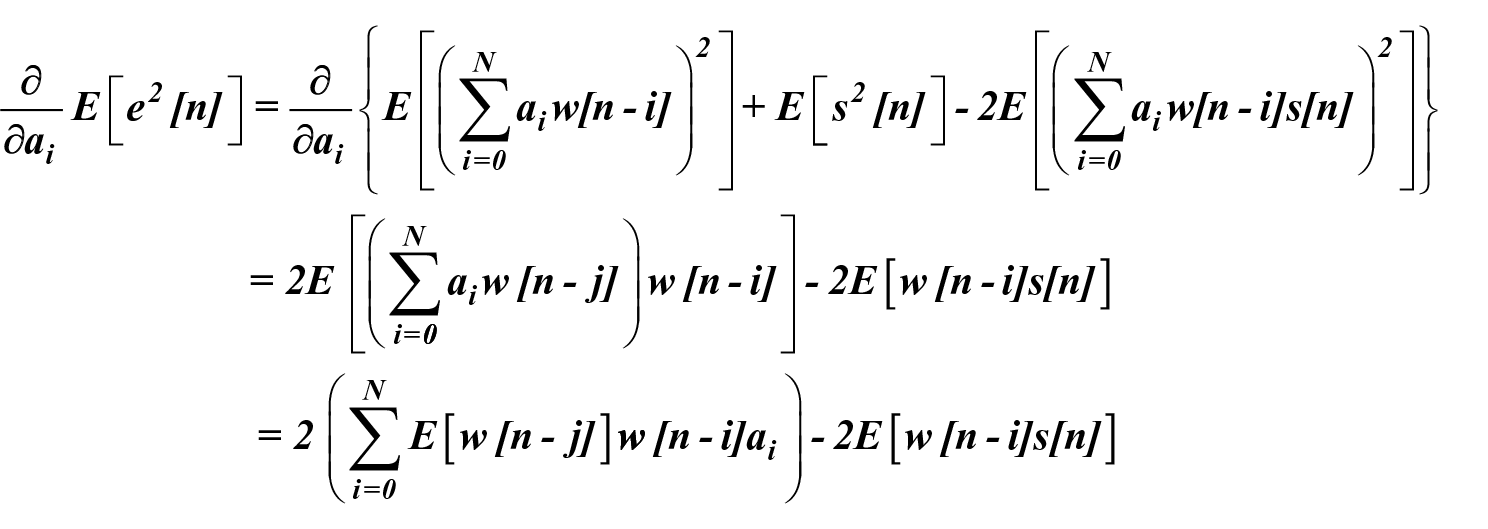
The equation above is called a Wiener Filter. In mathematical terms, Norbert Wiener used it with a number of other steps to calculate the future. Despite the claims in the first section that the future does not exist, the territory or probable limits of the future do, at least most of the time. What Wiener was representing mathematically was that even with little data on which one would normally make a prediction you can define the space of possibility or in Wiener’s terms the distribution of probabilities even for non-linear or non-existent causal systems. In practical terms it meant that artillery could be automated to shoot where planes were going to be rather than where they were when the radar signal returned. The mathematicians did this by considering and then modeling the limits of the system being predicted.
It is impossible to predict what an individual pilot will choose to do but it is possible to describe in mathematical terms what a pilot is capable of doing and similarly what a plane with a particular maximum velocity was capable of doing. The predictions made by the Wiener Filter allowed the artillery guns to fire in a significantly more restricted area with minimal radar information rather than just blasting away at the sky in hopes of hitting something. According to Steve Heims, more predictable systems like the V2 rocket could be successfully targeted and shot down 99 out 100 times by the Wiener Filter. 44 The seemingly ‘dumb’ artillery could adjust or read their environment and work in concert adjusting further as information from rudimentary radar systems or the assemblage of radar, operators, and canons. The artillery was in the most basic sense becoming aware.
Wiener’s ‘solution’ which made unpredictable systems targetable was another version of what Claude Shannon very soon after solved for communication with his theory of information. Shannon developed the techniques which allow the efficient transmission of information through imperfect media such as telephone lines by similarly modeling the range of noise and compensating or repeating signal to exceed it. Rather than predicting the noise which is impossible because of its chaotic nature Shannon was able to treat all noise as a system rather than individual events of noise such that the range of noise could stand in place of the individual incidents. In both cases, the breakthroughs of Wiener and Shannon created the world of computers, the internet, automation, and machine learning we now inhabit. All systems after Wiener and Shannon could be treated in some sense as information and communication problems to be solved. 45
After his experience in the war and further experiments after, Wiener began to describe a more general principle of informatics and machine technology. What he would later call the last science or the science of everything saw every system, whether physical, chemical, mechanical, biological, as computable and alterable. Following this insight Wiener believed humanity was at the cusp of something unprecedented. In 1948, he declared that a new kind of machine had emerged in the history of human evolution. Although still rudimentary, cybernetic machines of the 1940s were capable for the first time of simple self-regulation based on interactions with their external environment. Unlike thermodynamic machines that sought equilibrium, cybernetic machines could pursue a goal or objective in the world. Wiener referred to these new machines as Bergsonian machines, after the French Philosopher Henri Bergson and his idea of elan vital. 46 For Wiener, machines possessed for the first time the spark of a vital impulse. While these Bergsonian machines have so far disappointed the expectation of those hoping for and others fearing human-like artificial intelligence, machinic intelligence, whether learning algorithms or self-steering and targeting weapons systems, have exploded into a variable rainforest ecology of new species.
What is important for the purposes of this article is that Wiener was able to demonstrate that very simple feedback mechanisms could produce complex emergent results or what ‘appeared’ like intelligence even if the machines were not conscious of that intelligence. What I explore throughout the rest of the section is how even small advances in machine intelligence could produce dramatic changes in what we think of now as human dependent drones. Already AI platforms have the capacity to strategize and win complex games like Go, AI via drones have the capability to target or execute operations on their own, robots can 3D print and construct other robots, that is, a simple form of reproduction. The only thing missing is what in philosophical terms we call will or desire. However, the insight from Wiener is that the difference between rudimentary will and a command code is insignificant in effect if a feedback exists between the machine and the external environment which can shape or direct the now desiring machine. To put it somewhat simply, we do not need human general intelligence for robots to change the world and geopolitics; the world could change overnight if mechanical life emerged or was released into the wild and was as sophisticated, resilient and procreative as the cockroach.
We are already experiencing the burgeoning capability of cunning machine. If one considers to the underlying political and economic pressure to move away from human combatants not unlike the globalization of the labor market more broadly, the incentives for innovations continuing are difficult to deny. 47 Even before 9/11 combat was becoming too costly in both economic and political terms and therefore required an alternative in order for empires and smaller states to stay afloat in lean times. The globally modeled War on Terrorism brought the crises of military expenditure still lingering after the Cold War to a head. However, the drive to cut costs and political liability has not stopped at the battlefield. Attempts to remove humans further and further from the battlefield follows this inhuman trajectory into the arena of decision-making and contestation. 48 The reliance on algorithmic warfare creates the opportunity for increasingly unilateral war-making. Cunning machines, not machines of reason but machines capable of hunting and trapping, represent the possibility of the command and control developed for nuclear arsenals with the micro-scale to pursue and kill of assassins or special forces. 49
This process of automating politics as well as war creates further incentive for the development of increasingly autonomous machines and actually undermines security as it makes the capacity to wage war cheaper and more accessible around the planet. The drive for more autonomous machines is heading toward ‘sustainable warfare’, a kind of weird parallel to sustainable development. Like sustainable development, sustainable warfare really makes warfare endemic rather than providing a real alternative to war making. So war as we know it may be coming to an end but a permeating martial transformation is just getting started.
As the transformation in domestic policing, military planning, and combat takes place, the tactical landscape will also mutate, amplifying the corrosive effects on politics. A security complex indifferent to the differences between the war and policing, battlefield and lifeworld will increasingly target Internet exchanges, servers, monitoring, and listening stations, civilian communication and media infrastructure. As populations cease to matter to states, either those attacking or being attacked, infrastructure becomes the whole of the strategic landscape. Also, as the size of autonomous machines shrink, the incentive for hacking or indiscriminate attacks such as electromagnetic pulse attacks will become more desirable as drone to drone or human to drone combat will be prohibitively difficult.
After all, how reliably can one expect to track a drone the size of a dragonfly or as low to the ground as a snake? Thus, we face the possibility of a confluence of unaccountable decision-making, even the absence of human decisions at all with the saturation of living spaces with the dissonance of combat, killing and destruction. Rather than simply automating the ‘hunt’ for enemies chosen by political processes, already reliance on things like signature strikes signal a shift to the automation of the political decision of who is and is not an enemy in the first place. This shift from what Human Rights Watch has termed ‘human on the loop’ practices to ‘human out of the loop’ practices pushes the posthuman 50 character of war further into the nightmare zone in which everything is an object to be targeted but never encountered or recognized. An algorithmic cunning replaces enmity and martial judgment in the recognizable terms.
Furthermore, in a future with a receding human public and that states are indifferent to moral catastrophe, these changes in machine capability and autonomy as well as the deployment of such machines would not be political events. Switches would be flipped by military planners or software developers along technical rather than ethical or political lines. Lewis Mumford referred to this as the advent of ‘post-historic’ humanity in which a process that ‘began innocently by eliminating fallible human impulses from science will end by eliminating human nature from the whole world of reality. In post-historic culture life itself is reduced to predictable, mechanically conditioned and controlled motion, with ever incalculable – that is, every creative – element removed’. 51 I would add that what emerges in its place is a mechanic creativity allowed to thrive within the constraints of a limited martial logic. If we continue on this trajectory practicality could replace both strategic and moral thinking. 52 Further, the fora in which such decisions will be made (if at all) are likely to be constricted as secrecy predominates in an environment charged by a dangerous mix of paranoia and real danger.
In such a post-historic world the event of machine awareness is startling. What will a close encounter with non-human intelligence do to force a persisting ‘us’ to rethink the use with which we have put machines in the pursuit of what we ourselves have been unwilling to do? What ‘we’ remains at such a point in the future should take seriously the spectrum of possibilities of what an artificial intelligence would look like if it emerged from the current world of surveillance and war that drives its evolution. To put it simply, what happens when we make robots in our own image, a cunning machine to replace the cunning animal of the human? Confronting our mechanic progeny, even if speculatively, should compel us to consider how irrelevant we can become and how easily such a transformation could take place.
Section 4: human inhumanity, legibility, and the moral catastrophe of speciation (new sensibility)
Either War Is Obsolete, Or Men Are. –R. Buckminster Fuller
Stanley Cavell’s masterwork on the problem of skepticism, The Claim of Reason, ends with a fairly unorthodox thought experiment for a book otherwise devoted to the language theory of Ludwig Wittgenstein. The thought experiment takes the form of a parable about a philosopher and his friend a craftsman. The craftsman invites the philosopher to investigate a device he has built. The device is a crude automaton made of metal. The craftsman stabs it and the automaton recoils. The craftsman asks the philosopher if the machine felt pain. The philosopher laughs-off the question. The craftsman invites the philosopher back after a time and the same machine is presented but this time when the craftsman stabs the automaton the machine says it is in pain. The philosopher explains with a similar tone of incredulity that a recording saying ‘I am in pain’ does not change the fact that the automaton is a machine and cannot feel or be conscious of its pain. After a much longer time, some years later, the craftsman invites the philosopher over for lunch and introduces the philosopher to a friend of the craftsman. During their conversation getting to know one another the craftsman stabs the friend who shrieks in pain. The philosopher is horrified and tries to stop the craftsman. The craftsman laughs and tells the philosopher it is only the automaton. The philosopher is still in shock and the craftsman tries to show that the chest is only filed with gears but this time the philosopher believes the gears are the ruse and not the imitation of life.
The purpose of the parable is to dramatize Wittgenstein’s private language problem. That the expression of pain does not necessarily register the fact or truth of that pain in the observer. Instead the pain of the other, for Wittgenstein, is susceptible to the problem of skepticism. One cannot feel the pain of the other and therefore in some sense one cannot know the pain of the other. Cavell argues that this is also a major obstacle to moral reasoning and that the difficulty explains why it is so easy for people to dismiss the pain of the other. Drawing from Cavell, empathy, the ability to appreciate the pain of the other even if one cannot experience the pain of the other requires a special kind of literacy. In Wittgenstein’s words, the human body is a ‘physiognomy’ and its gestures can be read. The reverse is also true which is that if one is illiterate than the gestures or words of pain can be as meaningless as a machine that repeats ‘I am in pain’.
Cavell takes his powerful example well beyond a thought experiment by reminding us that the seemingly farfetched encounter with a life like automaton has precedent in the very recent past. For Cavell, the American history of slavery is the historical reality of his philosophical fiction. African and then African-Americans were subjected to experimental torture, experiments, and the daily violence and humiliation of bondage. For Cavell, each encounter between owner and enslaved was a moment in which something like a black soul – their humanity – was judged legible or illegible. Cavell asks in his most speculative tone whether there is something we could call soul blindness in which humans lose or never posses the ability to recognize the humanity of the others they encounter. In the broader philosophical tradition this is referred to as the problem of other minds. However, as Cavell contextualizes quite dramatically through the example of the automaton and the enslaved, the problem of other minds is a practical and historical problem rather than an abstraction of philosophical inquiry.
Cavell recast the problem beyond the Kantian the epistemological problem of the split between the noumenal and the phenomenal into the realm of morality and human nature. Cavell asks whether soul blindness demonstrates that humans are not hardwired to recognize each other as human much less act upon that recognition in a moral way. Instead, Cavell writes ‘suppose that there is a mode of tragedy in which what we witness is the subjection of the human being to states of violation, a perception that not merely human law but human nature itself can be abrogated’.
53
For Cavell, horror is not the act of violation but the very ‘precariousness of human identity. . . that it may be lost or invaded, that we may be or may become, something other than we are, or take ourselves for’.
54
The capacity for moral appreciation – perception – the embodied feeling that other humans matter differently than say objects has a history and a future that is not constrained by a god, hardwiring, or any particular relationality. According to Cavell:
Is this civilization being replaced by another? In particular is it being replaced by one in which other that happens any longer strikes us as the objectification of subjectivity, as the act of an answerable agent, as the expression and satisfaction of human freedom, or human intention and desire? What has a beginning can have an end. If this future (civilization?) were effected its members would not be dissatisfied. They would have lost the concept of satisfaction. Then other would (any longer) give them the idea that living beings, human beings, could feel. . .And of course particular forms of laughter and of amazement would also no longer be possible, ones which depend on clear distinctions between, say, machines and creatures. Would the vanishing of the human betoken the absolute success of the scientific Weltanschauung?
55
In Cavell’s account the general economy of violence that characterized the sadism of slavery could return again but differently. Rather than a great chain of being or the superiority or some races over others, the very concept of violence as a category distinct from force or change could be lost. Although extreme, can we not already see this transformation underway in the extreme forms of instrumentality that characterize decisions regarding collateral damage, counter-value targeting, or economized discourse on immigration and refugees? 56
More than a transformation of moral economies, the automation of humans and the augmentation of humans, represents the possibility of making physical and habitual what is now normative and discursive. Resembling Cavell, David Roden proposes what he calls the disconnection thesis, in which Cavell’s nightmare scenario unfolds only among some humans for whom the sentimentality of bodies, reproduction, and human connection impede further evolution of the species. 57 Whether it is those who dream of a singularity in which human consciousness becomes digital or one of the U.S. veterans who have had mood altering computer chips implanted into their brains, some humans will increasingly alter or altered their brain-body networks to alter their cognitive and perceptive capacities. 58
During the summer of 2018 researchers at the University of Washington and Carnegie Mellon successfully networked three humans via EEGs and transcranial magnetic stimulation. The three individuals were able to collaborate to play a simple video game resembling Tetris. 59 The participants were able to communicate and sense each others’ thoughts without the use of language or even being in the same room. Similar experiments have successfully sent text message from one side of the country to the other making at least a limited version of brain to brain communication a reality.
In the dark light of geopolitics one can imagine what today takes the form of geographic and class divides in connectivity and medicine taking the form of different classes and territories of consciousness and communication. Given the already gossamer fragility of international solidarity and trans-border empathy one can further imagine cyborg cultures quite literally tuning out of the world left behind. Roden’s disconnection thesis argues that as these new forms of networks and augmentation develop so too will cultures and moral awareness diverge. 60 For those without the need or desire to use oral language accelerating the pace of technological change within new kinds of communities it is not difficult to follow Cavell to the precipice of his posthuman horror. While the biological racial fictions of colonialism, apartheid, and settler-colonialism still hold on in the face of overwhelming scientific evidence to the contrary how much more would real material differences in forms of life accelerate existing geopolitical violence? 61 Even the beginnings of disconnection could intensify the already renewed fights between extractive industrial modernity and those indigenous communities fighting for their ancestral lands and ways of life. And what of the swelling numbers of multi-generationally unemployed masses who will lack the capital to upgrade? One can imagine class no longer being marked by linguistic markers or knowledge of wine but the physical ability to interface with white color working spaces. More and more companies have already begun microchipping their employees for security and tracking crossing the threshold of the skin in the process of making labor. 62 The digital divide in labor of who can and cannot telecommute is already determining the patterns of employment and unemployment in the first 6 months of COVID-19 shutdowns. The speciation of interfaces and sensory capabilities could amplify the already growing trend. 63
The point of Roden and Cavell’s thought experiments are to show that such a separation would be more than just a return to or intensification of racial or class divisions. Instead the very embodied character of moral appreciation, the shared languages and cultures, the perceptive capacities to experience beauty or tragedy could be altered to the point that the diffracted species of once human beings would live in a state more closely resembling that of Homo sapiens 100,000 years ago in which there were multiple species of upright anthropoids and none of them could live without the fear of predation by other non-human animals or each other. The medium of encounter fundamentally altered. However, in this speculative history of the future the divergence would not have been by happenstance but to lock in interests and geopolitical advantage. Difference by design.
This may all seem too far-fetched. How could humans lose their most basic capacity for socio-emotional intercourse? I want to argue that things need not change that dramatically to see the beginnings of such a divergence. One can look around a crowded bus filled with people each glued to their smart phone, tables of families at restaurants each separated by their individuated devices or an office filled with screens each telecommuting the pilot to a drone in the field thousands of miles away to see the beginnings of such a speciation. Or we could return to the beginnings of international thought, the first moments of European geopolitics and remember its multispecies beginnings when just 50 years after the arrival of Christopher Columbus Bartolomé de las Casas pleaded with the Castille thrown to recognize the soul and therefore humanity of the ‘Indios’. Instead, of course, the extermination continued which treated the people of the Americas as ‘piles of dung in the middle of the road’. 64 Geopolitics was in some sense founded on the premise of many human species rather than one human species. 65 The inability for so many to see their human counterpoint at a moment of encounter in the new world speaks to the precedent of a truly dark enlightenment. That is, technological and martial advance without any corresponding moral awareness. A new such speciation that included the inability to even speak to one another much less recognize some common heritage or shared community of value would make the efforts of Las Casas and those who continue to fight against the finishing of the settler-colonial project entirely potentially invisible.
Conclusion: geotechnics and a planetary state of war
when utilized to perform work highly organized collective enterprises, I shall call it the ‘labor machine’: when applied to acts of collective coercion and destruction, it deserves the title, used even today, the ‘military machine’. But when all of the components, political and economic, military, bureaucratic and royal, must be included, I shall usually refer to the ‘megamachine’. Lewis Mumford
66
Mumford’s megamachine is instructive. What he is describing is an ancient past where the political, economic, military, bureaucratic, royal all converged to form the empires of the Aztecs and Egyptians. What I have in mind is this same convergence in the future but with a twist. The ‘royal’ may come to relate to the economic and political and the military such that what we understand as politics becomes indiscernible. The megamachine of the future presented here could better be called geotechnics. The global mobilization of people, the conditions of competition and coercion, who and what was doing the competing and their relations would be fundamentally altered. The relations would no longer be linguistic or even sensory in the way that humans hold experience in common even if their subjectivizations of that experience, that is the phenomenology of body of experience, may be singular.
In a world of possible full automation, cunning machines, and posthuman speciation the equality of Hobbes’ state of nature as well as the state of war is no longer operable. If these metaphors ever did more than underwrite one particular logic of international politics they would in the future be meaningless as the people of the leviathan, the metric by which order or disorder is experienced may no longer exist in the mortal meat suit so much of political theory rests. In some sense the enmity of war in the Hobbesian sense rested on the equal finitude of every mortal human as well as the general desire to live something we could agree was a good life free from the ever presence of murder. As Hobbes was recontextualized to imagine an international system of states similarly a sense of mortal equality was present. The ability to be killed underwrote the decision to kill.
And what of the English school’s society of states? If such sociality persisted amongst neo-authoritarian states without nations what dark vision of order would that be? Basic assumption about the international system even those based on other less dour models than a realist anarchic system similarly presumes some equality of communication, the good, or the desire to live in a particular way. The material limits of homo sapiens, the necessity of water, air, food, family, and sociality underwrites everything from deterrence to diplomacy. A geotechnical system populated with intelligent things and governed by nation-less states and further populated by incommensurate branches of humanity fundamentally alters the limits and therefore the possibilities of global life and order. By what rules those relations would be conceptually governed, that is, how we could describe such a planetary system would have to reach for ways of thinking well beyond even the most radical or critical theory of international relations. In some ways efforts to consider what geopolitics looked like at the peak of the Atlantic slave trade or during the first 100 years of the conquest of the Americas more closely resemble what could become of a posthuman planet than the highly rationalized cosmopolitan institutions of the United Nations. 67
Just as IR is finally accepting that global politics is inhabited by more than just nation-states that is, non-state actors, we now must also come to grips with the fact that global politics is no longer populated solely by humans and could in the future not even be dominated by humans. What new forms of intelligence mean for the transformation of peace and security is murky at best. What is clear is that a theory of automation as mere means is no longer sufficient to understanding the vast infrastructure of machines and sensory data collecting systems and the new collaborations those systems will create for former humans with which we are already beginning to share our planet. The horizon of such a technical transformation has to be thought alongside the normative upheaval and radicalization of global enmity taking place simultaneously with the transformation of the very mechanics of political and military action.
To consider a future where the actors, relations, and order of the planet could be fundamentally reconfigured by the gradual accretion of robots, algorithms, bodily and political modification poses to us the possibility of systemic change well beyond whether the world will be unipolar or multipolar. No one of these trajectories will be total or play out as described here but all of these trajectories present us with the real possibility of altering the basic rules of human planetary existence from a geopolitical condition to one that is increasingly geotechnical. Hundred years from now, what new grammar of planetary relations could be prepared to describe such a world?
Footnotes
Funding
The author received no financial support for the research, authorship, and/or publication of this article.