




Abstract
This research links learner engagement with interactions when Hybrid Virtual Learning models are used. Various aspects have been considered, such as learners’ prior experiences related to virtual worlds, their preconceptions regarding their use as a learning tool, and the impact that instructional designers’ choices have on enhancing the opportunities for interactions. In this article, the impact that educational and leisure games have on university students’ engagement is examined. The findings suggest that the use of game-like content can contribute positively to students’ engagement, without, however, having a spectacular impact on the learning process.
Keywords
Introduction
As regards the virtual reality products, the terminology varies in literature, and, thus, in this article, the term virtual world or environment translates into a 3D computer-generated environment, designed and shaped by individuals in real time. The users are represented on screen through the use of avatars, and the context of these worlds can represent anything that comes from the physical world or the realm of fantasy.
Educators are not often keen to leave the safety of the traditional teaching approaches. Nevertheless, the existence of virtual worlds signaled the start of a new era with an increasing number of educators shifting toward using them more (Christopoulos, 2013). During the last decade, a considerable amount of teaching and research has been carried out in virtual worlds with quite positive and impressive results (Bredl, Groß, Hünniger, & Fleischer, 2012; Camilleri, De Freitas, Montebello, & McDonagh-Smith, 2013; Childs, 2010; Dalgarno & Lee, 2009; De Freitas, Rebolledo-Mendez, Liarokapis, Magoulas, & Poulovassilis, 2009a, 2009b; Miller et al., 2010; Vosinakis, Koutsabasis, & Zaharias, 2011; Zhao,Sun, Wu, & Hu, 2010). However, most of the existing research related to virtual worlds and education, focuses either on the development of teaching paradigms and techniques (Camilleri et al., 2013; De Freitas et al., 2009a, 2009b) or on the levels of immersion that users, or students, reach. It also depicts how immersion affects their learning achievements (Bredl et al., 2012; Childs, 2010; Wexler et al., 2007). In addition, the aforementioned studies focus mainly on the “inside” perspective of virtual worlds, disregarding partially or even completely the “real world.” Τhe outcome of these studies is useful in Distance Learning scenarios (Dickey, 2005); yet the importance of the concurrent consideration of both an “intrinsic” and an “extrinsic” view of virtual worlds has been highlighted by Conrad (2011).
Thereafter, the purpose of this article is to investigate the different types of interactions that take place both in the physical classroom and in the virtual world, to examine the synergies that are developed in this wide network of interactions, as well as to classify them and provide guidance to educators who aim to provide their learners with interactive and engaging learning activities. In this context, the impact that the educational and leisure games have on students’ interaction and engagement will also be examined.
Literature Review
Virtual worlds can aid different learning styles and educational activities through the network of interactions with their content (Allison et al., 2012; Christopoulos, 2013). Communication is another important factor which increases the opportunities for interaction between users (Bredl et al., 2012; Dickey, 2007; Johnson, Vorderstrasse, & Shaw, 2009). Vygotsky’s (1980) Social Constructivist Learning Theory has a great practical application in virtual worlds, as students become active learners and construct their own cognitive structures and knowledge through the interactions that motivate them to engage with the virtual world and the learning material. As Jones (2013) suggests, learners have the ability to actively affect, alter, and enhance the content of the virtual world in a manner that will enable them to construct their cognitive schemes and engage with the subject they study. Zhao et al. (2010) further extend the aforementioned claim and suggest that learning becomes more self-directed and student centered, whereas educators get the role of the instructional designer or supporter of the activities that aims to engage students in learning (Dickey, 2007).
Some studies investigate the use of virtual worlds in distance learning scenarios (Kostarikas, Varlamis, & Giannakoulopoulos, 2011; Shailey & Tingle, 2008), aiming to identify an evaluation method to measure students’ learning experiences, while others cover the skills students acquire when they start using virtual worlds (Childs, 2010). Another group of studies focuses on the elements that affect the virtual worlds’ interactivity (Chafer & Childs, 2008; Childs, 2010).
Attempting to gather information related to the elements and factors that affect learner engagement in Hybrid Virtual Learning scenarios, where the teaching team and students are simultaneously copresent, both in the virtual world and the physical classroom, it became apparent that a research gap exists. In most of the existing literature, the focus is primarily placed on the intrinsic elements that affect learner engagement, disregarding partially or even completely the existence of the physical environment, as also suggested by Conrad (2011).
Levesque and Lelièvre (2011) suggest that great emphasis should be given on the enhancement of interactions both in the virtual world and in the physical classroom when Hybrid Virtual Learning approaches are to be used. De Freitas et al. (2009b) also underline the importance and need for further investigation of the potential and the affordances of hybrid spaces with simultaneous student physical and virtual presence. Other researchers (Elliott, Gardner, & Alrashidi., 2012) highlight the lack of a detailed taxonomy of all the interactions related to the educational use of virtual worlds, which would aid in a better understanding of their affordances, in a more expedient design of educational activities, and in a more thorough exploitation of their potential.
Based on the aforementioned suggestions as well as on other anecdotal observations, it was hypothesized that a synergy between learner engagement and interactions occurs. Moreover, it was decided to evaluate the impact of interactions systematically, both in the virtual world and in the physical classroom as a combination.
Experiment Setup
Trying to investigate the relationship between interactions and engagement, data were raised from three experiments (abbreviated later as A, B, and C) involving undergraduate and postgraduate Computer Science students who volunteered to participate in the study. Using an institutionally hosted OpenSimulator world, the students’ task was to use the built-in programming language and the 3D modeling tools to develop a simulation of a real-life scenario. Observations took place during the laboratory classes, which were being held besides the 2-hour lecture, lasted 2 or 3 hours, and ran once a week. The virtual world was also accessible outside the (physical) university environment.
As to the role of the instructional designer, some points worth mentioning are the various rides that can be found at funfairs, as well as a maze made by “Legos” and a racing game––with question-obstacles related to the theoretical content of the learning subject––that were provided to students aiming to motivate and engage them more with the educational material (Figures 1 and 2).

Snapshot with the educational and leisure games.

Snapshot with students playing with the leisure games.
Research Methods
Two research methods were used for the examination of this subject: observations and surveys. The use of those two research methods––one of them being qualitative and the other quantitative––ensures validity and diversity, gives a more thorough view of the phenomena, and allows for the triangulation of primary data (Cohen, Manion, & Morrison, 2011). In other words, observations were used to record student actions and behavior both in the physical classroom and the virtual world, while surveys were used to record preferences.
A Priori Survey
The a priori questionnaire consisted of seven statements: two related to the participants’ identity information, two regarding their prior experience in the use of virtual worlds (similar to the ones used for this experiment), one question about the comments they had potentially heard from others about this kind of virtual worlds, and two questions related to their preconceptions as to the use of virtual worlds in (Higher) education. The sample consisted of mostly male, undergraduate students aged between 18 and 25 years old, with a minimal or small experience in the use of such virtual worlds (Tables 1 and 2).
The Sample of the A Priori Questionnaire.

Question About Participants’ Prior Experience.

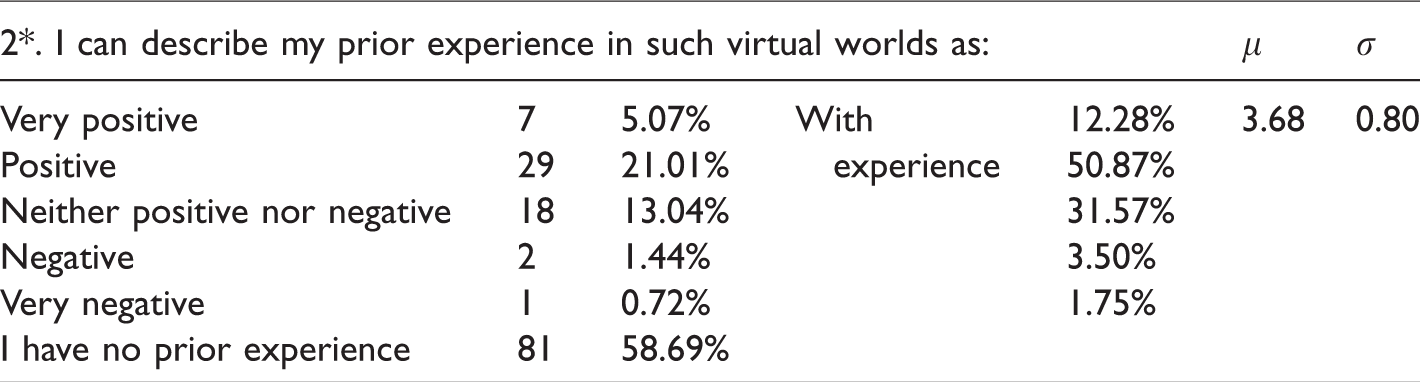
Less than half of the sample had used such a virtual world at least once in the past, and they described their experience as generally positive (Table 3).
Describing Participants’ Prior Experience.
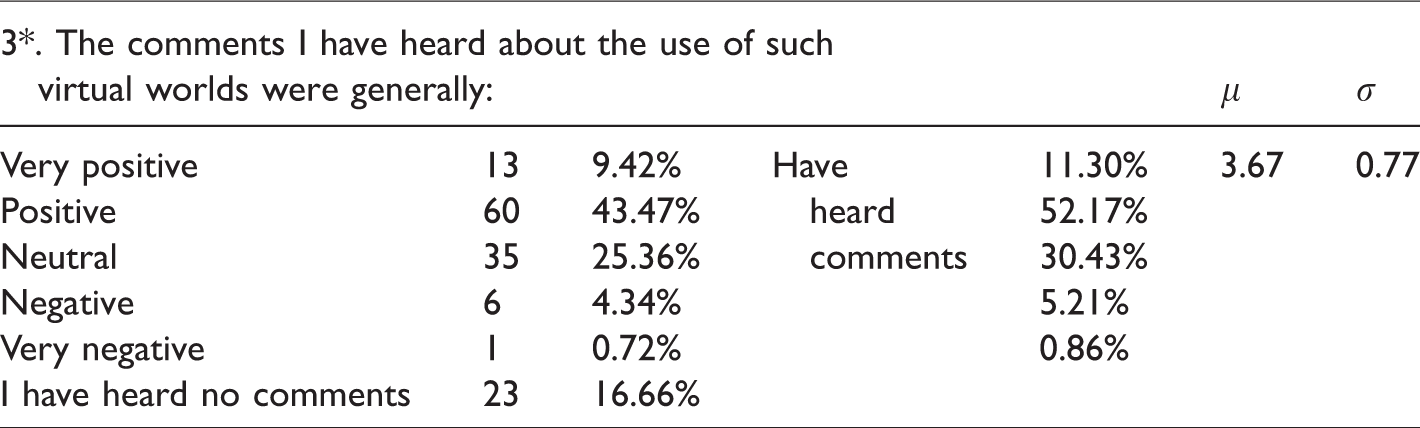
The majority came into the first practical session with a positive stance and preconceptions, influenced by the positive comments they had previously heard about the use of such virtual worlds in the context of academic projects (Table 4).
Question About Participants’ Biases and Preconceptions.
Despite their positive stance and preconceptions, participants seemed indecisive regarding whether or not the use of a virtual world in an educational project is worthwhile, and, interestingly, most of them responded it is not (Table 5).
Question About the Inclusion of Virtual Worlds in the Learning Process.

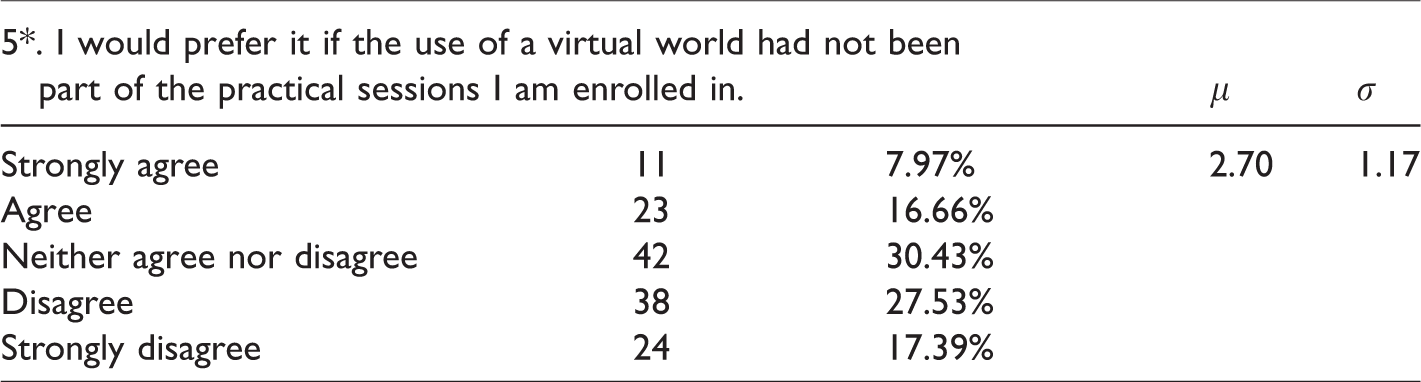
However, despite students being generally indecisive regarding their willingness to be enrolled in a practical session that includes the use of a virtual world, most of them revealed a positive tendency (Table 6).
Preference Indication Regarding the Exclusion of the Virtual World from the Learning Process.
Observations
A semi-structured checklist with 38 focus points was designed and used by one of the authors for the collection of the data. For the collection and analysis of the observation data, a systematic approach was used, and five different categories of interactions––presented in no particular order in regard to their importance––were identified:
In-world verbal and textual communication, Student identity and avatar identity, In-world nonverbal communication, Students’ interactions with the virtual world, and Students’ willingness to remain in-world.
A narrative approach was consequently adopted for their analysis, focusing on students’ behavior, choices, and actions. The data were analyzed based on the logical structure of the phenomena and not according to the chronological order they took place (Cohen et al., 2011).
In total, 51 students volunteered to participate in the observation study, the actions of whom were observed and logged in rotation of approximately 30″. Additional notes were also maintained to further correlate them with the frequency of the generic categories (focus points).
Actions and Interactions in the Physical Classroom
Aiming to group the observed data in a more efficient and meaningful way, following the principles of Grounded Theory (Cohen et al., 2011), the aforementioned focus points for the first fundamental category are grouped in three subcategories (see the following subsections).
Students’ in-class talking and making comments
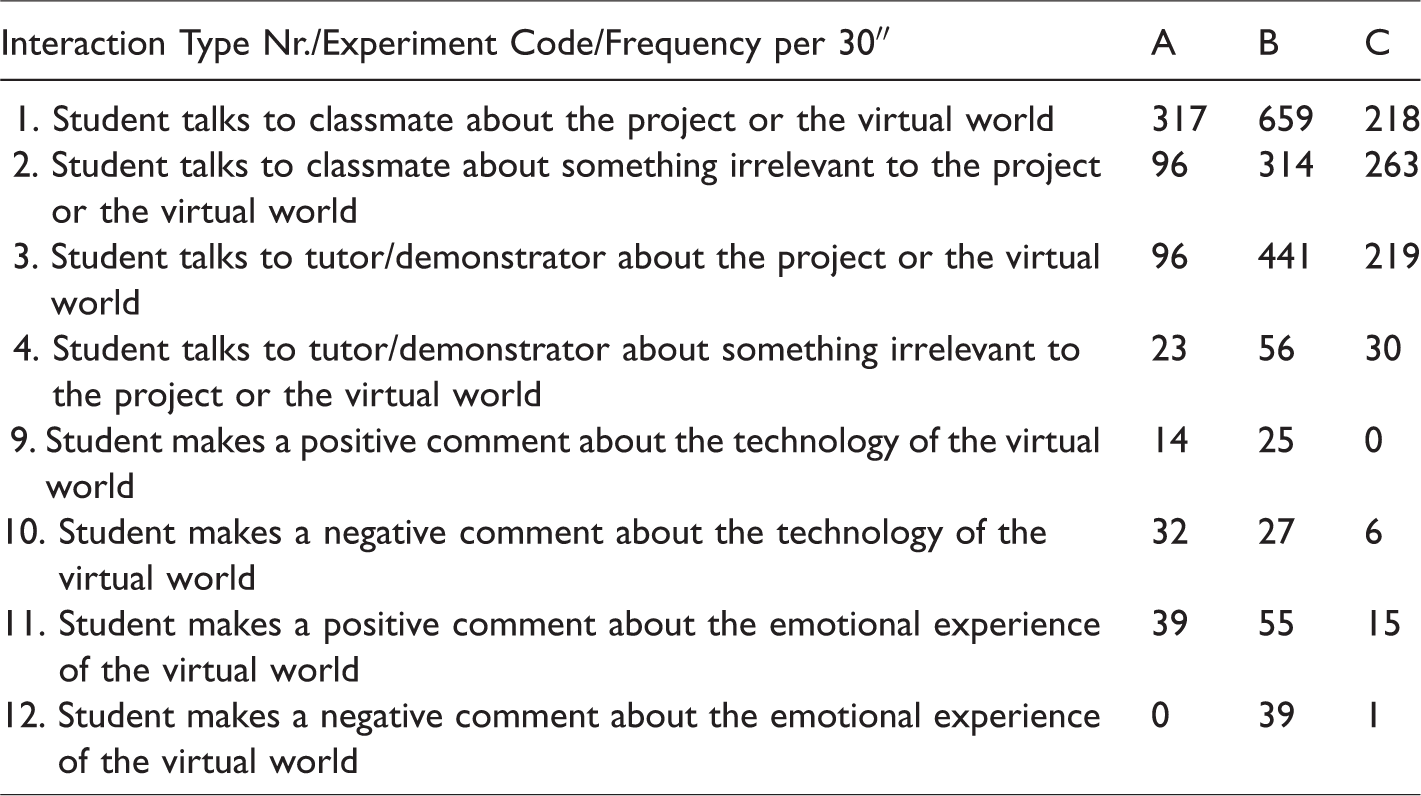
As several students were observed struggling to use the tools of the virtual world, the need for an induction process became apparent. However, students’ willingness to share with each other their knowledge and thoughts (peer-tutoring), or to ask others for feedback and suggestions (peer-learning), was quite intense and considerably mitigated this issue. The topics that were usually discussed concerned their assignment, the building and scripting tools, as well as the avatars and the ‘secondary’ tools of the virtual world. Several times students were observed making comments about the content developed by their fellow students or the content developed by the instructional designer, even though the references related to the former were limited. Indeed, students were also observed discussing matters completely unrelated to the virtual world or the unit.
The verbal interaction that students had with the teaching team was usually covering topics related to marking, or discussing informal feedback as well as suggestions for development or information about the in-world tools. In some cases, students also sought help from the teaching team in order to resolve the in-world issues they were having with other students.
On the one hand, the comments that students made, regarding the emotional experience, were positive whenever they were finishing parts of their work, acquiring new ideas for development, or exploring its content. On the contrary, negative comments were mainly heard about the technology of the virtual world, such as the latency issues or server crashes, the graphics’ quality, or the inability of the client to import 3D models that were incompatible with it. As there was a limitation on the number of scripts that students could use, one of them proposed to the teaching team to setup his own virtual world so as to have unlimited number of scripts to work with, but also no potential server crashes that were occurring because of the increased load in the existing server. This idea was welcomed by several students, yet (reasonably) rejected by the teaching team. In any case, this is a great example of how a portion of students value the acquisition of good grades more compared with the experience of using a virtual world (Table 7).
Students’ In-Class Talking and Making Comments.
Students’ attitude toward the virtual world
During the first practical sessions, only a few students were observed working on their project, most of whom usually had prior experience. The rest were spending their time to familiarize themselves with the in-world tools, edit their avatars’ appearance, research information on the web, explore the world, and even “play” with fellow students.
Students that were more comfortable in using the in-world tools were observed paying less or even no attention to the lecturer’s demonstrations, as opposed to others who were interrupting their task to follow the instructions provided by the teaching team. In addition, the more experienced students were observed helping and guiding their fellow students, and, therefore, the teaching team was intervening only when deemed necessary.
A few students were observed working on third-party software to develop textures or 3D models, which were consequently imported in-world. Nevertheless, in some cases, students were completely detached from the virtual world, as they were working on the documentation needs of their project, browsing the web, or using their phone.
Those moments when students were acquiring new ideas for development, completing bits of work, or seeing their scripts being functional, were deemed as the main source of happiness. In contrast, the latency spikes and server crashes, as well as students’ difficulty to understand the in-world tools, were the main source of frustration and disappointment. In addition, the inability of the viewer to import specific file types and the last-minute work that some students left, caused increased levels of anxiety and stress (Table 8).
Student Attitude Toward the Use of the Virtual World.

Student identity and avatar identity
An above-average number of students opted to edit their avatars’ appearance right after entering the virtual world for the first time, as they considered the default one “ugly” and “basic.” Moreover, students who had either accidentally removed all their avatars’ clothing or purposefully stretched their avatars’ shape to its limits, were observed—and even confessed—feeling ashamed of that. In some cases, they were even observed asking others to control their avatars and edit their appearance. Furthermore, a small portion of students expressed their wish for an option to buy and sell outfits (virtual currency).
Several times students were observed discussing matters related to the avatars’ outfit in the physical classroom, exchanging ideas, and, also, providing feedback to each other (Table 9).
Student and Avatar Identity (in the physical classroom).

Actions and Interactions in the Virtual World
The aforementioned focus points for the second fundamental category concerning students’ actions and interactions in the virtual world are grouped in four subcategories (see subsections “Students’ in-world talking and making comments,” “Student identity and avatar identity,” “In-world nonverbal communication,” “Interactions with the virtual world,” and “Students’ willingness to remain in-world longer than the expected.”).
Students’ in-world talking and making comments
Statistically, students used the in-world chat tool to communicate with others quite infrequently, as this need was mainly covered in the physical classroom or through the use of other online tools. However, part of their assignment was to develop scripts that would react on user’s request, and, thus, various words or commands were observed in the chat-box. Interestingly enough, some students, motivated by virtual games, were observed using command lines that do not exist in the OpenSimulator technology.
Nevertheless, in some cases, in-world communication existed. For example, a couple of students (located in different laboratories) were observed using the chat tool for several minutes, though at some point, one of them moved (physically) closer to the other student so as to speed up the process and make communication easier. Furthermore, a group of five students—colocated right next to each other—were observed a few times using the group chat function so as not to be loud in the physical classroom. Moreover, a striking example is that of a couple of students (one of them not present at the university) who spent an entire practical session for exploration and discussion on others’ work.
Comments revealing students’ emotional experience were observed only a few times: during exploration (admiration or disapproval), when there were server latencies (disappointment or frustration), or when they complained to students who misbehaved or misused the in-world tools (anger). Last, expressions or words usually found in social media, such as lol, omg, rofl, were observed fairly often, considering the frequency of the messages (Table 10).
Students’ In-World Talking and Making Comments.

Student identity and avatar identity
More intensively in the first practical sessions and less toward the completion of the assignment, almost all the students would opt to edit their avatars’ appearance at least for a few minutes. Those with prior experience would take over this process almost immediately, while the “newcomers” would usually first explore the world and its tools and then proceed to the avatar’s appearance editing.
Influenced by the ludic nature of the virtual world, some students were observed intentionally removing their avatars’ clothes or stretching them to their limits. However, as there is no option for users to reset their avatars to “default” outfit, several requests were made to the server administrator for restoration, as they were getting mocked by their classmates.
In any case, most of them had basic or intermediate modifications (e.g., body shape, hair, and skin color) and only a few were observed having intense changes (fully customized). In the role-playing spectrum, students were observed having extra-short avatars (gnomes, dwarfs), super heroes (superman, batman), or fiction characters (robots, cartoons, creatures). Nevertheless, a few students had completely unmodified avatars up until the completion of the assignment. In addition, only one student was observed modifying his avatar’s appearance quite often, as the avatar was part of the demonstration process.
As the use of the chat tool was overall limited, the references to avatars were almost nonexistent, and, in most cases, included sexual content or wording (Table 11).
Student Identity and Avatar Identity (in the Virtual World).

In-world nonverbal communication
Students who performed role-playing also discovered the gestures library and used them for entertainment purposes. Influenced by them, more students opted to explore and use them, even once, so as to test their functionality. Only a few students developed their own gestures-combination, while even less were those who developed the so-called “poseballs,” which are used to animate avatars. However, the time spent on this process was limited.
As to the use of emoticons, several students were observed using some of the well-known “emoji” to express their feelings and emotions (Table 12).
Students’ In-World Non-verbal Communication.

Interactions with the virtual world
Our attention during these experiments was drawn by the quick adaptability these cohorts of students had. Even the students who initially were struggling to cope with this technology (mostly the mature ones), showed strong willingness to cope with these obstacles and overcome the difficulties. Indeed, students’ willingness to learn and teach others made this process more enjoyable and less stressful.
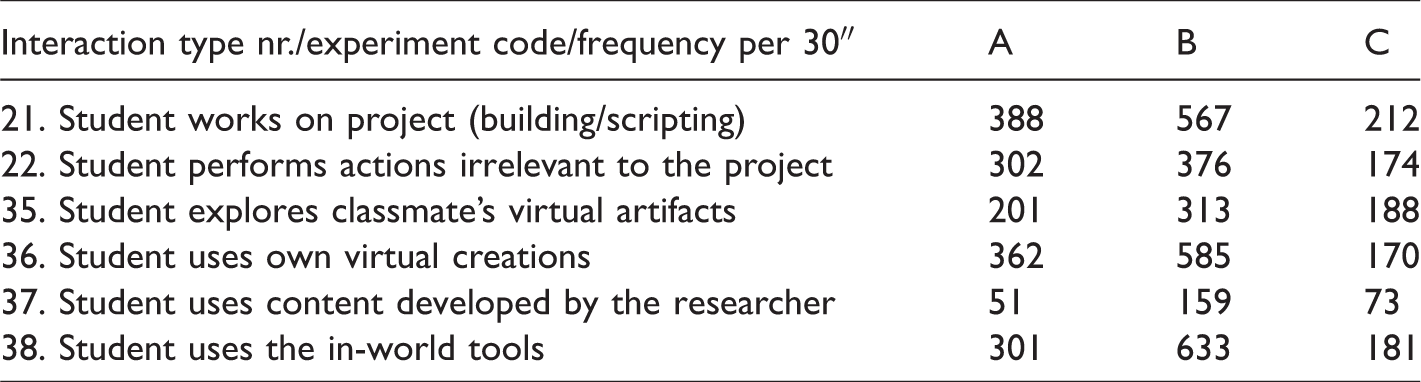
During the first practical sessions, students’ time was spent to perform actions irrelevant to their projects but (mostly) relevant to the virtual world. In the later sessions, work was prioritized, and interruptions occurred usually to get informal feedback or explore the world as a pool of ideas. Small intermediate breaks to “play” or perform actions completely irrelevant to their task still existed, but in a relatively low frequency.
Regarding the in-world development, some students focused more on designing the 3D objects and less on scripting, and vice versa. Nevertheless, all of them were getting ideas from the web or the content developed by other students/the instructional designer. A portion of students opted to “leave” the virtual world and use third-party software to design their 3D models. Likewise, especially at the start, premade scripts, which are freely available for download on the web, could be seen in most workspaces. Furthermore, in the unofficial spectrum of collaboration, a few students shared their code or objects with others, and that resulted in having workspaces overloaded with duplicates.
Almost all students were observed visiting the leisure areas quite often, even though not all of them used this content; at least not as often as they would “fly” around it. On the other hand, only a few students were observed making limited visits and use of the educational games, even though the questions and rewards would be changing on a weekly basis (Table 13).
Students’ Interactions With the Virtual World.
Students’ willingness to remain in-world longer than the expected
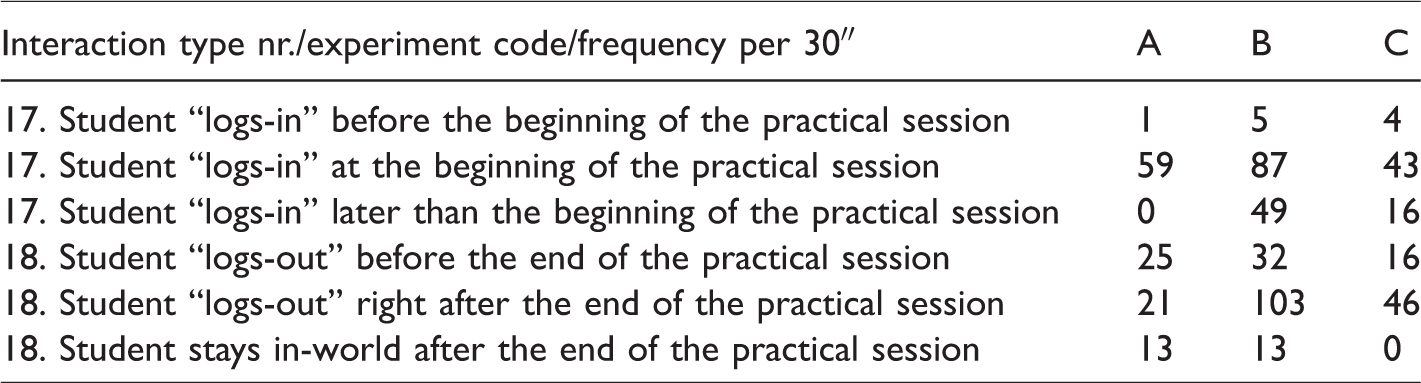
Students were usually going online right at the starting point of the practical session, while none of them was observed entering the virtual world considerably delayed. Also, often enough they would leave the virtual world prior to the end of the session. However, a few times some students remained online after the completion of the session to complete work in progress (Table 14).
Students’ Willingness to Remain In-World Longer Than Expected.
The Sample of the A Posteriori Questionnaire.

Overall Comparison of Students’ Responses.

Participants’ Responses Regarding their Feelings About Their Interactions With the World/Other Users.
Participants’ Responses Regarding Their Feelings About Their Interactions With the Content of the World.

Participants’ Responses Regarding Their Feelings About Their Interactions With Other Students.

A Posteriori Questionnaire
A total of 133 students participated in the a posteriori questionnaire (Table 15) answering 21 statements on a 5-point Likert scale (strongly agree to strongly disagree) and an open-ended question at the end. The first part (11 statements) examined students’ interactions with the content of the virtual world, and the second part (10 statements) examined students’ interactions with other users. The open-ended question asked participants to indicate the factors that would have helped them become more engaged.
The majority of participants had a positive attitude toward all the given statements (Table 16). Participants gave mostly positive or very positive responses, while the sum of negative responses was in all cases much lower than the sum of positive ones. Interestingly, the amount of neutral responses was higher than the total of negative responses in all statements. It can generally be said that students’ contact with a virtual world used for educational purposes led them to have positive feelings toward this kind of practices.
Interactions Both With the Content of the Virtual World and Among Students
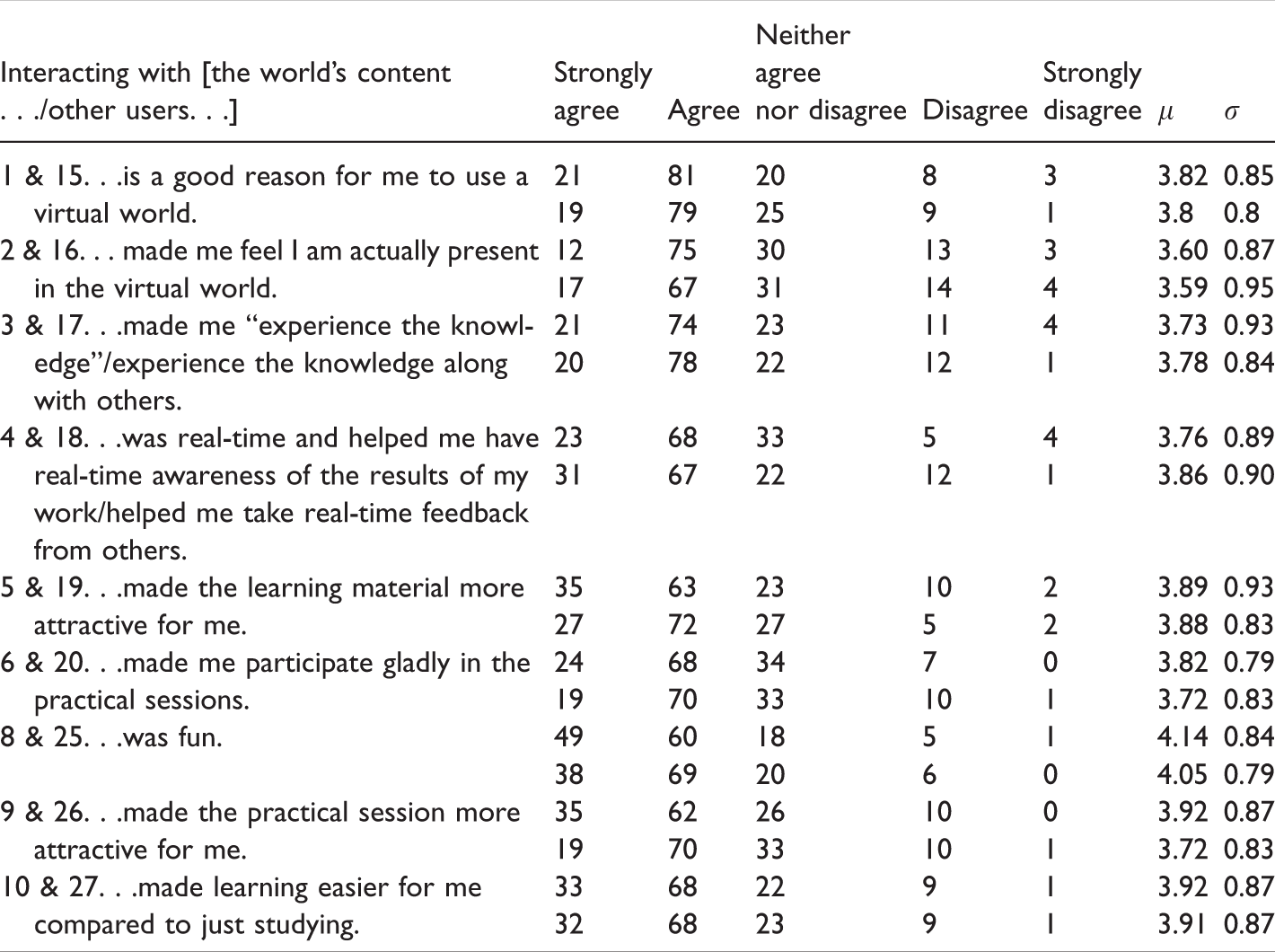
Both the interactions students can have with the virtual objects and their in-world peer-to-peer communication make the use of a virtual world in an educational context a worth-while investment (Table 17). The interactivity of the virtual objects, combined with the in-world interactions with their peers, made students have a sense of in-world presence and experience the learning material more intensely––something that turned out to be more effective for them than just studying. In addition, the fact that all students were virtually colocated, while working in the virtual world, enhanced their awareness of the course of their project. This is so, not only because they could witness it immediately by themselves, but also because they could get instant feedback from their classmates, too. Finally, the whole spectrum of in-world interactions was amusing for students, which made the practical session and the learning material more attractive for them, thus, also making them gladly participate in the practical sessions.
Interactions With the Content of the Virtual World
Student-to-world interactions had a positive influence on student engagement with the virtual world and the assignment per se (Table 18). The 3D nature and the interactivity of the virtual objects made students’ in-world interactions with the virtual world itself more interesting. Furthermore, the actual process of building and scripting was pleasing for students, who also enjoyed using their own virtual creations. On top of that, students expressed their positive feelings about exploring the content of the virtual world and sightseeing, as well as regarding the use of their classmates’ virtual creations. As to the in-world educational games and the amusement park, students pointed out that they positively contributed toward their engagement with the virtual world and the learning activities. Last, notable was the influence of the educational games on students’ understanding of the learning material and learning acquisition. It can, therefore, be stated that the in-world student-to-world interactions, in general, and the interactions students had with the educational and amusement games, in particular, overall enhanced student engagement and learning acquisition.
Interactions With Other Students
The interactions students can have with their classmates, in the context of a virtual world, may offer some unique advantages that are not deriving from student-to-world interactions (Table 19). Actually, students noted that communicating with their classmates––through the world’s chat tool––and exchanging ideas about their projects, was an interesting part of their in-world copresence. Their in-world interactions also made them keener to collaborate with each other. During their collaboration, they spontaneously engaged in a peer-tutoring environment, teaching their fellow students, and also, being taught by them. Moreover, students claimed that collaborating with each other for common goals, as well as laughing with the unexpected results of both their own and their classmates’ work, were pleasing parts of their in-world social interactions. Finally, taking breaks from their work, in order to perform actions not related to it, consisted a pleasing aspect of their in-world interactions.
Use of Virtual Games During the Course of This Experiment
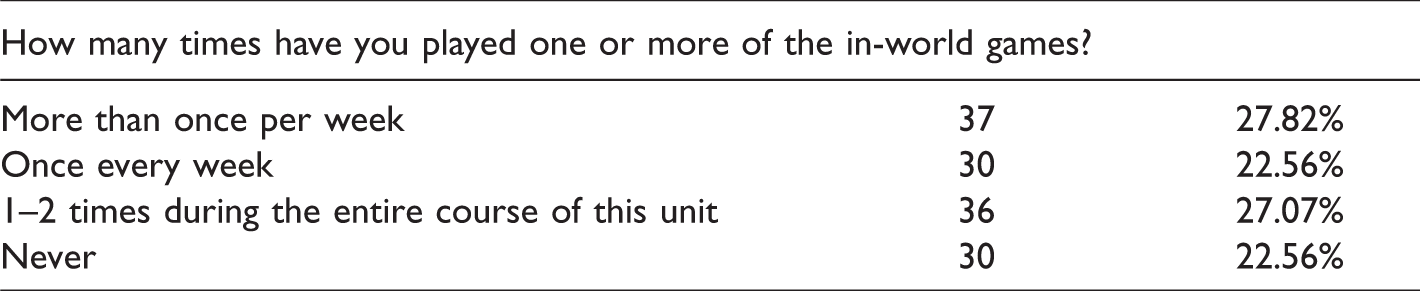
Students were rarely observed using any of the in-world games during the practical sessions, and, thus, questioning the frequency of their engagement with the educational games was deemed necessary.
Participants’ responses partially confirm the data derived from the observations, as students were not equally attracted to the educational games. Surprisingly, their responses were almost equally spread in four quarters. Half of them used the virtual games often enough (at least once every week), and the other half used them rarely (once or twice during the entire course of the unit) or never (Table 20-22).
Frequency of Use of the In-World Games.
How Virtual Games Affect Learner Engagement.

Relationship Between Educational Games and Knowledge Acquisition.

The main reason why educational games were used in this experiment was to observe if, and to what extent, virtual games are able to enhance student engagement with the virtual world and the learning activities. According to students’ responses, this was achieved to a significant extent.
The purpose of the educational and leisure games was not only to increase student engagement, but also to investigate whether games can enhance learning acquisition. Most of the students agreed that these games had a positive influence on their understanding of the learning subject. Nevertheless, a significant portion of participants gave a neutral or negative response. A noteworthy point is that this statement gathered the most “Very Negative” responses (Strongly Disagree) throughout the whole questionnaire.
Suggestions to Increase Interactivity (Open-Ended Question)
The last part of the a posteriori questionnaire consisted of the following open-ended question: “In your opinion, what would have helped you become more engaged with the virtual world?” Students’ responses were analyzed using the Grounded Theory approach (Cohen et al., 2011), and categorized into six different categories. The following tables present direct quotes from students’ responses along with a brief discussion (Tables 23-26).
Lack of preexisting content and time limitations
Participants seemed to enjoy the in-world games to such an extent that they were asking for more. As the existing educational games were testing mostly students’ theoretical knowledge about scripting, one of the participants suggested the creation of a game that would also test their scripting ability, so as to practice while playing. Another student, appreciating the interactivity of the virtual world, suggested that more interactive elements, games, and mini-games be put into the virtual world. Likewise, some other student pointed out that more content encouraging student socialization should be added into the virtual world. Finally, another participant asked for the ability to copy existing objects created by others, so that they could spend more time on modifying the copied objects and creating scripts, rather than creating objects from scratch. However, as creating virtual objects from scratch was part of their assignment, this was not feasible (Table 23).
Answers to the Open-Ended Question (Time and PreExisting Content).

As also underlined by the results of previous experiments (Christopoulos, Conrad, & Shukla, 2014, 2015, 2016), participants of this experiment noted that the limited time they were given to familiarize themselves with the virtual world and its mechanisms deterred them from engaging with the virtual world. Time limitation seems to be a common obstacle to student engagement, as induction and familiarization processes are time-consuming, while the project is time-demanding too. Thus, students asked for additional time to introduce themselves to the virtual world, prior to the beginning of the course (Table 23).
Technical issues
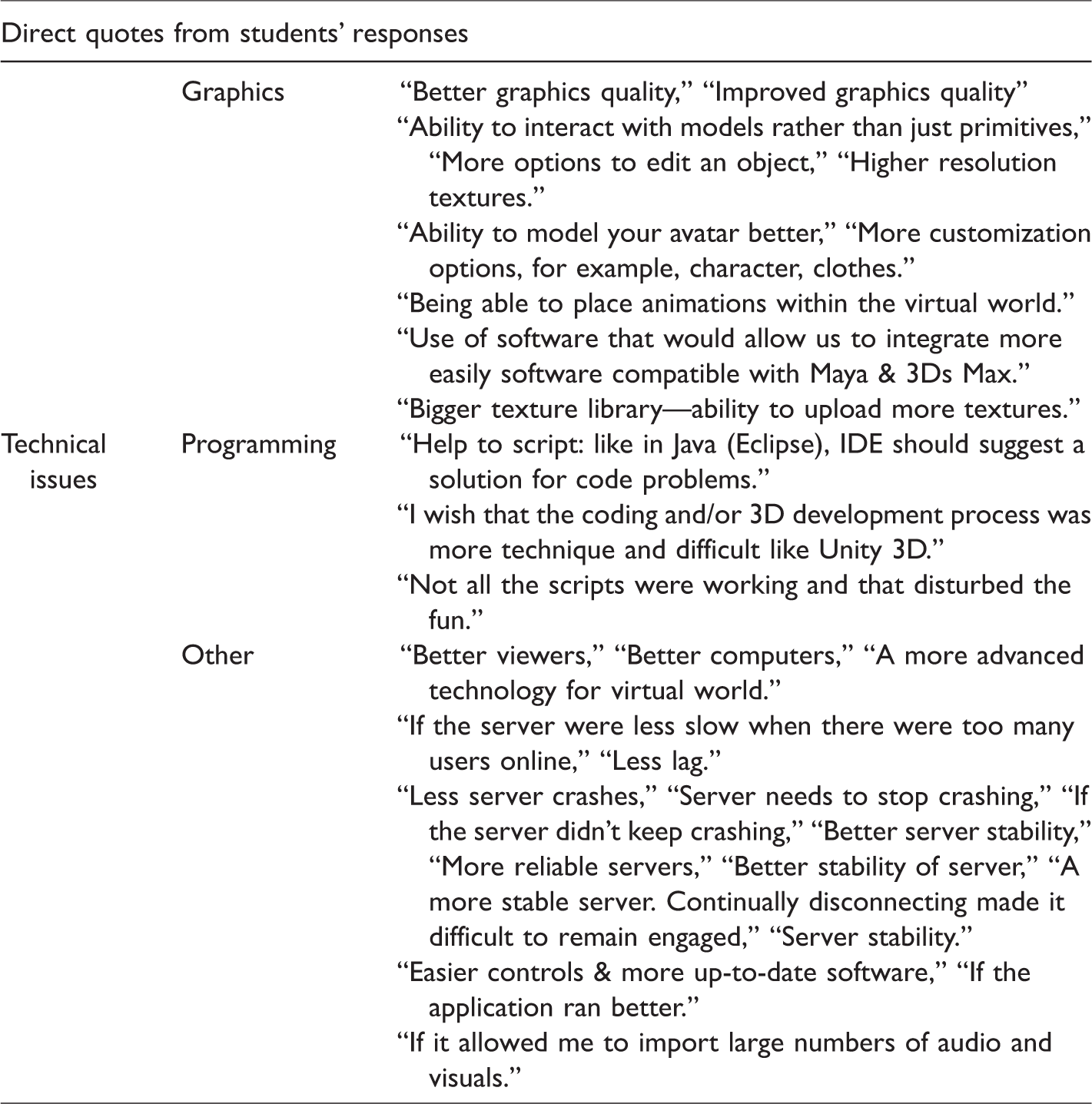
The technical issues reported, referred to the graphics of the virtual world, its programming language and scripting methods, as well as noncategorized issues. As to the graphical issues, students reported that the virtual world could have had higher graphical analysis and higher texture resolution. Another worthwhile point is students’ inability to manipulate primitives and virtual objects in the desired ways because of the restrictions of the virtual world. Moreover, scripting was rather challenging for some students who reported it as an obstacle in their engagement. In addition, some students noted that LSL was rather simple and abstract, preventing them from creating complex scripts that would make their objects multifunctional. The rest of the reported issues were related to the back and front end of the virtual world, the server, the viewer, the latency issues, and the occasional crashing incidents (Table 24).
Answers to the Open-Ended Question (Technical Issues).
Assignment and instructions
Based on students’ claims, the assignment brief could influence their levels of engagement. Some students asked for more precise tasks that would on one hand leave lower levels of freedom, yet at the same time indicate something specific for them to create, or at least, introduce them to a plot as a guideline. Another student stated that he might have been more immersed within the virtual world if the scripting required had been less extensive. On the contrary, another student underlined that the 10-script limitation applied for the cohorts of students who participated in Experiments B and C because of the nature of their assignment, had been a negative factor to his engagement (Table 25).
Answers to the Open-Ended Question (Assignment and Instructions).
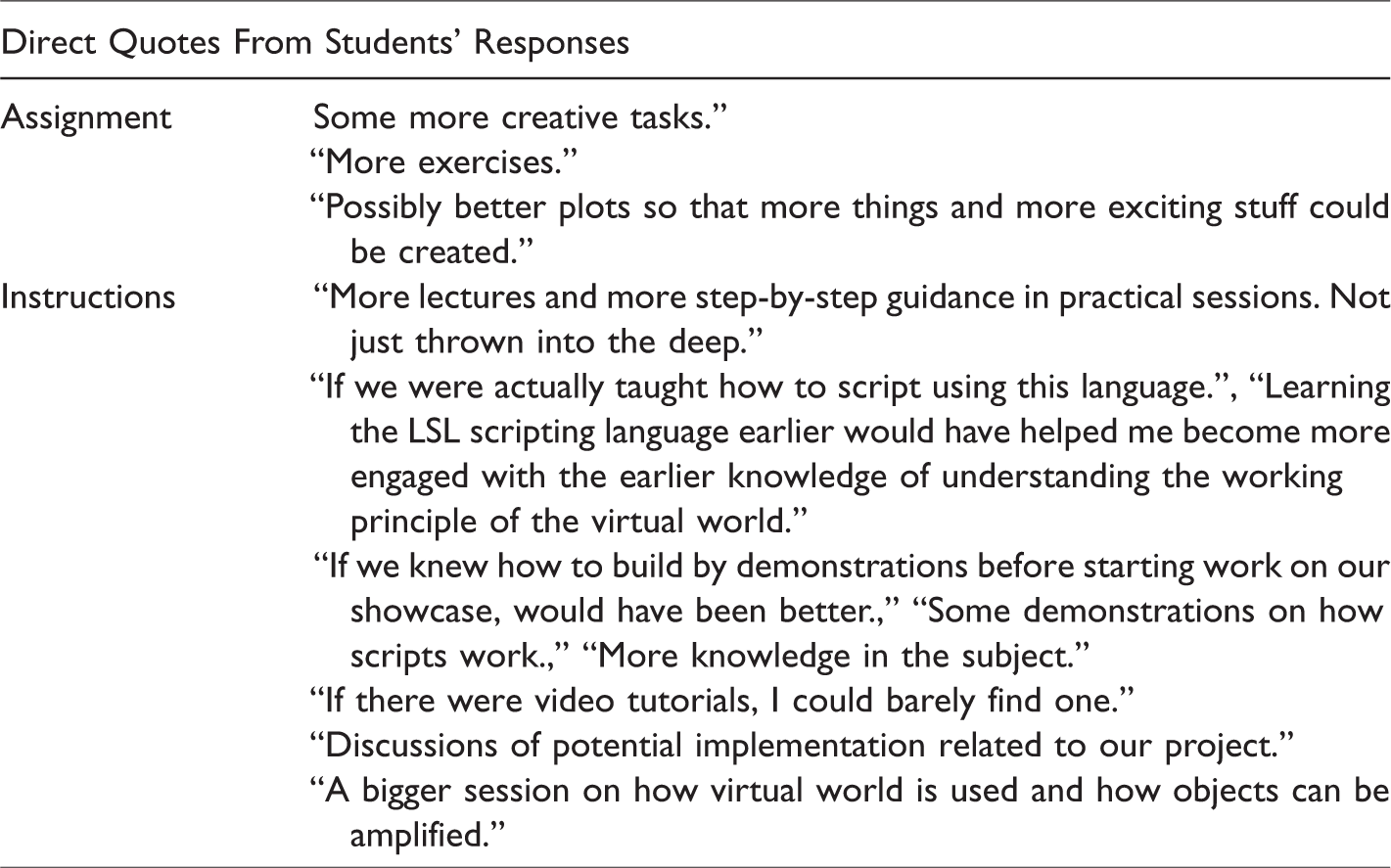
The lack of proper induction was the main problem reported in this category. As a result, students had to spend a considerable amount of time exploring the virtual world and its potentials, in order to learn its mechanisms, principals, and tools. In conjunction with other students’ remarks regarding time limitations, a clear conclusion can be drawn: Students need to go through a proper induction process prior to the assignment, with enough time to familiarise themselves with the virtual world. Lack of either aspect could lead to a limited level of student engagement (Table 25).
Student personality
The last category of student comments is related mostly to their personality and preferences. Some students pointed out that higher levels of either a world interactivity or a user one, would have enhanced their engagement. Another student pointed out that a more challenging and competitive assignment setting would have been more engaging. Others, satisfied with the freedom they had to create anything desired, noted that the space limitations curbed their creativity and obstructed them from being immersed. Nevertheless, there were some students who claimed that they would have preferred using another technology or virtual world instead of the one offered to them (Table 26).
Answers to the Open-Ended Question (Student Personality).

Discussion
Prior to reaching the conclusions of this article, the highlights of the similarities and differences between the cross-examined and triangulated data will be briefly discussed. Table 27 presents the links between the survey’s statements and the observations’ focus points used for the triangulation of the primary data. Numbers with asterisk (*) refer to the statements/questions of the a priori survey (section “A Priori Survey”), and the rest to the a posteriori (section “A Posteriori Questionnaire”). Likewise, the “Observations” column refers to the observation focus points as presented in section “Observations.”
Primary Data Triangulation.

The findings derived from the surveys are overall in agreement with the ones derived from the observations, even though some points come in contrast.
As the in-world coexistence eliminates the physical distance barrier, the interactions students had with each other in the virtual world were weaker, compared with the ones observed in the physical classroom. This disagreement can be justified considering that students were also working outside the university hours, and, thus, they could use the in-world communication tools when physical presence was not feasible at all.
Furthermore, the preconceptions that learners might have or the comments they may have stepped on, prior to using a virtual world, can greatly affect their attitude and behavior. However, the ludic element and nature of virtual worlds can alter these preconceptions and trigger learners’ interest to explore and engage with this technology. Nevertheless, their personality and learning habits can be great obstacles. Therefore, it is of vital importance that educators make particular effort to provide their students with a smooth and well-rounded induction to the virtual world, and also allow them enough time to familiarize themselves with its tools, prior to starting with the actual assignment.
For some learners, avatars were perceived as an invaluable feature of the virtual world which helped them reach higher levels of embodiment or engagement with it. Others considered them as one of the minor importance tools. Even if the direct references to avatars are limited, avatars are bridging the gap between the two interfaces and this should not be disregarded. Thus, clear instructions and help related to the editing appearance process should be provided to students, as this is the first form of interaction that all of them will encounter when entering the virtual world for the first time.
Another disagreement between the collected data is related to immersion. Even though in the surveys students claimed to have experienced high levels of in-world presence, during the observations this did not became apparent, or, at least, clear enough. The often breaks that students had to perform actions outside the virtual world, leads us to assume that immersion or embodiment does not seem to have much, if any, relevance when it comes to educational practices. Furthermore, the wide network of interactions played a crucial role to learner engagement, as it allowed students to adjust their learning needs and preferences accordingly.
Observations and surveys come in agreement, as far as students’ feelings and thoughts are concerned. Using a virtual world for educational practices increases the levels of enjoyment and makes the learning process more attractive and interesting. Nevertheless, different learners have different needs, and, therefore, some students had neutral or even negative attitude toward this approach, without necessarily resulting in having poor performance or learning outcome.
Unlike in most Integrated Development Environments, virtual worlds offer immediate awareness of users’ actions. The importance of having immediate feedback, not only from the compiler but also from other users, was both highlighted in the surveys and observed intensively. Furthermore, this acted as a catalyst on students’ willingness to collaborate with and learn from others.
Last, the existence of amusement or educational content can be for some students a great pool of ideas, or a way to break their routine, without necessarily affecting learners’ immersion or engagement. In any case, learners’ personal choices, preferences, and preconceptions might come in opposition to the instructional design, and, thus, various factors should be taken into consideration when designing such activities.
Conclusion
The initial hypothesis regarding the importance of examining interactions, both in-world and in the physical classroom, together and not in isolation is validated and confirmed. The influence that student-to-student interactions have on student engagement (in the physical classroom) is almost equal to the one that student-to-world interactions have on it. Nevertheless, the interactions that students had with the content of the virtual world, compared with the ones they had with other students, were more positive and intense.
The impact that the educational and leisure games have in boosting the incentives for interaction and engagement can be positive, though very diverse, especially after considering that the leisure games have potentially higher chances to attract learners’ attention, as opposed to the educational ones. Even though this content might not affect directly the learning process, as not all students will be attracted by the same design approach, it increases the levels of interactivity (in-world/in-class), and, therefore, students’ interest to engage with it. In any case, the use of a virtual world in academic context, even with game-like content included, does not lead students to encounter high levels of immersion, as the main aim and goal is to complete the task and achieve good grades. Even though additional studies shall be conducted to further investigate it, the high levels of students’ engagement with the virtual world as well as the enjoyment and happiness emotions they encountered during the process, in regard to the lack of immersion, can be examined in correlation to and linked with the “state of the flow” view, as described by Csikszentmihalyi (1990).
Educators should provide learners with clear instructions and information about this content and encourage them to use it, as it has been designed and developed on their favor. Regarding the role of the instructional designers, special attention should be paid when designing educational content, as the main aim is to motivate learners to develop and expand their knowledge through it.
Finally, what is highly recommended for further examination is the identification of the factors that make such setups successful. Another point to be further examined is the impact of interactions when using different scenarios. That would shed light on the design principles that educators and instructional designers should take into account when creating learning activities.
Footnotes
Declaration of Conflicting Interests
The authors declared no potential conflicts of interest with respect to the research, authorship, and/or publication of this article.
Funding
The authors received no financial support for the research, authorship, and/or publication of this article.
Author Biographies
 .
.