



Abstract
Open educational resources (OER) are educational materials with an open license so that they can be freely copied, modified, and reused. While the rising cost of textbooks is a concern in higher education, over 50% of the surveyed educators stated that they are unaware of the OER and how they could replace the traditional textbooks. In addition, not many instructors understand the Creative Commons licenses under which OER can be used. In this work, we consider the types of OER and outline the sources of OER for business courses. We describe our experience of using such resources for innovative business courses and discuss the choices we made and the lessons learned. Finally, we share the results of surveys about OER we conducted with students and reflect on them.
Keywords
Introduction
Educational materials of college courses are undergoing a period of important changes. On the one hand, the publishers of electronic books and interactive video courses with a high level of technological investment claim that with such new materials and features, learning quality could be greatly improved at a fraction of the cost of the traditional textbooks. On the other hand, students are eager to use textbooks that are digitized and open source, and that could be easily downloaded for free as needed, during the courses and later, without payment for access codes or bundle packages (Douglas-Gabriel, 2018).
In the United States, the Congress decided in 2018 to invest in open educational resources (OER) and allocated a budget of $5 million to encourage the development of courses based on open-source textbooks (Lieberman, 2018).
Organizations like Scholarly Publishing and Academic Resources Coalition (SPARC, n.d.-a) are active in endorsing and promoting a model in which the cost of publishing scientific information is reduced by enhancing the access to open-source educational materials. In its model, OER in the form of digital textbooks, videos, or software are based on peer-reviewed academic materials made available for free use and sharing. The resources remain under an intellectual property license and could be easily downloaded or printed for a fairly low amount of money.
Such a model is gaining public attention in permitting the students to have an alternative to the online platforms managed by the big publishing companies and accessed for a fee through digital codes. In addition, the said codes are usually active for a limited period of time, namely for a semester or an academic year, preventing the learners to reuse the materials later in their study or career (SPARC, n.d.-b).
A study carried out by the Babson Survey Research Group (Seaman & Seaman, 2017) supports the popularity of this attitude. According to it, the awareness of OER use and their adoption have grown in the past few years and are gaining more respect. In particular, the use of textbooks with an open license has risen from 5% in 2015 to 2016 to 9% in 2016 to 2017. Furthermore, comparing with 2014–2015 data, OER awareness has grown by more than 30% in 2016 to 2017.
Several states like Colorado, Georgia, New York, North Dakota, and Oregon are offering grants and incentives to encourage the adoption of OER in public colleges and universities (Lederman, 2018; Spilovoy, 2018). Many universities, starting with Rice, Massachusetts Institute of Technology (MIT), and Stanford, have already established policies and projects on the subject (SPARC, n.d.-a).
The article is organized as follows: In the sequel, we give OER terminology, the types of OER, and the sources of OER, with a special emphasis on OER sources applicable to business courses. We then discuss our experience with integrating OER into three business courses—Digital Marketing, Data Analytics, and Applied Operations Management. We discuss the types of OER selected for various purposes. Then we present the results of surveys conducted with students on their OER perception. We describe the lessons learned from the process of OER integration. Finally, we conclude with some remarks and plans for further research.
OER and Related Terminology
Definition of OER
In the late 1990s, a number of universities such as the University of Tübingen in Germany, the initial project MERLOT participants (California State University, University of Georgia System, Oklahoma State Regents for Higher Education, and University of North Carolina System), and Rice University in the United States made some of their education materials publicly available online. In 2002, MIT followed by launching its Open Courseware (OCW; MIT, n.d.) initiative, specifically aimed at providing free access to online courses, which has been widely featured in the media. This same year, the term Open Educational Resources was coined at the United Nations Educational, Scientific, and Cultural Organization Forum on the Impact of Open Courseware for Higher Education in Developing Countries (UNESCO, 2002). According to the UNESCO, “Open Educational Resources (OERs) are any type of educational materials that are in the public domain or introduced with an open license.”
Rising Cost of Higher Education
The rising cost of higher education in the United States has been a concern to the public, legislators, and prospective students and their families (Donachie, 2017; Thelin, 2017; see Figure 1) In response to this concern, about 10 years ago, a new movement started widely proclaiming the possibility of getting a completely free degree equivalent through such sources (Kamenetz, 2010). Part of the college expenses, which is sometimes overlooked, goes for textbooks (see Figure 2). As described earlier, using OER materials in lieu of traditional textbooks is one way of reducing the cost. Studies show that OER are currently used mostly in the introductory courses and far less in specialized upper-level courses (Straumsheim, 2016).
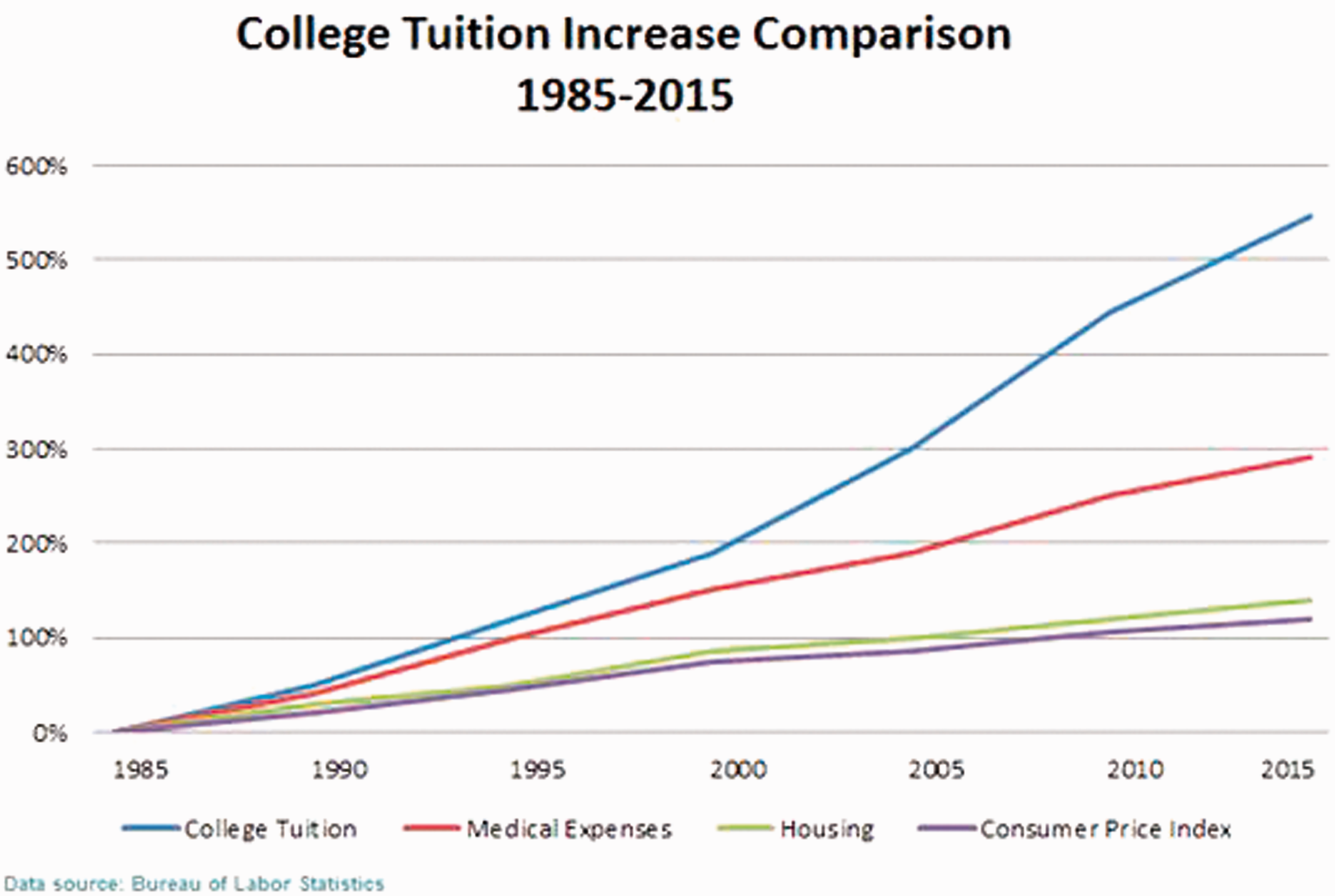
Comparison of college tuition increase in the United States, in the period 1985 to 2015 with medical expenses, housing, and Consumer Price Index.
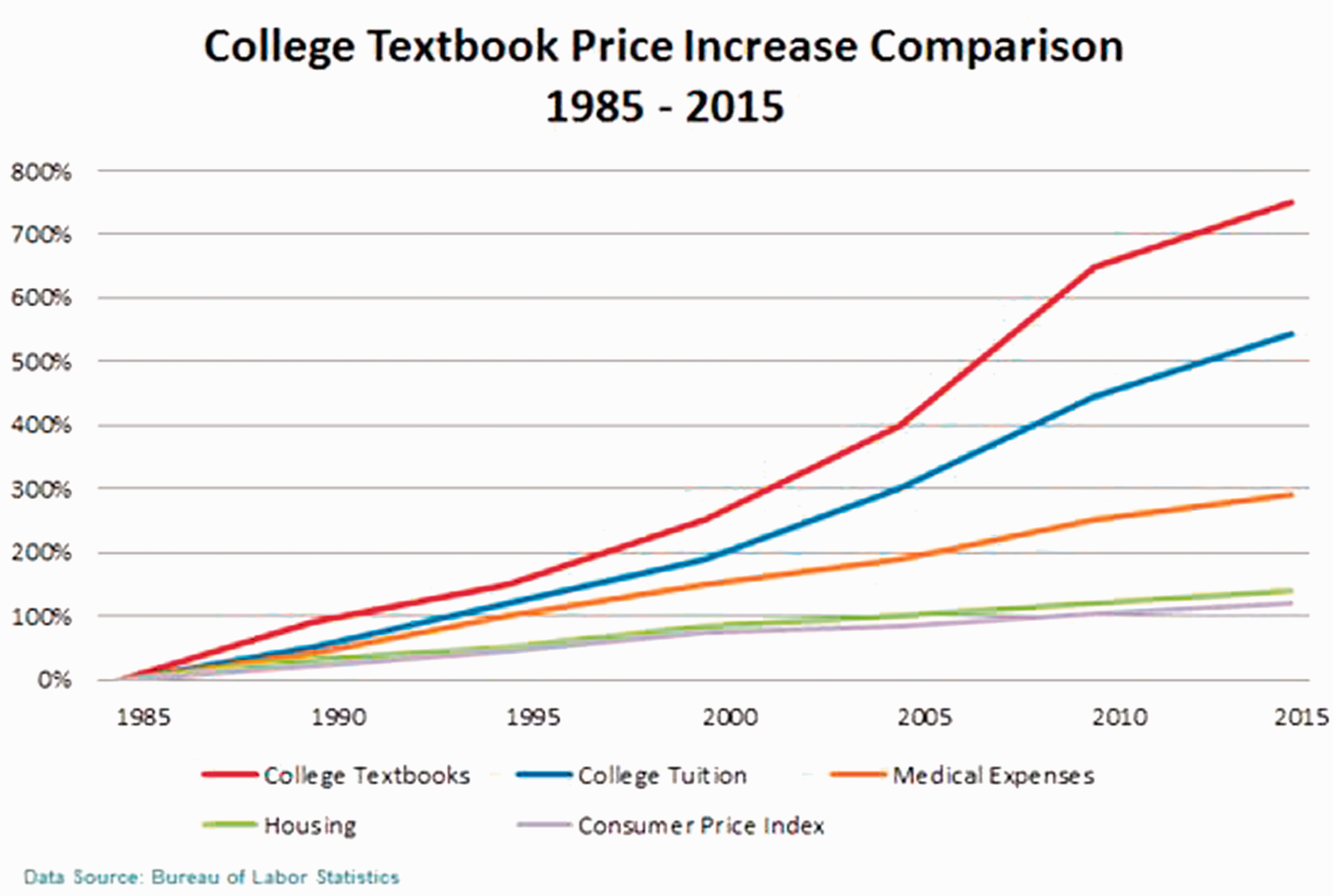
Comparison of college textbook price increase in the United States, in the period 1985 to 2015 with college tuition increase, medical expenses, housing, and Consumer Price Index.
Creative Commons Licenses
OER would not be possible without a form of intellectual property that allows free copying, modification, and reuse of the materials. This is provided by the Creative Commons (CC) licenses, which are used instead of the copyright of the publishing companies. These licenses were first released in 2002, the same year when the term OER was introduced. They allow the copyright of the material to be retained by the authors who get credit when their work is reused.
Types of OER
We can consider different taxonomies of OER as per their level of structuring and as per their content (see, e.g., Creative Commons Wiki, n.d.).
By Level of Structuring
The simplest type of OER is the learning object. It is developed with a specific objective in mind and has a narrow scope. Such a learning object may be an article, an assignment, a syllabus, a video, a piece of software, a chart, an illustration, a table, and so on. The learning objects may not have curricular connections to other objects.
Once such connections are established between learning objects, the OER material becomes semistructured in the form of an encyclopedia or a collection of materials on a given topic. When more rigidly structured pedagogical goals are established, the OER material becomes fully structured and could take the form of a textbook or a complete courseware. Finally, there are digital book libraries, such as the Gutenberg project, containing books in the public domain and course repositories such as MIT OCW, which provide access to hundreds of complete courses. The types or OER as per their structuring are illustrated in Figure 3.
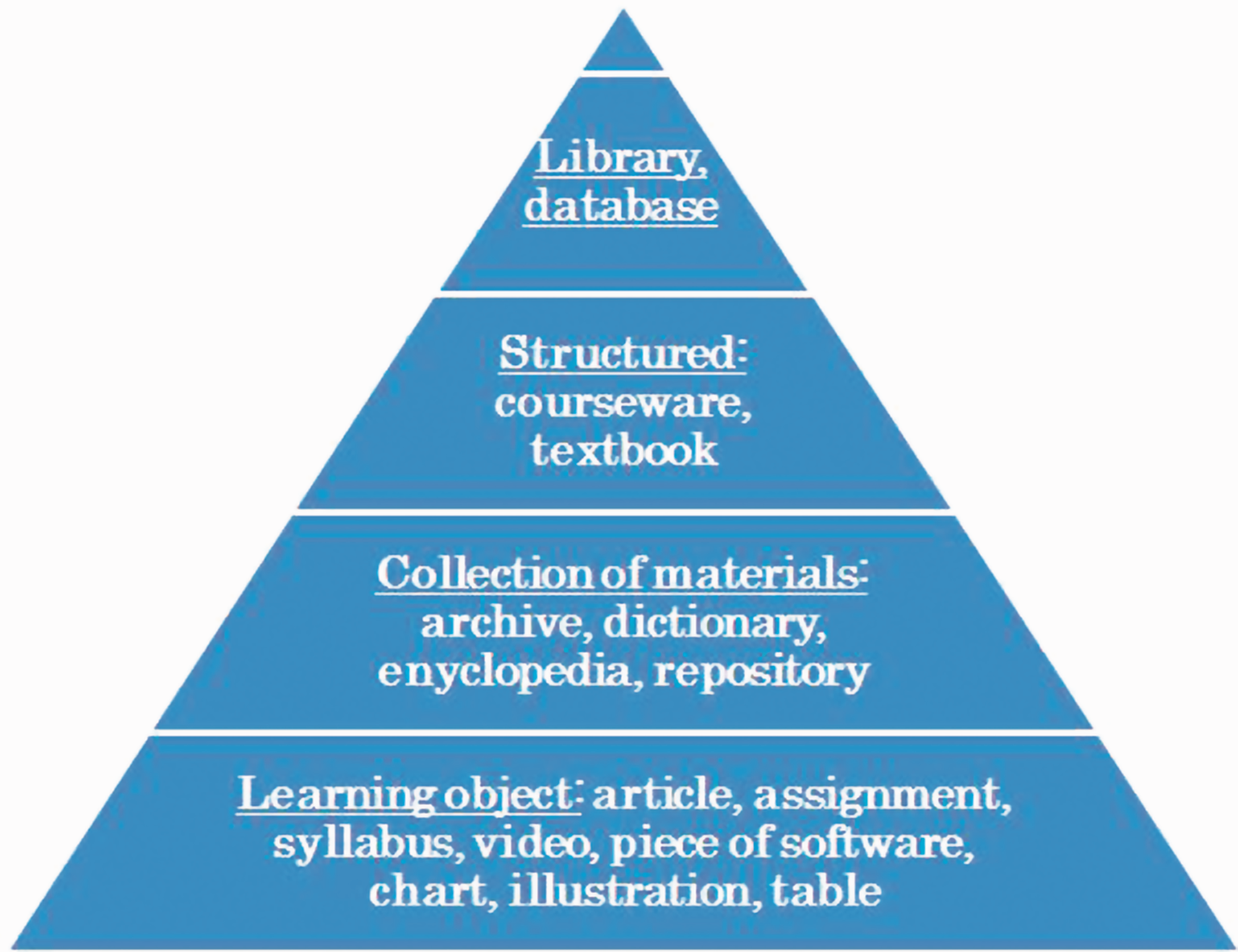
Types of OER by structuring. OER = open educational resources.
By Content
The variety of categories according to this taxonomy is substantial; some of the more significant categories are as follows:
textbooks, courses, journals, software, digital tutorials, data, video clips, images and photographs, and presentations.
Figure 4 illustrates the categories.
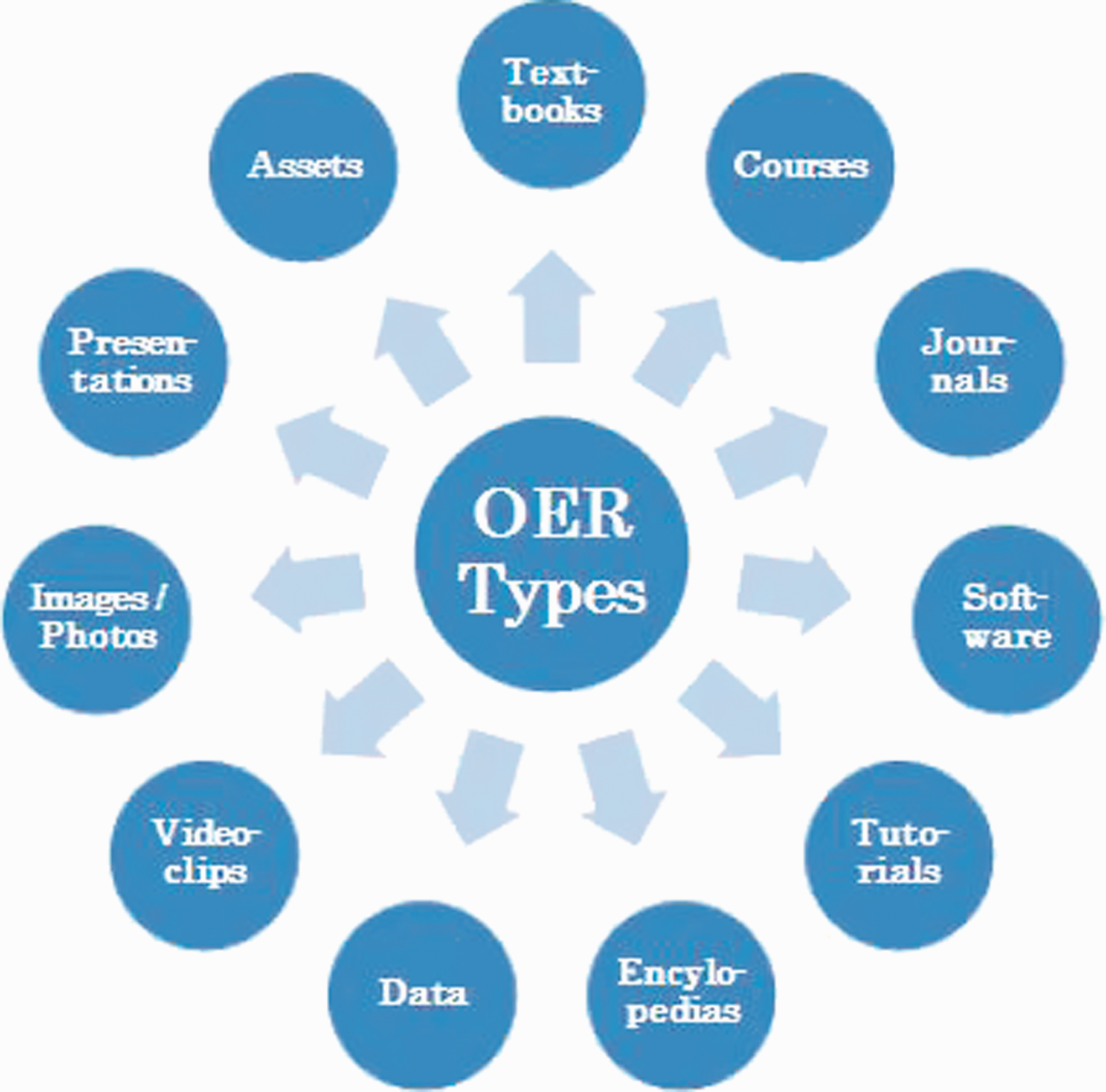
OER types by content. OER = open educational resources.
Sources of OER for Business Courses
Since the late 1990s when the first collections of OER were established, the amount of OER increased exponentially over the years. Extensive lists of OER repositories and platforms are maintained by the International Council for Open and Distance Education (n.d.), University of Pittsburgh (n.d.), and Wikipedia (n.d.). a searchable tool of OER in different platforms is available in OER Commons (n.d.). We discuss below some OER sources that are specifically focused on education in business.
The main types of educational materials used in business are textbooks, courses, videos, and case studies, and we have split the OER sources according to these groups.
Courseware
The most resourceful platform for business OER courses is the MIT OCW. It lets the user choose between 17 subtopics—Accounting, Business Ethics, Entrepreneurship, Finance, Globalization, Health-Care Management, Industrial Relations and Human Resource Management, Information Technology, Innovation, Leadership, Management, Marketing, Operations Management, Organizational Behavior, Project Management, Real Estate, and Supply Chain Management—each of which contains a variety of related courses at both undergraduate and graduate level.
Another important source of business courseware is the Indian River State College Online Library. This OER platform has an entire section devoted to business materials. They include different types of OER, such as open courseware, case studies, textbooks, scholarly articles repository, and other modules (IRSC Open Educational Resources for Business, n.d.).
Saylor Academy (n.d.) also releases under CC courses in business, as they cover the main aspects of an undergraduate degree in business administration. There are 19 such courses and each of them could be taken asynchronously.
Last, are the two fundamental “Introduction to Business” and “Business Writing” courses, provided by the Lumen Learning (n.d.-a) platform. The latter is designed to help students in obtaining better communication skills and strategies and is particularly focused on the workplace dynamics. The offered material is multimedia-enriched as it is based not only on text, but also on streaming videos. This course trains the students in a wide range of document-writing genres and styles related to business, from memos to business letters to professional reports. Free download is available for both courses, and they are released under CC licenses.
Case Studies
Business education is heavily based on case studies. Thus, we list and briefly discuss some sources of OER case studies:
The Institute for Corporate Ethics Business Roundtable (n.d.) is hosted by the University of Virginia’s Darden School of Business and offers case studies which are duplicable for educational purposes. The MENA Journal of Business Case Studies is an open-access journal publishing business case studies and solutions that can also be downloaded to be used for teaching and research purposes. Topics include accounting, business law, economics, ethics, finance, management, marketing, and related fields (IBIMA Publishing, n.d.). The LearningEdge Case Studies by MIT Management Sloan School contains narratives that revolve over a particular issue to stimulate class discussion and reflection over it. They are classified into categories of entrepreneurship, leadership/ethics, operations management, strategy, sustainability, and system dynamics (MIT Management Sloan School, n.d.). Indian River State College Library Database includes Business Source Complete Case Studies Search tool to facilitate locating an appropriate resource. It is, however, accessible only for the college employees and students (IRSC Open Educational Resources for Business, n.d.).
Textbooks and Articles
A number of open textbooks in business are available, covering a broad range of topics in business administration, marketing, finance, and economics. They can be found through the platform Open Textbook Library (University of Minnesota, n.d.) in a variety of formats such as PDF, Mobi, Kindle, Epub, or HTML, and are licensed under CC. Few of them are available through the State University of New York (n.d.) Open Textbooks OER Services.
Another useful OER platform for business materials is the San Bernardino Valley College (n.d.) OER Business & Marketing portal. It offers a vast array of links to many types of textbooks provided by various platforms.
The “2012 Book Archive” (n.d.) is an archive of 358 CC licensed basic textbooks, many of which are in business. The collection is somewhat limited in size, but the download is extremely simple.
Open scholarly articles, especially useful for graduate education, can also be accessed. The Digital Commons Network (n.d.) is one of the richest repositories of open-access articles, with over 68,000 articles in the field of business. The resources are shared among a number of international educational institutions.
Videos
Nowadays, students prefer watching videos and using interactive tools instead of reading plain text. There are providers of video content such as TED-Ed Lessons for Business. These are short videos aimed at provoking interest. The videos are accompanied by questions and links to additional resources.
The GlobalEdge (n.d.) Online Course Modules of Michigan State University are mainly in the form of interactive educational tools and podcasts. They are intended for independent learners but could also be implemented in the classroom. The modules come with respective case studies, questions, and further reading.
Our Experience of Integrating OER
The Incentive
Recognizing the problem with the skyrocketing student textbook cost, in 2017, New York State allocated an $8,000,000 incentive to encourage the use of OER in lieu of traditional textbooks (Lederman, 2018). Half of this amount was given to the State University of New York, which offered numerous workshops to train the faculty how to find appropriate resources and redesign their courses. The requirement for a course to be labeled as using OER was, “at least 50% of the materials used should reside in the public domain or have been released under an intellectual property license that permits re-purposing by others” (Reed Library, n.d.). Such courses would be marked as low-cost textbook courses in the course offering schedule, so that the students could be informed that they could save. The faculty planning to participate in the OER initiative had to submit a proposal indicating what materials they would use for their courses. The proposal was reviewed by a committee.
The business textbooks tend to be pricey and it would be very beneficial for the students if more courses adopt OER resources. At the State University of New York at Fredonia, a middle-sized comprehensive college with a small business school, we started with revision of three undergraduate business courses for OER initiative. Two of them are already approved and are to be offered as OER designated in Spring 2019. The third one is under development.
We present our experience in the sequel, describing the courses involved, the OER selected, and the challenges we faced and continue to face, in an effort to assist interested educators in modifying their courses for usage of open-course materials.
The Courses
The three business courses mentioned earlier share some common characteristics: Apart from the fact that they all are offered to undergraduate students, they are nontraditional in a sense that not many schools offer them and the courses themselves are rather new; there are no designated textbooks for them; and they are project-based and require independent research and presentations. A more detailed description follows.
The course Digital Marketing for Music Industry has been offered for three semesters to undergraduate junior and senior students. It is a very specific innovative course and there are virtually no textbooks on the subject. The only available textbooks are on the general topic of digital marketing, without specific details for application in music industry. On the other hand, contemporary music industry has been transformed significantly to employ content delivery services for its business models. Thus, it is actively using the newest digital technologies and social networks for marketing and promotion.
The field also requires certain degree of creativity and is dynamically developing. The course, therefore, employed much free (not necessary open) materials from the Internet in the form of articles, videos, and software systems. In particular, as a final project, the students developed a music industry web site using the free version of Wix, an individual personal web site using Google Sites, edited pictures using Microsoft products for which our university had a license, and finally used various social networks to increase the traffic to it.
The second course—Data Analytics for Sport Management—has been offered in the last 2 years. Similarly to Digital Marketing for Music Industry, there are no specifically designated textbooks. At the same time, sports analytics is a fast-growing field: Professional teams in baseball, basketball, football, hockey, and soccer have established data analytics departments to support decision-making on and off the field. A new profession—sport analyst—is in high demand (Pritchard, 2015).
Data analytics requires knowledge in statistics, mathematics, and computer science, as well as deep knowledge of the specific domain, in this case—the specific sport. Unfortunately, sport management majors do not have a strong background in sciences. The curriculum requires only an introductory course in statistics and an introductory course in microcomputer software. The latter covers basic topics of Microsoft Excel and Access. Thus, this second OER course focuses on getting grasp of the notions related to data, information, and knowledge, becoming familiar with the basic models, gaining mastery in decision-making approaches, obtaining strong foundations in decision-making theory, developing skills how to measure and predict performance, and excelling in the work with software for data analytics and visualization. It includes several practical projects and presentations as well as numerous hands-on activities.
The third course—Applied Operations Management—is a capstone experience offered at the School of Business. It embraces the practical application of operations management content, as part of a live systematic problem-solving course using the Define–Measure–Analyze–Improve–Control project management framework. Thus, it is based on the flipped classroom approach, where the content of each semester has some level of consistent coursework coupled with a large portion of varied content because of the needs of the course client project. As a result, it is difficult to find one textbook or resource that can readily address the complexity of the material, allowing for more in-class facilitation by the instructor regarding the data analysis for the course project.
Currently, the content which is consistent semester to semester is delivered in the traditional face-to-face format. A “work day” is set aside after the content delivery, and it is in this time the instructor facilitates the work of the student groups as they work on the course client projects. This format requires student groups to work a substantial amount of time outside the classroom and then bring the work accomplished to class during the work day to gain input from the instructor, who must balance time among the student groups. At times, the work day must be expanded to another 1 or 2 days, depending on the complexity of the data the projects contain.
Selecting OER
The first course we proposed as OER designated was Digital Marketing for Music Industry. First we had to find an appropriate textbook. A thorough search of platforms providing OER in business was conducted. The repository at Indian River State College business sources (IRSC Open Educational Resources for Business, n.d.) proved to be a very valuable portal to a variety of tools. After evaluating several books, the open text eMarketing: The Essential Guide to Marketing in a Digital World by Rob Stokes (2013) was selected. The book is available through the University of Minnesota (n.d.) Open Textbook Library.
Open articles on advertising principles were found on Boundless Marketing portal (Lumen Learning, n.d.-b). They were used for class discussions and quizzes.
For videos we used Vimeo, which allowed searching videos by various CC licenses.
Finally, the free and open-source software GNU Image Manipulation Program (GIMP)—a raster graphics editor used for image editing, similar to the proprietary software Photoshop, was demonstrated. GIMP is installed on the computers on campus and it could be also easily installed on the students’ desktop or laptop computers. Notably, while Photoshop requires about 1 GB of memory, GIMP needed 40 times less memory and its interface was simpler and easier to learn.
Unfortunately, we could not replace Wix or Google Sites with open software. While the students have studied HTML and CSS in another course, they could not use them in Digital Marketing as the School of Business does not have servers for web hosting. As the OER course designation did not require 100% usage of open sources, we continued using Wix for the final project.
Similarly, for the course Data Analytics for Sport Management, we choose an open general textbook on Statistics/Data Analytics available on Wikibooks (Cronian, n.d.). Several chapters of the book are used to introduce the basic notions related to data, information, and knowledge. Then open tutorials and videos are exploited to teach the students how to visualize the data in the form of static and dynamic charts and graphs. A number of open videos demonstrate case studies for data analytics in various sports. Open sport data sets are explored in student projects and the students are required to work on individual projects analyzing a specific data set of their choice and writing a report. The students present their reports in a professional way in front of the class and defend their hypotheses using mathematical models, statistical packages, and visualization tools.
As mentioned earlier, the third course—Applied Operations Management—is heavily practice oriented. The students work with real businesses on solving operational management problems. Similarly to Data Analytics for Sport Management, they have to analyze the data and write reports. In the ideal situation, the students would draw upon identified resources which would provide them not only the consistent course content, but also the content that may be unique to the course projects’ requirements. For example, a specific analytical tool might be required for only one project, whereas another project might benefit from another type of analysis. Students could be assigned the out-of-class content work and the in-class work days could be expanded to include the majority of days, including days for clarification of the material. For out-of-class studies, the students could be directed to explore a list of preselected OER in the form of open videos, tutorials, or textbooks. They have to choose from the list the appropriate sources and explore them. They then have to apply in practice the analysis methods they learned.
Studying Students’ Perception
We conducted two surveys: with students who already experienced an OER-designated course and with students who did not experience such a course yet. We describe the results and discuss them as follows.
At the end of the course Digital Marketing for Music Industry offered as OER designated, we conducted a study of the students’ perception with respect to using OER materials. Our hypothesis was that students would prefer using OER over traditional tools, but we wanted to identify the perceived advantages and the drawbacks of OER.
We administered an anonymous survey among the students in the class. The participation was voluntarily. All the students were over 18 years old. Out of 15 students, 11 responded (73% response rate). As not all students responded to all questions and sometimes they gave more than one answer, the sum of the answers may be below or above 11. In the sequel, we summarize the responses.
A major inconvenience of OER materials is seen in the fact that they are electronic and sometimes it is more difficult to read them. On the question whether the students would prefer to read a digital material or a printed material, the answers were almost even (Figure 5). We deduced that the majority of students feel comfortable reading materials in digital format.
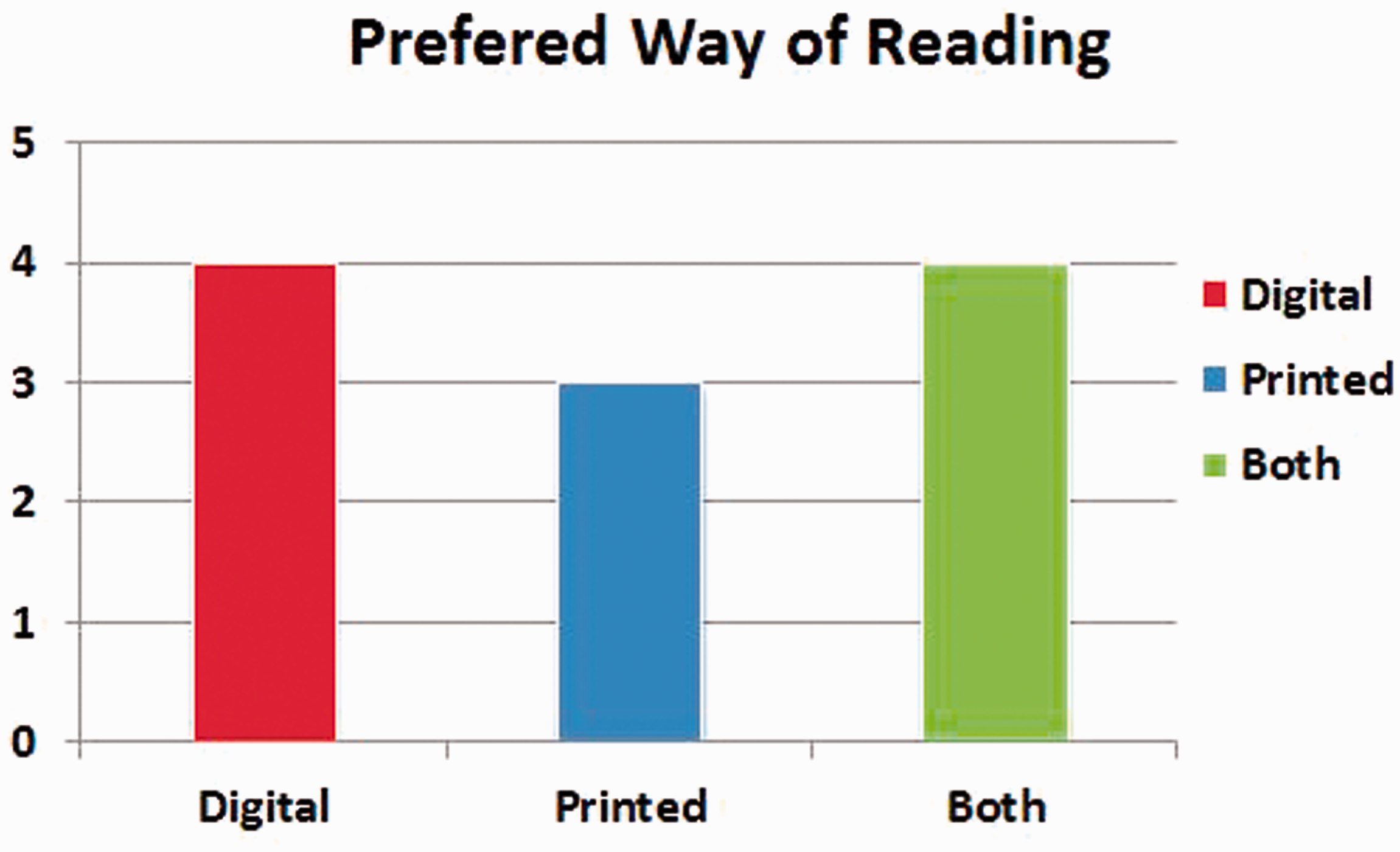
Student responses regarding the way they prefer to read materials.
The students were asked to indicate the major advantages of OER rating them on a scale from 1 to 5, with 5 denoting a major advantage. The median values were used for the study. Figure 6 shows that the cost (free), the space efficiency of the digital format, and the possibility for automatic search were perceived as major advantages, represented by median values of 5. Other advantages noted by the participants were the material availability after the end of the course, the convenience of the embedded hyperlinks, and that digital materials can be easily restituted at no cost, minimizing the risk of loss (response median 4).
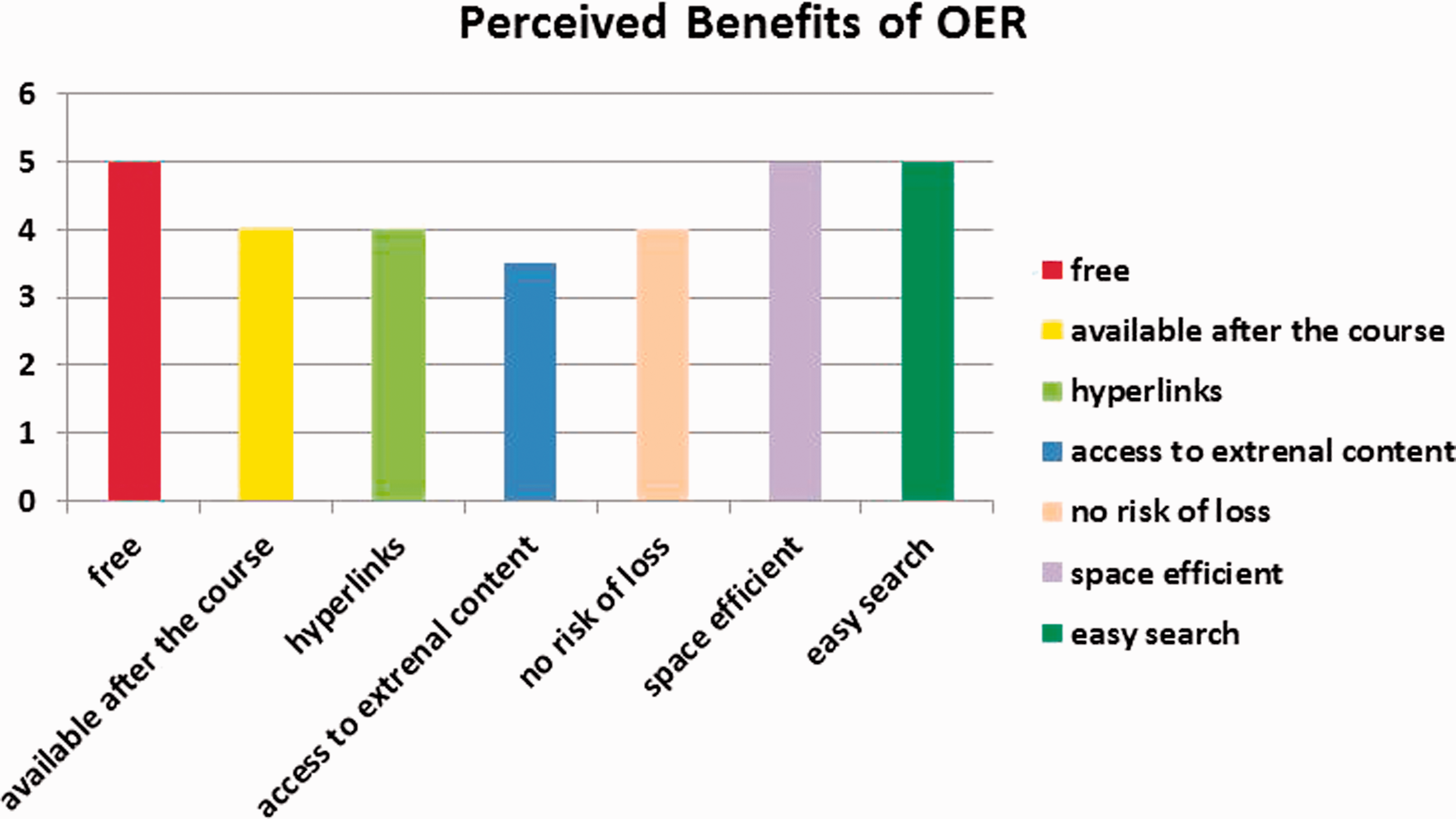
Perceived benefits of OER. OER = open educational resources.
The students were also asked to indicate the major drawbacks of OER by rating them on a scale from 1 to 5, with 5 denoting a major disadvantage. The median values were used for the study and, as Figure 7 shows, two disadvantages were indicated—“it is difficult to read them” and “you need a charged battery.” Both were with a median value of 3 (Figure 7). As a lesser drawback (response median 2) was seen the fact that they cannot be read at all time on a plane and in some other environments. In general, the drawbacks were rated lower than the benefits.
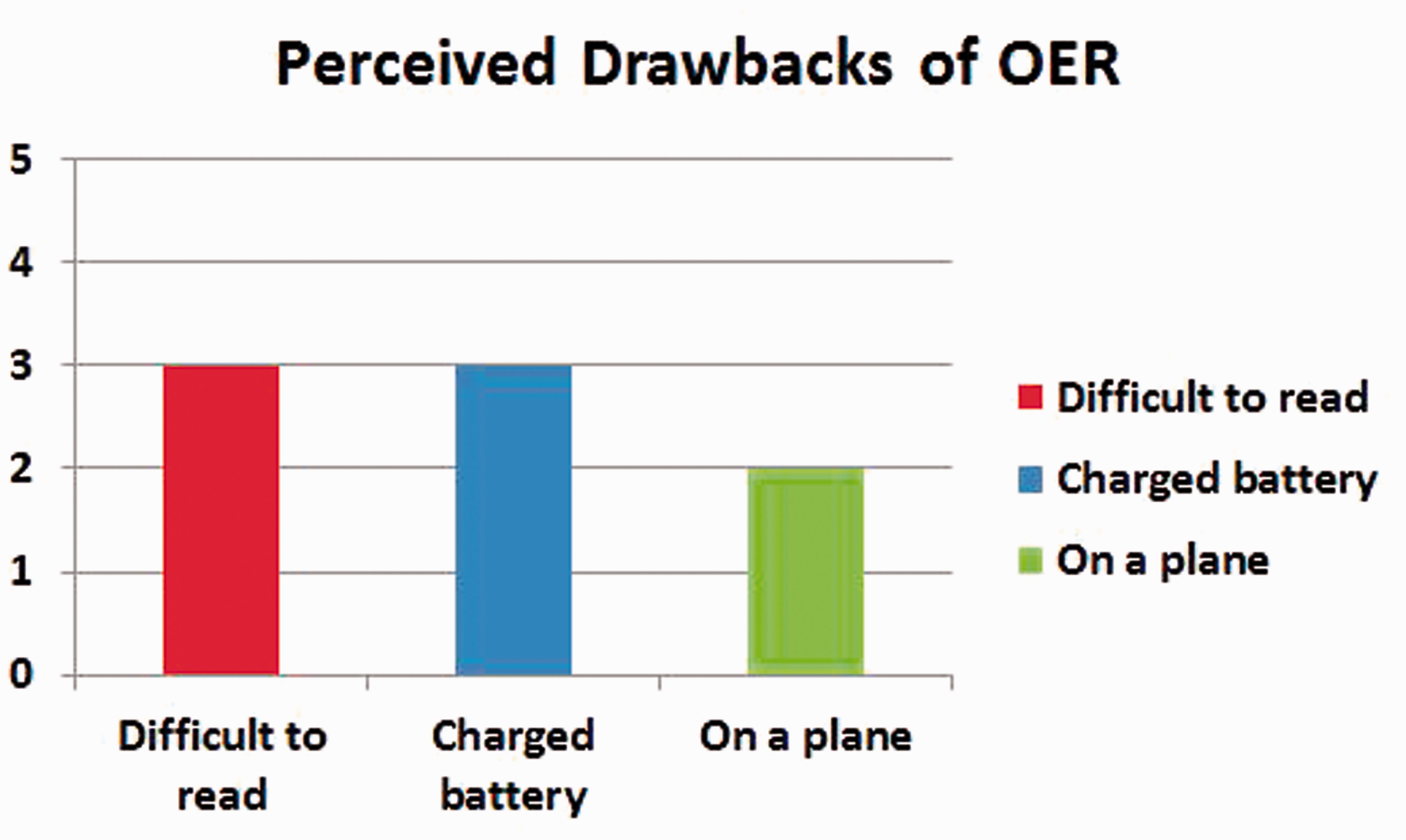
Perceived drawbacks of OER. OER = open educational resources.
Finally, all students indicated that they have a desktop or laptop computer or a tablet where they could read the texts.
Another study was conducted with the students taking the course Applied Operations Management. Before making the formal proposal, we thought that it is desirable to understand what expectations the students might have of the OER so that a course design embraces those attributes. (The students had not experienced an OER-designated course by that time.) First, the course participants were briefed by the instructor on the concept of OER. This briefing included what OER is, known advantages and disadvantages, and various types of OER. Participation in this briefing was voluntary, resulting in 20 participants, all over the age of 18 years. After the briefing, a series of five questions were asked to these same participants, as providing input to these questions was again fully voluntary. Out of the 20 participants, 19 did answer the questions, while 1 student had another commitment to attend and left the activity.
Four questions sought to determine customer expectations of OER, while one question was logistical in nature, seeking to understand if students were equipped to engage in OER. The provided answers were textual in nature and the anonymity and confidentiality were guaranteed. The instructor categorized the answers into similar affinities and conducted an analysis of contribution, known as Pareto diagramming.
The first question sought to understand what type of study material was preferred by the students. The results are illustrated in Figure 8.
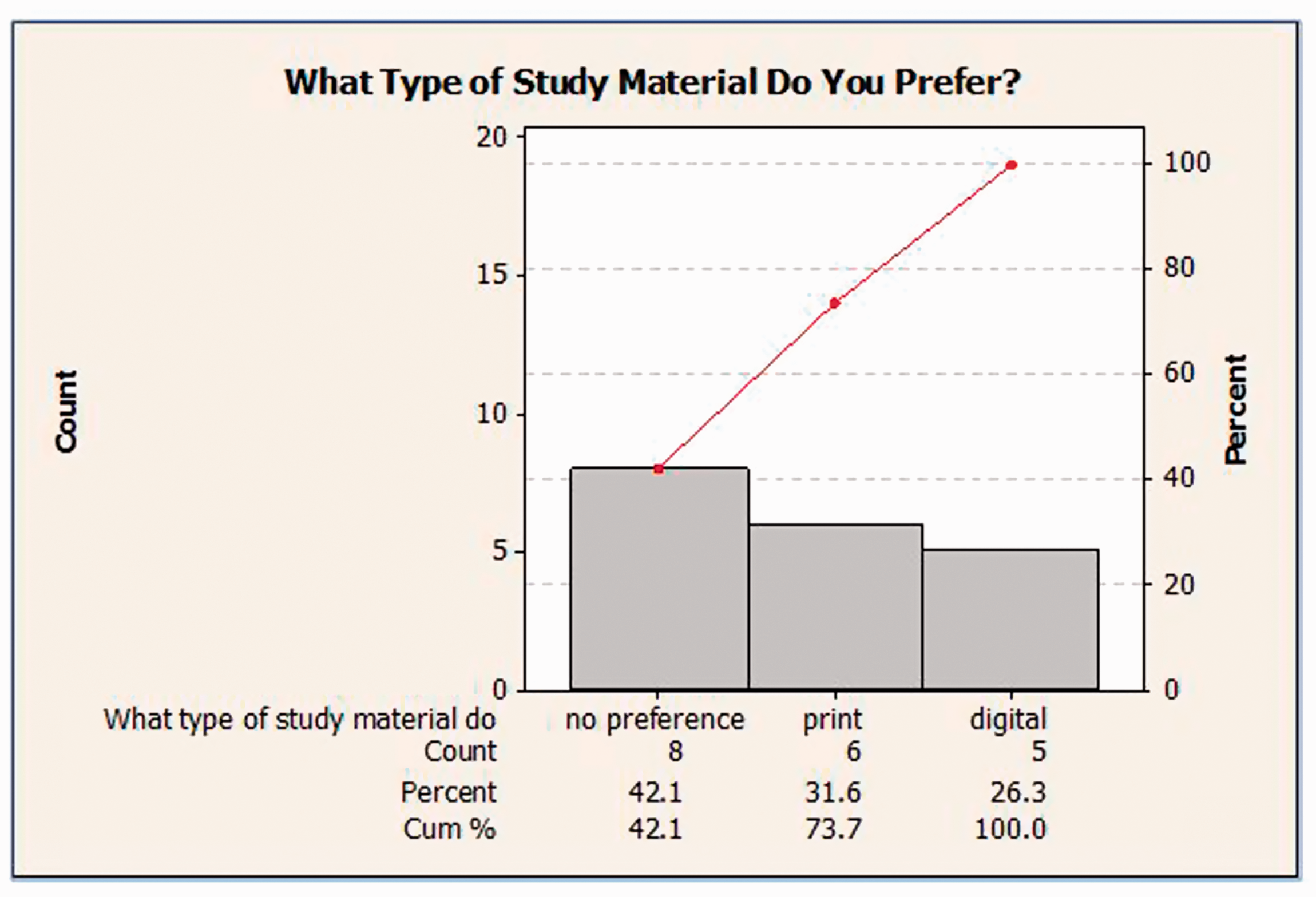
Preferences in the type of study material.
Approximately, 42% of students had no preference between print and digital material. About 32% indicated a preference for print material, while about 26% desired digital only. Combining the “no preference” contribution to the “digital” contribution results in almost 70% of students who would not have an issue with digital material for this course. We concluded that OER are viable for this course with regard to digital offerings.
Then the students were queried with regard to their perceived advantages of OER. Almost half of them cited cost as the largest advantage. The second advantage noted was the ease of keeping track of the materials, categorized as the inability to lose information (see Figure 9). We concluded that the students are concerned about cost and may be plagued with ongoing organizational issues.
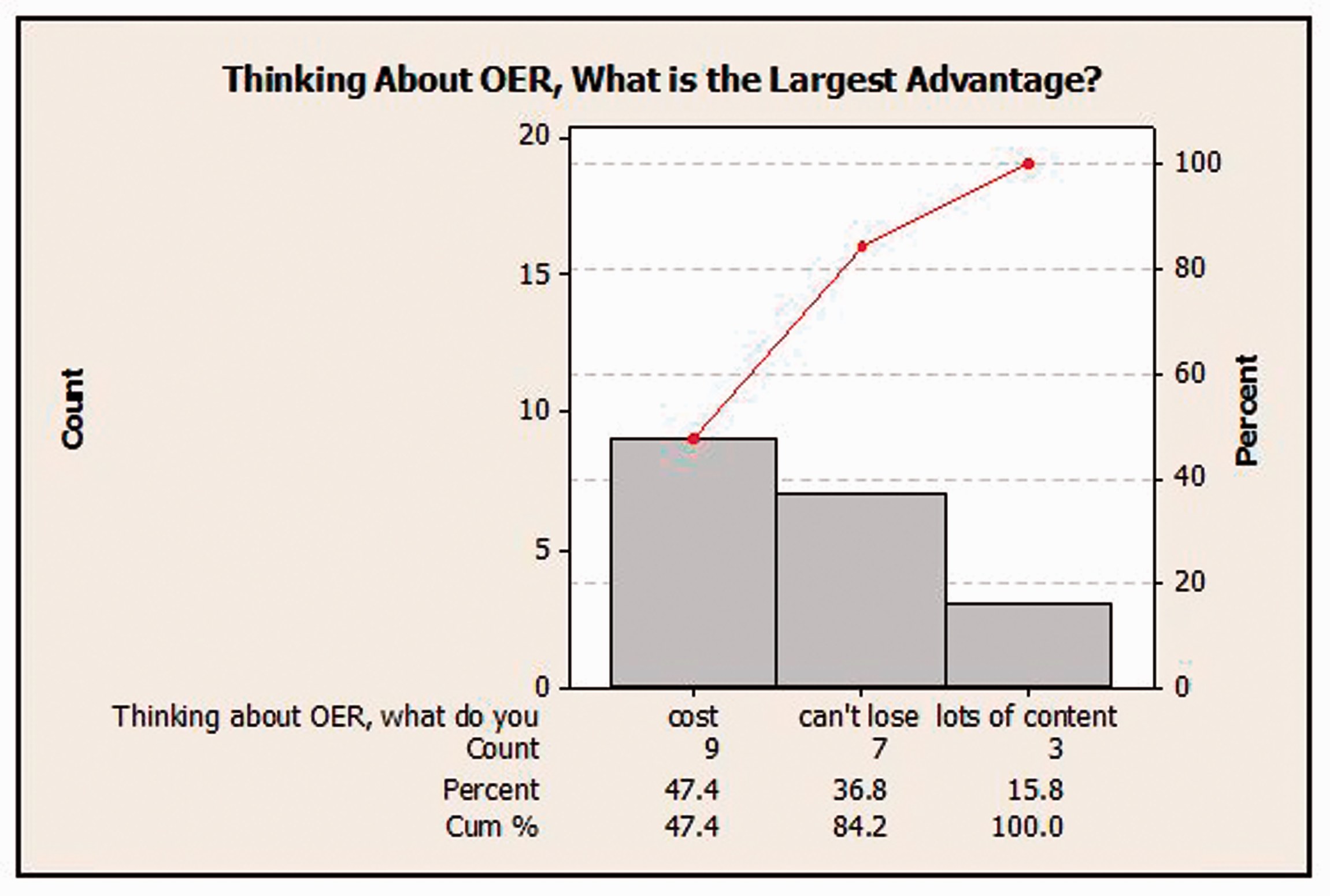
Perceived OER advantages. OER = open educational resources.
The third query sought to understand what students perceived as the disadvantages of OER. Those results are noted in Figure 10. The majority of students noted the ability to access the information as the largest disadvantage. Students noted such issues as lack of Wi-Fi or weak signal. When students noted “lack of device,” the content was more user dependent, such as battery charge or damaged computer. We concluded that students must be cautioned on ensuring Internet access and should allow themselves ample time to complete OER assignments in the event computer access is limited at any given time.
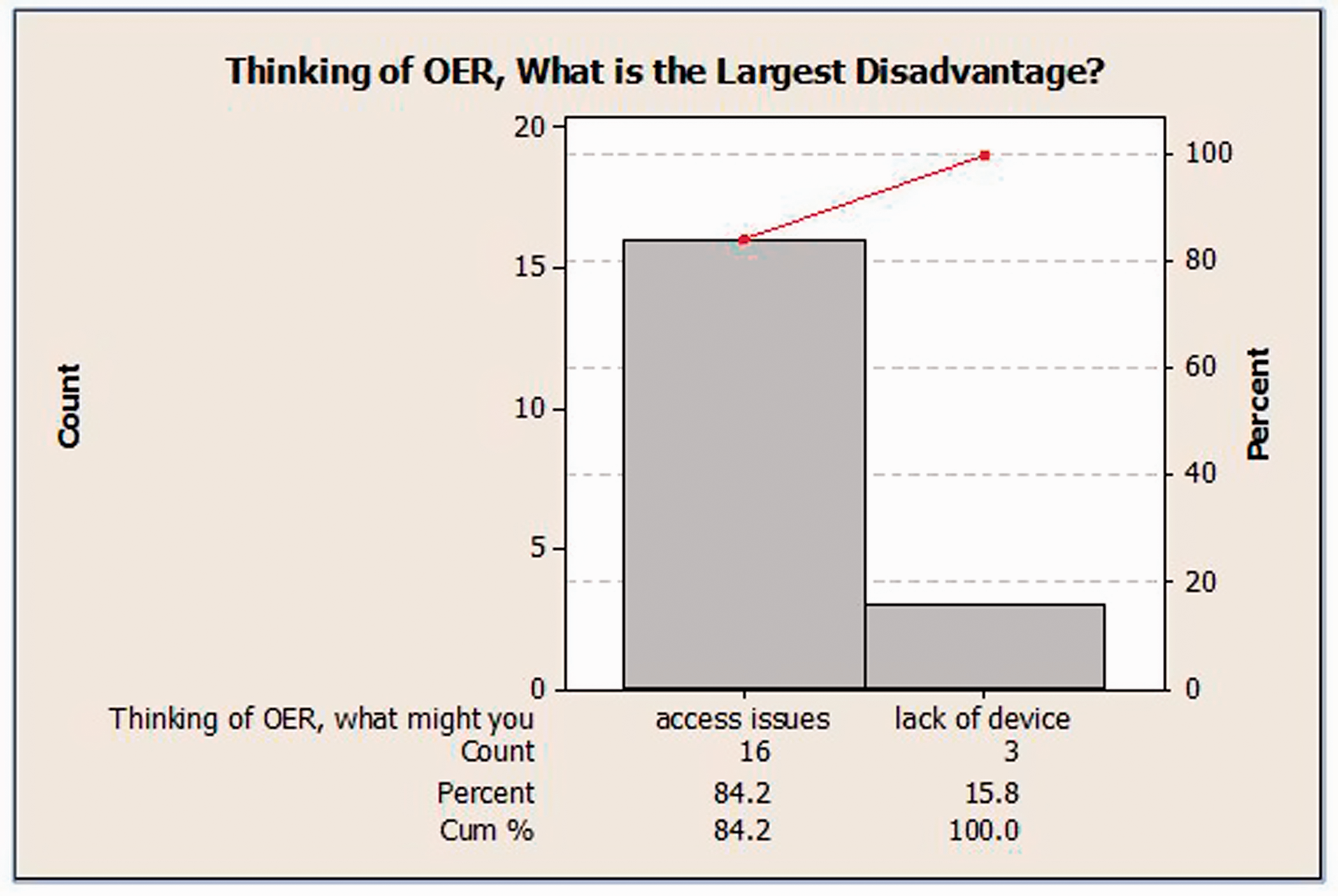
Perceived OER disadvantages. OER = open educational resources.
The fourth query sought to understand what types of OER would be valuable to students in this course. The results of this query are found in Figure 11. Videos appear to be the most desired form of OER for this course. This selection does make sense given the quantitative nature of the course; video may be more instructive than reading. The other selections appear to be equally valued among students. We conclude that video must dominate OER in this course, while other OER could also be deployed.
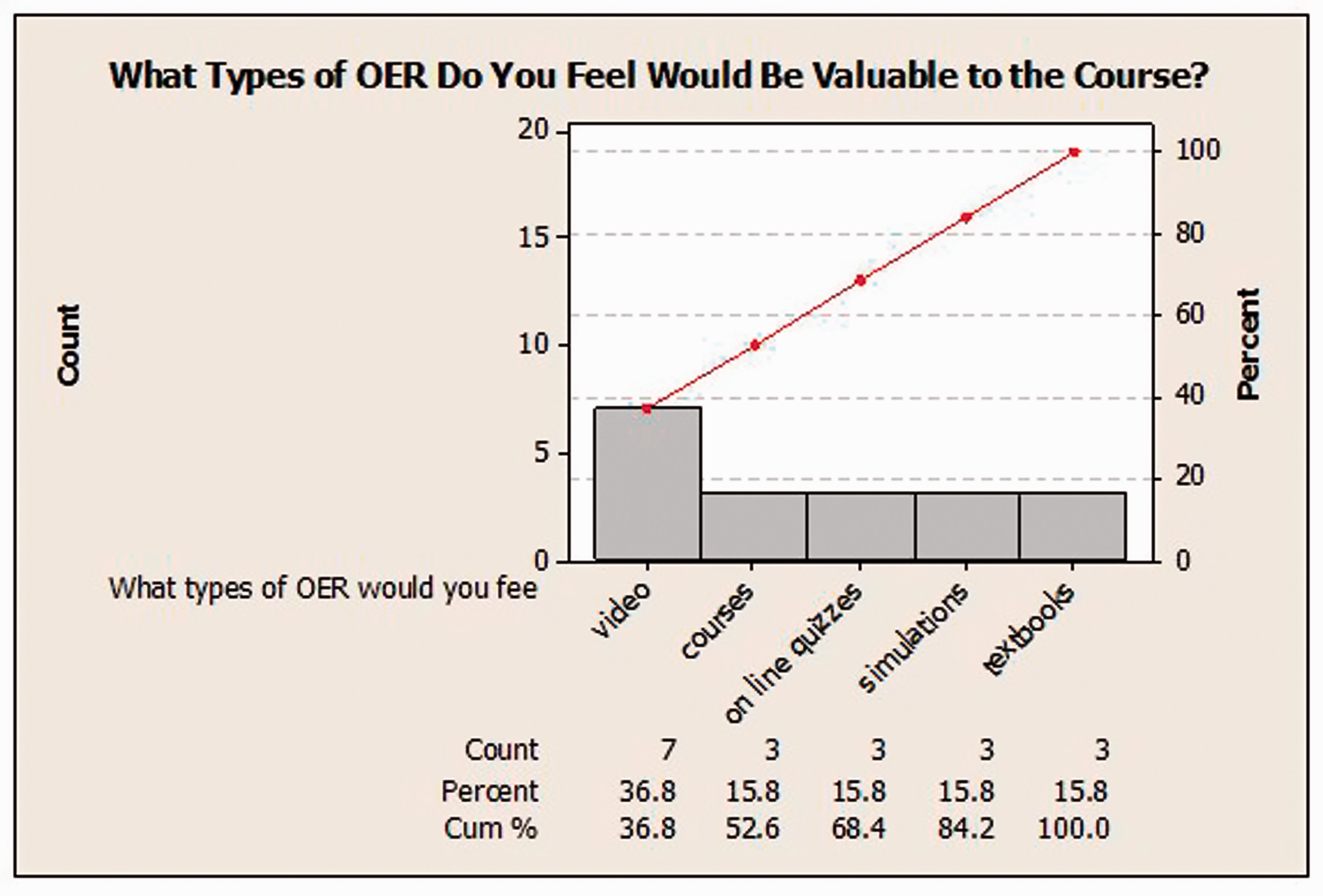
Types of OER valuable for the course Applied Operations Management. OER = open educational resources.
The last query sought to understand if students had devices which could be readily used for OER. The results of this query are found in Figure 12. All participants indicated they have a device that could be readily brought to class to use OER as necessary. This result is not unexpected, as this course is a capstone course, and students have certainly required devices in earlier course work.
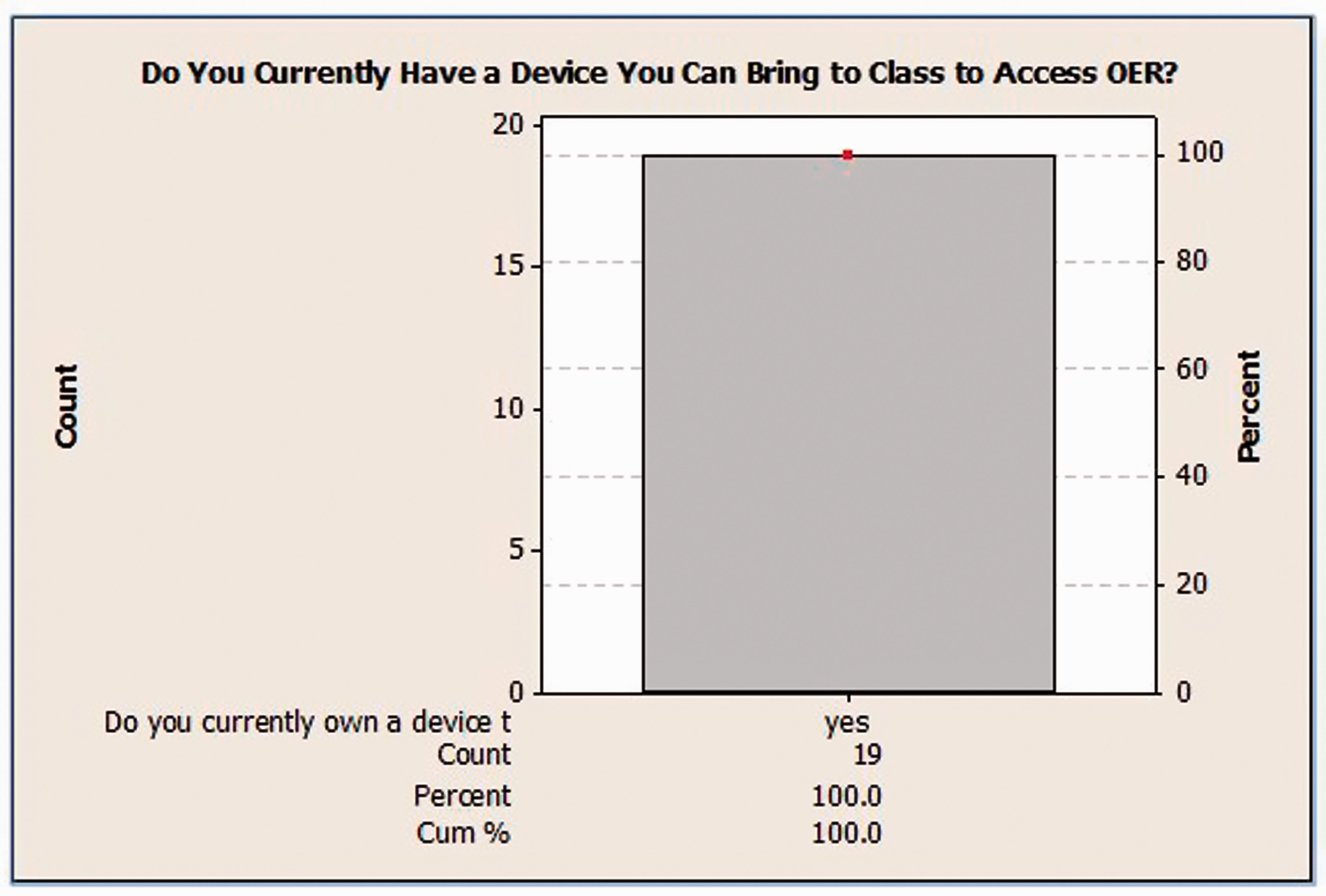
Technical preparedness for OER. OER = open educational resources.
In conclusion, we deduced that OER may be used both in class and out of class in the course Applied Operations Management and it would be beneficial to propose it for OER designation.
Lessons Learned
As educators, we always tried to reduce the cost of textbooks and provide the most current materials to our students. We would often use Internet resources for case studies or for demonstration of some concepts. Although these resources were free, they were not always open.
The New York State incentive, however, motivated the organization of workshops for faculty where the CC licenses were explained and some examples of OER-designated courses were given.
Although OER are already existing materials, the course redesign required significant faculty effort and time. This, however, is one-time investment, as for the next offerings of the course it will not be necessary to repeat it to this extent. Most OER, however, allow modification and this helps the easy update of the educational materials.
The OER-designated courses significantly reduce the textbook cost; in our case the cost was zero, which resulted in significant student savings.
Another significant benefit of OER materials is that while the paper copies of the books are usually sold back at the end of the semester, OER materials remained with the students even after the course is over and therefore could be used for review and referencing throughout all their continuing study and their following career.
Nowadays, college students live in a technology-immersed environment and are in a permanent contact with each other through the social networks that the Internet offers. Being digital and modifiable, OER encourage collaborative learning among the students. Moreover, OER allow blended or distance education, giving the students flexibility about the time and place of conducting the study. They permit automated grading, including, in some cases, grading of open-ended questions, as well as learning with a different pace and even individualizing the learning process. From educators’ perspective, deploying OER saves time and avoids duplication of efforts. Spending less time on the preparation of the materials allows educators to search for novel scholarly discoveries and stay abreast of new trends in their fields.
In sum, using OER decreases the necessary resources, fosters the culture of sharing, encourages interdisciplinary work, boosts collaboration among faculty, and establishes best teaching practices.
Conclusion and Further Research
In this article, we considered the use of open educational materials in the context of business education with a special focus on integrating OER into business course development. After outlining the OER-related terminology, we provided a classification of OER and listed a number of open-content sources for business classes. Then, we shared our experience with integrating open materials into specific business courses.
Our studies showed that the students were mostly comfortable with OER and saw more benefits than disadvantages. We plan to survey more students in the future and improve the learning experience, with the hope that our results could be used by other educators and contribute to lowering the cost of student education.
Our research in the field of OER and its applications is ongoing. As studies show, employment of interactivity principles and techniques in OER usage could help students to better understand and retain the acquired information for longer periods of time, connecting them at the same time with the educational content and the learning environment itself; this was also noted by Shank (2013).
Within this framework, we are considering the investigation of an interesting possibility to better integrate and use OER materials. The idea is based on employing mobile routers for shared in-class access to documents. In this way, OER could be modified to adapt to the individual learning styles of the students, supplementing the material with augmented personalized views. We intend to further develop this research idea and implement it in practice.
Footnotes
Declaration of Conflicting Interests
The authors declared no potential conflicts of interest with respect to the research, authorship, and/or publication of this article.
Funding
The authors disclosed receipt of the following financial support for the research, authorship, and/or publication of this article: Part of the work reported in this article is supported by the 2018 Cooperative Research Project at the Research Center of Biomedical Engineering and the Research Institute of Electronics, Shizuoka University.