



Abstract
This case study assesses a course re-designed to scaffold a semester-long networking opportunity and experiential learning project. The course occurred online twice using Microsoft Teams in the spring and fall of 2021 and later in person once in the spring of 2023. I present quantitative student course evaluation data from all three semesters and compare them to the department, school, and university. I also address open comments from students, pedagogy, media coverage, and our fashion industry partner's perspective. Findings suggest that the course design was successful across modalities. Students rated the course highly compared to others on campus, even while online, and ratings improved over time. Student comments praised the course for offering valuable career preparation. Our industry partner also derived professional and personal value by interacting with and mentoring students. The case study concludes by encouraging educators to implement experiential learning in any modality, offering guidance, and addressing obstacles.
Keywords
The COVID-19 pandemic prompted campuses to rapidly move instruction online in March 2020. Educators scrambled to move in-person courses online, sometimes experimenting with new technology moments before instructing their students how to use it for the basics, like attending class and completing their coursework. Quick decisions were made with noble intentions amid the same plethora of distractions, fear, and grief being experienced globally. For some, the same research and service obligations were expected, but now there were new collaboration platforms and workflows to learn. A systematic review of 42 articles about educators’ mental health during the COVID-19 pandemic by Santiago et al. (2023) showed broad consensus. Most educators described among the articles they reviewed reported working between 9 and 11 h a day, and more than 50% experienced burnout. Symptoms of generalized anxiety and post-traumatic stress were also commonly reported among the articles reviewed by Santiago et al. (2023). Resignation rates in higher education rose due to compassion fatigue, anxiety, depression, and exhaustion worsened by the pandemic (Schmiedehaus et al., 2023). I could see myself among some of these data in the fall of 2020, and I was begrudgingly facing another online-only semester for spring. I needed to find joy in teaching again for personal and familial reasons, but it was also crucial for my students. An educator's energy and passion are infectious, and students often focus on the mood of a course when asked about their learning experience (Cavanagh, 2023). Sarah Rose Cavanagh has succinctly summarized her research in the title of a Chronicle of Higher Education article: “They need us to be well” (2023). When faculty were not well, student satisfaction and interest in their courses suffered. Cavanagh's findings are consistent with survey data collected by the Postsecondary National Policy Institute: Ninety percent of students surveyed in May 2020, when the pandemic began to affect the U.S. in earnest, reported being concerned about the shift to online education, and 24% dropped at least one course as a result. The transition to online affected students’ satisfaction with their courses, with 87% reporting being ‘very satisfied’ or ‘somewhat satisfied’ with their courses prior to the shift and only 59% reporting that after the shift. Fifty-seven percent of students reported that online courses did a worse job at keeping them interested in the course content than the in-person course. (Postsecondary National Policy Institute, 2023, p. 12)
Experiential Learning
Joy is essential for students in the classroom, and it can be cultivated by forging positive relationships, possessing autonomy, and completing authentic assignments (Baildon et al., 2019). Educators commonly experience joy in their classrooms, but this is especially true when they perceive their students as engaged, motivated, disciplined, and showing personal growth (Becker et al., 2015; Hagenauer et al., 2015). In their review of experiential learning literature, Kong (2021) provides guidance and ample evidence that classroom motivation and engagement are enhanced by experiential learning. Wingfield and Black (2005) compared three different business course designs. They concluded that students perceived active learning as superior preparation for their future compared to the passive lecture format. However, student satisfaction, grades, and students’ overall evaluation of the course were unchanged. Furthermore, experiential learning encompasses a range of teaching techniques; Wright et al. (2022) posit that those requiring students to self-disclose or reflect pose more emotional risk and require more skilled educators. In contrast, client-based projects, such as the one described in this case study, pose less emotional risk for students (Wright et al., 2022), which might have influenced student satisfaction and performance. Student satisfaction and performance are affected by relationships (Becker et al., 2015; Finch et al., 2015), and evidence reviewed by the American Psychological Association demonstrates the positive effects of networking on well-being and overall career outcomes, especially during the onset of the pandemic (Santoro, 2023). Considering these factors, I sought to enhance student engagement, motivation, satisfaction, and performance. To this end, I re-designed a course to scaffold an experiential learning project with frequent networking opportunities with an industry partner. I harnessed the opportunities afforded by online learning, such as eliminating geographic barriers rather than dwelling on what was lost.
Kolb (1984), among the most cited experiential learning experts, describes experiential learning as an active technique and a continuous process, not simply a set of outcomes. From this perspective, there are four stages in an experiential learning process that reach an array of preferred learning styles. The four stages include concrete experience, reflective observation, abstract conceptualization, and active experimentation. For example, a lecture about crafting budgets (abstract) can be followed by an assignment or activity that requires students to research costs (concrete experience) and create a spreadsheet (active experimentation). After completing the assignment, students can reflect on their performance and, ideally, notice successes, gain confidence, and improve with practice. Experiential learning projects allow the application of theory to real-world scenarios. As such, they have become commonplace among business and management curricula, which aptly characterize the course described in this case study.
Purpose
This paper assesses the course I re-designed to scaffold an online semester-long experiential learning project. I will describe pedagogy, technology selection, and include reflections from student, educator, and industry partner perspectives. This assessment is significant for several reasons. The first is because the course and project were designed for online course delivery in the spring semester of spring 2021. It was offered online with some optional in-person interactions in fall 2021, then shifted to entirely in-person for spring 2023. Therefore, this case study offers insight for educators in various learning settings and a flexible path forward that is enabled by online interactions and offers a model for online client-based projects and networking.
The second reason this case study is significant is that experiential learning is considered excellent preparation for careers by educators (Franek, 2019) and students (Wingfield & Black, 2005). Although they believe that they will get a job after graduation, students are more anxious than confident about starting their careers (Ames et al., 2023; Hewitt, 2020), and they have ample reason to be so. In the National Association of Colleges and Employers (NACE) Job Outlook 2023 Report, the 216 employers who responded ranked communication as the most essential competency (95.6%) but believed graduates were only 46.9% proficient. Critical thinking was ranked as the second most important competency (94.4%), but graduates were believed to be only 55.9% proficient. Teamwork was ranked the third most important competency (92.3%), but graduates were believed to be only 73.3% proficient. After suddenly moving to online learning, students switched modalities through hybrid, high-flex, and eventually back to in-person. It follows that the only competency where proficiency (76.8%) outpaced importance (74.0%) was technology (National Association of Colleges and Employers, 2022). In the same report, 61% of employers sought evidence of a job candidate's experience working in a team and solving problems as their top priority when reviewing a resume, far outranking academic performance indicators like grade point average (Gray, 2022). Therefore, the primary goal of this course and project design was to cultivate the skills employers prioritize and streamline the array of technologies used.
The third reason this case study is significant is that experiential learning projects are widely accessible when executed well. Collaborative projects like the one described here are considered a high-impact teaching practice, which offer “… significant educational benefits for students who participate in them—including and especially those from demographic groups historically underserved by higher education” (American Association of Colleges and Universities, 2023, para. 1). The course described in this paper is designed for all, assuming they can reliably access the internet when it is offered online. Further, students can cultivate and provide evidence of problem-solving and communication skills by researching, collaborating, and completing work as part of a diverse group (American Association of Colleges and Universities, 2023), which are top priorities for employers, as noted. Therefore, this course and project can serve as an excellent case study for educators hoping to equip future professionals with the competencies, experience, and resume or portfolio-ready evidence needed to reach their goals.
Course and Project Design
The FASH 3200: Fashion Promotion course offered in the Fashion & Textiles Program at the State University of New York at Oneonta (SUNY Oneonta) is elective and designed for third-year undergraduate merchandising students. Enrolled students have prior introductory-level knowledge about fashion promotion, and this course offers students an opportunity to reinforce and master the topic. The maximum enrollment for the course is 30 students. In the spring semester of 2021, the course was taught entirely online. In the fall semester of 2021, the course was taught online with optional in-person interactions outside of class, such as office hours and a networking event with our industry partner. In the spring semester of 2023, the course was taught entirely in person, though three of our interactions with our industry partner were online.
The semester-long experiential learning project asked students to develop and plan a creative promotional campaign for the global fashion brand PUMA. The course was re-designed to scaffold this project for online-only learners in the spring semester of 2021 to generate excitement for an experience that was enhanced, not hindered, by online instruction. The redesign also provided crucial networking, collaborative, and active learning opportunities when they were lacking. A synchronous modality was selected because interactions were essential to successfully executing this project. In 2020, an Educause survey of 8,391 students from 54 institutions in the USA found that “synchronous courses tended to be rated as better organized with greater opportunities for student–instructor and student–student interaction” (Brooks, 2021, para. 6). At the beginning of the course, students were given an oral briefing from our industry partner Scott Saltzman, National Sales Manager for PUMA Select and a SUNY Oneonta alumnus, class of 1986. The briefing introduced PUMA's brand identity, upcoming strategic goals, next season's products, and collection launch dates. Throughout the semester, students executed the same tasks as the promotion professionals at PUMA, such as developing concept boards, mock-ups, task lists, timelines, itemized budgets, and managing a long-term collaborative project as a team. Students interacted with Saltzman five to eight times throughout the semester, using different modalities. They developed their project with Saltzman's frequent input during in-person and online meetings. They presented parts of their promotional campaign pitch twice during the semester to receive detailed written and verbal feedback from Saltzman and the professor. Students used their feedback to revise their work throughout the semester, especially at the end while crafting their final promotional campaign oral pitch, which they delivered instead of taking a written final exam.
Larger enrollment necessitates larger groups, between four and six people, which can mask individual contributions and reduce personal accountability. Interdependency is a leading negative emotion trigger while students work with a group on an experiential learning project, which can harm performance (Finch et al., 2015). Therefore, a system for weekly project tracking, encouragement, and nudges is needed. The class met three times weekly, and all Fridays were dedicated exclusively to the group project. Students received project briefings in chunks throughout the semester and orally presented their work-in-progress to the entire class and our industry partner twice. When not receiving a new brief or presenting orally to the entire class, students practiced long-term project management skills by meeting with their group to work, ask questions, and set weekly S.M.A.R.T. goals (Doran, 1981). Goals and remaining questions were submitted via the learning management system (LMS) to receive written feedback and responses to questions that remained after class. Groups were awarded a few points for these submissions. Once in the routine, students knew that the following week's meeting would begin with a follow-up on their S.M.A.R.T. goal attainment and that their response would influence their end-of-semester grade for personally contributing to the project. Groups were given ample creative freedom and planned various promotional activities, such as special events, fashion shows, social media campaigns, and pop-up shops. Therefore, each group had unique challenges and questions, making group work an efficient use of class time for students, faculty, teaching assistants, and our industry partner.
Technology
Technostress
Another reason to limit necessary technology and software was to mitigate ‘technostress’ (stress caused by technology), which can be induced by overload. In their 2300 undergraduate and graduate students survey, Upadhyaya and Vrinda (2021) demonstrated that technostress negatively impacts student engagement and academic productivity. Technostress is more acute among older students (aged 23–28), those with less technology experience, and people who identify as female (Upadhyaya & Vrinda, 2021). Since spring 2021, Between 40% and 65% of students enrolled in the Fashion Promotion course at SUNY Oneonta have been in the third or fourth year of their undergraduate degrees, between 94.4% and 100% of them identified as female, and most were still relatively new to online learning in spring 2021 when the course was re-designed. These students fit into the categories Upadhyaya and Vrinda found to be more likely to experience technostress. Educators are not immune, and many have left the profession due to technostress (Siddiqui et al., 2022). Therefore, experiencing technostress was not joyful for anyone, nor necessary. As such, course materials, briefs, resources, and drop-boxes have been accessible on the cross-campus LMS (Blackboard) and all assignments were designed to be completed using Microsoft PowerPoint and Word across modalities.
Microsoft Teams
When there were online interactions, they occurred on Microsoft Teams; this was the only software added to the course when it was re-designed. There were two reasons for selecting Microsoft Teams, and the first was that it is well suited to education. Olugbade and Olurinola encouraged broader use of the software based on their survey of 51 randomly selected teachers because “Microsoft Teams helps to improve classroom organization which in turn enhances teaching and learning” (2021, p. 277). For students, motivation to participate in online learning is enhanced when Microsoft Teams is used for online instruction, and communication is well facilitated, although they still prefer in-person interactions and require some orientation to the software (Rojabi, 2020; Wea & Dua Kuki, 2021). Social networking sites like Facebook or WhatsApp have facilitated interactions and stimulated student engagement (Sobaih et al., 2021). Slack effectively elicits frequent student-to-student and student-to-instructor collaboration and team spirit across modalities (Müller, 2023). However, robust campus support at SUNY Oneonta, easy integration with the LMS, and privacy were weighted heavily (U.S. Department of Education, 2021; Schlosser et al., 2022; Siddiqui et al., 2022), which tipped the scale toward using Microsoft Teams over other options. The ability to record, caption, and edit transcripts in Microsoft Teams also meets the World Wide Web Consortium's Web Content Accessibility Guidelines (2018), and the ability to review recorded lectures leads to better learning experiences and enhanced accessibility (Brooks, 2021). Using Microsoft Teams, classes were recorded and then embedded into the LMS immediately afterward for student convenience, or students could watch the recording in Microsoft Teams. In-person classes were not recorded in spring 2023.
The second reason for selecting Microsoft Teams was ease. Students find the software easy to use (Pal & Vanijja, 2020), and it is available to use online or download for free to SUNY Oneonta students. The software is fully functional in an internet browser or desktop and mobile. “Students perceived usability for both the platforms are similar” (Pal & Vanijja, 2020, p. 9) despite having less screen real-estate in the mobile version. The software was also easy for our industry partner to use because PUMA had shifted to Microsoft Teams to conduct business at the onset of the pandemic. Therefore, our industry partner required no training, nor did they require special permissions to access campus services because of their alumni status, and the software presented an authentic working environment. PUMA has continued to use Microsoft Teams extensively. Issues with Microsoft Teams found to impact the ease of learning negatively are internet connectivity and the need for more varied and visually stimulating teaching methods (Wea & Dua Kuki, 2021), which are problems affecting online learning broadly, and not unique to Microsoft Teams.
Facilitating Interactions
Online interactions included all-class meetings, group meetings, office hours, and appointments during online semesters. In spring 2021, all interactions were online. In the fall of 2021, most interactions were online, and one in-person opportunity was optional. During these two online semesters, all courses across campus had a “team” established by campus technology administrators that faculty could opt to activate conveniently. In Microsoft Teams, a “team” is a space where a group of people can communicate or share files, and multiple “channels” can be set up for various purposes within the “team.” Members of a particular channel can include the entire team or a subset, and only members of a channel receive communications or gain access to files housed in the channels they are members of. For example, a company like PUMA may establish a team for an entire department (already a subset of the entire organization) and multiple channels within their team, each assigned to a particular project or purpose. A marketing department might use its team's default “general channel” for department-wide meetings and add channels for different product lines, regions, or roles within the department, such as upper management. Therefore, messages, meetings, and files can be shared with an entire team, or targeted to the most relevant people, thereby reducing the number of irrelevant communications and unnecessary file access.
In Fashion Promotion at SUNY Oneonta, classes met in the course team's general channel (the default) for all-class meetings. Once the PUMA project groups were established, I created a channel for each group to privately send messages, meet, and share their project-related files. Students saw only two channels in their team, the general channel and their PUMA group's channel. Their view in Microsoft Teams was deliberately uncomplicated, and students required only minimal training to navigate their two channels. The professor, teaching assistant, and industry partner's views were slightly more complicated because they were members of all channels but could move quickly between them while the class was in session. During group-work Fridays, students met in their channels, and the professor, teaching assistant, and industry partner would pop in or be called to each group's channel to follow up on weekly S.M.A.R.T. goals and answer questions. The channels were lively hubs for group collaboration during and between classes when the course was offered online.
With the return to in-person learning in spring 2023, students were given more freedom to choose how they communicated with each other but were still encouraged and trained to use Microsoft Teams. A course team was set up, and group channels were established in Microsoft Teams to facilitate collaboration like online semesters. However, all channels within the course team were entirely silent in Spring 2023. Instead, students worked together in person or opted for other file-sharing and communication tools, such as group text messaging and Google Docs, for which they did not receive training and were not part of the platforms endorsed or supported by the campus IT administrators. In spring 2023, all interactions were in-person, except for three with our industry partner that occurred online. To facilitate two lecture-style briefings throughout the semester, an in-class camera was aimed at the class, and our industry partner appeared on screen at the front alongside his slides and video materials. Our industry partner visited the class in person for all oral presentation days and one day of meetings with groups early in their ideation process, facilitating trust and building rapport. To hold small group meetings toward the end of the semester, the classroom computer was set up before class with our industry partner on a Microsoft Teams call, and the groups each came to the front to talk for a brief discussion about the final stages of their project. Initially, there was some concern that the call's setup at the front of a full classroom would be awkward or that background noise would make conversation difficult. However, when asked after class, students did not report any problems with ease of communication, nor did our industry partner.
Assessment Method
Course evaluation data were explored to assess this course and project. Below, these data are presented with personal reflections on lessons learned, pedagogy, and partnership building. Saltzman's public statements and local media coverage of the course are also considered. Student course evaluations at SUNY Oneonta are administered online in the final week of the semester, prior to exams. Evaluations contain Likert-scale items addressing topics such as if the requirements were clearly stated, if students were treated with respect, their overall learning experience, and their overall rating of instruction. All items are measured on a scale from 1 to 4 except the overall rating of instruction, which uses a 5-point scale. The evaluation also asks students to self-evaluate how frequently they participated, the amount of effort or difficulty given their background, and their anticipated course grade. Open-ended responses are also captured in the course evaluation. The campus offers comparative data from the Human Ecology Department (indicated as “department”), as well as the School of Education, Human Ecology, and Sports Studies (indicated as “school”), and SUNY Oneonta (indicated as “university”). Fifty evaluations from the 77 students (64.9%) who have attended the course since the introduction of the PUMA project were included in this assessment (spring 2021 n = 18, 69.2%; fall 2021 n = 11, 50.0%; spring 2023 n = 21, 72.4%).
Results
Numeric Ratings in Student Course Evaluations
Students rated the course highly, and course evaluation averages consistently rose each semester on most items scaled 1–4, with the most significant gain between the first and second semesters in spring 2021 and fall 2021, both online semesters (see Figure 1). Within semesters, the gap between this course's average scores and comparative data was smallest in the inaugural project launch. In spring 2021, students rated the course similarly to others offered by SUNY Oneonta, a mix of online and in-person that semester (see Figure 2). The gap between this course's average scores and comparative data grew in fall 2021 (see Figure 3) when another mix of in-person and online courses was available to students on campus. These findings challenge the evidence that students prefer to learn in person (Issue Primer: Online Higher Education, 2023). However, this gap between this course's averages and comparative data grew again when the course transitioned to entirely in-person instruction in the spring 2023 semester (see Figure 4). The average overall rating of instruction, scaled 1–5, followed a similar trend. In spring 2021, the course average was 4.2, identical to the overall department, school, and university ratings. In fall 2021, the course average rose four points to 4.6, exceeding the department and school's average of 4.2 and the university's average of 4.1. In spring 2023, the course was full and had a waitlist. Still, the average rating of instruction rose two more points to 4.8, again exceeding the department's average, which dropped slightly to 4.0, and the school and university averages of 4.1. These trends suggest that students are pleased with the course re-design, which has improved with practice. In-person instruction might still be preferred, but having a few online interactions with our industry partner did not harm the student satisfaction with the course.
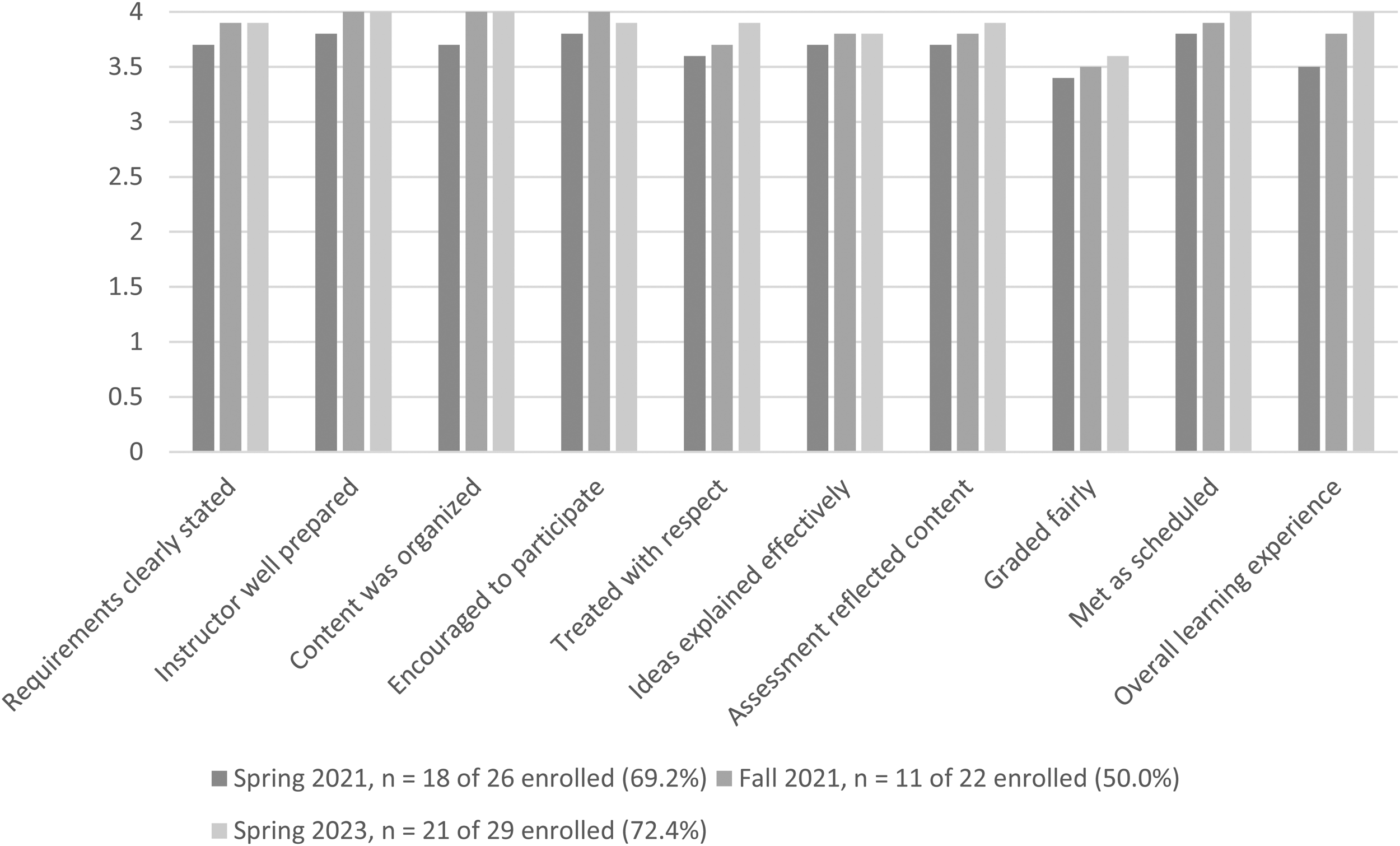
Student course evaluation rating comparison between semesters.
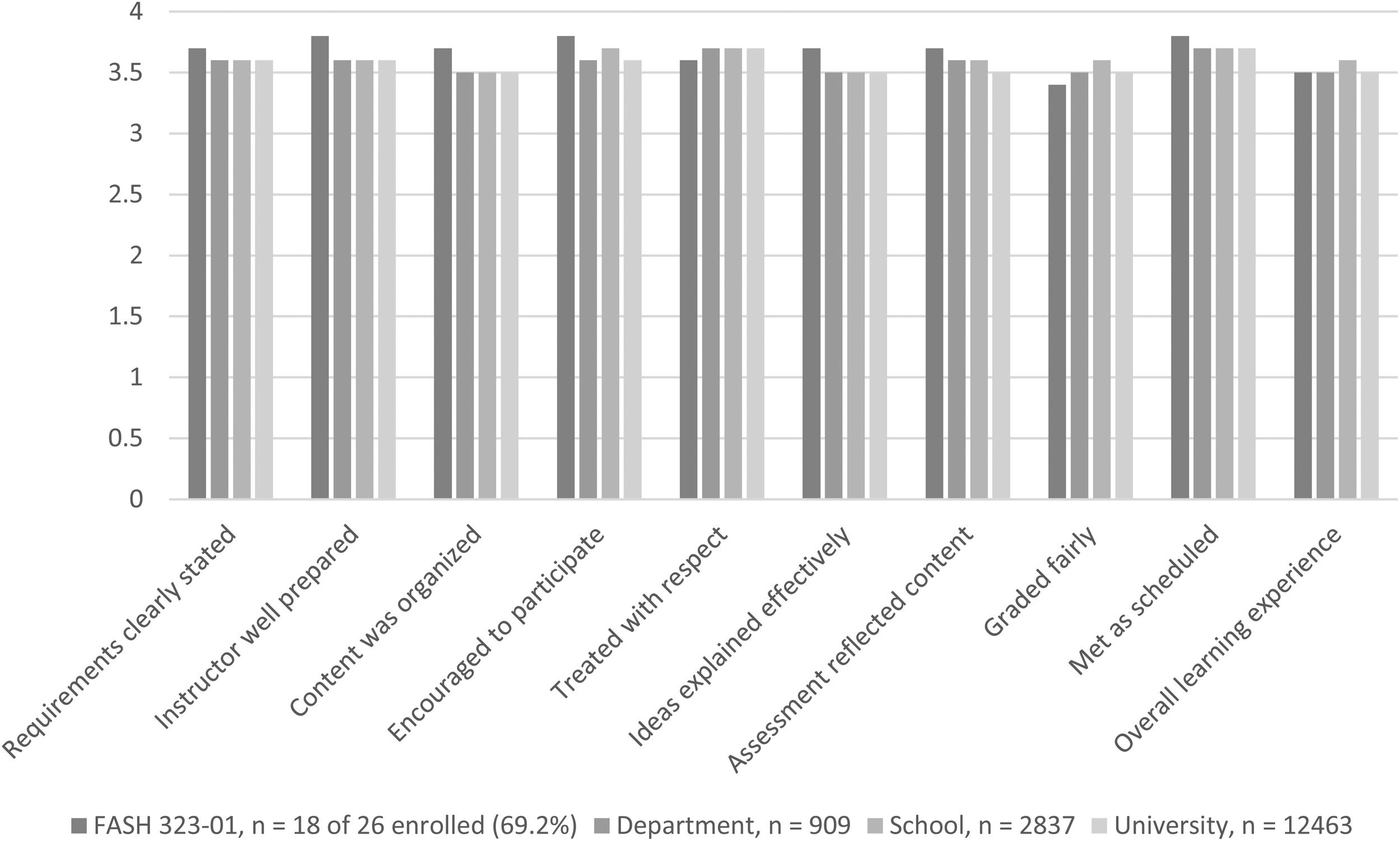
Spring 2021 student course evaluation rating comparison to department, school, and university.
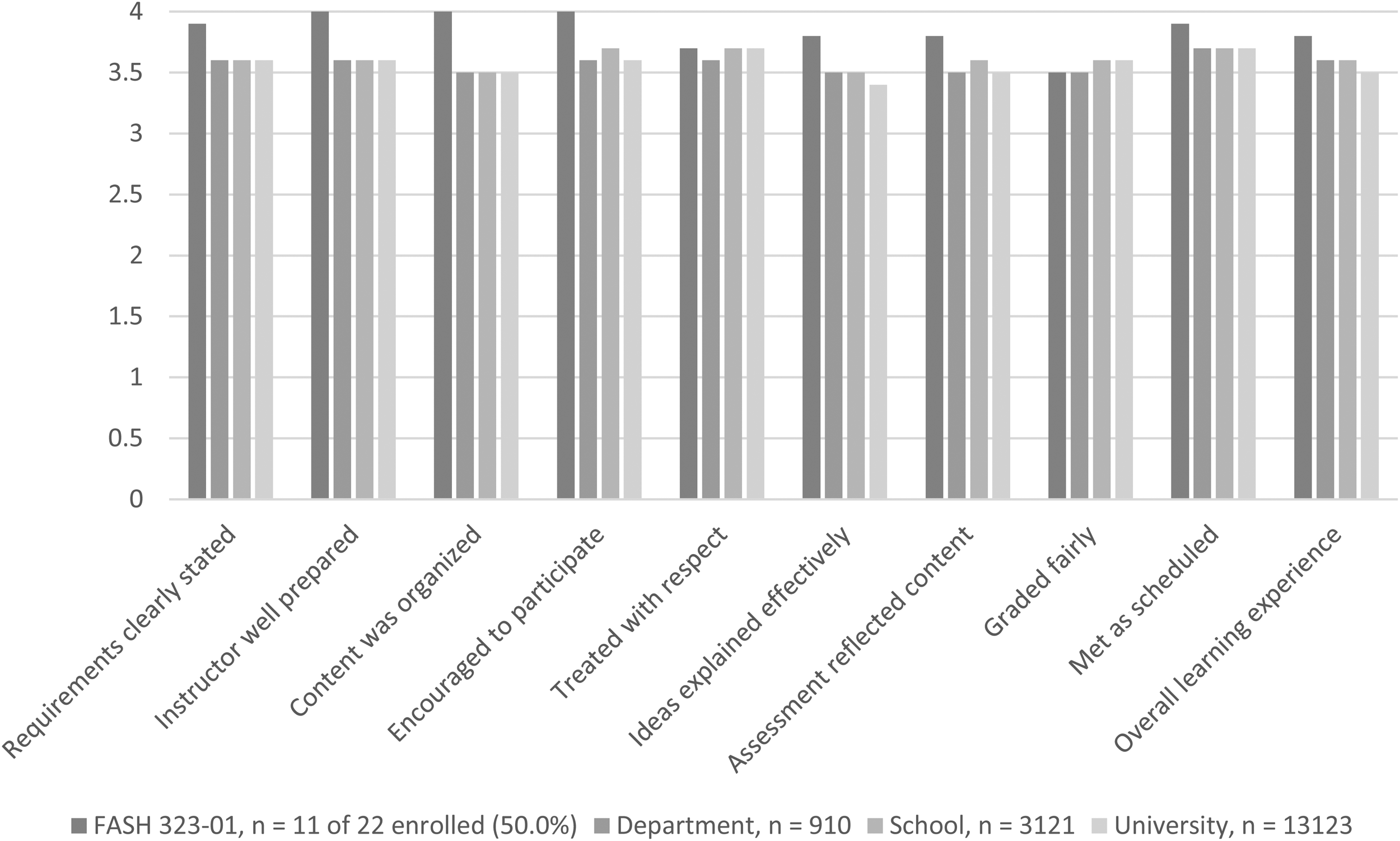
Fall 2021 student course evaluation rating comparison to department, school, and university.
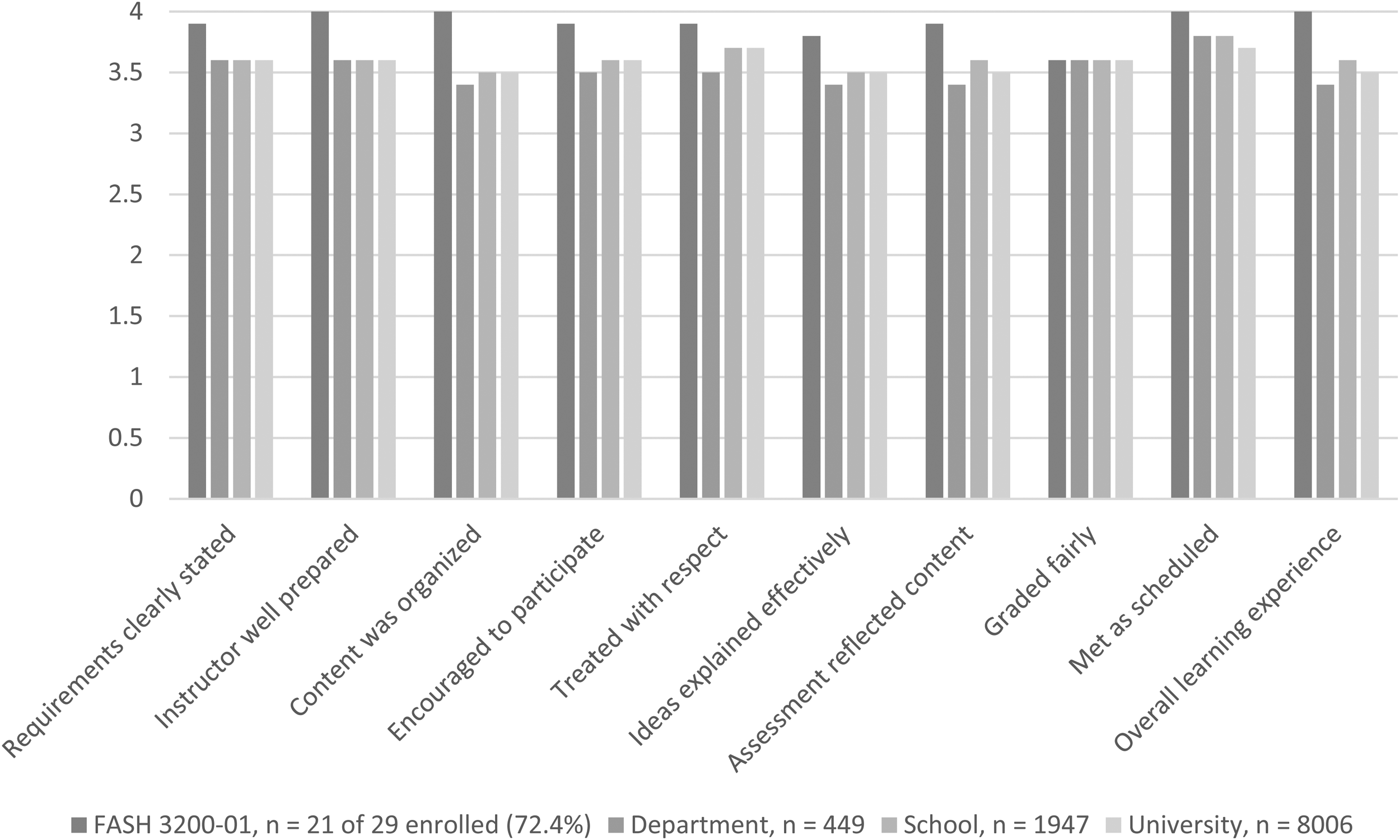
Spring 2023 student course evaluation rating comparison to department, school, and university.
Table 1 demonstrates that the course might be a student favorite but is also perceived as more difficult with a heavier workload than average. However, the perceived difficulty has diminished somewhat over time as lessons were learned and project adjustments were made. For example, the number of in-semester oral progress reports to the whole class was reduced from three times to two. Group size also grew from four to six as enrollment increased. A social media case-study paper, unrelated to the PUMA project, was also removed from the course in fall 2021. However, from an educator's perspective, the workload likely did not change significantly between semesters; it was only re-directed toward more collaboration and deliverables within the PUMA project. Consistent with prior literature on experiential learning (Kong, 2021), students also reported expending more effort in this course than others, and they frequently participated, especially when the course was online. Combined, numeric ratings suggest that experiential learning projects like this might motivate increased effort and engagement in any modality.
Self-Evaluation Items Comparison Between Semesters.
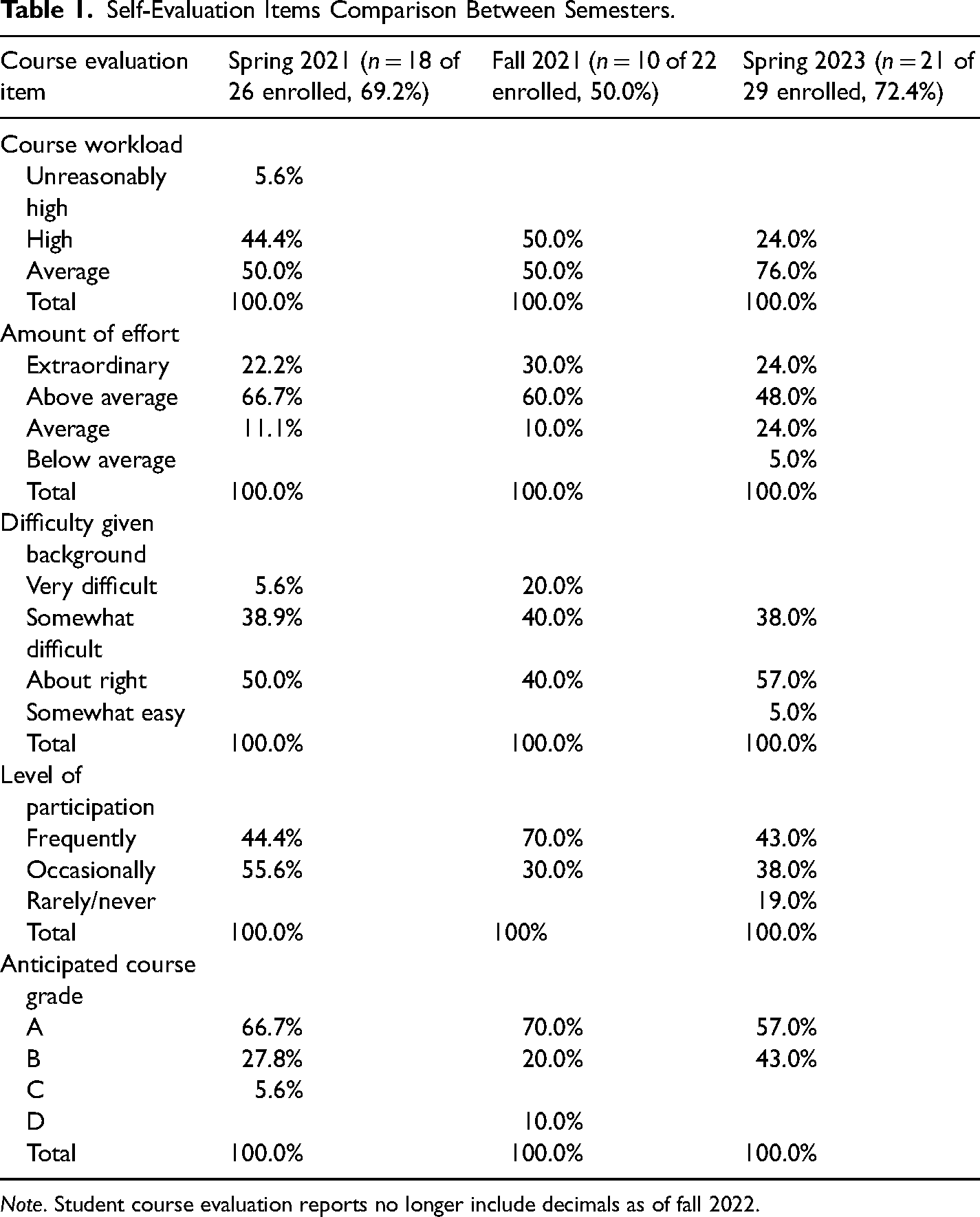
Note. Student course evaluation reports no longer include decimals as of fall 2022.
Open-Ended Responses in Student Course Evaluations
Open-ended responses in student course evaluations were consistent with high numerical scoring, offering further insight into student motivation and engagement. Outliers critiqued the professor's personality or higher-than-average grading standards using words consistent with prior findings about gender bias in student course evaluations (Mitchell & Martin, 2018). However, student perception of grading was inconsistent with the course's grade distribution data over time. Although some students believed they were subject to “harsh” grading, comparative data demonstrated that they were more likely to earn an A in this course than others on campus (further grade distribution details have been omitted to respect student privacy). Furthermore, 57–70% of students also expected to earn an A in the course, while only 20–43% expected to earn a B. Only one student anticipated a grade below a B in spring 2021 and fall 2021, and none anticipated failure (see Table 1). This mismatch between student perceptions of grading standards, their anticipated grade, and the actual grade distribution data provides further evidence that the course re-design had been successful. Students perceived the course as a challenge but were confident that they could exceed higher-than-usual standards, and they felt motivated to exert more effort and frequently participated to this end.
Open-ended comments regarding the experiential learning project were overwhelmingly positive, and themes shifted subtly over time to match teaching adjustments to the course. In spring 2021, after a semester of exclusively online interactions, when the project was part of the course for the first time, students remarked on the authenticity of their experience and the value of building their networks: This promotion simulation was such a valuable experience. Meeting consistently with an industry professional for feedback and beginning to build a network is a huge opportunity. This class really pushed me but it helped me learn a lot even outside of the actual learning material and opened up doors for us students to be exposed to the fashion world! This class was really fun and exciting. It was real world situations working with PUMA and was the most hands on a class could be being online. I felt so lucky to have had the privilege of working with Scott Saltzman from PUMA. The class taught me so much and the projects are so much fun even though they take time… I wouldn’t change one thing about this class! This course is really helpful to get a real-life experience with someone in the industry. Project based learning allowed me to be hands on and experience work I would be able to do in the real world. This course assisted me in working with others, navigating issues, and adapting to new and evolving technology. Overall, I highly enjoyed this course and professor.
Media Coverage
This course and project design have proven successful beyond the classroom and course evaluations. The course gained attention from the university's marketing department and the Alumni Association, and it has also been featured in promotional materials for the Fashion & Textiles Program. Some students have also benefitted from local news coverage in their hometowns (Courtney Jones of Stanfordville, Collaborates on PUMA Fashion Project, 2021; Lillian Slate Collaborates on PUMA Fashion Project, 2021; RFA Grad Collaborates on PUMA Fashion Project, 2021). The campus marketing department also issued digital achievement badges to recognize the students in the class in fall 2021. These mentions and badges enhance a student's digital presence and offer evidence of their experience before they enter the job market because they can be shared easily on career-focused networking websites such as LinkedIn. Exceptional students have also been invited to gain even more experience by visiting the PUMA Select showroom in New York City to assist during market week meetings and network with buyers for exclusive streetwear retailers.
Industry Partner Perceptions
Working with the Fashion Promotion course partnership has also benefited our industry partner. In an article used for university marketing purposes, Saltzman explains how engaging with students is a source of market intelligence and presents a well of creativity to learn from for PUMA: Their feedback is priceless. They are the ultimate end consumer that PUMA wants to reach, especially in my area—the fashion world. We have malls and soccer stores, but it's that fashion-conscious young kid 16 to 21 who we want to attract because that's how companies like ours grow—you interest them when they’re young and then keep engaging them with different products. (Fashion Students Get Real-World Experience, 2021)
On a more personal level, Saltzman described the pride he feels when participating in class and on campus in promotional videos for the Fashion & Textiles Program: They get to see what the tools are that I use every day… I wanted to give the experience and give all my information, so that if they want to come to PUMA, if they want to do merchandising, design, sales, whatever it is, I can steer them… I can pick up the phone, you know, make that phone call. You see that Oneonta student? Put that resume on the top of the pile. I never had that when I was there. So, it's good for me to give that to the students, and give them that sort of edge. (PUMA x Fashion & Textiles, 2023)
Lessons Learned
The evidence presented in this paper demonstrates that this course and project design have worked well online and in-person, and a mix of both, a fact that offered peace of mind during times of uncertainty. However, living on campus is a central feature of the SUNY Oneonta student experience, and thriving socially is integral to our mission. Therefore, SUNY Oneonta gradually transitioned back to its residential roots throughout 2021 and reduced the number of online-only courses to re-align with accreditation standards regarding the number of online courses taught. There were more adjustments to make as I moved back into the physical classroom; some were easy, and some were more challenging. One easy adjustment I made was to keep a Microsoft Teams space for all courses, and I used part of our first class to train students how to use it. I have kept this practice in place since moving back to the classroom because an easy transition to a virtual meeting space has been helpful when I could not be physically present in the class for reasons such as sudden illness, injury, extreme weather, and conference attendance.
The most significant and labor-intensive change to the Fashion Promotion course and project design when moving back into the physical classroom was adding some in-person meetings with Saltzman. The initial lecture-style project launch and briefing lent themselves easily to a virtual approach with Saltzman on a screen at the front of the classroom because they were somewhat less interactive, but students still freely asked questions. One-on-one discussions with student groups were the first choice for in-person meetings, and it was clear that students built a stronger relationship with our industry partner after adding these, evidenced by more frequent social media interactions and showroom visits. However, the course evaluation evidence suggests that adding in-person interactions did not significantly impact students’ perceptions of the course and project. To make Saltzman's hours-long commute worthwhile, I coordinated across campus departments. This involved some planning via e-mail and strong rapport with the staff working for the Alumni Association. The Alumni Association provided lodging and parking on campus and arranged Saltzman's itinerary to include visits to other academic programs. Naturally, a geographically closer industry partner could be helpful to other instructors hoping to develop a collaborative project in an entirely in-person modality. However, an entirely online, flexible, or hybrid modality can make collaboration more convenient for a class guest by eliminating commute and coordination time. Another option for instructors with distant industry partners could be to shorten the project into a sprint toward the end of the semester. An entire week or two of class time could be dedicated to the project while an industry partner stayed nearby, perhaps for a vacation or conference. Ultimately, the ease and convenience of hosting virtual guests prompted me to add more guests to all my courses, and I would strongly recommend the approach despite the loss of intimacy.
Another lesson learned after pivoting the course to in-person was that I had less control over the projects in progress. Despite having access and training, students no longer kept their files and conversations in Microsoft Teams, where I could check the progress made each week before class. I also lost the ability to retrace chats and follow up with non-responsive students. During my weekly progress check-ins while online, I could access the files myself because they were stored in a Microsoft Teams channel I was a member of. In contrast, when I physically circulated the classroom during group-work days, files sometimes loaded too slowly or were “mysteriously” not working at that moment. This offered an easy stalling technique to students who had not achieved their S.M.A.R.T. goals the prior week, and it was difficult to differentiate stalling from issues with technology. To encourage students to use Microsoft Teams, it would be wise to introduce it during the first days of the course and to use it almost daily for communications with students (Müller, 2023), and this is something I intend to do the next time I teach this course in either modality.
The return to in-person instruction also posed some logistical complications due to the fully enrolled course and a small classroom with tablet-arm style chairs better suited to a lecture-intensive course. Faculty hoping to design a collaborative project with in-class group working days would be wise to use a classroom with more flexible furniture, including flat tables and stand-alone chairs so that several people could sit facing one another. Another surmountable logistical challenge is a well-considered camera angle for virtual visits. The camera in the room where I first taught this project in person was mounted approximately 12 feet high on a wall to the side of the students and could not capture the entire class in the frame. In the future, I intend to ensure that I teach in a room where the camera is installed at the front of the room and high enough to capture all students in the frame simultaneously. The microphone and speaker placement should also be well-considered. Even with our relatively high-quality and newer technology in the classroom, at least one or two students spoke too quietly to be heard by the guests, and their questions or comments had to be relayed by someone sitting closer to the microphone. Further, multiple instructors often adjust classroom technology throughout a typical day, necessitating additional preparation to ensure all devices and settings (video, microphone, and speakers) are working correctly for all parties during our virtual guest talks. None of these were challenges when the course was offered online, although internet connectivity, personal cameras, and microphones sometimes faltered.
Limitations and Conclusion
This case study assesses one course at one university to offer guidance, rationale, and inspiration for a broad range of educators. However, the small sample size makes case studies less generalizable. Further, 94–100% of the students who enrolled in the course evaluated here self-identify as female, as do I. Gender affects student course evaluations (Mitchell & Martin, 2018), but assessing this effect was not the goal. Educators should proceed with their unique circumstances and student population in mind if they implement any of the strategies described in this paper. This paper also lacks follow-up data from former students. Future research could include a post-course or post-graduation student evaluation that may reveal further insight for educators. After all, students evaluate a course before it is entirely completed while enduring their most stressful weeks of the semester at SUNY Oneonta.
Finally, finding an industry partner as committed as Saltzman and PUMA will be difficult. Educators should expect to spend time, perhaps years, finding and bonding with someone who will invest the amount of insight, energy, and time required to conduct an intensive long-term project. Working with an industry partner closer to the classroom might enable more frequent in-class visits, but this might not be possible for rural locations like Oneonta in upstate New York. The move to online learning presented a unique opportunity to attend class without commuting, which made starting a new industry partnership project more feasible. If one's campus policies regarding online instruction and pedagogy permit, group-work days during an in-person course could be online for everyone, with no need to attend in-person classes on those days. When SUNY Oneonta returned to in-person instruction, Saltzman was deeply committed and drove several hours in each direction on multiple occasions throughout the semester. Saltzman and PUMA have been highly generous with SUNY Oneonta, students perceive a heavier workload, and this course consumes more energy and time to teach than others. However, I encourage educators to incorporate experiential learning into their courses. The reward was well worth the effort—for all of us.
Footnotes
Declaration of Conflicting Interests
The author declared no potential conflicts of interest with respect to the research, authorship, and/or publication of this article.
Funding
The author received no financial support for the research, authorship, and/or publication of this article.
Author’s Note
The study design and analysis method were reviewed and approved by the Institutional Review Board (IRB) at the State University of New York at Oneonta (IRB ID: STUDY00004376).
