




Abstract
Teaching online students to collaborate effectively with community partners and to solve problems through service-learning projects are “on trend” topics for technical communication faculty. This article presents collaboration specifics as well as the author's Collaborative Communication Framework (CCF) to show the types of communication needed to work well with community partners/clients in service-learning. Tips for teaching, including using the CCF and service-learning, will be highlighted so faculty can make choices about how to meet curricular goals while addressing community partner/client needs. Resources for teaching will be offered. Successful student projects will show detailed examples of key ideas throughout the article.
Keywords
Literature Review
Collaboration is increasingly important in our lives, as we must work together to address challenges at home, at work, and in our communities due to rapid technological, political, social, demographic, and cultural changes. No one person can have all the requisite skills or expertise to address issues we face like changing business environments, globalization, immigration, health disparities, environmental changes, homelessness, hunger, inequalities and more (Boyer, 1994; Fitzgerald et al., 2010; Siegel, 2010). Instead, we must each learn to contribute our expertise, skills, and backgrounds to solve problems, working along with people that may be quite different than us. Indeed, Lewis (2006) refers to collaboration as a hallmark of the century!
Technical communicators, in particular, must be able to collaborate skillfully and build effective relationships, whether working locally or internationally. Nurturing student abilities to relate well with people representing different cultural backgrounds, varied life experiences, and diverse levels of education have become pedagogical imperatives. Ting-Toomey and Chung (2012) point out “the world is becoming a small, intersecting community. We find ourselves having increased contact with people who are culturally different. In a global workforce, people bring with them different world habits and cultural practices” (p. 5).
Further, the proliferation of information communication technologies (ICTs) has removed traditional barriers of physical time and space to allow globally dispersed individuals to interact quickly, directly, and easily (St.Amant, 2017). So, course projects that give students practice with ICTs including opportunities to write for international audiences or to localize global content (Slattery & O'Brien, 2014) are increasingly necessary. Planning course projects that give students practice in collaborating with diverse people also helps them develop the intellectual and global mind-sets that universities and employers recommend (Lilley et al., 2015).
Beyond that, technical communication as a field is in constant flux. Teaching students to think critically, to navigate change, and to take different perspectives as they interact with diverse people, can be considered integral in enabling them to become problem solvers as Johnson-Eilola and Seiber (2013) advocate.
Service-learning can enable students to work directly with classmates in groups or with multiple people in the community. Burnett et al. (2013) say “collaboration is important because virtually all workplaces rely on group-based decision making and projects, often increasing creativity, productivity, and the quality of both process and product” (p. 454).
This article encourages technical communication faculty to use service-learning projects to teach online students about collaboration and problem solving. Consistent features of effective collaboration will be detailed. My own Collaborative Communication Framework (CCF) will show the types of communication needed to work successfully with community partners and clients in service-learning partnerships. Tips for teaching, including using the CCF and service-learning, will be highlighted so faculty can determine how to meet curricular goals while addressing community needs/issues in ways that are mutually beneficial. Throughout the article, detailed examples of online student service-learning will illustrate key ideas.
Service Learning and Collaboration
Service-learning, “a form of experiential education” (Jacoby, 2015, pp. 1–2) can be considered a high-impact educational practice (AAC&U, 2007; Brizee et al., 2019; Kuh, 2013, pp. 19–34). “Service-learning is a credit bearing, educational, experience in which students participate in an organized service activity that meets identified community needs and reflect on the service activity in such a way as to gain further understanding of course content, a broader appreciation of the discipline, and an enhanced sense of civic responsibility” (Bringle & Hatcher, 1995).
Service-learning requires collaboration as students and community partners must span physical, relational, psychological, structural, and cultural boundaries (Hayes & Cuban, 1997; Janke, 2008) to work together. Service-learning provides real world relevance as students work with partners to create deliverables that meet community needs or address issues facing clients. Interestingly enough, service-learning offers multiple opportunities for students to successfully bridge the “different worlds” between campuses and communities (Sandy & Holland, 2006) as they work together to address any tensions related to different perspectives that each person brings to the partnership (Carriere, 2006; Janke, 2008, 2009). Thus, service-learning can offer practice in collaboratively building relationships and in problem solving, just like students will need to do throughout their careers.
Five Features of Effective Collaboration
Collaboration is a positive way to interact with others and to address community problems, but we still have a lot to learn about how to do it well (Keyton & Stallworth, 2003; Thomson & Perry, 2006) either face-to-face or online. Even so, based on an extensive interdisciplinary literature review, Lewis (2006) has identified five consistent features of effective collaboration.
First, Lewis (2006) points out that collaboration focuses on action, on doing. Collaboration is “fundamentally communicative” (p. 213) in nature. Heath and Frey (2004) point out, “communication is more than a tool used” by collaborators (p. 225). Collaborative communication uses a complex set of practices and processes that go beyond cooperation and coordination to create relationships that are interdependent and mutually beneficial (Heath & Isbell, 2017; Mattessich et al., 2001).
Second, Lewis (2006) argues that collaboration can be conceptualized through a relational lens with partners showing positive regard for one another, despite varied perceptions and behaviors between them. Partners could use verbal and nonverbal communication as well as ICTs, for instance, to form and maintain relationships regardless of whether those relationships happen in person, online or through a combination of both. Relationship-building activities require collaborators to think flexibly and to creatively adjust to different situations or contexts. Those involved must make on-going choices about who to relate to and how to discuss their own cultural identities as well as those of others (see also Hunsinger, 2006 and Agboka, 2012).
Third, Lewis (2006) notes that collaboration involves equalizing the partners as they work together. Equality may be enacted through shared roles, through value/respect given for different kinds of expertise, or through recognition for individual contributions or varied forms of status (p. 219). All partners’ wisdom, knowledge, concerns, and ideas become part of the decision-making and problem-solving processes (p. 219) when collaborating.
Collaboration involves a conceptual paradigm shift for many of us that tend to think and work independently and consider our teaching, research and service as “our private work” (Battistoni et al., 2003). Faculty, and students, can tend to think of themselves as experts that provide knowledge to the community (Saltmarsh et al., 2009) and can fail to respect community knowledge (Buys & Bursnall, 2007) or to see community partners as peers (Ellison & Eatman, 2008; Freeman et al., 2006). But, collaboration inherently focuses on communication that allows partners to move skillfully between the “we” with collective insights and actions and the “me” with individual-level expertise, experience and contributions (Dumlao, 2018).
Fourth, Lewis (2006) found that collaborators tend to emphasize the “process” rather than the “product.” Partners must shift between behaviors and roles at different times in the partnership as they face different situations or contexts. Importantly, taking a process-orientation to service-learning projects can become a powerful way to help students learn to be flexible and adapt to change, both of which are prerequisites for coping with the many transformations that will happen across their careers and lives.
Fifth, Lewis (2006) notes that collaboration is volitional, informal, and emergent, so partners can “own”, “self-organize”, and “construct” (p. 220), their specific collaborative relationship through their actions. In other words, collaborative partners have ongoing responsibility to reorganize or redefine the partnership to meet goals and continue positive relationships, especially when long-term or sustained partnerships occur. Interestingly enough, Janke’s research (2009) found that community-campus partners can, over time, construct a partnership identity. That is, partners can gradually see themselves as being joined in the relationship rather than as separate people working together.
The Collaborative Communication Framework for Teaching/Learning
My CCF was developed after nearly two decades working first with face-to-face and then with online communication students in service-learning designated classes. The CCF was designed to help students and other partners make sound communication choices as they navigate their on-going relationship (Dumlao, 2018).
The CCF responded to a recognized need. Repeatedly, I had heard presenters at interdisciplinary service-learning conferences conclude that “more communication” or “better communication” was needed for stronger partnerships or desired outcomes. I saw similar conclusions reflected in the community engagement literature and even in the oft-cited community campus partnership guidelines (see CCPH Board of Directors, 2013; Higher Education Research Institute, 1996; Kellogg Commission, 2001; Torres, 2000). Communication specifics were clearly needed; the CCF was a direct result of this awareness, my experiences and education, as well as what I’d learned about service-learning and collaboration from others.
I define collaborative communication as a repertoire of knowledge and skills that allow partners to make considered choices that fit the situation or context (Dumlao, 2018, p. 3). Special attention is given to promoting a relationship perspective, showing respect and openness to the partner along with his/her unique contributions and views in order to create new possibilities for shared work (Dumlao, 2018, p. 41). Notably, “the thinking that undergirds collaborative communication includes attention to both the partnership (the ‘we’) as well as attention to the individual partner’s needs/concerns (the ‘me’) to reach beyond both” (Dumlao, 2018, p. 41).
One major underlying assumption of the CCF is that relationship-building happens first at a dyadic level, between two people, and then impacts other levels of communication, such as at the group or institutional levels. The CCF recognizes that institutional and group communication can and does impact members of the dyad. Still, the dyadic partnership is the primary focus for the CCF rather than considering communities and campuses the main partner units.
Holland (2005) says, “This very personal (dyadic) level of connection is where most community partners feel some confidence there will be reciprocity, trust, and respect for their perspectives” (p. 11). Similarly, Bringle et al. (2009) argue that dyads are basic building blocks of relationships in service-learning and civic engagement. Their SOFAR model parses out community and campus partners into ten possible dyads. They also contend that dyadic relationships can progress from the lowest levels of mutual awareness toward synergistic and transformational community-campus partnerships when greater levels of closeness, equity, and integrity are achieved by the partners.
Importantly, the CCF identifies five iterative categories of communication needed by partners to establish and maintain a well-functioning service-learning relationship. Those categories that can be used strategically are: Connecting, Conversing, Envisioning, Committing, and Developing Partner Patterns (see Figure 1).
Strategy 1: Connecting––Establishing and Maintaining Partner Rapport
One communication category, connecting, involves partners using verbal and nonverbal communication in person or via ICTs to find common ground and to establish a rapport, relational closeness and interdependence (Dumlao, 2018). Nonverbal communication according to Wood (2007) tends to indicate relational meanings such as how we feel about others as well as to indicate power in relationships. Sharing emotional and social information makes deeper connections between partners beyond conveying just facts/ideas, hopefully creating more of the closeness that Bringle et al. (2009) recommend for transformative partnerships that bring about change.
People prefer different means of taking in information as well as in sharing it, partly because we think differently (see Markova & McArthur, 2015). Preferred ways of connecting can also represent different institutional or business practices as well as group or cultural memberships. So, “navigating differences in connecting may require partners to use detective work, including observation and questioning, to identify the best ways to communicate” in this particular situation and with this specific person (Dumlao, 2018, p. 44).
This detective work typically involves attentive or mindful listening that allows each partner to take in new data about the other person. Mindful listening involves not just hearing the words (or reading them), but also watching and picking up nonverbal clues (including via ICTs) and possibly inquiring about what those clues mean in order to establish a good base for future interactions.
Metacommunication (communication about communication) can help partners get clearer about what different nonverbals, verbals or visuals might mean to each of them. Metacommunication can also help students and community partners/clients identify any sources of confusion created when using a particular social media or ICT in their interactions.
Importantly, because we receive limited cues in interpreting information received, “incomplete understanding” is always what we should encourage students to expect when communicating (Dumlao, 2018, p. 70) and particularly when connecting with their partners. In short, connecting emphasizes learning and “tuning in” to the other person. Connecting can, over time, also involve looking at how the relationship works now and could work in the future.
To connect well then, technical communicators will want to use in person interactions or “richer” forms of sharing information when working with community partners or clients as much as possible. Daft and Lengel (1986) define information richness as “the ability of information to change understanding within a time interval” (p. 560). These authors say “communication transactions that can overcome different frames of reference or clarify ambiguous issues to change understanding in a timely manner are considered rich” (p. 560). Information richness decreases from the highest to lowest forms as follows: (a) face-to-face, (b) telephone, (c) personal documents like letters or memos, (d) impersonal written documents, toward (e) numeric documents (p. 560). Richer media tend to offer more immediate feedback, more cues and channels, as well as greater language variety and more personalization when sharing (Daft & Lengel, 1986; Slattery & O'Brien, 2014).
Connecting-style communication definitely needs to happen when partners first meet as well as after any extended time spent away from the partnership. Connecting provides the “relational glue” (Dumlao, 2018, p. 44) to help partners let go of outside influences to attend to the other person and the partnership. Connecting also provides a great place to return when any tensions occur in the relationship. Overall then, connecting practices are foundational in creating a bond and building trust between community-engaged partners representing the campus and the community.
Teaching About Connecting
The importance of teaching students to make connections with people off campus became obvious in the Capstone Communication class that I have taught to senior level undergraduates for nearly two decades, first face-to-face and then online. This course helps students make a smoother transition from life as a college student toward life after graduation, no matter whether they intend to continue their education, enter the workplace or seek job promotion/change. Learning objectives include developing professionalism, expanding networks and establishing mentors, preparing documents for the career search or graduate school application, as well as creating a communication-focused professional product or deliverable to benefit a community partner or client.
In short, the course is all about helping students reach toward metacognitive knowledge or awareness of one’s own knowledge and limitations, using the upper levels of Bloom’s Taxonomy of Educational Objectives (i.e., applying, analyzing, evaluating, and creating) (see Anderson & Krathwohl, 2001).
Also, consistent with the collaborative communication focus in the course, students are encouraged to develop what Anderson (2018) calls a “mutuality mindset.” Students are urged to consider what others want and need in course assignments, rather than concentrating just on what they need to do to graduate.
When teaching the class, I’ve noticed that many students find “connecting” challenging, either when seeking professional feedback for job search documents or when doing service-learning with a community organization. The theme of “going outside my comfort zone” shows up in student reflections about service-learning partnerships every single semester. Many students have little past experience to understand the “different worlds” (Sandy & Holland, 2006) that campuses and communities represent; they find the connecting experience simultaneously new, unfamiliar and uncomfortable.
So, when technical communication faculty introduce service-learning projects to students for the first time, they may want to overtly state that service-learning requires students to think differently and to try new possibilities as they solve problems with community members or clients. Encouraging students to be persistent despite feeling “outside their comfort zones” can also help them prepare to deal with changes they will face in the future. I’ve also found it helpful to have students from one semester leave advice for future students. In their final service-learning reflection paper, my students are given the prompt: What would you recommend for another student completing future community projects for this course? Then this information can be compiled to share in a new class.
Faculty can also help students brainstorm about ways they will connect the first time (or connect more fully) with community partners using discussion boards, other interactive media or through individual or group phone calls. This brainstorming can help students feel more confident in connecting regardless of whether they are working independently, as a group, or even when an organization is selected to work with the whole class by the faculty member (see Dumlao, 2009).
Examples of Connecting in Online Service-Learning
Students in my online senior course range in their physical locations from close to campus, to elsewhere in the state, to other places around the world. Because of their locations and because the course is designed to help them prepare for change, each student must independently identify and connect with a community partner for their service-learning. Most students come up with several alternative partners (as recommended), set up an initial meeting, conduct the required community partner interview, and begin their service-learning project, without too much hesitation.
However, Dawn could not find a suitable partner that would return her multiple phone calls and emails. (All student names in this article have been changed to protect anonymity.) Dawn repeatedly asked me what to do and was very discouraged, questioning whether she could be successful with her project or in the course. After we talked, I suggested she go meet with someone in her community in person. I also pointed out that former students had overcome similar challenges and had done well with their projects and the course.
Dawn eventually decided to attend a local town council meeting and listen to the concerns expressed there as a way she could identify a communication-focused project that would meet a community need. She learned that her community, once a vital area for tourism and business, was no longer thriving since the new interstate highway now bypassed the town. At the council meeting, Dawn met the town manager, historical society board members, business owners, local residents, etc. By working with some of these people, she was able to collaboratively gather information and prepare a picture-filled brochure that publicized positive attributes and could be used to promote the community.
Dawn learned how to connect with people while taking the online class and also demonstrated significant learning in other ways. She wrote, The project allowed me to engage and become an active member of the community where I can be purposeful to their cause. My previous work experience entails editing, creating, and graphic design, but I was a bit rusty. Through the process of creating this brochure, I improved upon these skills as well as my investigative and critical thinking skills… I am left with a feeling of accomplishment and am prepared and confident to use my course knowledge for future success, professional enrichment and public servitude.
Connecting was key. Once Dawn began to interact with others and learn about local needs, she became highly invested in her service-learning project and in her community.
Alex faced a different challenge as an online senior. His disability prevented him from leaving his residence to meet interpersonally with local people for service-learning work. After we consulted via phone, Alex connected with someone at an online organization, based in another country, that supported people with his particular disability. Alex found this exciting and could readily see how he could draw from various communication classes to help others learn about the little-known condition. He used library research and phone interviews to develop story that was subsequently published in the organization’s online magazine.
Strategy 2: Conversing—Creating Shared Understanding
Another necessary type of communication required in service-learning is what I call “conversing”. Conversing involves interactive dialogue between partners using face-to-face communication or ICTs. Conversing communication creates understanding by sharing information or exploring ideas in depth, going beyond what can be directly observed (Dumlao, 2018).
Notably, conversing is focused on transferring detailed information, considering differences of opinion or perspectives, or clarifying ideas rather than on emphasizing a rapport with the other person as might happen through connecting. (In practice, connecting and conversing may happen simultaneously in an interaction. Still, I’ve separated them because they serve distinct purposes in relationship-building and use different knowledge bases and language/interaction skills as they are put into action.)
Conversing relies heavily on the exchange of verbal information or content between people. Sometimes though, nonverbal information–– like eye contact, facial expressions, posture, or distance between people as well as visual representations–– can modify, supplement, or contradict verbal information in interactions. (Additional information about nonverbal communication, particularly in global contexts, can be found in the Resources section later in the article.)
Partners converse to overcome differences between people and perspectives to co-create new ways to work together. Students can learn to identify and deal with different perspectives; these differences can naturally cause tensions or conflicts as people work together (Dumlao & Janke, 2012). Olaniran’s research (2010) shows that “an inevitable component of group interaction is ‘conflict’” (p. 44), and notes that the ways group members manage the processes of conflict helps determine the nature of outcomes. (In this case, “group” could refer to students working together or to a student working with multiple community partners or clients).
Teaching about conversing
Urging students to have “learning conversations” to share individual and organizational information as well as to seek common interests are good places to start new partnerships. Early conversations between students and community partners/clients can also zero in on the preferred means of communicating for different purposes.
Faculty and students benefit by using “rich media” when it is not possible to meet in person for connecting and conversing. Faculty can also help students learn about different interpretations of nonverbal information and visual language to build their knowledge and skillsets so they can converse and build greater understandings.
One major challenge for faculty using service-learning is to encourage students to openly learn from the community partner, using a “we” orientation. A collaboration checklist was created to help students self-assess their current abilities, and then to consider the language and mindsets needed to carry on “learning conversations” with others and to collaborate.
Examples of conversing in online service-learning
I teach a master’s level course online titled Community Engagement and Health Communication. Students taking this class are working toward our Health Communication degree or certificate or are pursuing related degrees in other disciplines. The course exposes graduate students to key community engagement principles and practices as applied to health communication contexts. Multiple journal readings are used; students learn to collaborate interpersonally using my book (Dumlao, 2018) and learn to collaborate at the organizational level from Health and Isbell’s (2017) book.
In the course, students research a health communication issue of their choice. They work collaboratively with community partners and community members to create a product that responds to a health issue or problem. Since students taking this class are widely geographically dispersed, they work independently throughout the course on their projects even though they regularly communicate with the faculty and other class members online.
For instance, Naomi worked as a health educator in rural North Carolina while taking her courses. She had many existing contacts in the community. So, connecting with the appropriate partners proved easy for her.
Naomi also had a strong knowledge base about local health issues and concerns. She knew that high numbers of residents in her community were obese, inactive, and experienced numerous health disparities, at some of the highest levels in the state.
For her service-learning project, she conversed with members of an existing coalition, Eat Smart and Move More, intending to develop a community resource guide to let county residents know about existing, no-cost, and safe places to walk. Naomi grew very excited about creating a “community-wide effort” and could quickly see how a collaborative approach could have greater impact than something created solely by the organization she represented. So, Naomi began to meet with local professionals to share ideas and to learn from them, too.
Strategy 3: Committing––Deciding About Working with Partners
Committing represents another communication-style needed to build partnerships according to the CCF. Committing involves reaching agreements about responsibilities, establishing roles in the partnership, and determining ways the partnership will work (Dumlao, 2018, p. 48).
Agreements can happen at multiple levels––between partners, between organizations and communities, and even between multiple institutions––using memorandums of understanding or other written agreements. Consequently, the educational institution or the partnering organization may have requirements that impact service-learning courses. Students sometimes complete risk-related documents as they commit to the organizations and do the community-based work (see more about legal and ethical concerns in the Resources section.)
Teaching about committing
To teach and learn about committing, focus first on dyads. Partners can nurture and build their relationship by committing to the other person as well as to the work they do together (Dumlao, 2018, p. 48). Students and partners can spell out their commitments, roles and responsibilities in writing so they better understand how the course project will proceed and how they will work together.
An example of committing in online service-learning
Naomi and her health communication colleagues committed to creating the health resource for residents in the community, agreeing to meet weekly. For most, participating was an extension of their jobs, building trust that they would continue working together despite differences of opinion.
Strategy 4: Envisioning––Dreaming and Acting to Create Doables
Envisioning, another type of communication in the CCF, involves dreaming with others about what's possible to meet a community-focused need. Envisioning communication also “crystallizes” those possibilities into “doable” actions by partners (Dumlao, 2018, p. 46). Envisioning involves complex thinking and drilling down from abstract ideas to spell out specific, logical action steps and back again (Dumlao, 2018, p. 47). That is, partners discuss their vision or goals and then consider what “doables” or “take-aways” will work for them.
Teaching about envisioning
Envisioning involves both creative and logical processes to create the tangible class-related project. To start, faculty can provide ways for students to brainstorm with one another through discussion boards or ICTs to identify their strengths or limitations and to problem-solve together.
Students can envision future deliverables with their community partners using verbal communication, drawings, sketches or other representations that are shared in person, via social media or via other ICTs. Later on partners can use flow charts, design renderings, logic models or written plans to create detailed, concrete action plans.
Envisioning requires flexibility and creative courage as partners shift between creative and logical thinking. This is often e where the real work of creating a project that meets both the student’s assignment and the community need happens! Of course, envisioning doesn’t happen in a vacuum; the communication between partners will necessarily require other CCF strategies to keep the relationships working well.
An example of envisioning in online service-learning
Naomi, the graduate student and health educator, conversed repeatedly with other professionals in her community. Gradually, the group envisioned a different product than the resource guide about walking that Naomi had initially imagined. The group also wanted to include information about available sources of vegetables and other locally-sourced food products as well as other tips for creating healthy lifestyles. As a result, they chose the new county webpages for sharing, especially since that website would go live in the near future. (See Live Healthy Cleveland County website, 2018). For Naomi as well as for many other students, envisioning requires flexibility and adaptability so those involved can co-create deliverables most likely to meet community needs.
Strategy 5: Partner-Patterns––Evidence of a Partnership Identity
The final communication category in the CCF is called Partner Patterns. When working together, partners develop unique communication practice that reflect a shared past and present and provide a base to work together in the future (Dumlao, 2018, p. 50). In other words, partner patterns can help partners create a shared identity (see Janke, 2009) distinct from their individual identities.
Partner patterns can develop verbally or nonverbally through shared experiences; words, short phrases, visuals, other signals or artifacts can reflect unique meanings between the two (or more) people involved. Partner patterns can also serve as a kind of shorthand to help partners check in (or connect) with one another quickly using shared information that few others know.
Teaching about partner patterns
Partner patterns often develop spontaneously, without prior planning. Faculty members can let students know that unique interaction patterns, special shared language, other symbols or representations between partners can develop. They can also encourage students and community partners to celebrate their accomplishments with one another through stories or art. For example, stories can detail how the partners work, what the work means, how the community was impacted, and more, in tangible ways.
Examples of partner patterns in online service-learning
Examples of partner patterns include: (a) a logo or slogan partners developed and worn on a T-shirt; (b) a nonverbal hand motion (specific to this partnership) like slapping hands in the air whenever the partners meet; or (c) a “joke” that brings to mind something that happened when partners worked together (i.e., Saying the phrase “Be sure to get the right room” was used as a reminder in one case when partners showed up at the right time to chat online, but used two different chatrooms!). Regardless of the exact ways partner patterns are developed, they can be memorable ways to remember the partnership and to help shape future work.
The CCF and Collaborative Communication Specifics
All functions of the CCF are needed for sustained community-campus partnerships, but don't necessarily occur using a set formula or sequence. Once a relationship is formed, partners can choose which category is most relevant at a particular time as circumstances or their needs change. “One good conversation won't be enough. Strong relationships require nurturing, flexible communication over time” (Dumlao, 2018, p. 41). That is undoubtedly true when building and maintaining effective community-campus partnerships (see Chart 1).
Resources for Service-Learning and Collaboration in Online Classes
Planning to implement service-learning in online technical communication classes is a complex process. Based on my experience and with other faculty trying to do this well, a series of choice points were developed for initial planning.
Other resources for faculty detailed below include: addressing legal and ethical concerns; using reflection processes to promote critical thinking; creating rubrics to empower students; serving diverse people and global partnerships; and managing conflict when working with others.
Addressing Legal and Ethical Concerns for Service-Learning Work
Faculty and students in technical communication classes must attend to key ethical concerns in efforts that involve community partners or clients. Some questions to ask include: Whose voices are muted or marginalized? Who has power (of different kinds) and how does it influence outcomes? Who will benefit and at what cost (to them)? These questions cannot be answered from without; they much be negotiated within- through the interactions of stakeholders. (Heath & Isbell, 2017, p. 73)
Valuable, readily available tools to shape course materials about ethics include High Point University’s Tips for Teaching Ethics (2019) and the Ethical Reasoning VALUE Rubric (AAC&U).
Students may also need to think about their own ethical assumptions as they communicate in person or using ICTs. Stoecker and Tryon (2009) argue that partners should communicate in ways that do not privilege one individual or one group over others and, instead, value the expertise and experience of all partners. Health and Isbell (2017) point out, “In every conversation (or other communication) we are negotiating more than just the contents of our words- we are negotiating our identity, our relationships, and social orders (i.e. how the world works) (p. 123). Further, “how we respond (or not) to others in decision-making situations influences how power is dispersed or challenged” (p. 123).
In addition, many faculty members are rightly concerned about safety and legal issues when their students work off campus. Safety and legal issues, to include liability and risk-management in service-learning, tend to be situation specific with requirements and expectations varying between campuses, partner organizations, and countries.
Some campuses, like my own, have a service-learning center that sets up policies and procedures so registered students are covered by blanket liability and damage policies (see ECU’s Center for Leadership and Civic Engagement webpage). For faculty who do not have such a center on their campuses, Jacoby (2015) recommends locating campus risk management policies and procedures for other off-campus activities like internships, cooperative education, work study, or student teaching.
Jacoby (2015) also recommends consulting with legal counsel at the institution to: (a) understand liability issues particular to the form of service-learning planned; (b) become familiar with insurance and legal protections; (c) use “due diligence and care” by articulating expectations, tasks or positions, training participants about safety, recognizing responsibility and potential hazards, giving students any needed equipment for safety and ensuring that students, faculty and community partners know how to report any safety concerns and how to report any problems, accidents, or emergencies; (d) evaluate the level/likelihood of risks; (e) prepare risk-management checklists; (f) assess and manage transportation risks for service (where applicable); and g) consider special or site-specific risks. Faculty can also review resources from other institutions about risk management and legal concerns when it comes to service-learning (see California State University Center for Community Engagement; Niagara College Canada, 2019).
Facilitating Students’ Critical Thinking Through Reflections
A very important aspect that makes service-learning distinct from volunteering or other community-based learning is to use reflection methods. Reflection facilitates learning, as students integrate and understand the relevance of their community experience in light of course goals, professional development or other learning objectives.
Reflections can happen through written formats (online journals, learning blogs, discussion boards, reflective essays, articles, papers, etc.), through audio formats like podcasts or recorded speeches, as well as through visual representations (online scrapbooks, drawings, learning webpage, powerpoints, etc.) Four key words can guide planning for reflections: continuous, connected, challenging, and contextualized (Eyler et al., 1996).
Continuous refers to having students reflect before, during and after any community-focused work (Jacoby, 2015). Reflection before service can introduce students to issues, the community, the organization, and the people their service work will address as well as to existing course-related knowledge and skills. Reflection during the community-focused work gives students an opportunity to record their experience and to consider ways to solve problems. Reflections after the experiences help students see changes or adjustments they have made in their thinking or their actions, as well as how their understanding has progressed or what their learning might mean for the future.
Connection, when it comes to student reflections, means offering prompts or other means to help students cognitively bridge the experience and their learning. This step can enable students to synthesize their actions and various distinct areas of knowledge as well. Eyler et al. (1996) point out that without structured, connected reflections, students may not bridge the gap between their concrete experiences with the community partner and more abstract ideas in a course.
Challenging involves setting up “a stretch” for the student. For example, prompts or questions that promote students’ critical thinking about a course topic or engage can help them think in new ways. Prompts for instance, could ask students to contextualize their learning as specific to a situation or experience, as well as to draw contrasts or comparisons with other experiences. Challenging reflections can also help students consider different ways to act in the future, too.
For further information about creating challenging reflection prompts (or to encourage what one of my students called “journaling on steroids”) see the DEAL model for critical reflection (Ash & Clayton, 2009). Another possibility is to use the CCF as the basis for reflections. I call this “taking a spin around the framework” and ask students to consider each communication strategy on the CCF in turn as they relate to specified course topics. For instance, in the graduate Heath Communication class, discussion board prompts might ask students to consider how they could (or did) connect with people experiencing the health issue or problem and what they learned as a result of the connection. Other prompts could encourage students to reflect on other parts of the CCF. Alternately, a spin around the framework could focus specific on the dyadic relationship each student had with their partner or others they worked with on the service-learning assignment. (For more reflection models see Bringle & Hatcher, 1999; Campus Compact, 2019; Pigza, 2010).
Empowering Students to Learn by Using Rubrics
McConnell (2013) contends that the AAC&U’s VALUE rubrics can be catalysts for teaching and learning about collaboration. I am convinced that developing an extensive repertoire of collaborative communication knowledge and skills involves lifelong learning. We can and should help students build a foundational collaborative communication repertoire and empower them with the kinds of thinking and doing that will serve them well in their careers. But we must also help them “learn how to learn” so they can continue to grow and change in the future (see American Association for Colleges and University’s Value project.)
Learning About Diverse People and Global Partnerships
In-depth coverage of ways to integrate global partnerships and to facilitate the highest quality intercultural communication falls outside the scope of this article. Still, excellent resources exist. Stewart and Webster’s (2011) service-learning book offers chapters of relevance to those who work with local or international audiences that are culturally different (see also Agboka, 2012; Hunsinger, 2006; St.Amant, 2013; Starke-Meyerring et al., 2007).
In addition, using “friction points” to examine potential problem areas in international online communication (St.Amant, 2013, 2017) could be used to examine ways to manage content in global contexts as well as to understand legal differences that might impact information exchanges in different international contexts (St.Amant & Rife, 2010).
Learning to Manage Tensions and Conflicts
Considering conflict management in depth also goes beyond the scope of this article. Even so, contemporary scholarship posits that conflicts can be a natural, normal part of relationships. Struggles need to be managed competently for best results for the partnership and for the work partners do.
Interestingly enough, conflict management processes are now recognized as important competencies for community engaged professionals that regularly “do” boundary spanning across interpersonal, organizational, cultural or other differences (Janke & Dumlao, 2019; Martin & Crossland, 2017). Undoubtedly, college students will face tensions or conflicts across their lives and careers, so faculty can prepare them by teaching about conflict management in their courses. A valuable resource for exploring and addressing “breakdowns” that students may have with community partners can be found in Cress et al.’s (2013) service-learning guidebook (see also Dumlao, 2018; Reimer et al., 2015; St.Amant, 2017; Stone et al., 2010).
Conclusion
This article only scratches the surface of possibilities for doing experiential and service-learning with students in online technical communication classes. Alexander (2019), the keynote speaker at a long-standing distance education conference, pointed out that faculty can be effective using both synchronous and asynchronous technologies as well as experiential learning in their courses even while our education systems worldwide continue to change. Technical communication faculty can adopt service-learning to teach online students about collaboration, problem-solving and to give them real world experiences to deal with changes and challenges happening now, and to prepare for those to come in the future.
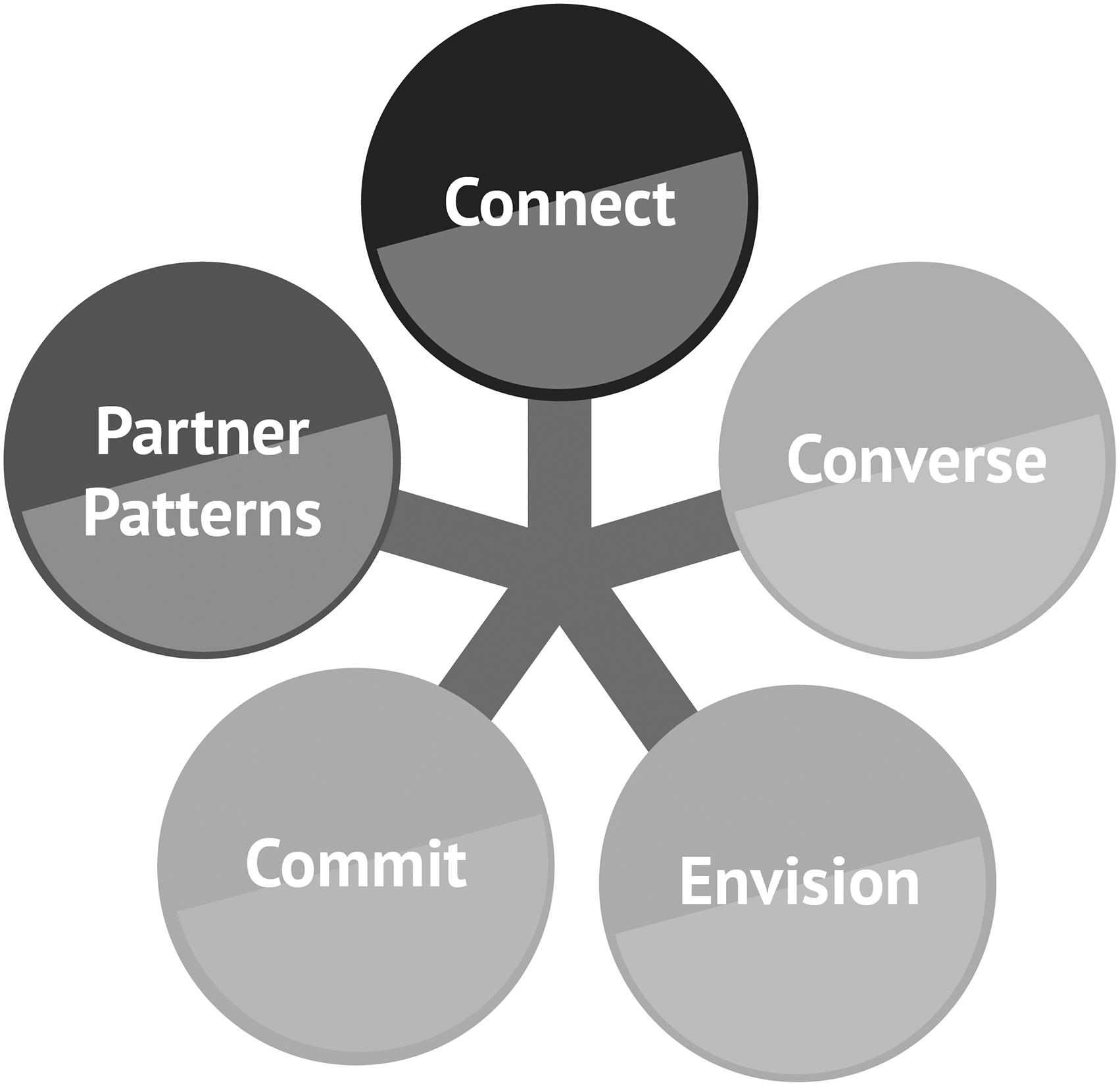
Collaborative communication framework.

Collaborative communication specifics.
Supplemental Material
sj-docx-1-jtw-10.1177_00472816221088349 - Supplemental material for Collaborating Successfully with Community Partners and Clients in Online Service-Learning Classes
Supplemental material, sj-docx-1-jtw-10.1177_00472816221088349 for Collaborating Successfully with Community Partners and Clients in Online Service-Learning Classes by Rebecca J. Dumlao in Journal of Technical Writing and Communication
Supplemental Material
sj-docx-2-jtw-10.1177_00472816221088349 - Supplemental material for Collaborating Successfully with Community Partners and Clients in Online Service-Learning Classes
Supplemental material, sj-docx-2-jtw-10.1177_00472816221088349 for Collaborating Successfully with Community Partners and Clients in Online Service-Learning Classes by Rebecca J. Dumlao in Journal of Technical Writing and Communication
Supplemental Material
sj-docx-3-jtw-10.1177_00472816221088349 - Supplemental material for Collaborating Successfully with Community Partners and Clients in Online Service-Learning Classes
Supplemental material, sj-docx-3-jtw-10.1177_00472816221088349 for Collaborating Successfully with Community Partners and Clients in Online Service-Learning Classes by Rebecca J. Dumlao in Journal of Technical Writing and Communication
Footnotes
Declaration of Conflicting Interests
The author(s) declared no potential conflicts of interest with respect to the research, authorship, and/or publication of this article.
Funding
The author(s) received no financial support for the research, authorship, and/or publication of this article.

Supplemental material
Supplemental material for this article is available online.
Author Biography
References
Supplementary Material
Please find the following supplemental material available below.
For Open Access articles published under a Creative Commons License, all supplemental material carries the same license as the article it is associated with.
For non-Open Access articles published, all supplemental material carries a non-exclusive license, and permission requests for re-use of supplemental material or any part of supplemental material shall be sent directly to the copyright owner as specified in the copyright notice associated with the article.
