




Abstract
Innovation and interorganizational collaboration have been identified as important elements of competitive tourism strategies. This study proposes a model that relates aspects of organizational settings and collaboration to the success of innovation within the organization. In particular, this study focuses on destination marketing organizations (DMOs) as they collaborate with destination businesses to assist in the development of new services in marketing the destination. A national survey among American DMOs indicates that partner collaboration is a significant driver of visitor-orientated innovation. Specifically, innovation success was found to be driven solely by the development of market-oriented rather than strategy-oriented new services, indicating that many of the American DMOs respond to visitor changes at the expense of providing new services that somehow do not fit within current organizational setting. These findings suggest that DMO leadership needs to consider organizational changes in order to better support innovation at the destination.
Keywords
Introduction
Innovation is now considered an essential activity that should be incorporated into the business strategies of all organizations (Christensen 1998). Innovation is often understood as an effort to “reinvent yourself” following Foster and Kaplan’s (2001) understanding of innovation as a “creative destruction” of existing markets and frameworks that lead to success. Research on innovation for both goods and services indicates that successful innovations are driven by a number of external drivers. In particular, collaboration with partners has been shown to enable organizations to better utilize internal resources and thus operate and innovate more efficiently and effectively (Atuahene-Gima 1995). Specifically, this research indicates that interorganizational relationships that focus on integrating key partners in the new product/service development process are critical to the development of innovations (Ritter and Gemünden 2003); additionally, these studies show that collaboration enables organizations to absorb innovations (Powell, Koput, and Smith-Doerr 1996), which ultimately leads to higher survival rates (Stuart 2000).
This study focuses on a highly specialized and highly collaborative segment of tourism providers: destination marketing organizations (DMOs). DMO collaboration with partners has long been recognized as essential to creating cohesive tourism products and thus competitive tourism destinations (Jamal and Getz 1995). However, there appears to be little understanding of the role that partner collaboration plays in innovation. Thus, the goal of this exploratory study is to first identify the nature and extent of innovation by American DMOs; a second goal is to develop and test a model that posits that partner collaboration together with certain internal aspects of the organization (i.e., support by top management for innovation and a culture of innovation) are critical drivers of innovation in DMOs.
Theoretical Background
Literature in organizational behavior and operations indicates that innovation is largely driven by internal organizational settings (Hage 1999), organizational environment (Burns and Stalker 1961), as well as the interaction with other organizations (McGinnis and Mele Vallopra 2001). This literature has focused primarily on the life cycle of service products (Barras 1986) and the performance of service innovations as a result of a rigorous development process (de Brentani 1989). Importantly, studies in the area of new service development provide a useful framework for the measurement of service innovations (Cooper and Kleinschmidt 1987). Figure 1 presents a general model that relates organizational settings, collaboration, and innovation and serves as the underlying framework for this study. The following provides a discussion of innovation and the role of partnerships within the innovation process.
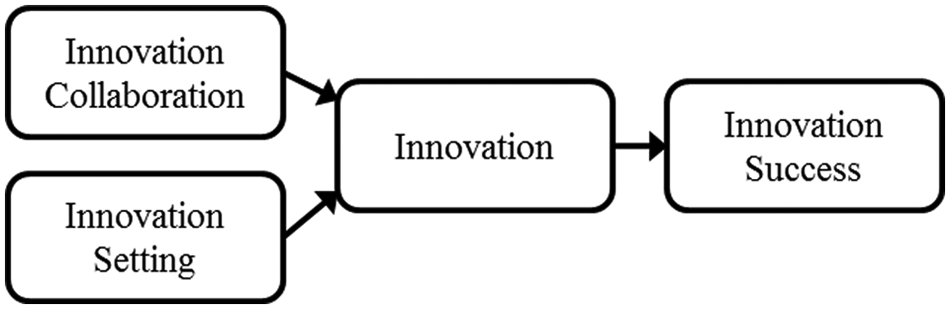
A conceptual model of innovation success
Defining Innovation
Despite the high interest in innovation, defining the concept of innovation has proven to be challenging (Garcia and Calantone 2002). Often, innovation has been narrowly defined and includes niche versus architectural versus regular versus revolutionary innovation (Abernathy and Clark 1985), or continuous versus discontinuous innovation (Robertson 1967). Further following Schumpeter (1947), innovation has been defined as both the application of something radically new and doing old things in a new way (i.e., incremental innovation) (Nord and Tucker 1986). However, when looking at the overall marketplace, it is argued that an innovation can be new to the market but also may be only new to the firm (Mansfield 1963). The application of inventions (e.g., scientific or technological breakthroughs) in the marketplace are referred to as innovations (Schumpeter 1947), whereas the implementation of something existing but new to the firm is referred to as an imitation (Rogers 2003). Thus, it appears that audience is a key element when evaluating the newness of an innovation. Garcia and Calantone (2002) posit that innovation can be distinguished on three dimensions: (1) the type of innovation (i.e., radical, really new, or incremental); (2) the level where innovation takes place (macro vs. micro), that is, new to the world, the market or an industry versus new to the firm or the customer; and (3) the business area affected by an innovation (i.e., marketplace, technology, or both). Based on this research, it is argued that innovation is a valuable and useful new service that either is developed within or outside the organization (Woodman, Sawyer, and Griffin 1993) or is an improvement to an existing service to such a degree that competencies different from the current operation need to be adopted (Menor, Tatikonda, and Sampson 2002). Thus, the underlying assumption of this definition of innovation is that providing a service that is new or improved challenges an organization to evaluate and to reallocate resources (Mansfield 1963).
Partner Collaboration
Superior organizational performance is based largely up the superiority of the resources deployed as represented through those assets and capabilities that are internal to the organization (Barney 1991). However, recent research indicates that collaboration enables organizations to exploit partner resources, and thus to generate considerable benefits for all participating parties (Gulati, Nohria, and Zaheer 2000). Collaborations between organizations range from arm-length relationships that are coordinated through pricing to long-term relationships with a commitment to achieve more for the partners than the profit achieved in once-in-a-while encounters (Gulati, Nohria, and Zaheer 2000). While the acquisition of a new technology can lead to innovation adoption within the buying organization, it oftentimes does not lead to a relationship with the seller, unless relationship-building services such as training are provided, and thus extend the relationship beyond the acquisition (Tether 2002). Hence, organizations tend to engage in more structured types of interorganizational collaboration reaching from strictly market-driven buyer–seller relationships to informal relationships to joint ventures.
Within the context of tourism, research has focused on both innovation and collaboration and has considered partnerships between tourism businesses (von Friedrichs Grangsjö 2006), partnerships for community development (Jamal and Getz 1995) and public–private partnerships for policy development (Dredge 2006). These studies also have focused on cooperative marketing (Wang and Xiang 2007) and marketing systems (March and Woodside 2005) and have found that collaboration among destination businesses, oftentimes through a network of organizations entangled in an innovation system, drives innovation (Pechlaner, Fischer, and Hammann 2005). Additionally, innovation in tourism has been studied within hospitality and accommodation businesses (Pikkemaat and Peters 2005), at the level of tourism destinations (Pechlaner, Fischer, and Hammann 2005), to understand technology adoption at DMOs (Yuan, Gretzel, and Fesenmaier 2003, 2006) and, from a more theoretical perspective, to develop a framework of innovation in tourism (Hjalager 2002). While these studies individually examine innovation and collaboration within the context of tourism, it appears that little is understood about the nature and role of collaboration between tourism organizations in supporting innovation and innovation success.
Model Development
This study focuses on American destination marketing organizations (DMOs) as they are among the leading players in tourism destinations in that they are typically contracted to promote a certain geographical area as well as develop new products and services in order to attract visitors (Gunn 1988). However, DMOs do not provide the final tourism service (Ritchie and Crouch 2003) and therefore need to collaborate with destination businesses to create and implement tourism services that somehow provide a “seamless experience” for visitors (Selin and Chavez 1995). The facilitating and mediating roles of DMOs create a particular organizational environment whereby they often collaborate with several organizations for many different reasons (Pavlovich 2003). For example, while collaboration with governmental agencies is necessary for the political support of new ideas, DMOs often collaborate with a wide range of tourism service providers such as hotels, attractions, restaurants, parks, airlines, travel agencies, highway departments, farmers, special events, sports teams, fishermen, etc. as these providers represent that actual delivery mechanism of the new service (Gretzel et al. 2006; Wilson et al. 2001).
Destination marketing organizations have experienced many and oftentimes stark changes in their environment caused by, for example, political unrest, increased oil prices, economic downturn, and the rise of the Internet. These changes have challenged DMOs to react by developing new and improving existing tourism products and services to better cater to visitors (Gretzel et al. 2006). While recent research in tourism has recognized the importance of innovation for the adoption of information technologies (e.g., Yuan, Gretzel, and Fesenmaier 2003), very limited tourism-related research has focused on innovation and the role of interorganizational collaboration for innovation success. In particular, collaboration in tourism destinations has been studied within the context of tourism policy making (Dredge 2006), knowledge sharing (Yang 2007), marketing alliances (Palmer 2002), and the creation of social capital among destination businesses (von Friedrichs Grangsjö 2006). Following from this literature, the current study posits that the nature and effect of innovation at DMOs are due to the differences in the formalization of the new service development process (Atuahene-Gima 1996a) and the exploitation of interorganizational relationships (Eisingerich, Rubera, and Seifert 2009). The research model as shown in Figure 2 was developed based on the literature where it is assumed that innovation is driven by both internal capabilities of the organization and collaboration with a number of different types of businesses. To fully reflect the role of collaboration and the nature of innovation at American DMOs, innovation was measured using three different constructs: (1) the fit of the new service with current organizational and corporate strategies (strategic and corporate fit); (2) the fit of the new service with current marketing strategies (market orientation); and (3) the newness of the new service to the organization (newness). Furthermore, it is posited that collaboration with partners in concert with management support and organizational innovation strategies have a positive relationship with innovation and the perceived success of innovation. The following section discusses each component of the proposed model and their hypothesized relationships.
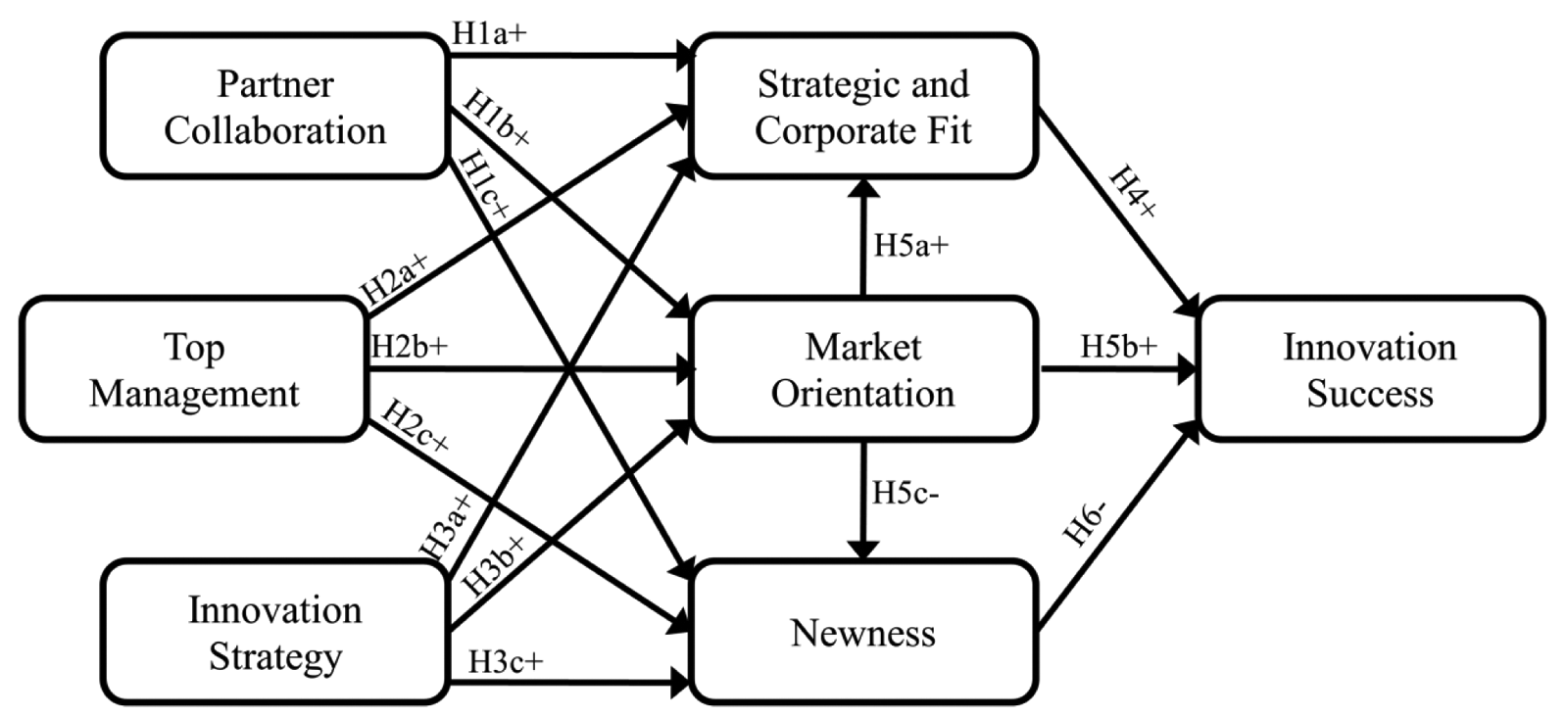
The hypothesized relationships among factors driving innovation success
Partner Collaboration in New Service Development
Several studies indicate that the integration of partners positively affects the outcome of the development process (Powell, Koput, and Smith-Doerr 1996; McGinnis and Mele Vallopra 2001). For example, valuable information comes from government agencies as they provide a high degree of mutual planning for strategies, goals, and the use of resources (Fosler 2002). In addition, this research indicates that collaboration for innovation drives organizational learning leading to innovation (Powell, Koput, and Smith-Doerr 1996; Chen and Paulraj 2004). Paladino (2007), for example, found that organizational learning for innovation has a positive relationship with market and strategic orientation as well as the innovation itself. Thus, it appears that collaboration for innovation drives both the outcome of innovation (Ahuja 2000) and ultimately the success of innovation (Lau, Tang, and Yam 2010). Furthermore, these studies indicate that the integration of knowledge and information from innovation partners is critical for innovation and organizational success (Powell, Koput, and Smith-Doerr 1996; Stuart 2000). This is particularly the case for tourism organizations where innovation is oftentimes initiated by partners (Pechlaner, Fischer, and Hammann 2005).
Based on the literature, it is posited that the strength and quality of interorganizational relationships are critical to derive value for the respective organizations (Eisingerich, Rubera, and Seifert 2009) in that they have the potential to lead to long-term relationships (Ragatz, Handfield, and Scannell 1997) and that organizations collaborate with partners that are deemed important for the development or improvement of a specific innovation. It is, therefore, hypothesized that the involvement of partners into new service development has a positive relationship with innovation:
Hypothesis 1a: Partner collaboration has a significant positive relationship with strategic and corporate fit.
Hypothesis 1b: Partner collaboration has a significant positive relationship with market orientation.
Hypothesis 1c: Partner collaboration has a significant positive relationship with newness.
Top Management Support for Innovation
The attributes and characteristics of management and other organizational leaders are critical organizational determinants for the general development of the organization (Foster and Kaplan 2001). Lefebvre, Mason, and Lefebvre (1997) found that because of their increased influence, organizational leaders are especially important for small and medium-sized organizations, often resulting in poor implementation and execution of programs and strategies. Furthermore, a study by Gummensson (1981) found that support from top management is especially critical for service organizations as they usually have flat hierarchies and top managers possess more expertise than in the manufacturing industry. Importantly, it was also found that support by top management is essential to an environment where employees cooperate both internally (de Brentani 1993) and beyond organizational boundaries (McGinnis and Mele Vallopra 2001). Indeed, leadership creates the framework that enables organizations to establish interorganizational relationships for innovation and to integrate partners in the innovation development process (Lefebvre, Mason, and Lefebvre 1997). Leadership involvement in the development process, thus, appears to be one of the most important drivers of the newness of the innovation (de Brentani 1993) where it contributes to a better fit of the innovation in terms of the market and the organization (Atuahene-Gima 1996b). From this literature, the following hypotheses were developed to describe the relationship between top management and their support for innovation:
Hypothesis 2a: Top management support for innovation has a significant positive relationship with strategic and corporate fit.
Hypothesis 2b: Top management support for innovation has a significant positive relationship with market orientation.
Hypothesis 2c: Top management support for innovation has a significant positive relationship with newness.
Innovation Strategy
Strategic decisions relevant for innovation often draw on the make or buy (i.e., generating or adopting innovation) decision (Coase 1937). Organizations that make innovations often use a stepwise process that includes idea generation, design and development of the service, as well as marketing and launch (Cooper and Kleinschmidt 1987). On the other hand, organizations that buy need to be aware of innovations on the market and need to be able to evaluate the value of innovations in order to decide whether or not to adopt, and finally, need to be able to implement the innovation (Zaltman, Duncan, and Holbeck 1973). Development and launch strategies of new services that create a competitive advantage for the organization are critical for the overall organizational success and survival (Storey and Easingwood 1998). These innovation strategies define how an organization develops and introduces service innovations (Hage 1999). Given the importance of innovation for organizational success, innovation strategies are oftentimes considered critical organizational assets (Cooper and Kleinschmidt 1987). Furthermore, innovation strategies enable organizations to achieve a better fit with both market and internal settings (Easingwood 1986), and the newness of the innovation (Atuahene-Gima 1996b). Based on this literature, it is hypothesized that:
Hypothesis 3a: Innovation strategy has a significant positive relationship with strategic and corporate fit.
Hypothesis 3b: Innovation strategy has a significant positive relationship with market orientation.
Hypothesis 3c: Innovation strategy has a significant positive relationship with newness.
Strategy and Corporate Fit
Previous research indicates that strategy and corporate fit is a critical factor affecting the success of new services (Atuahene-Gima 1996a; Cooper and Kleinschmidt 1987). Furthermore, a match between the new service and organizational resources and skills contributes significantly to organizational performance through indirect benefits (e.g., selling of other services) (Cooper and Kleinschmidt 1987). However, there is tension between the newness of services and the use of organizational resources. Therefore, organizational resources need to match with long-term planning even in the extreme case of radically new services (Cooper, Edgett, and Kleinschmidt 1999). For example, radical innovation creates a challenge for organizations because of the low fit with organizational resources resulting in high levels of uncertainty, errors, and costs (Griffin 1997). Incremental innovation, on the other hand, improves the efficiency of the organization and reduces errors (Nord and Tucker 1986). Thus, it is hypothesized that:
Hypothesis 4: Strategic and corporate fit has a significant positive effect on innovation success.
Market Orientation
Market orientation refers to organizational activities and measures to develop services that are aligned with customer needs. It is generally acknowledged that market orientation creates a setting to develop and engage in activities that yield superior organizational performance (Jaworski and Kohli 1993; Narver and Slater 1990). Studies by Atuahene-Gima (1996b), and de Brentani (1991), for example, found that market orientation has a positive impact on innovation success. Porter (1980) argues that organizations develop new services to maximize the use of current resources and that the development and improvement of services that are compatible with customer needs often goes together with the use of current organizational resources. As such, organizations that are market oriented tend to develop new services that are a good strategic and corporate fit (Atuahene-Gima 1996b; Cooper and Kleinschmidt 1987). Research also indicates that market orientation may limit genuine innovative behavior as organizations would introduce new services that are mere copies of offerings by competitors (also called me too innovations or imitations) (Bennett and Cooper 1981). Thus, it is argued in this study that market orientation results in an increased strategic and corporate fit and increased innovation success but limits the ability of DMOs to develop new services.
Hypothesis 5a: Market orientation has a significant positive relationship with the strategic and corporate fit of the innovation.
Hypothesis 5b: Market orientation has a significant positive relationship with innovation success.
Hypothesis 5c: Market orientation has a significant negative relationship with newness.
Newness
The newness construct refers to the newness of a service from the perspective of the implementing organization, rather than from the perspective of the market. Despite the positive effect of newness on the performance of new products (Kleinschmidt and Cooper 1991), it was found that new service development represents a challenge for the service provider as newness has a reverse (i.e., negative) effect on the performance of services (Atuahene-Gima 1996a). The newness of services is linked to uncertainty and risk (Lynn, Morone, and Paulson 1996), increased difficulties in the development process (Griffin 1997), and higher investments in terms of efforts and resources (Song and Montoya-Weiss 1998). Furthermore, services that attract customers other than the ones currently serviced are a challenge as the organization cannot build on a clientele with which it is already familiar (de Brentani 1991). Hence, while some extent of newness is crucial for the survival of businesses, it is also critical to develop services whose newness does not burden the organization (Hage 1999). This suggests that service providers need to trade compatibility for newness. Ultimately, the introduction of new services is a risky endeavor for service organizations, whereby the risk increases the newer the service is, and the more the organization has to adjust processes and prepare for new customers. These results lead to the following hypothesis between newness and innovation success:
Hypothesis 6: Radical newness has a negative relationship with innovation success.
Methodology
A national online survey among American destination marketing organizations was conducted in summer 2009. An initial list of about 600 organizations was extended through online search to identify the email address of the director/CEO of the respective DMOs. Several bureaus (433) were called since no email information was found online; as part of the phone call, representatives of the DMOs were invited to participate in the study and also to provide the email addresses of their directors/CEOs. Ultimately, a list of 2,031 DMOs was identified that includes independent organizations and chambers of commerce performing DMO tasks. A random set of 30 directors/CEOs of the DMOs were invited for a pilot study, which resulted in acceptable construct reliability scores and the refinement of survey items. Following the pilot study, the remaining DMOs were contacted in early July 2009. Three reminders were sent four days apart starting a week after the initial distribution. Ultimately, 247 qualified completed surveys (14.6%) were collected. No difference was found between respondents whose contact emails were retrieved with or without a phone call.
Respondents were first asked to assess their general organizational settings for innovation; they were then asked to identify and evaluate the most recent successful innovation (within the past 3 years) that was developed in collaboration with a partner. Innovation was defined as a tourism service that (1) caters to visitors and/or stakeholders and (2) represents either a service that was new to the DMO or represents an improvement of a previously offered service to such an extent that new competencies were necessary to offer the improved service. Partners were described as those individuals and organizations with which the DMO works to attract visitors to the area. All items (unless described otherwise) were measured using 7-point Likert-type scales with anchors 1 = strongly disagree to 7 = strongly agree.
Innovation collaboration and innovation settings were measured using three constructs. The construct for partner collaboration in the innovation process was based on work by McGinnis and Mele Vallopra (1999, 2001) and was measured using three items: (1) the frequency of use of the innovation, (2) the partner’s importance in the development process, and (3) the likelihood of the partner being involved from the beginning of the innovation process. The studies by McGinnis and Mele Vallopra achieved values of Cronbach’s coefficient alpha between 0.690 and 0.720; despite the low levels of construct reliability it is argued that the use of existing scales in exploratory studies such as this is appropriate (Nunnally 1978).
Organizational support by management was measured using items developed by de Brentani and Kleinschmidt (2004) and successfully used by Kleinschmidt, de Brentani, and Salomo (2007) (α = 0.789 and 0.780, respectively). Respondents were asked, using a five-item scale, if organizational leadership was involved in the innovation development process: (1) by playing a central role in project review, (2) as visionaries of new services, (3) to enhance the reputation of the organization and new services, (4) by encouraging strategic partnerships for innovation, and (5) on a day-to-day basis. Innovation strategy was measured following a study by McGinnis and Mele Vallopra (1999), who developed these items following Ragatz, Handfield, and Scannell (1997) (α = 0.875). Respondents were asked to identify the extent to which their organization (1) responds quickly and effectively to changing customer needs, (2) responds quickly and effectively to changing competitor strategies, (3) develops and markets innovations quickly and effectively, and (4) is a strong competitor.
Market orientation was measured using three items from a study conducted by de Brentani (2001) (α = 0.765). Respondents evaluated if the innovation (1) satisfied customer needs, (2) represented a change in customer needs, and (3) was consistent with customer values.
Innovation newness was measured using items developed by de Brentani (1991) (α = 0.668) and slightly modified and reapplied in a later study (de Brentani 1995) (α not reported). In respect to their own organization, respondents were asked to provide (1) if the type of innovation was totally new to the DMO, (2) if the innovation was totally new to the DMO, (3) if the process to provide or market the innovation was totally new to the DMO, (4) if the innovation was not an improvement or modification of an existing service (reverse coding), and (5) if the innovation was not a core service provided by the DMO (reverse coding).
The measures for strategic and corporate fit were adopted from two studies conducted by de Brentani (1991, 2001). Specifically, seven items were used in this study to measure if the innovation was a good fit in terms of (1) managerial skills and preferences, (2) human resource capabilities, (3) current service delivery system, (4) sales and promotional capabilities, (5) service production facilities, (6) financial capabilities, and (7) marketing research capabilities.
Frequently used measures to identify the success of innovations are linked to financial performance and to the innovations capability to create future business (e.g., Storey and Easingwood 1999). However, it was found that commonly used measures are inadequate for this study, as DMOs neither provide nor sell tourism services. Recent research argues that a single item is oftentimes sufficient to capture the essence of a construct (Drolet and Morrison 2001). Hence, a single-item measure for innovation success was adopted following Cooper’s (1985) evolution in success measures and de Brentani’s (1989) global definition. Respondents were asked to assess if the innovation was a new service that clearly had met or exceeded the overall objectives.
Data Analysis and Results
A huge majority of the destination marketing organizations (DMOs) investigated in this study are independent convention and visitor bureaus (70.0%). Another 17.0% of the respondent’s organizations belong or operate within a Chamber of Commerce, while 5.7% are located within economic development organizations. Last, a few of the DMOs included in the study are located within city and county governments (3.6% and 7.3%, respectively) while another 11.3% indicated that they were organized outside of these traditional settings.
Geographically, the DMOs included in the study represent mostly counties (49.4%) or cities (24.3%); the remaining DMOs represent multiple cities (4.9%), multiple counties (8.5%), or a combination thereof (13.0%). Nearly all respondents indicated that their organizations focus on the leisure travel market (90.7%); about two-thirds (63.2%) promote festivals and events and culture, while heritage tourism is an important market to more than half the DMOs (54.7%). Meetings and conventions is a market for 44.5% of the DMOs, with another 40.9% being in the market of tourism and sports. Last, business travel is of interest for about one-third of the DMOs (36.8%).
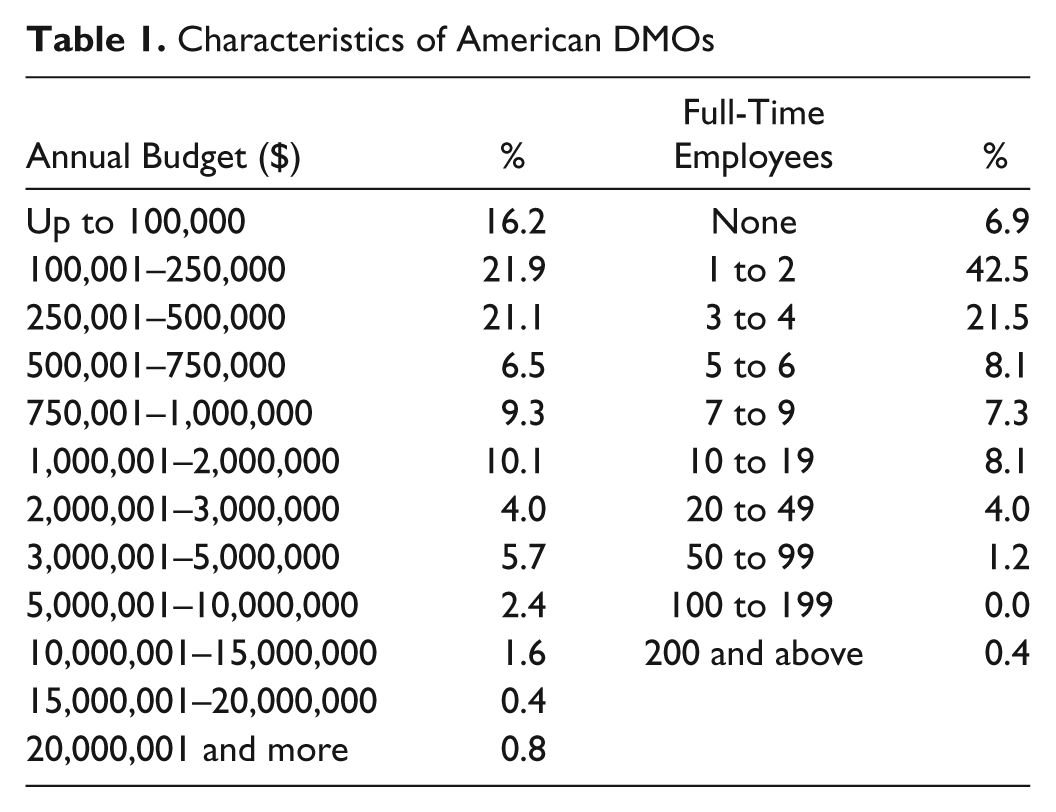
The annual budgets of the DMOs ranged substantially as more than half of the bureaus operate on budgets of $500,000 or less: About 15% have a budget of less than $100,000 and about 20.0% each from $100,001 to $250,000 and $250,001 to $500,000. However, the study includes a number of DMOs with substantially higher budgets; about 20.0% of the DMOs surveyed have a budget between $750,000 and $2,000,000; another 10.0% have a budget from $2 to $5 million, 4.4% of the DMOs have budgets between $5 and $10 million, while the remaining 0.8% have a budget of more than $20 million. In terms of the number of employees, it was found that about half of the DMOs (42.5%) employ one to two staff and another 30% of the respondents indicated that their organization has three to six employees (Table 1). This finding is consistent with previous studies indicating that American DMOs are relatively small organizations, both in terms of annual budget and the number of employees (e.g., Kim 2009; Zach, Gretzel, and Xiang 2010; Yuan, Gretzel, and Fesenmaier 2003).
Characteristics of American DMOs
Respondents were asked to identify the number of new or improved services introduced in the past three years (summer 2007 to summer 2009). It was found that the organizations introduced a total of 1,218 new services during this time. About 1/10th of the DMOs (12.1%) introduced one new service, while 19.4% introduced two new services and about a quarter (24.7%) introduced three innovations. Hence, most DMOs (56.2%) introduced one innovation or less per year over the past three years. Another 28.8% introduced more than one and up to two innovations each year while 15.0% of the respondents indicated that their organizations introduced more than two innovations each year over the past three years (see Figure 3).
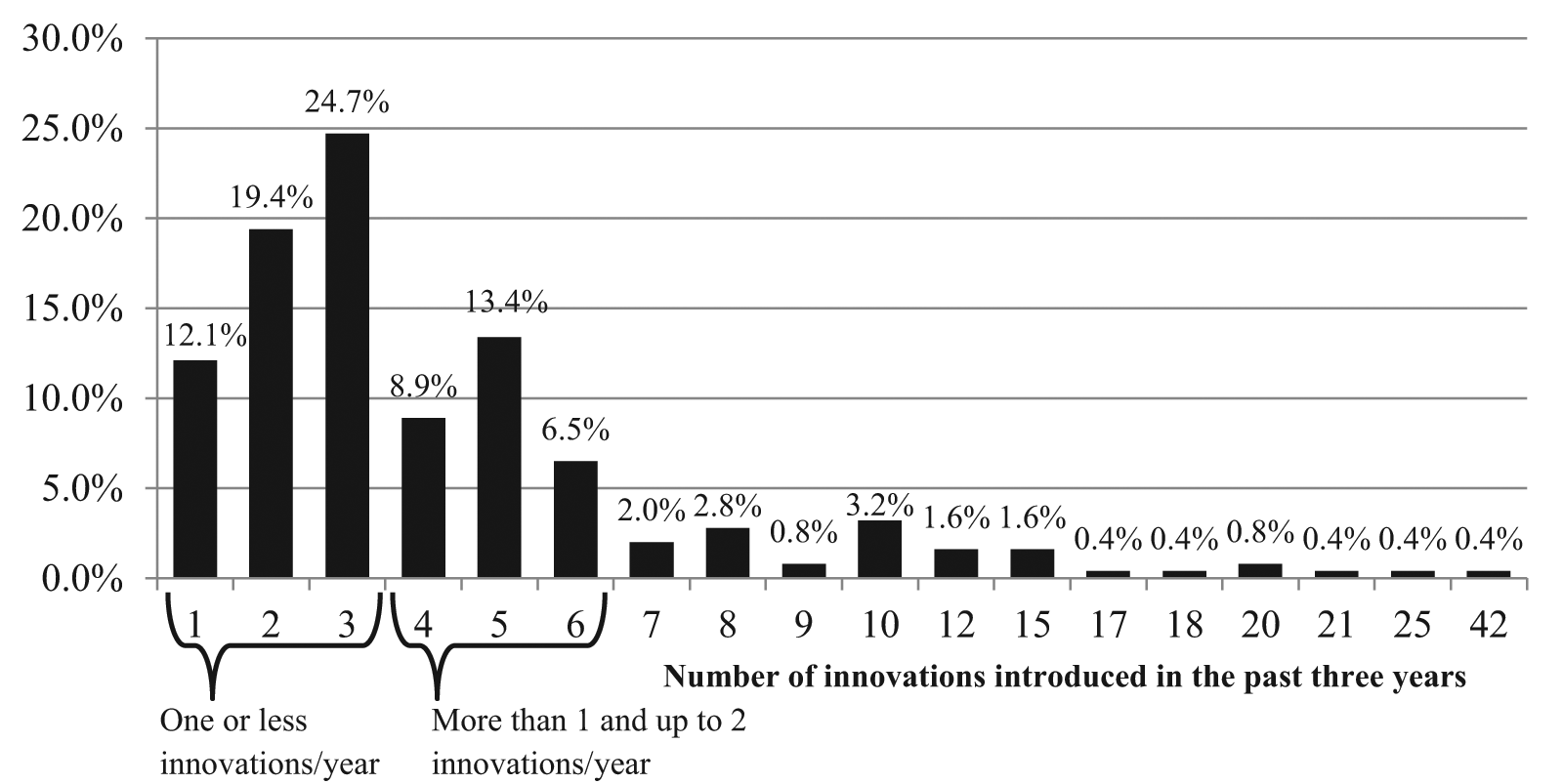
New services introduced by American DMOs in the past three years
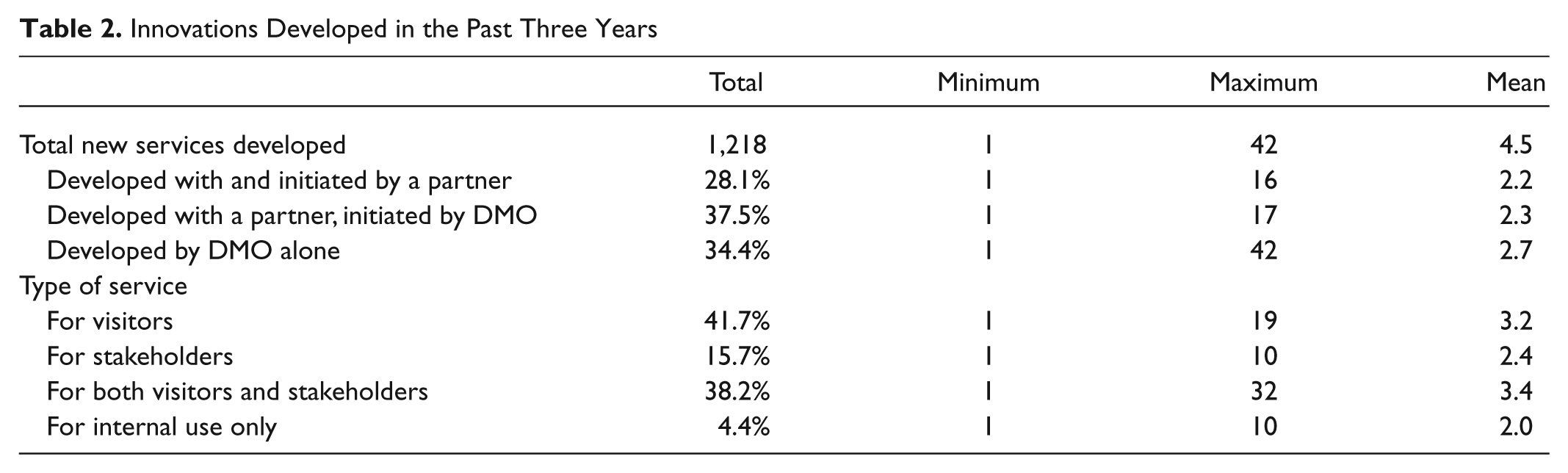
A follow-up question focused on the nature of the innovations created over the past three years. The results show that about two thirds of these new or improved services were created in collaboration with a partner, whereby 37.5% of the innovations were initiated by DMOs and 28.1% were initiated by a partner. The remaining third (34.4%) of new services were developed solely by DMOs. With regards to the target audience of all innovations introduced in the past three years, it was found that most were developed for destination visitors (41.7%), closely followed by new or improved services that aid both visitors and stakeholders (38.2%). Another 15.7% of the innovations were developed for stakeholders only while the remainder of the new or improved services (4.4%) was developed strictly for internal use (Table 2).
Innovations Developed in the Past Three Years
Respondents were then asked to identify and to evaluate one successful innovation that was introduced in collaboration with a partner in the past three years. For the selected innovation, respondents were asked to identify the type of partner organization that was the most valuable in the development of the innovation. The results indicate that the most valuable partners for DMOs were tourism marketing associations (18.6%), followed by accommodation businesses (18.2%) and government agencies (15.0%). The next group of high-value partners included attractions (10.6%), chambers of commerce (9.3%), nontourism marketing associations (6.5%), retail businesses (4.5%), development agencies (3.2%), consultants (3.2%), restaurant and bar businesses (2.4%), and media (1.2%). The remaining 4.5% of the respondents included community associations, other tourism staff, and website providers.
Evaluating the Measurement Model
This analysis used structural equation modeling (SEM) to evaluate the proposed measurement model described in Figure 2 and required two steps. All analysis was conducted with SPSS AMOS 18. First, confirmatory factor analysis was conducted to validate the factor structures for the above developed constructs and to examine the unidimensionality of the constructs (Ahire and Devaraj 2001). Second, the structural model shown in Figure 2 was then evaluated by using a number of different goodness-of-fit tests. Table 3 presents the factor loadings and the measures for internal consistency of the constructs (Cronbach’s alpha). Four items did not achieve satisfactory factor loadings of at least 0.4 as suggested by Carmines and Zeller (1979) and were therefore dropped for further analysis. The results of this analysis indicate that construct reliability was fine, with values of coefficient alpha for the respective constructs ranging from 0.69 to 0.90. It is noted that constructs with lower values of coefficient alpha fulfill the suggested lower boundary of 0.60 to 0.80 for new constructs as suggested by Cronbach (1951) and Nunnally (1978).
Items and Item Source of Proposed Constructs

Note: Values in parentheses did not meet cutoff values and the item was dropped from further analysis.
Average variance extracted (AVE) was used to evaluate the convergent and discriminant validity of the respective constructs (Fornell and Larcker 1981). The analysis of convergent validity as measured by AVE for each construct indicates that three of the six constructs have AVE greater than 0.5 (i.e., top management support, partner collaboration, and market orientation) while the constructs strategic and corporate fit and innovation strategy have AVEs just lower than 0.5 (0.466 and 0.431, respectively). Despite this lower AVE, it was decided to follow previous research in service innovation by keeping the constructs to maintain their richness (e.g., Kleinschmidt, de Brentani, and Salomo 2007). However, it is important to note that the AVE for newness is extremely low (0.140), suggesting that the construct needs to be reconsidered. Following Fornell and Larcker (1981), discriminant validity was evaluated by comparing each construct AVE to the shared variance with all other latent constructs. As can be seen in Table 4, an acceptable score was achieved for all constructs in that the AVE values for every construct are substantially higher than all off-diagonal values. Last, additional measures of construct quality are coefficient alpha and composite reliability (Fornell and Larcker 1981). The results of the analysis using these two measures indicate that the constructs are sound, except for newness, which is lower than the 0.6 cut-off value.
Measurement Scale Reliability
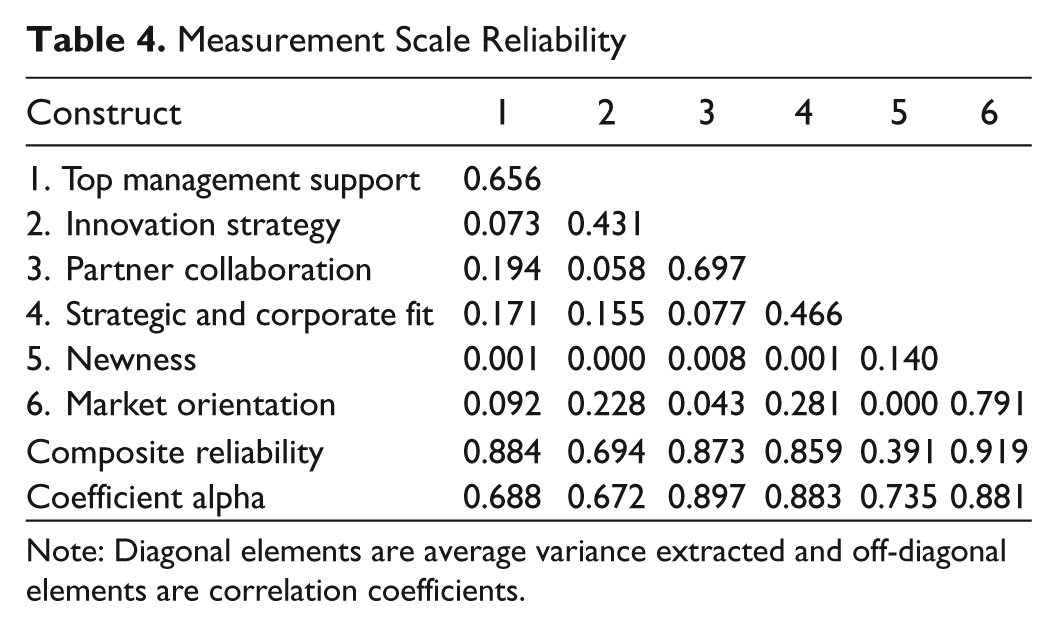
Note: Diagonal elements are average variance extracted and off-diagonal elements are correlation coefficients.
Given the low AVE score of the newness construct, an alternative model without this construct was developed following the hierarchical comparison strategy developed by Anderson and Gerbing (1988). All items but the four with insufficient factor loadings (see Table 3) were included in the model comparison. A total of five models was tested: (M0) a null model; (M1) a one-construct model with all items loading on one single factor; (M2) a model with two constructs that summarize items of organizational settings and innovation; (M3) a six-construct model with all hypothesized latent constructs; and finally (M4) a five-construct model without the newness construct. Following Anderson and Gerbing (1988), the significance of each model was compared sequentially to the null model using chi-square statistics (Table 5). The results show that all four measurement models are significant improvements over the null model.
Hierarchical Comparisons of Measurement Models
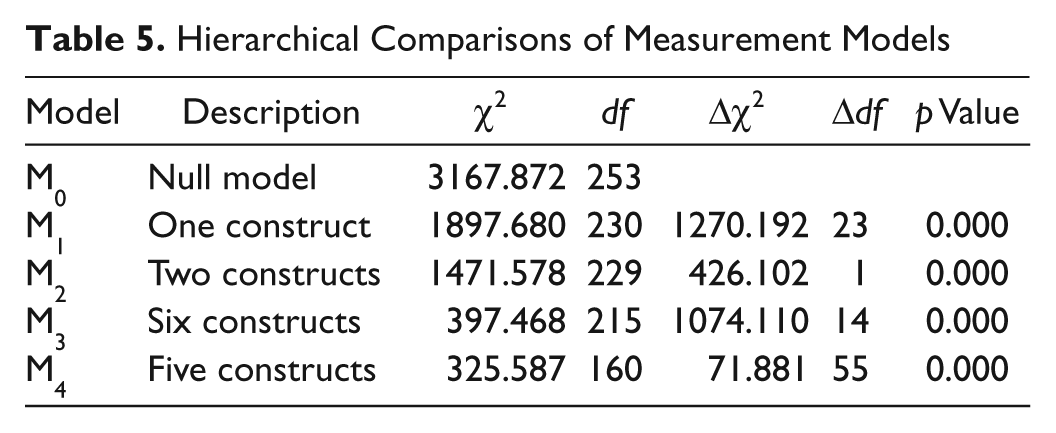
Table 6 presents the goodness-of-fit statistics for the four models, and as can be seen, model fit improved significantly from M1 to M4 when measured by standardized root mean square residual (SRMR), goodness-of-fit index (GFI), adjusted goodness-of-fit index (AGFI), Tucker–Lewis Index (TLI), and comparative fit index (CFI); only χ2/df and root mean square error of approximation (RMSEA) decrease from M3 to M4. While some model fit measures are lower than suggested cutoff values, the values for GFI and AGFI come close to their suggested cutoff value (for both ≥0.90) (Hu and Bentler 1998). All other measures are well within their suggested limits: χ2/df ≤ 2.5 (Muthén and Muthén 2007), RMSEA ≤ 0.08 (Kline 1998), SRMR ≤ 0.08 (Kline 1998), TLI > 0.90 (Hair et al. 1995), and CFI ≥ 0.90 (Muthén and Muthén 2007).
Hierarchical Comparisons—Model Fit
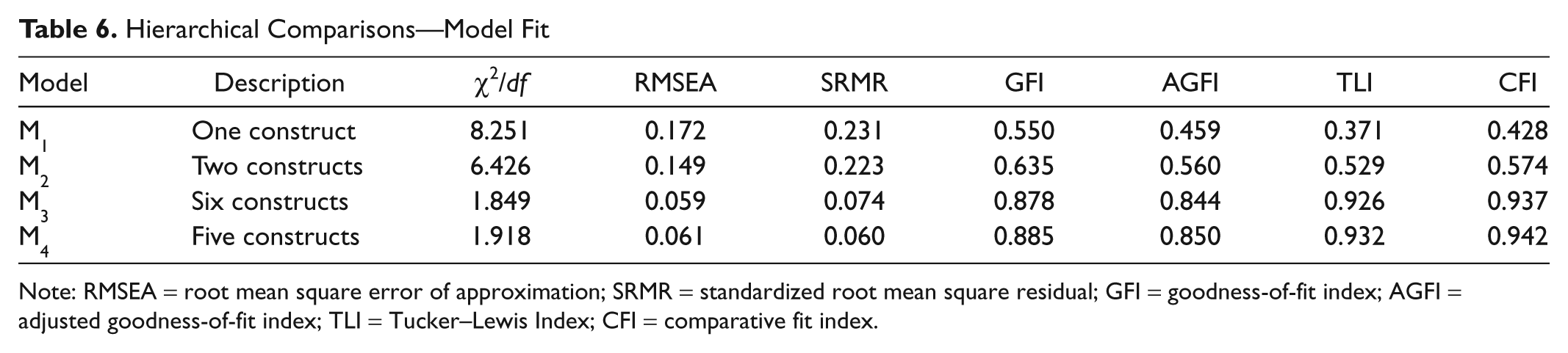
Note: RMSEA = root mean square error of approximation; SRMR = standardized root mean square residual; GFI = goodness-of-fit index; AGFI = adjusted goodness-of-fit index; TLI = Tucker–Lewis Index; CFI = comparative fit index.
Structural Model Evaluation
Figure 4 presents the parameter estimates for M4, where the goodness-of-fit indicators are within their suggested boundaries (χ2/df = 1.918, RMSEA = 0.061, SRMR = 0.060, GFI = 0.885, AGFI = 0.850, TLI = 0.932, CFI = 0.942). The model explains 22.0% of the variability in market orientation, 31.7% in the variability of strategic and corporate fit, and 43.2% in the variability of innovation success. The results support most of the hypothesized relationships of the alternative model and indicate that partner collaboration has a significant effect on market orientation (hypothesis 1b is supported); however, the standardized path estimate is relatively low with 0.124 (p ≤ 0.05). This suggests that partner collaboration is a determinant to develop innovation that matches an organization’s marketing strategies. On the other hand, partner collaboration does not contribute to the strategic and corporate fit of innovations (hypothesis 1a is not supported). All hypotheses involving top management effects on strategic and corporate fit and market orientation are supported with path estimates of 0.249 (p ≤ 0.05) and 0.178 (p ≤ 0.1), respectively (hypotheses 2a and 2b are supported). Both these relationships are highly supported in literature, in particular the effect on strategic and corporate fit. Innovation strategy is a significant determinant of market orientation with a path estimate of 0.415 (p ≤ 0.001) (hypothesis 3b supported). However, innovation strategy has an insignificant relationship with strategic and corporate fit (hypothesis 3a is not supported). The lack of support for hypothesis 3a could be driven by the low convergent validity findings for both innovation strategy and strategic and corporate fit.
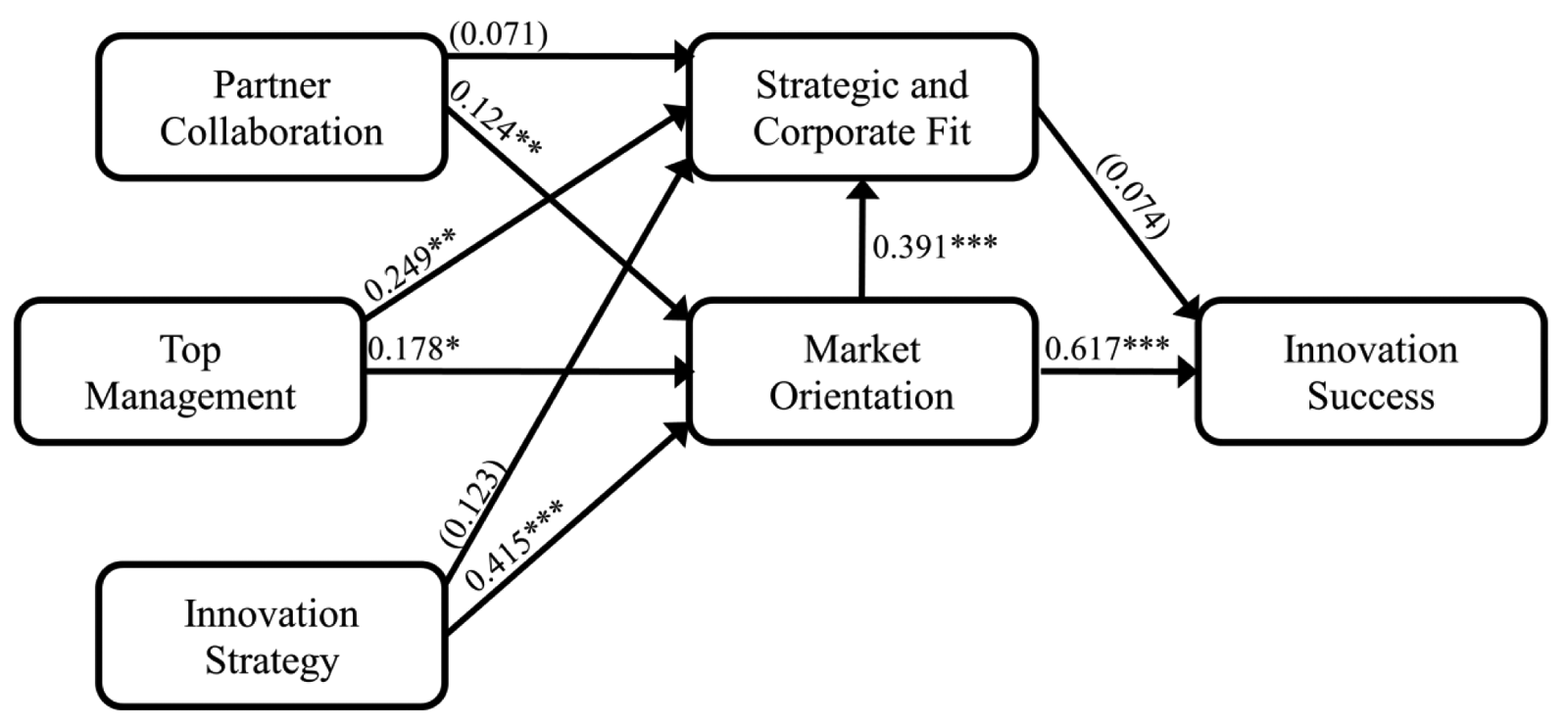
Final model of innovation success
The results indicate that the two hypotheses involving market orientation are highly significant whereby market orientation is the strongest determinant of strategic and corporate fit of new innovations with a path estimate of 0.391 (p ≤ 0.001) (hypothesis 5a is supported). Furthermore, market orientation is the strongest determinant of innovation success with a path estimate of 0.617 (p ≤ 0.001) (hypothesis 5b supported). This finding is consistent with research indicating that understanding the marketplace and developing new services that fit into an organization’s current marketing scheme typically add to the success of these new services. However, market orientation was found to be the only significant determinant for innovation success since the path between strategic and corporate fit and innovation success is nonsignificant (hypothesis 4 not supported) and, one might argue, that the weak performance of strategic and corporate fit could also be a result of its low convergent validity.
Discussion
An important goal of this study was to identify innovation and collaboration for innovation in the marketing environment of American tourism, in particular within American destination marketing organizations. It was found that American DMOs actively innovate and that partners play an important role in this innovation. More than two-thirds of the organizations (68.5%) introduced at least one new tourism service within the past three years. This is quite remarkable for DMOs since they are facilitators of tourism, rather than direct providers of tourism services. Given the marketing and customer focus of DMOs, it was expected to find that most new services were developed for visitors (41.7%) or both visitors and destination businesses (38.2%). The findings of this study suggest that DMOs are actively expanding their range of services that increase or improve visitor experiences and to assist stakeholders in their tourism activities.
A second goal was to evaluate the role of partner collaboration in innovation development, where it was argued that the involvement of partners in the innovation process is critical for the development of new services. The findings indicate that both internal organizational settings and collaboration with partners have a significant impact on the development of new services, and that market orientation has a significant positive effect on the perceived innovation success. Partner collaboration, thus, appears to be critical for the development of successful new services. However, it was found that partner collaboration has a significant relationship only with market orientation, but not with strategic and corporate fit. This suggests that DMOs predominantly utilize their partners to develop new services that fit with current marketing perspectives.
It was surprising to find that partner involvement does not lead to strategic and corporate fit of new services, especially since DMOs are charged with the development of sustainable and competitive tourism destinations. However, the lack of strategic fit of new services developed with partners reflects three competing issues. First, DMOs’ reliance on partners to ultimately offer a new service forces DMOs to adapt new services in order to attract partners as providers. While this results in the implementation of a new service, it might also dilute its original idea. Second, new services that fit the market seem to challenge DMOs as their partners pursue different strategies and working with DMOs is just one of them. Lastly, the involvement of partners drives me too innovations, that is, new services that are similar to other organizations and thus do not add to much new value to the destination since customers are already familiar with these services from other destinations or even tourism service providers within the destination.
Of the organizational settings, top management was found to be a key driver for innovation development, especially with regards to assuring the appropriateness of a new service with organizational resources. Furthermore, top management involvement contributes to the market fit of a new service. However, it is clear from these findings that leaders are more concerned with the new service’s fit with long-term strategies rather than developing new services that are already existent in the marketplace and might add only little value (me too innovations). The important role of top management is less surprising given the mostly small nature of DMOs, both in terms of number of employees and annual budget. This confirms previous studies insisting that leadership is essential to creating an organizational foundation that supports innovation.
Innovation strategy is a major determinant of market orientation, but surprisingly was found not to be a significant predictor of strategic and corporate fit. This suggests that DMO strategies for new service development are geared toward development of new services that capture the current spirit of the marketplace. It appears that quick and effective responses to changes in the marketplace result in new services that are highly consumer driven but do not necessarily fit with the organization itself. Furthermore, it seems that the directors/CEOs of DMOs understand that their role as innovators is to add value to the currently existing destination features even if they do not match current organizational strategies and resources.
Several implications for destination managers can be drawn from this study. First, it is important to recognize that partners can contribute to successful new services. The relationship between DMOs and providers of tourism services is important for successful destination development and needs to be understood by destination leadership. Second, DMOs could create an organizational setting favoring innovation while simultaneously invest into partner collaboration to obtain more benefits from their innovation efforts. Furthermore, innovations need to be developed to better match organizational resources. Third, decision makers could guide their organization to develop new relationships that add to innovation as a means to pursue strategic goals. Fourth, leaders are innovation champions; that is, leadership sets the foundation for the development of successful innovations. Especially given the mostly small size of DMOs it appears that leaders themselves need to be innovators. Consequently, DMO leaders are some of the most important persons when it comes to the development of new services and, thus, tourism destinations. And fifth, this study clearly indicates that American DMOs are innovative as they develop new services for destination visitors and destination stakeholders. The development of new services identified DMOs as destination developers. This is in line with previous research claiming that DMOs not only need to market their destination but also need to develop new services to attract new and keep current visitors (Wang and Xiang 2007).
This study combines two streams of research to provide an integrated model of innovation development in the service industry, in particular new service development for DMOs. Organizational settings and partner collaboration were evaluated to identify their effect on innovation development. Recent studies on innovation (e.g., Atuahene-Gima 1996a) implicitly assume that collaboration is critical for the development of new products and services; however, it was not clear how innovation is actually linked to collaboration. Other research identified innovation as an outcome of relationships held with other organizations (e.g., Gulati, Nohria, and Zaheer 2000); however, this view neglects internal organizational settings that provide a foundation for innovation in the first place. It was thus necessary to evaluate the effects of both internal settings and partner collaboration. With this said, this study contributes to our understanding of innovative behavior of American DMOs. In particular, the importance of collaboration and organizational strategies toward innovation for successful innovation behavior has been identified.
Even though this study was strongly grounded in theory, some consideration to guide future research must be provided. First, a wider array of internal setting for innovation needs to be taking into consideration to better understand organizational decision making. Second, several different measures of innovation success should be incorporated in future models, in particular those relating to financial performance and the ability to create new business opportunities. Third, some of the constructs need to be retested and revised. Fourth, this study treated partner collaboration as a black box; however, it is important that future research is conducted to better understand the antecedents of partner collaboration for innovation and how innovation behavior drives destination success; perhaps through extensive interviews with DMO executives. Last, the low response rate of the study with most respondents coming from smaller DMOs limits the generalizability of the study.
Footnotes
Declaration of Conflicting Interests
The author declared no potential conflicts of interest with respect to the research, authorship, and/or publication of this article.
Funding
The author received no financial support for the research, authorship, and/or publication of this article.