




Abstract
This study focuses on commitment as a key factor for successful collaboration in tourism. Taking a corporate governance perspective, we studied directors in tourist organization boards and examined possible effects of directors’ strategic orientation (holistic orientation vs. stakeholder orientation) and compensation on organizational commitment. In line with recent behavioral perspectives on boards, this study accounted for board processes, including variables measuring intragroup conflict and effort norms. The sample included 307 directors in 98 Norwegian organizations. Findings underline the importance of recognizing the benefits of joint attempts and a community mindset among collaborators in tourist organizations. The results further indicated that board processes influence directors’ organizational commitment. The effect of a holistic orientation toward the destination and the goals and values of the collaborative organizations was mediated by both the perception of intragroup conflict and effort norms in the board. In addition, effort norms mediated the relationship between compensation and commitment.
Introduction
When looking at successful collaborative arrangements in tourism, commitment seems to be a key. Commitment was found to be an important factor in Selin and Chavez’s (1995) study of successful tourism partnerships. Palmer (2002) found that a high level of commitment by members of a cooperative association is an important antecedent of successful cooperative marketing. Björk and Virtanen (2005) identified high commitment as the main facilitator for the success of tourism collaboration. “Firms with high commitment are active and are working professionally. They are aware of the interdependence between actors in the tourism business and can therefore see the value of co-operation. They are ready to devote resources to co-operation. Firms with high commitment may try to attract other firms to participate in the network. They act as drivers or as hubs” (Björk and Virtanen 2005, p. 222). Wang and Xiang (2007) included commitment in their framework for destination marketing alliance formation, because of its importance in balancing the relationship between benefits to the individual businesses and those to the destination as a whole. Collaborative relationships are developed through repetitive sequences of cooperation, conflict, and compromise mechanisms. In that regard, commitment may be one of the dynamics related to conflict management because it can balance the relationship between cooperation and competition (Wang and Xiang 2007). Finally, Pesämaa and Hair (2008) and Pesämaa, Hair, and Haahti (2010) consider interorganizational commitment as the long-term goal for tourism partners in networks. In their studies, they found a relationship between reciprocity and interorganizational commitment (Pesämaa and Hair 2008; Pesämaa, Hair, and Haahti 2010), and they found that interpersonal commitment plays an important role as a mediator between trust and interorganizational commitment (Pesämaa and Hair 2008).
The present study investigates the organizational commitment of directors in collaborative tourist organizations through a corporate governance perspective. Organizational commitment refers to a director’s identification with and involvement in the tourist organization he or she governs. Tourist organization is defined as a destination-based organization that draws together a number of stakeholders with interests in tourism in a specific geographical area (Pearce 1992), with an aim to achieve common goals and strengthen the marketing, promotion, planning, or development functions of the destination (Goeldner and Ritchie 2006). Organizations and destinations may be able to gain competitive advantages by bringing together the knowledge, expertise, capital, and other resources of several stakeholders (Bramwell and Lane 2000; Bramwell and Sharman 1999; Kotler, Rein, and Haider 1993; Silkoset 2004).
While there are a number of studies on tourist organizations’ activities, there is little knowledge on the corporate governance and internal affairs in this setting. Moreover, research on tourism governance has been largely exploratory and descriptive so far, with few suggestions about the characteristics of successful governance (Beaumont and Dredge 2010; Beritelli, Bieger, and Laesser 2007). Palmer (1998, 2002) found a significant positive relationship between the effectiveness of a tourism association and a “tight” governance style, showing that formal governance systems are beneficial for the achievement of agreed objectives. Pechlaner, Raich, and Kofink (2011) studied elements of corporate governance theoretically and through empirical analysis, in addition to dealing with the current implementation of the following elements in tourist organizations in the Alps: effective leadership of the tourism organization, application of governance tools, and knowing and tending to stakeholders. The results showed that tourist organizations are aware of these corporate governance elements and their potential for effective control and management, though the extent of their application has been rather poor so far. Pechlaner, Volgger, and Herntrei (2012) further discussed and empirically explored the theoretical interrelation between corporate governance and destination governance. Based on their results they further hypothesized positive links between certain characteristics of corporate governance in tourist organizations (broad stakeholder involvement, an efficient way of working, and visible signs of performance) and the acceptance of the organization and the level of collaboration in the destination. Board composition was the focus of attention in an explorative study of Convention and Visitors Bureaus in the United States (Ford, Gresock, and Peeper 2011), wherein bureaus with directors representing the key stakeholders (from both industry and the community) were found to be more successful in terms of effectiveness compared to less diverse boards. Furthermore, Garnes and Grønhaug (2011) studied the roles and responsibilities of directors in tourist organizations and found that the stakeholder perspective could partly explain how boards of directors in tourist organizations care for many interests, not merely the organization’s owners. Therefore, Garnes and Grønhaug (2011) called for studies that would investigate the influence of multiple stakeholders with multiple commitments. Likewise, Beritelli, Bieger, and Laesser (2007) called for broader empirical evidence and further research on the operational reality of destination governance, for example, studies of board members, their work, and working environment.
We try to address some of these knowledge gaps by focusing on directors’ commitment from a corporate governance perspective. Two central points from the corporate governance theory underpin and have high relevance to this study. First, the call for recognizing external contingencies, such as industry type, and consider the possible effects of contextual factors when studying corporate governance (Zahra and Pearce 1989). Second, the recent call for research on board behavior and decision-making processes among boards of directors (Forbes and Milliken 1999; Gabrielsson and Winlund 2000; Huse 2005; Pye and Pettigrew 2005; Roberts, McNulty, and Stiles 2005; Van Ees, Gabrielsson, and Huse 2009). Some important questions arise when these aspects of corporate governance are placed in the context of collaborative tourist organizations and their boards. What external contingencies and board processes influence commitment among directors in collaborative tourist organizations? It is possible that numerous predictors of organizational commitment exist and that the causalities are complex. Studying all these factors at once would produce investigatory paralysis (Bandura 1986). Thus, the aim of this study is to analyze the possible influence of certain contextual characteristics proposed as particularly relevant, namely, director’s strategic orientations and compensation, on directors’ organizational commitment, while considering the mediating effects of boardroom behavior by including intragroup conflict and effort norms as important process variables. The selected research variables and proposed hypothesis are further described in the next section.
Literature Review and Hypothesis
Organizational Commitment
We define organizational commitment according to the widely used definition by Porter et al. (1974) in terms of the strength of directors’ identification with and involvement in a particular tourist organization. Porter et al. (1974) characterized commitment by three factors: (1) a strong belief in and acceptance of the organization’s goals and values; (2) a willingness to exert considerable effort on behalf of the organization; and (3) a definite desire to maintain organizational membership. This understanding of commitment defines commitment in terms of attitudes; commitment represents something beyond mere passive loyalty to an organization by capturing how a committed individual identifies with, is involved in, and enjoys membership in, the organization (Mowday, Steers, and Porter 1979; Porter et al. 1974; Steers 1977). Committed individuals have an active relationship with the organization and are willing to contribute to the organization. Furthermore, committed individuals tend to work toward organizational goal attainment (Mowday, Porter, and Steers 1982). In line with studies of committed individuals, we expect committed directors in the tourism context to strongly believe in and accept the tourist organization’s goals and values and to be willing to contribute to goal attainment (Mowday, Porter, and Steers 1982; Porter et al. 1974). Tourism researchers have found relationships between a high level of commitment among collaborators, and outcomes such as activity, effectiveness, professionalism, and resources devoted to collaboration (Björk and Virtanen 2005; Palmer 2002; Pesämaa and Hair 2008; Pesämaa, Hair, and Haahti 2010). The general literature on interorganizational relationships also emphasizes such aspects of commitment (e.g., Ring and van de Ven 1994; Oliver and Ebers 1998).
Organizational commitment is often reserved to one’s employing organization (Mathieu and Zajac 1990; Mowday, Porter, and Steers 1982). Reichers (1985) argued for a multiple commitments perspective, with commitment understood as a construct with multiple foci. Comparable constructs, such as team commitment, goal commitment, and professional commitment, have emerged (Bishop and Scott 2000; Bline, Duchon, and Meixner 1991; Ellemers, de Gilder, and van den Heuvel 1998; Locke, Latham, and Erez 1988). Commitment has also been included as a variable in corporate governance studies related to working style (Gabrielsson and Winlund 2000) and preparation and involvement (Huse 2005), and it has been understood as a board characteristic when studying its effect on board task effectiveness (Minichilli, Zattoni, and Zona 2009). The results from studies conducted in nonprofit organizations found a positive relationship between board member commitment and individual performance (Preston and Brown 2004).
Contextual Factors
The tourism industry and tourist organizations have some characteristics that may affect governance and directors as decision makers. Regardless of the interdependency at a destination, stakeholders involved in tourism do not necessarily have concurrent interests, and it can be difficult to recognize the benefits of joint attempts and come to terms about what to do (Palmer and Bejou 1995). Lack of mutual interests, or incompatible interests, might weaken the effect of the collaboration. Businesses must recognize the advantage of attending resource-demanding functions jointly rather than in isolation and believe that coordinated activities will enhance the long-term competitiveness of the destination. Disagreement over objectives and inability to adapt collectively to changes in the external environment can cause collaborations to fail (Palmer, Barrett, and Ponsonby 2000).
A number of researchers have emphasized the fragmented nature of the tourism industry and the dynamics of the relationship between collaboration and competition in tourism (Beritelli 2011; Björk and Virtanen 2005; Bramwell and Lane 1999, 2000; Bramwell and Sharman 1999; Dredge 2006; Jamal and Getz 1995; Palmer and Bejou 1995; Selin and Chavez 1995; Wang and Fesenmaier 2007; Wang and Xiang 2007; Zach and Racherla 2011). The composition of the board in a tourist organization may reflect the tourist industry and dynamics between important stakeholder groups at the destination. Boards of directors often have diversity in companies and lines of business, a mixture of company sizes and ownerships, geographical variety, and so forth (Lathrop 2005). In addition to this general heterogeneity, the directors may have various individual interests, not necessarily in accordance with the overall goals set for the organization, which creates a potential conflict between the self and business interests on the one hand and a more holistic view and community mindset among collaborators on the other (Wang 2008). The reasoning above suggests that directors with an orientation toward the interests of specific stakeholder groups will be less committed to the collaborative tourist organization and its goals and values. Directors who take a holistic orientation, on the other hand, may recognize the benefits of joint efforts (Jamal and Getz 1995), accept that it may be impossible to get full agreement about every aspect of resulting policies, or support an agreement even if it does not produce their preferred outcome. Thus, a consensus emerges, despite inequalities between stakeholders (Bramwell and Sharman 1999), leading to the assumption that a holistic view is positively related to organizational commitment.
Hypothesis 1a: A stakeholder orientation is negatively related to organizational commitment
Hypothesis 1b: A holistic orientation is positively related to organizational commitment
Tourist organizations are in general nonprofit, that is, possible earnings are retained and funds are used to achieve goals and promote visitation in their destination areas (Bramwell and Rawding 1994; Morrison, Bruen, and Anderson 1998; Wang 2008). Most tourist organizations pay management and staff, whereas directors receive compensation to various extents. Among those receiving payment in Norwegian organizations, some have fixed annual compensation and others have activity-based compensation (per meeting) or a combination of these. Compensation based on performance is rare.
Compensation is expected to relate to directors’ motivation (Huse 2007). Shen (2005) understands compensation for directors in terms of “incentives to become engaged, to be challenging and supportive and to develop an independence of mind in carrying out their governance duties” (p. S89). Compensation programs for board members are put in place to encourage each member to maximize his contribution as well as the contribution of the board as a whole (Epstein and Roy 2004). In support of these views, Adams and Ferreira (2008) found that directors were more likely to attend board meetings when meeting fees were higher. On the other hand, they found that relatively small financial rewards appeared to motivate directors. Nevertheless, since the general research stream on compensation for directors relates to executives and uses data from large listed firms with rather complicated compensation programs, it may not be appropriate to apply these conclusions to small, collaborative tourist organizations. Therefore, there is a need to further examine the relationship between compensation and organizational commitment in this context, and the review leads us to expect that appropriate financial compensation will have a positive effect on organizational commitment.
Hypothesis 2: Compensation is positively related to organizational commitment.
Behavioral Theory of Boards
Most research on boards so far has focused on direct relationships between board structure and outcome measures, such as effectiveness and performance. According to Huse (2000), four seminal review papers about boards of directors demonstrate a tradition dominated by research relating board composition to company performance, where the specific process components of corporate governance have not been studied. The authors of these reviews call for a clearer understanding of current board behavior (Zahra and Pearce 1989), more knowledge of the relational dynamics in and around the boardroom (Pettigrew 1992), and the right equipment for studying boards (Johnson, Ellstrand, and Daily 1996). They also underscore the need for research on the processes that link board demographic with performance (Forbes and Milliken 1999). Thus, in recent years, the interest in these aspects of governance has increased, with research focusing more on behavior and processes (Gabrielsson and Winlund 2000; Huse 2005; Pye and Pettigrew 2005; Roberts, McNulty, and Stiles 2005; Van Ees, Gabrielsson, and Huse 2009), while considering the mediating role of dynamics in and around the boardroom (Miller and del Carmen Triana 2009; Nielsen and Huse 2010; Torchia, Calabrò, and Huse 2011).
Forbes and Milliken (1999) call for studies of intervening processes that account for effort norms, cognitive conflict, and use of knowledge and skills in boards when studying outcomes like cohesiveness and task performance. We consider the mediating effects of boardroom behavior on organizational commitment and believe that the perception of intragroup conflicts and effort norms function as mediating variables, which transmit the effects of directors’ strategic orientations and compensation, respectively, to their organizational commitment.
Intragroup conflict refers to both relationship conflict and task conflict, where the relationship conflict refers to an awareness of interpersonal incompatibilities and task conflict refers to an awareness of differences in viewpoints and opinions (Jehn 1995). Heterogeneity within the tourism industry and among directors gives possible grounds for perceptions of intragroup conflicts among board members (Bramwell and Lane 2000; Jamal and Getz 1995; Wang and Xiang 2007).
Directors with a strategic orientation toward the interests of specific stakeholder groups among the board members may have an increased perception of conflict because of possible divergence between the goals and values of different interest groups. Furthermore, high levels of perceived conflict may have a negative effect on the directors’ commitment. Thus, we assume that the perception of intragroup conflict will mediate the relationship between a stakeholder orientation and organizational commitment.
The same reasoning, but in the opposite direction, can be made for directors with a holistic orientation. Directors who recognize the benefits of joint efforts, with a holistic orientation toward the mutual interests of the destination and the collaborative organization, will possibly perceive fewer conflicts, which will again have a positive effect on director’s commitment.
The above theorizing leads to the following hypotheses:
Hypothesis 3a: The perception of intragroup conflict mediates the relationship between a stakeholder orientation and organizational commitment, so that high levels of stakeholder orientation are positively related to conflict perception, which again is negatively related to commitment.
Hypothesis 3b: The perception of intragroup conflict mediates the relationship between a holistic orientation and organizational commitment, so that high levels of holistic orientation are negatively related to conflict perception, which again is negatively related to commitment.
Effort norms refers to the board’s beliefs of the level of effort each individual is expected to exert to complete a task (Wageman 1995), recognized by Forbes and Milliken (1999) and Zona and Zattoni (2007) as an important process variable expected to have a positive effect on board performance. Strong norms ensure attentiveness, analysis, and participation among group members (Forbes and Milliken 1999; Zona and Zattoni 2007), and they can be expected to enhance the effort of individual group members (Wageman 1995). Thus, we recognize that this variable is important in relation to organizational commitment, as we believe that strong effort norms toward board roles and responsibilities can influence the director’s identification with and involvement in the organizations he or she governs and thus enhance their individual level of organizational commitment.
Furthermore, we expect a holistic orientation to be positively related to effort norms. Directors with a community mindset, who recognize the benefits of joint efforts, are likely to have strong effort norms. Hence, effort norms may mediate the relationship between a holistic orientation and organizational commitment among directors in tourist organizations.
Compensation, understood as an incentive, is also expected to help directors become engaged (Shen 2005) and have a positive effect on effort norms (Adams and Ferreira 2008). Directors who are paid are likely to put more effort into their duties (Epstein and Roy 2004); hence, effort norms are expected to mediate the relationship between compensation and organizational commitment.
Hypothesis 3c: Effort norms mediate the relationship between a holistic orientation and organizational commitment, so that high levels of holistic orientation are positively related to effort norms, which again is positively related to commitment.
Hypothesis 3d: Effort norms mediate the relationship between compensation and organizational commitment, so that being paid is positively related to effort norms, which again is positively related to commitment.
The causal model in Figure 1 summarizes the conceptual structure to analyze organizational commitment of directors in collaborative tourist organizations and the mediating effects of boardroom behavior.
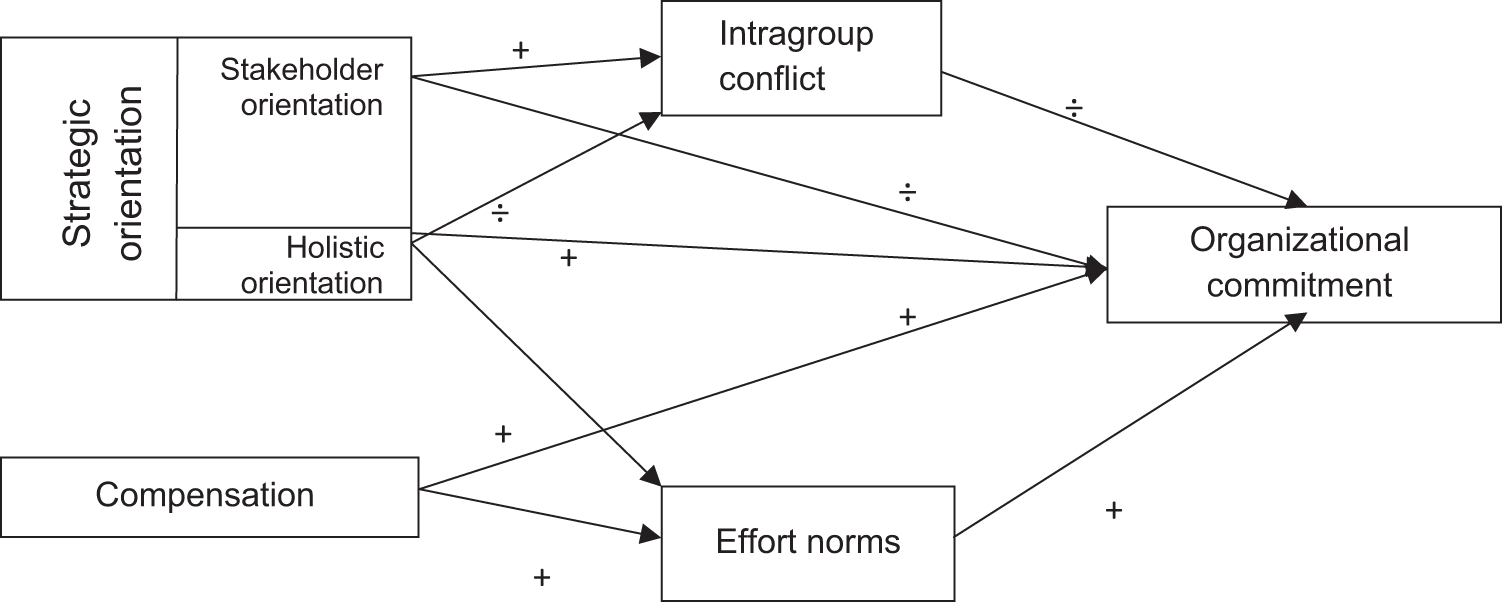
Conceptual model.
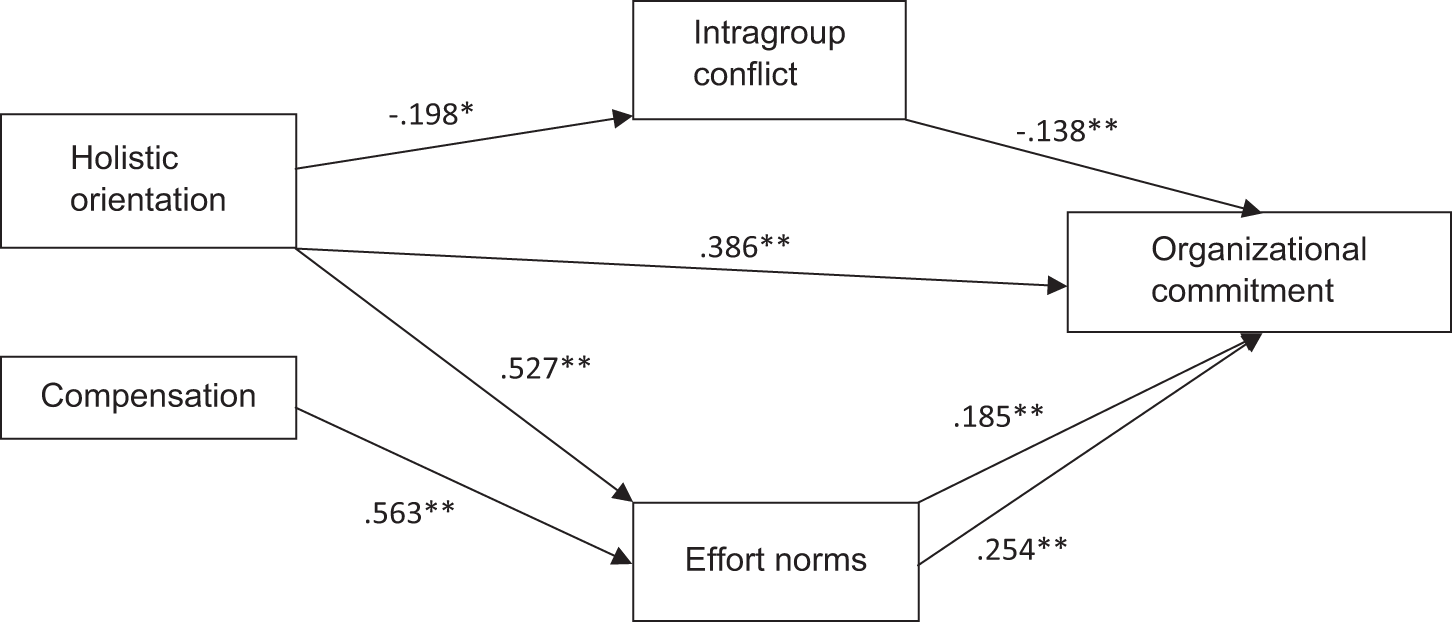
Observed model explaining the relationships: Holistic orientation and compensation on organizational commitment through intragroup conflict and effort norms.
First, we examine whether a director is oriented toward specific stakeholder groups or interests or holds a holistic orientation toward the destination, the collaborative organization, and its goals. In addition, we study the effect of compensation as an incentive to improve group dynamics and organizational commitment. In line with recent behavioral perspectives, the model indicates that boardroom processes influence a director’s organizational commitment. Thus, the model includes two process variables: perception of intragroup conflict and effort norms that mediate the relationship between the background variables, and organizational commitment, as illustrated in the model.
Material and Methods
Data Collection and Sample
This study was carried out in Norway, where the Norwegian Company Legislation (Aksjeloven) of 1997 established legally mandated responsibilities in limited companies. Under Norwegian law, shareholders exercise their supreme power in a general assembly (§ 5). The manager executes day-to-day management of the organization based on instructions and orders given by the board (§ 6). The board of directors employs a manager, has the ultimate responsibility for the management of the company, and supervises day-to-day management and activities in general (§ 6). Limited companies have become increasingly important as a type of structure for tourist organizations, since the Norwegian Government encouraged the tourism industry to structure their collaborations in limited companies in the 1990s (Ministry of Trade and Industry 1989). Additionally, organizations in Norway can be based on memberships, with corporate governance having practically the same structure and practice as limited companies.
According to the Ministry of Trade and Industry (2007), about 150 tourist organizations exist in Norway. Directors in 153 organizations were invited to participate, thus including the universe of Norwegian tourist organizations. The data were collected using a self-administered web-based survey included as a link in an e-mail, which the managers forwarded to their organizations’ directors. We contacted each manager by phone, gave information about the study and the procedure, and obtained the organizations’ number of directors. The procedure made it possible to reach directors who might not have participated otherwise. The e-mail had a paper-version of the survey attached for those wanting to answer on paper and return it by mail or fax. Organizations with few or no responses were sent two reminder e-mails followed by a phone call.
The final sample consisted of 307 directors, resulting in a response rate of 35%. Data was obtained from 98 different boards, representing 64% of the organizations. The number of respondents in each board ranged from 1 to 8, with an average of 2 (SD = 1.67). Overall, 79.8% of the respondents were members or shareholders in the organization they were governing. The mean tenure was 3.8 years (SD = 3.51). Furthermore, 45.8% received some kind of fee for the work they did as a member of the board and 53.6% of them were compensated per meeting (mean = 1000 1 , SD = 850, min = 200, max = 4000), 41.4% per year (mean = 14,750, SD = 14,450, min = 1500, max = 65,000), and 5% in a combination. Board sizes ranged from 2 to 11 directors, with an average of 6.31 (SD = 1.64). In the final sample, 63% were males and 37% females. The mean age of the respondents was 47 years (SD = 10.41).
Measures
Outcome variable
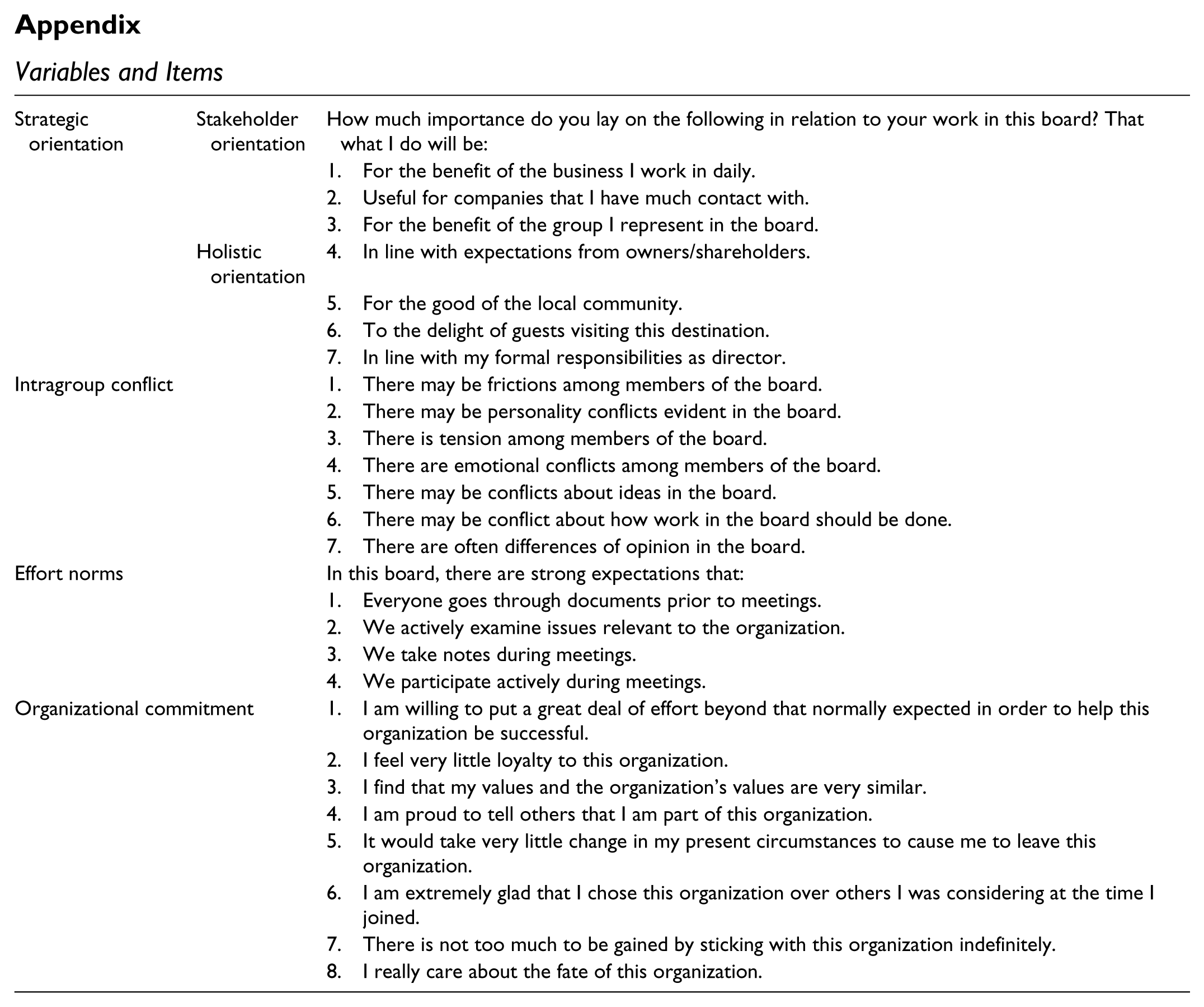
The outcome variable, Organizational commitment, was measured using the Organizational Commitment Questionnaire (OCQ) developed by Porter et al. (1974). The OCQ contains 15 items measured on a 7-point Likert-type scale, ranging from strongly disagree to strongly agree. Six items are reverse-scored to reduce response set bias. The original questionnaire has been successfully modified to measure commitment to other entities, teams being the most common (Bishop and Scott 2000). It has also been previously adapted for other languages (Mathieu, Bruvold, and Titchey 2000). To suit the present context, the original OCQ was reworded to change the object of reference. The number of items was reduced by removing items that assess commitment toward an employing organization. Nine items (four reversed) were used and they are reported in English in the appendix. A Norwegian translation of the scale was developed and assessed. A linguist translated the questionnaire from English to Norwegian, and then another translator translated it back to English. The back-translation was equivalent to the original questionnaire. In the current study, the Cronbach’s alpha coefficient was .80 and the mean commitment level was 5.57 (standard deviation 0.88), with value 7.0 representing the highest possible level of commitment.
Independent variables
The directors’ Strategic Orientations were measured using a 7-item strategic orientation scale (reported in the appendix) comprising two factors: (1) a holistic orientation toward the destination, the collaborative organization, and its goals and (2) a stakeholder orientation toward specific groups or interests (Garnes and Mathisen 2012). The Cronbach’s alpha coefficient for the scale was .73, with .72 for stakeholder orientation and .68 for holistic orientation.
Compensation was measured by asking the participants whether they received a director’s fee for being on the board. If yes, they were asked whether they received compensation yearly, per meeting, or a combination. They reported the amount of compensation as an open response. In the analysis, compensation was based on the single answer whether the director received compensation.
Mediating variables
The perception of Intragroup conflict was measured using seven items adopted from the intragroup conflict scale developed by Jehn (1995). The original scale consists of eight items measuring the amount and type of the relationship conflict and task conflict in a work unit on a 5-point Likert-type scale ranging from 1 = “none” to 5 = “a lot.” We used seven items as a measure of total intragroup conflict, removing one item not suitable in the present context. The same procedure as described above was followed when translating the instrument to Norwegian. The wording of the items was adjusted from questions to statements to fit the general design of the survey; hence, a 7-point Likert-type scale ranging from “strongly disagree” to “strongly agree” was used. The original intragroup conflict scale (Jehn 1995) consists of two factors, relationship conflict and task conflict, supported by a theoretical distinction of types of conflict. Principal components analysis was used to examine the scale. First, the suitability for factor analysis was assessed. Inspections of the correlation matrix revealed the presence of many coefficients above .3. The Kaiser–Meyer–Oklin value was .88, exceeding the recommended value of .6 (Kaiser 1970, 1974), and Bartlett’s Test of Sphericity (Bartlett 1954) reached statistical significance, supporting the factorability of the correlation matrix. However, principal components analysis revealed the presence of only one component with eigenvalues exceeding 1, explaining 61.9% of the variance. Inspections of the scree plot and the results of parallel analysis supported a one-factor solution; thus, we chose to use seven items to arrive at a summit indicator of the perception of intragroup conflict, reported in the appendix. The Cronbach’s alpha coefficient was .89.
Effort norms was the other mediating variable. Forbes and Milliken (1999) recommended measuring effort norms along the lines of Wageman’s (1995) example by asking board members to rate the board’s shared support for specific behaviors. The statements used in the current study complied with Forbes and Milliken (1999), and they are reported in the appendix. The Cronbach’s alpha coefficient was .84.
Control variables
As suggested by literature review, we controlled for ownership and tenure, which are commonly associated with both commitment and corporate governance. Background variables have been studied as determinants of organizational commitment (Mathieu and Zajac 1990), and the findings indicate that individual differences must be considered (Mowday, Porter, and Steers 1982). Research on directors has traditionally included such characteristics (Dalton et al. 1998; Huse 2000; Johnson, Ellstrand, and Daily 1996; Zahra and Pearce 1989). We controlled for ownership since many tourist organizations are based on membership or ownership. Ownership or membership may cause stronger member interests or controlling interests in the organization. Ownership or membership was measured by asking participants whether they, or their company, were members or owners in the present organization. The effects of tenure on behavior have been discussed in various contexts. Buchanan (1974) found that long-term engagement enhances organizational commitment and willingness to put forth an effort, and Katz (1982) found that extended tenure reduces intragroup communication. Vafeas (2003) expected director tenure to be associated with greater experience, commitment, and competence. Position tenure was measured as the number of years as member of the board.
Analysis
Data analyses were performed with SPSS 18 for Windows (SPSS 2009) and included product–moment correlations, multiple regression analysis, and bootstrapping. Mediation can be tested using various statistical methods. Zhao, Lynch, and Chen (2010) provided an easy to follow step-by step procedure for testing mediation and classifying its type. This approach is similar to the well-known and widespread procedure by Baron and Kenny (1986), as it uses regression analysis to investigate how the independent variables influence the mediating variables (a path), and how the mediating variable influence the dependent variable (b path). Both procedures test whether the influence on the independent variable disappears when the mediating variables are included. Zhao, Lynch, and Chen’s (2010) main argument for replacing Baron and Kenny’s (1986) procedure is that no significant zero-order effect of the independent variable on the dependent variable (c path) is needed to establish mediation (cf. Baron and Kenny’s first criterion). All that matters is that the indirect effect (a × b path) is significant. Zhao, Lynch, and Chen (2010) recommend using the Preacher and Hayes (2004, 2008) SPSS script that calculates total, direct, and indirect effects (total and specific for each mediator). This approach extends Baron and Kenny’s causal steps, as it formally tests the significance of the hypothesized mediated effects by means of bootstrapping. Bootstrapping is preferable because it does not assume normality of the distribution of the indirect effects and hence provides stronger protection against type 2 errors. Thus, we chose to apply Zhao, Lynch, and Chen’s (2010) recommended steps for mediation analysis, generating bootstrap results using Preacher and Hayes’ (2004, 2008) SPSS script.
Results
Table 1 reports means, standard deviations, and zero-order correlations among the study variables.
N, Means, Standard Deviations, and Pairwise Correlations.
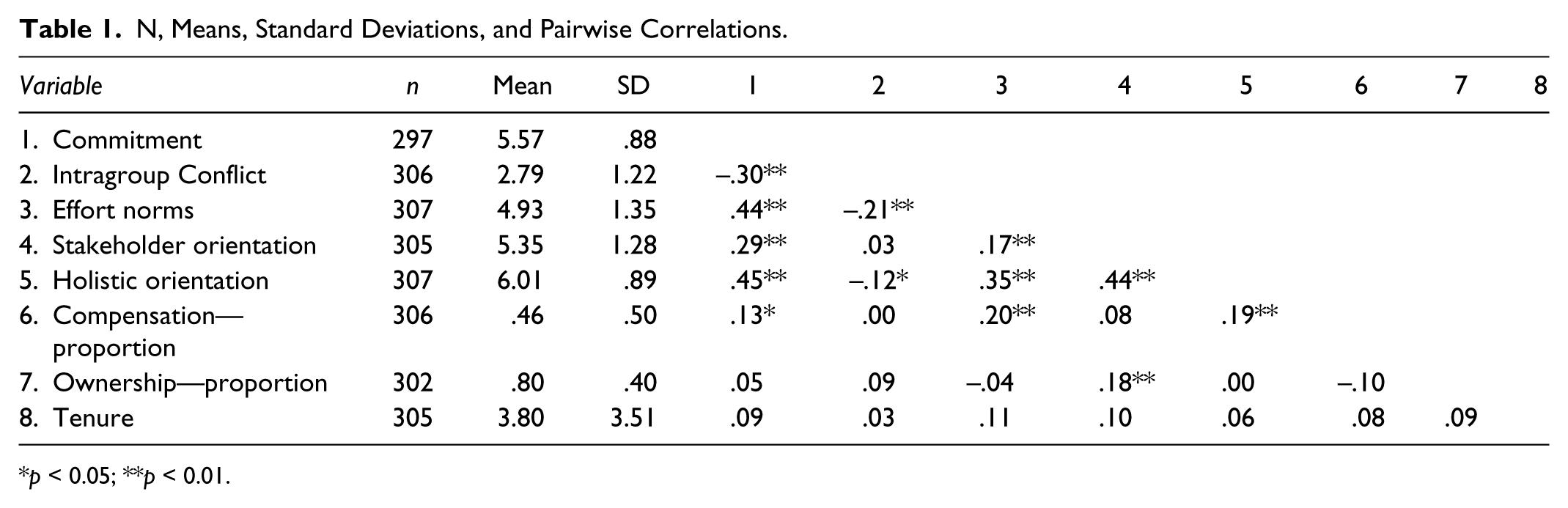
p < 0.05; **p < 0.01.
Significant correlations were found between organizational commitment and the two mediators, intragroup conflict and efforts norms, suggesting that directors who perceive more intragroup conflict are less committed to the organizations they are governing, and that strong effort norms are likely to enhance commitment. The results revealed significant and positive correlations between organizational commitment and both strategic orientations. Significant correlation was also found between organizational commitment and compensation (p < 0.05). A significant and negative correlation was found between holistic orientation and the perception of intragroup conflict (p < 0.05), indicating that directors with a holistic orientation perceive less conflict among directors. Significant and positive correlations were found between stakeholder orientation (p < 0.01), holistic orientation (p < 0.01), compensation (p < 0.01), and effort norms. In addition, ownership correlated significantly and positively with a stakeholder orientation (p < 0.01). No correlations between any variables were too high, which suggests that multicollinearity was not a problem. In addition, multicollinearity diagnostics of the variables, which examined tolerance and the variance inflation factors (O’Brien 2007), did not reveal any problems in the regressions.
Table 2 reports hierarchical multiple regressions, with stakeholder orientation, holistic orientation, and compensation added in Step 2 after controlling for ownership and tenure in Step 1. The two control measures in Step 1 were not significant. The independent variables added in Step 2 explained additional 21% of the variance. Finally, after entering the mediating variables, intragroup conflict and effort norms in step 3, the model explained 35% of total variance. In the final model, both mediators (intragroup conflict, –.22, p < 0.01, and effort norms, .27, p < 0.01) were statistically significant.
Regression Analysis in Three Steps: Effects on Organizational Commitment.

Note: Unstandardized coefficients. Two-tailed tests reported. Standard errors are in parentheses.
p < 0.05; **p < 0.01.
Regression analysis in Step 2 (Table 2) supported hypothesis 1b in that holistic orientation turned out to be positively related to organizational commitment. The results for stakeholder orientation and compensation were not significant; thus, hypotheses 1a and 2 were not supported.
Mediation Analyses
In our model presented in Figure 1, we hypothesized four mediating effects (hypothesis 3a-d). More specifically, we hypothesized that the perception of intragroup conflict in the board would mediate the relationship between two independent variables (stakeholder orientation and holistic orientation) and the dependent variable organizational commitment. Furthermore, we also expected effort norms to mediate the relationship between two independent variables, a holistic orientation and compensation, and organizational commitment.
To establish mediation, the indirect effect must be significant (Zhao, Lynch, and Chen 2010). The bootstrap results for indirect effects reported in Table 3 show that hypothesis 3a was not supported, as the indirect effect of stakeholder orientation on organizational commitment through intragroup conflict is zero by a 95% bias-corrected and accelerated bootstrap confidence interval based on 5,000 bootstrap samples (–.022 to .0208, with a point estimate of a × b = .002).
Mediation of the Effect of Stakeholder Orientation, Holistic Orientation, and Compensation on Organizational Commitment through Intragroup Conflict and Effort Norms.
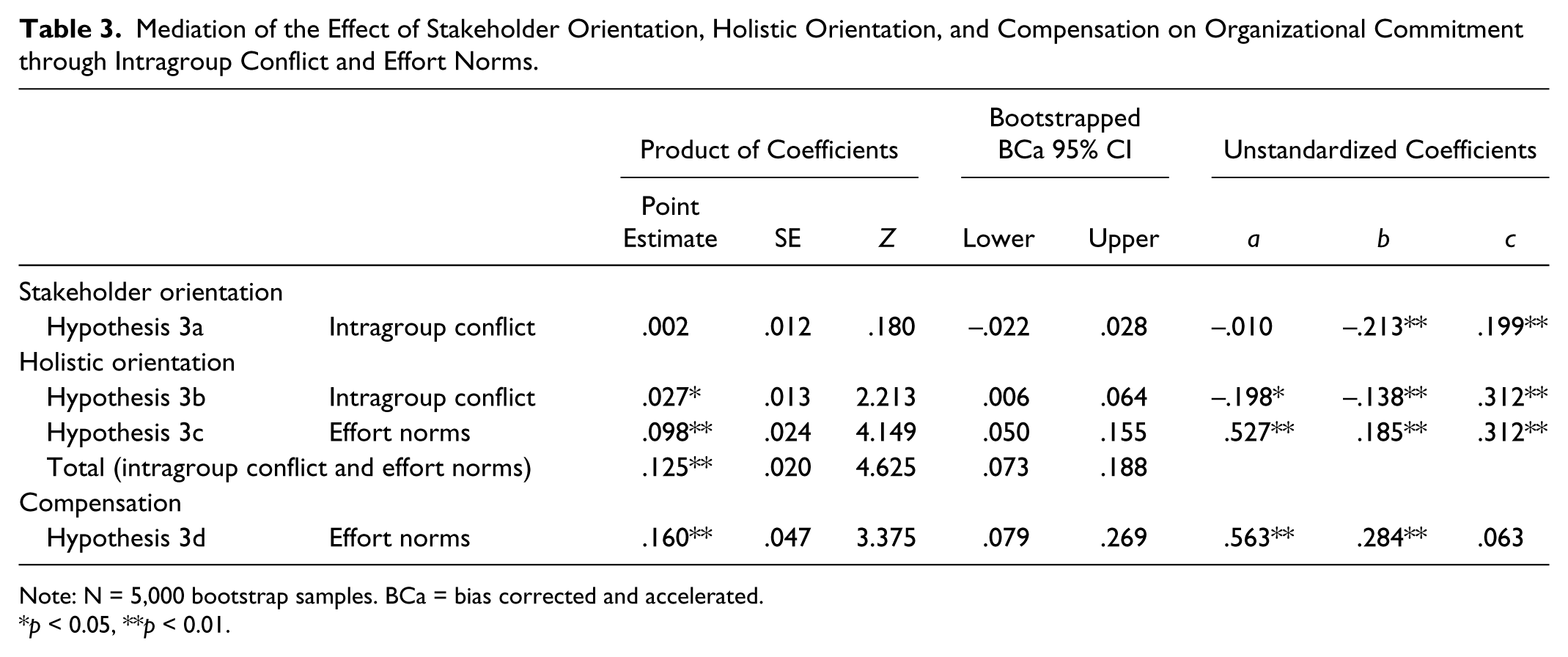
Note: N = 5,000 bootstrap samples. BCa = bias corrected and accelerated.
p < 0.05, **p < 0.01.
The indirect effect of a holistic orientation on organizational commitment through intragroup conflict and effort norms was significant, with a 95% confidence interval excluding zero (.006 to .064, with a point estimate of a × b = .027 for intragroup conflict, and .050 to .155, with a point estimate of a × b = .098 for effort norms). The results supported hypotheses 3b and c. The indirect effect of compensation on organizational commitment through effort norms was not zero according to a 95% bias-corrected bootstrap confidence interval based on 5,000 bootstrap samples (.079 to .269, with a point estimate of a × b = .160). This outcome supports hypothesis 3d. In conclusion, we found support for three mediated relationships, hypothesis 3b-d, while hypothesis 3a was not supported.
Types of mediation were determined by means of Zhao, Lynch, and Chen’s decision tree for establishing and understanding types of mediation (2010, p. 201). This method estimates the unstandardized regression coefficients for both indirect (a and b) and direct (c) effects and considers whether they are significant. The effect of a holistic orientation on organizational commitment through intragroup conflict (hypothesis 3b) and effort norms (hypothesis 3c) is considered as a complementary mediation, as the mediated effect (a × b) and direct effect (c) both exist and point in the same direction. (a = –.198, b = –.138, for intragroup conflict, and a = .527, b = .185, for effort norms, c = .312). The effect of compensation on organizational commitment through effort norms was classified as an indirect-only mediation, as (a × b) is significant and c is not.
Discussion and Implications
The purpose of this study was to investigate the possible effects of strategic orientations and compensation on director’s organizational commitment in collaborative tourist organizations while considering the mediating effects of boardroom behavior, specifically the directors’ perceptions of intragroup conflict and effort norms. For theoretical reasons, we expected an indirect (mediated) effect in addition to direct relationships. A conceptual model provided a framework for discussing possible causal links. In general, the results supported the role of boardroom behavior as a factor that influences directors’ organizational commitment. The influence of directors’ strategic orientation and compensation on organizational commitment depends on how directors act together as decision-makers, and their perceptions of intragroup conflict and effort norms have significant influence. Furthermore, the effect of boardroom behavior can be both negative (intragroup conflicts) and positive (effort norms) on directors’ organizational commitment.
The findings support the importance of recognizing the benefits of joint attempts (Palmer and Bejou 1995), as well as a community mindset among collaborators in tourism (Wang 2008), as a holistic orientation toward the destination, the collaborative organization, and its goals had a direct influence on organizational commitment. The results of the mediation analysis further showed that boardroom behavior, more precisely, both perceptions of intragroup conflicts and effort norms, partially mediated the relationship between a holistic orientation and organizational commitment. A holistic orientation decreased directors’ perceptions of conflict. Furthermore, perceptions of intragroup conflict were negatively and significantly related to organizational commitment. In addition, a holistic orientation increases effort norms, which related positively and significantly to organizational commitment. Thus, it is important to specify norms about how directors should act together to increase their organizational commitment.
On the other hand, because of certain characteristics of collaborative tourist organizations, as described in previous studies (e.g., heterogeneity, diversity and multiple stakeholders, lack of mutual interests or incompatible interests, dynamics of collaboration and competition, and potential conflicts of interests), we expected a significant negative influence of a director’s orientation toward specific stakeholder groups or interests on organizational commitment. However, the findings did not support such influence, and the results did not show a direct or any indirect effect of a stakeholder orientation on organizational commitment. This does not mean that a stakeholder orientation is irrelevant for studying internal affairs or governance in this setting in general, but that such influence was not significant in this study, which focused on directors and their organizational commitment as decision makers. It may be that the positive influence of a holistic orientation on commitment surpasses the possible negative implications of a director’s stakeholder orientation.
Another indirect effect, which was revealed, was the effect of effort norms on the relationship between compensation and organizational commitment. Whether a director receives compensation for being on the board has no significant direct effect on commitment, though the results of the mediation analysis support indirect-only mediation through effort norms. Receiving modest compensation for being on the board did not influence the strength of a director’s identification with and involvement in the tourist organization, but it appeared to have a positive influence on effort norms toward board roles and responsibilities, which then again will influence the director’s organizational commitment.
We believe this study advances existing knowledge in three main areas. First, the results support the general research stream in corporate governance that deals with boardroom behavior, showing how intragroup conflict and effort norms indirectly influence organizational commitment. Second, the results and conclusions contribute to tourism research on collaborative arrangements and increase our knowledge and understanding of collaborative tourist organizations. Most of all, it adds to the tourism research stream dedicated to corporate governance, providing new knowledge of internal affairs in collaborative tourist organizations. On the other hand, the importance of a holistic orientation toward the destination, the collaborative organization and its goals among directors as decision makers in tourist organizations found in this study, confirms the interface between destination governance and corporate governance illustrated and examined recently by Pechlaner, Volgger, and Herntrei (2012). Finally, this study refines the concept of organizational commitment to reflect the multifaceted context of collaboration in tourism, as we understand organizational commitment as the strength of a director’s identification with and involvement in a particular collaborative tourist organization (Porter et al. 1974). By introducing the concept of commitment among directors in tourist organizations and studying organizational commitment as an outcome, this study built upon findings from previous studies and acknowledged the importance of commitment in tourism collaborations.
We consider the results of the empirical analysis in this research relevant to both tourism practitioners and academics. Porter et al.’s (1974) characteristics of organizational commitment—belief in and acceptance of organization’s goals and values, willingness to exert considerable effort on behalf of the organization, and a definite desire to maintain organizational membership—are valuable and desirable characteristics of directors as decision makers. At least two managerial implications to increase the level of organizational commitment emerge from our results. First, it appears important that directors recognize the benefits of joint efforts and have a community mindset. To ensure selection of directors with such holistic orientations, organizations need to pay close attention to the appointment and nomination of proper directors and use guidelines or codes of conduct that define directors’ roles and responsibilities as decision makers in the collaboration. Second, compensation was found to be an important factor that has a direct effect on effort norms and indirect influence on organizational commitment. These findings indicate that compensation should be considered in the context of tourist organizations, extending the use of payment as an incentive for increased effort and commitment among directors.
When interpreting the results of this study, we should recognize some limitations. First, though this study included the universe of Norwegian tourist organizations, the sample limits the generalization of the results, which in our case is restricted to one country (Norway). Future research should replicate this study by covering other countries and regions to determine whether findings are valid for other corporate governance systems and alternative collaborative arrangements.
Second, given that the data from the present study were cross-sectional, we cannot draw final conclusions about causal relationships. For instance, a reciprocal relationship between a director’s strategic orientation and organizational commitment may exist in that having a strong orientation toward the destination, the collaborative organization, and its goals leads to enhanced organizational commitment, which again results in a more holistic orientated director with an even stronger community mindset. Furthermore, the relationship between the mediating variables and organizational commitment could, strictly speaking, be interpreted in the opposite way than was hypothesized, in that a director with high organizational commitment perceives less intragroup conflict and stronger effort norms in their board. Longitudinal studies should be conducted to attain more knowledge about these causal relationships.
Third, data concerning multiple constructs were collected through self-reports from single sources. For instance, the same directors provided both ratings of their strategic orientations and their level of organizational commitment. The relationships between measures of different constructs generated by self-reports from a single source can be biased, as the perception of one construct is influenced by the perception of another (Avolio, Yammarino, and Bass 1991; Podsakoff and Organ 1986). Single-source effects cannot be precluded from this study, though such effects may be reduced by the use of validated instruments and scales. Multicollinearity was not a problem in the regressions. Despite these limitations, our study shows potentially important results that should be further elaborated in future studies.
Based on the findings, we can conclude that board behavior and decision-making processes should be considered when studying boards of directors and outcomes of their work. Thus, future studies should examine additional aspects of board behavior that can influence organizational commitment. Studying many factors at once could possibly cause investigatory paralysis (Bandura 1986). Still, with frameworks that take into account the mediating role of dynamics in and around the boardroom as a theoretical basis (e.g., Huse 2005; Pye and Pettigrew 2005; Van Ees, Gabrielsson, and Huse 2009), a number of alternative and supplementary mediating effects can be identified. These are yet to be examined in future studies.
Another suggestion for further research is to investigate the effects of organizational or structural characteristics on commitment among directors. According to Morris and Steers (1980) and Steers (1977), the structure of the organization appears to influence commitment. Organizational or structural characteristics include variables such as formalization, functional dependence, size, and decentralization. In addition, scale and importance of tourism could be included for tourist organizations. Future research may also consider further investigating the use of board compensation as an incentive for increased effort and commitment among directors, since the effects of various amounts of compensation is yet to be studied. In this study, we emphasized commitment as a desirable outcome in collaboration in tourism and recognized directors as important decision-makers; hence, directors’ organizational commitment is crucial. However, future studies should address the link between organizational commitment and directors’ performance and the relationship between board performance and organizational performance, to add to the body of research on the operational reality of destination governance and internal affairs in tourist organizations.
Footnotes
Appendix
Variables and Items
| Strategic orientation | Stakeholder orientation | How much importance do you lay on the following in relation to your work in this board? That what I do will be: |
| 1. For the benefit of the business I work in daily. | ||
| 2. Useful for companies that I have much contact with. | ||
| 3. For the benefit of the group I represent in the board. | ||
| Holistic orientation | 4. In line with expectations from owners/shareholders. | |
| 5. For the good of the local community. | ||
| 6. To the delight of guests visiting this destination. | ||
| 7. In line with my formal responsibilities as director. | ||
| Intragroup conflict | 1. There may be frictions among members of the board. | |
| 2. There may be personality conflicts evident in the board. | ||
| 3. There is tension among members of the board. | ||
| 4. There are emotional conflicts among members of the board. | ||
| 5. There may be conflicts about ideas in the board. | ||
| 6. There may be conflict about how work in the board should be done. | ||
| 7. There are often differences of opinion in the board. | ||
| Effort norms | In this board, there are strong expectations that: | |
| 1. Everyone goes through documents prior to meetings. | ||
| 2. We actively examine issues relevant to the organization. | ||
| 3. We take notes during meetings. | ||
| 4. We participate actively during meetings. | ||
| Organizational commitment | 1. I am willing to put a great deal of effort beyond that normally expected in order to help this organization be successful. | |
| 2. I feel very little loyalty to this organization. | ||
| 3. I find that my values and the organization’s values are very similar. | ||
| 4. I am proud to tell others that I am part of this organization. | ||
| 5. It would take very little change in my present circumstances to cause me to leave this organization. | ||
| 6. I am extremely glad that I chose this organization over others I was considering at the time I joined. | ||
| 7. There is not too much to be gained by sticking with this organization indefinitely. | ||
| 8. I really care about the fate of this organization. | ||
Declaration of Conflicting Interests
The author(s) declared no potential conflicts of interest with respect to the research, authorship, and/or publication of this article.
Funding
The author(s) received no financial support for the research, authorship, and/or publication of this article.